Subscribe to our weekly newsletters for free

Subscribe to an email

If you want to subscribe to World & New World Newsletter, please enter
your e-mail

Defense & Security
Main img

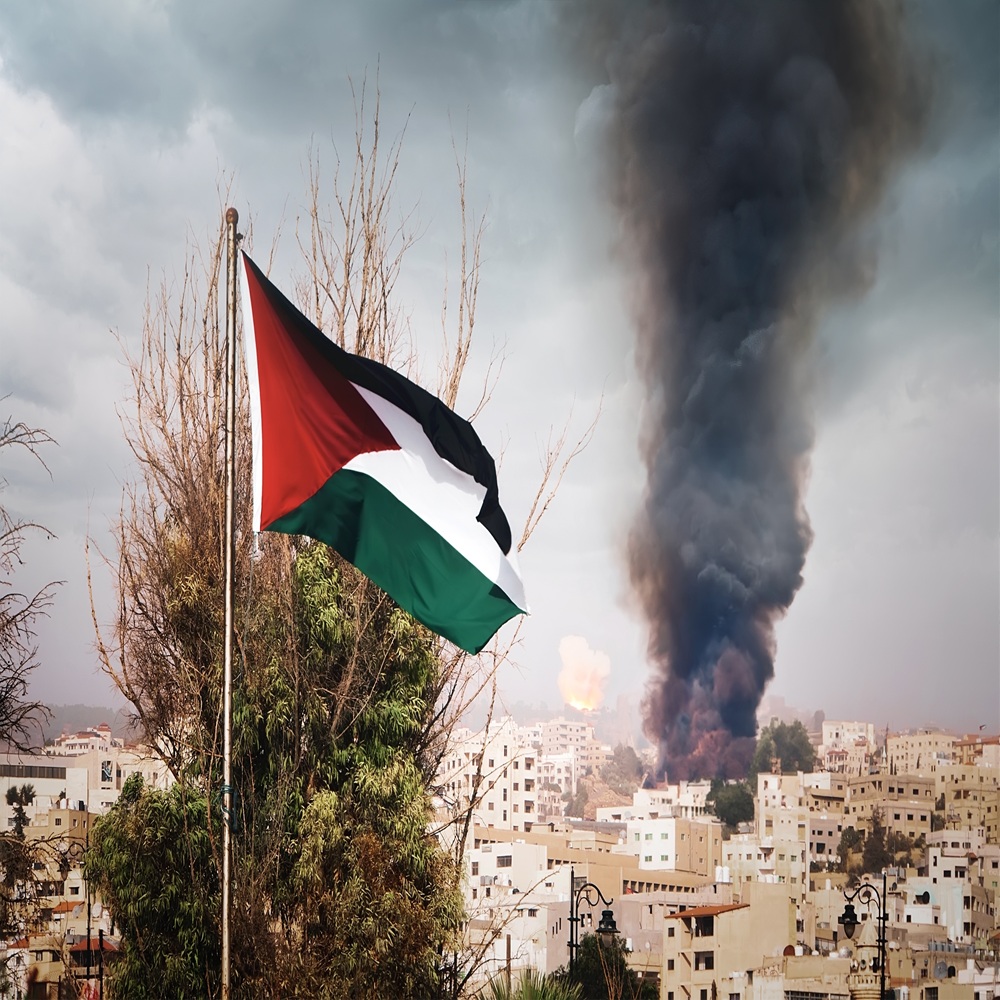
Gaza 2023-2025: Israel, Hamas and the shadow of the U.S.

by Javier Fernando Luchetti

한국어로 읽기 Leer en español In Deutsch lesen Gap اقرأ بالعربية Lire en français Читать на русском Introduction Strategically located on the eastern shore of the Mediterranean, the Gaza Strip is a crucially important enclave in the Levant. Its proximity to Israel and Egypt places it in an area of high strategic sensitivity, and it is deeply involved in the decades-long Israeli-Palestinian conflict. Territorial disputes, rooted in sovereignty claims, overlap with the involvement of international actors with different economic and strategic interests.This territory, which is no more than 12 kilometers wide and a little more than 40 kilometers long, has been the scene of a confrontation between the State of Israel and the political, military and social organization Hamas (Harakat al-Muqawama al-Islamiya, Islamic Resistance Movement) for the last two years. In this war scenario, three main actors can be mentioned. On the one hand, the State of Israel, created in 1948, which has a great military and technological capacity thanks to the help of the United States. Israel distinguishes that Hamas is a permanent threat to the Israelis, hence its policy of land, naval and maritime blockade, arguing that it must defend itself from the aggressions of this group which has repeatedly launched missiles in this century. Secondly, Hamas, an organization created in 1987 during the first Intifada (rebellion or uprising), which exercises control of the Gaza Strip and leads the resistance to the State of Israel seeking the creation of a Palestinian State. Hamas' capabilities range from military development with the launching of missiles, to public administration and social work in the area. Third, the United States is an external actor in the region, but one that wields considerable influence, for while it sees itself as an arbiter in the Israeli-Palestinian issue, it has done little more than deploy over the decades military, political and financial support for the State of Israel. The choice of the period of analysis from 2023 to early 2025 is due to the succession of events in the area that have demanded specific attention, since the military escalation has denoted a more radical change in the posture of the main actors. Given this situation, the central research question is the following: How have the power dynamics between Israel, Hamas and the United States manifested themselves in the Gaza Strip during the period 2023-2025, and what have been the main implications of their actions. Hence, the main objective of this paper is to analyze the interactions between these three main actors from 2023 to early 2025. Israel, founded in 1948 and with great military and technological power thanks to U.S. support. Hamas, established in 1987, controls the Gaza Strip and leads the resistance, seeking the creation of a Palestinian state that does not recognize Israel. The United States, while presenting itself as an arbiter, has historically provided substantial military, political and financial support to Israel. The October 7, 2023 Hamas's attack, "Operation Al-Aqsa Storm," provoked the Israeli "Iron Swords" counteroffensive. This response included heavy aerial and ground bombardment throughout Gaza, causing widespread destruction and a severe humanitarian crisis. Israel seeks to dismantle Hamas' military capability, eliminate its leadership and release hostages, in addition to the establishment of a security zone. The U.S. position under the administrations of Joseph Biden and Donald Trump has been supportive of Israel, justifying its right to defend itself. However, concerns about civilian casualties and the humanitarian crisis in Gaza have led to calls for "humanitarian pauses." The "cease-fire" that is announced from time to time has not served to definitively stop the fighting; on the contrary, after its termination, the Israeli Defense Forces continue to gain ground. The fighting between Israel and Hamas in the Gaza Strip Israel's blockade of the Gaza Strip has been imposed since 2007, and its level of intensity has varied over the years, but what has not changed is the justification for it, which is related to security issues, to prevent the entry of arms and supplies that could be used by Hamas to attack Israeli territory. According to the State of Israel, the air, naval and land blockade is a fundamental part of its defense to protect its people from rockets launched from the Gaza Strip. On the other hand, the Hamas takeover came after Fatah (Palestine National Liberation Movement, a Palestinian political and military organization founded in the late 1950s, and a leading member of the Palestine Liberation Organization, PLO) lost the 2006 parliamentary elections, and Hamas fighters fought against them. Both parties claim to represent the Palestinians. The battle won by Hamas meant the dissolution of the existing unity government and the division of the Palestinian territories: West Bank for Fatah and the Gaza Strip for Hamas. Hamas' stated goal is the creation of a Palestinian state occupying the entire territory of Palestine, which means non-recognition of the State of Israel. The region has been characterized by rocket fire from Gaza into Israel and Israeli military incursions into Gaza, all within the framework of the Israeli naval, land and sea blockade, although Hamas rearmament has continued due to tunnels linking Gaza to Egypt. Background to the escalation of Violence The escalation of violence between Palestinians and Israelis in 2023, has been a process of accumulation of facts between both parties for decades. One of them has been the stalemate of the Peace Process that has promoted a radicalization of the parties' positions encouraging armed struggle. Secondly, the increasing expansion of Israeli settlements in the West Bank, considered illegal by a large part of the international community, which causes, on the one hand, the fragmentation of Palestinian sovereignty in the territory due to the inability to establish a related communication infrastructure between Palestinian lands, and on the other hand, resentment towards the Israeli occupation, which manifests itself in an armed resistance that is seen as the only solution in the absence of a political settlement. Thirdly, the problem of Jerusalem and the Holy Places (Al-Aqsa Mosque, the Dome of the Rock and other mosques), where there are restrictions on entering the mosque area by Israeli security. This is seen as a violation of religious rights. Jerusalem is claimed to be the capital of the future Palestinian state. Israel denies this because it declared it as the eternal and indivisible capital in 1980 through a law passed by the Knesset (Assembly).Fourthly, the blockade of the Gaza Strip with the resulting humanitarian crisis has generated a lot of poverty, high unemployment, limited access to basic services such as water, electricity and health, which has increased the radicalization of the population.Fifth, the situation of Palestinian prisoners in Israeli jails, some of whom have no open criminal cases, whereby hunger strikes and the conditions in which they live are a cause for protest by Palestinians in Gaza and the West Bank. Finally, the competition between Hamas and Fatah, one in Gaza and the other in the West Bank, only encourages violence to see who represents the Palestinians more, i.e., to settle the representation of the Palestinian people, thereby increasing attacks on Israel, which in turn responds militarily: "Israeli forces need to wrest territorial control from Hamas to demonstrate to Palestinians in Gaza and the West Bank that they do not guarantee their security from Israel, just as Hamas's assault has called into question Israeli confidence in its Armed Forces" (Arteaga, 2023, 3). Israel may not need to occupy the entire Gaza Strip, but what it needs is to "dismantle as much of Hamas' military prestige as it can to challenge its Palestinian leadership, otherwise Hamas will increase its ability to influence the rest of the factions in Gaza and the West Bank to the detriment of the Palestine Liberation Organization (PLO)" (ibidem). Hamas attack on Israel in 2023 During 2023, incidents in the Jerusalem area in front of mosques increased, prompting Israeli security forces to intervene, with Palestinians considering it an attack on all Muslims. Simultaneously, Israeli attacks on the West Bank increased to dismantle cells considered terrorists hiding in refugee camps or villages. Israeli settlers living in the West Bank also attacked Palestinian communities, causing damage and casualties. Israeli targeted assassinations of militants in Gaza or the West Bank, leading to hunger strikes in prisons and rebellions by the Palestinian population, should be placed in this context.Faced with this situation, on October 7, 2023, Hamas developed the operation "Al-Aqsa Storm" which involved the infiltration and coordination of fighters using paragliders, attacking Israeli security posts and using boats to infiltrate Israeli communities near the Gaza Strip. The attacks were carried out on villages, military bases, including a music festival, resulting in an estimated death toll of more than 1,200 Israelis and 250 prisoners of whom more than 50 remain in Hamas hands. The release of the hostages has been a strategy to obtain the release of Palestinian prisoners in Israeli jails. Israel's response The Israeli counter-offensive, called "Iron Swords", included intensive aerial bombardments against Hamas military targets in the Gaza Strip, but affected thousands of Palestinian civilians who were killed or wounded and their homes destroyed. The Israelis mobilized reservists for an all-out offensive against the entire Gaza Strip to completely eliminate Hamas, while imposing a total blockade on the supply of water, food, medicine and fuel, increasing the already humanitarian crisis. The destruction reached Hamas military infrastructure and civilian infrastructure such as public buildings, through ground and naval artillery and aerial bombardment. The Israeli ground incursions reached the entire Gaza Strip, because they are aimed at dismantling Hamas' military capacity, tunnels, missile launcher bases, supply sites, arsenals, etcetera. They also aim to dismantle Hamas by eliminating its leaders and the militants responsible for the offensive, to rescue the Israeli hostages, and to establish a future security zone to prevent further Palestinian attacks. Israel has been criticized for the disproportionate response of the Israel Defense Forces (IDF) to the Hamas attack, the failure to distinguish between civilian and military targets and to plan the attacks in such a way as to avoid civilian casualties. Israel has responded that Hamas uses the civilian population as a shield, and that the territory is densely populated so that war casualties could not be avoided, however, despite having the advantage in war material, so far it has not been enough to defeat Hamas militarily. Guerrilla warfare is the tactic employed by Hamas and that has been a complication for Israel, as it had been for the United States in Afghanistan and Iraq. In addition, Hamas blends in among civilians making it even more difficult to locate its fighters, while the Israeli response causes collateral damage among civilians and what little infrastructure is left standing after nearly two years of conflict: "Gaza's demographic characteristics as a 'soft' factor are an advantage against Israel's 'hard' capabilities, where Hamas operatives can intrude into the population to set up ambushes against IDF armored columns" (Trujillo Borrego, 2025, 16). The government of Benjamin Netanyahu gained a great deal of public support for the military operation, however, the rising number of casualties along with the destruction caused in Gaza, brought down support. The families of the hostages are urging the government to enter into negotiations with Hamas to get them back, which clashes with the government's objectives. The mobilization of the reservists, together with the prolongation of the war, has generated social and economic problems, questioning the Netanyahu government, and also the intelligence agencies that were surprised by the preparation and the surprise of the Hamas attack. The position of the United States Historically, the United States has supported Israel economically, politically and militarily based on strategic and geopolitical interests. The Israeli lobby in the US Congress, the veto to UN Security Council Resolutions and the presidential statements, have strengthened the bond between both countries: "Israel remains the main recipient of US aid, an aid that has allowed it to transform its Armed Forces and maintain the "qualitative military edge" (QME) against its neighbors. It has always been guaranteed by the US Congress and has had the support of both major parties, in part thanks to the promotion at the domestic level of organizations in defense of Israel since the Yom Kippur War in 1973 (García Encina, 2023, 3). The US justification during the administration of President Joseph Biden (2021-2025), was that Israel had the right to defend itself by condemning Hamas in solidarity with its traditional ally. Support was maintained until the US administration began to worry about civilian casualties and the humanitarian crisis. Hence the calls for a "humanitarian pause" and a "cease-fire" for the hostage exchange. The position of current US President Donald Trump has been one of absolute support for Israel. While he has stated that "a lot of people are starving" and that "bad things are happening", his relationship with the Israeli Prime Minister has not changed despite mentioning that humanitarian aid is needed. In that sense, he has stated that Hamas has to be completely disarmed in order for the Gaza Strip to be a territory without weapons. Also, one of his proposals is that the United States take control of Gaza and relocate Palestinians to other countries because it is a pile of rubble, violating international law by the principle of self-determination of peoples and determining a forced displacement of Palestinians: “Despite its support for a two-state solution, the lack of effective pressure on Israel and the focus on Israeli security over justice for Palestinians have hindered significant progress toward peace. U.S. policy in the region has oscillated between attempts at mediation and unconditional support for Israel, making it impossible for the U.S. to act as an impartial mediator.” (Donoso, 2025, pp. 27–28) However, Trump has hinted at Israel's unwillingness to negotiate an end to the war, and has expressed that hunger should not be used as a weapon. In addition, he has lifted sanctions against a historical enemy of Israel, Syria, whose president Ahmed al-Sharaa, was linked to Al Qaeda, although he now belongs to another group called Hayat Tahrir al Sham (HTS) (Organization or Life for the Liberation of the Levant). Israel has opposed the lifting of sanctions and has bombed Syria. Trump’s tour of the Middle East this past May demonstrated that the Israeli-Palestinian conflict has taken a back seat due to the intransigence of both Hamas and Israel. For this reason, the U.S. president—who did not visit Israel—traveled to Saudi Arabia, Qatar, and the United Arab Emirates, seeking to invest in the oil sector and encouraging those countries to invest in the United States or purchase American products. For example, Saudi Arabia agreed to buy $142 billion worth of military equipment, including missiles, communication systems, and more. The total deal amounts to $600 billion, covering trade, investments, and arms purchases. Meanwhile, in contrast to the U.S. position of keeping control over the Gaza Strip, there is another initiative led by regional countries such as the United Arab Emirates to invest in Gaza’s reconstruction—without relocating Gazan residents to other countries in the region. Final Considerations The Gaza Strip, a narrow territory located on the eastern shore of the Mediterranean, stands as an epicenter of the Israeli-Palestinian conflict. Surrounded by Israel and Egypt, it represents a strategic geographic point in the region, and has witnessed violence, blockades and a complex interplay between local, regional and international actors, with Israel, Hamas and the United States playing crucial roles. Israel has exerted overwhelming influence with ground and aerial bombardments throughout the Strip to not only eliminate Hamas, but also to secure the release of the hostages. Although at the beginning Israeli society supported this campaign, the cost in lives is being negatively evaluated, in addition to the call for reservists. This call-up has damaged the Israeli economy by extracting more than 300,000 reservists, affecting the labor force in different sectors of the economy. Israel, supported by the United States, has so far declared that it will not end the operation until the elimination of Hamas, the latest [Hamas] has demonstrated a great defensive and organizational capacity, which has been beneficial to the international community that has begun to criticize the Israeli attack due to the high cost in Palestinian victims and the precarious situation of the Gazans. According to the Hamas-controlled Ministry of Health in the Gaza Strip, more than 50,000 Gazans had been killed and more than 100,000 wounded as of March this year, but Israel contradicts these figures, while not allowing impartial observers and journalists into the area. In addition, more than 70% of the infrastructure and homes have been destroyed by Israeli air, land and naval bombardments. This has been compounded by the collapse of industrial production, rising inflation due to food and manufactured goods shortages, and an increase in both overall                 and youth unemployment—factors that further fuel resentment toward those considered responsible, namely the Israelis. Likewise, both exports (such as scrap metal, tropical fruits, and olive oil) and imports (especially food) have declined as a result of the conflict. The United States supported Israel's position from the beginning, but President Trump is now calling for the opening of a humanitarian corridor for the residents of Gaza. While Israel has managed to dismantle most of Hamas’ operational infrastructure, it has not succeeded in defeating the organization, nor in freeing all the hostages, and now is facing mounting international condemnation and accusations of war crimes. At the same time, Israel's public spending has increased significantly, primarily due to military operations, while the country's economic development and employment rates have fluctuated over the past two years. Naturally, the Palestinian economy has suffered far more than Israel’s.The escalation of violence between Palestinians and Israelis since 2023 is the result of a series of long-standing events and processes. Rocket attacks from Gaza, assaults by Israeli settlers on Palestinians in the West Bank, Israeli responses to missile fire, incidents near the mosques in East Jerusalem, the deplorable health conditions in Gaza due to the Israeli blockade, and the destruction of Gazan infrastructure have all prolonged the conflict and deepened tensions. In short, the intransigence of both parties—along with unwavering U.S. support for Israel and diplomatic efforts that have so far failed—has prolonged the conflict, preventing the achievement of a fair and lasting political solution for both sides. This has caused a high number of civilian casualties in Gaza, where a collapsing health system struggles to respond and food is scarce. At the same time, Palestinians living in the West Bank continue to suffer from attacks and displacement by Israeli settlers expanding their areas of control. Bibliography Arteaga, F. (2023). The war between Hamas and Israel: long and hard. Real Instituto Elcano, pp. 1-5. https://media.realinstitutoelcano.org/wp-content/uploads/2023/10/la-guerra-entre-hamas-e-israel-larga-y-dura.pdfBBC News World (2020). West Bank: 6 questions to understand the situation and Israel's plans to annex part of this Palestinian territory. https://www.bbc.com/mundo/noticias-internacional-53142850BBC News World (2021). Israeli-Palestinian conflict: 6 maps showing how the Palestinian territory has changed over the past decades. https://www.bbc.com/mundo/noticias-internacional-54162476BBC News World (2025). "Bullets raining down on us like a deluge": Israel attacks southern Gaza and already over 50,000 dead. https://www.bbc.com/mundo/articles/c0l1r6xdl9koBBC News World (2025). The history of the Gaza Strip, the former territory of the Ottoman Empire destroyed by Israel and from which Trump wants to evict Palestinians. https://www.bbc.com/mundo/articles/c06r7nlr84koDonoso, C. (2025). The United States: a partial and weak mediator in the Israel-Hamas conflict. In, Velasco, C. M. Á., Saint-Pierre, H. L., Mei, E., Borrego, E. T., Donoso, C., & Botta, P. Central theme: Reflections on a year of conflict: Israel and Palestine in the spotlight. Instituto de Altos Estudios del Estado, Paralelo Cero, Estudios estratégicos, geopolíticos y de seguridad, n° 8, pp. 23-30. https://editorial.iaen.edu.ec/wp-content/uploads/sites/12/2025/01/PARALELO-0-Boletin-8-Final-1.pdfDoucet, L. (2025). What is the $53 billion plan for Gaza presented by Arab countries. BBC News World. https://www.bbc.com/mundo/articles/c5yx07841v9oGarcía Encina, C. (2023). USA and Israel: the strength of a relationship. Real Instituto Elcano, pp. 1-9. https://media.realinstitutoelcano.org/wp-content/uploads/2023/11/eeuu-e-israel-la-fortaleza-de-una-relacion.pdfGoldman, A., Bergman, R., Kingsley, P., Koplewitz, G., (2024). Israel's subway war against Hamas tunnels in Gaza. Infobae. https://www.infobae.com/america/the-new-york-times/2024/01/17/la-guerra-subterranea-de-israel-contra-los-tuneles-de-hamas-en-gaza/Gómez Díaz, L. (2023). Hamas and Fatah, rivals with different visions of Israel and the future of the Palestinians. Corporación de Radio y Televisión Española. https://www.rtve.es/noticias/20231020/hamas-fatah-rivales-politicos-palestinos-israel-diferencias/2458571.shtml.Hamdar, M., Razek, H. (2023). The aerial operation Hamas used to infiltrate Israel undetected. BBC News Arabic. https://www.bbc.com/mundo/articles/cv20n56p5ynoInfobae. (2025). With the flag flying in Damascus after 13 years the U.S. embassy in Syria was reopened. https://www.infobae.com/estados-unidos/2025/05/29/reabrieron-la-residencia-del-embajador-de-estados-unidos-en-damasco-mientras-washington-repara-los-lazos-con-siria/Infobae. (2025). Donald Trump spoke about the situation in the Gaza Strip: Many people are starving. https://www.infobae.com/estados-unidos/2025/05/16/donald-trump-hablo-sobre-la-situacion-en-la-franja-de-gaza-mucha-gente-esta-muriendo-de-hambre/Knickmeyer, E. (2025). Trump's Mideast trip highlights deals and diplomacy, but shuts up on human rights. Los Angeles Times. https://www.latimes.com/espanol/eeuu/articulo/2025-05-16/viaje-de-trump-a-oriente-medio-destaca-por-acuerdos-y-diplomacia-pero-calla-sobre-derechos-humanosMerino, A. (2023). The map of the Israeli blockade of Gaza or how to make a territory uninhabitable. https://elordenmundial.com/mapas-y-graficos/mapa-bloqueo-israeli-gaza-territorio-inhabitable/United Nations (2024). Gaza crimes, pollution deaths, Haiti...Wednesday's news. News United Nations. https://news.un.org/es/story/2024/06/1530656Radio France Internationale (2025). Hamas releases three hostages and defies Trump's Gaza plan. https://www.bbc.com/mundo/articles/c06r7nlr84koSaul, J., Farrell, S. (2023). The complex network of Hamas tunnels facing the Israeli army in Gaza. Infobae. https://www.infobae.com/america/mundo/2023/10/26/la-compleja-red-de-tuneles-de-hamas-de-cientos-de-kilometros-de-largo-a-la-que-se-enfrenta-el-ejercito-israeli-en-gaza/Seddon, S., Palumbo, D. (2023). How Hamas staged a blitz attack on Israel that no one thought possible. BBC News World. https://www.bbc.com/mundo/articles/c25we958pwqoTrujillo Borrego, E. (2025). The implicit goals of Israel in its war operations in the Gaza Strip. In, Velasco, C. M. Á., Saint-Pierre, H. L., Mei, E., Borrego, E. T., Donoso, C., & Botta, P. Central theme: Reflections on a year of conflict: Israel and Palestine in the crosshairs. Instituto de Altos Estudios del Estado, Paralelo Cero, Estudios estratégicos, geopolíticos y de seguridad, no. 8, pp. 13-22. https://editorial.iaen.edu.ec/wp-content/uploads/sites/12/2025/01/PARALELO-0-Boletin-8-Final-1.pdf

Defense & Security
Jerusalem, Israel-November 8, 2024. Banner with photo of Donald Trump congratulating on victory in US presidential election hangs on a building in Jerusalem

The Israeli State and Its influence on U.S. Foreign Policy

by Sebastián Calderón Céspedes

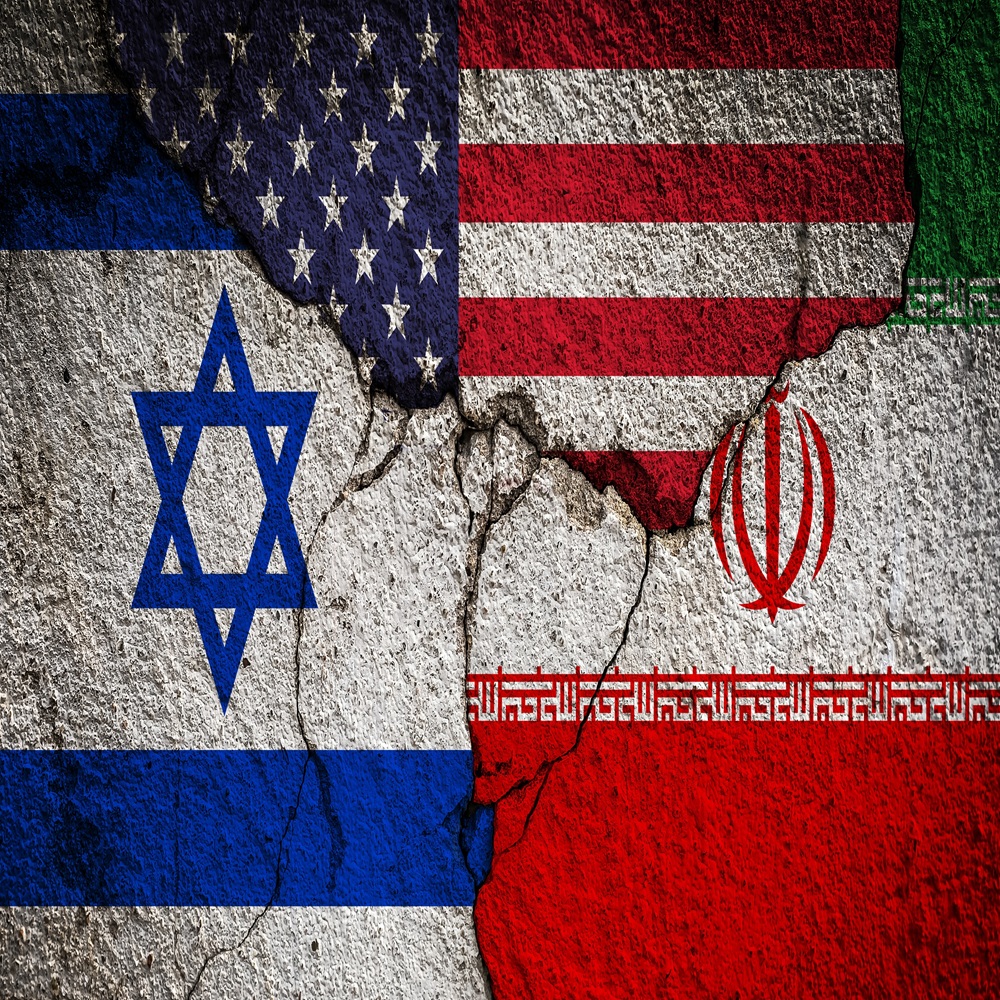
한국어로 읽기 Leer en español In Deutsch lesen Gap اقرأ بالعربية Lire en français Читать на русском The relationship between the United States and Israel has been described as one of the most enduring and strategic alliances in modern politics. Beyond shared cultural ties and democratic values, this alliance has been heavily sustained by the systematic influence of pro-Israel state and lobbying groups within U.S political institutions. In this context, the Israeli lobby, most notably represented by organizations such as the American Israel Public Affairs Committee (AIPAC), has played a central role in shaping key foreign policy decisions, from military aid assistance to diplomatic recognition of Israeli interests on the international stage (Mearsheimer & Walt, 2007).  While the presence of interest groups is a common feature of the U.S. democratic system, the Israeli lobby stands out due significant presence and impact on Middle East policy and America diplomacy. As some critics argue, this influence has at times, led to the subordination of U.S. strategic interest in favor of Israeli priorities (Pappé,2017). This article analyzes how the Israeli lobby operates, the mechanisms it employs, and the broader implications it holds for the independence of U.S. foreign policy. Mechanisms of Influence on U.S Foreign Policy         The Israeli state and lobby employs a wide array of tools to influence U.S foreign policy, combining financial, institutional, and narrative-based strategies. One of the most impactful methods is political funding. Pro-Israel Political Action Committees (PACs) have historically directed campaign contributions to congressional candidates who demonstrate unwavering support for Israel, in 2020 there a significant contribution of $30 million to federal campaigns. (OpenSecrest,2021). Lobbying efforts also extend to direct engagement with policy makers. AIPAC, for instance, organizes annual conferences that attract top U.S. officials, including presidents and congress members. Through strategic lobbying, the Israeli lobby has been instrumental in passing measures such as the US-Israel Strategic Partnership Act and ensuring continued military aid exceeding $3.8 billion annually (Mearsheimer & Walt, 2007).  While often presented as an independent force acting within the American political landscape, the Israeli lobby maintains close ties with the Israeli government, which allows it to act as a semi- official conduit for its foreign policy objectives. One clear example of his coordination was evident during the Obama administration’s negotiations of the Iran nuclear deal (JCPOA). During the Obama administration, to finalize the Iran nuclear deal (JCPOA), Israeli Prime Minister Benjamin Netanyahu addressed a joint session of Congress in 2015 without the White House´s approval. This unprecedented move coordinated with Republican congressional leaders highlighted how the Israeli lobby facilitated direct access to U.S. political institutions, effectively bypassing executive authority (Beauchamp, 2015).     Over decades, Israeli influence within U.S foreign policy decision making has moved beyond traditional lobbying, a structural element in how Washington approaches the Middle East. What initially began as advocacy in cultural and strategic alignment has gradually evolved into a form of embedded influence that often shapes policy trajectories before they reach public debate. In recent years, the influence has been reinforced by Israel´s growing military modernization and significant victories against their enemies such as Iranian proxies in Syria, Lebanon, and Gaza. These developments and Israeli momentum have not only bolstered Israel´s image as a capable regional power but also fueled a more assertive posture in its foreign relations. The confidence generated by these military gains has translated into hardened political positions and intensified pressure on allies, particularly the United States.                  These examples illustrate that the Israeli state and lobby does not operate in isolation but often reflects, channels, and amplifies the geopolitical agenda of the Israeli state. This dynamic complicates the notion of national interest within the U.S. foreign policy, especially when lobbying efforts coincide with foreign governmental objectives. From Influence to Entrapment: The U.S.- Israeli Alliance in the Iran Conflict               Despite initial promises of restraint under the renewed “America First” vision, the current U.S. administration finds itself increasingly entangled in a regional conflict it once sought to avoid. Under President Trump´s second term, American foreign policy was publicly framed around non-intervention, prioritizing domestic renewal over costly military initiatives and strategic assertiveness, which have steadily eroded Washington’s space for independent decision making.               Israel´s sustained rhetorical pressure and military assertiveness have shaped U.S. involvement in the ongoing war with Iran. Drawing on a momentum strengthened by recent strikes on Iranian nuclear infrastructure, Israeli leadership has framed Tehran as an imminent existential threat, pressuring Washington to intensify its military posture. As Froman (2024) observes, “Israel´s actions have fundamentally reshaped the security landscape of the Middle East.”  This situation highlights a concerning shift in how the United States is managing its foreign policy in the Middle East. Rather than settling the pace or leading diplomatically, Washington is now largely responding to events already set in motion by Israel. This reflects the long-standing nature of the U.S.-Israel relationship. America leaders now find themselves caught in a conflict they did not start but now must lead. With Iran already responding militarily and tensions rising across the region, the risk of a wider war is growing quickly. This mirrors past U.S experiences in Iraq and Afghanistan, where limited interventions turned into long, costly wars. As Israel continues to act from its position of strength, the U.S. faces danger of a new war.             With the collapse of the Joint Comprehensive Plan of Action (JCPOA) and the sidelining of multilateral diplomacy, there is little room left for negotiation. Institutions such as the United Nations or the International Atomic Energy Agency (IAEA) have been largely absent in terms of more action, also the intervention of the members of the security council of the United Nations, reflecting how hard power dynamics have overtaken diplomatic engagement. In this vacuum, the Israeli security narrative has become dominant. A War of Choice or a Path to Diplomacy The ongoing conflict has triggered a significant reconfiguration of the Middle East´s power structure. For now, Israel, strategically supported by the United States, has asserted its military and political dominance. Iran, weakened by the degradation of its proxy network and recent strikes on three nuclear facilities, finds itself momentarily contained. This alignment places the U.S.-Israel axis in a position of regional superiority.   However, this superiority could be temporary. If Iran succeeds in eventually acquiring a nuclear weapon, the balance may shift again, this time not through conventional power, but through nuclear deterrence. As seen during the cold war, deterrence is not about battlefield victory but about creating unacceptable costs for aggression.  A nuclear-armed Iran would no longer need to outmatch Israel or the U.S. militarily. This is precisely why diplomacy must be reviewed not as appeasement, but as a tool to prevent irreversible escalation. As Vaez (2025) states, “Washington and its partners should not give up on diplomacy with Iran not because it's not easy, but because it is the only sustainable way to prevent further escalation.” The current moments offer a fleeting opportunity: one where military success has bought time for diplomacy to reassert itself. Among the most urgent priorities               is re-engaging in serious negotiations surrounding the Joint Comprehensive Plan of Action (JCPOA), not simply to contain Iran´s nuclear ambitions, but to rebuild a broader framework of strategic dialogue. Failing to seize that opportunity could lock the region into a new war, one shaped not by diplomacy.             References:Beauchamp, Z. (2015, March 3). Why Netanyahu’s speech to Congress is one of the most controversial in history. Vox.  https://www.vox.com/2015/3/3/8142663/netanyahu-speech-congressMearsheimer, J. J., & Walt, S. M. (2007). The Israel Lobby and U.S. Foreign Policy. Farrar, Straus and Giroux.OpenSecrets. (2021). Pro-Israel PACs contributions to candidates, 2019–2020. Center for Responsive Politics.             https://www.opensecrets.org/political-action-committees-pacs/industry-detail/Q05/2020Pappé, I. (2017). Ten Myths About Israel. Verso Books.Vaez, A. (2025, June 16). Don’t Give Up on Diplomacy With Iran. Foreign Affairs. https://www.foreignaffairs.com/israel/dont-give-diplomacy-iran

Defense & Security
Iranian missile strike in Bat Yam, 15 June 2025

Will the fragile ceasefire between Iran and Israel hold? One factor could be crucial to it sticking

by Ali Mamouri

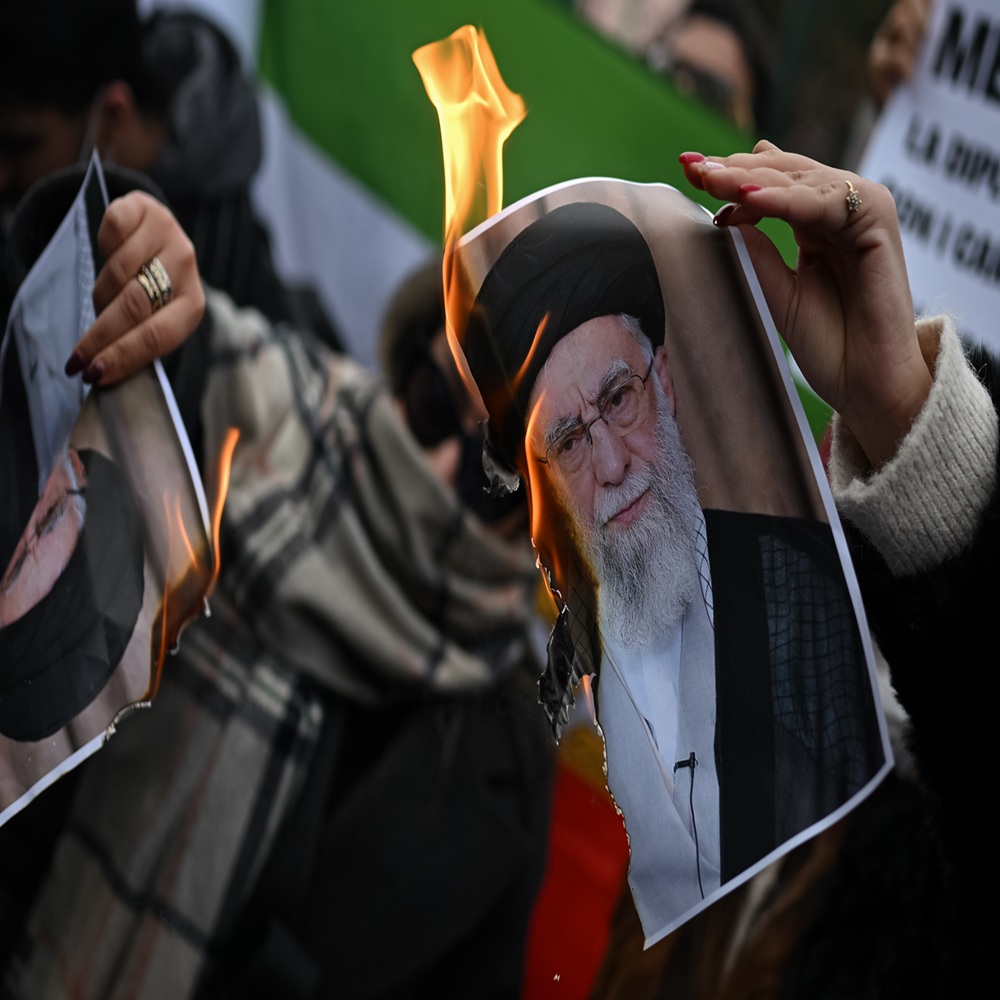
한국어로 읽기 Leer en español In Deutsch lesen Gap اقرأ بالعربية Lire en français Читать на русском After 12 days of war, US President Donald Trump announced a ceasefire between Israel and Iran that would bring to an end the most dramatic, direct conflict between the two nations in decades. Israel and Iran both agreed to adhere to the ceasefire, though they said they would respond with force to any breach. If the ceasefire holds – a big if – the key question will be whether this signals the start of lasting peace, or merely a brief pause before renewed conflict. As contemporary war studies show, peace tends to endure under one of two conditions: either the total defeat of one side, or the establishment of mutual deterrence. This means both parties refrain from aggression because the expected costs of retaliation far outweigh any potential gains. What did each side gain? The war has marked a turning point for Israel in its decades-long confrontation with Iran. For the first time, Israel successfully brought a prolonged battle to Iranian soil, shifting the conflict from confrontations with Iranian-backed proxy militant groups to direct strikes on Iran itself. This was made possible largely due to Israel’s success over the past two years in weakening Iran’s regional proxy network, particularly Hezbollah in Lebanon and Shiite militias in Syria. Over the past two weeks, Israel has inflicted significant damage on Iran’s military and scientific elite, killing several high-ranking commanders and nuclear scientists. The civilian toll was also high. Additionally, Israel achieved a major strategic objective by pulling the United States directly into the conflict. In coordination with Israel, the US launched strikes on three of Iran’s primary nuclear facilities: Fordow, Natanz and Isfahan. Despite these gains, Israel has not accomplished all of its stated goals. Prime Minister Benjamin Netanyahu had voiced support for regime change, urging Iranians to rise up against Supreme Leader Ali Khamenei’s government, but the senior leadership in Iran remains intact. Additionally, Israel has not fully eliminated Iran’s missile program. (Iran continued striking to the last minute before the ceasefire.) And Tehran did not acquiesce to Trump’s pre-war demand to end uranium enrichment. Although Iran was caught off-guard by Israel’s attacks — particularly as it was engaged in nuclear negotiations with the US — it responded by launching hundreds of missiles towards Israel. While many were intercepted, a significant number penetrated Israeli air defences, causing widespread destruction in major cities, dozens of fatalities and hundreds of injuries. Iran has demonstrated its capacity to strike back, though Israel has succeeded in destroying many of its air defence systems, some ballistic missile assets (including missile launchers) and multiple energy facilities. Since the beginning of the assault, Iranian officials have repeatedly called for a halt to resume negotiations. Under such intense pressure, Iran has realised it would not benefit from a prolonged war of attrition with Israel — especially as both nations face mounting costs and the risk of depleting their military stockpiles if the war continues. As theories of victory suggest, success in war is defined not only by the damage inflicted, but by achieving core strategic goals and weakening the enemy’s will and capacity to resist. While Israel claims to have achieved the bulk of its objectives, the extent of the damage to Iran’s nuclear program is not fully known, nor is its capacity to continue enriching uranium. Both sides could remain locked in a volatile standoff over Iran’s nuclear program, with the conflict potentially reigniting whenever either side perceives a strategic opportunity. Sticking point over Iran’s nuclear program Iran faces even greater challenges when it emerges from the war. With a heavy toll on its leadership and nuclear infrastructure, Tehran will likely prioritise rebuilding its deterrence capability. That includes acquiring new advanced air defence systems — potentially from China — and restoring key components of its missile and nuclear programs. (Some experts say Iran has not used some of its most powerful missiles to maintain this deterrence.) Iranian officials have claimed they safeguarded more than 400 kilograms of 60% enriched uranium before the attacks. This stockpile could theoretically be converted into nine to ten nuclear warheads if further enriched to 90%. Trump declared Iran’s nuclear capacity had been “totally obliterated”, whereas Rafael Grossi, the United Nations’ nuclear watchdog chief, said damage to Iran’s facilities was “very significant”. However, analysts have argued Iran will still have a depth of technical knowledge accumulated over decades. Depending on the extent of the damage to its underground facilities, Iran could be capable of restoring and even accelerating its program in a relatively short time frame. And the chances of reviving negotiations on Iran’s nuclear program appear slimmer than ever. What might future deterrence look like? The war has fundamentally reshaped how both Iran and Israel perceive deterrence — and how they plan to secure it going forward. For Iran, the conflict has reinforced the belief that its survival is at stake. With regime change openly discussed during the war, Iran’s leaders appear more convinced than ever that true deterrence requires two key pillars: nuclear weapons capability, and deeper strategic alignment with China and Russia. As a result, Iran is expected to move rapidly to restore and advance its nuclear program, potentially moving towards actual weaponisation — a step it had long avoided, officially. At the same time, Tehran is likely to accelerate military and economic cooperation with Beijing and Moscow to hedge against isolation. Iranian Foreign Minister Abbas Araghchi emphasised this close engagement with Russia during a visit to Moscow this week, particularly on nuclear matters. Israel, meanwhile, sees deterrence as requiring constant vigilance and a credible threat of overwhelming retaliation. In the absence of diplomatic breakthroughs, Israel may adopt a policy of immediate preemptive strikes on Iranian facilities or leadership figures if it detects any new escalation — particularly related to Iran’s nuclear program. In this context, the current ceasefire already appears fragile. Without comprehensive negotiations that address the core issues — namely, Iran’s nuclear capabilities — the pause in hostilities may prove temporary. Mutual deterrence may prevent a more protracted war for now, but the balance remains precarious and could collapse with little warning.

Defense & Security
The Cooperation Council for the Arab States of the Gulf ,is a regional, intergovernmental, political, and economic union comprising Bahrain, Kuwait, Oman, Qatar, Saudi Arabia, and the uae

Transactional Politics: Rethinking U.S.-Gulf Security and Defence Relationships amid U.S. Decline

by Kristian Coates Ulrichsen

한국어로 읽기 Leer en español In Deutsch lesen Gap اقرأ بالعربية Lire en français Читать на русском Abstract This article analyses the shifts in security and defence policies across the six states of the Gulf Cooperation Council (GCC) and disentangles political and geopolitical strains in the U.S.-Gulf relationship from practical measures to boost cooperation and deepen interoperability. In examining the trajectory of security and defence relationships, the article assesses the stability and durability of the underlying components of U.S.-Gulf partnerships in a time of rapid change. The article begins a section that details how and why the perception of U.S. disengagement has evolved, despite ongoing reliance on facilities such as Al-Udeid in Qatar for forward basing arrangements, before a second section examines regional responses to the withdrawal from Afghanistan in 2021, the Russia-Ukraine war in 2022, and the Israeli war in Gaza that erupted in 2023. A third section explores the ‘nuts and bolts’ of security and defence relationships and considers issues such as U.S. arms sales and Department of Defense programs, such as Red Sands in Saudi Arabia and the Comprehensive Security Integration and Prosperity Agreement with Bahrain, as ways to boost cooperation in the face of political tension and stiff competition. As U.S. troop levels have ebbed and flowed, a final section considers whether a more flexible approach to security relationships is sustainable in a far more transactional era of international power and politics. Little more than 6 months separated the chaotic U.S. withdrawal from Afghanistan in August 2021 from the full-scale Russian invasion of Ukraine in February 2022.[1] The manner by which the U.S. was seen by many observers to abandon the Afghan government in the face of a resurgent Taliban cast doubt among partner nations in the Gulf Cooperation Council (GCC) as to the reliability and ‘staying power’ of the U.S. in the region, and rekindled memories of the withdrawal of American support for Hosni Mubarak in Egypt as the Arab uprisings began in early 2011.[2] Kabul appeared to be another blow to a U.S.-led regional order that was already being questioned by officials in the Gulf States even as they contributed to its weakening by diversifying their own political, economic, and, to a lesser extent, security and defence relationships. For many in leadership positions in the Gulf States, the fall of Kabul appeared to be one more step in a process of U.S. disengagement which they perceived to be one-directional and to take place across successive presidencies as different as Obama was to Trump and Trump was to Biden.[3] Whereas the withdrawal from Afghanistan witnessed the U.S. acting unilaterally to secure its own interests, narrowly defined and without seeming to take account of those of its partners and allies, the build-up of tension in Ukraine saw the Biden administration engage intensively with allies and partners in the runup to and aftermath of the Russian invasion. U.S. intelligence and information-sharing, which were seen to have erred badly in Afghanistan in 2021, was a high-profile and very visible policy over Ukraine in 2022, and restored a measure of credibility, especially among NATO allies.[4] However, in the Gulf States, the policy response to Ukraine did not deliver a ‘dividend’ in terms of restoring faith in the U.S. as a trustworthy partner, as GCC states pursued hedging strategies and further diversified their range of security partnerships, albeit in divergent ways. The war in Gaza, which erupted after the Hamas-led incursion into southern Israel on October 7, 2023, generated additional questions about the durability of an increasingly fragile regional order.[5] And yet, the ‘nuts and bolts’ of security and defence ties between the U.S. and Gulf States have continued to evolve, albeit in a looser and more transactional form that at any time since the structure of U.S. primacy in the region took shape in the late-1980s and early-1990s. Examples of diverging trajectories include the United Arab Emirates becoming a safe haven for Russian capital and business, regional responses to Houthi attacks on shipping in the Red Sea, and the resilience of Saudi-Iranian ties even as hopes for Saudi-Israeli normalization faded. In October 2024, the decision of the Saudi Crown Prince, Mohammed bin Salman, to receive Iran’s Foreign Minister, Abbas Araghchi, just as the Biden administration was weighing its support for a retaliatory Israeli attack on Iran, demonstrated how perceptions of regional interests were moving apart.[6] It is this ‘puzzle’ of divergence in the political and security tracks of U.S.-Gulf relations that is the focus of analysis, as ties have simultaneously become more fragile yet also shown resilient adaptability. This article examines the changing trajectories of U.S.-Gulf security relationships and moves beyond the focus, often seen in American policy discourse, on U.S. demands for ‘burden-sharing’ among regional partners, which redoubled in the first and second Trump presidencies. Instead, the article examines the ways in which the Gulf States are developing a more transactional approach to U.S. partnerships, resulting in a more flexible model of cooperation. This is consistent with broader shifts from a U.S.-dominated regional order toward the internationalization of regional security structures, as policy preferences (on all sides) have gradually diverged. While there is no monolithic approach to ‘the Gulf’, by and large there is a trend toward states no longer being willing to rely solely on U.S. guarantees, borne out of events in the 2010s, and to developing a more diversified portfolio of security and defence partnerships, again at different speeds across different countries, and with no uniformity on the choice of external partner. At the same time, several Gulf States, notably Saudi Arabia, the United Arab Emirates (UAE), and Qatar have emerged as assertive regional and international actors, and new forms of partnership have evolved. There are four sections to this article, which begins with an examination of how and why the perception in the Gulf States of U.S. disengagement has evolved, despite ongoing reliance on facilities such as Al-Udeid in Qatar for forward basing arrangements. A second section examines regional responses to the withdrawal from Afghanistan in 2021, the Russia-Ukraine war in 2022, and the conflict in Gaza which began in October 2023. The third section explores the ‘nuts and bolts’ of security and defence relationships and considers issues such as U.S. arms sales and Department of Defense programs, such as Red Sands in Saudi Arabia and the recently concluded Comprehensive Security Integration and Prosperity Agreement with Bahrain, as ways to boost practical security cooperation in the face of political tension and stiff competition. As U.S. troop levels have ebbed and flowed, the concluding section considers whether and how a more flexible approach to security relationships is sustainable in a more transactional era of power and politics. Gulf States’ Perceptions of U.S. Disengagement A belief held by many policymakers in the Gulf States, that the U.S. is less engaged and/or less reliable and predictable in its approach to regional affairs, has taken root over the decade and a half which has elapsed since the Arab Spring uprisings of 2010–11. To be sure, this belief is rooted in an idealized view of U.S.-Gulf relations which has, over the three decades since the Gulf War in 1991, been based on extremely visible and large-scale force deployments in the region, especially during the wars in Afghanistan and Iraq, which were not typical of long-term trends.[7] Nevertheless, this perception has lasted across consecutive presidential administrations and has become more deeply entrenched precisely because a pattern has been seen to develop across such different presidencies as Obama to Trump to Biden, and as U.S. troop levels in the region were inexorably drawn down.[8] While there was no regionwide consensus or monolithic view of the U.S. in the Gulf, and no one single incident which sparked a reassessment, attitudes evolved in response to a series of policy decisions which unfolded over the space of a decade. The effect has been to strengthen a process of diversification of Gulf States’ security and defence relationships to avoid over-reliance on any single partner in a world of growing multipolarity and strategic options.[9] Deciding where to begin with the many issues which caused degrees of concern in Gulf capitals at U.S. policymaking intent is a little like asking the proverbial question about how long a piece of string might be. For example, the second term of the George W. Bush administration saw frictions develop between the U.S. and GCC states, notably Saudi Arabia, over the mishandling of the occupation of post-Saddam Iraq and the sense of anger in Gulf capitals that Iran appeared to be the primary geopolitical beneficiary.[10] This caused significant mistrust in Riyadh at U.S. policy intent (and outcomes) in Iraq and the region.[11] It was in the Obama administration, however, that the perception of drift began to develop, including in relation to the so-called ‘pivot to Asia’ in the late-2000s which Gulf leaders (erroneously) saw as a shift in U.S. focus away from the Middle East, rather than post-Cold War Europe.[12] However, it was the withdrawal of political support from the embattled Egyptian president, Hosni Mubarak, in February 2011, which caused shock and bitterness in Gulf capitals, who saw the move as a betrayal of a longstanding U.S. partner.[13] The Obama administration’s response to the Arab uprisings (which, in the case of unrest in GCC states, was far more muted and reflective of U.S. interests in the stability of its regional partners) was followed by the disclosure in November 2013 that American and Iranian officials had been meeting secretly in Oman for over a year, and by the subsequent negotiations between the P5 + 1 and Iran for a Joint Comprehensive Plan of Action (JCPOA) to address the Iranian nuclear file in 2015. Both negotiations cut out the GCC states and added to concerns at the direction of U.S. policymaking in the region.[14] Partly in response to concerns that the JCPOA focused too narrowly on only one aspect of Iran’s regional activity and did not address other issues, Saudi Arabia and the UAE intervened militarily in Yemen in March 2015 to push back the advance of Houthi rebels they believed were in receipt of direct Iranian assistance.[15] An interview given by Obama to The Atlantic magazine in 2016 sealed the breakdown in working relations as officials reacted with fury to a comment about ‘free riders’ which they perceived to be directed at them rather than, as was the case, against the British and French governments over their intervention in Libya in 2011.[16] Genuine displeasure, as well as a degree of bewilderment, at the direction of certain aspects of the Obama administration’s policies toward the Middle East contributed to the early embrace of the Trump presidency by officials in several Gulf capitals, including Riyadh and Abu Dhabi as well as Manama.[17] In June 2017, Trump initially endorsed the Saudi-Emirati-Bahraini (as well as Egyptian) move to isolate Qatar, in a decision which caused shockwaves in Doha as well as in the U.S. Departments of State and Defense. The sight of a sitting president seemingly abandoning a U.S. partner, albeit only temporarily, raised powerful questions about the reliability and durability of the Gulf States’ most important external relationship.[18] Two years later, it was the Saudis’ and Emiratis’ turn to call into question the partnership with the U.S. as the Trump administration chose not to respond to a series of attacks, generally although never formally attributed to Iran or to Iranian proxy groups, on energy and maritime targets in Saudi Arabia and the UAE.[19] In September 2019, 2 days after a missile and drone attack on Saudi oil facilities temporarily knocked out half the Kingdom’s oil production, Trump noted pointedly ‘That was an attack on Saudi Arabia, and that wasn’t an attack on us’ and added that ‘I’m somebody that would like not to have war’.[20] Political decisions by successive presidential administrations therefore injected doubt as to the value or even the existence of security guarantees which were believed by many observers of regional affairs to form the bedrock of contemporary U.S.-Gulf relations.[21] The impact became clear when tensions between the United States and Iran soared in the aftermath of the killing of Qassim Soleimani in an American drone strike in Baghdad in January 2020, when regional officials in GCC states called for de-escalation.[22] President Biden sought to restore U.S. credibility when he reasserted ‘the U.S. commitment to help Saudi Arabia defend its territory as it faces attacks from Iranian-aligned groups’ after he took office in 2021.[23] However, poor relations between Biden and Saudi Crown Prince Mohammed bin Salman, stemming from comments Biden made in a campaign debate in 2019, proved insurmountable, with MBS going so far as to reply ‘Simply, I do not care’, when asked in 2022 what he thought of Biden’s opinion of him.[24] Regional Responses to Afghanistan, Ukraine, and Gaza In August 2021, the disorganized and seemingly unilateral nature of the final U.S. withdrawal from Kabul provided yet another indication, in the eyes of already sceptical policy analysts and officials in GCC states, of the potentially capricious nature of American interests. While there was a broad consensus that the ‘forever wars’ launched in the 2000s could not continue indefinitely, the manner by which the Biden administration conducted its final drawdown reinforced the concerns listed above about the durability of U.S. commitments to regional partners, and as elements of the political right and left coalesced around support for policies of restraint and isolationism.[25] The sight of the Afghan air force rendered inoperable after the withdrawal of American training and maintenance, and the flight of Ashraf Ghani, the U.S.-backed President, to the UAE, were indicators of the vulnerability of over-reliance on single security partners, however powerful.[26] Less than six months later, the strenuous attempts made by the Biden administration to work with allies and partners to coordinate policy in early 2022 as Russian forces massed on the border with Ukraine, and then to push back against Moscow after the full-scale invasion commenced on February 24, ought to have repaired some of the damage caused by the optics around the chaos in Kabul in 2021. Specific measures included the deployment of additional U.S. troops to Eastern Europe as well as the sharing of intelligence designed to deter Vladimir Putin from moving into Ukraine.[27] Qatar, which was accorded Major Non-NATO Ally Status by the Biden administration in January 2022, in part a recognition of its assistance to U.S. and international humanitarian efforts in Afghanistan during and after the withdrawal, also sought to play a balancing role in gas markets as Emir Tamim visited Biden in the White House and hosted Russian energy officials in Doha.[28] Europe’s pivot away from Russia restated the Gulf States’ centrality in global energy security considerations, while the rise in oil and gas prices in late-2011 and for most of 2022 also returned GCC states’ budgets to surplus after years of deficits following the oil price crash of 2014.[29] However, the ‘coming together’ effect noticeable in the U.S.-European (and NATO) response to Russia-Ukraine in 2022 did not appear to mollify strained relationships in the Gulf; if anything, the responses to the invasion made the different trajectories which had taken shape in prior years all the more visible. Like much of the Global South, the Gulf States did not take sides in the Russia-Ukraine war. Policymakers in GCC capitals did not share the view of their counterparts in Washington and Europe that the collective defence of Ukraine was ‘an international order defining event, a generational moment in which international alliances and norms are being reshaped’.[30] Regional leaders refused to get drawn into a new era of bloc rivalry and, unlike the Iraqi invasion of Kuwait in 1990, did not deem Russia’s aggression against Ukraine to pose a direct threat to their political or security interests, in common with counterparts across much of the ‘Global South’.[31] A variation in stances toward the February 2022 invasion and subsequent developments nevertheless fell along a spectrum that ranged from Qatar aligning most closely with Ukraine (and the U.S. position) and Saudi Arabia, Bahrain, and the UAE leaning more closely toward Russia, with Kuwait and Oman falling somewhat in-between. These variations in position mirrored those during the GCC rift between 2017 and 2020, and indicate that, for the Qatari leadership, the sight of a larger power threatening (and ultimately invading) a smaller neighbour carried resonance, so soon after the blockade era when Doha faced pressure from Saudi Arabia, Bahrain, and the UAE. However, while Qatari leaders announced a pause in new investments in Russia, existing links with Moscow remained unchanged, and the Qatar Investment Authority became the largest non-Russian shareholder in Rosneft after BP announced it would terminate its own relationship with the state-owned giant.[32] The UAE position was complicated by the fact that the country had just taken up a rotating two-year seat on the United Nations Security Council for 2022–23. This forced the UAE to take positions even if the Emirati choice was to abstain on two Security Council votes in February 2022 which condemned the Russian invasion and called for an emergency session of the United General Assembly – abstentions which caused considerable friction with the U.S.[33] Policy responses in and after 2022 reinforced perceptions of drift in relations between the U.S. and key Gulf partners. Both Mohammed bin Zayed in Abu Dhabi and Mohammed bin Salman in Riyadh spoke on several occasions with President Putin and appeared to rebuff entreaties by President Biden during the opening weeks of the war.[34] Positions taken on Russia-Ukraine in 2022 illustrated how tensions that built up over a period of years beforehand became manifest in the regional reactions. After the imposition of additional U.S., European Union, and British sanctions on Russian entities in 2022, the UAE (and Dubai in particular) emerged as a welcoming haven for Russian capital and business elites, several of whom appeared to obtain Emirati citizenship.[35] Many of the sanctioned Russian companies continued to do business with counterparts in the Gulf States with few evident consequences, creating gaps in the moves to isolate the Putin regime. In 2023, Mohammed bin Saleh Al-Sada, the former Minister of State for Energy in Qatar from 2011 to 2018, was elected Chairman of the Board of Rosneft, in a private capacity but demonstrative of the limited reach of Western appeals to reduce Gulf ties with sanctioned entities in Russia.[36] The case of oil prices illustrated how the Gulf States assertively put their own interests forward even if they were seen to clash with the interests of partners such as the U.S. There is nothing untoward about this, as states routinely pursue national interests based on a pragmatic calculation of internal and external interests. However, in the context of the emphasis placed by the Biden administration and its European allies on the defence of Ukraine in the name of an international rules-based order, the sight of their closest partners in the Middle East not joining with anything like the same strength of approach sent visible signals of policy divergence over Ukraine. European and American leaders, including Boris Johnson and Joe Biden, visited Saudi Arabia in the spring and summer of 2022 to make the case for an increase in Saudi (and OPEC/OPEC+) output in order to bring down oil prices which had surged.[37] Moreover, the acrimonious aftermath of President Biden’s visit to Jeddah and meeting with Mohammed bin Salman in July 2022, and the coordinated Saudi-Russian oil output cut in October 2022, demonstrated the divergence of interests, especially as officials in D.C. and Riyadh traded barbs over whether (or not) the Saudi decision to cut output, or the Biden administration’s request to increase production, were politically motivated.[38] Following the outbreak of the war in Gaza after the Hamas-led attacks on southern Israel on October 7, 2023, the legitimacy of aspects of the system of international order came under growing scrutiny by critics who contrasted U.S. responses to developments in Ukraine as opposed to Gaza. Images of Palestinian suffering caused anger across the Middle East as well as much of the Global South, including in the Gulf States, and made it politically difficult for officials to ignore, with the Saudi leadership, in particular, reassessing the terms of any normalization agreement with Israel.[39] Discrepancies in labelling acts committed by Russian and Israeli forces (in Ukraine and Gaza, respectively) as ‘war crimes’, and about whether to engage with the International Court of Justice and the International Criminal Court, brought accusations of double standards and hypocrisy, and weakened the credibility of the international order in the eyes of many in the non-Western world.[40] While Gaza did not prove a breaking-point in U.S.-Gulf relations, it did bring to the surface the different trajectories in security and defence interests and priorities. Statements by leaders in Gulf capitals hardened as the bombardment of Gaza continued, with even Mohammed bin Salman going as far as to condemn ‘the collective genocide committed by Israel against the brotherly Palestinian people’ at an Arab-Islamic Summit in Riyadh in November 2024.[41] These remarks came just 14 months after the Crown Prince told Fox News in September 2023 that ‘every day, we get closer’ to a Saudi-Israeli breakthrough that, he predicted, would be ‘the biggest historical deal since the end of the Cold War’.[42] Officials in Oman went further in the use of harsh language to condemn Israeli actions which at times bordered on tacit support for Hamas, and was reflective of and rooted in an upsurge of anger among Omani citizens, hitherto one of the most politically quiescent commentariats in the region.[43] Leaders in all GCC states had to acknowledge the domestic backlash against the destruction of Gaza, a balancing act made more delicate in Bahrain and the UAE, the two Gulf signatories to the Abraham Accords with Israel in 2020.[44] An additional consideration for policymakers in Riyadh, Abu Dhabi, Dubai, and Doha, in particular, was an interest in ‘de-risking’ potential regional volatility as focus turned to large-scale developmental, energy, and infrastructure projects, including those associated with Saudi Arabia’s Vision 2030.[45] ‘Nuts and Bolts’ of Evolving Security and Defence Relationships In the face of the political and geopolitical tensions noted above, U.S. security relationships and defence partnerships with the Gulf States have evolved. A decade of change since 2015 has illustrated that ties tend to work better on an ad hoc, case-by-case basis rather than as part of a grand strategic framework. An example of the latter was the launch of a U.S.-GCC Strategic Partnership in 2015, at a summit at Camp David between Gulf leaders (only two of whom attended) and President Obama, and the creation of five working groups to cover cooperation in counterterrorism, missile defence, military preparedness and training, critical defence capabilities, and cyber security.[46] Both the working groups and the strategic partnership fell into abeyance during the Trump administration, and were superseded by U.S. efforts to form a Middle East Strategic Alliance (MESA) with GCC states plus Egypt and Jordan. MESA failed to gain traction for a variety of reasons, including the intra-GCC rift over Qatar, a failure of parties to agree on the scope and scale of the issues to be covered by the initiative, and Egypt’s withdrawal in 2019.[47] The U.S.-GCC working groups reconvened in February 2023, nearly a year into the Russia-Ukraine war, for their first meeting in years, against the backdrop of the supply of Iranian armed drones to Russia and the provision of Russian defence assistance to Iran. The fact that Iranian weapons systems were being tested on the battlefield in Ukraine and in operational and combat settings against civilian and infrastructure targets highlighted how a secondary impact of the Russia-Ukraine war could impact on U.S.-GCC interests.[48] U.S. and Gulf States’ navies then participated in a major 18-day International Maritime Exercise in February and March 2023 co-led by Saudi Arabia, Bahrain, and the U.S. and directed from the Maritime Security Centre in Oman. Held under the auspices of the U.S. Naval Forces Central Command, more than 7000 personnel and 35 ships from over 50 countries and organizations took part in exercises in the Red Sea, the Gulf of Aden, the Arabian Sea, and the Gulf.[49] Perhaps uncoincidentally, Russia and China joined Iran in a joint naval exercise in the Gulf of Oman the same month, illustrating how, in the ‘nuts and bolts’ of security and defence relationships, the GCC still chose to side with the U.S.[50] A host of new initiatives since 2020 suggest that new security partnerships between the U.S. and individual Gulf States are evolving on bespoke bilateral and issue-specific lines. CENTCOM has worked closely with Saudi officials to develop the Red Sands Integrated Experimentation Centre as a regional testing facility in Saudi Arabia to boost cooperation against the shared threat from missile and drone attacks from Iran and regional proxies.[51] Joint exercises involving U.S. and Saudi forces have tested systems to destroy and disable unmanned aerial systems of the type that breached Saudi air defences during the ballistic missile and drone strikes on oil infrastructure facilities in September 2019.[52] U.S. officials also play an integral role in Saudi Arabia’s defence transformation plan with Department of Defense personnel assisting their Saudi counterparts with overhauling human-capital development, joint staff development, intelligence reorganization and force sustainment, and the development of a National Defence College. The U.S. role in capacity-building is a step up from the hitherto-largely scattered interventions tied to the foreign military sales process rather than in support of any deeper or underlying policy objective.[53] Another example of renewed U.S. commitment to security ties with a Gulf partner was the signing in September 2023 of a Comprehensive Security Integration and Prosperity Agreement (C-SIPA) with Bahrain. Announced during a visit to Washington, D.C. by Bahrain’s Crown Prince Salman bin Hamad Al Khalifa and described as ‘the most advanced formal security agreement the United States has with any country in the region’, C-SIPA will expand defence and security cooperation as well as trade and investment ties through collaborative measures across the security spectrum, albeit without a mutual defence guarantee.[54] Although many of the specific security-related initiatives are classified, C-SIPA may build upon the recent spate of U.S. strategic dialogues with Gulf partners, which began with Qatar in 2017 and now encompass every GCC state on a bilateral (rather than collective) basis. How C-SIPA unfolds will likely be studied carefully in other Gulf capitals, especially Riyadh and Abu Dhabi, which have long demanded enhanced U.S. defence guarantees, most recently in relation to any U.S.-brokered agreement to normalize with Israel (in the Saudi case) and in the desire for ‘codified’ U.S. security commitments (for the UAE).[55] Officials in the UAE have chosen a different approach which reflects the confidence of Emirati policymakers that the country is an influential ‘middle power’ capable of holding its own on an inter-regional and increasingly global stage. This was evident in the signing of the Abraham Accord with Israel in September 2020 in which the text of the agreement signed by the UAE was far more substantive than those signed by Morocco, Bahrain, and Sudan, and included reference to a ‘Strategic Agenda for the Middle East’ that was unique to the Emirati-Israeli accord.[56] The strategic and security-focused aspects of the UAE-Israel agreement enabled the normalization process to survive periodic frictions in the political relationship, as security and defence relations took centre-stage in the new initiatives and joint ventures announced by both parties, and neither the UAE nor Bahrain has withdrawn from the Accords although other states have not joined.[57] Both Israel and the UAE, as small states with significant hard power capabilities, have operationalized formal cooperation in the security and defence realm, including a first joint military exercise in the Red Sea in November 2021 which was coordinated by the U.S. Fifth Fleet (stationed in Bahrain), which ‘set a precedent for collective policing at sea to counter weapons-smuggling and threats posed by pirates and the Iranian navy’.[58] In February 2023, a venture between EDGE, an Emirati defence consortium and Israel Aerospace Industries unveiled their first jointly created unmanned naval vessel, for use in surveillance, reconnaissance, and mine detection, during the annual Naval Defence and Maritime Security Exhibition in Abu Dhabi.[59] Sharing of intelligence, reportedly concerning Hezbollah and the Houthi movement in Yemen, also took place, including in the aftermath of three missile and drone strikes on Abu Dhabi in January 2022.[60] Emirati policymakers have continued to engage with the U.S. and other regional and international partners in a series of more focused ‘mini-lateral’ fora, including the 12U2 (with India, Israel, and the U.S.), the Negev Forum (with the U.S. and other Arab states which have normalized relations with Israel), the Somalia Quint (with the U.S., the U.K., Qatar, and Turkey), and the Yemen Quartet (with the U.S., the U.K., and Saudi Arabia).[61] Such issue-based tie-ups outside formal institutions provide opportunities for middle powers such as the UAE to engage with specific partners and have become key elements in the UAE’s evolving approach to regional and foreign affairs, especially in Asia and the Indo-Pacific, areas of increasing focus both for the Gulf States (for economic and energy reasons) and the U.S. (connected to power competition and strategic rivalry with China).[62] How the U.S. and its partners in the Gulf balance (or fail to balance) the competing and sometimes diverging interests vis-à-vis China (and, to an extent, Russia) will go some way toward defining the next phase of political relationships that may still impinge on defence and security ties, as seen in the furore over a possible Chinese naval facility in Abu Dhabi that contributed in part to significant tensions in the bilateral U.S.-UAE relationship in 2021.[63] Shifting Toward a Transactional Approach It may be that the future of relationships between the U.S. and the Gulf States will be based around a set of transactional principles that do not commit or bind the parties to long-term arrangements and represent a more fluid approach to regional affairs. A stronger but narrower technocratic focus on shared areas of interest could help to insulate U.S.-Gulf relationships from the types of political pressures and uncertainties which have generated the perception of drift. However, ‘taking politics out’ of the equation may not be easy to do in practice and could add to layers of mutual misunderstandings or grievance, as with the U.S. pressure on the UAE over its relations with China and Russia, or on Saudi Arabia not to join the expanded BRICS + grouping in 2023 (which the UAE joined but the Saudis have yet to do).[64] Several developments since 2023 provide indications as to how a new configuration of interests could function in a genuinely multipolar landscape. The Saudi-Iran agreement in March 2023 to restore diplomatic relations, which was announced in (and by) China, could be a harbinger of what a more variegated relationship might look like, with greater flexibility to rethink and reorient interests and policies. The Beijing deal appeared to take U.S. officials by surprise, and came in the midst of Beltway speculation about the prospect of Saudi normalization with Israel rather than with Iran.[65] While Saudi and Iranian officials had engaged in multiple prior rounds of talks, beginning in 2021 and facilitated by Iraq and Oman, the decision to obtain Chinese endorsement of the deal was as symbolic as it was significant.[66] China has diplomatic relations with Teheran and Riyadh as well as energy and economic ties in both Iran and Saudi Arabia, and thus could play a balancing role in ways the U.S. simply cannot. Moreover, at a time of rising tension between Iran and the U.S. and Israel, the Chinese backing for the Saudi deal signalled the desire of Beijing and its two regional partners for diplomacy and not conflict.[67] As the Gulf has seen a regional de-escalation of tension since 2021, officials in Gulf States have leveraged what influence they have to contribute to security in different ways. These include mediation, whether in regional conflicts (by Oman and Qatar) or in aspects of the Russia-Ukraine war (by Saudi Arabia and the UAE). Oman’s Foreign Minister since 2020 has been Badr bin Hamad Albusaidi, for whom a characteristic of Omani foreign policy has long been that ‘we try to make use of our intermediate position between larger powers to reduce the potential for conflict in our neighbourhood’.[68] Omani officials have kept open indirect channels of dialogue between the U.S. and Iran and also between Saudi and Houthi officials as they continue to seek to reach agreement in Yemen.[69] Qatari mediators engaged intensively with U.S. and Egyptian counterparts to secure the release of hostages taken by Hamas in October 2023, in return for a pause in Israeli military operations in Gaza, and reached a fragile three-stage ceasefire agreement in January 2025, one day before the Biden administration gave way to the second Trump presidency.[70] The close Qatari-U.S. coordination over Gaza built upon the confidence in Qatari mediation abilities generated by their role in facilitating and supporting the U.S. withdrawal from Kabul in 2021.[71] Saudi and Emirati officials engaged differently as they sought to leverage their relationships both with the U.S. and Russia to facilitate prisoner exchanges and contribute to confidence-building measures to mitigate the impact of the war in Ukraine. The occasional releases of prisoners may only have amounted to pinpricks in the course of the most serious conflict in Europe since the Second World War, but they illustrate that, for all the political tensions over the Gulf States’ reluctance to be drawn into picking sides in any great power competition, the ability to maintain diverse contacts and balance different relationships is conducive to diplomatic initiatives in a polarized world. The subsequent Saudi centrality to the process of U.S.-Russian re-engagement in Trump’s second term illustrated the Kingdom’s desire to have a seat at the table and burnish its credibility as a diplomatic facilitator, possibly with potential future Iran-U.S. talks in mind, especially after Saudi and Emirati displeasure at being cut out of the JCPOA negotiations in 2015.[72] Attacks on maritime targets in the Red Sea by Houthi militants in Yemen have nevertheless highlighted the delicate balancing act facing Gulf States as the deadliest war between Israelis and Palestinians since 1948 threatens the rapprochement that had marked the conduct of regional politics across the Middle East prior to October 7, 2023. Memories of Houthi missile and drone attacks against Saudi cities and infrastructure targets (between 2015 and 2022) and against Abu Dhabi (in 2022) remain fresh. Especially as Vision 2030 passed its halfway point (having been launched by Mohammed bin Salman in 2016) and the ‘giga-projects’ along Saudi Arabia’s Red Sea coastline move into the construction and delivery phase, ‘de-risking’ has become a priority for the Saudi leadership as they seek to attract foreign investors and visitors.[73] Officials remain mindful of the optics that went around the world during the Saudi Arabian Grand Prix in March 2022 when the annual Formula One race in Jeddah took place against the backdrop of thick black smoke billowing from a nearby oil storage facility struck by the Houthis the day before.[74] Policy responses to the Houthi attacks in the Red Sea which began in November 2023 and triggered a multinational response in January 2024 indicated the careful balancing act at play in the Gulf, especially for Saudi Arabia, given the location of projects such as Neom on the Red Sea coastline. Bahrain was the only GCC state to be named as a participant in Operation Prosperity Guardian, the multi-country coalition which was formed in December 2023 to respond to the maritime attacks. However, Bahrain did not take part in the kinetic ship- and air-based operations and it was notable that the airstrikes against Houthi targets in Yemen did not involve U.S. or British forces based in the Gulf.[75] Instead, the strikes were launched from bases in Cyprus, the U.K., and the U.S., thereby minimizing the risks to the Gulf States from any blowback either from the Houthis or Iran. Operation Prosperity Guardian may therefore be a harbinger of a more flexible approach to U.S.-GCC relations in which security and defence cooperation continues on a technocratic basis even as there is greater elasticity, and, at times, degrees of divergence in (geo)political interests.[76] The return of Donald Trump to the Oval Office in January 2025, as the first president in 130 years to serve a non-consecutive second term, suggests that U.S. decision-making, in both domestic and foreign policy, will continue along highly transactional, unpredictable, and volatile lines. A move toward a ‘post-American’ order, regionally in the Middle East and in the structure of international politics, is likely to further reshape perceptions and policies. As the Gulf States are neither allies (in the formal sense) nor adversaries of the United States, they occupy a middle ground which may shield them from swings in U.S. policymaking toward these categories of states. It is probable that the assertion of Gulf States’ interests in engaging with Iran, as well as with China and Russia will deepen the divergence of trajectories with the U.S. and increase the likelihood that ties will reframe around a looser and more transactional-based approach. The Gaza war may not have led to a rupture with the U.S., or with Israel, but, coming in parallel with the war in Ukraine, it has intensified the repositioning of the Gulf States in a rapidly changing system of international power. Declaration of Conflicting Interests The author declared no potential conflicts of interest with respect to the research, authorship, and/or publication of this article. Funding The author received no financial support for the research, authorship, and/or publication of this article. Footnotes 1. References in this paper to the Russian invasion of Ukraine refer to the full-scale invasion which was launched by Russian forces on February 24, 2022, rather than the invasion and subsequent Russian occupation of areas of eastern Ukraine and the Crimea in 2014. 2. David Kilcullen and Greg Mills, The Ledger: Accounting for Failure in Afghanistan (London: Hurst & Co., 2021), 222–24; Marc Lynch, The Arab Uprising: The Unfinished Revolutions of the New Middle East (New York: Public Affairs, 2012), 94. 3. Tobias Borck, Seeking Stability Amidst Disorder: The Foreign Policies of Saudi Arabia, the UAE and Qatar, 2010–20 (London: Hurst & Co., 2023), 193. 4. Huw Dylan and Thomas Maguire, ‘Secret Intelligence and Public Diplomacy in the Ukraine War’, Survival 64/4 (September 2022), 34. 5. John Raine, ‘Ukraine versus Gaza’, Survival, 66/1 (February/March 2024), 173–74. 6. Ben Hubbard, ‘Iranian Official Heads to Saudi Arabia as Israel Postpones U.S. Meeting’, New York Times, October 9, 2024. 7. Dania Thafer and David Des Roches, The Arms Trade, Military Services and the Security Market in the Gulf States: Trends and Implications (Berlin: Gerlach Press, 2016), 1–7. 8. Bilal Saab, ‘After Hub-and-Spoke: US Hegemony in a New Gulf Security Order’, Atlantic CouncilReport, 2016, 4 9. Tobias Borck, Seeking Stability Amidst Disorder: The Foreign Policies of Saudi Arabia, the UAE andQatar, 2010-20 (Oxford: Oxford University Press, 2023), 18; Khalifa Al-Suwaidi, The UAE After theArab Spring: Strategy for Survival (London: I.B. Tauris, 2023), 120. 10. Kristian Coates Ulrichsen, Insecure Gulf: The End of Certainty and the Transition to the Post-Oil Era(London: Hurst & Co., 2011), 40. 11. Katherine Harvey, A Self-Fulfilling Prophecy: The Saudi Struggle for Iraq (London: Hurst & Co., 2021),144–45. 12. David Roberts, Security Politics in the Gulf Monarchies: Continuity amid Change (New York: ColumbiaUniversity Press, 2023), 158. 13. Fawaz Gerges, Obama and the Middle East: The End of America’s Moment? (New York: PalgraveMacmillan, 2012), 166–67. 14. William Burns, The Back Channel: American Diplomacy in a Disordered World (London: Hurst & Co.,2019), 361–62; Marc Lynch, The New Arab Wars: Uprisings and Anarchy in the Middle East (New York:Public Affairs, 2016), 226–28. 15. Thomas Juneau, ‘Iran’s Policy Towards the Houthis in Yemen: A Limited Return on a Modest In-vestment’, International Affairs 92/3 (May 2016), 658. 16. Jeffrey Goldberg, ‘The Obama Doctrine’, The Atlantic, March 10, 2016; Turki al-Faisal Al Saud, ‘Mr.Obama, We Are Not ‘Free Riders’, Arab News, March 14, 2016. 17. Mehran Kamrava, Troubled Waters: Insecurity in the Persian Gulf (Ithaca: Cornell University Press,2018), 71. 18. Kristian Coates Ulrichsen, Qatar and the Gulf Crisis (London: Hurst & Co., 2020), 77–78. 19. By contrast, the Trump administration did respond on two occasions when U.S. assets were targeted, firstin June 2019 after a U.S. drone was shot down over the Gulf and then in December 2019 after anAmerican contractor was killed in a missile strike on a base in Iraq. 20. Steve Holland and Rania El Gamal, ‘Trump Says He Does Not Want War After Attack on Saudi OilFacilities’, Reuters, September 16, 2019. 21. David Roberts, ‘For Decades, Gulf Leaders Counted on U.S. Protection. Here’s What Changed’,Washington Post, January 30, 2020. 22. Tamara Abueish, ‘Saudi Arabia’s Vice Defense Minister Discusses De-escalation with Esper’, AlArabiya English, January 7, 2020. 23. Anon., ‘Biden Raises Yemen, Human Rights in Call with Saudi King Salman’, Al Jazeera, February 25, 2021. 24. Emile Hokayem, ‘Fraught Relations: Saudi Ambitions and American Anger’, Survival 64/6 (November 2023), 9. 25. David Deudney and John Ikenberry, ‘Misplaced Restraint: The Quincy Coalition Versus Liberal Internationalism’, Survival, 63(4), 2021, 9; Alexander Hertel-Fernandez, Theda Skocpol, and Jason Sclar,‘When Political Mega-Donors Join Forces: How the Koch Network and the Democracy Alliance In-fluence Organized US Politics on the Right and Left’, Studies in American Political Development, 32(2),2018, 128. 26. Marika Theros, ‘Knowledge, Power and the Failure of US Peacemaking in Afghanistan 2018–21’,International Affairs, 99(3), 2023, 1249–50. 27. Trine Flockhart, ‘NATO in the Multi-Order World’, International Affairs 100/2 (March 2024), 473. 28. David Ottaway, ‘U.S. Calls for Help – Again – From the Tiny Arab Emirate of Qatar’, Wilson Center,February 2, 2022. 29. Li-Chen Sim, ‘The Gulf States: Beneficiaries of the Russia-Europe Energy War?’, Middle East Institute,January 12, 2023. 30. Marc Lynch, ‘Saudi Oil Cuts and American International Order’, Abu Aardvark’s MENA Academy(Substack), October 9, 2022. 31. Chris Alden, ‘The Global South and Russia’s Invasion of Ukraine’, LSE Public Policy Review, 3(1),2023, 2–4. 32. Hazar Kilani, ‘Qatar Investment Authority Holding Onto its Russian Assets for Now’, Doha News,March 2, 2022. 33. Kristian Coates Ulrichsen, ‘The GCC and the Russia-Ukraine Crisis’, Arab Center Washington, March 22, 2022. 34. Dion Nissenbaum, Stephen Kalin, and David Cloud, ‘Saudi, Emirati Leaders Decline Calls withPresident Biden during Ukraine Crisis’, Wall St Journal, March 8, 2022. 35. Natalia Savelyeva, ‘Understanding the Russian Exodus to Dubai Following the Ukraine Invasion’, TheRussia Program, George Washington University, May 8, 2024. 36. Anon., ‘Rosneft Elects Qatari Ex-Minister as New Chairman’, Energy Intelligence, July 5, 2023. 37. Mark Colchester, Summer Said, and Stephen Kalin, ‘Boris Johnson Visits U.A.E., Saudi Arabia, SeekingMore Oil’, Wall St Journal, March 16, 2022. 38. Alex Marquardt, Natasha Bertrand, and Phil Mattingly, ‘Inside the White House’s Failed Effort toDissuade OPEC from Cutting Oil Production to Avoid a “Total Disaster”’, CNN, October 5, 2022;Anders Hagstrom, ‘Saudis Say Biden Admin Requested Oil Production Cut to Come After Midterms’,Fox News, October 13, 2022. 39. Elham Fakhro, The Abraham Accords: The Gulf States, Israel, and the Limits of Normalization (NewYork: Columbia University Press, 2024), 220. 40. Stacie Goddard, ‘Legitimation and Hypocrisy in Gaza: Implications for the LIO’, in Marc Lynch (ed.),Debating American Primacy in the Middle East, POMEPS Studies 54, 2024, 47. 41. Mostafa Salem, ‘Saudi Crown Prince Accuses Israel of Committing “Collective Genocide” in Gaza’,CNN, November 13, 2024. 42. Peter Aitken, ‘Bret Baier Interviews Saudi Prince: Israel Peace, 9/11 Ties, Iran Nuke Fears’, Fox News,September 20, 2023. 43. Giorgio Cafiero, ‘Gaza War Undermines Oman’s Role as Bridge in a Conflict-Ridden Middle East’,Stimson Commentary, August 26, 2024. 44. Dania Thafer, ‘Palestinian Statehood Tops GCC Security Agenda as Diplomatic Struggles Persist’,Middle East Council on Global Affairs, October 7, 2024. 45. Kristian Coates Ulrichsen, ‘Saudi Plans to “De-Risk” Region Have Taken a Hit with Gaza Violence – butHitting Pause on Normalization with Israel Will Buy Kingdom Time’, The Conversation, October 18, 2023. 46. Anon., ‘Fact Sheet: Implementation of the U.S.-Gulf Cooperation Council Strategic Partnership’, TheWhite House, Office of the Press Secretary, April 21, 2016. 47. Kristian Coates Ulrichsen, ‘What Next for the Middle East Strategic Alliance?’, Arab Digest, October 29, 2020. 48. Barak Ravid, ‘Senior U.S. Delegation in Saudi Arabia for Talks with GCC’, Axios, February 15, 2023. 49. Anon., ‘US Leads Gulf Partners in 18-day Naval Exercise’, Gulf States Newsletter, 47/1166, March 23,2023, 11. 50. Anon., ‘China and Russia Join Iranian Exercise at Sea’, Gulf States Newsletter, 47/1166, March 23,2023, 10. 51. Melissa Horvath, ‘Is Red Sands the Future of Middle East Defence Cooperation?’, Middle East Institute,October 4, 2022. 52. Anon., ‘U.S. and Saudi Arabia Conduct Combined Counter-UAS Exercise’, U.S. Central Command press release, September 14, 2023. 53. Bilal Saab, ‘The Other Saudi Transformation’, Middle East Policy 29/2 (Summer 2022), 27–28. 54. Kristian Alexander and Giorgio Cafiero, ‘Biden’s Realpolitik Approach: Analyzing the C-SIPAAgreement with Bahrain’, Gulf International Forum, October 29, 2023. 55. William Roebuck, ‘Bahrain Sets the Pace for Enhanced Gulf Security Cooperation with the UnitedStates’, Arab Gulf States Institute in Washington, September 27, 2023; Anon., ‘The UK’s Accession to the Bahrain-US Security Agreement’, International Institute for Strategic Studies, Strategic Comment,February 2025. 56. Sanam Vakil and Neil Quilliam, ‘The Abraham Accords and Israel-UAE Normalization: Shaping a NewMiddle East’, Chatham House Research Paper, March 2023, 5. 57. UAE officials expressed their reservations about Netanyahu’s perceived attempts to leverage the normalization agreement in his 2021 campaign by downplaying suggestions of a visit by Netanyahu asPrime Minister to the UAE, and again after Netanyahu returned to office and announced that his first foreign visit would be to the UAE, choosing instead to receive other Israeli political leaders rather thanNetanyahu himself. 58. Vakil and Quilliam, ‘The Abraham Accords and Israel-UAE Normalization: Shaping a New MiddleEast’, (March 2023), 29. 59. Anon., ‘UAE, Israel Unveil Joint Naval Vessel as Military Ties Grow’, AFP, February 20, 2023. 60. Jean-Loup Samaan, ‘The Shift That Wasn’t: Misreading the UAE’s New “Zero-Problem” Policy’,Carnegie Endowment for International Peace, Sada blog, February 8, 2022. 61. Nickolay Mladenov, ‘Minilateralism: A Concept That is Changing the World Order’, The WashingtonInstitute for Near East Policy, April 14, 2023. 62. Husain Haqqani and Narayanappa Janardhan, ‘The Minilateral Era’, Foreign Policy, January 10, 2023. 63. Gordon Lubold and Warren Strobel, ‘Secret Chinese Port in Persian Gulf Rattles U.S. Relations withU.A.E.’, Wall Street Journal, November 19, 2021; Warren Strobel, ‘U.A.E. Shut Down China FacilityUnder U.S. Pressure, Emirates Says’, Wall Street Journal, December 9, 2021; John Hudson, EllenNakashima, and Liz Sly, ‘Buildup Resumed at Suspected Chinese Military Site in UAE, Leak Says’,Washington Post, April 26, 2023. 64. Sam Fleming, Henry Foy, Felicia Schwartz, James Politi, and Simeon Kerr, ‘West Presses UAE to ClampDown on Suspected Russia Sanctions Busting’, Financial Times, March 1, 2023. 65. Dion Nissenbaum, Dov Lieber, and Stephen Kalin, ‘Saudi Arabia Seeks Pledges, Nuclear Help for Peacewith Israel’, Wall Street Journal, March 9, 2023; Michael Crowley, Vivian Nereim, and Patrick Kingsley,‘Saudi Arabia Offers its Price to Normalize Relations with Israel’, New York Times, March 9, 2023. 66. Anon., ‘Great Expectations: The Future of Iranian-Saudi D´etente’, International Crisis Group, June13, 2024. 67. Amrita Jash, ‘Saudi-Iran Deal: A Test Case of China’s Role as an International Mediator’, GeorgetownJournal of International Affairs, June 23, 2023. 68. Badr bin Hamad Al Bu Said, ‘“Small States” Diplomacy in the Age of Globalization: An OmaniPerspective’, in Gerd Nonneman (ed.), Analyzing Middle East Foreign Policies and the Relationshipwith Europe (London: Routledge, 2005), 258. 69. Giorgio Cafiero, ‘Oman Keeps Trying to Dial Down Tensions in the Middle East’, Stimson Centre,February 2, 2024. 70. Samy Magdy, Adam Geller, and Aamer Madhani, ‘To Secure Gaza Ceasefire, Dealmakers OvercameEnemies’ Deep Distrust’, Associated Press, January 22, 2025. 71. Mirdef Alqashouti, ‘Qatar Mediation: From Soft Diplomacy to Foreign Policy’, in Mahjoob Zweiri andFarah Al Qawasmi (eds.), Contemporary Qatar: Examining State and Society (Singapore: Springer,2023), 73. 72. Diana Galeeva, ‘Saudi Arabia as a Global Mediator: From the Ukraine to Gaza War’, Menara Magazine,March 24, 2025. 73. Kristian Coates Ulrichsen, ‘Saudi-Israeli Normalization and the Hamas Attack’, Arab Center Wash-ington, October 11, 2023. 74. Ben Church, ‘F1 Organizers Insist Saudi Arabian Grand Prix Will Go Ahead Despite Houthi Attack onNearby Oil Facility’, CNN, March 26, 2022. 75. Ahdeya Ahmed Al-Sayed, ‘Better Late than Never: Bahrain’s Attitude Towards the Red Sea DefenseCoalition’, The Washington Institute, Fikra Forum, December 29, 2023. 76. Nikolay Kozhanov, ‘Why Gulf Arab States Are Not Intervening in the Red Sea’, Amwaj Media, February27, 2024.

Defense & Security
Israel and Iran flags on Middle east map. High quality photo

Iran-Israel ‘threshold war’ has rewritten nuclear escalation rules

by Farah N. Jan

한국어로 읽기 Leer en español In Deutsch lesen Gap اقرأ بالعربية Lire en français Читать на русском Israel’s conflict with Iran represents far more than another Middle Eastern crisis – it marks the emergence of a dangerous new chapter in nuclear rivalries that has the potential to reshape global proliferation risks for decades to come. What began with Israeli strikes on Iranian nuclear facilities and other targets on June 13, 2025 has now spiraled into the world’s first full-scale example of what I as an expert in nuclear security call a “threshold war” – a new and terrifying form of conflict where a nuclear weapons power seeks to use force to prevent an enemy on the verge of nuclearization from making that jump. As missiles continue to rain down on both Tehran and Tel Aviv – with hundreds dead in Iran and at least 24 killed in Israel – the international community is witnessing the collapse of traditional deterrence frameworks in real time. Unlike traditional nuclear rivalries where both sides possess declared arsenals – like India and Pakistan, who despite their tensions operate under mutual deterrence – this new threshold dynamic creates an inherently unstable escalation spiral. Iran increasingly believes it cannot deter Israeli aggression without nuclear weapons, yet every step toward acquiring them invites more aggressive Israeli strikes. Israel, for its part, cannot permanently eliminate Iran’s nuclear knowledge through military means – it can only delay it through means that would seemingly guarantee future Iranian determination to acquire the ultimate deterrent. Under this dynamic, neither side can step back without accepting an intolerable outcome: for Israel, an Iran more determined than even in becoming a nuclear weapons nation capable of deterring Israeli action and ending its regional military dominance; for Iran, the risk of regime change through devastating Israeli strikes. The consequences of this deadly logic extend far beyond the Middle East. The preventive strike precedent The stakes could not be higher, as Iranian officials have called the attack “a declaration of war” and vowed that destroyed nuclear facilities “would be rebuilt.” Israel, meanwhile has warned its campaign will continue “for as many days as it takes.” Most ominously, the scheduled nuclear talks between the U.S. and Iran were called off, with Tehran dismissing any such dialogue as “meaningless.” This may suggest diplomacy’s window – which opened for just a few months under Trump’s second administration, after being closed during his first – was deliberately slammed shut. More broadly, the Israeli strikes mark a dangerous evolution in international norms around preventive warfare. While Israeli officials called this a “preemptive strike,” the legal and strategic reality is different. Preemptive strikes respond to imminent threats – like Israel’s 1967 Six-Day War against Arab armies preparing to attack. Preventive strikes, by contrast, target distant future threats when conditions seem favorable – like Japan’s attack on Pearl Harbor in 1941. Israel justified its action by claiming Iran could rapidly assemble up to 15 nuclear bombs. Yet, as the International Atomic Energy Agency director, Rafael Grossi, warned beforehand, an Israeli strike could solidify rather than deter Iran’s nuclear ambitions, potentially prompting withdrawal from the Nuclear Non-Proliferation Treaty. True to that warning, on June 16, Iran announced it was preparing a parliamentary bill that would see the country leave the 1968 treaty. Israel’s calculations in opting to strike build on the same erosion of international legal frameworks that has legitimized preemptive warfare since the United States’ military action in Afghanistan and Iraq after the Sept. 11, 2001 attack. America’s “war on terror” fundamentally challenged sovereignty norms through practices like drone strikes and preemptive attacks. More recently, operations in Gaza and elsewhere have demonstrated that violations of international humanitarian law carry limited consequences in practice. For Israel, this permissive environment has seemingly created both opportunity and justification regarding striking Iran – something that Prime Minister Benjamin Netanyahu has been pursuing for decades. Already, Russia’s attacks on Ukraine’s Zaporizhzhia nuclear plant demonstrated nuclear facilities’ vulnerability in modern warfare. I believe Israel’s actions further risk normalizing attacks on nuclear infrastructure, potentially legitimizing similar preventive actions by India, China or the U.S. against emerging nuclear programs elsewhere. From strikes to regional conflagration Israel’s initial strike quickly triggered inevitable escalation. Iran’s retaliation came in waves: first hundreds of drones and missiles on June 13, then sustained barrages throughout the following days. By the morning of June 15, both countries were trading strikes on energy infrastructure, military bases and civilian areas, with no immediate end in sight. The Houthis in Yemen have since joined the fight, by launching ballistic missiles at Tel Aviv. Notably absent are Hezbollah, Hamas and Iran’s Iraqi militias – all significantly damaged by recent action by Israel. This degradation of Iran’s “axis of resistance” – its traditional forward deterrent – fundamentally alters Tehran’s strategic calculations. Without strong proxies to threaten retaliation, Iran is more exposed to Israeli strikes, making nuclear weapons seem like the only reliable deterrent against future attacks. The escalation pattern illustrates what can happen when when a government casts aggression as prevention. Having initiated the recent escalation of hostilities, Israel now faces the consequences. Iranian President Masoud Pezeshkian’s vow that destroyed facilities “would be rebuilt” underscores that Israeli action designed to prevent nuclearization may instead result in Iran pursuing it with renewed determination. The commitment trap This creates what strategists call the “commitment trap” – a dynamic where both sides face escalating costs but cannot back down. Israel faces its own strategic dilemma. The strikes may ultimately accelerate rather than prevent Iranian nuclearization, yet backing down would mean accepting a nuclear Iran. Netanyahu’s promise that current strikes are “nothing compared to what they will feel in coming days” shows how quickly strikes sold as preventative escalate toward total war. Unlike established nuclear powers that can negotiate from positions of strength, threshold states, such as Iran, face a stark choice: remain vulnerable to preventive strikes and regime change or race toward the protection that nuclear deterrence provides. North Korea offers the clearest example of this dynamic. Despite decades of sanctions and military threats, Pyongyang’s nuclear program has made it essentially immune to preventive strikes. Iranian leaders understand this lesson well – the question is whether they can reach the same protected status before suffering decisive preventive action. Traditional nuclear deterrence theory assumes rational actors operating under mutual vulnerability. But threshold wars break these assumptions in fundamental ways. Iran cannot fully deter Israeli action because it lacks confirmed weapons, while Israel cannot rely on deterrence to prevent Iranian weaponization because Iran’s nuclear program continues advancing. This creates “use it or lose it” dynamics: Israel faces shrinking windows to act preventively as Iran approaches weaponization; Iran faces incentives to accelerate its program before suffering additional strikes. The absence of effective external mediation compounds these risks. U.S. President Donald Trump’s response to the strikes reveals this dynamic starkly. Initially opposing military action and preferring diplomacy to “bombing the hell out of” Iran, Trump pivoted dramatically after the strikes began, and warned that “there’s more to come. A lot more.” His post on Truth Social – “Two months ago I gave Iran a 60-day ultimatum to ‘make a deal.’ They should have done it!” – demonstrates how quickly diplomatic efforts can collapse once threshold wars begin. Global implication The international response reveals how thoroughly Israel’s Operation Rising Lion has normalized aggression against nuclear facilities. While European leaders called for “maximum restraint,” none condemned Israel’s initial attacks. Russia and China condemned the attacks but took no concrete action. The U.N. Security Council produced only statements of “concern” about “escalation.” This normalization sets what I believe to be a catastrophic precedent. The threshold war model threatens to unravel decades of nuclear governance based on deterrence rather than preemption. Indeed, the Iran-Israel threshold war sets dangerous precedents for other regional nuclear competitions. Successful preventive strikes could incentivize similar actions elsewhere, eroding diplomatic nonproliferation efforts. Conversely, rapid nuclearization by Iran could encourage other threshold states, like Saudi Arabia, to pursue nuclear capabilities swiftly and secretly. When preventive strikes become the enforcement mechanism for nonproliferation norms, the entire architecture of nuclear governance begins to crumble. Without these frameworks, the world faces an unstable future defined by cycles of preventive strikes and accelerated nuclear proliferation – far more dangerous than the Cold War-era standoffs that shaped nuclear governance.

Defense & Security
President Donald Trump with Saudi Crown Prince Mohammed Bin Salman and President of Syria Ahmed al-Sharaa (2025)

What Does the Easing of Anti-Syrian Sanctions Mean?

by Alexey Khlebnikov

한국어로 읽기 Leer en español In Deutsch lesen Gap اقرأ بالعربية Lire en français Читать на русском Six months have passed since the Hayat Tahrir al-Sham group [1], led by Abu Mohammad al-Julani (now known as Ahmad al-Sharaa), took power in Syria. Shortly before that, on the other side of the world, Donald Trump won the presidential election in the United States, and the whole world turned its attention to what the foreign policy of the new resident of the White House would actually look like. The new Syrian authorities watched him more attentively than others, fully understanding that Trump’s policy toward their country would largely determine their own future and the future of Syria. At the same time, after six months in power, despite certain efforts, the new Syrian leadership has so far failed to fundamentally resolve key socio-economic problems in the country, the issues of disarmament and the integration of armed groups into a unified army, restore effective control over borders and weapons, ensure internal security for all—including minorities—and launch a truly inclusive transitional political process. Of course, achieving all of this is extremely difficult given that external actors play one of the key roles in these matters. Therefore, the events of recent weeks—especially actions by the United States—are very important for Syria and the region. Let us examine what consequences the easing of U.S. sanctions might have for Damascus, the Middle Eastern region, and Russia. The Easing of American Sanctions On May 13, during his Middle East tour, U.S. President Donald Trump announced his intention to initiate the process of lifting all sanctions on Syria, which was a rather unexpected move, as even within the president's own administration there was no consensus on the matter. For Damascus and other regional players, this statement became a long-awaited step from Washington. Later, on May 23, the U.S. Department of the Treasury’s Office of Foreign Assets Control (OFAC) issued General License (GL) 25 for Syria, which launched the process of easing sanctions in accordance with Trump’s statement. In particular, all transactions with Syria and the Syrian government that were prohibited by the Syrian Sanctions Regulations were authorized, effectively loosening existing restrictions. It is worth noting that since January 6, 2025, General License 24 had already been in effect for six months, authorizing certain previously prohibited transactions with the Syrian government and Central Bank. Essentially, GL 25 expanded the sanctions relief that had been initiated at the end of the Biden administration. In addition to GL 25, the U.S. State Department suspended the sanctions stipulated by the Caesar Act for 180 days, which, according to Washington's plan, is intended to encourage foreign partners, U.S. allies, and regional players to begin economic and financial engagement with Syria’s new authorities. However, their temporary suspension for six months indicates a gradual approach to lifting restrictions. At the same time, the easing of sanctions is not so simple or unambiguous. First, since 1979, numerous sanctions have been imposed on Syria, including both presidential executive orders and laws approved by Congress. This makes a full repeal of sanctions a complex and slow process, as some of them will require congressional approval. Second, not all restrictions have been lifted. Furthermore, the Trump administration can rather easily and quickly reinstate them. Instead of completely repealing the fundamental sanctions laws, OFAC issued a General License. This means that if the new Syrian authorities don’t succeed in removing foreign fighters, fighting terrorism, and protecting religious and ethnic minorities, OFAC can just cancel GL 25 and bring back the previous restrictions. Similarly, the State Department may choose not to extend the 180-day suspension of the Caesar Act. Clearly, the U.S. will monitor the situation in Syria and the progress of the new authorities. Thus, GL 25 and the suspension of the Caesar Act should be seen not merely as a gift from Trump, but as a leverage tool for the U.S. over Syria’s new government. Third, in exchange for lifting sanctions, Trump expects rather problematic steps from the new Syrian authorities. During an unexpected meeting with Syria’s new president on May 14, the White House leader urged him to normalize relations with Israel (potentially through joining the Abraham Accords or striking a new deal). This is a highly difficult step, as it is likely to provoke a negative reaction from radicals within HTS, as well as from ordinary citizens, which may ultimately trigger new escalation in Syria. Trump also called for the cleansing of foreign fighters and terrorists from the ranks of the Syrian military. This request is also problematic, as Julani still relies on them and continues to promote them into positions within the new army. Moreover, removing foreign fighters and radicals may also spark discontent and retaliatory actions against Julani and his supporters. In this regard, the new Syrian authorities find themselves in a very ambiguous situation. Having come to power as radical Islamists and terrorists, they have begun to use different tools to ensure their political survival — namely, the lifting of U.S. sanctions and the acquisition of external financial and economic aid. To achieve this, they must get rid of those through whom they gained power in Syria, and solving this problem is only a matter of time. What Does Sanctions Relief Mean for Syria? Trump’s Plan to Lift Sanctions on Syria Could Mean the Following: First, the easing of sanctions will lend greater legitimacy to the new Syrian authorities and increase their public support. Syrians have been waiting for the lifting of sanctions for many years. They are hoping for improvements in the humanitarian and socio-economic situation, which has only worsened since 2020, and for the start of full-scale reconstruction of the country. Trump’s decision gives them hope, which in turn increases support for the new Syrian authorities. Second, radical Islamist forces in Syria view Ash-Sharaa’s engagement with the West as a threat to their prospects in Syria and beyond. In their view, he has begun to betray “revolutionary” and “Islamist” values and “sell them out” in exchange for political and economic benefits from the West. It is important to note that in a recent fatwa, one of the Salafi ideologues, Abu Muhammad al-Maqdisi, declared Syria’s interim president Ahmad Ash-Sharaa (and his supporters) an unbeliever for “abandoning Islamic law in favor of man-made laws.” Additionally, ISIS recently called on HTS militants dissatisfied with the policies of the new Syrian government to defect. The main threat to such forces lies in the possibility that Ash-Sharaa may ultimately ban and physically eliminate them in exchange for full recognition and economic support from the West. At the same time, the growing internal “jihadist opposition” in Syria could affect the country’s stability, since the government still doesn’t control all of the territory and doesn’t have full control over weapons and the use of force. As mentioned earlier, a possible normalization between Syria and Israel is also a strong argument used against Ash-Sharaa and a source of tension for hardliners in the country, which creates a challenge for the authorities. Third, Julani is at the same time strengthening his position even further. The meeting with the U.S. president on May 14 improved his image both in the region and around the world. Support from the U.S., shown by that meeting, gives him a way to act against his most radical colleagues and slowly get rid of them. Financial, economic, and military aid from Western and Gulf countries — which Damascus will likely get soon — will let him act more confidently and strictly against his most radical opponents, including Islamist extremists, without being afraid of losing public support. In other words, more international recognition gives Ash-Sharaa more support at home, which lets him weaken the radicals’ claims about his illegitimacy and stop depending on them as a way to control the country. Fourth, Trump’s statement will stimulate economic aid and investments from Gulf states and the EU into Syria. After the U.S. published GL 25 on May 23, the EU followed suit, deciding on May 28 to lift its economic sanctions on Syria. It is worth noting that the EU will also monitor the human rights situation in the country and developments related to the March events on the country’s coast. All potential donors and investors will closely observe the situation and are unlikely to rush with major financial inflows. A step-by-step approach is more likely. Fifth, the gradual improvement of the humanitarian and economic situation will ultimately lead to the mass return of Syrian refugees (according to UN data, about 4.5 million Syrian refugees remain abroad, and around 7.5 million internally displaced persons reside within Syria). On one hand, this will increase the socio-economic burden on the Syrian state, which could create a favorable environment for opposition and radical ideas. On the other hand, it may enable the authorities to increase their public support and gain more potential manpower for rebuilding the country and its economy. At the same time, according to a recent UN report on Syria, “social cohesion in the country remains fragile due to deeply rooted ethnic divisions, prolonged displacement/deportation, and the complex dynamics of IDP and refugee returns.” The conflict has exacerbated divisions between ethnic and sectarian groups, and recent changes in the political landscape have intensified discontent over political representation and inclusiveness, land ownership, access to resources, and control over security. Therefore, it is crucial for the Syrian authorities to promptly secure sufficient resources and tools to create sustainable conditions for the country’s recovery. What Lies Ahead for the Region? First, the GCC countries, especially Qatar, Saudi Arabia, and the UAE, will become more active in Syria. Saudi Arabia and the UAE will try to balance Turkish and Qatari influence in Syria through increased investments, economic projects, and support for the current authorities. It is quite likely that regional economic projects aimed at connecting the countries of the region will be discussed and implemented again. For example, the resumption of the Arab Gas Pipeline, stretching from Egypt through Jordan and Syria to Lebanon, could improve the electricity supply situation in Syria and Lebanon. Second, the mass return of Syrian refugees to their homeland will reduce the socio-economic burden on regional countries—primarily Turkey, Lebanon, and Jordan—on whose territories they are still located. Third, Syria will receive more investments from the EU, which will help accelerate its recovery and allow the European Union to restore its economic positions in Syria. Syria’s economic recovery, in turn, will have a positive effect on Lebanon as well. Fourth, there is a possibility of potential Syrian-Israeli negotiations on normalizing relations. In recent weeks, both sides have already established direct contacts and are discussing security issues. However, it is worth mentioning that indirect contacts between the new Syrian authorities and Israel began back in December 2024. The issue here lies in how potential opponents of Julani will exploit this and whether Syrian-Israeli normalization (or even talks about it) will have a destabilizing effect on Syria and the region. What Prospects Open for Russia? First, Moscow has not had major economic interests or assets in Syria. At the same time, it is important to note that General License 25 prohibits transactions beneficial to Russia, Iran, or North Korea (or involving the transfer or provision of goods, technology, software, funds, financing, or services to or from these countries), which limits Moscow’s ability to provide economic assistance to Syria. Hypothetically, if the U.S. were to fully lift all restrictions on Syria’s relations with Russia, Moscow would be able to conclude deals with Damascus in the defense sector (including maintenance of Soviet/Russian military equipment), in the field of industrial restoration (of Soviet/Russian infrastructure facilities), in agriculture, and in education. Second, it is also important to note that since neither Trump’s plan to lift sanctions on Syria nor the EU plan includes a condition for the withdrawal of Russian military bases from Syria (at least not publicly), Moscow retains a greater chance of negotiating more favorable terms for maintaining its military facilities in the country.  *** Thus, one can say that the sanction relief measures by the U.S. and EU are primarily aimed at helping the new Syrian authorities cope with the challenges facing them—severe socio-economic conditions, energy supply issues, reform and restructuring of the armed forces, infrastructure restoration, combating radical Islamists, foreign militants and ISIS, and regaining control over the entire territory of the country. Secondly, they are meant to help strengthen the political position of Damascus and specifically al-Sharaa within the country in order to carry out, as much as possible, a democratic transitional process over the coming years. Thirdly, they signal clearly that sanctions can be lifted if the "right people" come to power and if they act in a certain direction. Fourthly, these sanctions relief measures are essentially tools of influence and pressure, and explicitly tie the easing or removal of sanctions to the behavior of the target. The process of lifting restrictions on Syria will first and foremost open a financial and economic pathway into the country for regional actors who have long been directly interested in stabilizing the situation. As for the U.S. and the EU, it appears that neither is ready to go all in on Syria, preferring a gradual approach while waiting to see how the new authorities in Damascus perform in the coming months. This reflects both the West’s waning interest in the region and the growing agency and role of regional actors. At the same time, it is worth noting that the amount of Western or Gulf investment in Syria is unlikely to affect the quality of internal governance, reform implementation, or the inclusiveness of the transition period. Naturally, by gradually lifting sanctions, the West is trying to create conditions in which it retains leverage over today’s authorities in Damascus. But will the West be ready for the possibility that, over time, this leverage may stop working?  Hayat Tahrir al-Sham is a terrorist organization banned in Russia.ISIS is a terrorist organization banned in the territory of Russia.

Defense & Security
Gaza on map. Israel an Palestine on geopolitical Map. Gaza strip and West Bank. War conflict.

Netanyahu accelerates plans for total occupation of a starving Gaza

by Redacción El Salto

한국어로 읽기 Leer en español In Deutsch lesen Gap اقرأ بالعربية Lire en français Читать на русском The Israeli army seeks to mobilize 30,000 reservists for a new expansion of its offensive on Gaza. UN-affiliated organizations warn of famine and disease in an enclave where clean drinking water is scarce. The Israeli security cabinet has approved a plan to intensify the operation in Gaza, which includes capturing or seizing additional areas across the Palestinian coastal territory and expanding the area controlled by the IDF. Government members, such as Finance Minister Bezalel Smotrich, are already using the term “occupation” to clarify the plans for Gaza. Although Prime Minister Benjamin Netanyahu has not specified which parts of the territory are involved in the new escalation, anonymous military sources have claimed that the goal is to occupy the entire Gaza Strip. The idea put forth by the Zionist regime, in any case, is to seize the territory and not return it in the future. Hamas has rejected this plan and continues to pursue “a comprehensive agreement that guarantees the safety and protection of our people,” according to one of its senior officials. The announcement includes the destruction of “all infrastructure above and underground,” according to Israeli Chief of General Staff Eyal Zamir. The meeting followed IDF orders to mobilize 30,000 reservists last Saturday. Israel is thereby increasing pressure on Gaza during the same month that U.S. President Donald Trump is expected to visit Saudi Arabia, Qatar, and the UAE, where he will present his colonization plans aligned with the wishes of the Tel Aviv regime. The plan also entails a new forced displacement of hundreds of thousands of Palestinians to the south of Gaza, expected to last for months. The government of Netanyahu — who is considered a suspected war criminal by the International Court of Justice (ICJ) — faces internal resistance from the Hostage and Missing Families Forum, which has protested what they see as prioritizing territorial conquest over the return of prisoners captured by Hamas on October 7. Fifty-nine people remain held by the Gaza government after Israel unilaterally broke the ceasefire on March 18. The Forum mentioned before, criticized the Gaza occupation plans, referring to them as the “Smotrich-Netanyahu Plan for the Sacrifice of Hostages,” according to a public statement. The main debate within the security cabinet focused on whether to open routes for humanitarian aid — routes that have been closed since early March, two weeks before the ceasefire collapsed. According to Israeli newspaper Haaretz, Itamar Ben Gvir — also subject to ICJ arrest warrants — argued for keeping all aid routes closed: “I don’t understand why we have to give them anything; they have enough food there. We should bomb Hamas’s food reserves,” the outlet quoted. The Chief of Staff called the idea “dangerous.” According to the same leaks, Ben Gvir also proposed “bombing food warehouses and generators.” The International Criminal Court has reminded that blocking humanitarian aid may constitute a war crime. The Israeli government has leaked to the press that under the new escalation, humanitarian aid would be allowed in only through “international organizations and private security contractors.” On Sunday, May 4, the Country Humanitarian Team (CHT), under the UN Office for the Coordination of Humanitarian Affairs (OCHA), reported that for nine weeks Israeli authorities had blocked all supplies from entering Gaza: “Bakeries and community kitchens have shut down. The warehouses are empty. Children are starving.” Two days earlier, UNICEF Executive Director Catherine Russell expanded on the critical situation in Gaza: “In the past month, more than 75% of households have reported increased difficulty accessing water. Families don’t have enough to drink, cannot wash their hands when needed, and often must choose between showering, cleaning, or cooking,” Russell said in a statement. UNICEF also warned of the prevalence of acute watery diarrhea, especially dangerous for children: “Over 9,000 boys and girls have received treatment for acute malnutrition,” the organization added. At the end of April, during ICJ hearings related to South Africa’s case against Israel, Claire Nicolet, Head of Emergencies at Médecins Sans Frontières (MSF), stated that “Israeli authorities are not only using aid as a bargaining chip but also as a weapon of war.” Since October 7, 2023, 52,567 Palestinians have been killed and 118,610 injured as a result of Israeli attacks, according to the Gaza Health Ministry. Of those fatalities, 2,459 occurred after the March ceasefire was broken. 

Defense & Security
Main img

ISIS After Assad: Reshaping Its Presence in Syria’s Power Vacuums and the Challenges of Regional Deterrence

by Mohamed Nabil El-Bendary

한국어로 읽기 Leer en español In Deutsch lesen Gap اقرأ بالعربية Lire en français Читать на русском Introduction Amid the rapidly shifting dynamics in Syria and Iraq, international and regional warnings about the resurgence of ISIS have resurfaced, driven by mounting evidence of the group’s reorganization and its exploitation of the security vacuum left by military collapses and political instability. Since late 2024, multiple reports have pointed to a noticeable uptick in ISIS activity, an increase in the frequency of its attacks, and a growing ability to maneuver and recruit—fueled by weak regional coordination and diverging priorities among key international actors. Far from being ideologically defeated, ISIS appears to be reshaping itself within a volatile landscape, threatening to usher in a new phase of instability. Against this backdrop, the following analysis explores the main features of the group’s resurgence, the dynamics of its territorial re-expansion, and the regional and international efforts to contain it—seeking to unpack the nature of this renewed threat and assess its potential implications. International Warnings Over the Growing Threat of ISIS A series of international and regional statements and warnings issued since late 2024 reflect mounting concerns over the reemergence of the terrorist group ISIS on the regional scene, amid fragile security conditions and a diminished capacity to contain unconventional threats. In December 2024, Iraqi Foreign Minister Fuad Hussein, in a phone call with the UK Minister of State for the Middle East and North Africa, Hamish Falconer, revealed alarming signs of ISIS regrouping. He noted that the organization had managed to seize large stockpiles of weapons following the collapse of Syrian army units that abandoned their arsenals—enabling ISIS to expand its territorial presence in parts of Syria. This alarming development has not only been flagged by Iraq but has also featured prominently in international reports. On February 10, 2025, the UN Under-Secretary-General for Counter-Terrorism, during a briefing before the Security Council, confirmed that ISIS continues to demonstrate a striking ability to adapt and evolve its tactics, despite ongoing security and military pressure from member states and international and regional partners. The 20th report of the UN Secretary-General on the threat posed by ISIS to international peace and security emphasized that the group has not been ideologically defeated; rather, it is restructuring itself within the security and political voids present in Syria, Iraq, and other areas. In the same context, Russian Deputy Foreign Minister Sergey Ryabkov warned in March 2025 of a "real danger" posed by ISIS’s resurgence in Syria, pointing to the lack of political settlements and the breakdown of certain internal security structures as conditions conducive to the group's return. His warning echoed the concluding statement of the meeting of foreign ministers from Syria’s neighboring countries, held in Amman, Jordan, on March 9, 2025. The ministers expressed deep concern over the escalating ISIS threat and underscored the need to strengthen regional cooperation mechanisms—particularly in intelligence sharing and coordinating security operations along Syria’s borders with Jordan, Iraq, and Lebanon. In a joint press conference following the meeting, Iraqi Foreign Minister Fuad Hussein stressed that "combating ISIS is no longer a local issue, but a collective responsibility that demands effective regional readiness and robust international support." He highlighted that the group’s threat has grown not only in terms of manpower but also in terms of military capabilities, and that its reach is now expanding beyond border areas into the Syrian heartland itself. These developments indicate that, despite the significant blows dealt to it in recent years, ISIS continues to benefit from the fluid geopolitical landscape in Syria—one that creates security gaps the group can exploit to reposition and reorganize itself. Furthermore, the conflicting priorities among international and regional actors in the Syrian file are hindering the formation of a unified front to confront this renewed threat. This fragmentation makes the challenge far more complex and reinforces the notion that the battle against ISIS remains far from over—both on the ground and within the broader framework of collective security. Signs of Escalation ISIS continues to consolidate its presence in Syria through its deployment across two geographically separate yet strategically interconnected regions—demonstrating the group’s persistent ability to exploit security gaps and divergences among local and international actors. The first area lies in Syria’s northeastern region, known as al-Jazira, which is nominally under the control of the U.S.-backed Syrian Democratic Forces (SDF). Despite this control, ISIS has maintained a notable presence in the southern desert of al-Hasakah province, geographically linked to the northeastern outskirts of the city of Al-Bukamal, particularly around the town of Al-Baghuz—the group’s last urban stronghold before its official collapse. This geographic footprint extends beyond Syria’s borders into Iraq, specifically into the Hadar desert in Nineveh province. Although concrete barriers now separate the two countries, ISIS has retained a clear ability to move across the border, as confirmed by testimonies from residents in the rural areas of al-Hasakah—rekindling memories of the "parallel state" dynamic the group sought to establish during its peak between 2014 and 2017. The year 2024 saw a marked increase in ISIS activity within Syria. According to the Syrian Observatory for Human Rights, the group carried out 491 operations throughout the year. In its report released on December 30, 2024, the Observatory noted that ISIS has successfully exploited political and military turmoil to reorganize and launch targeted attacks. In line with this, the Soufan Center reported on December 18 that ISIS attacks had tripled in frequency compared to 2023. Meanwhile, U.S. Central Command (CENTCOM) confirmed on July 17 that the group claimed responsibility for 153 attacks in Iraq and Syria during just the first half of 2024—clearly reflecting a strategy aimed at “escalating operational activity to compensate for structural decline.”  This upward trend reinforces the growing assumption that ISIS is leveraging fragile security conditions not only to expand its territorial influence but also to challenge other extremist groups—most notably Hay’at Tahrir al-Sham (HTS) in northern Syria. HTS has faced internal challenges linked to the novelty of its governance experiment and has been weakened by surprise attacks that undermine its structure and heighten insecurity in its areas of control. ISIS, in turn, appears intent on diffusing HTS’s efforts, exacerbating divisions among factions, and exploiting public discontent with local elites. These developments have also triggered serious concerns over potential spillover effects in Iraq, especially given the deeply interwoven geographic linkages between the Syrian and Iraqi theaters of operation. The cross-border mobility of ISIS operatives could reactivate dormant cells in Iraq’s western and northern provinces—particularly given the thousands of radicalized individuals currently held in Iraqi prisons, making these facilities potential targets for jailbreaks or attempts to reassert control, as seen in the earlier Ghweran prison attack in al-Hasakah. In light of this complex battlefield landscape, the fight against ISIS is far from over. The group—demonstrating notable tactical agility—is reconstituting itself within existing voids, capitalizing on fragmentation, and continually seeking new pathways for resurgence through the shifting terrain of regional geopolitics. The inability of certain local and regional powers to formulate a sustainable, collective counterterrorism strategy only further emboldens the group’s ambitions. Contours of a New Phase in the War Against ISIS The final months of 2024 and early 2025 witnessed a series of high-profile operations targeting senior ISIS leaders, signaling a tactical shift in the counterterrorism strategies adopted by international and regional powers. This shift marks the beginning of a new phase in the fight against ISIS—one that moves beyond random strikes to a focused campaign against the group’s leadership infrastructure. On December 20, 2024, U.S. Central Command (CENTCOM) announced a precision airstrike in Syria’s Deir ez-Zor province, initially claiming it had killed ISIS’s leader, known as “Abu Yusuf.” However, CENTCOM later revised its statement, clarifying that the target was not the overall leader but a senior commander named Mahmoud “Abu Yusuf,” along with two of his aides. This correction reflects the complex intelligence challenges involved in identifying high-ranking ISIS figures, especially in an environment riddled with infiltration and security deception. In a related development, Iraqi Prime Minister Mohammed Shia’ Al-Sudani announced in March 2025, via a post on the platform X, the killing of one of the group’s most dangerous operatives: Abdullah Maki Masleh Al-Rifai, known as “Abu Khadijah,” who held the title of “Wali of Iraq and Syria” within ISIS's organizational structure. His elimination, the result of coordinated efforts between Iraqi intelligence and the Joint Operations Command—supported by the international coalition—demonstrates the effectiveness of multi-layered coordination in tracking down the group’s hidden leadership. On the European front, France returned to active operations against ISIS in Syria for the first time in over two years. In December 2024, French Armed Forces Minister Sébastien Lecornu announced that French warplanes had conducted precision strikes on ISIS positions inside Syrian territory. He emphasized that the operation, carried out the previous Sunday, underscored France’s continued commitment to counterterrorism efforts in the Levant. This marked France’s first such strike since September 2022—indicating a potential reactivation of its counterterrorism role and a broader effort to reassert European engagement in Syria, a file that has largely been dominated by the U.S., Russia, and Turkey. These three operations—American, Iraqi, and French—reflect what appears to be a renewed “leadership decapitation campaign” targeting ISIS commanders amid rising concerns over the group’s resurgence in Syria and Iraq. Yet, while such strikes carry strategic importance, they cannot substitute for broader efforts to dismantle the ideological, organizational, and financial foundations that allow ISIS to regenerate. Killing leaders may temporarily weaken the group’s capabilities, but it does not ensure its eradication unless accompanied by comprehensive political and security solutions that address the roots of extremism and the institutional fragility on which the group thrives. In a notable development suggesting a qualitative shift in how regional states are approaching the terrorism file, Turkey, Jordan, Iraq, and Syria announced in February 2025 the establishment of a joint cooperation mechanism to confront ISIS. The agreement emphasizes close coordination between foreign and defense ministries and intelligence agencies, covering areas such as border security, intelligence sharing, and joint military operations. This move reflects a shared recognition that the terrorist threat transcends borders and demands coordinated frameworks that go beyond bilateral interests toward a collective regional security logic. This agreement laid the foundation for a broader process that culminated in a high-level five-party summit on March 8, 2025. The meeting brought together foreign and defense ministers, senior military commanders, and intelligence chiefs from the four founding countries, with Lebanon later joining the process. From the Turkish side, the meeting was attended by Foreign Minister Hakan Fidan, Defense Minister Yaşar Güler, and intelligence chief İbrahim Kalın—highlighting Turkey’s strategic investment in this forum as a platform for reshaping the security landscape in northern Syria and Iraq. More broadly, this nascent regional alliance reflects a growing inclination to reduce dependence on Western powers in managing regional security issues. Instead, it seeks to establish a “new security architecture” led by Middle Eastern nations themselves—reviving the role of Arab and regional capitals in controlling border zones and reclaiming areas that ISIS may seek to exploit as fallback havens for regrouping and redeployment. Conclusion The available data indicates that ISIS is entering a new phase of reactivation and repositioning in the Syrian theater, capitalizing on the security and political collapse following the fall of central authority, and on the conflicting agendas of regional and international actors. Despite targeted strikes against some of its leaders, the group continues to demonstrate its operational adaptability and its ability to evolve amid shifting field dynamics. The resurgence of ISIS attacks and its expansion into ungoverned spaces signal a complex phase of confrontation—one that demands more than just military maneuvers. The success of the war against ISIS in Syria depends not only on precision strikes but also on the establishment of effective regional security partnerships and the activation of political and developmental pathways that address the root causes of extremism. As the group seeks to exploit divisions, its complete disappearance will hinge on the creation of a comprehensive deterrence architecture—one that goes beyond temporary fixes and moves toward sustainable strategies that tackle the structural foundations of militancy, not just its symptoms.

Defense & Security
world map of ethiopia and bordering countries sudan kenya somalia and eritrea

Ethiopia-Somalia Tensions: Power Dynamics and Extra-Regional Actors in the Red Sea Region

by Federico Donelli

한국어로 읽기 Leer en español In Deutsch lesen Gap اقرأ بالعربية Lire en français Читать на русском Signed in 2024, the Ethiopia-Somaliland Memorandum of Understanding (MoU) has reshaped regional dynamics, potentially granting Ethiopia sea access via Berbera in exchange for Somaliland’s recognition. This move challenged Somalia’s territorial integrity and prompted Mogadishu to align itself with Egypt, Eritrea, and Djibouti against Ethiopia. While the crisis reflects Ethiopia’s strategic push for a maritime presence, it also captures Somaliland’s long-standing quest for independence. In the wider Red Sea region, regional tensions are exacerbated by extra-regional actors which include the UAE, Turkey, France, and Saudi Arabia, all of which have their own interests therein. Although, external actors do not directly cause conflict, their involvement emboldens local actors and escalates rivalries. Hence, the Red Sea region has a growing importance in contemporary global geopolitics. Ethiopia-Somaliland MoU: Geopolitical Ambitions and the Quest for Recognition The year 2024 began with the signing of a Memorandum of Understanding between Ethiopia and Somaliland. The latter, formerly British Somaliland, was part of Somalia, from which it unilaterally seceded after Siad Barre’s regime collapsed in 1991. Since then, Somaliland has been self-ruled and is considered a de facto state. However, the Hargheisa authority does not enjoy any international legal recognition. If implemented, the agreement with Addis Ababa would give Somaliland its first significant de jure recognition. In return, the Hargheisa authorities would grant Ethiopia access to the sea through the port of Berbera and the concession of a coastal area for military use. The situation revolves around three key regional players: Ethiopia, Somalia, and Somaliland. Each of these actors has engaged in activities driven by its own objectives and strategic priorities. Ethiopia’s decision is influenced by several practical economic and strategic factors. Following the Eritrean War in the early 1990s, Ethiopia lost its Red Sea ports and became the world’s most populous landlocked country. Since 1998, Djibouti’s ports have handled 95 per cent of trade to and from Addis Ababa. Sea access through Djibouti costs Ethiopia between $1.5 and $2 billion annually which Ethiopia’s rulers, since 2019, begun to express more strongly that they consider this spending excessive and unsustainable in the medium to long term. To reduce Addis Ababa’s dependence on Djiboutian ports, the government of Prime Minister Abiy Ahmed believes it is necessary to find a viable alternative. Before the MoU, Ethiopia had considered several alternatives to Djibouti, including Eritrea, Somalia, and Kenya. The idea of developing an economic and trade corridor between Addis Ababa and the port of Berbera on the Gulf of Aden began to take shape in the final months of 2023. Somaliland’s main port has been operated by the Emirati company – DP World since 2015, which has developed its infrastructure and increased its cargo transit capacity. Ethiopia estimates that it can divert between 12 and 15 per cent of the total volume passing through Djibouti’s ports to Berbera and, in the long term, connect its industrial zones to several trade corridors. From a strategic point of view, Ethiopian assessments are influenced by Addis Ababa’s national role conception. Ethiopia sees itself as the leading regional power because of its history and traditional economic and political weight in the region. Consequently, Ethiopian elites perceive the Red Sea and the Gulf of Aden as their natural strategic spheres. For this reason, the Ethiopian Institute of Foreign Affairs recently announced the ‘Grand Strategy of the Two Waters.’ The new agenda aims to expand the sphere of national interest and action eastwards towards the sea, unlike in the past when the focus of Ethiopia’s strategic projection was mainly on the Nile Basin. Indeed, Ethiopia’s ambitions as a regional power are challenged by its lack of a maritime gateway. For Addis Ababa, having a presence in the Red Sea would provide two strategic benefits: first, it would strengthen its standing in the region; second, it would bolster Ethiopia’s international role by enhancing cooperation in multilateral anti-piracy efforts. In short, the Ethiopian government sees maritime projection as a strategic resource and a gateway to the geopolitics of the coming decades, which will focus on Asia and the Indo-Pacific in particular. Therefore, one of the key clauses of the MoU allows Ethiopia to establish a military outpost in Lughaya, a town overlooking the Gulf of Aden, for at least fifty years. According to Ethiopian plans, the naval base will become the headquarters of the nascent Ethiopian navy. For Somaliland, the MoU represents a further step on the difficult path to independence. In the past year, the issue of Somaliland’s independence has gained renewed attention and relevance. This pursuit of self-determination is deeply rooted in a historical context that stretches back to the 19th century, predating the regime of Siad Barre. The Somalilanders’ path began during a pivotal time when the British Empire established agreements with various Somali clans, particularly the Gadabuursi, Issa, and Habr Awal. In 1884, the region was officially designated as British Somaliland, a protectorate that enjoyed a measure of autonomy and governance, distinguishing it from the colonial dominance exerted by Italian authorities in southern Somalia. Following the unification of Somaliland with the Trust Territory of Somalia in 1960, the social, economic, and political conditions of the people of Somaliland began to deteriorate, leading to widespread discontent and a strong desire for independence. Over time, the Siad Barre regime cast a long shadow over Somaliland, leading to widespread discrimination and marginalisation. The political and economic machinations of the central government often neglected the aspirations of the Somaliland people, fuelling a growing sense of injustice. In this context, collective memory became a powerful cornerstone of identity, highlighting the stark contrasts between Somaliland’s struggles and Somalia’s divergent trajectories in the turbulent post-Siad Barre era. Hargheisa’s quest for independence is rooted in historical grievances and reflects the unique identities and trajectories of its people. The Somaliland narrative often draws comparisons with the current situation in the rest of Somalia. Over the past three decades, this de facto state has made significant progress towards sustainable institutional and administrative development albeit on a very limited budget. The democratisation process is also crucial to further the development of Somaliland’s independence. The recent national elections held last November demonstrated the political maturity of all parties involved. The peaceful transfer of power from the defeated government to the electoral process is a remarkable event in the region and stands out as one of the few such instances in the continent. The achievements of the institution-building process in Somaliland are even more striking when compared to the path taken by Somalia. Somalia’s Diplomatic Counterbalance and the Emergence of an Anti-Ethiopian Block  The signing of the MoU by Ethiopia and Somaliland raised concerns among regional actors, particularly Somalia. As Somaliland is formally and legally recognised as an integral part of Somalia, there were fears that Hargeisa’s claims to independence were gaining momentum. Mogadishu was particularly concerned that Ethiopia’s official recognition of Somaliland’s claims could trigger a domino effect, leading other regional and extra-regional actors to follow suit. Therefore, Somalia saw Ethiopia’s actions as a deliberate act of intimidation that threatened its territorial integrity at a sensitive time for its political future. Somalia faces several challenges, including the struggle to establish an effective institutional framework, particularly with regard to the relationship between the central government and the federal states, and also the fight against the terrorist group – al-Shabaab. In response to the MoU, the Somali executive, led by President Hassan Sheikh Mahmoud, launched an intense diplomatic campaign to prevent its implementation and recognition by the international community. Somalia has sought support from regional organisations such as the Intergovernmental Authority on Development (IGAD), the East African Community (EAC), and the African Union (AU). In doing so, Somalia has consolidated alliances with both regional and extra-regional actors. As a result, the dynamics between these three actors – Somalia, Ethiopia, and Somaliland have become increasingly intertwined. Mogadishu’s natural anti-Ethiopian partners are two of Addis Ababa’s historical rivals: Eritrea and Egypt. Compared to 2018, the year of normalisation between Ethiopia and Eritrea, the situation today is very different. The positions of Eritrean President Isaias Afwerki and Prime Minister Abiy Ahmed quickly diverged following the signing of the Pretoria Agreement (2022), which ended the two-year conflict in Tigray. Eritrea, which had supported the Ethiopian military campaign, refused to negotiate with the Tigrayan authorities, represented by the Tigrayan People’s Liberation Front (TPLF). The distance between the two leaders has widened as Ethiopia’s claims to the sea have grown. Indeed, Asmara fears that Ethiopia is eyeing its ports, a fear fuelled by the rhetoric of Abiy and other Ethiopian leaders. Conversely, Isaias has used his leadership and many regional relationships to foster a kind of ‘anti-Ethiopian coalition’. One significant change has been Egypt’s increasing involvement in the region. Mogadishu’s rapprochement with Cairo was formalised in August 2024 with the signing of a defence agreement. This agreement centres on Egypt’s intention to support Somalia’s request for the withdrawal of all Ethiopian troops currently stationed in Somalia as part of the African Union peacekeeping mission (formerly known as Atmis, replaced by the Aussom mission on 1 January 2025). The strengthening of Somali-Egyptian relations, supported by Asmara and involving Djibouti through a security cooperation agreement, has consolidated an anti-Ethiopian bloc. This alignment represents a significant shift in the regional balance and illustrates Egypt’s changing Africa policy. Since 2020, Egypt has reaffirmed the importance of its southern relations. President Abdel Fattah al-Sisi has gradually reassessed Egypt’s African relations and promoted a geopolitical strategy that emphasises a north-south axis, rather than the east-west axis that dominated in previous decades. The Red Sea region, including the Nile Basin, is now a key part of this new strategic framework, which is shaped by Egypt’s historical rivalry with Ethiopia. Between the two states, the balance on the Nile has changed. The construction of the Grand Ethiopian Renaissance Dam (GERD) has given Ethiopia a strategic advantage over Egypt. Egypt therefore had to adapt its approach to the ongoing dynamics by deciding to expand the areas of contention toward the sea. Tensions between Ethiopia and Somalia therefore provided an opportunity to increase Egypt’s footprint in the region. Regional Tensions and Extra-regional Actors in the Red Sea The MoU signed by Ethiopia and Somaliland has opened a new phase in tensions. The focus of regional tensions is shifting to the coastal areas, particularly the Red Sea and the Gulf of Aden, which are marked by a number of security and defence agreements. Common strategic interests underpin the alignment of the anti-Ethiopian bloc, which includes Somalia, Djibouti, Eritrea, and Egypt. Somalia views any legal recognition of Somaliland’s independence as an existential threat. For Djibouti, the economic damage from increased trade through Berbera is marginal but potentially devastating to its fragile internal balance of power. Eritrea perceives Ethiopia as an ongoing threat, and the current Ethiopian government is seen by Asmara as highly unreliable, raising concerns about a potential escalation of violence along their shared borders. Finally, for Egypt, the assessment of its regional position is of particular importance. Traditionally, Cairo has regarded the waters between Suez and Aden as its ‘lake’. As a result, like Addis Ababa, it regards the entire region as part of its sphere of influence. The United Arab Emirates (UAE) and Turkey are among the most active players in the region. The UAE has supported the MoU to capitalise on investments in Berbera and Addis Ababa. Turkey, on the other hand, has taken a more balanced approach, thanks to its strong political and commercial ties with Ethiopia and Somalia. For Ankara, however, Somalia’s integrity must not be questioned. Following their rapprochement in 2021, the UAE and Turkey have maintained good relations. Despite their different strategies and some disagreements, both nations share a common interest in maintaining a central role in regional affairs. Other extra-regional players, such as France and Saudi Arabia, are also active in the background. France supports the MoU as part of its ongoing efforts to increase its presence in East Africa, which began at the same time as its withdrawal from the Sahel region. Its base in Djibouti is destined to become more central to French policy as French military presence in West Africa is being reduced. French officials see this increased influence in regional affairs as essential to France’s future interests in the Indo-Pacific region. Meanwhile, Saudi Arabia, whose geopolitical focus is shifting from the Gulf to the Red Sea, opposes the implementation of the agreement between Ethiopia and Somaliland. It seeks to counter regional projects promoted by the UAE. This might be as a result of the long-standing political rift between the two Gulf monarchies. Extra-regional actors do not directly cause an increase in regional conflicts. Rather, it is local actors who, feeling empowered by their connections with these extra-regional partners, perceive their environment as more permissive and gain the confidence to take assertive actions that they may not have considered before. Understanding these dynamics sheds light on why Ethiopia and Somaliland decided to sign the MoU at this historic moment. This perspective also helps to explain other regional crises, such as the civil war in Sudan and the conflict in Tigray. The different transformations in the international system have created a context in which local actors can seek multiple forms of external support. Increased alignment and overlap between local and regional rivalries has increased the willingness of actors to take assertive action, leading to a general increase in inter- and intra-state tensions. However, the flexible nature of alliances can also mitigate the risk of the trickle-down effect that often accompanies such alliances. This work is licensed under the Creative Commons Attribution-Non Commercial 4.0 International License (CC BY-NC 4.0): https://creativecommons.org/licenses/by-nc/4.0/

Defense & Security
HAJJAH, YEMEN – October 29, 2023: A visit by senior military leaders to internationally recognized forces in the Yemeni Saada axis

Trump, Tehran, and the Trap in Yemen

by Mohd Amirul Asraf Bin Othman

한국어로 읽기 Leer en español In Deutsch lesen Gap اقرأ بالعربية Lire en français Читать на русском As the Middle East braces for another escalation of conflict, Tehran finds itself cornered by Donald Trump’s coercive diplomacy, facing the stark choice between strategic concession or regional confrontation. Donald Trump’s return to the presidency has reignited US–Iranian hostilities, transforming Yemen into a strategic flashpoint. His administration’s doctrine of militarised diplomacy, cloaked in zero-sum calculations, has elevated the Houthis from a peripheral proxy to a principal trigger for escalation. By explicitly linking Houthi missile fire to Iranian command, Trump has effectively nullified Tehran’s longstanding strategy of plausible deniability.  Historically, Iran’s use of proxies has relied on operating within a grey zone; projecting influence while avoiding direct confrontation. Trump’s return seeks to dismantle this strategic ambiguity, reclassifying all proxy activity as acts of Iranian statecraft. The US military has launched its most expansive campaign under United States Central Command (CENTCOM) against the Houthis since the Red Sea crisis began in late 2023, targeting ballistic missile infrastructure, drone depots, and senior leadership in Yemen. The operation, launched on 15 March, marked a strategic shift, following Trump’s re-designation of the Houthis as a Foreign Terrorist Organisation and his vow to “rain hell” on their positions if the attacks continued. Trump’s rhetoric has escalated accordingly, and he has warned: “Every shot fired by the Houthis will be looked upon, from this point forward, as being a shot fired from the weapons and leadership of Iran.”  This traps Tehran in a paradox: either abandon the Houthis, risking both reputational credibility and strategic depth, or absorb the full brunt of US retaliation. Neither option is strategically tenable. Recognising the stakes, Iran has reportedly urged the Houthis, via Omani intermediaries and back channel diplomacy in Tehran, to scale down their maritime attacks, particularly in the Red Sea. However, Houthi leadership has publicly dismissed such appeals, reaffirming their commitment to targeting Israeli shipping and rejecting external interference in their operational decisions. Their resistance is fuelled by ideological conviction, conflict-tested resilience, and an expanding sense of regional purpose.  Since the beginning of the recent Israel-Hamas conflict, and amid Hezbollah’s decline, Hamas’s isolation, and Syria’s collapse, the Houthis have emerged as Iran’s most assertive proxy. Their attacks on Red Sea shipping and missile strikes against Israel, while mostly intercepted, nonetheless embarrass Arab regimes and stretch Israeli and American defensive postures.  The renewed Gaza conflict, triggered by Israel’s March 2025 bombing that killed five Hamas leaders and over 400 civilians, according to the Gaza Health Ministry, has collapsed the fragile ceasefire and reignited a multifront war involving Hamas, Hezbollah, and the Houthis. With Gaza’s death toll now exceeding 50,000, Hamas frames its actions as part of a broader resistance to Israeli aggression. This development has galvanised regional anger and contributed to a broader mobilisation among Iran-aligned actors. Hezbollah has resumed intermittent rocket fire along the Lebanese border, while the Houthis, citing solidarity with Gaza, have intensified missile launches towards Israeli territory, including attempted strikes near Ben Gurion Airport, underscoring their expanding operational capacity and the symbolic coordination anchoring the Axis of Resistance.   Tehran’s influence may be weakening. The Houthis have repeatedly demonstrated a higher risk appetite, often acting beyond Iran’s preferred thresholds of escalation. This divergence complicates Tehran’s efforts to preserve plausible deniability while reaping the strategic dividends of proxy activism. The resulting imbalance reveals a deeper problem: Iran seeks the benefits of Houthi militancy without bearing the cost, an increasingly unsustainable equilibrium under Trump’s zero-tolerance posture.  Iran’s dilemma: no more deniability  According to the 2025 US Intelligence Community Threat Assessment, the Houthis continue to enhance their military capabilities through arms and dual-use technology imports from Russia and China. The smuggling of drone components through the Red Sea and the Omani-Yemeni border indicates a pattern of sustained logistical support. By dismantling Iran’s plausible deniability and publicly attributing every Houthi strike to Tehran, Washington seeks to force a binary: either Iran controls its proxies or accepts full strategic liability.  This exposes Tehran to a potential regional escalation that it is likely unprepared to navigate. The US narrative, amplified by Trump’s statements and CENTCOM’s operational tempo, collapses the operational gap between proxy and patron. This leaves Iran with shrinking room for strategic manoeuvre, particularly as it seeks to avoid direct conflict while preserving deterrent credibility. The Israeli Defence Forces (IDF) have already conducted cross-border raids into Yemen, and Israel is lobbying for expanded UN sanctions on Iran’s missile program.  Backchannel bargains: araghchi’s high-wire diplomacy  Amid growing domestic unrest, Iranian Foreign Minister Abbas Araghchi has reportedly been granted authority to pursue indirect negotiations with Washington. While Supreme Leader Khamenei maintains opposition to direct talks, the use of European and Omani channels offers Tehran a diplomatic off-ramp, though under immense diplomatic and political pressure. Araghchi, a veteran of the original Joint Comprehensive Plan of Action (JCPOA) talks, is viewed as more pragmatic than hardliners in the regime.  This opening follows Trump’s letter to Khamenei, demanding a new nuclear agreement within two months. The letter includes explicit demands: dismantle uranium enrichment, abandon missile development, and sever ties with regional proxies.   Iran’s nuclear posture remains opaque. The IAEA confirms Tehran has stockpiled enough 60 percent enriched uranium for multiple warheads if refined further. Yet, Iran insists its nuclear aims are peaceful. Semi-official sources suggest that continued Western escalation could prompt withdrawal from the Non-Proliferation Treaty.   Iran’s domestic pressures are compounding. The economy suffers under inflation, sanctions, and currency collapse. The unrest in Urmia during Nowruz—the Persian New Year celebrated on the spring equinox—driven by inter-ethnic Kurdish-Azeri tensions, underscore the regime’s waning ability to manage internal dissent. With state institutions weakened, and central authority increasingly concentrated in the hands of Khamenei, public disillusionment is deepening.  The squeeze on Iran: less room to manoeuvre  Iran’s ability to maintain the status quo is under unprecedented strain. Its decades-old strategy of “strategic patience” is becoming harder to sustain. Though Iran continues to nurture ties with China and Russia, and remains engaged with European interlocutors,these relationships no longer offer the same buffer. The European Union, constrained by Washington’s hard-line approach, lacks the independence to offer credible guarantees.  Meanwhile, Israel and Saudi Arabia remain resolute in preventing a nuclear-armed Iran. The Begin Doctrine, which justified Israel’s pre-emptive strikes on Iraq (1981) and Syria (2007), may resurface should diplomacy falter. The spectre of unilateral military action now shapes Tehran’s strategic calculus.  Regionally, Iran’s proxy entanglements are escalating. The synchronised attacks from the Houthis, Hamas, and Hezbollah are overstretching Israeli defences and fuelling calls in Tel Aviv for broader regional offensives. Israeli retaliation, paired with US military strikes, has intensified the risk of a wider conflagration. Arab regimes, especially the UAE and Saudi Arabia, fear being drawn into the fray, threatening their economic visions for 2030 and beyond.  Meanwhile the Palestinians remain largely abandoned, with no Arab state willing to absorb the population of Gaza as Trump toys with expulsion scenarios. This hard-line vision, absent regional consensus, risks igniting further instability across Jordan, Egypt, and the broader Arab world. Trump’s coercive diplomacy may satisfy tactical aims but alienates Arab publics, a recipe for internal backlash across fragile states.  Yet, abandoning its nuclear leverage is not politically viable for the Iranian regime. Any concessions must be matched by credible, enforceable guarantees—a lesson painfully learned from Trump’s unilateral exit from the JCPOA in 2018. Tehran may accept a phased or limited deal but will resist anything perceived as total capitulation.  In sum, Iran now faces a multidimensional siege: external coercion, proxy volatility, domestic instability, and ideological polarisation. Trump’s second term seeks to corner Tehran into submission, not negotiation. Yet, by collapsing the space between proxy action and state responsibility, Washington may provoke precisely what it seeks to prevent: a regional war with no clear exits. This article was published under a Creative Commons Licence. For proper attribution, please refer to the original source