Subscribe to our weekly newsletters for free

Subscribe to an email

If you want to subscribe to World & New World Newsletter, please enter
your e-mail

Defense & Security
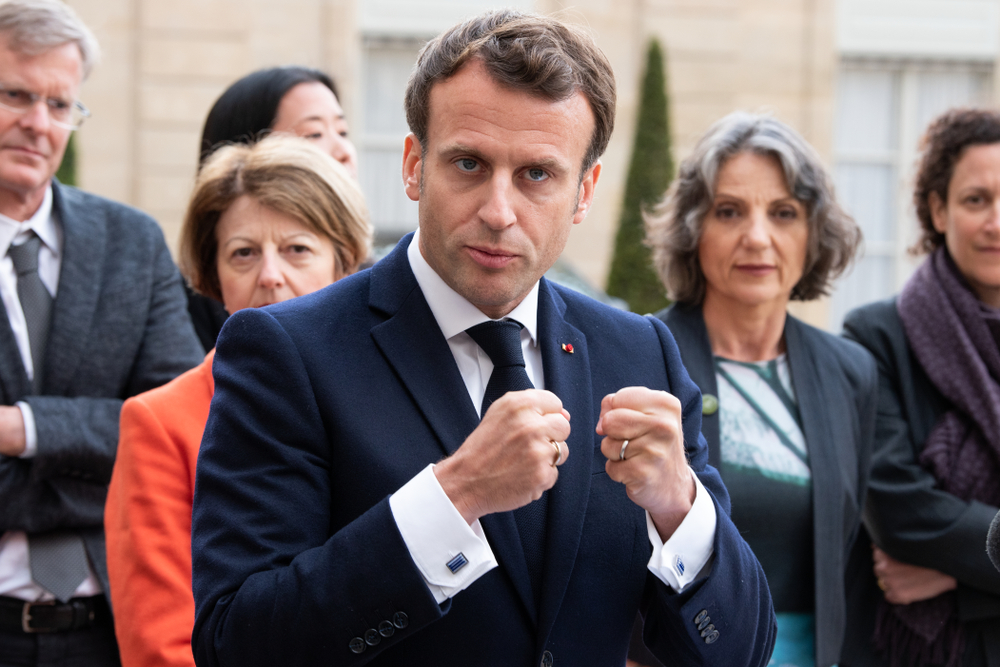
President of France Emmanuel Macron

French Defence and Foreign Policy and the War in Ukraine

by Dr. Ronald Hatto

After many years of struggle against Islamist terrorism, the invasion of Ukraine in February 2022 was an electric shock for France. The country now seems more committed to a reinforced Euro-Atlantic security partnership. Since 2012, France has been under a constant threat of Islamist terrorist attacks. These reached their peak in 2015 with the deadly assault on the Charlie Hebdo newspaper in January and at the Bataclan theatre in November. These threats explain why the French government has decided to intervene where terrorists are most likely to proliferate – the goal being to neutralise them before they could reach France or other European countries. The two regions where the French military have operated against terrorists have been in the Middle East and the Sahel. Meanwhile, the relationship between Paris and select NATO allies have to led to some difficult diplomatic tensions. “What we are currently experiencing is the brain death of NATO,” Emmanuel Macron told The Economist in October 2019. At the time, the United States (US) had failed to consult NATO before pulling forces out of northern Syria, while Turkey – another important NATO ally – pushed inside Syria, threatening US and French interests with no reaction from the alliance. Russia’s invasion of Ukraine modified Paris’ defence and foreign policy but perhaps not enough to face the challenges ahead. France and NATO: A difficult partnership Following the “brain death” episode, the tensions between France and Turkey escalated and reached a peak in June 2020 when, according to the French Navy, a Turkish ship flashed its radar at the French vessels during operation Sea Guardian. This mission was a NATO maritime security operation in the eastern Mediterranean, deployed after the United Nations imposed an embargo on arms supplies to Libya. Once again, NATO did nothing to reprimand Turkey for its anti-alliance behaviour. These episodes are just two in a long series of tensions between France and NATO. It is rather well known that France and some of its NATO allies have been barely civil since the end of the Cold War; the most complicated relationship being the one with the US. If Macron has been frustrated at the absence of a reaction from the alliance, France has also manoeuvred to upset its allies also. To understand France’s at times awkward relationship with the US, one must note that there are strong French political currents opposed to a supposed American hegemony. The far left and the far right are the most obvious, but even moderate conservatives may sometimes adopt a discourse reminiscent of Charles De Gaulle from the 1960’s that pushed France outside of NATO’s integrated command. Today, those against “Atlanticism” are either anti-capitalism (far left), pro-sovereignty (far right) or for national or European independence (conservatives). They all share a more-or-less anti-liberal ideology and they all tend to perceive Russia positively. The far left seems to think Russia is the successor of communist Soviet Union. The far right and the conservatives are fond of Putin’s anti-Islam discourse and his defence of traditional values. Meanwhile, many people serving in the French military are also sympathetic to Russia. This broad support for states that may “resist US hegemony” in France may explain the initial moderation of president Macron’s position vis-à-vis Russia. This anti-American sentiment is reinforced by the fact that France still seems to see itself as a major player in international relations. In April 2023, after a visit to China, Macron told journalists that Europe must resist becoming America’s “vassal.” This infuriated many allies in Europe, North America, and Japan, and it did nothing to strengthen European defence capabilities or strategic autonomy, paradoxically one of Macron’s goals before going to China. NATO: The inescapable actor According to President Macron himself, the war in Ukraine revived the “brain-dead” NATO. On the other hand, it seems to have had the opposite effect on French ambitions to be a central global player or a European security leader. Declarations regarding security guarantees to Russia, and the fact that France has contributed relatively less to the defence of Ukraine than some of its allies, have weakened its stature in Europe. That’s why Paris seems ready to work more closely with NATO, even if some incoherence still weakens the clarity of the message. Three things point in the direction of greater cooperation between France and its NATO allies. The first, following Macron’s speech in Bratislava in May 2023, is the new Loi de programmation militaire (military programming law) for military manoeuvres. The best example of recent joint military manoeuvres is ORION 2023 that started in 2021 and was terminated in May 2023. These were the largest exercises in thirty years for the French military and they involved, in their final phase during the Spring 2023, around 14 allies, including Indian air force Rafale jets. In ORION, France proved it was ready to act as a NATO framework-nation in a high-intensity-warfare scenario. This reassured France’s allies who were rattled by president Macron’s various statements since 2019. With its departure from the Sahel, France has at last been able to focus more seriously on European security. Another signal pointing at a switch in the French posture towards Transatlantic security was Macron’s speech in Bratislava. The French president wanted to reassure his allies about the role of NATO in European security. He did not emphasise “strategic autonomy,” preferring to highlight the importance of becoming better allies to the United States. He even mentioned that Vladimir Putin’s aggression in Ukraine had revived NATO. The last element regarding France’s decision to play a more constructive role in Transatlantic security is the military programming law for 2024-2030. At first sight, this law is impressive: with an estimated cost of €413 billion over the next seven years, this would bring the defence budget to €69 billion in 2030, up from €44 billion in 2023 and €32 billion in 2017. The problem is that, like Germany or the United Kingdom (UK), we don’t know if this new money will really boost European military capacity. In the case of France and UK, a large part of the military budget is dedicated to nuclear deterrence rather than for the needs of a high intensity conventional conflict like the one in Ukraine. What is more, inflation will chew through a relatively important part of this new budget. It is an important question then to ask if the new defence budget will boost France’s conventional military capacity to face a high intensity conflict in Europe or other technological capabilities to help project power far from France’s borders. Only time will tell. But allies must keep an eye on what the French government does rather than on what it says. With the importance of the populist and radical political movements, and also the constant threat of terrorism, a return to self-centred defence and foreign policy is always a possibility.

Diplomacy
Joe Biden with Prime Minister of India Narendra Modi

Modi in Washington: A Symbolic Visit for a Substantive Partnership

by Husain Haqqani , Aparna Pande

Officials from the United States and India occasionally have some difficult private conversations about Ukraine and India’s domestic politics. But the official state visit this week by Indian Prime Minister Narendra Modi to the U.S. will mainly be about showcasing the strength of the two countries’ burgeoning partnership.   Modi and President Joe Biden both need the optics of a visit rich in symbolism to demonstrate the substantive achievements of a relationship based on shared concerns about China and multi-billion dollar deals in technology and defense. Modi wants to highlight his standing as a world leader ahead of the 2024 Indian election. Biden wants to underline that, contrary to the criticism of some, he does have a plan to deal with China’s rise and the U.S. has lined up partners and allies to execute that plan. Indian prime ministers have been regular visitors to Washington D.C. since India’s independence in 1947. But Modi’s visit is only the third time an Indian prime minister will be given official state visit protocol, including a state banquet at the White House on June 22.  The fifth Indian prime minister to address a joint session of Congress, Modi will be the only Indian leader to do so for a second time. Indians will be thrilled by the attention given to their prime minister, and the speeches about shared values and similar strategic vision of the world’s oldest and largest democracies will play well in the Indian media.  But the visit will not be about just pomp and show. Trade in goods and services between India and the U.S. reached $190 billion last year and the U.S. is now India’s largest trading partner. Companies from the two countries have made significant investments across borders and Indian and American enjoy close people-to-people ties. Moreover, the U.S. is keen to “friendshore” with India to deal with the threat America sees in China’s rise, and to ensure supply-chain resilience. This involves shifting the manufacturing of certain critical components from China to friendly countries, especially India. The U.S. is funding Indian technology startups and infrastructure projects from its $200 billion Partnership for Global Infrastructure and Investment (PGII) Fund.  India, as the world’s most populous country, represents a large potential market for U.S. companies currently reducing their Chinese presence. When Air India, India’s largest airline, decided to purchase 220 Boeing aircraft in a $34 billion deal, Biden celebrated, saying it “will support over 1 million American jobs across 44 states, and many will not require a four-year college degree.” U.S. aerospace and military industries have wanted a greater share of the Indian market for years.  This January, India and the U.S. announced the launch of the U.S.-India Initiative on Critical and Emerging Technologies (iCET) to the pave the way for “technology value-chain partnerships that would lead to co-development and co-production of high technology products and services in both countries,” in the words of National Security Adviser Jake Sullivan.  During a recent visit to Delhi by Secretary of Defense Lloyd Austin, a defense industrial roadmap was unveiled, reflecting an American willingness to share state-of-the-art technology with India. But India wants to build an indigenous defense industry and is keen on American technology and investment, while the U.S. wants India to stop purchasing military equipment from Russia and buy more from the United States. Historically, that divergence has resulted in announcements that have not always resulted in implementation.  For the Modi visit, the two sides have planned two key defense related deliverables: the purchase by India of 30 General Atomics-manufactured Predator or MQ9B Sea Guardian drones for $3 billion, and an agreement between General Electric and Hindustan Aeronautics Limited to coproduce GE-F414 turbofan engines for India’s indigenous Tejas Mark-2 fighter jet. India and the U.S. have a long way to go before reaching the $500 billion mark in bilateral trade, which experts see as the future potential of the trade relationship. Americans blame India’s default preference for protectionism, reluctance to offer a level playing field to domestic and foreign players, strict digital privacy rules, and historical skepticism towards free and open trade. Indians complain that America is used to allies who are junior partners, not a country that is not an ally and wants to be treated as an equal. India is not alone in that view in an era when several powers want recognition and are showing a preference for economic and technology partnerships, rather than military alliances.  India is not a treaty ally of the United States, but a partner that prides itself on its strategic autonomy and one that has reservations about how it was treated by U.S. officials in the past. The closest equivalent of that in U.S. experience from the Cold War era would be France under the Gaullists. But just as the U.S. overcame its reservations about real or perceived French prickliness in the interest of preserving the Atlantic Alliance, Americans realize the importance of India in their plans for maintaining a rules-based international order.

Defense & Security
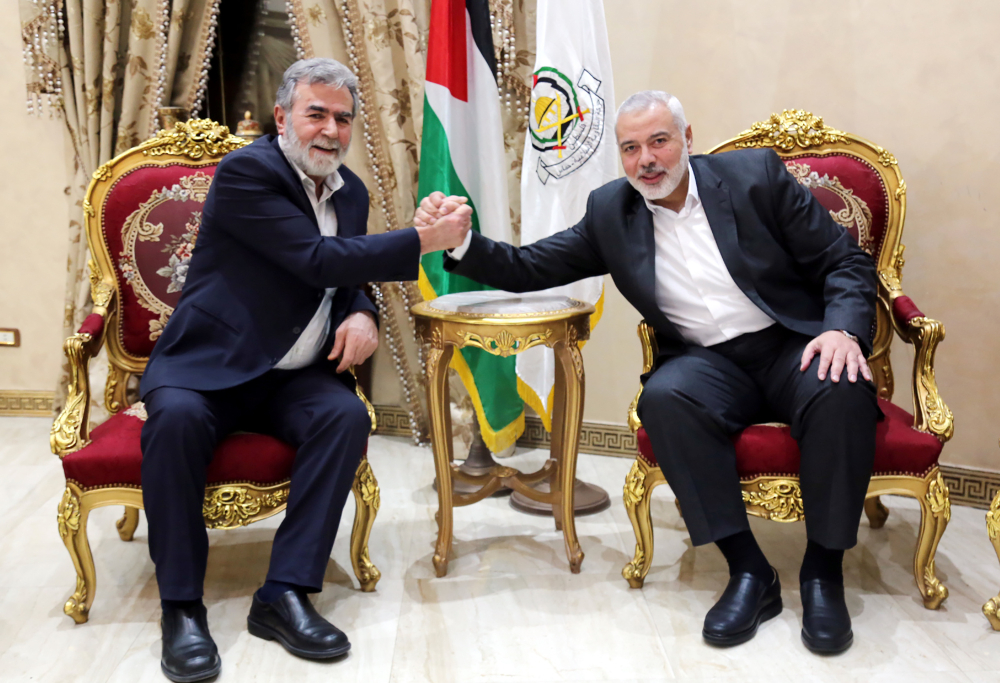
Former Prime Minister of Palestine in Gaza, Ismail Haniyeh and Palestinian politician Ziyed al-Nakhalah

The Egyptian Hudna Initiative: Bypassing Israel

by Udi Dekel , Orit Perlov

Egypt is advancing an initiative with Hamas and Islamic Jihad for a long-term ceasefire for Gaza; Israel is not directly involved in these talks. Although the chances of a hudna are slim, Israel would do well not to reject the Egyptian initiative and should, rather, enable the economic projects it includes At a meeting in Cairo in early June 2023, Egypt presented leaders of Hamas and Islamic Jihad the framework for a hudna in the Gaza Strip, i.e., a long-term ceasefire. Israel is not officially involved in the initiative, which would bring it some clear benefits, including prolonged security calm and Cairo’s willingness for deeper involvement in Gaza. These benefits are not obviated by the fact that Hamas would also benefit from the initiative, which includes plans for broader infrastructure and economic projects, providing the organization with an opportunity to continue its political and military intensification. Nonetheless, Hamas is not enthusiastic about the Egyptian initiative. In any case, Israel would be well advised not to oppose the initiative, even though it involves giving up on three principles: (1) Israel would presumably give a “green light” to Hamas and Islamic Jihad to continue to execute terror attacks in Jerusalem, the West Bank, and Israel itself, as well as from southern Lebanon. (2) Israel would concede its demand that any arrangement include the return of soldiers’ bodies and civilians held hostage in Gaza. (3) The lack of an effective response to Hamas and Islamic Jihad’s growing strength would continue. On June 4-6, 2023, senior Hamas and Islamic Jihad leaders visited Cairo at the invitation of Major General Abbas Kamel, the director of the Egyptian General Intelligence Directorate. The Palestinian delegation was headed by Hamas leader Ismail Haniyeh (accompanied by his deputy, Saleh al-Arouri, and the head of the organization’s “external” bureau, Khaled Mashal), and the leader of Islamic Jihad, Ziyad al-Nakhaleh. At the meeting, the Egyptians presented an initiative for a long-term ceasefire – a hudna – in the Gaza Strip. Discussions were influenced by the results of Operation Shield and Arrow, which highlighted Israel’s capability to carry out targeted killing operations, as well as by the atmosphere of recent agreements across the Middle East, leading to reduced tensions and violence. The basis for the discussions was a proposal for a long-term ceasefire coupled with Cairo’s willingness to help calm the security situation on the Gaza front and participate in reconstructing the area, with the political support of the United States and financial assistance from Qatar. Cairo’s motivation for becoming more involved in Gaza lies in the economic and political rewards it would enjoy in this context, as well as its success in launching local infrastructure projects. For example, three Egyptian construction projects of high-rise housing in Jabaliya and Bet Lahiya in the northern Gaza Strip have already reached an advanced stage and are nearly ready for occupancy. Similarly, there are plans to develop the a-Rashid coastal road, which runs parallel to the sea in northern Gaza. The Egyptian Initiative includes the following projects: ● Expansion of the el-Arish port in the northern Sinai Peninsula, allowing it to become a cargo port for all of the Gaza Strip; a paved highway for trucks to enter Gaza; and expanded trade between Egypt and Gaza via the Salah al-Din crossing. ● Connected electricity systems that would distribute power from Egypt to the Strip. ● Development of the Gaza Marine natural gas field that lies off the coast of the Strip. This would require the involvement of the Palestinian Authority, since the PA is recognized as the Palestinian government, which has the rights to the gas reserves. It is possible that this is reason that Palestinian Prime Minister Mohammad Shtayyeh visited Cairo a week before the Hamas and Islamic Jihad delegations. ● Establishment of a free-trade zone between the northern Sinai and the Gaza Strip. ● Egyptian insistence that the Palestinian Authority remain in the picture by reestablishing its control over the Palestinian side of the Rafah border crossing between Hamas-run Gaza and Egypt – just as it was until four years ago. It was also reported that to enable the conditions for long term ceasefire in Gaza, Egypt, in its talks with Iran, demanded that Tehran refrain from using its proxies – primarily Palestinian Islamic Jihad – and that it do nothing to undermine the nascent agreement between Cairo and the Palestinian factions that are under the influence of the Islamic Republic. At this stage, Israel is not directly involved in the talks, but it has apparently been briefed about them. As part of the Egyptian proposal, Israel will be required to make certain commitments, including adhering to a long-term ceasefire, refraining from carrying out targeted killing operations against senior Palestinian commanders, further easing of the restrictions on movement of people and goods from Gaza into Israel, and agreement on gas production from Gaza’s exclusive economic zone.                                                Perspectives The absence of two important Palestinian leaders from the meeting in Cairo – Hamas leader in the Gaza Strip, Yahya Sinwar, and President of the Palestinian Authority, Mahmoud Abbas – suggests that Egypt exerted no pressure on the Palestinians regarding internal reconciliation or elections. It is much more convenient for Sinwar to allow Hamas’s external leadership to be in the front of the negotiations so that he will not have to explain the missing elements in the hudna settlement, including the release of Palestinian prisoners held by Israel and the total lifting of what they see as the Israeli siege of Gaza. In his current situation, Abbas is not a relevant actor on the Gaza front, with the exception of the agreements over gas production, and it even seems that Cairo has given up on its efforts to persuade him to promote intra-Palestinian reconciliation. The Egyptian incentive includes the promotion of Egyptian economic projects in the Gaza Strip, which will be highly beneficial to Cairo (expansion of the el-Arish airport and electricity infrastructure in Rafah and el-Arish, construction of a highway to allow quick access for goods, and development of the Gaza Marine gas field). In addition, the most recent round of fighting between Israel and Islamic Jihad in May – which coincided with Ramadan – made it clear to Egypt the challenge in mediating in an event with multiple actors and addresses, some of whom are located outside the Gaza Strip and are under the influence of Iran and Hezbollah. Therefore, Egypt wants to make the rules of the game clear yet again: as far as it is concerned, there is only one Palestinian actor that is responsible for what happens in the Gaza Strip, namely Hamas. Moreover, it wants to safeguard its exclusive role as mediator with Israel. The Israeli game: It is convenient for Israel to remain outside of the negotiations – certainly the open talks – whether or not by choice. This frees Prime Minister Benjamin Netanyahu from having to explain to his radical right partners in the coalition why Israel is making deals with Hamas and why the agreement does not include the return of captive Israelis and the bodies of Israeli soldiers held by Hamas. In addition, Egypt is responsible for all the initial elements of the agreement, so Israel can downplay the significance of what it is being asked to concede (beyond the understandings that currently exist, especially its policy vis-à-vis the border crossings and permits for some 18,500 Gazan laborers to enter Israel). Israel is not being asked to change its policy on the Temple Mount or in Jerusalem, or to limit its own freedom of operation to conduct counterterror missions. Consequences if Egypt Succeeds in Achieving a Hudna 1. Strengthening Hamas’s role in the Gaza Strip: Hamas is the force factor with which Israel must advance a long-term ceasefire in Gaza, while neutralizing Islamic Jihad. Hamas would benefit from the arrangement, with the continued easing of the closure of Gaza and the implementation of infrastructure and economic projects in the region – without any commitment to Israel that it would refrain from supporting terrorism in Jerusalem, the West Bank, inside Israel, and from southern Lebanon. Saleh al-Arouri will be free to continue initiating terror attacks and preparing for further violence during Ramadan next year. At the same time, Hamas will retain its bargaining chips – the missing Israelis and the bodies of fallen soldiers. Similarly, an agreement of this kind – especially if the United States is involved, even with a low profile – will increase the legitimacy and international recognition of Hamas. 2. Deeper Egyptian involvement in Gaza and Cairo’s willingness to engage in the Gaza quagmire: The greater Gaza’s dependence on Egypt, the less it will rely on Israel. At the same time, Egypt has not shown particular effectiveness when it comes to prevention of arms smuggling via Sinai into Gaza. The concern is that the expansion of trade and movement of goods from Sinai will provide increased opportunities for smugglers, while Israel’s ability to respond to such incidents would be limited because of its reliance on Egypt and the desire to maintain the special relationship with Cairo. 3. Israeli tension between the expected benefits and the price it will be asked to pay: On the one hand, Israel would consider it an achievement if there were a long-term ceasefire in Gaza and if its own responsibility for the Strip were reduced. On the other hand, this would reduce Gaza’s dependence on Israel, which would lose whatever influence it has over events in Gaza. In addition, the prevalent Israeli belief is that improving the economic conditions in Gaza is the way to rein in Hamas, which is why it supports easing the closure for civilian matters and the ongoing reconstruction of Gaza. However, if the proposed Egyptian ceasefire is accepted, the extreme right wing elements in Netanyahu’s government are likely to oppose any Israeli concessions, such as a sweeping easing of the closure or Israeli approval for a Palestinian gas field – without a deal that includes the missing and fallen Israelis. 4. Can the rogue elements be contained? One precondition for implementation of a long-term ceasefire is that Islamic Jihad accepts the authority of Hamas and Tehran agrees to this, at least tacitly. However, it is not clear to what extent Iranian influence over Islamic Jihad would be curbed, also in light of the improved bilateral relations between Cairo and Tehran. 5. Another stage in the increasing irrelevance of the Palestinian Authority: A negotiated ceasefire on the Gaza front would be another nail in the coffin on the Palestinian Authority, which fails to reap any significant economic or political benefits – comparable to those that Hamas will enjoy if the proposed ceasefire comes into effect – in the territories under its control. Against this backdrop, Hamas is likely to intensify its efforts to take control of the Palestinian Authority the day after Abbas is no longer in power. Conclusion and Recommendations The Egyptian initiative on a hudna in Gaza does not include any measures to curb Hamas’s consolidation or to limit its freedom of operation on other fronts, and it does not advance a deal for the return of missing Israelis and the bodies of fallen soldiers. Moreover, the hudna would ensure the survival of Islamic Jihad and other terrorist groups in the Gaza Strip. One of the main demands that Islamic Jihad made before agreeing to the May 13 ceasefire that ended Operation Shield and Arrow was an end to the Israeli policy of targeted killings against its senior militant commanders – to which Israel responded, “Quiet will be met with quiet.” If a hudna is achieved, Islamic Jihad – like Hamas – will have the freedom to rebuild its ranks and its military capabilities It seems doubtful that Egypt will manage to broker a long-term ceasefire, especially given Hamas’s likely rejection. Notwithstanding the benefits that a hudna would give Hamas, the organization might find it acceptable if it felt it was in a position of inferiority vis-à-vis Israel – but that is not the case today. The Hamas leadership believes that the organization’s strength on the Palestinian and regional fronts is growing, while it believes that Israel’s strength is waning and that its international and regional influence is on the decline. Therefore, Hamas will likely prefer to maintain the status quo of “quiet,” with certain embellishments that would allow it to continue reconstructing the Gaza Strip, increase its own military strength, and solidify its political position – but without being asked to make any ideological compromises or grant any rewards – even indirectly – to Israel or the Palestinian Authority (e.g., the gas field). Although the chances of the Egyptian hudna initiative bearing fruit are slim, Israel should refrain from opposing it, and it should likewise support the expansion of Egyptian infrastructure and economic projects in Gaza. Improved living conditions in the Strip and increased Egyptian involvement will advance Israel’s strategic goals – ensuring long-term quiet and deepening the rift between Gaza and the West Bank. The continued promotion of the Egyptian initiative would allow Israel to examine whether Hamas is motivated enough to exercise control over the “rogue” terror organizations in Gaza – mainly Islamic Jihad – and to what extent Sinwar is committed to security quiet in the long term. At the same time, in order not to invalidate the hudna, Israel will have to come to terms with the following: continued freedom of operation for Hamas and Islamic Jihad to commit terror attacks on other fronts; improvements for Hamas in Gaza without a solution to the issue of the missing and fallen Israelis; and the absence of an effective solution to the growing military power of Hamas and Islamic Jihad.

Defense & Security
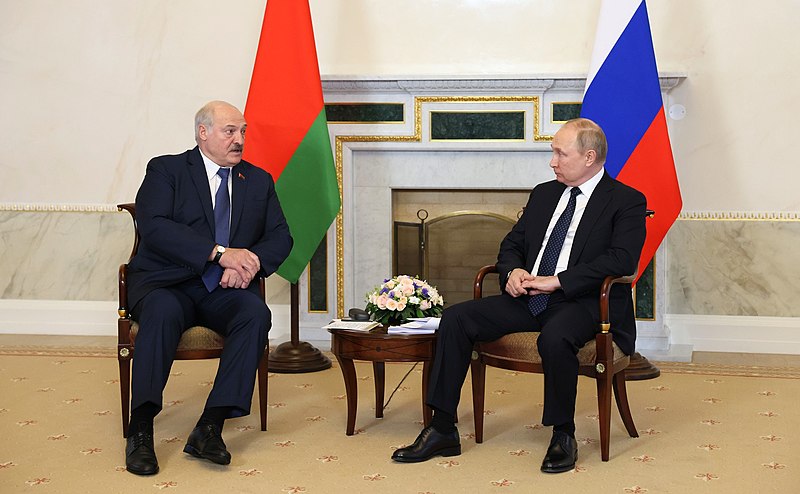
Aleksandr Lukashenko with Vladimir Putin

Ukraine war: Russia’s threat to station nuclear warheads in Belarus – what you need to know

by Natalya Chernyshova

The threat of Russia using nuclear weapons in Ukraine is “real” and “absolutely irresponsible”, according to the US president, Joe Biden. He was reacting to questioning from journalists as to whether he believed Belarus had been taking delivery of Russian tactical nuclear weapons. If true, it’s the first time Russia has deployed nuclear warheads outside its borders since the end of the cold war. This does not immediately mean a nuclear escalation with Nato, since Russian nuclear missiles stationed in the Kaliningrad region already put Poland and the Baltic states within range. Experts are sceptical about Russia’s intentions to use these weapons in Ukraine. But the presence of tactical nuclear arms in Belarus has, nevertheless, important implications for European security. It would change the nature of the relationship between Russia and Belarus and bring Belarus deeper under Russian control. The two countries are already in what is known as a “union state” after longtime Belarus leader Alexander Lukashenko and Boris Yeltsin signed a series of treaties in the mid-1990s. These made for “deeper economic integration” and the “formation of a single economic space” as well as the coordination of foreign policy and military activities between the two countries. The “union” was relatively loose until the 2020 mass protests in Belarus pushed the desperate Lukashenko to agree to a much closer economic and military integration with Russia. The real target Noting that this is “not an escalation from Putin’s prior nuclear weapons rhetoric”, the Institute for the Study of War says this is more about increasing Moscow’s military grip over Belarus: “The Kremlin likely intends to use these requirements to further subordinate the Belarusian security sphere under Russia.” The warheads will be under Russian control. Storage facilities are reported to be under construction for completion in early July. This will require a significant Russian military presence and permanent military bases in Belarus. Belarusians do not want to have Russian nuclear weapons on their soil. Researchers from Chatham House who regularly conduct surveys in Belarus have found that 74% of respondents in their March 2023 survey objected to deployment. The rejection of nukes is even more dramatic when analysed by which media the respondents are consuming. Belarus state media beats a relentlessly pro-Moscow drum. Among those who do not consume state media between 97% and 98% are opposed. The prospect of Russian military bases is hardly more popular, with only 24% of respondents supporting it in an earlier Chatham House survey in June 2022. The idea of a single foreign policy and army with Russia was backed by a mere 9% in the March 2023 survey. This is yet another indicator of the chasm between the regime and the people, which was made evident by the 2020 protests, the largest in recent Belarusian history. Belarusians are traditionally wary of having to choose sides when it comes to political alliances. And, despite a “vote” ratifying an amendment to the country’s constitution to allow Russia to station nuclear weapons on its soil, the country is increasingly divided between those who look to Russia and those who are in favour of closer relations with western Europe. After Russia went into Ukraine, a Chatham House survey found that 47% were against the invasion, while only 33% were in favour. Another poll found 93% would not support Belarus entering the war. Fallout from Chornobyl And Belarusians also have a good reason to be strongly opposed to nuclear weapons. The memory of the Chornobyl disaster in 1986. About 70% of the radioactive fallout landed on its territory, and there is evidence that Moscow deliberately seeded clouds so that radioactive rain fell over Belarus rather than drift towards Moscow. The political fallout was slower but no less significant: over the years, Chornobyl commemorations have become an annual rallying point for anti-Lukashenko opposition. It also helped ensure that independent Belarus was the first among post-Soviet nations to abandon its Soviet nuclear arsenal. These points seem lost on Lukashenko, who has publicly declared that he will not consider the opinion of the Belarusian people about using nuclear weapons. Opposition opinions are dangerous in Belarus, and state terror against all criticism of the regime has only intensified since Russia invaded Ukraine. The number of those arrested and sentenced to lengthy prison terms has been steadily growing. As of June 21, Belarus had 1,492 political prisoners. This is just the tip of the iceberg of repression. Not only opposition activists, NGO workers, and independent journalists, but anyone who can be linked to the 2020 protests or who ever spoke out against the regime on social media is at risk of arrest. The recent UN Human Rights Office report decried “the unacceptable picture of impunity and the near-total destruction of civic space and fundamental freedoms in Belarus”, including the systematic use of unlawful detention, violence and torture. Consequences for Belarus and beyond Lukashenko is playing a dangerous game. Belarus’s economic dependence on Moscow, already heavy, has been deepened further by western sanctions and the war in Ukraine. Russia’s share in Belarus’ trade grew from 49% in 2021 to 60% in late 2022. Recently, a joint tax agreement with Russia, previously resisted by Minsk, reduced Belarusian control over taxation. According to the independent Belarusian monitoring organisation, the Hajun Project, there is no evidence that any warheads have arrived. But deploying Russian nuclear warheads would lead to Moscow’s permanent military presence. It would mean further loss of authority for Lukashenko and his generals. And worse, if Putin did decide to use tactical nuclear weapons against Ukraine, it would be an easier decision to launch them from Belarus and let them reap the whirlwind of retaliation. Consolidating his control over Belarus would be a significant strategic victory for Putin’s imperial ambitions. Preoccupied with fighting in Ukraine and lacking a clear and decisive policy on Belarus, the west has no obvious immediate response. But if Moscow follows through with its threat it would be a dangerous moment – not just for Belarus but for Europe as a whole.

Energy & Economics
US dollar behind torn white paper

The US role in the global financial system is changing – here’s how it could affect the world’s economy

by Steve Schifferes

The last-minute resolution of the US debt ceiling crisis recently has led to a collective sigh of relief in global financial markets. But the way it was resolved has renewed concerns about the the dominant role of the US in the world economy at a time of unprecedented challenges including low growth, high inflation and worries about the stability of the banking system. There is a high degree of uncertainty about how these issues will play out. But the political paralysis in Washington, the rise of populism and a retreat from free trade means that the US may not have either the means or the will to deal with another global crisis as effectively as it once did. As a BBC economics reporter during the 2008 global financial crisis, I saw first hand the dominant role the US played, both domestically and internationally, in resolving the situation. There is little evidence of the same commitment from the US today. The US Federal Reserve Bank played a crucial role in 2008. It stabilised the global banking system by lending over US$1 trillion (£796 billion) to other central banks through so-called “swap lines”, which pumped money into the financial system. This facilitated the bailout of the European banking system by lending much-needed dollars. This year, at the height of the banking crisis in March, the Fed intervened again to provide daily currency swaps to other central banks. During the 2008 crisis, the US was also the driving force behind urging the major industrial countries to introduce expansionary policies to grow their economies in order to avoid a global recession. It also enabled the International Monetary Fund (IMF) to make a further US$1 trillion available to stabilise the threat to the financial system and help emerging market and low-income countries. And the US took the lead, through the G20, in creating the global financial regulator, the Financial Stability Board (FSB), to ensure the stability of large global banks. More recently, the world’s financial system has been shaken by another financial crisis, although it has been smaller in scope: the failure of several US regional banks and the rescue of Swiss bank Credit Suisse. The latter is one of only 30 global systemically important financial institutions identified by the FSB as likely to cause a financial crisis if they fail. It is by no means clear that the latest banking crisis has run its course. There are concerns about the so-called shadow banking system, largely unregulated financial institutions that now make up half of all global financial assets. For example, in the US many people invest in money market funds, which pay higher interest than banks, but provide no deposit insurance. Meanwhile, the international regulatory system created in 2008 has been either ineffective or weakened. Political pressures led the US to reduce regulation and capital requirements for its regional banks, during the Trump administration, while worries about their soundness remain. Internationally, geopolitical tensions within the G20, due to differences between emerging market countries and G7 countries on Ukraine, have furthered weakened the impact of FSB recommendations. The future of US global economic influenceThere are strong reasons to doubt whether the Fed would be willing or able to lead another large-scale 2008-style bank rescue. In the first place, in contrast to the relatively low inflation in 2008, the Fed is now facing conflicting pressures, having sharply raised interest rates to curb inflation. This might surge again if the Fed is forced to cut rates to save banks which lent heavily during the recent period of low rates and are now seeing a rise in bad debts as rates rise and borrowers struggle to manage their repayments. For the same reason, the Fed would be reluctant to support a further expansion of the US economy, which could add to inflationary pressures. Finally, the US’s ability to mount a major bank rescue, either domestically or internationally, is limited by the fact that the Fed still has a huge balance sheet overhang remaining from the 2008 rescue, which it is trying to reduce by US$30 billion, and soon US$60 billion, per month. And the Fed’s authority to issue swaps to other central banks could also be challenged by politicians who might question the need to help the US’s economic rivals. The twin threats of inflation and slow growth have not yet been tamed, either in Europe or the US. This calls the credibility of central banks – which is key to their ability to manage the economy – into question as never before. Meanwhile, the value of financial assets that underpin the global financial system, particularly US Treasury bonds, have seen dramatic fluctuations due to the banking and debt ceiling crisis, as well as concerns about the huge size of fast-rising US government debt. Recent attempts by right-wing House Republicans to block the passage of some spending bills could ultimately lead to a government shutdown. This would further weaken the US government’s credit rating. All of this has put unprecedented pressure on the stability of the banks around the world. The growing tensions within the globalised financial system, coupled with a weakened US in retreat from its global role, could spell danger for world economy.

Defense & Security
Undersea cables

Ukraine war: Kremlin’s threat to interfere with undersea data cables may be bluster, but must be taken seriously

by Christian Bueger

In what is more than likely to turn out to be an attempt at escalation in the confrontation between Nato and Russia over the war in Ukraine, former Russian president Dmitry Medvedev argued recently on his Telegram channel that Russia should have the right to attack submarine data cables.  Medvedev claimed such rights against the background of recent media reports on the mysterious sabotage of the Nord Stream undersea gas pipeline last year. He wrote: If we proceed from the proven complicity of western countries in blowing up the Nord Streams, then we have no constraints – even moral – left to prevent us from destroying the ocean-floor cable communications of our enemies. The question of who was behind the attacks on the pipelines in the Baltic Sea on September 26 2022, however, remains unresolved. Several reports, rumours and conspiracy theories circulate. There’s some agreement that the time, location and level of sophistication of the attack indicate the involvement or support from a government. But the speculation stretches from western special forces or Ukrainian groups being behind the attack to it being a well-orchestrated Russian operation. In the meantime, none of the official investigations have been concluded and solid evidence that could support any of the narratives remains sparse. The Swedish prosecutor leading one of the investigations announced on June 14 that he hopes to have completed the investigation by autumn. Vulnerable undersea cables For all his characteristic bluster, which have included threats involving Russia’s nuclear arsenal, Medvedev’s threat should be taken seriously. As we have shown in a report to the European parliament of last year, subsea cables are the backbone of the contemporary digital economy. Almost all of our internet connections depend on them. According to SubTelForum’s Submarine Cable Almanac as of the beginning of 2023, there were 380 cables in Europe on the ocean floor, mostly the size of a garden hose. They use fibre optic technology to convey information at large distances. Yet they are easy to cut and get damaged quite frequently. The industry reports up to 100 cable failures annually, mainly caused by fishing activities or the anchors of ships. This rarely causes serious disruptions. As already established above, there are hundreds of cables on the sea floor and in the case of failure, traffic is swiftly rerouted and a repair ship is sent on its way to fix the damage. If Russia is serious about its threats to cut cables, the main economic cost would be for repair work. Major disruptions are unlikely. There are, however, places that are more vulnerable and where the impact would be more extensive. This includes sites where several crucial cables could be attacked at the same time. These are known as “chokepoints”. For instance, several important cables surface in the port of Marseilles – and the English channel and the Red Sea have a high density of cables. Also, island states, such as Ireland, are more vulnerable because they do not have terrestrial connections as backup. So Medvedev’s threat should be taken seriously, but should not be blown out of proportion. What’s behind the threat? Once thought of as a reasonable politician, who took over as president when Putin was having his “break” from 2008 to 2012 after two terms of presidency, Medvedev has become ever more of a Kremlin stooge. His threat is a continuation of Russia’s strategy of disinformation – an attempt to distract western leaders from events in Ukraine and force security policymakers to worry about their vulnerabilities at home. Probably, this is also a message to two security events happening in the coming days and weeks and meant to increase the feeling of vulnerability and uncertainty. At the end of May, Ireland commenced a national consultative forum on security – online and on four separate days at the end of June. Ireland’s foreign minister, Micheál Martin, said the aim was to build public understanding and generate discussions on our foreign, security and defence policies. The particular focus would be on how Ireland wants to respond to the new security environment and whether to seek Nato membership. As an island with open seas, Ireland is one of the most vulnerable places in Europe in terms of potential internet cable sabotage. A bit further down the line is the Nato summit taking place in Vilnius, Lithuania, in early July. Subsea cable protection is one of the priority issues on the agenda, and the organization’s new infrastructure protection coordination cell is expected to make recommendations for how the alliance can protect cables better and deter any sabotage. But a military approach to protection on its own won’t suffice. Close collaboration between the military, civil maritime agencies, communication regulators and the industry is needed. The European Maritime Security Strategy expected to be issued by the European Council this summer will be an important step in this direction. The strategy lays out plans for risk analyses, improved surveillance and inter-agency exercises. Overall, and beyond the immediate Russian threat, the protection of critical maritime infrastructures, which also includes wind farms, power cables, hydrogen pipelines and carbon storage projects, needs to become a defining feature in the global ocean governance agenda.

Defense & Security
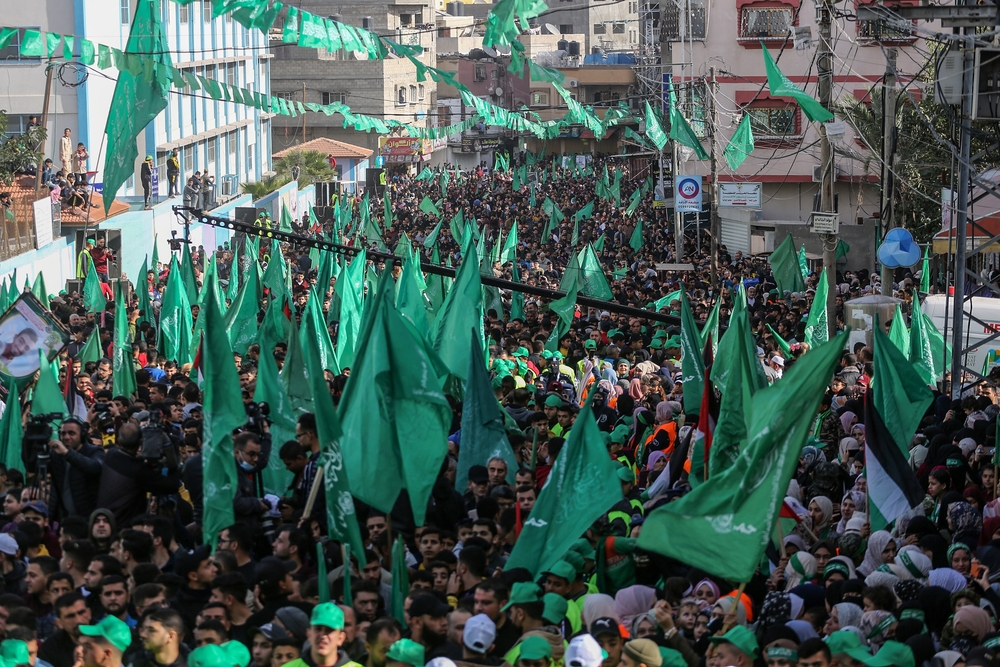
Hamas supporters protesting Israeli incursions into the Al-Aqsa Mosque campus

Another Clash in the Gaza Strip: Does Israel Have Any New Ideas?

by Yohanan Tzoreff

The lack of active intervention by Hamas yet again in the recent round of fighting in Gaza heightens the question of a long-term arrangement regarding Israel and the Gaza Strip. Is an idea of this sort viable? What might be its limitations? With the end of Operation Shield and Arrow – the most recent round fought between Israel and Islamic Jihad in the Gaza Strip – talk of a hudna or an extended arrangement at the Israel-Gaza border resurfaced. The discourse is driven by the fact that as in the two previous rounds, Hamas did not take an active part. Nonetheless, is highly doubtful that Hamas’s non-intervention is an indication of its desire for quiet. More likely, it points, rather, to new understandings with the resistance front, whereby all elements can be involved, even without actual participation in the fighting. Moreover, Hamas’s room for maneuver may prove limited, should an expanded arrangement be cast by its rivals as a separate understanding with Israel, which goes beyond the familiar temporary nature of ceasefire agreements. Therefore, Israel, which does not intend to reinstate its rule over the Gaza Strip and is not using terms like “political process” or “agreement,” would do well to continue with the current format of quiet arrangements vis-à-vis Hamas. This means reducing the threat posed by Gaza and providing for the daily needs of its population, while trying to improve the situation in the region.  The end of the most recent round of fighting with Palestinian Islamic Jihad (PIJ) in Gaza – Operation Shield and Arrow (May 9-13, 2023) – has restored the issue of the Gaza Strip to the agenda, accompanied by several old ideas: hudna, or ceasefire, or in more general terms, “arrangement,” whereby Hamas is recognized as the responsible entity and the Gaza Strip receives additional benefits regarding reconstruction, construction, and employment, as well as freedom of movement to and from the Strip. In return, Hamas would commit to maintain calm for years to come, and not merely weeks or months. Supporters of this move claim that it may also help address the complex situation expected after Abu Mazen departs the political scene, since coordination between Israel and Hamas may assist in shaping the Palestinian reality during the transition phase. Bolstering the logic of “arrangement” is that this was the third time since 2019 that Hamas has refrained from intervention in the conflict between Israel and Islamic Jihad, leaving the latter group alone in the fight. It follows that more than escalation, Hamas seeks reconstruction and the improvement of daily life for the Gaza Strip population. Proponents of this policy are encouraged by the coordination between Hamas and Israel, established through Egyptian mediation following Operation Guardian of the Walls in 2021, which has enabled the entry of laborers into Israel and goods into the Gaza Strip. In their view, Hamas’s conduct reflects responsible governance and the desire to preserve its rule; these outweigh the spirit of “resistance” and translate into care for the population and efforts to increase the sources of income and enhance the volume of trade. Hamas’s efforts to restrain PIJ attempts to fire rockets at Israel during this period; the criticism and rage expressed by PIJ leaders regarding what to them is the “poor performance” of Hamas leaders; and the damage to the “resistance” have strengthened arguments in favor of an arrangement. According to Arab media, the visit by the heads of Hamas and PIJ in Egypt, which began on June 2, is also intended to enhance the calm and expand the reconstruction of the Gaza Strip, likely in coordination with Israel. Indeed, since Operation Protective Edge, in Islamic terms, Hamas has demonstrated far-reaching pragmatism toward the conflict with Israel– for the benefit of the Gaza population, and the Palestinians in general. The vast destruction and the blow it sustained in 2014 have led the organization to diversify the forms of its struggle against Israel and adopt patterns of a popular struggle, at least temporarily. In May 2017, following lengthy internal debates, Hamas released a new political platform, which, as its leaders claimed, replaced its original charter and has served as a guiding plan, albeit without abolishing the charter itself. The document stated that according to the national unity and consensus principal, Hamas would be willing to cease its armed resistance or shift to popular resistance, and even settle for a state within the borders of June 4, 1967, without recognizing Israel or signing a peace treaty with it, as long as such a decision was a national decision endorsed by the Palestinian people, and not by the organization alone. In May 2018, two days after clashes between Palestinian demonstrators and the IDF along the Gaza Strip border fence, which claimed the lives of many Palestinians, Yahya Sinwar, the leader of Hamas in Gaza, declared that Hamas had chosen the path of popular resistance, as this was “the most appropriate form of struggle for the time being.” Since then, and until 2021, Hamas has focused most of its efforts on the internal Palestinian political scene. Hamas has repeatedly made it clear that it cannot liberate Palestine alone through armed resistance, just as Fatah could not reach a peace agreement with Israel through negotiations on its own. At the same time, Hamas sought national reconciliation and strove for elections, in which, as its leaders believed, it would score an impressive achievement that would help it become a part of the national leadership and ultimately assume control. However, Abu Mazen waylaid these plans, canceling the elections in 2021. He forced Hamas to change its strategy and in effect caused the outbreak of the Guardian of the Walls clash, which took place in multiple arenas – the Gaza Strip, the West Bank, and within Israel proper. Hamas has been trying ever since to avoid a confrontation within the Gaza Strip and shift the conflict to the West Bank, where it attempts to incite the population to act against the Palestinian Authority, and even bring about its collapse. However, it is doubtful whether this chain of events validates the ideas of an arrangement in their current form. First, following Operation Shield and Arrow, the question remains whether Hamas truly avoided taking any part in it and whether this “non-intervention” caused it to lose some of its power, and whether Islamic Jihad, which suffered most of the blows during the fighting, was actually weakened as a result. Indeed, comments made by senior PIJ and Hamas figures after the fighting create the impression that at least in terms of public image, Hamas’s non-intervention benefited both organizations, and the fact that PIJ stood up to Israel alone strengthened its position in the eyes of many Palestinians. Spokespersons for both organizations have made it clear that this marked the formation of a new modus operandi, whereby not all organizations take part in the fighting at the same time but rather support it, each in its own way, be it through a joint war room, spokesmanship, or public support. Comments made by senior figures, including PIJ Secretary General Ziyad al-Nakhala and Mousa Abu Marzouk, one of the leaders of Hamas, do not reveal any tension between the organizations, but rather understandings tailored, in their view, to the current state of affairs. It seems that both organizations have managed to preserve their power to a large extent. Nevertheless, while Hamas is still setting the rules, it will be required from now on to cope with Islamic Jihad, especially when an attempt is made to consolidate the idea of an arrangement into a binding agreement of a more formal nature than the “calm in exchange for calm” principle. Large-scale settlement involving the construction of new infrastructure and a seaport and the opening of the Gaza Strip for exit and entry of people and goods has political attributes. Even a limited arrangement based on mutual consent – namely, de facto Israeli recognition of Hamas as the responsible, let alone sovereign, entity in the Gaza Strip – is not a trivial matter for Hamas. Furthermore, Hamas is in ongoing competition with the Palestinian Authority for the heart of the public. Notwithstanding its limited resources, it enjoys wide popularity, which creates a balance of power between these two organizations. A more comprehensive arrangement might force Hamas to face accusations of having preferred separate arrangements with Israel, and just like its rival Fatah, plays into Israel’s hands and enables it to proceed with its divide and conquer policy. The strategy formed by Hamas in recent years is intended to handle such accusations, which it has faced since it took control of the Gaza Strip in 2007. Therefore, Hamas can be expected to ensure that any move taken in coordination with Israel in the Gaza Strip will be of a security-related and humanitarian nature and lack political implications. Israel has proven in action rather than rhetoric that it has no intention of returning to the Gaza Strip. This directive has guided the Israeli security establishment since 2005, and has not gone unnoticed by the Palestinians. (The voices in the extreme right calling for the return to Gaza are not perceived by the other side as a viable challenge.) Consequently, Hamas can afford not to meet the expectations without the risk of an Israeli response, as happened during Operation Shield and Arrow, when it did not prevent Islamic Jihad from firing rockets, while it continues to encourage and guide acts of terror in the West Bank. This fact, and mainly Hamas’s attitude toward PIJ in the Gaza Strip, may also point to the limits of its restraining power. That said, it is unthinkable that Israel would not demand, as part of an expanded arrangement, a resolution to the issue of its captive citizens and missing soldiers, as well as a complete cessation of involvement in terror in the West Bank or any other region. It is highly doubtful whether Hamas could accept such demands, and this puts the very feasibility of a broader arrangement in question. Consequently, Israel must acknowledge the current reality, where due to the split among the Palestinians, Israel’s security demands that have a political dimension or bear political significance cannot be satisfied without inter-organizational Palestinian coordination. If Hamas elects to reach a separate, expanded arrangement with Israel, it is bound to find itself in the same weakened position in which the Palestinian Authority stands today, due to the increasing awareness to the danger of Israel’s divide and conquer policy, as well as the strong opposition to any move that is not based on national consensus. At present, as long there is no political move on the agenda, Israel would be better off if it continues handling the security threat from the Gaza Strip in the current format of a quiet dialogue focusing on the effort to preserve calm along the border, in return for satisfying the subsistence needs of the inhabitants of the Strip, while attempting to strengthen and extend it to other sectors, yet without formal declarations or presumptive rhetoric.

Energy & Economics
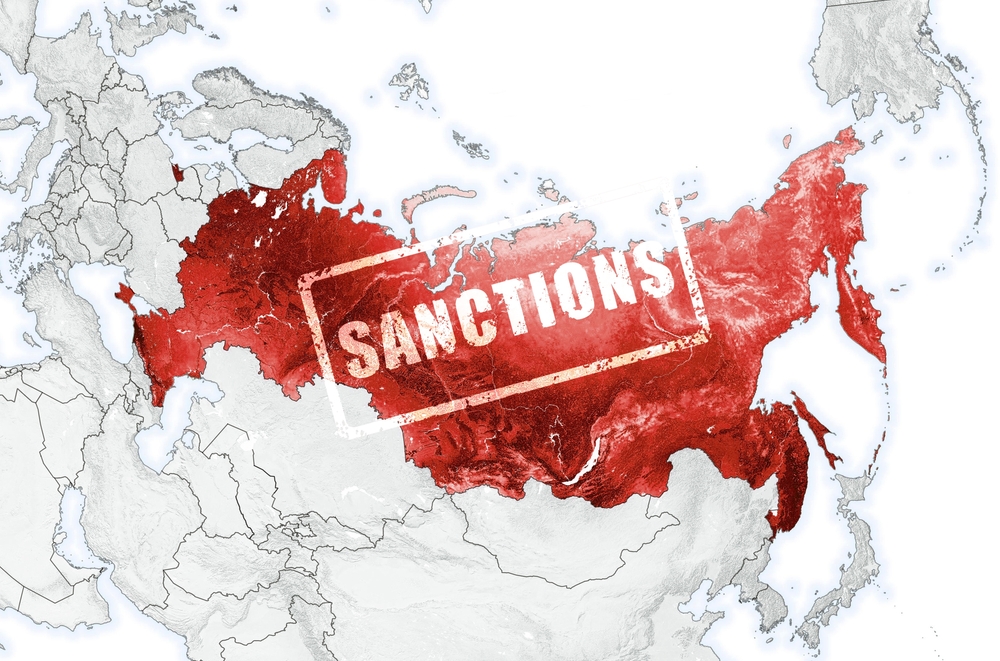
Russia on World map with countries borders. Stamp Sanctions on Russian territory. Concept of Ukraine war, crisis, economic sanctions, politics, russophobia, travel

How Russia is shifting to a war economy in the face of international sanctions

by Christoph Bluth

As Russia’s progress in Ukraine has stalled, with enormous losses in material and people, the frustrated head of the Wagner mercenary force Yevgeny Prigozhin has called for Russia to shift to a total war economy: The Kremlin must declare a new wave of mobilisation to call up more fighters and declare martial law and force ‘everyone possible’ into the country’s ammunition production efforts. We must stop building new roads and infrastructure facilities and work only for the war. His words echo similar sentiments expressed by the head of Russia’s state broadcaster RT, Margarita Simonyan – an influential supporter of the Russian president, Vladimir Putin – who said recently: Our guys are risking their lives and blood every day. We’re sitting here at home. If our industry is not keeping up, let’s all get a grip! Ask anyone. Aren’t we all ready to come help for two hours after work? Already facing western sanctions since its annexation of Crimea and occupation of territory in Ukraine’s eastern provinces in 2014, Russia has had to adapt to life under an increasingly harsh series of economic punishments. And, while Putin had apparently planned for a relatively short “special military operation”, this conflict has become a protracted and expensive war of attrition. The Economist has estimated Russian military spending at 5 trillion roubles (£49 billion) a year, or 3% of its GDP, a figure the magazine describes as “a puny amount” compared to its spending in the second world war. Other estimates are higher – the German Council on Foreign Relations (GDAP) estimates US$90 billion (£72 billion), or more like 5% of GDP. But the international sanctions have hit the economy hard. They have affected access to international markets and the ability to access foreign currency and products. And the rate at which the Russian military is getting through equipment and ammunition is putting a strain on the country’s defence industry. So the Kremlin faces a choice: massively increasing its war efforts to achieve a decisive breakthrough, or continuing its war of attrition. The latter would aim to outlast Ukraine in the hope that international support may waver in the face of a global costs of living crisis. Equipment shortages Russia has lost substantial amounts of arms and ammunition. In March 2023, UK armed forces minister James Heappey estimated that Russia had lost 1,900 main battle tanks, 3,300 other armoured combat vehicles, 73 crewed, fixed wing aircraft, several hundred uncrewed aerial vehicles (UAVs) of all types, 78 helicopters, 550 tube artillery systems, 190 rocket artillery systems and eight naval vessels. Russia has to contend with several important military-industrial challenges. For one, its high technology precision-guided weapons require access to foreign technology. This is now unavailable – or restricted to sanctions-busting deals which can only supply a fraction of what is needed. Most of the high-tech electronic components used by the Russian military are manufactured by US companies. So it has to substitute these with lower-grade domestic components, which is probably why the Russian military is using its high-tech weaponry sparingly. But the artillery shells on which it has been relying are running short. US thinktank the Center for Security and International Studies has reported US intelligence estimates that since February 2022, export controls have degraded Russia’s ability to replace more than 6,000 pieces of military equipment. Sanctions have also forced key defense industrial facilities to halt production and caused shortages of critical components for tanks and aircraft, among other materiel. Make do, mend – and spend There are clear signs of increasing efforts to address the shortages. According to a report in the Economist, Dmitri Medvedev, deputy chairman of Russia’s security council, has recently announced plans for the production of 1,500 modern tanks in 2023. Russian news agency Tass reported recently Medvedev also plans to oversee a ramping up of mass production of drones. The government is reported to be providing substantial loans to arms manufacturers and even issuing orders to banks to do the same. Official statistics indicate that the production of “finished metal goods” in January and February was 20% higher compared to the previous year. The GDAP reported in February: “As of January 2023, several Russian arms plants were working in three shifts, six or seven days a week, and offering competitive salaries. Hence, they can increase production of those weapon systems that Russia is still able to manufacture despite the sanctions.” So it appears the Kremlin is playing a delicate balancing act of redirecting significant resources to the military and related industries while trying to minimise the disruption of the general economy, which would risk losing the support of large sections of the population. The International Monetary Fund has projected Russia’s economy to grow by 0.7% this year (which would trump the UK’s projected growth of 0.4%). This will largely be underpinned by export revenues for hydrocarbons as well as arms sales to various client countries happy to ignore western sanctions. Meanwhile diversifying import sources has kept stores stocked. However, Russian public opinion pollster Romir has reported that while most people aren’t worried about the absence of sanctioned goods, about half complained that the quality of substituted goods had deteriorated. So ordinary Russians – those who haven’t lost loved ones on the battlefield or to exile – remain relatively sanguine about everyday life. But a longer, more intense conflict, requiring a shift to a total war economy, could be a different matter altogether.

Defense & Security
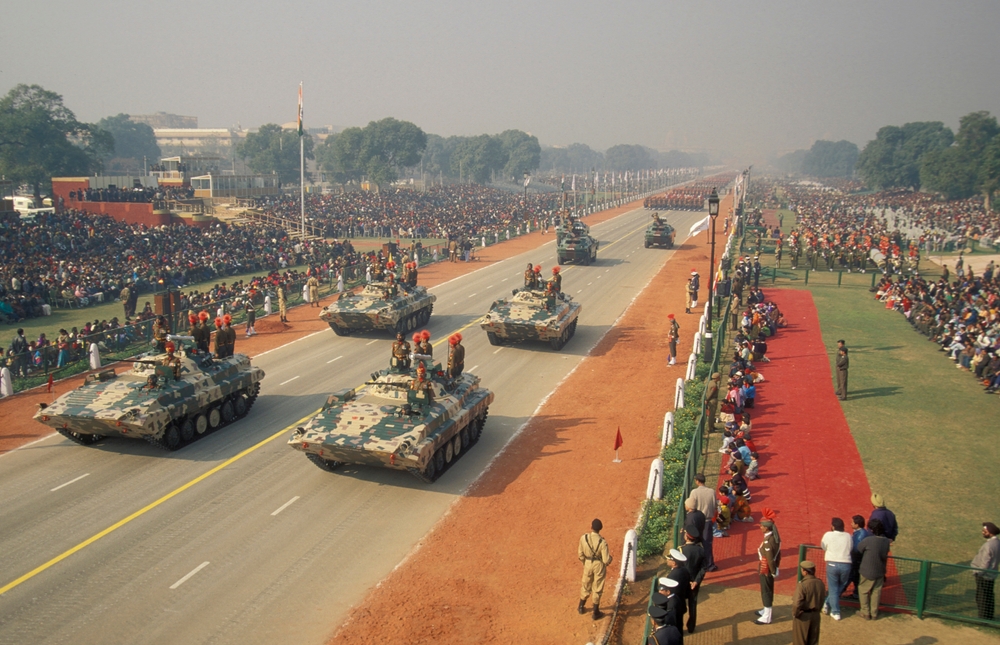
Indian Army Tank at the Parade at the Republic Day

India and the "Russian arms question"

by Dr. Adrian Haack

Other countries see arms exports as a strategic instrument. Germany should do the same. Arms cooperation with the Soviet Union and the Russian Federation has been the country's security policy foundation since India's independence. The friendship between the two states is primarily a deep dependence of New Delhi on Moscow. A dependence from which the Indian government wants and needs to break free, as the descent of the second largest arms exporter is just shifting the strategic tectonics in large parts of the global South. Cancellations, overdue payments, and delivery problems Already last year, astonishment arose after T-90 main battle tanks were photographed in Ukraine, which, according to some journalists, were a version used only by India. At the same time, some of these models were in the custody of the Russian state-owned Uralvagonzavod for modernisation. However, the theft of the Indian battle tanks could never be proven beyond doubt. Whether New Delhi could be informed about the whereabouts of its tanks has not been made public. In a report to the Indian parliament as early as 2022, it was stated that the Russian Federation would retain weapons systems produced for India. The type and scope were not specified. In short, the Kremlin declared its own requirements. In April 2022, New Delhi cancelled an order for 48 Mi-17 helicopters, followed in May 2022 by India's unilateral suspension of negotiations for Kamov Ka-31 naval helicopters. In addition to the considerable order volume of more than USD 500 million for the order cancelled in May alone, the Russian defence industry also lost reputation, as it now became public that the most important buyer of Russian defence equipment doubted the timely implementation of the order. The most recent conflict in Russian-Indian arms cooperation was a problem triggered by the sanctions in the payment processing of air defence systems, as Russia continued to press for payments in US dollars. A proposal by the Indian government that Moscow could invest the rupees gained from arms deals in Indian capital markets was rejected by the Russian side.  In New Delhi, the displeasure was directed less against the sanctions themselves, which prevented the transaction in US dollars, but against Russia's lack of goodwill: after all, the Russian Federation had provoked the foreseeable US sanctions in the first place through its invasion and now showed no accommodation in processing the payment. The Indian government is nevertheless displeased with "the West", as its dependence on the Russian Federation is a result of its lack of access to Western weapons systems and it is now being criticised for this very dependence. This criticism of Western criticism can hardly be dismissed out of hand. Russia dominates the low-price segment The Russian Federation plays a significant role in security policy, especially for the so-called "Global South". Russia was the second largest arms exporter in 2021, whereby this refers to the value of the exported weapons systems. In the lower price segment, the Russian Federation was the most significant exporter. In the 21st century, the Kremlin continues the role of the Soviet Union and for decades hardly needed to fear competition from comparably priced suppliers. Technical dependence in weapons systems is of course the more relevant factor. This affects the supply of spare parts: In combat aircraft, various components are subjected to extreme stress, which is why an aircraft has to be overhauled and wear parts replaced at fixed intervals. The operation of aircraft in particular requires a constant supply of spare parts. The supply of ammunition is also decisive: the delivery problems with ammunition for the Gepard anti-aircraft tank were an illustrative example, but the production of artillery ammunition is more decisive in Ukraine war. In air defence, too, the crucial question is whether one can muster more missiles than the attacking enemy. Shortages of ammunition can be decisive for the war. It is also widespread practice for most complex weapon systems to be overhauled, maintained and in some cases modernised at regular intervals. In the process, not only wear parts are replaced, but also technically advanced and new systems are integrated. For example, the Leopard 2A0 main battle tank, which went into series production in 1979, is technically extremely different from the Leopard 2A8, which will be delivered to the Bundeswehr from 2025. New versions of a weapon system are sometimes produced, but usually manufacturers try to upgrade existing systems. If this regular upgrading fails to take place, the weapon system will be overtaken by technological developments. The "Trophy Active Protection System" of the new generation Leopard 2 covers the vehicle with a 360-degree radar and fires a highly automated projectile-forming charge at approaching projectiles. In the early 1980s, there was nowhere near the computing power required for such technology. Today, it is essential for modern tank weaponry, as illustrated by the first weeks of the invasion of Ukraine, when technologically obsolete Russian tanks were shot down in rows. This practice is also common in ships. The Brandenburg-class frigates, in service since 1994, are comparatively new and yet radar and missile technology in particular has advanced. Among other things, the frigates of this class have been retrofitted with the MASS decoy system, which has only been in production since 2004. These two quite different weapon systems exemplify how weapon systems have been upgraded against the technically latest generation of projectiles. In the absence of such upgrades in an arms cooperation, the outdated models are easy to combat on the battlefield. The dependency between arms exporter and arms importer thus exists far beyond mere procurement. Especially when a state has opted for a long-lived weapon system, upgrades and spare parts create a massive dependency relationship. Arms cooperation has strong political implications This dependence on the Russian Federation has an enormous influence on Indian foreign policy. India's voting behaviour on Russia's war of aggression in the UN General Assembly has been making negative headlines since March 2022. The fact that India is one of the few democratic states to have abstained in all relevant votes so far is causing disgruntlement in the Western world. In India, it is openly communicated that the voting behaviour is primarily due to dependence on Russian weapons systems. Numerous attempts by Western diplomats and politicians to argue that India should side with them have accordingly come to nothing. India's government may share the arguments for a rules-based international order, but that does not change the fact that its own security interests have priority. India cannot afford any sign of military weakness - for this, arms cooperation with Moscow is indispensable in the medium term. India's security challenges often fly under the radar of the European public. Clashes like the one in Ladakh in 2020 are described as "skirmishes" in the press. A term that probably no journalist would choose if 20 German soldiers had been killed in an incident. That New Delhi feels threatened is by no means unfounded. The conflict with the nuclear power Pakistan, which has been going on since India became a state, is increasingly taking a back seat, but is still very present and linked to the rivalry with China. The People's Republic of China, Pakistan's most important arms supplier, is the second nuclear power with a direct border with India and claims parts of India's territory as "southern Tibet". The overarching level of the Indo-Chinese rivalry is China's aspiration to become a hegemonic power, which goes hand in hand with containing India's sphere of influence on the Asian continent. Chinese territorial claims in the Indian Himalayas, the Northeast and Bhutan are serious threats to India. In particular, there is concern in New Delhi that China may try to conquer the so-called "Siliguri Corridor", also known as the "Chicken's Neck of India". The Siliguri Corridor is a strip of land only twenty kilometres wide around the city of Siliguri in the Indian state of West Bengal and the only point of connection for the eight states of northeast India with the rest of the country. China also poses a threat at sea. For India, a possible military use of the Belt and Road projects is tantamount to complete maritime encirclement by China. If the ports in Pakistan, Sri-Lanka, Bangladesh, and Myanmar were used as Chinese naval bases, they would effectively cover the maritime area around India. A destroyer can reach any point within India's 200-mile zone in less than 24 hours from these ports and have access to shipping in the Arabian Sea, the Laccadive Sea, the Gulf of Bengal and the Andaman Sea. Chinese naval bases in Djibouti, the Strait of Malacca and the west coast of Africa form a second ring around India. Given the territorial claims China is aggressively pursuing in the region and also on Indian territory, Beijing can be clearly identified as the aggressor in the Indo-Chinese conflict. Moreover, in 2022 China had a defence budget 210 billion USD larger than India's and is clearly superior in terms of defence technology. The threat situation could hardly be more tangible. India's diversification is a marathon, not a sprint In recent years, India has been the largest buyer of Russian weapons, albeit with a declining trend. The use of Russian weapon systems is pronounced in all three branches of the armed forces. The majority of the tank force is equipped with T-90s (1,200 tanks in active service) and T-72s (2,400 tanks in active service). Only a few units use the Arjun main battle tank, which is produced in-house. In combination with the main battle tanks, the Indian Army can draw on around 1,800 BMP-2 infantry fighting vehicles and 800 BTR-80s. The armoured force is completed by a good 700 BMD and BRDM-2 airborne and reconnaissance tanks. A total of about 7,000 tanks from Russian production (or Indian licensed production) make up India's land forces. This gigantic number, combined with the age of most of the vehicles, only gives an idea of how huge the need for spare parts and upgrades must be. Although the Indian Air Force has implemented two solid future projects with the French Rafale multi-role fighter (36 aircraft in active service) and the indigenously produced HAL Tejas (30 aircraft in active service), Russian MiG-29 (68) and Su-30MKI (263) fighters form the backbone of the air force. The navy has 42 more MiG-29s, which also form the main armament of the aircraft carriers. Away from air combat, around 250 Russian helicopters of different variants ensure the flexibility of the Indian armed forces. The navy, with a recently commissioned aircraft carrier of its own production and the Kolkata-class destroyers, has less dependence on Russian technology. However, the Indian Navy's older aircraft carrier, as well as the nuclear submarines and the majority of the frigates are of Soviet and Russian production, respectively. The various classes of frigates, all of which have Indian names, are Russian technology. Exemplary is the newly launched Talwar class, which is a modified version of the Soviet Krivak class. The seven ships were built in St. Petersburg and Kaliningrad. The Indian military is just one of many examples of armed forces that have a heavy dependence on Russian weapons systems. Algeria, for example, has purchased over 300 T-90 main battle tanks and 46 Su-30MK fighter aircraft from Moscow since 2005 alone. Malaysia and Vietnam have recently received 18 and 12 Su-30s, respectively. Venezuela has purchased $15 billion worth of Russian aircraft, helicopters, and missile systems since 2000. Azerbaijan and Armenia have equally received extensive Russian arms imports ranging from tanks to helicopters in recent years. Uganda has amassed a Soviet-Russian tank fleet of around three hundred vehicles over many decades. The examples could be continued. India stands out merely because of its size, but the dependence on Russian weapons systems is glaring in many states of the global South. These states are now facing the "Russian arms question". States of the Global South are looking for an alternative It is obvious that the Russian arms industry will lose its position in the global security architecture. This does not necessarily mean that it will no longer have a prominent position, but it will lose market share regardless of the outcome of the war. There are four reasons for this: (1) In the coming years, the Russian defence industry will have little capacity to take on larger orders, as it will have to compensate for its own losses from the war. (2) It has become apparent that production is dependent on numerous foreign components, the availability of which is limited for the near future due to the sanction. (3) Furthermore, the acquisition of new Russian weapons systems is associated with possible political consequences for the purchasing state or at least with a loss of reputation in the West. (4) The most serious reason is the performance of Russian weapon systems in Ukraine. For example, technical defects in missiles were unexpectedly high; Russia was unable to gain air superiority even after more than a year; there is no footage of Russian tanks firing while moving and hitting targets with pinpoint accuracy; Russian artillery is surprisingly inaccurate in its aiming; and pictures of broken-down vehicles have gone around the world. Russian troops have had to procure drones from Iran and prestige projects such as the A-14 main battle tank or the Uran-9 unmanned tank have not yet been seen on the battlefield. The hypersonic missile "Kinschal", which was staged as unstoppable, was shot down many times by Western air defence systems. The sinking of the flagship of the Black Sea Fleet completed the bad image. The "Russian arms question" therefore becomes quite urgent. Since building an effective arms industry is unrealistic in the vast majority of states, few options remain. One can wait for the regeneration of the Russian arms industry or switch to the Chinese alternatives. India, even more than other states, is looking for a third way, as the Chinese alternative is not an option. From India's point of view, weapons systems from NATO countries or from Israel are the only chance for diversification. The Indian government is pushing joint ventures or production in India, not so much to strengthen its own economy, but rather to lower the cost of defence equipment. The question of cost is, of course, even more decisive for states that would also have access to Chinese armaments. Already in the past, some states opted for Soviet and later Russian products, either because they did not have access to other weapon systems for political reasons or because they were simply cheaper. A Leopard 2 main battle tank already costs 15 million euros in the A7 version. The Russian T-90 costs about 3.5 million euros. The example is not optimally chosen because the Leopard 2 has a different technical level and weighs about 20 t more. However, this would be the alternative from the point of view of a state that would want to switch from a Russian to a German battle tank. The price factor is still an important variable today. Should the arms industries of the NATO countries be economically unable or not politically mandated to fill the Russian vacuum, China will most likely take over this role. In South Asia, this development has already progressed, as Pakistan was dependent on an alternative to Russian arms imports due to good Indo-Russian relations. Pakistan has been the largest importer of Chinese arms from 2010 to 2020, far behind Bangladesh and Myanmar. In this sector, 38 per cent of all Chinese exports from 2006 to 2020 went to Pakistan. China's defence sector would in all likelihood be prepared for increased arms exports, as the industry grew precisely in the years when there was no reason for high arms spending in Europe. Comparing 2003 to 2007 and 2008 to 2012, China's arms exports grew by 162 per cent. China is ready. Germany should see its arms industry as a strategic tool Not only Russia and China, but also the USA, Israel and France see their powerful arms industry as a strategic instrument of their foreign policy. In Germany, the debate about domestic arms production has turned 180 degrees. The Bundestag debates on the acquisition of weaponised drones from 2008 onwards seem naïve today, the blanket opposition to arms exports is hardly represented in public discourse anymore, and the image of arms companies has also changed fundamentally. The IRIS-T air defence system protects the lives of civilians in Ukraine. Sentences such as "Armament research has no value for society" or "One can assist other countries in other ways than with howitzers" in German leading media seem out of date. In 2022, Germany has moved from an ivory tower discourse of ethics to an ethics of responsibility that recognises the new geopolitical reality. After this first step, it is important to initiate a strategic debate. It is in Germany's interest that states do not move away from their dependence on Russia into China's orbit. It is also a direct European security interest to minimise Russian arms exports. The Russian arms industry employs 2 to 3 million people, which corresponds to about 20 per cent of total industrial jobs. No other economy is so dependent on its arms industry. Since it is a majority state-owned industry, a decline in exports would directly affect the state budget. On the one hand, a decline in exports would result in a lack of revenue; on the other hand, procurement costs for the country's own armed forces would rise considerably. Moreover, the monopolised structure entails the risk that the failure of a single Russian company would result in the loss of far-reaching military capabilities or necessitate costly state support. By denying the Russian defence industry sales markets, Russia's military capabilities are weakened in the long term and, at the same time, its economy as a whole. The type and volume of arms exports are undoubtedly an indicator of friendship between states. Many Russian customers from Venezuela to Syria are not strategic partners of Europe. Possible competition with the Russian or Chinese arms industry must be decided on a case-by-case basis. Arming Cuba, North Korea or Iran with German technology is obviously not in the strategic interest, but in other cases, such as Saudi Arabia - which is by no means a value partner - the German government has already decided in favour of arms exports for overriding strategic reasons. India's arms build-up is minimal risk and of critical strategic importance. The foreign and security policy institutions as well as the party landscape in India are very stable, which is why a change of policy is not likely. There is a great willingness to break away from dependence on Moscow. India is a stability factor in the Indian Ocean and stands for free sea routes. With a defence budget of over 80 billion USD per year, the country would be a major customer for the German defence industry. France and the USA have already been playing a significant role in the modernisation of the Indian armed forces for years and are taking a very proactive and accommodating approach. India-NATO relations have already been mapped out by these two NATO partners. From a German perspective, one can now at least follow this line retrospectively or decide not to play a security role in South Asia. With its more than 3,000 km long border with China and a kind of "Cold War" in the Indian Ocean, India is one of the states with which China could soon have a major military confrontation. Due to its sheer size and long land border, India is, from the US perspective, the most important potential partner in a possible escalation with China, along with Japan and Australia. India is therefore likely to be given privileged access to US weapons systems and will itself seek US security proximity. In the event of a conflict, India, for all its self-confidence, will not be able to stand up to China alone, as it is inferior to China in terms of defence technology. The Russian defence industry is still decisive for India's military planners - but many things are now being recalibrated here. For India - as for many other states - Germany must answer the question of how "the expansion of security and defence cooperation" is implemented. The Indo-Pacific Guidelines mention participation in forums, exercises, and evacuation planning as well as the deployment of liaison officers and "various forms of maritime presence". The states in the region are well aware that the German Navy is not a security factor in the region. The arms policy approach in Germany's guidelines is expressed in the thirteen mentions of arms control. If this is the Indo-Pacific strategy of the German government, it currently has no serious security policy dimension. In short, if Germany does not use its powerful arms industry as an instrument of security policy, then the toolbox is empty. Armament cooperation is a common and effective instrument of foreign policy for France or the USA, for example, but also for the Russian Federation and China. Especially for a nation that seeks to avoid military engagement, it is the only realpolitik option for action apart from "soft power". Germany should understand its arms industry as a strategic instrument.

Defense & Security
The flag of Ukraine on a paper with words

European public opinion remains supportive of Ukraine

by Maria Demertzis , Camille Grand , Luca Léry Moffat

Public support for Ukraine is holding up in allied countries, but preparations should be made for scenarios in which support ebbs away. As the war in Ukraine drags on, the direct economic cost to Europe and other countries is rising. Through unprecedently high and now long-lasting inflation, the war has increased financial fragility in households across the European Union and risks eroding public support for Ukraine. But the evidence shows that public opinion stands firm. EU countries and institutions have committed financial, humanitarian and military support to Ukraine, totalling €62 billion as of 24 February 2023, exactly one year on from Russia’s invasion. The total is estimated to be around €70 billion as of 23 May 2023.  Source: Bruegel based on Trebesch et al (2023). Bilateral commitments from EU member states had reached €26.18 billion by 24 February 2023, with most of this figure consisting of military aid (€16.02 billion). Commitments from European institutions hit €35.53 billion in February 2023. The biggest chunk of this was an €18 billion package to support Ukraine’s immediate needs and maintain macroeconomic stability throughout 2023 – one example being the gaping hole in Ukraine’s finances, the budget deficit currently at a quarter of Ukraine’s GDP.  The European Investment Bank has pledged €668 million in liquidity assistance, while a series of €500 million tranches contributed by the EU to the European Peace Facility (EPF)  for military purposes now amounts to €3.6 billion committed. This support is relatively small and sustainable. The €70 billion, encapsulating financial, humanitarian, military, emergency budget and resources for those fleeing the war, is only 0.44 percent of EU GDP. The European economy has also been affected by high energy prices. The European Commission predicted in its spring 2023 inflation forecasts that euro-area inflation will be 5.8 percent this year. This is a little higher than anticipated during the winter. According to the European Central Bank, euro-area food prices were 15 percent higher in April 2023 than in April 2022. With euro-area inflation at 8.4 percent in 2022 (European Commission, 2023), €100 in 2021 is only worth €86 in 2023. It is understandable that the public is impatient with the level of costs it faces every day and adapting energy consumption in the face of energy scarcity. Figure 2 shows the proportion of Europeans who changed their habits to save on energy or dipped into savings due to inflation.  Source: Bruegel based on European Commission (2022). Interviews conducted between 18 October and 4 December 2022 with a representative sample of citizens, aged 18 and over, in each EU country. Figure 2 shows that 71 percent of EU citizens changed habits at home to save on energy. In only one country, Slovenia, did less than half of citizens change habits (49 percent). Furthermore, 37 percent of EU citizens had to take money from their savings as a direct consequence of inflation, ranging from 58 percent in Greece to 16 percent in Croatia. European public opinion: remarkably stable The more expensive the war becomes, the more one might expect European public support to decrease. Indeed, there has been an overall decline in support for measures backing Ukraine. Figure 3 shows a pattern of slow overall decline across France, Germany, Spain, Italy and Poland. The proportion of those in favour of sending arms or of economic and financial sanctions has fallen.  Source: Bruegel based on Ifop (2023). Despite this decline, as of February 2023, support for sanctions and direct assistance to Ukraine remained solid, above 50 percent in all but one case. EU-wide persistent public support signals that European citizens understand that the outcome of the war is of critical importance to their own futures. Eight months into the war, the average approval rate amongst the EU27 for EU support for Ukraine was an astonishing 73 percent (European Parliament, 2022). Only four countries – Bulgaria, Cyprus, Slovakia and Greece – reported approval ratings of less than 50 percent. Furthermore, an average of 59 percent of citizens in eight Central and Eastern EU countries believe that sanctions against Russia should remain in place according to a poll conducted in March 2023 (Hajdu et al., 2023). Meanwhile, a poll from the Kyiv International Institute of Sociology in February 2023 showed that 87 percent of Ukrainians said that under no circumstances should Ukraine give up any of its territory, even if the war lasts longer. This is an increase from 82 percent in May 2022 . The different blocs There are some significant disparities in popular support in different EU countries. Krastev and Leonard (2023) noted that three different blocs of public opinion have emerged: the northern and eastern hawks (Estonia, Poland, Denmark and the United Kingdom), the ambiguous west (France, Germany, Spain, Portugal) and the southern weak links (Italy and Romania). Figure 2 shows persistent support in countries from each of these groups. Amongst even the least supportive member states, some interesting results are observed. When individuals were asked to choose between two opposing statements on whether sanctions were worth higher prices or not, Hungary was the only one out of nine EU countries surveyed where the majority believed that sanctions were not worth it (Figure 4).  Source: Bruegel based on Ipsos (2023). Surprisingly, the number of those who believe that the most important thing is stopping the war as soon as possible, even if Ukraine had to forfeit territory to Russia, actually declined almost across the board according to January 2023 polling reported by Krastev and Leonard (2023). Notable declines were seen in Romania and Italy – those characterised as the ‘southern weak links’. This may be due to citizens becoming more willing to support Ukraine for the long run.  Source: Bruegel based on Krastev & Leonard (2023). The United States US aid to Ukraine in the first year amounted to 0.37 percent of US GDP (Trebesch et al, 2023). The willingness in the US to bear costs for supporting Ukraine has followed a similar pattern to the EU of slow decline across the political spectrum.  Source: Based on Figure 5, Telhami (2023). This decline may signal ‘impatience’ with the war in Ukraine (especially amongst Republicans), but there are also signs of persistent support. The current level of US military expenditure to support Ukraine was either too little or about the right level according to 42 percent of respondents, as opposed to 33 percent who said it is too much. Interestingly, there is a strong preference for support staying on course for one to two years (46 percent of respondents) versus only 38 percent who would accept providing support to Ukraine for ‘as long as it takes’ (Telhami, 2023). Whilst there is a clear division along party lines, there is reduced support amongst Democrats and Republicans. This means that the future of American support for Ukraine may change even before the 2024 elections. Lower support across the political spectrum during the upcoming electoral season could result in reduced backing from the Biden administration or in Congress, as both sides vie for votes. This is before a potential Republican victory, which under certain scenarios, may stop or dramatically limit support from the US. Conclusion   An erosion in public support for Ukraine might have been expected as the cost and economic consequences of the war began to impact EU households through inflation. But support for Ukraine has remained strong, suggesting that the public understands fully the wider implications for European security of the outcome of the war. The public sides overwhelmingly with the Ukrainians, which are clearly perceived as the victims of an aggression. This is consistent with the growing support for maintaining or increasing defence spending. Most NATO citizens (74 percent in 2022 versus 70 percent in 2021; NATO, 2023) think that defence spending should either be maintained at current levels or increased (with some significant differences from 85 percent to 52 percent, but always with a majority supporting). Just 12 percent think less should be spent on defence.   Public support could decline more in the future. If news from the battlefield suggests a protracted conflict in which neither side can prevail militarily, then time and the potential decline in US support may affect EU public opinion. A successful Ukrainian counter-offensive would play an important role in the continuance of Western support for the war. In the absence of progress on the battlefield, voices calling for a peace settlement, even on unfavourable terms to Ukraine, might gain traction in the public debate. In upcoming elections, this could benefit political parties less favourable to supporting Ukraine for ‘as long as it takes’. European leaders must therefore prepare for several scenarios. Significant Ukrainian successes in the battlefield in the near future could pave the way for a positive settlement and the restoration of Ukrainian sovereignty and its reconstruction. The EU must also prepare for the more complex outcome of a protracted war, which would require sustained efforts to support Ukraine militarily (Grand, 2023) and economically. This would require further and constant political efforts to keep public opinion on board, preserving European and Western unity in a potentially degraded economic and political environment.