Subscribe to our weekly newsletters for free

Subscribe to an email

If you want to subscribe to World & New World Newsletter, please enter
your e-mail

Defense & Security
Concerns over US involvement in Israel-Iran conflict

‘Destruction is not the same as political success’: US bombing of Iran shows little evidence of endgame strategy

by Farah N. Jan

Shortly after the opening salvo of U.S.-Israeli attacks on Iran on Feb. 28, 2026 – with missiles targeting cities across the country, some of which killed Supreme Leader Ayatollah Ali Khamenei – President Donald Trump declared the objective was to destroy Iran’s military capabilities and give rise to a change in government. Framing the operation as a war of liberation, Trump called on Iranians to “take over your government.” In the first days alone, Israel dropped over 2,000 bombs on Iranian targets, equal to half the tonnage of the 12-day Israel-Iran conflict in June 2025. Heavy U.S. bombing, meanwhile, has targeted Iran’s Revolutionary Guard as well as ballistic missile and aerial defense sites. The destruction is real. But, as an international relations scholar, I know that destruction is not the same as political success. And the historical record of U.S. bombing campaigns aimed at regime change shows that the gap between the two – the point at which Afghanistan, Iraq and Libya campaigns all stalled – is where wars go to die. Destruction is not strategy Decades of scholarship dating back to World War I on using air power to force political change has established a consistent finding: Bombing can degrade military capacity and destroy infrastructure, but it does not produce governments more cooperative with the attacker. Political outcomes require political processes – negotiation, institution-building, legitimate transitions of power. Bombs cannot create any of these. Instead, what they reliably create is destruction, and destruction generates its own dynamics: rallying among the population, power vacuums, radicalization and cycles of retaliation. The American record confirms this. In 2003, the George W. Bush administration launched “Shock and Awe” in Iraq with the explicit aim of regime change. The military objective was achieved in weeks. The political objective was never achieved at all. The U.S. decision to disband the Iraqi army created a vacuum filled not by democratic reformers but by sectarian militias and eventually ISIS. The regime that eventually emerged was not friendly to American interests. It was deeply influenced by Iran. In 2011, the Obama administration led a NATO air campaign in Libya that quickly expanded from civilian protection into regime change. Dictator Moammar Gadhafi was overthrown and killed. But there was no plan for political transition. Chaos and political instability have endured since. Asked what his “worst mistake” was as president, Barack Obama said, “Probably failing to plan for the day after, what I think was the right thing to do, in intervening in Libya.” Libya remains a failed state today. The intervention also sent a powerful signal to countries pursuing nuclear weapons: Gaddhafi had dismantled his nuclear program in 2003. Eight years later, NATO destroyed his regime. Even Kosovo, often cited as the success story of coercive air power, undermines the case. Seventy-eight days of NATO bombing did not, by themselves, compel Slobodan Milosevic, president of the Federal Republic of Yugoslavia, to withdraw. What changed was the credible threat of a ground invasion combined with Russia’s withdrawal of diplomatic support. The political outcome – contested statehood, ongoing ethnic tensions – is hardly the stable governance that air power advocates promise. The pattern is consistent: The United States repeatedly confuses its unmatched capacity to destroy from the air with the ability to dictate political outcomes. Why this war? The recent U.S. attacks on Iran raise a fundamental question: Why is the United States fighting this war at all? The administration has declared regime change as its objective, justifying the campaign on the grounds of Iran’s nuclear program and missile capabilities. But that nuclear program was being actively negotiated in Geneva days before the strikes. And Iran’s foreign minister told NBC the two sides were close to a deal. Then the bombs fell. Iran did not attack America. And it currently does not have the capability to threaten the American homeland. What Iran challenges is Israel’s regional military dominance, and I believe it is Israel’s objective of neutralizing a rival that is driving this operation. Israel targeted 30 senior Iranian leaders in the opening strikes. Israeli officials described it as a preemptive attack to “remove threats to the State of Israel.” I see the strategic logic for these killings as Israel’s, and Americans are absorbing the costs. U.S. military bases in Bahrain, Qatar, Kuwait, the UAE, Jordan, and Saudi Arabia have taken Iranian missile fire. American service members are in harm’s way – three have already been killed – not because Iran attacked them, but I believe because their president committed them to someone else’s war without a clear endgame. Each coercive step in this conflict – from the 2018 withdrawal from the nuclear deal, to the 2020 assassination of Qasem Soleimani, Iran’s most powerful military commander, to the June 2025 strikes – was framed as restoring leverage. Each produced the opposite, eliminating diplomatic off-ramps, accelerating the very threats it aimed to contain. The regime is not one man Decapitation strikes assume that removing a leader removes the obstacle to political change. But Iran’s political system is institutional — the Guardian Council, the Assembly of Experts and the Revolutionary Guard have survived for four decades. The system has succession mechanisms, but they were designed for orderly transitions, not for active bombardment. The group most likely to fill the vacuum is the Revolutionary Guard, whose institutional interest lies in escalation, not accommodation. There is a deeper irony. The largest protests since 1979 swept Iran just weeks ago. A genuine domestic opposition was growing. The strikes have almost certainly destroyed that movement’s prospects. Decades of research on rally-around-the-flag effects – the tendency of populations to unite behind their government when attacked by a foreign power – confirms that external attacks fuse regime and nation, even when citizens despise their leaders. Iranians who were chanting “death to the dictator” are now watching foreign bombs fall on their cities during Ramadan, hearing reports of over 100 children killed in a strike on a girls school in Minab. Trump’s call for Iranians to “seize control of your destiny” echoes a familiar pattern. In 1953, the CIA overthrew Iran’s democratically elected prime minister in the name of freedom. That produced the Shah, the Shah’s brutal reign led to the Iranian Revolution in 1979, and the revolution produced the Islamic Republic now being bombed. What comes next? And what guarantee is there that whatever emerges will be any friendlier to Israel or the United States? What does success look like? This is the question no one in Washington has answered. If the objective is regime change, who governs 92 million people after? If the objective is stability, why are American bases across the Middle East absorbing missile fire? There is no American theory of political endgame in Iran — only a theory of destruction. That theory has been tested in Afghanistan, Iraq and Libya – and Iran itself over the preceding eight months. It has failed every time, not because of poor execution, but because the premise is flawed. Air power can raze a government’s infrastructure. It cannot build the political order that must replace it. Iran, with its sophisticated military, near-nuclear capability, proxy networks spanning the region and a regime now martyred by foreign attack, will likely not be the exception. U.S. law prohibits the assassination of foreign leaders, and instead Israel killed Iran’s supreme leader while American warplanes filled the skies overhead. Washington has called the result freedom at hand, but it has not answered the only question that matters: What comes next?

Diplomacy
Mini toy of action figure with blurred background. Business financial photography concept design. Minifigure of politician character with United of America and IRAN country flag. Miniature people.

Trump has given Iran a ten-day ultimatum – but chances of an agreement look slim

by Sanam Mahoozi

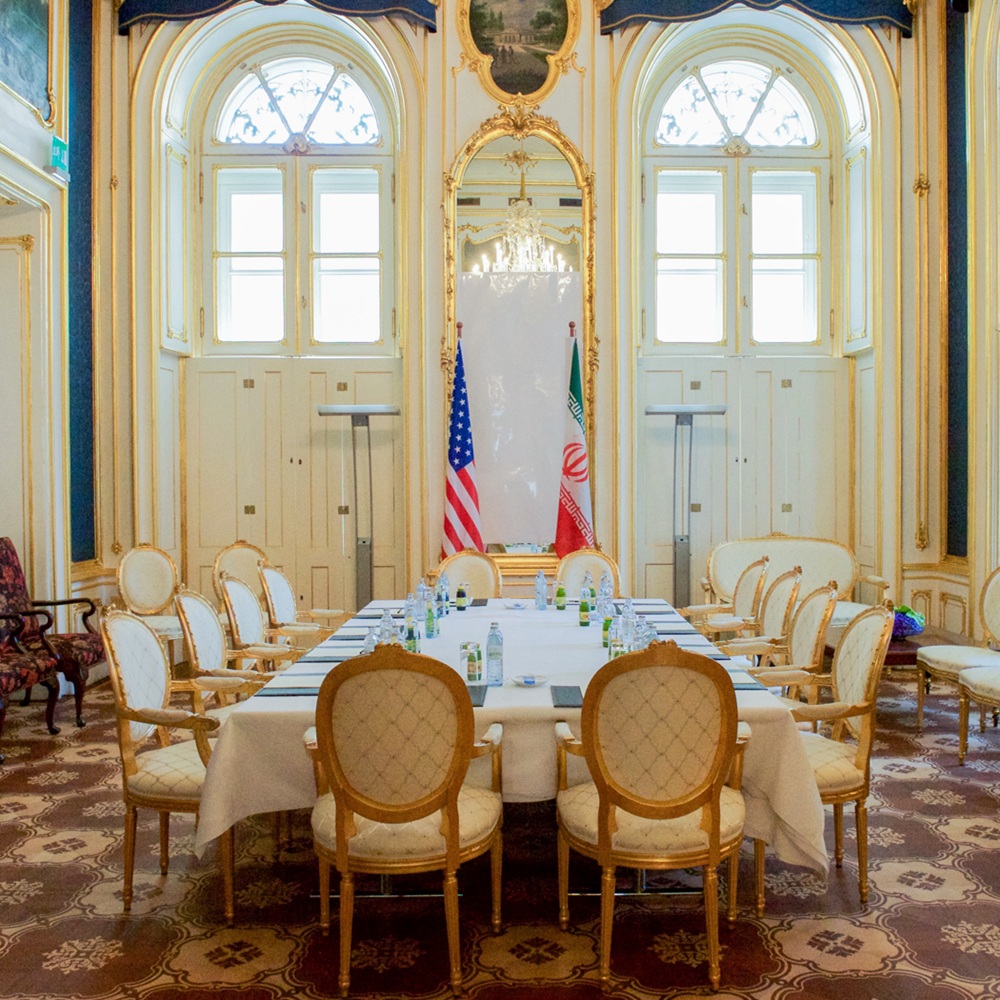
Donald Trump delivered an ultimatum to Iran at the first board of peace meeting in Washington on February 19. He told Tehran to reach a “meaningful” deal with the US within ten to 15 days, or “really bad things” will happen. White House press secretary Karoline Leavitt had earlier said there are many arguments for taking military action in Iran. These comments came as reports indicated that the latest round of indirect talks between the two countries in Switzerland on February 17 had made at least some headway. Iran’s foreign minister, Abbas Araghchi, emerged from the negotiations hailing what he saw as “good progress”. He added that the US and Iran had reached an understanding on “guiding principles”. The assessment of US representatives was less positive. Despite acknowledging that “in some ways” the talks went well, US vice-president J.D. Vance said Iran was refusing to acknowledge core US demands. The US wants Iran to dismantle its nuclear programme completely, reduce the number and range of its ballistic missiles and end its support for regional proxy groups. Following the talks, the US has continued to reinforce its military presence in the Middle East. Cargo planes, fighter jets, refuelling tankers and an aircraft carrier have been moved to the region, with a second aircraft carrier expected to arrive soon. According to the New York Times, the buildup of US forces in the Middle East is now sufficient for Trump to order military action at any moment. Iran appears to be gearing up for a confrontation. Its military held joint drills with Russia on February 19, days after the Strait of Hormuz was closed temporarily as Iran carried out live-fire exercises. And while emphasising that it “neither seeks tension nor war”, Iran has told the UN that if it were attacked it would consider “all bases, facilities and assets of the hostile force” in the region as “legitimate targets”. These developments come less than a week after hundreds of thousands of people, largely from the Iranian diaspora, demonstrated in cities worldwide. They did so in solidarity with protesters who took to the streets of Iran in January to demand regime change. In late December, protests that began over worsening economic conditions quickly spread nationwide in one of the most serious threats to Iran’s political establishment since the Woman, Life, Freedom protest movement of 2022. That protest wave began after the death of a 22-year-old women called Mahsa Amini in police custody. This time round, the Iranian authorities imposed a near-total internet shutdown, creating a nationwide communications blackout in an effort to suppress the unrest. Human rights groups say thousands of people were killed, while many more were injured, detained or remain missing, in what was one of the most severe crackdowns in Iran’s modern history. According to local police, around 250,000 people rallied on February 14 in the German city of Munich alone, where world leaders had gathered for Europe’s biggest security conference. Many of those in attendance waved flags bearing the lion and sun emblem of Iran that was used before the Islamic revolution in 1979 ended the Pahlavi dynasty. Israeli and American flags were also visible at many of the rallies. This has widely been seen as a call for foreign intervention against Iran’s clerical leadership. Trump had raised the prospect of US military action during the unrest, urging the Iranian people to continue protesting and telling them that help was “on its way”. Such action now appears likely. Brink of war Iran’s fate is hanging in the balance. The deployment of US military assets to the Middle East suggests Trump may be preparing for imminent military action. However, despite making no secret of his desire to topple the Iranian regime, there is still a chance that Trump settles for a diplomatic agreement with the country’s leadership. Iranian opposition voices, including exiled crown prince Reza Pahlavi, say such a deal would only prolong the survival of the Islamic Republic rather than address the demands of people in Iran for regime change. In an interview with American political commentator Glenn Beck on February 11, Pahlavi called the negotiations between the US and Iran “another slap in the face of the Iranian people”. But the prospects that any deal will be reached look slim. The US and Iran remain in fundamental disagreement over Tehran’s nuclear programme and have been unable to reach a deal since the Trump administration withdrew the US from a previous agreement in 2018 that had been negotiated by the Obama administration. Many people, including the US vice-president, are also sceptical that Iran’s authorities will budge on additional US demands around ballistic missiles and proxy groups like Hamas and Hezbollah – whether or not they are threatened with military action. Iran’s future is murky. But one thing is for certain: with war or without war, the Iranian people have started a revolution that has extended beyond their country’s borders.

Defense & Security
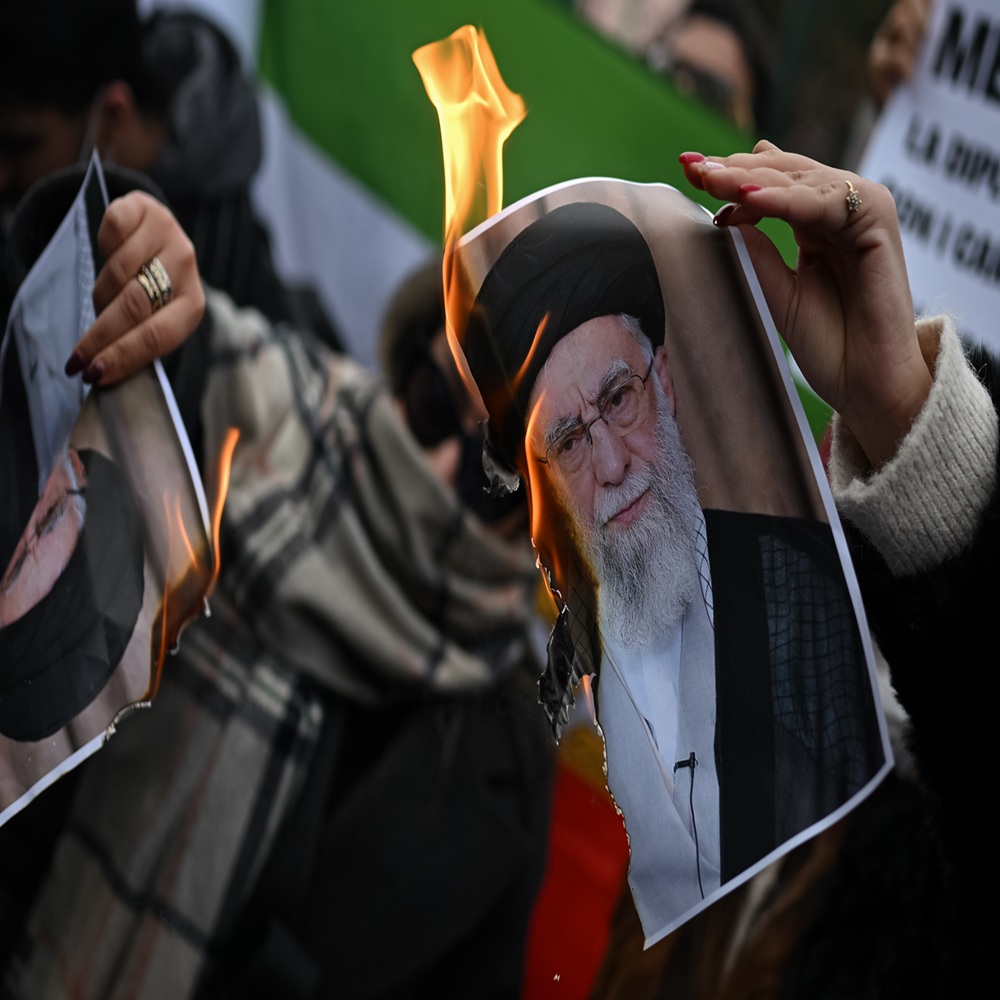
Milan, Italy - January 17, 2026: People burn a photo depicting Ali Khamenei, Supreme Leader of Iran during a demonstration in solidarity with Iranian protestors

Does US military strikes make a democratic transition in Iran possible?

by World & New World Journal Policy Team

I. Introduction In late December 2025, mass protests erupted across Iran, driven by public anger over the deepening economic crisis. Initially led by bazaar merchants and shopkeepers in Tehran, the demonstrations quickly spread to universities and major cities such as Shiraz, Isfahan, and Mashhad, becoming the largest unrest since the 2022 Mahsa Amini protests. Over time, the movement expanded beyond economic demands to include calls for freedom and, in some cases, the overthrow of the regime. Protesters chanted anti-government slogans such as “death to the dictator.” [1] In response, since late December 2025 Iranian state security forces have engaged in massacres of dissidents. The Iranian government has also cut off internet access and telephone services in an attempt to prevent protesters from organizing. The Iranian government has accused the US and Israel of fueling the protests, which analysts suggest may be a tactic to increase security forces’ willingness to kill protesters. A Sunday Times report, based on information from doctors in Iran, said more than 16,500 people were killed and more than 330,000 injured during the mass protests. The Interior Ministry in Iran verified 3,117 people had been killed in protests. [2] The Iranian protests, the largest in the Islamic Republic’s 46-year history, appear to have subsided for now in the face of a violent government crackdown. US President Donald Trump has threatened to “hit very hard” if the situation in Iran escalates, reigniting concerns about possible US intervention in the region. Even Trump called Iran’s Supreme Leader Ayatollah Ali Khamenei “sick man” in an interview with Politico on January 17th, 2026, and said, “It’s time to look for new leadership in Iran.” It appeared to be the first time Trump had called for the end of Khamenei’s rule in Iran. [3] Despite having repeatedly threatened to attack Iran if the regime were to start killing protesters, Trump has held off on any immediate military action against the Islamic Republic. While the US reportedly sent the USS Abraham Lincoln carrier strike group to the Middle East on January 15th, 2026, President Trump has not specified what he might do. However, on January 28th, 2026, Trump posted on social media: “A massive Armada is heading to Iran... It is a larger fleet, headed by the great Aircraft Carrier Abraham Lincoln, than that sent to Venezuela. Like with Venezuela, it is, ready, willing, and able to rapidly fulfill its mission, with speed and violence, if necessary.” Saying that time is running out, Trump demanded that Iran immediately negotiate a nuclear deal. He also suggested his country’s next attack on Iran could be worse than last year’s. In response, Iranian Supreme Leader Ali Khamenei has warned the US that any attack on his country would result in a “regional war” as US President Donald Trump has amassed military assets in the Middle East. With this tension between Iran and the US running high, Iran and the US held a nuclear talk on Friday on February 6th, 2026, in Oman. However, the deal was not reached, although both sides agreed to resume the talks. If the US and Iran fail to strike a deal and then the US carries out military strikes on Iran, what will happen? Does US military strikes make a democratic transition in Iran possible? This paper deals with this issue. It first introduces theory on democratic transition and then examines whether US military strikes against Iran makes a democratic transition in Iran possible. II. Theory on democratic transition There is a considerable body of literature on theories of democratic transition. These broadly fall into the following categories: [4] a. Structuralist approaches which see the emergence of democracy as tied to factors such as economic development (Lipsett, 1959; O’Donnell 1979), political culture (Almond and Verba, 1963), civil society and class conflict (Moore, 1966). b. Strategic choice approaches which focus on the calculations and decisions made by elites (Rustow, 1970; Bratton and van de Walle, 1997; Burton and Higley, 1987). c. Institutionalist approaches which stress the impact of institutions on policies and patterns of political actions (Leftwich, 2017). d. Political economic approaches which stress economic determinants of political change and democratization, in particular the impact of economic crises (Haggard and Kaufman, 1995; Guo, 1999). Empirical case studies (for example, Haggard and Kaufman, 1995) suggest that, rather than a single theory to explain democratic transitions, a combination of these theories is usually applicable. According to Idris (2016)’s study of the five case studies of South Africa (1986), Ghana (2000), the Philippines (1986), Indonesia (1999) and Ukraine (2004), enabling factors for the emergence of democracies are below: [5] - Unpopular incumbent: With the exception of Ghana, all the incumbent regimes were very unpopular, often characterized by human rights abuses, corruption, mismanagement and denial of democratic freedoms. A breakdown of the ‘authoritarian bargain’ in the Philippines and Indonesia, whereby growth and development were provided with limited democracy, fueled public opposition. - Economic development & situation: Economic development was a main factor in many democratic transitions, but the precise influence varied. Indonesia is the clearest example of democratic transition advanced by economic crisis (effects of the Asian financial crisis in 1997); in the Ukraine, in contrast, growth had been strong overall, but inequality and corruption fueled public frustration. However, the modernization theory (Lipsett, 1959) that economic growth and development is a prior condition/enabling factor for democratization rarely applied. - United opposition and strong leadership figures: The ability of the opposition to unite around a common goal, especially behind strong leaders, was an important factor in democratic transitions. Cory Aquino in the Philippines, Nelson Mandela in South Africa, and Viktor Yushchenko in Ukraine played this role. - Strong civil society: An organized civil society played a significant role in mass mobilization, monitoring government actions (e.g. election fraud) and countering government measures to suppress them. In Ukraine, for instance, many leaders of the 2004 Orange Revolution had taken part in anti-government protests in 2000-1; civil society groups in South Africa mounted a very effective civil disobedience campaign. - Mass mobilization: was a critical factor in successful democratic transitions, seen in South Africa, the Ukraine, the Philippines, and Indonesia. This came about because of information dissemination through television, radio, and the internet, as well as civil society groups. Mass protests created an irreversible momentum for change and led to defection or unwillingness to use force and violence against demonstrators on the part of the security forces. - International pressure/support: Military/Diplomatic/donor (e.g. IMF) pressure on an authoritarian regime could force it to make concessions where domestic factors alone would not. South Africa exemplifies this: without international sanctions and international condemnation of the apartheid regime, reform and democratization would not possible or likely have taken much longer. Ghana’s democratic transition arguably began mainly because of IMF pressure. External ‘democratic aid’, e.g. to raise public awareness of democratic values and build up the capacity of civil society groups, also made a difference. In Ukraine, a decade of such external support meant civil society groups were able to effectively monitor and document electoral fraud by the Kuchma government. III. The Case of Iran US military strikes on Iran is an international pressure/support that this paper explained as an enabling factor for the emergence of democracies. US military strikes on Iran are the most important element in facilitating a democratic transition in Iran. Thus, this paper first takes a look at current US military build-up to attack the Iranian regime and then explores whether US military strikes on Iran make a democratic transition in Iran possible. 1. US military build-up As US President Donald Trump considers a major strike on Iran, the US military has accelerated a weeks-long buildup of military hardware in the Middle East, open-source data shows. As Figure 1 shows, the arrival of the Lincoln Carrier Strike Group, now in the northern Arabian Sea, represents the most dramatic shift in military positioning. The group includes the USS Abraham Lincoln along with three guided-missile destroyers and the carrier air wing which includes squadrons of F-35C Lightning II fighters, F/A-18E Super Hornet fighters, and EA-18G Growler electronic warfare jets. The US Navy also has three destroyers — the USS McFaul, USS Delbert D. Black, and USS Mitscher — in the region separate from the aircraft carrier strike group. Three littoral combat ships — USS Santa Barbara, USS Canberra, and USS Tulsa — based out of Bahrain could be called upon for minesweeping duties if Iran chooses to deploy such armaments. Figure 1: US military presence in the Middle East (source: Congressional Research Service, Airframes.io and FlightRadar24) In recent days, the US has deployed various air defense systems to the region as well, including additional Terminal High Altitude Area Defense (THAAD) systems, and Patriot missile systems that appeared at Al Udeid Air Base in Qatar last week, Those systems would be key to combating retaliatory missile strikes of Iran by taking aim at either US military assets or US allies in the region. The guided-missile destroyers steaming with the Lincoln and elsewhere in the region offer significant strike potential. Each destroyer can carry dozens of Tomahawk Land Attack Missiles with a range of 1,000 miles and wielding a 1,000-pound conventional warhead. In addition, US Navy carrier strike groups usually operate with an attack submarine that can also launch Tomahawks, but the presence of submarines is almost never disclosed. While the aircraft carrier provides a floating base for military operations, the US has a number of permanent locations in the region where a slew of other aircraft have also been heading. As Figure 2 shows, according to the Council on Foreign Relations, the US has at least 19 military bases - eight of which are considered to be permanent - across the Middle East. The US has a major military presence in Israel, Qatar, Bahrain, Kuwait, Egypt, Iraq, Jordan, Saudi Arabia, Syria, Oman and the UAE. In Djibouti and Turkey, the US maintains large military bases that serve different regional commands, but contribute to activities in the Middle East. Currently, there are approximately 40,000 US troops in the Middle East, according to US defense officials. Around a quarter of them are in al-Udeid, Qatar, which hosts combat aircraft, tankers, aerial refueling and intelligence assets. Al-Udeid is the largest US military base in the region, hosting around 10,000 troops. The next biggest military base in terms of personnel is thought to be the naval base in Bahrain. Bahrain (hosting 9,000 American troops) is where the US Navy’s Fifth Fleet is headquartered, with responsibility over the Gulf, Arabian Sea, Red Sea, and some of the Indian Ocean. Kuwait hosts Camp Arifjan. That is the name of the tactical (or forward) headquarters of the US Army Central - a military formation that serves as the army component for Centcom. Ali al-Salem air base is also in Kuwait, along the Iraqi border. Another Kuwait base is Camp Buehring, which has been a staging post for units heading to Syria and Iraq. In total, around 13,500 US troops are stationed in Kuwait. Figure 2: US troops numbers in the Middle East (source: Middle East Eye) The UAE is home to 3,500 US troops, as well as Al-Dhafra Airbase, a site shared between the US and the Emiratis. It has been used during missions against the Islamic State group, as well as for reconnaissance missions in the region. The US military presence in Iraq includes the Ain al-Asad airbase in Anbar - a site that was targeted by Iranian missiles after the US assassinated Qassem Soleimani, the senior Iranian general. There’s also the Erbil airbase in the semi-autonomous Kurdistan region, which is used for training exercises. Approximately 2,700 US troops are stationed in Saudi Arabia, providing air and missile defense capabilities. The Prince Sultan Airbase, near Riyadh, is a major air force hub where its main assets include Patriot missile batteries. For its missions in the Levant, Muwaffaq Salti airbase in Jordan’s Azraq is the key hub. It hosts the US’s 332nd Air Expeditionary Wing. Further afield in Turkey, the major base run jointly with Turkish forces is the Incirlik Airbase in southern Adana. That base reportedly hosts US nuclear warheads. The size of US military bases, personnel, and equipment has fluctuated in recent years and months, reflecting shifting regional priorities. Early in President Trump’s second term, several warships departed the Middle East to support US international operations. However, naval and air power is now being bolstered in the region to attack Iran. On January 29th, 2026, an E-11A jet arrived at Al Udeid Air Base in Qatar. This is one of the last critical assets that the US needs to coordinate complex operations. On the same day, a transport aircraft modified for combat search and rescue operations arrived in the area of Operation. A squadron of F-15E Strike Eagle fighters, capable of carrying a variety of guided bombs and air-to-surface missiles, also recently deployed to the region as part of a planned troop rotation. Surveillance flights by US drones and reconnaissance aircraft have continued in the Strait of Hormuz and the Persian Gulf. Since last Monday, reconnaissance aircraft have been flying nonstop from US bases in Bahrain, Qatar, and even beyond the Middle East. Modified versions of the RC-135 reconnaissance aircraft, capable of detecting radioactive debris and interpreting electromagnetic signals, have also been deployed to the Middle East. On January 29th, 2026, at least eight aerial refueling tankers, used to provide aerial refueling for small military aircraft, crossed the Atlantic and landed at Morón Air Base in Spain. The six F-35 fighters were crossing the Atlantic and landed at Lages Air Base in Portugal. Amid high tensions over President Trump’s recent threats, US Central Command announced on January 27th, 2026 that it had conducted several days of training exercises across the Middle East to demonstrate its “ability to deploy, distribute, and sustain combat power.” [6] 2. Will US strikes on Iran bring about a democratic transition in Iran? Iran and the US held a nuclear talk on Friday on February 6th, 2026, in Oman. However, no last-minute deal with Iran was reached, although both sides agreed to resume the talks. If the US and Iran fail to strike a deal and then the US carries out military strikes on Iran, what will happen? Will US military strikes make a democratic transition in Iran possible? According to Idris (2016)’s study of South Africa (1986), Ghana (2000), the Philippines (1986), Indonesia (1999) and Ukraine (2004), enabling factors for the emergence of democracies are: [7] • Unpopular incumbent • International pressure/support • Bad economic situation (economic crisis) • Mass mobilization • United opposition and strong leadership figures: • Strong civil society Table 1: presence or absence of six enabling factors for emergence of democracies in Iran   Among six preconditions for democratic transition, four conditions are present in Iran, while two are absent. The first condition (Unpopular incumbent) is present. Iranian regime or Iran’s Supreme Leader Ayatollah Ali Khamenei is very unpopular. He has faced recurring, intense public unrest (since 2017), indicating deep-seated unpopularity among significant segments of the population. Anti-government protests in Iran have continued since 2017, as seen below: • 2017–2018 Iranian protests • 2018–2019 Iranian general strikes and protests • 2019–2020 Iranian protests (economy, anti-government) • 2021–2022 Iranian protests (water shortages, economy) • 2022 Iranian food protests • 2022–23: Mahsa Amini protests • 2025 Iran water crisis protests (May–August) • 2025–2026 Iranian protests (anti-government, economy, human rights) Especially, according to Wikipedia, more than 3,000 anti-government protests took place in Iran each year in the 2020s. The second condition (International pressure/support) is present. US president Trump is ready to carry out military strikes on the Iranian regime to change Iran. The third condition (Bad economic situation) is present. The most serious economic problem of Iran is a skyrocketing inflation. As Figure 3 shows, inflation in Iran skyrocketed to over 48.6% in October 2025 and 42.2% in December 2025. This high inflation has been chronic in the 2020s, severely impacting household budgets. Figure 3: Inflation in Iran (source: Statistical Center of Iran) Moreover, as Figure 4 shows, food prices have significantly increased in the 2020s. For instance, the price of rice has surged by 2.11 times between 2012 and 2023, while bread costs have risen 3.4 times from 2011 to 2023. Potatoes have tripled in price over the same period, and chicken fillets have seen a 2.06-fold increase from 2010 to 2023. Figure 4: Food price index in Iran In addition, Iran faces a severe energy shortage, marked by rolling blackouts, gas cuts, and infrastructure strain, despite its massive oil and gas reserves. The Iranian energy crisis is a multifaceted problem that has been exacerbated by a combination of factors, including poor governance, foreign policy failures, and the dominance of industries under the Islamic Revolutionary Guard Corps (IRGC). As of November 2024, Iran faces its most severe energy crisis in decades, with frequent power outages and disruptions to natural gas supplies. The country’s energy infrastructure is outdated and in disrepair, with many refineries and power plants operating below capacity. Iran’s energy supply is unreliable, with frequent blackouts and shortages affecting daily life, industries, and essential services. The IRGC's control over key industries, including power generation and distribution, has hindered efficient management and strategic planning. The regime’s prioritization of political interests over efficient management and infrastructural development has exacerbated the crisis. A notable example is the extensive usage that the IRGC makes in electricity to mine cryptocurrency which leaves Iran in the dark.[8] Despite ongoing power shortages, Iran continues to export electricity, with a surge of nearly 92% in the first four months of 2023 compared to the same period in 2022. The crisis has put a stop to 50% of industry. In January and February 2025, constant power shutdowns were conducted with the schools as well as Iranian industries. Since February 2025, Iran has been suffering from daily blackouts, each lasting for 3-4 hours. The energy shortage does not equally affect all segments of the population. For example, in Teheran, rich northern neighborhoods experienced only 1% of outages while poorer southern districts endured 32%. [9] This energy crisis created deep public frustration and anger. With inflation running extremely high, a high unemployment rate hit Iran. The unemployment rate in Iran averaged 11.04 percent from 2001 until 2024, as Figure 5 shows. Fortunately, the unemployment rate in Iran decreased to 7.20 percent in the fourth quarter of 2024 from 7.50 percent in the third quarter of 2024, but the unemployment rate in Iran is still high. Figure 5: Unemployment rate in Iran (source: Central Bank of Iran) In particular, the youth unemployment rate has been very high. As Figure 6 shows, the youth unemployment rate in Iran averaged 25.01% from 2011 until 2024. Youth unemployment rate in Iran was very high at 20.2% in the fourth quarter of 2024, although it has declined. More seriously, according to Majlis reports, 50% of males between 25–40 are unemployed and not looking for employment. [10] Figure 6: youth unemployment rate in Iran (source: Central Bank of Iran) Under the situations of high inflation and high unemployment, in March 2025, estimates ranged from 22% to 50% of Iranians living under the poverty line — a stark increase from 2022. [11] As a result, the number of people that cannot afford a healthy diet increased substantially. As Figure 7 shows, the number of people in mal nourishment increased to over 14 million in 2022. The ministry of social welfare in Iran announced in 2024 that 57% of Iranians are having some level of mal nourishment. Figure 7: Number of people in mal nourishment in Iran. These economic crises have triggered nationwide protests in Iran in 2025-26. The fourth condition (Mass mobilization) is present. Anti-government protests in Iran triggered by the economic crisis are under way in 2025-26, although they have recently subsided. According to a Sunday Times report, more than 16,500 people were killed and more than 330,000 injured during the mass protests of 2025-26. Moreover, according to Wikipedia, anti-government protests in Iran have continued since 2017, as shown before. Figure 8 shows the number of anti-government protests in Iran since 2016. Over 3,000 protests took place in Iran each year in the 2020s. Figure 8: the number of anti-government protests in Iran (source: Wikipedia) However, the fifth and sixth conditions (United opposition and strong leadership figures & Strong civil society) are absent in Iran. According to Maryam Alemzadeh, a professor at the University of Oxford, the Iranian regime has effectively suppressed any attempt for organized opposition in Iran over the past decades and arrested and silenced its leaders. There is no main opposition organization and leader in Iran such as the ANC and Nelson Mandela in South Africa. Even non-political NGOs, student groups, labor unions, and anything that could resemble a bottom-up order has been quashed. As a result, neither leadership nor grassroots organization can be expected, and protests are left contingent on ad hoc individual or collective decisions of the protesters. [12] 3. Analysis of a democratic transition in Iran As this paper explained above, among six preconditions for democratic transition, four conditions are present in Iran, while two are absent. Therefore, it is not clear whether Iran can make a democratic transition. The most important factor for democratic transition in Iran is US military intervention. The democratic transition in Iran mainly depends on to what extent the US militarily intervenes in Iran and what military options US uses. A. Scenario 1: US makes targeted, surgical strikes US secretary of state Marco Rubio assessed that the Iranian regime was probably weaker than it had ever been. US naval and air forces may conduct limited, precision strikes targeting military bases of Iran’s Islamic Revolutionary Guards Corps (IRGC) and the Basij unit - a paramilitary force under the control of the IRGC - ballistic missile launch and storage sites as well as Iran’s nuclear program. An already weakened Iranian regime might be toppled, eventually making a transition to a genuine democracy where Iran can rejoin the rest of the world. This is a highly optimistic scenario but is highly unlikely. Western military intervention in both Iraq and Libya did not bring a smooth transition to democracy. Although brutal dictatorships ended in both countries, it ushered in years of chaos and bloodshed. A senior Israeli official said that Israel does not believe US airstrikes alone can topple the Islamic Republic, if that is Washington’s goal. A protracted US air campaign is considered unlikely, military experts say, citing Trump’s reported desire for a limited and decisive attack. Jason Brodsky, a member of the Atlantic Council’s Iran Strategy Project, said that President Trump has historically favored “quick, surgical, targeted, dramatic, and decisive military operations,” pointing to US airstrikes in Syria during his first term. But even a monthslong offensive would not guarantee the fall of the Iran regime. “A sustained US air campaign could severely degrade Iran‘s conventional military by ripping up command-and-control, and fixed infrastructure, but it is unlikely by itself to produce the collapse of Iranian security forces, which can disperse, hide, and shift to low-signature internal repression,” said Michael Horowitz, an independent defense expert in Israel. [13] “If you’re going to topple the Iran regime, you have to put boots on the ground,” he told Reuters, noting that even if the US killed Supreme Leader Ayatollah Ali Khamenei, Iran would “have a new leader that will replace him.” [14] Jason Brodsky also said any US military intervention could involve leadership decapitation alongside attacks on Iran’s military and security infrastructure. However, Brodsky cautioned that Iran’s political system is designed to survive even major leadership losses. [15] “The Islamic Republic is bigger than any one individual,” he said, noting that institutions and succession mechanisms exist to fill any vacuum — even if the removal of Supreme Leader Ayatollah Ali Khamenei could be temporarily destabilizing. Moreover, Iran’s leadership had been weakened by the massive protests but remained firmly in control despite the ongoing deep economic crisis that sparked the protests. Danny Citrinowicz, a former Israeli intelligence official now with the Atlantic Council, warned that US military strikes could actually strengthen hardliners. A US attack would more likely consolidate elite cohesion around the regime, marginalize protesters and reinforce Iran’s narrative of external siege,” he said. Alex Vatanka, director of the Iran Program at the Middle East Institute, said that without large-scale military defections, Iran’s protests remained “heroic but outgunned.” Only a combination of external pressure and an organized domestic opposition could shift Iran’s political trajectory, Vatanka said. However, opposition groups in Iran are ideologically diverse, including monarchists, republicans, secular nationalists, communists, socialists, ethnic separatists (e.g. Kurdish nationalists), supporters of Western liberal democracy, and Islamists (including Shia Muslims dissidents and Sunni Salafis and Kurdish Islamists). The opposition movement is currently fragmented and riddled with internal divisions over the future of a post-Islamic Republic Iran. [16] Moreover, US President Trump has notably avoided endorsing a successor to Ayatollah Ali Khamenei, and Iran’s exiled crown prince Reza Pahlavi lacks sufficient support within the country to immediately be installed as a leader. [17] While some Western media have pointed out Reza Pahlavi – the son of the ousted Shah of Iran – who had called on protesters to take to the streets against Khamenei’s rule, as a possible alternative, many analysts don’t see in him the ingredients of a true leader. Many people see Pahlavi as a figure too close to Israel’s Zionist Prime Minister Benjamin Netanyahu. “Reza Pahlavi, even himself, is not looking forward to coming back to Iran,” says Fatemeh Karimkhan, an Iranian journalist. Karimkhan says that while there are some pro-monarchy supporters in Iran, they are not as many as projected. Karimkhan claims that “they are much less in number and in ability.” B. Scenario 2: Along with air strikes, the US send ground forces to Iran for a regime change Many experts say it is unlikely that the US would send ground troops to Iran. “President Trump is not a nation builder. He does not believe in long-term commitments or building democracy. He gave up on Afghanistan. So, he is not going to commit to boots on the ground in Iran. It is simply way too costly,” Akbarzadeh said. [18] Under Trump, the US moved decisively towards ending its long war in Afghanistan, which began in 2001. In 2020, during Trump’s first term, US officials and Taliban representatives signed the Doha agreement after months of negotiations in Qatar to end the war. The actual withdrawal of troops took place in 2021, during the presidency of Joe Biden. More importantly, the US can't invade Iran. [19] This is because there is no place from which to launch an invasion. To invade a country, you need one of two things: You need to be able to invade it by land or you need to be able to invade it by sea (an amphibious invasion). The US can do neither. [20] No land invasion is possible because the US controls no land that borders Iran. As Figure 9 shows, Iran’s neighbors are for the most part hostile to the US. Iran shares land borders with eight nations (that is, if you count the disputed enclave of Nagorno-Karahakh). None of them agreed to be used for a land invasion of Iran. Moreover, the US lacks regional bases necessary to invade Iran, destroy its armed forces, and displace the revolutionary regime in Iran. Gulf allies such as Saudi Arabia do not want their soils and air spaces to be used for US attacks on Iran. Iraq has US troops stationed in the country, but Iraq has solid and good relations with the Iran regime at this point. There is basically no chance the Iraqis allow the US military to stage an invasion from there and neither Iraq nor Afghanistan are under direct US occupation any longer. [21] Figure 9: Iran’s neighboring countries are for the most part hostile to the US Alternatively, the US could undertake an amphibious forced entry into Iran. This would be the largest amphibious invasion attempt since D-Day of World War II and would result in heavy US casualties on the beaches of Iran. As tens of thousands of US servicemen are dying in a war with Iran, this military option will not be popular domestically in the US. Iran has tons of ballistic and cruise missiles, as well as some of the largest stockpiles of artillery in the world. And Iran’s allies (China, Russia, and North Korea) can help arm the Iranian regime easily in the result of a full-scale US invasion. Simply put, it would be an incredibly difficult and costly military operation. Even if the US is willing to endure heavy casualties, then US troops would still need to traverse rugged and mountainous terrain in Iran in order to get to Tehran, conquer it, and remove the regime from power. This would be like fighting in the jungles of Vietnam only much worse. [22] More than 50,000 US servicemen died in roughly 8 years of fighting in Vietnam. In Iran, there would likely be tens of thousands of dead Americans a year. Is the US government and public willing to stomach losses like that? Such losses may be unheard of in the US since the Vietnam and Korean Wars, perhaps even World War II if it gets ugly enough as it has in the Russo-Ukrainian War where there have been hundreds of thousands of deaths in a little over 3 years. There would surely be a sizable level of resistance in the US if a war is launched against the Iranian regime, and the US government has to weigh these factors in when considering using military force for regime change operations. The Trump administration does not want to create the biggest anti-war movement in the country since the Vietnam War, which could also increase dissents regarding other issues like an immigration issue in the country. A war with Iran would radicalize a good amount of Americans. [23] Moreover, there are several geostrategic considerations to factor in as well with regional allies of the US. A war of any kind on Iran would not be supported by Saudi Arabia at this point and Iran can inflict severe damage onto US assets in the region which are stationed in places like Kuwait, Bahrain, Jordan, etc. These countries in the Gulf don’t want to be dragged into being a theater of the war, nor do they want their energy sectors attacked by Iran. In addition, there’s always the possibility that an American-Israeli war on Iran could metastasize into World War III. China gets roughly 40% of their oil from the Persian Gulf, which would surely be shut down for some time in the event of a US invasion of Iran. Will China sit idly by? Not likely. At the very minimum China would help arm Iran to defend itself, but there’s simply an inherent risk of global conflict given a third of world energy supplies come from this region. Middle East energy is existential to China right now as it stands. China has been expanding oil and gas imports from Russia, but these will take time to get China less reliant on Middle East resources. [24] Therefore, the deployment of US ground troops is highly unlikely, and a regime change and a transition to democracy in Iran are almost impossible. IV. Conclusion This paper raised a question “Does US military strikes on Iran make a democratic transition in Iran possible? To address this question, this paper first examined theories and preconditions for a democratic transition and then evaluated whether US military attacks on Iran makes a democratic transition in Iran possible. As explained above, US military interventions in Iran can’t bring about a democratic transition in Iran. References [1] Barin, Mohsen (31 December 2025). "Iran's economic crisis, political discontent threaten regime". DW News. [2] https://www.timesofisrael.com/irans-president-warns-us-attack-on-supreme-leader-would-mean-full-scale-war/ [3] https://www.politico.com/news/2026/01/17/trump-to-politico-its-time-to-look-for-new-leadership-in-iran-00735528?_kx=LSFywwe4GSg_lcFWo5DyId8VKdphy2F0zhlZVneJnA97jKgVYFyty4cB80GJkTHR.U5D8ER&utm_id=01KF7GKF35MAAW8BRA143VFM9M&utm_medium=campaign&utm_source=Klaviyo [4] https://gsdrc.org/wp-content/uploads/2016/12/HDQ1349.pdf [5] https://gsdrc.org/wp-content/uploads/2016/12/HDQ1349.pdf [6] it had conducted several days of training exercises across the Middle East to demonstrate its “ability to deploy, distribute, and sustain combat power.” [7] https://gsdrc.org/wp-content/uploads/2016/12/HDQ1349.pdf [8] "Power Outages in Iran: The Rich Stay Lit, The Poor Go Dark". iranwire.com [9] "Power Outages in Iran: The Rich Stay Lit, The Poor Go Dark". iranwire.com [10] "تحلیل نشریه تایم از وضعیت ایران؛ آیا جمهوری اسلامی در آستانه فروپاشی است؟". euronews (in Persian). 18 December 2025. [11] Hafezi, Parisa. "Despite tough talk, economic woes may force Iran to bargain with Trump". Reuters. Retrieved 5 April 2025. [12] https://www.aljazeera.com/news/2026/1/12/which-are-irans-main-opposition-groups [13] https://www.bbc.com/news/articles/ce3kenge1k9o [14] https://www.bbc.com/news/articles/ce3kenge1k9o [15] https://www.independent.co.uk/news/world/middle-east/trump-iran-us-strikes-war-regime-change-nuclear-b2909957.html [16] https://www.aljazeera.com/news/2026/1/12/which-are-irans-main-opposition-groups [17] https://www.reuters.com/business/media-telecom/who-makes-up-irans-fragmented-opposition-2025-06-18/ [18] https://www.aljazeera.com/news/2026/1/14/what-are-trumps-military-options-for-an-attack-on-iran [19] https://medium.com/@markvmorgan/america-has-no-ability-to-attack-iran-4b5e51478542 [20] https://www.counterpunch.org/2025/06/17/why-america-wont-launch-a-war-on-iran/ [21] https://nationalinterest.org/blog/reboot/what-would-us-military-invasion-iran-look-209506 [22] https://www.counterpunch.org/2025/06/17/why-america-wont-launch-a-war-on-iran/ [23] https://www.counterpunch.org/2025/06/17/why-america-wont-launch-a-war-on-iran/ [24] https://www.counterpunch.org/2025/06/17/why-america-wont-launch-a-war-on-iran/

Defense & Security
The flags of the United States and Iran are both made of textures. Concept illustration depicting the conflict war between the United States and Iran. Basemap and background concept. double exposure

If the US carries out military strikes against Iran, what will happen? Which scenarios will follow?

by World & New World Journal Policy Team

I. Introduction In late December 2025, mass protests erupted across Iran, driven by public anger over the deepening economic crisis. Initially led by bazaar merchants and shopkeepers in Tehran, the demonstrations quickly spread to universities and major cities such as Shiraz, Isfahan, and Mashhad, becoming the largest unrest since the 2022 Mahsa Amini protests. Over time, the movement expanded beyond economic demands to include calls for freedom and, in some cases, the overthrow of the regime. Protesters chanted anti-government slogans such as “death to the dictator.” [1] In response, since late December 2025 Iranian state security forces have engaged in massacres of dissidents. The Iranian government has also cut off internet access and telephone services in an attempt to prevent protesters from organizing. The Iranian government has accused the US and Israel of fueling the protests, which analysts suggest may be a tactic to increase security forces’ willingness to kill protesters. A Sunday Times report, based on information from doctors in Iran, said more than 16,500 people were killed and more than 330,000 injured during the mass protests. The Interior Ministry in Iran verified 3,117 people had been killed in protests. [2] The Iranian protests, the largest in the Islamic republic’s 46-year history, appear to have subsided for now in the face of a violent government crackdown. US President Donald Trump has threatened to “hit very hard” if the situation in Iran escalates, reigniting concerns about possible US intervention in the region. Even Trump called Iran’s Supreme Leader Ayatollah Ali Khamenei “sick man” in an interview with Politico on 17 January 2026, and said, “It’s time to look for new leadership in Iran.” It appeared to be the first time Trump had called for the end of Khamenei’s rule in Iran. [3] Despite having repeatedly threatened to attack Iran if the regime were to start killing protesters, Trump has held off on any immediate military action against the Islamic Republic. While the US reportedly sent the USS Abraham Lincoln carrier strike group to the Middle East on January 15, 2026, President Trump has not specified what he might do. However, on January 28, 2026, Trump posted on social media: “A massive Armada is heading to Iran... It is a larger fleet, headed by the great Aircraft Carrier Abraham Lincoln, than that sent to Venezuela. Like with Venezuela, it is ready, willing, and able to rapidly fulfill its mission, with speed and violence, if necessary.” Saying that time is running out, Trump demanded that Iran immediately negotiate a nuclear deal. He also suggested his country’s next attack on Iran could be worse than last year’s. In response, Iranian Supreme Leader Ali Khamenei has warned the US that any attack on his country would result in a “regional war” as US President Donald Trump has amassed military assets in the Middle East. “They should know that if they start a war this time, it will be a regional war,” the 86-year-old supreme leader, who has held absolute power for 37 years, said at an event in downtown Tehran on February 1, 2026. With this tension between Iran and the US running high, Iran and the US agreed to resume nuclear talks on Friday on February 6, 2026, in Oman. US Special Envoy Steve Witkoff and Iranian Foreign Minister Abbas Araghchi will meet in Oman in an effort to revive diplomacy over a long-running dispute about Iran’s nuclear program and dispel fears of a new regional war, However, experts expect that the deal will not be reached. Then the US will consider military strikes on Iran. Reflecting the pessimistic prospects, the US military on February 3, 2026 shot down an Iranian drone that “aggressively” approached the Abraham Lincoln aircraft carrier in the Arabian Sea. So if the US carries out military strikes against Iran, what will happen? Which scenarios will follow? This paper deals with this issue. It first describes the US military presence in the Middle East and then examines the scenarios if the US conducts military strikes on Iran. II. US military presence in the Middle East As President Donald Trump considers a major strike on Iran after discussions about limiting Iran’s nuclear program and ballistic missile production haven’t progressed, the US military has accelerated a weeks-long buildup of military hardware in the Middle East, open-source data shows. That includes near-constant surveillance flights and dozens of C-17 and C-5 military planes dropping off loads of cargo at US military bases across the region. As Figure 1 shows, the arrival of the Lincoln Carrier Strike Group, now in the northern Arabian Sea, represents the most dramatic shift in military positioning. The group includes the USS Abraham Lincoln along with three guided-missile destroyers and the carrier air wing which includes squadrons of F-35C Lightning II fighters, F/A-18E Super Hornet fighters, and EA-18G Growler electronic warfare jets. Figure 1: US military presence in the Middle East (source: Congressional Research Service, Airframes.io and FlightRadar24) The Navy also has three destroyers — the USS McFaul, USS Delbert D. Black, and USS Mitscher — in the region separate from the aircraft carrier strike group. Three littoral combat ships — USS Canberra, USS Santa Barbara, and USS Tulsa — based out of Bahrain could be called upon for minesweeping duties if Iran chooses to deploy such armaments. In recent days, the US has deployed various air defense systems to the region as well, including additional Terminal High Altitude Area Defense (THAAD) systems, and Patriot missile systems that appeared at Al-Udeid Air Base in Qatar last week, Those systems would be key to combating retaliatory missile strikes if Iran were to respond to a strike by taking aim at either US military assets or US allies in the region. The equipment has accumulated as Trump has repeatedly threatened military action, saying on Wednesday that if Iran doesn’t agree to a deal, “the next attack will be far worse” than last June’s attack on its nuclear facilities. “Like with Venezuela, it is, ready, willing, and able to rapidly fulfill its mission, with speed and violence, if necessary,” Trump said of the Abraham Lincoln. [4] The guided-missile destroyers steaming with the Lincoln and elsewhere in the region offer significant strike potential. Each destroyer can carry dozens of Tomahawk Land Attack Missiles with a range of 1,000 miles and wields a 1,000-pound conventional warhead. In addition, US Navy carrier strike groups usually operate with an attack submarine that can also launch Tomahawks, but the presence of submarines is almost never disclosed. While the carrier provides a floating base for military operations, the US has a number of permanent locations in the region where a slew of other aircraft have also been heading. As Figure 2 shows, according to the Council on Foreign Relations, the US has at least 19 military bases - eight of which are considered to be permanent - across the Middle East. The US has a major military presence in Qatar, Bahrain, Kuwait, Egypt, Iraq, Israel, Jordan, Saudi Arabia, Syria, Oman and the UAE. While in Djibouti and Turkey, the US maintains large military bases that serve different regional commands, but contribute to activities in the Middle East. Currently, there are approximately 40,000 American troops in the Middle East, according to US defense officials. Around a quarter of them are in Al-Udeid, which hosts combat aircraft, tankers, aerial refueling and intelligence assets. Al-Udeid airbase in Qatar, in the desert on the outskirts of Doha, is the tactical headquarters of the US Central Command, also known as Centcom. Centcom’s area of responsibility is not only the Middle East, but also parts of Central and South Asia. Al-Udeid is the largest American base in the region, hosting around 10,000 troops. The next biggest military base in terms of personnel is thought to be the naval base in Bahrain. Figure 2: US troops numbers in the Middle East (source: Middle East Eye) Bahrain (hosting 9,000 American troops) is where the US navy’s fifth fleet is headquartered, with responsibility over the Gulf, Arabian Sea, Red Sea, and some of the Indian Ocean. Kuwait hosts Camp Arifjan. That is the name of the tactical (or forward) headquarters of the US Army Central - a military formation that serves as the army component for Centcom. Ali al-Salem air base, known as “The Rock” for its isolated environment, is also in Kuwait, along the Iraqi border. Another Kuwait base is Camp Buehring, which has been a staging post for units heading to Syria and Iraq. In total, around 13,500 US troops are stationed in Kuwait. The UAE is home to 3,500 American troops, as well as al-Dhafra airbase, a site shared between the US and the Emiratis. It has been used during missions against the Islamic State group, as well as for reconnaissance missions in the region. The American presence in Iraq includes the Ain al-Asad airbase in Anbar - a site that was targeted by Iranian missiles after the US assassination of Qassem Soleimani, the senior Iranian general. There’s also the Erbil airbase in the semi-autonomous Kurdistan region, which is used for training exercises. Approximately 2,700 American troops are stationed in Saudi Arabia, providing air and missile defense capabilities. The Prince Sultan airbase, near Riyadh, is a major air force hub where its main assets include Patriot missile batteries. For its missions in the Levant, Muwaffaq Salti airbase in Jordan’s Azraq is the key hub. It hosts the US’s 332nd Air Expeditionary Wing. Further afield in Turkey, the major base run jointly with Turkish forces is the Incirlik airbase in southern Adana. That base reportedly hosts US nuclear warheads. The size of US military bases, personnel, and equipment has fluctuated in recent years and months, reflecting shifting regional priorities. Early in President Trump’s second term, several warships departed the Middle East to support US international operations. However, naval and air power is now being bolstered in the region to attack Iran. On January 29, 2026, an E-11A jet arrived at Al Udeid Air Base in Qatar. This is one of the last critical assets the US needs to coordinate complex operations. The E-11A, a converted business jet, serves as a high-altitude communications relay system, transmitting data to support air and ground forces. [5] On the same day, a transport aircraft modified for combat search and rescue operations arrived in the area of operation. A squadron of F-15E Strike Eagle fighters, capable of carrying a variety of guided bombs and air-to-surface missiles, also recently deployed to the region as part of a planned troop rotation. Surveillance flights by US drones and reconnaissance aircraft have continued in the Strait of Hormuz and the Persian Gulf. Since last Monday, reconnaissance aircraft have been flying nonstop from US bases in Bahrain, Qatar, and even beyond the Middle East. Modified versions of the RC-135 reconnaissance aircraft, capable of detecting radioactive debris and interpreting electromagnetic signals, have also been deployed to the region. On January 29, 2026, at least eight aerial refueling tankers, used to provide aerial refueling for small military aircraft, crossed the Atlantic and landed at Morón Air Base in Spain. Several of the tankers transmitted messages during the flight, suggesting they were supporting at least seven additional small aircraft ‘en route’, likely conducting electronic warfare or fighter missions. Messages sent by two tankers on Thursday night specifically referred to the F-35 Operations Center, and these were recorded on the flight tracking dashboard tbg.airframes.io, showing that the F-35 fighter was crossing the Atlantic. Both, aerial refueling tankers mentioned in the message took off from Homestead Air Force Base in Florida. Less than two hours after the message was sent, six F-35 fighter jets landed at Lages Air Base in Portugal. Amid high tensions over President Trump’s recent threats, US Central Command announced on January 27, 2026 that it had conducted several days of training exercises across the Middle East to demonstrate its “ability to deploy, distribute, and sustain combat power.” [6] Given the US military’s extensive aerial refueling tanker network, it is unclear what other assets from around the world will be deployed in the military operation against Iran. As a reminder, in June 2025, seven B-2 Spirit stealth bombers flew from Whiteman Air Force Base in Missouri to Iran for 37 hours, dropping over a dozen bombs on three Iranian nuclear sites. Furthermore, guided missile submarines were also used in the attack on Iranian nuclear facilities in June 2025. The U.S. Navy has four Ohio-class guided missile submarines, converted ballistic missile submarines whose locations are kept secret, that can carry up to 154 Tomahawk missiles. III. What could happen if the US strikes Iran? Seven scenarios. Iran and the US agreed to resume nuclear talks on Friday on February 6, 2026, in Oman. However, if no last-minute deal with Iran can be reached and President Donald Trump decides to order US forces to attack Iran, then what are the possible outcomes? Here are seven scenarios. [7] Scenario 1: Targeted, surgical strikes, minimal civilian casualties, a transition to democracy US naval and air forces conduct limited, precision strikes targeting military bases of Iran’s Islamic Revolutionary Guards Corps (IRGC) and the Basij unit - a paramilitary force under the control of the IRGC - ballistic missile launch and storage sites as well as Iran’s nuclear program. An already weakened Iranian regime is toppled, eventually making a transition to a genuine democracy where Iran can rejoin the rest of the world. This is a highly optimistic scenario but is highly unlikely. Western military intervention in both Iraq and Libya did not bring a smooth transition to democracy. Although it ended brutal dictatorships in both countries, it ushered in years of chaos and bloodshed. US secretary of state Marco Rubio assessed that the Iranian regime was probably weaker than it had ever been. However, a senior Israeli official said that Israel does not believe US airstrikes alone can topple the Islamic Republic, if that is Washington’s goal. A protracted US air campaign is considered unlikely, experts say, citing Trump‘s reported desire for a limited and decisive attack. But even a monthslong offensive would not guarantee the fall of the Iran regime. “A sustained US air campaign could severely degrade Iran‘s conventional military by ripping up command-and-control, and fixed infrastructure, but it is unlikely by itself to produce the collapse of Iranian security forces, which can disperse, hide, and shift to low-signature internal repression,” said Michael Horowitz, an independent defense expert in Israel. [8] “If you’re going to topple the Iran regime, you have to put boots on the ground,” he told Reuters, noting that even if the US killed Supreme Leader Ayatollah Ali Khamenei, Iran would “have a new leader that will replace him.” [9] Only a combination of external pressure and an organized domestic opposition could shift Iran’s political trajectory, the Israeli official said. The Israeli official said Iran’s leadership had been weakened by the massive protests but remained firmly in control despite the ongoing deep economic crisis that sparked the protests. Western diplomats and Arab officials also told Reuters that they were concerned that instead of bringing people onto the streets, US air strikes could weaken a movement already in shock after the bloodiest repression by Iranian authorities since the 1979 Islamic Revolution. Alex Vatanka, director of the Iran Program at the Middle East Institute, said that without large-scale military defections Iran’s protests remained “heroic but outgunned.” Trump has notably avoided endorsing a successor, and Iran’s exiled crown prince Reza Pahlavi lacks sufficient support within the country to immediately be installed as a leader. Jason Brodsky, a member of the Atlantic Council’s Iran Strategy Project, said President Trump has historically favored “quick, surgical, targeted, dramatic, and decisive military operations,” pointing to US airstrikes in Syria during his first term. He said any US military intervention could involve leadership decapitation alongside attacks on Iran’s military and security infrastructure. However, Brodsky cautioned that Iran’s political system is designed to survive even major leadership losses. [10] “The Islamic Republic is bigger than any one individual,” he said, noting that institutions and succession mechanisms exist to fill any vacuum — even if the removal of Supreme Leader Ayatollah Ali Khamenei could be temporarily destabilizing. Scenario 2: Regime survives but moderates its policies This could broadly be called the “Venezuelan model” whereby swift, powerful US military action leaves the regime intact but with its policies moderated. Some in Washington hope that US military pressure could force Iran to moderate its behavior — scaling back its nuclear ambitions, missile program and regional proxy network. In Iran’s case, this would mean the Islamic Republic survived, which won‘t satisfy large numbers of Iranians, but is forced to curtail its support for violent militias across the Middle East, curtail or cease its domestic nuclear and ballistic missile programs as well as easing up on its suppression of protests. Again, this is at the more unlikely end of the scale. The Islamic Republic leadership has remained defiant and resistant to change for 47 years and is unlikely to shift its course now. Danny Citrinowicz, a former Israeli intelligence official now with the Atlantic Council, warned that US military strikes could actually strengthen hardliners. “A US attack would more likely consolidate elite cohesion around the regime, marginalize protesters and reinforce Iran’s narrative of external siege,” he said. Scenario 3: Iran regime is replaced by military rule Many experts think that this is the most likely possible scenario. While the Iran regime is clearly unpopular with many, and each successive wave of protests over the years weakens it further, there remains a huge and pervasive security deep state with a vested interest in the status quo. The main reasons why the protests have so far failed to overthrow the Iran regime is because there have been no significant defections to their side, while those in control are prepared to use unlimited force and brutality to remain in power. At present, there is no credible alternative pathway to a stable and democratic Iran. Any attempt by the US to impose regime change by force, whether through the dismantling of the regime or the assassination of Khamenei, would almost certainly produce catastrophic outcomes. The most likely scenarios would be a full takeover by Iran's Islamic Revolutionary Guards Corps (IRGC) or a descent into civil war. Iran currently lacks a viable domestic opposition capable of governing the country. At the same time, the exiled opposition, including figures such as Reza Pahlavi, remains fragmented, weak, and organizationally unprepared to assume power. In the confusion of the aftermath of any US strikes it is highly likely that Iran ends up being ruled by a strong, military government composed largely of IRGC figures. One of the most likely scenarios, according to both Atlantic Council experts and BBC analysts, is a shift toward overt military rule. [11] If Iran’s current leadership gets weak but does not collapse, power could move fully into the hands of the IRGC — a force that already dominates Iran’s security network and large parts of its economy. Brodsky at the Atlantic Council said that an IRGC figure like parliamentary speaker Mohammad Bagher Ghalibaf could emerge as a central authority. But rather than bringing reform, such a transition could entrench a more hardline system. Scenario 4: Regime collapses, replaced by chaos This is a very real danger and is one of the major concerns of neighbors like Qatar and Saudi Arabia. The greatest danger now is that President Trump, having amassed powerful military forces close to Iran‘s borders, decides he must act, and a war starts with no clear end-state and with unpredictable and potentially damaging repercussions. Despite its Persian-speaking majority, Iran has a diverse population with at least 40% belonging to different non-Persian ethnic groups, which may play a significant role in the event of a US attack, according to several analysts. Perhaps the gravest risk, experts say, is the collapse of central authority in Iran. BBC analysis highlights the possibility of civil war, ethnic unrest involving Baluchis and Kurds, and a humanitarian crisis in a country of over 90 million people. Atlantic Council analysts warn that regime failure without an organized opposition could produce great instability rather than democracy. Citrinowicz, a former Israeli intelligence official, said that “Iran lacks a credible, organized opposition capable of governing the country.” He added that externally imposed regime change could lead to chaos. While some Western media have pointed out Reza Pahlavi – the son of the ousted Shah of Iran – who had called on protesters to take to the streets against Khamenei’s rule, as a possible alternative, many analysts don’t see in him the ingredients of a true leader. Many people see Pahlavi as a figure too close to Israel’s Zionist Prime Minister Benjamin Netanyahu. “Reza Pahlavi, even himself, is not looking forward to coming back to Iran,” says Fatemeh Karimkhan, an Iranian journalist. Karimkhan says that while there are some pro-monarchy supporters in Iran, they are not as many as projected. Karimkhan claims that “they are much less in number and in ability.” Scenario 5: Iran retaliates by attacking US forces and neighbors using missiles and drones Iran has vowed to retaliate against any US attack, saying that “its finger is on the trigger.” Specifically, on February 1, 2026, Iranian Supreme Leader Ali Khamenei warned the US that any attack on his country would result in a “regional war” as President Donald Trump has amassed US military assets in the Middle East. Iran is clearly no match for the might of the US Navy and Air Force but it could still lash out with its arsenal of ballistic missiles and drones, many concealed in caves, underground or in remote mountainsides. During the 12-day war in June 2025, Israel hit Iran’s military infrastructure, including missile-production centers. Israel struck sites around Tehran, including the Parchin military complex, the Khojir military base, the Shahrud missile site, and a factory in the Shamsabad Industrial Zone. The strikes took aim at Iran’s production of medium-range ballistic missiles that have threatened Israel and are “fairly potent,” said Sascha Bruchmann, a military analyst at the International Institute for Strategic Studies. [13] Even then, Iran was still capable of firing hundreds of ballistic missiles at Israel. Dozens of the missiles, aimed mostly at military sites, penetrated Israel’s formidable air defenses. Israel estimated that Iran had 1,000–1,500 missiles remaining after the 12-day war in June 2025, down from 2,500 held previously. But by the end of 2025, it assessed that Iran was rebuilding its inventory. As a result, Figure 3 shows, Iran “still has a large arsenal of short and medium range missiles that can easily hit US military bases in the Middle East, as well as cruise missiles and drones that it would likely use to target US ships,” said Michael Horowitz, an Israeli independent defense expert. [14] Figure 3: Iran’s ballistic missiles (source: IISS) Many of the medium-range ballistic missiles are “liquid-fueled and rely on infrastructure to be loaded, fueled, and launched,” said Bruchmann. Iran also possesses short-range ballistic missiles that are “often solid-fueled, much more flexible, and thus more difficult to detect before launch,” added Bruchmann, estimating that Iran has several thousand of the missiles. [15] Bruchmann said the short-range missiles “constitute a real threat, particularly for the smaller Gulf countries” like Bahrain and Qatar that house US bases and forces. There are US military bases and facilities dotted along the Arabian side of the Gulf, notably in Bahrain and Qatar. As Figure 4 shows, almost all US bases in the region fall within the range of Iran’s ballistic missile capabilities. But Iran could also, if it chose, target the critical infrastructures of any nation it considered was complicit in a US attack, such as Jordan or Israel. Moreover, Iran has had large-scale production of cheap short-range armed drones over the past decade. These drones have already been used to exert chilling effects in Ukraine by Russia. They are easily hidden and their manufacture can be readily dispersed into numerous small factories. Iran’s Shahed suicide drone, for example, has proved to be a destructive tool in Russia’s war in Ukraine. While few have the range to cause serious damage to Israel, many drones are well within range of plenty of US military forces, including its largest air base in the region, in Qatar, and the headquarters of the US Navy’s Fifth Fleet in Bahrain. Iran has prepared many drones after the US attack in June 2025. Iran’s Army Chief, General Amir Hatami, said Iran changed its military strategy after the 12-day conflict in June 2025. As part of this shift, Iran has prepared a large number of drones. Recently the IRGC received a batch of 1,000 new drones while Iran has prepared for a military confrontation with the US. [16] General Amir Hatami said these drones can be launched from both land and sea. The devastating missile and drone attack on Saudi Aramco’s petrochemical facilities in 2019, attributed to an Iranian-backed militia in Iraq, showed the Saudis just how vulnerable they were to Iranian missiles. Figure 4: Selected Iranian aerial weapons to target the middle East region (source: Center for Strategic and International Studies) Iran’s Gulf neighbors, all US allies, are understandably extremely jittery right now that any US military strike on Iran is going to end up rebounding on them. This is because Iran could use its arsenal of ballistic missiles and drones to hit infrastructures in Middle East countries it sees as complicit. Scenario 6: Iran retaliates by laying mines in the Gulf or closing the Strait of Hormuz Iran could disrupt global energy flows by laying sea mines in the Gulf or closing the Strait of Hormuz, a vital shipping route through which around a fifth of the world’s oil and gas exports pass, as Figure 5 shows. Laying mines in the Gulf has long loomed as a potential threat to global shipping and oil supplies ever since the Iran-Iraq war when Iran mined the shipping lanes in the Gulf. The narrow Strait of Hormuz between Iran and Oman is a critical chokepoint. Approximately 20% of the world‘s Liquified Natural Gas exports and between 20-25% of oil and oil byproducts pass through this strait each year. Iran has conducted military exercises in rapidly deploying sea mines. If it did so, then it would inevitably impact on world trade and oil prices. Figure 5: Iran may lay sea mines inside the Strait of Hormuz (source: BBC) Iran, one of the world’s biggest energy producers, sits on the Strait of Hormuz, a narrow waterway. The Iran regime has threatened to close it if it is attacked — a prospect that experts warn could send fuel prices soaring far beyond Iran’s borders and trigger a global economic recession. The Strait of Hormuz is one of the world’s very important shipping chokepoints connecting the oil-rich Persian Gulf to the rest of the world. Approximately 20% of global production flows through the waterway. Iran controls its northern side. Figure 6: The Strait of Hormuz (source: US Energy Information Administration) Experts say that targeting the global economy through the Strait of Hormuz may be one of Iran’s most effective options. However, it is also the most dangerous because of its widespread impact. A prolonged closure of the Strait would represent a “dangerous scenario,” said Umud Shokri, a senior fellow at George Mason University. “Even partial disruptions could drive sharp price spikes, disrupt supply chains and amplify inflation globally. In such a scenario, a global recession could be a realistic risk.” [17] Such an aggressive move would likely be a last resort for Iran, because it would severely disrupt its own trade and that of neighboring Arab states, many of which have lobbied President Trump against attacking Iran and pledged not to allow US access to their territory for an assault on Iran. The Iranian regime says that it has naval bases deep underground across the country’s coast with dozens of fast attack boats ready to deploy across Persian Gulf waters. The Iranian military has spent three decades building its own fleet of ships and submarines with production ramped up over the past years in anticipation of possible naval showdown. Retired Vice Adm. Robert Harward, a former deputy commander of US Central Command, said that Iranian naval capabilities and proxies present a challenge for shipping in the Strait of Hormuz that “can be addressed very quickly.” However, he said “asymmetric” tools such as drones and other tactics could prove challenging for shipping and oil flow. [18] Iran’s ability to disrupt global shipping and shock the global economy has historical precedent. In 2019, several oil tankers were hit in the Gulf of Oman during heightened tensions between Iran and Arab nations of the Persian Gulf following President Trump’s withdrawal from a nuclear agreement with Iran. Iran was widely believed to have been responsible. More recently, during the Israel-Hamas war, the Houthis disrupted commercial shipping at the Bab al-Mandab Strait in the Red Sea, through which approximately 10% of the world’s seaborne trade passes. Together with Iran’s ability to threaten traffic through the Strait of Hormuz, Iran wields outsize power to inflict global economic pain. The Houthi group in Yemen has been targeted by both Israel and the US, but it remains one of Iran’s most strong and destructive surrogates, and it has also indicated that it will defend Iran, its patron. Last weekend, the Houthis released a video showing images of a ship engulfed in flames, accompanied by the simple caption, “Soon.” With Iranian support over the past few years, the Houthi group has struck Saudi Arabia, the UAE, and Israel, as well as US ships in the Red Sea. Scenario 7: Iran retaliates, sinking a US warship A US Navy Captain onboard a warship in the Gulf claimed that one of the threats from Iran he worries about most is a “swarm attack.” [19] This is where Iran launches so many high explosive drones and fast torpedo boats at a single or multiple targets that even the US Navy’s formidable close-in defenses are not able to eliminate all of them in time. The IRGC Navy has long replaced the conventional Iranian Navy in the Gulf, some of whose commanders were trained at Dartmouth during the time of the Shah. Iran’s naval crews have focused much of their training on unconventional or “asymmetric” warfare, looking at ways to overcome or bypass the technical advantages enjoyed by their main adversary, the US Navy’s Fifth Fleet. As Figure 7 shows, the sinking of a US warship near Iran, accompanied by the possible capture of survivors among its crew, would be a massive humiliation for the US. Figure 7: US warships near Iran (source: TRTWorld) While this scenario is unlikely, the billion-dollar destroyer the USS Cole was crippled by an Al-Qaeda suicide attack in Aden harbor in 2000, killing 17 US sailors. [20] Before that, in 1987 an Iraqi jet pilot fired two Exocet missiles at a US warship, the USS Stark, killing 37 sailors. While considered unlikely, analysts warn that Iran has trained extensively for “swarm attacks” using drones and fast boats designed to overwhelm US naval defenses. A successful strike on a US warship would represent a major escalation and a symbolic blow to US military dominance in the region. IV. Conclusion This paper raised a question, “What would happen if the US carried out military attacks on Iran?” amidst escalating tensions between Iran and the US. To address this question, this paper first examined the US military presence in the Middle East, which is intended to attack Iran. It then analyzed seven scenarios that could arise if the US conducts military attacks on Iran and evaluated the feasibility of each scenario. The most likely scenarios currently are Scenario 3 (Iran’s regime transition to military rule), Scenario 4 (Iran’s regime collapses and chaos ensues), and Scenario 5 (Iran retaliates with missiles and drones against the US military and US allies in the Middle East). Referencias [1] Barin, Mohsen (31 December 2025). "Iran's economic crisis, political discontent threaten regime". DW News. [2] https://www.timesofisrael.com/irans-president-warns-us-attack-on-supreme-leader-would- mean-full-scale-war/ [3] https://www.politico.com/news/2026/01/17/trump-to-politico-its-time-to-look-for-new-lead ership-in-iran-00735528?_kx=LSFywwe4GSg_lcFWo5DyId8VKdphy2F0zhlZVneJnA97jKgVYFyty4cB80GJkTHR.U5D8ER&utm_id=01KF7GKF35MAAW8BRA143VFM9M&utm_medium=cam2paign&utm_source=Klaviyo [4] https://abcnews.go.com/Politics/trump-massive-armada-heading-iran-warns-time-running /story?id=129635685 [5] https://www.itamilradar.com/2026/02/02/usaf-e-11a-heads-back-to-the-united-states-as-a -second-bacn-aircraft-reinforces-the-gulf/ [6] It had conducted several days of training exercises across the Middle East to demonstrate its “ability to deploy, distribute, and sustain combat power.” [7] https://www.bbc.com/news/articles/ce3kenge1k9o [8] https://www.bbc.com/news/articles/ce3kenge1k9o [9] https://www.bbc.com/news/articles/ce3kenge1k9o [10] https://www.independent.co.uk/news/world/middle-east/trump-iran-us-strikes-war-regim e-change-nuclear-b2909957.html [11] https://gulfnews.com/world/mena/if-the-us-strikes-iran-what-could-happen-next-experts -warn-of-chaos-and-escalation-1.500424901 [12] https://www.bbc.com/news/articles/ce3kenge1k9o [13] https://www.rferl.org/a/iran-us-israel-strikes-war/33662293.html [14] https://www.rferl.org/a/iran-us-israel-strikes-war/33662293.html [15] https://www.rferl.org/a/iran-us-israel-strikes-war/33662293.html [16] https://www.jpost.com/middle-east/iran-news/article-884948 [17] https://caspianpost.com/analytics/if-u-s-strikes-iran-possible-scenarios-and-regional-fall out [18] https://edition.cnn.com/2026/01/29/middleeast/iran-response-options-trump-intl [19] https://www.bbc.com/news/articles/ce3kenge1k9o [20] https://www.bbc.com/news/articles/ce3kenge1k9o

Diplomacy
U.S. Nuclear Negotiations With Iran. U.S. Department of State, Public domain, via Wikimedia Commons

Us-Iran Peace Talks: Options and Outcomes

by Ian Dudgeon

Will the US-Iran ‘peace talks succeed or fail? Given the mix of personalities and national interests involved, we just don’t know. Success would likely be a short-term, mutually face-saving compromise, leaving many major bilateral and regional issues still to be resolved. Failure is likely to lead to a US-initiated war with chaotic outcomes and perhaps no real winners. What does President Donald Trump want? In the short term, he wants a “peace deal” comprising multiple components. While not all details are public, the first and foremost goal is nuclear. Iran must not have the capability to make a nuclear weapon. While some reports suggest the US demands that Iran close down its whole nuclear program, most reporting claims US demands are limited to Iran ceasing the production of and giving up all enriched uranium beyond that needed for its domestic nuclear energy needs. US demands also include Iranian agreement to International Atomic Energy Agency (IAEA) inspections to verify they comply with this commitment. Other demands include limiting the range of all ballistic missiles to some 500 km (compared to some 2000 km at present), the cessation of all hostilities toward both regional countries, and support for other nations or proxies engaged in such hostilities. These terms would put all of Israel out of range and discourage further attacks from Iran on Israel, despite the term “hostilities” being left vague. It is difficult to see Iran agreeing to the former. A deal on the latter might be possible. One formula could be through recognizing Israel’s right to exit (as does the Palestine Authority - PA) and ceasing hostilities and support to proxies in the context of progress towards a two-state solution. Trump’s aim is ‘maximum pressure’, precipitating ‘regime change’— that is, the end of Iran’s conservative mullah-led autocracy and its military guardians, the Islamic Revolutionary Guard Corps (IRGC). This is a longer-term goal, but one he would pursue opportunistically in the short term if circumstances permit, such as in the event of an outbreak of war. Denials and Tricky Negotiations Iran has always denied its intention to develop nuclear weapons; most recently, this week, by the Iranian Foreign Minister, Abbas Araghchi. The international community generally believes Iran knows how to make a nuclear weapon and would do so if it could; however, Iran won’t because it could not hide the process, and external intervention in response could be horrendous. Therefore, Iran is willing to negotiate the nuclear issue. It did so before, as part of negotiations between Iran and the US, resulting in the signing of the Joint Comprehensive Plan of Action (JCPOA) in 2015 during the presidency of Barack Obama. The difference between Obama and Trump is that Obama understood the subtleties of negotiating with Iran, i.e. build trust through the JCPOA before moving on to missiles and issues of regional hostilities. Trump 1.0 trashed the JCPOA in 2018, remarking it was “the worst deal in history.” Although Iran continued to comply with its conditions for a further 12 months. President Joe Biden dropped the ball on this issue, and Trump 2.0, upon re-election, continued where he left off in 2021. The Iranians are certainly not easy to negotiate with. Relevant “subtilties” include being a proud, fiercely independent, well-educated people who seek to own/control their own resources (e.g., oil) and, to the extent possible, be self-sufficient. They do not like being bullied, and trust is a key part of relationships. They claim Trump has consistently bullied them with his threats and actions, and all trust has long gone, dating back to Trump 1.0. Iranian officials have argued privately that the policies and actions of both Trump 1.0 and Biden, including the heavy economic sanctions, forced Iran into the “axis of evil” for basic survival reasons. They claim they want their independence, and have no particular affinity for the Russians, Chinese and North Koreans. One conclusion from that any negotiations with the US will occur in an atmosphere of tension and distrust. So, who does Iran trust? Violence on the Streets of Tehran: Regime Change and Civil Unrest On the issue of regime change, US (and Israeli) exploitation of last month’s widespread demonstrations throughout Iran was both an opportunity and a challenge. But the regime survived. There are four basic criteria for the successful change of any regime: leadership, the reason for change, the will of the majority of the people, and the support of a significant element of the armed forces and security forces to facilitate and sustain change Discontent with the Iranian government has been evident among different groups in the country for some time. Mostly, this has been political, but this time the driver was economic, driven principally by the hard squeeze of external sanctions, coupled with mismanagement and corruption. The outreach of hardship and dissent was much broader than before. And despite targeted input from outside Iran, the regime did not topple. Demonstrators were strongly suppressed by the government, and Trump’s threat to help demonstrators did not eventuate. Would his military intervention have been the tipping point? We can only guess. But here was no apparent split within the armed or security forces – given their deep involvement in the economy, there were strong self-interest motives not to – and no leadership figure, civilian or military, emerged. Attempts to promote Reza Pahlavi, the Shah’s son, who was deposed in 1979, as a rallying figure, if only temporarily, failed. I doubt he has much appeal in-country due to the heavy suppression and corruption of his father. But the message was loud: there is disaffection, political and especially economic, which could ignite if the fuse is right. What to Expect Will Trump be tempted to use military force to try to facilitate regime change if he doesn’t get his way at the next round of nuclear negotiations, now due to be held in Oman late this week? He has the fleet in place, and comprehensive planning will be well underway, building on lessons learned from the Israeli-US 12-day war last June and recently in Venezuela. The planning focuses on key kinetic and non-kinetic targets, especially those requiring a preemptive strike. Israel will be part of this, with its own targets, which presumably will include key leadership, military and other persons. Iran will have done its planning also around its own lessons learned. Iranian early warning of an attack, even if measured in only minutes, will be critical in determining how quickly events unfold within and outside Iran, and how devastating they are. However, if this does force regime change, who will take over? Without the mullahs and lacking any civilian opposition infrastructure, the military (minus the IRGC?) would have to be the backbone of any new government. Civilian leadership is an unknown, though talented politicians and technocrats exist. Iran could become very fragmented and unstable as it sorts itself out. This article is published under a Creative Commons License and may be republished with attribution.

Defense & Security
Soldier in engineering role uses AI application on laptop to manage server hub systems. Army commander reviews secret intelligence information using artificial intelligence in data center, camera A

Dual-Use AI Technologies in Defense: Strategic Implications and Security Risks

by Mayukh Dey

Introduction Artificial intelligence has become a critical technology in the 21st century, with applications spanning healthcare, commerce, and scientific research. However, the same algorithms that enable medical diagnostics can guide autonomous weapons, and the same machine learning systems that power recommendation engines can identify military targets. This dual-use nature, where technologies developed for civilian purposes can be repurposed for military applications, has positioned AI as a central element in evolving global security dynamics. The strategic implications are substantial. China views AI as essential for military modernization, with the People's Liberation Army planning to deploy "algorithmic warfare" and "network-centric warfare" capabilities by 2030 (Department of Defense, 2024). Concurrently, military conflicts in Ukraine and Gaza have demonstrated the operational deployment of AI-driven targeting systems. As nations allocate significant resources to military AI development, a critical question emerges: whether the security benefits of dual-use AI technologies can be realized without generating severe humanitarian consequences. The Reversal Commercial Innovation Driving Military Modernization Historically, military research and development drove technological innovation, with civilian applications emerging as secondary benefits, a phenomenon termed "spin-off." The internet, GPS, and microwave ovens all originated in defense laboratories. This dynamic has reversed. Commercially developed technologies now increasingly "spin into" the defense sector, with militaries dependent on technologies initially developed for commercial markets. This reversal carries significant implications for global security. Unlike the Cold War era, when the United States and Soviet Union controlled nuclear weapons development through state programs, AI innovation occurs primarily in private sector companies, technology firms, and university research institutions. Organizations like DARPA influence global emerging technology development, with their projects often establishing benchmarks for research and development efforts worldwide (Defense Advanced Research Projects Agency, 2024). This diffusion of technological capacity complicates traditional arms control frameworks based on state-controlled military production. The scale of investment is considerable. The U.S. Department of Defense's unclassified AI investments increased from approximately $600 million in 2016 to about $1.8 billion in 2024, with more than 685 active AI projects underway (Defense One, 2024). China's spending may exceed this figure, though exact data remains unavailable due to the opacity of Chinese defense budgeting. Europe is pursuing comparable investments, with the EU committing €1.5 billion to defense-related research and development through initiatives like the European Defence Fund. Dual-Use Applications in Contemporary Warfare AI's military applications span the spectrum of warfare, from strategic planning to tactical execution. Current deployments include: Intelligence, Surveillance, and Reconnaissance (ISR): AI systems process large volumes of sensor data, satellite imagery, and signals intelligence to identify patterns beyond human analytical capacity. In 2024, "China's commercial and academic AI sectors made progress on large language models (LLMs) and LLM-based reasoning models, which has narrowed the performance gap between China's models and the U.S. models currently leading the field," enabling more sophisticated intelligence analysis (Department of Defense, 2024). Autonomous Weapons Systems: Autonomous weapons can identify, track, and engage targets with minimal human oversight. In the Russia-Ukraine war, drones now account for approximately 70-80% of battlefield casualties (Center for Strategic and International Studies, 2025). Ukrainian officials predicted that AI-operated first person view drones could achieve hit rates of around 80%, compared to 30-50% for manually piloted systems (Reuters, 2024). Predictive Maintenance and Logistics: The U.S. Air Force employs AI in its Condition-Based Maintenance Plus program for F-35 fighters, analyzing sensor data to predict system failures before occurrence, reducing downtime and operational costs. Command and Control: AI assists military commanders in processing battlefield information and evaluating options at speeds exceeding human capacity. Project Convergence integrates AI, advanced networking, sensors, and automation across all warfare domains (land, air, sea, cyber, and space) to enable synchronized, real-time decision-making. Cyber Operations: AI powers both offensive and defensive cyber capabilities, from automated vulnerability discovery to malware detection and sophisticated social engineering campaigns. Gaza and Ukraine: AI in Contemporary Conflict Recent conflicts have provided operational demonstrations of AI's military applications and associated humanitarian costs. Israel's Lavender system reportedly identified up to 37,000 potential Hamas-linked targets, with sources claiming error rates near 10 percent (972 Magazine, 2024). An Israeli intelligence officer stated that "the IDF bombed targets in homes without hesitation, as a first option. It's much easier to bomb a family's home" (972 Magazine, 2024). The system accelerated airstrikes but also contributed to civilian casualties, raising questions about algorithmic accountability. The system's design involved explicit tradeoffs: prioritizing speed and scale over accuracy. According to sources interviewed by 972 Magazine, the army authorized the killing of up to 15 or 20 civilians for every junior Hamas operative that Lavender marked, while in some cases more than 100 civilians were authorized to be killed to assassinate a single senior commander (972 Magazine, 2024). Foundation models trained on commercial data lack the reasoning capacity humans possess, yet when applied to military targeting, false positives result in civilian deaths. Data sourced from WhatsApp metadata, Google Photos, and other commercial platforms created targeting profiles based on patterns that may not correspond to combatant status. Ukraine has implemented different approaches, using AI to coordinate drone swarms and enhance defensive capabilities against a numerically superior adversary. Ukrainian Deputy Defense Minister Kateryna Chernohorenko stated that "there are currently several dozen solutions on the market from Ukrainian manufacturers" for AI-augmented drone systems being delivered to armed forces (Reuters, 2024). Ukraine produced approximately 2 million drones in 2024, with AI-enabled systems achieving engagement success rates of 70 to 80 percent compared to 10 to 20 percent for manually controlled drones (Center for Strategic and International Studies, 2025). Both sides in the conflict have developed AI-powered targeting systems, creating operational arms race dynamics with immediate battlefield consequences. Civilian Harm: Technical and Legal Limitarions The integration of AI into lethal military systems raises humanitarian concerns extending beyond technical reliability. AI's inability to uphold the principle of distinction, which requires protecting civilians by distinguishing them from combatants in compliance with international humanitarian law, presents fundamental challenges. Current AI systems lack several capabilities essential for legal warfare:  Contextual Understanding: AI cannot comprehend the complex social, cultural, and situational factors that determine combatant status. A person carrying a weapon might be a combatant, a civilian defending their home, or a shepherd protecting livestock.  Proportionality Assessments: International humanitarian law requires that military attacks not cause disproportionate civilian damage. Human Rights Watch noted that it is doubtful whether robotic systems can make such nuanced assessments (Human Rights Watch, 2024).  Moral Judgment: Machines lack the capacity for compassion, mercy, or understanding of human dignity, qualities that have historically provided safeguards against wartime atrocities.  Accountability: With autonomous weapon systems, responsibility is distributed among programmers, manufacturers, and operators, making individual accountability difficult to establish. As one expert observed, "when AI, machine learning and human reasoning form a tight ecosystem, the capacity for human control is limited. Humans have a tendency to trust whatever computers say, especially when they move too fast for us to follow" (The Conversation, 2024). The risks extend to specific populations. Autonomous weapons systems trained on data predominantly consisting of male combatants in historical records could create algorithmic bias. In the case of Lavender, analysis suggests "one of the key equations was 'male equals militant,'" echoing the Obama administration's approach during drone warfare operations (The Conversation, 2024). Communities of color and Muslim populations face heightened risks given historical patterns of discriminatory force deployment. Export Controls and Technology Transfer Challenges Recognizing AI's strategic importance, governments have implemented export control regimes. The U.S. Bureau of Industry and Security now requires licenses for exports of advanced computing chips and AI model weights, imposing security conditions to safeguard storage of the most advanced models. These controls face inherent tensions. Overly broad restrictions risk hampering legitimate research and commercial innovation. Analysis suggests that if AI technology is too extensively controlled, American universities may face difficulties performing AI research, resulting in a less robust U.S. AI ecosystem. Insufficient controls enable adversaries to acquire cutting-edge capabilities. The effectiveness of export controls remains uncertain. In 2024, hundreds of thousands of chips, totaling millions of dollars, were smuggled into China through shell companies, varying distributors, and mislabeling techniques (Oxford Analytica, 2025). China's DeepSeek models, which achieved performance approaching U.S. systems, were reportedly trained on chips that circumvented export restrictions. International Governance: Fragmentation and Competing Frameworks The international community has struggled to develop coherent governance frameworks for dual-use AI. Rather than a cohesive global regulatory approach, what has emerged is a collection of national policies, multilateral agreements, high-level summits, declarations, frameworks, and voluntary commitments. Multiple international forums have addressed AI governance: ● The UN Secretary-General created an AI Advisory Board and called for a legally binding treaty to prohibit lethal autonomous weapons systems without human control, to be concluded by 2026 ● The Group of Governmental Experts on Lethal Autonomous Weapons Systems has held discussions under the Convention on Certain Conventional Weapons since 2013, with limited concrete progress ● NATO released a revised AI strategy in 2024, establishing standards for responsible use and accelerated adoption in military operations ● The EU's AI Act, adopted in 2023, explicitly excludes military applications and national security from its scope This fragmented landscape reflects geopolitical divisions. The perceived centrality of AI for competition has led the U.S. to position itself as leader of ideologically aligned countries in opposition to China, including for security purposes. China promotes its own governance vision through initiatives like the Belt and Road, exporting technology standards alongside infrastructure. Strategic Stability Implications AI creates strategic stability challenges. Autonomous weapons enable substitution of machines for human soldiers in many battlefield roles, reducing the human cost and thus political cost of waging offensive war. This could increase the frequency of conflicts between peer adversaries, each believing they can prevail without significant domestic casualties. For conflicts between non-peer adversaries, reduced casualties further diminish domestic opposition to wars of aggression. The implications extend beyond conventional warfare. Armed, fully-autonomous drone swarms could combine mass harm with lack of human control, potentially becoming weapons of mass destruction comparable to low-scale nuclear devices. The technical barriers to such systems are declining as components become commercially available. AI also complicates nuclear stability. Advances in AI-enhanced sensors and data processing could undermine second-strike capabilities by improving detection of mobile missile launchers and submarines. This erosion of assured retaliation could incentivize first strikes during crises. Simultaneously, AI systems managing nuclear command and control create risks of accidents, miscalculations, or unauthorized launches. Ethical Framework Limitations The integration of AI into warfare strains traditional ethical frameworks. Just War Theory requires that combatants maintain moral responsibility for their actions, possess the capacity to distinguish combatants from civilians, and apply proportionate force. Automation bias and technological mediation weaken moral agency among operators of AI-enabled targeting systems, diminishing their capacity for ethical decision-making. When operators interact with targeting through screens displaying algorithmic recommendations rather than direct observation, psychological distance increases. This mediation risks transforming killing into a bureaucratic process. The operator becomes less a moral agent making decisions and more a technician approving or rejecting algorithmic suggestions. Furthermore, industry dynamics, particularly venture capital funding, shape discourses surrounding military AI, influencing perceptions of responsible AI use in warfare. When commercial incentives align with military applications, the boundaries between responsible innovation and reckless proliferation become unclear. Companies developing AI for civilian markets face pressure to expand into defense contracting, often with insufficient ethical deliberation. Conclusion Dual-use AI technologies present both opportunities and risks for international security. One trajectory leads toward normalized algorithmic warfare at scale, arms races in autonomous weapons that erode strategic stability, and inadequate international governance resulting in civilian harm. An alternative trajectory involves international cooperation that constrains the most dangerous applications while permitting beneficial uses. The timeframe for establishing governance frameworks is limited. AI capabilities are advancing rapidly, and widespread proliferation of autonomous weapons will make policy reversal substantially more difficult. The challenge resembles nuclear non-proliferation but unfolds at greater speed, driven by commercial incentives rather than state-controlled programs. Because AI is a dual-use technology, technical advances can provide economic and security benefits. This reality means unilateral restraint by democratic nations would cede advantages to authoritarian competitors. However, uncontrolled competition risks adverse outcomes for all parties. Concrete action is required from multiple actors. States must strengthen multilateral agreements through forums like the UN Convention on Certain Conventional Weapons to establish binding restrictions on autonomous weapons without meaningful human control. NATO and regional security alliances should harmonize AI ethics standards and create verification mechanisms for military AI deployments. Military institutions must implement mandatory human-in-the-loop requirements for lethal autonomous systems and establish clear chains of accountability for AI-driven targeting decisions. Technology companies developing dual-use AI systems bear responsibility for implementing ethical safeguards and conducting thorough threat modeling before commercial release. Industry alliances should establish transparency standards for military AI applications and create independent audit mechanisms. Universities and research institutions must integrate AI ethics and international humanitarian law into technical training programs. Export control regimes require coordination between the United States, EU, and allied nations to prevent regulatory arbitrage while avoiding overreach that stifles legitimate research. Democratic governments should lead by demonstrating that military AI can be developed within strict ethical and legal constraints, setting standards that distinguish legitimate security applications from destabilizing weapons proliferation. As Austrian Foreign Minister Alexander Schallenberg observed, this represents the Oppenheimer moment of the current generation, recognizing that dual-use AI, like nuclear weapons, represents a technology whose military applications demand collective restraint. The policy choices made in the next few years will have long-term consequences. They will determine whether AI becomes a tool for human advancement or an instrument of algorithmic warfare. The technology exists; the policy framework remains to be established. The actors are identified; the question is whether they possess the political will to act before proliferation becomes irreversible. References 972 Magazine (2024) 'Lavender': The AI machine directing Israel's bombing spree in Gaza. https://www.972mag.com/lavender-ai-israeli-army-gaza/ Center for Strategic and International Studies (2024) Where the Chips Fall: U.S. Export Controls Under the Biden Administration from 2022 to 2024. https://www.csis.org/analysis/where-chips-fall-us-export-controls-under-biden-administration-2022-2024 Center for Strategic and International Studies (2025) Ukraine's Future Vision and Current Capabilities for Waging AI-Enabled Autonomous Warfare. https://www.csis.org/analysis/ukraines-future-vision-and-current-capabilities-waging-ai-enabled-autonomous-warfare Defense One (2023) The Pentagon's 2024 Budget Proposal, In Short. https://www.defenseone.com/policy/2023/03/heres-everything-we-know-about-pentagons-2024-budget-proposal/383892/ Department of Defense (2024) Military and Security Developments Involving the People's Republic of China 2024. https://media.defense.gov/2024/Dec/18/2003615520/-1/-1/0/MILITARY-AND-SECURITY-DEVELOPMENTS-INVOLVING-THE-PEOPLES-REPUBLIC-OF-CHINA-2024.PDF Foreign Policy Research Institute (2024) Breaking the Circuit: US-China Semiconductor Controls. https://www.fpri.org/article/2024/09/breaking-the-circuit-us-china-semiconductor-controls/ Human Rights Watch (2024) A Hazard to Human Rights: Autonomous Weapons Systems and Digital Decision-Making. https://www.hrw.org/report/2025/04/28/a-hazard-to-human-rights/autonomous-weapons-systems-and-digital-decision-making National Defense Magazine (2024) Pentagon Sorting Out AI's Future in Warfare. https://www.nationaldefensemagazine.org/articles/2024/10/22/pentagon-sorting-out-ais-future-in-warfare Queen Mary University of London (2024) Gaza war: Israel using AI to identify human targets raising fears that innocents are being caught in the net. https://www.qmul.ac.uk/media/news/2024/hss/gaza-war-israel-using-ai-to-identify-human-targets-raising-fears-that-innocents-are-being-caught-in-the-net.html Reuters (2024) Ukraine rolls out dozens of AI systems to help its drones hit targets. https://euromaidanpress.com/2024/10/31/reuters-ukraine-rolls-out-dozens-of-ai-systems-to-help-its-drones-hit-targets/

Diplomacy
Flag of Israel and Palestine on the map. Events in Palestine and Israel. israel flag

Advancing Peace Between Israel and Palestine

by Saliba Sarsar

The Israel-Hamas War has calmed down. The events that preceded it – including the October 7, 2023 Hamas attack against Israel and the taking of Israeli and other hostages – and that resulted from it will be remembered for decades to come, especially the dead and wounded, the trauma and pain, the destruction of dreams and property. If there is any lesson to be learnt, it is that better ways must be found to resolve conflict. There is deep concern now that the West Bank is increasingly reaching a critical point. The weak governing structure of the Palestinian Authority, the contraction of the Palestinian economy, settler violence, and much more are causing serious distress and instability. What is preventing conditions from spiraling out of control are Israel’s strict security measures and Palestinian fear that the West Bank will turn into Gaza, even though both regions are different. Years of diplomatic inertia have been counterproductive. The status quo is untenable. Much is at stake and indecision is costly for all concerned. Why continued conflict? Israelis and Palestinians have become victims of their own exclusive national narratives and are speaking past each other. Many on each side are unable to go beyond their zero-sum mentality. They selectively highlight the rightness of their own cause, accuse the other side of bad intentions or misconduct, and fail to realize how their own rhetoric and acts cause aggravating conditions. While the obstacles in the way of progress to peace are numerous and real – power imbalance between Israel and the Palestinians, one state reality with Israel dominant over the Palestinians, hardening of attitudes in Israel and Palestine, relative weakness of the Israeli and Palestinian peace camps, Israeli settler radicalization, Palestinian anti-normalization stance, terrorism – these must not delay or prevent the search for opportunities and positive outcomes. In this regard, simple facts present themselves. First, Israelis and Palestinians are neighbors forever. Their present and future are intertwined whether they choose this reality or not. Second, the longer Israelis and Palestinians wait to negotiate, the more complicated the issues become and the less room there will be for an agreeable peaceful solution. Third, the core issues that separate Israelis and Palestinians – borders, the separation wall, security, Israeli settlements, Palestinian refugees, Jerusalem, water – are well-known, thoroughly debated, and resolvable. The challenge is to initiate negotiations and negotiate in good faith. Fourth, Israelis and Palestinians have proved to be both incapable and unwilling to restart negotiations on their own. The United States thus must go beyond managing the Israeli-Palestinian conflict to taking the lead to resolve it. It is indispensable for the promotion and sustenance of peace negotiations, as was recently shown in the diplomatic intervention to stop the Israel-Hamas War. Fifth, the inclusion of regional and international actors becomes key as peace requires assurances, follow-up, and support to take root and grow. As Gershon Baskin argues, “Protracted conflicts in which there is little or no trust and confidence require external mechanisms to verify implementation of the agreements, to ensure compliance, and to offer external dispute resolution” (Baskin, 2025). The prerequisites for peacemaking (e.g., context and timing, leadership and political will, societal strength and resilience, process, and content and creativity) are known (Kurtzer, 2020). US diplomacy must be credible, intentional, sustained, and transformative. This comprises not only making peace a priority, but also acting accordingly. The situation on the ground must change. A realistic plan and process of peacemaking must be prioritized. Israelis and Palestinians must be held accountable for their actions and inactions. The vital policies of Arab countries that have signed the Abraham Accords (especially United Arab Emirates, Bahrain, and Morocco) and others that mediated (that is, United States, Egypt, Qatar, and Turkey) or attended the Gaza “peace conference” in October 2025 should impel them to motivate Palestinians to make hard decisions to end conflict and reach a peaceful settlement. Israel needs to reciprocate. Circumventing the Palestinian issue or wishing it away will not advance Israel’s strategic goals, especially in the long run. Initiating unilateral moves and thinking of the Palestinian issue as a security matter only without addressing its political and territorial dimensions will not enhance Israel’s defense. If anything, they will continue to rile the Palestinians, particularly the youth among them. The two-state solution, the official United States policy since 2002, has become increasingly less viable. This is at a time when 157 out of 193 Member States of the United Nations have already recognized the State of Palestine. On July 28-30, 2025, a High-level International Conference for the Peaceful Settlement of the Question of Palestine and the Implementation of the Two-State Solution was held at the United Nations. The conference, co-chaired by France and Saudi Arabia, committed “not only to reaffirm international consensus on the peaceful settlement of the question of Palestine but [also] to catalyze concrete, timebound and coordinated international action toward the implementation of the two-state solution” (United Nations, 2025a). Follow-up work took place on September 22, and the commitment was made to continue the implementation of the conference’s outcomes. The US’s plan (Trump, 2025) to demilitarize the Gaza Strip and to reconstruct it for the benefit of its inhabitants is a good start, and the plan’s “Phase 2” was even endorsed by United Nations Security Council Resolution 2803 on November 17, 2025 (United Nations, 2025b). However, resolving all aspects of the Gaza issue will take years. Meantime, it is essential for the US to take a leading role in endorsing again the two-state solution, as it is in the best national interest of Israel, Palestine, and the US. Moreover, the US can facilitate the solution by urging Israel and the Palestinians to seriously consider the idea of confederation, which adjusts or introduces important modifications to the two-state solution. While there have been more than a dozen confederation models over the years – with some specific only to Israel and Palestine and others that encompass Jordan as well – a main goal of confederation, according to the proponents of the Holy Land Confederation (me included), is not to totally separate the Palestinians from the Israelis living in the Holy Land, i.e., “divorce,” but to empower them to “cohabitate” in the two respective sovereign states (Holy Land Confederation, 2025). This cohabitation would allow for greater cooperation and movement between them. “If properly implemented, confederation would enable Palestinians to advance their search for freedom, independence, and statehood without being anti-Israel, and it would enable Israelis to have their security and wellbeing without being anti-Palestinian” (Beilin and Sarsar, 2022). The Gaza crisis must be solved. However, the deadlock in Israeli-Palestinian relations must be broken as well. If past negotiations are any indication, there is middle ground between the positions of Israel and Palestine. The US possesses the vital capabilities to move both parties to take the necessary political risks by compromising and engaging in unavoidable tradeoffs on the path to peace. References - Baskin, Gershon. (2025) “Monitoring agreements and verifying implementation.” October 18, https://gershonbaskin.substack.com/p/monitoring-agreements-and-verifying. - Beilin, Yossi and Sarsar, Saliba. (2022) “Israeli-Palestinian confederation is a way forward for peace.” The Jerusalem Post, February 17, https://www.jpost.com/opinion/article-696830. - Holy Land Confederation. (2025) “The Holy Land Confederation as a Facilitator for the Two-State Solution.” Institute for Cultural Diplomacy, https://www.culturaldiplomacy.org/index.php?en_hlc. - Kurtzer, Daniel C. (2020) “The Ingredients of Palestinian-Israeli Peacemaking.” Journal of South Asian and Middle Eastern Studies, Vol. 43, No. 3 (Spring): 5-16. - Trump, Donald J. [@RapidResponse47]. (2025, September 29). “President Donald J. Trump’s Comprehensive Plan to End the Gaza Conflict.” X. https://x.com/RapidResponse47/status/1972726021196562494. - United Nations. (2025a) “High-level International Conference for the Peaceful Settlement of the Question of Palestine and the Implementation of the Two-State Solution,” July 28-30, https://www.un.org/unispal/high-level-conference-two-state-solution-july2025/. - United Nations. (2025b) United Nations Security Council, November 17, https://docs.un.org/en/s/res/2803(2025).

Energy & Economics
Mersin, Turkey-09 12 2024: A cold Coca Cola or pepsi  bottle or metal can with water droplets on it. Coca Cola on black background

The geopolitical impact on global brands: Coca-Cola and Pepsi in the Middle East and Muslim markets

by World & New World Journal

Coca-Cola and Pepsi are among the most recognized and consumed soft drinks in the world, with Coca-Cola leading as the global favorite (World Population Review, 2025). However, in recent years, geopolitics has shaped their presence in certain regions, particularly in the Middle East and Muslim-majority countries. The reason behind this is interesting, these brands are often seen or associated with the United States (Hebblethwaite, 2012), a nation whose fame in these regions has always been questioned and been controversial, and whose policies in the region have long sparked controversy and criticism. Overview of Coca-Cola and Pepsi in the US Coca-Cola was born on May 8th, 1886, when Dr. John Pemberton delivered his newly perfected syrup to Jacob’s Pharmacy in downtown Atlanta, USA. After 139 years, what started as medicine evolved into the iconic soft drink that is enjoyed in more than 200 countries and territories every day (The Coca Cola Company, 2025). On the other hand, a few years later, in 1893, Brad’s drink, later rebranded as Pepsi-Cola, was invented in New Bern, North Carolina, USA by Caleb Brandham, as an aid in digestion (History of the Birthplace, 2018). Pepsi’s presence worldwide also covers more than 200 countries and territories and can be said it is Coca-Cola’s closest rival. While these brands have built a reputation, they have a long history, their competition has been fierce to the dominance of their market across the globe. The term “Cola Wars” represents this fierce competition. Cola wars gained global attention and likely reached their peak around the 1970s and 1980s in the US, while nowadays the fight keeps on, those years were key in how their presence around the globe has resulted nowadays. A bit of the context of the Cola Wars; during the beginning of the 20th century Coca-Cola led the market, while Pepsi had a rough time and went bankrupt in 1923. After its restructured, Pepsi maintained but Coca-Cola advertisements, such as those featuring Santa Claus, made it difficult for Pepsi to compete and by the time of WWII, Coca-Cola could be found in 44 countries already. In 1965 Pepsi merged with Frito-Lay-Inc trying to gain better footholds in restaurants and supermarkets. At the time Coca-Cola was expanding its brand into other soft drinks beverages, Pepsi could simply not compete against them. But by the mid-1970s, Pepsi launched its “Pepsi Challenge”, a genius blind test marketing bet in which over 50% of Americans chose Pepsi over Coca-Cola due its sweeter taste, of course Pepsi claimed its first victory over giant Coca-Cola and started its rise. Coca-Cola's response came with celebrity endorsement and the diet coke in the early 80’s. But by the mid 80’s, Pepsi sales skyrocketed due to its collaboration and promotion with Michael Jackson and appearance in several movies like Back to the Future. Coca-Cola had an identity crisis at the time, but after going back to its roots, (Weird History Food, 2022) once again it came back to fight and claimed its important place in the industry. Coca-Cola and Pepsi around the world While the Cola Wars were largely defined within the American market, their global expansion strategies took very different trajectories once they reached international audiences. Coca-Cola made their debut in the international market in the early 20th century, but it was until WWII when it got international recognition. A marketing associated with American optimism and modernity was followed by the company, and during the war, the company produced millions of bottles for US troops abroad, introducing the drink to soldiers and civilians across Europe, Africa and Asia. The strategy transformed Coca-Cola from a domestic beverage into a global cultural symbol. Pepsi, meanwhile, took a more opportunistic route. After financial struggles between the 1920s and 1930s, the brand re-emerged with a more aggressive global approach. Its internationalization came in 1949 with exports to Canada and later expanded to Mexico, Brazil and the Philippines, but it was until the Cold War, when its real global expansion began (FBIF Food & Beverage Innovation, 2014), when it merged with Frito-Lay and diversified its portfolio. By 2024, PepsiCo generated $92 billion net revenue (PepsiCo, 2025) while Coca-Cola grew 3% to stand at $47.1 billion net revenues (The Coca-Cola Company, 2025) that same year and their products and diversifications not only include the classical soft drinks, but also other beverages and foods. Yet despite their shared dominance in over 200 countries, both face different degrees of acceptance depending on local political, cultural and religious attitudes. The role of geopolitics: soft power, sanctions, wars, risks and opportunities As stated already, both brands are known globally, however, it is important to highlight that their presence in different regions of the world has been shaped by other actors more than just commercial advertisements, or even due to their advertisements and commercial strategies. Let me explain in more detail. In the case of Coca-Cola, during WWII and the Cold War, many people outside of the United States associated the product with American culture, Coca-Cola became a symbol of American soft power and globalization, clearly seen in war advertisements featuring soldiers enjoying cokes suggesting the commonly used “bring people and nations together” phrases. (Edelstein, 2013) On the other hand, with a more social-cultural strategy, Pepsi used the American pop-culture as their approach to gain attention worldwide. Michael Jackson, Madonna, Britney Spears, Beyoncé, among others (Kalgutkar, 2024) were iconic in the brand. In addition, Pepsi’s marketing leveraged music, youth, and rebellion, giving a softer and aspirational appeal. However, this cultural and ideological symbolism also made both companies vulnerable to political backlashes and somehow have defined their reputation and presence in some areas of the world. In the 1950’s, France coined the term “coca-colonization” denouncing American influence. During the Cold War, Coca-Cola became a capitalist symbol (in the eyes of outsiders), and it was banned in the Soviet Union, an opportunity Pepsi took advantage of there. Later, when the Berlin Wall fell, Coca-Cola became a representation of freedom. (Hebblethwaite, 2012) However, the most notable geopolitical response came when the Arab League boycotted the brand between 1968-1991 in the 13-nation organization, because it chose to operate in Israel while the Palestinian land was under occupation. Pepsi capitalized on this absence, solidifying its position in the Arab markets. In addition to the Arab League boycott, there are other cases where sanctions imposed by the US to different countries have led to a small or lack of sales of the products, such as Myanmar, North Korea, Cuba or the Soviet Union, back on time. Moreover, occasional protests and bans in countries like Iran, Venezuela or Thailand (Hebblethwaite, 2012) has also affected the brands at certain points of the history and of course have created an image and reputation in the society, with positive, neutral or negative perceptions. Moving towards present day, after the war in Gaza broke out in October 2023, pressure on the brands reappeared on the Middle East; Coca-Cola, who has a factory in the illegal settlement in East Jerusalem in the Atarot Industrial Zone, was accused of complicity and violations of the international law, in addition to being “related” with the Israeli army. These led to the BDS Movement to add it to a boycott list, which led to protests and has also been spread across other Muslim-majority countries. Of course, sales have dropped sharply in different countries in the region like Egypt and Bangladesh. (Boycat Times, 2025) Pepsi, on the other hand, even though it has a major presence in the Middle East market built over the space left by Coca-Cola during the 1968-1991 boycott, has also been affected by the War in Gaza and the boycotts in the region. PepsiCo reported stagnation in beverage growth across Egypt, Lebanon and Pakistan, compared with 8-15% growth a year earlier the war started. (Awasthi, 2024) The boycott of these American brands in the Middle East and some Muslim-majority markets has led to important losses in the share market and the sales itself. For instance, Coca-Cola sales reportedly fell by 23% in Bangladesh and dropped by over 10% in Egypt, overall, there is an estimation of 7% regional revenue loss in the MENA region. The losses of the American brands had become an opportunity to the local brands, like Pakistan’s Cola Next and Pakola (shared market increased from 2.5% up to 12% after the boycott (The Economic Times, 2024)), Qatar’s Kinza or Egypt’s V7, which have up to 40% in market share growth and up to 350% growth in exports, canalizing consumer preferences for local alternatives. (The Economic Times, 2024), (Awasthi, 2024), (CBC, 2024), even in the West Bank, the Palestinian Chat Cola has been positioned in the market, with sales of over 40% in 2023 compared to the previous year. (Associated Press, 2025) Coca-Cola and Pepsi boycotts are not the only ones, other companies like McDonald’s or Starbucks have also been affected in the region, due to similar or same reasons. Even more, in Canada, another great example is the “americano” [coffee] being renamed as “canadiano”, (Barista Magazine, 2025) as response to the economic and political tensions developed earlier this year between Canada and the USA. Despite the boycotts, Coca-Cola and PepsiCo have a base in the region, and they have seek opportunities to continue, through investments (Coca-Cola invested $22 million in upgrading technology in Pakistan) or new strategies (PepsiCo reintroduced Teem soda in Pakistan with a “Made in Pakistan” printed on the label) (Shahid, DiNapoli, & Saafan, 2024). Overall, both companies are trying to maintain, penetrate and expand their products in the market, they have been using and relying on bottling companies as a strong tool for those purposes, creating alliances with local companies as well as innovating and testing different new products in the region. Conclusion The current boycott of Coca-Cola and Pepsi across the Middle East and Muslim-majority countries is not only a reflection of political anger – it is a window into how geopolitics can directly reshape consumer economies. What once symbolizes Western globalization, and cultural appeal has now become a marker of political identity and economic nationalism. In a society driven by consumerism – where success is often measured by how much one owns – people tend to care less about genuine human values such as love, kindness, respect, empathy and consideration (MET, 2022). Ironically, today that statement seems reversed. For many consumers, boycotting Western brands has become not only a moral choice but also an act of solidarity and empowerment. Beyond economics, the boycott also reflects a psychological and cultural response. For many consumers in the Middle East, choosing what to drink has become a symbolic act of identity, resistance and empathy. Avoiding brands such as Coca-Cola and Pepsi offers a sense of agency and unity Palestine, turning everyday consumption into an expression of political consciousness. Although both companies remain resilient and continue to invest heavily in local markets, their challenges go beyond short-term losses. The rise of local brands such as V7. Kinza and Cola Next highlights a deeper regional shift – where consumers are not merely reacting to politics, but redefining loyalty based on ethics, identity and sovereignty. In the long term, this phenomenon could accelerate the regionalization of the markets, as local producers gain confidence and international corporations are compelled to adapt – by respecting cultural sensitivities, building genuine local partnerships, and ensuring transparency across their supply chains. Ultimately, the story of Coca-Cola and Pepsi in the Middle East demonstrates that in today’s interconnected world, soft power is no longer a one-way export. Consumer behavior itself has become a form of diplomacy – capable of rewarding inclusion or punishing complicity.ReferencesAssociated Press. (2025, 03 02). Coca-Cola's appeal to Palestinians fizzles amid war. Retrieved from VOA News: https://www.voanews.com/a/coca-cola-s-appeal-to-palestinians-fizzles-amid-war/7991182.htmlAwasthi, S. (2024, 09 15). Middle East conflict bites Coca-Cola, Pepsi. Retrieved from SBS News: https://www.sbs.com.au/news/podcast-episode/middle-east-conflict-bites-coca-cola-pepsi/z445sv6glBarista Magazine. (2025, 02 25). Move Over, Americano: The ’Canadiano’ Has Arrived. Retrieved from Barista Magazine Online: https://www.baristamagazine.com/move-over-americano-the-canadiano-has-arrived/Boycat Times. (2025, 09 02). Everything You Need to Know: Why We Boycott Coca Cola. Retrieved from Boycat Times: https://blog.boycat.io/posts/boycott-coca-cola-israel-gaza-palestineCBC. (2024, 09 04). Muslim countries' local sodas see boost amid Coke and Pepsi boycott over Gaza. Retrieved from CBC: https://www.cbc.ca/news/business/coke-pepsi-boycott-1.7313370Edelstein, S. (2013, 05 13). A visual remix of the American Dream as pictured in Mid-Century media. On the front lines with Coca Cola pt II. Retrieved from Envisioning the American Dream: https://envisioningtheamericandream.com/2013/05/30/on-the-front-lines-with-coca-cola-pt-ii/FBIF Food & Beverage Innovation. (2014, November 18). PepsiCo's path to global dominance: from beverage brand to food empire. Retrieved from Food Talks: https://www.foodtalks.cn/en/news/54496Hebblethwaite, C. (2012, September 11). Who, What, Why: In which countries is Coca-Cola not sold? Retrieved from BBC News: https://www.bbc.com/news/magazine-19550067History of the Birthplace. (2018, October 18). Retrieved from Wayback machine: https://web.archive.org/web/20181004163206/http://www.pepsistore.com/history.aspKalgutkar, N. (2024, November 28). Pepsi’s Advertising: An Iconic Campaigns and Pop Culture Impact. Retrieved from Treehack: https://treehack.com/pepsis-advertising-an-iconic-campaigns-and-pop-culture-impact/MET. (2022, 07 29). The effects of living in a consumer society. Retrieved from MET: https://group.met.com/en/mind-the-fyouture/mindthefyouture/consumer-society/#:~:text=July%2029%2C%202022,the%20operation%20of%20a%20company.PepsiCo. (2025). Who we are. Retrieved from PepsiCo: https://www.pepsico.com/who-we-are/about-pepsicoShahid, A., DiNapoli, J., & Saafan, F. (2024, 09 05). Coke and Pepsi boycott over Gaza lifts Muslim countries' local sodas. Retrieved from Reuters: https://www.reuters.com/business/retail-consumer/coke-pepsi-boycott-over-gaza-lifts-muslim-countries-local-sodas-2024-09-04/The Coca Cola Company. (2025). Our Company. Retrieved from The Coca Cola Company: https://www.coca-colacompany.com/about-usThe Coca-Cola Company. (2025, February 02). Coca‑Cola Reports Fourth Quarter and Full Year 2024 Results. Retrieved from Thr Coca-Cola Company: https://www.coca-colacompany.com/media-center/coca-cola-reports-fourth-quarter-and-full-year-2024-results#:~:text=For%20the%20full%20year%2C%20net,the%20timing%20of%20concentrate%20shipments.The Economic Times. (2024, 09 04). Coca-Cola and PepsiCo lose popularity to local Cola brands due to boycott over Gaza in Muslim countries. Retrieved from The Economic Times: https://economictimes.indiatimes.com/news/international/business/coca-cola-and-pepsico-lose-popularity-to-local-cola-brands-due-to-boycott-over-gaza-in-muslim-countries/articleshow/113064771.cmsWeird History Food. (2022, 07 24). Do You Remember the Cola Wars: Coca-Cola vs. Pepsi? Retrieved from YouTube: https://www.youtube.com/watch?v=jtwkKrjHlhcWorld Population Review. (2025). World Population Review. Retrieved from Top-Selling Soft Drinks by Country 2025: https://worldpopulationreview.com/country-rankings/top-selling-soft-drinks-by-country

Diplomacy
Sharm El Sheikh Summit for Peace: Agreement to End the War in Gaza, 13 October 2025. Photo by Roman Ismayilov. President.az, CC BY 4.0 <https://creativecommons.org/licenses/by/4.0>, via Wikimedia Commons

Gaza Peace Plan: End of war, or A beginning of occupation?

by Muhammad Abdullah

On 29 September 2025, President Trump held a press conference along with his counterpart, Prime Minister of Israel, Benjamin Netanyahu, and issued 20 Points detailed peace plan for the war-torn Gaza, though he claims that the plan was backed by prominent Muslim states, including Saudi Arabia, Turkey, Qatar, Pakistan and some other’s. By and large these Muslim states also welcomed the Plan, most importantly Palestinian political body which is Palestinian Liberation Organization also called the plan an opportunity to end the war on Gaza. Some significant points of the peace plan. Gaza will be a deradicalized terror-free zone that does not pose a threat to its neighbors. Gaza will be redeveloped for the benefit of the people of Gaza, who have suffered more than enough. If both sides agree to this proposal, the war will immediately end. Israeli forces will withdraw to the agreed upon line to prepare for a hostage release. During this time, all military operations, including aerial and artillery bombardment, will be suspended, and battle lines will remain frozen until conditions are met for the complete staged withdrawal. Within 72 hours of Israel publicly accepting this agreement, all hostages, alive and deceased, will be returned. (Gjevori, 2025)Role of ArabsSince the start of Trump’s tenure  and the new American administration Arabs were making efforts to stop the long running Gaza War, they propose alternatives to Trump’s Gaza Rivera plan and so on. (Jazeera, 2025) Now, when eventually Gaza Peace Plan announced by Trump, they (Arabs ) not only endorsed the Plan but also Nations like Qatar, Egypt and Türkiye take part in negotiations with Hamas and Israel, along with envoy to Middle East Steve Witkoff, and finally brought some relief for Gazans like (ceasefire and immediate supplies of aid) which is very crucial for the starving people Gaza. (Irish, 2025)Proposed Governance ModelGaza would be governed by technocrats, apolitical Palestinian committee responsible for day-to-day public services and municipal functions in Palestine. The committee would be composed of qualified Palestinian and International experts. They will be overseen by a body called the Board of Peace. There would be a temporary International Stabilization Force (ISF). To oversee security in Gaza during transition. (Walsh, 2025)Parties response to the plan.Hamas, which is the military body of Gaza has also issued a response to Trump’s Plan, in which they accepted the demands like hostage release, and to hand over the administration of Gaza to independent Technocrats, but they clearly stated that they want to negotiate over some points through mediators.PLO which is Political body of Palestine, welcomed the ceasefire but they are opposed to hand over Gaza’s governance to foreign actors, as Nasser al- Qudwa, a prominent Palestinian and Nephew of Yasser Arafat, has warned against foreign governance of Gaza post-Hamas, (Newspaper, 2025) stressing that leadership must be rooted locally rather than imposed from abroad. The statement highlights the potential opposition and undermines the credibility of the plan.The Israeli Prime Minister called the plan as their victory and fulfillment of their objectives, as they want to decommission Hamas, they will achieve this once the plan is implemented. The tunnels which were in Gaza and which caused Israel unbearable damage, especially in early days of war. (Bronner l., 2025) They are also going to get rid of them by Hamas exclusion and their deradicalization and development of infrastructure by independent actors. The most favorable point for Israel is Trump's statement that “if Hamas does not accept the plan then you [Netanyahu] are allowed to finish the job in Gaza and destroy Hamas completely”. (Griner, 2025) Which I think is a very provocative statement and can cause more bloodshed of innocent civilians. which may end up in complete occupation of the Strip.  Since the day Trump’s plan for Gaza was announced, the Israeli military did not slow down their advancement in the strip, instead they continued with their actions against civilians which reflect their intentions clearly.But for the implementation of the so-called peace plan and to further discuss over its terms both parties take part in negotiations in Egypt. With the mediation of Qatar and Egypt, these negotiations continued for days and then concluded with the statement made by Donald Trump that Israel and Hamas have agreed to his peace plan for Gaza. The Israeli military says that a ceasefire in Palestinian territory took effect on Friday 10th. And that it has begun to withdraw from parts of the Strip as per plan. The first phase of Trump's plan is expected to see the release of all 20 living Israeli hostages in exchange for around 250 Palestinian prisoners and 1,700 detainees from Gaza. Increased amounts of aid will also enter the Strip. (BBC, 2025). On October 13th, Hamas released the 20 living hostages and Israel began to release the Palestinian prisoners. (BBC, 2025) The same day, in Sharm El Shaikh, Egypt, an international peace summit was held, attended by representatives from various nations, - including Canada, France, Germany, Indonesia, Italy, Jordan, Oman, Pakistan, Palestine, Qatar, Saudi Arabia, Turkey, UAE, UK, among others – but notably excluding Hamas and Israel representatives. The summit focused on humanitarian access to Gaza and mechanisms to monitor the proposed ceasefire, aiming to end the two-year war. The outcome was the signing of a joint declaration by Egypt, US, Qatar and Türkiye. Despite these recent developments, the Plan gave the UN only a minimal role, limited to the supply of aid. Although the UN was created to maintain world peace and to resolve conflicts peacefully, when we see the plan, Trump did not assign any role to the peace keeping body, instead he appointed Tony Blair [former British PM, who invaded Iraq in 2003] as head of the Board of peace, which is an international Transitional body whose responsibility is to supervise the apolitical Palestinian committee (responsible for day to day running activities in Gaza). AnalysesThe future of the 20 Points Plan is quite uncertain because it neither has a security guarantee for Palestinian nor any durable provisions about the existence of Palestinian state. The plan calls for an ISF (International stabilization Force) which will be deployed in Gaza immediately for ensuring peace, but the fact is the world does not have a pool of experienced peacekeeping force for this purpose that can handle the situation.  Furthermore, the Israeli PM made it clear that there is no meaningful withdrawal of the IDF from Gaza anytime soon.Moreover, the Plan prohibits Israeli annexation of Gaza, but it does not address the issue of the West Bank. Annexation there is opposed by present and potential Abraham Accord States. But I think soft annexation there would be continued through expansion and establishment of settlement. (weller, 2025)ConclusionWhile the world is admiring Trump’s 20 Points Peace Plan, how can we think of peace anywhere, without an army, and most importantly without recognizing the place as a sovereign State with demarcated borders? Although the Plan has some appealing aspects like immediate ceasefire, entry of aid, development of infrastructure in Gaza and exchange of prisoners, it lacks in terms of security from future Israeli aggression, and it also has no provision about the Palestinian state with borders of before 1967 with East Jerusalem as its Capital. Furthermore, if the plan is implemented Palestinians will be governed by the people of other countries, who will govern them as per the policy devised by the committee, (whose members probably belong to West and other States) not according to the needs and opinion of Palestinians. Which may add more to their misery. So, for a short span of time the Plan may seem like the end of war, but in the long run if more reforms like the recognition of Palestinian statehood and its existence will not be made, then this is just a start of a new occupation. References BBC. (2025, october 9).  BBC: https://www.bbc.com/news/articles/cvgqx7ygq41o.ampBBC. (2025, october 14). BBC: https://www.bbc.com/news/articles/c740jx07vz0oBronner, L. (2025, september 30). Le Monde.  https://www.lemonde.fr/en/international/article/2025/09/30/netanyahu-accepts-trump-s-gaza-peace-plan-under-pressure-but-sets-conditions_6745930_4.html?utmGjevori, E. (2025, sep 29). al jazeera. https://www.aljazeera.com/amp/news/2025/9/29/heres-the-full-text-of-trumps-20-point-plan-to-end-israels-war-on-gazaGriner, A. (2025, oct 3). AL Jazeera. from https://www.aljazeera.com/news/2025/10/3/trump-issues-sunday-deadline-for-hamas-to-accept-gaza-peace-proposal?utm_sourceIrish, J. (2025, october 8). Reuters. from https://www.reuters.com/world/middle-east/europeans-arabs-meet-flesh-out-next-phase-trump-gaza-plan-2025-10-09/?utm_sourceJazeera, A. (2025, feb 21). Al Jazeera. Arab leaders hold a meeting and discuss alternatives to GazaNewspaper, T. T. (2025, october). the times.  https://www.thetimes.com/world/middle-east/article/nasser-al-qudwa-gaza-hamas-palestine-israel-news-vl7xmgct9?utm_sourceWeller, M. (2025, oct 2). Cathom house. https://www.chathamhouse.org/2025/10/can-trump-peace-plan-gaza-succeed?utm

Defense & Security
Bricked wall with stop terrorism sign

Causes of women involement in terrorism

by Eraj Farooqui

AbstractThis paper explores the complex factors that contribute to women's participation in terrorism, a subject that has attracted more scholarly interest, particularly in the wake of 9/11. The discipline is nonetheless politicised and divided despite a great deal of study, which is frequently made worse by a lack of primary data. Women, who are typically thought of as quiet and non-violent, have taken on important roles in terrorist groups, especially during the 1990s, where they have participated in high-profile attacks and leadership roles. The study identifies the main factors: political, religious, personal, and gender equality—that motivate women's participation. Examples show how different organisations differ in that some encourage women to participate actively, while others limit their positions. The study also examines how terrorism has changed over time, with a particular emphasis on its gendered aspects, and assesses how contemporary organisations such as the Islamic State have reshaped the roles of women in terrorist networks. Finally, by illuminating the ideological, cultural, and societal factors that lead to women's radicalisation and involvement, this research offers an in-depth examination of the relationship between gender and terrorism.Keywords:  Terrorism , Women , Political , Religion , Personal , Gender-equality Introduction The reasons behind female terrorism have been extensively studied and debated by numerous academics. Even though there is a wealth of study, a substantial portion of it is contradictory or incomplete. Frequently, the highly politicised word of terrorism has led to contradictory claims in the research. To understand why individuals resort to women terrorism, scholars highlight political, religious, social, and personal causes. In our culture, women were seen as housewives and peaceful members of society, and terrorist groups were controlled by men. Research on women and terrorism can be done on a variety of subjects; however, this paper will mostly focus on the causes of why women participate in terrorism. After 9/11 the academic research on scholarly papers on terrorism have increased by 300% since 9/11.[1] The connection between terrorism and gender is often overlooked due to governments' reluctance to reveal the primary causes and the reluctance to provide reliable data. Researchers often avoid original sources for security reasons. A 2009 review by Karen Jacques and Paul J. Taylor found a reluctance to describe events, excessive narrative analysis, and reliance on secondary sources. [2] The word "terror" comes from the Latin verb "terrere" which means to frighten. It was originally used by the Romans in 105 B.C. to characterise the terror that engulfed Rome during the attack by the Cibri tribe. During the French Revolution’s Reign of Terror, Maximilien Robespierre incited fear among the people.[3]The word "terrorist" was used by Edmund Burkey in the Regicide Peace letter. With the end of Reign of Terror, the word ‘terrorism’ gained popularity.[4] Terrorism, a deliberate use of force or intimidation, is a significant issue in the 21st century, often driven by ideological, religious, or political factors. However, the term "terrorism" has no widely recognised definition. There are four distinct stages of modern terrorism. The first wave of terrorism began in Russia and spread to Western Europe and the United States, using revolutionary and anarchist beliefs.[5]  The final wave is founded on religious beliefs that the world is currently dealing with. This wave started in 1979 when Iran underwent an Islamic revolution. Because of gender norms, terrorists are frequently perceived as masculine attackers. Women are perceived as powerless, passive, and victims during times of conflict, but it is important to remember that if they participate in terrorism, they may pose a greater threat than men.[6]And since 1990, women have gained prominence in terrorist organisations, assuming leadership positions and taking part in more brutal assaults. More media attention is given to female attackers, and people are more curious about the motivations behind their actions. Additionally, terrorist organisations are recruiting more women as a result of this. Although they have historically been involved in terrorist organisations, women's numbers have been small. As an example, the number of female suicide attackers has surged from eight in the 1980s to well over 100 since 2000, indicating a growth in the involvement of women in terrorist actions.[7]  On the other hand as per Bloom’s report over 257 suicide attacks were carried out by female bombers between 1985 and 2010, accounting for 25% of all terrorist incidents. Since 2002, the proportion of female bombers in several nations has surpassed 50%.[8]The first known incidence of female political violence happened in 1878, when Zasulich shot Fedor Trepov, the governor of Saint Petersburg. David Rapoport identified this as one of the four waves of modern terrorism.[9] Weinberg and Eubank claim that women have primarily assumed leadership positions in left-wing revolutionary bands while being assigned to inferior positions in right-wing organisations. They mostly perform supporting and auxiliary functions for numerous religious institutions. [10]Gender, Palestinian Women, and Terrorism: Women's Liberation or Oppression? was written by Anat Berko and Edna Erez. stated that during his questioning, he discovered that many Palestinian men did not approve of women participating in suicide bombings because they saw them as inferior to men.[11] After doing study with a local terrorist organisation, Jacques and Taylor chose 30 male and female suicide bombers. He finished by studying the fact that males prefer to join terrorist organisations for religious and nationalistic reasons, but female suicide terrorists are motivated by personal ones. Mia Bloom’s book the Bombshell: Women and Terrorism examines the motivations of women who participate in terrorism,[12] with an emphasis on relationships, respect, revenge, and redemption. According to Vetter and Perlstein, one of the reasons why women join terrorist organisations is because of gender equality. However, Jacques and Taylor disagree with this notion.[13]The main reason women join the LTTE is to fight for gender equality; they participate in every aspect of the group and do so to avoid being discriminated against and repressed by the male-dominated society.  The following studies will provide an academic perspective on the causes of women's involvement in terrorism. The main focus will be on four causes: political, religious, personal, and gender equality, as well as a list of important terror occurrences conducted by female terrorists as a result of some key ideological beliefs. Religious Cause: Religious convictions have been the foundation of many terrorist organisations throughout history. The Crusaders can be categorised as a terrorist group. Although the Crusaders' main objective was to propagate Christianity, they also committed heinous acts of terrorism. The Iranian Revolution of 1979 was the fourth wave of contemporary terrorism, and David Rapport claims that it was the first instance of religious terrorism in the modern era. Religious terrorism's core principle is the promotion of violence in the name of furthering religious beliefs. For example, Al-Qaeda and ISIS promote an Islamic caliphate globally.[14] However, attempting to do so by using cruel and aggressive methods. Islam and terrorism have become more associated since 9/11, as terrorist organisations have posed a serious threat to Western ideologies and societal influences.[15] Gonzalez-Perez notes that suicide bombers frequently use the idea of martyrdom and benefits in the afterlife to lure people into justifying their acts.[16] Women are also part of religious terrorist organisations but there are two argument over women involvement in jihadi group. As explaind by Muhammad Khayr Haykal in his book Al-Jihad wa al-qital fi al-siyasah al-shar'iyyah. 1. Women were seen as having a responsibility in raising money for Jihadis, caring for children, and providing medical treatment.[17] 2.    The Islamic state should set up training facilities for women to learn how to wield weapons and combat techniques, according to Islamic legal expert Muhammad Khayr Haykal. According to him, all Muslims should be held accountable for jihad if it turns into fard ‘ayn, and women must be prepared for this possibility in order to perform their duty. This strategy permits the practice of female jihadism in martyrdom missions and on the battlefield.[18] Role of women in Al-Qaeda According to Robet Pape in his book Dying to Win: The Strategic Logic of Suicide Terrorism.[19]Highlights that male terrorists affiliated with Al-Qaeda oppose women's participation in terrorism. However the Tamil Tigers used twenty-three female attackers, the Palestinians used six, the Lebanese used six, the Chechens used fourteen, and the PKK used ten. Consequently, he concluded that Islamic fundamentalists oppose female fighters.[20] However, after the rise of the Islamic state, which encourages women to join their organisation and accept arms, the Pape argument is no longer regarded as legitimate. For example, some 200 women joined the Islamic State in Syria in 2014 after migrating from Western nations. Additionally, they more than doubled their numbers in 2015, reaching over 550 women.[21] This suggests that the Islamic State may assign women a direct role, such as suicide bombing, in a way that is different from that of many other jihadist organisations, such as the Taliban and Al Qaeda.  In Al-Qaeda the women played a secondary role for.e.g: Al Qaeda also benefited strategically from the assistance that women provided. For instance, the female terrorists of Al Qaeda were strongly using the internet to try to convince men to join the worldwide Jihad. Some males are inclined to join these groups because they feel ashamed of their masculinity as a result of these communication strategies.[22]Women's roles in jihadist organisations are valued in that they bear children and raise them to be potential recruits for terrorist organisations. Usama Bin Laden thanked women by saying: "You have inspired and encouraged [men] to join jihad, and you have raised all the men who fought in Palestine, Lebanon, Afghanistan, and Chechnya, and you are the ones who produced the squadron of heroic men who carried out the raids in New York and Washington."[23] On the other hand Ayman al-Zawahiri's wife, Umayma al-Zawahiri, also urged her "Muslim sisters" to raise their kids on the love of jihad in God's way and "to induce their brothers, husbands, and sons to protect Muslims' lands and properties. To support (male) jihadists with prayers and financial support. [24] Al Khansa'a was one of the authors of the online magazine that inspired Muslim sisters with her articles; while she did not advocate for women to fight in combat, she did counsel them to stay in shape and exercise so they would be prepared for jihad.[25] Al-Qaeda Iraq's founder and Al-Qaeda member Abu Musab al Zarqawi urged Iraqi women to join the military. In Talafa, Iraq, a US military recruiting centre was the target of the first female suicide bomber. According to the announcement made by al Qaeda in Iraq on its website, "A blessed sister carried out a brave strike defending her beliefs. May God include our sister among the group of martyrs.’’[26]According to Mia Bloom the attack was carried out under the alias "ghost group" because it was still forbidden for Al Qaeda Central to collaborate with women on suicide bombings.[27] The identities of male suicide bombers are mentioned by AQI members, but the names of female suicide bombers are never mentioned. As a result, it is challenging to determine the purpose or driving force for their membership in terrorist organisations. Despite the lack of data regarding female suicide bombers, certain enquiries and interviews provide us with comparable reasons why they chose to join AQI as female terrorists. After losing a loved one, women join terrorist organisations in order to kill the offender and get revenge for the deaths of their husbands and brothers. Furthermore, AQI members urged young females to die as martyrs, claiming that they would immediately enter heaven and be the prophet Muhammad's neighbours.[28] Al-Qaeda is therefore mostly a male organisation that discourages women from engaging in violent activities. Women's roles are limited to becoming teachers, fund-raisers, social media advocates, and moms of potential jihadists. Role of women in Islamic State(IS) Islamic State was founded in 1999. The Islamic State had the greatest number of foreign terrorist fighters in history, making it a unique terrorist organisation. About 41,490 foreign nationals from 8 nations joined the Islamic State with the goal of restoring the caliphate. Of the foreign terrorist fighters, about 4761 (13%) were female. Following Eastern Europe (44%), Western Europe (42%), the Americas, Australia, and New Zealand (36%), and other regions, Eastern Asia had the greatest percentage (70%) of women connected with the Islamic State.[29] The biggest motivation for joining an Islamic terrorist organisation is religion. Women typically played a supporting role in Islamic terrorist organisations prior to the rise of the Islamic State. However, the role of women in these organisations has grown stronger after the fall of Al-Qaeda and the rise of Islamic State in the Middle East. Muriel Dagauque, a Muslim woman who converted to Islam and was married to a Muslim man, was one of the Islamic State suicide bombers. She moved to Iraq with her spouse from Europe in order to become a martyr, and on November 9, 2005, she bombed herself.[30] Many jihadist suicide bombers are comforted by the assurance that they will be sitting next to God (Allah), experiencing only joy and no agony, before the first drop of their blood ever hits the earth.[31]Women joined the Islamic State mostly for religious reasons. Umm Layth, also known as Aqsa Mahmood, was a 21 year old Scottish university student who travelled to Syria to take part in Islamic State terrorist activities. Mahmood expressed her opinions on jihad with the following sentences.: "If not you, then your grandkids or their grandchildren. But do not worry, our cubs will eventually shed your blood. This Islamic dominion will become well-known and dreaded all over the world. Choose a side; this is a fight against Islam. You may either support them or support us.''[32] Role of women Chechnya Terrorism: Islam is the predominant religion in Chechnya, and Wahhabist terror ideology is linked to Chechen terrorism, particularly suicide terrorism.[33]The Wahhabi sect appears to have spread to the Chechen territories through other terror cells in the Middle East, such as al Qaeda.[34] This ideology which glorifies martyrdom and promotes jihad in order to establish a worldwide Muslim caliphate is a rationale for carrying out acts of retaliation and acting on behalf of a national separatist movement.[35] Chechen women, due to their Islamic influence, often wear black and traditional Muslim clothing, such as a head scarf or jilbab, which allows them to conceal weapons and bombs, as seen in the Dulbrov theatre incident.[36] Religion is one factor that contributes to women joining terrorist organisations, but it is not the only one; other factors also play a role. Political Cause According to Gus Martin, terrorism can occur under a variety of circumstances when there is political repression. First, the group is resentful of the injustices they perceive in society. The group also believes that their social dissent is insignificant. Last but not least, the group believes that there are problems with the system that can be fixed, which leads them to confront the conflict.[37] Despite the widespread belief that women do not participate in political violence, women have been planning attacks and taking part in political violence since 1800.[38] Violence is a tactic used by women who are dissatisfied with the government, have their opinions ignored, and are under-represented in organisational structures With anarchist and revolutionary beliefs, anarchism was the beginning point of the first wave of contemporary terrorism, which swept from Western Europe to America. Nonetheless, women's political motive persisted until the second wave of terrorism, when nationalism emerged as the primary driver of women's participation in terrorism.[39] However, they were only allowed to serve as scouts and messengers during the second wave of terrorism. David Rapoport claims that because women once again assumed leadership roles, there are some similarities between the first and second waves.[40] Vera Zasulich shot the governor of St. Petersburg; she said that she had a political purpose for doing so because the governor was well-known for his Polish insurrection and had ordered to execute political prisoner Arkhip Bogolyubov. This infuriated the revolutionary forces, and six people made the decision to kill the governor, but Zasulich was the first to take the initiative. This was the beginning of the first wave of terrorism. Despite the fact that women participated in political violence, her case is notable as the first instance of female political violence in the modern era or the first to be acknowledged. [41] Russian university students founded the group, which specifically targeted political figures. Vera Figner and Gesia Gelfman, Sofia Perovskaya, and three ladies from Narodnaya Volya had a key role in the March 13, 1881, assassination of Russian Emperor Alexander II in St. Petersburg.[42] The reason behind this act was that Tsar Alexander II released his renowned Emancipation Manifesto in 1861 after the Russian intellectuals struggled to achieve their demands. This was intended to end the peasantry's enslavement and, if feasible, bring about a new, more liberal era. Perovskaya and other disappointed reformers decided to accelerate change as it became evident that this new age was a false dawn. As a result, hundreds of revolutionaries left St Petersburg in 1874 to tour the Russian countryside and read pamphlets to the peasants about socialism, nihilism, and anarchism in an attempt to educate them for the day when they would destroy the Tsar.[43] In 1954 the Algerian muslim formed a group called National Liberation Front. Their major goal was to achieve independence from the colonial power France. FLN rose to prominence thanks to its female members, Zohra Drif, Dajmila Bouhard, and Samia Lakhdar. They were able to cross the French checkpoint and leave bombs in various locations, and as a result, three people died in an explosion on September 3, 1956, and several others were injured.[44]This movement occurred at the time of second wave of contemporary terrorism which was based on the idea of nationalism and anticolonialism. As per reports between 1970 and 1984, 451 Italian women joined terrorist organisations and then engaged in political violence. The bulk of these women had degrees and performed identical duties to those of male terrorists, they found, with 35% of them being students, 23% being clerks, secretaries, nurses, technicians, and 20% being instructors. A paramilitary group called Red Brigade was established in 1970 and was engaged in terrorist activities around the nation. Because it supported Italy's withdrawal from NATO and dominated the Marixist-Leninist worldview. Known for its kidnapping and murderous activities, Red Brigades also killed former Italian Prime Minister Aldo Moro and abducted James L. Dozier, a senior US officer at NATO. Barbara Balzerian had murdered him. Many female members of the Red Brigades participated in the group's violent assaults, and Margherita Cagol (Mara), one of the Red Brigade's co-founders and one of the first victim in an armed conflict with the police, became a symbol of the left-wing movement.[45]The most violent communist organisation throughout the 1970s and 1980s was the Red Army Faction which engaged in ideologically motivated terrorism in West Germany. Ulrike Meinhof and Gudrun Ensslin, co-founders, protested consumerism by burning a department store in Frankfurt in 1968.[46] A major problem is the Chechen people's desire for independence from Russia, which is driven by their nationalist and separatist beliefs. In the lengthy history of the Chechen Republic, Russians, have been the target of several violent attacks. Since June 7, 2000, Khava Barayeva and Luisa Magomadova stormed the temporary headquarters of an elite OMON (Russian Special Forces) squad in Alkhan Yurt, Chechnya, sparking the start of Chechnya's "Black Widows" movement. With two fatalities and five injuries, the incident brought attention to the group's notorious actions.[47]According to the report, women were responsible for 47% of all terrorist incidents and 81% of suicide attacks in the Chechen region between 2000 and 2005.[48] For more than 30 years, the Liberation Tigers of Tamil Eelam (LTTE) battled the Sri Lankan central government, mostly because of the Tamil minority's ethnic oppression. Their goal was to establish their own nation in Sri Lanka's north and east.[49] The use of female suicide bombers and the LTTE's high proportion of female members were well-known. The proportion of female LTTE members varied between 20 and 30 percent, with some estimates reaching as high as 50 percent in certain years.[50]According to LTTE theorist Anton Balasingham's wife, Adele Ann, a Tamil woman's decision to join the group was a sign to society that she was dissatisfied with the status quo and had the ability to rebel against authority.[51]To sum up, female revolutionaries have contested the idea that they are less capable of committing acts of terrorism or have less political clout, and. Additionally, nationalism and revolution are the main goals of the majority of terrorist organisations that are focused on women. Personal reason Personal causes, such as revenge, family instability, rape, personal tragedy, and revenge, are important motivations for the individual to join terrorism. Women are more likely to cite these as their original motivation in joining terrorist organizations than men. Mia Bloom, Jaques and Taylor, and Robert Pape have all proposed that the reasons behind female terrorists are different from those of male terrorists. According to them, the emotions of female terrorists such as family problems, discontent, and the desire to commit suicide are what motivate them. These motivations are further divided by Bloom into four categories: respect, relationship, revenge, and redemption. [52] 1. Women who experience sexual assault, including rape, may retaliate violently; some may even choose suicide bombing as a last resort. After women were raped in Iraq, Samira Ahmad Jassim, dubbed the "mother" of suicide bombers, was accused of encouraging rape victims to commit honour suicide and conducting 28 suicide attacks, according to the Die Welt article..[53] 2. During the Chechen War, Russian soldiers sexually assaulted many Chechen women. According to estimates from Doctors Without Borders, 85 percent of Chechen women experienced sexual assault at the hands of law enforcement and military during the Chechen War. Journalist Svetlana Makunina claims that after being drugged and raped, Chechen women were left with no choice but to commit suicide bombing.On the evening of May 21, 1991, LTTE suicide bomber Dhanu killed former Indian Prime Minister Rajiv Gandhi at an election rally in Sriperumbudur, Tamil Nadu. She clarified that she took this action after being gang-raped by Indian peacekeeping troops. 3. Another crucial element that encourages women to join terrorist groups is relationships. Family members and relatives, who are important in the recruitment process, could function as a conduit between the terror group and women. Sidney Jones claims that while some women freely choose to wed male terrorists, others are coerced by their relatives.[54] Many women join ISIS for a variety of reasons, including a desire to contribute to the caliphate, a desire for friendship with like-minded individuals, or direct pressure by family members and acquaintances.[55] For e.g., Shamima Begum was influenced by her friend Sharmena to join IS. Barbara Victor, Army of Roses: Inside the World of Palestinian Women Suicide Bombers stated that instead of acting on their own initiative, female Palestinian suicide bombers are “at the mercy of, or in love with, their handlers.”[56] (women join terrorist organisations because they are forced by male) 4. Guillermo Galdos, and “Eliana Gonzales,” points out that male influence is not an essential prerequisite for recruiting women into violent organizations. In order to join revolutionary movements, women have reported willingly leaving their boyfriends, husbands, and kids. The oldest woman in Columbia's Fuerzas Armadas Revolucionarias de Colombia (FARC), Eliana Gonzales Acosta, for instance, abandoned her husband, sister, and daughter to join the group.[57] 5. Many people who have been directly impacted by the acts of another group resort to terrorism. The revenge theory is the name given to this. An individual is more inclined to engage in terrorism if they have lost a friend or loved one to a terrorist organisation or the military.[58] Additionally, according to Jacques and Taylor, revenge influences people's decision to join terrorist groups.[59] In literature and art, the stereotype that women are more revengeful than males is mirrored. According to William Cosgrove's The Mourning Bride, "Heaven is furious, like love turned to hate, and Hell is furious, like a woman scorned.”[60]Russian negotiator suggests the difference between men and women is that “[Chechen women] are ‘zombified’ by their own sorrow and grief.[61] The Russian and international press called Chechen women bombers "Black Widows" as it was revealed that many were acting in retribution for the deaths of their husbands, kids, and brothers.[62]Since the takeover of the Dubrovka Theatre in October 2002, nineteen female bombers have appeared in black mourning garments with bombs attached to their bodies. They held 850 people hostage for two and a half days. Until Russian forces imposed persecution on the people and executed the terrorist. While these motivations were not limited to revenge or family difficulties, they were also gender specific. There are more men killed in these battles, resulting in an imbalance of women battling for retribution. Furthermore, women constitute the majority of rape victims in these communities, which motivates them to join. Gender Equality: According to Vetter and Perlstein, one of the reasons why women join terrorist organisations is because of gender equality. However, Jacques and Taylor disagree with this notion.[63]FARC, or Revolutionary Armed Forces of Colombia, was established to combat societal inequality and provide women with opportunities for advancement. Despite being predominantly dominated by women, the organization offers women's rights, sexual freedom, and opportunities for advancement in a patriarchal society.[64] FARC recruits in rural areas, where women often have fewer opportunities, highlighting the organization's societal focus on women's rights.[65]A woman who had spent many years of her life in the FARC (Fuerzas Armadas Revolucionarias de Colombia—Ejército del Pueblo, or Revolutionary Armed Forces of Colombia—People's Army) was interviewed by Anne Phillips in 2012.[66]For the numerous reasons mentioned above, this woman, code-named "Athena," joined the FARC before turning thirteen. She explains why she joined this group  as it provides gender equality. She had economic reasons because she was from a rural area and lacked access to economic and educational opportunities. Women in Colombia's rural communities face a lack of opportunities, which leads to prostitution. Many women turn to the FARC as a viable alternative to prostitution. The FARC gives women a stable income. Women turn to the FARC because they are guaranteed food and other requirements. They are given the same opportunities as males and are able to support themselves. Also, by women joining terrorist organizations they are challenging gender stereotypes in their societies. O’Rourke says that women dislike these gender norms and rise out against them in opposition of the stereotyped female in their culture.[67]The LTTE gives women the same incentive to advance gender equality. According to LTTE women, they felt liberated and empowered within the organisation. By establishing sexual limitations and providing equal training chances, the LTTE established an environment that was equal for men and women. Women held leadership roles inside the LTTE and believed they were on par with the men themselves. Often, women join these groups to either learn about or escape gender inequality. CONCLUSION: The primary goal of this article was to examine the primary motivator for women to join terrorist organisations. For more than a century, women have been participating in terrorist activities, but only in recent decades have studies of terrorism examined female terrorists. Political, religious, personal, and gender equality are some of the motivations for women to join terrorist groups and participate in liberation movements. Since the 19th century, women have joined a variety of terrorist organisations; some conduct these horrible deeds to defend their beliefs or territory. Religion is another reason these women wish to sacrifice themselves in the name of Islam. They act in this way because they believe that, despite their crimes, they will be admitted to heaven if they commit murder for Islam. Women's terrorist operations might occasionally be motivated by personal issues. Although forced marriage, family issues, rape, the death of a loved one, and defiance of the patriarchal society are some of the main causes, other traumas could also influence their choices. However, each of the four factors has a major impact on women's decision to participate in terrorism. Al-Qaeda and Islamic State, for example, are heavily influenced by religion. The Tamil Tigers and FARC, on the other hand, are primarily driven by personal motives and gender equality. Furthermore, the political cause of Red Brigade and the National Liberation Front has been their main source of motivation. "Personal, political, and religious motivations are the main cause behind women's involvement in terrorism," claim Cunningham and Bloom. In order to curb terrorists' actions in the modern world, it is critical to comprehend their objectives and the reason behind their organisation. Furthermore, since many highly educated women have joined terrorist organisations, we cannot claim that education may have a major influence. There is extremely little research on gender and terrorism, particularly on women's participation in terrorist actions. To determine the primary reason women, participate in terrorism, we must conduct additional research in this field. Due to the fact that the information offered is highly generalised. What steps should the government take to prevent women from joining terrorist organisations? What other variables might encourage women to join terrorist organisations? Researchers from all social science fields should conduct some research on these pressing concerns as political scientists alone are unable to provide these answers. Bibliography[1] Jessica Shepherd, “The Rise and Rise of Terrorism Studies,” last modified July 3, 2007, accessed December 10, 2024, https://www.theguardian.com/education/2007/jul/03/highereducation.research.[2] Jessica Shepherd, “The Rise and Rise of Terrorism Studies,” last modified July 3, 2007, accessed December 10, 2024, https://www.theguardian.com/education/2007/jul/03/highereducation.research.[3] Ariel Merari, Driven to Death: Psychological and Social Aspects of Suicide Terrorism, 1st ed. (NewYork: Oxford University Press, 2010).[4]Zeynep Bayar, “The Role of Women in Terrorism,” City University of New York (CUNY) , accessed December 15, 2024, https://academicworks.cuny.edu/cgi/viewcontent.cgi?article=4346&context=gc_etds.[5] David Rapoport, The Four Waves of Modern Terrorism (Washington DC: Georgetown University Press, 2004), 46–73.[6] “Women and Terrorist Radicalization Final Report,” Organization for Security and Co-Operation in Europe (Organization for Security and Co-operation in Europe, January 1, 2013), last modified January 1, 2013, accessed December 13, 2024, https://www.osce.org/files/f/documents/4/a/99919.pdf.[7] LindseyA O’Rourke, “What’s Special about Female Suicide Terrorism?,” Security Studies 18, no. 4 (December 2, 2009): 682.[8] Mia Bloom, “What’s Special about Female Suicide Terrorism,” Gender Studies 28, no. 1–2 (June 1, 2011): 682.[9] David Rapopart, The Four Waves of Modern Terrorism (Washington DC: Georgetown University, 2004).[10] Leonard Weinberg and William L Eubank, “Women’s Involvement in Terrorism,” Gender Studies 28, no. 2 (June 2011): 22–49.[11] Anat Berko, “Gender Palestinian Women, and Terrorism: Women’s Liberation or Oppression?,” ed. Edna Erez, Studies in Conflict and Terrorism 30, no. 6 (April 27, 2007): 493–519.[12] Mia Bloom, Bombshell: Women and Terrorism (Philadelphia: University of Pennsylvania Press, 2011).[13] Karen Jacques and Paul J. Taylor, “Male and Female Suicide Bombers: Different Sexes, Different Reasons?,” Studies in Conflict and Terrorism 31, no. 4 (April 10, 2008).[14] Rosemarie Skaine , Female Suicide Bombers (United Kingdom: McFarland, 2006).[15] Graham Bird, Brock Blomberg, and Gregory Hess, “International Terrorism: Causes, Consequences and Cures,” World Economy 31 (2008): 259.[16] Rosemarie Skaine , Female Suicide Bombers (United Kingdom: McFarland, 2006), 12.[17] Ibn al Bukhari, Sahih Al- Bukhari. Trans Muhammad Muhsin Khan (United States: Islamic University, 1979).[18] Muhammad Khayr Haykal, Jihad and Fighting according to the Shar‘ia Policy (Beirut: Dar al-Barayiq, 1993).[19] Robert A. Pape, Dying to Win: The Strategic Logic of Suicide Terror (NewYork: Random House Books, 2005).[20] Rosemarie Skaine , Female Suicide Bombers (United Kingdom: McFarland, 2006).[21] Erin Marie Saltman and Melanie Smith, Till Martyrdom Do Us Part’: Gender and the ISIS Phenomenon (Institute for Strategic Dialogue, May 22, 2015).[22] Zeynep Bayar, “The Role of Women in Terrorism,” City University of New York (CUNY) , accessed December 15, 2024, https://academicworks.cuny.edu/cgi/viewcontent.cgi?article=4346&context=gc_etds.[23] Nelly Lahoud, “The Neglected Sex: The Jihadis’ Exclusion of Women from Jihad,” Terrorism and Political Violence 26, no. 5 (February 20, 2014).[24] Nelly Lahoud, “Umayma Al-Zawahiri on Women’s Role in Jihad,” Jihadica, last modified February 26, 2010, https://commons.lib.jmu.edu/cgi/viewcontent.cgi?article=1422&context=honors201019.[25] Mia Bloom, “What’s Special about Female Suicide Terrorism,” Gender Studies 28, no. 1–2 (June 1, 2011).[26] “Woman Suicide Bomber Strikes Iraq,” BB, last modified September 28, 2005, http://news.bbc.co.uk/2/hi/middle_east/4289168.stm. [27]Ibid[28] Aqeel Hussein and Damien McElroy, “Mother of All Suicide Bombers’ Warns of Rise in Attacks,” The Telegraph, last modified November 15, 2008, https://www.telegraph.co.uk/news/worldnews/middleeast/iraq/3464411/Mother-of-all-suicide-bombers-warns-of-rise-in-attacks.html.[29] Joana Cook and Gina Vale, From Daesh to “Diaspora”: Tracing the Women and Minors of Islamic State (International Centre for the Study of Radicalisation, 2018).[30] Zeynep Bayar, “The Role of Women in Terrorism,” City University of New York (CUNY) , accessed December 15, 2024, https://academicworks.cuny.edu/cgi/viewcontent.cgi?article=4346&context=gc_etds.[31] Mia Bloom, Bombshell: Women and Terrorism (Philadelphia: University of Pennsylvania Press, 2011).[32] Susan Swarbrick, “Scots ‘Jihadi Bride’ Talks of ‘Revenge’ in Hate-Filled Blog,” The Herald, last modified July 6, 2015, https://www.heraldscotland.com/news/13415875.scots-jihadi-bride-talks-of-revenge-in-hate-filled-blog/.[33] W. Andy Knight and Tanya Narozhna, “Social Contagion and the Female Face of Terror: New Trends in the Culture of Political Violence,” Canadian Foreign Policy Journal 12, no. 1 (March 14, 2011).[34] Ibid.,33[35] Ibid.,33[36] LindseyA O’Rourke, “What’s Special about Female Suicide Terrorism?,” Security Studies 18, no. 4 (December 2, 2009): 690.[37] Gus Martin , Understanding Terrorism: Challenges, Perspectives, and Issues , 8th ed. (SAGE Publications, Inc, 2024), 60.[38] Maha Butt, “Feminist IR Theory and Terrorism,” International Affairs Forum, accessed December 16, 2024, https://www.ia-forum.org/Content/ViewInternal_Document.cfm?contenttype_id=0&ContentID=9152#:~:text=Analyzing%20terrorism%20from%20a%20feminist's,female%20terrorists%20as%20'women%20terrorists..[39] David Rapoport, The Four Waves of Modern Terrorism (Washington DC: Georgetown University Press, 2004), 46–73.[40] Elena Gapova, “Gender Equality vs. Difference and What Post-Socialism Can Teach Us,” Womens Studies International Forum 59 (November 1, 2016).[41] “Vera Zasulich,” Wikipedia, https://en.wikipedia.org/wiki/Vera_Zasulich#cite_note-5.[42]Elena Gapova, “Gender Equality vs. Difference and What Post-Socialism Can Teach Us,” Womens Studies International Forum 59 (November 1, 2016).[43] James Crossland, “The Women Who Ended an Emperor,” History Workshop, last modified April 21, 2021, https://www.mybib.com/#/projects/39m8D0/citations/new/webpage.[44] Zeynep Bayar, “The Role of Women in Terrorism,” City University of New York (CUNY) , accessed December 15, 2024, https://academicworks.cuny.edu/cgi/viewcontent.cgi?article=4346&context=gc_etds.[45] Ruth Glynn , Approaching Women, Terror, and Trauma in Cultural Perspective, 2013.[46] “Andreas Baader and Ulrike Meinhof,” Encyclopedia.com, accessed January 2, 2025, https://www.encyclopedia.com/history/encyclopedias-almanacs-transcripts-and-maps/andreas-baader-and-ulrike-meinhof.[47] Anne Speckhard and Khapta Akhmedova, “Black Widows: The Chechen Female Suicide Terrorists,” The Institute for National Security Studies, last modified August 2006, https://www.inss.org.il/wp-content/uploads/2017/08/Female-Suicide-Bombers-63-80.pdf.[48] Anne Speckhard and Khapta Ahkmedova, “The Making of a Martyr: Chechen Suicide Terrorism,” Studies in Conflict & Terrorism 29, no. 5 (September 22, 2006).[49]Peng Wang, “Women in the LTTE: Birds of Freedom or Cogs in the Wheel?,” Journal of Politics and Law 4, no. 1 (2011).[50] Karla J. Cunningham, “Cross-Regional Trends in Female Terrorism,” Studies in Conflict and Terrorism 26, no. 3 (May 2003).[51]“Liberation Tigers of Tamil Eelam (LTTE),” South Asia Terrorism Portal, https://www.satp.org/satporgtp/countries/srilanka/terroristoutfits/ltte.htm.[52] Karen Jacques and Paul J. Taylor, “Male and Female Suicide Bombers: Different Sexes, Different Reasons?,” Studies in Conflict & Terrorism 31, no. 4 (2008).[53]Mia Bloom, “What’s Special about Female Suicide Terrorism,” Gender Studies 28, no. 1–2 (June 1, 2011).[54] Sidney Jones, “Inherited Jihadism: Like Father, like Son,” International Crisis Group, last modified July 4, 2007, https://www.crisisgroup.org/asia/south-east-asia/indonesia/inherited-jihadism-father-son.[55] Daniel Milton and Brian Dodwell, “Jihadi Brides? Examining a Female Guesthouse Registry from the Islamic State’s Caliphate,” Combating Terrorism Center 11, no. 5 (May 2018).[56]Edward E. Azar, “Protracted International Conflicts: Ten Propositions,” International Interaction 12, no. 1 (January 9, 2008).[57]“GENDER and TERRORISM: MOTIVATIONS of FEMALE TERRORISTS ,” DNI.gov, https://www.dni.gov/files/documents/FOIA/DF-2023-00139-Gender_and_Terrorism_Thesis.pdf.[58]LindseyA O’Rourke, “What’s Special about Female Suicide Terrorism?,” Security Studies 18, no. 4 (December 2, 2009): 710.[59]Karen Jacques and Paul J. Taylor, “Male and Female Suicide Bombers: Different Sexes, Different Reasons?,” Studies in Conflict & Terrorism 31, no. 4 (2008): 322[60] “GENDER and TERRORISM: MOTIVATIONS of FEMALE TERRORISTS ,” DNI.gov, https://www.dni.gov/files/documents/FOIA/DF-2023-00139-Gender_and_Terrorism_Thesis.pdf.[61]Ibid.,63[62] Anne Speckhard and Khapta Ahkmedova, “The Making of a Martyr: Chechen Suicide Terrorism,” Studies in Conflict & Terrorism 29, no. 5 (September 22, 2006).[63]Karen Jacques and Paul J. Taylor, “Male and Female Suicide Bombers: Different Sexes, Different Reasons?,” Studies in Conflict & Terrorism 31, no. 4 (2008).[64]Natalia Herrera and Douglas Porch, “‘Like Going to a Fiesta’ – the Role of Female Fighters in Colombia’s FARC-EP,” Small Wars & Insurgencies 19, no. 4 (January 26, 2009).[65]Mia Kazman, “Women of the FARC,” William J.Perry Center, accessed December 23, 2024, https://wjpcenter.org/wp-content/uploads/2023/09/Women-of-the-FARC.pdf[66]Christine Balling, “Why Women Turn to the FARC -- and How the FARC Turns on Them,” Foreign Affairs, last modified June 1, 2012, accessed December 23, 2024, https://www.foreignaffairs.com/articles/colombia/2012-06-01/fighting-mad.[67]LindseyA O’Rourke, “What’s Special about Female Suicide Terrorism?,” Security Studies 18, no. 4 (December 2, 2009): 702