Subscribe to our weekly newsletters for free

Subscribe to an email

If you want to subscribe to World & New World Newsletter, please enter
your e-mail

Diplomacy
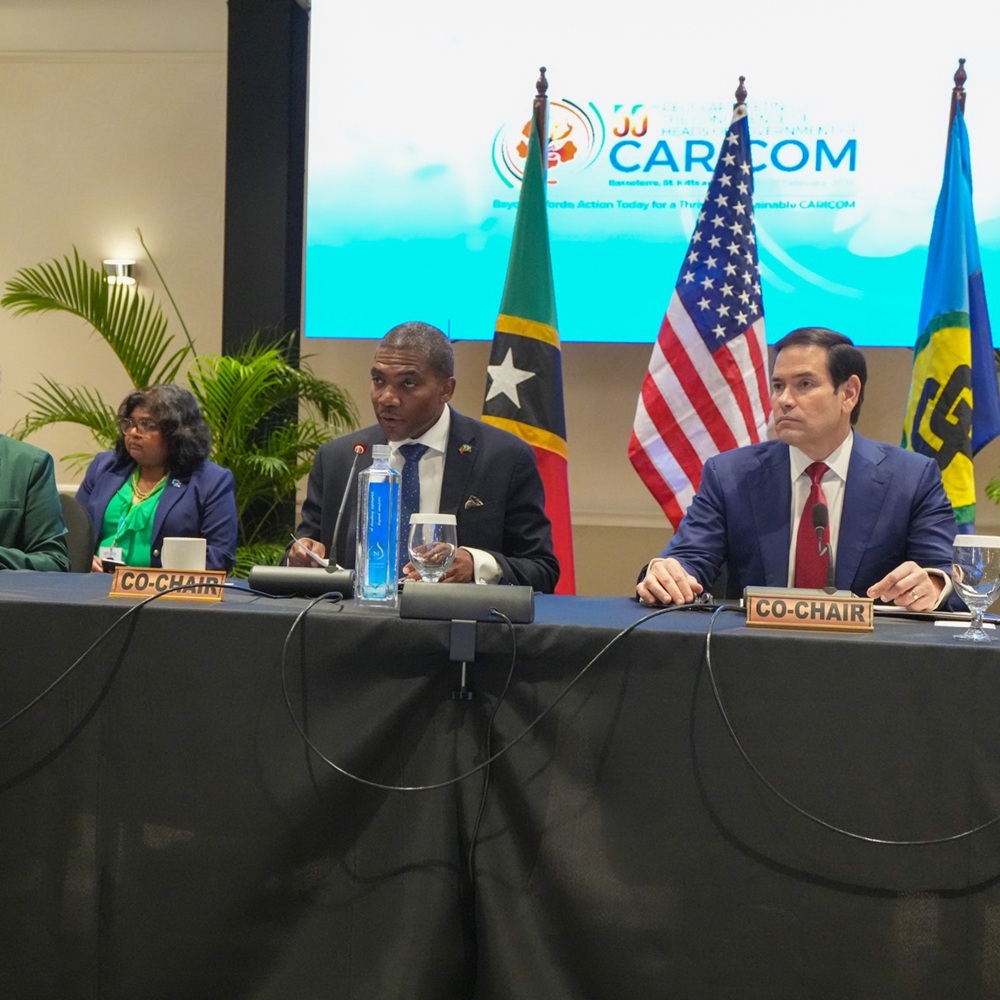
Secretary Marco Rubio participates in a CARICOM Heads of Government meeting in Basseterre, Saint Kitts and Nevis, February 25, 2026. (Official State Department photo by Freddie Everett)

Secretary of State Marco Rubio at the 50th Regular Meeting of the Conference of CARICOM Heads of Government

by Marco Rubio

SECRETARY RUBIO: Well, thank you for allowing me to come. As you can imagine, last night we had the State of the Union; it was two hours, the speech, and then we got on a plane and came here. And when I told my colleagues I needed to come here to Saint Kitts and Nevis on a work trip, they were like, “Oh, sure, you’re going on a work trip.” (Laughter.) But in fact it is, with our important partners, allies, and friends from the region, and I want to thank you for giving me this small opportunity to share some time with you and to be a part of this gathering. I don’t know when the last time – you said 10 years ago was the last time all the members were together, or the last time a secretary of state joined you? MODERATOR: They told me 10 years ago. That is what I am told. SECRETARY RUBIO: I was hoping it had been some 30 years since a secretary of state came. (Laughter.) Anyway, I’m happy to be here. This is – in many ways, the Caribbean Basin is home for me, having grown up and lived almost the entirety of my life in Miami, and during my career in the United States Senate followed very carefully the issues that impact this region. And I am very happy to be in an administration that’s giving priority to the Western Hemisphere after largely being ignored for a very long time. There’s extraordinary opportunities. We share two things: We share common opportunities, and we share some common challenges. And that’s what we hope to confront. I want to start out by saying that I’m also happy to be part of an administration that is not constrained by outdated orthodoxy, outdated boilerplate platitudes about partnerships and the like. We are interested in rebuilding and constructing a new dynamic in this Western Hemisphere in which we partner with all of you on the issues we share in common. I won’t go long. I don’t want to go long, but I want to touch upon a few of those because I think they’re important and they impact the broader Americas. The first is the one I’ve shared with many of you individually and will share with you again now: We believe that perhaps the most urgent security threat in the region – that includes us, but obviously all of you – is the threat of these transnational criminal organizations, many of you – many of whom have funding and power that rival if not exceed that of many of the nation-states that they threaten. We recognize that it is an interlocked challenge that comes from a broader perspective. Number one, they’re obviously fueled by narcotrafficking and other illicit means. Oftentimes, those drugs and the proceeds from those drugs – those drugs are destined for the United States, but the proceeds from those drugs, the money they’re ultimately making, is being made in the streets of our country. This is a danger in the countries that they transit, and it’s ultimately a danger to the national security of the United States. We’ve also watched with alarm at the level of armament that these groups have. We recognize that many of these groups are buying weaponry from the United States, and that we are committed and continue to work very hard with our law enforcement agencies to shut that down. I hope you have seen, both in the case of Haiti but in other dynamics, that we have not shied away, not just from designating groups for what they are – these are terroristic organizations – but even individuals who are responsible for being supportive of them. We’ve also gone after them, and this is something that we have as a shared dynamic. We have a long history of working together on responding to these challenges, but I think our cooperation will have to grow even deeper and our commitment to it will have to grow even stronger because these groups grow stronger. I point you only to something not in the Caribbean Basin, but nonetheless indicative of what we’re – the challenges that we’re facing here, and that is the role that these drug cartels have established for themselves in Mexico. I’m not sure if you’ve seen some of the imagery of these groups after their leader was killed, but they’re out there with full military gear, military weaponry, armed transports – very dangerous. And it is something that we need to address collectively and together. The second thing is there are extraordinary opportunities for economic advancement, to work together on issues like energy. Energy is critical for the future; it’s critical for every economy in order to prosper. Many of the countries represented here today have energy resources that I know you seek to explore responsibly, safely, but in a way that generates wealth and prosperity for your people and your countries, and we want to be your partner in that regard. So that’s another area of – that hopefully we can cooperate on very closely together. And I would add to that that part of the dynamics there is some of the regional – some of the regional opportunities that are occurring. Irrespective of how some of you may have individually felt about our operations and our policy towards Venezuela, I will tell you this, and I will tell you this without any apology or without any apprehension: Venezuela is better off today than it was eight weeks ago. The progress being made there is substantial, and there’s a long ways to go. But the new interim authorities, led by Delcy Rodríguez, have done things that eight or nine weeks ago would have been unimaginable. They have released political prisoners; they have closed Helicoide, which is their most infamous prison of all. They are, for the first time in a long time, generating oil revenue that’s going to the benefit of their people, using those funds not just to make payroll for government services but to purchase medical equipment that’s necessary for their system. There’s a long ways to go, and we’re committed to making it work. We have opened – reopened our embassy in Caracas, where we have an excellent chargé who’s on the ground, along with other government officials, and we intend to continue to build on that. Now, we believe strongly – and I think all of you would share this view – that ultimately, in order for them to take the next step to truly develop that country and to truly benefit from that country’s riches for the benefit of their people, they will need the legitimacy of democratic – fair, democratic elections. But our initial priority in the aftermath of Maduro’s capture was to ensure that there wasn’t instability, that there wasn’t mass migration, that there wasn’t spillover violence, and we believe we have achieved that. Now we are in the process from going from that phase of stability to a phase of recovery. That country needs to recover from a lot of things, including deep, internal fractures, but also some dysfunction that existed in their economic systems. I say all this to you because ultimately we do believe that a prosperous, free Venezuela who’s governed by a legitimate government who has the interests of their people in mind could also be an extraordinary partner and asset to many of the countries represented here today in terms of energy needs and the like, and also one less source of instability in the region. So we expect to work very closely with all of you on that topic as well to the extent possible, and I think it’s related to the topic of security that I highlighted. The third point is just the broader stability of the region. We want the region to be seen. And I include the region of the southern United States, which we know is part of the Caribbean Basin. We want it to be a place that is attractive for inbound investment. Many of you have taken on the – and done a tremendous job of seeking to diversify your economies and continue to seek ways to diversify your economies. To the extent that there are opportunities for American businesses or American investors to be a part of that, we want to facilitate that. We want to be a part of making that happen. Here’s the bottom line: the stronger, the safer, the more prosperous, and the more secure that all of your counties are, the stronger, safer, more secure, and prosperous the United States is going to be. We view our security, our prosperity, our stability to be intricately tied to yours and we are going to evidence in the actions we’re prepared to take and in the priority that we want to give this our intent to follow through on it, which is why I’m here today, which is why I wanted to come here today and interact with all of you collectively and a few of you individually in the time that’s permitted to me. So I want to thank you for this opportunity to address you. I hope that my presence here today serves as a real-world demonstration of our commitment to being your partner, to – I don’t even want to call it resetting relations because it’s really not about a reset. I mean, we have longstanding ties to each of you bilaterally and all of you collectively, but reinvigorating our relationships because we have a lot in common to work on, both opportunities and challenges, and the United States is committed to doing that. And certainly over the next three years and I remain in this post, it will be personal priority to me. It will be one that I will be personally engaged in and it’s one that I hope to leave for my successor, whoever that may be, a very strong and stable relationship that they can continue to build upon as well. So I want to thank you for this opportunity to address you and to join you here today in this gathering. (Applause.)

Diplomacy
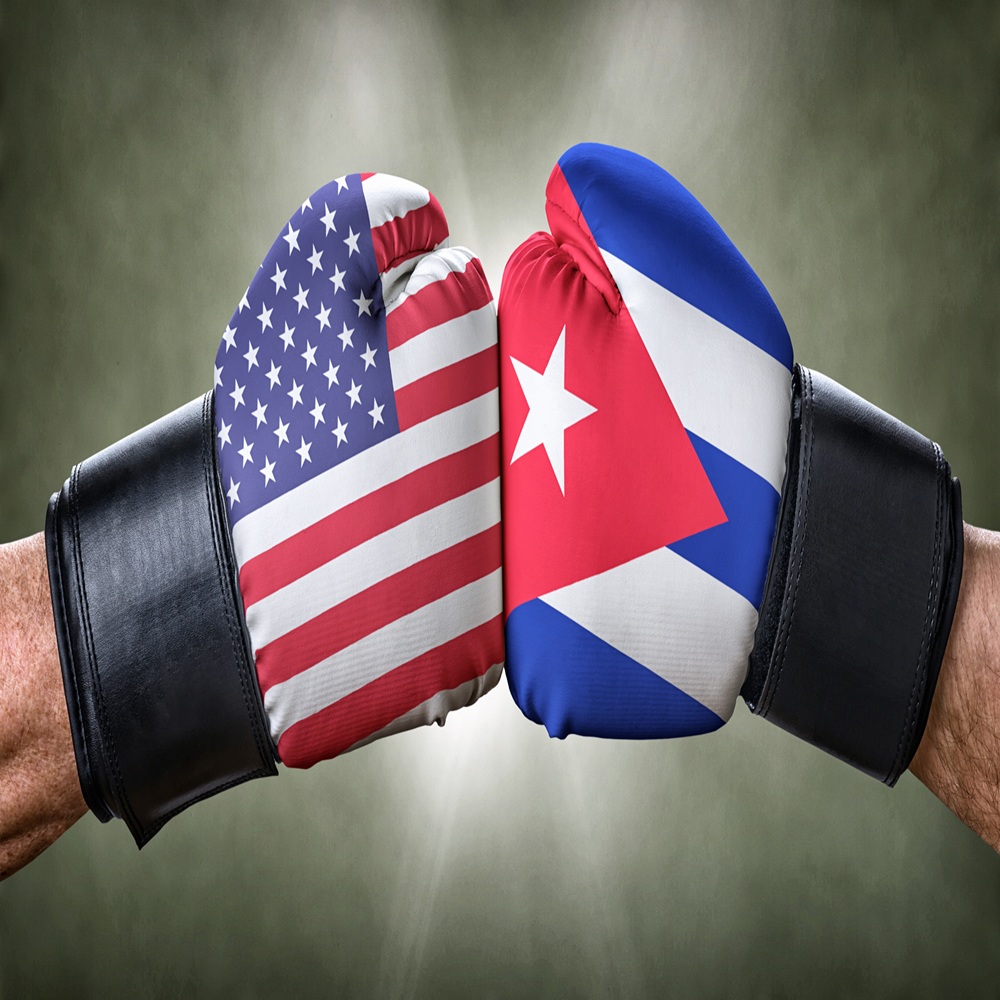
Mexico and Cuba small size table flag on black Background

Cuba in Mexico: The Myth of Irrelevance

by César E. Santos

For years, the relationship between Mexico and Cuba was portrayed—when not deliberately minimized—as a low-intensity bond: a propagandistic mirage [1], symbolic, rhetorical, or, at best, consistent with a shared Latin Americanist diplomatic tradition upheld by governments of different political orientations during the authoritarian period and the democratic transition. Even under the governments of Morena, closeness with Havana was interpreted by broad sectors of public opinion [2] as an ideological affinity—celebrated or lamented—but largely harmless, devoid of deep material implications and far removed from the organic alignments Cuba maintained—and continues to maintain—with openly authoritarian regimes such as those of Venezuela and Nicaragua. That reading, however, has begun to crack. Amid recent developments, the debate over Cuban influence in Mexico has acquired unprecedented density. The capture of Nicolás Maduro and the evidence pointing to the active presence of Cuban agents within Venezuela’s intelligence and repression apparatus not only revived discussions about Havana’s role as an exporter of authoritarian know-how, but also forced a rethinking of its regional projection beyond the myth of passive survival. Added to this is the sustained increase in shipments of Mexican oil to the island, ordered by the government of Claudia Sheinbaum, which are increasingly being interpreted as a political subsidy to a failed regime rather than as a humanitarian or diplomatic gesture. It is no coincidence, in this context, that influential voices in Mexico’s public debate—such as Carlos Bravo Regidor [3] or Julio Patán [4]—have begun to point out the risks and contradictions of a foreign policy that, while brandishing a sovereigntist and democratic rhetoric, materially sustains one of the hemisphere’s longest-standing dictatorships. What for years was considered irrelevant, exaggerated, or ideologically biased is now beginning to be perceived as a real problem of political coherence and, more importantly, as an institutional risk. This shift in the public conversation is revealing—but also belated. Long before the oil subsidy placed Cuba at the center of the national debate, various analyses had already warned of a growing and multifaceted Cuban influence in Mexico. Authors such as Armando Chaguaceda and Johanna Cilano, in an article published in Letras Libres, [5] as well as multiple reports by the organization Government and Political Analysis A.C. (GAPAC), [6] had previously argued that the relationship between the self-styled Fourth Transformation and the post-Castro regime could not be reduced to symbolic gestures or historical affinities. On the contrary, they pointed to a dynamic of persistent influence across economic, cultural, and political spheres, anchored in material exchanges, institutional networks, and authoritarian promotion. Yet, as has happened for far too long with the disbelief—born of a mixture of naïveté and ideological affinity—toward the domestic reality and global influence of Castroism, no one was listening. [7] From this perspective, the question is not only why Cuba influences Mexico, but why—until now—that influence had been systematically denied, relativized, or normalized. The current conjuncture did not inaugurate the phenomenon; it merely made it media-visible. And in doing so, it forces a critical reassessment of a relationship that, far from being exceptionally innocuous, appears to fit within a regional pattern of authoritarian symbiosis. The Oil Subsidy and the End of Assumed Irrelevance The increase in shipments of Mexican oil to Cuba has functioned as a turning point in public perceptions of the bilateral relationship. For the first time in years, closeness with Havana ceased to be read exclusively in symbolic terms and began to be evaluated in terms of concrete material costs. In a country with severe energy shortages, a heavily indebted state-owned company, and wide unmet social demands, the decision to allocate strategic resources to sustain a foreign regime in crisis could hardly go unnoticed. The controversy lies not only in the volume of oil sent, but in the political meaning of the gesture. According to reports by the Financial Times, [8] Mexico has already become Cuba’s main supplier of crude oil, effectively displacing Chavismo—and other allies such as Russia and Iran—as the island’s primary energy lifeline. This shift is far from trivial: it entails assuming, consciously or not, a role of external support long played by Venezuela, and doing so in a regional context marked by the collapse of the Bolivarian axis and by growing evidence of Havana’s active role in preserving allied authoritarian regimes. With the added threat [9] of tariffs announced by Trump against countries that “sell or otherwise supply oil to Cuba, protecting the national security and foreign policy of the United States from the malign actions and policies of the Cuban regime,” Claudia Sheinbaum’s position becomes even more problematic, exposing Mexico to potential coercive measures by the U.S. administration should oil shipments to the island continue. This policy openly contradicts the Mexican government’s sovereigntist rhetoric. While foreign interference is denounced and national self-determination is invoked, a support scheme is maintained that props up the economic viability of a single-party dictatorship—while compromising national stability. The principle of non-intervention is selectively invoked and disappears when it comes to assisting an ideologically aligned regime. Oil, in this sense, has stripped the bilateral relationship of its rhetorical veil and placed it squarely in the realm of political responsibility. An Influence That Goes Beyond Oil Reducing Cuban influence in Mexico to the energy sphere would nonetheless be analytically insufficient. As recent research [10] has shown, Havana’s regional projection does not depend exclusively on material resources, but on a combination of political, institutional, and symbolic instruments that operate cumulatively and, in many cases, discreetly. One of the most sensitive areas concerns Cuban medical missions. Presented as a pragmatic solution to healthcare system deficits, these missions have been widely questioned for their implications of forced labor, wage retention, and political surveillance. In the Mexican case, the problem is compounded by the opacity of the agreements signed and by the normalization of practices incompatible with basic democratic and labor standards. Health cooperation is not, in this sense, a neutral technical exchange, but rather a mechanism with clear political implications. Added to this are the party-to-party ties [11] between the Communist Party of Cuba and Morena. These exchanges go beyond protocol gestures and constitute spaces of ideological affinity and mutual learning in matters of political mobilization, discursive hegemony-building, and power management in polarized contexts. That Mexico’s ruling party maintains organic relations with an organization that upholds a single-party regime is far from trivial, particularly in light of the growing disdain among some official sectors for institutional checks and balances. The academic and cultural sphere completes this web of influence, as documented by GAPAC. [12] Exchange programs, seminars, and institutional collaborations have at times served as platforms for legitimizing the Cuban model or relativizing its authoritarian nature. Authoritarian influence is rarely imposed abruptly; it more often filters through narratives and interpretive frameworks that gradually erode democratic consensus. The Venezuelan case offers a cautionary tale: for years, Cuban presence was dismissed as opposition exaggeration, until its role within intelligence and repression apparatuses became incontrovertible. The Collapse of a Narrative The renewed interest in Cuba’s influence in Mexico does not stem from a sudden revelation, but from the collapse of a long-standing narrative: that of irrelevance. The oil subsidy has acted as a catalyst, but the phenomenon is broader and deeper. What has now become visible is a relationship characterized by growing political symbiosis that contradicts both the sovereigntist rhetoric of the current Mexican government and its professed commitment to democracy. One in which the leaderships of a new authoritarianism—born of a successful populist and illiberal project—forge close ties with a veteran antiliberal autocracy, whose advisers, agents, and agitators are more than willing to export—chequebook in hand—their accumulated experience in indoctrination, repression, diplomatic influence, and social control. Recognizing this reality does not imply adopting alarmist positions or mechanically extrapolating foreign experiences. Rather, it requires abandoning comfortable myths and acknowledging that threats to contemporary democracy rarely appear abruptly. More often, they take root gradually and asymmetrically, shielded by discourses of solidarity, sovereignty, or social justice. In this sense, the influence of Cuban authoritarianism in today’s Mexico is not a speculative hypothesis, but an uncomfortable reality that demands public scrutiny and political coherence. To evade it is to repeat mistakes that, in other regional contexts, have already produced consequences that are difficult to reverse. References [1] https://confabulario.eluniversal.com.mx/mexico-y-cuba-el-pasado-incomodo/ [2] https://www.nexos.com.mx/?p=71310 [3] https://heraldodemexico.com.mx/opinion/2026/1/13/subsidio-autocratico-758593.html [4] https://heraldodemexico.com.mx/opinion/2026/1/14/el-fracaso-cubano-758900.html [5] https://letraslibres.com/revista/el-elefante-en-la-habitacion-cuba-en-el-mexico-de-la-4t/ [6] https://gobiernoyanalisispolitico.org/cuba-en-america-latina-la-influencia-persistente/ [7] https://www.youtube.com/watch?v=4ExrLPbu6U4 [8] https://www.ft.com/content/f04088c3-66af-4d7c-b5fd-df0e423bd837 [9] https://www.whitehouse.gov/fact-sheets/2026/01/fact-sheet-president-donald-j-trump-addresses-threats-to-the-united-states-by-the-government-of-cuba/ [10] https://www.amecip.com/publicacion/detalle?id=55 [11] https://www.jornada.com.mx/noticia/2025/05/03/politica/partido-comunista-de-cuba-pcc-firma-acuerdo-con-morena [12] https://gobiernoyanalisispolitico.org/mexico-exporta-a-cuba-no-solo-petroleo-tambien-apoyo-academico/

Energy & Economics
The sharp rise in gold prices signals a strong bullish market trend.

The record gold price reflects a deeper problem than recent global instability

by Hafiz Muhammad Usman Rana

The price of gold has risen to over US$5,000 (£3,662) an ounce for the first time ever, after doubling in value over the course of a very strong 2025 for the precious metal. The usual explanation for such strong rises is that gold is considered a safe bet for investors when other options look a little shaky. High inflation for example, when cash quickly loses value, is often linked to gold price rises. Trade wars and actual wars usually have a similar effect. A common view then, is that gold performs well in moments of instability. But the research I was involved with suggests that gold prices are not simply a reaction to short-term economic events. Instead, they are a response to something deeper, reflecting an overall level of confidence in how economic systems are managed over time. During recent periods of sustained economic stability in the west, gold prices have remained largely flat. The steady growth, moderate inflation and predictable policy of the early 1990s and 2000s for example, were not good times for gold. And rather than responding to every economic peak or dip, the thing that really pushes gold prices up is instability in what’s known as “monetary credibility”. In other words, when there are doubts about whether central banks and governments will be able to maintain discipline over inflation, public debt and currency value over the coming decades. At times like this gold becomes more desirable. This helps explain why gold can continue to rise even as inflation falls, as has happened recently in several big economies, including the US and parts of Europe. And although recent weakness in the dollar and political uncertainty in the US have probably added momentum to gold’s rise, these factors amplify a deeper shift in confidence rather than explain it on their own. Our findings suggest that no single set of macroeconomic variables (like inflation, interest rates and stock prices) consistently explains gold prices across developed and emerging economies. They matter sometimes, but not always. So simple narratives (whether they’re about inflation, or trade wars or the weakening of the US dollar) are not enough to account for today’s gold market. Inflation alone cannot explain why gold prices remain elevated even as headline price pressures have eased. What gold tells us about the world There is more evidence for this in the fact that, according to the World Gold Council, central banks have been buying gold at the fastest pace in decades, particularly since 2022. This has continued even as inflation has fallen in many countries, again suggesting that these decisions are driven by longer term considerations rather than short term price movements. The decisions of central banks reflect concerns about resilience, diversification and trust. And to those banks, gold’s appeal lies squarely in the fact that it carries relatively little risk. It is not issued by a government like fiat currencies. It cannot be created at will like paper money. And it does not depend on the credibility of any single institution. So, in a world of high public debt, geopolitical fragmentation and increasing pressure on central bank independence, gold offers stability and insurance. And its price rises when confidence in the rules governing money becomes uncertain. That uncertainty can persist even when growth resumes or inflation falls. Seen in this light, gold’s recent surge does not signal a kneejerk panic or imminent collapse. Instead, it reflects a reassessment of long-term monetary confidence at a time when governments face difficult trade-offs between debt sustainability, political pressures and price stability. With its current high value, gold is not predicting a specific crisis. Nor does it provide a clear forecast for inflation. But it is revealing something important about the current moment. Markets appear less certain that the frameworks governing money, debt and policy will remain unchanged. That does not mean those systems have failed, but it does suggest their credibility is no longer taken for granted in the way it has been in the past. Gold does not predict the future. But it does offer a window into how confident markets are about the foundations of the world’s economics system.

Defense & Security
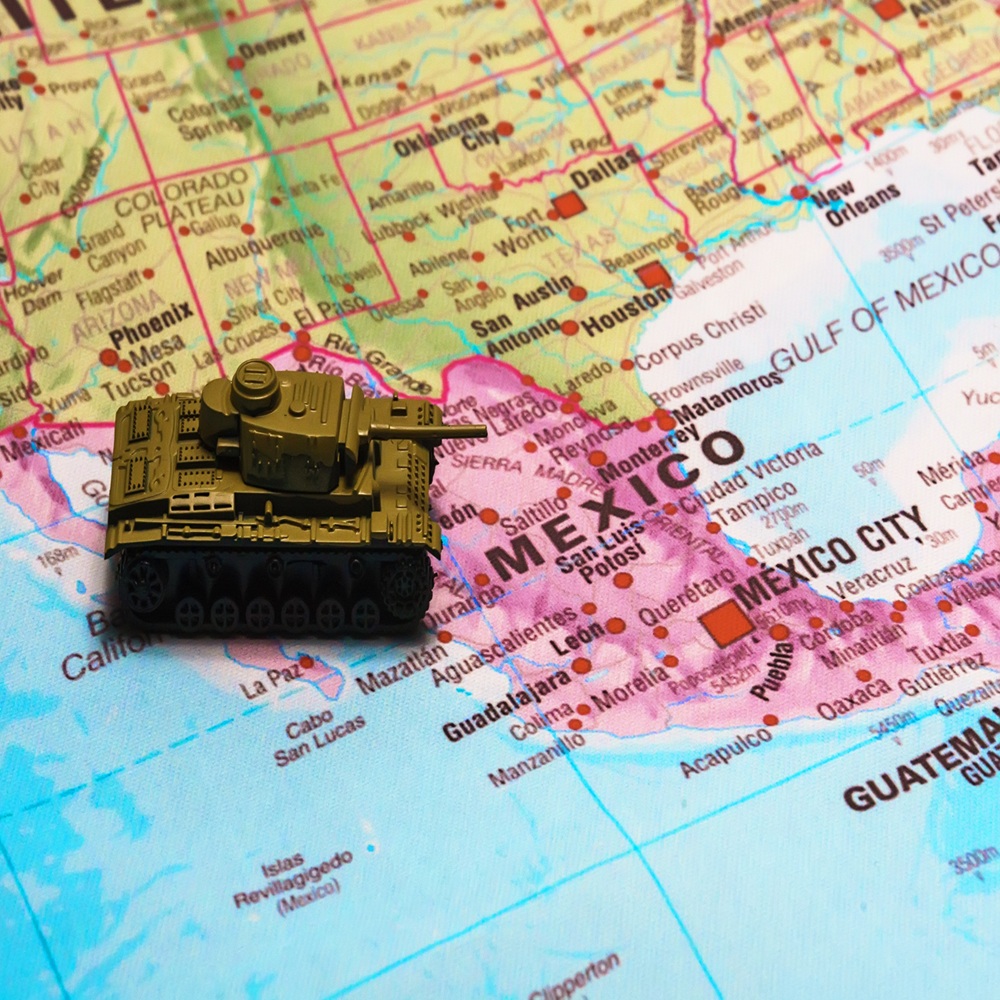
Toy tanks on the map. War on drug cartels in Mexico.

Cooperation Under Pressure: Drug Trafficking, Security, and the Specter of US Intervention in Mexico

by World & New World Journal

In the bilateral relationship between the United States and Mexico, the word “security” functions as a hinge: it can open doors to cooperation or abruptly shut down any attempt at understanding. The busiest border in the world, a deeply integrated economy, and a public health crisis in the United States associated with fentanyl consumption have, in recent years, shaped a scenario in which interests converge, but where historical mistrust, structural asymmetries, and unilateral temptations also accumulate. Although latent tension between the two countries has long existed, it was not until early January 2026 — specifically after the capture of Maduro by the United States — that this tension became more visible. In Mexico, concern grew over signals and U.S. military “movements” — real, perceived, or amplified by the media — which were interpreted not so much as immediate preparations for a U.S. intervention, but rather as political messages in a context in which political discourse in Washington once again flirts with a high-voltage idea: the possibility of sending troops, carrying out incursions, or executing armed actions on Mexican territory to combat Mexican drug trafficking cartels — recently classified as terrorist organizations in the United States. Many analysts share the view that the relevance of these episodes lies not solely in their operational dimension, but in their symbolic value within a broader strategy of diplomatic pressure. Three currents fueling interventionist temptation The idea of a U.S. intervention in Mexico has not emerged out of nowhere; in fact, it could be said that there are three simultaneous currents that feed this idea. The first is domestic, inherent to the internal situation of the United States. The fentanyl crisis has become one of the country’s main public health problems, with tens of thousands of deaths annually. This crisis has been used and translated by broad political sectors into a narrative of an external threat. Within this framework, Mexican cartels are portrayed as transnational actors comparable to terrorist organizations, which enables — at least discursively — the use of exceptional tools against them. Moreover, as several analyses published in U.S. media and echoed by the Mexican press point out, this narrative has a clear electoral utility, in which there is pressure to offer “visible” — or tangible — solutions with immediate impact, even when their strategic costs are high. All of this occurs within the context of the fight against drug trafficking. The second current is the Mexican reality. The persistence of high levels of violence and corruption within the institutional apparatus, the fragmentation of territorial control, and the uneven penetration of criminal networks at the local level feed the perception in Washington that Mexico is not doing “enough.” Mexican security policy has oscillated between attempts at territorial control, containment strategies, and the management of a chronic conflict that neither fully resolves nor fully escalates. From the outside, this ambiguity is often interpreted as incapacity or lack of will; from within, on the other hand, it is seen as a pragmatic adaptation to a long-term structural problem. The third current is historical and symbolic. For Mexico, any mention of a U.S. military intervention recalls records of past grievances such as the territorial loss of half of its territory in the nineteenth century, occupations, diplomatic pressures, and episodes of subordination. Therefore, even when bilateral cooperation is intense — and it is — the political margin to formalize or accept a foreign military presence on Mexican territory is virtually nonexistent. Analysts from the Mexican Council and CESPEM remind us and emphasize that the principle of non-intervention is not merely a doctrinal element of Mexican foreign policy, but a pillar of internal legitimacy. The real architecture of cooperation Despite media noise and the dramatization of the public debate, security cooperation between Mexico and the United States is broad, constant, and deeply integrated. For decades, both countries have collaborated in intelligence sharing, border control, judicial actions, the fight against money laundering, and operations against criminal networks, with mixed results. However, the format has recently changed: today, technical and discreet mechanisms are prioritized over large public plans. At the same time, intelligence sharing and operational cooperation are emphasized under clearly defined red lines regarding sovereignty. Even so, this architecture contains a central paradox. The more integrated the cooperation becomes, the more politically fragile it is, as it depends on trust between governments and on the ability of both to justify it before their increasingly polarized domestic audiences. This is why in Mexico, any perception of subordination can erode the government’s legitimacy; while in the United States, any sign of “softness” toward the cartels can turn into electoral ammunition. In January 2026, this dynamic became clearly evident with the transfer of 37 individuals linked to criminal organizations from Mexico to the United States, in a context in which more than 90 handovers had already been recorded in less than a year. Beyond its judicial impact, the gesture — although it had a clear political dimension, aimed at showing tangible “results” to reduce pressure from Washington and deactivate the temptation of unilateral actions — is fundamentally symbolic and masks a deeper dilemma for the Mexican government. From the Mexican perspective, the signal is ambivalent. On the one hand, it seeks to demonstrate that the state retains the capacity to act and can strike criminal structures without accepting foreign military tutelage. On the other hand, it implicitly acknowledges that the bilateral relationship operates under a regime of permanent evaluation, in which U.S. perceptions of Mexican effectiveness condition the level of political pressure and rhetoric. In other words, it is a form of conditional subordination. In the United States, by contrast, these gestures continue to be perceived as insufficient by influential political sectors. The reason is that the problem is measured through indicators that cannot be resolved through mass extraditions: the availability of synthetic drugs, overdose deaths, the industrial capacity of clandestine laboratories, territorial control of routes, or the flow of weapons to the south, among others. Given the influence of these sectors and the impact of the phenomenon on U.S. territory, the issue is often used as a domestic electoral weapon, frequently highlighting “visible” solutions — troops, drones, incursions — without considering their strategic costs. Drug trafficking, politics, and institutional corrosion Speaking about the involvement of drug trafficking in the Mexican state requires analytical precision. It is not a matter of a homogeneous capture of the “government” as a whole, but rather of a fragmented and layered phenomenon. What numerous reports and investigations have documented and repeatedly pointed out is a mosaic of local co-optations with consequences at the national and even international level: infiltrated municipal police forces, regional authorities pressured or bought off, clientelist networks financed with illicit resources, and, in high-impact cases, links to political actors that end up becoming sources of bilateral friction, among many other examples. At this stage of the relationship with the United States, the most explosive political issue is not only the existence of corruption, but the political use of that corruption as a lever of pressure. From Washington, it has been suggested that Mexico should go beyond operational arrests and target political figures with alleged ties to organized crime, even within the governing party — MORENA. However, for the Mexican administration, such a step would entail an extremely high internal cost and the risk of political destabilization, in addition to a potential contradiction of MORENA’s narrative legitimacy regarding its promises of honesty and transparency, which it has strongly defended since coming to power. Here lies one of the core dilemmas. When drug trafficking “invests” in politics, it does not seek only impunity; it seeks governance. Controlling strategic nodes — customs offices, ports, local prosecutors’ offices, police forces, mayoralties — makes it possible to manage violence in ways that are functional to the criminal business. In that context, cooperation with the United States becomes a double-edged sword. While it can contribute to dismantling criminal networks, it can also amplify the narrative of a “failed state,” either through the imposition of external agendas or through the exposure of institutional weaknesses. In turn, this perception, rooted in certain U.S. political sectors, often translates into the promotion of coercive responses or approaches. Figure 1: Mexico cartel map 2024. Source: Ioan Grillo. https://www.crashoutmedia.com/p/mexicos-cartel-map-2024 Military noise as diplomatic language Reports of recent, unusual, and amplified U.S. military activity related to Mexico —magnified by regional media and echoed within Mexico — have generated a climate of alarm that goes beyond the immediate plausibility of an intervention. In this environment, what matters is not whether an aircraft, a navigation notice, or a border deployment implies an imminent action, but rather the political message they convey, especially following U.S. military actions in the region and the simultaneous hardening of rhetoric against the cartels. In other words, the demonstration of capability — and the ambiguity surrounding intentions — is being used, or is functioning, as a way to force and extract concessions from Mexico: more cooperation, greater access to intelligence, more measurable results, and greater alignment. From this perspective, the pressure does not necessarily seek to cross the red line of intervention, but rather to come close enough to extract concessions. Consequently, the Mexican response has been repetitive and carefully calibrated: “cooperation yes, subordination no.” This framing, present in official statements and in analyses by national media, seeks to draw clear boundaries without breaking the relationship. It is a defensive — “negotiating” — strategy that acknowledges the asymmetry of power but attempts to contain it within institutional frameworks. The range of options and their strategic costs When people speak of an “invasion,” the term tends to polarize more than it explains. In the U.S. debate, however, this word is often more rhetorical than descriptive. In practice, the range of options circulating in the media is broad and, at times, dangerous, precisely because it is gradual: 1. Expansion of the presence of advisers and liaisons in command centers. This is what Mexico can accept with greater political ease if it remains under institutional control. 2. Joint operations with direct participation of U.S. forces (for example, accompaniment during raids). According to reports cited by the media, this is something the United States has sought and Mexico has consistently resisted. 3. “Surgical” unilateral actions (for example, drones or the deployment of special forces against laboratories or criminal leaders). This is militarily feasible but politically devastating. 4. Sustained intervention (what the public imagination calls an “invasion”). It is extremely costly and also difficult to justify legally and politically at present. Moreover, it would trigger a major bilateral crisis. From the above, the greatest strategic risk lies in the intermediate options. “Limited” incursions may appear efficient from Washington’s perspective, but in Mexico they would be interpreted as a direct violation of sovereignty, with effects ranging from nationalist cohesion to the rupture of bilateral cooperation and even incentives for criminal groups to present themselves as defenders of the territory. In such a scenario, a unilateral action by Washington could lead Mexico to restrict intelligence sharing, close operational channels, and turn the issue into a permanent dispute — precisely at a time when coordination is indispensable to strike at the logistical chains of drug trafficking. Sheinbaum’s position: sovereignty and calculated concessions President Claudia Sheinbaum has been clear in her repeated rejection of the entry of U.S. troops into Mexico. This stance appears time and again in reports and media coverage that emphasizes opposition to any intervention while supporting cooperation. Moreover, this position responds both to historical convictions and to calculations of internal stability. As previously mentioned, accepting a foreign military presence would entail a high political cost. At the same time, her government has sought to shield the bilateral relationship through visible actions: extraditions, seizures, port controls, and a discourse focused on results. Some media outlets, such as El País, report that Sheinbaum has defended these advances and insisted on “mutual respect and shared responsibility,” reminding that the United States must also address its domestic consumption and the trafficking of weapons from the United States. That last point — the trafficking of weapons — is crucial, as the U.S. firearms market fuels the firepower of cartels in Mexico. For Mexico, insisting on “shared responsibility” is not merely rhetoric or a moral argument; it is an attempt to rebalance the narrative and prevent the problem from being defined exclusively as an external threat originating in Mexico. Figure 2: Opioid-related and other drug poisoning deaths per 100,000 people in the USA. Source: Centers for Disease Control and Prevention, National Center for Health Statistics via CDC Wonder Database. https://statehealthcompare.shadac.org/trend/197/opioidrelated-and-other-drug-poisoning-deaths-per-100000-people-by-drug-type#32/1/162,163,127,125,126,129,128/21,19,20,9,10,11,12,13,14,1,2,3,4,5,6,7,8,15,24,25,27,32,37,42,76/233 Figure 3: Illegal arms trafficking from US to Mexico The Trump factor and the U.S. political limit In discourse attributed to Trump and his inner circle, Mexico frequently appears as a space where the state is “dominated” by cartels and, therefore, where exceptional action would be justified. This framing appears both in press coverage and in political debate in the United States. However, even within the U.S., there are warnings about the “disaster” that bombing or intervening in Mexico would entail — not only because of the human impact, but also due to the geopolitical consequences of opening a conflict with a key trading partner and a neighbor with whom borders, migration, supply chains, and regional security are shared. Moreover, a military operation in Mexico is not comparable to an “overseas” action. Proximity means that any escalation would have immediate repercussions: border tensions, commercial disruption, migration waves, political radicalization in both countries, and incentives for criminal groups to respond with spectacular violence or low-intensity terrorism, precisely in an effort to break bilateral cooperation. Conclusion The United States and Mexico share a structural crisis — synthetic drugs, violence, weapons, migration — but they do not share the same narrative to explain it, nor the same tools to resolve it. Washington tends to frame it as an external threat requiring immediate action; Mexico, by contrast, tends to view it as an internal problem with a binational dimension that calls for cooperation without intervention. As long as these narratives remain unreconciled, the security relationship will continue to be tense, marked by cooperation and distrust at the same time. In 2026, the ghost of deploying troops to Mexico is not merely a military scenario: it is a negotiating tool, an identity symbol, and a test of political strength. The least costly path is not spectacular, but it is the only sustainable one: deep cooperation with clear limits, shared responsibility (drugs, weapons, money), institutional strengthening, and verifiable results that allow both governments to tell their societies they are acting without crossing lines that, once broken, could turn the border into a battlefield. It is also important to remember that drug trafficking is not a conventional army; it is an adaptive criminal economy. Striking one node can fragment and disperse violence. In Mexico, this dynamic has already been observed: the decapitation of leadership can generate succession wars and multiply victims, which is why strategy, risks, and strategic costs must be carefully considered. Ultimately, what is at stake is not only security, but legitimacy: who defines the problem, who imposes the solution, and who bears the political and human costs of carrying it out. Until that dispute is resolved, the bilateral relationship will remain a taut rope, stretched between mutual necessity and historical fear. Finally, an additional element that also weighs on the Mexico–United States relationship is the economic dimension, specifically the future of the United States–Mexico–Canada Agreement (USMCA). Its 2026 review has generated political and commercial uncertainty that intertwines with the security agenda, as U.S. pressure is not limited to drug trafficking but also extends to trade and regulatory compliance issues. This could affect Mexico’s economic stability and, consequently, its capacity to respond to the security crisis. The USMCA juncture comes precisely at a moment when bilateral relations — from trade to security cooperation — are under strain. Although a total rupture is unlikely due to deep regional interdependence, the agreement could remain in a limited or “zombie” state, with more frequent reviews and no significant renewals. In this context, defending agreements such as the USMCA becomes a strategic tool for Mexico, allowing it to balance sovereignty, cooperation, and pragmatism in the face of external pressure. References ABC7 Los Angeles. (20 de January de 2026). Crece inquietud en México ante movimientos militares de Estados Unidos. Obtenido de ABC7 Los Angeles: https://abc7.com/post/crece-inquietud-en-mexico-ante-movimientos-militares-de-estados-unidos/18433593/?utm_source=chatgpt.com Canchola Raygoza, D. L. (31 de Octubre de 2025). De AMLO a Sheinbaum: los desafíos que impone el fentanilo a la política exterior. Obtenido de CESPEM: https://www.cespem.mx/index.php/component/content/article/sheinbaum-desafios-fentanilo-pol-ext?catid=9&Itemid=101 Carbajal, F. (16 de Enero de 2026). Desafíos actuales de la Seguridad Nacional en México. Obtenido de E Sol de México (OEM): https://oem.com.mx/elsoldemexico/analisis/desafios-actuales-de-la-seguridad-nacional-en-mexico-27693374?ref=consejomexicano.org Carreño Figueras, J. (13 de Enero de 2026). ¿Intervención? Posible, pero no probable II. Obtenido de El Heraldo de México: https://heraldodemexico.com.mx/opinion/2026/1/13/intervencion-posible-pero-no-probable-ii-758570.html?ref=consejomexicano.org Carreño Figueras, J. (16 de Enero de 2026). EU-México: La presión como diplomacia. Obtenido de El Heraldo de México: https://heraldodemexico.com.mx/opinion/2026/1/16/eu-mexico-la-presion-como-diplomacia-759598.html?ref=consejomexicano.org Carreño Figueras, J. (19 de Enero de 2026). EU-México: un momento preocupante. Obtenido de El Heraldo de México: https://heraldodemexico.com.mx/opinion/2026/1/19/eu-mexico-un-momento-preocupante-760093.html?ref=consejomexicano.org Cázares Luquín, V. (12 de Diciembre de 2025). De la defensa a la acción: México y la reinterpretación del principio de no intervención. Obtenido de CESPEM: https://www.cespem.mx/index.php/component/content/article/de-la-defensa-a-la-accion-principio-de-no-intervencion?catid=9&Itemid=101 Contreras, A. (21 de Enero de 2026). Avión militar de EUA llega a Toluca. ¿Cooperación o alerta? Obtenido de COMEXI: https://www.consejomexicano.org/avion-militar-de-eua-llega-a-toluca-cooperacion-o-alerta/ Corona, S. (24 de Enero de 2026). Sheinbaum marca límites ante amenazas de Trump sobre acciones contra el narco; "México negocia con EU, pero no se subordina". Obtenido de El Universal: https://www.eluniversal.com.mx/nacion/sheinbaum-marca-limites-ante-amenazas-de-trump-sobre-acciones-contra-el-narco-mexico-negocia-con-eu-pero-no-se-subordina/?utm_source=chatgpt.com Díaz Santana, A. S. (23 de January de 2026). Intervención militar de EE. UU. en México: la duda ahora es cuándo y cómo se producirá. Obtenido de The Conversation: https://theconversation.com/intervencion-militar-de-ee-uu-en-mexico-la-duda-ahora-es-cuando-y-como-se-producira-274088 Drusila Castro, L. (20 de Enero de 2026). México, ante las amenazas de Trump: “Donde pisa el ejército estadounidense no llega la paz”. Obtenido de El Salto: https://www.elsaltodiario.com/estados-unidos/donde-pisa-ejercito-estadounidense-no-llega-paz El Economista. (23 de Enero de 2026). Intervención militar de EU en México: La duda ahora es cuándo y cómo se producirá. Obtenido de yahoo! noticias: https://es-us.noticias.yahoo.com/intervenci%C3%B3n-militar-eu-m%C3%A9xico-duda-125025443.html Flores Delgado, I. (15 de Junio de 2025). Diplomacia en tiempos de incertidumbre: la política exterior de México frente a la imprevisibilidad del gobierno de Donald Trump. Obtenido de CESPEM: https://www.cespem.mx/index.php/component/content/article/diplomacia-tiempos-incertidumbre-pol-ext-mx-imprevisibilidad-trump?catid=9&Itemid=101 France 24. (10 de Enero de 2026). México en la mira de Trump: demócratas alertan de un potencial "desastre" y Sheinbaum llama al diálogo. Obtenido de France 24: https://www.france24.com/es/am%C3%A9rica-latina/20260110-m%C3%A9xico-en-la-mira-de-trump-dem%C3%B3cratas-alertan-un-potencial-desastre-y-sheinbaum-llama-al-di%C3%A1logo Garrido, V. M. (17 de Enero de 2026). Sheinbaum asegura que hay resultados concretos de seguridad ante la presión del Gobierno de Trump. Obtenido de El País: https://elpais.com/mexico/2026-01-16/sheinbaum-asegura-que-hay-resultados-concretos-de-seguridad-ante-la-presion-del-gobierno-de-trump.html?utm_source=chatgpt.com Gil Olmo, J. (22 de Diciembre de 2025). Corrupción, el talón de Aquiles de Morena. Obtenido de Proceso: https://www.proceso.com.mx/opinion/2025/12/22/corrupcion-el-talon-de-aquiles-de-morena-365063.html Graham, T. (21 de January de 2026). Sheinbaum defends transfer of Mexican cartel members amid efforts to appease Trump. Obtenido de The Guardian: https://www.theguardian.com/world/2026/jan/21/sheinbaum-mexican-cartel-trump Gutiérrez Velázquez, M. F. (12 de Noviembre de 2025). Geopolítica global y la política exterior de México: entre dependencia y liderazgo regional. Obtenido de CESPEM: https://www.cespem.mx/index.php/component/content/article/entre-dependencia-y-liderazgo-regional?catid=9&Itemid=101 Latinus_us. (26 de Enero de 2026). Mesa de Análisis con Loret: Dresser, Becerra, Silva-Herzog, Córdova y Aguilar Camín. Obtenido de YouTube: https://www.youtube.com/watch?v=Tfd5MI3PbaM Macías Salgado, D. (17 de Diciembre de 2025). México entre Estados Unidos y América Latina: liderazgo regional en un sistema internacional complejo. Obtenido de CESPEM: https://www.cespem.mx/index.php/component/content/article/mx-liderazgo-regional-en-un-sistema-internacional-complejo?catid=9&Itemid=101 Madhani, A. (5 de May de 2025). Trump blasts Mexico’s Sheinbaum for rejecting offer to send US troops into Mexico to fight cartels. Obtenido de AP: https://apnews.com/article/trump-sheinbaum-mexico-drug-cartels-c2113e74cfc122f8f5a9e162644a470f Noticias DW. (12 de Enero de 2026). EE.UU. y México buscan mayor cooperación contra narcotráfico. Obtenido de DW: https://www.dw.com/es/eeuu-y-m%C3%A9xico-buscan-mayor-cooperaci%C3%B3n-contra-narcotr%C3%A1fico/a-75468890 Olivera Eslava, M. A. (23 de Agosto de 2023). México y Estados Unidos: un frente común contra el Cártel Jalisco Nueva Generación. Obtenido de Centro Mexicano de Relaciones Internacionales: https://cemeri.org/art/a-mexico-estados-unidos-cjng-it Pardo, D. (15 de Enero de 2026). "México es el más fuerte y el más débil ante Trump": la encrucijada de Claudia Sheinbaum tras la intervención de EE.UU. en Venezuela. Obtenido de BBC: https://www.bbc.com/mundo/articles/ce3enj4j8g5o Soriano, R. (21 de Enero de 2026). Trump usa las amenazas a México en seguridad para alardear de su poder ante su electorado. Obtenido de El País: https://elpais.com/mexico/2026-01-21/trump-usa-las-amenazas-a-mexico-en-seguridad-para-alardear-de-su-poder-ante-su-electorado.html The New York Times. (15 de January de 2026). The U.S. Is Pressing Mexico to Allow U.S. Forces to Fight Cartels. Obtenido de The New York Times: https://www.nytimes.com/2026/01/15/world/americas/us-mexico-cartels.html Treader, V. (12 de Enero de 2026). Intervención en México: "Donald Trump está dispuesto a todo". Obtenido de DW: https://www.dw.com/es/intervenci%C3%B3n-en-m%C3%A9xico-donald-trump-est%C3%A1-dispuesto-a-todo/a-75481087 Wagner, J. (20 de Enero de 2026). México responde a la presión de Trump y envía a 37 delincuentes a EE. UU. Obtenido de The New York Times: https://www.nytimes.com/es/2026/01/20/espanol/america-latina/mexico-envio-37-narco-trump.html

Energy & Economics
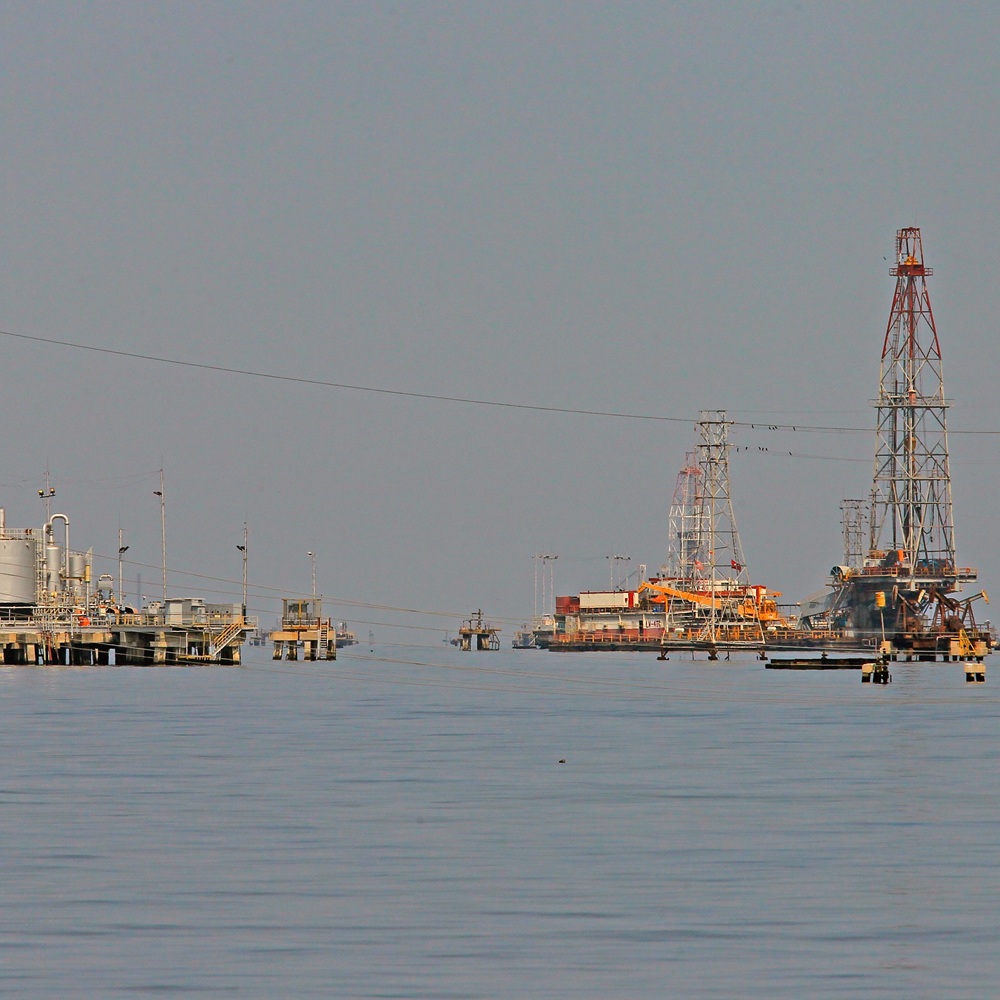
Lake Maracaibo, Venezuela. 18-03-2015.  An rig station are seen on Lake Maracaibo. Photo By: Jose Bula.

Energy Security as Hierarchy: Venezuelan Oil in the US-China-Russia Triangle

by Anya Kuteleva

On 3 January 2026, the US carried out a surprise military operation in Venezuela, capturing President Nicolás Maduro and his wife, Cilia Flores. The US has made little effort to cloak its operation in either solidarist language, such as appeals to democracy promotion, human rights, or liberal peacebuilding – or in pluralist rhetoric emphasizing the preservation of international order. Instead, Washington has presented the action in largely instrumental and strategic terms, signalling a willingness to sidestep both dominant justificatory traditions within international society. While Maduro and Flores are charged with narco-terrorism conspiracy and cocaine importation conspiracy, international debates focus on the future of Venezuela’s oil (Poque González 2026). On 7 January administration officials said the US plans to effectively assume control over the sale of Venezuela’s oil “indefinitely” (Sherman 2026) and President Donald Trump confirmed that he expected the US to run Venezuela, insisting that the country’s interim government was “giving us everything that we feel is necessary” (Sanger et al. 2026). Attention is fixed not only on Washington’s plans for Venezuela’s oil sector and control over its export revenues, but also on the replies from Moscow and Beijing, Maduro’s chief foreign backers and heavyweight players in energy politics. Consequently, this article asks two questions. First, to what extent does American control of Venezuelan oil threaten China’s and Russia’s energy interests? Second, what does the resulting US–China–Russia triangle imply for how energy security itself is being redefined? A constructivist perspective, recognizes that oil is an idea—valuable not only because it burns but because control over it symbolizes power and authority (Kuteleva 2021). Thus, when the US claims the right to supervise Venezuelan oil revenues, it is not only increasing leverage over barrels, but asserting the authority to define legitimate energy exchange itself. In this context, while the material threat is limited for China and already largely sunk for Russia, the symbolic, institutional and political threat is profound. A straightforward constructivist interpretation of the US–China–Russia triangle centres on status. China had cultivated Venezuela as an “all-weather strategic partnership” (Ministry of Foreign Affairs of PRC 2025b) and major debtor, only to watch Maduro captured days after senior Chinese officials visited Caracas (Ministry of Foreign Affairs of PRC 2025a). In constructivist terms, this is an obvious status injury: China appeared present but powerless. China’s energy diplomacy had functioned as proof of its global influence, and the nullification of China’s energy ties with Venezuela by US force undermines China’s narrative as a protective patron for the Global South. Beijing accused Washington of “hegemonic thinking” (Liu and Chen 2026), “bullying” (Global Times 2026a), and violating Venezuelan sovereignty and “the rights of the Venezuelan people” (Global Times 2026b). This strong pluralist language is not incidental—it is a bid to reclaim moral authority and redefine the event as norm-breaking rather than capability-revealing. Similarly, Russia’s involvement in Venezuela was never purely economic. Moscow saw the alliance with Venezuela as a way to advance its anti-American agenda and to signal that it could cultivate allies in Washington’s traditional backyard (Boersner Herrera and Haluani 2023; Gratius 2022; Herbst and Marczak 2019). It used Venezuela as leverage against the US, subsidised the regime during periods of domestic recession, and framed support as proof of great-power reliability. As senior Russian executives put it, “economic considerations took a back seat to political goals of taking swipes at the US” (Seddon and Stognei 2026). US control of Venezuelan oil thus removes a symbolic platform on which Russia enacted its identity as an energy superpower and geopolitical spoiler. While Russia continues loud sovereignty talk, its demonstrated incapacity to protect partners pushes it toward opportunistic bargaining (“concert” deals, see Lemke 2023) rather than overt defense of UN-pluralist restraint. As such, Dmitry Medvedev (2026) bluntly claimed that the US special military operation in Venezuela all but justifies Russia’s own actions in Ukraine. Venezuela is not a core supplier for China in volumetric terms. In 2025, Venezuelan exports to China averaged roughly 395,000 barrels per day—about 4% of China’s seaborne crude imports, according to Kpler data cited by the FT (Leahy and Moore 2026). China has diversified routes, strategic reserves covering at least 96 days of imports, and strong purchasing power in global markets (Downs 2025). Hence, from a narrow supply perspective, the loss of Venezuelan oil is manageable. That said, around one-fifth of China’s crude imports come from suppliers under US or western sanctions, primarily Iran, Venezuela and Russia, much of it disguised via transshipment near Malaysia (Downs 2025). Independent “teapot” refiners (Downs 2017)—who account for about a quarter of China’s refining capacity—are structurally dependent on this discounted, politically risky oil. Consequently, Trump’s seizure of Maduro alarmed China not mainly because of Venezuela itself, but because it demonstrated Washington’s capacity to escalate from sanctions to physical control of an energy sector, and thus potentially to Iran. Here, constructivism reveals the problem: “sanctioned oil” is not simply cheaper crude; it is a political category—oil marked as illegitimate by a dominant legal-financial order. The US move signals that this stigma can be converted into coercive authority, turning commercial vulnerability into geopolitical dependence. This reclassification transforms Chinese domestic actors into security subjects. “Teapot” refiners are no longer just businesses; they become strategic vulnerabilities whose survival depends on US tolerance. Analysis warn that a cutoff of Iranian oil could force many to shut down entirely (Leahy and Moore 2026). In this context, US control of Venezuelan oil reshapes Chinese energy security discourse from one of diversification and market access to one of hierarchy and exposure to political permission. Russia’s oil interests in Venezuela were largely written down years earlier. In 2020, Rosneft had sold most formal assets after pouring around $800m into loans and projects that produced little return (The Economist 2020). Much of the remaining exposure consisted of debts and shadow ownership arrangements. More important is the damage to Russia’s sanctions-evasion architecture. Russia had become the leading marketer of Venezuelan oil by trading crude as debt repayment and using banks partly owned by sanctioned Russian institutions, creating what the 2019 Atlantic Council report described as “a counter financial system to the one dominated by the West” (Herbst and Marczak 2019). The recent reporting on the US tracking a tanker linked to Venezuela, Russia and Iran illustrates how this counter-order is being contested operationally (Sheppard et al. 2026). The vessel sailed under false flags, was sanctioned for carrying Iranian oil, later re-registered under Russian jurisdiction, and became vulnerable to boarding under the UN Convention on the Law of the Sea because it was “without nationality.” Such episodes show that energy security is increasingly constituted by maritime law, insurance rules, and surveillance practices. US control over Venezuelan oil expands this regime of enforcement, making Russia’s informal trading networks less viable. A constructivist approach suggests that American control of Venezuelan oil is best understood not as a supply shock, but as an act of social stratification in the international system. Energy markets have always been hierarchical, but the hierarchy was largely implicit: reserve currencies, shipping insurance, futures exchanges, and contract law already privileged Western institutions. What is new is the explicit performance of hierarchy—the public demonstration that a great power can redefine ownership, legality, and access through coercion and administrative authority. This produces a stratified energy order: First, rule-makers – states whose legal systems, sanctions regimes, and corporate actors define what counts as legitimate oil (primarily the US and its allies). Second, rule-takers – states whose energy security depends on access to these institutions (most importers). And third, rule-evaders – states forced into informal networks (Russia, Iran, Venezuela) whose energy becomes socially “tainted.” China occupies an unstable middle category: economically powerful but institutionally dependent. Venezuela’s takeover publicly signals that material power is insufficient without normative control over legality. Referencias Boersner Herrera, Adriana, and Makram Haluani. 2023. ‘Domestic and International Factors of the Contemporary Russo–Venezuelan Bilateral Relationship’. Latin American Policy 14 (3): 366–87. Downs, Erica. 2017. The Rise of China’s Independent Refineries. Geopolitics. Global Energy Policy at Columbia University, School of International and Public Affairs. https://www.energypolicy.columbia.edu/publications/rise-chinas-independent-refineries/. Downs, Erica. 2025. China’s Oil Demand, Imports and Supply Security. Global Energy Policy at Columbia University, School of International and Public Affairs. https://www.energypolicy.columbia.edu/publications/chinas-oil-demand-imports-and-supply-security/. Global Times. 2026a. ‘China Condemns US Demands for Venezuela to Partner Exclusively on Oil Production as “Bullying,” Breaches of Intl Law: FM – Global Times’. Global Times, January 7. https://www.globaltimes.cn/page/202601/1352547.shtml. Global Times. 2026b. ‘China’s Legitimate Rights and Interests in Venezuela Must Be Safeguarded, Chinese FM Responds to Claim about US to Sell Venezuelan Sanctioned Oil – Global Times’. Global Times, January 7. https://www.globaltimes.cn/page/202601/1352555.shtml. Gratius, Susanne. 2022. ‘The West against the Rest? Democracy versus Autocracy Promotion in Venezuela’. Bulletin of Latin American Research 41 (1): 141–58. Herbst, John E., and Jason Marczak. 2019. Russia’s Intervention in Venezuela: What’s at Stake? Policy Brief. Atlantic Council. https://www.atlanticcouncil.org/in-depth-research-reports/report/russias-intervention-in-venezuela-whats-at-stake/. Kuteleva, Anna. 2021. China’s Energy Security and Relations with Petrostates: Oil as an Idea. Routledge. Leahy, Joe, and Malcolm Moore. 2026. ‘Donald Trump’s Venezuela Action Raises Threat for China’s Oil Supplies’. Oil. Financial Times, January 8. https://www.ft.com/content/f64826fa-5c36-4fb3-8621-ee0b9d9a1ff5. Lemke, Tobias. 2023. ‘International Relations and the 19th Century Concert System’. In Oxford Research Encyclopedia of International Studies. Liu, Xin, and Qingqing Chen. 2026. ‘US Reportedly Sets Demands for Venezuela to Pump More Oil; Experts Say “Anti-Drug” Claims a Pretext, Exposing Neo-Colonialism – Global Times’. The Global Times, January 7. https://www.globaltimes.cn/page/202601/1352544.shtml. Medvedev, Dmitry. 2026. ‘Год начался бурно’. Telegram, January 9. https://t.me/medvedev_telegram/626. Ministry of Foreign Affairs of PRC. 2025a. ‘Foreign Ministry Spokesperson Lin Jian’s Regular Press Conference on January 5, 2026’. January 5. https://www.fmprc.gov.cn/eng/xw/fyrbt/202601/t20260105_11806736.html. Ministry of Foreign Affairs of PRC. 2025b. ‘Xi Jinping Meets with Venezuelan President Nicolás Maduro Moros’. May 10. https://www.fmprc.gov.cn/eng/xw/zyxw/202505/t20250513_11619919.html. Poque González, Axel Bastián. 2026. ‘Energy Security and the Revival of US Hard Power in Latin America’. E-International Relations, January 12. https://www.e-ir.info/2026/01/12/energy-security-and-the-revival-of-us-hard-power-in-latin-america/. Sanger, David E., Tyler Pager, Karie Rogers, and Zolan Kanno-Youngs. 2026. ‘Trump Says U.S. Oversight of Venezuela Could Last for Years’. U.S. The New York Times, January 8. https://www.nytimes.com/2026/01/08/us/politics/trump-interview-venezuela.html. Seddon, Max, and Anastasia Stognei. 2026. ‘How Russia’s Venezuelan Oil Gambit Went Awry’. Venezuela. Financial Times, January 9. https://www.ft.com/content/e09a6030-325f-4be5-ace3-4d70121071cb. Sheppard, David, Chris Cook, and Jude Webber. 2026. ‘US Tracking Oil Tanker off UK Coast Linked to Venezuela, Russia and Iran’. Shipping. Financial Times, January 6. https://www.ft.com/content/a699169a-983a-4472-ab23-54bceb9dd2bd. The Economist. 2020. ‘Why Putin’s Favourite Oil Firm Dumped Its Venezuelan Assets’. The Economist, April 2. https://www.economist.com/leaders/2020/04/02/why-putins-favourite-oil-firm-dumped-its-venezuelan-assets.

Diplomacy
China, Nicaragua bilateral relations concept background

A family state at the service of Beijing

by Martin Brown

The democratic collapse of Nicaragua has created the ideal conditions for China to consolidate a model of cooperation based on political control, trade dependence, and resource extraction. Throughout 2025, Nicaragua’s co-presidency under Daniel Ortega and Rosario Murillo has accelerated the consolidation of an authoritarian family state. Constitutional reforms in January eliminated the separation of powers, subordinating the judicial, legislative, and electoral branches to the executive, while subsequent legislation extended political terms and enabled the regime to weaponize electoral institutions against political opponents. Since 2018, the Ortega-Murillo government has imprisoned, exiled, or stripped citizenship from hundreds of critics and dismantled thousands of civil society organizations, hollowing out independent checks on power. These legal and institutional changes have transformed Nicaragua from a weakened democracy into a closed authoritarian system, heightening the risk of systematic human rights abuses and creating permissive conditions for opaque foreign economic engagement — particularly China — in strategic commercial and mineral sectors. Starting December 2021, President Ortega broke ties with Taiwan, establishing diplomatic relations with Beijing, marking this “new era” by opening a Chinese embassy in Managua the same month. This decision followed weeks of the Organization of American States (OAS), United States, and European Union (EU) condemning the 2021 elections as illegitimate due to the months of repression and incarceration of 39 people, including civil society leaders and presidential candidates by President Ortega. Beijing took the opportunity to enter Managua seeking to ease the sense of intensifying international isolation for Ortega’s regime. As of 2023, Managua’s total exports to Beijing were valued at an estimated $27.3 million yet increased by almost 300 percent in 2024 to $82.1 million. Also in 2024, Beijing was the second largest exporter to Nicaragua, making up 14 percent of total imports, at $1.65 billion. Recently Beijing and Nicaragua have held over $1 billion trade deficit, acting as a lifeline of the regime’s desperate survival strategy with China as a primary benefactor. As Western pressure builds, Beijing provides capital, infrastructure, trade, and opportunities for the Ortega-Murillo regime through the commercial and mineral sector. Nicaragua has directly aided in the expansion of China’s economic development in the region and passed multiple pieces of legislation to pave a simple road for Beijing. For example, on October 30th, 2025, Nicaragua’s National Assembly unanimously passed a Special Economic Zone (ZEE) directly tying China’s Belt and Road Initiative effectively boosting influence through infrastructure and trade. The ZEE includes many perks for Beijing operations in Nicaragua, such as full exemptions from income tax, dividends, import duties for up to a decade, targeted industrial sectors for manufacturing, agroindustry, tech, and exports. The head of the ZEEs will be President Ortega’s son, Laureano Ortega Murillo with a renewed promise of jobs, poverty alleviation, and technology transfers. The President’s son heading the ZEEs reflects Nicaragua’s foreign policy focus on becoming a Pacific-Caribbean trade bridge. Moreover, since 2021, the Ortega-Murillo regime has quietly granted an estimated 300,000 hectares of land, or almost 2.36 percent of Nicaragua’s national territory to four PRC affiliated mining companies: Zhon Fu Development, Nicaragua XinXin Linze Mineria Group, Thomas Metal, and Brother Metal. These companies do not contain a track record in Nicaragua, connected to a known Chinese entity, or even have a website. Yet, they are conveniently tailored by the Ortega-Murillo regime as Nicaragua allows opaque shell companies with no track record to operate in critical infrastructure sectors. To aid Beijing’s mineral campaign, the Ortega-Murillo regime has been revoking concession rights and granting those same stripped mining concessions to these opaque Chinese affiliated shell entities. In 2022, the Sandinista National Assembly reformed Law 387 to allow concession transfers without public bidding, weaken social oversight mechanisms, and concentrate decision-making for the Ministry of Energy and Mines. This “reform” allows Nicaragua exclusive control over flipping ownership on mining concessions without warning. Separate from mining, Beijing has been manipulating Nicaragua’s commercial sector reliant on Chinas exports to Nicaragua. Currently, Nicaraguan merchants claim to face “unfair competition” as their sales dwindle, due to the explosion of Chinese nationals operating in the region. Chinese businesses have frozen the Nicaraguan market through selling inexpensive products easily accessed by Chinese nationals under the low-tariff agreements between Ortega-Murillo and Beijing. Reports reflect that China’s strategy is to exploit import benefits provided by the Nicaraguan government, allowing Chinese nationals to sell goods at “rock-bottom prices”. This strategy has allowed Beijing to completely undermine Nicaraguan businesses and take over the market. In May 2024, the Confidential reported Chinese businesses have slashed 70 percent of local merchant sales. Moreover, this increase of Chinese businesses by Chinese nationals directly translates to the growth of imports from the PRC, influencing a further expansion of the already tremendous trade deficit. This inability to produce goods appealing to Beijing markets will perpetuate further trends of high imports and minimal exports by Nicaragua, granting the opportunity for Beijing to fully influence the export capacity under the Ortega-Murillo regime. Nicaragua has rapidly stepped forward to ban media by prohibiting Bibles, newspapers, magazines, books, drones, and cameras from entering the country. This came without an official decree by the government but has still been enforced by immigration and customs at border crossings. Since 2018, 61 media outlets have been closed or confiscated with over 2,300 recorded violations by journalists, forcing 300 journalists into exile from Nicaragua. Globally, the world must continue to investigate and report the egregious human rights violations conducted by this family dictatorship. Their goal of alienating their civil populace to generate wealth for themselves and Beijing through illicit and shadowy economic efforts must face legal hearings to benefit the people of Nicaragua. Nicaragua’s corrupted government continuing to weaken the foundations of their democratic institutions to favor Chinese ownership of commercial and industrial zones will freeze Nicaraguan exports in favor of dependence on Chinese imports.

Energy & Economics
Silhouette of drilling rigs and oil derricks on the background of the flag of Venezuela. Oil and gas industry. The concept of oil fields and oil companies.

Trump, China and 300 billions barrels of Venezuelan oil

by Jeanfreddy Gutiérrez Torres

As the US powers ahead with its plans to recover Latin America’s ‘oil El Dorado’, we explore Venezuela’s environmental and geopolitical outlook. “Uninvestable”. That was the verdict on Venezuelan oil delivered by Exxon’s CEO, Darren Woods, earlier this month. He was speaking at the White House with the US president Donald Trump and representatives from 17 oil companies. Nevertheless, following the extraction of Venezuela’s president, Nicolás Maduro, Trump plans to revive the country’s flailing industry. He says a USD 100 billion investment will be geared towards resurrecting the “oil El Dorado” of the 1990s. He has takers. After Woods’ White House comments, the US energy secretary Chris Wright said the US oil and gas company Chevron, the UK’s Shell, Spain’s Repsol and Italy’s Eni were all willing to “immediately increase” investment in Venezuela. He added that a dozen other companies were also interested, while dismissing the doubts expressed by Exxon and ConocoPhillips. Any company following Trump to the country will have to deal with uncertainty – and the estimated USD 1 billion cost of the failed nationalizations enacted by Venezuela’s former president, Hugo Chávez. According to Venezuela’s Centre for the Dissemination of Economic Information (Cedice), the government expropriated several thousand between 1999 and 2019. Independent experts estimate the bill for success will reach USD 180 billion – nearly double that announced by Trump. On the other hand, some companies will be encouraged by successful gas operations in Venezuela. For example, the Perla (Cardón IV) field, which covers the entire domestic demand for gas and is operated by Repsol. And Chevron has been able to continue operating in the country, despite a barrage of economic sanctions initiated by the US under Trump in 2017. Demands and first legal changes Trump has claimed the US could be making money from Venezuelan oil in 18 months. Venezuelan oil experts say this will require a fiscal and contractual framework that does not exist today, and a decade of “arduous democratic work”. The economist José Manuel Puente estimates it will require an investment of USD 180 billion and 15 years of institutional work. Patrick Pouyanné, CEO of the French oil company TotalEnergies, thinks similarly. Without a legal framework that guarantees rights, he says, it would be too expensive and slow to return to production of three million barrels a day. Last week, Venezuela’s interim government responded by announcing that the acting president, Delcy Rodríguez, will send a new Hydrocarbons Law to the national assembly, as well as another for streamlining procedures. The interim government’s strategy is to further “production sharing contracts”. These would allow foreign companies to recover their investments by selling a portion of the extracted crude oil. However, interested foreign oil companies are pushing for greater changes. Reuters has reported that they are seeking to reduce the tax burden by returning to a royalty payment model. They also want the right to sell the majority of the oil, by gaining access to export infrastructure. This infrastructure, currently dilapidated and faulty, includes thousands of kilometers of oil and gas pipelines, 16 shipping terminals, 153 gas compression plants and six large oil refineries. The economy responds Following the capture of Maduro, the Caracas stock market benefitted from a 124% rise, accompanied by a fall in the black market exchange rate. This has been attributed to news that the first sale of Venezuelan oil through the US will generate USD 330 million. This will go to five private Venezuelan banks through the Central Bank of Venezuela. To facilitate this, Rodríguez has announced the creation of two sovereign funds. One will raise the salaries of public employees; the other will address Venezuela’s frequently deficient public services. The minimum wage in Venezuela is VES 130 (USD 0.38) per month. In May 2025, Maduro decreed a “minimum comprehensive indexed income” for public workers of USD 160 per month. This was to be issued through special bonds paid in Venezuelan bolívars at the official exchange rate. In the private sector, the average income was USD 237 per month at the beginning of 2025. The interim government has announced a host of other changes, including the modification of eight legal codes. For her part, the acting president has announced reforms to laws on electricity services and industrial intellectual property. She has also made reference to legislation on agreed prices and socio-economic rights, which aim to maintain a mixed economic model that combines openness with state involvement. Whether these reforms will bring the stability US oil companies need to safely (and profitably) operate remains to be seen. Logistics and corruption Venezuelan oil is plentiful, but it is also of poor quality. The estimated 300 billion barrels in the reserves of the Orinoco belt – the largest oil deposit in the world – consist of heavy and extra-heavy crude oil. These are the most difficult to extract, transport and refine. This has raised doubts among experts, who point to the need for maritime insurance, as well as the risks attached to the poor condition of the country’s pipelines and other facilities. Whether this oil will be refined in Venezuela or shipped to refineries in the United States is another uncertainty. As Patrick Galey, head of fossil fuel investigations for the climate justice campaign group Global Witness, wrote earlier this month: “You would have to be forced at gun point to try to make money from [Venezuelan oil].” Then there are security concerns. Despite Trump’s promise of protection for oil companies, his administration has advised its citizens to leave the country over Chavista militia kidnap fears. The administration is considering the use of private companies to secure oil facilities. It is still difficult to know whether a transition to democracy is possible and when elections can be held. As things stand, Venezuela continues to be run by the same government that has accumulated dozens of corruption cases. For example, a scandal implicating executives of PDVSA (Venezuela’s state oil company) in illegal activities related to cryptocurrencies led to USD 16 billion in losses. Meanwhile, a railway network funded using billions of dollars worth of Chinese investment has never been completed. The role of China Venezuela has played a key role in the story of Chinese investment in South America, becoming its biggest debtor. Following the actions of the US government, Venezuela finds itself once again split between superpowers. Venezuelan imports account for just 3% of China’s total crude oil purchases, according to an analysis published this month by the Center on Global Energy Policy – a think-tank based at Columbia University in the US. But the analysis also highlights the importance of these imports to China’s “teapot refineries”, which specialize in processing unconventional crude oil. Venezuela’s debt to China is estimated to be between $10 billion and $19 billion. This is being paid off slowly with crude oil shipments, prompting Chinese officials to approach their Venezuelan and US counterparts to try and obtain payment guarantees. Some analysts have suggested that a stabilizing of Venezuela’s economic situation and a lifting of US sanctions could actually increase the chances of Chinese development banks recouping their investments. The environmental issue, pending The full environmental impacts of a Venezuelan oil recovery are unclear. While it would not involve exploitation in new protected areas or Indigenous territories, significant concerns remain. These include the tens of millions of dollars’ worth of methane gas that leaks from damaged pipelines, as reported by Bloomberg Green. And more methane gas is lost through flaring, for which Venezuela ranks fifth worldwide. Some onlookers have suggested that greater transparency and better technology could improve this situation. This view is not shared by Juan Carlos Sánchez, co-winner of the 2007 Nobel Peace Prize for his work as an Intergovernmental Panel on Climate Change author. Sánchez, who also worked at PDVSA for 21 years, told Dialogue Earth he does not foresee a positive environmental scenario: Trump promotes climate denialism, while the track records of oil companies operating in other Latin American countries are littered with environmental damage. “In my experience, when oil companies decide to cut costs to increase profits, the budgets that are most affected are environmental projects,” said Sánchez. Moreover, he adds, Venezuela lags considerably in terms of institutional frameworks regarding climate change. “Only a Venezuelan government that is genuinely interested in environmental issues and policies will be able to demand environmental safeguards in the future.” References Business Insider. (2026, January 22). Exxon CEO calls Venezuela ‘uninvestable’ during meeting with Trump. Business Insider. https://www.businessinsider.com El País. (2026, January 22). Trump insta a las petroleras a invertir 100.000 millones de dólares en Venezuela para controlar la industria. El País. https://elpais.com Swissinfo.ch. (2026, January 22). EEUU asegura que Chevron, Shell y Repsol “elevarán de inmediato” su inversión en Venezuela. Swissinfo.ch. https://www.swissinfo.ch Yahoo Finanzas. (2026, January 22). Venezuela tendrá que pagar a Exxon menos de 1.000 mln dlrs por nacionalización de activos. Yahoo Finanzas. https://es-us.finanzas.yahoo.com PaisdePropietarios.org. (2026). ”Exprópiese”: la política expropiatoria del “Socialismo del Siglo XXI”. PaisdePropietarios.org. https://paisdepropietarios.org Repsol. (2026). Perla (Cardón IV) field details. Repsol. https://www.repsol.com Euronews. (2026, January 22). ¿Por qué Chevron sigue operando en Venezuela pese a las sanciones de Estados Unidos?. Euronews. https://es.euronews.com elDiario.es. (2026, January 22). Estados Unidos necesitará más de una década para resucitar El Dorado petrolero de Venezuela. ElDiario.es. https://www.eldiario.es El Colombiano. (2026, January 22). ”Recuperar la producción petrolera en Venezuela tomaría 15 años y hasta US$180.000 millones”, José Manuel Puente, economista venezolano. El Colombiano. https://www.elcolombiano.com Asamblea Nacional de Venezuela. (2026). Hydrocarbons Law draft. https://www.asambleanacional.gob.ve Petroguía. (2026). Production sharing contracts overview. https://www.petroguia.com Reuters. (2026). Companies seek reduced tax burden, export access [Headline varies]. https://www.reuters.com Cedice. (2026). Venezuela oil and gas pipeline infrastructure details. https://cedice.org.ve Scribd. (2026). Map of Venezuelan oil refineries and facilities. https://es.scribd.com Bloomberg. (2026). Caracas stock market reaction and data. https://www.bloomberg.com Sumarium.info. (2026). First oil sale through U.S. channels data. https://sumarium.info Banca y Negocios. (2026). Average private sector income data. https://www.bancaynegocios.com Comisión Interamericana de Derechos Humanos. (2026). Venezuelan migrant photo and context. Flickr. https://www.flickr.com Globovisión. (2026). Legal code modifications announcement. https://www.globovision.com Bitácora Económica. (2026). Electricity services reform reference. https://bitacoraeconomica.com Cuatrof.net. (2026). Socio economic rights legislation reference. https://cuatrof.net Infobae.com. (2026). Refinery uncertainty and U.S. oil imports. https://www.infobae.com LinkedIn. (2026). Patrick Galey quote on Venezuelan oil risks. https://www.linkedin.com La Razón. (2026). Kidnap fears among Chavista militia detail. https://www.larazon.es CNN Español. (2026). Private security company oil protection reference. https://cnnespanol.cnn.com Transparencia Venezuela. (2026). PDVSA corruption cases and figures. https://transparenciave.org El Clip. (2026). Unfinished Chinese funded railway network reference. https://www.elclip.org Wilson Center. (2026). Venezuela China financing/debt relationship. https://www.wilsoncenter.org Center on Global Energy Policy. (2026). Analysis of China’s share of Venezuelan imports. https://www.energypolicy.columbia.edu Contrapunto. (2026). Chinese “teapot refineries” processing explanation. https://contrapunto.com New York Times. (2026). Venezuela debt to China and negotiations coverage. https://www.nytimes.com Bloomberg Línea. (2026). Chinese approaches to payment guarantees. https://www.bloomberglinea.com Bloomberg Green. (2026). Methane leakage and environmental concern details. https://www.bloomberg.com El País. (2026). Environmental transparency and technology quote. https://elpais.com LinkedIn. (2026). Juan Carlos Sánchez environmental outlook quote. https://www.linkedin.com Climatica.coop. (2026). Trump climate denialism reference. https://climatica.coop RAISG.org. (2026). Venezuela climate change framework context. https://www.raisg.org

Diplomacy
A roll of US dollars with the American flag on top of a other currencies and country flags. Dollar hegemony concept.

The geopolitical strategy of the United States to maintain its global hegemony

by Daniel Seguel

The United States has employed different geopolitical strategies to maintain its status as a dominant power vis-à-vis rival countries such as China and to achieve its foreign policy objectives. Since his return to the White House, President Donald Trump has announced tariff increases on 60 countries, issued ultimatums to Russia to end the War in Ukraine, and recently intervened in Venezuela by capturing Nicolás Maduro. In this way, a rise in the use of hard power by the United States can be observed, aimed at forcing other countries to behave in a particular manner in order to achieve its geopolitical objectives. The foreign policy process of a state is the most important means through which it formulates and implements the policies that determine its interactions with other actors in the international system. Hans Morgenthau (1949) argued that self-preservation is the primary duty of a nation; in this regard, the choice of foreign policy objectives and means is predetermined in two ways: by the goals to be pursued and by the power available to achieve them. For his part, Joseph Nye (1999) argued that a state’s interests are not revealed solely through power or security considerations, since they also include economic concerns. Thus, countries also focus on economic relations, which may entail interdependence effects among states. Consequently, both national security and economic well-being are important to states’ interests. Within this framework, it is possible to discern the geopolitical landscape that the United States is developing through its foreign policy. Secretary of State Marco Rubio stated that they would not allow the Western Hemisphere to become a base of operations for adversaries, competitors, and rivals of the United States. “This is our hemisphere,” he affirmed, “and President Trump will not allow our security to be threatened” (The White House, 2026). This warning, together with the National Security Strategy and the recent intervention in Venezuela, represents a new form of the Monroe Doctrine. In his address to Congress in 1823, President James Monroe articulated the United States’ policy regarding the new political order that was developing in the Americas and Europe’s role in the Western Hemisphere. The Monroe administration warned the European imperial powers not to interfere in the affairs of the newly independent Latin American states. In this way, it sought to increase U.S. influence and trade throughout the southern region (Office of the Historian, n.d.). Likewise, the Trump administration’s geopolitical objective is to consolidate its hemisphere of influence in the face of rival powers, primarily China. Marco Rubio indicated that it is important to secure the national interest in the region and stated: “we have seen how our adversaries are exploiting and extracting resources from Africa. They are not going to do it in the Western Hemisphere” (The White House, 2026). In addition to Latin America, the United States has sought to increase its presence in Africa to counterbalance China. China’s main foreign policy strategy is the Belt and Road Initiative (BRI), launched by President Xi Jinping in 2013 with the aim of strengthening global connectivity through infrastructure initiatives such as roads, ports, and railways. As a result, China’s economic and political influence expanded by linking Asia, Europe, and Africa. By early 2025, more than 150 countries had joined the BRI, representing approximately 75% of the world’s population and more than half of global GDP. China’s Ministry of Commerce reported that the cumulative value of BRI investments and construction contracts has exceeded one trillion dollars across all participating countries (Ulubel, 2025). In Africa, one example of Belt and Road infrastructure is the Mombasa–Nairobi railway in Kenya, which was financed by Chinese banks under the framework of the agreements. As a result, more than 2 million passengers and around 6 million tons of goods are transported annually, allowing transportation costs to be reduced by 40%. In addition, the expansion of the line toward Uganda, Rwanda, and South Sudan is planned, with the aim of integrating the economies of East Africa into a common railway system (Ulubel, 2025). Figure 1 illustrates the countries that have partnered with the Belt and Road Initiative, by year of accession. The geographic areas where China is consolidating its presence can be observed, especially on the African continent. Source: Lew et al., 2021, p. 14. The Belt and Road Initiative, with the support of state-owned banks and Chinese companies, is displacing U.S. exports and challenging American firms in BRI countries. Consequently, the United States has increasingly moved closer to African countries to counter China’s influence. Recently, the House of Representatives voted to continue trade programs such as the African Growth and Opportunity Act (AGOA), which protect and strengthen U.S. strategic, economic, and national security interests, including access to critical minerals found outside the country. In this way, AGOA seeks to challenge the economic coercion and exploitation of African nations by China and Russia (Ways & Means, 2026). This approach has also been pursued during the foreign policy of former President Joe Biden. In 2022, the Secretary of State of the Biden administration, Antony Blinken, launched the U.S. Strategy Toward Sub-Saharan Africa, which reinforced the view that African countries are geostrategic actors and key partners on urgent issues, ranging from promoting an open and stable international system to shaping the technological and economic future (U.S. Department of State, 2022). In this context, Blinken stated: “Africa is a major geopolitical force. It has shaped our past, it is shaping our present, and it will shape our future” (US Africa Media Hub, 2022). In 2022, Blinken indicated that even as President Putin’s war continues, they remained focused on the most serious and long-term challenge to the international order: the People’s Republic of China. This is because it is the only country with both the intention to reshape the international order and has the economic, diplomatic, military, and technological power to do so. Consequently, Blinken stated: “China is a global power with extraordinary reach, influence, and ambition. It is the second-largest economy, with world-class cities and public transportation networks. It is home to some of the world’s largest technological companies and seeks to dominate the technologies and industries of the future. It has rapidly modernized its military and aims to become a top tier fighting force. And it has announced its ambition to create a sphere of influence in the Indo-Pacific and to become the world’s leading power” (Blinken, 2022). Consequently, the United States has sought to consolidate its bilateral relations in regions where China has a greater presence. However, U.S. power in the international system relies on the strength of the dollar. The petrodollar system helps sustain the dollar’s status as the world’s reserve currency. In 1974, Saudi Arabia and other regional oil suppliers agreed to accept only dollars for the sale of oil in exchange for military aid and equipment from the U.S. In addition, the Saudis invested the surpluses from that production in U.S. Treasury bonds, thereby financing U.S. spending (Wong, 2016). This process, commonly called “petrodollar recycling,” is beneficial for the parties involved: oil-producing countries have a reliable destination to invest the income from their exports, while the United States ensures a source of financing to cover its fiscal deficit. Consequently, countries seeking to purchase oil must do so using U.S. dollars, which drives demand for this currency in international markets (Grant, 2018). Since that time, the oil market has been trading in dollars, increasing demand for the currency. The predominance of the dollar as the world’s reference currency gives the United States enormous geopolitical influence, with the ability to impose sanctions on countries it considers adversaries, freeze dollar-denominated assets, or exclude a country from the international financial system, paralyzing its foreign trade or complicating the import of raw materials priced in that currency, such as oil. This mechanism represents one of the foundations of U.S. power and allows it to maintain its status as a hegemonic power. However, if oil trade were to begin taking place in another currency, it would affect the dominant position of the United States. Within this framework, the United States has prevented rival countries from attempting to displace the supremacy of the dollar, such as the members of BRICS. This bloc has sought to reduce dependence on the dollar by using local currencies for trade. One example is the BRICS Pay initiative, a cross-border digital payment system being developed by the BRICS countries. This means that trade among its members could be settled directly in reais, rubles, rupees, yuan, or rand, with the system managing conversion, clearing, and settlement without routing transactions through the U.S. dollar. The initiative is part of a broader strategic effort to reduce dollar dependence, strengthen financial sovereignty, and create alternative global payment infrastructures outside systems controlled by the West (BRICS, 2026). With the creation of the BRICS New Development Bank, there has been speculation that they could launch a common currency as a strategy for de-dollarization. Given this possibility, many market operators advocate for the currency to be digital, backed by gold or other resource assets. If the project materializes, the implications for the international monetary system and financial markets would be significant (Lissovolik, 2024). The United States was aware of this possibility. When the BRICS 2025 summit was held, Trump stated that the bloc is not a serious threat, but that they are attempting to destroy the dollar so that another country could take control. “If we lose the dollar as the global standard,” he declared, “it would be like losing a great world war; we would no longer be the same country. We will not allow that to happen” (Messerly et al., 2025). Later, on his Truth Social account, he wrote: “Any country that aligns with the BRICS’ anti-American policies will receive an additional 10% tariff. There will be no exceptions to this policy” (Reuters, 2025). Although there is still no BRICS currency, the United States has anticipated its potential effects. Dollar supremacy also gives the U.S. the power to sanction or economically isolate certain countries, such as Russia in 2022. In response to the invasion of Ukraine, the European Union, the United States, Canada, and the United Kingdom agreed to exclude several Russian banks from the international payment messaging system SWIFT. This decision was one of the most forceful sanctions within a set of measures aimed at economically isolating Russia and, consequently, weakening its financial system, with the goal of pressuring Vladimir Putin’s government to end its military operations in Ukraine (Pérez, 2022). Therefore, Russia has conducted its commercial transactions in another currency, such as the Chinese yuan. In this context, the growing weight of the Chinese currency in financial markets could erode the primacy of the dollar, a trend that began to concern Washington. In this scenario, Venezuela announced in 2017 that the country was prepared to sell oil to China and receive payments in yuan, thus making international agreements using a currency other than the dollar (Valladares & Medina, 2017). In 2023, Petróleos de Venezuela Sociedad Anónima (Pdvsa) announced that PetroChina International Corp purchased one million barrels of Venezuelan crude, a transaction carried out in digital yuan through the Shanghai International Energy Exchange. In this way, a trend is marked toward abandoning the dollar as the currency for transactions in the energy market (CIIP, 2023). When the United States intervened in Venezuela this year and captured Nicolás Maduro, it was not only seeking oil but also preventing the displacement of the petrodollar system. As a result, this operation directly affects China, since part of Venezuela’s oil exports to China is used to pay debts, estimated between 10 and 12 billion dollars. The U.S. intervention endangered the flow of discounted Venezuelan oil to China’s teapot refineries and will likely affect the role of Chinese oil companies in Venezuela’s upstream business. The Trump administration has declared that all Venezuelan oil will now flow through legitimate and authorized channels, in accordance with U.S. law and national security. This strategy seeks to prevent any influence over natural resources in the region. Consequently, the U.S. president’s approach of directing all oil flows from Venezuela will negatively impact China, Venezuela’s largest oil customer and a major creditor (Downs & Palacio, 2026). However, it is not only rival countries that have been affected by the U.S. attempt to maintain its hegemony; its allies and strategic partners have also been impacted. In January 2025, Trump posted an image of the map of Canada with the U.S. flag, hinting at a possible annexation. On other occasions, Trump referred to his neighbor as the 51st state. In February of that year, the White House announced an additional 25% tariff on Canadian imports and a 10% tariff on its energy resources (The White House, 2025). As a result, Prime Minister Mark Carney negotiated trade agreements with China, allowing for a mutual reduction of tariffs (Yousif, 2026). On the other hand, Trump generated tensions within NATO when he threatened to annex Greenland by force and warned those who did not support him of increased tariffs. He later declined both measures and assured that a framework agreement had been reached (Holland & Hunnicutt, 2026). Nevertheless, the political damage was already done. Trump’s plan for territorial expansion destroyed an important post-World War II norm: that borders cannot be redrawn by force of arms. Mark Carney stated at this year’s Davos Forum that “great powers have begun using economic integration as a weapon, tariffs as leverage, and financial infrastructure as coercion.” In this way, he indicated that the world order is “in the middle of a rupture, not a transition” (World Economic Forum, 2026). Consequently, the United States, as a hegemonic power, has acted unilaterally, disregarding the rule-based world order, and has even accelerated its breakdown. Therefore, from this background, it can be concluded that the United States has developed geopolitical strategies to remain a global power vis-à-vis rival countries, primarily China. Two strategies can be discerned. First, the U.S. emphasizes national security by securing the Western Hemisphere, reviving the Monroe Doctrine. Second, economic interdependence is intensified through the dollar as the world’s reserve currency, preventing financial alternatives. Moreover, the attention the United States has directed toward Africa responds to the intention to balance China’s growing influence in the region gained through the Belt and Road Initiative. Finally, it can be observed that the Trump administration has set aside soft power (attraction and persuasion) and has relied on hard power mechanisms, such as military threats to annex Greenland, ultimatums to Russia, intervention in Venezuela, and economic sanctions and tariff increases on countries that do not comply with its directives. These measures demonstrate that the United States has lost its capacity for attraction and has had to resort to threats to influence the behavior of other states. In summary, the frequent use of hard power shows that the status of the United States as the leading power has begun to decline, and it is striving to maintain its global hegemony by force, regardless of the consequences for the international order. References Blinken, A. (2022). The Administration’s Approach to the People’s Republic of China. Department of State. https://2021-2025.state.gov/the-administrations-approach-to-the-peoples-republic-of-china/ BRICS. (2026). What Is BRICS Pay and How Does It Work?What Is BRICS Pay and How Does It Work? BRICS. https://infobrics.org/en/post/77791/ CIIP. (2023). Compra de petróleo venezolano en yuanes afianza desdolarización del mercado energético global. Centro Internacional de Inversión Productiva. https://www.ciip.com.ve/compra-de-petroleo-venezolano-en-yuanes-afianza-desdolarizacion-del-mercado-energetico-global/ Downs, E. y Palacio, L. (2026). US Action Threatens Venezuela-China Oil Flows, Debt Repayment, and Investments. Center on Global Energy Policy al Columbia SIPA. https://www.energypolicy.columbia.edu/venezuela-china-oil-ties-severely-impacted-by-us-action/ Grant, J. (2018). The end of the petrodollar? American Foreign Policy Council. https://www.afpc.org/publications/articles/the-end-of-the-petrodollar Holland, S. y Hunnicutt, T. (2026). Trump backs down on Greenland tariffs, says deal framework reached. Reuters. https://www.reuters.com/business/davos/determined-seize-greenland-trump-faces-tough-reception-davos-2026-01-21/ Lew, J., Roughead, G., Hillman, J. y Sacks, D. (2021). Task Force Report N° 79: China’s Belt and Road: Implications for the United States. Council on Foreign Relations. Lissovolik, Y. (2024). Changing the Global Monetary and Financial Architecture: The Role of BRICS-Plus. BRICS Journal of Economics, 5(1). https://brics-econ.arphahub.com/issue/4634/ Messerly, M., Hawkins, A. and Bazail-Eimil, E. (2025). ‘The president is pissed’: Trump's Brazil tariff threat is part of a bigger geopolitical dispute. Politico. https://www.politico.com/news/2025/07/10/trumps-brics-fueled-anger-sparked-50-percent-tariff-threat-on-brazil-00447814 Morgenthau, H. (1949). The Primacy of the National Interest. The American Scholar, 18(2), 207–212. https://www.jstor.org/stable/41205156 Nye, J. (1999). Redefining the National Interest. Foreign Affairs, 78(4), 22–35. https://doi.org/10.2307/20049361 Office of the Historian. (s. f.). Monroe Doctrine, 1823. Milestones in the History of U.S. Foreign Relations. https://history.state.gov/milestones/1801-1829/monroe Pérez, C. (2022). What Does Russia’s Removal From SWIFT Mean For the Future of Global Commerce? Foreign Policy. https://foreignpolicy.com/2022/03/08/swift-sanctions-ukraine-russia-nato-putin-war-global-finance/ Reuters. (2025). Trump says alignment with BRICS' 'anti-American policies' to invite additional 10% tariffs. Reuters. https://www.reuters.com/world/china/trump-says-alignment-with-brics-anti-american-policies-invite-additional-10-2025-07-07/ The White House. (2025). Fact Sheet: President Donald J. Trump Imposes Tariffs on Imports from Canada, Mexico and China. The White House. https://www.whitehouse.gov/fact-sheets/2025/02/fact-sheet-president-donald-j-trump-imposes-tariffs-on-imports-from-canada-mexico-and-china/ The White House. (2026). RUBIO: This Is Our Hemisphere — and President Trump Will Not Allow Our Security to be Threatened. The White House. https://www.whitehouse.gov/articles/2026/01/rubio-this-is-our-hemisphere-and-president-trump-will-not-allow-our-security-to-be-threatened/ Ulubel, Y. (2025). 12 years, over 150 countries: Inside the Belt and Road Initiative's global legacy. China Daily. https://www.chinadaily.com.cn/a/202509/17/WS68ca22caa3108622abca13d4.html US Africa Media Hub. (2022). [@USAfricaMediaHub]. X. https://x.com/AfricaMediaHub/status/1604782790029049858 U.S. Department of State. (2022). Travel to Cambodia, the Philippines, South Africa, the Democratic Republic of the Congo, and Rwanda, August 2-12, 2022. U.S. Department of State. https://2021-2025.state.gov/secretary-travel/travel-to-cambodia-the-philippines-south-africa-the-democratic-republic-of-the-congo-and-rwanda-august-2-11-2022/ Valladares, D. y Medina, J. (2017). Venezuela venderá petróleo a China en yuanes. Ministerio del Poder Popular de Economía y Finanzas. https://www.mppef.gob.ve/venezuela-vendera-petroleo-a-china-en-yuanes/ Ways & Means (2026). House Advances America’s Strategic Interests in Africa and Haiti, Eliminates Payments to Dead People. United States House Comittee on Ways and Means. https://waysandmeans.house.gov/2026/01/12/house-advances-americas-strategic-interests-in-africa-and-haiti-eliminates-payments-to-dead-people/ Wong, A. (2016). The Untold Story Behind Saudi Arabia’s 41-Year U.S. Debt Secret. Bloomberg. https://www.bloomberg.com/news/features/2016-05-30/the-untold-story-behind-saudi-arabia-s-41-year-u-s-debt-secret World Economic Forum. (2026). Davos 2026: Special address by Mark Carney, Prime Minister of Canada. World Economic Forum. https://www.weforum.org/stories/2026/01/davos-2026-special-address-by-mark-carney-prime-minister-of-canada/ Yousif, N. (2026). Canada's deal with China signals it is serious about shift from US. BBC. https://www.bbc.com/news/articles/cm24k6kk1rko

Energy & Economics
Mercosur and European Union pinned in a corkboard

The agreement between the European Union and Mercosur: What happened and what comes next

by Nicolás Pose-Ferraro

After years of blockages and renegotiations, the European Union approved the agreement with Mercosur, yet the decisive battle — the ratification — has only just begun. On January 9, 2026, the Council of the European Union (EU) approved the long-awaited trade agreement with Mercosur. This decision contrasts with what happened just a month earlier, when the President of the European Commission, Ursula von der Leyen, had to cancel her planned trip to Brazil to sign the instrument, as she had failed to secure the Council’s green light. Now, the signing will take place in Paraguay on January 17. How did we get here, and what lies ahead? What happened: Overcoming internal resistance The basis of the so-called Interim Trade Agreement (ITA), the commercial pillar of the deal, dates back to the “agreement in principle” announced in June 2019 by the leaders of both blocs. That announcement quickly led to the formation of a powerful opposition coalition in Europe, which ultimately brought the approval and ratification process to a standstill. This coalition coalesced around two main components: a traditional one, made up of European agricultural producers, and an emerging one, composed of civil society organizations focused on environmental protection. In a short time, the world changed and, for reasons predominantly associated with the new global geopolitical context, the Commission resumed its efforts to finalize this agreement. To do so, it needed to neutralize the aforementioned opposition coalition, which, taken together, had the capacity to block it — either through national governments in the Council or through their political representatives in the European Parliament. The Commission’s strategy was to deactivate the environmental component of the coalition. To that end, beginning in 2023 it embarked on a renegotiation with Mercosur, particularly with Brazil, aimed at increasing the binding environmental commitments included in the agreement. In exchange, it was willing to forgo some of the market access gains achieved in the 2019 arrangement. On the basis of this trade-off, both blocs announced a new agreement in December 2024. While environmentally based opposition declined markedly after this announcement, agriculturally based opposition persisted. And, as expected, it found a channel for representation in countries with strong agricultural communities. Thus, the governments of France, Poland, and Ireland expressed their opposition to the agreement and sought to build a blocking minority to prevent its approval in the Council. Because this required at least four countries representing at least 35% of the EU population, the opposing countries needed new allies. Along the way, they found an unexpected partner, given its historical support for the agreement: Giorgia Meloni’s Italy. From December 2024 onward, the Italian government sent ambiguous signals, alternating between rejection and conditional support. But when the time came for approval in December 2025, the Italian government did not cast its vote, and as a result the signing could not be finalized. However, Italy’s position turned out to be transactional. After the failure in early December, the Commission negotiated with the Italian government a series of side payments in exchange for its favorable vote, the most significant of which was an advance on agricultural subsidies provided for under the Common Agricultural Policy. In parallel, the European institutions approved a specific mechanism to activate the bilateral safeguards set out in the text of the agreement, which provides for the automatic launch of investigations for a range of sensitive agricultural products if domestic prices or exports from Mercosur fall or rise by 8%, respectively. It should be noted that these safeguards complement the fact that the opening offered by the EU for these sensitive goods is partial, via quotas, which in itself already limits the scope of liberalization in this sector. And although this set of concessions was not sufficient to appease agricultural opposition — leading France, Poland, Ireland, Austria, and Hungary to vote against it (with Belgium abstaining) — the agreement was ultimately approved by a qualified majority in the Council. What comes next: The challenge of ratification Following approval, the ratification stage of the ITA shifts political action to the European Parliament and to the national parliaments of the Mercosur countries. In the former, the emergence of a new battle between supporters and opponents is highly likely. The two largest political groups in the European Parliament — the Popular Party (center-right) and the Social Democrats (center-left), which together underpin the governing coalition in the EU — have already announced their support. However, driven by opposition from agricultural producers, it is to be expected that a significant share of Members of the European Parliament from countries such as France, Poland, and Ireland, among others, will vote in line with their country’s opposing position rather than that of their political group. Thus, while the baseline scenario is one in which there is a majority in favor of ratification, it will certainly be a narrow one, meaning that marginal shifts in position could end up tipping the balance one way or the other. In parallel, there will be efforts by some Members of the European Parliament to refer the agreement to the Court of Justice of the EU, with the formal objective of determining the instrument’s compatibility with European law. Indirectly, these efforts aim to delay the ratification process and buy time to build an opposing majority. There is no certainty that initiatives of this kind will succeed, but in any case, they will be an additional factor to monitor in the coming months. In the Mercosur countries, by contrast, a less contentious parliamentary process is expected in principle. Those who could theoretically be negatively affected in distributive terms—namely, different segments of the manufacturing industry — have supported the agreement (in Brazil) or at least have not actively opposed it (in Argentina). Moreover, in 2019 the Mercosur countries agreed on provisional bilateral entry into force as each member of the bloc, together with the EU, ratifies the agreement. In addition to effectively loosening the adoption of preferential agreements with third parties, this measure is intended to encourage ratification in each national parliament. As each Mercosur member ratifies, the cost of remaining outside preferential access to the European market increases. In short, ratification is the next and final step before the agreement enters into force. As of 2019, the focus will remain predominantly on what may happen in the EU.

Defense & Security
A boxing match between the USA and Cuba

Donroe Doctrine: The risk of Military Intervention in Cuba, Mexico, and Beyond

by World & New World Journal

The Foreign Policy of the United States in Latin America continues to be influenced by a doctrine that, although formulated in the 19th century, still resonates in the geopolitical dynamics of the 21st century, albeit with a Trump-style update. This adaptation of Trump to the Monroe Doctrine — hereinafter the Trump Corollary to the Monroe Doctrine or simply the Donroe Doctrine — while maintaining its origin, now describes the perception of the second Trump administration's desire to reaffirm U.S. dominance in the Western Hemisphere, specifically in the Americas, not only against European intervention — as it was originally — but against any power that is neither the United States nor native to the region. These ideas were captured in the new U.S. National Security Strategy of 2025. Since its formulation, this principle has been reinterpreted and used to justify military interventions and actions in Latin America, often under the premise of defending "democracy" or confronting the threat of regimes considered authoritarian or ideological enemies. In this context, recent events — the surgical military operation and subsequent capture of Maduro in Caracas in January 2026 — demonstrate the relevance of this modern reinterpretation of the Donroe Doctrine. What’s more, it opens the door to new scenarios and tensions with other countries in the region such as Cuba or Mexico. Recent statements about the possibility of military interventions in Cuba and Mexico, along with the reconfiguration of international relations in countries like Colombia, highlight how geopolitical dynamics in Latin America are influenced by a mix of historical factors and new economic and political realities. The Case of Mexico: The Precariousness of Peace and National Security Mexico, a key actor in Latin America, has been at the center of various international debates due to its proximity to the United States and its role as a regional leader. However, violence and drug trafficking have been chronic problems that have deeply affected the country’s internal security and stability. Since Trump returned to the presidency, he has frequently declared the possibility of U.S. military interventions on Mexican soil, under the pretext of drug trafficking, primarily fentanyl, which enters the United States through its southern border. The rhetoric that has emerged from some political sectors in the United States, particularly from conservative figures, has suggested direct intervention in Mexico to combat drug trafficking and organized crime. These proposals arise in a context of increasing violence related to drug cartels, a rise in murders and kidnappings, and the inability of Mexican security forces to contain this phenomenon. This same rhetoric even claims that Mexico is “governed by narcos,” prompting Trump to mention that “we have to do something” about it, following the Venezuela situation. However, the possibility of foreign military intervention in Mexico raises a series of complex geopolitical questions. Since the signing of the USMCA, Mexico has sought to balance its relations with the United States and has been a close ally, particularly regarding trade and cooperation on security issues. However, the autonomy of its foreign policy and its ability to handle its internal problems have always been central to Mexican diplomacy. Mexican President Claudia Sheinbaum has repeatedly emphasized that Mexico’s sovereignty and independence are non-negotiable and that Mexico “doesn’t need anyone from the outside,” while stressing that the relationship with the United States must be based on collaboration and respect for national sovereignty, not subordination. Her stance is a clear message of rejection for any attempt at foreign military intervention on Mexican soil. Therefore, the possibility of an attack of this nature could have negative repercussions on the international image of the United States, particularly in the context of bilateral cooperation that both countries need to face shared challenges like climate change and migration crises. On a regional level, the possibility of military intervention in Mexico could also have effects on Latin American diplomacy. Countries like Colombia, Brazil, and other members of the Community of Latin American and Caribbean States (CELAC) might view an increase in U.S. intervention in the region with concern. However, in terms of internal security, the debate over the use of force in Mexico is likely to remain more of an internal political issue and a battle against organized crime rather than an event that leads to large-scale armed conflict. The Case of Cuba: The Rebirth of the Cold War? It is well known that relations between Washington and Havana have not been optimal since the victory of the Cuban Revolution in 1959. Although there were rapprochements during the Obama administration (2015), the U.S. embargo and pressure on the island have remained constants in recent years. After the capture of Nicolás Maduro in Venezuela and recent statements about the possibility of direct military intervention — Trump recently refrained from referring to intervention, saying Cuba was "about to fall" — tensions escalated on the island. The accusations against Cuba are related to its support for authoritarian regimes in Latin America and its closeness to actors like Russia and China, as well as a memorandum — signed in June 2025 — to harden U.S. policy towards Cuba, which includes prohibiting direct or indirect financial transactions and reinforcing the ban on tourism to the island, among other economic measures. The Cuban government, led by Miguel Díaz-Canel, has firmly responded to these threats, recalling decades of resistance to the embargo and U.S. regime-change policies. For Cuba, any attempt at military intervention would not only be a violation of its sovereignty but also a return to an era of direct confrontation with the global superpower. From a geopolitical perspective, Cuba remains a stronghold of political influence in the Caribbean, which grants it a key role in regional security. On the other hand, the island also faces a deep economic and energy crisis, leading to a massive exodus of Cubans to the United States and other countries. While Venezuela, like Mexico, has become a major supplier of oil for the Cuban regime, the crisis is so profound that the oil is insufficient. Moreover, Cuba ended 2025 with an annual inflation rate of 14.07%. Finally, the fall of Maduro's regime and the “alignment” of the new government of Delcy Rodríguez — under threat — with the United States is a rather unfavorable scenario for Díaz-Canel’s regime. Maduro's Venezuela provided oil and was an economic source for the Caribbean state. However, it seems that with Venezuela's new alignment, Cuba's prolonged internal economic crisis, and the endless U.S. embargo, it’s only a matter of time before Miguel Díaz-Canel is completely suffocated. Trump himself, via Truth Social, suggested — in his style — that Cuba “reach an agreement before it’s too late.” Hours later, Trump claimed that “he is talking to Cuba.” The Case of Greenland: The Race for Arctic Resources Greenland, a strategic island with abundant mineral resources and critical metals, has also become a global geopolitical focal point. Its location in the Arctic and the opening of new maritime routes due to melting ice make it relevant both for the economy and for international security. The United States has shown particular interest, considering the island a key point for regional surveillance and defense, as well as access to strategic minerals for technology and the energy transition. Following the Donroe Doctrine, President Trump has been explicit in his statements about Greenland, claiming that the United States will do something to "control" the island, "by fair means or foul." Obviously, these statements have raised international alarm and speculation about potential scenarios, ranging from economic and defense cooperation agreements with Denmark and the Greenlandic autonomous government to more direct actions to secure critical infrastructure. This has led to dissatisfaction and concern primarily from Denmark, the European Union, and NATO members themselves, who have even questioned the continuity of NATO. U.S. interest is not new; there have been several attempts of all kinds to take control of the island in the past. However, the current context of growing global competition is worrying, as it is not only the United States; China and Russia are also seeking a presence in the Arctic, though mainly with economic and scientific approaches. Trump's rhetoric reflects how Greenland's strategic resources and geopolitical position have become a point of friction among powers, forcing Denmark and Greenland to reinforce their diplomacy and seek a balance between foreign investment and territorial sovereignty. In this case, diplomacy has been prioritized. Denmark has requested a meeting with Marco Rubio, the U.S. Secretary of State, and both Danish and Greenlandic officials have expressed their rejection of both a purchase and military intervention. It is important to highlight that Greenland has active agreements with the United States regarding national security and mineral extraction, so the meeting with U.S. officials could simply reaffirm and highlight these agreements. However, the argument and "need" or "desire" of Trump for the island will continue to cause concern for the Danes, Greenlanders, and the world in general. The Case of Colombia: De-escalation of Tension and the Future Petro-Trump Meeting The relationship between Colombia and the United States, traditionally one of the strongest alliances in Latin America, entered one of its worst crises in decades with the beginning of Donald Trump's second term. What began as diplomatic tensions over immigration policies and deportations quickly escalated into public accusations, sanctions, and open threats of military intervention. The turning point came when Trump accused Colombian President Gustavo Petro — a former guerrilla fighter and the country’s first left-wing leader — of allowing the proliferation of drug trafficking. At various points, Trump even called him “a sick man” and “a co-conspirator in drug trafficking,” rhetorically linking him to organized crime without clear judicial evidence. This rhetoric led to concrete actions, including U.S. sanctions against Colombian officials, revocation of diplomatic visas, and suspension of intelligence cooperation on security matters. These tensions triggered a strong internal response in Colombia: mass protests, Petro’s calls to defend national sovereignty, and debates about the possible violation of the principles of non-intervention and respect for international law. Even the Colombian government stated that its military should be prepared to defend the country in the event of a hypothetical foreign military action, underscoring the confrontational climate generated by the regional threats. In this extreme context of tension, a phone call between Trump and Petro on January 7, 2026, following the capture of Maduro, marked a significant turning point. After months of cross accusations, the two leaders spoke for over an hour to discuss issues such as drug trafficking and other bilateral disagreements. Trump called the call “a great honor” and expressed that he valued the tone of the conversation, while Petro, after the dialogue, spoke to his followers in Bogotá, emphasizing the importance of resuming diplomatic talks and avoiding further escalation. Colombian officials, such as Ambassador García Peña, described the exchange as an opportunity to ease tensions and strengthen cooperation, especially in the fight against drugs — an area that has historically been central in the relations between the two countries. The conversation also paved the way for a future meeting at the White House, which both Bogotá and Washington view as a step toward normalizing relations after months of confrontation. Although the specific issues to be discussed and the date of the meeting were still pending confirmation, this represented an important de-escalation between the two countries. Conclusion This article provides a comprehensive analysis of how the Donroe Doctrine, an adaptation of the Monroe Doctrine during Trump's second term, has shaped U.S. foreign policy in Latin America. It highlights how this modern interpretation, while rooted in a historical context, is driving interventions in the region with a focus on reaffirming U.S. dominance. By exploring the potential military interventions in countries like Cuba, Mexico, and Colombia, it demonstrates the continuation of U.S. interventionist trends, now with particular emphasis on national security concerns such as drug trafficking, authoritarian regimes, and geopolitical interests. The article also discusses the specific challenges each country faces in responding to these pressures, from Cuba's historical resistance to U.S. policies to Mexico's firm stance on its sovereignty. In conclusion, the article paints a picture of a geopolitically tense and increasingly fragmented Latin America, where the United States is exerting pressure both directly and indirectly. While regional dynamics suggest that the Donroe Doctrine could lead to greater instability and conflict, it is also clear that Latin American countries are seeking to assert their sovereignty and balance their relationships with both the United States and other global powers. As countries like Colombia and Mexico try to manage these tensions, there remains a delicate balance between cooperation and resistance, with both local and international consequences that will shape the future of U.S.-Latin American relations. The trajectory of these relations will likely depend on how these nations navigate sovereignty, security, and the evolving global order. References Ámbito. (11 de Enero de 2026). Donald Trump va por la intervención de EEUU en Cuba: "Que llegue a un acuerdo antes de que sea demasiado tarde". Obtenido de Ámbito: https://www.ambito.com/mundo/donald-trump-va-la-intervencion-eeuu-cuba-ya-no-tiene-mas-petroleo-ni-dinero-venezuela-n6232907 Atwood, K., & Bertrand, N. (08 de Enero de 2026). Diplomáticos de Groenlandia y Dinamarca se reunieron con funcionarios de la Casa Blanca mientras Trump impulsa la adquisición. Obtenido de CNN: https://cnnespanol.cnn.com/2026/01/08/eeuu/diplomaticos-groenlandia-dinamarca-reunion-casa-blanca-trax Bassets, M. (11 de Enero de 2026). “Por las buenas o por las malas”: así puede Trump conquistar Groenlandia. Obtenido de El País: https://elpais.com/internacional/2026-01-10/por-las-buenas-o-por-las-malas-asi-puede-trump-conquistar-groenlandia.html Beth Sheridan, M. (09 de Enero de 2026). Trump quiere que México ‘elimine a los cárteles’. Estas son las razones por las que eso es tan difícil. Obtenido de CNN: https://cnnespanol.cnn.com/2026/01/09/mexico/trump-eliminar-cartales-mexico-complejo-sheinbaum-orix Blanco, U. (09 de Enero de 2026). Un año de relaciones entre Trump y Petro: de las amenazas y el odio a una llamada de teléfono y la distensión. Obtenido de CNN: https://cnnespanol.cnn.com/2026/01/09/colombia/trump-petro-amenazas-tension-llamada-orix Cubanet. (11 de Enero de 2026). Donald Trump: “Se está hablando con Cuba”. Obtenido de Cubanet: https://www.cubanet.org/trump-afirma-que-ya-se-esta-hablando-con-cuba/ DW. (19 de February de 2025). Trump dice que México está "gobernado por los carteles". Obtenido de DW: https://www.dw.com/es/trump-dice-que-m%C3%A9xico-est%C3%A1-gobernado-por-los-carteles/a-71666187 Fouda, M. (11 de Enero de 2026). Trump lanza un ultimátum a Cuba: "No habrá más petróleo ni dinero de Venezuela". Obtenido de Euro News: https://es.euronews.com/2026/01/11/trump-ultimatum-cuba-petroleo-dinero-venezuela France 24. (11 de Enero de 2026). Trump dice a Cuba que alcance "un acuerdo, antes de que sea demasiado tarde". Obtenido de France 24: https://www.france24.com/es/minuto-a-minuto/20260111-trump-dice-a-cuba-que-alcance-un-acuerdo-antes-de-que-sea-demasiado-tarde Hernando, C. (08 de Enero de 2026). ¿Va Trump a invadir Groenlandia? Cuatro escenarios sobre el futuro de la isla. Obtenido de El Orden Mundial: https://elordenmundial.com/trump-invadir-groenlandia-cuatro-escenarios/ Infobae. (12 de Enero de 2026). Donald Trump advirtió que EEUU controlará Groenlandia “de una forma u otra”. Obtenido de Infobae: https://www.infobae.com/estados-unidos/2026/01/12/donald-trump-advirtio-que-eeuu-controlara-groenlandia-de-una-forma-u-otra/ M., C. M. (06 de Enero de 2026). ‘En México resolvemos los mexicanos’: Sheinbaum frena intervención extranjera. Obtenido de Vanguardia MX: https://vanguardia.com.mx/noticias/en-mexico-resolvemos-los-mexicanos-sheinbaum-frena-intervencion-extranjera-GF18846312 Martínez, M. (05 de Enero de 2026). MÉXICO ESTÁ GOBERNADO POR EL NARCO: ACUSA DONALD TRUMP Y AMENAZA CON ACCIONES TERRESTRES CONTRA CÁRTELES. Obtenido de Péndulo Informativo: https://www.penduloinformativo.com/%F0%9F%87%BA%F0%9F%87%B2%F0%9F%87%B2%F0%9F%87%BDimportante-mexico-esta-gobernado-por-el-narco-acusa-donald-trump-y-amenaza-con-acciones-terrestres-contra-carteles/ Medina, D. A. (10 de Enero de 2026). Sheinbaum: La independencia y la soberanía no se negocian. Obtenido de Imer Noticias: https://noticias.imer.mx/blog/sheinbaum-afirmo-que-la-independencia-y-la-soberania-no-se-negocian-asevero-que-mexico-y-eu-son-paises-iguales-y-no-hay-subordinacion/ Milenio. (03 de Enero de 2026). Trump dice que habrá que hacer algo con México al hablar sobre cárteles de la droga. Obtenido de Milenio: https://www.milenio.com/internacional/trump-reaviva-tension-con-mexico-narcotrafico-controla-al-pais Peralta, P. (06 de Enero de 2026). De aliados a enemigos: crece la distancia en la relación entre Colombia y Estados Unidos. Obtenido de France 24: https://www.france24.com/es/am%C3%A9rica-latina/20260105-de-aliados-a-enemigos-crece-la-distancia-en-la-relaci%C3%B3n-entre-colombia-y-estados-unidos Ronald, I. (06 de Enero de 2026). ¿Por qué Trump quiere Groenlandia y por qué es tan importante? Obtenido de CNN: https://cnnespanol.cnn.com/2026/01/06/mundo/por-que-trump-groenlandia-seguridad-nacional-trax RTVE.es. (10 de Enero de 2026). Trump asegura que Estados Unidos hará "algo" con Groenlandia "por las buenas o por las malas". Obtenido de RTVE.es: https://www.rtve.es/noticias/20260110/trump-asegura-estados-unidos-hara-algo-groenlandia-buenas-por-o-malas/16889356.shtml Sana (Syrian Arab News Agency). (11 de Enero de 2026). Trump insta a Cuba a un acuerdo antes de que sea demasiado tarde. Obtenido de Sana (Syrian Arab News Agency): https://sana.sy/es/world/2288904/ Swissinfo.ch. (08 de Enero de 2026). Trump reitera que el Gobierno cubano «está muy cerca» de caer tras captura de Maduro. Obtenido de swissinfo.ch: https://www.swissinfo.ch/spa/trump-reitera-que-el-gobierno-cubano-%22est%c3%a1-muy-cerca%22-de-caer-tras-captura-de-maduro/90746448 Ventas, L. (19 de Febrero de 2025). El gobierno de Trump designa a los carteles mexicanos y al Tren de Aragua como "organizaciones terroristas": qué significa y qué consecuencias puede tener. Obtenido de BBC News: https://www.bbc.com/mundo/articles/c805kp4eke5o