Subscribe to our weekly newsletters for free

Subscribe to an email

If you want to subscribe to World & New World Newsletter, please enter
your e-mail

Diplomacy
Ecuador - Mexico flags

Mexico-Ecuador: Coordinates of a diplomatic crisis foretold

by Rafael Velazquez Flores

한국어로 읽기 Leer en español In Deutsch lesen Gap اقرأ بالعربية Lire en français Читать на русском President López Obrador's announcement of the rupture of diplomatic relations with Ecuador marks a turning point in Mexico's foreign policy. Since 1979, the country had not interrupted such a relationship with another nation. In recent years, breaking relations had not been a common practice by Mexico. In the 19th century, Benito Juárez suspended ties with countries that recognized Maximilian's Empire. In the 20th century, the government severed links with the Soviet Union in 1930 for promoting communist ideology; with Spain in 1936 during its Civil War; with the United Kingdom in 1938 after the oil expropriation; with Germany, Japan, and Italy in 1941 after the attack on Pearl Harbor; with Guatemala in 1958 after Guatemalan planes fired on Mexican vessels in the Pacific; in 1974 with Chile after the coup against Salvador Allende, and in 1979 with Nicaragua due to the Somoza dictatorship. But in the last 45 years, the country had not resorted to this practice. The recent announcement was somewhat surprising because Mexico is known for projecting friendly relations with Latin America and is recognized for its defense of peace. Additionally, President López Obrador had proposed to have friendly relations with Latin American countries and adhere to the principle of Non-Intervention. Prior to the rupture with Ecuador, Mexico had been involved in some diplomatic crises with certain Latin American countries. During Vicente Fox's presidency, Mexico expelled the Cuban ambassador in 2004, and later a similar incident occurred with Venezuela, but ties were not broken. In both cases, the level of interaction shifted from Ambassador to Chargé d'affaires. In the current administration, Bolivia and Peru had declared Mexican ambassadors ‘personas non gratas’ and they were recalled. Moreover, Peru announced the same status against President López Obrador. However, in both cases, there was no outright rupture of relations. On the other hand, Mexico has been a generous actor in granting diplomatic asylum to political refugees. For example, the country hosted Leon Trotsky in the 1930s and a significant number of Spaniards fleeing the civil war in that nation. In the 1960s and 1970s, Mexico received hundreds of asylum seekers from South America after military coups in those countries. Even López Obrador granted this status to Evo Morales and offered it to Pedro Castillo, former presidents of Bolivia and Peru respectively. Partly, the origin of the diplomatic crisis between Ecuador and Mexico stemmed from Mexico hosting Jorge Glas, former vice president of Ecuador, accused of corruption, since December 2023. Since the beginning of 2024, the Ecuadorian government requested Mexico to extradite Glas to serve his sentence as he had already been convicted. When the Mexican Ministry of Foreign Affairs refused and López Obrador criticized Ecuadorian President Daniel Noboa's government, the Ecuadorian Ministry of Foreign Affairs declared Mexican Ambassador Raquel Serur ‘persona non grata’. In response, the Mexican government granted political asylum to Jorge Glas. Fearing a possible escape, the Ecuadorian government decided to forcibly enter the Mexican embassy in Quito to arrest Glas. The incident constituted a flagrant violation of the Vienna Convention on Diplomatic Relations, which states in Article 22 that "the premises of the mission shall be inviolable. The agents of the receiving State may not enter them without the consent of the head of the mission." The incident set a negative precedent in inter-American interactions. In response to this action, President López Obrador decided to sever diplomatic relations with Ecuador. The measure represented a milestone in Mexico's foreign policy, but it was consistent with Ecuador's actions. Although Mexico had other options, severing diplomatic relations was the appropriate decision given the gravity of the situation. The possible alternatives the Ministry of Foreign Affairs (SRE) had—without the need to completely sever ties—were: 1) sending a protest note to the Ecuadorian government; 2) recalling the Ecuadorian ambassador to Mexico; 3) presenting the case to the Organization of American States (OAS); 4) suing Ecuador to the International Court of Justice (ICJ) of the UN; 5) breaking diplomatic relations but maintaining consular relations. The first option was too soft from a foreign policy standpoint and might have been ineffective. The second was feasible but not highly impactful. The third is appropriate because the OAS serves to resolve differences among its members. The fourth is the best alternative without the need to sever diplomatic relations. The fifth option could be feasible to avoid leaving the Mexican community in Ecuador unprotected and to not affect the economic and tourism relationship between the two countries. Specifically, a suitable decision was to combine some of the mentioned alternatives; for example: presenting the case to the OAS, suing Ecuador in the ICJ, and maintaining consular relations. However, severance was the decision made due to the gravity of the situation. But it's also important to consider the domestic context. In part, AMLO made that decision for domestic political reasons. Defending sovereignty strengthens his popular support base. His followers see him as the president who defends the nation's sovereignty. Additionally, the measure aids MORENA and Claudia Sheinbaum's electoral campaign by bolstering Mexico's position abroad and domestically. For example, there was broad consensus among the Mexican public. Even the opposition candidate, Xóchitl Gálvez, supported the decision. Moreover, the majority of Latin American nations condemned the act and showed solidarity with Mexico. The UN, OAS, and European Union also condemned the violation of international law. Additionally, the United States and Canada expressed displeasure with Ecuador's action. Not all public opinion supported López Obrador's decision. Some criticized Mexico for granting political asylum to a criminal. Similarly, there was an opinion that AMLO's statements – criticizing the Ecuadorian government – constituted a violation of the principle of Non-Intervention and were the cause of the diplomatic crisis between the two countries. In other words, from this perspective, Mexico also bore responsibility for the conflict escalating to the severance of diplomatic relations. Indeed, the Caracas Convention on Diplomatic Asylum of 1954 establishes that a government cannot grant political asylum to a person with a criminal conviction. However, the same instrument states that "it is up to the granting State to qualify the nature of the offense or the reasons for persecution." In other words, Mexico was applying this criterion and decided to grant asylum to Glas. Therefore, there is a divergence on this point. For Ecuador, Mexico could not grant asylum because Glas was a convicted criminal. However, for Mexico, Glas is a politically persecuted individual and, therefore, has the right to asylum. The most appropriate course would have been for Ecuador not to invade the embassy, not to grant Glas safe passage, and to present the case to the ICJ for this body to decide whether he was a criminal or a politically persecuted individual. What factors explain the escalation of the crisis between these two countries—the embassy assault and the rupture of relations? Understanding these decisions requires first knowing the context in Ecuador. Firstly, Daniel Noboa is a young president with little political experience. He is a right-wing businessman who came to power when the previous president established the "cross death," a mechanism that allows for the removal of the Ecuadorian president and the dissolution of the National Assembly. In this context, Noboa is filling the remainder of the former president's term and must leave office in 2025 to call for new elections. Additionally, in recent months, Ecuador experienced a period of intense insecurity when some inmates took over prisons and held the guards as hostages. Drug trafficking, linked to Mexican cartels, has increased in the country. Last year, a presidential candidate was even assassinated. Faced with this situation, President Noboa needed strong actions to consolidate his power and gain legitimacy. However, some groups within Ecuador have criticized the invasion of the Mexican embassy and are calling for his resignation due to his inability to govern. The opposition party criticizes the foreign minister for her lack of diplomatic experience and the minister in charge of the operation, who is of Mexican origin. Both the president and the foreign minister have justified the action based on the possibility of Glas's escape; the consideration that he was a convicted criminal and that the asylum request was illegal; and the defense of Ecuador's dignity. On the other hand, in Mexico, President López Obrador has developed an inconsistent foreign policy towards Latin America. If governments are aligned with his ideology, then there is an amicable treatment. But if they are opposed to his way of thinking, then he criticizes those governments, which constitutes a violation of the principle of Non-Intervention in the internal affairs of another country. In other words, the president applies principles in a discretionary manner. Furthermore, the president has appointed ambassadors in Latin America without diplomatic experience, which contributes to generating conflict in some cases. AMLO's often improvised statements do not contribute to maintaining stable relations with right-wing governments in Latin America. In this administration, three ambassadors were declared ‘personas non gratas’, which represents a failure in the foreign policy strategy. The consequences of the diplomatic relations rupture are broad and negative. For instance, nationals of each country will lack diplomatic protection. In the near future, obtaining visas for travel and trade between both countries may become difficult. Ecuador was exploring the possibility of joining the Pacific Alliance. With what happened, that option is now canceled. Therefore, strengthening Latin American integration may encounter obstacles. The embassy invasion and the diplomatic relations rupture can affect inter-American relations and generate polarization in the region. Cooperation for combating drug trafficking between Mexico and Ecuador may likely halt. Potential joint solutions to Latin American migration to the United States may face obstacles if the incident creates divisions. Ecuador's prestige in the region may be affected by the clear violation of international law. Perhaps not all countries will support Mexico, but they will defend the principle of embassy inviolability. In summary, both parties contributed to the escalation of the conflict. Both Ecuador and Mexico made wrong decisions. However, nothing justifies a country storming an embassy and violating one of the most respected principles of international law. Therefore, Mexico's decision to sever diplomatic relations with Ecuador is justified by the gravity of what happened.

Diplomacy
Former President Rouhani in meeting with Venezuelan President Nicolás Maduro

Iran's shadow in South America: the foreign policy of the ayatollahs' regime in the region

by María Gabriela Fajardo Mejía , Mario Marín Pereira Garmendia

한국어로 읽기 Leer en español In Deutsch lesen Gap اقرأ بالعربية Lire en français Читать на русском The events in the Middle East have the international community on alert. Iran understood the April 1st attack on the Iranian consulate in Damascus as a blow to its own territory and a violation of its sovereignty. After several days of threats, on April 13th and for five hours, Iran used 300 projectiles (170 drones, more than 30 cruise missiles and 120 ballistic missiles) to attack Israeli territory, 99% of which were intercepted. These movements in the geopolitical scenario can be felt in geographically distant regions such as Latin America. To interpret this new scenario, it is necessary to understand how Iran is currently positioned in this region. Its approach to the region is focused on creating ties with states that may be ideologically sympathetic. This is demonstrated by the relationship with Cuba since the end of the first Gulf War, the close relationship with Venezuela, the closeness with Daniel Ortega’s dictatorship in Nicaragua and with Bolivia since the mandate of Evo Morales. Iran has seen the leftward shifts in Latin America as an opportunity to acquire new trading partners, increase its influence in the region and carve out an increasingly important space in the US backyard. Current Iranian Minister of Defense, Mohammad Reza Ashtiani, stressed that “South American countries have a special place in Iran’s foreign and defense policy because they are located in a very sensitive area”. In this sense, we can highlight two key countries: Bolivia and Venezuela. Bolivia, Argentina, and the Triple Frontier Bolivia represents the greatest Iranian foreign policy success in Latin America. Diplomatic relations between these two states date back to 2007. With less than twenty years of friendship, the two signed in July 2023 a memorandum of bilateral cooperation in terms of security and defense that may pose a threat to the stability in the region. The agreement is aimed at assisting Bolivia in its fight against drug trafficking and supporting the state in monitoring its borders. The agreement includes the sale of material and training of military personnel. However, the details of the agreement were not disclosed because they are protected by a confidentiality clause. The Bolivian Minister of Defense, Edmundo Novillo, described Iran as a scientific, technological, security and defense example “for nations that want to be free”, despite the current international sanctions. The agreement entails benefits for both parties. Bolivia will receive weapons, will improve its cyber-operations capabilities and training of military forces’ personnel. On the other hand, Iran will have access to Bolivia’s natural resources, including lithium and gas. It would also be strategically positioned in the heart of South America, where its proxy, Hezbollah, has activities in the Triple Frontier (Argentina, Brazil, and Paraguay) and a relationship with the various cartels operating in the region, according to a report by the Wilson Center. This same report notes that the area of the Triple Frontier has for decades been the center of Iranian and Hezbollah activity in Latin America, taking advantage of the large Lebanese and Shiite diaspora communities. According to the late Argentinian special prosecutor Alberto Nisman, Hezbollah established its presence in Latin America in the mid-1980s, starting in the Triple Frontier area, a relatively lawless region. Argentina and the AMIA case Two days before the Iranian attack on Israel, the Federal Chamber of Criminal Cassation of Argentina, the highest criminal court in the country, condemned Iran for the 1992 attacks in Argentina against the Israeli embassy in Buenos Aires and in 1994 against the Israelite Mutual Association of Argentina (AMIA, in Spanish). This ruling proves that the attacks, carried out by the terrorist group Hezbollah, were committed at the behest of the government of that theocracy. After the trial in absentia, it was ratified that those attacks constitute a crime against humanity. This implies that the crimes committed are considered imprescriptible, and the verdict describes Iran as a terrorist state. A series of events has resulted in three decades of impunity. The scandals that led to the imprisonment of the judge and prosecutors in the case, the issuance of Interpol (International Criminal Police Organization) red notices against five former Iranian officials and the investigation against two former presidents, Carlos Menem (1989-99) and Cristina Fernández de Kirchner (2007-15), torpedoed the process. These events, along with the death under strange circumstances of the special prosecutor for the AMIA case, Alberto Nisman, hours before presenting key evidence to the Congress in 2015, explained the delay in the sentencing against Iran. Brazil and the Operation Trapiche In November 2023, the Brazilian Federal Police in collaboration with the Mossad and the FBI carried out Operation Trapiche, which led to the apprehension of three Brazilian nationals. An international arrest warrant was also issued for Mohamad Khir Abdulmajid (Syrian) and Haissam Houssim Diab (Lebanese), accused of recruiting for Hezbollah in Brazil for terrorist purposes. Operation Trapiche was carried out as part of the fight against electronic cigarette smuggling in the Triple Frontier area. The profits from this fraudulent trade were destined to finance illicit activities of the Commercial Affairs Component of Hezbollah’s External Security Organization. Following the events in the Middle East over the last two weeks and Argentina’s full support for Israel, Argentinian Security Minister, Patricia Bullrich, has expressed her concern about the security on the border with Bolivia and has denounced the presence of 700 Iranian members of the Quds forces, a division of the Islamic Revolutionary Guard., in this country. Bullrich believes that Argentina could be subject to retaliation by Iran. The causes of this fear include the recent ruling condemning Iran as a terrorist state for the AMIA case and the announcement by the president, Javier Milei, of the decision to move the Argentinian embassy from Tel Aviv to Jerusalem. Not to mention the purchase of 26 supersonic F16 aircraft from Denmark, as well as the request to NATO to add Argentina as a “global partner of the organization”. Venezuela Bilateral relations between Venezuela and Iran have been fortified through a series of agreements implemented in recent years in response to the economic sanctions faced by both states. During the visit of Iranian President, Ebrahim Raisi, to Caracas in June 2023, 25 economic agreements worth approximately US $3,000 million were signed. Details were not disclosed. A year earlier, in June 2022, a cooperation agreement was established for the next 20 years covering science, technology, agriculture, oil and gas, petrochemicals, tourism and culture. In the same year, Iran signed a contract for 110 million euros to repair and reactivate the El Palito refinery, located in the state of Carabobo, which has a production capacity of 146,000 barrels per day. Thus, despite the tough economic sanctions, the operation of “extraterritorial refineries” increases Venezuela’s dependence (also under economic sanctions) on Iranian crude and oil expertise. Regarding the arms sector, while the cooperation memorandum with Bolivia was being signed, an Iranian cargo ship allegedly arrived at Venezuelan shores to deliver vehicles to the Maduro regime. A few days later, Iranian fast attack vessels and anti-ship missiles were exhibited during the bicentennial celebrations of the Venezuelan Navy. Thus, Iran has made possible that Venezuela becomes the first Latin American country to have access to this technology. On the eve of the Venezuelan presidential elections scheduled for July, the Iranian regime has supported the persecution and disqualification of opponents of the Maduro regime to the detriment of the Barbados Agreement. Indeed, it is in Iran’s interest to maintain the status quo in Venezuela, whose regime publicly supports terrorist groups linked to the Ayatollah’s regime. In short, Iran’s interest in maintaining and establishing close cooperative relations in Latin America seek to create ties of dependence with nations sympathetic to the regime. While the international community is on alert for the situation in the Middle East, Iran, which has been gaining ground in the region through alliances with those governments where the influence of the United States is not desired, is closely watching the stance taken by Latin American countries.

Diplomacy
Caracas, Venezuela. 23 May, 2017. Venezuelan president Nicolas Maduro speaks in an act to support to Assembly Constituent.

Venezuela: why Maduro is ramping up his attack on free speech

by Nicolas Forsans

한국어로 읽기 Читать на русском Leer en español Gap In Deutsch lesen اقرأ بالعربية Lire en français Oscar Alejandro Pérez, a popular Venezuelan YouTuber who uploads travel videos, was arrested on terrorism charges on Sunday, March 31. Pérez was detained, and subsequently held for 32 hours, over a video he uploaded in 2023. In the video, he points to the Credicard Tower, a building in Caracas that hosts the servers that facilitate the country’s financial transactions, and jokingly adds: “If a bomb were to be thrown at that building, the whole national banking system would collapse.” He was accused of urging people to blow up the building, something Pérez denies. His arrest is the latest evidence of President Nicolás Maduro’s growing crackdown on human rights and civil liberties as the country prepares for presidential elections in July. Maduro’s predecessor, Hugo Chávez, was a hugely popular president. While in office, he led a social and political movement called the “Bolivarian Revolution”, which aimed to address social, economic and political inequalities through a series of progressive reforms funded by Venezuela’s vast oil wealth. Then, in 2013, Chávez died and Maduro (who was then vice president) came to power after narrowly winning a special election. Initially, Maduro enjoyed the sympathy and support of many Venezuelans loyal to Chávez and his socialist ideals. But since taking office Maduro has presided over a series of economic crises. Hyperinflation, shortages of basic goods, and a deep recession have all made him increasingly unpopular. And Venezuela’s economy has contracted by about 70% under Maduro’s leadership. Consolidating power The last time Venezuelans went to the polls was in 2018. The contest was so rigged that many neighbouring countries branded the election illegitimate. Two of the most popular opposition candidates were disqualified or barred from running, and Maduro won the contest amid claims of vote rigging and other irregularities. Many Venezuelans have grown disillusioned with Maduro and have taken to the streets to vent their anger. But widespread discontent and protests have only fed more insecurity, criminality, poverty and social unrest. Now lacking support from within the Chavista political movement and the Venezuelan military, Maduro has turned to criminal groups to promote a state where illegal armed groups act at the service of the government. Maduro has consolidated power by using state institutions to silence critics, while at the same time engaging in human rights abuses and profiting from corruption. He has been accused of committing crimes against humanity, including torture, kidnapping and extrajudicial killings. And according to Amnesty International, between 240 and 310 people remain arbitrarily detained on political grounds. Unsurprisingly, around 7.7 million Venezuelans have fled repression and economic hardship at home. Roughly 3 million of those displaced have started a new life in Colombia, 1.5 million of them have migrated to Peru, while others have made their way north to the US. The Venezuelan migrant crisis has become the largest in the world, with the number of displaced people exceeding that seen in Ukraine and Syria. Silencing dissent Venezuelans will head to the polls on July 28. The arrest of Pérez is part of a wider strategy aimed at silencing dissent and strengthening the regime’s hold over its people as Maduro seeks re-election. On February 9, a prominent lawyer and military expert Rocío San Miguel was arrested in Caracas before several members of her family disappeared. San Miguel is known for her work exposing corruption in the Venezuelan army. She appeared at a hearing four days later accused of “treason, conspiracy and terrorism” for her purported role in an alleged plot to assassinate Maduro. Her arrest set off a wave of criticism both inside and outside Venezuela, including from the UN Human Rights Council. Its office in Caracas was subsequently ordered to stop operations on the grounds that it promoted opposition to the country and staff were told to leave the country within 72 hours. It is unclear whether San Miguel remains in jail. In March, Ronald Ojeda, a 32-year-old former lieutenant in Venezuela’s military, was found dead in Chile ten days after he had gone missing. He had protested against the Maduro government on social media wearing a T-shirt with “freedom” written on the collar and prison bars drawn on the map of Venezuela. His body was found in a suitcase beneath a metre of concrete. Chilean prosecutors later announced that his abduction and killing was the work of El Tren de Aragua, one of Venezuela’s most powerful criminal organisations. Don’t bank on free and fair elections The crackdown on civic society poses a dilemma for the Biden administration. In October 2023, Maduro secured a partial lifting of US economic sanctions (which have been in place since 2019) in return for a commitment to holding “free and fair” presidential elections, in addition to political reforms and the release of political prisoners. But that deal is quickly unwinding. In January, the leader of the opposition and a clear favourite in the polls, María Corina Machada was banned from holding office for 15 years. The Biden administration has since reimposed some sanctions and has threatened new ones on Venezuela’s vital oil sector if political reforms are not made. Venezuela has become a deeply corrupt, authoritarian and criminal state that shuts down dissent, forces millions of its own people to flee, and kills or abducts whoever threatens the regime. Its occasional displays of reason are motivated purely by economic gain. In many ways, Maduro’s political repression reflects his growing fear that his regime’s days are numbered, driving him to desperate measures to force a different fate. Once a dictator takes hold, it becomes very difficult to dislodge them.

Diplomacy
Jorge Glas

Biden Administration Should Demand Ecuador Immediately Release Political Opponent Illegally Kidnapped From Mexico’s Embassy

by CEPR

한국어로 읽기 Читать на русском Leer en español Gap In Deutsch lesen اقرأ بالعربية Lire en français The US Should Bring This Demand to the UN Security Council Washington, DC — The Biden administration should immediately demand that Ecuador release former vice president Jorge Glas from custody, and allow him to return to the political asylum that the Mexican government had granted him, said Mark Weisbrot, Co-Director of the Center for Economic and Policy Research. Glas had sought political asylum in the Mexican embassy, claiming that he is a victim of persecution and lawfare by Attorney General Diana Salazar and the Daniel Noboa government. The Mexican government granted his request for political asylum on Friday; Ecuadorian authorities raided the embassy on Friday night, reportedly injuring several Mexican nationals and knocking the Mexican mission’s second-in-command — a career diplomat — to the ground in a dramatic incident caught on video. “Ecuador’s government has committed a very serious crime, one that threatens the security of embassies and diplomats throughout the world — not least those of the United States, which has threats to its embassies in much of the world,” Weisbrot said. “The international community cannot allow this to happen. The United States, as a permanent member of the UN Security Council, should propose a resolution there as well, to force the release of the kidnapped prisoner.” The Ecuadorian government’s actions violate the Vienna Convention on Diplomatic Relations and pose a direct threat to the principles of asylum, of national sovereignty, and of diplomatic immunity. This clear violation of international law is the latest in a series of troubling actions by the Noboa government, which include his declaration of an “internal armed conflict,” the deployment of military forces for domestic law enforcement, mass arrests, and rampant human rights violations. The Noboa administration’s raid on the embassy has been met with condemnation from many governments in the region, including Argentina, Bolivia, Brazil, Chile, Colombia, Cuba, Guatemala, Honduras (the current head of the Community of Latin American and Caribbean States, CELAC), Nicaragua, Panama, Paraguay, Peru, Uruguay, Venezuela, and Antigua and Barbuda. Colombian president Gustavo Petro says his government is seeking human rights protections for Glas. Canada criticized the Ecuadorian government’s actions. Both the Organization of American States and CELAC have issued statements rejecting the Noboa government’s actions, and have said they will each hold special meetings to address the matter. Josep Borrell, the High Representative of the European Union for Foreign Affairs and Security Policy, condemned the embassy raid, and the UN secretary-general issued a statement “stress[ing] that violations of this principle jeopardize the pursuit of normal international relations.” Weisbrot noted that such crimes as Ecuador committed on Friday are quite rare, and are taken very seriously, because of the threat that they pose to the system of international diplomacy. This is the system that nations rely upon to try and resolve conflicts without violence and war. The International Court of Justice has held that “there was no more fundamental prerequisite for relations between States than the inviolability of diplomatic envoys and embassies …” Several members of the US Congress have also condemned the Noboa government’s actions. The Biden administration’s statement, made yesterday evening, “condemns any violation of the Vienna Convention on Diplomatic Relations.” The administration has recently deepened military and security relations with the Noboa government in the midst of Noboa’s broad crackdown and rights violations. The Ecuadorian government’s actions are a grave violation of international law and norms, and pose a dangerous precedent. Embassies are considered foreign territory, and Ecuador’s raid is a violation of Mexico’s territorial sovereignty under the law. Host governments historically have avoided violating embassies even when desiring to apprehend individuals seeking refuge or asylum. The British government did not raid Ecuador’s embassy in London in the years that Julian Assange was staying there; it was only after the Ecuadorian government of Lenín Moreno revoked Assange’s Ecuadorian citizenship and evicted him from the embassy that British authorities took him into custody. Likewise, the Pinochet dictatorship and other Latin American dictatorships never violated the integrity of foreign embassies, even to apprehend wanted dissidents or political opponents. The coup government of Jeanine Áñez in Bolivia never raided the Mexican embassy where several officials from the illegally ousted Evo Morales government had sought refuge following the 2019 coup d’etat. Salazar has long engaged in a campaign of lawfare and political persecution against former president Rafael Correa and other figures from the former Correa government. The charges against Correa have been shown to have so little credibility, and the evidence is so lacking, that Interpol for years has refused to act on Ecuador’s red notice against him. Belgium has granted him political asylum, and he can travel freely to almost anywhere in the world without fear of extradition. And last year, a Brazilian supreme court judge annulled evidence against Glas after authorities admitted it may have been tampered with. “The United States is providing crucial diplomatic, military, and material support to Ecuador; and Canada is currently seeking a ‘free trade’ agreement with Ecuador,” said Weisbrot. “All of this should be suspended until Ecuador releases its former vice president, who it has kidnapped from Mexico’s embassy.”

Diplomacy
2024, Mexico flag with date block

Lopez Obrador's popular support, a key factor in determining who will be Mexico's first female president

by Orestes Enrique Díaz Rodríguez

Next June 2nd, Mexicans have an historical appointment with the ballot boxes. From them will almost certainly emerge the country’s first female president. The two contenders represent divergent models. The incumbent, embodied by Claudia Sheinbaum, inherits a version that, in the name of the greater wealth redistribution, concentrated all power in the figure of President Andrés Manuel López Obrador and his party, Morena. The alternative is offered by a coalition of opposition parties. They and their presidential candidate, Xóchitl Gálvez, advocate for the need to respect certain institutional checks and balances. But the credibility of those organizations, who governed between 2000 and 2018, and likely of the electoral democracy model they represent, is seriously questioned. Amidst this context, the high and persistent approval of López Obrador may offer revealing, though not definitive, clues. The latest report from Oraculus, a poll aggregator, recorded that 68% of Mexican citizens approve President López Obrador's management, while only 29% disapprove. The portal regularly processes results from more than a dozen of the main polling firms. Specifically, the survey conducted by ‘El Financiero’ (newspaper) in December 2023 showed the smallest difference between the approval (55%) and disapproval (44%) of the president by citizens, which nonetheless was eleven percentage points. A stable and positive six-year approval rating For five years, the approval rating of the Mexican president has managed to avoid steep declines. As the electoral campaign kicks off, all signs indicate that it will continue to be stable and positive. Unfortunately, analysts underestimate the impact that such a situation may have on the outcome of the upcoming presidential election. This stance is associated with three powerful myths. Myth 1: approving is one thing, voting is another. The president’s popularity matters little for the outcome of the presidential election. This myth blatantly ignores an essential reference. Thirty years ago, the political scientist Fabián Echegaray was the pioneer in revealing that the popularity of Latin American leaders is the best predictor of the result that the ruling party candidate will obtain in the election. Approving and voting are two different acts, but there tends to be a strong positive link between them. It would be puzzling for democracy if citizens regularly rejected at the polls governments whose performance they approve of in public opinion polls. The Latin American comparative experience shows that between 1982 and 2023, a total of thirty-five leaders from fourteen countries in the region, whose elections took place in a free and transparent environment, reached the months prior to the start of the electoral campaign with positive approval ratings. In twenty-seven cases (77.14%), there was a generous and sufficient transfer from the popularity of the current executive to the vote count of the official party’s presidential candidate. Forewarned is forearmed. The positive approval of the incumbent tends to consistently anticipate the continuity of the ruling party in power. The exceptions Only in eight cases did this trend not materialize. The first record, dates back to 1990 in the presidential elections of Costa Rica. The last dated in 2020 during the elections in the Dominican Republic. In all those electoral processes, the government’s presidential candidate seemed bolstered by the high approval rating of the incumbent leader. However, they were defeated at the polls. The common feature in practically all cases was that the party in power faced the campaign affected by a strong process of internal division. This fact dispersed the pro-government vote, a scenario that ended up benefiting the opposition. That’s not the current situation of the ruling party in Mexico, Morena. Until recently, the organization faced the possibility of a traumatic rupture when former Chancellor Marcelo Ebrard did not recognize the results of the internal electoral process, challenged them, and even threatened to leave the party along with a legion of sympathizers. But the threat of a rupture dissipated when Ebrard finally backed down. The opposition never properly gauged the true depth of a potential internal split in Morena led by the former Chancellor. Although the episode could end up being the only serious threat to the current purpose of retaining the reins of power. Myth 2: the theory of presidential popularity transfer does not apply in Mexico. There is a belief that while the theory of presidential popularity transfer may apply in other regions, it does not do so in the case of Mexico. The assumptions in favor would be as follows: 1. Heading into the 2000 presidential elections, PRI President Ernesto Zedillo had an approval rating of 65%. However, the current presidential candidate, Francisco Labastida was defeated by the ‘Partido Acción Nacional’ (PAN) candidate, Vicente Fox. 2. Similarly, prior to the 2012 presidential elections, Felipe Calderón had a 60% approval rating, but it didn’t end up benefiting the current candidate, Josefina Vázquez Mota, who relegated to third place in the race. Explaining the controversial Mexican cases While most Latin American countries have held an average of approximately seven presidential elections since their transition, Mexico has only had three following the political alternation in 2000: the elections of 2006, 2012 and 2018. With so few cases, the emergence of a trend is always in its infancy. This is especially true if one of the three cases, the 2012 elections, indeed constituted an anomaly. The high approval rating of President Calderón did not translate into votes for the current presidential candidate. Indeed, the 2012 elections constitute one of the regional cases we previously highlighted as exceptions. However, there is sufficient evidence accumulated regarding the fact that during the 2012 electoral process, the PAN experienced an underlying internal division that decisively affected its chances of winning. Even with the exception, the trend for presidential approval to reflect in the electoral outcome has been predominant in Mexico (66.66%). After the 2024 elections, it is very likely to experience an increase that brings it very close to the Latin American average rate (82.14%). One of the criteria guiding the selection of cases in research on presidential popularity is that presidential elections have been held after the democratic transition. By definition, authoritarian regimes do not guarantee an autonomous public opinion and tend to have elections that are not free and transparent. In that sense, the popularity of President Ernest Zedillo cannot be considered a reliable indicator. It is a “citizen perception” reported within an authoritarian regime. An environment where fear, censorship, persecution, and retaliation prevail. Sartori (1992) insisted on the obligation to differentiate between “opinion in the public” and “opinion of the public”. Myth 3: the outcome of the presidential election is decided during the campaign The role of elections as a mechanism for the peaceful selection of political leaders has fostered the belief that the campaign always represents a decisive moment in shaping electoral preferences. This explains the journalistic reports about a potential campaign in which a stiff incumbent candidate, Claudia Sheinbaum, is cornered by the rhetorical skills and charisma of the opposition candidate Xóchitl Gálvez, and by the impact of the negatives associated with the performance of the incumbent ruler. In reality, the campaigns have a very limited effect on the electoral outcome, they only matter under very specific conditions. Most of the time, they only reinforce the decision that voters made before the start of the campaign itself. Pattern or plasticity? However, despite the abundant empirical evidence, it would be a mistake to take for granted a victory for Morena in the 2024 presidential elections. The relevant thing is just to acknowledge that the outcome seems to favor Morena. Political events resist being confined to a framework. They have the potential for surprise and innovation. Political actors have memory, learn from experience, and often show ingenuity. Under certain conditions, these attributes lead them to reverse the expected historical outcome. Once social science is able to reveal certain patterns of behavior, the next challenge is to infer whether in a new experience the norm or the exception will ultimately prevail. The dilemma between pattern and plasticity. Pattern marks regularity, the behavior that, by dint of repetition, is expected. Meanwhile, plasticity means assuming that there will always be exceptions to any regularity or generalization we may reach, in principle.

Diplomacy
The High Commissioner for the 2030 Agenda, Cristina Gallach, during her speech at an event.

The growing discourse of rejection of the 2030 Agenda in Latin American governments

by Javier Surasky

In September 2015, the delegations of the 150 presidents participating in the Sustainable Development Summit were part of the 193 States preparing to adopt the outcome document of this meeting. This meeting represented the end of the most participatory negotiation process in the history of the United Nations: the adoption of the 2030 Agenda. The sense of optimism and of moving towards a common goal was palpable. Eight years later, the progress of the 2030 Agenda has fallen far short of expectations. Unfulfilled promises, lack of financing, the health crisis generated by COVID-19, the recent wars, and the global economy that has faced first recessionary and then inflationary pressures all have made the idea of finding common solutions to the problems afflicting the world lose momentum. Misinformation on the 2030 Agenda On this fertile soil, conspiracy theories sprout that see multilateralism as the origin of today’s problems. The 2030 Agenda is, in many cases, at the center of these distorted visions. Three conspiracy theories are being raised against the main global sustainable development agenda. Theory of the “New World Order”: This theory is based on the idea that an elite (Bilderberg Club style) formed by a small group of the most powerful people in the world governs the destinies of the planet for their benefit. The “Great Reboot” theory was proposed in Davos after the pandemic, and with the UN’s “build back better” vision, the theory focuses on the economic dimension. It suggests an orchestrated plan by the most powerful countries to appropriate all the world’s wealth. They claim the intentional creation of a pandemic to initiate their plan. “Trickle-down communism” theory: After the fall of the Soviet Union – and knowing that communism could never take over the West – the “left” began a worldwide campaign to slowly insert its ideas into Western societies so that by the time the plan was discovered, the West would have embraced the communist ideal without realizing it. All three conspiracies arrive at the same result: the 2030 Agenda is creating a group (an economic elite, a group of powerful countries, or international communism) aiming to appropriate the world’s wealth. These stories contradict reality and seek to misinform about this milestone for international cooperation, which, despite the difficulty of addressing it, is a renewal of the concept of international development. The disinformation of the 2030 Agenda happens, in most cases, through social networks, and their expressions claim, for example, that this is oriented to Forcing citizens to eat insects instead of meat. Confine the world’s population to neighborhoods where they cannot leave without permission under “15-minute cities”. Feminize men to reduce the world population. Despite the absurdity of the “arguments,” they have served as a basis for those who seek to debate the value of the 2030 Agenda in Latin America. José Luis Chilavert, former goalkeeper of the Paraguayan national soccer team, became a candidate for president of his country in the 2023 elections. He obtained 0.7% of the votes but explained his decision: “I got into politics to fight against Agenda 2030. They want to destroy us.” Sandra Torres, three-time presidential candidate for the Partido Nacional de la Esperanza (UNE by its acronym in Spanish) party, said in a video in the 2023 election campaign: “I will never let them impose an international agenda on us. We Guatemalans will set Guatemala’s agenda. I believe in life, family, and religious freedom. No to Agenda 2030.” In Chile, Congressman Cristóbal Urruticoechea Ríos, with an active mandate until 2026, stated in his country’s congress that “the dehumanization of human beings and the humanization of animals, the destruction of language, the destruction of the middle classes, the liquidation of the sovereignty of nations, the attack on families, life and roots. This is part of the 2030 Agenda.” After Jair Bolsonaro’s defeat in the last Brazilian elections, his son, Eduardo Bolsonaro, became the face of the Liberal Party. His position is forceful: “The more we fight against Agenda 2030, the greater our electoral success will be.” In Costa Rica, New Republic deputy David Segura said in a speech at the chamber that the 2030 Agenda was adopted to “confuse people and, of course, to impose little by little the great modern enemy of all families, which is the nefarious gender ideology,” and then added that Agenda 2030 “opens the door to promote nothing more and nothing less than abortion, financed by international capital giants that pursue their interests, which are far from being yours, mine.” At the level of presidents we have Nayib Bukele, recently reelected to govern El Salvador, maintains a cautious position: “On the issue of Agenda 2030, I am very suspicious of this type of international agendas of the UN, the World Economic Forum, or wherever they come from and their intentions”. Although undoubtedly, the greatest exponent of conspiracy theories in the region is Javier Milei, current president of Argentina, who, during his campaign, stated, “We are not going to adhere to Agenda 2030. We do not adhere to cultural Marxism. We do not adhere to decadence” (read in Spanish), and, already in office, he explained that he was traveling to the Davos Forum with the aim of “planting the ideas of freedom in a forum that is contaminated with the socialist agenda 2030 that will only bring misery to the world”. With such positions, one of the few well-established consensuses in the region during the last 10 years is cracking. The fact that the discussion is settled will be a setback that cannot be allowed. It is up to Latin America’s leaders to armor their support for the 2030 Agenda by being clearer in their positions and more active than before in their policies to implement the SDGs. The Regional Forum on Sustainable Development must make a strong statement in that direction. When the UN Secretary-General stated that we are facing a “breakdown or breakthrough” dilemma, it seemed a rhetorical question. For Latin America, it is no longer so.

Diplomacy
Lula da Silva

Opinion – Lula’s Foreign Policy

by Rafael R. Ioris

A lot of saliva and lots of ink has been spent in recent days to criticize the behavior that President Lula da Silva has sustained on the international stage. In effect, even though one of the pillars of democratic rule of law, which is still in force in Brazil only due to Lula’s return to the presidency, is freedom of expression. Much of this criticism is grounded on a mistaken (or politicized) reading of the history of the country’s foreign policy, of what Lula actually did in his first two terms in office in the early 2000s, as well as what Lula is currently pursuing on the international stage. Brazil has historically supported multilateralism, the peaceful resolution of conflicts, and the right of self-determination of all peoples. While Lula may have caused some controversy in recent statements, or even on some diplomatic initiatives, none of this contradicts Brazil’s tradition of defending universal principles while also making use of foreign policy to promote the country’s development and positioning. Even before regaining the presidential seat, Lula was praised for his defense of multilateral and cooperative ways to tackle the climate crisis at 2022’s COP-27 in Egypt. Much in the same way, as his new government took office in January 2023, Lula sought to revive the foreign policy that bore so many fruits during his first time in office. He did this by maintaining an ambitious agenda of international trips, which balanced meetings with traditional partners while expanding on projects linked to the so-called Southern agenda. His tours began in neighboring Argentina to attend the 7th Summit of Heads of State and Government of the Community of Latin American and Caribbean States. This was followed by a visit to Washington, where he met Biden and jointly made a clear statement in defense of democratic values, which have been under threat in both countries in recent times. A few weeks later, Lula made a visit to China to deepen trade relations, but when there he also tried to promote a peace effort for Ukraine. This initiative did not yield results, something that more reflects the structural difficulties of today’s world rather than a misalignment of Lula’s foreign policy. Reproducing the great achievements of the so-called proud and activeforeign policy of 20 years ago, when Brazil reached an unprecedented level of relevance on the international scene, will be difficult. The world has changed, and Brazil has changed, generally in a negative sense. Liberal democracy faces a crisis as authoritarianism, and even (neo)fascism, present themselves as viable alternatives and political and ideological polarization are on the rise. It is in this rigidly fragmented and increasingly violent world where greater activism from Brazil is needed. Given its historical trajectory, economic weight, and diplomatic tradition, Brazil can serve as an interlocutor between the countries of the Western sphere, Latin America, the Russian-Asian bloc, and the so-called countries of the South. Lula’s international overtures are only likely to increase as it becomes ever more likely that Trump may return to the presidency in the US – while simultaneously the extreme right advances in Europe and xenophobic authoritarianism deepens in Russia, India, and China. During his first two terms in office, Lula did not strain relations with traditional partners, such as the USA and Europe. Rather, he sought to expand the range of connections with new countries, particularly those that shared Brazil’s history of colonialism and unfair treatment from established powers. This stance does not contradict what Brazil has sought to do since at least the beginning of the 1960s. Under very different types of political regimes, Brazil’s foreign policy has consistently sought to establish new global collaborations with an ever-larger number of nations so that Brazil’s weight within the international realm could be expanded. All of this was done without risking relations with powerful allies. Likewise, Brazil’s international actions recurrently sought to democratize, or at least expand, the spheres of international deliberation so that they could effectively become representative and legitimate multilateral spaces. Sustaining this course of foreign policy is more challenging in today’s global context. With multiple actors competing for hegemony, a country like Brazil may be able to bargain for even greater gains within the many ongoing disputes. But no success will be achieved if pundits and critics continue to be inspired by dogmatic or ideological positions, refusing to understand the rising international relevance of Brazil and Lula’s unique role in promoting dialogue and inclusion in an ever-more divided world.

Diplomacy
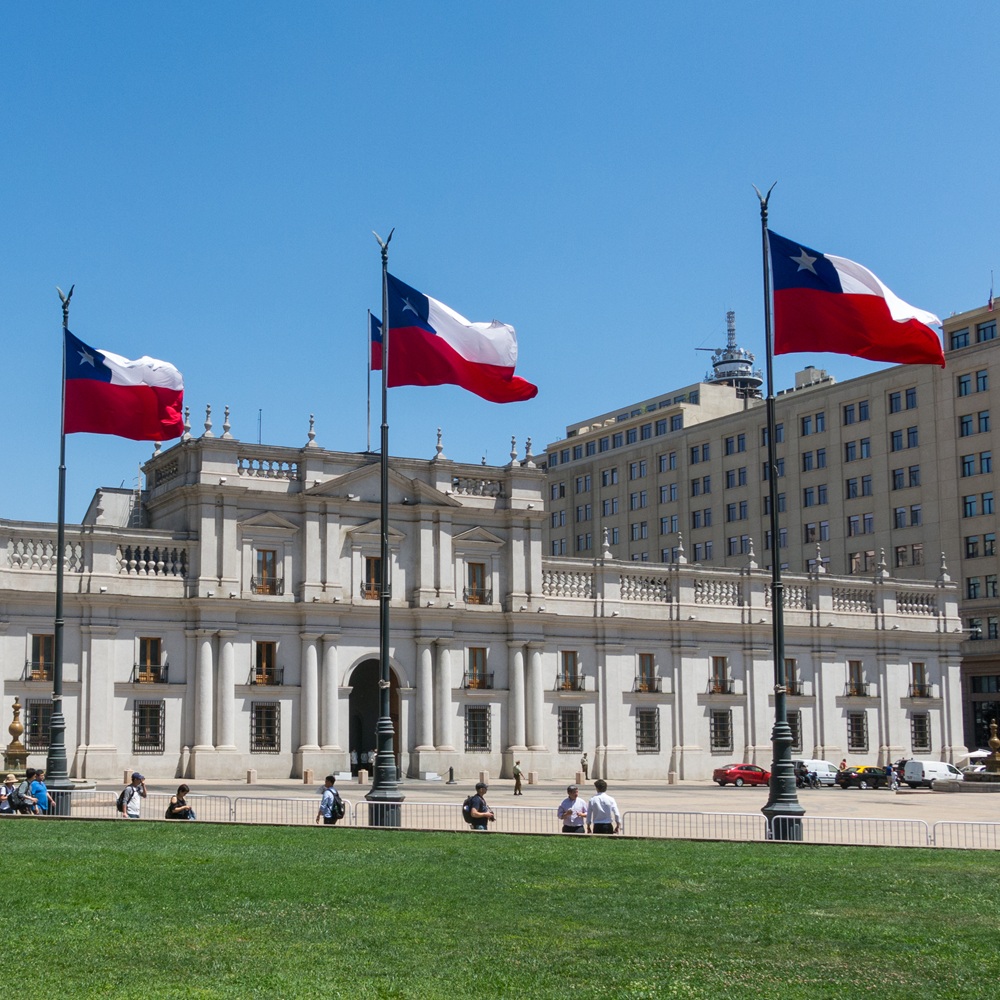
Chile Flags

Chile rejects second constitutional proposal

by Marcela Cubillos

Last Sunday, Chile made a U-turn in constitutional matters, that is to say, after four years of experimentation and going to the polls five times, it went back to square one. By 55.8% against 44.2%, citizens said no to the second constitutional proposal presented to them in little more than a year. In September 2022, the text of the first Convention had been rejected by 61.8%, with only 38% support. These are the six keys to understand the result: 1.- A process that started badly Last Sunday, the constituent process that began in November 2019 under the blackmail of violence came to an end. As a result of the outbreak that occurred in October of that year, the government of former President Piñera promoted a transversal agreement in Congress that began the replacement of the Constitution drafted during the Pinochet dictatorship, which had been extensively reformed in democracy. In fact, the last major reform to that text was in 2005 during the government of former President Lagos. The changes made there were so important that Lagos introduced a norm to replace Pinochet's signature and, when he promulgated the new text, he said that Chile finally had a fully democratic Constitution. Many say that if a plebiscite had been held there, the constitutional issue would probably have been settled. It was not done and, a few years later, the most extreme left began to demand a constituent assembly to draft a new Constitution made fully democratic. 2. The Constitution was never the problem, nor the solution. The first constitutional proposal was submitted to a plebiscite on September 4, 2022. The extreme left had the votes to draft a text as they wished and so they did. They put into it their refoundational political project, which destroyed liberal democracy, divided the Chilean nation, asphyxiated individual freedom, eliminated controls to political power and put an end to equality before the law. President Boric's government was its main promoter, and the text was rejected by a majority not only by the right but also by a large part of the center-left. Probably last Sunday's results can be explained by what happened there. Chileans, during the work of that convention and with the text proposed to them, understood that their problems were not constitutional as they had been led to believe for years. 3.- A hasty agreement Chile had approached the abyss and the triumph of the rejection of that first text was celebrated transversally by the democratic forces and by the citizens, who perhaps at one point agreed with a new Constitution, but not with a new country invented from scratch. A few days after that plebiscite, the opposition rushed to reach an agreement with the ruling party to initiate a second constituent process. It is true that this time limits were set to avoid the excesses of the first one, but the truth is that it was never understood that everything had to start all over again. It would have been more reasonable to redirect the constituent issue in the National Congress from where it should never have left. A Council was elected in which this time the Republican Party had a majority, the only one that left the agreement. That is to say, the people elected a majority of those who did not want to insist on the elaboration of a new proposal. Last Sunday, citizens were fed up with politicians from different parties who insisted, over and over again, that the constitutional issue was the problem. People felt, and rightly so, that they had already voted and never agreed with this second process. 4.- A plebiscite without drama Unlike last September's plebiscite in which Chile's democratic destiny was at stake, last Sunday people did not see drama or epic in what was being voted. That is to say, either a new text was approved, which for some updated and improved the current one (for the left it was a step backwards), or the same one was continued. After decades of attacks to the current Constitution, blaming it for all the injustices and claiming that they could not govern with it, the left arrived at last Sunday's plebiscite sunk in indignity. During the campaign, they went from talking about "Pinochet's Constitution" to "Ricardo Lagos' Constitution" and even declared to feel comfortable with it. 5.Government, relief rather than triumph Nobody would have imagined that this whole process would end with a leftist Government sleeping relieved because the current Constitution is still in force. The triumph of the proposed new Constitution would have meant its third consecutive electoral defeat. The first one was to the text of the Convention last year; the second one, in the election of councilors for the new process. A third one would have meant a very hard blow for a Government with scarce support and wide levels of popular rejection. On the other hand, there are no more excuses. Chile's most serious problems are not constitutional and the citizens seem tired of shouting without anyone listening to them. The Government, relieved, but with nothing to celebrate, must face a serious corruption scandal that has been installed at the doors of La Moneda; a country where nobody feels safe and authorities that lack credibility to face violence; a serious economic stagnation; an imminent crisis in the health system; and also face an education without an agenda and with thousands of children paying the costs of the bad reforms pushed and approved by those who govern today. 6.- Future of the opposition The right wing and the political forces of the center united to campaign in favor of this second constitutional proposal. Sunday's defeat does not change too much the configuration within the opposition. José Antonio Kast, former presidential candidate and leader of the Republican Party, who had the majority in this new constitutional council, obtains, in the end, the same percentage as in the last presidential second round. It is not enough for him to win, but he does not regress in popular support. And Republicans added to Chile Vamos (center-right coalition) maintain, practically, the same votes they obtained in the election of councilors. That is to say, the scenario remains open for the next presidential elections without any figure being irremediably damaged nor any particularly strengthened. President Boric, on Sunday night, wanted to take advantage of the result by forcing a wrong interpretation. He pointed out that people were asking for agreements and, therefore, he was calling the opposition to join his pension and tax reforms. The result of the plebiscite can be interpreted just the opposite, as the death of the last great political agreement, hasty, made with the people's back turned. That is to say, the Government hopes that the right wing has not learned anything from what happened; that to a bad constitutional agreement, which the people never supported, it will now add votes for a lousy tax and pension agreement. The right wing should devote itself to building a broad and coherent political project to solve the problems and not to aggravate them. Citizens seem to be fed up with ministers and parliamentarians signing agreements only because it suits them in the photo or they are uncomfortable to subtract themselves from it. Today there are many oppositions in Chile and it is essential that they have their own profile so that more citizens feel represented by them. It is necessary to add up and for that unity must be taken care of. It is not possible to disqualify them one day and the next morning try to close pacts with them. The opposition must be proportional to the damage that this Government is causing and, at the same time, it must quickly turn the page of the constitutional issue to build a recognizable political alternative. One cannot expect to win just because of how badly the left in power is doing. That is not enough. In what happened on Sunday there is also something to learn from that.

Diplomacy
Outlook 2024

Latin America and the Caribbean: outlook to 2024 and its potential impact on sustainable development

by Javier Surasky

Introduction The year 2024 will present new windows of opportunity and obstacles to the acceleration of the Sustainable Development Goals (SDGs) in Latin America and the Caribbean (LAC). Below we analyze some trends in the region for 2024 in each of the three dimensions of sustainable development, to which we add consideration of governance elements to help understand a framework that does not look easy and in which critical decisions will have to be made for the future. The social dimension In 2024 we will have presidential elections in six countries in the region. Polls indicate that the incumbent party will remain in power in Mexico, where Claudia Sheinbaum could become the first woman president in its history; El Salvador will renew the mandate of Nayib Bukele despite doubts about the constitutionality of his new candidacy. In Uruguay and the Dominican Republic, where Luis Lacalle Pou and Luis Abinader will seek to renew their mandates, the high levels of approval of their administrations point to a possible reelection. At the other extreme, polls point to a possible defeat of the ruling party in Panama, where former president Ricardo Martinelli (2009-2014) leads in voting intentions despite having been convicted in 2023 for a corruption and money laundering case, a sentence that is currently under appeal. In Venezuela, the only country on the list without a date for its electoral process, the controversies surrounding the government of Nicolás Maduro and the lack of transparency in information, added to the imprisonment of opposition leaders, prevent any analysis. The escalation towards an armed confrontation with Guyana over the border region of the Essequibo, rich in oil, minerals and gas, should be closely followed. The result of a long diplomatic and legal dispute between the two countries, its last chapter had taken place in 2018, when Guyana, with the backing of the current UN Secretary General, went to the International Court of Justice to request the reaffirmation of the international arbitration that fixed the border between the two countries in 1899. Maduro's government responded by ignoring the Court's authority to hear the case. Then, in 2020, the court declared itself competent to hear the case, but has not yet rendered its final judgment. The Community of Latin American and Caribbean States (CELAC), almost absent from the regional political map in recent years, reappears to mediate between the two countries, the end of which is now uncertain. All these processes are framed in a high level of citizen distrust towards the political sector, accompanied by weakened democracies, as reflected in The Economist's Democracy Index 2022. On the other hand, the arrival of Javier Milei, a political outsider, to the presidency of Argentina raises questions about its future regional positioning and will have far-reaching regional effects with changes in alliances on sensitive issues, from support for regional environmental policies to the redesign of the country's insertion in international trade, with potential major impacts on the Southern Cone. All of the above, together with the low growth and economic difficulties described in the following section, pose challenges for accelerating regional trajectories of poverty reduction, the fight against labor informality and unemployment, and the implementation of public policies to promote equity and gender equality, among others. For these reasons, there will be more pressure on regional environmental resources, which could lead to new protests and social unrest. The economic dimension Implementing actions to promote sustainable development requires financial resources. LAC has long been a low-priority region for international cooperation and foreign investment is limited, so generating its own resources, in a context of global economic restrictions, is essential. The average projected growth for the region in 2024 is 1.5%, distributed by subregion as follows: the Caribbean (excluding Guyana, which is in a special situation due to its recent entry into the "club" of oil-exporting countries), 2.8%; Central America and Mexico, 2.1%; and South America, 1.2%. As a result, employment growth is expected to slow down. In an attempt to recover employment growth, the countries of the region seem to be turning to flexible monetary policies to increase exports. Countries such as Brazil, Chile and Peru, for example, reduced rates in the third quarter of 2023 and Colombia and Mexico are expected to do so at the beginning of 2024, but the slowdown in growth in countries such as the United States and China is resulting in lower demand for primary products, the main export of LAC countries, in international markets. In addition, there are deficiencies in infrastructure for the transportation of goods throughout the region, creating an obstacle to its export capacity. The possible fall in demand for basic goods is accompanied by a forecast that their prices will continue to fall in 2024, with the exception of energy commodities, which will increase pressure on the trade balances of LAC countries. In terms of minerals, the boost to the extractive industry could lead to foreign currency inflows in countries such as Argentina, Chile and Bolivia (the lithium triangle), although the uncertainty regarding the arrival of investments is due to doubts about economic and business policies in those countries and the growing public demand for the regulation of mining activity to reduce its effects on the environment. However, a boost to mineral processing activity to accompany its extraction could come from the global competition between China, the United States and the European Union, as the latter two seek to reduce China's global weight in mineral processing. Finally, it should be noted that the relocation of supply chains that followed the Covid-19 crisis will bring income to only a few LAC countries, such as Mexico and Panama. The environmental dimension Climate change is already being felt strongly in the region: the average temperature in LAC for 2021-2040 is expected to be about 1°C higher than in the period 1985-2014. At the same time, LAC is key to finding solutions to the challenges of climate change: it is home to 40% of the planet's biodiversity and more than 25% of its forests. The region also plays a central role in the sustainable production of food and energy, where more than 30% of the energy production matrix is made up of "green energies", a percentage that for some countries exceeds 90%, and an export profile that is closely linked to potentially polluting extractive activities. Although it contributes less than 10% of global greenhouse gas emissions, LAC causes damage whose cost already exceeds 2% of its combined annual GDP as a result of the worsening and greater recurrence of extreme weather and environmental catastrophes. The region is the second most vulnerable to natural disasters, which have affected approximately 190 million people since 2000. The expected climatic effects of the "El Niño" current in the region, with increases in rainfall in some sectors paired with droughts in others, will translate into differentiated opportunities and risks for different countries in the region in 2024. In perspective, Argentina and Paraguay could benefit from more rainfall that will benefit the crop, while Colombia and Central America will be exposed to droughts and the Caribbean to extreme weather effects. It will be precisely the intensity of the climatic extremes that "El Niño" reaches that will define its impact on the production of basic goods, energy generation and transportation, but in any case it could contribute to the inflationary pressures that already exist in LAC. A key issue for the region is what happens at the 28th Conference of Parties to the United Nations Framework Treaty on Climate Change (COP 28), where the aim is to establish a "Loss and Damage Fund" to address the costs of climate change and increase funding for climate change mitigation. However, the central concern of the region will be the adoption of a new "global goal on adaptation to climate change" to guide and finance the actions required to adapt to the changes that climate change has already produced, and to accompany the mitigation goal established in the Paris Agreement. Defining that goal and creating channels to finance its achievement is one of the most complex issues at COP 28 and it is uncertain what the outcome will be. Chile, together with Australia, have been designated as co-facilitators of this negotiation. At the same time, what happens at the COP and the discussions on climate and financial issues that will take place in 2024 should find LAC as a leader around the Bridgetown Initiative, presented by Barbados in 2022, to modify the international financial system and urgently curb climate change, combining two concerns of deep regional significance Governance of sustainable development In 2024, two countries in the region, Jamaica and the Dominican Republic, are expected to adopt new national development strategies: In the case of Jamaica, the Medium-Term Socioeconomic Policy Framework 2021-2024 is coming to an end and work is already underway to prepare the document that will give it continuity. This framework guides the implementation, monitoring and evaluation of the country's main national planning instrument, Vision 2030 Jamaica, and should ensure its alignment with the SDGs. In the Dominican Republic, the National Multi-Year Public Sector Plan 2021-2024 defines the country's development policies and their financing, along with international cooperation priorities. Brazil, for its part, will once again have its commission for the implementation and monitoring of the SDGs active as of December 2023, after it was deactivated by the Jair Bolsonaro administration and replaced by the current government. In addition, the following countries in the region will submit Voluntary National Reports on SDG implementation: Argentina, Belize, Brazil, Colombia, Costa Rica, Ecuador, Honduras and Peru. It is possible, however, that the position of the recently elected president of Argentina, Javier Milei, against the 2030 Agenda, will lead the country to withdraw its offer. On the other hand, in 2024 the sixth forum of Latin American and Caribbean countries will be held in the city of Santiago de Chile, a meeting that will be of special importance for the region given that it will not only serve, as it traditionally does, as a regional preparatory meeting for the follow-up and evaluation process of the 2030 Agenda that concludes at the United Nations High Level Political Forum, but will also be a key moment in the regional path towards the Summit of the Future, which will meet in New York in September 2024. It is important to keep in mind that next year will find LAC countries and officials occupying positions of high capacity to influence global debates on the future of multilateralism: -The presidency of the UN General Assembly is held by Trinidad and Tobago, and that of the Economic and Social Council is held by Chile. -Brazil will chair the G21. -Colombia will host the World Data Forum. -Uruguay's Felipe Paullier has been appointed as the first Under-Secretary-General for Youth Affairs in the history of the UN. -The government of Mexico will be working with its Spanish counterpart in preparation for the Fourth United Nations -Conference on Financing for Development, to be held in 2025. In addition, there is growing activity surrounding the appointment of the person who will succeed the current UN Secretary General. In accordance with the practice of geographical rotation in the exercise of this responsibility, a person from LAC would occupy the position. However, Eastern Europe has pointed out that, in its opinion, its turn was "skipped", given that it was the Secretary General of the organization when Guterres, from Western Europe, was appointed for his first term. Should LAC's position prevail over that of Eastern Europe, we may see the first bids for candidates for the post in 2024. The pressure to have a woman head the UN for the first time in history was scorned when the current Secretary General was chosen, but it is unlikely that the same thing will happen again. Although it is too early to advance names, the current Prime Minister of Barbados, Mia Amor Mottley, appears to be an unavoidable reference, although there are several candidates in the running.

Diplomacy
Following path of El Salvador

How Ecuador went from being Latin America’s model of stability to a nation in crisis

by Eduardo Gamarra

Ecuador was until relatively recently seen as one of the safest countries in Latin America. That reputation has surely now been destroyed. On Jan. 9, 2024, images of hooded gunmen storming a TV studio were broadcast around the world. It was one of a number of violent incidents that took place that day, including prison riots, widespread hostage-taking, the kidnapping of several police officers and a series of car explosions. I have been tracking how gang crime has affected states in Latin America for 38 years. When I started, few would have projected that Ecuador would descend into the crisis it finds itself today. But the story of Ecuador reflects a wider story of how countries across Latin America have struggled with organized crime and transnational drug gangs and how they have responded. Ecuador now looks set to follow the recent path of El Salvador under President Nayib Bukele’s leadership in trying to crack the gang problem through the use of military and the suspension of democratic norms. In the aftermath of the Jan. 9 violence, Ecuadorean President Daniel Noboa named 22 gangs as terrorist organizations – a designation that makes them legitimate military targets. He has also imposed a 60-day state of emergency, during which Ecuadorians will be subject to curfews while armed forces try to restore order in the streets and the country’s gang-controlled prisons. Ecuador: Victim of geography To understand why Ecuador has become the epicenter of gang violence, you need to understand both the geography and history of Latin America’s drug trade. Ecuador, a nation of 18 million people, is situated between Colombia in the north and Peru in the east and south. Colombia and Peru are the two top producers of cocaine in the world. Further, Ecuador has a near-1,400 mile (2,237-kilometer) coastline through which drugs from the continent can be taken to markets in Europe and the United States. But it wasn’t until the U.S.-led “war on drugs” put the squeeze on cartels in other countries that Ecuador became the preserve of narco gangs. Plan Colombia In the 1980s and 1990s, Colombia was the center of the international illegal drug trade. This is hardly surprising, given that it was the top producer of coca leaves. But beginning in 2000, a joint initiative between Colombian authorities and the U.S., known as Plan Colombia, pumped billions of dollars into an effort to clamp down on the Colombian cocaine trade. While it may have been successful in supressing drug cartels in Colombia itself, it has had a balloon effect elsewhere in the region: Squeeze in one place, the bulge appears elsewhere. In this case, it was Mexico’s cartels that “bulged” first. Over the past decade, there has been a massive growth in Mexican cartels, led by the Sinaloa cartel and the Jalisco Nueva Generación, or Jalisco New Generation. In fact, a study last year found that Mexican cartels were in effect the country’s fifth-largest employer. These cartels came to dominate the illegal drug trade in Latin America, not just for cocaine, but also the trafficking of heroin and more lately fentanyl. Aligning themselves with Clan Del Golfo – a Colombian paramilitary organization formed from the remnants of the gangs dismantled under joint Colombian-U.S. operations – the cartels helped traffic drugs through Ecuador and out of South America. They were joined by European gangs, notably from Albania, who began to show up in Ecuador. The impact locally of these outside gangs has been disastrous for Ecuador. Prior immunity European and Mexican organizations ran local operatives as enforcers and transporters. And these are the people who have become the backbone of Ecuador’s gang problem today. Ecuadorian gangs such as Los Choneros developed as a de facto subsidiary of the Sinaloa and other cartels. The escape from jail of Los Choneros’ leader, Jose Adolfo Macias, on Jan. 7, 2024, set off the latest explosion of violence. But Ecuador’s descent into violence and chaos has also been aided by the very fact that for so long it was immune from the worst of the gang violence of the region. For many years, Ecuador had one of the lowest homicide rates in Latin America – an indicator of low gang activity. As a result, it hadn’t developed a robust police and military response to gangs. Ecuador, in comparison to Colombia, El Salvador and other countries, was seen as a “soft touch” to organized crime bosses. This became ever more the case in 2009 when former President Rafael Correa closed down the U.S. air base in Manta, from where American AWAC surveillance planes had been monitoring and trying to disrupt drug trafficking. Militarizing the response Explaining how Ecuador became the epicenter of drug gang violence is one thing. Trying to find a way out for the country now is another. Across Latin America, countries have employed different models to counter organized crime, with varying degrees of success. Colombia, with extensive U.S. assistance, transformed its military and police and went to war with the cartels. The strategy somewhat successfully dismantled organized crime groups in the country, even if it failed to halt drug trafficking itself or lower the high levels of violence in Colombia. Mexican authorities have tried a different approach and have been reluctant to confront the country’s drug cartels head-on. Instead, Mexico has employed a more hands-off approach, allowing drug gangs to essentially govern their states – the state of Sinaloa is run largely by the cartel that shares its name. Mexican President Andrés Manuel López Obrador has touted this “hugs not bullets” approach, but under it the power of the cartels has only grown. And then there is the Salvadoran model. For many years, El Salvador suffered from organized crime, with the Maras gang behind much of the country’s violence. Then in 2019 the electorate voted in Nayib Bukele on a law-and-order platform. Since then, he has militarized the country, adopted draconian security measures and jailed some 72,000 alleged gang members, often without due process. As a result, El Salvador is now perceived as one of the safest places in Latin America. This has been achieved at the expense of human rights, critics say. But, nonetheless, Bukele’s methods have enormous popular appeal. Path of El Salvador With an unprecedented wave of violence in Ecuador, it looks like President Noboa is looking to take his country down the same path as El Salvador. He has ordered the Ecuadorian military to “neutralize” the criminal gangs that operate in the country. Whether the approach will work is another matter; Ecuador is in a weaker position than El Salvador. Whereas many of the gangs were imported into El Salvador – many members of Maras had been deported from the U.S. – in Ecuador, they are homegrown and have become more sophisticated. Further, Noboa – despite taking office in December – has only 15 months of his presidency left before a general election takes place in May 2025. Yet, the adoption of Bukele’s methods might be seen as an election winner. Like in El Salvador, the majority of Ecuador’s citizens appear ready for an iron fist approach to counter the gangs – even at the expense of some civil liberties. If you speak to the average Ecuadorian, many would no doubt tell you that talk of human rights violations is bogus at a time when they live under the fear of being murdered simply by leaving their homes. As one man told The Associated Press in the aftermath of Jan. 9’s violence, the government needs to employ “a firmer hand, to have no mercy, no tolerance or (respect for) the human rights of criminals.”