Subscribe to our weekly newsletters for free

Subscribe to an email

If you want to subscribe to World & New World Newsletter, please enter
your e-mail

Defense & Security
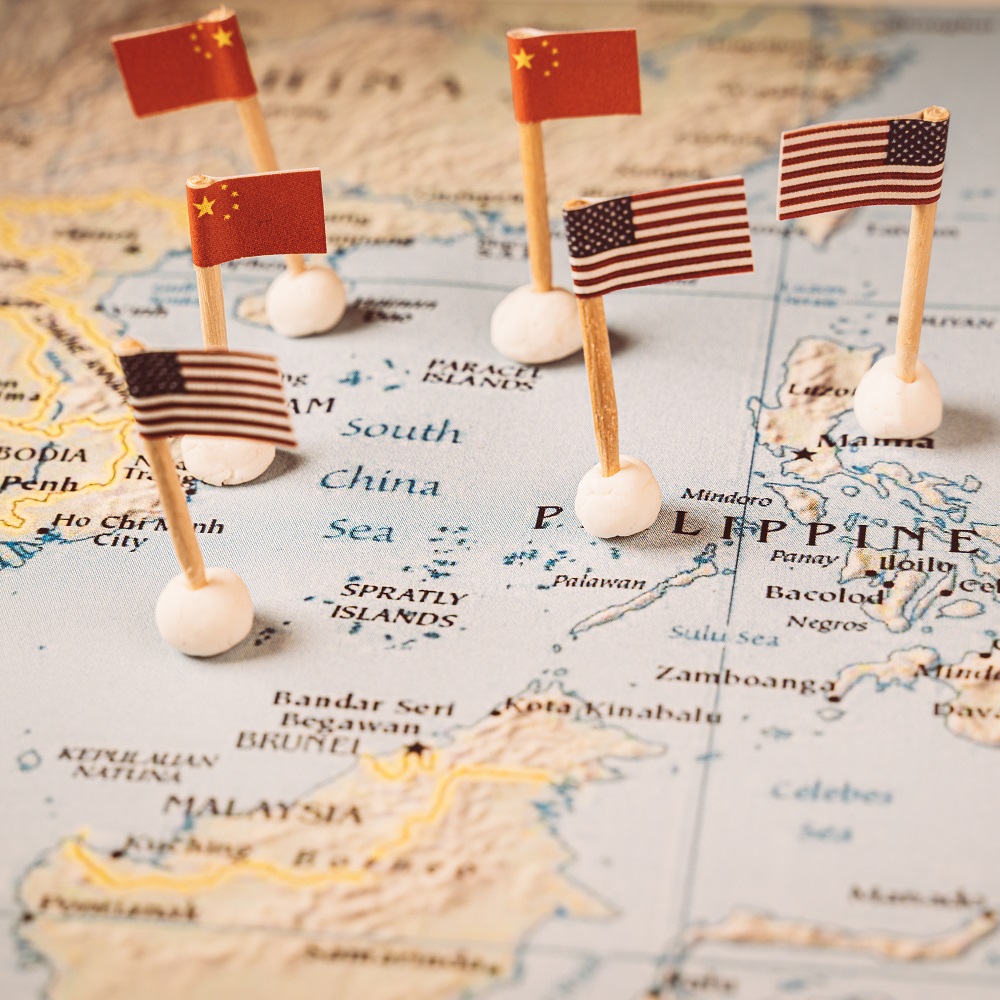
Flags of china and the united states on a map of the southern china sea.

War games risk stirring up troubled waters as Philippines − emboldened by US − squares up to Beijing at sea

by Fred H. Lawson

한국어로 읽기Leer en españolIn Deutsch lesen Gap اقرأ بالعربيةLire en françaisЧитать на русском U.S. Marines joined Filipino counterparts on May 5, 2024, for a mock battle at a telling location: a small, remote territory just 100 miles off the southern tip of the contested island of Taiwan. The combat drill is part of the weekslong Exercise Balikatan that has brought together naval, air and ground forces of the Philippines and the United States, with Australia and France also joining some maneuvers. With a planned “maritime strike” on May 8 in which a decommissioned ship will be sunk and exercises at repelling an advancing foreign army, the aim is to display a united front against China, which Washington and Manila perceive as a threat to the region. Balikatan is Tagalog for “shoulder to shoulder.” Joint Philippines-U.S. naval drills have become an annual event. But as an expert in international relations, I believe this year’s drills mark an inflection point in the regional politics of the South China Sea. For the first time, warships taking part in the exercise ventured outside the 12-mile boundary that demarcates the territorial waters of the Philippines. This extends military operations into the gray area where the Philippines’ exclusive economic zone rubs up against the territory claimed by China and designated by its “nine-dash line.”    Also for the first time, the U.S. deployed an advanced mobile launcher for medium-range ballistic and cruise missiles of a type that had been banned under the now-defunct Intermediate-Range Nuclear Forces Treaty. In addition, the Philippine navy is showing off its newest acquisition, a South Korean-built missile frigate. The South China Sea has long been the source of maritime disputes between China, which claims the vast majority of its waters, and nations including Vietnam, the Philippines, Malaysia and Indonesia. In addition, heightened tensions over the status of Taiwan – a territory that the Biden administration has pledged to defend militarily in the event of a Chinese invasion – have made the South China Sea even more strategically important. Containment at sea The latest joint maneuvers come amid two developments that could go some way to influence the future trajectory of tensions in the South China Sea. First, the Philippines has grown increasingly assertive in countering China’s claims in the region; and second, the U.S. is increasingly intent on building up regional alliances as part of a strategy to contain China. The Philippines-U.S. alignment is more robust than ever. After a brief interval during the 2016-22 presidency of Rodrigo Duterte, U.S. warships and military aircraft once again operate out of bases in the Philippines. Joint naval patrols resumed in early 2023. At the same time, Manila granted U.S. troops unprecedented access to facilities on the northern Batanes islands, which have become the focus of current joint operations. Meanwhile, Washington has become more vocal in condemning challenges to the Philippines from China. U.S. officials had carefully avoided promising to protect the far-flung islands, atolls and reefs claimed by Manila for seven decades following the signing of the Mutual Defense Treaty with the Philippines in 1951. Only in March 2019 did then-Secretary of State Mike Pompeo assert that the treaty covers all of the geographical area over which the Philippines asserts sovereignty. In February 2023, Presidents Ferdinand Marcos Jr. and Joe Biden doubled the number of bases in the Philippines open to the U.S. military. That May, the two leaders affirmed that the Mutual Defense Treaty applies to armed attacks that take place “anywhere in the South China Sea.” Causing waves, rocking the boat Firmer ties to the U.S. have been accompanied by more combative behavior on the part of the Philippines. In May 2023, the Philippines coast guard introduced demarcation buoys around Whitsun Reef – the site of an intense confrontation with China’s maritime militia a year earlier. Reports circulated three months later that Philippine marines planned to construct permanent outposts in the vicinity of the hotly contested Scarborough Shoal. And a Philippine coast guard ship, with the commander of the country’s armed forces aboard, approached Scarborough Shoal in November, before being forced to retreat by Chinese maritime militia vessels. Then in January 2024, the Philippines broke with its adherence to a prohibition on erecting structures on disputed territory, which was part of the 2002 Declaration on the Conduct of Parties in the South China Sea, by installing electronic surveillance equipment on Thitu Island, which sits beyond Scarborough Shoal in the heart of a cluster of disputed formations. This was followed by announced plans to put water desalination plants on Thitu, Nanshan Island and Second Thomas Shoal, making it possible to maintain permanent garrisons on these isolated outposts. Manila has continued to assert its maritime rights by announcing that armed forces would escort exploration and mining activities in the exclusive economic zone. Further acts that could be seen as provocative in Beijing followed, including the stationing of a Philippine navy corvette at nearby Palawan Island and a joint flyover by Philippine warplanes and a U.S. Air Force B-52 heavy bomber. A raft of Chinese responses It is clear that the deepening of Philippines-U.S. ties has given Manila the confidence to undertake a variety of combative acts toward China. The question is, to what ends? A more assertive Philippines may end up contributing to the U.S. strategy to deter Beijing from extending its presence in the South China Sea and launching what many in Washington fear: an invasion of Taiwan. But it is possible that heightened truculence on the part of the Philippines will goad Beijing into being more aggressive, diminishing the prospects for regional stability. As the Philippines-U.S. alignment has strengthened, Beijing has boosted the number of warships it deploys in the South China Sea and escalated maritime operations around Thitu Island, Second Thomas Shoal and Iroquois Reef – all of which the Philippines considers its sovereign territory. In early March 2024, two Chinese research ships moved into Benham Rise, a resource-rich shelf situated on the eastern coast of the Philippines, outside the South China Sea. Weeks later, a Philippines coast guard cutter surveying a sandbar near Thitu was harassed not only by Chinese coast guard and maritime militia ships but also by a missile frigate of the People’s Liberation Army Navy, which for the first time launched a helicopter to shadow the cutter. Washington has taken no public steps to dampen tensions between Manila and Beijing. Rather, Secretary of State Antony Blinken expressed full-throated support for “our ironclad defense commitments” during a mid-March 2024 stopover in Manila. Reassured of U.S. backing, Marcos has amped up the rhetoric, proclaiming that Manila would respond to any troublemaking on Beijing’s part by implementing a “countermeasure package that is proportionate, deliberate and reasonable.” “Filipinos,” he added, “do not yield.” Such an approach, according to Marcos, was now feasible due to the U.S. and its regional allies offering “to help us on what the Philippines requires to protect and secure our sovereignty, sovereign rights and jurisdiction.” The danger is that as the Philippines grows more assured by U.S. support, it may grow reckless in dealing with China. Rather than deterring China from further expansion, the deepening Philippines-U.S. alignment and associated Filipino assertiveness may only ramp up Beijing’s apprehensiveness over its continued access to the South China Sea – through which virtually all of its energy imports and most of its exports flow. And there is little reason to expect that Washington will be able to prevent an emboldened Manila from continuing down the path of confronting China in the South China Sea. To Beijing, the prospect of an emboldened Philippines forging active strategic partnerships with Australia, Japan, South Korea, Vietnam and – most troublesome of all – Taiwan makes the situation all the more perilous.

Defense & Security
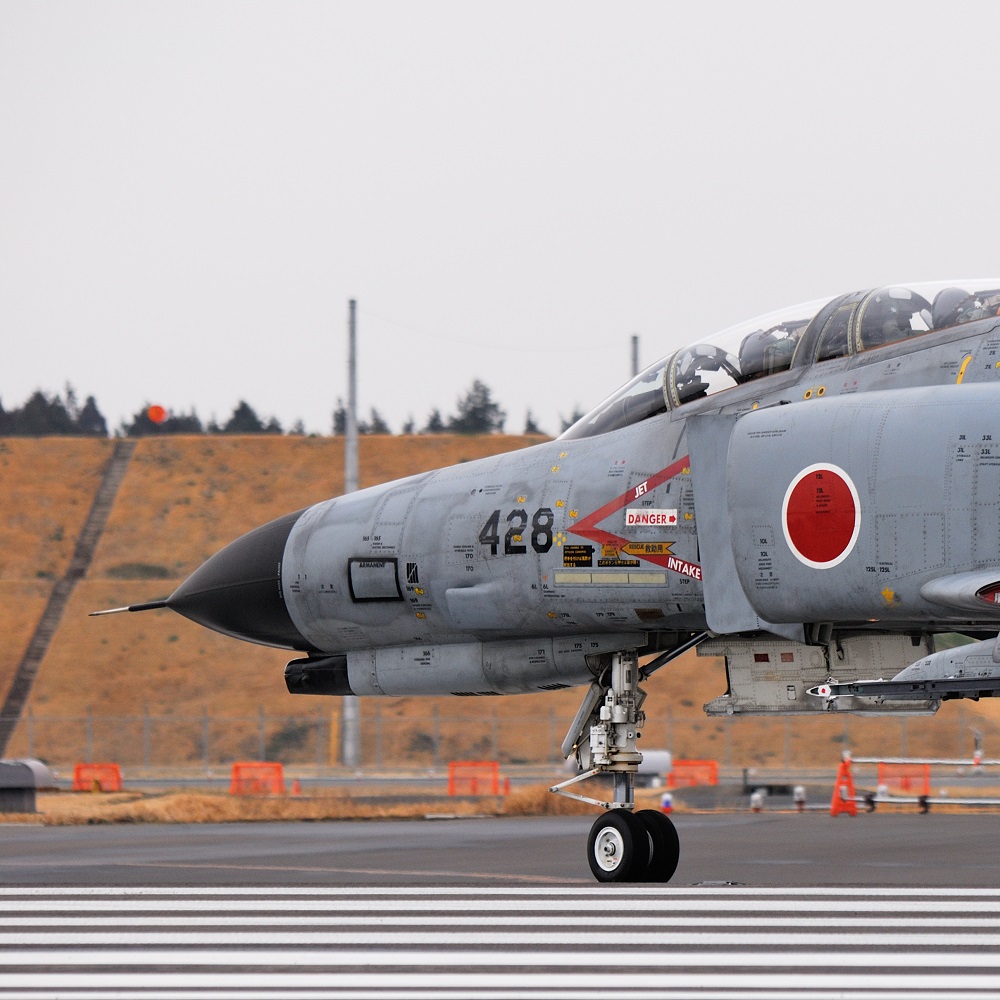
Japanese Fighter Jet

Japan’s Role in Shaping the Security Landscape of Southeast and East Asia

by Swati Arun

한국어로 읽기 Leer en español In Deutsch lesen Gap اقرأ بالعربية Lire en français Читать на русском Japan has embarked upon a transformative journey that signifies a departure from its conventional pacifist stance. Despite encountering pockets of domestic opposition, Japan’s vision of a free and open Indo-Pacific has received increasing support from neighbouring nations. Within a regional backdrop of countering China’s military modernisation and expansionism, Japan is now laying the groundwork for collective defence while working to institutionalise these efforts and ease concerns about remilitarisation. Japan has gradually undertaken various steps to enhance the role of self-defence forces and allow military partnerships. The three new requirements for exercising self-defence, adopted in 2014, expanded Japan’s right to self-defence in the “occurrence of an armed attack against Japan or another country with close ties to Japan”, a threat to national existence, with “no other means to ensure the survival of the country”, adding the use of “minimum amount of force necessary”. Japan broadened the definition of security to encompass any changes in its vicinity that may compromise its territorial integrity. Following these changes, on 16 Dec 2022, the Kishida administration formally approved three revised strategic documents – the National Security Strategy (NSS), the National Defense Strategy (NDS), and the Defense Buildup Program. These revisions reduced the limitations imposed on the Self Defense Forces and collective defence. Viewing these changes in today’s security conflict in East Asia, the first requirement effectively extended the parameters of self-defence to include Taiwan. In the NSS, Japan identified Taiwan as an “extremely important partner and a precious friend” while characterising China as “a matter of serious concern” and “the greatest strategic challenge.” The documents also designated North Korea as “a graver, more imminent threat” and Russia as “a serious security concern.” The documents revealed Japan’s acquisition of counterstrike capabilities, filling gaps in its defences, and broadening the second and third requirements for collective self-defence. Furthermore, Tokyo intends to upgrade the indigenous Type 12 surface-to-ship missile, with a range of approximately 200 km, to approximately 1,200 km, substantially increasing the cost of Chinese attacks in the region. In January 2024, Japan signed agreements with the US to acquire 400 Tomahawk cruise missiles, with a firing range of approximately 1,600 km. Reportedly, Japan aims to rectify its current ammunition reserves by constructing “70 ammunition depots within five years” and plans to construct up to 130 ammunition depots by 2035, drawing lessons from the conflict in Ukraine. Japan revised the Three Principles of Transfer of Defence Equipment and Technology overcoming the past restrictions on transfer of defence equipment and technology to other countries. These revisions marked the beginning of Japan’s evolving role as a security provider in the region. Together this amounts to the doubling of the defence spending from 1% to 2% of GDP by 2027 to speed up the advancement of Japan’s peacetime and immature military and bring it to NATO standards. The revisions are consistent with Japan’s understanding of its new security environment where Chinese assertions are reinforced by the largest naval force in Asia. The shift also underscores the limitation of the US power in the region to remain the sole security provider by enabling Japan to take a central role. Japanese people also resonated with the sentiments, as a poll conducted in 2022 revealed that 89% see China as a threat in 2022, and 49% of respondents supported an expanded role of Japan in the alliance while 46% were against it. In 2023, Japan’s Maritime Self-Defense Force conducted Indo-Pacific Deployment 2023 (IPD23) to “clearly demonstrate the intention that Japan will never tolerate unilateral changes to the status quo by force” as specified in NSS. The Japanese forces visited 17 countries and held 27 exercises with like-minded countries, highlighting Japan’s intention to expand security ties across the nations with territorial disputes in the South China Sea, and with the ASEAN. In the same year, Japan established a Permanent Joint Headquarters to oversee all three forces – the Ground, Maritime and Air Self-Defense Forces – to ensure effective joint operations. Acknowledging Japan’s growing ambition, in December 2023, Chinese President Xi Jinping instructed the coast guard to strengthen its activities to assert sovereignty over the East China islets. Japan has actively pursued collective defence in Southeast Asia with its introduction of “Official Security Assistance” in February 2023, under which the Philippines was the first to receive aid, followed by Malaysia. Japan also plans to include Vietnam, Indonesia, Thailand, Singapore, and Cambodia. These plans will allow Japan to establish a military-industrial complex, extending the nexus of partnership and interdependency between Japan and Southeast Asia. The changes when seen together with the U.S.-Japan Joint Leaders’ Statement mark a decisive shift in Japan’s strategy to counter China. In an upgrade to the US-Japan alliance, the two parties agreed to establish a unified Japanese-US command, enabling the US to make a headquarters in Japan for overseas military operations in the region. They also agreed upon the co-development and co-production of missiles and cutting-edge technologies in Japan, enhancing its defence industrial complex, and export to third parties. The statement noted Japan’s cooperation with AUKUS in its Pillar II advanced capability projects. The statement also relayed the “existential crisis” facing Japan making these efforts natural, conforming to Japan’s revisions to strategic policy documents. Previously, in 2022, Japan had announced a collaboration with the UK, and Italy to develop next-generation fighter jets and subsequently in March 2024, decided to authorise the export of jointly developed fighter jets to other nations. Cross-strait relations, once dealt with utmost precaution through the lens of the “One-China Policy” have now shifted to a more openly debated foreign and strategic policy surrounding Taiwan. Since 2021, Japanese leaders have made a series of statements and comments concerning Taiwan and the Taiwan Strait. In May 2022 a statement from US-Japan Summit reiterated that “peace and stability across the Taiwan Strait as an indispensable element in security”. In a January 2024 speech, former PM Aso Taro also reiterated that the Taiwan crisis constitutes “a threat of national existence” for Japan. China reacted to former US Speaker Nancy Pelosi’s visit to Taiwan in August 2022 with large-scale military exercises around the island. Four months later in December 2022, Japan released three new strategic documents. Taiwan’s importance to Japan’s security was cited seven times in NSS and NDS. Furthermore, Japan intends to enhance the defence of all of its 6,852 islands, focusing on the Ryukyu Island chains, the cornerstone of Japan’s defence against China, lying only 100 Km from Taiwan, which also tightens security around the island. The deployment of a surface-to-air guided missile unit is now under consideration on Yomaguni, home to a JSDF surveillance station adding to Japan’s understanding of Taiwan’s security tied closely to its own. China’s preferred military scenario of a “lightning war”, or a surprise attack to take over Taiwan within weeks or days, has increased the level of urgency and acted as a precursor for the military acceleration of the past several years. The history of Japanese aggression in East Asia and Chinese military support for North Korea diluted the possibility of a regional framework between Japan, South Korea and China. However, through years of efforts in August 2023, a rapprochement was reached between Japan and South Korea when they met at Camp David for a trilateral summit between US-Japan-South Korea. The trilateral took the first step in removing historical obstacles and proving trust in Japan’s new regional role. South Korea has remained averse to participating in major power competitions, but this trilateral institutionalised the effort, guarding the progress against changes in the political situation in either country. For South Korea, North Korea remains its primary security concern. For Japan, the North remains the second most crucial threat with its launch of an intermediate-range ballistic missile in the Sea of Japan in 2022, provoking cooperation on the same despite fractures. Through the joint statement of the trilateral summit, the US got support from South Korea in recognising the perils of not maintaining peace and security in the Taiwan Strait. South Korea got a much-needed boost in intelligence sharing on North Korea’s missile launches and cyber activities which will strengthen ballistic missile defence cooperation. However, it is unlikely that South Korea will endanger its security by interfering in a cross-strait crisis. It will still play a critical role in keeping North Korea at bay in the event of an armed conflict in the Taiwan Strait or East China Sea. Nevertheless, Taiwan thanked the support shown through the trilateral, while China warned against destabilising the region. Japan stands as one of the Philippines’ most trusted partners, second only to the US. Ties have grown deeper as the two have signed a series of agreements from Military and Capacity Building to Maritime Security and Intelligence Sharing in the Indo-Pacific. In 2023, under Japan’s Official Security Assistance, the Philippines received USD 4 million worth of coastal surveillance radars. The two parties are discussing signing a Reciprocal Access Agreement before the end of 2024. An April 2024 joint statement between Japan, the Philippines and the US prioritised advancing “multilateral maritime domain awareness cooperation”, and developing “an information communications technology ecosystem”. It also committed to trilateral defence cooperation and support for the Philippines’ defence modernisation priorities. The statement noted concerns about China’s aggressive behaviour, its “coercive use of Coast Guard and maritime militia vessels in the South China Sea”, conjoining it with the situation in the East China Sea. It also reiterated the importance of the Taiwan Strait in global security. Under this framework, reliance and trust in Japan have increased, setting it up for a larger security role and the collectivisation of security has brought new assurances for the smaller powers of the region. The Taiwanese President thanked the trilateral joint statement supporting peace and stability across the Taiwan Strait. China, however, slammed the anti-China gathering, accusing it of forming a NATO analogue in the region. China summoned Japanese and Philippine diplomats, expressing dissatisfaction and urging Japan to “take actions beneficial to regional peace”. Beyond South Korea and the Philippines, Japan has also maintained long military and diplomatic relations with Vietnam, having had 10 defence dialogues in the past. Furthermore, Vietnamese President Vo Van Thuong and Japanese Prime Minister Fumio Kishida announced the Vietnam-Japan Comprehensive Strategic Partnership on 27 November 2023. According to their joint statement, Kishida and Thuong reinforced the vision of a “free and open Indo-Pacific”. The US also upgraded its ties with Vietnam in September 2023. These developments led to President Xi Jinping’s visit to Vietnam in December 2023, culminating into an agreement to establish a hotline between the Chinese People’s Liberation Army’s Southern Theatre Command and the Vietnamese navy. But mistrust towards China runs deep in the Vietnamese public, which is furthered when China continues to lay new claims in Vietnamese waters. While Vietnam remains reluctant to participate in US-China conflict, its closeness with Japan is a sign that the latter is seen as a reliable regional partner with similar territorial problems. In a wider regional sense, Japan views ASEAN as its key partner in fulfilling the Indo-Pacific vision. The ASEAN centrality resonates in both the Indo-Pacific Strategy and the US-Japan-South Korea trilateral. Japan maintained close ties with the region through robust economic and defence cooperation. But the latter has gained momentum in the past few years. Beginning with the Philippines in 2016, Japan forged bilateral agreements for defence equipment and technology collaboration with multiple ASEAN nations (with Malaysia in 2018, Indonesia and Vietnam in 2021, and Thailand in 2022). In February 2023, the “Expert Panel for the 50th Year of ASEAN-Japan Friendship and Cooperation” issued a report emphasising that ASEAN has evolved from being primarily an aid recipient from Japan to a growing and influential partner. In December 2023, the ASEAN and Japan summit released a joint statement, committing to “strengthening security cooperation including maritime security” in the light of growing threats in the South China Sea. The statement highlighted the trust ASEAN has in Japan amid China’s growing claims in the South China Sea. This reflects a growing realisation among ASEAN members that collective defence is the answer to their security challenge – which China reacted negatively to. In the face of a major power conflict, the trust of Southeast Asian countries in Japan’s security guarantee has been increasing. A poll conducted in 2022 reflected these sentiments when 43.1% of Taiwanese confirmed their belief that Japan would defend Taiwan in the event of an invasion from China, while 42.8% of citizens felt that the US would be a security guarantor to Taiwan. Surveys undertaken in 2023 and 2024 substantiate the increasing affinity between ASEAN and Japan. While China surpassed the US as the preferred partner for ASEAN, Japan remained the most trusted partner, with 58.9% of respondents expressing faith in the country, surpassing levels for the US, China, India, and the European Union. This suggests that ASEAN is gradually transitioning its geopolitical alignment towards Japan as (at least part of) a viable alternative, rather than seeing things as a binary choice between China and the US. The predominant theme in the understanding of the current security environment in Southeast and East Asia is that, while US assistance and reliance on its security guarantee in the region are essential to counter the so-called China threat, the defence of the maritime nations ultimately rests with those nations themselves. This sentiment has served as a catalyst to address gaps in individual countries’ defence preparedness and work towards a collective approach to protect against potential changes in US strategy – which has evolved into one of enabling regional stakeholders by providing technology, skills, and assistance, while maintaining dominance through other platforms. This has necessitated a collective defence posture where a more interconnected network, involving Japan, can be more resistant to isolation and coercion.

Defense & Security
Solomon Islands

Russia and China co-ordinate on disinformation in Solomon Islands elections

by Albert Zhang , Adam Ziogas

한국어로 읽기 Leer en español In Deutsch lesen Gap اقرأ بالعربية Lire en français Читать на русском Moscow and Beijing likely worked together to sow disinformation globally that was propagated locally by political parties in the lead-up to Solomon Islands’ national and provincial elections on 17 April 2024. Both countries’ propaganda systems accused the United States, without evidence, of using its foreign aid and networks across the country to interfere in voting and of preparing to foment riots and orchestrate regime change in response to an unsatisfactory election result. This campaign adds to a growing body of evidence showing that China’s and Russia’s ‘no limits’ partnership extends to coordinating their disinformation campaigns in the Indo-Pacific. The narratives haven’t gained widespread attention or media coverage in Solomon Islands. Australia, the United States and other Pacific partners should nonetheless be concerned, as Russia and China can be expected to learn from this campaign and will likely use the lessons to further improve their influence operations in the region. Individually, China and Russia are adept and expert at pushing disinformation to disrupt other nations but, by coordinating their efforts, they have a force-multiplier effect. The campaign consisted of an alleged ‘leaked’ letter, articles published on authoritarian state-controlled media outlets and a fringe journal publication, which were then shared and amplified on social media platforms. A fortnight before election day, an unknown author by the name of Richard Anderson published an explosive article in CovertAction Magazine alleging that the US was seeking regime change in Solomon Islands. The US-based magazine was co-founded in 1978 by the late Philip Agee, a former CIA officer who after his retirement became a vocal critic of the agency and of US policy and had reported links with Soviet and Cuban intelligence. The magazine was set up ‘on the initiative of the KGB’, the Soviet Union’s main intelligence agency, according to a book by KGB defector Vasili Mitrokhin and British intelligence historian Christopher Andrew. Anderson had no previous history of writing for CovertAction Magazine. A week after that article was published, Russian state-controlled media agency Sputnik further fuelled the allegations, writing that the US was ‘plotting [an] electoral coup’. This article cited an anonymous source who had ‘intimate familiarity’ with the activities of USAID, the main United States foreign aid and international development agency. This mirrored how Anderson is described in his CovertAction Magazine bio, though Sputnik’s article did not explicitly mention him or his article. Sputnik’s claims were amplified four days later by the Chinese state-controlled tabloid newspaper the Global Times, which did directly reference Anderson’s article and has the potential to legitimise these narratives to an audience the Chinese Communist Party (CCP) is actively targeting. During the same period, a poorly fabricated letter from an unconfirmed (and potentially non-existent) IFES project consultant was circulated among Solomon Islanders by an unknown source claiming that the US was seeking a ‘democratic transition by violent means in necessary circumstances.’ The text in this letter mirrored language used by Sputnik’s alleged anonymous source. Figure 1: Paragraph from Sputnik article (top) and a screenshot of the alleged IFES letter (bottom).     To be clear, there is no evidence that the US, or any other country, is supporting violent riots or interfering in Solomon Islands. Ann Marie Yastishock, US Ambassador to Papua New Guinea, Solomon Islands, and Vanuatu, has strongly refuted these allegations. This is not the first time the CCP-controlled media has spread disinformation in Solomon Islands or accused the US of seeking to instigate riots in the country. Following the 2021 Honiara riots, the CCP falsely accused Australia, the US and Taiwan of organising the riots, fomenting unrest and discrediting the relationship between Solomon Islands and China. In contrast, Russian media outlets also covered the 2021 Honiara riots but didn’t promote any explicit accusations of US or foreign interference. This time, China and Russia have been in lockstep. In the lead-up to the April elections, Russian state media was more direct and damning in its reporting with the release of Sputnik’s original article and in the subsequent coordination and dissemination of false narratives alongside Chinese state media. While Sputnik published only one follow-up article to the initial investigation, China’s Global Times was more prolific and varied, with six articles alleging US meddling in Solomon Islands. Of these six articles, four explicitly referenced Sputnik’s claims and two referenced US influence operations in more general terms. The indications of Russia-China propaganda coordination in this campaign were further supported by China’s Ministry of Foreign Affairs (MFA) post on 19 April 2024 titled ‘The Hypocrisy and Facts of the United States Foreign Aid’. The post on their website claims the US is giving aid to Solomon Islands, among other countries, only because it sees it as a political threat. This was the first article ever published by the MFA to smear USAID. Moscow, however, has consistently campaigned against USAID since it ejected the US agency from Russia in 2012 for ‘meddling in politics’. Russian media has pushed a consistent narrative that the organisation is a US imperialist tool of regime change, accusing it of fomenting civil unrest and coup attempts as far afield as Belarus, Cuba, Georgia and Mexico. However, this latest attack against USAID appears to be the first where Russia’s narratives are working to the benefit of CCP interests. It’s been clear since at least 2018 that Russian and Chinese state media are converging on media narratives that serve their governments’ strategic and political interests. According to leaked documents from Russian state broadcaster VGTRK, Russian and Chinese propaganda entities also signed an agreement to ‘further cooperate in the field of information exchange, promoting objective, comprehensive and accurate coverage of the most important world events’. While previous ASPI research has demonstrated Russian and Chinese state-coordinated narratives on the Russia-Ukraine conflict, the repeated re-airing of Sputnik’s conspiratorial claims of interference in Solomon Islands’ elections in Global Times articles indicates this propaganda cooperation is now a global initiative. There was also some evidence of amplification by inauthentic accounts on social media of these narratives, but they were limited and it is unclear whether they were state linked. For example, one X account with the handle @jv79628 shared the original Sputnik investigation. The account posts links almost exclusively from Sputnik, Global Times, Australian website Pearls and Irritations and videos with artificial intelligence-generated voices from the pro-CCP YouTube channel Chinese Revival, which may be linked to the Shadow Play network previously uncovered by ASPI. Other accounts sharing the original Sputnik report, such as @de22580171, pose as pro-Russian US citizens. They share articles mostly from Sputnik or Russia Today. At the time of publication of this report, Russia’s and China’s state media articles, and the accusations contained in them, have had minimal reach into online Pacific communities. In the public Solomon Islands Facebook groups ASPI viewed, online discourse remains more focussed on the emergence of new coalitions and the election of a new Prime Minister than on discussion of foreign influence or interference. According to Meta’s social monitoring tool, CrowdTangle, none of the articles from the Global Times have been shared in open and public Solomon Islands Facebook groups. However, Sputnik’s first article may have been more successful in reinforcing anti-Western sentiments in outgoing Prime Minister Manasseh Sogavare’s O.U.R. Party, who are strong contenders to be part of the coalition that forms the next government. That article was posted on the O.U.R. Party Solomon Islands Facebook page, which is run by the party, on 10 April. It was reshared to several public Facebook groups in Solomon Islands, including news aggregation sites and local island forum pages. This is significant because it is the first time a news article has been posted on the O.U.R. Party Solomon Islands Facebook page, which typically shares positive images of the party’s activities and political campaigns. As of 1 May 2024, the post (below) has had over 180 interactions, which is higher than the average number of interactions a typical post has on this page. Figure 2: Screenshot of Sputnik article posted in O.U.R Party Solomon Islands Facebook page.     Sogavare, a founding member of the O.U.R. Party, has made similar remarks about ‘foreign forces’ previously. According to an article published in the Solomon Star, when US Ambassador Yastishock visited Solomon Islands in late March to present her letter of credentials to Governor-General John Oti, Sogavare claimed foreign forces were ‘intervening in the national general election’ and ‘may fund some political parties and plan to stage another riot during the election to disrupt the electoral process and undermine social stability’. Despite the low online interaction so far, the barrage of US regime change allegations lays the foundation for future narratives that may resurface if Solomon Islands experiences future unrest. Beijing and Moscow can be expected to learn from these disinformation efforts, leaving the US, Australia and their Pacific partners no room for complacency about the threat the regimes pose, nor the need for effective strategic communication. The Russian and Chinese governments are seeking to destabilise the Pacific’s information environment by using disinformation campaigns and influence operations to undermine traditional partnerships. In this digital age, leaders of governments and civil society across the region need to consistently confront and counter baseless lies pushed by authoritarian state media, such as accusations that the governments of Australia and the US are instigating riots. If they fail to do so, partnerships with, and trust in, democratic countries are at risk of deteriorating, which can reduce the development benefits provided to Pacific Island Countries by Western partners. Australia, the US, and other close Pacific partners, such as Japan, New Zealand and the European Union, must take a stronger stance against false and misleading information that is starting to circulate in the region as a result of authoritarian state-backed disinformation campaigns. These nations must also better support and encourage local media and governments to take further steps to identify and combat false information online. This includes providing more training packages and opportunities for dialogue on media-government communication procedures to tackle disinformation and misinformation. Countering the effects of disinformation requires ongoing efforts to call out false statements, educate the public, and build country-wide resilience in the information environment. Greater transparency and public awareness campaigns from the region’s partners can also help to ‘prebunk’—or anticipate and delegitimise—disinformation and alleviate concerns about malign activity.

Energy & Economics
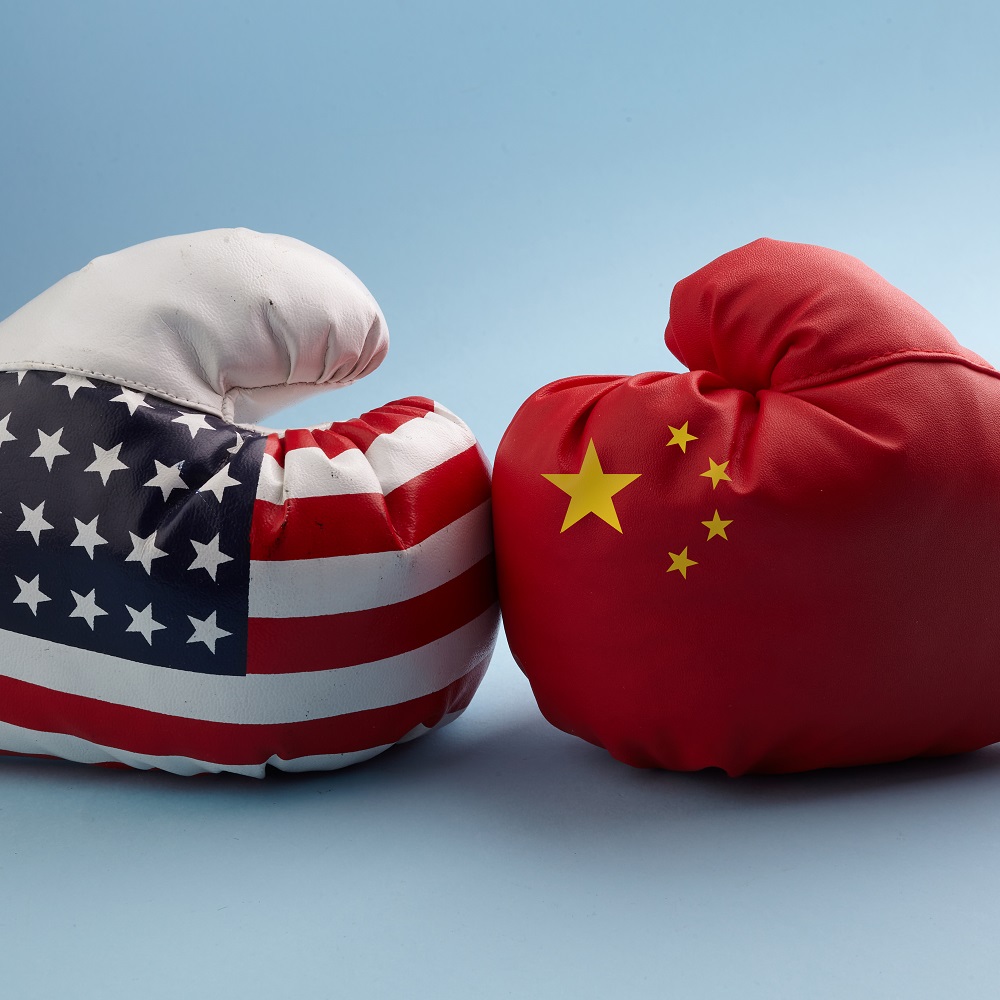
Concept of the trade war between the USA and China.

How to better equip the U.S. DFC to compete with China

by Andrew Herscowitz

한국어로 읽기 Читать на русском Leer en español Gap In Deutsch lesen اقرأ بالعربية Lire en français When U.S. President Biden and Chinese President Xi met in November 2023, Biden remarked that the countries must “ensure that competition does not veer into conflict.” A recent ODI report Hedging belts, de-risking roads: Sinosure’s role in China’s overseas finance illustrates the scale of the competition and reveals how one of China’s less-known institutions – Sinosure – has been giving China the edge. This blog offers some thoughts about how the U.S., through its U.S. International Development Finance Corporation (DFC) can better compete. Competing requires resources, but really not as much as you think Competing credibly requires money, dedicated staff, and creativity. It requires studying the competition. Infrastructure development requires low-cost financing, capacity-building, and getting everyone aligned. As Sinosure has demonstrated again and again, deploying guarantees and insurance – particularly from official financing – can de-risk overseas investment, reducing costs of finance and mobilising commercial investment from the private sector. When it comes to infrastructure, China has a far more robust, albeit imperfect, track record when compared to others. The U.S. and its G7 partners have not been much of a match for China in financing infrastructure worldwide. The G7 could successfully compete with China, and doing so does not have to cost hundreds of billions of dollars. The U.S. Congress, despite its strong desire to counter BRI, has yet to appropriate the resources necessary to compete credibly in a battle of influence against China in developing countries. There’s been plenty of rhetoric, repurposing of existing programs and resources into initiatives like the Partnership for Global Infrastructure and Investment (PGII) and the Global Gateway. Each time the U.S. launches a new overseas economic development initiative, however, it rarely dedicates sufficient resources to help it scale – examples include the Partnership for Growth, Power Africa, Prosper Africa, and PGII. When it was fully funded, Power Africa, which coordinated the efforts of 12 U.S. government agencies, helped 120 power projects in Africa get across the finish line in just a few years, building a strong brand for the U.S. in Africa for economic development for the first time in decades. Then the U.S. cut Power Africa’s budget by 75% because of political shifts. The initiative stalled in its progress on new infrastructure, while still helping 200 million Africans get access to more reliable electricity. PGII, which has no dedicated budget, involves a handful of smart people working hard to deliver on a G7 promise of $600 billion in global infrastructure by 2025. Other than the Lobito Corridor project, it has not been clear to date what PGII is able to deliver at scale in Africa without additional resources. That could be about to change, though. The State Department just requested another $4 billion from Congress to up its game against China, which should help tremendously if that funding is secured to support PGII. Why Sinosure has been such an effective tool for China, despite its low margins BRI has not been particularly innovative, but it’s been steady. Sinosure, along with other Chinese export credit agencies, offers highly favorable terms and longer-term finance – this approach has well suited Global South governments in advancing their development and political objectives. While some projects have been problematic, Chinese creditors have provided the low-cost, patient capital at scale that many countries need for long-term productive infrastructure investment. But as the report shows, this approach has challenged established regimes governing the use of public money (link to blog 2). Sinosure insurance covers non-payment up to 95% of the insured equity or debt for up to 20 years, but most OECD Export Credit Agencies (ECAs) only provide 85% coverage for up to 10 years – though this policy soon will soon change [link to blog 2] Sinosure can work anywhere, except where there’s a live conflict or in cases of repayment arrears. By contrast, the U.S. International Development Finance Corporation (DFC) has a list of over 100 countries where it cannot do business. Sinosure’s premiums max out at 7% of the total debt servicing cost of a project, making it relatively cost-effective. In this aspect, it is surprisingly transparent. DFC’s fees and costs are numerous and opaque, with DFC passing some of its own costs on to its clients. By the end of 2022, Sinosure had provided over $1.3 trillion-worth of insurance on export and investment, with a quarter of this going only to BRI countries. In 2022 alone, it supported a total portfolio of $900 billion through its insurance for over 170,000 clients, of which $80bn went to overseas investment and long-term finance, which mostly supports projects in infrastructure such as power, transportation, construction, telecoms and shipping. It received a total net insurance premium of $1.9 billion and paid out $1.5 billion in insurance claims. Despite its significant payouts, however, Sinosure continues to earn a modest profit of $102 million – not much of a margin, but enough to propel China’s global leadership on trade and infrastructure development.     By contrast, DFC’s current total portfolio-wide exposure is $41 billion, with just over $9.3 billion committed in fiscal year 2023 for 132 transactions – of which only around $3.5bn of this was for guarantees and risk insurance. DFC has many of the same tools available to it as the Chinese government, and DFC is not even legally required to earn a return on its investments. Yet DFC has not made full use of its capital resources and has not deployed its capacity for risk-mitigation finance in the same way. An unleashed DFC could make the U.S. more competitive It’s not too late for the U.S. and others to compete. The U.S. has an opportunity to further change how it conducts business to compete with China, while promoting sustainable development. DFC is starting to flex its competitive muscles with its own insurance product, recently using political risk insurance to support a $1.6 billion debt-for-nature swap in Ecuador and another $500 million debt-for-nature swap in Gabon, which support broader debt relief efforts, as well as channelling money towards climate and conservation goals. Moreover, those deals come at a very low cost to the U.S. government given DFC’s pricing models. DFC is up for reauthorisation in 2025. It has both foreign policy and development mandates. In a previous blog, we laid out 10 recommendations about how DFC could be more effective in achieving its development mandate. Here are 9 recommendations to help DFC be more effective in competing with China and achieving its foreign policy mandate: 1. Spend some money and spend it right All it took for Sinosure’s expansion in the early 2010s was a capital injection of $3 billion. To make its financial institutions just as competitive, the U.S. only needs to commit a few extra billion dollars of appropriated resources per year, just as State Department has proposed, not hundreds of billions. Sinosure, with its somewhat loose investment criteria, still managed to earn over $100 million profit on a $900 billion portfolio in 2022. Even if DFC were to spend $1 billion/year of additional budgetary resources – for the purpose of leveling the playing field with China and providing developing countries with the type of inexpensive financing they need – that could be money well spent for the U.S. taxpayer. That money could cover legal fees that DFC currently passes on to clients. It could be deployed through innovative instruments: to take on some of the currency risk on strategic transactions, to cover first loss on strategic investments, or to provide technical assistance that does not need to get repaid–comparative advantages that Chinese financial institutions still sorely lack. That funding also could be used, simply, to reduce interest rates and fees, at a time when borrowing costs for lower-income countries have risen astronomically. 2. Structure deals to outcompete China Encourage DFC to structure transactions to use its funding to maximize competition with China in a way that promotes a more level playing field. DFC should not crowd out competitively tendered and transparent private sector investment, but where inexpensive or even concessional DFC co-financing might help the private sector out-compete opaque Chinese investment, DFC should be equipped to support those projects. 3. Don’t obsess over returns Even though DFC is not legally required to earn a return on a portfolio-wide basis, most members of Congress expect DFC to be revenue neutral to the U.S. Treasury. If members of Congress would adjust their return expectations even slightly, DFC could significantly advance its development and foreign policy goals. Effective development and foreign policy are not free – especially when competing with China. Even earning back $.95 on the dollar on a portfolio-wide basis would be a significant leverage of 1:20 of appropriated resources to private investment – giving DFC broad flexibility to structure deals that prioritise development impact and foreign policy. 4. Remove DFC’s limits Eliminate ceilings on DFC financing – including the $1 billion transaction limit, the $10 billion annual portfolio limit, and the $60 billion total portfolio exposure. It really doesn’t cost anything to do this. It’s like raising its credit card limit. 5. Let DFC work anywhere when necessary Give DFC the authority to determine the countries where it can do business on a case-by-case basis, depending on what the foreign policy and development priorities are. DFC should be required to continue to prioritize investments in low and lower-middle income countries, but it should have flexibility to respond quickly and selectively anywhere that doing so will credibly advance a compelling U.S. national security interest, such as financing a strategic port or lithium processing. To prevent DFC from sliding into becoming just a national security tool, abandoning its development mandate, DFC should be required to clearly articulate the compelling national security interests of projects and should provide a detailed report to Congress each year on its investments in upper-middle income and high-income countries to explain these interests (even classified, if necessary). 6. Empower DFC to support “nearshoring” DFC can help the U.S. diversify its supply chains and reduce dependencies on China. To encourage companies to move operations out of China and into the Americas (if operating in the U.S. is not commercially viable), give DFC broader authority to support strategic transactions in the region. 7. Make it easier for DFC to support equity investments in strategic infrastructure When DFC takes an equity position in a company or an investment fund, it gets a seat at the ownership table. That allows DFC to drive decisions regarding sourcing of goods and services (i.e., making sure contracts do not always go to Chinese companies). Investing in equity funds that develop and finance a portfolio of infrastructure projects is an effective way for DFC to increase and spread its strategic influence -- except that DFC often struggles to make these types of investments because U.S. legal requirements make DFC a slow and clunky, and hence, an unattractive investment partner. DFC needs flexibility to bypass some of these requirements. 8. Help DFC scale its risk insurance instrument For years, DFC has been hugely innovative in deploying its insurance products to leverage capital from others. DFC used its political risk insurance tool to crowd in private investment in Ukraine, and to catalyze pioneering debt-for-nature swaps worth hundreds of millions of dollars in Ecuador and Belize. But according to recent reports, the U.S. Office of Management and Budget has been threatening to start treating insurance investments like guarantee instruments from a budgeting standpoint. This will make it more expensive for DFC to deploy this tool. If it ain’t broke, why fix it? As we’ve shown, one of the main factors behind China’s competitiveness abroad is through Sinosure’s expansive use of its insurance tool: OMB’s changes will make it more expensive and difficult for the U.S. to scale its own. OMB needs to read the room. We’re not going to suddenly balance the U.S. budget by tinkering with a formula that has worked for decades. Let DFC do more of what it does well. 9. Help speed DFC up Before committing any transaction over $10 million, DFC is required to notify Congress in advance. This “Congressional notification” requirement provides a valuable extra level of oversight to ensure that DFC does not doing anything out-of-whack with Congressional priorities. But the process slows DFC down, when Chinese financiers are known for their speed. Even though DFC only is required to “notify” Congress of its deals, and not seek “approval,” practically and politically speaking nobody wants to run afoul of any one of the 535 members of Congress. Consequently, DFC rarely moves forward on a project until it can resolve the concerns of members of Congress. DFC needs to work with Congress to come up with a reasonable alternative to the Congressional notification process that balances speed with continued close collaboration with Congress. In addition, DFC’s Board can help speed things up by focusing its efforts on high level policy guidance instead of individual transactions. The Board should delegate more decision making on individual deals to DFC’s CEO. It makes no sense for the Secretary of State, who chairs DFC’s Board, to dig into a $20 million investment into a healthcare fund, not to mention the hundreds of State Department staff with little development finance experience who review the documentation before it goes to the Secretary with a recommendation for a vote. U.S. taxpayers probably would prefer to have the State Department focus on resolving the Middle East conflict. From the perspective of many Global South countries, this competition between the G7 countries and China is not inherently bad if it brings them more desperately needed resources and improves the quality of their infrastructure. The U.S. could be more competitive if it empowered its development finance professionals to use DFC’s tools the way they were designed to be used. DFC must be properly resourced with enough people and enough money to allow it to grow its portfolio. While development impact remains the key priority for DFC, delivering for the needs of partner countries is what also will deliver long-term influence. That is how the U.S. can compete – and all at relatively low cost to the U.S. taxpayer.

Diplomacy
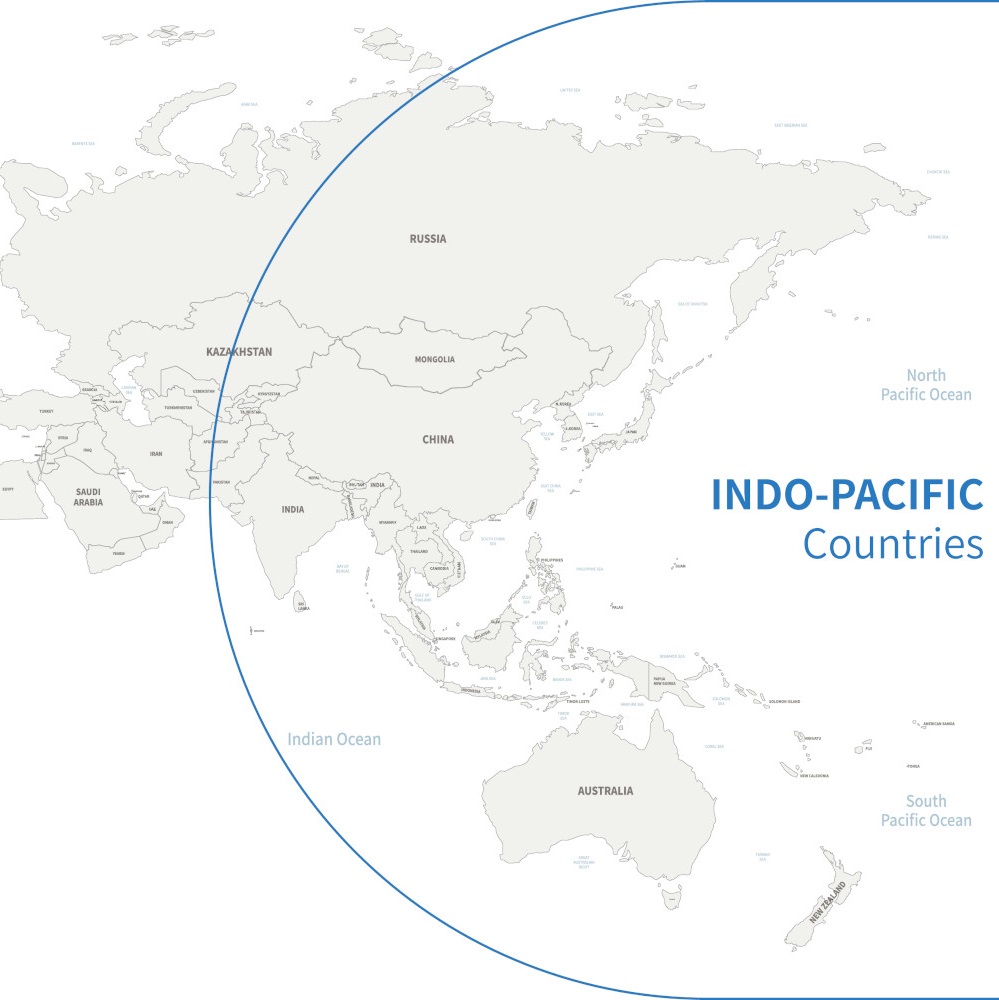
Map Indo-Pacific. RCEP country overview.

False democracies in the Indo - Pacific

by Juan Antonio Sacaluga

In the first two months of the year, general elections (presidential and/or legislative) were held in three countries of the Indo-Pacific, the area towards which the center of gravity of the world balance is shifting, according to experts: Bangladesh, Pakistan, and Indonesia. Together they account for nearly 700 million inhabitants, almost 9% of the world’s population, and host the largest number of Muslims in the world. The authoritarian bias there is so significant that the elections are mere ceremonies of power legitimization, more directed outside than inside of the country. The same happens in the Philippines, Malaysia, Thailand, etc. Dynastic democracies, tutelary democracies, or both at the same time. False democracies. Bangladesh: a party-state? In Bangladesh, the Awami League won three out of four seats in the Parliament in January, a slightly lower percentage than in the 2018 elections, but with no diminution of its overwhelming power. The country’s prime minister is Sheikh Hasina Wajed, daughter of the father of independence, Sheikh Mujibur Rahman [1]. Abstention, estimated at 60%, best explains the electoral result. The main opposition parties boycotted the elections in protest against the lack of transparency of the process and, above all, against the attacks on basic freedoms. Some of the opposition leaders are serving prison sentences for unjustifiable reasons. Reports of arbitrary arrests and extrajudicial executions are frequent [2]. Hasina claims to maintain the progressive line of her father, but the evolution of her regime indicates otherwise. The Awami League has maintained a power alternation with the conservative nationalists. But lately, her most feared enemy has been the Islamist radicals. In this fight, Hasina has counted on the support of India. The current government of Narendra Modi was more sympathetic to the nationalists, but pragmatism has imposed a close collaboration. Authoritarian drift in both countries has favored this convergence. Pakistan: a dictatorship in disguise In Pakistan, the elections have been even more controversial and stormy. The army is the real – if not the only – effective political actor [3]. The parties have wielded power since the military formally ceded it to them in 1998. Only nominally. The military domination over the institutions of the State remains unchanged. The reactive coup d’état has been replaced by preventive actions that determine or strongly condition the electoral result. Those who deviate or threaten to step out of the military script are discredited. It happened again this year. The populist movement of Isham Khan (a former cricket champion, the national sport) was until just two years ago the ruling party, having won the 2018 election. But he was covertly accused of a series of crimes, convicted, and imprisoned in 2022. Ironically, Khan had been the military’s preferred candidate, without whose favor he could hardly have secured victory. He believed that with his popularity, he could sideline his former protectors. Grave mistake. The military pulled the strings of justice, and Khan’s party was prevented from contesting in the elections [4]. The cricketer did not give up. From jail he denounced the military tutelage (which he had previously accepted with better or worse taste) and promoted candidacies related to his party under the label of “independents”. The challenge has been successful but insufficient. The “independents'' won a hundred seats, which are not enough to form a government majority [5]. The two parties that have been alternating in power in the last decades, the Muslim League (led by the conservative Sharif Brothers) and the People’s Party (political structure of the Bhutto family, of a confused and debatable center-left) hastened to agree to form a coalition government. Between them they have more than 130 deputies [6]. The cynicism of Pakistani politics is more than remarkable. The two parties now joining forces have been close enemies with a shared fate: both have been battered by the military, which has imprisoned and forced their leaders into exile on several occasions. In fact, the founder of the Bhutto dynasty (Zulfikar Ali) was overthrown after a military coup in 1971, charged and convicted in 1974 for the alleged murder of a political opponent and finally executed in 1979. His daughter Benazir was twice prime minister, deposed, exiled, and assassinated by an alleged Islamic extremist in 2007, when she was returning to her country. The Sharifs, powerful businessmen, have had a less tragic fate, but they have lived between favor and disgrace. Corruption has been the legal basis for their downfalls, with no little foundations. But it has been used as a weapon when it was convenient for the headquarters. Nawaz Sharif has now preferred to step back from the front line and reinstate as prime minister his brother Shehbaz, who held the post after the fall of Khan. The head of the clan went into exile in Saudi Arabia and only when he successfully negotiated the cancellation of the penalties, he returned to Pakistan to control the political process after the partial liquidation of Imran Khan. The post-election pact also has a prize for the Bhutto family. Although the formal leader of the PPP is Bilawal, Benazir’s son, who really pulls the strings is his widowed father, Asif Ali Zardari, who has also served sentences for corruption, of which there are few doubts. Zardari will be the new President, a more ceremonial position, but not without power to maintain his privileges. The outlook for the two now coalited dynasties is frightening. By 2026, Pakistan will have to pay $78 billion in foreign debt service, one of the highest in the world. This represents almost a quarter of its GDP (340 billion). Negotiations with the IMF are a dogfight, but the room for maneuver is almost nil [7]. Economic deterioration has been unstoppable in recent decades. At the beginning of the century, Pakistan’s economy was five times smaller than that of its rival, India; today it is one tenth [8]. Neither the military nor the political elites have been able to redirect the successive crisis. Pakistan is a ship adrift, in a permanent state of war with India. Both enemies have nuclear arsenals, which adds an enormous factor of danger to their recurrent disputes. Pakistan has been a major player in the protracted war in Afghanistan, as both, an ally and a rival of the United States, successively or alternately. In Washington they never knew whether the Pakistani military was helping or boycotting them. Bin Laden was killed by an American commando while hiding in Abbottabad, a city where many officers live, but the powerful military intelligence always denied knowing his whereabouts. After the withdrawal from Afghanistan, relations between Pakistan and the United States have lost weight. In Washington, the “Indian card” is now a priority. However, the traditional economic and military ties between Pakistan and China compel Americans not to neglect this elusive and chaotic partner. Indonesia: Duo of former rivals In Indonesia, things are not looking any better. In the presidential elections, the winner was Prabowo Subianto, an authoritarian military officer who played an outstanding repressive role during the military dictatorship of his father-in-law, General Suharto, who led the country in the last third of the century, amid atrocious violations of human rights [9]. If the pacts in Pakistan lack any political ethics, in Indonesia it is three quarters of the same. Or worse. Five years ago, the current President, Joko Widowo (known as Jokowi), abandoned the pale progressivism of the ‘Democratic Party of Struggle’, founded by Megawati, Sukarno’s daughter, and joined the populist current in vogue. With this tactical shift he managed to defeat the conservative nationalist of GERINDRA (Great Indonesia Movement), who had turned to Prabowo as a ‘strongman’ figure to seize power. Widowo consolidated his hold on power with a populist policy of large infrastructure projects, partly financed by China, a tough hand against crime and radical Islamism, and an ambiguous balance in relations with Washington and Beijing. When he felt strong, Widowo integrated Prabowo into his government as no less than the Minister of Defense. Sukarno would have turned in his grave. That was not all. Jokowi wanted to form his own dynasty, but his son Gibran was still too young to inherit his post. He even had to twist the law (with the complicity of a judge who was his brother-in-law) so that he could be a candidate… but not for his party, from which he definitely separated, but as Prabowo’s second [10]. Success was guaranteed. The duo of former rivals has won the presidential elections by a wide margin. But in the legislative elections the result was more disputed. According to provisional data, the former general will not be able to count on an aligned Parliament. In any case, in such a corrupt and institutionally fragile country, cohabitation could be smoother than expected [11]. The director of the Asia-Pacific program at London’s renowned Chathan House anticipates changes, but he is confident that Prabowo’s pragmatism will limit his authoritarian instincts [12]. This ‘wishful thinking’ by Western analysts when assessing authoritarian regimes with a democratic façade is very recurrent and responds to the persistent logic since the Cold War. After all, what determines their blessing is not the democratic quality of political systems but their willingness to defend or act in accordance with Western interest. And in today’s times, being on the “right side” of history essentially means taking sides with the West in the strategic dispute with China. NOTES [1] https://www.cidob.org/biografias_lideres_politicos/asia/bangladesh/hasina_wajed [2] “Bangladesh is now in effect a one-party state”.THE ECONOMIST, 8 de enero. [3] “The Military is still pulling the strings in Pakistan’s election”. MUNEEB YOUSUF & MOHAMAD USMAN BHATTI. FOREIGN POLICY, 5 de febrero. [4] “Pakistan’s real test begin after elections”. AL JAZEERA, 8 de febrero. [5] “The rise and fall, and rise again of Imran Khan”. THE NEW YORK TIMES, 11 de febrero. [6] “Imran Khan’s opponents reach deal to shut his allies out of government”. THE NEW YORK TIMES, 14 de febrero. [7] “Pakistan can’t stop the cycle of discontent”. HUSAIN HAQQANI. FOREIGN AFFAIRS, 16 de febrero. [8] “Pakistan is out of friends and out of money”. THE ECONOMIST, 14 de febrero. [9] “Indonesia’s election winner has a dark past and a cute image”. JOSEPH RACHMAN. FOREIGN POLICY, 14 de febrero. [10] “Indonesia’s election reveals its democratic challenges”. THOMAS PEPINSKY. BROOKINGS, 12 de enero. [11] “La démocratie indonésienne résistera-t-elle à la presidence de Prabowo Subianto?” COURRIER INTERNATIONAL, 16 de febrero; “The world’s third-biggest democracy could be sliding backwards”. ISHAAN THAROOR. THE WASHINGTON POST, 14 de febrero. [12] https://www.chathamhouse.org/2024/02/continuity-prabowo-means-change-indonesia; “Indonesia’s democracy is stronger that a strongman”. BEN BLAND. FOREIGN AFFAIRS, 13 de febrero.

Diplomacy
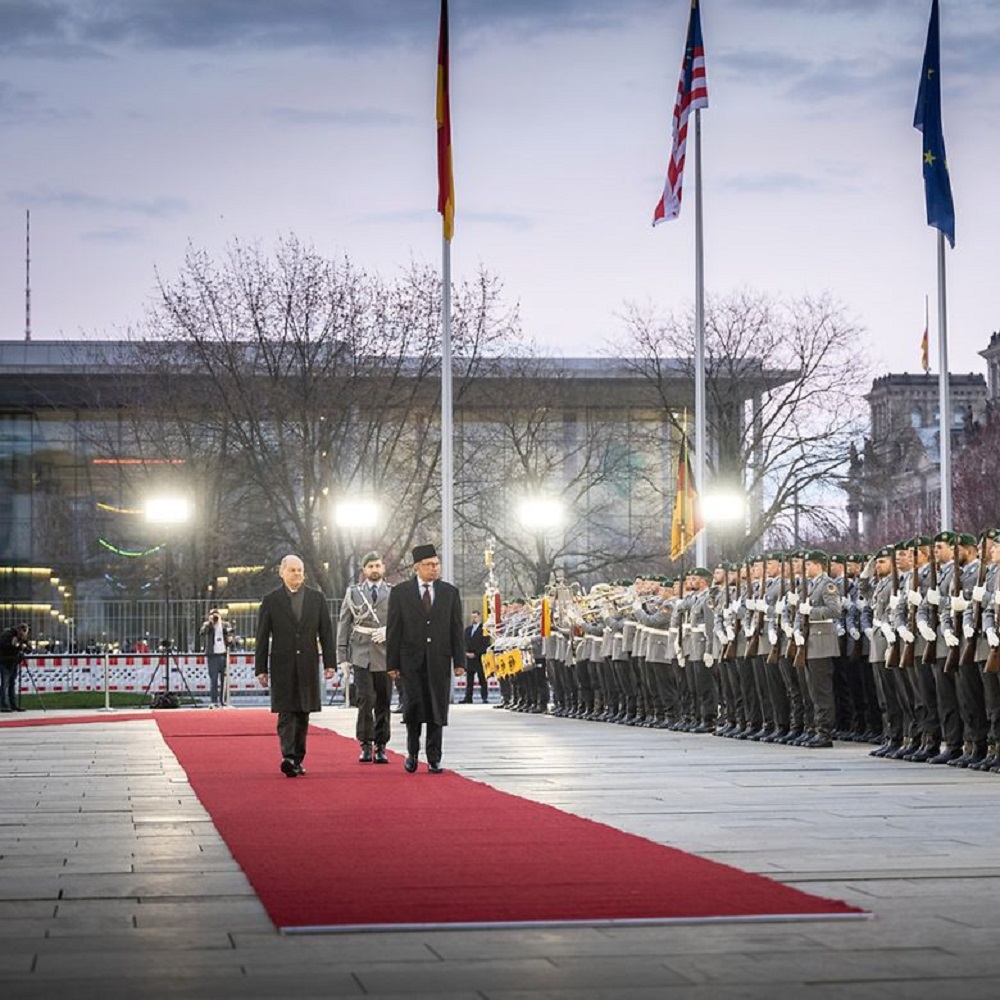
Chancellor Sholz and Prime Minister Ibrahim in Berlin

Press conference by Federal Chancellor Scholz and the Prime Minister of Malaysia, Anwar Ibrahim, on Monday, March 11, 2024 in Berlin - Wording

by Olaf Scholz , Anwar Ibrahim

BK Scholz: A warm welcome, Mr. Prime Minister! I am delighted to welcome you here to Germany for the first time. Your visit is a very special start to a Southeast Asia Week with several high-ranking visits from this important region of the world here in Berlin. The Indo-Pacific region is of great importance to Germany and the European Union. We therefore want to intensify political and economic cooperation. Germany already maintains close economic relations with the region. Malaysia is Germany's most important trading partner in ASEAN. This is of great importance because it is associated with many direct investments in the country, but also with all the economic exchange that results from this. We would like to further expand this partnership. Of course, this is particularly true with regard to the objective of further diversifying our economic relations with the whole world. We want to have good economic and political relations with many countries. We also want closer cooperation on climate protection and the expansion of renewable energies. We are therefore very pleased with Malaysia's announcement that it will stop building new coal-fired power plants and dramatically increase the share of renewable energies. We think this is very important. Malaysia and Germany are established democracies. We are both committed to multilateralism and compliance with international law. It is therefore also right that we deepen our security and defense cooperation. The defense ministries are already working on the necessary cooperation agreements. Of course, we also discussed developments in the Middle East, developments in Gaza and the situation following the Hamas attack on Israeli citizens. It is no secret that our perspective on the Middle East conflict is different to that of others. But that makes it all the more important to exchange views with each other. In any case, we agree that more humanitarian aid must reach Gaza. This is also our clear call to Israel, which has every right to defend itself against Hamas. We do not believe that a ground offensive on Rafah is right. An important step now would also be a ceasefire that lasts longer, preferably during Ramadan, which has now begun and during which we broke the fast together today. Such a ceasefire should help to ensure that the Israeli hostages are released and that, as I said, more humanitarian aid arrives in Gaza. We also have a very clear position on long-term development. Only a two-state solution can bring lasting peace, security and dignity for Israelis and Palestinians. That is why it is so important that we all work together to ensure that a good, peaceful perspective, a lasting common future is possible for Israelis and Palestinians, who coexist well in the two states. Of course, the world is marked by many other conflicts and wars, especially the dramatic war that Russia has started against Ukraine. It is a terrible war with unbelievable casualties. Russia, too, has already sacrificed many, many lives for the Russian president's imperialist mania for conquest. This is against all human reason. That is why we both condemn the Russian war of aggression. It is important to emphasize this once again. The Indo-Pacific is of great importance for the future development of the world. Of course, this also applies to all the economic development and development of the countries there. I therefore welcome the efforts of Malaysia and the ASEAN states to settle disputes peacefully and to find ways to ensure that this becomes typical of everything that has to be decided there. Any escalation must be avoided at all costs. Peace and stability must always and everywhere be maintained on the basis of international law. This applies in particular to the freedom of the sea routes and compliance with the UN Convention on the Law of the Sea. That is why the ongoing negotiations on the Code of Conduct are so important. Thank you once again for coming to Berlin on the first day of Ramadan, at least for our location. We broke the fast together earlier. For me, this is a good sign of peaceful coexistence and solidarity. I see it as something very special. Ramadan Kareem! PM Anwar: Thank you very much, Mr. Chancellor, dear Olaf! Thank you for your wonderful hospitality and for bringing us together today to break the fast! Germany is of course one of our most important partners in Europe. We have seen a huge increase in trade and investment. We can see that major investments have been made. We have visited Siemens. Infineon is a big investor in Malaysia and is showing its confidence in the country and the system here. There are many other examples of companies operating in Malaysia. Of course, my aim is always to expand bilateral relations in the areas of trade and investment and also to benefit from your experience, both in the field of technology and in environmental and climate protection issues. We have set ourselves clear goals for the energy transition. We have drawn up an action plan that is also in line with your policy. Renewable energy, ammonia, green hydrogen - we are pursuing these very actively. Fortunately, Malaysia is also a hub within ASEAN for these renewable energies and technologies. We welcome the German interest in this, also with regard to new investments in the renewable energy sector and with a view to climate change. We have of course discussed this cooperation on this occasion and I am pleased with the Chancellor's willingness to tackle many of these issues. Sometimes we have small differences of view, but it really shows the trust we have in each other. As far as the war in Gaza is concerned, we agree that the fighting must stop. We need a ceasefire immediately. We also need humanitarian aid for the people of Palestine, especially in Gaza. Of course we recognize the concern about the events of 7 October. We also call on Europeans, and Germany in particular, to recognize that there have been 40 years of atrocities, looting, dispossession of Palestinians. Let us now look forward together! I agree with the Chancellor on what he said about the two-state solution. It will ensure peace for both countries. Together we can ensure that there is economic cooperation and progress for the people in the region. We have also positioned ourselves with regard to the war in Ukraine. We have taken a very clear stance against aggression, against efforts to conquer. This applies to every country and, of course, also to Russian aggression in Ukraine. We want a peaceful solution to the conflict. Because this conflict has an impact on trade and economic development as far away as Asia. We have a peaceful region. ASEAN is currently the fastest growing economic area in the world, precisely because it is so peaceful - apart from the issue in Myanmar, but that is contained within Myanmar. The conflict has not spread to the region, although there are of course refugee movements. Within ASEAN, we have jointly agreed on a five-point consensus and the parameters by which the issue can be resolved. The ASEAN countries have agreed that Laos, Malaysia and Indonesia would like to lead the troika together and resolve the conflict with Myanmar. Then there are other issues such as the South China Sea and China. I assured the Chancellor that we are getting along well with China. We have not seen any difficult incidents, but of course we see ourselves as an absolutely independent country. We are of course a small country, but we stand up for our right to cooperate with many countries to ensure that the people of Malaysia also benefit from these mechanisms and from cooperation with other countries. Once again, Mr. Chancellor, thank you very much for this meeting. I am very impressed by your insight, by your analysis of the situation. It is very impressive to see what a big country like Germany is doing, and it was also good to share some of our concerns. I am pleased with the good cooperation. It's not just about trade and investment, it's also about the overall development of bilateral relations in all areas. I also told the Chancellor that the study of Goethe is gaining interest in Malaysia. Questions from JournalistsQuestion: Mr. Prime Minister, can you tell us something about the progress of German investment in Malaysia and can you say something about the challenges for the government in the transition to renewable energy in Malaysia? Mr. Chancellor, in 2022 you spoke about the turning point in German foreign and security policy. But if you now look at ASEAN or Southeast Asia: How does Germany see Malaysia in terms of its bilateral importance, trade and also regional issues? PM Anwar: Within the European Union, Germany is our biggest trading partner. They have made large investments, up to 50 billion US dollars. I have already addressed Infineon and many other leading German companies and I have said in our discussions that we are very pleased that they have chosen Malaysia as an important hub, as a center of excellence, as a training center in the region and I look forward to further cooperation in this area. Of course, I also mentioned that education should be a priority. There are 1000 Malaysian students here in Germany and also several hundred German students in Malaysia. We are also very happy about that. We are working with many German companies to train people and strengthen cooperation. We have taken important steps in renewable energy. We are investing in solar energy, in green energy and in our renewable energy export capacity. There is now an undersea green energy cable to the new capital of Indonesia, another to Singapore, and another cable to the Malay Peninsula. You can also see from the fact that data centers and artificial intelligence are growing and thriving in the Malaysian region that this has great potential. BK Scholz: Thank you very much for the question. - First of all, the turning point lies in the Russian attack on Ukraine. This was the denunciation of an understanding that we have reached in the United Nations, in the whole world, namely that no borders are moved by force. But the Russian war of aggression is aimed at precisely that, namely to expand its own territory as a large country at the expense of its neighbor - with a terrible war. We cannot accept this - not in Europe and not anywhere else in the world. That is why it is right for us to support Ukraine and to do so in a very comprehensive manner. After the USA, Germany is the biggest supporter - both financially and in terms of arms supplies - and in Europe it is by far the country that is making the greatest efforts to help Ukraine defend itself. But this touches on an issue that is important for the whole world. Anyone who knows a little about the history of the world - and it is colorful and diverse - knows that if some political leader is sitting somewhere, leafing through history books and thinking about where borders used to be, then there will be war all over the world for many, many years. We must therefore return to the principle of accepting the borders as they are and not changing them by force. That is the basis for peace and security in the world. That is why we are also very clear on this together. For Germany, however, this does not mean that we lose sight of our own economic development, the development of Europe and the world. As you may already have noticed, it is particularly important for the government I lead and for me as Chancellor of Germany that we now make a major new attempt to rebuild relations between North and South and to ensure that we cooperate with each other on an equal footing in political terms, that we work together on the future of the world, but that we also do everything we can to ensure that the economic growth opportunities and potential of many regions in the world are exploited to the maximum. This is why economic cooperation between Europe and ASEAN, between Germany and ASEAN, between Germany and Malaysia plays such an important role, and we want to make progress in the areas we have just mentioned. Renewable energies are central to this. We know that: We need to increase the prosperity of people around the world. Billions of people want to enjoy a level of prosperity similar to that which has been possible for many in the countries of the North in recent years. If this is to succeed, it will only be possible if we do not damage the environment in the process, which is why the expansion of renewable energies is so important. New and interesting economic opportunities are also emerging, for example in the area of hydrogen/ammonia - this has been mentioned - because the industrial perspective of the future will depend on more electricity, which we need for economic processes - and this from renewable energies - and on hydrogen as a substitute for many processes for which we currently use gas, coal or oil. Driving this forward and creating prosperity together all over the world is a good thing. The fact that the German semiconductor industry and successful German companies in the electronics sector are investing so much in Malaysia is a good sign for our cooperation. We want to intensify this. Question: Thank you very much, Mr. Prime Minister. Your government supports Hamas and, unlike Western countries, has not described Hamas' attack on Israel as terrorism. In November you said that Hamas was not a terrorist organization. Do you stand by this assessment and are you not afraid that this position on Hamas could affect relations with countries like Germany? Mr. Chancellor, I have a question for you: Do you think that Malaysia's position on Hamas could damage bilateral relations between Germany and Malaysia? And if I may, one more question on Ukraine: Germany is still discussing the delivery of cruise missiles to Ukraine. The Foreign Minister said yesterday that a ring swap with the UK was an option, i.e. Germany sending Taurus cruise missiles to the UK and the UK then sending its Storm Shadow cruise missiles to Ukraine. Do you think this is also an option? PM Anwar: Our foreign policy position is very clear and has not changed. We are against colonialism, apartheid, ethnic cleansing and dispossession, no matter in which country it takes place, in Ukraine or in Gaza. We cannot simply erase or forget 40 years of atrocities and dispossession that have led to anger in the affected societies and also action after action. Our relations with Hamas concern the political wing of Hamas, and we will not apologize for that either. This cooperation has also helped to raise concerns about the hostages. We have no links with any military wings. I have already said that to my European colleagues and also in the US. But we have some different views. The Australian National Congress also recognized long before the Europeans or Americans that this apartheid policy must be abolished. That's why we have taken that position. We need to understand what the fundamental problem with this is. We cannot allow people to be plundered, to have their homes taken away from them. This has to be solved. Am I in favor of people, of children being killed? Absolutely not. No, nobody should do that. That is the consistency in our politics. But I am against this obsession, this narrative, as if the whole problem started on October 7 and would end then. It didn't start on October 7, and it won't end then either. It started 40 years ago and it's still going on today. Against this background, I am of the opinion - and I have also said this to the Chancellor - that we should now look to the future. We have a problem. Do we want to deal with history now, with the atrocities that have happened, or do we want to solve the problem now? Solving the problem now means: the fighting must stop, the killing must stop. Then the whole international community - Germany, Malaysia and all neighboring countries - can ensure that there is no more violence, from any group, against anyone - not against Muslims, Christians or Jews. People must be able to live in peace. Thank you very much. BK Scholz: I have already said it and I would like to repeat it again: Germany's position is clear. Israel has every right to defend itself against the terrorist attack by Hamas. We have always made that clear in recent days, weeks and months, and it remains so. Israel can rely on that. At the same time, we have clear positions on further developments, and these have already been stated. Let me say this once again: we want more humanitarian aid to reach Gaza. We want the hostages to be released, unconditionally. We want there to be no unnecessary victims. That is why we have said very clearly what forms of military warfare are compatible with international law and what we find difficult. I have spoken out on Rafah and on the need for a long-term peaceful perspective with a two-state solution that makes it possible for Palestinians in Gaza and the West Bank to live peacefully in a separate, self-governing state alongside Israel - as a democracy in the region, and where the citizens of Israel can also rely on us. That is the perspective we are working for and what is at stake now. That is why we are working - despite the different assessments of the specific issue - on a peaceful perspective, which is necessary. I would like to repeat what I have to say on the issue of supporting Ukraine in its defense. Germany is by far the country that is providing the most support for Ukraine - financially, but also in terms of arms deliveries. All in all, the deliveries to date and those promised amount to 28 billion euros and 30 billion dollars. That is a considerable sum. We have mobilized everything to ensure that Ukraine receives the necessary support from us - ammunition, artillery, tanks, air defence of various kinds, which is also highly efficient and very much appreciated. Our support is reliable and continuous. Ukraine knows this, and we hear time and again how much this great support is appreciated there. As far as the one weapon system is concerned, I am of the opinion that it cannot be used without control in view of its effect and the way in which it can be used, but that the involvement of German soldiers is not justifiable, not even from outside Ukraine. I have therefore said that I do not consider the deployment to be justifiable and that it is therefore not a question of direct or indirect involvement, but of us being clear on this specific issue. My clarity is there. It is my job as Chancellor, as head of government, to be precise here and not to raise any misleading expectations. And my answers are correspondingly clear. Question: Good afternoon, Excellencies! You both mentioned the situation in Gaza and said that we must look ahead to a two-state solution. But how much influence can this meeting have on a humanitarian ceasefire? PM Anwar: Germany is an important country in Europe and has established good relations with Israel, and we have somewhat better relations with Palestine, with the Palestinian Authority and also with the political Hamas. Other Arab countries and neighboring states of Palestine and Israel are doing what they can. We should also be a little more positive. It is of course a chaotic situation, an uncertain situation. There is no easy solution. The Palestinians have suffered a lot. The Netanyahu government has also been very clear in its stance. There is no easy solution. We have to stop the killing of innocent people on both sides, the killing of civilians. We now need a permanent ceasefire and, ultimately, a two-state solution. This is also possible if the international community has the courage and determination. I have said: sometimes you get really depressed when you have the feeling that this case has already been morally abandoned and that there is no real will from all countries to stop the war and find a solution. I am sure that the countries of the Middle East, the international community, Germany and the other parties involved want this peaceful solution. BK Scholz: We would all have liked the start of Ramadan to have been accompanied by a longer-lasting ceasefire, which would have been linked to the release of the hostages by Hamas and also to an increase in humanitarian aid reaching Gaza. Having said that, the aim now is to bring this about as soon as possible. I believe that would be very important for everyone and could also create prospects for further developments. That is what is at stake now. We are in agreement with the American government and the European Union in everything we do. Many people around the world are also trying to work in this direction - as we have heard here, but this also applies to neighboring countries. What we must prevent is an escalation of the war. We also warn against Iran or the Iranian proxies becoming more involved in this war than is already the case. This must be resolved soon. As I said, how this can be done is something that is very clear to me, to the European Union, to the USA and to many others, and it has also been mentioned here together. Question: Mr. Prime Minister, you said that history should be left behind. But for the Israeli hostages, October 7 is still the present, also for their families. Regarding the talks you are holding with the political leadership of Hamas: What are you talking about? How much hope do you have that these hostages will be released soon? Can you also say something about what you saw on October 7 and the fact that these hostages are still being held by this terrorist violence? Mr. Chancellor, you recently met the Pope, who has now caused controversy with his statements on the white flag, which Ukraine has taken to mean, as the Foreign Minister said, that the Church is behaving more or less as it did at the beginning of the 20th century, in other words that the Church did nothing against Nazi Germany at that time. How do you react to the Pope's statements? PM Anwar: Thank you. I have already made my opinion clear. You cannot simply overlook the atrocities of the last four decades, and you cannot find a solution by being so one-sided, by looking only at one particular issue and simply brushing aside 60 years of atrocities. The solution is not simply to release the hostages. Yes, the hostages should be released, but that is not the solution. We are a small player. We have good relations with Hamas. I have told the Chancellor that, yes, I too would like the hostages to be released. But is that the end of it, period? What about the settlements, the behavior of the settlers? No, it goes on every day. What about the expropriations, their rights, their land, their dignity, the men, the women, the children? Is that not the issue? Where is our humanity? Why is there this arrogance? Why is there this double standard between one ethnic group and another? Do they have different religions? Is it because of that? Why is there a problem? Yes, we want the rights of every single person to be recognized, regardless of whether they are Muslim, Jewish or Christian. I am very clear on that. But of course I cannot accept that the issue is focused on just one case, on one victim, and that the thousands of victims since 1947 are simply ignored. Is humanity not relevant? Is compassion not relevant? That is my point. Do I support any atrocities by anyone towards anyone? No. - Do I want hostages to be held? No. But you can't look at the narrative in such a one-sided way. You can ask if I disagree with some subgroups. But that's not the way to solve the issue. We have to be fair, just, and find an amicable solution that is just, that is fair. BK Scholz: Once again what I have already said: Germany has a special and good relationship with Israel. That is very important to us. That's why Israel can also rely on us. You have a clear position on what is necessary now. That includes the release of the hostages. That includes humanitarian aid. It includes the prospect of a two-state solution. I have already spoken about this, I just want to mention it again here. This is also important for us. We were very supportive of the founding of the state of Israel, and German policy will continue to develop along these lines. As far as the Russian war of aggression against Ukraine is concerned, Germany's position is very clear: Ukraine has the right to defend itself, and Ukraine can rely on us to support it in many, many ways. I have already said that we are very far ahead when it comes to the volume and quality of the arms supplies we have provided. That is also true. That is why, of course, I do not agree with the position quoted.

Diplomacy
Altar with a portait of King Maha Vajiranlongkorn of Thailand

Opinion – The Future of Monarchies in Southeast Asia

by Pavin Chachavalpongpun

It is a conventional wisdom that monarchy has become an anomaly. In the case of Southeast Asia, this axiom is valid only up to a point. Despite the institutional upheavals, caused by colonialism and its dismantling, the region contains one ruling monarchy (Brunei), and three varieties of constitutional monarchy (Cambodia, Malaysia and Thailand) of some political import. Whether the anomaly of monarchies surviving is due to the persistent and natural workings of traditional political values, or whether their existence, besides being partly fortuitous, is now manipulated by elites (even by monarchs themselves), in order to pre-empt the destructive or destabilising effects of modernisation – the very modernisation which seems to make the survival of the monarchy rather unpredictable. The purpose of this short article is not to treat the subject as an anomaly, but to provide some pointers to the survival of monarchies in Southeast Asia under the new political climate. It is not just modernisation that has contested the political relevance of the monarchies, democratisation has posed a threat to their existence too. In the age of democratic consciousness, a question emerges: is monarchy compatible with democracy? So far, some monarchies have successfully entrenched their rule against the tide of democracy. Some are potentially becoming the target of annihilation. For example, the youth-led protests in Thailand in 2020 called for immediate royal reforms. Protesters risked violating the draconian lèse-majesté law which forbids critical discussions on the monarchy. This was the first time in the Thai history in which the monarchy has been made a public agenda. Talks on republicanism in Thailand have remained a taboo. Yet they are proliferating. I argue that the future of monarchies in Southeast Asia depends on the combination of their personal and political capabilities and how they transpire as a non-threatening factor to democracy, at three levels: personal, national and international. At a personal level, the monarchs, more than ever, need to exhibit their increased accountability, transparency and responsibility, if they want to live side-by-side with a democratic regime. On mainland Southeast Asia, the concept of divine kingship has remained highly sacred. The Thai and Cambodian kings are supposed to perform as Buddhist Dhammarajas, or virtual kings, so as to augment their charisma, and subsequently reverence, from their subordinates. Much in the same vein, the Sultans must show that they exercise their royal authority based on Islam. The religious sanctity of the throne is indispensable for the existence of the monarchies. It demonstrates the close intertwining between kingship and religion, and if used wisely, it can enhance further the level of divinity of the monarchs. The collapse of Nepalese monarchy was partly caused by the king’s fading faith in religion. At a national level, the monarchy’s position is intricately related to its role as guardian of democracy. The monarchies, in the democratic world, are obliged to play a crucial part in supporting democratic constitutionalism, as seen in the case of Britain. They may serve as an important symbol of national unity and harmony, particularly in deeply divided societies. In transitional societies, they may assist in bridging past with present to ensure political stability by supporting democratisation and rule of law. In time of crisis, from war, political violence, terrorist attack to natural disaster, monarchs may help the country mourn and heal as part of restoring peace and normalcy. The Japanese Emperor provided an example as a national healer by visiting those affected by tsunamis and earthquakes in the past. Monarchs may be expected to give advice to the head of executive power and perform an essential check on the power of elected legislators. Lastly, at the international level, the monarchies may need to ensure that their existence is in the interests of powerful foreign allies, and that they remain an essential political institution. The United States was known to be a guarantee of security of the Thai monarch during the spread of the communist threat in the region. Foreign recognition of monarchies is important for their survival. All these guides to longevity of monarchies in Southeast Asia do not automatically offer a rosy picture for their future. New factors emerge from time to time to challenge the integrity and legitimacy of their rule. Using illegitimate weapons to manage such challenges may prove counterproductive. They do not necessarily display the monarchs’ ultimate power, but rather their desperation, and insecurity, to cling on to it. The monarchical system has been around for thousands of years. It has become less forceful, and in some cases has ceased to exist, as nations of the world have accepted democracy as the final form of government. The key to the survival of the monarchical institution, therefore, rests on the way in which it acts and reacts in a complementary manner to the rising desire of the people for democracy.

Diplomacy
Prabowo Subianto

What Indonesia's Election Means for Its Democracy

by Dr. Stephen Sherlock

Prabowo Subianto has won Indonesia’s presidential election. Who is he, what will Joko Widodo’s influence be, and what does it mean for Indonesian democracy? Prabowo Subianto has achieved a resounding victory in the elections for the presidency of Indonesia with around 58 percent of the vote. Who is the new president of Indonesia? Prabowo is the ultimate insider whose entire life has been focused on keeping himself close to power, but his path to the presidency has been a long one. Born into an influential family, Prabowo joined the military in 1970, a pivotal institution at the time. He quickly rose through the ranks of the elite Special Forces (Kopasas), helped along by his 1983 marriage to then President Suharto’s daughter, Titiek. He was, however, sidelined after the fall of the Suharto regime in 1998 when he was dishonourably discharged from the military over allegations of human rights abuses. Despite this blow to his career, Prabowo used close family connections to go into business and re-emerged into public life as a multi-millionaire and aspiring candidate for the presidency. Prabowo stood unsuccessfully for the presidency in the 2009, 2014, and 2019 elections. In his first bid, he allied with Megawati Sukarnoputri, leader of Indonesia’s largest party and daughter of President Sukarno. In the following two elections he created motley coalitions of various parties, alliances that reflected both Prabowo’s highly movable political outlook, plus what has been called the “promiscuous” behaviour of Indonesia’s political parties. In the 2019 elections Prabowo conducted a bitterly divisive campaign against incumbent President Joko “Jokowi” Widodo, playing on deep divisions in Indonesia between those aiming for a more prominent role for Islamic values and those wanting to protect the diverse and tolerant character of Indonesian society. He also initially refused to accept the 2019 election outcome and briefly threatened to mount a campaign in the streets to overturn the results. But despite Prabowo’s bitter standoff against Jokowi in 2019, the two leaders apparently reconciled, with Jokowi’s surprise move of taking Prabowo into his camp as Defence Minister. While ostensibly remaining “neutral” in this year’s election, Jokowi signalled his support for Prabowo’s bid by arranging for his eldest son, Gibran Rakabuming Raka, to stand as Prabowo’s vice-presidential running mate. Jokowi is an immensely popular figure and his implicit backing provided critical momentum to Prabowo’s winning campaign. This is despite criticism of Jokowi that he is betraying his origins as a non-elite outsider and trying to build a political dynasty. What do these results mean for Indonesia’s major parties and leaders and what questions remain? This outcome represents the culmination of a lifetime effort by Prabowo to achieve the ultimate position of power in Indonesia. A key question is how he will conduct himself as president. He is known as a volatile figure, given to fits of anger, and seen as a military enforcer during the Suharto regime. While generally seen as an effective Defence minister, he was known for publicly putting forward ill-conceived proposals without presidential authorisation. The big question is how Prabowo will act as president. During this year’s campaign he was markedly more self-controlled, but it remains to be seen whether he will revert to his old authoritarian habits. Was he only acting when he appeared to be a threat to stability in the 2019 election or was he only acting when he seemed more moderate in this year’s poll? Will he become Indonesia’s version of Donald Trump or Vladimir Putin? Prabowo will need to build a coalition of parties to support his administration in parliament. Under Indonesia’s presidential system, the president does not need a parliamentary majority, but a troublesome parliament would be a major impediment for his presidency. While Prabowo swept the field in the presidential contest, his party, Gerindra, received only a small boost to its modest parliamentary vote. With his son as vice president and Prabowo in his debt, Jokowi is well placed to sustain his influence long after he leaves the presidential palace. Jokowi is very keen to protect his policy legacy and maintain the momentum of investment in infrastructure, including the building of a new capital city, and policies designed to encourage local Indonesian investment in processing the country’s natural resources. The relationship between incoming Prabowo and Jokowi will be one to watch. Although having Jokowi’s son as vice president was symbolically important during the election, the powers of the office are constitutionally undefined, and it is in Prabowo’s power to keep Gibran marginalised if he chooses. The election result was a massive blow to long-standing leader and would-be kingmaker Megawati and her party, the Democratic Party of Indonesia – Struggle (PDIP). Despite Jokowi’s formal status as a member of PDIP, he and Megawati had a difficult relationship, and he resented her efforts to treat him as a party subordinate. Jokowi took his huge political capital to another party, with the PDIP presidential candidate, Ganjar Pranowo, relegated to a humiliating third place. How PDIP conducts itself during Prabowo’s presidency remains in doubt. While the party narrowly retained its status as the largest party in parliament, it lost votes and is continuing a long-term decline from its glory days when it controlled nearly a third of parliamentary seats. PDIP may form the main opposition force to Prabowo’s administration, but it may be tempted to be bought off with a seat in cabinet. What does the outcome mean for Indonesian democracy? The formal process of the election appears once again to have been free and fair. The massive logistical task of running presidential elections on the same day as managing both national and regional parliamentary elections has been undertaken with the same effectiveness that has characterised Indonesia’s six democratic elections. But while the electoral process has been untainted, serious concerns are growing about the conduct of Indonesia’s political affairs and governance. Indonesia made great democratic progress after the fall of Suharto in 1998. This included the withdrawal of the military from politics, constitutional reform, and the flowering of non-government organisations, freedom of speech and media, as well as governance changes such as the creation of an anti-corruption commission and the devolution of power to the regions. From the beginning, however, concerns were expressed that the peaceful transfer of power had allowed most of the old players to reinvent themselves as democratic politicians but maintain the old ways of backroom politics. There was thus widespread optimism when Jokowi’s rise to the presidency in 2009 appeared to usher in a new type of leader – he came from the provinces, not from the old Jakarta circles and had won his national status as an honest and effective local administrator. But to secure his position in the face of potential obstruction from the old political elite, Jokowi resorted to the methods of that elite. Instead of changing the system, the system changed him. Jokowi used his presidential office to intervene in the internal affairs of other political parties to install leaders who supported him. He slashed the powers of the anti-corruption commission, partially reversed the devolution of authority to regional governments, and cracked down on non-government political movements. These backward steps are unlikely to be reversed under Prabowo – he may take them even further. Jokowi’s anointing of his son as vice-president is widely seen as the final sign of his incorporation into the elite and the triumph of dynastic politics. Dynastic succession has been a key feature of the elite’s grasp on power and now Jokowi has become a master of the game. An implicit alliance between Prabowo and Jokowi could become a way to choke off political competition. Prabowo’s election happened through a peaceful transfer of power, but it has cemented in place a system of governance that challenges the ideals of democratic politics that many Indonesians had looked to with hope during the heady days of reformasi after 1998.

Energy & Economics
The Cambodian government building

Reality tempers Cambodia’s renewed economic optimism

by Heidi Dahles

Only days after Cambodia’s recently elected national assembly endorsed Hun Manet as the country’s new prime minister, the young leader revealed his vision for the next 25 years of economic growth and prosperity. Cambodia is aspiring to become a high-income country by 2050. To make this happen, Manet released his Pentagonal Strategy, centring on the five objectives of sustained economic growth, more and better employment, human capital development, diversification of the economy and increased competitiveness. For those who have been advocating sweeping reforms to Cambodia’s economy, the new strategic objectives comprise all the right catchwords. But it remains uncertain whether the ambitious new strategy will help Cambodia reach its targets. Despite GDP forecasts for 2023 not living up to expectations, the Cambodian government forecasts 6.6 per cent GDP growth in 2024. The Asian Development Bank and International Monetary Fund downgraded their 2023 economic growth projections to 5.3 per cent, down from 5.8 per cent in April 2023, while the World Bank projects 5.4 per cent growth, down from 5.5 per cent in May 2023. The minor adjustments were made in response to global geopolitical tensions and a worldwide economic slowdown, as well as the country’s structural issues, which include limited productivity and competitiveness, a lack of economic diversification and dependence on a small number of external markets. The government’s optimistic growth projection for 2024 is based on the anticipated revival of key sectors including garment manufacturing. Cambodia’s garment sector showed continuing decline throughout 2023 but is expected to surge by around 8 per cent in 2024. For Manet’s pentagonal ambitions to become a reality, Cambodia must diversify its product range, upgrade its production capacity and productivity and process resources at home instead of exporting them. The garment sector is not conducive to such transformations. The sector is already on life support — a tax break is in place for garment factories until the end of 2025 — but a continued reliance on garment manufacturing also exacerbates Cambodia’s economic vulnerability. Primarily a cut, make and trim industry employing low-skilled labour, garment manufacturing relies on the import of raw materials sourced from other Asian countries, predominantly China. It exports to the major economies where Cambodian products enjoy increasingly precarious preferential treatment under the European Union’s Everything But Arms scheme. To move Cambodia beyond being a cheap labour hub, the Pentagonal Strategy outlines a comprehensive makeover of three sectors identified as the engines of future economic growth — agriculture, micro, small and medium-sized enterprises (MSMEs) and tourism. With nearly 70 per cent of Cambodian households depending directly on agriculture, an overhaul of this sector is long overdue. The new strategic objectives bolster agribusiness to better serve Cambodia’s export markets. The turn to ‘smart farming’ advances local processing of Cambodian crops and high-value products instead of high-volume cash crops. Loans have also been made available for agribusiness and are being directed to ‘economic poles’ spread across the country. The transformation of over 500,000 MSMEs in Cambodia is a core agenda under the new strategic plan. MSMEs closely entwined with agribusiness and digitisation will have access to a new loan scheme established in partnership with the private sector and Wing Bank. Efforts will also be made to integrate the informal sector into the formal economy under the National Strategy for Informal Development 2023–2028, encouraging informal businesses to register and receive benefits such as penalty waivers, tax incentives and skills training. Tourism, heavily impacted by the COVID-19 pandemic, is forecasted to bolster GDP as international arrivals, particularly from China, begin to surge. Foreign tourists are returning to Cambodia, with 4.4 million arriving in the first 10 months of 2023. But the rising numbers have not generated the desired income, as most of the arrivals are low-spending visitors from neighbouring countries. Crowds from China are not as anticipated despite major efforts including the new Siem Reap airport operating direct flights to and from a variety of Chinese destinations, the reintroduction of Chinese package tours and the launch of the China Ready program. Efforts to diversify the tourism sector are ongoing, with India and Indonesia identified as likely markets for outbound tourism. The Ministry of Tourism is also implementing a new tourism strategy and action plan with a focus on cultural heritage, coastal and eco-tourism. As the new government pushes economic reforms with vigour, old habits die hard. International attention was recently drawn to a new investigation by Amnesty International into the 2022 evictions of 10,000 families making a living on the premises of the Angkor Archaeological Park. The Angkor Archaeological Park, Cambodia’s biggest tourist attraction and a UNESCO World Heritage site, is pivotal to the new tourism action plan. While the Cambodian government claims these families were squatters causing overdevelopment at the complex, the report revealed that the evicted families were relocated to a remote site lacking infrastructure, jeopardising their livelihoods. Similarly, the voluntary registration of informal businesses under the new development strategy was temporarily suspended due to pushback from small business owners concerned about the regulatory burden imposed by the measure. The economic reforms outlined in the Pentagonal Strategy are long overdue and will have beneficial impacts on Cambodia’s socioeconomic development. But as Cambodia’s new leadership pursues growth, it should consider that even well-intentioned interventions can have detrimental bearings on people’s livelihoods and may be reminiscent of past injustices suffered at the hands of authorities. This article is part of an EAF special feature series on 2023 in review and the year ahead.

Diplomacy
Humanitarian crisis in Myanmar and Thailand refugee policy

Refuge in transition: Thailand's humanitarian challenges amid Myanmar crisis

by Sreeparna Banerjee

Thailand would need to implement essential refugee policies that align with international standards to deal with the ongoing humanitarian crisis. Thailand lies at a critical intersection in Southeast Asia, where the vibrant tapestry of cultures meets the complex weave of geopolitics. As the nation grapples with the escalating number of Myanmar refugees, it's not merely facing a geopolitical conundrum but a humanitarian crisis which demands global attention. Thai Prime Minister Srettha Thavisin is actively advocating for Thailand to play a central role in engaging with the Myanmar military regime to address the two-year civil war. While agreeing to adhere to the peace plan proposed by the regional bloc Association of South East Asian Nations (ASEAN), he underscores the geographical proximity between Thailand and Myanmar, leading to an influx of displaced individuals seeking protection. This exodus, in turn, necessitates the provision of essential services to address their needs. PM Srettha's recent statement indicates a shift in Thailand's approach from the previous government's stance, which largely supported the Junta, to a more humanitarian-focused role. However, the current government's engagement remains limited to the Junta, highlighting the need for broader connections with other groups.Roots of displacementThe Kayin State, formerly the Karen State, has witnessed a history of human rights abuses perpetrated by the Junta, particularly against the Karen ethnic minority seeking greater autonomy. Well-documented instances of systematic violence, including rape, torture, and forced labour, explicitly targeting Karenni women and girls, showcase the severity of the situation. The military's use of both women and men as human shields violates international humanitarian law. The coup has exacerbated the crisis and made these people easy targets of violence. There are restrictions on travel and a shortage of essential resources in camps for internally displaced persons (IDPs) within Myanmar. Humanitarian workers are adapting by seeking alternative routes to deliver aid materials and avoid harassment and detention by military forces. Consequently, a growing number of individuals, including men, women, and children, are seeking refuge along the Thai-Myanmar border to escape the worsening conditions.Attending the displacedBangkok's historical role as a haven for displaced people, mainly from Myanmar, is evident. Since the mid-1980s, the nation has provided shelter to approximately 90,801 displaced people from Myanmar across nine camps. However, following the coup in Myanmar in February 2021, an additional 45,025 displaced people sought refuge. Thailand's humanitarian efforts include providing temporary shelters, a few core relief items, food, and medical assistance. Despite allowing these new arrivals to stay in temporary shelters near the border, the Thai government has sporadically pushed them back. Notably, these recently displaced populations are not allowed to enter established refugee camps, and Thai officials impose stringent restrictions on their movement. In July 2023, around 9,000 hapless people sought safety in Thailand's Mae Hong Son district due to frequent airstrikes in Karenni State. Initially, Thai authorities permitted them to stay in temporary shelters, however, on 21 October, they were asked to return to Myanmar within two weeks. Consequently, the shelters were vacated as people walked back across the border into Karenni State, a journey taking four to five days. Many resettled in Doh Noh Ku, a settlement for internally displaced people at the Thai-Myanmar border. Pushbacks persisted until 27 October, coinciding with an offensive by a coalition of armed ethnic and resistance groups against the Myanmar military in northern Shan State. Subsequently, opposition forces elsewhere in Myanmar launched attacks against the military, prompting retaliatory airstrikes, including in Karenni State. By 27 November, over 2,387 Myanmar individuals had fled again, crossing back into the Mae Hong Son district. The Thai Foreign Minister's announcement on 3 December to construct shelters for displaced people underscores a recognition of the escalating violence and the potential for more people to seek refuge. On 8 December, Thailand's Ministry of Foreign Affairs disclosed that Myanmar officials had reached an agreement to establish a task force to enhance humanitarian aid for those displaced within Myanmar due to the ongoing conflict. Despite good intentions, concerns arise about the effective distribution of assistance to all affected regions, considering the track record of the Junta.PredicamentsThailand's response to the crisis is challenging. The delicate balance between engaging with the Myanmar military regime and advocating for humanitarian provisions poses a diplomatic dilemma. The strain on resources and infrastructure due to the growing refugee population is a significant concern. The need for sustained efforts, both domestically and through international collaboration, is crucial to address the humanitarian crisis effectively. Thailand's response is constrained by its non-ratification of the 1951 Refugee Convention or 1967 Protocol. However, in 2018, Thailand voted in favour of the Global Compact on Refugees, and subsequently, the National Screening Mechanism (NSM) was established in 2019. The NSM aims to grant “protected person” status to foreign nationals in Thailand who are unable or unwilling to return to their home countries due to a well-founded fear of persecution, as determined by the NSM Committee. Despite delays in application due to the COVID-19 pandemic, in March 2023, Thailand's Cabinet approved a regulation outlining the procedure and eligibility criteria for individuals seeking NSM status, which officially came into effect on September 2023. Additionally, the rollout of the NSM will occur incrementally as the Thai government, with technical assistance and advocacy from UNHCR, continues to develop the comprehensive set of procedural standards and policies needed for its implementation. However, concerns exist regarding the NSM's effectiveness and legal subordination to the Immigration Act. While Clause 15 of the NSM regulation delays the deportation of individuals asserting protected-person status, it fails to shield them from arrest, detention, or prosecution based on their immigration status. Additionally, as the NSM is legally subordinate to the Immigration Act, the predominant experience for refugees seeking protection under the NSM in Thailand would involve initial encounters with arrest, detention, and prosecution. There also remains apprehension that the NSM excludes migrant workers from Myanmar, Cambodia, and Laos under its provision from receiving adequate protection in Thailand.Actions requiredTo address the challenges, the Thai government should utilise the power granted by Section 17 of the Immigration Act to exempt NSM applicants from arrest, detention, or prosecution. Explicit provisions for determining protected status under NSM need to be established. Exempting refugees from arrest, detention, and prosecution under the Immigration Act, as emphasised in an open letter by eight organisations on 12 December, will signal Thailand's commitment to the Global Compact on Refugees. Urgent action from Thai authorities is imperative to enhance efforts in granting appropriate status and protection to those fleeing persecution, aligning with international standards. The escalating Myanmar refugee crisis necessitates a comprehensive and swift response from Thai authorities. While challenges persist, Thailand can set an example in the region by implementing essential refugee policies. Addressing humanitarian concerns, engaging in regional cooperation, and enacting necessary policy reforms are imperative for Thailand to effectively manage the evolving crisis and provide sustainable solutions for refugees and displaced persons.