Subscribe to our weekly newsletters for free

Subscribe to an email

If you want to subscribe to World & New World Newsletter, please enter
your e-mail

Defense & Security
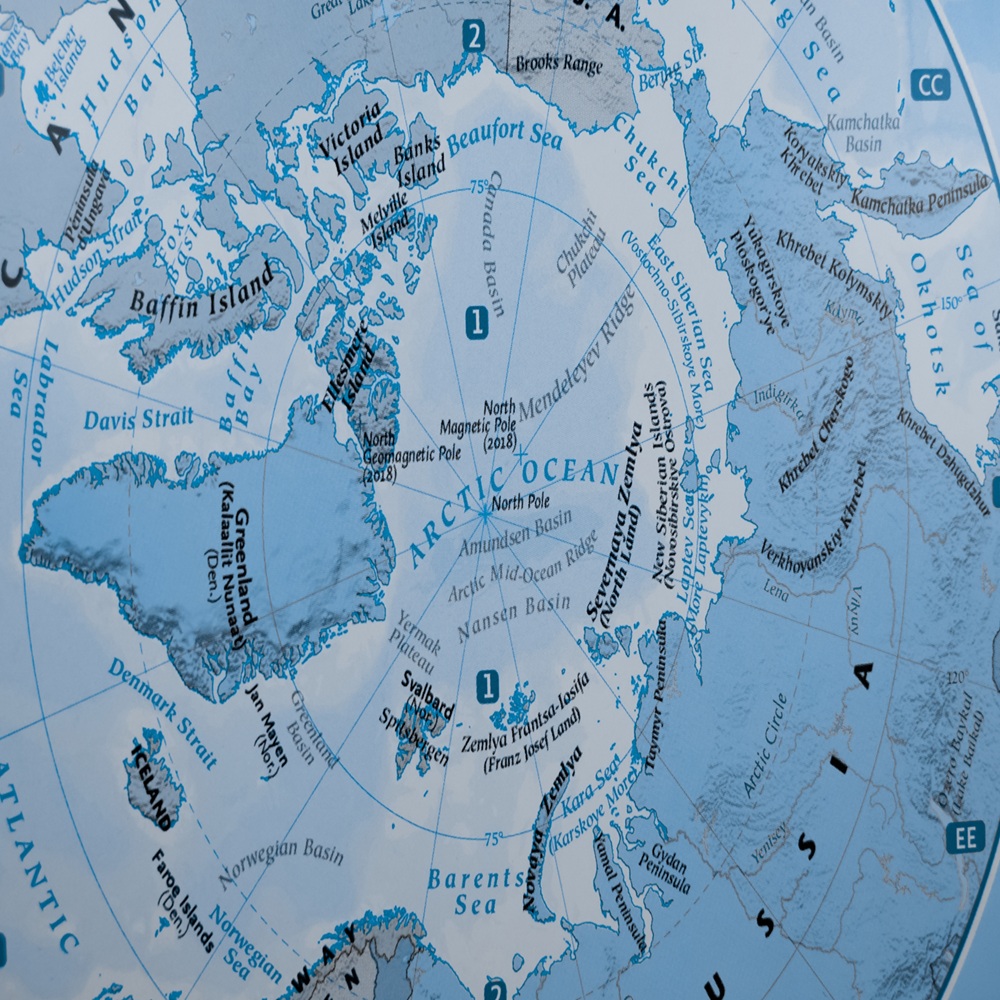
Map of Arctic Ocean styled in grey color. Selective focus on label, close-up view

Greenland at the Center of the Arctic Power: US NSS 2025, NATO Cohesion, and the New Geopolitics of the High North.

by World & New World Journal

In the chilling expanse of the Arctic, where ice and ocean frame the edges of the known world, a geopolitical drama has quietly gathered momentum. The world’s strategic gaze is no longer fixed solely on the traditional theatres of diplomacy in Europe, the Middle East, or the Indo-Pacific. Instead, the High North — and particularly Greenland, the vast Arctic territory within the Kingdom of Denmark — has emerged as a critical arena where great-power competition, national security priorities, global trade dynamics, and climate change converge. This transformation did not occur overnight. For decades, military planners, geographers, and strategic thinkers recognized the Arctic’s latent importance. Yet only in recent years have those projections translated into urgent geopolitical reality. At the center of this shift stands the United States’ National Security Strategy 2025 (NSS 2025), unveiled in late 2025, which redefines American priorities in a world shaped by renewed great-power rivalry. While the strategy addresses multiple global theatres, its emphasis on territorial security, critical resources, strategic geography, and adversarial competition underscores why Greenland has moved from the periphery to the heart of international geopolitics. Greenland today sits at the intersection of U.S. homeland defense, NATO cohesion, Arctic militarization, global trade transformation, and the accelerating race for critical minerals. The tensions surrounding the island reveal not only disputes among allies but also deeper structural changes in the international system. This article argues that Greenland is no longer a remote outpost but a strategic fulcrum of the Arctic, whose future will shape the balance of power in the High North and beyond. America’s Strategic Recalibration in the 2025 National Security Strategy The NSS 2025 marks a clear departure from post-Cold War doctrines centered on expansive multilateralism and global institution-building. Instead, it reflects a return to strategic realism, prioritizing the protection of core national interests, territorial security, and the prevention of adversarial dominance in critical regions. The strategy defines the United States’ primary objective as “the continued survival and safety of the United States as an independent, sovereign republic,” coupled with maintaining decisive military, technological, and economic power. Although the Indo-Pacific remains central, the strategy elevates the Western Hemisphere and adjacent strategic regions, emphasizing the need to prevent hostile encroachment on areas vital to U.S. security and economic resilience. Supply chains, critical minerals, missile defense, and strategic geography feature prominently throughout the document. Within this framework, Greenland has transitioned from a peripheral Arctic territory to a linchpin of U.S. strategic defense and resource security. While the NSS does not outline a standalone Arctic doctrine, its underlying logic — securing access to essential materials, protecting strategic approaches to the homeland, and denying adversaries positional advantages — aligns directly with the intensifying focus on Greenland. Latest developments: US position over Greenland. As already mentioned, the release of the NSS 2025 made one thing clear: US foreign policy is now defined by an assertive approach towards the entire Western Hemisphere – where Greenland is part of –. Moreover, this implies that the US might claim the right to intervene in other countries’ domestic affairs in order to guarantee its strategic and corporate interests. Therefore, after Venezuela – in addition to its rhetoric towards Cuba and Mexico – Greenland has become a hot topic, due its geopolitical, economical and strategical position and of course as part of the US “national security” and interest. The interest from the US over Greenland is not new, during Trump’s first administration an attempt to buy Greenland occurred and even at the beginning of his second administration there were comments to obtain the island. Next are presented the developments that occurred until January 22nd: - The US-Greenland-NATO crisis escalated when Trump’s desire to have Greenland either “by hook or by crook” sparked the global debate, while Europeans, Greenlanders and Danish rejected his ideas and showed support for Greenland and the Kingdom of Denmark itself. - A later diplomatic meeting between Danish, Greenlandic and US officials in Washington ended up in a “fundamental disagreement” over the sovereignty of the island on January 14th. - A joint statement of several European countries supporting the idea that “Greenland belongs to its people, and only Denmark and Greenland can decide on matters concerning their relations” was released on January 18th. - Launch of “Operation Arctic Endurance” and the initial deployment of a small number of troops from the European allies plus Danish soldiers. By January 18th there were over 100 troops in Nuuk and another 100 in Kangerlussuaq. (numbers could be increased in a short time). - Worries within Europe and the NATO allies. In addition, China urged the US to stop using the so-called “China threat” as a pretext for pursuing its own interest. - General concern for Greenlanders and several protest in Denmark, and Greenland against the US actions. - The imposition of 10% tariffs from the US over Denmark, Norway, Sweden, France, Germany, Finland, the UK and the Netherlands that would increase by 25% on June 1st if there is no deal reached. After Trump’s speech in the World Economic Forum, he confirmed that tariffs threats were off the table as there was a “framework of a future deal” for Greenland. In summary, in January 2026, Washington’s posture toward Greenland has sharpened into a high-profile mix of strategic urgency and political brinkmanship, framed publicly as an Arctic and homeland-security imperative. Recent reporting describes President Donald Trump repeatedly arguing the U.S. “needs” Greenland for security, while also signaling limits on how far he would go — saying at the World Economic Forum in Davos that he would not use military force to acquire it. At the same time, the episode has clearly strained allied politics: coverage indicates Denmark has insisted Greenland’s sovereignty is not negotiable even as the U.S. debate escalated, and Greenland’s own authorities have taken the moment seriously enough to urge practical preparedness at home. The most concrete “near-term” direction emerging in January 2026 is not annexation but a NATO – and alliance-linked security bargain. Multiple outlets report Trump backing away from threatened tariffs after announcing a “framework” tied to future Arctic security cooperation with NATO leadership — suggesting the administration is trying to convert its Greenland pressure campaign into expanded defense access, posture, or burden-sharing rather than an immediate territorial transfer. Even where details remain vague, the logic is consistent: Greenland’s geography — especially its role in Arctic air/sea lanes and missile-warning architecture — makes it a leverage point for U.S. deterrence and homeland defense planning, and U.S. officials appear to be testing what they can gain diplomatically inside the alliance system when outright sovereignty change is off the table. This posture also lines up with the 2025 National Security Strategy (NSS), which elevates the Western Hemisphere as the top priority region and argues the U.S. will “deny non-Hemispheric competitors” the ability to “own or control strategically vital assets” in the hemisphere, while calling for readjusting military presence and “establishing or expanding access in strategically important locations.” While the NSS text excerpt does not name Greenland in the lines above, its framework — reasserting hemispheric primacy, blocking external footholds, and expanding access — maps neatly onto a Greenland approach that treats the island as a critical node in Arctic security competition and infrastructure control. European Parliament analysis likewise characterizes the NSS as a “pivot” toward a Monroe Doctrine–style sphere-of-interest logic in the Western Hemisphere, reinforcing the idea that Greenland is being handled less as a narrow Denmark dispute and more as part of a broader hemispheric strategy. Greenland’s Geographic Centrality: The broader US security interest of the Island. Figure 1: Arctic states, counties and other administrative regions with capitals. Source: Map by Arto Vitikka, Arctic Centre, University of Lapland. Credit for the border data: Runfola, D. et al. (2020) geoBoundaries: A global database of political administrative boundaries. PLoS ONE 15(4): e0231866. https://doi.org/10.1371/journal.pone.0231866e. Figure 2: Arctic Population Centers. Map by Arto Vitikka, Arctic Centre, University of Lapland. When viewed from a polar perspective, the Arctic is not a distant fringe but the shortest connective space between North America, Europe, and Eurasia. The Arctic as seen in Figure 1 is composed of several administrative areas, including Canada, Alaska (USA), Russia, Norway, Sweden, Finland, Iceland and Greenland (Denmark). The latter can be said to be located at the center between North America and Europe and Eurasia, underscoring its geopolitical importance. In other words, Greenland occupies the central Atlantic–Arctic axis, the shortest air and missile trajectories between Russia and North America and a pivotal position between the Canadian Arctic Archipelago and the Russian Arctic coast. This geography carries deep strategic implications. First, Greenland is part of the so-called GIUK (Greenland-Iceland-UK) Gap, a crucial corridor for monitoring naval and air activity in the North Atlantic. The GIUK Gap played an important role during the Second World War and the Cold War and nowadays it has become crucial in securing air and sea surveillance through radar stations, while securing the sea lines of communication (SLOCs) as well as supply lines making them uninterrupted between NATO’s European members and the USA. The GIUK Gap can assist in ensuring maritime visibility and assist anti-submarine warfare (ASW) in case of conflicts. The presence of Russian submarines in the Arctic is a central pillar of Russia’s military strategy and nuclear deterrence, making the region one of the most militarized maritime spaces in the world. Russia views the Arctic as both a strategic sanctuary and a launch platform. In consequence, its Northern Fleet – headquartered on the Kola Peninsula –, is the most powerful of Russia’s fleets and operates a large share of its nuclear-powered ballistic missile submarines (SSBNs), such as the Borei and Delta IV classes. These submarines carry submarine-launched ballistic missiles (SLBMs) and are designed to remain hidden under Arctic ice, ensuring a second-strike capability in the event of a nuclear conflict. The ice cover, combined with Russia’s familiarity with Arctic waters, provides concealment and operational depth. In addition to SSBNs, Russia deploys nuclear-powered attack submarines (SSNs) and guided-missile submarines (SSGNs) in the Arctic. These vessels conduct intelligence gathering, protect ballistic missile submarines, and pose threats to NATO naval forces and undersea infrastructure, including communication cables. Russian submarines regularly transit through key chokepoints such as the GIUK Gap, bringing them into strategic relevance for Greenland, Iceland, and NATO’s anti-submarine warfare (ASW) posture. In addition, the Arctic also supports Russia’s broader bastion defense concept, which seeks to create heavily defended maritime zones where submarines can operate safely. Air defenses, surface ships, icebreakers, and coastal missile systems complement submarine operations. As climate change reduces sea ice and increases accessibility, Russian submarine activity in the Arctic is expected to remain intense, reinforcing the region’s importance for NATO surveillance, early warning systems, and transatlantic security — especially for locations like Greenland that sit astride critical Arctic–Atlantic routes. Second, Greenland’s high latitude makes it an ideal place for early detection of long-range missile launches. Russia has long-range intercontinental ballistic missiles (ICBMs), if ever launched from Russia toward the United States, the total flight time would be roughly between 25 to 35 minutes – depending on the launch location and target. But because of the Earth’s curvature, the shortest path from Russia to the continental US goes over the Arctic which is why Greenland is so strategically important for early detection and missile defense. In practical terms, US decision-makers would have only minutes to assess the threat and respond after a launch is detected. Establishments such as the U.S. Pituffik Space Base underscore how Greenland functions as a first line of surveillance against possible ballistic missile threats from the Eurasian landmass. Therefore, Greenland is indispensable to early-warning and missile-defense systems. Sensors, radars, and space-tracking infrastructure based on the island form a crucial layer of “U.S. homeland defense”. Finally, Greenland is the only large Arctic landmass under Western democratic control outside Eurasia. Russia dominates the Eurasian Arctic coastline, while Alaska and Canada anchor North America. Greenland bridges these spaces, serving as a keystone for transatlantic Arctic security. Its isolation does not diminish its importance; rather, it magnifies it. – making Greenland a linchpin of US homeland defense and NATO’s northern security architecture. Greenland and NATO: The Fragile Architecture of Arctic Security Figure 3: NATO’s and Russia’s militarization in the Arctic. Figure 3 exposes a stark asymmetry in the Arctic militarization between NATO and Russian. The latter maintains a dense, continuous network of military bases stretching from the Kola Peninsula to the Bering Strait. These installations support air defense, naval operations, missile forces, and surveillance — forming an integrated arc of control along Russia’s northern frontier. On the other hand, NATO’s Arctic posture is fundamentally different. It relies on discrete strategic nodes rather than territorial saturation, interoperability over mass and coordination among multiple sovereign states. Within this fragmented architecture, Greenland is NATO’s most critical node. Nonetheless, the US has presence in Greenland, specifically with the Pituffik Space Base (formerly Thule Air Base), which is located in northwest Greenland. This base – as mentioned before – is indispensable for early missile warning, space surveillance and tracking adversary launches across the polar region. While the UK has presence in Norway in the logistic Camp Viking site. Without Greenland, NATO’s Arctic posture would fracture into disconnected segments — North America on one side, Scandinavia on the other — with no central anchor. This reality explains the sharp European response in 2025–2026 to U.S. rhetoric suggesting unilateral action or coercive pressure regarding Greenland. The deployment of European troops under Operation Arctic Endurance was not merely symbolic; it was an assertion that Greenland is a collective NATO concern, not a bilateral bargaining chip. Greenland’s Resources: Strategic Minerals in a Fragmenting World Beyond military geography, Greenland’s subsoil wealth significantly enhances its geopolitical importance. The island holds substantial deposits of rare earth elements (REEs), lithium, graphite, niobium, titanium, uranium and zinc. As it is well known these strategic materials are indispensable and critical for renewable energy systems, electric vehicles, advanced electronics, missile guidance and radar technologies and space and defense infrastructure. Last but not least there is also oil and gas, but the conditions and viability to extract them make them an economic challenge. In the context of the control of natural resources, the NSS 2025 repeatedly stresses the need to reduce U.S. dependence on adversarial supply chains — an implicit reference to China’s dominance in rare-earth processing. Therefore, US eyes are on Greenland, as it represents one of the few politically aligned alternatives with large-scale potential reserves – ironically not under Chinese or Russian influence, but under US “allies” control. Yet resource abundance does not automatically translate into strategic advantage. Mining in Greenland faces severe challenges: extreme climate conditions, environmental risks, limited infrastructure, and strong local opposition to environmentally destructive projects. As a result, Greenland’s mineral wealth is strategically valuable but politically sensitive. Its development requires local consent and long-term cooperation, not coercion — a fact often overlooked in external strategic calculations. The Arctic Trade Revolution: Melting Ice, Shifting Routes Figure 4: Arctic Seaways (Northern Sea Route, Northwest Passage and Transpolar Sea Route). Source: Map by Arto Vitikka, Arctic Centre, University of Lapland. Climate change is transforming the Arctic faster than any other region on Earth. As sea ice recedes, new maritime routes are becoming seasonally viable, with potentially transformative consequences for global trade. The Northern Sea Route (NSR) along Russia’s Arctic coast already reduces transit times between Europe and Asia by up to 40%, even though some parts are free of ice for some months per year. On the other hand, a future transpolar route, cutting directly across the Arctic Ocean, could bypass traditional chokepoints such as: The Suez Canal, The Panama Canal or The Strait of Malacca. Therefore, Greenland importance relies on its geographic position that places it adjacent to these emerging corridors. Potential roles for the island include: the search-and-rescue hubs, refueling and logistics points, maritime surveillance and communications infrastructure. This elevates Greenland from a military asset to a potential gatekeeper of future Arctic trade, linking regional security directly to global economic flows. Icebreakers and Power Projection: Mobility as Sovereignty Figure 5: Major Icebreakers and Ice-Capable Patrol Ships highlight a decisive but underappreciated imbalance. Source: generated with Chat GPT using Routers Nov 2022 data. The transit in the Arctic can be defined by the possibility to move freely without any inconvenience due its extreme conditions – or at least with the least inconveniences. In consequence major ice breakers and ice-capable patrol ships became very important assets for the countries in the region. In a simple comparison, Russia possesses more icebreakers than NATO combined, as shown in Figure 5, including nuclear-powered vessels capable of year-round Arctic operations. These ships are instruments of sovereignty, enabling continuous military presence, escort of commercial shipping, enforcement of Arctic regulations and rapid crisis responses. By contrast, the United States has long underinvested in icebreaking capacity. NATO relies on a patchwork of national fleets, with Finland and Sweden contributing significantly but still lagging behind Russia’s scale. The strategic implication is clear: Russia controls mobility while NATO controls nodes. In such an environment, fixed strategic anchors like Greenland become even more critical. Competing Arctic Visions Russia Russia views the Arctic as a core strategic and economic priority, central to its national identity, security, and long-term development. Its Arctic vision emphasizes sovereignty, military security, and the exploitation of vast natural resources, particularly hydrocarbons and minerals. Moscow sees the Northern Sea Route as a critical shipping corridor that can enhance Russia’s control over Arctic navigation and generate economic revenues. To support this vision, Russia has invested heavily in Arctic infrastructure, icebreaker fleets, and military modernization, positioning itself as the dominant Arctic power and framing the region as vital to its great-power status. The Arctic is not an extension of Russian power; it is central to it. Figure 6: Cargo volume in Russia’s Northern Sea Route (1933-2023) China China approaches the Arctic as a “near-Arctic state,” framing its vision around scientific research, economic opportunity, and global governance. Beijing emphasizes participation in Arctic affairs through international law, particularly the UN Convention on the Law of the Sea, and promotes cooperation rather than territorial claims. Its strategy emphasizes long-term access to resources, influence over Arctic governance norms, and participation in future trade routes. Its concept of a “Polar Silk Road” reflects an interest in future shipping routes, energy projects, and digital connectivity, linking the Arctic to China’s broader Belt and Road Initiative. Even though China presents its Arctic engagement as peaceful and mutually beneficial, while gradually expanding its strategic and economic footprint in the region, it also has interest in Greenland’s mining sector, for example, which has heightened concerns about strategic leverage rather than direct control. Figure 7: Map of China’s Polar Silk Road. Source: Map by Arto Vitikka, Arctic Centre, University of Lapland. United States The U.S. approach, as reflected in the NSS 2025, is reactive but intensifying. Greenland crystallizes American concerns about strategic vulnerability, supply-chain dependence, and alliance credibility. Yet pressure tactics risk undermining the very alliances that make Arctic stability possible. The United States views the Arctic as an increasingly important region for national security, environmental stewardship, and economic opportunities. At the same time, it recognizes the strategic implications of growing Russian and Chinese activity in the region. Arctic States The European Arctic states emphasize sustainability, human security, and regional cooperation as the foundation of their Arctic vision. Their policies prioritize environmental protection, responsible resource management, and the rights and livelihoods of Indigenous peoples, while balancing economic development in sectors such as fisheries, renewable energy, and limited resource extraction. These states strongly support multilateral governance through institutions like the Arctic Council and stress adherence to international law. Collectively, they view the Arctic as a region where stability, cooperation, and climate leadership are essential, especially amid rising geopolitical tensions and accelerating environmental change. Canada Canada’s Arctic vision centers on sovereignty, Indigenous partnership, and sustainable development, reflecting the region’s importance to national identity and security. Ottawa emphasizes the protection of its northern territories and views the Northwest Passage as internal waters, while supporting a rules-based Arctic order. A core pillar of Canada’s approach is its collaboration with Indigenous peoples, recognizing their rights, knowledge, and role in governance and stewardship. Canada also prioritizes climate change adaptation, environmental protection, and responsible economic development, seeking to ensure that increased Arctic activity benefits northern communities while maintaining peace and stability in the region. India India’s Arctic vision is primarily science-driven and climate-focused, reflecting its broader emphasis on environmental security and multilateral cooperation. Through its Arctic research station, Himadri, and active participation in the Arctic Council as an observer, India seeks to understand the Arctic’s impact on global climate systems, particularly the Indian monsoon. New Delhi also recognizes the long-term economic and geopolitical significance of the Arctic but approaches the region cautiously, prioritizing sustainable development, international collaboration, and respect for Arctic states’ sovereignty. Strategic Futures: Cooperation or Fragmentation The future of Greenland and the Arctic more broadly will hinge on whether the region evolves toward structured cooperation or strategic fragmentation. In a cooperative scenario, Greenland becomes a stabilizing anchor within a renewed Arctic security framework, where the United States, Denmark, and NATO align their defense priorities with Greenlandic self-determination and environmental safeguards. Such an approach would emphasize multilateral governance, transparency in resource development, confidence-building military measures, and shared investment in infrastructure, search-and-rescue capabilities, and climate resilience. Cooperation would not eliminate competition, particularly with Russia and China, but it would establish rules, norms, and mechanisms to prevent escalation and miscalculation in an increasingly accessible Arctic. By contrast, a fragmented Arctic would be characterized by unilateral actions, coercive diplomacy, and the erosion of trust among allies. Pressure tactics aimed at securing access, influence, or control over Greenland could weaken NATO cohesion, fuel local resistance, and open political space for external actors to exploit divisions. In such a scenario, the Arctic risks becoming a patchwork of contested zones rather than a managed strategic commons. Therefore, fragmentation would increase the likelihood of militarization without coordination, resource development without legitimacy, and crisis dynamics without effective communication channels — conditions that historically precede instability rather than security. Conclusion Greenland’s transformation from a remote Arctic territory into a strategic fulcrum reflects deeper shifts in the international system. The United States’ National Security Strategy 2025 captures a world defined by renewed great-power rivalry, supply-chain vulnerability, and the reassertion of geography as destiny. In this context, Greenland sits at the intersection of homeland defense, NATO credibility, critical resource security, and emerging Arctic trade routes. Its importance is not a product of any single factor, but of the convergence of military, economic, and environmental dynamics reshaping the High North. Yet Greenland’s strategic value does not grant external powers unlimited leverage. Geography may confer importance, but legitimacy, consent, and alliance cohesion determine whether that importance translates into durable influence. Attempts to treat Greenland as a transactional asset risk undermining NATO unity, destabilizing Arctic governance, and alienating the very population whose cooperation is essential for security and development. The Arctic’s future must not be decided solely by military deployments or mineral deposits, but by the political relationships that sustain them. Ultimately, Greenland illustrates the central paradox of the new Arctic geopolitics: the region’s growing accessibility increases both opportunity and risk. Stability will depend not on dominance, but on restraint, not on unilateralism, but on partnership. Whether the Arctic becomes a zone of managed competition or strategic fragmentation will shape not only the balance of power in the High North, but the credibility of international order adapting to a rapidly changing world. Also, it is important to highlight Greenland’s voice – referring to sovereignty and identity. Usually under great-power maneuvering, Greenland’s own population has often been sidelined. Yet Greenland is not merely an object of strategy; it is a political community with a strong Indigenous identity, environmental concerns, and aspirations for greater autonomy. Therefore, it is important to keep in mind its constitutional status within the Kingdom of Denmark, their principle of self-determination and the political costs of alienating local consent. Paradoxically, the more external powers push, the more Greenlandic society resists — complicating both security arrangements and resource development. Finally, the Arctic is not only Greenland, the US or the NATO, there are other authors involved, Russia for instance appears as the main one, while, China and India are increasing their interests in the region Moreover, climate change seems to be game changer as new Arctic seaways gain importance in terms of trade and mobility, which in consequence are and will redefine sovereignty. For instance, either icebreakers or minerals would become as strategic as missiles. The Arctic transformation is already happening, and who will lead and what will happen in the region in the future are questions to be solved in the near future. References Agneman, G. (2025, February 04). Trump wants Greenland – but here’s what the people of Greenland want. Retrieved from The Conversation: https://theconversation.com/trump-wants-greenland-but-heres-what-the-people-of-greenland-want-248745 Aljazeera. (2026, January 15). European troops arrive in Greenland as talks with US hit wall over future. Retrieved from Aljazeera: https://www.aljazeera.com/news/2026/1/15/european-troops-arrive-in-greenland-as-talks-with-us-hit-wall-over-future Aljazeera. (2026, January 18). Trump announces new tariffs over Greenland: How have allies responded? Retrieved from Aljazeera: https://www.aljazeera.com/news/2026/1/18/trump-announces-new-tariffs-over-greenland-how-have-eu-allies-responded Arctic Centre University of Lapland. (n.d.). Arctic Region. Retrieved from https://arcticcentre.org/en/arctic-region/maps/polar-silk-road/ Bassets, M. (2026, Enero 11). “Por las buenas o por las malas”: así puede Trump conquistar Groenlandia. Retrieved from El País: https://elpais.com/internacional/2026-01-10/por-las-buenas-o-por-las-malas-asi-puede-trump-conquistar-groenlandia.html Bateman, T. (2026, January 14). Danish minister says 'fundamental disagreement' remains after 'frank' Greenland talks with US. Retrieved from BBC: https://www.bbc.com/news/live/cn824zzp670t BBC News. (2026, January 21). Trump drops threat of tariffs over Greenland after Nato talks in Davos. Retrieved from BBC News: https://www.bbc.com/news/live/cjrzjqg8dlwt Bierman, P. (2025, February 19). Greenland’s melting ice and landslide-prone fjords make the oil and minerals Trump is eyeing dangerous to extract. Retrieved from The Conversation: https://theconversation.com/greenlands-melting-ice-and-landslide-prone-fjords-make-the-oil-and-minerals-trump-is-eyeing-dangerous-to-extract-249985 Bierman, P. (2025, February 19). Greenland’s melting ice and landslide-prone fjords make the oil and minerals Trump is eyeing dangerous to extract. Retrieved from The Conversation: https://theconversation.com/greenlands-melting-ice-and-landslide-prone-fjords-make-the-oil-and-minerals-trump-is-eyeing-dangerous-to-extract-249985 Bierman, P. (2026, January 14). US military has a long history in Greenland, from mining during WWII to a nuclear-powered Army base built into the ice. Retrieved from The Conversatiion: https://theconversation.com/us-military-has-a-long-history-in-greenland-from-mining-during-wwii-to-a-nuclear-powered-army-base-built-into-the-ice-273355 Bonsoms, J. (2025, Dececmber 16). ‘Extreme melting’ episodes are accelerating ice loss in the Arctic. Retrieved from The Conversation: https://theconversation.com/extreme-melting-episodes-are-accelerating-ice-loss-in-the-arctic-272114 Brincat, S. (2026, January 18). Trump has threatened European countries with higher tariffs if he doesn’t get Greenland. Will it work? Retrieved from The Conversation: https://theconversation.com/trump-has-threatened-european-countries-with-higher-tariffs-if-he-doesnt-get-greenland-will-it-work-273698 Brincat, S., & Naranjo Cáceres, J. Z. (2026, January 07). Trump wants Greenland. Europe’s tepid response is putting NATO and global security at risk. Retrieved from The Conversation: https://theconversation.com/trump-wants-greenland-europes-tepid-response-is-putting-nato-and-global-security-at-risk-272819 Brooks, J. (2026, January 20). Pro-Greenland protesters mock Trump’s MAGA slogan with ‘Make America Go Away’ caps. Retrieved from AP: https://apnews.com/article/denmark-greenland-maga-trump-protest-cd1213dd73e9ea1e4da43285704c95ea Bryant, M., & Sabbagh, D. (2026, January 15). Greenland's defence is 'common concern' for Nato, Danish PM says as European troops fly in. Retrieved from The Guardian: https://www.theguardian.com/world/2026/jan/15/greenland-defence-nato-denmark-prime-minister-european-troops Burrows, E., Ciobanu, C., & Niemann, D. (2026, January 16). European troops arrive in Greenland as talks with US highlight 'disagreement' over island's future. Retrieved from AP: https://apnews.com/article/greenland-united-states-denmark-trump-vance-rubio-meeting-b10f5151008f1f18a788dc0751473c0e CNN. (2026, January 21). Trump says he’s formed a ‘framework of a future deal’ on Greenland. Retrieved from CNN: https://edition.cnn.com/politics/live-news/trump-administration-news-01-21-26 Davies, M. (2026, January 19). Starmer holds phone call with Trump over Greenland tariff threat. Retrieved from BBC: https://www.bbc.com/news/articles/cwyn90l1dneo Dodds, K. (2026, January 09). As the Arctic warms up, the race to control the region is growing ever hotter. Retrieved from The Conversation: https://theconversation.com/as-the-arctic-warms-up-the-race-to-control-the-region-is-growing-ever-hotter-273118 Dunbar, M. (2026, January 18). Trump's calls to seize Greenland ignite fresh criticism from Republican party. Retrieved from The Guardian: https://www.theguardian.com/us-news/2026/jan/18/trump-greenland-republican-party FitzGerald, J. (2026, January 19). Why does Trump want Greenland and what could it mean for Nato? Retrieved from BBC: https://www.bbc.com/news/articles/c74x4m71pmjo Fleck, A. (2025, January 24). NATO’s and Russia’s Militarization of the Arctic. Retrieved from statista: https://www.statista.com/chart/33824/military-bases-in-the-arctic-belonging-to-nato-and-russia/?srsltid=AfmBOoqwc5PmGe6_JB6mYjQSP9pr9fIZE_LcEtMOo_rtnCD86zMcQpwn Gjedssø Bertelsen, R. (2025). Divided Arctic in a Divided World Order. Strategic Analysis, 48(Issue 6: Changing Dynamics in the Arctic: Actors and Alliances), 568-577. doi:https://doi.org/10.1080/09700161.2025.2453322 Government Offices of Sweden. (2026, January 18). Statement by Denmark, Finland, France, Germany, the Netherlands, Norway, Sweden and the United Kingdom. Retrieved from Government Offices of Sweden: https://www.government.se/statements/2026/01/statement-by-denmark-finland-france-germany-the-netherlands-norway-sweden-and-the-united-kingdom/ Grillo, F. (2026, January 08). As the US eyes Greenland, Europe must turn a global problem into an opportunity. Retrieved from The Conversation: https://theconversation.com/as-the-us-eyes-greenland-europe-must-turn-a-global-problem-into-an-opportunity-272872 Gupta, P. (2024, September 18). Understanding the potential of the Northern Sea Route. Retrieved from ORF: https://www.orfonline.org/expert-speak/understanding-the-potential-of-the-northern-sea-route Harvey, L. (2026, January 16). European nations send additional troops to Greenland as US annexation threats escalate. Retrieved from CNN: https://edition.cnn.com/2026/01/15/world/europe-troops-greenland-trump-nato-intl-hnk Hastings Dunn MBE, D., Webber, M., & Wolff, S. (2026, January 07). US action against Greenland would undermine Nato, but now is not the time to panic. Retrieved from The Conversation: https://theconversation.com/us-action-against-greenland-would-undermine-nato-but-now-is-not-the-time-to-panic-272911 Holland, S., Mason, J., & Erickson, B. (2026, January 07). Trump discussing how to acquire Greenland, US military always an option, White House says. Retrieved from Reuters: https://www.reuters.com/world/trump-advisers-discussing-options-acquiring-greenland-us-military-is-always-an-2026-01-06/ huaxia. (2026, January 19). China urges U.S. to stop using so-called "China threat" as pretext for pursuing selfish gains. Retrieved from Xinhua: https://english.news.cn/20260119/57899ee8d43345ddbfa222828ec1d0a4/c.html Jakes, L., Tankersley, J., & Kanno-Youngs, Z. (2026, January 22). Trump Touts Greenland Framework as NATO Mulls U.S. Sovereignty Over Bases. Retrieved from The New York Times: https://www.nytimes.com/live/2026/01/21/us/trump-davos-greenland-news Karjee, M. (2025, August 20). Russia’s Arctic Corridor: Between Ice and Isolation. Retrieved from E-International Relations: https://www.e-ir.info/2025/08/20/russias-arctic-corridor-between-ice-and-isolation/ Katila, A. (2026, January 15). As US and Denmark fight, Greenland’s voices are being excluded once again. Retrieved from The Conversation: https://theconversation.com/as-us-and-denmark-fight-greenlands-voices-are-being-excluded-once-again-273131 Kennedy-Pipe, C. (2026, January 14). Whether or not US acquires Greenland, the island will be at the centre of a massive military build-up in the Arctic. Retrieved from The Conversation: https://theconversation.com/whether-or-not-us-acquires-greenland-the-island-will-be-at-the-centre-of-a-massive-military-build-up-in-the-arctic-273301 Khanna, M. (2025, March 19). China and the Arctic: An Overview. Retrieved from ORF: https://www.orfonline.org/research/china-and-the-arctic-an-overview Kirby, P. (2026, January 16). European military personnel arrive in Greenland as Trump says US needs island. Retrieved from BBC: https://www.bbc.com/news/articles/cd0ydjvxpejo Kotak, S. (2025, September 08). Leveraging India’s Arctic Observer Status: Scientific Diplomacy as a Lever for Climate, Resource and Security Advancement. Retrieved from World & New World Journal: https://worldandnewworld.com/india-arctic-observer-status/ Kottasová, I., & Edwards, C. (2026, Enero 19). Trump le dice a Noruega que ya no se siente obligado a "pensar únicamente en la paz" en carta sobre el Nobel y Groenlandia. Retrieved from CNN Español: https://cnnespanol.cnn.com/2026/01/19/eeuu/trump-paz-noruega-nobel-reux Kumar, A., & Haldar, S. (2024, October 2024). An evolving partnership in the Arctic between China and Russia. Retrieved from ORF: https://www.orfonline.org/expert-speak/an-evolving-partnership-in-the-arctic-between-china-and-russia L. Montgomery, S. (2026, January 14). 4 reasons why the US might want to buy Greenland – if it were for sale, which it isn’t. Retrieved from The Conversation: https://theconversation.com/4-reasons-why-the-us-might-want-to-buy-greenland-if-it-were-for-sale-which-it-isnt-246955 Lebowitz, M. (2026, January 18). Treasury secretary defends Greenland tariffs: 'The national emergency is avoiding the national emergency'. Retrieved from NBC News: https://www.nbcnews.com/politics/trump-administration/treasury-secretary-bessent-tariffs-national-emergency-greenland-eu-rcna254650 Levison, J., & Russell, L. (2026, January 19). Why Trump says the US 'needs' Greenland - and what the fallout could be. Retrieved from Sky news: https://news.sky.com/story/why-trump-says-the-us-needs-greenland-and-what-the-fallout-could-be-13285350 Lubold, G., Kube, C., Williams, A., & Alba, M. (2026, January 14). Buying Greenland could cost as much as $700 billion. Retrieved from NBC News: https://www.nbcnews.com/politics/white-house/buying-greenland-cost-much-700-billion-rcna253921 Manners, I. (2026, January 09). Four ways to understand what’s going on with the US, Denmark and Greenland. Retrieved from The Conversation: https://theconversation.com/four-ways-to-understand-whats-going-on-with-the-us-denmark-and-greenland-272873 Nicholas, P., & Smith, A. (2026, January 20). Trump won't say whether he would use force to seize Greenland. Retrieved from NBC News: https://www.nbcnews.com/politics/trump-administration/trump-greenland-use-of-force-nobel-norway-europe-tariffs-ukraine-rcna254786 Passi, R. (2018, February 21). One belt, one road, and now one circle. Retrieved from ORF: https://www.orfonline.org/expert-speak/one-belt-one-road-and-now-one-circle Paul, J. (2026, January 08). Greenland is rich in natural resources – a geologist explains why. Retrieved from The Conversation: https://theconversation.com/greenland-is-rich-in-natural-resources-a-geologist-explains-why-273022 Reuters. (2021, July 16). Greenland ends unsuccessful 50-year bid to produce oil. Retrieved from Reuters: https://www.reuters.com/business/energy/greenland-puts-an-end-unsuccessful-oil-adventure-2021-07-16/#:~:text=Naaja%20Nathanielsen%2C%20Greenland's%20minister%20of,profits%20or%20make%20a%20loss Rønberg, N., Gjerding Nielson, E., & Haugaard, M. (2026, January 06). Kampen om Grønlands fremtid. Retrieved from Nyheder: https://nyheder.tv2.dk/live/2025-01-06-kampen-om-groenlands-fremtid/over-200-soldater-i-groenland-lige-nu?entry=c342b2d3-e01d-4f60-b1dc-8df98fdac85b Sergunin, A., & Konyshev, V. (2025, April 21). The Arctic Great Game: The Need for Cautious Optimism. Retrieved from ORF: https://www.orfonline.org/expert-speak/the-arctic-great-game-the-need-for-cautious-optimism Sheftalovich, Z., & Jack, V. (2026, January 07). How Trump gets Greenland in 4 easy steps. Retrieved from Politico: https://www.politico.eu/article/donald-trump-greenland-easy-steps-nato-policy-deal-military/ Shetty, K. (2023, June 06). The Northern Sea route: A gamechanger or a road to hegemony? Retrieved from ORF: https://www.orfonline.org/expert-speak/the-northern-sea-route Slothuus, L. (2026, January 12). Why Greenland’s vast natural resources won’t necessarily translate into huge profits. Retrieved from The Conversation: https://theconversation.com/why-greenlands-vast-natural-resources-wont-necessarily-translate-into-huge-profits-273137 Soufi Burridge, T., Gardiner, C., & Pereira, I. (2026, January 16). France, other NATO countries send troops to Greenland for exercises after meeting with Vance and Rubio. Retrieved from ABC News: https://abcnews.go.com/Politics/france-nato-countries-send-troops-greenland-exercises-after/story?id=129241103 Talmazan, Y. (2026, January 15). European troops arrive in Greenland as Trump throws another curveball. Retrieved from NBC News: https://www.nbcnews.com/world/greenland/european-troops-arrive-greenland-trump-throws-curveball-rcna254166 Tanno, S., & Waldenberg, S. (2026, Enero 10). Trump dice que Estados Unidos tomará Groenlandia "por las malas" sino puede hacerlo por las buenas. Retrieved from CNN Español: https://cnnespanol.cnn.com/2026/01/10/eeuu/trump-groenlandia-malas-trax Testoni, M. (2026, January 16). US-Greenland negotiations have hit a wall. Here are three ways the crisis could end. Retrieved from The Conversation: https://theconversation.com/us-greenland-negotiations-have-hit-a-wall-here-are-three-ways-the-crisis-could-end-273629 tg24. (2026, January 16). Groenlandia, scattata la missione "Arctic Endurance": cosa sapere. Retrieved from tg24: https://tg24.sky.it/mondo/2026/01/16/groenlandia-arctic-endurance-esercitazione-militare The White House. (2025, November). National Security Strategy of the United States of America. Retrieved from The White House: https://www.whitehouse.gov/wp-content/uploads/2025/12/2025-National-Security-Strategy.pdf
Defense & Security
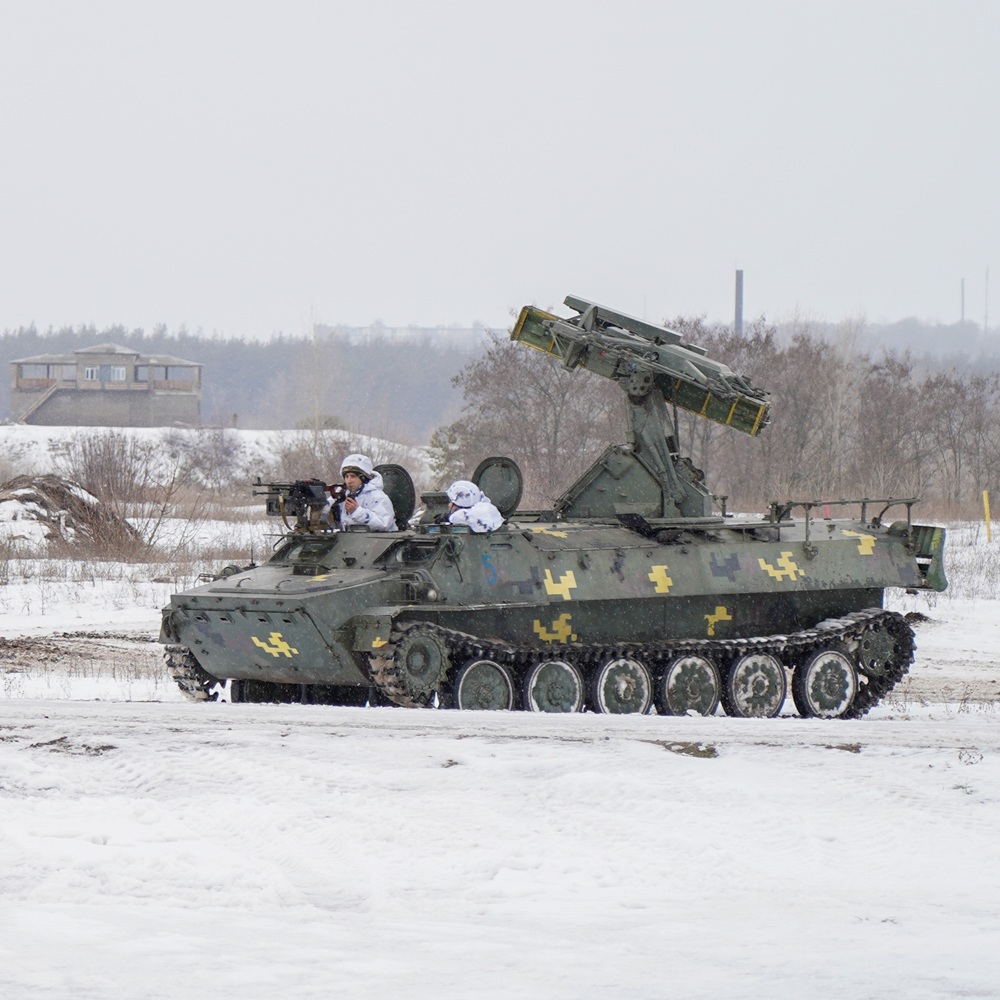
Kharkiv, Ukrainian-Russian border, Ukraine - February 2022: The Ukrainian army conducts exercises near the Ukrainian-Russian border. War of Russia against Ukraine.

The end of Great Illusions and the Revenge of Realism. The Case of the War in Ukraine – Part 2

by Krzysztof Sliwinski

Abstract This is the second part of the analysis regarding the realist interpretation of the ongoing war in Ukraine. (The first part is available here). This paper examines the ongoing war in Ukraine through the lens of realism, challenging optimistic Western narratives and highlighting Russia's strategic gains despite extensive sanctions. Since 2022, the EU has imposed 19 sanctions packages targeting Russia's economy, yet Russia has adapted and continued military offensives across multiple fronts, making significant territorial advances, particularly in Donetsk Oblast. The strategic importance of Odessa, Ukraine's largest deep-water port, is underscored due to its economic, military, and geopolitical value, with Russian experts openly discussing its potential capture. The conflict has also driven modernisation in Russia's military-industrial complex, introducing advanced missile systems and hypersonic weapons that challenge NATO defences. Post-war territorial changes remain uncertain, with diplomatic options constrained by Ukraine's constitution and international law. European public opinion is divided on war readiness, reflecting broader societal hesitations. Key Words: Realism, War, Ukraine Reality on the ground – the territorial losses and military developments Following the super optimistic narrative and the consequent groupthink, as evidenced in the first part of this paper, the EU has so far imposed no fewer than 19 sanctions packages.[1] The latest package adopted on October 23, 2025, focuses on intensifying pressure on Russia's war economy by targeting key sectors, including energy, finance, military capabilities, transportation, and professional services, while also enhancing anti-circumvention measures. [2] Source: Sanctions adopted following Russia’s military aggression against Ukraine. (2025, October 29). European Commission. https://finance.ec.europa.eu/eu-and-world/sanctions-restrictive-measures/sanctions-adopted-following-russias-military-aggression-against-ukraine_en In the meantime, Russia seems to have accepted any adverse consequences of the sanctions and learned to live with them. Source: Grok – prompt: Latest macroeconomic indicators for the Russian Federation economy available at: https://x.com/i/grok?conversation=1998598998345814522 Militarily speaking, though, Russia (which is in fact fighting several NATO countries alongside Ukraine) seems to be not only advancing in the field. As of December 10, 2025, Russian forces have continued offensive operations across multiple fronts in eastern and southern Ukraine. These advances are part of a broader push amid ongoing heavy fighting, with Russian officials claiming momentum along the entire line of contact. Examples include: Pokrovsk Direction (Donetsk Oblast), Kupiansk/Kharkiv Direction, Lyman Direction (Donetsk Oblast), Siversk Direction (Donetsk Oblast), Zaporizhia/Southern Direction. On top of that, the media reports advances on multiple fronts, including Borova, Novopavlivka, and the eastern areas; the liberation of Rovnoye and Petropavlovka; the encirclement and liquidation of Ukrainian forces; and the fall of Dimitrov — widespread strikes on Ukrainian infrastructure.[3] Source: Wikimedia Commons: https://commons.wikimedia.org/wiki/File:Map_of_Ukraine_with_Cities.png Importantly, Russian experts and military advisors openly debate the possibility of seizing control of Odessa.[4] Let us make no mistake here. Odessa is strategically important. Economically, Odessa is Ukraine's largest and only deep-water port, handling around 65% of the country's sea-based imports and exports, which account for 70% of Ukraine's total trade.[5] For Russia, controlling or disrupting this port serves to cripple Ukraine's economy while bolstering Russia's own position in global markets. First: Ukraine is a major global grain exporter, and Odessa is central to shipping these commodities. Russian attacks on the port, such as those following the withdrawal from the U.N.-backed grain deal in 2023, aim to prevent Ukrainian shipments, allowing Russia to dominate markets in the Middle East, North Africa, and beyond. Russia's Black Sea ports (e.g., Novorossiysk) handle its own $43 billion in annual grain exports, and undermining Odessa helps Russia create global reliance on its foodstuffs amid food insecurity.[6] Second, the port processes petroleum, natural gas, minerals, and even high-purity neon gas for semiconductors. Russia has targeted oil facilities near Odessa to disrupt fuel logistics, and control here would secure routes for Caspian Sea and Middle Eastern energy flows, aligning with Russia's strategy to diversify exports as hydrocarbon revenues decline.[7] Losing Odessa would be a "massive strategic blow" to Ukraine, akin to Britain losing Dover. Militarily, as a major Black Sea hub, Odessa enables Russia to project power and maintain dominance in the region. First, Russia's Black Sea Fleet, based in Crimea, can blockade Ukrainian coasts from Odessa, preventing resupplies and conducting amphibious operations — though these are high-risk due to Ukrainian defenses like mined waters.[8] The fleet supports expeditionary missions (e.g., the 2015 Syrian intervention) and hosts significant missile capabilities, with the capacity to deploy 80 long-range missiles in the area.[9] Second, even without full capture, Russia can harass shipping through mining or interdiction, extending tactics used in the Sea of Azov since 2014. This obstructs Ukrainian trade in the long term, potentially even in ceasefire scenarios, while facilitating Russian oil shipments (22% of which pass through the Black Sea).[10] Geopolitically, Odessa's location amplifies Russia's regional influence. First, capturing Odessa would create a land bridge to Transnistria, a pro-Russian breakaway region in Moldova just 35 miles away, allowing Russia to intimidate Moldova and potentially expand conflict there.[11] This aligns with broader aims to control Ukraine's entire Black Sea coast, threatening neighbours like Romania.[12] Second, dominating the northern Black Sea coast from Odessa would weaken Ukraine's security, block NATO reinforcements, and provide Russia with leverage in negotiations. It's seen as more critical to Russia's objectives than other Ukrainian regions, such as Kharkiv. President Putin has indicated in fact that the coastal area "rightfully belongs to Russia" as war spoils.[13] Finally, Odessa was founded in 1794 by Russian Empress Catherine the Great on former Ottoman territory, and it became one of the Russian Empire's largest cities and ports.[14] Arguably, the harbour city has a large Russian-speaking population (Russians are the second-largest ethnic group in Odessa Oblast), and Kremlin officials assert it has "nothing in common with the Kiev regime," viewing it as inherently Russian.[15] More interestingly, it appears that the Russian Military Industrial Complex (MIC) has been using the war, as MICs always do, as a perfect opportunity to modernize its military equipment. Consequently, Russia has advanced missile systems that NATO countries find a real challenge. Examples include: - Intercontinental Ballistic Missiles (ICBMs) RS-28 Sarmat, Russia's newest heavy ICBM, operational since 2023, with a range exceeding 18,000 km (up to 35,000 km in sub-orbital flight), a payload of over 10 tons including up to 16 nuclear warheads or hypersonic glide vehicles, and advanced countermeasures against missile defenses.[16] It's considered the world's longest-range and most powerful ICBM in service. - Hypersonic Systems Avangard Hypersonic Glide Vehicle (HGV), deployed on ICBMs like the Sarmat, can reach speeds up to Mach 27 (about 20,700 mph), perform unpredictable manoeuvres at high altitudes, and generate immense kinetic energy (equivalent to over two megatons of TNT). It's designed to evade all known missile defence systems.[17] Kh-47M2 Kinzhal, an air-launched hypersonic missile with a range of over 2,000 km and speeds up to Mach 10. It can manoeuvre mid-flight, carry nuclear or conventional warheads, and has been used operationally in conflicts like Ukraine.[18] 3M22 Zircon, a scramjet-powered hypersonic cruise missile reaching Mach 9, with a range of about 1,000 km. It's primarily anti-ship, launched from ships or submarines, and has demonstrated hits on maritime targets in exercises like Zapad 2025.[19] - Air and Missile Defence Systems S-500 Prometheus, an advanced surface-to-air missile system capable of intercepting targets at 600 km, tracking up to 300 simultaneously, and engaging hypersonic weapons, ICBMs, and stealth aircraft. It's integrated with multiple radars for resilience against jamming.[20] - Emerging or Experimental Systems 9M370 Burevestnik (SSC-X-09 Skyfall), a nuclear-powered cruise missile with theoretically unlimited range due to its onboard reactor. It underwent a successful test flight in October 2025 but remains in development, with concerns about safety and reliability.[21] Poseidon (Status-6), an unmanned, nuclear-powered underwater drone (torpedo-like) capable of carrying megaton-class warheads over intercontinental distances. It's designed for coastal targets and was tested alongside Burevestnik in 2025, though full operational status is unclear.[22] Oreshnik, a new intermediate-range ballistic missile (IRBM) with hypersonic capabilities, is evading Western defences. Russia plans deployments in Belarus by late 2025, enhancing strike options in Europe.[23] Last but not least, the media reports on a new, potentially game-changing technology: the TOS-1A Solntsepyok, a heavy multiple launch rocket system (MLRS) designed primarily to deliver thermobaric (fuel-air explosive) and incendiary munitions. It is mounted on a modified T-72 tank chassis for mobility and protection in combat zones, and it serves as a short-range area-denial weapon, often used to target fortified positions, infantry, and light armoured vehicles by creating massive blast waves and high temperatures.[24] Possible Territorial Changes after the War? As of early 2026, Russia continues to make territorial gains (capturing over 5,600 square kilometers, mainly in Donetsk Oblast). According to the Institute for the Study of War (ISW) (a non-partisan, non-profit American think tank), German intelligence sources claim that “Germany expects Russia to target German energy and defence infrastructure early, given Germany’s role as a NATO hub for moving and sustaining forces and forecasts that Russia will see Germany as a priority target for long range missile strikes, armed drones, and special forces after an open armed attack on NATO’s eastern flank”[25] Consequently, according to ISW, Russia would likely be able to pose a significant threat to NATO earlier than many Western estimates, particularly in the event of a future ceasefire in Ukraine that would free up Russian forces and allow Russia to rearm and reconstitute.   Against this backdrop, any post-war territorial options generally involve compromises due to military realities, though complete restoration of Ukraine's 2014 borders is seen as improbable without major shifts. These options are shaped by Ukraine's constitution (which prohibits ceding territory without a nationwide referendum or amendments), international law against forced border changes, and Russia's demands for recognition of annexed areas such as Crimea, the Donbas (Donetsk and Luhansk), Kherson, and Zaporizhzhia.[26] Russia's battlefield advantages and confidence reduce incentives for concessions, while Ukraine seeks security guarantees (e.g., EU integration or European military presence) in exchange for any deals.[27] Below, the reader will find a summary of some of the options discussed by diplomats: Source: Grok - https://x.com/i/grok?conversation=2008833222403387754 In addition to territorial change options, any deal will most likely include non-territorial elements such as Ukraine's neutrality (no NATO), demilitarisation caps, the return of abducted children, and economic reintegration of Russia (e.g., sanctions relief). Experts warn that rushed agreements could lead to renewed conflict, emphasising sustainable security for Ukraine (e.g., European troops or arms build-up).[28] Outcomes in 2026 hinge on battlefield shifts, US pressure, and European unity, with diplomacy intensifying but no breakthroughs yet. Conclusion On 11 December, NATO Secretary General Mark Rutte warned in a speech in Germany that Russia is escalating its war campaign against Europe, not just Ukraine. “We must be prepared for the scale of war our grandparents or great-grandparents endured,” he said.[29] On the very same day, the EU made the bold move of indefinitely immobilising frozen Russian assets worth €210 billion; €185 billion held at Belgium’s Euroclear, and €25 billion held in banks across other member states. European Commission President Ursula von der Leyen hailed the move that day, sending a strong signal to Russia that "as long as this brutal war of aggression continues, Russia's costs will continue to rise. […] This is a powerful message to Ukraine: We want to make sure that our brave neighbour becomes even stronger on the battlefield and at the negotiating table,” von der Leyen added. There is one problem that most EU leaders overlook. Namely, European societies are deeply divided, with large sections unwilling to go to war with Russia. Numerous polls evidence this. A recent ECFP Poll (June) was conducted by YouGov, Datapraxis, and Norstat across 12 countries (Denmark, Estonia, France, Germany, Hungary, Italy, Poland, Portugal, Romania, Spain, Switzerland, UK). It focused on readiness for potential war, including amid Russia's invasion of Ukraine and U.S. policy shifts. Key findings suggest: 50% overall support increasing defence spending (highest in Poland and Denmark at 70%); majorities in France (62%), Germany (53%), and Poland (51%) favour reintroducing mandatory military service; 59% support continuing military aid to Ukraine even without U.S. involvement; 54% back a European nuclear deterrent independent of the U.S. All of this seems to reflect acceptance of preparation for conflict, though not direct personal willingness to fight.[30] According to John Mearsheimer, a leading realist scholar, Russia's decision to invade Ukraine was primarily a rational response to the changing material realities of the international system, particularly the eastward expansion of NATO and the European Union (EU), which Russia perceived as a direct threat to its core strategic interests and great power status. Mearsheimer contends that the anarchic international system compels states, especially great powers, to maximise their power to ensure survival. Thus, Russia acted to prevent Ukraine from becoming a Western stronghold on its border, viewing the West's policies as provocative and threatening to its security. This perspective emphasises the structural pressures and incentives created by anarchy and power competition, suggesting that the imperative drove Russia's actions to survive and maintain regional dominance amid Western encroachment.[31] Admittedly, Mearsheimer’s views are much criticised by Western scholars and media experts. And yet, with the recent actions of the United States against Venezuela (the kinetic attack against the state and the kidnapping of its president and his wife – all against the most sacred principles of international law), one wonders why the cold-blooded, objective analysis has been forgone in favour of wishful thinking. References [1] Sanctions adopted following Russia’s military aggression against Ukraine. (2025, October 29). European Commission. https://finance.ec.europa.eu/eu-and-world/sanctions-restrictive-measures/sanctions-adopted-following-russias-military-aggression-against-ukraine_en [2] Fisch, E. J., Junck, R. D., Sève, M., Albrecht vom Kolke, M., Benson, J., Lainé, W., Mueller, P., Seidner, G., & Vianesi, G. (2025, November 12). EU Adopts 19th Russia Sanctions Package Alongside New Sanctions Being Imposed by US and UK. Skadden. https://www.skadden.com/insights/publications/2025/11/eu-adopts-19th-sanctions-package [3] Grok: What are the latest advances of Russian troops in Ukraine? [4] Каминский, А. (2025, October 2). «СВО закончится взятием Одессы». НАТО готовит румын и французов. Что в планах у Минобороны России? RuNews24. https://runews24.ru/articles/02/10/2025/svo-zakonchitsya-vzyatiem-odessyi-nato-gotovit-rumyin-i-franczuzov-chto-v-planax-u-minoboronyi-rossii also Крылова, А. (2025, December 3). Названы сроки, в которые Российская армия сможет дойти до Одессы. Абзац. https://absatz.media/news/143321-nazvany-sroki-v-kotorye-rossijskaya-armiya-smozhet-dojti-do-odessy or Елистратов, А. (2025, November 20). Эксперт: русским нет смысла соглашаться на план Трампа, они и так дойдут до Одессы. Репортёр. https://topcor.ru/66186-jekspert-russkim-net-smysla-soglashatsja-na-plan-trampa-oni-i-tak-dojdut-do-odessy.html [5] Costea, C. A. (2022, March 25). The strategic importance of the port of Odessa. Romanian Centre for Russian Studies. https://russianstudiesromania.eu/2022/03/25/the-strategic-importance-of-the-port-of-odessa/ [6] Black, E., & Kaushal, S. (2025, April 14). Black Sea Significance to European Security. Romanian Centre for Russian Studies. https://www.rusi.org/explore-our-research/publications/commentary/black-sea-significance-european-security [7] Ozberk, T. (2022, April 5). Why is Odessa important for Russia? Defence Procurement International. https://www.defenceprocurementinternational.com/features/sea/why-is-odessa-important-for-russia [8] Ibidem. [9] Black, E., & Kaushal, S. (2025, April 14). Black Sea Significance to European Security. Romanian Centre for Russian Studies. https://www.rusi.org/explore-our-research/publications/commentary/black-sea-significance-european-security [10] Mathers, J. (2025, September 8). Russia has provided fresh evidence of its territorial ambitions in Ukraine. The Conversation. https://theconversation.com/russia-has-provided-fresh-evidence-of-its-territorial-ambitions-in-ukraine-264592 [11] Akage, A. (2022, May 20). Is Odessa Next? Putin Sees A Gateway To Moldova — And Chance For Revenge. Worldcrunch. https://worldcrunch.com/world-affairs/why-odessa-is-important/ [12] Boyse, M. (2024, March 21). Operation Odesa: Russia Wants the Entire Ukrainian Black Sea Coast. Hudson Institute. https://www.hudson.org/defense-strategy/operation-odesa-russia-wants-entire-ukrainian-black-sea-coast-matthew-boyse [13] Mathers, J. (2025, September 8). Russia has provided fresh evidence of its territorial ambitions in Ukraine. The Conversation. https://theconversation.com/russia-has-provided-fresh-evidence-of-its-territorial-ambitions-in-ukraine-264592 [14] Santora, M. (2023, July 19). Why Odesa Is So Important to Ukraine in the War With Russia. The New York Times. https://www.nytimes.com/2023/07/19/world/europe/odesa-ukraine-war-russia.html [15] Ozberk, T. (2022, April 5). Why is Odessa important for Russia? Defence Procurement International. https://www.defenceprocurementinternational.com/features/sea/why-is-odessa-important-for-russia [16] Ali, I. A. (2025, December 2). From Sarmat to Avangard: 10 most technologically advanced Russian weapon systems. WION. https://www.wionews.com/photos/from-sarmat-to-avangard-10-most-technologically-advanced-russian-weapon-systems-1764678135158/1764678135159 [17] Ibidem. [18] See more at: https://missilethreat.csis.org/country_tax/russia/ [19] Charpentreau, C. (2025, September 15). Russia uses Zapad 2025 for ‘hypersonic posturing’ with Zircon, Kinzhal drills. AeroTime. https://www.aerotime.aero/articles/zapad-2025-russia-hypersonic-posture-zircon-kinzhal [20] Ali, I. A. (2025, December 2). From Sarmat to Avangard: 10 most technologically advanced Russian weapon systems. WION. https://www.wionews.com/photos/from-sarmat-to-avangard-10-most-technologically-advanced-russian-weapon-systems-1764678135158/1764678135159 [21] Gwadera, Z. (2025, November 20). Russia’s Burevestnik and Poseidon tests. IISS. https://www.iiss.org/online-analysis/missile-dialogue-initiative/2025/11/russias-burevestnik-and-poseidon-tests/ [22] Ibidem. [23] See more at: https://youtu.be/D22JNoLzj9E?si=BtZ3NMCs7KoUk7ue [24] See more at: https://www.globalsecurity.org/military/world/russia/tos-1a.htm [25] Young, J., Harward, C., Simanovskyy, M., Mappes, G., Nasreddine, D., & Barros, G. (2026, January 6). Russian Offensive Campaign Assessment, January 6, 2026. Institute for the Study of War. https://understandingwar.org/research/russia-ukraine/russian-offensive-campaign-assessment-january-6-2026/ [26] Yurchuk, V. (2025, August 12). Ceding land to Russia not only unpopular in Ukraine, but also illegal. PBS NEWS. https://www.pbs.org/newshour/world/ceding-land-to-russia-not-only-unpopular-in-ukraine-but-also-illegal [27] Harding, E. (2025, November 24). What Is the Strategy in the Ukraine-Russia Peace Negotiations? Centre for Strategic & International Studies. https://www.csis.org/analysis/what-strategy-ukraine-russia-peace-negotiations [28] Wright, T. (2025, August 18). The Only Plausible Path to End the War in Ukraine. The Atlantic. https://www.theatlantic.com/ideas/archive/2025/08/trump-ukraine-russia-peace/683907/ [29] Kiorri, E., & Cabanas, L. B. (2025, December 30). Would you fight for the EU’s borders? Take our poll. Euronews. https://www.euronews.com/my-europe/2025/12/30/would-you-fight-for-the-eus-borders-take-our-poll?fbclid=IwT01FWAPFTrZleHRuA2FlbQIxMABzcnRjBmFwcF9pZAwzNTA2ODU1MzE3MjgAAR4KLt3FfIaCbSxjUO8ldmbDys6WPnLeZaNIpZuhAApKVUs073MB4vZj8DKbOA_aem_lLTRWqCcGPL3F9z5-SX65g [30] https://www.eureporter.co/world/2025/06/26/most-eu-citizens-are-ready-for-war-new-poll/ [31] Smith, N. R., & Dawson, G. (2022). Mearsheimer, realism, and the Ukraine war. Analyse & Kritik, 44(2), 175–200. https://doi.org/10.1515/auk-2022-2023

Defense & Security
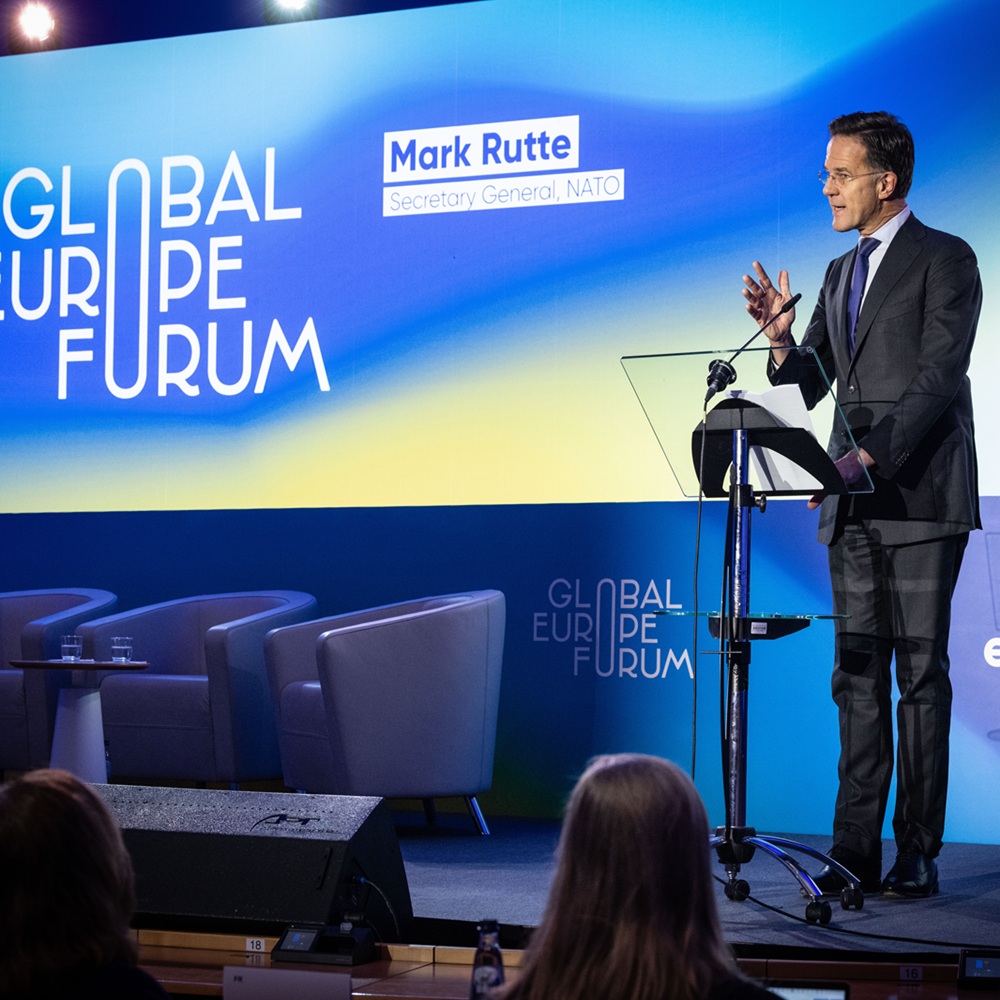
NATO Secretary General Mark Rutte addresses the Renew Europe Global Europe Forum 2026 at the European Parliament

Keynote address by NATO Secretary General Mark Rutte at the Renew Europe Global Europe Forum 2026

by Mark Rutte

Great to be here and to see so many people I know so well. And of course, Teri, who will lead us later in the debate. And of course, you, Madam President, dear Valérie, thank you for your very warm welcome. And let me start by saying that it is always a pleasure to be on this side of town, to be at the European Parliament. This is my first public speaking engagement this year, and it is very meaningful to have this conversation with you – with the members of parliament. At the NATO Summit in The Hague last summer, we decided to make our deterrence and defence a priority. We agreed a plan, as you know, to invest 5% of GDP annually in defence by 2035 – with 3.5% on core defence, and 1.5% on defence- and security-related issues. Yes, that is a lot of money, but it is what is required to build our armed forces and buy the capabilities those forces need to protect us. And here we are talking about battle tanks, fighter jets, ships, long range missiles, and ammunition, but also artificial intelligence, cyber-defence, space capabilities, and of course, much more. In The Hague, we also agreed to speed up defence production and innovation. And this is of course about re-energising our industries across Europe and North America so that they step up supply. There are certainly business opportunities for our industries. But it’s more than that: there are real benefits for all of us. Because when supply goes up, the result is more security, more economic growth, and also many more jobs – the defence dividend. The defence dividend is real. I know – and you all know – that getting to this famous 5% and accelerating production requires hard work and tough decisions from all of us – all our nations and all your constituents. But we need to do it. And we need to do it basically for two reasons. One, because the security situation demands it. We need to be honest: the dangers we face are real, and the dangers we face are lasting. Russia remains our most significant threat. Putin’s war machine is churning out military equipment around the clock. And Moscow is testing us through cyber-attacks, sabotage and more. And there is no reason to believe Russia’s pattern of aggressive and reckless actions will change any time soon. On the contrary, Russia is seeking long-term confrontation. And it is not alone. Russia is working with China, with Iran, and North Korea. And these countries fuel Moscow’s war against Ukraine. And together, they are attempting to undermine our stability and security. At the same time, the threat from terrorism persists, and instability remains rampant in NATO’s southern neighbourhood. The second reason why we need to deliver on the 5% is that the time when we conveniently let the United States carry the burden for our security is over. The US is absolutely committed to NATO. But this commitment comes with a clear and long-standing expectation: that Europe and Canada take more responsibility for their own security. And I believe that is only fair. So 5% must be the direction of travel. There’s basically no time to waste. Ensuring Allies step up and speed up efforts on defence will remain my – and NATO’s – absolute priority as we prepare for the next Summit, which will take place in Ankara, in Türkiye, in July. Then Ukraine, which clearly is still a huge priority. Because, as we all know, our security is inextricably linked to Ukraine’s security. Just last week, I was at the Coalition of the Willing meeting in Paris, where leaders discussed how we can support and secure the future for Ukraine. It was a constructive meeting, where we had concrete discussions on robust security guarantees for Ukraine, and where Europe and the US affirmed their readiness to provide such guarantees to secure Ukraine after a peace deal with Russia. Meanwhile, NATO continues to support Ukraine every day, and we do that in various ways, including through the PURL initiative, which supplies vital US equipment, including air defence – which is particularly vital these days – for Ukraine to protect its people and hold the front line, paid for by Allies. Regardless of when this war ends, our support to Ukraine will continue to be important to ensure a lasting peace. After all, the Ukrainian Armed Forces will remain the first line of defence. Supporting Ukraine and keeping our own people safe is not a job that NATO does alone. It is a team effort. And the European Union is an essential player. The partnership between NATO and the EU is growing stronger every day. And that is exactly what we need. Because, when we combine our strength, of NATO and the EU, we can more effectively tackle the many challenges we face. And as you know, 23 nations, members of the EU, are also Allies in NATO. And working together, we keep Ukraine strong today and able to defend itself against any aggression in the future. And working together, we can produce more defence capabilities, and we can produce them faster. We can innovate better and outsmart our competitors. Now is not the time to go alone. And it’s not the time to create barriers between us that would increase costs, complicate production, and hamper innovation. Instead, we need to leverage our respective strengths even more. NATO is strong at standard setting and capability targets that are informed by our defence plans. NATO has a strong command and control force structure. And the European Union has all the tools of the internal market at its disposal, and of course the convening power to bring together the Member States in the EU, so to make sure that the money is there to invest in defence. So, we complement each other. And yes, it is undeniable that Russia, China, North Korea, and Iran are aligning more and more. And they’re challenging us. But they are only starting to understand what partnership really means. We are miles ahead. We can build on decades of friendship between our organisations and between our nations on both sides of the Atlantic. And we can build on growing partnerships with countries around the world. And that is an incredible advantage. Let’s ensure we retain it. I’ll certainly play my part. And I count on you – and I know I can – to play yours. So, thank you very much, and I look forward to our discussions.

Defense & Security
Flag of Greenland painted on the brick wall

Trump wants Greenland. Europe’s tepid response is putting NATO and global security at risk

by Shannon Brincat , Juan Zahir Naranjo Cáceres

Europe stands at a precipice. Following the US military operation in Venezuela, President Donald Trump and his close advisers have reiterated that Greenland – currently an autonomous territory of Denmark – will be next. “We need Greenland from the standpoint of national security, and Denmark is not going to be able to do it,” Trump told reporters this week. “Let’s talk about Greenland in 20 days.” The threat is not mere hyperbole. Trump has appointed Louisiana Governor Jeff Landry, who publicly supports US annexation, as special envoy to Greenland. And Katie Miller, wife of top Trump adviser Stephen Miller, recently posted an image of Greenland in US flag colours with the caption “SOON”. These are not random provocations but coordinated pressure tactics against a sovereign territory. Greenland’s Prime Minister Jens-Frederik Nielsen responded by saying “That’s enough now. No more pressure. No more insinuations. No more fantasies of annexation.” Danish leaders have warned a US attack on Greenland would signal “the end of NATO” and of post-second world war security. Threats against NATO members (such as Denmark) could also embolden Russia even more and lead to more uncertainty for Europe. So why are European leaders not more forcefully calling out Trump’s threats against Greenland – as well as his government’s shocking intervention in Venezuela? And what’s at stake? Europe’s weak response NATO’s Article 5 commits members to treat an attack on one as an attack on all. If the US were to attack Greenland, Denmark would expect NATO’s collective defence mechanisms to activate against the US. European leaders have been forced to confront a reality they hoped to avoid: the US, NATO’s founding member, may become the alliance’s gravest threat. But so far, the response across the continent to both the Greenland threats and the US’ actions in Venezuela has been feeble and confused. British Prime Minister Keir Starmer admitted he wanted to speak to President Trump before he condemned the attacks, epitomizing Europe’s subordination. A letter signed by the Danish prime minister and the leaders of France, Germany, Spain, the UK, Italy, and Poland, has affirmed only Greenland and Denmark should determine Greenland’s future. The European Union has pledged to defend members’ territorial integrity. But they didn’t articulate any solid counter-threat to Trump’s comments about Greenland. They could, for instance, have reiterated their long-term partnership, the potential collapse of the biggest alliance in human history, or the costs in losing cooperation (both economic and security) with Europe that directly benefits the US. And such vague declarations about Greenland ring hollow when the same governments hesitate to condemn US violations of international law in Venezuela. German Chancellor Friedrich Merz said the “legal classification of the US intervention [in Venezuela] is complex” and that Germany needed time to consider this. Such equivocation on the most basic, foundational concept of international law not only signals incredible weakness. It also undermines Europe’s credibility when invoking the “rules-based order” against Russia and its actions in Ukraine, making it near impossible to mobilise Global South support, sustain sanctions coalitions, or claim principled restraint. When European leaders respond so cautiously to the Venezuela operation – stressing respect for international law while avoiding direct criticism of Washington – their principles are exposed as highly selective. Russia benefits Russia understands this dynamic perfectly. Moscow has already characterised US actions as “armed aggression” while pointing to Western hypocrisy. Moscow benefits from this in fundamental ways. First, Western hypocrisy validates Russia’s narrative that international law is merely a tool the powerful use against the weak. The vacillation on condemning US action in Venezuela or threats against fellow NATO members contradicts the European narrative against Putin’s war. Second, NATO’s potential collapse or paralysis would hand Moscow a strategic victory that Russian military power alone has been unable to secure. If the United States annexes Greenland, Denmark would face an existential choice: accept the violation and remain in a compromised NATO or leave an alliance that no longer protects its members. All other members would face the same choice. The NATO alliance cannot function if its members no longer share fundamental values about sovereignty and law. Trump has forced Europe to confront whether it will defend these principles universally or accept a world where might makes right. Appeasement all over again? This moment recalls Europe’s crisis of the Munich agreement. In 1938, Britain and France sacrificed Czechoslovakia’s sovereignty to appease Nazi Germany, excluding Prague from negotiations over its future while negotiating away its territory. Only later would the democratic powers discover that appeasing aggression – however politically convenient at the time – would only invite yet more aggression. Today, Europe faces a parallel dilemma: how to respond when its most powerful ally directly threatens an EU and NATO member state. Europe is edging toward another Munich agreement moment, with concessions dressed up as stability and peace a euphemism for appeasement. The events in the coming weeks will largely determine the very future of Europe. The continent faces a choice between political expediency or rules-based international order built on the prohibition of aggressive war, respect for sovereignty, and collective security. Will its leaders be prepared to confront their own hypocrisy or timidly accept the erosion of the rules they claim to defend?

Defense & Security
Soldier in engineering role uses AI application on laptop to manage server hub systems. Army commander reviews secret intelligence information using artificial intelligence in data center, camera A

Dual-Use AI Technologies in Defense: Strategic Implications and Security Risks

by Mayukh Dey

Introduction Artificial intelligence has become a critical technology in the 21st century, with applications spanning healthcare, commerce, and scientific research. However, the same algorithms that enable medical diagnostics can guide autonomous weapons, and the same machine learning systems that power recommendation engines can identify military targets. This dual-use nature, where technologies developed for civilian purposes can be repurposed for military applications, has positioned AI as a central element in evolving global security dynamics. The strategic implications are substantial. China views AI as essential for military modernization, with the People's Liberation Army planning to deploy "algorithmic warfare" and "network-centric warfare" capabilities by 2030 (Department of Defense, 2024). Concurrently, military conflicts in Ukraine and Gaza have demonstrated the operational deployment of AI-driven targeting systems. As nations allocate significant resources to military AI development, a critical question emerges: whether the security benefits of dual-use AI technologies can be realized without generating severe humanitarian consequences. The Reversal Commercial Innovation Driving Military Modernization Historically, military research and development drove technological innovation, with civilian applications emerging as secondary benefits, a phenomenon termed "spin-off." The internet, GPS, and microwave ovens all originated in defense laboratories. This dynamic has reversed. Commercially developed technologies now increasingly "spin into" the defense sector, with militaries dependent on technologies initially developed for commercial markets. This reversal carries significant implications for global security. Unlike the Cold War era, when the United States and Soviet Union controlled nuclear weapons development through state programs, AI innovation occurs primarily in private sector companies, technology firms, and university research institutions. Organizations like DARPA influence global emerging technology development, with their projects often establishing benchmarks for research and development efforts worldwide (Defense Advanced Research Projects Agency, 2024). This diffusion of technological capacity complicates traditional arms control frameworks based on state-controlled military production. The scale of investment is considerable. The U.S. Department of Defense's unclassified AI investments increased from approximately $600 million in 2016 to about $1.8 billion in 2024, with more than 685 active AI projects underway (Defense One, 2024). China's spending may exceed this figure, though exact data remains unavailable due to the opacity of Chinese defense budgeting. Europe is pursuing comparable investments, with the EU committing €1.5 billion to defense-related research and development through initiatives like the European Defence Fund. Dual-Use Applications in Contemporary Warfare AI's military applications span the spectrum of warfare, from strategic planning to tactical execution. Current deployments include: Intelligence, Surveillance, and Reconnaissance (ISR): AI systems process large volumes of sensor data, satellite imagery, and signals intelligence to identify patterns beyond human analytical capacity. In 2024, "China's commercial and academic AI sectors made progress on large language models (LLMs) and LLM-based reasoning models, which has narrowed the performance gap between China's models and the U.S. models currently leading the field," enabling more sophisticated intelligence analysis (Department of Defense, 2024). Autonomous Weapons Systems: Autonomous weapons can identify, track, and engage targets with minimal human oversight. In the Russia-Ukraine war, drones now account for approximately 70-80% of battlefield casualties (Center for Strategic and International Studies, 2025). Ukrainian officials predicted that AI-operated first person view drones could achieve hit rates of around 80%, compared to 30-50% for manually piloted systems (Reuters, 2024). Predictive Maintenance and Logistics: The U.S. Air Force employs AI in its Condition-Based Maintenance Plus program for F-35 fighters, analyzing sensor data to predict system failures before occurrence, reducing downtime and operational costs. Command and Control: AI assists military commanders in processing battlefield information and evaluating options at speeds exceeding human capacity. Project Convergence integrates AI, advanced networking, sensors, and automation across all warfare domains (land, air, sea, cyber, and space) to enable synchronized, real-time decision-making. Cyber Operations: AI powers both offensive and defensive cyber capabilities, from automated vulnerability discovery to malware detection and sophisticated social engineering campaigns. Gaza and Ukraine: AI in Contemporary Conflict Recent conflicts have provided operational demonstrations of AI's military applications and associated humanitarian costs. Israel's Lavender system reportedly identified up to 37,000 potential Hamas-linked targets, with sources claiming error rates near 10 percent (972 Magazine, 2024). An Israeli intelligence officer stated that "the IDF bombed targets in homes without hesitation, as a first option. It's much easier to bomb a family's home" (972 Magazine, 2024). The system accelerated airstrikes but also contributed to civilian casualties, raising questions about algorithmic accountability. The system's design involved explicit tradeoffs: prioritizing speed and scale over accuracy. According to sources interviewed by 972 Magazine, the army authorized the killing of up to 15 or 20 civilians for every junior Hamas operative that Lavender marked, while in some cases more than 100 civilians were authorized to be killed to assassinate a single senior commander (972 Magazine, 2024). Foundation models trained on commercial data lack the reasoning capacity humans possess, yet when applied to military targeting, false positives result in civilian deaths. Data sourced from WhatsApp metadata, Google Photos, and other commercial platforms created targeting profiles based on patterns that may not correspond to combatant status. Ukraine has implemented different approaches, using AI to coordinate drone swarms and enhance defensive capabilities against a numerically superior adversary. Ukrainian Deputy Defense Minister Kateryna Chernohorenko stated that "there are currently several dozen solutions on the market from Ukrainian manufacturers" for AI-augmented drone systems being delivered to armed forces (Reuters, 2024). Ukraine produced approximately 2 million drones in 2024, with AI-enabled systems achieving engagement success rates of 70 to 80 percent compared to 10 to 20 percent for manually controlled drones (Center for Strategic and International Studies, 2025). Both sides in the conflict have developed AI-powered targeting systems, creating operational arms race dynamics with immediate battlefield consequences. Civilian Harm: Technical and Legal Limitarions The integration of AI into lethal military systems raises humanitarian concerns extending beyond technical reliability. AI's inability to uphold the principle of distinction, which requires protecting civilians by distinguishing them from combatants in compliance with international humanitarian law, presents fundamental challenges. Current AI systems lack several capabilities essential for legal warfare:  Contextual Understanding: AI cannot comprehend the complex social, cultural, and situational factors that determine combatant status. A person carrying a weapon might be a combatant, a civilian defending their home, or a shepherd protecting livestock.  Proportionality Assessments: International humanitarian law requires that military attacks not cause disproportionate civilian damage. Human Rights Watch noted that it is doubtful whether robotic systems can make such nuanced assessments (Human Rights Watch, 2024).  Moral Judgment: Machines lack the capacity for compassion, mercy, or understanding of human dignity, qualities that have historically provided safeguards against wartime atrocities.  Accountability: With autonomous weapon systems, responsibility is distributed among programmers, manufacturers, and operators, making individual accountability difficult to establish. As one expert observed, "when AI, machine learning and human reasoning form a tight ecosystem, the capacity for human control is limited. Humans have a tendency to trust whatever computers say, especially when they move too fast for us to follow" (The Conversation, 2024). The risks extend to specific populations. Autonomous weapons systems trained on data predominantly consisting of male combatants in historical records could create algorithmic bias. In the case of Lavender, analysis suggests "one of the key equations was 'male equals militant,'" echoing the Obama administration's approach during drone warfare operations (The Conversation, 2024). Communities of color and Muslim populations face heightened risks given historical patterns of discriminatory force deployment. Export Controls and Technology Transfer Challenges Recognizing AI's strategic importance, governments have implemented export control regimes. The U.S. Bureau of Industry and Security now requires licenses for exports of advanced computing chips and AI model weights, imposing security conditions to safeguard storage of the most advanced models. These controls face inherent tensions. Overly broad restrictions risk hampering legitimate research and commercial innovation. Analysis suggests that if AI technology is too extensively controlled, American universities may face difficulties performing AI research, resulting in a less robust U.S. AI ecosystem. Insufficient controls enable adversaries to acquire cutting-edge capabilities. The effectiveness of export controls remains uncertain. In 2024, hundreds of thousands of chips, totaling millions of dollars, were smuggled into China through shell companies, varying distributors, and mislabeling techniques (Oxford Analytica, 2025). China's DeepSeek models, which achieved performance approaching U.S. systems, were reportedly trained on chips that circumvented export restrictions. International Governance: Fragmentation and Competing Frameworks The international community has struggled to develop coherent governance frameworks for dual-use AI. Rather than a cohesive global regulatory approach, what has emerged is a collection of national policies, multilateral agreements, high-level summits, declarations, frameworks, and voluntary commitments. Multiple international forums have addressed AI governance: ● The UN Secretary-General created an AI Advisory Board and called for a legally binding treaty to prohibit lethal autonomous weapons systems without human control, to be concluded by 2026 ● The Group of Governmental Experts on Lethal Autonomous Weapons Systems has held discussions under the Convention on Certain Conventional Weapons since 2013, with limited concrete progress ● NATO released a revised AI strategy in 2024, establishing standards for responsible use and accelerated adoption in military operations ● The EU's AI Act, adopted in 2023, explicitly excludes military applications and national security from its scope This fragmented landscape reflects geopolitical divisions. The perceived centrality of AI for competition has led the U.S. to position itself as leader of ideologically aligned countries in opposition to China, including for security purposes. China promotes its own governance vision through initiatives like the Belt and Road, exporting technology standards alongside infrastructure. Strategic Stability Implications AI creates strategic stability challenges. Autonomous weapons enable substitution of machines for human soldiers in many battlefield roles, reducing the human cost and thus political cost of waging offensive war. This could increase the frequency of conflicts between peer adversaries, each believing they can prevail without significant domestic casualties. For conflicts between non-peer adversaries, reduced casualties further diminish domestic opposition to wars of aggression. The implications extend beyond conventional warfare. Armed, fully-autonomous drone swarms could combine mass harm with lack of human control, potentially becoming weapons of mass destruction comparable to low-scale nuclear devices. The technical barriers to such systems are declining as components become commercially available. AI also complicates nuclear stability. Advances in AI-enhanced sensors and data processing could undermine second-strike capabilities by improving detection of mobile missile launchers and submarines. This erosion of assured retaliation could incentivize first strikes during crises. Simultaneously, AI systems managing nuclear command and control create risks of accidents, miscalculations, or unauthorized launches. Ethical Framework Limitations The integration of AI into warfare strains traditional ethical frameworks. Just War Theory requires that combatants maintain moral responsibility for their actions, possess the capacity to distinguish combatants from civilians, and apply proportionate force. Automation bias and technological mediation weaken moral agency among operators of AI-enabled targeting systems, diminishing their capacity for ethical decision-making. When operators interact with targeting through screens displaying algorithmic recommendations rather than direct observation, psychological distance increases. This mediation risks transforming killing into a bureaucratic process. The operator becomes less a moral agent making decisions and more a technician approving or rejecting algorithmic suggestions. Furthermore, industry dynamics, particularly venture capital funding, shape discourses surrounding military AI, influencing perceptions of responsible AI use in warfare. When commercial incentives align with military applications, the boundaries between responsible innovation and reckless proliferation become unclear. Companies developing AI for civilian markets face pressure to expand into defense contracting, often with insufficient ethical deliberation. Conclusion Dual-use AI technologies present both opportunities and risks for international security. One trajectory leads toward normalized algorithmic warfare at scale, arms races in autonomous weapons that erode strategic stability, and inadequate international governance resulting in civilian harm. An alternative trajectory involves international cooperation that constrains the most dangerous applications while permitting beneficial uses. The timeframe for establishing governance frameworks is limited. AI capabilities are advancing rapidly, and widespread proliferation of autonomous weapons will make policy reversal substantially more difficult. The challenge resembles nuclear non-proliferation but unfolds at greater speed, driven by commercial incentives rather than state-controlled programs. Because AI is a dual-use technology, technical advances can provide economic and security benefits. This reality means unilateral restraint by democratic nations would cede advantages to authoritarian competitors. However, uncontrolled competition risks adverse outcomes for all parties. Concrete action is required from multiple actors. States must strengthen multilateral agreements through forums like the UN Convention on Certain Conventional Weapons to establish binding restrictions on autonomous weapons without meaningful human control. NATO and regional security alliances should harmonize AI ethics standards and create verification mechanisms for military AI deployments. Military institutions must implement mandatory human-in-the-loop requirements for lethal autonomous systems and establish clear chains of accountability for AI-driven targeting decisions. Technology companies developing dual-use AI systems bear responsibility for implementing ethical safeguards and conducting thorough threat modeling before commercial release. Industry alliances should establish transparency standards for military AI applications and create independent audit mechanisms. Universities and research institutions must integrate AI ethics and international humanitarian law into technical training programs. Export control regimes require coordination between the United States, EU, and allied nations to prevent regulatory arbitrage while avoiding overreach that stifles legitimate research. Democratic governments should lead by demonstrating that military AI can be developed within strict ethical and legal constraints, setting standards that distinguish legitimate security applications from destabilizing weapons proliferation. As Austrian Foreign Minister Alexander Schallenberg observed, this represents the Oppenheimer moment of the current generation, recognizing that dual-use AI, like nuclear weapons, represents a technology whose military applications demand collective restraint. The policy choices made in the next few years will have long-term consequences. They will determine whether AI becomes a tool for human advancement or an instrument of algorithmic warfare. The technology exists; the policy framework remains to be established. The actors are identified; the question is whether they possess the political will to act before proliferation becomes irreversible. References 972 Magazine (2024) 'Lavender': The AI machine directing Israel's bombing spree in Gaza. https://www.972mag.com/lavender-ai-israeli-army-gaza/ Center for Strategic and International Studies (2024) Where the Chips Fall: U.S. Export Controls Under the Biden Administration from 2022 to 2024. https://www.csis.org/analysis/where-chips-fall-us-export-controls-under-biden-administration-2022-2024 Center for Strategic and International Studies (2025) Ukraine's Future Vision and Current Capabilities for Waging AI-Enabled Autonomous Warfare. https://www.csis.org/analysis/ukraines-future-vision-and-current-capabilities-waging-ai-enabled-autonomous-warfare Defense One (2023) The Pentagon's 2024 Budget Proposal, In Short. https://www.defenseone.com/policy/2023/03/heres-everything-we-know-about-pentagons-2024-budget-proposal/383892/ Department of Defense (2024) Military and Security Developments Involving the People's Republic of China 2024. https://media.defense.gov/2024/Dec/18/2003615520/-1/-1/0/MILITARY-AND-SECURITY-DEVELOPMENTS-INVOLVING-THE-PEOPLES-REPUBLIC-OF-CHINA-2024.PDF Foreign Policy Research Institute (2024) Breaking the Circuit: US-China Semiconductor Controls. https://www.fpri.org/article/2024/09/breaking-the-circuit-us-china-semiconductor-controls/ Human Rights Watch (2024) A Hazard to Human Rights: Autonomous Weapons Systems and Digital Decision-Making. https://www.hrw.org/report/2025/04/28/a-hazard-to-human-rights/autonomous-weapons-systems-and-digital-decision-making National Defense Magazine (2024) Pentagon Sorting Out AI's Future in Warfare. https://www.nationaldefensemagazine.org/articles/2024/10/22/pentagon-sorting-out-ais-future-in-warfare Queen Mary University of London (2024) Gaza war: Israel using AI to identify human targets raising fears that innocents are being caught in the net. https://www.qmul.ac.uk/media/news/2024/hss/gaza-war-israel-using-ai-to-identify-human-targets-raising-fears-that-innocents-are-being-caught-in-the-net.html Reuters (2024) Ukraine rolls out dozens of AI systems to help its drones hit targets. https://euromaidanpress.com/2024/10/31/reuters-ukraine-rolls-out-dozens-of-ai-systems-to-help-its-drones-hit-targets/

Defense & Security
A group of people are controlling the orbiting international space station ISS. Elements of this image furnished by NASA.

Assessing the Implications of Interstellar Objects for Planetary Security and Defense

by Sebastián Calderón Céspedes

As international order evolves in the 21st century, strategic competition is increasingly shaped by technological frontiers and emerging domains of power. Unlike the unipolar moment following the Cold War, the contemporary landscape is defined by multipolarity, where major powers vie for influence across space, cyberspace, and biotechnology. Outer space has emerged not only as a frontier for exploration but also as a potential arena for resource acquisition and military projection, raising novel challenges for international law, security policy and cooperative governance. Examining interstellar phenomena in this context underscores the importance of preparedness, coordination, and risk management, even without assuming the presence of extraterrestrial intelligence, yet acknowledging the unprecedented nature of events that are pushing the boundaries of human observation. Humanity is gradually entering an era in which technological progress is reshaping our conception of cosmic exploration. As advancements in rocket propulsion, materials science, and observational astronomy accelerate, the prospect of humanity departing Earth towards other worlds becomes less a distant dream and more an inevitable chapter in our long-term evolution. The future of our species increasingly appears to be tied to the potential terraforming of new planets and celestial bodies, alongside the development of aerospace technologies capable of carrying us deeper into the cosmos. Within this transformative horizon, the Fermi paradox or the Dark Forest theory gains renewed relevance, challenging humanity to consider the existential filters that civilizations must surpass to survive, expand and potentially encounter other life forms. Yet, while such milestone may unfold centuries from now, the foundations of that future are being laid in the present. In the 21st century, specifically by the year 2026, humanity will become more capable of observing its immediate cosmic neighborhood. Modern telescopes and space-based observatories allow us to detect objects that for centuries have likely passed through our solar system unnoticed. Only within the brief span of our scientific maturation have we acquired the tools to identify interstellar objects, bodies originating beyond the solar system whose physical properties and trajectories challenge our existing frameworks. These objects, often catalogued as cometary in nature, possess characteristics that warrant careful study. Their unusual shapes, compositions, and velocities offer insights into environments beyond our interstellar cradle and, in some cases, raise questions about their natural origin or even the possibility of artificial extraterrestrial technology. As our detection capabilities improve, the arrival of each interstellar visitor represents not only a scientific opportunity but also a critical data point for understanding planetary security and defense. Consequently, their study urges nations to evolve towards a more serious and coordinated international framework capable of addressing the strategic, scientific, and existential implications of interstellar encounters. The emergence and Relevance of Interstellar Objects The scientific understanding of interstellar objects (ISOs) has evolved rapidly in recent years, propelled by technological advances and the unexpected discovery of bodies crossing the solar system on hyperbolic trajectories. Before 2017, the existence of such objects was largely theoretical, supported by models of planetary formation and stellar dynamics that predicted the ejection of debris during the early stages of planetary system evolution. These models implied that the Milky Way should contain vast populations of wandering fragments- comets, asteroids, and potentially more complex bodies such as extraterrestrial debris moving freely through interstellar space. Yet observational confirmation remained unattainable due to instrumental limitations. This changed with the detection of the first confirmed interstellar object, 1/Oumuamua, whose physical properties departed radically from known solar system bodies. Its non-gravitational acceleration, lack of a visible coma, and elongated shape challenged established models of cometary activity and asteroidal composition (Meech et al, 2017). The subsequent discovery of 2I/Borisov, a more conventionally cometary object, confirmed that the solar system is indeed exposed to material originating from other stellar environments (Jewitt & Luu, 2019). The contrast between both objects highlighted a key insight: ISOs are highly diverse, and their properties may reveal mechanisms and materials absent from our own planetary system. Advances in wide-field surveys, high-resolution instrumentation, and automated sky- monitoring systems have significantly expanded humanity´s capacity to detect and track ISOs. The increasing sensitivity of these tools marks a transition toward a new observational era in which interstellar detections may become more frequent. As a result, we are now able to observe the behavior of bodies entirely foreign to the solar system-objects whose trajectories, compositions, and signatures often defy established expectations and expose gaps in existing theoretical frameworks. This expanding observational capability not only advances scientific knowledge but also underscores the urgency of early warning detection. Because ISOs are typically identified within narrow observational windows, delayed characterization can lead to the loss of critical scientific and strategic information. Consequently, the growing presence of ISOs calls for enhanced global coordination, standardized protocols, and a more serious international approach to monitoring and interpreting near-Earth interstellar encounters. The Impact and Arrival of 3I/ATLAS The discovery of 3I/ATLAS, the third confirmed interstellar object entering our solar system, marks a significant milestone in modern astronomy. Unlike 1/Oumuamua and 2I/Borisov, whose observational windows were limited and partially constrained, 3I/ATLAS has provided a comparatively longer period for systematic study. Its hyperbolic trajectory, unusual photometric behavior, and non-standard luminosity variations have made it an object of exceptional scientific interest. While early observations suggest that while 3I/ATLAS shares key characteristics with known cometary bodies, its behavior reinforces broader findings that interstellar objects often display physical and dynamical properties that do not fit neatly within exiting taxonomies of solar system objects (Jewitt, 2023). The media response to 3I/ATLAS has been unprecedented. As with Oumuamua, the object rapidly became the subject of public fascination, sensational claims, and speculative narratives. News outlets, online forums, and social media ecosystems proliferated interpretations ranging from exotic physics to extraterrestrial probes. While much of this discourse lacks grounding in empirical evidence, its widespread circulation reflects a broader sociological trend: interstellar phenomena increasingly operate not only as a scientific event but also as catalysts for public, imagination, cultural anxiety, and geopolitical attention. As Kaku (2020) notes, humanity approaches a technological threshold where cosmic discovery intersects directly with public consciousness, provoking both curiosity and apprehension. From a scientific standpoint, researchers such as Loeb (2021) have emphasized that anomalous behavior in interstellar visitors should not be dismissed lightly. Although 3I/ATLAS currently appears consistent with a natural origin, its unique features-and the difficulty in categorizing ISOs-underscore the need for serious, methodical investigation. Loeb argues that humanity must abandon its complacency regarding the unknown nature of interstellar technologies or civilizations and instead adopt a posture of preparedness, open inquiry, and systematic risk assessment. In his view, phenomena like 3I/ATLAS are reminders that humanity is not isolated, and that contact-whether intentional or incidental—with non-human intelligence represents a real possibility with profound implications. The arrival of 3I/ATLAS has also highlighted the potential consequences of extraterrestrial technological encounters. Even in the absence of direct evidence of artificial origin, the mere ambiguity of such objects can trigger global destabilization through speculation, misinformation, or geopolitical competition. Historical examples such as the economic collapses of 1929 and 2008, the disruptive effects of the COVID-19 pandemic, and the global tensions surrounding major wars demonstrate how uncertainty-especially when amplified by media-can generate widespread instability. In this context, an interstellar object exhibiting unexplained characteristics could easily become a flashpoint for international tension, economic turbulence, or strategic miscalculation. Thus, beyond its scientific significance, 3I/ATLAS has brought renewed attention to the vulnerabilities and responsibilities of a species becoming increasingly aware of its cosmic environment. The object serves as a practical reminder that humanity must develop not only more advanced observational systems but also coordinated international frameworks for managing unexpected astronomical events. As we confront the possibility of encountering technologies or life beyond Earth, the world must adopt a more mature, structured approach to detection, interpretation, and global communication. This moment sets the stage for next critical dimension of the discussion, the implications of interstellar objects for planetary security and defense, and the urgent need to assess humanity’s readiness for cosmic contingencies. Toward a Multiplanetary Security Architecture Planetary security has grown increasingly complex as scientific capabilities expand toward detecting and characterizing interstellar objects whose origins and physical attributes lie beyond conventional astrophysical categories. Within the United Nations framework, existing mechanisms-such as COPUOS, the International Asteroid Warning Network (IAWN), and the Space Mission Planning Advisory Group (SMPAG) provide the foundational structure for global coordination on natural impact hazards (UN COPUOS, 2014). However, these institutions were established under assumptions limited to solar system derived natural threats, leaving them poorly equipped to address unknown interstellar phenomena. The Outer Space Treaty and subsequent conventions introduced broad principles on cooperation and peaceful use, but no anticipated scenarios involving technologically anomalous interstellar objects or potential artificial extraterrestrial artifacts, resulting in a significant global governance vacuum. These mechanisms are designed primarily for probabilistic, natural impact scenarios, not for interstellar objects exhibiting anomalous trajectories, non-gravitational accelerations or uncertain technological signatures. Recognizing this gap, recent scientific proposals-most notably those advanced by Loeb (2023)-have called for the development of a dedicated international coordination mechanism under the United Nations system for the study and assessment of interstellar objects. Rather than proposing a fixed institutional blueprint, these contributions emphasize the need for a structured platform capable of integrating scientific analysis, risk assessment, and transparent diplomatic communication in cases involving anomalous interstellar phenomena. Such proposals should be understood not as a definitive institutional prescription, but as forward as a definitive institutional prescription, but as forward-looking reference points for the type of governance architecture of international community must begin to contemplate. As humanity´s observational reach extends beyond the boundaries of the solar system; this governance gap becomes increasingly consequential. Interstellar objects introduce forms of uncertainty that existing planetary defense regimes-designed around predictable, solar system-derived threats were never Intended to manage, underscoring the need for flexible and adaptive legal frameworks capable of integrating scientific uncertainty into decision making processes. Within this emerging landscape, conceptual assessment tools have gained relevance as mechanisms to structure uncertainty rather than eliminate it. One illustrative example is the Interstellar Threat Assessment Scale (ITAS) proposed by Loeb (2024), which offers a simplified framework for evaluating interstellar detections based on observable characteristics rather than speculative intent. As its lower levels, the scale categorizes objects that behave consistently with natural interstellar debris, such as comet-like bodies exhibiting predictable physical and dynamic properties. Higher levels correspond to increasing degrees of anomaly-such as unexplained non-gravitational acceleration, unconventional trajectories, or geometries inconsistent with known natural formation processes. While the scale is not explicitly designed to identify extraterrestrial technology, it intentionally encompasses characteristics that fall outside established natural baselines. This design allows it to function across multiple scenarios, from rare or poorly understood natural phenomena to detections that may warrant closer scrutiny due to their atypical behavior. In this sense, the framework remains agnostic regarding origin, yet adaptable enough to support both conventional astrophysical analysis and precautionary assessments under conditions of elevated uncertainty. Importantly, it does not assert hostile intent or artificial origin, rather it operates as a risk-management tool that helps differentiate levels of scientific uncertainty and potential planetary relevance. Approached in this manner, such frameworks contribute to the evolution of international space governance by providing a shared analytical language for policymakers, scientific institutions, security agencies and statecraft-oriented decision-makers. By standardizing how uncertainty is assessed and communicated, they reduce fragmented national interpretations, limit reactive or militarized responses, and promote cooperative, evidence-based decisions. Decision-making under conditions of incomplete information. This process reflects a broader need for international space law to evolve dynamically. However, the governance of interstellar risk cannot rely solely on conceptual models or isolated scientific initiatives. It requires a genuinely planetary response that integrates the full spectrum of contemporary technological, institutional, and political capacities. International legislation governing outer space must be adaptive and evolutionary, capable of responding to emerging scientific realities. Artificial intelligence, real-time global surveillance networks, and autonomous detection algorithms must be incorporated into a unified planetary architecture capable of identifying and characterizing interstellar objects far earlier than current capabilities allow. Equally important is the sustained collaboration among major space agencies-including NASA, ESA, CNSA, ISRO, Roscosmos, and JAXA- alongside private actors such as SpaceX, Blue Origin, and emerging aerospace enterprises, whose technological capabilities and rapid innovation cycles are increasingly central to space governance. Equally critical is great-power cooperation. From a realist perspective, the international system remains defined by competition, power asymmetries, and strategic mistrust. Yet planetary defense represents a rare domain in which shared existential vulnerability can partially override zero-sum logic. The detection of an anomalous interstellar object must never become a catalyst for geopolitical rivalry or strategic miscalculation, but rather an opportunity for transparent scientific collaborations and coordinated global response. In an international order strained by power competition, planetary security stands as one of the few areas where shared survival interests necessitate shared responsibility. Ultimately, interstellar objects compel humanity to transcend political fragmentation and adopt a forward- look global strategy. Building a resilient planetary security architecture requires the integration of scientific expertise, adaptive international governance, technological innovation, and coordinated commitment of state and private actor alike. Whether future interstellar encounters prove benign or reveal unprecedented anomalies, preparedness is not speculation, it is an essential step in the evolution of humanity´s role within the cosmos. References - Jewitt, D., & Seligman, D. Z. (2023). The interstellar interlopers. Annual Review of Astronomy and Astrophysics, 61, 197–236. https://doi.org/10.1146/annurev-astro-071221-054221 - Jewitt, D., & Luu, J. (2019). Initial characterization of interstellar comet 2I/2019 Q4 (Borisov). The Astrophysical Journal Letters, 886(2), L29. https://doi.org/10.3847/2041-8213/ab530b - Kaku, M. (2018). The Future of Humanity: Terra­forming Mars, Interstellar Travel, Immortality, and Our Destiny Beyond Earth. Doubleday. https://www.penguinrandomhouse.com/books/555722/the-future-of-humanity-by-michio-kaku/ - Loeb, A. (2021). Extraterrestrial: The first sign of intelligent life beyond Earth. Houghton Mifflin Harcourt. https://openlibrary.org/books/OL31850155M/Extraterrestrial?utm_source=chatgpt.com - Loeb, A. (2024). The interstellar threat assessment scale. Medium. https://avi-loeb.medium.com/ - Meech, K. J., et al. (2017). A brief visit from a red and extremely elongated interstellar asteroid. Nature, 552, 378–381. https://doi.org/10.1038/nature25020 - United Nations Committee on the Peaceful Uses of Outer Space (UN COPUOS). (2014). Report of the Scientific and Technical Subcommittee on its fifty-first session. United Nations Office for Outer Space Affairs. https://www.unoosa.org/oosa/en/ourwork/copuos/stsc/2014/index.html

Defense & Security
Grunge abstract background. Background concept of the war in Ukraine. Sleeve flags dirt smoke.

The end of Great Illusions and the Revenge of Realism. The Case of the War in Ukraine – Part 1

by Krzysztof Sliwinski

Abstract This is the first part of an analysis examining the initial perceptions and evolving realities of the Russia-Ukraine war, which began in February 2022. Early Western media and political narratives were optimistic about Ukraine’s military resilience and potential victory, highlighting heroic resistance, Western support, and Russian operational failures. However, the reality has been more complex, as Ukraine faced significant challenges, including numerical and equipment inferiority, underfunding, limited combat brigades, and a lack of strategic reserves. Despite these hardships, Ukraine managed to resist Russia’s initial advances, as exemplified by symbolic events such as the defence of Snake Island. The article explores the human and economic costs of the ongoing war. Ukraine requires an estimated $524 billion in reconstruction funding, following a 30% drop in GDP in 2022 and ongoing economic hardships. Western aid has been substantial, exceeding €400 billion, but the conflict’s economic fallout also burdens donor countries, causing inflation and growth slowdowns. Key Words: Realism, War, Ukraine Introduction At the very beginning of the ‘Special Military Operation’ – an invasion of Ukraine by Russia - most academics, policymakers, political leaders, and media pundits were hugely impressed by Ukraine’s initial military response. Most were genuinely of the opinion that Russia was weak, economic sanctions would cripple its economy, President Putin had little to no public support, and that with enormous help from the U.S. as well as most EU Member states, Ukraine would not only resist the attack but ultimately win the war with Russia on its own territory and perhaps even facilitate the government change in Kremlin. Any skeptical views regarding the possible Ukrainian victory were swiftly silenced and dismissed as pro-Putin propaganda or even deliberate disinformation, therefore suggesting that any sceptics are more or less Putin’s agents. Let’s look at some media titles from March 2022 onward (the war started on 24 February, 2022). Overenthusiastic narrative At the outset of Russia's invasion of Ukraine in late February 2022, many initial media reports and analyses were pessimistic, predicting a swift Russian victory based on military disparities. However, by March 2022, as Ukrainian forces demonstrated unexpected resilience — repelling advances on Kyiv and inflicting significant losses on Russian troops—some Western media outlets began publishing more enthusiastic and optimistic pieces about Ukraine's potential to prevail. These often-highlighted Ukrainian morale, Western support, and Russian operational failures. Below, the reader will find several examples from that early period, drawn from a range of sources including news articles and opinion pieces. Admittedly, media coverage of this topic is inherently biased, with Western outlets generally favouring Ukraine's perspective. In contrast, Russian state media promoted the opposite narrative (e.g., RIA Novosti's premature victory declaration on February 28, 2022, which was quickly retracted). One of the events that genuinely inspired the world at the very beginning of the war was the so-called Snake-Island Campaign. Snake Island is a tiny (0.17 km²) Ukrainian outpost in the Black Sea, about 48 km off the coast of Odesa. Despite its size, the island is geostrategically vital: it hosts radar stations, enables missile launches, and controls maritime routes for grain exports from Odesa. Russian control threatened Ukraine's southern coast and Black Sea shipping.[1] On the invasion's first day, the Russian cruiser Moskva (Black Sea Fleet flagship) radioed: "Snake Island, this is a Russian warship. I repeat: put down your arms... or you will be bombed." The 13 Ukrainian border guards replied: "Russian warship, go f… yourself." Russians captured the island via helicopter assault; defenders were taken POW but later exchanged and awarded Ukraine's Hero of Ukraine title. Consequently, legacy media began painting a rather rosy picture of the Ukrainian campaign. Below, the reader will find several examples: - The Atlantic - "Ukraine Is Winning. Don't Let Up Now." (March 28, 2022). This opinion piece by Eliot A. Cohen expressed strong optimism about Ukraine's battlefield performance, crediting heroic resistance and Western aid while critiquing Russia's weaknesses. Key quotes: "Truly magnificent Ukrainian resistance — heroic and clever at once — backed by Western arms and intelligence accounts for much of this." and "If Ukraine prevails, its example will be at least a partial deterrent to further adventures by Russia, and perhaps by China." The article urged continued support to secure a Ukrainian victory. [2] - The Washington Post - "Ukraine-Russia talks stir optimism, but West urges caution" (March 29, 2022). This news report highlighted positive developments from peace talks in Istanbul, where Russia pledged to reduce military operations around Kyiv, fostering hope for a resolution favourable to Ukraine. It noted enthusiasm around Ukraine's proposals for neutrality with security guarantees, though tempered by skepticism. A key optimistic element: The talks "stirred a glimmer of hope" amid Ukraine's successful defence, with Ukrainian negotiators pushing for international backing to end the conflict on terms that preserved sovereignty. [3] - Associated Press (AP) - "Russia says it will cut back operations near Ukraine capital" (March 29, 2022). This wire report conveyed optimism following Russia's announcement of scaling back assaults on Kyiv and Chernihiv, interpreting it as a sign of Ukrainian leverage in negotiations. Key quote: "Russia announced Tuesday it will significantly scale back military operations near Ukraine’s capital and a northern city, as the outlines of a possible deal to end the grinding war came into view at the latest round of talks." It portrayed this as a potential turning point, with Ukraine's delegation outlining a framework for neutrality backed by guarantor nations.[4] - Deutsche Welle (DW) - "Ukrainians have won the information war" (March 7, 2022). While primarily focused on the information domain, this article by historian Margaret MacMillan extended optimism to the broader conflict, arguing that Ukraine's narrative success bolstered its military position. Key quote: "The Ukrainians have won the information war... This is helping them win support around the world, which in turn is translating into real help on the ground." It emphasized global sympathy, fuelling aid that could tip the scales toward Ukrainian victory.[5] - In a rather absurd tone, the Polish media reported that a Kiev female resident destroyed a Russian military drone with a jar of pickles when enjoying a cigarette on her balcony.[6] Reality on the ground was somewhat different, however. In fact, as Valerii Zaluzhnyi, Ambassador of Ukraine to the United Kingdom, ex-Commander-in-Chief of the Armed Forces of Ukraine, rightly observed, before the invasion by Russia, the Armed Forces of Ukraine faced several significant challenges: 1. Numerical and Equipment Inferiority: As of the end of 2021, the Russian army was about five times larger than the Ukrainian army, with four times more tanks and armoured combat vehicles, 3.4 times more artillery, and 4.5 times more attack helicopters. The Ukrainian Navy was notably weaker, lacking aircraft carriers, destroyers, corvettes, or submarines.[7] 2. Underfunding and Stagnation: Despite politicians declaring that more than 5% of GDP was allocated to security and defence, less than half of the allocated budget went to the Ministry of Defence. There was no increase in funding for developing and procuring weapons and equipment, with most money going to financial support for the military personnel. This led to stagnation, with a lack of finances for development and combat readiness, personnel outflow, and understaffed military units. 3. Limited Combat Brigades: At the time of appointment of the author as Commander-in-Chief in August 2021, there were only 24 combat brigades in the Armed Forces of Ukraine, with 12 already engaged in combat in the East and South. Only 12 combat brigades remained available for deployment in the event of aggression. 4. Insufficient Modern Weapons: Ukraine had very few modern weapons compared to Russia. The total need for funds to repel aggression, including replenishing missile and ammunition stocks, was estimated at hundreds of billions of hryvnias, which the Armed Forces did not have. 5. Lack of Strategic Reserves and Preparedness: The Armed Forces were unable to create sufficient strategic reserves, which are crucial in a strategy of defeat. Ukraine was significantly inferior in personnel, weapons, and military equipment, and lacked the preparation to meet the scale of the impending invasion. These challenges left Ukraine vulnerable and enabled Russia to pursue a strategy of defeat through swift, decisive military action. Reality on the ground – how much has the war cost so far? Russia's invasion has imposed staggering financial burdens on Ukraine and its Western allies through December 2025. Available reports evaluate these costs, encompassing direct damages, economic contractions, and international aid expenditures, drawing from economic assessments and aid trackers. Ukraine has endured profound economic devastation. According to the World Bank's February 2025 Rapid Damage and Needs Assessment, the country requires an estimated $524 billion for reconstruction over the next decade, reflecting cumulative physical damages from infrastructure destruction, housing losses, and disrupted industries.[8]     Source: UKRAINE FOURTH RAPID DAMAGE RDNA4 AND NEEDS ASSESSMENT. (2025, February). World Bank Group. https://documents1.worldbank.org/curated/en/099022025114040022/pdf/P180174-ca39eccd-ea67-4bd8-b537-ff73a675a0a8.pdf The war has apparently obliterated key sectors: agriculture, energy, and manufacturing suffered massively, with export routes like Black Sea ports blocked, leading to a 30% GDP contraction in 2022 alone. By mid-2025, Ukraine's GDP remained 25-30% below pre-war levels, with annual losses projected at $40-50 billion due to reduced output and trade.[9] Military expenditures have surged, consuming over 50% of the national budget, totalling around $100 billion since 2022, funded partly through domestic borrowing and inflation, which peaked at 26% in 2022. [10] Humanitarian costs, including the displacement of 6 million refugees and internal migrants, add billions in social support.[11] Overall, projections estimate Ukraine's total war-related economic harm at $2.4 trillion by 2025, though this likely understates indirect effects like human capital loss and environmental damage.[12] Western nations, primarily the United States and European Union members, have shouldered high costs through aid and indirect economic repercussions. Total bilateral aid from Western donors exceeded €400 billion ($430 billion) by June 2025, including military, financial, and humanitarian support.[13] The U.S. has committed $175 billion in appropriations, with $130.6 billion spent by August 2025, including $66.9 billion in military assistance like weapons and training.[14] EU institutions and member states provided nearly $197 billion, encompassing $63.2 billion from EU budgets and refugee support for 8 million arrivals.[15] The UK itself pledged £12.8 billion, with £7.8 billion for the military.[16] Beyond aid, the war triggered economic shocks in the West. Energy prices soared due to sanctions on Russian oil and gas, contributing to EU inflation averaging 8-10% in 2022-2023 and to a 0.5-1% reduction in annual GDP growth.[17] The U.S. faced similar inflationary pressures, with global growth slowing to 3.1% in 2022, partly from supply disruptions.[18] Proximity to the conflict amplified costs for Eastern EU states, with cumulative GDP shortfalls estimated at €200-300 billion across Europe by 2025.[19] All in all, the war's financial toll surpasses $3 trillion combined for Ukraine and its supporters, straining budgets and exacerbating global inequalities.[20] Sustained aid is vital for Ukraine's resilience, but escalating costs underscore the need for diplomatic resolutions to mitigate further economic fallout. To be continued… References [1] Colibășanu, A., Crowther, A., Hickman, J., & Scutaru, G. (2022, September 27). The Strategic Importance of Snake Island. CEPA. https://cepa.org/comprehensive-reports/the-strategic-importance-of-snake-island/ [2] Cohen, E. A. (2022, March 28). Don’t Let Up Now. The Atlantic. https://www.theatlantic.com/ideas/archive/2022/03/west-strategy-against-russia-ukraine-war/629387/ [3] Fahim, K., Stern, D. L., Lamothe, D., & Khurshudyan, I. (2022, March 29). Don’t Let Up Now. The Washington Post. https://www.washingtonpost.com/national-security/2022/03/29/ukraine-russia-turkey-negotiations/ [4] Jones, T. (2022, March 30). Optimism, pessimism or skepticism? News outlets focus on the right thing in Russia-Ukraine coverage. Poynter. https://www.poynter.org/commentary/2022/optimism-pessimism-or-skepticism-news-outlets-focus-on-the-right-thing-in-russia-ukraine-coverage/ [5] Haas, B. (2022, March 7). Ukrainians have won the information war. DW. https://www.dw.com/en/ukrainians-have-won-the-information-war-historian-margaret-macmillan/a-61022603 [6] Wawrzusiszyn, D. (2022, March 8). To były pomidory, a nie ogórki. Znaleziono Ukrainkę, która strąciła drona słoikiem. Na:Temat. https://natemat.pl/400859,znaleziono-ukrainke-ktora-stracila-drona-sloikiem-z-ogorkami [7] Zaluzhnyi, V. (2025, November 29). Politics and War. Reality vs Expectations. LIGA.Net. https://www.liga.net/en/politics/opinion/politics-and-war-reality-vs-expectations#comment-list-4601543 [8] Ukraine. (2025, December 9). World Bank Group. https://www.worldbank.org/ext/en/country/ukraine [9] Gorodnichenko, Y., & Vasudevan, V. (2025, July 27). The (projected) cost of Russian aggression. CEPR. https://cepr.org/voxeu/columns/projected-cost-russian-aggression [10] Samoiliuk, M. (2025, December 8). Ukraine War Economy Tracker. Centre For Economic Strategy. https://ces.org.ua/en/tracker-economy-during-the-war/ [11] Rogoff, K. (2025, December 9). The Long-lasting Economic Shock of War. International Monetary Fund. https://www.imf.org/en/publications/fandd/issues/2022/03/the-long-lasting-economic-shock-of-war [12] Gorodnichenko, Y., & Vasudevan, V. (2025, July 27). The (projected) cost of Russian aggression. CEPR. https://cepr.org/voxeu/columns/projected-cost-russian-aggression [13] Davis Jr., E., & Wolf, C. (2025, March 11). The Long-lasting Economic Shock of War. U.S.News. https://www.usnews.com/news/best-countries/articles/these-countries-have-committed-the-most-aid-to-ukraine [14] U.S. Security Cooperation with Ukraine. (2025, March 12). U.S. Department of State. https://www.state.gov/bureau-of-political-military-affairs/releases/2025/01/u-s-security-cooperation-with-ukraine [15] EU Assistance to Ukraine (in U.S. Dollars). (2025, November 19). Delegation of the European Union to the United States of America. https://www.eeas.europa.eu/delegations/united-states-america/eu-assistance-ukraine-us-dollars_en?s=253 [16] Mills, C. (2025, July 17). Military assistance to Ukraine (February 2022 to January 2025). UK Parliament. https://commonslibrary.parliament.uk/research-briefings/cbp-9477/ [17] The cost of EU Member States’ proximity to the war. (2025, November 17). European Commission. https://economy-finance.ec.europa.eu/cost-eu-member-states-proximity-war_en [18] Jenkins, B. M. (2023, March 7). Consequences of the War in Ukraine: The Economic Fallout. European Commission. https://www.rand.org/pubs/commentary/2023/03/consequences-of-the-war-in-ukraine-the-economic-fallout.html [19] The cost of EU Member States’ proximity to the war. (2025, November 17). European Commission. https://economy-finance.ec.europa.eu/cost-eu-member-states-proximity-war_en [20] Rogoff, K. (2025, December 9). The Long-lasting Economic Shock of War. International Monetary Fund. https://www.imf.org/en/publications/fandd/issues/2022/03/the-long-lasting-economic-shock-of-war

Defense & Security
President Donald Trump Speaks During Cabinet Meeting in the Cabinet Room of the White House, Washington, DC on December 2, 2025

Opinion – The Mearsheimer Logic Underlying Trump’s National Security Strategy

by Mark N. Katz

The recently released Trump Administration’s National Security Strategy (NSS) has upended what had been the decades-long consensus about American foreign policy. Most notable in it is the Trump Administration’s prioritization of the Western Hemisphere as an American security concern, its deemphasis on defending America’s traditional European allies, its identification of China as far more of a threat than Russia, and its determination not to be drawn into conflicts in the Middle East and Africa. But while the 2025 Trump Administration National Security Strategy breaks with much of previous American foreign policy, the logic behind it is not something completely new. Even though the document makes no mention of him, the policy outlined in the NSS comports with what John Mearsheimer described in his influential book, “The Tragedy of Great Power Politics”, which was first published in 2001 and updated in 2014. In his book Mearsheimer declared that no nation has ever achieved global hegemony. According to Mearsheimer, America is the only country that has achieved predominant influence in its own region (the Western Hemisphere) and has also been able to prevent any other great power from dominating any other region. Mearsheimer wrote, “States that achieve regional hegemony seek to prevent great powers in other regions from duplicating their feat. Regional hegemons, in other words, do not want peers” (2014 edition, p. 41). Trump’s 2025 National Security Strategy has, whether knowingly or not, adopted these aims as well. It discusses the various regions of the world in the order of their priority for the Trump Administration: the Western Hemisphere first, followed by Asia (or Indo-Pacific), Europe, the Middle East, and lastly Africa. With regard to the Western Hemisphere, the NSS unambiguously calls for the restoration of “American preeminence in the Western Hemisphere,” and states, “We will deny non-Hemispheric competitors the ability to position forces or other threatening capabilities, or to own or control strategically vital assets, in our Hemisphere.” This is very much in keeping with what Mearsheimer described as America being a regional hegemon in the Western Hemisphere. As for the other four regions of the world, though, the Trump Administration seeks either to prevent any other great power from becoming predominant — or it doesn’t see this as a possibility that needs to be worried about. According to the NSS, the Middle East was a priority in the past because it was the world’s most important energy supplier and was a prime theater of superpower conflict. Now, however, there are other energy suppliers (including the U.S.) and superpower competition has been replaced by “great power jockeying” in which the U.S. retains “the most enviable position.” In other words: the Trump Administration does not see any other great power as able to become predominant in this region which is now less strategically important than it used to be anyway. Similarly, the NSS does not see any other great power as even seeking to become predominant in Africa. The NSS thus sees America’s main interests there as mainly commercial. By contrast, China is seen as a threat in the Indo-Pacific region. The NSS, though, discusses Chinese threats in the economic and technological spheres before turning to the military one. A continued U.S. military presence in the region is seen as important for preventing Chinese predominance. But Japan, South Korea, Taiwan, and Australia are all enjoined by the NSS to increase their defense spending in order to counter this threat. The NSS also identifies “the potential for any competitor to control the South China Sea” as a common threat that not only requires investment in U.S. military capabilities, “but also strong cooperation with every nation that stands to suffer, from India to Japan and beyond.” Unlike the Middle East and Africa, then, the NSS does identify a rival great power as striving for predominance in the Indo-Pacific region. Countering it, though, is not seen as just being America’s responsibility, but also that of other powerful states in the region. The strangest section in the 2025 NSS is the one on Europe. While acknowledging that “many Europeans regard Russia as an existential threat,” the NSS envisions America’s role as “managing European relations with Russia” both to “reestablish conditions of strategic stability” and “to mitigate the risk of conflict between Russia and European states.” This is very different from the decades-long U.S. policy of seeing America’s role as defending democratic Europe against an expansionist Soviet Union in the past and Putin’s Russia more recently. Indeed, the NSS’s claim that the European Union undermines “political liberty and sovereignty” and its welcoming “the growing influence of patriotic European parties” (in other words, anti-EU right wing nationalist ones) suggests that it is not Russia which the Trump Administration sees as a rival, but the European Union. The 2025 NSS does call for a “strong Europe…to work in concert with us to prevent any adversary from dominating Europe.” The NSS, though, seems to envision the European Union as either greater than or equal to Russia in threatening to dominate European nations. In his book, Mearsheimer did not envision the European Union as a potential great power rival to the U.S. Indeed, there isn’t even an entry for it in the book’s index. The way that the NSS envisions the world, though, comports with how Mearsheimer described America’s great power position: predominant in the Western Hemisphere and able to prevent any other great power from becoming predominant in any other region of the world. Mearsheimer, though, is a scholar who described the position in the world that he saw the U.S. as having achieved and which would seek to maintain. The 2025 NSS, by contrast, is a policy document laying out how the Trump Administration believes it can best maintain this position. And there is reason to doubt that it has done so realistically. Keeping non-Hemispheric great powers out of the Western Hemisphere will not be easy when there are governments there that want to cooperate with them. Further, devoting American resources to being predominant in Latin America when this will be resented and resisted could not only take away from America’s ability to prevent rival great powers from becoming predominant in other regions, but could counterproductively lead Latin American nations than have already done so to increase their cooperation with external great powers which the Trump Administration wants to avoid. Further, the Trump Administration’s efforts to reduce the influence of the European Union runs two risks: the first is that such an effort will succeed, but that the rise of anti-EU nationalist governments throughout the old continent results in a Europe less able to resist Russian manipulation and incursion. The second is that Trump Administration efforts to weaken the European Union backfire and result not only in a Europe united against American interference but unnecessarily emerging as a rival to the U.S. It would be ironic indeed if pursuing the NSS’s plan for upholding what Mearsheimer described as America’s ability to predominate over the Western Hemisphere combined with an ability to prevent any rival from predominating over any other region ended up undermining America’s ability to do either.

Defense & Security
Electric car made in China. Duty for EV cars made in China. Trade, tariffs, duty and customs war

Connected Cars as Geopolitical Weapons: The National Security Battle Over Chinese EVs

by World & New World Journal

According to the IEA by 2024, more than 20% of new cars sold worldwide were electric, exceeding 17 million and positioning China as the leader in the market with more than 11 million sales. In comparison, the European and US markets also saw a growth in the sector, but not comparable to the Chinese counterpart. Figure 1: Global EV sales, 2014-2024. Source (IEA, 2025) Figure 2: EVs registrations share in China, US and Europe: 2018-2023. Source: IEA, 2025. On the other hand, autonomous vehicles, whose market value size was estimated at USD 68.09 billion in 2024, are also trending worldwide, North America being the largest market in 2024 (market share of 37.1% and passenger vehicles leading the market with 69% of the global revenue), while the Asia Pacific region is the fastest-growing market. Figure 3: Autonomous Vehicle Market. Source: Grand View Research. (Grand View Research, 2025) Recently, despite the data and market share, discussions and analysis of the vehicle industry have moved into new concerns related to security risks, trade protectionism and unfair competition. Why? Because the vehicle industry has evolved and adopted new technologies, at the same time, concerns have shifted accordingly. These changes have relied on or prioritized human convenience and connectivity over everything else. A New Security Paradigm for Mobility: Are Connected Cars Data Weapons A simple answer is no, but there are elements that can change the answer into a yes in the future. Vehicles are evolving into connected machines, with software-driven platforms, sensors, cameras, connectivity modules and AI systems. Thus, the vehicle industry is entering a new era where data is key, and whoever controls it, is likely to control the market itself. As mentioned before, vehicle-related security risks have sparked discussions in recent years. Nowadays, practically any vehicle sold has a certain degree of connectivity, naturally this leads to a continuous and massive collection of information (sensitive or not), including for example: real-time location, driving patterns, biometric data, audio recordings, images from the Advanced Driver-Assistance Systems (ADAS) and more. For common people this might pass unnoticed but for governments, the fact of collecting and storing data or having the possibility to do so has become a critical point and a threat to their national security. After all, fear is real, and the more connected a vehicle is, the higher the chances that it can become a surveillance device, for example. The speculations can grow as much as our/their imagination leaves them, but after all, security risks and fear related to them exist. In line with the security risks, the possibility of software backdoors hidden in operating systems or telematic units is another possibility. Naturally, if exploited this possibility, these vulnerabilities could allow a remote shutdown of vehicles or fleets, manipulation of navigation systems or even data extraction could occur. In simple terms, this could open the door to cyberattacks, including the potential loss of control of a vehicle. Once again, the possibility of these ideas has reshaped and changed the paradigm of connected vehicles Actual measures and global regulatory trends As governments start recognizing these security threats associated with connected vehicles, many have begun implementing several regulations to protect their national security. For instance, the UK, Israel, the USA and the EU are among the most active actors. One of the branches of the economic war between the US and China is exactly the mobility industry, the fierce competition between both nations has tightened the nationalist policies of President Trump, in fact the US has rapidly adopted a national-security lens for automotive imports. There have been discussions in Congress and even the Commerce Department has proposed rules allowing Washington to prohibit connected car technologies linked to foreign adversaries. In addition, there is huge pressure over the United States-Mexico-Canada Agreement (USMCA), specifically in the encouragement to revise the vehicles entering the US and the promotion of US vehicle-manufacturing companies. For those reasons, the US had imposed tariffs on Chinese-made vehicles (from 25% up to 100% on 2024 during Biden’s administration and later a 35.5% extra tariff on Chinese-made EVs) and had set several rules in line with the USMCA, to limit or protect the American market from Chinese vehicles, as it argued that China is taking advantage of the USMCA by using Mexico or Canada as the entry points to the American market, avoiding tariffs and minimizing costs. According to experts, this Chinese circumvention of US tariffs can occur in three main ways. First through transshipment – products enter Canada or Mexico and then they are shipped to the USA. The second way is by incorporating the Chinese products into the North American supply chains. And the third way is through direct Chinese investments in manufacturing facilities in Mexico or Canada. At the same time, across the Atlantic the EU has also been working on tightening regulations through the Cyber Resilience Act, as well as strengthening the General Safety Regulations, both focusing on the application of rigorous standards to vehicle cybersecurity, data governance, and supply-chain transparency. Also in Europe, recently, a British newspaper reported that military and intelligence chiefs had been ordered not to discuss official business while riding in EVs, and cars with Chinese components had been banned from sensitive military sites. In addition, the former head of the intelligence service MI6 claimed that Chinese-made technology, including cars, could be controlled and programmed remotely. Consequently, the UK has begun evaluating supply chains for hidden dependencies in infotainment systems, telematics, and semiconductors. In the same line, Israel has adopted rigid measures, the Israeli army has begun withdrawing Chinese-made vehicles from officers, citing espionage concerns. Other measures implemented include auditing imported vehicles to ensure no remote-access pathways existence, plus the encouragement of local automakers and tech firms to develop secure telematics modules to minimize foreign reliance. What is China’s role in this new paradigm? To understand the role of China in the EVs and connected vehicles is important to highlight the low labor costs in China, coupled with government subsidies and a well-structured and established supply chain, these three factors gave the Chinese firms huge advantages over their competitors. However, those are not the only factors involved in the equation, the promotion of EVs over internal combustion vehicles and the adoption and development of technologies that turn “simple” vehicles into connected vehicles are important to mention too. All these factors have been well capitalized by Chinese firms, in consequence, China has become the world’s largest EV exporter and somehow a threat for the West. As mentioned throughout the article, the security risks have sparked discussions and concerns, and it is fair, as Chinese-made vehicles have become competitive and technologically well-connected, much, that nowadays are in conditions to fight for the global automotive market. Therefore, there is a clear sense of concern among Western governments, especially in conditions of a politicized world that we live in nowadays. Naturally Beijing argues that bans and investigations on their Chinese-made vehicles are forms of economic protectionism and rejects any claims related to espionage, data leaks or misuse. While, it has also responded by tightening its own domestic rules: foreign vehicles are prohibited from accessing sensitive regions, including areas near government buildings and military facilities. Benefits and challenges for other key players and global automakers Automakers from Korea, Japan or the European and American are being directly benefited from the rising Chinese scrutiny of connected cars, meaning that new export and investment opportunities could be achieved by them. If these countries can materialize transparent software supply chains, strong cybersecurity frameworks, and local data-storage compliance, their advantage would increase. Specifically Korean and Japanese firms – which are proven reliable players with a strong presence worldwide and strengths in battery technology and infotainment systems –, can position themselves as trusted suppliers in those markets that are worried about Chinese-made vehicles and their possible espionage or security risks. On the other hand, however, there are big challenges ahead. If each country or region decides to have proper regulations, major hurdles will appear. For example; compliance costs will rise as automakers must meet different cybersecurity rules across regions; the technology surrounding software auditing, and the transparency of the supply chains itself will require significant investments; the supply chain and design of vehicles will be affected and in consequence production cost will increase; and, if there are different digital standards or rules, it is likely that there could be some limitations in the global interoperability. Conclusions While the rapid growth of EVs worldwide can be considered a good sign for sustainability goals – as they displaced over 1 million barrels per day of oil consumption in 2024 –. Recently there have appeared certain concerns related to security risks – proven or not – trade protectionism and unfair competition. On top of that, the transformation of cars into fully connected digital platforms has created a new paradigm, in which certain nations – mostly western nations – have started to be worried and rethinking their mobility through the lens of national security. In consequence, governments have tightened rules related to data, cybersecurity and foreign software dependencies. This new vision is already changing and transforming the vehicle industry, while the most affected, being the Chinese firms – due the natural competition and geopolitical reasons – there are other global automakers that, if they take the chance, could become key players – as far as they prioritize transparency in supply chains, security and technological trust. The new paradigm has shifted what used to be an ordinary, everyday product into a critical national infrastructure that must be subject to regulation. Finally, this paradigm also highlights the importance of data sovereignty and how important it has become and will be in the future. Referencias Carey, N. (2025, December 2). China floods the world with gasoline cars it can't sell at home. Retrieved from Reuters: https://www.reuters.com/investigations/china-floods-world-with-gasoline-cars-it-cant-sell-home-2025-12-02/ European Commision. (2025, March 5). Industrial Action Plan for the European automotive sector . Retrieved from European Commision: https://transport.ec.europa.eu/document/download/89b3143e-09b6-4ae6-a826-932b90ed0816_en Financial Post. (2025, December 11). Why China's EVs are dangerous to Canada: CVMA. Retrieved from YouTube: https://www.youtube.com/watch?v=WV7bn29lpOQ Grand View Research. (2025). Autonomous Vehicle Market (2025 - 2030). Retrieved from Grand View Research: https://www.grandviewresearch.com/industry-analysis/autonomous-vehicles-market IEA. (2025). Trends in electric car markets. Retrieved from IEA: https://www.iea.org/reports/global-ev-outlook-2025/trends-in-electric-car-markets-2 Introvigne, M. (2024, February 6). Should Chinese Electric Cars Be Banned in the West? Retrieved from Bitter Winter: https://bitterwinter.org/should-chinese-electric-cars-be-banned-in-the-west/?gad_source=1&gad_campaignid=11726773838&gbraid=0AAAAAC6C3PdZ9Jx_edcTzlW0hHoO8yN2D&gclid=CjwKCAiA3L_JBhAlEiwAlcWO59TNJrosoZkG7MwAid0bRuGKs5KY0P7csiXimfUzLlbYshtFMafkdxoCqvQQAvD_Bw Leggett, T. (2025, June 10). China's electric cars are becoming slicker and cheaper - but is there a deeper cost? Retrieved from BBC: https://www.bbc.com/news/articles/cy8d4v69jw6o Meltzer, J. P., & Barron Esper, M. (2025, September 23). Is China circumventing US tariffs via Mexico and Canada? Retrieved from https://www.brookings.edu/articles/is-china-circumventing-us-tariffs-via-mexico-and-canada/#:~:text=Chinese%20intermediate%20goods%20used%20in,to%20the%20production%20of%20new: https://www.brookings.edu/articles/is-china-circumventing-us-tariffs-via-mexico-and-canada/#:~:text=Chinese%20intermediate%20goods%20used%20in,to%20the%20production%20of%20new Navarrete, F. (2024, May 21). Aranceles de EU a autos chinos ponen en aprietos a México. Retrieved from El Financiero: https://www.elfinanciero.com.mx/empresas/2024/05/21/aranceles-de-eu-a-autos-chinos-ponen-en-aprietos-a-mexico/ Oertel, J. (2024, January 25). European Council on Foreign Relations. Retrieved from https://ecfr.eu/article/security-recall-the-risk-of-chinese-electric-vehicles-in-europe/: https://ecfr.eu/article/security-recall-the-risk-of-chinese-electric-vehicles-in-europe/ Radio biafra. (2025). Fearing data leaks, Israel bans Chinese-made cars for army officers. Retrieved from Radio biafra: https://radiobiafra.co/ Schuman, M. (2025, November). China’s EV Market Is Imploding. Retrieved from The Atlantic: https://www.theatlantic.com/international/2025/11/china-electric-cars-market/684887/ Zhang, Z. (2025, December 4). China’s EV dominance sparks EU retaliation. Retrieved from East Asia Forum: https://eastasiaforum.org/2025/12/04/chinas-ev-dominance-sparks-eu-retaliation/

Defense & Security
MADRID, SPAIN - OCTOBER, 2023: 3 EF-2000 Eurofighter Typhoons (part of a group of 9) flying over Madrid as part of the Spain Day celebration. October 4, 2023, Madrid, Spain

Global defence spending: What is next for European military procurement?

by Keith Hartley

With its fragmented production process, European defence procurement is inefficient and uncompetitive in comparison to the United States. A new approach, prioritising cross-country collaborations, could improve things, but would not be without its own challenges. Introduced in March 2024, the European Defence Industrial Strategy (EDIS) forms the centrepiece of European Defence Industrial Policy. The strategy aims to strengthen the competitiveness and readiness of the European Defence Technology and Industrial Base (EDTIB) through greater inter-state collaboration. It includes some ambitious targets, all of which are designed to allocate more resources to the EDTIB. For example, by 2030 the goal is for 50% of defence procurement budgets and at least 40% of defence equipment procurement to come through collaboration. There is also a designated €1.5 billion budget for European defence industry ‘readiness’. The background to all of this is British and European rearmament (readiness), largely in response to the increasing threat of Russia (following its acquisition of Crimea and its illegal military operations in Ukraine). European defence spending increased from €343 billion in 2024 to €381 billion in 2025. Figure 1 shows 2024 defence spending as a share of gross domestic product (GDP) by European country. Taking 2% as a target, Italy, Spain and Portugal are below the threshold. Poland – which shares a border with war-torn Ukraine – spent more than double the target last year, at 4.15%. At the same time, last year Russia spent an estimated 7.05% of its GDP on ‘defence’. Figure 1: European defence spending as a share of GDP, 2024. Source: NATO & SIPRI. Note: NATO members have agreed a new benchmark for defence spending, targeting 5% of GDP by 2035. How do inefficiencies in the European defence market affect spending? Inefficiencies within the European defence market shape spending patterns. For example, there are cases of duplication of defence R&D, fragmented national defence markets, ‘off-the-shelf’ procurement from non-EU suppliers, and a general failure to exploit economies of scale and learning. Compared with the US market, for instance, Europe is neither efficient nor competitive. This inefficiency is reflected in Europe producing three different types of combat aircraft: the Eurofighter Typhoon, the French Rafale and the Swedish Gripen. Each type supplies national and export markets: 782 Typhoons, 710 Rafales, and 369 Gripen aircraft had been ordered or delivered as of October 2025. So, if each European nation had agreed to buy one type of combat aircraft, total output would have been around 1,800 units. Common procurement would also have reduced production costs by an estimated 10-20%. In contrast, the American F-35 combat aircraft has a total planned output of 3,556 units – almost twice the total for Europe. What about sixth-generation aircraft? The sixth-generation fighter aircraft market already looks highly competitive. By 2027, Europe plans to build the Future Combat Aircraft System (FCAS), with France, Germany and Spain all taking part in the project. At the same time, the UK is developing the Tempest combat aircraft jointly with Italy and Japan, with the first flight also due in 2027. Meanwhile, across the pond, in March 2025, the United States announced that Boeing would be developing the F-47 Next Generation Air Dominance (NGAD) fighter. It is designed to replace the F-22 aircraft, with the first flight planned in 2028. There have already been 185 orders. For public policy purposes, there are questions as to whether Europe can afford to fund two similar combat aircraft projects. In one sense, the answer must be that Europe and the UK can afford to pay the price of having two separate independent developments. Even so, there are other policy options (with differing costs). On the one hand, European countries could collaborate further and undertake the project with great cost-sharing. On the other hand, they could simply buy American aircraft. Further collaboration is economically and politically attractive. Economically, more nations joining a project would lead to greater sharing regarding R&D and the pooling of production orders. But this assumes all else remains unchanged – which is unlikely. Further collaboration is costly, as each partner nation demands its share of high technology on the project – namely, a share of the advances in airframe, engine and avionics (aviation-specific electronics), and duplicate flight test centres. Similarly, partners will each demand a share of the production work, leading to duplicate final assembly lines and adding to total costs (although these could still be less than a national-level initiative would cost). At the same time, and perhaps most importantly, more collaborative partnerships could lead to cost sharing and cost savings. This is likely to mean lower prices for each partner nation compared with an independent, single-nation solution. But problems can also come from further collaboration. The number of partner nations will rise from three to six, increasing transaction costs. More difficult will be the process of selecting the ‘winning project’ and the inevitable ‘national champion’ – namely, a choice between BAE Systems in the UK and Dassault of France. In an ideal world, sharing design work between two world-class firms should produce an outstanding design. But in reality, the outcome is likely to be a compromise, with equal sharing of development work on the aircraft, which might not be an efficient solution. Even so, some inefficiencies are the price of further collaboration. An alternative solution would be for European governments to buy American units. The options here are to buy off-the-shelf, either completely or with some form of ‘offset’ (a type of compensation arrangement made between a supplier and the purchasing government) offering varying amounts of work to the importing nation. Again, these options involve different benefits and costs. For example, direct imports involve foreign currency payments while an offset provides some jobs and the retention of domestic industrial capability for the importing nation. Another possibility is a negotiation similar to the F-35, where the UK was a ‘level 1 partner’ with a 15% share of the programme. A similar deal might be negotiated for the purchase of the US F-47, with the UK enjoying similar benefits. Where next in an ideal world for European defence? European defence industrial policy must address the choice of the next-generation combat aircraft. A simple solution would be to continue with the FCAS and UK-led Tempest projects as separate independent ventures. But the new EDIS framework, with its commitment to European solutions, suggests a better option would be to seek a new collaboration between the FCAS and Tempest. These seem like similar aircraft, and creating a new collaboration involving six partner nations could be beneficial. Such a collaboration would offer cost savings in both R&D and production. Fixed R&D costs would be shared between six nations rather than three, and production orders would be considerably increased (possibly even doubled). This could allow for further economies of scale and learning, and at least a 10% unit cost savings (PwC, 2021; Mueller, 2025). Indeed, production numbers for the FCAS have been estimated at 200-300 units and a merger with the Tempest could double this to 400-600 units (Mueller, 2025). There would, however, still be transaction costs associated with the six-part collaboration. This is not a unique problem. For example, the Airbus Atlas military transport aircraft is a seven-nation collaboration, and the Eurofighter Typhoon involves four partner countries. Conclusion A possible merger between the FCAS and Tempest programmes might be a way forward for both projects. It would create a large military-industrial-political complex whose true economic benefits and costs would still need to be assessed. It would also be a centrepiece of the new European defence industrial policy, and might attract new export customers from the European Union (EU) and elsewhere. A more ambitious target is the formation of a European Army, Navy and Air Force. But this would require a single European decision-making mechanism replacing the current arrangement of individual European Member States. It would allow common procurement policies and large-scale purchasing for land, sea and air weapons. This is certainly a long run dream but could be one worth pursuing. Removing the inefficiencies in European defence markets described above by creating a single European market for defence equipment could create substantial gains, both economically and in terms of security.