Subscribe to our weekly newsletters for free

Subscribe to an email

If you want to subscribe to World & New World Newsletter, please enter
your e-mail

Defense & Security
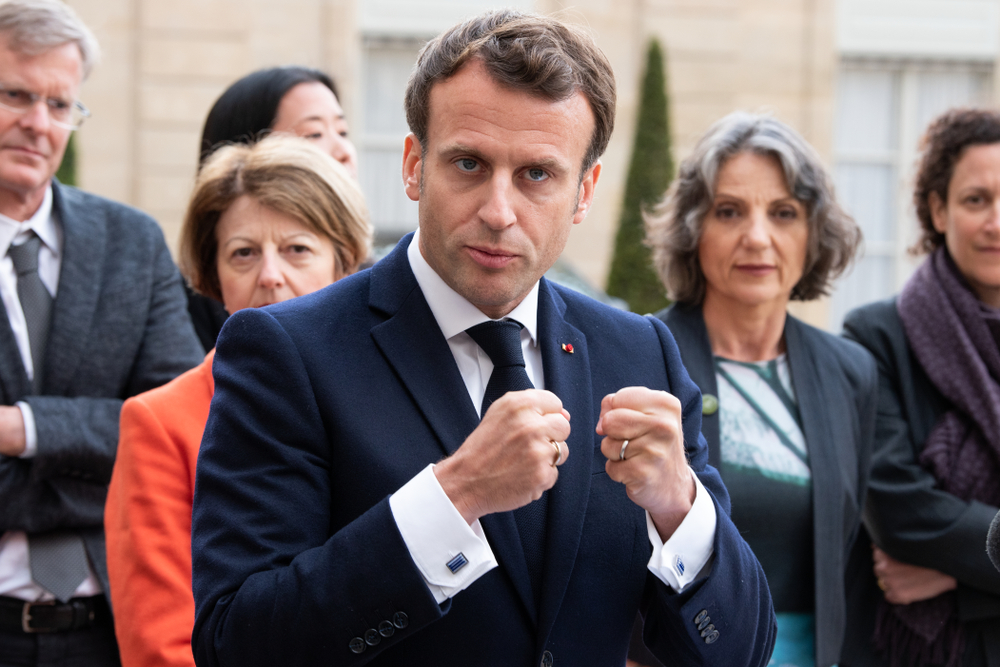
French President Emmanuel Macron giving speech at Global Fund to Fight HIV conference

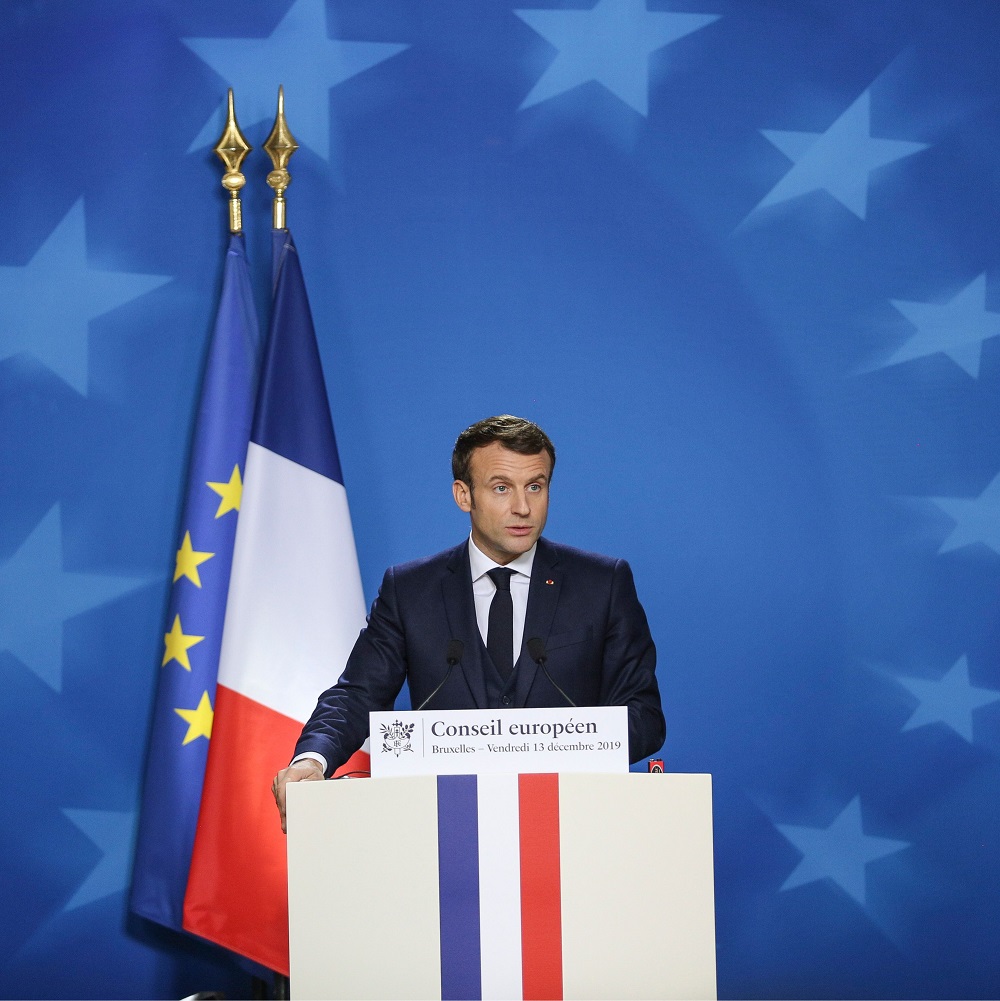
French President Emmanuel Macron’s Speech in Globsec Summit in Bratislava

by Emmanuel Macron

Since GLOBSEC opened its doors in 2008, many political leaders and officials have spoken at the Bratislava Forum, but unless I am mistaken, no French President. That was no doubt an anomaly. And it would be even more of an anomaly today, in the context of Russia’s war against neighbouring Ukraine when, quite simply, the future of our continent is at stake, and with much playing out in this region. This is particularly true at the cusp of a month that sums up the magnitude of our strategic challenges, with the European Political Community Summit in Chișinău tomorrow, then an important European Council meeting for the future of our Union in June, and last the NATO Summit in Vilnius. Before these milestones, I think it is worth explaining my thinking, with great freedom in the tone, when it comes to the moment which Europe is living on the geopolitical stage. Almost 20 years ago, our Union opened its gates to Slovakia and other countries freed from the Soviet grip. That was not merely an enlargement of our Union: it was the return to our family of those from whom we had been separated for too long. I do not believe there is a “Western” Europe and an “Eastern” Europe, an “old” Europe and a “new” Europe. That would mean perpetuating the artificial border imposed for decades by the Soviet Union. There is only one Europe. A single weave of intertwined histories and diversity, but with the will for geographical and geopolitical unity and to build, ultimately, a common narrative. I believe that is what unites us all behind this project, that does not erase our national identities and national projects, but rather enables us to conjugate them in an overarching narrative. Let us remember the last words of the director of the Hungarian press agency, just minutes before he was crushed by Russian artillery in November 1956: “We will die for Hungary and Europe”. The curtain was falling across our continent, and it was already our unity that was at stake. It announced decades of forced separation, decades of a “kidnapped West”, to borrow the excellent words of Milan Kundera that we can make our own today. And I would like to add, as I speak to those who are here today, that even after Slovakia and many other countries joined the Union, we did not always hear the voices you brought, calling for recognition of your painful memories and history. Some told you then that you were missing opportunities to keep quiet – but I believe we sometimes missed opportunities to listen. That time is over, and today, these voices must be all our voices. So my message is simple. In the times we are living in, we must not let the West be kidnapped a second time. We will not let Europe be kidnapped a second time. The challenges we face are considerable, with war at our borders. The war of aggression against Ukraine isultimately an extreme manifestation of a challenge to our European unity that has played out in the last fifteen years, and a show of fragility. Fifteen years of Russian attempts to overturn the whole European security architecture, to reshape it in its own terms. We all know the milestones: Vladimir Putin’s speech in Munich in 2007, the aggression against Georgia in 2008, that against Ukraine in 2014, and again against Ukraine in 2022, and the rampant transformation of Belarus into a vassal state. Ultimately, what Russia demands, and what it sought to codify in the draft treaties it brandished on the eve of its invasion just over a year ago, is the weakening and neutralization of Ukraine and, ultimately, for a whole part of Europe to be made vulnerable in return for minor and largely unverifiable commitments. In this context, it is true, we failed to provide a European response, or to organize an architecture to protect ourselves, via the OSCE or the other projects envisaged at the time, against these attacks. As for NATO’s response, it was too much or too little: perspectives offered to Ukraine and Georgia, exposing the two countries to Russia’s wrath, but which did not protect them, and which came with guarantees that were far too feeble. And we lacked coherence as Europeans. So we provided insufficient guarantees to certain countries at our borders. We did not engage with Russia in a security dialogue for ourselves. Ultimately, we delegated this dialogue to NATO, which was probably not the best means to succeed. And at the same time, we did not break free of dependencies on Russia, particularly for energy, and indeed we even continued to increase them. So we must be clear-sighted about ourselves. We were not coherent in our approach. In coming here, I am aware of the experience many of you had during the Soviet period, and I know why everyone is determined, for good reasons, to ensure that does not happen again. That is my commitment too. Every country has the right to choose its alliances, and opting for freedom, democracy and transparency is never a threat to one’s neighbours. And as I saw powerfully, with the major G7 partners in Japan a few days ago, the foundation of the Charter of the United Nations remains sovereign equality: it has never been limited sovereignty. And it is in this respect too that what is happening in Ukraine today is not merely a European issue, but an issue for the international order and global peace. What the war in Ukraine shows is not merely that these attempts to subjugate part of Europe are illegal and unacceptable, but also that, in the harsh light of power balances, they are now unrealistic. In Kyiv, in Kharkiv and in Kherson, whole Russian armies have retreated, before being squandered in Bakhmut and elsewhere for the slightest of gains. The war is far from over, but I believe I can say today that one thing is clear: Ukraine will not be conquered. And now what was, a little over a years ago, a “special operation”, has led to date to a geopolitical failure and to the accession of Finland and soon, I hope, Sweden, to NATO. And so a closure of Russia’s access to the Baltic, and also heightened distrust among all neighbours, as well as a loss of standing for Russia in the concert of nations due to failure to respect the Charter. The situation on the ground gives Russia no credibility to seek by threat what already no right could justify. There is no place in Europe for imperial fantasies. It is very important to recognize that, and that is a precondition, in my eyes, for any future organization of peace. How we got here says several things about us. We must remember them as we seek to build the future. The first is the strength of our alliance: from the very first days of the fighting, NATO ensured the security of its borders most effectively. Article V played its full role, and I am convinced it holds Russia at bay, and in this respect we owe gratitude to our American allies who have provided a major share of material and intelligence support to Ukraine. In December 2019, I made a severe comment about NATO, highlighting the divisions that, at the time, as you will recall, were present within it between Turkey and several other powers, describing it as “brain dead”. I dare say today that Vladimir Putin has jolted it back with the worst of electroshock. The second thing that strikes me is the exemplary role of the European Union, too. We have been united, swift and clear and I believe that very few, starting with Russia, expected the European Union to respond in such a way: €67 billion in total, including €14 billion in military aid, sanctions and emergency assistance, as well as taking in millions of refugees. We completely and profoundly reorganized our energy system, which was highly dependent on Russia, in just a few months. And that was a demonstration of unity and strategic clarification. It happened under constraint, and should have been done sooner, but we must be satisfied. I also welcome the adoption of a clear doctrine. Europe has chosen strategic autonomy and European sovereignty. And the Versailles Agenda that we defined in March 2022 is ultimately a long way from what people described five years ago as a French whim when I talked of European sovereignty at the Sorbonne. So I believe the second thing that we should take away from recent months, in addition to the strength of the alliance, is the unity and the ideological clarification of our European Union, and its clarity in terms of military, humanitarian and economic support to Ukraine. France has played its full role in this respect, and I can discuss this further during question time. I will also come back to the subject in the coming weeks and months. However, this collective effort will be for nothing if it is not sustained. Looking forward now, in light of what I just said, and of analysis of the past and the situation in recent months, I would like to imagine our future. Moscow must certainly be very tempted to hope that, where its armies have failed, time will come to the rescue, perhaps when elections are held or as public opinion fatigues. I think we need to be very clear about what we have to do in the short and medium terms. Today, we need to help Ukraine, by every means, to conduct an effective counteroffensive. That is essential. That is what we are doing, and we need to step up our efforts, as what is at stake in the coming months is the very possibility of chosen and therefore lasting peace. The second thing is that we need to be very clear about what we call peace. Peace in Ukraine and on our continent cannot mean a ceasefire that enshrines the current situation, re-creating a frozen conflict and, if you will, accepting the seizure of territory in violation of all the principles of international law. Because ultimately, such a frozen conflict would definitely be the war of tomorrow or the day after, and would weaken us all. Only one peace is possible: a peace that respects international law and is chosen by the victims of the aggression: the Ukrainian people. That is a peace that can last and that therefore respects these balances, bolstered by, and I will come back to this, credible guarantees. And so we need to prepare very clear-sightedly for this conflict and I will come back to this, credible guarantees. And so we need to prepare very clear-sightedly for this conflict to last, and for the consequences of the conflict to last. I hope the coming months will enable us, following a victorious counteroffensive, to bring everybody back to the negotiating table and build lasting peace, under the conditions I just set out, chosen by Ukraine and in accordance with international law. But we will have years and years of reconstruction and a humanitarian situation to manage, as we know already. We must also, to be credible in Russia’s eyes, put ourselves in a position, ourselves and our public opinions, to support Ukraine longer-term in a high- and medium-intensity conflict. That means working with all our partners to review and re-analyse this summer the very nature of our support and what is needed to achieve the result I have described. At the same time, we need to convince the global South, because there is, in the context I have discussed, a fragility that we must be clear about. It is that today, while thanks to the engagement of Japan and a few others, this is not simply a Western war, many emerging powers consider that it is not their war. Even if they recognize that it is an aggression and contrary to the Charter of the United Nations, they barely murmur it, because they consider that their main problems are fighting poverty within their borders, that they are subject to enough constraints already, that there are double standards, that their own security is not addressed, that they are facing the consequences of this war head-on, and that when their own security was threatened, we did not respond with the same vigour. We must heed that message. Otherwise, the risk is that all these countries will be seized upon by others to build an alternative international order and become, by choice, clear-sightedly or in fact, by composition, objective allies of a sort of Russian way. And so we must absolutely, as we make efforts to support the preparation of lasting peace, do this work to convince the countries of the South and several emerging countries, and thus re-engage in the assistance that we have a duty to provide them in the clarification of our agenda. Now that I have said all that, let us look at our future. The question we face is ultimately what future is possible for our Europe, in the long term, and how our Europe can rebuild lasting stability, peace and security for itself. We have responded very well in the short term, thanks to the commitment of States. NATO has shown its credibility on its Eastern Flank, and the European Union through its efforts. But is that enough in the long term? Today, we should be pleased to have an American Administration that has stood with us, that has made as many efforts as the Europeans, and that very clearly increases our collective credibility. We should be grateful and thankful to the United States of America. Will that Administration always be the same? Nobody can tell, and we cannot delegate our collective security and our stability to the choices of American voters in the coming years. At the same time, the Americans have been asking us for years, each successive Administration, to better share the burden and to make greater efforts for our security and our neighbourhood. And so yes, a Europe of Defence, a European pillar within NATO, is essential. That is the only way to be credible for ourselves, to be credible in the long term, to reduce our dependency and to shoulder our legitimate share of the burden. Because, whether we like it or not, our geography will not change. We will live in the same place, and Russia will remain Russia, with the same borders and the same geography. We need to build a space that, tomorrow, must be this space of lasting peace, because the rights of the Ukrainian people will have been respected and international law will have been restored. That space must allow us to cohabit as peacefully as possible with Russia – but with no naivety. I repeat, this project is not one of naivety with regard to Russia – I have never had such naivety – but it is aboutbnot denying geography and not considering that we should make our choices as if there was an ocean between Russia and us. And my goal is in no case to try to replace NATO with something else. I want to debunk all these ideas here because I know how they can be repeated and distorted. I do not want to replace NATO with a sort of Franco-German condominium. No. I believe that it is a broad, powerful Europe, with countries like yours, like Poland and many others, that need to play their role in this Europe of Defence, a Europe that increasingly ensures its own security and addresses its own neighbourhood issues. To do so, we now, urgently, need to speed up our strategic choices and the implementation of what we have started to decide. And that agenda is part of what we must build for this common destiny. Firstly, we need to forge a more sovereign European capacity when it comes to energy, technology and military capabilities. That is part of the Versailles Agenda we launched in March 2022. We now need to swiftly, and very tangibly, implement that agenda: meaning we should increasingly build European, buy European and innovate European. When it comes to military capabilities, that also requires a national effort that we have to make. France did not wait for this war. We stepped up our efforts with the military programming law in my first term and we are currently increasing it by €100 billion compared to the previous period, to reach a total of €413 billion under the current draft law. Alongside the prospect of reaching 2% of GDP, we also need to achieve tangible goals, with deployments and real capabilities to ensure the credibility of this collective effort, as France did a few days after Russia’s aggression against Ukraine by deploying forces to Romania. Less than eight days later, we had hundreds of soldiers in Romania. This is about the credibility of a European Defence within NATO. later, we had hundreds of soldiers in Romania. This is about the credibility of a European Defence within NATO. But a sovereign choice is needed, with capabilities, expenditure and deployment mechanisms. This strategic autonomy and military sovereignty also requires an industrial effort. We have clearly understood, in recent months, while emptying our arsenals, that we own with certainty only what we produce. We must learn lessons from this and act accordingly. And when I see certain countries increase their defence spending to massively buy non-European, I simply say: “you are creating yourselves your own problems for the future”. We need to use this opportunity to produce more in Europe. We have been inventive together, creating something new concerning ammunition, a great progress in support of Ukraine. We need to go much further. We need to harmonize our European standards, because there is too much competition between us. There are far more different standards between Europeans than there are within the United States of America. But in doing so, we must develop a genuinely European defence technological and industrial base in all interested countries, and deploy fully sovereign equipment at European level. We need to reduce our dependence and we need to continue building strategic proximity in this collective effort. I have in mind, of course, the European Intervention Initiative we launched five years ago, and that is still every bit as relevant today. Several of you accompanied us in fighting terrorism in Africa, showing that solidarity is two-way, and for that we are grateful. Even if the French presence in Africa is changing, the need to continue to be engaged together remains. And therefore we need to explore possibilities for cooperation in all these spaces and build capacity among Europeans by building on NATO’s interoperability, yet going beyond that, knowing how to engage together common action forces in new theatres of operation in our neighbourhoods, but also in cyber space, in space, in maritime areas, etc. More broadly, as you can see, this first pillar is, ultimately, to strengthen our military sovereignty. This means that we must take a look at the situation in which we live. It is up to us, as Europeans, in the future, to have our own capacity to defend ourselves and to deal with our neighbourhood. And in this regard, let’s not only focus on capabilities to manage past or current wars or to manage conflicts that are simply those that are emerging today. Dealing with our neighbourhood does not concern our Eastern Flank alone. It also concerns the Mediterranean, the Eastern Mediterranean and Southern Mediterranean regions, and new spaces of conflict including cyber space, space and maritime areas. They are at least as important as land wars on our continent that we have seen re-emerge because of Russian aggression and that we thought were disappearing, but that do not dispel the new forms of conflict that will grow in number. Therefore, let us have this strategic lucidity to prepare future conflicts that are bound to happen. In addition to this focus on sovereignty that is therefore European, technological and military, our second challenge is to see to it that Europe becomes a fully-fledged player, instead of being on the receiving end of strategic evolutions in its environment. In these last few years, I have been struck by the fact that we Europeans have not changed our status of geopolitical minority. It’s very hard for a French President to say this so bluntly. This generates irritation and annoyance. But I had the experience of going to a NATO Summit with another US Administration that liked us less, and which, with hardly any notice and in coordinating things with Europeans in a very bureaucratic way, informed us that it was withdrawing from the INF Treaty saying that “the Russians are no longer complying with it”. In 2019, we Europeans discovered a treaty that covered us against missiles that landed on our soil, and that Russian non-compliance and the US decision could leave us exposed and somehow naked, because we were not a party to it. The same thing happened when Russia methodically suspended implementation of the New Start Treaty last February, then clearly violated the NATO-Russia Founding Act in March, etc. I say this very clearly, we Europeans must be active players of these treaties that cover our security and build the future framework. If we delegate our role to others, Russia, the United States or I don’t know who, we will never be credible players. And therefore, yes, we must build these diplomatic solutions for the future.  To do so, we must first fully control arms, which refers back to what I was saying about our industrial lucidity. Europe was absent from treaties such as the Intermediate-Range Nuclear Forces Treaty and the New Start Treaty, despite the fact that its security was at stake. Therefore, it must now weigh in. And it will have much more credibility if it is a player, and not a spectator, in these balances. That is why I called on Europeans to acquire a deep-strike capability, which will bolster our security, and also give us a card to play in all future negotiations. I wish to launch discussions with the European partners that are interested in exploring cooperation in this area. The second, which is related, is air-defence. The war in Ukraine has shown its vital importance. It’s a strategic issue before being an industrial issue , but very clearly, it must build on a balance of offense and defense. It should clearly take nuclear deterrence into account. That is why, as I have pledged in Munich,  a conference will be held on this issue on 19 June in Paris. I invite all defence ministers of the European countries represented here today to attend. It will give us an opportunity to pursue our work. The third, more broadly, is the way in which Europe can secure its environment. We must build these new treaties as fully-fledged players around the table. And in doing so, let us be very clear, the issue of security with our neighbours will be raised. We will undoubtedly discuss this again during question time. But securing our environment is a key component of this credibility and of a Europe with a full role. We should provide Ukraine with solid security guarantees to put an end to repeated destabilizing actions. If Russia wants to continue destabilizing Europe, it must be ready to pay the geopolitical price. I have listened to all of our debates, but we would be strange geopolitical players if we were to say “we are massively arming Ukraine, but we do not want to include it in any strategic security debates.” I was reading something Henry Kissinger said recently, who we all know is not the least experienced diplomat. He was right when he said: In a year, all those who, with good reason, have helped Ukraine, have made it such a powerful player that it would be best to bring it back into these existing security architectures. I tend to share this vision. Therefore, if we want credible lasting peace, if we want to have influence with respect to Russia, and if we want to be credible vis-à-vis Ukrainians, we must give Ukraine the means to prevent any additional aggression and we must include Ukraine, in a structure, in a credible security architecture, including for ourselves. That is why I am in favour – and this will be the subject of collective discussions in the coming weeks ahead of the Vilnius Summit – of providing tangible security guarantees to Ukraine, for two reasons: Ukraine today is protecting Europe and provides security guarantees to Europe. The second reason is that Ukraine is now armed to such a point that it is in our interest for it to have credible security guarantees with us in a multilateral framework, with multilateral support or bilateral support. This is what we will discuss. We must today be much more ambitious than we sometimes are in discussions on this topic. Over the medium term, it is clearly our Europe’s stability and security that we will need to build on the basis of this solid peace in Ukraine, of these security guarantees in our neighbourhood – and tomorrow the question of Belarus and others will be raised – and of a transparent framework of trust making it possible to avoid the escalation of capabilities in the future to exit, at some point, this state of war when peace will be negotiated and stable. Yet we have armed our Eastern Flank so much and Russia has deployed so many arms that we will have to rebuild - I am talking here about the medium term - a framework for de-escalation. But it will be up to Europeans at that time to really build it in a transparent framework in which we must be players of these treaties, we must be around the table in order to negotiate, and around the table in order to determine their effective compliance and their evolution, as opposed to what has been done in the past. That is why, within this framework, we must also think of a wider Europe and I will end my remarks with these points. This Europe is one that I wanted to propose just over a year ago in Strasbourg, that of a European Political Community. Why? Because we need to consider our Europe, not only from a security standpoint, within the framework of NATO, and not simply within the framework of the European Union. That is why the European Political Community does not compete with NATO, nor does it replace enlargement. It is a framework for strategic discussion needed by all countries to build, I hope, an innovative and new institutional architecture, regarding energy and interconnection, mobility, security, strategy, and coming up with common solutions without waiting for enlargement to be completed and without merely taking a NATO-based approach. We will pursue this at Chișinău and we will express our willingness to go as far as possible in this format where cool-headed discussions can be held and topics of common interest can emerge. Among other topics, I will have an opportunity to propose the extension of the European Cyber Reserve to include all EPC countries because it is in our interest to be inclusive in order to safeguard our security. In this regard, the European Political Community is a geopolitical lab, if you will, and we need to continue down this path. But as I have said, it does not replace enlargement. For us, the question is not whether we should enlarge – we answered that question a year ago – nor when we should enlarge – for me, as swiftly as possible – but rather how we should do it. Several of you may remember that France advocated a change in the enlargement method in 2018. However, ultimately the war in Ukraine and today’s worsening situation in several areas of the Western Balkans have shown us one thing, which is that our current method is not working. Yet I believe there are two mistakes we should avoid making. The first is to tell ourselves that the situation is worsening, stay as we are, and give hope to Western Balkans, Ukraine and Moldova, and then procrastinate. We are very familiar with this tactic, we’ve been using it for a long time. If we do this, I think that we would actually give more space to those who want to destabilize Europe and I think that we would wake up in a few years to a situation that is considerably worse. A second mistake would be to say “let’s enlarge, it’s our duty and in our geopolitical interest, I think we need to anchor Moldova, Ukraine and the Western Balkans to our Europe. Let’s do it. We’ll reform later”. This would also be disastrous because it would create a powerless Europe, burdened at times by heavy bureaucratic procedures, slow, and with divergent trajectories. You can clearly see that in Europe there are ultimately two deep forces. They are both respectable. One that says: we need more geopolitical unity, to anchor the Western Balkans, Moldova and Ukraine to this Europe. It needs to be united. It needs to think of itself in this space in terms of security, geopolitics, energy and migration. On the other side, we have had a preview, but we need to coordinate economic policies to a greater extent, have more requirements regarding the rule of law and it creates a somewhat centrality that some States do not always accept. We need to think about this paradox, which is that our European Union was not designed to be enlarged at will. It was designed to always be deepened and to move towards a more integrated project. We need – due to the times in which we are living and the fact that everything is happening at the same time to a certain extent – but that’s how it goes – a very great moment of theoretical and geopolitical clarification of our European Union. Yes, it should be enlarged. Yes, it should be rethought very extensively with regard to its governance and its aims. Yes, it should innovate, undoubtedly to invent several formats and clarify each of their aims. It is the only way to meet the legitimate expectation of the Western Balkans, Moldova and Ukraine, which should become part of the European Union, and to maintain effectiveness in the geopolitical field, but also with regard to the climate, rule of law, and the economic integration the EU is now experiencing. And therefore, we need to re-articulate and rethink the balance of intergovernmental versus communitarian, and also understand what happens in Member States when they no longer understand Europe and the path that it is taking now and for the time being. And we will be working on this with several of our partners in thecoming weeks. I have already spoken too long. Please accept my apologies. These were the points I wanted to discuss. And therefore, as you have understood, our ability to build a just and lasting peace in Ukraine without any weakness is at stake, along with the future of our continent. I truly believe this will happen in the months and the two or three years ahead. Not much more. I believe Europe has experienced a conceptual and strategic awakening. But is must learn all the possible lessons from the past for itself and its neighbourhood. In this context, I think you’ve understood that is why I’m here. You can count on France. France is sometimes seen as being arrogant or faraway from or not interested in this part of Europe. As for me, I visited every EU Member State during my first term in office. Every one, because I considered that the European Union is not just Brussels, but all the capitals. It is this constantly plural dialogue and the absence of hegemony. But you can count on France over the long term. I also know that France can count on you so that we can together build a Europe that is stronger, more sovereign and more capable of ensuring its own security. And this cannot be done with just one, two or three countries. We will do it with all 27 and even more, by including in this strategic debate all those who will join us tomorrow in Chișinău, in this capacity to have frank, open, far-reaching, powerful, ambitious dialogue, by accepting our differences, respecting them and clearly setting out our aims. Ultimately, let us recognize together that our Europe must be a great democratic, diverse, but united power. Thank you very much

Defense & Security
the word elections, consisting of light wooden square panels on a dark wooden background

ELECTIONS IN EUROPE

by Juan Antonio Sacaluga Luengo

I. ABSTENTION. KEYS AND EFFECTS In view of the early elections in Spain, it seems appropriate to review the political situation in Europe through a series of analyses that will cover the current health of political formations and movements, strategies and conditioning circumstances. I will begin this week with a transversal aspect: participation/abstention. 1. PREVIOUS CONSIDERATIONS a) Scope of analysis. Before proceeding to the presentation of the data and the consequent analysis, it is convenient to make a series of methodological considerations and some clarifications. I have established two geopolitical reference areas: -the first, by proximity and common legal-political framework, the European Union (27 countries); -the next is made up of three countries outside the EU but members of EFTA (Norway, Iceland and Switzerland) and, of course, the United Kingdom, which until just a couple of years ago was part of the Brussels club. All of them have economic, cultural and even military ties with the EU (except Switzerland).I leave out the Balkan states aspiring to join the EU (Serbia, Montenegro, North Macedonia, Albania, Bosnia-Herzegovina and Kosovo) and those belonging to the former USSR, because their political reality is very different. In any case, their participation data are similar to those of the ex-communist countries of the EU.In order to make comparisons, I have considered in the first instance the turnout rates of the most recent election in each state. But to provide a broader perspective, I will also refer to developments since 1990, when liberal democracies were established in the former communist countries (the ex-Soviet Baltic states, the central-eastern satellite countries of Moscow and the two former Yugoslav republics). b) The French case  I will focus on general elections, which not only establish parliamentary majorities, but also prefigure the respective governments. But the case of France is particular. As it is a presidential Republic (established in the 1958 Constitution), the head of State is also the head of the Executive and, among other powers, appoints the Prime Minister. In 2022, the difference between the turnout in the presidential and legislative elections was over 26 percentage points, the highest gap in the current political system. The most obvious cause, but not the only one, is the overloaded calendar. In recent years, the two elections have been held consecutively with a span of barely two months. Moreover, in both cases there are two rounds of elections, which allows us to think of the "fatigue effect". For governance purposes, the presidential elections are the most influential in defining the political course of the country, which is why they will have priority in the analysis. In any case, in order to be more rigorous, I will take into account the participation in the legislative elections. c) Compulsory voting  I must also recall that in five of the countries followed, voting is nominally compulsory, although it is a formality of relative practical importance. These are Luxembourg, Belgium, Greece, Cyprus and Bulgaria. Failure to comply with this civic obligation is punishable by fines and, in some cases, minor prison sentences. It may be thought that this distorts the participation figures. But, in reality, the regulation has little practical effect, at least in the Mediterranean countries, let alone in Bulgaria, which has the second highest abstention rate. In Western countries, a certain bias in electoral behavior must be taken into account and should be noted.  d) COVID effect? On the other hand, another factor that, a priori, could have had a negative impact on electoral participation was the pandemic. However, I have compared the results of the elections held during the health emergency with the previous ones and we have not observed a general downward trend. With one exception, Romania, where abstention increased by almost eight points. But this must be attributed more to the deterioration of the political system than to the deterrent effect of COVID-19. 2. PARTICIPATION DISPARITY BY GEOPOLITICAL REGIONS The first thing that stands out in the review of the data is the wide gap existing between the countries with the highest and the lowest participation.  Even if we exclude the first two because of the formal compulsory nature of voting (Luxembourg and Belgium), the gap between them is about forty percentage points. For purely indicative purposes, I have extracted the average voting in the most recent elections in each country under study (considering the presidential elections in France for the above-mentioned reasons). The figure is 68.05%.The other distinguishable element is the geographic proximity of the states according to their turnout levels.    ​Of the twelve countries that exceeded the European average turnout in the most recent elections, six belong to the West-Atlantic zone, five to the Nordic zone (i.e. all of them), only one to the South (Malta) and two to the East-Central zone (Slovenia and Hungary).  But if we raise the bar just one point above 70%, all the states that exceeded it were in the West-Atlantic or Nordic zones. The exception is obviously Malta, a very small country with a population of less than 400,000 inhabitants (like any populous district of a large European city) and an electoral system that favors a two-party system. High turnout is common in small political entities. On the other hand, the 17 countries with turnout equal to or less than 71% are located in the other two differentiated zones: central-eastern and southern. This geographical selection is also observed if we introduce into the analysis the electoral evolution since 1990.The pronounced drop in turnout in the central-eastern countries is very relevant. We divide this block of countries into three graphs for the sake of clarity.   The political enthusiasm after the collapse of the communist regimes, expressed in turnout rates above 80% in the first years of democracy, has been extinguished. The average for the period does not reach 63% and that of the most recent elections does not even reach half of the electorate. Three decades after its incorporation into the liberal order, it does not seem that its citizens have been satisfied with electoral democracy.  The same downward trend is observed in the southern countries. With the exception of the aforementioned Maltese exception, since the early 1990s the decline has been enormous: 27 points in Cyprus, 24 in Italy, 20 in Greece, 16 in Portugal (which is now at the bottom of the list of southern Europeans) and 10 in Spain.    In contrast, participation has remained at a generally stable and high level in the Nordic countries. It has declined very slightly in Sweden and somewhat more in Iceland, the country that suffered, along with Greece, the most frightening episode of the financial crisis of the past decade in Europe. In contrast, in the other three countries (Denmark, Finland and Norway) participation has increased over this period.    In the western countries, turnout has remained at levels slightly below the Nordic average, but in any case, it has been stable and high, above 75%. France narrowly missed this level in the presidential elections and suffered a very sharp decline in the legislative elections. The figures were somewhat lower in the Anglo-Saxon countries, slightly in Ireland (2.5 points) and more notable in the United Kingdom, with a loss of 10 points.    3. POSSIBLE CAUSES OF PARTICIPATION/ABSTENTION There is a lot of research, work and also speculation and self-interested manipulation about the reasons for voting or not voting. I recommend the work of the IDEA Institute, Stockholm, which makes a very detailed follow-up of voting behavior around the world (https://www.idea.int).IDEA points out 16 factors that can influence participation, grouped in four blocks: - socio-economic (demographic dimension, population stability, economic development).- political (uncertainty about the electoral outcome, perception of the consequences of the elections, intensity of the campaigns, political fragmentation).- institutional (electoral system, whether or not voting is compulsory, concurrence of elections, ease or difficulty of voting, complexity of electoral procedures).- individual (age, education, political interest, civic awareness).For this paper, I have selected three indicators that can be relatively measurable and that, in some cases, combine the factors proposed by IDEA. They are the following: democratic health, relative economic potential of each country and social development. a) Democratic health  As a foundation for the strength of the formal democratic system, advocates of the liberal state cite strong institutions, clear rules of governance, low levels of corruption and sustained respect for the rules of the rule of law. One of the most commonly used indexes to measure these behaviors is that prepared by Transparency International. Certainly, this ranking presents an even picture of electoral participation.   Denmark and the Scandinavian countries are in the lead, followed by the Western-Atlantic countries, including Ireland, where, on the other hand, voting is slightly lower than in the other countries in their area.  On the other hand, the Mediterranean and Central-Eastern countries have lower transparency indexes, coinciding with their poorer voter turnout rates. Hungary under the ultra-nationalist Orbán stands out, whose negative score in transparency significantly worsens its result in electoral participation.There are two dissonant cases. The first is very striking. Estonia presents a very high transparency index in relation to electoral participation. Its small territorial dimension (45,000 km2) and its small population (1.3 million) only partly explain its specificity. The second is again Malta, which is in fifth place at the bottom despite its high turnout, which reinforces its exceptionality. b) Economic level In my perception, the factors that most decisively determine the level of participation are those of an economic and social nature.  We observe, in fact, that, in general, the subgroups established by geographic criteria are consolidated and reinforced under this other angle of consideration.  The countries with the highest HDI are the Western-Atlantic and Nordic countries, which have the lowest abstention rates. It is a circumstance, probably not by chance, that the two countries in the central-eastern and southern zone with the highest percentage of citizen voting (Slovenia and Malta) are those with the highest HDI in their respective zones. Here it is necessary to highlight two deviations with respect to electoral participation. Switzerland has the highest HDI in the world, despite its pronounced electoral abstention. And the United Kingdom, which surpasses Slovakia and Malta in human development, lags behind them in voter turnout.However, other benchmark indices modify this fixed picture of social development in Europe somewhat. Specifically, I am referring to the index of poverty and risk of social exclusion that has just been updated by the European Union, hence it only includes member countries.   The scale is composed in the opposite direction of the previous graphs. We observe that, contrary to the HDI, the countries with the worst results are not the same as those with low electoral participation, except for Romania and Bulgaria. Spain or Greece appear here in the worst positions, while the position of Portugal and Cyprus improves. The cases of France and Germany (in medium-low positions) or, on the contrary, of the Central European countries, which occupy the lowest risk of exclusion, are also striking. This is undoubtedly due to the effect of immigration. Immigrant populations are those who suffer the highest risk of exclusion and it is a group that, for the most part, does not have the right to vote; therefore, it does not increase the abstention rate.  4. BENEFICIARIES OF PARTICIPATION It is considered certain that a low level of participation, or a high level of abstention, generally favors the parties of the center-right spectrum. This consideration is supported by the generally more critical and nonconformist character of the left-wing electorate. From the conservative and liberal sectors, this and other traditional manifestations of the left are combated as part of the "cultural war" waged in the political arena. To better support the debate, we should review the data from the most recent elections held in each country.In the countries that registered an above-average turnout (68.05%) in the most recent elections, the most voted political options were the following: - Social Democrat: 6 (Belgium, Malta, Sweden, Germany, Finland and Denmark).- Liberal: 2 (Luxembourg and French presidential elections)- Conservative: 1 (Netherlands).- Conservative or identitarian nationalists: 1 (Hungary). As turnout decreases, the number of center-right or far-right political options that receive the most votes increases. In fact, below the average, only the socialists in Portugal and the left-wing nationalists (Sinn Feinn) in Ireland voted first. In the rest, conservative (5), conservative nationalist or identitarian (2) or liberal (1) parties won. On the other hand, if we take as a reference the average index for the entire period studied, we find that the center-left has not always won in the elections with the highest turnout. On the contrary, the center-right parties have won on twelve occasions, the social democrats on six, the liberals on five and the conservative nationalists on two. Even the now defunct communist parties triumphed in the early 1990s with very high participation rates.

Defense & Security
Italian Prime Minister Georgia Meloni

NATIONAL-POPULISM STRIKES BACK

by Juan Antonio Sacaluga Luengo

With Trump's defeat at the end of 2020, the threat of national-populism was thought to have been contained. Russia's attack on Ukraine, with all the economic difficulties and uncertainties regarding European and global security, reinforced the perception that Putin's friends in Europe, namely populist nationalists, would have a harder time selling their proposals. NATO enlargement was pushed and capitalized on by supporters of the liberal order, whether conservative or social democratic. Some saw Marine Le Pen's defeat in May 2022 as the first confirmation of this downward trend.  Outside of Europe, Bolsonaro's embarrassing experience in Brazil was coming to an end, despite the desperate attempts of his supporters to disrupt Lula's inauguration, which crudely imitated the events of January 6th in America. The containment of the economic crisis after the initial months of panic over a possible energy shock, along with the advancement of Biden's "reconstructionist" agenda and the poor results achieved by the Trumpian Republicans in the US mid-term elections, seemed to dispel that threat. The stalling of Russia's special operation in Ukraine was another positive factor for liberal analysts. ONLY AN APPARENT SETBACK But alongside these "positive" signs, there were others of the opposite nature that suggested a more cautious evaluation. While Trump's protégés may have stumbled, the master himself, despite initial judicial setbacks, was strengthening his aspirations to return to the White House. His conservative rivals (DeSantis, Haley, etc.) were lagging far behind him in the polls, even though the presidential contest was still a long way off. Meanwhile, the Republicans were preparing for yet another hijacking of the political system with the artificial and irresponsible "debt ceiling" crisis (1), which had tied up President Biden's already limited political energy for weeks. The amicable understanding between Moscow and Beijing served as a compensation for the mistakes and incompetence displayed by the Kremlin and/or the Russian armed forces in Ukraine. In Europe, successive elections have been contradicting the predictions of a decline in national-populist enthusiasm. On the contrary, the far-right has been actively asserting its influence in a region that had long been resistant to their ideas: Scandinavia. The Social Democrats' narrow victory in Sweden and Finland has paved the way for coalition governments between the conservative right and xenophobic nationalists. In Italy, the comeback of the conservative triad was completed last fall, but this time led by the most explicitly nationalist party, the successor of fascism: the Fratelli (Brothers). Giorgia Melloni became the first far-right leader to head a government in Western Europe since World War II. In recent months, there has been a growing perception that national-populism, once considered a critically ill patient, is in robust health. This has raised concerns among academics and liberal analysts, prompting calls to strengthen centrist alternatives once again. The triumph of New Democracy in Greece (which will be further strengthened by the June rerun elections) should be noted, apparently due to the efforts of the conservative-liberal right wing represented by the European People's Party. However, Mitsotakis, despite his cosmopolitan image, liberal economic policies, and American education, has pursued a migration policy similar to that advocated by the far-right across Europe, with little opposition from his European counterparts. A similar narrative was once employed by Sarkozy in France. In December of last year, his party, Les Républicains, elected its new leader. Éric Ciotti emerged as the most extremist candidate in the race, bearing little difference from Marine Le Pen and hardly any from Éric Zemmour, the xenophobic propagandist with no political affiliation who failed in the last presidential election. Macron's challenges stemming from the severe social crisis caused by the pension reform have given rise to the resurgence of the ailing traditional right-wing party, now under the influence of its far-right faction. In Germany, polls indicate a rise of the xenophobic Alternative for Germany (AfD). And in Central Europe, which is so influenced by German dynamics, national-populism is not letting up either. It continues to hold firm in Hungary and the Czech Republic and may revalidate its dominance in Poland this autumn, although the ruling PiS (Law and Justice) is reinforcing its autocratic actions with the excuse of the war in Ukraine. The latter is the great exception as far as Russia is concerned. The ultra-conservative Polish nationalists of PiS are the most fervent enemies of Moscow in Europe, for well-known historical reasons, hence they have only empathized with right-wing populists alien to any pro-Russian fickleness. ERDOGAN, CHAMPION OF TRIUMPHANT NATIONALISM The latest election results at the two ends of the Mediterranean, Spain and Turkey, confirm the consolidation of this trend. Erdogan has won with an unqualified commitment to populist nationalism, in this case compatible with a pragmatic harmony with the Kremlin. The average Turk, and certainly the most popular strata, care little that their President is on good terms with Putin, even at the cost of irritating his formal NATO allies. Only Turkey's interests count, and that means an autonomous foreign policy, free of servility and dependence. This is Erdogan's discourse, together with other levers that have worked well for him in the past: the fallacious exploitation of the Kurdish terrorist danger, the manipulation of economic levers, the abusive use of the instruments of the State and other tricks typical of authoritarian regimes. Nothing has deprived him of obtaining in the second round what he lacked in the first round: the support of the extremist residual sectors with which to complete an electorate addicted to strong manners, to supreme authority, to the illusion of a country jealous of not obeying anyone's impositions. A liberal Turkish analyst, Soner Cagaptay, resident in the United States, affirms that Erdogan has assumed the "model of Putin's authoritarian regime", and points out its main characteristics: persecution of political opponents, absolute control of the media, emptying of the real functions of the institutions, purge of the apparatus of power, etc. In this ever closer confluence, according to Cagaptay, Erdogan's gratitude to his Russian colleague for having been the only world leader of weight to support him after the attempted military coup in 2016 has played a major role. The fact that the two countries have sometimes different geostrategic interests does not detract from a more than fruitful diplomatic and security cooperation. Erdogan sells drones to Ukraine, but does not participate in the economic siege against Russia and mediates in the crucial issue of Ukrainian grain exports. Where the West sees contradictions and even disloyalty, most Turks appreciate independence, security and firmness. The opposition has failed through a combination of bungling (misreading Erdogan's popularity) and impotence (stifling exercise of power). The challenger Kilicdaroglu believed that by imbuing his discourse with a nationalism of occasion and incorporating into his grand coalition extremist forces suspicious of the current President, he could attract a sector dissatisfied with the economic crisis and authoritarian abuses. This has not been the case. Once again, the copies work worse than the original.  AYUSO, BETWEEN CONSERVATISM AND NATIONAL-POPULISM The recent Spanish electoral result has its own profiles, as all of them, but it is not alien to this new growing trend of national-populism. And not only because of the rise of VOX, after a period in which it seemed to regress (like its counterparts in the rest of the West). Perhaps the great winner of the regional elections has been Isabel Díaz Ayuso. Despite being the leader in Madrid of the Popular Party (of conservative-liberal line on the European board, like the French Ciotti), her style of government, politics and propaganda is very similar to right-wing populism, although she is careful not to repeat the xenophobic clichés of VOX.  The relationship with his adversaries resembles the one practiced by Trump, because of his direct, apparently uncomplicated, confrontational registers and without the slightest concern for liberal political correctness. Like the former hotelier president, he had no qualms about stirring up the shadow of the "pucherazo" in the days leading up to the elections, just in case things went wrong. The president of Madrid is similar to Giorgia Meloni in her repugnance for ideological subtleties, but her discourse is more astute. Ayuso uses plain language, sometimes populachero, to show that she is not afraid to fight with the left in a priori adverse terrain. Against all evidence, he defends his management of essential public services, which he has significantly weakened. Meloni is already doing so, without delay. With Erdogan he coincides in brazenly using the invented complicity of his rivals with the "terrorists and/or separatists" (Kurds or Basques and Catalans, as the case may be), in order to discredit them. These are simplistic and fallacious messages, which count on the complacency of most of the media, hence they are effective, in times of tribulation and crisis, of exaggerated international threats and social anxieties derived from the effects of the pandemic. 

Defense & Security
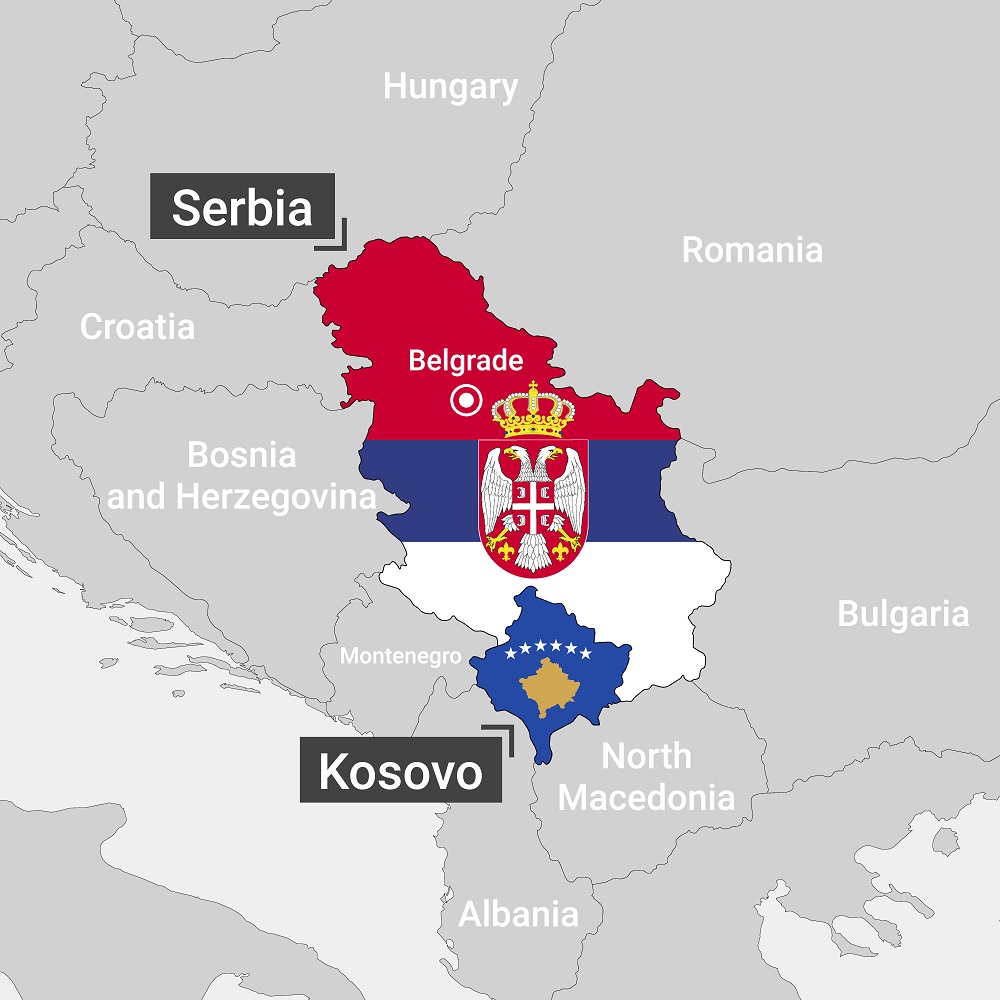
Map of Serbia and Kosovo with flag fills

Kosovo and Serbia: from war to rottennes

by Juan Antonio Sacaluga Luengo

Kosovo was the last in the series of wars that destroyed Yugoslavia. More specifically, it was the conflict that condemned Serbia as the declared loser in a process of destruction unprecedented on the continent since 1945. The crisis of the unifying communist system after Tito's death coincided with the terminal paralysis of the Soviet system (of which it was not a part militarily and politically). Combative nationalism prevailed over liberal democracy as a mobilizing reference point for populations bereft of guidance and leadership. Many of the communist leaders, but also dissidents and opponents converted to the emerging nationalism.  Although Western historiography and political narrative tend to point to the Serb leadership as the main perpetrators of the tragedy, the truth is that the others were not innocent in the tragedy. The pro-Serb performance of the Federal Army (not surprisingly, the majority of the officer corps was Serb) only partly explains this biased analysis. The apparent Serb military superiority helped create a narrative of victimhood among the other minorities, which filtered through the media and changed an initially, if not neutral, then more cautious Western position. In Kosovo, the perception of Serb responsibility was greater, if anything, since it was not a republic but a province of Serbia itself, but with a majority ethnic Albanian and Muslim population. Ethnic confrontations began to develop in Kosovo in the early 1980s, and in Kosovo, the Serb defeat was sealed when Milosevic tried to put down the Albanian armed revolt with blood and fire, provoking NATO bombing and, as a result, the subsequent fall of the regime. Western support for Kosovo's independence was never unanimous (Spain is one of the countries that has not recognized the new state) and has remained controversial in the quarter century since the end of the war. The UCK, a guerrilla organization that opposed Belgrade, committed excesses and crimes comparable, at its level, to those perpetrated by the Serbs. The previous Yugoslav wars were replicated in Kosovo, with all their arsenal of manipulations, deceptions, falsehoods, and simplifications. In these almost twenty-five years, Kosovo has not had an easy life. Serbia has never admitted the amputation of a part of its national territory, which is precisely the most sacred because the collective imagination considers it to be the cradle of the nation. A PULSE IN THE NORTH The majority Serb population in northern provinces of Kosovo decided to boycott the municipal elections, fed up with the fact that the promised autonomy agreed in 2013 has still not arrived a decade later. Nevertheless, the central authorities went ahead with the electoral process. Turnout did not reach 4 per cent. At the end of May, the five elected councilors, all Kosovar Albanians from different parties, hastily took office but faced massive opposition from Serb activists outside the town hall (1). A fierce battle ensued, during which approximately 40 soldiers from the Western peacekeeping force (KFOR) were injured as they attempted to separate the protesters from the aggressive Kosovo Albanian police, as reported by the BBC  Faced with the high risk of escalation, Macron, Scholz and Borrell exerted pressure on the Serbian and Kosovar leaders to address the crisis and urged the latter to repeat the elections under conditions acceptable to the Serbs. Pristina promptly agreed. Washington took further action. Ambassador Hovenier announced the cancellation of Kosovo's participation in upcoming military exercises. Not only that, but he also threatened to "cease all efforts to help Kosovo gain recognition from those countries that have not yet done so and to encourage its integration into international organizations"  Rarely have the Americans taken such against Pristina. They were particularly frustrated by the lack of coordination with KFOR in containing Serb protests. The new US assertiveness has two main motives: one local and one regional.  The current Prime Minister of Kosovo is Albin Kurti, a prominent member of the left-wing faction of Albanian dissidence. He is a determined leader with little inclination for diplomatic compromises. During his activist days, he defied Belgrade's amnesty decree and refused to leave prison, as he did not recognize the authority of his jailers who had offered clemency. After Kosovo gained independence, he became a staunch opponent of corruption and the authoritarian tendencies within the Kosovar Democratic Party and other formations inherited from the former KLA guerrillas. Kurti is regarded as an uncompromising adversary by the Serbs, but his unwavering stance may unexpectedly benefit Belgrade, as highlighted by a Croatian media outlet in relation to the current crisism. VUCIC'S DOUBLE GAME The key regional issue revolves around the situation in Serbia, Moscow's strongest ally in the region. Following Milosevic's rule, the country experienced years of significant instability. After a brief period of leaning towards the West with a liberal orientation, a neo-nationalist regime took control. Essentially, Milosevic's successors managed to regain power that they had never completely lost. The current president, Aleksandar Vucic, previously served as the Minister of Communication in his previous government. The party he leads, known as the "progressive" SNS, has consistently achieved overwhelming absolute majorities. Vucic has employed constant propaganda and manipulation to circumvent Western opposition, intimidate liberal opposition groups, and suppress the weakened left. In relation to Kosovo, Vucic has adopted a nationalist role, albeit without unnecessary excesses. He has effectively utilized a combative and vindictive rhetoric (it is worth noting that the SNS also holds the majority in the Serb-Kosovar districts), while presenting himself as a proponent of dialogue and negotiation when dealing with European and American counterparts. This policy of double-dealing is not entirely fictional. Vucic, much like Milosevic in his time, is not an ideological nationalist. Nationalism serves as a tool for mobilization and control for him and his associates. Despite the deteriorating relations between Russia and the West, Vucic has managed to maintain a reasonable balance. He aspires to overcome the informal EU membership veto while maintaining privileged economic, energy, and trade ties with Moscow, Serbia's main ally in Europe by far. On the domestic front, Vucic has effectively managed his political, institutional, social, and media dominance with minimal difficulties. However, problems have recently started to accumulate, as is often the case in countries with authoritarian tendencies when least expected. Two separate incidents of deadly shootings, perpetrated by individuals with no organized affiliation or identified political motivations, have sparked an unprecedented social protest movement. These isolated yet tragic incidents have unleashed long-repressed social unrest. A significant public demonstration caught the government off guard. Vucic attempted a retaliatory response that proved disappointing to his own people. The public is on the brink of rebellion, but it remains challenging for the opposition to significantly weaken Vucic. In Bosnia-Herzegovina, Milorad Dodik, the leader of the Serbs, openly defies the central authorities in Sarajevo. He continuously threatens secession and makes decisions that exceed his jurisdiction, according to the European monitoring office. Dodik is a close ally of Putin's and maintains a fluid relationship with Vucic. However, each leader has their own agenda, and their priorities do not always align. The conflict in Ukraine has influenced the political strategies of Serbian leaders in the parent state and related territories. Washington is attempting to create a rift between Moscow and Belgrade, and Kosovo may present an opportunity to do so. This recent crisis reflects the political decay that has plagued the Balkans since the conclusion of the Yugoslav wars. The nationalists did not merely triumph over their ethnic or religious opponents in the wars; they also solidified their control over their own populations. This was achieved through collaboration with mafia networks that emerged during and after the conflict, all while Western oversight remained impotent and/or passive.  

Defense & Security
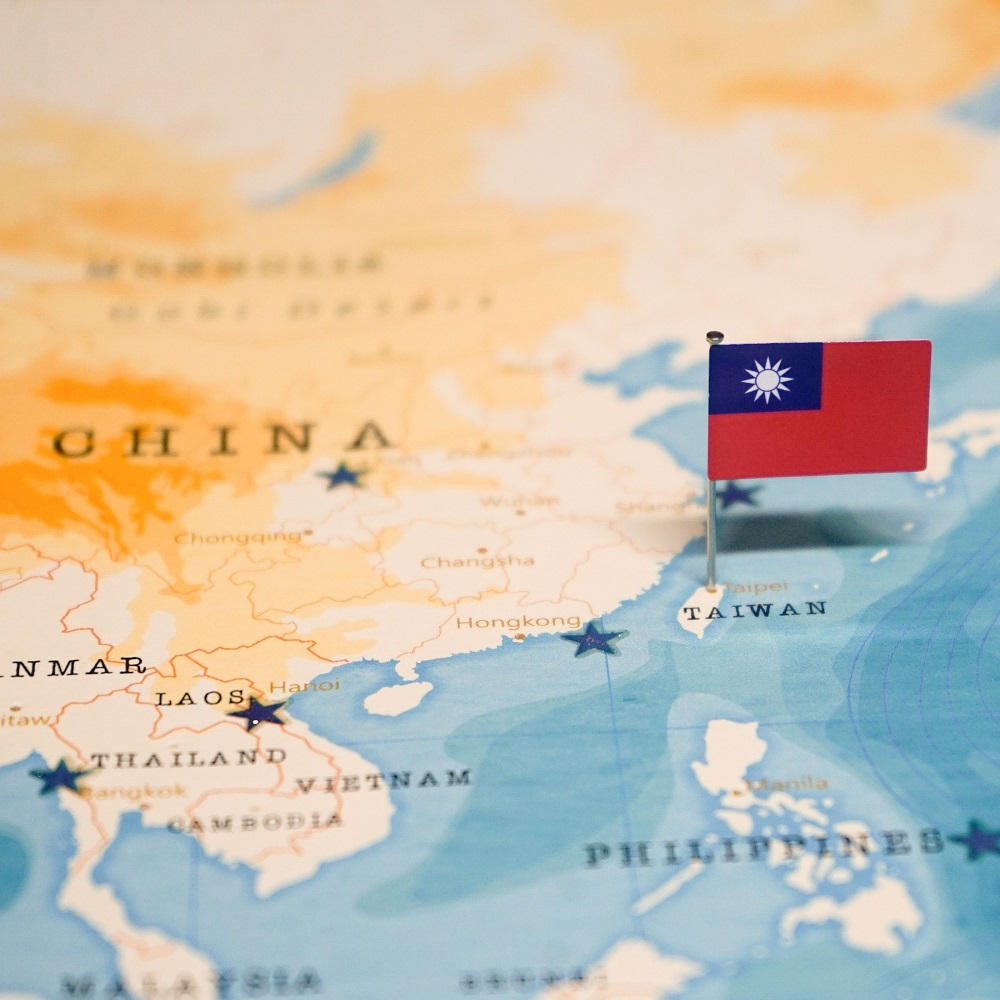
The Flag of taiwan in the world map.

Analyzing China’s Escalation after Taiwan President Tsai’s Transit through the United States

by Bonny Lin , Brian Hart , Samantha Lu , Hannah Price , Matthew Slade

THE ISSUE As Taiwan president Tsai Ing-wen transited through the United States in March and April 2023, China embraced significant military and diplomatic measures to coerce and punish Taiwan and, to some extent, the United States. This is reminiscent of Chinese actions after then-speaker of the house Nancy Pelosi visited Taiwan in August 2022, though there were differences between China’s behavior. While some elements of China’s actions in April 2023 appear less escalatory than those in August 2022, there was considerable continuity and even progression with respect to People’s Liberation Army (PLA) operations, tactics, and reach vis-à-vis Taiwan. This brief analyzes Chinese activities in August 2022 and April 2023 and explores the factors impacting Beijing’s decisionmaking. INTRODUCTION  In March and April 2023, Taiwan president Tsai Ing-wen transited through the United States, during which she met with Speaker of the House Kevin McCarthy. This meeting was framed as an alternative to an immediate visit to Taiwan by Speaker McCarthy, and there were hopes that Beijing would not escalate as much as it did in August 2022 when Beijing provoked the Fourth Taiwan Strait Crisis after then-speaker Nancy Pelosi’s visit to Taiwan.  China nevertheless carried out significant diplomatic and military measures. Diplomatically, Beijing intensified some of its already-sharp measures aimed at punishing Taipei, while simultaneously softening its approach on other fronts. Militarily, China’s activities were substantively different from those in August 2022, but no less significant. Overall, Beijing appears to have taken a less heavy-handed, more targeted approach this time, suggesting it learned from its experience in August and was better postured to take action.  CHINA’S MORE SOPHISTICATED DIPLOMATIC APPROACH  China’s diplomatic activities took a two-track approach, with some measures aimed at ramping up pressure on Taipei and others aimed at softening China’s approach. This represents a considerable shift from August, when Beijing’s activities were overwhelmingly punitive. It also shows a more sophisticated use of multiple efforts in tandem.  Two Chinese diplomatic activities stand out in comparison to August 2022. First, Beijing appears to have timed a 12-day visit to China by former Taiwan president Ma Ying-jeou to coincide with Tsai’s transit and meeting with Speaker McCarthy. This was the first time a former or sitting Taiwan president had traveled to mainland China. As president, Ma endorsed the “1992 consensus” and encouraged greater cross-strait engagement, and as a result, Chinese leaders have been far more willing to engage with Ma and the Kuomintang (KMT) party that he previously led. Ma’s visit to China contrasted starkly with Tsai’s transit through the United States. China likely encouraged Ma’s visit to demonstrate that it is willing to engage with China-friendly parties such as the KMT—even as it engaged punitively with President Tsai and her ruling Democratic Progressive Party (DPP).  Beijing’s second major diplomatic maneuver came a few days before the start of Tsai’s U.S. transit, when China poached one of Taiwan’s few remaining diplomatic partners, Honduras. China reportedly offered Honduras up to $2.95 billion to establish diplomatic relations with China. This is the ninth time China has enticed a country to switch diplomatic ties from Taiwan to China during Tsai’s presidency, and it marks the second time China has poached one of Taiwan’s diplomatic partners around the time of a U.S. transit. In 2018, China established ties with El Salvador a few days after Tsai returned to Taiwan after transiting through the United States. Beijing likely did this again and timed its actions as a demonstration of its influence and power. On other fronts, China took measures in April that were similar to those taken in August 2022. China commonly uses disinformation to put pressure on Taiwan, so it is unsurprising that it did so in both August 2022 and April 2023. Ahead of Speaker Pelosi’s trip to Taiwan, a Chinese group reportedly published articles condemning her visit and used fake Taiwan news sites to argue that the United States would not be a reliable partner in the event of a Chinese invasion of Taiwan. Chinese actors also launched several cyberattacks in August, including changing signs and screens to display anti-U.S. messages. In April, China again launched disinformation campaigns, with much of these efforts targeting President Tsai. During her transit of the United States, Chinese consulates in the United States reportedly organized and paid pro-China demonstrators to protest outside of Tsai’s hotels and venues. These protests were in turn amplified by Chinese netizens who also falsely claimed that Tsai had paid the Hudson Institute to present her an award.   Mirroring its actions in August, Beijing also punished multiple U.S. and Taiwan organizations and individuals this April. Both U.S. institutions that hosted Tsai—the Hudson Institute and the Ronald Reagan Presidential Library—were sanctioned. For a second time, China also sanctioned Taiwan representative to the United States Hsiao Bi-khim, as well as her family and investors and firms tied to her. After Tsai’s transit concluded, Chairman of the U.S. House Foreign Affairs Committee Michael McCaul met with Tsai in Taiwan, and shortly after that, China announced sanctions on McCaul as well. Beijing used these sanctions to engage in targeted coercion. They allow Beijing to show domestic and foreign audiences that it is enacting punishments, but they have little or no tangible effect on the wider public in Taiwan or the United States.  China likewise repeated its use of punitive arrests of Taiwan citizens as an additional show of power against Taiwan. Chinese authorities announced on April 25 the formal arrest of Taiwan pro-independence activist Yang Chih-yuan. Yang was originally detained in August 2022 in the immediate aftermath of Speaker Pelosi’s visit to Taiwan. The formal confirmation of his arrest appears intentionally timed to coincide with the Tsai-McCarthy meeting. Adding to that, the Chinese government confirmed on April 26 the arrest of Li Yanhe, a Taiwanbased publisher. Given that there were no other highprofile arrests of Taiwan citizens between August and April, this too should be seen as intended by Beijing to showcase its displeasure over the Tsai transit.    China’s other major diplomatic steps varied from last year. Beijing did not announce major new diplomatic “countermeasures” against Washington, as it did in August when it canceled or suspended eight key areas of U.S.-China dialogue. Whether this should be viewed as a sign of restraint on China’s end is unclear. It could be that there were few remaining areas of U.S.-China engagement to target—seven of the eight key areas of U.S.-China dialogue that China canceled and suspended in August have yet to resume. Instead, China has been reluctant to engage in dialogue with the United States at the highest levels. Beijing has yet to respond to the U.S. request to arrange a phone call between President Biden and President Xi. This request was made public in mid-March after newspapers revealed initial U.S. plans for the Tsai transit.  On the economic front, Beijing embraced additional measures. In August 2022, China suspended imports of Taiwan fish and fruits and cut exports of sand to the island, though these had limited economic impacts on Taiwan. China stopped short of suspending imports or exports of specific goods in April 2023, but it did take some measures: on April 12, China’s Ministry of Commerce announced it was launching an investigation into Taiwan’s trade restrictions on certain Chinese goods. Importantly, the ministry’s notice stated that the investigation should conclude by October 12, 2023, but added that it could be extended until January 12, 2024—the day before Taiwan’s presidential election.[1] Depending on how political dynamics evolve, experts are concerned that China may use the investigation to impose additional economic sanctions or change or cancel parts of the Economic Cooperation Framework Agreement that China and Taiwan signed in 2010 to facilitate trade.  At the same time, however, China continued to signal a desire to increase cross-strait linkages. On April 10—the last day of China’s major military exercises—Wang Huning, the fourth-ranked member of the Chinese Communist Party’s all-powerful Politburo Standing Committee, met with a delegation of Taiwan business executives in Beijing. During the meeting, he called for improved economic and trade exchanges as a means of promoting peace and stability in the Taiwan Strait.  CHINA’S SIGNIFICANT MILITARY ESCALATION  On the surface, China’s April 2023 military activities differed substantively compared to those in August 2022. Some of the more provocative activities from the 2022 exercise—such as launching missiles over Taiwan and establishing military exercise exclusion zones around the island—were not carried out again in 2023. However, the latest round of military activities also showed considerable continuity and even progression with respect to PLA operations, tactics, and reach. Overall, China’s military activities were no less significant in April 2023 than in August 2022, with both exercises demonstrating the range of capabilities that the PLA is practicing against Taiwan.  MILITARY SIGNALING PRIOR TO THE MAIN EXERCISES The PLA’s primary activities began on April 8, with the start of large-scale exercises around Taiwan, but Chinese military signaling began days before that while President Tsai was transiting the United States. On April 5, the Fujian Maritime Safety Administration (MSA) announced a joint patrol and inspection operation of the Taiwan Strait. As part of this operation, Chinese maritime law enforcement officials were tasked with conducting “on-site inspections” (现场检查) aboard vessels in the Taiwan Strait.  The operation is significant in multiple respects. First, although there is no evidence that the operation actually stopped any vessels, it laid out an example of what China could do if it wanted to escalate. The intended “targets” of this operation encompassed several commercial shipping routes, including the Pingtan-Taiwan direct container route, the “mini three links” (小三通), and areas with heavy commercial and fishing vessel traffic.[2] This, coupled with changes in Chinese maritime safety regulations, allows China to set conditions for an escalatory stance in the Taiwan Strait and around Taiwan. It also reflects another effort to assert Beijing’s claims (which contradict international law) that China has “sovereign rights and jurisdiction” over the “internal waters” of the Taiwan Strait. Finally, the operation demonstrated China’s civilian mobilization capabilities and its capacity for operational coordination of civilian maritime actors in support of a joint operation.  Next, Chinese authorities released several announcements of multiple smaller-scale live-fire military exercises. On April 7, the Fujian MSA announced two series of live-fire drills north and south of Taiwan’s outlying Matsu Islands. These were scheduled to occur during and after the main military exercises; however, both of these announcements were later removed from the MSA website, resulting in uncertainty about the extent to which these exercises took place. Around this same time, military drills were announced at other locations, including multiple exercises off the coast of Liaoning Province (well to the north of Taiwan).  While there are few details about these drills, the flurry of announcements in a short time frame and the variety of locations of the drills are likely all part of the PLA’s overall activities aimed at countering the Tsai transit and meeting with Speaker McCarthy. Together, they served as a show of force and emphasized not only China’s ability to carry out several military activities at once, but also its ability to conduct operations in geographically dispersed areas farther from Taiwan.  COMPARING CHINA’S APRIL 2023 AND AUGUST 2022 EXERCISES Following these initial activities, the PLA Eastern Theater Command announced that from April 8 to 10, it would “organize combat readiness patrols around Taiwan Island and conduct ‘Joint Sword’ exercises in the Taiwan Strait, around the northern and southern parts of Taiwan Island, and in the sea and airspace to the east of Taiwan Island.” These exercises were the centerpiece of China’s April 2023 military activities and were reminiscent of the large-scale August 2022 exercises.   At first glance, some aspects of these exercises suggest an overall scaled-back military demonstration of force compared to August. The April Joint Sword exercises lasted three days, while the August exercises were scheduled for four days and later extended to seven. Perhaps most importantly, the April exercises lacked the highly provocative live-fire ballistic missile launches seen in August. On August 4, 2022, the PLA Rocket Force took the unprecedented step of firing multiple ballistic missiles over Taiwan and into the waters around the island. Five of these fell into Japan’s exclusive economic zone. In April 2023, the PLA primarily focused on simulating joint precision strikes on and around Taiwan, and the Rocket Force did not fire ballistic missiles near or over the island.  Another key difference was the amount of information released about the drills. Two days before the start of the August 2022 exercises, Chinese authorities released the coordinates for six distinct exercise exclusion zones encircling the island (and later announced a seventh zone). This allowed for a direct comparison to the exclusion zones that were mapped out during the 1995–1996 Taiwan Strait crisis. In April 2023, the PLA did not announce specific coordinates for its main exercises and commenced the exercises the same day they were announced, providing no advance warning.  The PLA’s decision to provide less information this time is significant for a few key reasons. First, it could be an indicator that Chinese leaders do not believe they need to pre-notify Taiwan or the international community regarding operations near or around Taiwan. Second, it likely reflects Beijing’s desire to prevent external interference by not showing where its forces could operate. Finally, it suggests more confidence in the PLA’s control of air and naval assets to operate around Taiwan without creating inadvertent hazards. It is likely that China will try to set a new norm of increased military operations around Taiwan without prior notification or announcement.  Despite these differences, the April exercises were no less significant than those in August. There were several areas of continuity between the two, as well as substantial new elements. Fundamentally, both the August and April exercises were suggestive of an “encirclement” of Taiwan using PLA Navy forces, with the objective of rehearsing elements of a potential blockade and other kinetic military operations against Taiwan.    PLA forces were roughly as active around Taiwan this April as they were last August. Information released by Taiwan’s Ministry of National Defense (MND) shows that, like in August, PLA vessels surrounded the island. The MND reported a single-day maximum of 12 vessels on April 10, close to the one-day high of 14 seen in August. Crucially, Taiwan’s MND also released maps indicating that, during the exercises, PLA vessels encircled the island in ways reminiscent of the August exercises.  With respect to air activities, the April exercises surpassed the peak of activity during the August exercises. On the last day of the Joint Sword exercises (April 10), Taiwan’s MND reported that 91 PLA aircraft were operating around Taiwan. This marked an all-time high up to this point and was considerably higher than the highest one-day total during the August 2022 exercises (66 aircraft). During the April exercises, the PLA also averaged higher daily incursions into the air defense identification zone (ADIZ), as well as incursions and crossings of the Taiwan Strait median line. However, it is worth noting that PLA air activity in April spiked higher and then subsided more quickly than in August.    PLA air and maritime activity around Taiwan is aimed at negating Taiwan’s ADIZ and the Taiwan Strait median line and is on track to increasingly challenge Taiwan’s contiguous zone. Incursions into Taiwan’s ADIZ ramped up in 2020 and have become a near daily occurrence. Prior to the August exercises, there were only a handful of reported instances of PLA aircraft crossing the Taiwan Strait median line, but China ramped up crossings in August, and this now occurs frequently. Similarly, PLA Navy vessels rarely came close to Taiwan’s contiguous zone—a boundary extending 24 nautical miles beyond Taiwan’s territorial baseline—in August, but China reportedly sent multiple vessels right up to Taiwan’s contiguous zone during the April exercises.  On top of that, the April 2023 exercises saw far more activity from one of China’s aircraft carriers. In the days leading up to the August 2022 exercises, the PLA Navy’s two operational aircraft carriers, the Liaoning and Shandong, deployed from their respective home ports of Qingdao and Sanya and moved in the waters around China as a show of force, but they were not integral to the exercises taking place around Taiwan. By comparison, China’s Shandong aircraft carrier and its carrier group played a primary role in April 2023. The carrier stayed in the waters east of Taiwan for several days before, during, and after the Joint Sword exercises. The Japan Ministry of Defense (JMOD) reported that the Shandong launched a total of 620 sorties between April 7 and 24, including both fixed-wing aircraft and helicopters. During the exercises, a total of 19 carrier-based J-15 fighters entered Taiwan’s southeast ADIZ—the first time those aircraft have been reported in Taiwan’s ADIZ. Many more carrier-launched sorties occurred near Taiwan (outside of the ADIZ), but there is no data available on the specific amount. Although it is far from certain that China would risk deploying the Shandong or any of its aircraft carriers to such a vulnerable location east of Taiwan in an actual conflict, the carrier operations signaled China’s intent and its efforts to practice capabilities to operate near and attack Taiwan’s east coast.    Access to Taiwan’s east coast is critical to the island’s defense. Military bases located on the island’s east side are key to force preservation, and the island has long sought the option of moving military assets to the east for protection during the onset of a potential PLA attack or invasion. Given the likely intense fighting in the Taiwan Strait in a cross-strait conflict, access to Taiwan’s bases to the east could provide the easiest way for the United States and allies to flow forces or supplies to Taiwan. This is not lost on China. A researcher at China’s Academy of Military Sciences, Zhao Xiaozhuo, emphasized that the carrier group “played a vital role” in showing the PLA’s ability to project power on Taiwan’s east, which would be crucial to deterring foreign intervention in a Taiwan Strait conflict.  Along with significant naval activity around Taiwan, April also showed an uptick in PLA vessels operating near Japan, according to JMOD reports. Around the time of the August exercises, the JMOD reported seven PLA vessels operating near Japan in the weeks before the exercises, but only one vessel—a Type 052D destroyer— during the period of the exercises.  By comparison, in the two weeks before and after the start of the April 2023 drills, the JMOD reported 19 distinct PLA vessels near Japan, five of which were tracked around Japan for more than 12 days and three of which were repeatedly tracked for 17 or more days. Some of these vessels included the Shandong and its carrier group, but there were also several other vessels operating separately in the waters on all sides of Japan. This increased PLA activity around Japan was likely intended as a warning and signal to Japan given Tokyo’s heightened concerns that a conflict in Taiwan will negatively impact Japan’s security, as well as its increased military investment and preparations to deal with such contingencies.  CONTINUED SIGNALING AFTER THE MILITARY EXERCISES China’s military signaling continued after the end of the Joint Sword exercises. On April 12, Taiwan’s Ministry of Transportation and Communication revealed that on the preceding day, China privately notified Taiwan that it would close an area of airspace north of Taiwan due to “aerospace activities” related to the launch of an orbital rocket into space. This zone was situated just 85 nautical miles from Taiwan’s northern coast, extended into Taiwan’s ADIZ, and spanned a busy route for air traffic in the region.    China initially warned against aircraft entering the zone from 9 a.m. to 2 p.m. on April 16–18. This lengthy period sparked anger, with officials in Taiwan calling it “unprecedented” and Chinese authorities later reducing the airspace closure window to only 27 minutes on April 16. China further muddied the waters when the Fujian MSA announced the closure of the zone to maritime vessels from 9 a.m. to 3 p.m. on April 16. When April 16 finally came, China reported it had successfully launched a meteorological satellite on a Long March-4B rocket, and debris from the launch was later detected in the announced zone.  This episode resulted in confusion and left many unanswered questions. It is not clear why China did not initially acknowledge the closure zone until it was reported by authorities in Taiwan. It is also unclear why the initial three-day window was later shortened to just 27 minutes on one day. This backtracking and lack of clarity may have been the result of poor internal coordination, but the episode was widely seen as part of China’s campaign to pressure and intimidate Taiwan. It is also worth noting that the original time frame overlapped with the G7 foreign ministers’ meeting that was taking place in Japan.[3] On top of that, President Xi Jinping played a role in military messaging when he traveled to the PLA’s Southern Theater Command to inspect the readiness of its naval forces. During his inspection on April 11, Xi stated that the PLA should “analyze and address military issues from a political perspective” and called for the military to “resolutely defend China’s territorial sovereignty and maritime rights and interests and strive to maintain the overall stability of the country’s neighboring regions.” Xi also emphasized driving forward the modernization of PLA forces and doctrine, and in a nod to the recent military exercises, he called for the PLA to “intensify force-onforce training based on operational plans.” Xi’s visit and his statements showcase that he believes the PLA plays a crucial role in overall efforts to increasingly exert control over Taiwan through coercive and kinetic means.  Taken together, China’s military escalation in April should be seen as a continuation of efforts to intimidate Taiwan and allow the PLA to practice a variety of operations around Taiwan. While its activities in April were different in important respects from those in August, they were no less significant.  FACTORS SHAPING CHINA’S OVERALL ESCALATION It is not exactly clear how and to what extent certain factors shaped the intensity and contours of China’s overall behavior, but a number of initial observations are possible.  While Chinese leaders likely felt domestic pressure to take action to oppose the transit, it is not clear they faced the same level of pressure as they did in August 2022. There was significantly less coverage of the Tsai transit on Chinese media and social media compared to then-speaker Pelosi’s August trip, when Weibo crashed around the time Pelosi was about to land in Taiwan and many netizens in China were tracking her flight to the island. It is possible that the Chinese public was either generally less aware or less interested in the transit or that Beijing did a better job of controlling public expression of views. This could have created more space for Beijing to act as it sees fit.  After Pelosi’s visit to Taiwan in 2022, China engaged in significantly escalatory activities, but this resulted in substantial diplomatic backlash. This likely influenced Beijing’s thinking this time, and it sought to achieve its objectives while reducing blowback. This aligns with Beijing’s use of more sophisticated diplomatic efforts— namely Ma Ying-jeou’s visit to China and the poaching of Honduras from Taiwan—which put pressure on Taipei and showcased Beijing’s willingness to work with Chinafriendly elements in Taiwan.  It is also possible that China acknowledged U.S. and Taiwan efforts to try to address some of Beijing’s concerns and aimed to craft a set of countermeasures to the Tsai transit visit that was proportional to what Beijing viewed as the level of Taiwan and U.S. “provocativeness.” Beijing closely monitored Tsai’s transit and likely recognized that certain elements were scaled down to reduce the profile and public nature of her engagements. Beijing might have also appreciated the attempt by Washington and Taipei to at least delay a Tsai-McCarthy meeting in Taiwan by offering McCarthy a chance to meet in the United States. If that is the case, it suggests that China will continue to escalate against future high-profile meetings between senior U.S. and Taiwan officials but will adjust the level of its activities based on its perceptions of the meeting’s dynamics.  Importantly, Chinese decisionmaking does not occur in a vacuum, so other geopolitical factors play a role. In recent months, Beijing has accelerated diplomatic efforts and sought to improve China’s international image. China’s continued support for Russia throughout the war in Ukraine has led to a considerable fraying of China-Europe relations. As part of Beijing’s efforts to restore ties with the region, President Emmanuel Macron of France and President of the European Commission Ursula von der Leyen were in China from April 5 to 7 to meet with President Xi.  A significant Chinese escalation during their visit would have undercut Beijing’s efforts to smooth over tensions with Europe. Beijing appears to have waited until the departure of Macron and von der Leyen (and Ma Yingjeou) to announce some key parts of its activities, including small live-fire exercises near Taiwan’s outlying Matsu Islands (which were announced the day that they left China), as well as the large-scale exercises around Taiwan (which were announced and started the following day).  Broader geopolitical trends may have also factored into Beijing’s calculus in its actions toward the United States and its allies. Around the same time as the Tsai transit, China targeted several major U.S. companies amid mounting economic and technological competition. On March 31, Japan announced restrictions on exports of semiconductor manufacturing equipment to China in a crucial move to support sweeping export controls issued by the Biden administration in the fall of 2022. On the same day as Japan’s announcement, the Cyberspace Administration of China announced a “cybersecurity review” of U.S. chip manufacturer Micron Technologies in apparent retaliation. Beijing has targeted other U.S. companies as well. On March 24, officials raided the Chinese offices of U.S. due diligence firm Mintz Group, and on April 28, officials questioned staff at the Shanghai office of U.S. consulting firm Bain & Company. China also reportedly slowed its review process of proposed mergers and acquisitions of U.S. companies. These moves are not explicitly part of Beijing’s countermeasures against the Tsai transit, but they likely factor into Beijing’s thinking. Amid heated U.S.-China tensions, Beijing regularly employs measures against the United States in the context of overall tensions and competition, and Chinese officials likely calibrated their actions against the Tsai transit to factor in action along other vectors. Thus, the absence of harsh diplomatic or economic retaliation against the United States after the transit may reflect the fact that China has already taken— or was planning to take—actions against the United States unrelated to the Tsai transit.  Finally, the approaching 2024 Taiwan presidential election also factors into Beijing’s calculus. President Tsai and the DPP have successfully leveraged past Chinese aggression to their electoral benefit. Most notably, China’s 2019 crackdown in Hong Kong severely worsened perceptions of Beijing among the Taiwan public, which aided the DPP in the 2020 presidential elections. This April, China avoided engaging in some of the activities that would affect Taiwan as a whole— such as suspending trade of certain goods and launching ballistic missiles over the island—but still demonstrated the range of military options China has against the island. At the same time, it embraced measures to directly efforts pressure President Tsai and the DPP ahead of the elections.  China’s decision to invite Ma Ying-jeou to China at this time was a key part of this. Ma’s trip to China, and his talking points after the trip, likely helped Beijing message to the Taiwan people that Beijing is open to working with leaders in Taipei. It was also meant to show that working with Beijing will bring Taiwan peace and prosperity, while pushing for Taiwan independence will create crises and conflict. Beijing’s messaging sets the stage for how to interpret Chinese actions toward Taiwan and does not rule out the possibility of another major escalation between now and January 2024 if Beijing perceives Taipei is embracing more “pro-independence” actions.  Overall, Beijing’s escalation against the Tsai transit showcases a China that is learning from its past actions and adapting its countermeasures based on how it assesses the level of “provocativeness” of Taiwan and U.S. activities. China also appears to be sensitive to the potential costs of its actions and is seeking to advance China’s claims over Taiwan using more sophisticated means beyond just punitive measures. Beijing demonstrated its willingness to take firm and escalatory meaures vis-à-vis Taiwan, and it is likely to continue to do so in the future.   [1] "Tension Over Pelosi," Bloomberg[2] The "mini three links" allows for direct postal, transportation, and trade links between the islands of Kinmen and Matsu and Fujian Province.[3] Hille, "China Backtracks."

Defense & Security
Two border policemen observe border

How the EU has used the war in Ukraine to expand its border regime

by Mark Akkerman , Niamh Ni Bhriain , Josephine Valeske

Since Russia’s full-scale invasion of Ukraine in February 2022, more than 13 million people have been forcibly displaced from their homes in what the United Nations High Commissioner for Refugees called ‘the fastest growing refugee crisis in Europe since World War II’. Breaking with a policy of deterring and containing asylum seekers outside its borders, the EU and its member states rightly responded to the flow of people by creating legal pathways that granted Ukrainian nationals protection and legal status within the Union. To date, some 8.2 million Ukrainians have registered across Europe. While these laudable efforts have undoubtedly saved lives, over a year later it is clear that the measures are the exception and not the rule. The EU has used the war in Ukraine to expand its deadly border regime in Eastern Europe, in particular the role of Frontex, doubling its efforts to keep out those fleeing other wars and conflicts. Moreover, Ukraine, which has acted as the EU’s border guard for nearly two decades, has continued to play this role even as the war rages on. As we approach World Refugee Day, we expose the discrimination, racism, and hypocrisy driving Europe’s deadly border policies in response to the war. The EU’s differential treatment of refugees Following the Russian invasion of Ukraine, millions of people fled the war by moving across Ukraine’s western borders with the EU. In response, the EU and its member states did something unprecedented – they created legal pathways that immediately permitted millions of refugees to live and work inside the Union. Meanwhile in the Mediterranean, where the EU and its member states have withdrawn Search and Rescue missions and criminalised civil society organisations (CSOs) that have stepped in to fill this void, at least 2367 people were left to drown throughout 2022, though the real figure is likely much higher. A situation has unfolded since 2022 whereby the EU is willing to receive millions of refugees from one war-torn country but is hellbent on keeping those from other war-torn countries out. In one particular example in March 2022, Greece accommodated 18,000 refugees from Ukraine, but simultaneously illegally deported to Türkiye at least 540 refugees from Afghanistan, Algeria, Bangladesh, Egypt, Iraq, Libya, Morocco, Somalia, Syria, and Yemen, resulting in the death of a four-year-old child. Moreover, there were instances across Europe of refugees already living in state-provided accommodation being displaced to make space for Ukrainians. Perhaps Poland represents the starkest example of the hypocrisies that have emerged in the wake of the war. People fleeing Ukraine were received with warm meals, blankets, and provided with shelter, whereas further north along the Polish-Belarussian border people fleeing wars in Afghanistan, Iraq, and Syria, among other countries, were quite literally hunted like animals by border patrol dogs, or allowed to freeze to death in the vast forests of Poland’s north eastern territory. In national debates across many EU member states, politicians have used the presence of Ukrainian refugees to spin racist-driven arguments that Europe is full, in some cases advocating that non-Ukrainian arrivals, the vast majority of whom are not white, should be refused entry or deported. Britain’s much-criticised ‘Rwanda Plan’, which seeks to immediately deport to Rwanda those arriving ‘illegally’, is part of a much larger trend across Europe dating from long before the Ukraine war, of stepping up deportations and simultaneously eroding International Refugee Law. European states have used the war in Europe as a pretext to fortify their borders while driving a wedge between refugees who are considered deserving of protection – Ukrainian nationals – and others, often from other war-torn nations, who are not. Separately, many of Europe’s political leaders have made clear that those attempting to flee Russia’s forced conscription orders will not be granted refuge in the EU. In this vein, Finland, Poland, and the Baltic states have begun building new fences and further militarising existing infrastructure along the EU–Russian border, making it more difficult for Russians who are fleeing forced mobilisation or the wave of repression unleashed against those protesting the war to seek asylum in the EU. Differences even among those fleeing Ukraine Differential treatment with regard to international protection was not only observed between those fleeing the war in Ukraine and other wars. Hierarchies have also emerged between those fleeing Ukraine. The Ukrainian authorities prohibited Ukrainian men between 18 and 60 years of age, as well as trans-women, from leaving, insisting instead that they join the war effort. Non-Ukrainian nationals or those whose status in the country prior to the outbreak of war was irregular faced significant obstacles in securing protection in the EU. In one of the most shameful examples of how a two-tiered approach was applied by the EU and Ukraine with regard to those fleeing the war, dozens of non-Ukrainian nationals were held in an EU-funded detention centre inside Ukraine, as the war raged around it. This is a clear violation of International Refugee Law and International Humanitarian Law, in particular Article 58C of Additional Protocol 1 to the Geneva Conventions. The Volyn PTPI, located less than 40 kilometres from a military airfield that was bombed by a Russian airstrike in March 2022, refused to release between 35 and 45 detainees from Afghanistan, Bangladesh, Cameroon, India, Pakistan and Sudan. Five Ethiopians were released and relocated to Romania only after their government intervened. While most of the original detainees were eventually released following international pressure, the fact that not all had legal status in Ukraine led to some of them being detained once again in Poland. The incident speaks for itself—at a time when millions of Ukrainian refugees were entering the EU, 45 non-Ukrainians desperate to flee the same war remained locked up in an EU funded detention centre to keep them out. This detention centre remains operational today and the detainees are mainly political refugees from surrounding countries whom the Ukrainian government deems suspicious (pro-Russian) solely on base of their nationalities. According to the Global Detention Project ‘it is also alarming that Russians, Tatars, Dagestanis, Azerbaijanis, Armenians, and Uzbeks, many of whom have fled persecution by Russian security services and whose lives and safety would be in extreme danger if deported to their countries, are being arrested, detained, and threatened with deportation from Ukraine’. Since the mid-2000s, the EU has funded the construction of detention centres located deep inside Ukrainian territory where those heading towards the EU, or deported from it, have been held. Under the terms of a 2008 agreement, Ukraine was ‘expected to receive a considerable number of irregular migrants from third countries who managed to enter the EU’s territory from Ukraine, having used Ukraine as a transit country’. Three years before this agreement was signed, in 2005, Human Rights Watch had already highlighted the ‘continuing pressure on Ukraine from the EU to assist in migration management and border enforcement’. Moreover, human rights organisations and the international media denounced the use of torture, inhumane and degrading treatment inside these centres, including applying electric shocks and beating detainees. Despite credible allegations of torture, the EU continued to enact and implement bilateral agreements with Ukraine to contain those on the move outside its borders. Frontex Expands In early 2022 Frontex launched ‘Joint Operation Terra 2022’, deploying officers from its newly established standing corps to dozens of border crossings across 12 EU member states. Once the war intensified across Ukraine, the presence of these border officials and the use of aerial surveillance equipment at the EU borders with Ukraine and Russia was expanded, particularly in Estonia, Romania and Slovakia. Following much scrutiny and criticism of its role in illegal deportations in the Aegean Sea, among other human rights violations, the war offered Frontex the opportunity to clean up its image. Photos of Frontex border officials handing out teddy bears to Ukrainian children were shared on the agency’s social media accounts, together with commentary about the importance of keeping families united while fleeing war. The agency deployed a selective approach in dealing with those fleeing Ukraine. While Ukrainian nationals were permitted entry to the EU, those from other countries who found themselves in Ukraine when the war broke out faced significant hurdles to secure temporary protection and were offered ‘voluntary return’, though in many cases returning to their home countries was out of the question. In July 2022 the EU launched its Support Hub for Internal Security and Border Management in Moldova to coordinate its support to the country in light of the Russian invasion of Ukraine. Frontex plays an important role in this context and also concluded its own agreement that saw the deployment of officers and donations of border-security equipment to Moldova to ‘support the reception of refugees from Ukraine’. The fine print of the agreement also included strengthening border security and fighting irregular migration. Very quickly this more securitised approach to dealing with those seeking refuge took precedence over providing humanitarian assistance. Over a year on, Frontex is no longer sharing images of its officials handing out cuddly toys to children, but it has reverted to its usual operations, boasting that ‘in 2022, joint Frontex and Moldovan border police teams achieved excellent results … record[ing] a 300 percent increase in the detection of irregular migration compared to 2021’. Though the war in Ukraine continues, the focus of the EU’s border policies has centred on securitisation tactics with the original objective behind the recently intensified border collaboration seemingly forgotten. Meanwhile, Frontex has used the war to further extend its operational area beyond the EU’s borders. At the end of January 2023, ‘Joint Operation Moldova 2023’ was launched to ‘support national authorities with border surveillance, border checks, but also with gathering information on people smuggling networks and identifying vulnerable groups’. Apart from the Moldovan operation, in January 2023 Frontex signed an agreement with Ukraine’s State Border Guard with a grant worth €12 million for the purchase of equipment such as patrol vehicles and uniforms. As well as strengthening the EU’s border with Ukraine and Moldova, this assistance ‘will also prepare the State Border Guard Service to potentially host Frontex joint operations in future’. Frontex Deputy Executive Director Uku Särekanno clarified at the signing of the grant agreement that in light of the ‘current critical situation at the border … supporting the business continuity of our Ukrainian colleagues is crucial, both for Ukraine and the EU’. The priorities are clear – enact agreements, even in the midst of a war, that guarantee business as usual along the EU’s external borders, no matter the human costs. In addition, in 2022 the EU has also expanded the mandate of the Border Assistance Mission to Moldova and Ukraine (EUBAM) launched in 2005 and the Advisory Mission (EUAM) dating from 2012. Both entities form part of the EU’s vast array of border externalisation architecture, underpinned by bilateral and multilateral agreements. Through these agreements the EU deploys a carrot and stick approach to cajole and coerce states to control the movement of people in territories far beyond Europe’s borders in a bid to stop them from ever reaching Fortress Europe. Over the past two decades the EU, through EUBAM, financed the training of the Ukrainian State Border Guard, conducted joint EU–Ukraine border patrols, and donated border security equipment to Ukraine, while the EUAM was mandated to support Ukraine in an advisory role to reform its civil security sector, including border security. Since 2007 Frontex has played a central role in implementing bilateral agreements between the EU and Ukraine. The expanded mandate of the EUBAM and the EUAM means that EUBAM officers are now permitted to participate directly in border control, in coordination with Frontex. An additional €15 million was granted to EUBAM to recruit more staff and provide equipment and training to Moldovan border guards. Similarly, EUAM has stepped up its activities, mainly by facilitating support to border authorities in Ukraine. Meanwhile, EU-funded projects implemented by the International Centre for Migration Policy Development (ICMPD) continue, such as the EU Support to Strengthening Integrated Border Management in Ukraine project (EU4IBM). In September 2022 the EU delivered more surveillance equipment to the Ukraine State Border Guard under an ICMPD project, while in early 2023, handheld X-RAY imagers and mini scanners for detection were made available. Moldova has also strengthened its border-security capacities through German funding for a new ICMPD project.  Separately, since the full-scale invasion, CEPOL, the EU Agency for Law Enforcement Training, organised a study visit to Lithuania on ‘illegal immigration’ for law enforcement officials from Ukraine and Moldova and hosted a course on the same issue for its Moldovan partners. In February 2023, on the initiative of Estonia and the US, representatives of regional donor countries gathered at the Estonian Embassy in Warsaw to exchange ideas on how to best upgrade Ukraine’s border guard to meet EU requirements. Accession to the Schengen Area, albeit still a long way off, would lead to even more demands from the EU, with funding from the Instrument for Pre-Accession Assistance (IPA) to be made available for border security and control. The outsourcing of EU border control is not new, but rather is part of a well-oiled strategy of border externalisation and should be understood in that context. In its conclusions to a special meeting in February 2023 the European Council reaffirmed plans to drastically increase the pressure on third countries to cooperate in deportations and readmissions, with Frontex playing an important role. In what appears to be an attempt to justify the ongoing crackdown on migration, the Council conclusions referred to the ‘instrumentalisation’ of migration ‘as part of hybrid destabilising actions’. Even before the war the EU had accused Russia and Belarus of ‘weaponising’ people on the move by directing many of them at once to the Polish border with the aim of ‘destabilising’ the EU and its partner countries. This narrative of ‘weaponisation’ wrongly depicts people in need of protection as ‘enemy weapons’. It is an escalation of the ’migrants as threats’ narrative that has long underpinned EU border and migration policies and has effectively been used to disable the right to asylum in certain places – and also justify the call for ever more draconian border militarisation. Feeding the vicious cycle of displacement Just as the war is being used as a pretext to double down on border control, it has also been used to increase global arms spending, nowhere more so than in Europe, where more than €200 billion in extra military spending was announced within months of the full-scale invasion. EU member states have transferred large amounts of arms and ammunition to Ukraine, while ramping up their own military budgets and replenishing stock. The claim that this spending is necessary to deter Russia seems spurious given that the 30 NATO countries combined were already spending 17 times as much as Russia on their militaries prior to the war, a fact that did not stop it from invading. This militarisation will stoke tension and fear, generate instability and insecurity, provoke and prolong armed conflict, fuel current and future wars – and displace ever more people from their homes, many of whom will in turn seek international protection. There are also concerns that weapons transferred to Ukraine, which has long been known as a black market for arms, will be further sold and thus fuel fighting and displacement in other regions in the long term. The arms spending will clearly benefit the arms industry. Proposals to simplify intra-EU transfers of arms components and ease restrictions on exports of weapons systems to non-EU countries would pave the way to more exports of border security equipment, and arms in general, to countries at war and repressive regimes. While the war in Ukraine has not only led to massive loss of life, immense suffering and destruction across the country, its effects can also be felt all over the globe. It has severely affected food and fuel supplies, driving up prices and creating shortages. Massive inflation, fuelled by corporate profiteering – and the ‘greedflation’ of shareholders – has plunged ever more people into poverty. On top of this, the environmental destruction and the impact of the war on climate change stretches far beyond the borders of Ukraine. Research has shown that the military overall generates some 5% of global carbon emissions. These effects combined will increase forced displacement, especially in the Global South. In turn, this can be expected to lead to calls for more border fortification, in an endless cycle triggered by the EU’s tunnel vision of a securitised and militarised response to migration. The military and security industry, already feasting on the current spending bonanza, will be the main profiteer of these destructive policies of Fortress Europe. Conclusion Somewhat obscured by the EU's comparatively generous reception of (white) refugees from Ukraine, it has quietly used the war and its consequences to rapidly boost and militarise border security, with a lead role for Frontex that has seen its operational mandate expanded far beyond the EU. Refugees fleeing other countries and conflicts as well as people on the move still detained or living in Ukraine have borne the brunt of this. The EU’s response to the war in Ukraine has shown that when there is political will, it can immediately and effectively create legal pathways permitting refugees to live safely within the EU. The fact that it failed do so for refugees fleeing other war-torn regions has exposed the discrimination, racism, and hypocrisy that drive the EU’s deadly border regime. This regime will be further intensified with the agreement reached on June 8 between EU member states on the Pact on Migration and Asylum, which reduces protection standards, erodes the rights of people on the move, and opens the door for more detention, illegal deportations, and border externalisation. If the EU is truly invested in tackling the root causes of migration and not just containing it beyond its borders, perhaps cutting ties with authoritarian regimes and curtailing arms exports to countries at war would be a good place to start. The EU and its member states are legally bound under international law to treat all those who seek asylum equally, regardless of the colour of their skin or their country of origin. Rather than spending pools of public money on fuelling wars and fortifying borders, the EU and its member states should instead support communities and local networks in their efforts to receive those fleeing war and violence.

Defense & Security
Depicted pictures Vladimir Putin and Yevgeny Prigozhin with shadowed faces

How “Putin’s chef” undermined the Kremlin’s case for invading Ukraine

by Ani Mejlumyan , Nika Aleksejeva

In a June 23 video released on one of Yevgeny Prigozhin’s Telegram channels the morning he launched his mutiny, the Wagner founder undermined core false narratives Russian President Vladimir Putin used to justify launching his war of aggression against Ukraine in February 2022. While the impact of Prigozhin’s remarks remains to be seen, they serve as evidence of how Putin attempted to deceive domestic audiences and the international community, both of which may come with long-term consequences for the Russian president.  The Kremlin and its proxies spent the years and months leading up to the invasion attempting to paint Ukraine as the aggressor. As the DFRLab outlined in Narrative Warfare: How the Kremlin and Russian news outlets justified a war of aggression against Ukraine, Putin and his pro-Kremlin media proxies employed false and misleading narratives to justify military action against Ukraine, mask the Kremlin’s operational planning, and deny any responsibility for the coming war. “Collectively, these narratives served as Vladimir Putin’s casus belli to engage in a war of aggression against Ukraine,” the report noted. Over the course of the thirty-minute video, Prigozhin criticized Russian military leadership under Defense Minister Sergei Shoigu and Chief of the General Staff Gennady Gerasimov, castigating the reasons given to justify the war and dismissing them as false. In challenging core pre-war Kremlin narratives, Prigozhin simultaneously undermined multiple arguments cited directly by Putin during his public address on February 24, 2022, when he announced the start of the invasion. Prigozhin’s remarks represent the most consequential debunking of the Kremlin’s case for war by a high-profile Russian power player and Putin confidant. Since the start of the war, the Kremlin has cracked down on dissent by criminalizing criticism of the military, restricting access to social media platforms, and forcing independent media to either cease operations or flee the country. In doing so, Kremlin pro-war narratives dominate Russia’s entire domestic information ecosystem. And just as Prigozhin’s mutiny exposed the regime’s weaknesses for the entire Russian public to see, his pre-mutiny takedown of the Kremlin’s justifications for war exposed how Putin and his proxies wove together a web of falsehoods to initiate the invasion. Background As part of our previous research for the Narrative Warfare report, the DFRLab analyzed hundreds of debunked claims made during the 2014-2021 interwar period, as well as more than 10,000 instances of pro-Kremlin and anti-Ukrainian narratives appearing in Russian media during the ten weeks preceding the invasion. We then documented how these narratives formed the backbone of Putin’s false justifications for war during his public remarks on February 24, 2022, when he announced the launch of Russia’s so-called “special military operation” against Ukraine. At the heart of the speech, Putin relied on false and misleading narrative tropes prominently featured in the weeks and months prior to the invasion, some of them dating to his 2014 of Ukraine. While maintaining the position that Russia seeks peace, for example, Putin also emphasized that Russia had a moral obligation to do something about security in the region. Putin also embraced multiple false narratives and tropes about Ukraine being the aggressor, including accusations that the country is run by Nazis, that Ukraine intends to commit genocide against Russian speakers, and that it plans to use weapons of mass destruction against Russia and the breakaway regions. Lastly, he used these opportunities to blame the West for whatever would happen next, arguing that Ukraine is a puppet of the West, which wants to create tensions in the region. Putin’s February 2022 speech was specifically crafted to make his false case for war. In just over thirty minutes on June 2023, Yevgeny Prigozhin – one of Putin’s closest, longtime confidants in security and propaganda efforts – successfully undermined Putin’s core arguments for his war against Ukraine. Questioning Ukraine’s “aggression” In his February 2022 speech, Putin highlighted the need to save Russians in Ukraine before Ukraine could commit “genocide” against them. “It became impossible to tolerate it,” Putin stated at the time. “We had to stop that atrocity, that genocide of the millions of people who live there and who pinned their hopes on Russia, on all of us.” He then added, “If we look at the sequence of events and the incoming reports, the showdown between Russia and these forces cannot be avoided. It is only a matter of time. They [NATO] are getting ready and waiting for the right moment. Moreover, they went as far as aspire to acquire nuclear weapons. We will not let this happen.” Prigozhin’s June 23 remarks undercut Putin’s claims that there had been any imminent threat to Russians, let alone genocide. “All these long eight years, from 2014 to 2022, sometimes the number of various skirmishes increased,” Prigozhin said. “Roughly speaking, the exchange of ammunition, the exchange of shots, sometimes decreased. On February 24, there was nothing out of the ordinary. Now the Ministry of Defense is trying to deceive the public, is trying to deceive the president, and tell the story that there was insane aggression on the part of Ukraine, and they were going to attack us together with the entire NATO bloc. Therefore, the so-called special operation, on February 24, was launched for completely different reasons.” [emphasis added by the DFRLab] Notably, Prigozhin described the war as a profit-making enterprise that would enrich Kremlin elites rather than residents of the Donbas, the region of eastern Ukraine comprising Donetsk and Luhansk. “Today, a decision is already being made when it will be launched,” he said, describing the events of February 2022. “And how the hell will it be launched? Who will it get to own it, who will profit on it? It’s a 100% chance that it won’t be the people of Donbas – 100%. There will be new owners immediately who will then cut these grandmothers.” Prigozhin alleges Kremlin regime change plan As part of Putin’s February 2022 explanation for conducting a “special military operation,” he insisted that its goals were limited in scope. “It is not our plan to occupy the Ukrainian territory,” he insisted. “We do not intend to impose anything on anyone by force.” Prigozhin contradicted this as well, insisting the Kremlin planned to decapitate Ukraine’s democratically-elected leadership and replace it with a Russian figurehead – specifically, former Ukrainian MP Viktor Medvedchuk, a well-known Kremlin supporter who would later be arrested by Ukraine and exchanged for prisoners-of-war held by Russia. “So the second most important task of the operation was the appointment of Medvedchuk,” Prigozhin argued. “The same Medvedchuk who had already made his way to Kyiv in advance, sat and waited for the troops to arrive. Zelenskyy would run away, everyone would lay down their arms, and he would become the president of this Ukraine.” Denazification as a red herring Throughout Putin’s February 24 address, he referred to Ukrainians as “Nazis,” and invoked Russian patriotism by discussing the former Soviet Union’s role in defeating Nazi Germany. “The country stopped the enemy and went on to defeat it, but this came at a tremendous cost,” Putin recounted. “The attempt to appease the aggressor ahead of the Great Patriotic War proved to be a mistake which came at a high cost for our people.” He added, “The outcomes of World War II and the sacrifices our people had to make to defeat Nazism are sacred.” Soviet forces successfully captured Berlin in the spring of 1945 as its US and British allies closed in from the west. Ukraine, then part of the Soviet Union, was among the first Soviet states invaded by Nazi Germany, and Ukrainians played a key role in the Soviet counteroffensive to defeat Germany. Millions of Ukrainians died in the war, including nearly one million Ukrainian Jews; President Volodymyr Zelenskyy, who is Jewish, was among those who lost family during the Holocaust. When discussing the present situation in Ukraine, though, Putin insisted that “leading NATO countries are supporting far-right nationalists and neo-Nazis in Ukraine.” “They will undoubtedly try to bring war to Crimea just as they have done in the Donbas, to kill innocent people just as members of the punitive units of Ukrainian nationalists and Hitler’s accomplices did during the Great Patriotic War,” he continued. “They have also openly laid claim to several other Russian regions. “The purpose of this operation is to protect people who, for eight years now, have been facing humiliation and genocide perpetrated by the Kyiv regime. To this end, we will seek to demilitarize and denazify Ukraine, as well as bring to trial those who perpetrated numerous bloody crimes against civilians, including against citizens of the Russian Federation.” Again invoking Russian patriotism, Putin added, “Comrade officers: Your fathers, grandfathers and great-grandfathers did not fight the Nazi occupiers and did not defend our common Motherland to allow today’s neo-Nazis to seize power in Ukraine. You swore the oath of allegiance to the Ukrainian people and not to the junta, the people’s adversary which is plundering Ukraine and humiliating the Ukrainian people.” Prigozhin, in contrast, insisted that the purpose of the invasion was to assimilate Russian-speaking Ukrainians into the Russian Federation rather than to defeat Nazis. “The war was not needed to return Russian citizens to our bosom, and not in order to demilitarize and denazify Ukraine.” Denying the existence of Ukrainians Not all of Prigozhin’s remarks ran counter to Putin. While attempting to make the point that a negotiated settlement with Ukraine remained a possibility prior to the invasion, Prigozhin reinforced Putin’s long-standing position that Ukrainians do not exist as their own ethnic entity and are actually Russians, both culturally and genetically. “All [the Kremlin] had to do was get down from Olympus: go and negotiate, because the whole of Eastern Ukraine is inhabited by people who are genetically Russian,” he said. “And what is happening today, we’re seeing these genetic Russians being killed.” Putin reinforced this idea in his February 2022 speech when he argued that Ukrainian aggression was tantamount to genocide against Russians living in the Donbas. As previously noted, Putin said, “It became impossible to tolerate it,” he said. We had to stop that atrocity, that genocide of the millions of people who live there and who pinned their hopes on Russia, on all of us.” Later in the speech when he declared the launch of his “special military operation,” he added, “The purpose of this operation is to protect people who, for eight years now, have been facing humiliation and genocide perpetrated by the Kyiv regime.” In this sense, Putin and Prighozin share the false assertion that Ukraine was perpetrating genocide against Russians, while simultaneously denying Ukrainian identity. The Convention on the Prevention and Punishment of the Crime of Genocide describes genocide as “a crime committed with the intent to destroy a national, ethnic, racial or religious group, in whole or in part,” which is very much reflected in Putin and Prigozhin’s beliefs that Ukrainians are genetically Russian and should be assimilated by force. Criticizing Russia’s military capabilities Putin’s February 24 speech also claimed that Russia’s armed forces could defeat any aggressor. “As for military affairs, even after the dissolution of the USSR and losing a considerable part of its capabilities, today’s Russia remains one of the most powerful nuclear states,” Putin said. “Moreover, it has a certain advantage in several cutting-edge weapons. In this context, there should be no doubt for anyone that any potential aggressor will face defeat and ominous consequences should it directly attack our country.” Prigozhin undermined these claims when he said the Russian army wasn’t combat-ready and the soldiers weren’t given proper weapons, preventing them to fight more aggressively. “The army did nothing since 2012,” he insisted. “Each conscript was given three rounds of ammunition. Like during the best Soviet times. Although this was not the case in Soviet times either. They weren’t in combat training. They are not trained on various types of weapons, especially modern ones. And so, in Russia the army was in such a flawed state that it could not conduct any large-scale military operations.” Short-term mutiny, long-term consequences Prigozhin’s June 23 video kicked off what would prove to be a two-day mutiny against the Russian government. A deal negotiated by Belarusian President Alyaksandr Lukashenka helped de-escalate the crisis, but the mutiny exposed the weaknesses in not only the organization of Russia’s war of aggression against Ukraine but also the Russian state itself. We expect to see increased fractionalization among Russian leaders as they position themselves with the public through propaganda and other means while buttressing themselves within the Kremlin hierarchy. When Yevgeny Prigozhin put his Wagner mutiny into motion, he repeatedly stated that the object of his revolt was to hold Russia’s military establishment accountable for its failures in Ukraine. But by blaming the Russian Ministry of Defense for everything that has gone wrong for Russia in Ukraine, including its premise for prosecuting the war, he simultaneously exposed enormous cracks in Putin’s public arguments for going to war in the first place. Given his prominence, his closeness with Putin, and his role in the military operation, Prighozin’s words debunking the Kremlin case for war will be important to long-term efforts to hold Putin and the regime accountable for its war of aggression and other crimes conducted against Ukraine. As we noted in Narrative Warfare, documenting the Kremlin’s use of false narratives prior to the war could serve as evidence for proving the crime of aggression: First, Kremlin disinformation published in the leadup to the invasion may be evidence of planning or preparing for an act of aggression. This includes many of the false and misleading narratives documented in this report: claims of Ukraine’s alleged planned chemical-weapons attacks, the shelling of the kindergarten, sabotage of chlorine tanks, development of nuclear weapons, and genocidal acts against Russians in the Donbas. These and other narratives by Kremlin and Donbas officials in the days and weeks leading up to the invasion were used to create a pretext for the invasion, thus making them part of the planning that went into the invasion. Second, disinformation narratives that started prior to the invasion and continued afterward may be evidence that Russian or Donbas officials knew the invasion was inconsistent with the UN Charter and constituted a “manifest violation” of it. For example, if officials believed the invasion was legally justified, there would be no need to create a pretext for it. The fact that they created a pretext for the invasion could help prosecutors prove that they were aware a pretext was needed. No doubt, Russian and Donbas officials would argue that they did not create a pretext and the information they published was accurate, or that they believed it to be accurate. This argument would, therefore, require establishing that officials knew their public claims to be false but published them anyway.For weeks, months, and even years prior to the invasion, Putin, the Kremlin, and their proxies telegraphed an array of narratives to justify it, deny responsibility for it, and mask their hostile intentions. If subsequent investigations establish that these officials knew these narratives to be inaccurate, the deployment of disinformation narratives could serve as evidence of knowledge that the invasion was a manifest violation of the UN Charter. Whether intentional or not, the most lasting impact of Prigozhin’s insurrection was the admonition of the Kremlin’s false premise for war. His remarks on June 23 may very well become a piece of the puzzle for investigators that seek to hold Putin accountable. 

Defense & Security
Indonesia ASEAN summit 2023 logo

Why China Supports the Southeast Asia Nuclear Weapon-Free Zone

by Hoang Thi Ha

Since 1999, China has expressed its readiness to sign the SEANWFZ Protocol and is the only Nuclear Weapon State willing to do so without reservations. This Long Read explores China’s strategic considerations behind this stance. INTRODUCTION The Southeast Asia Nuclear Weapon-Free Zone (SEANWFZ) or Bangkok Treaty was signed on 15 December 1995 by the ten Southeast Asian states and entered into force on 28 March 1997. The States Parties to the Treaty are therewith obliged to ensure peaceful use of nuclear energy, and not to develop or acquire nuclear weapons, test nuclear explosive devices, or dump radioactive wastes within the zone. The Treaty includes a Protocol that is open to accession by the five recognised Nuclear Weapon States (NWS or P5), namely China, France, Russia, the United Kingdom (UK) and the United States (US), whose support and recognition are critical to the efficacy of SEANWFZ. The NWSs’ accession to the Protocol would entail their obligation to respect the Treaty, refrain from acts that may violate the Treaty, and provide negative security assurances (NSA), i.e., not use or threaten to use nuclear weapons against the SEANWFZ States Parties and within the zone. SEANWFZ is one of five nuclear weapon-free zones (NWFZ), which are seen as providing “the regional pathway” towards the ultimate goal of a nuclear weapon-free world. SEANWFZ was also considered an interim measure towards achieving the 1971 Zone of Peace, Freedom and Neutrality (ZOPFAN). Spearheaded by Malaysia, ZOPFAN aimed to achieve a Southeast Asia “free from any form or manner of interference by outside powers” but its realisation has been elusive, given that Southeast Asia is historically and geographically intertwined with the major powers’ strategic interests, and some regional states still maintain security alliances or close security ties with external powers. ZOPFAN’s ahistorical idealism was embedded in SEANWFZ’s key provisions regarding its expansive geographical coverage and the extensive scope of the NSA. This is the underlying reason for the lack of progress in getting the P5 – except China – to sign its Protocol up to now. China has been an outlier among the P5 in that it has expressed its intent to sign the Protocol since the late 1990s, shortly after the Treaty’s entry into force. The regional security environment has since deteriorated drastically with the intensification of US-China strategic tensions. Yet, China’s interest in SEANWFZ remains strong, and arguably has even increased as it sees itself as the target of a US-led strategy of “containment, encirclement and suppression”. This Perspective examines the legal and geopolitical intricacies of SEANWFZ that underlie China’s longstanding willingness to sign its Protocol in contrast to other NWSs. It argues that beyond non-proliferation considerations, supporting SEANWFZ serves China’s security interests amid its heightened tensions with the US and its allies. THE LONG JOURNEY OF GETTING THE P5 TO SIGN THE PROTOCOL The SEANWFZ States Parties – which are also the ten ASEAN member states – have held many consultations with the NWSs to persuade the latter to accede to the Protocol. The NWSs have objections and concerns regarding some substantive provisions of the Treaty and its Protocol (Table 1). • Expansive geographical scope Article 2 of the SEANWFZ Treaty states that the Treaty and its Protocol shall apply to the territories, exclusive economic zones (EEZ) and continental shelves (CS) of its States Parties. The inclusion of EEZ and CS is a unique feature of SEANWFZ that exceeds the standard coverage of only territories as in other NWFZs. It also goes beyond the 1982 United Nations Convention on the Law of the Sea (UNCLOS) which prescribes the sovereign rights of a coastal state only with respect to the living and non-living resources in its EEZ and CS. The legal regime of EEZ and CS under UNCLOS is a delicate balance between the rights of coastal states and the freedoms of ocean user states. It remains a subject of contention between the majority of UN members, which hold that all states have the right to conduct military operations in any EEZ, and a minority of around 20 states (including China and some Southeast Asian states such as Indonesia, Malaysia and Thailand), which impose restrictions on military operations by foreign powers in their EEZ. The inclusion of EEZ and CS in the geographical coverage of SEANWFZ is even more problematic due to the unresolved competing territorial and maritime claims in the South China Sea (SCS) among some Southeast Asian states and China. • Port visits and transit rights Article 3.2 of the Treaty forbids a State Party from developing, manufacturing, possessing, having control over, stationing, transporting, testing or using nuclear weapons. The US, UK and France maintain that there is a conflict between this article and Article 7 on the prerogative of a State Party to allow visits by foreign ships/aircraft to its ports/airfields or their transit in its territorial sea. These NWSs want to ensure that the Treaty would not impinge on their port visits and transit rights in the region (since these NWSs maintain the policy to neither confirm nor deny [NCND] the presence of nuclear weapons at a given location, the possibility that their visiting/transiting ships/aircraft in the region are nuclear-armed cannot be entirely ruled out). They insist on a clarification to ensure that Article 7 takes precedence over Article 3.2.• Extensive negative security assurances The NSA clause in the SEANWFZ Protocol requires that the NWSs commit not to use or threaten to use nuclear weapons against any SEANWFZ State Party and not to use or threaten to use nuclear weapons within the zone. The latter part – “within the zone” – is problematic to the NWSs on two levels. First, the geographical application of SEANWFZ is not only expansive (involving the EEZ and CS of its States Parties) but also indeterminate (because of the territorial and maritime disputes in the SCS). Second, it would mean that an NWS cannot use nuclear weapons against another NWS within this expansive and indeterminate zone and cannot use nuclear weapons from within this expansive and indeterminate zone against targets outside the zone. This is well beyond the NSA that the NWSs traditionally extend to other NWFZs, which is limited to not using or threatening to use nuclear weapons against the territories of the zonal countries. • China’s sovereignty and maritime interests Unlike France, Russia, the UK and the US (the P4), China rarely stakes out its position with regard to the above-mentioned outstanding issues. China’s only stated concern vis-à-vis SEANWFZ is that the Treaty and its Protocol might contradict or undermine its territorial and maritime rights and interests in the SCS. To address this concern, during the consultations in 2010-2012, the SEANWFZ States Parties and China agreed that they would sign a Memorandum of Understanding (MoU) stating that the Treaty and its Protocol shall not affect their respective territories, EEZ and CS. Table 1: Outstanding Issues Regarding NWS’s Accession to the SEANWFZ Protocol Source: Author Despite several consultations between the SEANWFZ States Parties and the P5 held in the late 1990s and early 2000s, these outstanding issues were not resolved, and the matter was put on the backburner. The momentum to get the P5 to sign the Protocol was revived in 2010-2011, in part due to the importance that the Obama administration accorded to strengthening the international non-proliferation regime. To address the outstanding issues, the SEANWFZ States Parties and the P5 negotiated a revised Protocol to the effect that: (i) in the EEZ and CS of the SEANWFZ States Parties, the P5 shall adhere to only Article 3.3 of the Treaty that bans the dumping of radioactive material/wastes; (ii) the SEANWFZ States Parties shall retain the prerogative to allow port visits and transit of foreign ships/aircraft pursuant to Article 7; and (iii) the P5’s NSA commitment shall be limited to not using or threatening to use nuclear weapons against the SEANWFZ States Parties. The scheduled signing of the revised Protocol by the P5 in July 2012 was forestalled by the reservations lodged at the eleventh hour by France, Russia and the UK. Some reservations by France or the UK state that accession to the Protocol shall not impair a NWS’ right of self-defence; a NWS can retract/review its obligations vis-à-vis a SEANWFZ State Party that ceases to be a party to the NPT, or breaches its non-proliferation obligations under the SEANWFZ Treaty, or develops other weapons of mass destruction. The most controversial reservation was made by Russia, which stated that it would not consider itself bound by the Protocol if a Southeast Asian state allowed foreign ships/aircraft carrying nuclear weapons to enter its territorial waters/airspace or to visit its ports/airfields. Given the NCND policy of some NWSs, the Russian reservation would put undue pressure on the SEANWFZ States Parties and challenge their prerogative to exercise their rights under Article 7. Due to the objection of some SEANWFZ States Parties to some or all of these reservations, the P5’s accession to the Protocol was put on hold, and the issue has been in hiatus since 2012. CHINA’S POSITION AND INTEREST VIS-À-VIZ SEANWFZ China’s readiness to sign the Protocol is a longstanding position that was registered as early as 1999. Beijing has indicated on various occasions that it is willing to be the first NWS to sign the Protocol, and to do so without reservations. The Chinese intent was reiterated by Chinese Foreign Minister Qin Gang during his meeting with the ASEAN secretary-general in March 2023. This article argues that China adopts a favourable approach towards SEANWFZ because the Treaty fits in with its nuclear doctrine and national security strategy, and accession to the Protocol could provide both geostrategic and diplomatic dividends for China. China’s No First Use policy China’s nuclear doctrine has been evolving in keeping with its growing nuclear capabilities and the changes in its external security environment. Yet, it still retains the self-defensive posture and the policy of unconditional No First Use (NFU) of nuclear weapons, which is reiterated in China’s 2019 Defence White Paper: “China is always committed to a nuclear policy of no first use of nuclear weapons at any time and under any circumstances, and not using or threatening to use nuclear weaponsagainst non-nuclear-weapon states or nuclear-weapon-free zones unconditionally (emphasis added).” To China’s credit, it is the only P5 country maintaining an unconditional NFU policy, which makes the Chinese nuclear doctrine less aggressive than those of other NWSs. Since China’s NSA commitment to Southeast Asian countries is well within the bounds of its NFU policy, its accession to the Protocol is more straightforward than that of the P4. China’s sea-based nuclear force China’s self-defensive nuclear policy seeks to maintain a “lean and effective” nuclear deterrence based on first-strike survival and second-strike capabilities. In the nuclear triad of an NWS – i.e., land-based nuclear missiles, strategic bombers, and ballistic missile submarines (SSBNs) – SSBNs are considered “the primary guarantor of second-strike capabilities” given their advantages in stealth and survivability. However, noisiness is the Achilles’ heel of Chinese SSBNs – from the Type 092 Xia-class in the 1970s-1990s to the newer Type 094 Jin-class – which makes them vulnerable to anti-submarine warfare and limits their ability to navigate far beyond the Chinese shores. It should be noted that the Chinese submarine fleet is home-ported at Yulin Naval Base on Hainan Island in the SCS; given its expansive claims in the SCS, China could justify the presence and operations of its SSBNs in these waters as falling well within its sovereignty and jurisdiction. Meanwhile, if the P4 respected the expansive geographic coverage of the SEANWFZ Treaty and the extensive NSA in the original Protocol – which is extremely unlikely, if not impossible – it would significantly undercut the deployment of their nuclear assets – particularly SSBNs – in a large swathe of maritime area in China’s southern vicinity, which would in turn enhance China’s strategic security and the defence of its sea-based nuclear deterrence. China’s anti-access/area-denial strategy China’s support for SEANWFZ is rooted in the strategic assessment that such an extended zone – if implemented – would contribute to the country’s anti-access/area-denial (A2/AD) strategy which is aimed at denying the military power projection of superior adversaries in China’s near neighbourhood. Apart from investing in anti-ship, anti-air, anti-ballistic weapons and anti-submarine capabilities for its A2/AD system, China has also fostered regional arrangements and agreements that could be leveraged to delegitimise or discredit the military presence of foreign powers in the region. These include the SEANWFZ Treaty, as well as China’s proposal for a treaty on good neighbourliness, friendship and cooperation with ASEAN, China’s attempt to prevent Southeast Asian countries from conducting military exercises with foreign powers through a code of conduct in the SCS (COC), and its recent Global Security Initiative that embraces the ‘indivisible security’ concept. China’s sovereignty and maritime claims in the SCS Theoretically, if all NWSs accede to the SEANWFZ Protocol, they would be bound by the same legal obligations therein. However, the strategic security effect for the P4 and China would be significantly different because only the latter is located within the region. While the P4 are concerned about the undefined geographical scope of the zone due to the ongoing territorial and maritime disputes in the SCS, such ambiguity may work to China’s advantage. China has excessive sovereignty and maritime claims within its Nine-Dash Line that covers around 90% of the SCS. The coverage of China’s claims has been extended further with its ‘Four Sha’ concept whereby China asserts all maritime zones, including internal waters, territorial seas, contiguous zone, EEZ and CS, based on the so-called “four outlying archipelagos” in the SCS (Pratas, Paracels, Spratlys and Macclesfield Bank), which it is not allowed to do under UNCLOS as a continental state. China has demanded that an MoU be signed to ensure that neither the Treaty nor the Protocol shall affect its territory and maritime entitlements. This would effectively guarantee China’s free hand in defining the geographical scope of SEANWFZ in a flexible and selective manner that best serves its interests. For example, China may challenge nuclear deployments of other NWSs in the zone as violations of SEANWFZ but it can justify the presence of its nuclear assets in the zone on the grounds that such deployment takes place within China’s (claimed) territory and jurisdiction. Responsible nuclear weapon state discourse Since France, Russia, the UK and the US do not accept the extraordinary terms of the SEANWFZ Treaty and its original Protocol regarding the inclusion of EEZ and CS and the NSA commitment within the zone, SEANFWZ has no legal effect in preventing these countries from deploying their nuclear assets in regional waters beyond the territories of its States Parties. However, by signalling its readiness to sign the Protocol first and without reservations, China can turn SEANWFZ into a discursive and political weapon to project itself as a responsible nuclear power and claim the moral high ground in criticising the nuclear policy of the US and its allies as well as their nuclear assets in regional waters. Hence, SEANWFZ – and China’s interest in signing its Protocol – has gained greater salience in China’s regional diplomacy after the launch of the Australia-UK-US (AUKUS) tripartite security partnership in 2021, which aims to provide Australia with nuclear-powered (but conventionally armed) attack submarines. The Chinese government believes that AUKUS would “form an underwater military encirclement against China”. It has also argued that AUKUS violates the nuclear non-proliferation regime and has invoked SEANWFZ to criticise the deal. In March 2023, the Chinese foreign ministry spokesperson said that AUKUS “undercuts ASEAN countries’ effort to establish SEANWFZ and seriously undermines the ASEAN-centred regional cooperation architecture in East Asia”. Chinese commentaries state that China’s willingness to sign the Protocol is a manifestation of its “due responsibility as a major power that seeks peaceful development” and contrasts its position with the “irresponsible behaviours of the AUKUS countries”. CONCLUSION The SEANWFZ States Parties maintain a longstanding position that all outstanding issues with the NWSs should be resolved in a ‘package deal’ so as to enable their accession to the Protocol concurrently. Therefore, China has not been able to sign the Protocol despite its express intent to do so for decades. However, the rapidly deteriorating global strategic environment may warrant a rethink by the SEANWFZ States Parties on the ‘package deal’. The US and Russia – the two largest nuclear powers – have taken steps to walk back from their arms control obligations, including US withdrawal from the Intermediate-Range Nuclear Forces (INF) Treaty and Russia’s suspension of its participation in the New START. Closer to home in East Asia, the race to develop nuclear capabilities is gathering pace. China is expanding and upgrading its nuclear arsenal and may become an atomic peer of the US and Russia by the 2030s, according to the US’ 2022 Nuclear Posture Review. America’s withdrawal from the INF raises the concern that Washington may introduce short-range ballistic and cruise missiles in Asia. The US’ Asian allies, while stopping short of developing nuclear weapons, are re-arming themselves to deal with nuclear threats (Australia with nuclear-powered attack submarines, Japan with counter-strike capabilities, and South Korea with submarine-launched ballistic missiles and its public debate on the need to acquire nuclear weapons). They are also seeking to consolidate the US’ nuclear deterrence umbrella in the region. Most ominously, Russia’s nuclear blackmail in its war against Ukraine draws home the vulnerabilities of non-nuclear-weapon states in the face of great-power bullying. Against this backdrop – and with China’s diplomatic activism – the SEANWFZ States Parties may drop the ‘package deal’ approach to pave the way for China’s accession to the Protocol. After all, it is a common practice that NWSs accede to other NWFZs’ protocols at different points of time. Apart from China’s NSA – which is already covered under its NFU policy – China’s accession would add a legal guarantee that it would not dump radioactive wastes in the zone, exert political pressure on other NWSs to follow suit, and raise the profile of SEANWFZ at a time when “the risk of nuclear weapons use is higher than at any time since the Cold War”. Yet, China’s accession would raise several legal and policy questions for the SEANWFZ States Parties. First, should China sign the original Protocol or the revised Protocol? Since the original is a non-starter for the remaining NWSs, using the revised Protocol would minimise legal complications when the SEANWFZ States Parties re-negotiate with them in the future. It is also important to ponder the implications of the above-mentioned MoU which would give China a free hand in defining the geographical scope of SEANWFZ in ways that serve its interests, possibly at the expense of those of SEANWFZ States Parties and other NWSs. Last but not least, China’s accession to the Protocol would be a strategic and diplomatic win for Beijing in its enduring quest to displace external military power from the region. In the final analysis, China values SEANWFZ not only because it is a regional non-proliferation regime per se but because its terms serve China’s strategic security in discrediting the nuclear forward deployment by foreign powers in China’s near neighbourhood. Now, as before, SEANWFZ States Parties remain confronted with the chasm between their nuclear weapon-free aspirations and their security interests from a balance of power in the region. This is as much a problem of strategic incoherence among the States Parties themselves as it is about their substantive differences with the NWSs.

Defense & Security
Polish Army's Leopard 2A5 and 2PL and Rosomak IFV at International Defence Industry Exhibition in Kielce, Poland

The impact of the war in Ukraine on Polish arms industrial policy

by Lorenzo Scarazzato , Anastasia Cucino

One of the many knock-on impacts of Russia’s war against Ukraine has been a surge in demand for military equipment and ammunition in Europe. Poland is one of several Central European countries whose arms industries have seen a marked increase in orders: from their national governments, from European allies buying materiel to give to Ukraine and to replenish their own stockpiles, and from Ukraine itself. Since February 2022, Poland has been among the top suppliers of major arms to Ukraine, not least because it held stocks of Soviet-era equipment that Ukraine’s armed forces still relied on in the first months after the invasion. Demand seems likely to remain high as, on top of the orders already placed, many European states have pledged to increase military spending in response to a heightened perceived threat from Russia. This blog looks at how Poland, which has the biggest domestic arms industry in Central Europe, is using this opportunity to pursue a long-held ambition to modernize its armed forces and grow its arms industry, targeting new markets, diversifying product portfolios and finally moving beyond its post-Soviet legacy. The long road to military modernization in Poland During the cold war, many Central and East European states developed large domestic arms industries to produce Soviet-designed military equipment for the forces of the Warsaw Treaty Organization. The cold war’s end sounded the death knell for many of the region’s arms producers. Between the mid 1980s and 2000, for example, employment in Poland’s arms industry fell by 76 per cent. Nevertheless, successive Polish governments decided it would be strategic to maintain a domestic arms industry. A series of attempts to revitalize the industry during the 1990s and 2000s met with limited success. Poland’s accession to NATO in 1999 was one opportunity, given the Alliance’s military spending requirements and common equipment standards. The government tried to ensure that Polish companies were given a role in producing and servicing new NATO-standard equipment that was procured for the Polish Armed Forces. Despite this, the Polish arms industry remained a marginal player on the global stage, often still producing equipment based on Soviet-era designs. ‘Polonization’—the participation of Polish partners in the manufacture and delivery of imported weapon systems—has been a key element in Polish military modernization drives and an important criterion in evaluating bids from foreign suppliers. Not only does it provide income for Polish companies, but it also gives them access to new technologies and skills. The latest Polish military modernization programme was launched in 2020 as part of an updated National Security Strategy, largely in response to a perceived growing threat from Russia. Much like its predecessors, it aims to ‘Create conditions for the Polish defence industry . . . to meet long-term needs of the Polish Armed Forces’, while ‘strengthening operational capabilities of the Polish Armed Forces to deter and defend against security threats, with particular emphasis on enhancing the level of mobility and technical modernisation’. In 2020 it was estimated that around 60 per cent of Poland’s budget for military procurement and modernization was allocated to the domestic industry. Russia’s invasion of Ukraine in February 2022 provided new impetus and a month later the government passed the Homeland Defence Act to reorganize its national defence policy and increase military expenditure to 3 per cent of gross domestic product (GDP) in 2023. In January 2023 Prime Minister Mateusz Morawiecki announced that the course of the war in Ukraine meant Poland needed to ‘arm ourselves even faster’ and pushed the military spending target up to 4 per cent of GDP. Once again, the domestic arms industry was to play an important role in—and be a key beneficiary of—the military modernization plans. Key ‘Polonized’ procurement deals since the start of the war During 2022 the estimated share of Polish military spending dedicated to procurement jumped from 20.4 to 35.9 per cent, largely due to a flurry of new bilateral arms procurement deals. The state-owned arms industry group Polska Grupa Zbrojeniowa (PGZ), which has been the biggest actor in the Polish arms industry since a consolidation programme in 2014, has been the main beneficiary of the Polonization requirements built into these deals. In March 2022 Poland selected the United Kingdom’s Babcock as a partner to support a consortium led by PGZ in delivering new frigates to the Polish Navy. The ships will be built in Poland and Babcock will provide design specifications and transfer technologies and skills to the consortium members. Six months later, Poland signed a deal with Korea Aerospace Industries for FA-50 light attack aircraft, which will replace Poland’s Soviet-designed MiG-29s and Su-22s. The deal is worth $3 billion and includes setting up a service facility for the new aircraft, which is to be operated by PGZ. In November another contract was signed, worth $5.7 billion, for the supply of South Korean K2 main battle tanks and K9 self-propelled howitzers for the Polish Armed Forces. Some are to come from existing stock while others are to be produced by South Korean–Polish consortiums. In the same month, PGZ also signed an agreement with BAE Systems for the delivery of M88 armed recovery vehicles and armoured multi-purpose vehicles to the Polish Armed Forces. In February 2023 the Polish government placed an order with PGZ subsidiary Huta Stalowa Wola for 1400 Borsuk infantry fighting vehicles. The Borsuk is a new model developed to replace the Soviet-era BMP-1 and is to be produced in Poland based on a Korean chassis. In March South Korean producer Hyundai Rotem signed a consortium agreement with PGZ for the production of K2s in Poland. PGZ subsidiaries will also cooperate with the South Korean Hanwha Group to produce the K9s as well as K239 Chunmoo multiple-rocket launchers, which are to be integrated with trucks and other technologies produced in Poland under a $3.55 billion contract signed in November 2022. Hanwha has said it plans to increase its presence in Poland and work with local companies to develop and build a variety of military systems. In April, in what has been hailed as the ‘largest European short-range air defence acquisition programme in NATO’, the trans-European arms producer MBDA won a $2.4 billion contract to provide Poland with missiles and missile launchers to be integrated with the PGZ-produced Pilica+ air defence system. The two companies ‘continue to work towards contracting the technology transfer and Polish manufacture of the mid-tier . . . air defence programme’. Last month, Poland expressed interest in joining South Korea’s 4.5-generation KF-21 Boramae combat aircraft programme. If the partnership is given the green light, it would mean an upgrade to Poland’s air force capabilities, and PGZ would once again be involved in the industrial process. Opportunities and risks There is little doubt that the war in Ukraine has caused ripple effects across the arms industries in the whole of Europe. While for Poland helping Ukraine is a matter of national and regional security, the war is also catalysing steps to upgrade and modernize its arms industry. Poland sees an unprecedented opportunity to finally achieve its ambitions and become a more significant player in the global arms industry. The pre-1989 origins of the Polish arms industry have strongly influenced its recent fortunes, particularly in terms of products and customers. Since the end of the cold war, Poland has been trying to distance its arms industry from its Soviet legacy, for military, political and commercial reasons. However, one modernization and investment programme after another has been delayed, abandoned or simply fallen short of ambitions. While Poland is still a major importer of major arms, its approach has been to balance off-the-shelf imports to fulfil immediate needs with Polonization deals to develop domestic production capacity for the long term. Modernization and Polonization seem to currently be in full swing: contracts with major foreign companies positively impact the visibility and attractiveness of the Polish domestic arms industry, creating a self-reinforcing cycle. Coupled with increased Polish military spending and the most recent spending pledges, the current demand means the Polish arms industry’s prospects seem good for the next few years. However, basing ambitious long-term investment and modernization plans on the response to temporary, largely external events is something of a gamble. Several factors could change the prospects for Poland’s arms industry, such as a shift in governments’ spending priorities or new European policies on arms industry integration. If something like that were to happen, Poland’s ambitions for its arms industry could once again be undermined.

Defense & Security
President of France Emmanuel Macron

French Defence and Foreign Policy and the War in Ukraine

by Dr. Ronald Hatto

After many years of struggle against Islamist terrorism, the invasion of Ukraine in February 2022 was an electric shock for France. The country now seems more committed to a reinforced Euro-Atlantic security partnership. Since 2012, France has been under a constant threat of Islamist terrorist attacks. These reached their peak in 2015 with the deadly assault on the Charlie Hebdo newspaper in January and at the Bataclan theatre in November. These threats explain why the French government has decided to intervene where terrorists are most likely to proliferate – the goal being to neutralise them before they could reach France or other European countries. The two regions where the French military have operated against terrorists have been in the Middle East and the Sahel. Meanwhile, the relationship between Paris and select NATO allies have to led to some difficult diplomatic tensions. “What we are currently experiencing is the brain death of NATO,” Emmanuel Macron told The Economist in October 2019. At the time, the United States (US) had failed to consult NATO before pulling forces out of northern Syria, while Turkey – another important NATO ally – pushed inside Syria, threatening US and French interests with no reaction from the alliance. Russia’s invasion of Ukraine modified Paris’ defence and foreign policy but perhaps not enough to face the challenges ahead. France and NATO: A difficult partnership Following the “brain death” episode, the tensions between France and Turkey escalated and reached a peak in June 2020 when, according to the French Navy, a Turkish ship flashed its radar at the French vessels during operation Sea Guardian. This mission was a NATO maritime security operation in the eastern Mediterranean, deployed after the United Nations imposed an embargo on arms supplies to Libya. Once again, NATO did nothing to reprimand Turkey for its anti-alliance behaviour. These episodes are just two in a long series of tensions between France and NATO. It is rather well known that France and some of its NATO allies have been barely civil since the end of the Cold War; the most complicated relationship being the one with the US. If Macron has been frustrated at the absence of a reaction from the alliance, France has also manoeuvred to upset its allies also. To understand France’s at times awkward relationship with the US, one must note that there are strong French political currents opposed to a supposed American hegemony. The far left and the far right are the most obvious, but even moderate conservatives may sometimes adopt a discourse reminiscent of Charles De Gaulle from the 1960’s that pushed France outside of NATO’s integrated command. Today, those against “Atlanticism” are either anti-capitalism (far left), pro-sovereignty (far right) or for national or European independence (conservatives). They all share a more-or-less anti-liberal ideology and they all tend to perceive Russia positively. The far left seems to think Russia is the successor of communist Soviet Union. The far right and the conservatives are fond of Putin’s anti-Islam discourse and his defence of traditional values. Meanwhile, many people serving in the French military are also sympathetic to Russia. This broad support for states that may “resist US hegemony” in France may explain the initial moderation of president Macron’s position vis-à-vis Russia. This anti-American sentiment is reinforced by the fact that France still seems to see itself as a major player in international relations. In April 2023, after a visit to China, Macron told journalists that Europe must resist becoming America’s “vassal.” This infuriated many allies in Europe, North America, and Japan, and it did nothing to strengthen European defence capabilities or strategic autonomy, paradoxically one of Macron’s goals before going to China. NATO: The inescapable actor According to President Macron himself, the war in Ukraine revived the “brain-dead” NATO. On the other hand, it seems to have had the opposite effect on French ambitions to be a central global player or a European security leader. Declarations regarding security guarantees to Russia, and the fact that France has contributed relatively less to the defence of Ukraine than some of its allies, have weakened its stature in Europe. That’s why Paris seems ready to work more closely with NATO, even if some incoherence still weakens the clarity of the message. Three things point in the direction of greater cooperation between France and its NATO allies. The first, following Macron’s speech in Bratislava in May 2023, is the new Loi de programmation militaire (military programming law) for military manoeuvres. The best example of recent joint military manoeuvres is ORION 2023 that started in 2021 and was terminated in May 2023. These were the largest exercises in thirty years for the French military and they involved, in their final phase during the Spring 2023, around 14 allies, including Indian air force Rafale jets. In ORION, France proved it was ready to act as a NATO framework-nation in a high-intensity-warfare scenario. This reassured France’s allies who were rattled by president Macron’s various statements since 2019. With its departure from the Sahel, France has at last been able to focus more seriously on European security. Another signal pointing at a switch in the French posture towards Transatlantic security was Macron’s speech in Bratislava. The French president wanted to reassure his allies about the role of NATO in European security. He did not emphasise “strategic autonomy,” preferring to highlight the importance of becoming better allies to the United States. He even mentioned that Vladimir Putin’s aggression in Ukraine had revived NATO. The last element regarding France’s decision to play a more constructive role in Transatlantic security is the military programming law for 2024-2030. At first sight, this law is impressive: with an estimated cost of €413 billion over the next seven years, this would bring the defence budget to €69 billion in 2030, up from €44 billion in 2023 and €32 billion in 2017. The problem is that, like Germany or the United Kingdom (UK), we don’t know if this new money will really boost European military capacity. In the case of France and UK, a large part of the military budget is dedicated to nuclear deterrence rather than for the needs of a high intensity conventional conflict like the one in Ukraine. What is more, inflation will chew through a relatively important part of this new budget. It is an important question then to ask if the new defence budget will boost France’s conventional military capacity to face a high intensity conflict in Europe or other technological capabilities to help project power far from France’s borders. Only time will tell. But allies must keep an eye on what the French government does rather than on what it says. With the importance of the populist and radical political movements, and also the constant threat of terrorism, a return to self-centred defence and foreign policy is always a possibility.