Subscribe to our weekly newsletters for free

Subscribe to an email

If you want to subscribe to World & New World Newsletter, please enter
your e-mail

Defense & Security
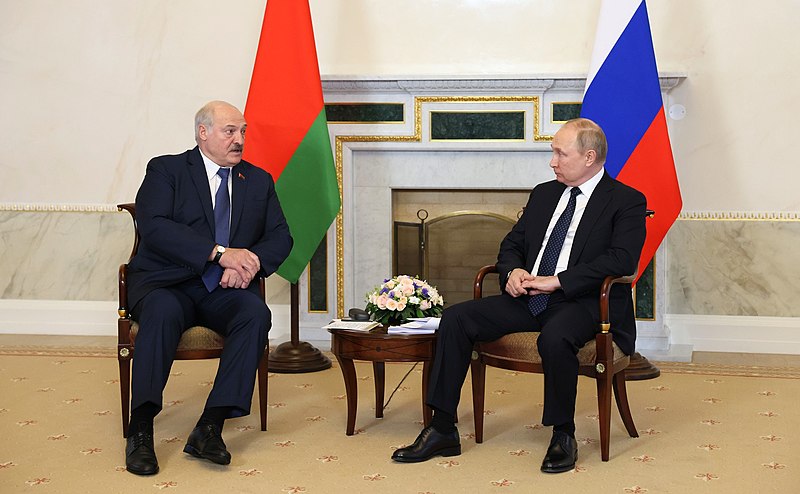
President Vladimir Putin with his military personnel

Armies and Autocrats: Why Putin’s Military Failed

by Zoltan Barany

AbstractThis essay analyzes the failure of Vladimir Putin’s military in Ukraine in terms of five key factors. The first of these is Putin’s monopolization of control over the armed forces, which has driven critical voices and honest debates out of military and defense matters. Second is the failure of reform: Efforts to overhaul the bloated, ill-equipped post-Soviet military have not produced a twenty-first century fighting force that can match the world’s best armies or counter their capabilities. Third, Russia’s military has been unable to attract talented young people. Fourth, Russia’s mammoth defense industry produces too few weapons, and those it does turn out cannot match sophisticated Western arms. Finally, the operations in Georgia, Crimea, and Syria were conducted against feeble adversaries and said zero about how Russian forces would perform in a conventional land war against a resolute, well-armed enemy. In short, the Russian military is a reflection of the state that created it: Autocratic, security-obsessed, and teeming with hypercentralized decisionmaking, dysfunctional relations between civilian and military authorities, inefficiency, corruption, and brutality. Before and even shortly after Russian president Vladimir Putin invaded Ukraine on 24 February 2022, most experts predicted that Russia’s military would make short work of its southwestern neighbor’s defenders. The conventional wisdom held that while Russia’s forces had fallen on hard times after the Cold War, Putin’s more than two decades of rule had transformed them into an effective military machine. In early 2014, Russian troops in unmarked green-camouflage uniforms had taken Crimea from Ukraine with little bloodshed or even exertion. Two years later, one analyst called the intervention of the Russian Air Force on the side of the Bashar al-Assad regime in Syria “the most spectacular military-political event of our time.” In 2021, another commentator pointed to successful campaigns not only in Ukraine and Syria but also in Georgia (2008) while crediting Putin with having “overseen a thorough transformation of the Russian Armed Forces.” Flawed appraisals such as these are based on a misunderstanding of Russia’s military landscape. The Russian military is a quintessential reflection of the state that created it: Autocratic, security-obsessed, and teeming with hypercentralized decisionmaking, dysfunctional relations between civilian and military authorities, inefficiency, corruption, and brutality. We should note five key points. The first is that Putin’s monopolization of control over the armed forces and refusal to allow an independent legislature have driven critical voices and searching, honest debates out of military and defense matters. Second is the failure of reform—as the world can now see, efforts to overhaul the bloated, ill-equipped post-Soviet military have not produced a twenty-first–century fighting force that can match the world’s best armies or counter their capabilities. Third, Russia’s military has been unable to attract talented young people. Senior officers stubbornly refuse to delegate authority, robbing juniors of chances to develop initiative and leadership qualities, while most noncommissioned officers (NCOs) and their troops are poorly prepared. Fourth, Russia’s mammoth defense industry—largely owned and run by the state—produces too few weapons, and those it does turn out cannot match sophisticated Western arms. Finally, the operations in Georgia, Crimea, and Syria proved nothing: They were conducted against feeble adversaries and said zero about how Russian forces would perform in a conventional land war against a resolute, well-armed enemy. In a constitutional democracy, the legislature and the executive are both involved in controlling the armed forces. The chain of command is codified, as are respective institutional responsibilities vis-`a-vis the military. Laws likewise prescribe the potential uses of the military in various domestic and external scenarios. The national legislature passes the defense budget and supervises its disbursement, the chief executive acts as commander-in-chief, the defense minister is not a serving officer, and civilians—including those in the media and defense-focused NGOs—offer advice and scrutiny. In authoritarian states, the executive directly controls the military while the national legislature (if one exists) and regional authorities have no say. There is no safe place for independent security-policy experts, scholars, or journalists to function. The Kremlin runs the Russian armed forces, and today the Kremlin means Putin. He has few confidants. Since 2012, his principal advisors in the security realm have been Defense Minister Sergei Shoigu (who has no military background) and General Valery Gerasimov, the armed forces chief of staff. They serve entirely at the pleasure of the president—who summarily dismissed each man’s predecessor. Putin’s frustration with the Defense Ministry’s handling of the “special military operation” in Ukraine (to say “war” or “invasion” can bring a Russian citizen years in jail) has led to the marginalization of Shoigu, who nonetheless has kept his job despite strident criticism from prominent Russian nationalists. When Putin came to power in 2000, the military and its top brass held considerable sway over foreign and defense policy, military reform included. Since then, Putin has wrestled control of all military and security forces into his own hands. During Defense Minister Anatoly Serdyukov’s tenure (2007–12), bloodless purges removed from the general staff officers who disagreed with the Kremlin’s ideas about military reform, who were thought too independent-minded and unwilling to give Putin constant support. Serdyukov cut the Central Military Administration staff by more than 30 percent, mostly getting rid of generals and colonels. For the last dozen years, Russian generals have been Putin’s servants. Their careers depend not merely on their professional competence but on their personal loyalty to him. On paper the Defense Ministry answers to parliament and its committees on defense and security, but in practice the ministry answers to the Presidential Administration alone. The president decides whether, when, where, and how to deploy the military, at home or abroad. Putin is a centralizer; while Russia remains nominally federal, local councils have lost capacity to perform even traditional tasks such as calling up reservists, as recent events have shown. Journalists who have dared to write objectively on defense issues have been hit with heavy jail time even for open-source reporting. Membership in NATO—a defensive alliance espousing liberal-democratic principles—may constrain an authoritarian such as Hungary’s Prime Minister Viktor Orbán from seeking to “adjust” his country’s borders, but Putin faces no such obstacle. He dominates the Collective Security Treaty Organization (comprising ex-Soviet republics), while the “dictators’ club” that is the Shanghai Cooperation Organization in no way constrains his grip on the Russian military. For more than a decade, Russia’s army has been indisputably Putin’s army; no trace of institutionally balanced civilian authority, transparency, or accountability impedes his control over it.Reform InterruptusAt the Cold War’s end, Russian political and military leaders were aware of their forces’ shortcomings. For most of the 1990s, however, little happened beyond a reduction in force size. Generals opposed structural changes, political elites lacked the will to push back, and resources were scarce. The Russian army won the First and Second Chechen Wars (1994–96; 1999–2009) against a tiny breakaway region, but with an operational performance that was embarrassing. The August 2008 defeat of Georgia, another small and underfunded neighbor, also underlined Russia’s military deficiencies. Systems for command, control, communications, and intelligence performed so poorly that at times officers had to borrow war correspondents’ cellphones to reach troops. The air force admitted that it had four aircraft downed during the twelve-day conflict (the Georgians claimed to have shot down 21), losses that would have easily been avoided had unmanned aerial vehicles (UAVs or drones) been on hand to fly reconnaissance. Russian sources acknowledged that tanks and warplanes had seen no overhaul since the Afghan War (1979–89), “smart” weapons and modern communications systems had been unavailable, and the Defense Ministry had relied on “favorite suppliers” known for making obsolete armaments. In response to such weaknesses, the reform program begun in 2008 sought to turn a Soviet-legacy military still based on mass mobilization into a leaner, more professional force ready for combat. Even if Ukraine has laid bare their limits, the changes made since 2008 have been considerable. With carte blanche from Putin, Defense Minister Serdyukov pensioned off or cashiered enough stubborn senior officers to break institutional resistance. The military’s structure was rationalized and streamlined. The number of large units shrank from 1,890 to 172, while 65 military colleges became ten and sixteen Soviet-era military districts became four. A main purpose of the defense reforms was to bridge the deep qualitative gap between Russian and NATO military personnel that the brief Russo-Georgian War had highlighted, or at least to improve the training and combat readiness of the nonelite troops who have always filled most Russian units. Modernizers also wanted to stabilize the army’s troop strength at a million. Russian official data are best treated with skepticism, but it appears that the total personnel strength of the Russian armed forces (land, naval, and air) has been between 700,000 and 900,000 over the past decade. Serdyukov reduced the size of the officer corps, phased out praporshchiki (roughly equivalent to warrant officers), and drastically increased the number of “contract” (professional) soldiers. In a bid to make professional soldiering more attractive, money went to improve the working conditions, housing, welfare, and pensions of servicemen and their families. Shoigu carried on the reform process, raising the number of contract soldiers to 410,00 by 2020, when conscripts in uniform numbered only 260,000. The conscripts are a token of Russia’s limitations: The Kremlin would like to have a fully professional military but cannot afford it, so the draft is needed to fill the ranks. The reform plan called for a half-million contract soldiers by 2019, but only 405,000 were said to have been signed up and that figure is likely inflated. As of 2012, contract soldiers were paid 25 percent more than the average Russian civilian, and military benefits were comparatively generous as well. But inflation has been a key problem. Its erosion of contract soldiers’ pay and benefits has made military careers less enticing and driven down applicant quality: The military has been chasing not only fewer but less desirable recruits. Without able contract recruits, the dream of a high-quality, NCO-enabled Russian military can never come true. A traditional weakness of Soviet or Russian armies going back to czarist days has been the absence of career NCOs. A modern military relies on professional “noncoms”: They enjoy significant autonomy; keep commissioned officers and enlisted personnel working together; and give to the troops training, discipline, and (not least) hands-on leadership “at the sharp end.” Russia’s military reform recognized the need for a professional NCO force; within ten years after the Georgian campaign, contractors predominated in what were considered NCO billets. But questions remained about the depth of their training and the degree of initiative accorded them in an army where the idea of delegating authority downward has long been a foreign concept. In 2009, the Defense Ministry established an NCO academy, but the two-thousand graduates that it produces each year do not seem to have been enough to transform army culture. In 2010, seventy-thousand of the junior officers whom Serdyukov had discharged had to be recommissioned in order to keep doing what in the West would be classed as NCOs’ jobs. The available data suggest, and the war in Ukraine has confirmed, that Russia is a long way from fielding the kind of proficient NCO force that is essential to a modern military, and which Ukraine itself is increasingly displaying through its own performance under arms. Reform never even touched other areas. These include combat medicine, something that Western armies have worked hard on in recent decades. Quickly bringing together wounded soldiers and critical care is key, but the Russian military with its history of tolerating high casualties has focused little on this. Young Russian army doctors who resigned their commissions protested that they had been issued “practically nothing” to work with in terms of equipment and could “provide only first aid.”Generals and SoldiersLack of trust in subordinates and reluctance to delegate mark every command level of the Russian military. The Soviet-era practice of waiting for orders to filter down from headquarters—a custom meant to leave no room for independent thinking and creativity—often results in missed opportunities on the battlefield. Serdyukov dismissed or eased out about a third of senior officers, including the last group of critical thinkers who might have disagreed with Kremlin policy. He made senior generals’ promotion prospects depend on their ability to read the signs emanating from the Presidential Administration. Even at the top of the military hierarchy, generals are wary of taking initiative for fear of angering superiors who now include Putin himself. Nonetheless, it seems that some in the high command did question Putin’s plan going in, especially the idea of a lightning strike to seize Kyiv, warning that Russian troops and equipment were not up to the task. When the doubters turned out to be correct, the Kremlin apparently allowed these generals to draw up a new strategy. They then turned the conflict into a war of attrition based on the old Russian standby of overwhelming firepower. When massed artillery and aerial bombardment failed too, as fighting around the vital southern city of Kherson and Ukrainian breakthroughs in other sectors showed, Putin shook up his roster of senior commanders three times. In April, in June, and again in September, the Kremlin changed generals in search of better combat performance. In early October, Putin gave General Sergei Surovikin the task of turning the war around even as Ukrainian forces carried on with counterstrikes around the flanks and into the rear areas of surprised Russian formations. Surovikin’s qualifications include experience in complex combat environments as well as a reputation for “total ruthlessness,” “corruption and brutality,” and mistreating subordinates. In other words, he promises to be a perfect fit for Putin and his army. We can also see Putin’s distrust of his high command in his ever deeper personal involvement in military decisions. As the Ukrainians counterattacked in September 2022, he told his generals that he himself would now set strategy. His micromanagement of the war extends to making low-level tactical decisions and giving orders to frontline generals from the Kremlin. According to Western intelligence sources, the Russian president “is making operational decisions at the level of a colonel or brigadier,” helping to determine the movements of forces and ordering stands “at all costs” (an approach that leads to troop and equipment losses as units banned from making tactical retreats fall prey to encirclement). Putin’s heightened involvement likely stems from his realization that early in the war his commanders kept him in the dark about how badly Russian forces were faring against unexpectedly nimble and fierce Ukrainian resistance. But should Putin, who has no military background, ever have expected his forces to do well in Ukraine? Starting in 2008, military education and training of all ranks did improve. There were more drills, including large-scale joint exercises featuring tens of thousands of personnel from different Russian services. Beefed-up flight hours for military aviators and improved maintenance routines for their aircraft reduced mechanical failures and combat losses in Georgia and Syria. To put all this in context, however, it must be stressed that outside a few elite units, Russian training and maintenance standards across the board have never been more than modest, and hardly reach the levels that characterize the world’s top militaries. Despite pay raises, the Russian armed forces have been unable to attract the best and brightest of young Russians in the face of competition from the civilian labor market. Housing remains a problem for officers with families, and for years pay has not kept up with inflation. In many units, conditions are poor and junior officers are treated with contempt as superiors play favorites. Anecdotal evidence suggests that many officers with employment opportunities outside the military resign their commissions. The 2018 decision to revive the post of zampolit (political officer) in units as small as infantry companies harks back to the Soviet era and signals that the state doubts its soldiers’ loyalty. Mandatory military service has been unpopular. Many of those who can afford to avoid it (by bribing army doctors to declare them unfit) do so, while the most desperate flee the country or even deliberately injure themselves to evade the draft. The brutal hazing of raw recruits, sometimes with tragic results, remains a problem despite efforts to curtail it. In 2008, the period of mandatory active service was halved to a single year, which means that after training a soldier is available for just six months of duty. Most troops that the army considers combat-ready are not draftees, though (perhaps surprisingly) conscripts make up about a quarter of elite commando units. The army planned to reduce its intake of conscripts to 150,000 by 2021, but missed that goal. As the Ukraine war grinds on, unwilling draftees will become more common, and the army will increasingly have to rely on poorly trained and motivated soldiers. Putin’s 21 September 2022 call-up of 300,000 reservists put new focus on manpower issues just ten days before the beginning of the fall conscription period. Many experts believe that mobilizing hundreds of thousands of reservists will prove exceedingly difficult. So far, the call-up has fallen disproportionately on ethnic minorities. These include nomadic reindeer herders from northeastern Yakutia (5,600 kilometers from Kyiv) as well as the Crimean Tatars, long repressed by Soviet and Russian regimes and vocal opponents of the peninsula’s annexation. Even if those mobilized are actual reservists, it is likely that only a fraction of them have had regular training in the years since they left active duty. It will be months before these troops can add to Moscow’s war effort. In a September 29 video call with advisors, Putin publicly admitted “mistakes” such as call-ups of fathers with children, people with chronic illnesses, and some over military age. Mobilized soldiers, some of them middle-aged, have complained that they were kept in “cattle conditions,” had to buy their own food, and received ill-fitting boots and uniforms as well as old, poorly kept weapons. The president left it to regional governors and officials below them to fix the problems, not mentioning that his own policies have undermined local governments’ capacities. During the first week after the mobilization declaration, at least 200,000 young Russians and their families absconded to neighboring countries including Kyrgyzstan and Mongolia, as well as farther afield. The absconders were joining millions of their fellow citizens, many of them young and highly educated, who have voted with their feet against Putin’s war. In recent years, elite troops and private military firms in Moscow’s employ have done much of Russia’s fighting. The best known among the latter is the Wagner Group, a mercenary outfit possibly named for the German composer and established in 2014 by Dmitri Utkin, a former special-forces lieutenant-colonel, and Yevgeny Prigozhin, an oligarch from Putin’s inner circle with multiple Soviet-era criminal convictions. The unit is allegedly overseen by Russia’s military-intelligence agency, the GRU, in which Utkin served. How Wagner gets paid remains murky, but funds likely come from state sources as well as oligarchs. Wagner operatives in their insignia-free uniforms were the “little green men” who first appeared during Putin’s Crimea takeover, and since then have taken part in armed conflicts in Syria as well as several African states including Libya, Mali, Mozambique, and Sudan. Reportedly, more than a thousand Wagner mercenaries have deployed to Luhansk Oblast in the Donbas region of eastern Ukraine and have suffered heavy casualties. Wherever they go, human-rights violations and war crimes follow.Failings of a State-Run Defense IndustryThe Russian state is the main owner of the industries that yield most of its income (energy, banking, arms, and transport) and is directly involved in running them. As state-owned corporations, defense companies enjoy cheap credit, debt relief, and freedom from competitive market pressures. Although the state has invested heavily in the defense industry and has seen success in some areas, on balance Russia’s arms makers have failed to narrow the distance—and especially the quality gap—between their wares and those of the world’s leading weapons producers. Starting around 2005, Moscow’s defense reforms and ambitious armaments programs began to demand serious military-spending hikes. The Stockholm International Peace Research Institute and the International Institute for Strategic Studies in London broadly agree that the Russian military budget swelled from about US$20 billion in the late 1990s to more than four times that amount in 2015, before subsiding to its current official figure of $65.9 billion (or 4.1 percent of Russia’s 2021 Gross Domestic Product). In nominal terms, this is less than a tenth of annual U.S. defense spending, but there is reason to think that these figures grossly understate the real volume of Russian military expenditures. Using Purchasing Power Parity (PPP) measures, Moscow’s effective military expenditures may be as high as $200 billion per year. In recent years, only the United States, China, and India have had defense budgets that exceed Russia’s. Russia’s State Armament Program of 2011–20 aimed to breathe new life into the defense industry by commissioning it to manufacture or refurbish 70 percent of the military’s weaponry. Official sources claim that the industry achieved this. It developed new artillery, introduced some highly accurate cruise missiles, delivered several hundred new tanks (including the highly touted T-90M), and updated hundreds more with improved armor and electronics. Almost five-hundred new fighter jets, mainly Su-27s and MiG-31s armed with radar-guided missiles, were to boost Russian airpower to a new level, with hundreds of new combat helicopters and modernized older warplanes securing Moscow’s domination of the skies. The latest State Armament Program, which began in 2020 and is to end in 2027, is more modest and focuses on advancing mobility, logistics, and the optimization and standardization of extant weapons systems. Over the past decade, Russia has become the world’s second-largest arms exporter behind the United States. Russia’s share of sales in this market from 2017 through 2021 was 19 percent while the U.S. share was 39 percent. Seeing the mediocre performance and vulnerability to Western weapons (such as the U.S.-made Javelin antitank missile) of Russian arms in Ukraine, countries that have been buying military hardware from Russia (the top three customers are China, India, and Egypt) may think twice about purchasing from Moscow again. The systemic and structural challenges that beset Russia’s defense industry are not going away. Supply-chain problems delay deliveries. Money to replace outdated machine tools and pay for research and development is lacking, while neglect of quality control is common. A recent analysis concluded: Centralized and inefficient bureaucracies, weak intellectual property rights and rule of law, poor investment climate, pervasive corruption, and insufficient funding are among the problems that hinder swift progress in fields that are particularly dependent on creating a breeding ground for creativity and the free exchange of ideas.Russian arms makers are a long way from producing weapons that can compete with Western weapons in technological sophistication and general quality. Large-scale building of precision-guided munitions, targeting systems, and heavy-strike long-range drones is beyond the reach of Russian industry. The onset of conflict with Ukraine in 2014 cost the Russian military-industrial establishment its longstanding and beneficial ties to Ukrainian weapons producers. Now sanctions have cut off Russia’s access to the Western optics and electronics that are key to advanced modern weapons. Expanding existing factories will be hard, as funds and other requisites are not there. Ambitious plans announced with much fanfare and bluster have often come to little or nothing. In 2008, the first year of military reform, there was a proposal to create autonomous mobile forces teaming airborne, naval-infantry, and special-forces components, but nothing has come of it. The widely publicized program to produce a fifth-generation fighter, the Sukhoi Su-57, is now more than twenty years old and has generated nothing but a few prototypes. The Su-57 is the first stealth aircraft Russia has ever attempted. Meant to be capable of both air-to-air and air-to-ground combat, it is supposed to be Russia’s answer to the U.S.-built Lockheed Martin F-35 Lightning II, thousands of which are being produced for the United States and multiple allies around the world, including nine or more NATO countries. Technical setbacks, India’s decision to pull its financing, and a December 2019 crash (the first publicly known) make it doubtful that the Su-57 will be ready for full-scale production anytime soon. Since Soviet times, the security sector has been among the most troubled parts of the economy when it comes to graft and corruption In the twenty-first century, Russia has become, in Karen Dawisha’s fitting formulation, “Putin’s kleptocracy.” Transparency International’s Corruption Perceptions Index for 2021 gave Russia a corruption score of 29, putting it far closer on the 100-point honesty scale to the world’s most corrupt country (South Sudan with an 11) than to its least corrupt (Denmark, Finland, and New Zealand with an 88 each). As defense minister, Serdyukov made it a major goal to root out or at least curb the bribery and fraud often tied to arms procurement, as well as the misuse of funds set aside to improve living conditions for the troops. Putin fired Serdyukov in 2012 because of the latter’s links to a Defense Ministry official charged with embezzlement. Large-scale corruption continues, with often hundreds of millions of dollars disappearing. A Russian military prosecutor recently admitted that about a fifth of the Defense Ministry’s budget was stolen; other officials said that it could be as high as two-fifths. Few experts would disagree with former Russian foreign minister Andrei Kozyrev’s recent claim that the corruption—and the fear of telling Putin about it—had left Russia with a “Potemkin military.”Under Arms and UnderwhelmingHow are Russian forces doing in Ukraine? It is impossible to discern precisely because most Western sources are Ukraine-friendly, while both Ukrainian and Russian media have incentives to bend the truth. That said, Russia’s military performance has been far below what most experts expected. Experts have been surprised because their assumptions were faulty. The Russian military’s track record going back to 2008 may have looked impressive on the surface, but it was compiled against weak adversaries. Georgia is very small, and its miniscule army was poorly organized to boot. In Crimea, Moscow’s troops faced little resistance. In Syria, much was made of Russian airpower’s renewed capabilities, but it was up against insurgents whose air-defense capabilities were modest at best. Russia also sent into these lesser-scale operations mostly elite troops and special forces, not average soldiers. In short, the Russian military experienced nothing like the demanding combat environment that it has met with in Ukraine. As of this writing, the war in Ukraine is almost a year old. The course of the fighting has undercut the many experts who claimed that post-2008 Russia had clawed its way into the first class of the world’s military powers. So far, Russian forces from the top down have failed most of the tests facing them in Ukraine. Military planners seldom do well to underestimate an opponent. After seizing Crimea, Putin predicted that Kyiv could be taken in two weeks; in 2022, he shrank that figure to two days. The Russian high command underestimated how many soldiers it would need to attack Ukraine while overestimating the number of locals who would welcome them. Conquering a city such as Kyiv, with its three-million people spread over 839 square kilometers split by a large river and its tributaries, would have required a massive number of collaborators. Once the plan for a quick air-mobile strike at the Ukrainian capital’s downtown collapsed amid firefights with fast-reacting Ukrainian forces at Antonov Airport northwest of the city on February 24 and 25, Russia’s campaign fell apart. Misconceived operational plans, careless logistics, and the lack of combined-arms coordination all suggest deep deficiencies in Russia’s high command. The invaders handled their tanks poorly, trying to drive them forward without proper logistical support or infantry escorts to keep Ukrainian drones and ambush teams at bay. In the skies, overcautious Russian pilots “punched below their weight,” failing to translate their superior airpower into gains on the ground. Russian troops struggled to use their communications systems and failed to disrupt their enemies’ access to satellite signals. Stories of Ukrainian soldiers using smartphones in combat to call their trainers in the United Kingdom for advice, like the ability of those defending the Azovstal steel works in Mariupol to stay in electronic touch with Ukrainian intelligence throughout the five-week siege in April and May, hint at Russian ineptitude. Troops’ general sloppiness—their neglect of small but important tasks such as properly inflating truck tires, for instance—proved costly to Russia’s war effort. As the war drags on, it is unlikely that fresh Russian officers and soldiers dispatched to Ukraine will be better prepared and equipped, or will perform better, than those whom they replace. Nuclear threats could easily backfire: If Russia were to “go atomic,” it might lose its remaining allies, misgauge wind direction and have fallout drift back over Russian territory, or find itself directly at war with a NATO alliance capable (even without nuclear weapons) of inflicting massive destruction on Russian military assets. Further, Russia’s stocks of tactical and medium-range nuclear warheads are, like many Russian weapons, Soviet leftovers. They have been sitting in scattered storage sites for decades. The work of rendering these warheads operational would involve much effort and risk of human error. There is a good chance it would also be detected by Western intelligence given the known locations of stockpiles, the limited number of units even capable (on paper) of handling and firing these warheads, and the travel distances to the theater of conflict that would be involved. The underlying theme of the assault on Ukraine has been the yawning gap between what Putin and his forces want to do, on the one hand, and what they can do, on the other. Ambition is not ability. A Revitalized Ukrainian Army Just a few years ago, Ukraine’s military itself was facing daunting challenges. An ambitious reform program was launched in 2006, but it failed amid political instability, corruption, and inadequate resources eaten by inflation and the 2008 global financial crisis. This top-down overhaul was also poorly conceived: Ukraine was striving to create an all-professional force with cutting-edge technology and advanced command and control in defiance of institutional and funding constraints. Moscow’s 2014 aggression against Crimea and the Donbas shook authorities out of this reverie and into a push for swift change in the Armed Forces of Ukraine (AFU). Under President Petro Poroshenko (2014–19), naval and defense-industry reform succumbed to infighting and embezzlement, but the creation of an autonomous special-forces command with four-thousand troops was a success. The 2014 events showed that large numbers of soldiers would be needed to defend Ukraine against Russia. The draft, abolished in 2013, was brought back in 2014. More innovatively, the AFU also became a community-based military. The financially strapped government appealed to civil society, the large Ukrainian diaspora around the world, and ordinary people to help fund the AFU and to join its ranks. New organizations cropped up “to equip, uniform, protect, and improve the Ukrainian Army as soon as possible” and to supply much-needed military equipment—their donations made up 4 percent of the Ukrainian defense budget in 2015. Another significant change that partly relieved the AFU’s manpower shortage was the creation of volunteer battalions that already by 2014 comprised more than ten-thousand fighters. While raising some disciplinary concerns, they proved effective in the conflict against separatists in eastern Ukraine and are likely to play a consequential defense role for years to come. Finally, Western countries led by the United States and Britain but also including (remarkably) Germany have sent lethal military aid that makes Kyiv’s forces measurably more effective on the battlefield. As of mid-October 2022, Washington had offered about $66 billion—a sum more than eleven times larger than Ukraine’s entire 2021 defense budget. The help has been high in both quantity and quality, including as it has sophisticated items such as U.S.-made M142 HIMARS mobile precision multiple-rocket launchers, British- and U.S.-made M777 155-millimeter howitzers, various types of UAVs, and more. Between 2015 and February 2022, active-duty British soldiers trained more than 22,000 Ukrainian recruits in western Ukraine through a program called Operation Orbital. As of September 2022, instructors from Canada, Denmark, Finland, Lithuania, the Netherlands, New Zealand, and Sweden were joining U.K. soldiers to give accelerated training to thousands more Ukrainians at camps in Britain. The programs teach junior officers, NCOs, and soldiers to think critically and make independent frontline decisions without waiting for permission from commanders sitting at distant headquarters. Ukraine’s military has been everything that Putin’s army has not. The smaller country has managed to convert its own recent reforms and massive Western aid into combat advantages. Defending their own soil, Ukrainian volunteer and professional soldiers alike have excelled in drive, courage, and resourcefulness. President Volodymyr Zelensky has been a revelation: Ukrainians are fortunate to have been led by a clear-thinking and uncompromising figure who knows that this is a contest between democracy and tyranny. The war has made Ukrainian nationhood (long denied by Russian nationalists of Putin’s type) undeniable and has underscored the larger but too-easily-forgotten truth that freedom is not free. Opposition to the invasion has also brought Western democracies closer together as members of NATO, which is adding Finland and Sweden to its ranks. If NATO continues to stand united behind Ukraine, David will have very good chances against Goliath.

Diplomacy
Central Asian migrants in the airport

By Sending Migrants to Ukraine, the Kremlin is Damaging Ties With Central Asia

by Sher Khashimov

By continuing to rely on Russia’s ethnic minorities and foreign labor migrants to do its dirty work in Ukraine, the Kremlin is inadvertently damaging ties to its former colonies. A young Uzbek man named Fakhriddin has died in Ukraine after being recruited from a Russian prison, where he had been serving a five-year prison sentence, to work on a construction project in Russia-occupied eastern Ukraine. Fakhriddin, who died when a shell hit the site he was working on, is one of the latest casualties of Russia’s push to use Central Asian natives not only on Ukrainian battlefields, but also in the reconstruction of battle-torn occupied territories. Hundreds if not thousands of Central Asian migrants are being hired to work in Russian-occupied Ukrainian territory, despite dangerous conditions and warnings from their governments not to go to Ukraine. Most of these migrants are used in the reconstruction of war-ravaged cities like Mariupol and Donetsk; others dig trenches and collect dead bodies on the frontlines. Female migrants from Central Asia are also offered jobs in military hospitals, canteens, and factories in occupied eastern Ukraine. Vacancies are posted on major employment websites like Headhunter and the classifieds site Avito, as well as some regional employment websites, and shared via social media and in migrant communities or advertised by construction companies directly. Employers promise to cover travel expenses to Ukraine, accommodation, meals, and uniforms. Salaries range from $2,000 to $3,300 a month: significantly more than laborers can earn in Russia. Yet despite the enticing promises, Central Asian migrants face the same issues in Russia-occupied Ukraine as they do in Russia itself: unsanitary conditions, unheated living quarters, and poor treatment by employers. Multiple reports indicate that migrants are either underpaid or not paid at all. Some disillusioned workers who have tried to leave Ukraine were not permitted by Russian border guards to re-enter Russia, forcing them to continue working in dangerous conditions on the frontlines while facing criminal prosecution from Kyiv and their home governments for participating in the invasion. These hostile conditions in eastern Ukraine put Central Asian labor migrants and their governments in a bind. Central Asia’s population continues to grow rapidly, with around half of the region’s population now under thirty years old. A lack of employment options and underdeveloped education systems combined with economies wrecked by nepotism, the COVID-19 pandemic, and capital flight mean many younger Central Asians are forced to move abroad to find work.  Central Asian governments, particularly those of Kyrgyzstan, Tajikistan, and Uzbekistan, have become accustomed to exporting excess labor capacity in order to generate much-needed revenue for households through remittances, relieve domestic pressure to create jobs, and provide public goods and services. Politically, migration serves as a pressure valve that prevents the buildup of unemployment-fueled social and political frustration and helps undemocratic regimes to stay in power. Russia remains the primary destination for these labor migrants. Familiarity with the Russian language and culture stemming from a shared Soviet past, geographic proximity, and Russia’s acute need for labor migrants continues to keep Central Asia in Moscow’s orbit. Streamlined processes for obtaining citizenship for highly qualified personnel from former Soviet republics, such as doctors and engineers, adds to Russia’s allure, particularly to those from Tajikistan and Kyrgyzstan, the most remittance-dependent countries in the region. After a pandemic-induced dip, the number of Kyrgyz, Tajiks, and Uzbeks registered to work in Russia is peaking again. According to Russian Interior Ministry data, as many as 978,216 Kyrgyz, 3,528,319 Tajiks, and 5,837,363 Uzbeks entered Russia intending to work in 2022. Some people are likely to have been counted twice in these figures, as they reflect the number of registered border crossings, but they are still at a five-year high. Now the economic downturn in Russia and pressure to work in Russia-occupied Ukraine might contribute to changes in regional labor migration patterns—both at the grassroots level and from the top—that started during the pandemic. While Uzbekistan has become a popular destination for migrants from Turkmenistan, Kazakhstan has emerged as a popular alternative destination to Russia for a growing number of Uzbeks, Tajiks, and Kyrgyz (precise numbers are harder to find as many migrants take advantage of the lack of visa requirements to work illegally and avoid paying taxes).  Central Asian governments, facing domestic pressure to keep their nationals from dying in Ukraine, are also looking for ways to reduce their employment dependence on Russia by diversifying migration destinations and providing migrants with more resources. Uzbekistan has been working with Kyrgyzstan and Kazakhstan on the bilateral improvement of migration flows. Last December, the Uzbek and British governments discussed collaboration on labor migration during another round of economic talks. USAID has just opened a second consultation center in Uzbekistan for labor migrants, in Samarkand. In early 2022, Kyrgyzstan’s Labor Ministry created a center for employment abroad; later that year, the governments of Kyrgyzstan and South Korea signed an agreement guaranteeing additional employment opportunities for Kyrgyz nationals in South Korea.  This search for labor migration alternatives is part of Central Asia’s slow realignment away from its all-encompassing dependence on Russia: a nuanced dance the regional governments must perform without directly antagonizing the former metropole.  Central Asian governments refused to side with Russia in condemning the UN resolution to end the war in Ukraine. Russia’s regional integration projects are unlikely to expand, as Uzbekistan continues to decline invitations to join the Eurasian Economic Union, and Russia’s defeats in Ukraine have weakened the reputation of the Moscow-led Collective Security Treaty Organization. Finally, Central Asian foreign ministers in February welcomed U.S. Secretary of State Antony Blinken to the first ministerial-level engagement of the C5+1 Diplomatic Platform—which represents U.S. engagement with Kazakhstan, Kyrgyzstan, Tajikistan, Turkmenistan, and Uzbekistan—in the region since its 2015 founding. This realignment can also be seen on the cultural front: the popularity of the Russian language is declining, while local languages are seeing growing interest in them since the invasion of Ukraine. Local governments are cutting the number of Russian language lessons in schools and renaming streets. The issue of decolonization and anti-colonial solidarity is as salient as it has ever been since the collapse of the Soviet Union.  By continuing to rely on Russia’s ethnic minorities and foreign labor migrants to do its dirty work in Ukraine, the Kremlin is inadvertently damaging ties to its former colonies. The longer the conflict drags on, the more incentive Central Asian republics will have to manage their dependence on Russia in exporting their excess labor. It’s hard to see Central Asia quitting on Russia entirely, but the relationship is sure to grow more nuanced and less lopsided in the months to come.

Defense & Security
President of Russia Vladimir Putin

Russia Faces Three Pivotal Moments in 2023

by Tatiana Stanovaya

In 2023, Russia faces three crucial issues—President Vladimir Putin’s plans for his future, the battle between the hawks and pragmatists in the elite, and looming government personnel changes—that could reshape the country.  More than ten months on from the invasion of Ukraine, the contrast between the scale of the external shocks faced by Russia and the relative inertia inside the country is striking. Despite military failings and punishing sanctions, most Russians have gone on with their lives as though nothing is happening, while the elites have tried not to think about what tomorrow may bring, instead putting their full trust in Putin. However, 2023 could prove a dramatic year for Russia and be make-or-break for its leadership’s resistance to change, with three internal questions in particular promising to shape the country’s development for decades to come.  First, Putin will have to decide whether to run for re-election in 2024. Russia’s constitution was amended in 2020 to allow him to remain president until 2036. He may alternatively name a successor, though to leave enough time for campaigning, he would have to do so by the end of December 2023. For now, no one is sure what his plans are. This is by design, as Putin prefers to keep his elites in the dark. Indeed, in the summer of 2020, he justified the constitutional changes that made it possible to extend his rule as a guard against unrest among the elites, who he said “need to work, not look around for successors.” Following the revision of the constitution, both the presidential administration and elites operated on the assumption that Putin would hold on to power indefinitely. Today, the key question is how his calculations have been changed by the war and, in particular, the fact that it has not gone according to plan. Some believe that in unleashing grave problems and threats, the war has strengthened Putin’s resolve to stay in power beyond 2024. Given his contempt for “political deserters”—those who quit their posts in tough times—he is unlikely to become one of them. Others feel that not only is Putin open to giving up power, he may see doing so as part of a solution to the conflict with Ukraine. Even if that appears to be wishful thinking, part of the elite clearly hopes that such a reset will suffice to end Russia’s recent string of setbacks. However, both sides lack certainty about his designs. In any case, Putin is famously fond of making decisions at the eleventh hour, often based on situational factors and in defiance of popular expectations. The 2024 problem, then, has become a major source of anxiety for the elites. It will do more than any other issue to influence the events of 2023, as the political class tries to work out Putin’s intentions and plan around them with an eye to minimizing risk. A second, related issue is the growing schism between those in the elites who favor escalating the war, and those who warn against doing so. This divide emerged after Russia’s withdrawal from the Kharkiv region and relinquishing of the key city of Kherson, and was fueled by Ukraine’s strike on the bridge to Crimea, the referendums held on annexing occupied parts of Ukraine, and the authorities’ subsequent ambiguity on what Russia’s official borders are.  The pragmatists, who consist of technocrats as well as mid-ranking officials in the military and the security services, are united in their conviction that the war should be paused and rethought, and that the country should opt for a more realistic policy in keeping with its rather limited capacities. The hawks call for Russia to not only unleash its full military might against Ukraine, but also to radically restructure its own political and economic system. The latter plank makes theirs a revolutionary faction (albeit pro-Putin, for now at least) whose aim is to supplant a government they see as stalled. Their struggle for supremacy is set to be one of 2023’s key political fights, and one that hinges largely on events on the battlefield: the worse Russia performs militarily, the more vicious the pragmatists’ battle with the hawks. The Kremlin will find its preferred mechanism for suppressing dissent—repression—ill-fitting if used against the regime’s loyalists. The hawks will take the offensive, targeting the military brass and politicians, as Yevgeny Prigozhin, the notorious head of the Wagner private military company, already has. The pragmatists, meanwhile, will express doom and gloom about the direction of the conflict, seeking to scale back Moscow’s war goals and force recognition that victory is impossible. Their message will be well received by non-military elites, who were taken by surprise by the invasion and fear its medium-term consequences. All this leaves Russia stuck between military madness and careful consideration of a possible de-escalation, and Putin faced with a choice: between doubling down on his quixotic pursuit of Kyiv’s decisive defeat and returning to the negotiating table, with the West if not Ukraine. The third key issue Russia faces in 2023 revolves around government personnel changes, which are highly likely, even if it is hard to predict who will replace whom. One reason a reshuffle is near-certain is the increasing demand at the top for dynamism and effectiveness. Putin’s inclination to invite technocrats into the government may grow further, with senior figures in the cabinet, the presidential administration, and the power structures all aged and exhausted by the war and military failings forcing Putin to look for new ideas. Another is the coming presidential contest, given the historical record: reshuffles have preceded all but one of Russia’s presidential elections. A long buildup of tension within the government offers another reason to expect personnel changes. Defense Minister Sergey Shoigu and Chief of the General Staff Valery Gerasimov are being blamed for corruption within the armed forces, while the FSB has been slammed for intelligence failures. Security Council Deputy Chairman Dmitry Medvedev is seen as having lost the plot altogether, and Moscow Mayor Sergey Sobyanin as too apolitical, while central bank governor Elvira Nabiullina is suspected of secretly opposing the war. The government’s senior figures are all dissatisfied with each other: a mutual dislike that gives Putin cause to switch things up. Still, his conservatism and apprehensiveness when it comes to firing underlings will likely lead him to try to strike a balance between stability and renewal.  These fateful developments will be profoundly influenced by events on the battlefield. If, as Kyiv has predicted, Russia attempts a large-scale offensive in February or March, it will likely be met with significant Ukrainian resistance. Otherwise, Moscow will continue slowly strangling Ukraine with attacks on its infrastructure, to which Kyiv will respond with diversionary attacks on Russian soil. Russian political life will remain in the grip of the war’s grim and oppressive atmosphere, leaving elites even more anxious and fearful of the future. Putin’s hypersecrecy and refusal to explain himself to anyone will do nothing to help the situation. Repression will undoubtedly grow, with all dissent criminalized, elements of a state ideology introduced, and new pretexts found for even longer prison sentences. In 2023, Russia’s already historic war with Ukraine will show its full transformational potential, finally changing Russia from within and straining its leaders’ ability to keep the situation under control and plan the decisions they make.

Diplomacy
President Xi Jinping with Vladimir Putin

Putin-Xi Summit Reinforces Anti-U.S. Partnership

by Thomas Graham

The meeting of Russian President Vladimir Putin and Chinese leader Xi Jinping in Moscow helped both give the impression of a united front, but underlying tensions were also discernible. What did the summit achieve for each side?With the pomp of a state visit, Russian President Vladimir Putin and Chinese leader Xi Jinping shined a spotlight on their ­growing strategic alignment, which is aimed at upending the U.S.-led, rules-based international order in favor of a multipolar world. Long on symbolism, short on concrete substance, the summit nevertheless served both leaders’ purposes. Putin welcomed the demonstration that Russia was not, and could not be, isolated on the world stage, as it deepened relations with one of the world’s two superpowers. By showcasing burgeoning commercial ties and unveiling plans to expand them, Putin conveyed confidence that Russia can remain resilient in the face of harsh Western sanctions.      Meanwhile, Xi’s decision to make Moscow his first foreign visit of his third term as president underscored his strong commitment to Russia and to Putin personally. He used the summit to underscore China’s determination to pursue its national interests in defiance of mounting U.S. economic and diplomatic pressure—making the point that China will not abandon its strategic partner in pushing back against U.S. pretensions to global leadership. That was a crucial message for his increasingly nationalistic domestic audience, as well as for the Global South, where the U.S.-led liberal order is under stress. At the same time, Xi subtly let it be known that China is the dominant partner. Putin had little choice but to accept Xi’s proposal that Russia use the yuan, not the ruble, in trade with the Global South to diminish the role of the U.S. dollar in world trade. Xi also gratuitously endorsed Putin for reelection in 2024, even though the Russian president has not declared his intention to run. And at the joint press availability at the end of the summit, Xi was much more restrained in his description of bilateral relations than was Putin, who was eager to lay out all the areas in which the two countries would enhance cooperation in the years ahead. That left the clear impression that Russia needed China much more than China needed Russia.What does the summit mean for the war in Ukraine?Nothing at the summit suggested that the underlying dynamic in the war was about to change. As expected, Beijing continued to provide Moscow with strong diplomatic support, echoing the latter’s narrative blaming the North Atlantic Treaty Organization (NATO) for the conflict. Despite Washington’s fears, however, Xi gave no indication that China was ready to provide lethal military aid that might radically improve Russia’s chances on the battlefield. Putin noted that China’s recently released 12-point peace plan could serve as a basis for negotiations, but neither he nor Xi suggested any practical steps that might give substance to what is largely a list of bromides about respecting sovereignty, avoiding escalation, and seeking a diplomatic solution. The reality is that China benefits from the military stalemate. Russia’s aggression distracts U.S. attention and resources from the Indo-Pacific region, while Western sanctions compel Russia to turn to China as an economic lifeline. China exploits Russia’s predicament to gain access to critical natural resources, especially oil and gas, at discounted prices.  In line with this calculus, Xi provided Putin with sufficient moral and material support so that he could continue the fight, but much less than needed to give Russia the advantage. At the same time, the Chinese continued to drive hard commercial bargains. Notably, no deal was announced to build a second Power of Siberia gas pipeline, which Putin has described as “the deal of the century.” Rather, it was simply noted that further details needed to be negotiated, as China explores alternatives.What does it reveal about the underlying tensions between China and Russia?Except for a brief period after the Communist takeover of China in 1949, China and Russia have been rivals, not partners. Until the end of the Cold War, Russia was by far the superior power.   The dynamic changed dramatically after 1991. Then, the two countries’ economies were roughly the same size. Now, China’s economy is ten times larger, and the gap continues to widen.  Moreover, China now casts a much larger shadow on the global stage: it has overtaken Russia in the development of advanced technology and its conventional military is comparable to Russia’s, even as it is moving toward nuclear parity with both Russia and the United States. What once could have been seen as a roughly equal partnership has evolved to the point where Russia is decidedly the junior partner. Despite the rhetoric of comprehensive partnership and avowals from Putin and Xi that relations have never been better, this asymmetry in power and ambition is in itself a source of friction, in addition to the civilizational clashes, racial prejudices, territorial grievances, and geopolitical competition that have strained relations in the past. But these sources of tension are currently far outweighed by the shared challenge from the United States. Washington’s current policy of dual containment only reinforces their strategic alignment and pushes the tensions further into the background.

Diplomacy
illustrative editorial Cartoon of Vladimir Putin President of Russia and Volodymyr Zelensky

Zelenskyy and Putin’s Distinct Understandings of National Identity Will Shape Support for Each Side in 2023

by Jessica Genauer

President Volodymyr Zelenskyy of Ukraine and President Vladimir Putin of Russia are two very different leaders. The way in which each defines a national identity shapes their leadership and sectors of support.      As we pass one year since Russia’s full-scale invasion of Ukraine, attention is fixed on how the war in Ukraine will unfold this year. What happens in 2023 will have implications not only for Ukraine and Russia but for the international order more broadly. One factor that has influenced the trajectory of war so far, and is likely to continue to do so in 2023, is the distinct leadership styles of President Zelenskyy and President Putin. Zelenskyy and Putin could not be more different as leaders. Putin leads a personalist autocracy, having risen through the ranks of the Russian security services to claim the presidency in 2000. Zelenskyy, a newcomer to both politics and government, was freely elected in competitive elections in 2019. Putin leads in the style of nationalist-populist leaders. He has slowly but consistently tightened his grip on power since his first electoral success in 2000, shaping Russia into an electoral autocracy. Putin is very much a man of his generation. At 70 years old, he grew up and established himself during the time of the Soviet Union and now surrounds himself with advisors of a similar or more advanced age. He is very far from media savvy, reportedly not even owning a smart phone. Zelenskyy, on the other hand, is a master of media communications, having operated as an actor and comedian before becoming president. Also a man of his generation at 45 years old, Zelenskyy forged a media career in the post-Soviet world of the emerging democracy of Ukraine. A self-made comedian and media personality, he is a part of Ukraine’s dynamic and entrepreneurial civil society.National identity: A glorious past or a bright future?A key factor that distinguishes Zelenskyy and Putin as leaders is the way in which they draw on national identity in their leadership. For Putin, Russia’s national identity is static and homogenous. There is one acceptable version of Russian identity; variations are considered deviant and a threat. For Zelenskyy, Ukraine’s national identity is dynamic and inclusive. The unifying elements of Putin’s vision of national identity are specific communal factors: shared language, history, religion, culture, or ethnicity. For Putin, such elements create a common bond and a common purpose among those who possess them. In 2021 Putin stated: “Russians, Ukrainians, and Belarusians are all descendants of Ancient Rus… bound together by one language…, economic ties, the rule of the princes of the Rurik dynasty, and – after the baptism of Rus – the Orthodox faith… we are one people.” For Putin, this idea of an exceptional nation simultaneously evokes Russian entitlement based on past glory, as well as Russia’s victimhood and humiliation at the hands of foreign enemies. Putin’s popularity “is tied to the idea of reanimating Russia’s past to reinstate the country’s greatness.” In 2022, Putin praised the conquests of the historical Russian ruler Peter the Great as returning to Russia what was “rightfully” hers. At the same time, for Putin, Russia’s greatness is under threat from the West. By contrast, Zelenskyy himself brings together the fractured components of Ukrainian identity in his own person. He is a Russian-speaking Ukrainian born in the east of the country who embodies a strong Ukrainian identity that is distinct from a Russian one. In Zelenskyy’s words: “[Ukrainians] are all different. They fight wearing the cross, the crescent, the star of David. Lads from Western Ukraine and from the south-east. Russian speakers from Kharkiv and Kryvyi Rih and Ukrainaian speakers from Ternopil and Ivano-Frankivsk… All different. All Ukrainians.” The unifying element of Zelenskyy’s national identity is a focus on the human striving for freedom and dignity. This factor also constitutes a universal element – uniting Ukrainians with others who share these values. In contrast to Putin, for Zelenskyy, history is not used to illustrate a glorious and longed-for past, but rather to show that the human drive for freedom can triumph over oppression to create a brighter future. As Zelenskyy stated to the UK parliament in February 2023: “[Both of] our people went through crises and growth, inflation, and periods of social losses and social gains. It was tough but we always found strength and stamina to move ahead and achieve results… We know freedom will win… We proved together that the world truly helps those who are brave in defending freedom. And thus, paves the way for a new history.”Does national identity galvanise support?Ultimately, military outcomes will be decisive in determining whether and how the war might conclude this year. However, Putin and Zelenskyy’s distinct imaginings of national identity contribute to galvanising support with audiences domestically and across the world. Domestically, Putin’s static and homogenous national identity appeals to those for whom it provides certainty and belonging to a specific idea of what it means to be Russian. For this segment of the Russian population, the ongoing war only serves to reinforce Russia’s entitlement to territorial control beyond its borders, as well as the looming spectre of humiliation at the hands of the West. This constituency will not lose faith in Putin’s war in 2023. However, if Russia fails militarily, these supporters may grow dissatisfied with the outcome, if not the war itself. Globally, Putin’s emphasis on the West as Russia’s central opponent will further isolate Russia from Western countries. However, Putin’s assertion of a homogenous identity does appeal to groups who conceptualise their own identity in a similar way within their own context. Additionally, Putin’s narrative of Russian victimhood by the West resonates in countries that are uncomfortable with a US-led global order or have an enduring historical memory of Western colonialism. Nevertheless, given Putin’s emphasis on Russian particularism, this is more likely to create tacit acceptance of Russia’s actions than stir costly action in support of Russia’s war. Domestically, Zelenskyy’s dynamic and inclusive Ukrainian identity, with an emphasis on the striving for freedom, appeals to broad swaths of the Ukrainian population – and aligns with the sense of purpose felt by those fighting on the frontlines. This is unlikely to change in 2023. As Russia doubles down on asserting its self-proclaimed right to control Ukraine, the idea of freedom and agency become ever more galvanising. Beyond Ukraine, Zelenskyy’s emphasis on a common human striving for freedom as a basis for identity invites others who align with this notion to rally alongside Ukraine. This will continue to boost support for Ukraine in established democracies – but also beyond, in places where populations or leaders resonate with a smaller state fighting against a stronger one to determine its own political and social reality. In the coming months we are likely to see military escalation between Ukraine and Russia. A less-visible factor that will contribute to the trajectory of this conflict is whether Putin and Zelenskyy’s distinct articulations of national identity will maintain traction with their respective constituencies. Will Putin’s homogenous and static national identity, that harks back to a time of historical glory, continue to appeal – or will it fracture if Russian glory on the battlefield falls short? Will Zelenskyy continue to be able to unify the diverse aspects of Ukrainian society into a coherent whole – and will this unity hold past his leadership? The answer to these questions will shape the societal impacts of this war – in both Ukraine and Russia – long after the fighting has ceased.

Defense & Security
PM Benjamin Netanyahu with Spanish PM Pedro Sanchez and Belgian PM Alexander De Croo

PM Netanyahu Meets with Spanish Prime Minister Pedro Sanchez and Belgian Prime Minister Alexander De Croo: - Your moral values do not stand up if you're not willing to fight for them. -

by Benjamin Netanyahu

Prime Minister Benjamin Netanyahu, today, at the Prime Minister's Knesset office, met with Spanish Prime Minister Pedro Sanchez and Belgian Prime Minister Alexander De Croo. Prime Minister Netanyahu showed them sections of the horrific footage from the IDF Spokesperson's Office and told them afterwards: "We face a peculiar kind of enemy, a particularly cruel and inhuman foe. They're genocidal. They're not fighting for this or that territory; they're fighting to eliminate the Jewish state in whatever boundary. They say so. Their charter says if you find a bush and a Jew is hiding behind it, kill the Jew. Kill all the Jews. Their goal goes beyond the destruction of Israel. They're part of an axis of terror: Iran, Hezbollah, Hamas, Houthis. They say death to America—that's the Great Satan. Israel is the Small Satan. I hope I don't find any offense with any of you. You're a middle-sized Satan. They hate our free civilization. They want to bury it. They have an ideology that is mad. In the 21st century, after the Enlightenment, after the Scientific Revolution, after the advance of human rights and democracy, this is sheer madness. I don't give it relative moralism that says, moral relativism that says, well, they have this society. They can do these horrible things to women. They can do these horrible things to human beings. That's their value system. That's not a value system. That's something that has to be fought. And one thing that we discovered in the 21st century is that our assumption that we can live our civilized lives in our advanced countries, seeking peace, prosperity and progress, and we can just sit back and the barbarians will not come back, they come back. They come back in many places, and if we are unwilling to fight the barbarians, they will win. There's a great historian that I admire, an American Christian Humanist by the name of Will Durant, who wrote, in the last century he wrote "The History of Civilization." And he said history does not favor Jesus Christ over Genghis Khan. History favors the strong. Your moral values do not stand up if you're not willing to fight for them. Here is a classic case of savagery and barbarism against civilization. Now, this savagery has two techniques. One is to deliberately target civilians. The whole laws of war, humanitarian law, which we're committed to completely, makes a simple distinction. On one line, they draw, they draw a line in the middle of the world and they say on one line are combatants, and the other line are non-combatants. You can target the combatants. You should target the combatants. But don't deliberately target the non-combatants. They can be hurt, unintentionally. That accompanies every legitimate war. What the terrorists do is erase the sense of sin. They say everyone is a target. These girls in a music festival, these women. They're targets. Babies. They're targets. Old people. They're targets. Holocaust survivors. They're targets. Everyone is a combatant. Everyone! They not only target everyone, every citizen, no one is a civilian, no one is exempt from their murder, from their harm. They also hide behind their civilians. They deliberately implant themselves in hospitals, in schools, in residential areas, in UN facilities. They fire their rockets from there. Thousands of them. We might have an alert as we speak. There is no symmetry here! These people target directly our cities all the time. Thousands and thousands and thousands of rockets. Falling on Barcelona, falling on Madrid, falling on Brussels, falling on Antwerp. Or any one of the European cities. Thousands! Israel is a small country. They deliberately target civilians and they deliberately hide behind civilians and use them as a human shield. That's a war crime. So what is a democracy, committed to the human, to the laws of war, supposed to do? Do the laws of war give exemption to such criminals? And the answer is: They don't. They say do your best to target the terrorists. Do your best to minimize civilian casualties. But if we, the democracies, accept, say that under no circumstances should we go in because civilians tragically get killed, then we lost. We lost before we begin. You lost and you lost. Spain lost. Belgium lost. Because this will spread. You will see it. Very soon. Because the Axis of Terror is not going to stop. If they can emerge victorious here, they intend to bring down the Middle East, and next they'll go to Europe. After that they'll go elsewhere. If you think I'm exaggerating, I am not. This is where the pivot of history now is going to be decided. Do we stop them there? Or do they come to you? Now, how do you stop them? What do you do? What did the Western countries, what did the democracy do when terrorists embed themselves amidst civilians? Let me say from the start that any civilian death is a tragedy. Any one. And to avoid them, what you do is first, you try to get the civilians out of harm's way. And that's exactly what we did. We asked, called, sent leaflets, phoned the civilians in the areas where we were going to hit the terrorists, the Hamas terrorists, and we said please leave. When they tried to leave, Hamas kept them at gunpoint. Stay, because Hamas doesn't care that their civilians are killed. This is a messianic death cult that hides in the bunkers. As one of their spokesmen said: the underground belongs to Hamas; aboveground, so civilians, that's Israel's problem and the UN problem. Not their problem. On the contrary. It's their shield. So, what do you do? We ask them to leave. Hamas tries to stop them from leaving. Thankfully, many left. We set up a safe corridor, from the north of Gaza, where we were concentrating our effort against the terrorists, to the south. A safe zone in the south, safe corridor to the south. Hamas shot the safe corridor. They fired on the safe corridor, so the people would be trapped in. But they kept on leaving. I'm happy to say that there is a decline in civilian casualties, which is our goal. Our goal is to have none. And primarily that's because of the ground action. The ground action has resulted in the fact that the warnings that we give are addressed by the population, the civilian population that goes south. When they go south, we give them humanitarian support. There are about 150 trucks now going in. Probably go up to 200 and beyond: food, medicine, water. I have not seen yet the effort that I'd like to see from the UN and the international agencies to build there shelters. Winter is coming and there is no reason not to build tens of thousands of tents in the safe zone, next to the safe zone. Because they don't enter the safe zone, the UN, which I think is shocking. I said, okay, we'll give you a lot of little zones. And they're building little safe zones to get the population out of harm's way. Israel is doing everything in its power to get the population out of harm's way. Hamas is doing everything in its power to keep that population in harm's way. That's the facts. I'll give you an example – Hitler, the original Nazis, they invade Europe, they do these horrors on a mass scale. And by the way, these killers would do exactly what Hitler did if they could away with it. The difference is only in capability, not in intent and not in savagery. Hitler invades Europe, perpetrates these horrible savageries, the Holocaust and so on. And so on. And the Allies invade. They invade Normandy. The German army is in the cities. You've seen the footage. The Allies say, "No, we can't do anything. We can't fire," because they're amid civilians? Of course not. They try to do exactly what we are doing: try to minimize the cost. And then they go through the cities of France and they go through the cities of Germany. And unfortunately, many, many, many civilian casualties occur. I don't know what history would have been like if we had demonstrations and protests in the West against the Allies for incurring civilian, German civilian casualties. I know history would have been very different. But we are the Allies, along with the moderate Arabs, with the United States, with Europe. We're the Allies. And they're the new Nazis. Israel cannot be held to a standard that no one is being held to. We have to fight the terrorists. We're in complete compliance with international law. I think in many ways, we're setting a different standard. We seek to minimize civilian casualties, and Hamas seeks to maximize it. And I would strongly urge you to make that distinction, not merely because it's right and just, but because your very societies are on the line. You're next. This is a battle for civilization. It has to be won. We will win it, because we have no other choice. We don't have a future if we don't. Hamas has already said, 'We'll do it again and again and again.' So we'll have to eradicate them. Just as you couldn't leave a reduced Nazi presence, you know, in Germany. You couldn't do that. And we are not going to leave a reduced Hamas presence in Gaza. But the consequences are much bigger. And I think that we should all unite in making sure that this kind of savagery never shows its face again. I thank you." The views and opinions expressed in this article solely belong to the author and do not represent the perspectives or stance of World and New World Journal, nor do they reflect the opinions of any of our employees. World and New World Journal does not endorse or take responsibility for the content, opinions, or information presented in this article. Readers are encouraged to consider multiple sources and viewpoints for a comprehensive understanding of the subject matter. Thank you for your understanding.

Diplomacy
Japanese Prime Minister Fumio Kishida during a speech in parliament.

Japanese PM Kishida’s struggle for political survival

by Professor Purnendra Jain and Takeshi Kobayash

Japanese Prime Minister Fumio Kishida and his Liberal Democratic Party (LDP) are facing one of the worst financial scandals in decades, resulting in growing public distrust of the party and threatening the stability of his government. The Kishida government, which took office in October 2021, was already facing headwinds as its cabinet’s popularity declined due to concerns about the economy, social security and the LDP’s links to the Unification Church. The assassination of former prime minister Shinzo Abe in 2022 during an election campaign further complicates matters. The assailant claimed that Abe supported the Unification Church, which he said caused his family’s bankruptcy and forced his mother into making donations. Many other LDP parliamentarians are known supporters of the Church. Kishida and the LDP are yet to be transparent about this issue. Despite falling popularity, the LDP’s approval ratings hovered in the 30s between October and November 2023. Analysts suggested that, despite his low popularity, Kishida would continue and that there were no imminent threats to his prime ministership. That scenario changed dramatically at the close of November 2023. One poll suggests that Kishida’s cabinet approval rate has plummeted to 17 per cent, marking the lowest prime ministerial approval rating since the LDP regained power in 2012. The drop in popularity occurred after it was revealed that LDP factions and the individual parliamentarians associated with them had failed to report all revenues from ticket sales at fundraising events. The slush fund, estimated to be millions of dollars, was used for political purposes, violating the Public Funds Control Law. The Public Prosecutors Office has launched investigations into the LDP’s largest and most influential faction, the Seiwakai, commonly referred to as the Abe faction. Reports suggest that four other major factions, including the one led by Kishida, might also be implicated. Kishida has replaced four key cabinet ministers from the Abe faction. The position of Chief Cabinet Secretary — which serves as the face of the government — has gone to Yoshimasa Hayashi. Kishida had removed Hayashi from his position as foreign minister and, facing difficulty in persuading other colleagues to assume the Chief Cabinet Secretary position, Kishida opted for Hayashi, a member of his own faction. The other three ministerial positions went to factions led by Taro Aso, Toshimitsu Motegi and Hiroshi Moriyama. The cabinet reshuffle does not address the core problem — money politics. Money politics remains endemic in Japan’s political system, despite past reforms. In the 1970s, former prime minister Kakuei Tanaka resigned due to a bribery scandal. Following Tanaka’s resignation, the LDP sought to regain public trust by turning to ‘Mr Clean’, former prime minister Takeo Miki. But it was not long before another large-scale financial scandal — the Recruit Scandal — emerged in the late 1980s. The scandal led to former prime minister Noboru Takeshita’s resignation, his secretary’s suicide and the resignation of many high-profile politicians. Takeshita’s successor, former prime minister Sosuke Uno, resigned within months following revelations of sexual misconduct. Amid the scandals, the LDP called in another Mr Clean, former prime minister Toshiki Kaifu. But the LDP’s troubles persisted. The 1993 Sagawa Kyubin financial scandal resulted in the arrest and subsequent imprisonment of LDP ‘strongman’ Shin Kanemaru on tax evasion charges. These scandals ultimately led to the LDP’s electoral defeat in 1993, marking what was supposed to be a new era in Japanese politics. But opposition parties have struggled to win government and sustain it. The LDP regained power within two years of its 1993 defeat. Similarly, the LDP returned to government within three years by defeating the Democratic Party of Japan in 2012. Even during the Abe administration, reports of financial scandals emerged. But Abe’s strong popularity allowed him to survive. The current fundraising scandal and its scale are still unfolding. More resignations are likely. Many details regarding the unlawful accumulation of political funds remain unknown. The Public Prosecutors Office may shed light on the scandal after its investigation. Regardless of the outcome of the investigation, Kishida’s position appears untenable. Though not directly implicated like Tanaka, Takeshita and Uno in the past, the public expects Kishida, as President of the LDP, to own up to the rot in the party and step down. Despite the reshuffle of his cabinet and his statement committing to spearhead reforms in the LDP, it will be a political miracle if he survives this scandal ahead of the LDP presidential election in September 2024. The LDP and its Prime Minister face a choice. They can follow the same path as their predecessors by temporarily presenting a ‘clean’ face and then reverting back to business as usual. Alternatively, the new generation of LDP politicians can challenge the established path and set a different course for the party, one that is policy-focused, transparent, less factional and not hereditary. But it remains uncertain whether the new generation of LDP politicians is inclined to take on this challenge. The opposition parties remain weak, fragmented and unable to replace the LDP. Yet they play a crucial role in keeping the LDP government accountable. Without the Japanese Communist Party’s scrutiny, the present fundraising scandal might never have come to light.

Defense & Security
Oceania political map. Region, centered on central Pacific Ocean islands with Australia

Australia should not overstate the threat of China in the Pacific, and mend relationships in the region

by Melissa Conley Tyler

The signing of a security agreement between Solomon Islands and China in April 2022 brought geopolitical competition and militarisation in the Pacific to the fore of public discussion. Australian policymakers and the public are concerned about the potential for a Chinese military base in the Pacific region. They harbour wider concerns that China’s influence is becoming sharper and more destructive. At a time of intensifying geostrategic competition, Australia may feel pressure to take a short-term and transactional approach towards the Pacific. Such crisis thinking would be unnecessary and counterproductive. Australia should frame its relationship with the Pacific in terms of long-term, generational partnership. It should be responsive to the Pacific’s priorities for development with a clear eye on a shared, long-term future. The Pacific will always be of great strategic significance for Australia. Peace and stability in Pacific island countries goes to the heart of Australia’s security, prosperity and national interest. This means Australia’s interest in the region, and the attention it pays to it, should remain clear, consistent and coherent, irrespective of whether there are crises or not. Genuine, consistent Australian engagement should address each Pacific island country’s unique needs through both bilateral and regional Pacific-led initiatives. There is a danger that a focus on China could overtake other priorities. This would undermine trust and lead to Australia’s diplomatic intentions not always being well-received. If Australia privileges its own institutional requirements and solutions above local agency and solutions, it can feed negative perceptions about Australia’s intent. Foreign Minister Penny Wong has spent much time in the Pacific since Labor won office. AAP/AP/Department of Foreign AffairsWhen Pacific leaders look at regional security they have an expanded view, which includes climate change, human security, gender equality, environmental and resource security, transnational crime and cybersecurity. This reflects insecurity in the Pacific at multiple levels: - globally, as a warming planet presents ecological and civilisational threats- regionally, as players and relationships change- nationally, as countries respond to the effects of COVID-19, natural disasters, illegal fishing, transnational crime and other threats, compounded by gender inequality- locally, where community leaders and security agencies struggle to control violence and conflicts in several countries. In some areas, law and order challenges and the proliferation of firearms mean the risks to individual safety and tribal and political violence are extremely real. These shared challenges and mutual threats require the long-term attention of Australia and Pacific island countries. We need to move beyond paying lip service to each others’ security concerns and develop a common security framework that responds to the full set of peace and security challenges in the Pacific. This requires deepening relationships and making sure shared concerns are not lost along the way. The good news is there are strong foundations to work on in Australia-Pacific co-operation. Australia has security co-operation arrangements with most Pacific Island states. These include police-to-police co-operation, defence capacity-building and joint military exercises. There are development programs designed to address drivers of fragility such as inequality and inclusive economic growth. There has been co-operation on climate science, sustainable fisheries and preserving maritime boundaries in the face of sea-level rise. Australia has goodwill in the region to draw on. There is a risk that Australia’s concerns about geopolitical change lead it to overstate differences with Pacific island countries. There will always be areas where views and interests align, and others where they do not. Australia needs to envisage Pacific island countries as a network of interaction, trade, exchange, communication and influence reaching across much of the Pacific Ocean. Strong relationships are not made up only of defence and security ties, and do not come into play only in situations of threat. They are the product of long-term, consistent and multifaceted engagement, genuine partnership with and respect for countries that are equally sovereign, and exchange that takes seriously all parties’ priorities, concerns and values. The opportunity exists for a rhetorical reset framing Australia as a generational partner for Pacific societies. Faced with a challenge to its profile and influence, Australia should pursue a long-term approach. The focus should be on economic integration, reciprocity and sustained commitment to generational progress. Australians should accept that Pacific island countries will engage with other countries, and work towards bridging the gaps in our defence, development and diplomatic relationships with the region.

Diplomacy
Flag of Japan between flags of US and China

Japan’s policy amidst growing US-China rivalry

by Kristina Voda

AnnotationThe article is devoted to the analysis of Japan’s policy amidst growing competition between the United States and China in the Indo-Pacific region. It assesses the Japan’s place in US strategy to contain China in the economic and political spheres. Particular attention is paid to the events that took place in 2021, the first year of the Biden administration in the US.  The Biden administration, which came to the White House on January 20, 2021, immediately announced a course of rivalry with China. In his very first foreign policy speech, the 46th President of the United States called the PRC the most serious rival of the United States, declared his desire to rebuff "the growing ambitions of authoritarian China, challenging American leadership". The U.S. Interim National Security Strategy Guide, published in March 2021, called China “the only competitor with the potential to combine its economic, diplomatic, military, and technological might to mount a sustained challenge to a stable and open international system”. The Biden administration's course of confronting Beijing also included countering Chinese illegal trade practices, cybercrime, and countering Beijing's so-called coercive economic measures that undermine the competitive advantage of the American economy. At the same time, Joe Biden, unlike his predecessor D. Trump, who pursued a policy in the spirit of “America first”, promised to rely on allies and partners in the implementation of his international policy. The Interim Strategic National Security Guide of the United States called the American allies “the most important strategic resource”, allowing them to act as a united front against global and regional rivals, including China. The United States promised to reaffirm and strengthen its commitment to alliances in Europe and the Indo-Pacific region, and to encourage allies to develop their military and political capabilities to counter common current and future threats. Japan, the most important military and political ally of the United States in the Indo-Pacific region (ITR), supported Joe Biden's course of rivalry with China on a wide range of issues. At the same time, the growing competition between Washington and Beijing is challenging Tokyo's national interests, forcing it to revise the key parameters of its economic and foreign policy strategy and adapt it to changing international political conditions.Military-political sphereIn 2021, Japan began coordinating its PRC strategy with the new American administration. On March 16, Tokyo hosted the first meeting of the new heads of the US Foreign and Defense Departments — A. Blinken and L. Austin — with their Japanese counterparts, which took place in the 2+2 format. Following the meeting, the parties stated that China's activities in the political, economic, military and technological spheres pose a challenge to the Japan-US alliance and the entire world community when they do not comply with the existing international order. The ministers announced their determination to resist Beijing's actions if they put pressure on regional players or destabilize the situation, which undermines the "rules-based" international system. During Biden's first Japan-US summit in Washington on April 16, 2021, the parties expressed concern about China's behavior that violates international order, including the use of economic and other forms of coercion. In addition, J. Biden and Y. Suga spoke out against China's territorial claims in the South China Sea, and also expressed concern about the human rights situation in Hong Kong and the Xinjiang Uygur Autonomous Region of China. For the first time in 52 years (since 1969), the leaders of Japan and the United States mentioned the "Taiwan issue" in a joint statement: they declared the importance of peace and stability in the Taiwan Strait and expressed concern about the current situation around Taiwan. A desire was declared to develop cooperation between Washington and Tokyo on the basis of universal values and common principles. The parties also stressed the need for deterrence to maintain peace and stability in the region. At the same time, J. Biden and Y. Suga noted that it is important to have a frank dialogue with Beijing, directly express their concerns and work with it on topics of interest. The United States remains Japan's most important military and political partner, guaranteeing the security of the Japanese state from outside attacks. According to official Japanese government documents, the most serious security threat to Japan is the lack of transparency in the increase in the combat capability of the Chinese military. In addition, China's attempts to change the status quo in the East China and South China Seas pose a threat to Japan. There is particular concern about China's activity around the Senkaku Islands in the East China Sea, which threatens Japan's sovereignty over the islands. In addition, the development of the DPRK's nuclear and missile programs is considered a security threat to Japan. Tokyo is concerned about the significant progress made by Pyongyang in the development of a new type of ballistic missile. On these most sensitive issues, Tokyo is seeking guarantees from Washington to ensure its security. The growing confrontation between the US and China in the international military-political sphere poses new challenges to the alliance between Japan and the US. In the 2010s - early 2020s. with the active assistance of the Japanese government, military cooperation between Tokyo and Washington has expanded markedly. The change in the interpretation of the Constitution by the government of S. Abe in 2013 allowed Japan to apply the right to collective self-defense in limited cases. The Japanese Self-Defense Forces gained the ability to come to the aid of their allies in joint operations outside the Japanese islands. As a result, the scope of the Japanese-American alliance has expanded virtually to the whole world. The creation in 2015 of the Coordinating Mechanism between the armed forces of the two countries is aimed at strengthening cooperation between Tokyo and Washington in the military sphere. It was used to monitor the situation on the Korean Peninsula during the escalation of tensions in 2017. In addition, Japan increased the volume of purchases of American weapons, including F-35 aircraft, SM3 ballistic missile interceptors, RQ-4 Global Hawk long-range unmanned reconnaissance aircraft, Osprey convertiplanes, E-2D Advanced Hawkeye AWACS aircraft, etc. Tokyo's more active involvement in the confrontation between Washington and Beijing is supported by some American political experts. In recent years, there has been an increase in the number of publications substantiating the important role of Japan in the US strategy in the Indo-Pacific region. It is noted that during the years of D. Trump's presidency, the United States refused to participate in a number of global and regional multilateral initiatives, undermining its credibility as the leader of the liberal international order. At the same time, it was Japan that assumed the role of a conductor and defender of liberal values in the IPR. As S. Smith, senior fellow at the American Council on Foreign Affairs, notes, along with maintaining an unshakable commitment to an alliance with the United States, Japan has acquired a more prominent role in international coalitions in the ITR in recent years. This is evidenced by its participation in naval exercises with the United States, Australia, India, and others. Further involvement of Japan in the US-Chinese confrontation on the side of the United States will require Tokyo to build up its military potential and increase its defense budget, strengthen coordination between its three types of armed forces, between the armed forces of the United States and Japan, as well as the unification of their commands. Such changes in Japan's military sphere will require further modifications of its defense legislation, including a revision of the restrictions imposed by the anti-war Article 9 of the Constitution. Although part of the political elite, including members of the ruling Liberal Democratic Party and former Prime Ministers S. Abe and Y. Suga, advocates the need to revise the Constitution and further expand Japan's military capabilities, about half of the public still does not support this course and adheres to pacifist views. In the short term, radical changes in Japan are unlikely, which will impose restrictions on Japanese-American cooperation in the military sphere. As for relations between Japan and China, during the period of D. Trump's administration in the United States, there was limited convergence on economic and political issues between Tokyo and Beijing in 2017-2019. The visit of Prime Minister S. Abe to Beijing in 2018 gave an impetus to the expansion of economic interaction between the two largest Asian economies. China and Japan signed 52 agreements totaling about $18 billion, announced plans to cooperate in third countries in the field of infrastructure construction, agreed to cooperate in the field of innovation development and intellectual property protection, renewed a $30.4 billion currency swap agreement, expressed the need to jointly develop free trade regimes in the region. Tokyo and Beijing have taken steps towards each other in the field of regulating tension in the East China Sea. The parties reaffirmed their long-standing intention to turn the East China Sea into a "sea of peace, cooperation and friendship" and agreed to prevent the emergence of dangerous situations at sea and in the air. On December 28, 2021, Japan and China again announced their intention to open a “hot line” between military departments to monitor the situation in the East China Sea around the Senkaku Islands, the sovereignty over which is disputed by Beijing. In the military-political sphere, serious contradictions remain between Japan and the PRC, including the territorial dispute, the problem of historical memory, as well as competition for influence in the IPR. At the same time, Tokyo maintains channels of communication with Beijing and its own agenda of bilateral relations. According to R. Sahashi, a Tokyo University researcher, Japan's task in its relations with China since establishing diplomatic relations in the 1970s has been to involve China in the international political order through the development of bilateral economic relations while maintaining its alliance with the United States. Japan's response to the current intensification of confrontation between the United States and China has been to increase cooperation with the United States in the military-political sphere and in the field of economic security, as well as the development of interaction with countries that share views with Tokyo on a preferred international order while maintaining diplomatic relations with China. Japan's long-term interest lies in the creation in the IPR of certain institutions in the field of economy, politics and security, which should lead to the formation of an order based on universal values.Trade and economic sphereIn 2021, the policy of the Joe Biden administration in the trade and economic sphere in the Indo-Pacific region was in the process of formation. Many of D. Trump's measures, primarily in relation to China, have retained their effect. A number of new initiatives were proposed to restore the US position in the IPR, lost during the years of the previous administration. With respect to the PRC, Washington upheld the tariffs imposed by Trump on imports of Chinese products worth about $370 billion (on 75% of exports of Chinese manufacturers to the United States). In addition, sanctions remain against high-tech Chinese companies ZTE and Huawei. In response to US restrictive measures, China imposed 25% tariffs on $110 billion of US imports in 2018. The trade dispute between the United States and China, the active phase of which fell on 2018-2019, led to the signing by the parties on January 16, 2020 of the so-called first phase of the trade agreement. It assumed an increase in Beijing's purchases of American products in 2020-2021. by $200 billion compared to 2017. It also committed China to make progress in enforcing intellectual property rights, remove non-tariff barriers to agricultural imports, and liberalize its financial services sector. The Biden administration continued to insist that China fulfill the terms of the first phase of the bilateral agreement. In October 2021, the new US Trade Representative K. Tai announced her intention to continue consultations with the Chinese side on trade and economic issues, as well as to raise issues such as subsidizing by the PRC government of certain sectors of the economy and special measures to support state-owned enterprises, which Washington is considering in as Beijing's "non-market trading practices". The trade dispute between the United States and China has led to a slowdown in the global economy and world trade, a decline in business confidence and increased uncertainty about future developments. Japan's trade volume in 2019 also decreased by 5% compared to 2018. Japanese exports to China fell by 7%, imports decreased by 3%. China remains Japan's largest trading partner: China's share in Japanese trade in 2018-2019 was 22%, and at the end of 2020 it increased to 24%, while the share of the USA was at the level of 15%. The trade dispute between Washington and Beijing had a negative impact on the economic performance of Japanese multinational corporations (TNCs) with Chinese subsidiaries. Since the US imposed tariffs on Chinese products in 2018, there has been a decline in sales from Chinese affiliates of Japanese TNCs trading with North American countries. Declines in the value of shares on the exchange (Nikkei 225 Index) were recorded for Japanese TNCs, whose operations are related to trade between the US and China. The share price of TNCs, whose Chinese subsidiaries had a higher share of imports from Japan, fell most noticeably. This is because, as sales to the US fell, the volume and value of imports from Japan also fell, resulting in a decline in the share price. To avoid an increase in the negative effect of the trade war, some Japanese corporations were forced to transfer production. So, Mitsubishi Electric in 2018-2019 moved part of the production of semiconductors and equipment for customers from the United States to Japan. Other companies have increased the capacity of their plants in North America and Southeast Asia. Electric motor maker Nidec Corporation moved production to Mexico in October 2018, Ricoh moved printer production to Thailand, and Sharp moved some laptop production from China to Vietnam. Washington’s course to confront Beijing in the economic and technological spheres in 2021 was supplemented by an initiative aimed at reducing the dependence of the US economy on high-tech products made in China and reformatting existing supply chains with the possible exclusion of China from them. In February 2021, Washington announced its intention to encourage the transfer of production of critical products from China to the United States and allied countries, including Japan, South Korea, Taiwan, Australia, and India. At the same time, special attention in the United States is paid to the production of semiconductors, an industry that is one of the key drivers of global economic growth. The semiconductor shortage in 2021 exposed the vulnerability of existing supply chains and undermined the global production of cars, computers and electronics. On June 8, 2021, the U.S. Senate passed the Innovation and Competition Act, which provides $250 billion for the development of the semiconductor, quantum computing, and artificial intelligence industries. 52 billion of them is planned to be directed to expanding the production of semiconductors in the United States. The purpose of this bill is to increase the competitiveness of the United States in the technological competition with China, where as part of the "Made in China 2025" strategy, the amount of state support for semiconductor-producing companies is stated to be 1.4 trillion dollars. The Japanese government is also taking steps to reduce dependence on China. According to Japanese expert A. Furuse, Tokyo realized the need to diversify its supply chains as early as 2010 after the escalation of tensions around the Senkaku Islands in the East China Sea caused interruptions in the supply of rare earth metals to Japan from China. Today, when the whole world is facing supply disruptions, the importance of cooperation between allies and partners in high-tech industries is increasing. Partner countries will be able to reduce the risks of dependence on China, share the financial burden on research and development, and take their industrial cooperation to a new level. On June 4, 2021, the Government of Japan released the "Semiconductor and Digital Industries Strategy" covering activities in three sectors: semiconductors, digital infrastructure, and digital industry. It states that ensuring the security of production and supply of semiconductors is an issue directly related to economic security in the face of technological competition between the United States and China. To this end, Japan will promote joint development with advanced foreign manufacturers. Another document released by Japan's Ministry of Economy, Trade and Industry on June 29, 2021 said that with the rivalry between the US and China intensifying, Japan should diversify its suppliers and cooperate with the US and other countries to protect supply chains. It also emphasizes the need to take measures to prevent the leakage of sensitive technologies from Japan. Another important issue is the prospects for the participation of the US and China in multilateral trade formats in the ITR. Now China's share of international trade in the region far exceeds that of the United States. On November 15, 2020, the Regional Comprehensive Economic Partnership (RCEP) was signed and entered into force on January 1, 2022 for ten countries (Australia, Brunei, Cambodia, China, Japan, Laos, New Zealand, Singapore, Thailand and Vietnam). In the absence of India, which pulled out of negotiations in early 2020, China is taking the lead in this world's largest free trade zone, covering 30% of the world's population. After the United States withdrew from the Trans-Pacific Partnership (TPP) in 2017, the remaining 11 countries participating in the negotiations entered into a new agreement called the Comprehensive and Progressive Agreement on the Trans-Pacific Partnership (CPTPP). Japan, after the withdrawal of the United States, took the place of the leader of the association and thereby guaranteed itself participation in the formation of rules and norms for conducting trade and economic activities in the region. In September 2021, China applied to join the CPTPP. Although many are skeptical about the prospects of China's participation in the CPTPP, China's share in the trade of all its members already exceeds that of the United States. The accession of the United States to the CPTPP in the near future is also unlikely, primarily for domestic political reasons. Nevertheless, in 2021, the Biden administration made an attempt to return to the discussion of trade and economic issues in the IPR on a multilateral basis. Speaking at the East Asia Summit (EAS) on October 27, 2021, which was held online, Biden announced the initiative to create the Indo-Pacific economic framework. According to him, its activities will be aimed at facilitating trade procedures, setting standards for the digital economy and technologies, strengthening the sustainability of supply chains, decarbonization and development of clean energy, infrastructure development, improving labor standards, and so on. But this initiative, unlike multilateral free trade agreements, will not be binding, it does not include trade and investment liberalization goals, and it does not guarantee preferences in the attractive US market. These circumstances will reduce the value of the American proposal for the IPR countries in comparison with the already existing multilateral formats. Washington's unwillingness to participate in free trade agreements in the IPR reduces the involvement and influence of the United States in the rules and norms of trade and economic activity being developed here. In turn, Beijing, the leading trading partner of most regional economies, during the 2010s put in significant efforts in creating its own international institutions designed to strengthen the influence of the PRC on international economic relations and at the same time increase independence from external rules and norms. Under these conditions, Japan sees its task as the formation of a multifaceted trade and economic system with unified rules and norms in the ITR, which will be able to not only balance China's growing influence but also create a liberal economic order that both China and the United States will be forced to reckon with. Thus, Japan hopes that its multilateral trade policy will be able to limit the unilateral actions of Beijing and Washington and reduce the potential negative effects of the trade war between China and the United States on the national and global economy.

Defense & Security
Sukhbaatar, the parliament building of the government of Mongolia in Ulan Bator

Renewed Geopolitical Rivalries: Challenges and Options for Mongolia

by Mendee Jargalsaikhan

IntroductionDuring a break in the COVID-19 pandemic, the foreign ministers of China, Russia, Japan and the United States boosted Mongolia into international headlines. Returning from the Shanghai Cooperation Organization meeting in Moscow, for instance, Chinese Foreign Minister Wang Yi stopped in Ulaanbaatar (15–16 September) with a message: Do not take sides with China’s competitors if Mongolia wants to rely on the Chinese economic powerhouse. Within the week, Mongolian Foreign Minister Enkhtaivan Nyamtseren was invited by Russian Foreign Minister Sergey Lavrov to meet on short notice. Even though the ministers jointly announced the finalization of a treaty on the permanent comprehensive strategic partnership, the Kremlin showed its will to lead trilateral economic projects (such as a gas pipeline) with China and impose the Eurasian Economic Union agenda on Mongolia. Then on 29 September, the United States Secretary of State Michael Pompeo announced the inclusion of Mongolia in his trip to visit allies in East Asia—Japan and the Republic of Korea.2 Although the trip was ultimately cancelled due to an outbreak of COVID-19 cases among White House officials, Pompeo talked by telephone with President Battulga Khaltmaa and highlighted their shared commitment to democracy and regional security. A few days later, Japanese Foreign Minister Toshimitsu Motegi, considered a key insider of then Prime Minister Shinzo Abe’s geopolitics, flew to Ulaanbaatar. In addition to updating the strategic partnership plan until 2022, the Japanese Foreign Minister’s interests centred on Mongolia’s inclusion in the Free and Open Indo-Pacific strategy. Mongolia has declared strategic partnerships with each of these great powers and is thus entering a complicated geopolitical setting. It is not entirely new. A similar scene occurred in the summer of 1991. Chinese President Yang Shangkun, Japanese Prime Minister Toshiki Kaifu and the United States Secretary of State James Baker each visited Mongolia within a month’s time. China wanted agreement to non-interference in its internal affairs, whereas Japan and the United States imposed non-reversal conditionality on Mongolia’s democratic transition to receive much-needed economic assistance. The primary difference then was the absence of Russia. This policy paper discusses the renewed geopolitical rivalries of the great powers, explains Mongolia’s challenges to manoeuvring in this tough geopolitical terrain and then proposes pursuit of a pragmatic, neutral foreign policy option similar to Finland’s strategic concessions to its neighbouring great power, the Soviet Union.Renewed geopolitical rivalriesThe great power competition also is nothing new. Even after the Cold War, China, Japan, Russia and the United States were watching each other suspiciously while avoiding unnecessary tension. In the 1990s, policymakers and academics in Japan, Russia, and the United States debated over the China threat and the consequences of China’s economic rise. Russian leaders, such as Foreign Minister and later Prime Minister Yevgeny Primakov and President Vladimir Putin, sought ways to balance with the United States and to integrate into the European economic and security framework. It was not a surprise when Putin hinted at Russia’s inclusion in the North Atlantic Treaty Organization (NATO) because the country was already supporting American military operations in Afghanistan. Similarly, in 2000, the United States Congress mandated its Defense Department to report annually on China’s security strategy and military development. China and Japan had similar outlooks. China was wary of the United States, whereas Japan remained vigilant of both China and Russia. In the mid-2000s, all these countries reassessed their long-term geopolitical and economic objectives as the geopolitical setting began to shift. With similar geopolitical concerns about American strategies, China and Russia advanced their partnership by conducting an annual joint military exercise (Peace Mission, beginning in 2005) and even demanded the withdrawal of American forces from Central Asia. When the United States proposed another round of NATO’s expansion into Ukraine and Georgia and new missile defence systems in the Czech Republic and Poland, Russia quickly reacted. This resulted in a brief military conflict with Georgia in 2008. Following the breakdown with Europe, Russia began pursuing policies to reassert its influence in former Soviet republics through the Eurasian Economic Union as well as the Collective Security Treaty Organization. China and Russia jointly strengthened the Shanghai Cooperation Organization and created a new bloc with Brazil, Russia, India and South Africa (BRICS) for collaborating on major geopolitical issues. From 2012, the great power rivalries intensified. Chinese President Xi Jinping renounced the “hide and bide” principle of Deng Xiaoping by pledging that China would take an active role in global politics. A year later, China unveiled a new grand strategy, known as the Belt and Road Initiative (BRI), to invest in infrastructure that increases global connectivity. Chinese leaders explained that the BRI is a “win–win” developmental initiative. The ambitions and ambiguity of the BRI, however, immediately raised geopolitical concern from all the great powers, as if China was about to reshape the global and regional order for its geopolitical advantage. For example, building on its earlier strategy (Pivot to East Asia), the United States launched a series of measures to contain China. It endorsed Japanese Prime Minister Shinzo Abe’s quadrilateral security dialogue (for the alliance of Japan, India, Australia and the United States) and strengthened ties with India, Myanmar, Singapore and Vietnam, all of whom are cautious of China’s economic and military powers. Meanwhile, in 2014, Russia annexed Crimea and intervened in Eastern Ukraine, based on its geopolitical concerns for Ukraine’s potential membership in NATO. Then, in 2015, Russia deployed its military to Syria to check the United States’ interventions while declaring its strategic partnership with China. In response, the United States cited China and Russia as the biggest threats in its National Defense Strategy (2018), which is the country’s long-term strategic defense document.6 The American Defense Department released its Indo–Pacific Strategy Report, and the State Department defined its Free and Open Indo–Pacific vision. Both documents prioritized containing China’s growing economic and military power in the Indo–Pacific region. In addition to sanctions against China and Russia, the United States pressured its allies to ban Chinese telecommunication companies from participating in the development of the 5G network. In contrast, Russia welcomed the Chinese telecommunication giant—Huawei—to develop its 5G network and pledged to develop Chinese missile defence capabilities. This new round of great power rivalries is changing the geopolitical setting for a small State like Mongolia.Challenges for MongoliaThe primary challenge for Mongolia is to maintain its sovereignty. For centuries, geography has dictated the country’s fate as a classic buffer State between two expansionist and rival great powers—China and Russia. While serving the Kremlin’s geopolitical interests from 1921 to 1986, Mongolia gained United Nations membership and its independence from China. During this period, Mongolia remained under close control of the Kremlin and became a militarized buffer State whenever Russian geopolitical interests were threatened. The Kremlin deployed its military three times: in 1921, 1936 and 1960. Following the Sino– Soviet rapprochement and the collapse of the Soviet Union, Mongolia normalized its relations with China and developed new ties with the United States and its allies. In the 1990s, Mongolia did not experience any geopolitical pressure from the great powers and firmly declared a series of neutrality policies. At the time, Mongolia’s two neighbours were preoccupied with maintaining their domestic matters and also coping with security concerns elsewhere. The United States and Japan focused on Mongolia’s political and economic transition while explicitly avoiding developing security ties. In that period, Mongolia adopted a series of neutrality policies: the constitutional prohibition on foreign military transition and basing, a non-aligned foreign policy stance, declaration of a nuclear weapon-free zone and bilateral treaties with all the great powers, with a “against no third party” principle. In this favourable geopolitical context, Mongolia increased Its engagement with international and regional organizations and sought ways to attract the interests of so-called “third neighbours”. The most important endeavour was its military deployment in support of American operations in Iraq, when China and Russia were strongly opposing the United States war in Iraq. Then, Mongolia deployed its military to Kosovo and Afghanistan. This military contribution resulted in close political and defence ties with the United States and NATO members as of 2003. The other endeavour was the conclusion of an investment agreement with Anglo–Australian mining giant Rio Tinto and Canadian Ivanhoe Mines to develop the Oyu Tolgoi copper and gold deposit. These endeavours triggered reactions from China and Russia. China’s security experts cautioned Mongolia’s inclusion in the American “strategic encirclement” of China, whereas Russia was wary of losing its geopolitical privileges in Mongolia to NATO members. China and Russia jointly pressured Mongolia to join the Shanghai Cooperation Organization. As a result, Mongolia became an observer in 2005. Since then, Russia has taken assertive action to secure its geopolitical and geo-economic interests in critical areas such as railway construction, the energy sector and uranium mining. To be clear, neither China nor Russia attempted in this period to influence Mongolia’s domestic politics, especially its elections. Now all these great powers want to include Mongolia in their competing geopolitical visions. China declared a comprehensive strategic partnership in 2014 and included Mongolia as one of six economic corridors of the BRI. Beijing leaders hope that Mongolia will join the Shanghai Cooperation Organization to fulfil its regionalization strategy of Central Asia. They also want Mongolia to commit to non-intervention in its internal affairs, especially in matters related to Tibet, Xinjiang, Hong Kong, Taiwan and Inner Mongolia, in return for economic assistance and market access. In 2019, Russia quickly upgraded its strategic partnership with conclusion of a permanent treaty, which imposed Mongolia’s adherence to the Russian geopolitical agenda. Specifically, the treaty prioritizes bilateral consultations, renews defence technical cooperation and requires Mongolia’s adherence to the 1,520 mm (Russian standard railway gauge) for the railway extension. As hinted by some Russian officials, the Kremlin even dreams of Mongolia’s inclusion in the Eurasian Economic Union and the Collective Security Treaty Organization, considering how Mongolia is traditionally wary of Chinese expansion. The United States and Japan have included Mongolia in their Free and Open Indo–Pacific strategy because Mongolia shares similar values (democracy, human rights) and security concerns regarding China and Russia. Interestingly, the American Pentagon’s Indo–Pacific Strategy (June 2019) identified Mongolia as a “reliable, capable and natural partner of the United States,” while designating Mongolia’s two neighbours as the biggest security threats: China as a revisionist power and Russia a revitalized Malign Actor. The American State Department’s Free and Open Indo–Pacific visionary document highlights Mongolia as one of the beneficiaries and supporters of its strategy. Japan also included Mongolia in its Partnership for Quality Infrastructure (PQI), a developmental assistance alternative to China’s BRI, and designated a new international airport and railway flyover (Sun Bridge) in Ulaanbaatar as PQI projects. Like many small States, Mongolia’s challenge is determining how to manoeuvre in this round of great power competitions without compromising its sovereignty and undermining its institutions of democratic governance.Options for MongoliaIdeally, the best option for Mongolia is to maintain friendly ties with all the great powers and to benefit economically as it sits at the merging point of different geopolitical strategies. In fact, this has been the case to a certain degree. Mongolia’s nuclear weapon-free zone status has been endorsed by all permanent members of the United Nations Security Council. The country’s peacekeeping efforts, whether military deployments or hosting training events, have been supported by all the involved great powers. Both China and Japan have aided in road development, such as with the Chinese-built Moon Bridge (BRI funding) and the Japanese Sun Bridge (PQI project) in the capital city. At the moment, China and the United States are assisting to improve the capital city’s water supply and infrastructure. Hopefully, China and Russia will construct a natural gas pipeline through Mongolia, which would increase trilateral economic cooperation. Current trends, however, force a consideration of the likelihood of consequences in the worst- and best-case scenarios. The most likely worst-case scenario has China alone or together with Russia entering into conflict with the United States. This circumstance would force Mongolia to limit its relations with the United States and even to stand with its neighbours against the United States and its allies. The other worst-case scenario, which is less likely at the moment, is the emergence of Sino–Russian geopolitical tension. This would create the direst situation, in which Mongolia could easily fall into the control of either neighbour or become a battleground. The best-case scenarios are also possible and would create a favourable overarching setting for Mongolia to manoeuvre and maintain its sovereignty. The best-case scenarios have all the great powers seeking strategic stability because they are intertwined with domestic challenges or geopolitically distracted elsewhere. In all these scenarios, the primary objective for Mongolian leaders would remain the same—to maintain sovereignty and independence. However, Mongolia’s options to maintain its sovereignty are limited. First, it is a regionless country. Therefore, it cannot rely on any regional security alliance, such as NATO or the Collective Security Treaty Organization. The only close alliance is the Shanghai Cooperation Organization, but Mongolia is wary of jeopardizing its sovereignty if it joins. Second, it is impossible for leaders in Ulaanbaatar to gain security guarantees from one or several of the great powers, with the possible exception of Russia. Leaders in Washington and Tokyo are not likely to make any such deal as with the Philippines or Taiwan. Mongolia is too cautious of losing its sovereignty to Russia and provoking China by renewing the mutual defence clause with Russia. Lastly, Mongolia is too economically poor to build its defence capabilities in a way that is similar to Singapore, Switzerland and the Democratic People’s Republic of Korea. Therefore, the most suitable option would be to make strategic concessions to the great powers following the example of the Finnish experience during the Cold War. This option requires that Mongolia avoid joining in the security alliance of any great power, just as Finland avoided joining NATO and the Warsaw Pact. In this sense, Mongolia should not attempt to upgrade its current level of confidence-building security defence relations with members of NATO, the Collective Security Treaty Organization and, potentially, the Shanghai Cooperation Organization (if it turns into a regional security organization). In regard to the Free and Open Indo– Pacific, Mongolia should limit its security cooperation to specific areas: peacekeeping, humanitarian assistance, disaster relief and defence diplomacy. This type of neutrality policy would also require Mongolia to abstain from taking any stance on controversial matters related to its neighbours and their geopolitical competitors. Such avoidance would help Mongolia to promote itself as a neutral place for all great powers to negotiate, such as the Finnish model of the Helsinki process. At the same time, Mongolia should strengthen its democratic governance: the parliamentary system, civil society and the rule of law. Democratic governance would distinguish Mongolia’s identity within the authoritarian great powers and ensure self-rule free from those great powers. One of the downsides of this type of neutral, pragmatic strategy, however, is its limit on participation in foreign policy decision-making processes. This requires that only professional diplomats handle foreign policy matters while encouraging informed public discourse. In return for this neutral policy, Mongolia would expect the great powers to respect its sovereignty and restrain any actions to influence its policies.ConclusionWhen the foreign ministers of the great powers gave some attention to Mongolia in the fall of 2020, Mongolia reacted with proactive diplomacy amid the pandemic. On 29 February, Mongolian President Battulga became the first foreign dignitary to visit China during the pandemic and extended a gift of 30,000 sheep as a goodwill gesture. On 21 June, the Mongolian airline, MIAT, conducted a long-awaited flight to North America and delivered more than US$1 million worth of assistance and 60,000 personal protective equipment to the United States. On June 24th, despite Russia having the second highest number of coronavirus cases, the Mongolian military marched in the Victory Day Parade, marking the 75th anniversary of the Soviet victory in the Second World War, in which Mongolia stood as a close ally. As with the proactive diplomacy, the renewed geopolitical tensions among the great powers will require unity, patience and deft diplomacy from Mongolian leaders to steer through the rough sea.