Subscribe to our weekly newsletters for free

Subscribe to an email

If you want to subscribe to World & New World Newsletter, please enter
your e-mail

Energy & Economics
Automated AI industry robot and robotic arms assembly in factory production. Concept of artificial intelligence for industrial revolution and automation manufacturing process NLP

Seven emerging technologies shaping the future of sustainability and innovation

by World & New World Journal

Introduction Technological innovation is accelerating at an unprecedented pace, reshaping how societies generate energy, transport people and goods, produce food, fight disease, and explore space. Across multiple sectors, groundbreaking solutions are emerging in response to global challenges such as climate change, public health threats, energy insecurity, and resource scarcity. This article examines seven transformative technologies — from wireless electric-vehicle charging roads and regenerative ocean farming to graphene applications and disease-eliminating robots — each demonstrating how science and engineering are redefining sustainability, resilience, and human capability in the 21st century. 1. Wireless Electric Vehicles Charging Roads Electric Vehicles (EVs) have become key technology to decarbonise road transport, a sector that accounts for over 15% of global energy-related emissions. The increase of their sales globally exceeded 17 million in 2024, and it is forecasted to surpass the 20 million units by 2025. (IEA, 2025) Source: IEA analysis based on country submissions and data from the European Automobile Manufacturers Association (ACEA), European Alternative Fuels Observatory (EAFO), EV Volumes and Marklines. Despite this growth, several concerns continue to slow down their widespread adoption. Limited charging infrastructure, battery-related autonomy issues, high purchase costs, slow charging times, and the environmental impact of the battery productions remain major obstacle. The broader EV industry, however, is actively developing new technologies to overcome these challenges. (Automotive Technology, 2025) In this context, one of the most pressing challenges is energy supply – specifically, the need for better batteries and more accessible charging points. To address this bottleneck, a promising new trend has emerged: wireless roads capable of charging EVs while they drive. This technology could fundamentally transform the charging experience and significantly reduce dependence on stationary chargers. The idea is simple, a system that supplies power to EVs while driving, using embedded inductive coils (wireless charging) or conductive rails on the road, in other words a dynamic or in-motion charging on the road. In fact, this technology already exists and there are several examples worth mentioning: - South Korea: introduced in 2013, the first road-powered electric vehicle network, in which electrical cables were buried below the surface and wirelessly transfer energy to the electric vehicles via magnetic resonance. An electrified road has the advantage of eliminating the plug-in infrastructure and vehicles usually require a smaller battery, reducing weight and energy consumption. In 2009, KAIST introduced the OLEV (online electric vehicle), a type of EV that uses wireless dynamic charging through inductive coils embedded in the road. The OLEV public transport buses were later used in the 2013 first electric road in the city of Gumi, which consisted of a network of 24 km, by 2015 the number of OLEV buses increased to 12 (Anthony, 2013) and another bus line was launched in Sejong that same year. (SKinno News, 2021)- Sweden: a 1.6 km road linking Stockholm Arlanda airport to a logistic site outside the capital city was a pilot project achieved in 2016. (The Guardian, 2018), (Carbonaro, 2022) However, the Swedish government didn’t stop there and by 2020 they built a wireless road for heavy trucks and buses in the island city of Visby, and they are planning to expand it to the 13-mile E20 highway – logistic hub between Hallsberg and Örebro – and even have a plan of further 3,000 km of electric roads in Sweden by 2035. (Min, 2023), (Dow, 203)- USA: a quarter mile (400 m) section of road through the Corktown area of Detroit was changed to a wireless electric road. Electreon was the company in charge of the project. (Paris, 2024), (6abc Philadelphia, 2025)- France, Norway and China: Electreon – a leading provider of wireless charging solutions for EVs – has partnered and gained projects for wireless highways in France – a section of the A10 highway (Electric Vehicle Charging & Infrastructure, 2023) –, Norway – evaluation of wireless charging for AtB’s BRT routes in Trøndelag (Foster, Electreon to install the first wireless electric road in Norway, 2023) – and China – not wireless but in an 1.8 km electrified highway in Zhuzhou. (Foster, China demonstrates electrified highway, 2023) While all these examples show a “tendency” to switch into wireless roads, it is important to highlight three points to keep that are decisive and have slowed down the transition: in first place, these wireless roads are being targeted mainly for freight trucks and buses, the second point is the initial cost of the infrastructure is high and third point is the technology that should be added to the EVs. 2. Fire Suppression Using Sound Waves Seth Robertson and Viet Tran, engineering students from George Mason University in Virginia designed a fire extinguisher that uses sound waves to put out flames. Their device emits low-frequency sound waves that disrupt the conditions necessary for a fire to sustain itself, meaning that no foam, powder, chemicals or water are needed to extinguish a fire, just sound. In order to understand how it can be possible to extinguish fire with sound it is necessary to remember that a fire needs heat, fuel and oxygen to survive, if one of these elements does not appears, there is no fire, under this principle, Robertson and Tran’s prototype uses sounds to separate the oxygen from the flame, as a result, the fire extinguish. The interesting part is that the sound must have the right frequency, specifically between 30 to 60 Hz – low frequency sounds. The sound waves will act as pressure waves moving the air molecules back and forth, and in the right frequency, the movement will disrupt the flames’ structure, separating the oxygen molecules and the fire will simply die out with the lack of these molecules. Potential applications include small kitchen fires or small fires, while unfortunately, large-scale structural or wildland fires still remain a challenge, mostly due to the environmental factors, like wind, air density and flame intensity, that can be a hurdle in uncontrolled environments. Moreover, the generation of low-frequency sound waves powerful enough to suppress fires requires a significant amount of energy. Nonetheless, an early prototype consists of an amplifier to generate low-frequency sound and a collimator to focus the sound waves directly on the fire, and as mentioned before, one limitation is that specialized equipment is required to produce the high-pressure sound waves. Still, research has been carried out recently and it is expected that this technology could be a non-destructive and less damaging method for firefighters soon. https://www.youtube.com/watch?v=uPVQMZ4ikvM 3. Regenerative Ocean Farming Regenerative ocean farming is a climate-friendly model of aquaculture where seaweed and/or shellfish are grown in a way that requires no freshwater, feed or fertilizer, as the crops naturally filter nutrients from the water and capture carbon and nitrogen. This farming model can benefit coastal ecosystems and communities by increasing food security, creating jobs, improving water quality, protecting coastlines, supporting ocean justice (Urban Ocean Lab, 2023) and most importantly, mitigating climate change. Ocean farming can rely on a polyculture system – cultivate a mix of shellfish and seaweeds – or just a single species system. While the climate conditions determine the species to grow, it does not affect the system itself. The system follows a vertical layer farming way, in which farms use ropes that extend vertically from the surface to the seabed, in addition to the use of different levels and cages for scallops, oysters or clams, for example, as shown in Figure 2. Other species like kelp, abalone, purple sea urchins or sea cucumbers can also be harvested. Figure 2: Ocean farming diagram. Source: Urban Ocean Lab The big advantage is the maximization of the ocean space, producing more food in a smaller footprint, in addition to the use of the benefits of the species – seaweed and shellfishes – which are both natural filters that help to clean the water and absorb excess nutrients, combating ocean acidification and reducing marine pollution (Hassan, 2024) naturally. Moreover, the versatility of these species allows them to use them in other areas, such as biofuels, soil fertilizers, animal feed or cosmetics and not only for human food. Around the world, there are several projects that have adopted this methodology (Hassan, 2024): 1. GreenWave (USA): increased biodiversity by 50%, reduced nitrogen level in water by 20% and created sustainable job opportunities for locals.2. Ocean’s Halo (Ireland): annual harvest of 500 tons of kelp, creation of 20 jobs in rural areas and carbon footprint reduction by 30%3. Kitasaku Marine (Japan): Nori production increased by 25%, coastal water quality improved by 15% and local support of 50 locals.4. Catalina Sea Ranch (USA): harvested 1 million pounds of mussels annually, increased local biodiversity by 20% and created 10 new jobs.5. Blue Ventures (Madagascar): harvested 146 tonnes of red seaweed, plus they have created a sea cucumber market with a value of $18,000 and 700 farmers have been trained to farm in the ocean. (Blue Ventures Conservation, 2015)6. Havhøst (Ocean Harvest) (Denmark): they are growing seaweed, mussels and the European flat oyster in 30 communities along the Danish coast. In addition, they focus on educational activities to introduce ocean farming to more people. (Waycott, 2022) Overall ocean farming creates a positive environmental impact; it provides a sustainable food source and economic opportunities for the local people and the industry. Of course it faces challenges, but it has become a way to mitigate climate change and protect the ocean. 4. Wave Energy Generators There are two types of waves. Surface waves are generated by a combination of wind passing over the sea’s surface raising up water and gravity pulling it back down. In a technical way, warm air rises and expands, creating areas of low pressure compared to places with cooler air. Air then moves from high-pressure areas to low-pressure areas. This movement of air is wind and when it rushes across the surface of the Earth it creates waves in oceans. (Lumley, 2025) On the other hand, underwater waves are sound waves produced by earthquakes or volcanic eruptions; these waves travel by compressing and expanding the water. (Kadri, 2025) In both cases temperature variations and other factors can affect the nature of the waves. For instance, wave energy or wave power harnesses the ocean’s waves to generate energy by converting a wave’s kinetic energy into electricity. Wave power is a form of renewable and sustainable energy which has potential cost benefits over solar and wind but faces technological challenges limiting its large-scale adoption in electricity generation and water desalination. (Lumley, 2025) The nature of the waves makes wave energy the world’s largest source of energy with a potential of annual global production of 29,500 TWh, according to the Intergovernmental Panel on Climate Change (IPCC, 2012). In addition, it works well in tandem with other renewables such as wind. (Ocean Energy Europe, s.f.) In terms of technology itself, wave energy has relied on the next devices: 1. Point absorbers: floating buoys that capture the vertical movement of waves, which then is harnessed through a cable anchored to the seabed. The vertical movement of the waves is subsequently transformed into electricity via converters (alternators, generators or hydraulic systems). These are usually mounted on the seabed in shallower water and are connected to the floating buoys.2. Oscillating water columns (OWCs): a partially submerged, hollow structure connected to an air turbine through a chamber. These devices use the rise and fall of the waves to compress air, the air is forced to move back and forth in the chamber and creates a strong air flow that powers the turbine, generating electricity.3. Overtopping devices: a floating structure made of segments linked together, which lifts up and down with the waves. These devices harness wave energy by allowing waves to flow into a reservoir, which then releases the water through turbines to generate electricity. Design, flow dimensions, turbine efficiency and structural elements influence their efficiency. Source: BKV Energy Despite its huge potential and considering it as a clean energy source with no GHG emissions, the main concern related to wave energy is the marine life affectation – including habitat alteration, noise pollution or collision risks for marine life. On the other hand, high costs, complex design, maintenance and technological constraints also have become a problem, still, the potential of this continuous energy is huge compared to the more limited wind energy, for example. (Lumley, 2025) Despite all that, there are some active projects being developed in different parts of the world, for example: Azura Wave Power (tested in Hawaii), Anaconda WEC (UK’s prototype), CalWave (in California), CETO (tested in Australia and expected to be tested in Spain too), Crestwing (tested in Denmark), HiWave-5 (Swedish-based tested in Portugal), the Wave Energy Program (in India) or the Ocean Grazer WEC (developed in The Netherlands), among many others. (Wikipedia, 2019) 5. SpinLaunch SpinLaunch is a spaceflight technology development company working on mass accelerator technology to move payloads to space. This innovative space company is known for their Meridian Space and their Suborbital Accelerator. The Meridian Space is a low-cost, highly differentiated LEO satellite communications constellation which offers speed, reliability and flexibility (SpinLaunch, 2025). The company has partnered, and investments have been achieved in order to launch 280 satellites (Berger, 2025) as part of their satellite constellation, which will satisfy the needs in any area needed such as maritime, national security, communications, corporate networks, aviation, military, etc. The highlight of these satellites is their mass that is only 70 kg, and its facility to be launched in one or two rockets. On the other hand, SpinLaunch is aiming to build a kinetic launch system that uses centrifugal force instead of traditional rockets and spins a rocket around at speeds up to 4700 mph (7,500 km/h) before sending it upward toward space. At 60 km or so altitude, the rocket would ignite its engines to achieve orbital velocity. To achieve this, they have built a Suborbital Accelerator prototype, in Spaceport America, New Mexico. This prototype is a 33-meter vacuum chamber that can launch payloads from 800 to 5000 mph. Several tests have already been carried out, being the 10th the latest on September 27th, 2025. (Young, 2025) SpinLaunch hopes to have a 100-meter Orbital Lauch system by 2026. The engineering behind these systems is as follows: both systems are circular accelerators, powered by an electric drive that uses a mechanical arm to sling payloads around in circles to reach incredibly high speeds of up to 5,000 mph. They then release the payload through a launch tube and spaceward. (Young, 2025) The company claims that their method is cheaper as it eliminates 70% of the fuel compared to the traditional rocket launch, in addition, the infrastructure is less, and it is more environmentally friendly than the traditional methods. However, the limitations are seen in the payload weight (no more than 400 kg per payload) and their resistance (payloads must be able to withstand up to 10,000 G’s of force during the centrifugal acceleration process) Source: SpinLaunch. 6. Disease-Eliminating Robots “Disease-eliminating robots” encompass a diverse set of robotic and AI-driven systems designed to prevent, monitor, and treat infectious diseases while minimizing human exposure to risk. These technologies operate at multiple scales — from environmental disinfection in hospitals to microscopic interventions inside the human body. Environmental disinfection robots are among the most established applications. Devices such as Xenex and UVD Robots utilize pulsed ultraviolet (UV-C) light to destroy viral and bacterial DNA, effectively sterilizing hospital rooms within minutes (UVD Robots, 2023; Xenex, 2024). Others deploy vaporized hydrogen peroxide (VHP) to disinfect enclosed environments like train carriages and operating rooms (WHO, 2022). These systems substantially reduce hospital-acquired infections (HAIs) and cross-contamination risks. In medical and clinical settings, robotics contribute to precision and safety. Surgical robots such as Intuitive Surgical’s da Vinci and Ion platforms enable minimally invasive operations with reduced infection risk and faster recovery times (Intuitive Surgical, 2024). At the microscopic level, nanorobots are under development for targeted drug delivery, capable of navigating the bloodstream to deliver chemotherapy agents directly to tumor sites, thereby minimizing systemic side effects (Lee et al., 2023). Meanwhile, biofilm-removing microbots are being engineered to eradicate bacterial colonies on medical implants and dental surfaces (Kim et al., 2022). Automated systems are also emerging for precise injections, such as intravitreal therapies for ocular diseases, helping reduce clinician workload and human error (Zhou et al., 2024). Beyond clinical contexts, robots support public health surveillance and disease prevention. Prototypes like MIT’s “Luigi” sewage-sampling robot autonomously collect wastewater data to monitor community-level infections and anticipate outbreaks (MIT News, 2025). In precision agriculture, AI-guided robotic systems detect infected crops early, controlling plant disease spread and protecting global food security (FAO, 2023). Collectively, these robotic systems demonstrate the increasing convergence of automation, biotechnology, and artificial intelligence in safeguarding human and environmental health. By taking on tasks that are dangerous, repetitive, or biologically hazardous, disease-eliminating robots represent a pivotal advancement in the global strategy for infectious disease control and public health resilience. 7. Graphene Graphene is the world’s thinnest material, consisting in a single layer of carbon atoms arranged in a hexagonal honeycomb lattice. Despite its thinnest it is stronger than steel and diamond. In addition, graphene is flexible, transparent, conductive, light, selectively permeable and a 2D material. In summary it is a versatile material with many different applications and that has gained attention since its isolation in 2004 by Russian and Nobel prize scientists Andre Geim and Konstantin Nocoselov. (Larousserie, 2013) The characteristics of graphene make them an important player in the energy, construction, health and electronics sectors. In a deeper analysis, its high conductivity is valuable for battery life, autonomy and energy efficiency. Its lightness is suitable for manufacturing drone batteries, which reduce their weight, and the drone’s weight too. Graphene’s transparency and flexibility could be used in screen devices including cell phones, televisions or vehicles – Samsung already produced a flat screen with graphene electrodes. In addition, its high resistance and excellent heat and electric conductivity make them valuable for the light industry. Other sectors that are beneficial from graphene include the construction and manufacturing sector. For example, adding 1 g of graphene to 5 kg of cement increases the strength of the latter by 35%. Another example refers to Ford Motor Co., that is adding 0.5% of graphene to increase their plastic strength by 20%. (Wyss, 2022) Graphene has become a promising material, and it has been studied and tested to be used as a replacement or equivalent of silicon in microelectronics. It has been used in sports, like tennis rackets made by Head or in electric cars concepts like BASF and Daimler-Benz Smart Forvision. Bluestone Global Tech partnered with mobile phone manufacturers for the first graphene-based touchscreen to be launched in China. (Larousserie, 2013) Paint with graphene for a better thermal regulation in houses; bones, prosthesis, hearing aids or even diagnosis of diseases could also rely on graphene. (Repsol, 2025) Nowadays, its costs are high, but the graphene is going through a moment of intense academic research that surely in some years will end up with even more promising results and applications. Conclusion Together, these seven emerging technologies form a powerful snapshot of the future. Their diversity — spanning transportation, renewable energy, aquaculture, aerospace, robotics, and advanced materials — reflects the multi-sectoral nature of today’s global challenges. Yet they share a common purpose: to create more sustainable, efficient, and resilient systems capable of supporting a rapidly changing world. Wireless charging roads challenge the limits of mobility; ocean farming and wave energy reimagine how we use marine ecosystems; SpinLaunch and graphene redefine what is physically possible; and disease-eliminating robots transform public health. These innovations are still evolving, but they show that the solutions to some of humanity’s most pressing problems already exist — they simply need investment, scaling, and political will. By embracing these technologies and continuing to pursue scientific discovery, societies can accelerate the transition toward a cleaner energy future, safer communities, healthier ecosystems, and a more equitable and technologically advanced world. References 6abc Philadelphia. (2025, Juky 11). Electric vehicle tech: The rise of wireless charging roads. Retrieved from YouTube: https://www.youtube.com/watch?v=9NzJO67JIUE Abing, H. (n.d.). The Sonic Fire Extinguisher That’s Changing Firefighting. Retrieved from Rareform Audio: https://www.rareformaudio.com/blog/sonic-fire-extinguisher-sound-waves Anthony, S. (2013, August 6). World's first road-powered electric vehicle network switches on in South Korea. Retrieved from ExtremeTech: https://www.extremetech.com/cars/163171-worlds-first-road-powered-electric-vehicle-network-switches-on-in-south-korea Automotive Technology. (2025). What Are the Biggest Challenges Facing Electric Vehicle Adoption Today? Retrieved from Automotive Technology: https://www.automotive-technology.com/articles/what-are-the-biggest-challenges-facing-electric-vehicle-adoption-today BBC Earth. (2023, March 3). Are Underwater Farms the Future of Food? | Our Frozen Planet | BBC Earth. Retrieved from YouTube: https://www.youtube.com/watch?v=93nk2xIRcbk&t=11s Berger, E. (2025, April 4). SpinLaunch—yes, the centrifuge rocket company—is making a hard pivot to satellites. Retrieved from Ars Technica: https://arstechnica.com/space/2025/04/spinlaunch-yes-the-centrifuge-rocket-company-is-making-a-hard-pivot-to-satellites/ Blue Ventures Conservation. (2015). Community-based aquaculture. Pioneering viable alternatives to fishing. Retrieved from Blue Ventures: https://blueventures.org/wp-content/uploads/2021/03/BV-Aquaculture-Factsheet-2015.pdf Carbonaro, G. (2022, June 24). Wireless charging for electric cars is already here - but the technology isn’t for everybody yet. Retrieved from euro news: https://www.euronews.com/next/2022/06/24/wireless-charging-roads-for-electric-cars-ev-technology-is-here-fiat-stellantis Dow, C. (203, May 16). Sweden will build the world's first EV charging road. Retrieved from TopGear: https://www.topgear.com/car-news/electric/sweden-will-build-worlds-first-ev-charging-road Electric Vehicle Charging & Infrastructure. (2023, July 20). Electreon, together with Vinci, wins tender for first wireless electric road in France. Retrieved from Electric Vehicle Charging & Infrastructure: https://www.evcandi.com/news/electreon-together-vinci-wins-tender-first-wireless-electric-road-france Ellen MacArthur Foundation. (2024, March 20). 3D Ocean Farming | Transforming tradition. Retrieved from YouTube: https://www.youtube.com/watch?v=6PqvHaaL6EQ&t=225s Emergent Team. (n.d.). Using Sound Waves to Put Out Fire: The Story of Two George Mason University Students. Retrieved from Emergent: https://www.emergent.tech/blog/sound-waves-to-put-out-fire FAO. (2023). AI and Robotics in Precision Agriculture: Combating Plant Diseases. Foster, J. (2023, March 29). China demonstrates electrified highway. Retrieved from Electric Vehicle Charging & Infrastructure: https://www.evcandi.com/news/china-demonstrates-electrified-highway Foster, J. (2023, June 28). Electreon to install the first wireless electric road in Norway. Retrieved from Electric Vehicle Charging & Infrastructure: https://www.evcandi.com/news/electreon-install-first-wireless-electric-road-norway George Mason University. (2015, February 6). Pump Up the Bass to Douse a Blaze: Mason Students' Invention Fights Fires. Retrieved from YouTube: https://www.youtube.com/watch?v=uPVQMZ4ikvM Greenwave. (2025). Regenerative Ocean Farming. Retrieved from Greenwave: https://www.greenwave.org/our-model Hassan, T. (2024, October 15). Vertical Ocean Farming. Retrieved from AgriNext Conference: https://agrinextcon.com/vertical-ocean-farming-sustainable-and-shellfish/ IEA. (2025). Electric Vehicles. Retrieved from IEA: https://www.iea.org/energy-system/transport/electric-vehicles Intuitive Surgical. (2024). da Vinci and Ion Robotic Systems Overview. IPCC. (2012). Renewable Energy Sources and Climate Change Mitigation. Retrieved from IPCC: https://www.ipcc.ch/site/assets/uploads/2018/03/SRREN_Full_Report-1.pdf Kadri, U. (2025, April 7). Wave energy’s huge potential could finally be unlocked by the power of sound – new research. Retrieved from The Conversation: https://theconversation.com/wave-energys-huge-potential-could-finally-be-unlocked-by-the-power-of-sound-new-research-253422 Kim, J. et al. (2022). “Microbotic Eradication of Biofilms on Medical Implants.” Nature Biomedical Engineering, 6(11), 1215–1226. Larousserie, D. (2013, November 22). Graphene - the new wonder material. Retrieved from The Guardian: https://www.theguardian.com/science/2013/nov/26/graphene-molecule-potential-wonder-material Lee, S. et al. (2023). “Nanorobotic Drug Delivery Systems for Cancer Therapy.” Science Advances, 9(4), eabq1234. Lumley, G. (2025, March). What Is Wave Power? Retrieved from BKV Energy: https://bkvenergy.com/learning-center/what-is-wave-energy/ MIT News. (2025). “Luigi: A Robot for Wastewater Epidemiology.” Min, R. (2023, July 06). Sweden is building the world's first permanent electrified road for EVs to charge while driving. Retrieved from euro news: https://www.euronews.com/next/2023/05/09/sweden-is-building-the-worlds-first-permanent-electrified-road-for-evs NOAA. (n.d.). 3D Ocean Farming. Retrieved from NOAA: https://oceantoday.noaa.gov/fullmoon-3doceanfarming/welcome.html Ocean Energy Europe. (n.d.). Wave energy. Retrieved from Ocean Energy Europe: https://www.oceanenergy-europe.eu/ocean-energy/wave-energy/#:~:text=Wave%20energy%20technology Paris, M. (2024, January 31). Wireless charging: The roads where electric vehicles never need to plug in. Retrieved from BBC: https://www.bbc.com/future/article/20240130-wireless-charging-the-roads-where-electric-vehicles-never-need-to-plug-in Porter, A. (2024, June 20). What is Aquaculture? An Overview of Sustainable Ocean Farming. Retrieved from PBS: https://www.pbs.org/articles/a-guide-to-hope-in-the-water-and-aquaculture Repsol. (2025). An innovative and revolutionary material. Retrieved from Repsol: https://www.repsol.com/en/energy-move-forward/innovation/graphene/index.cshtml SKinno News. (2021, July 8). Charging while driving – electrified road for electric vehicles. Retrieved from SKinno News: https://skinnonews.com/global/archives/6253 SpinLaunch. (2025). Pioneering The Next Generation of Satellite Broadband. Retrieved from SpinLaunch: https://www.spinlaunch.com/meridianspace The Guardian. (2018, April 12). World's first electrified road for charging vehicles opens in Sweden. Retrieved from The Guardian: https://www.theguardian.com/environment/2018/apr/12/worlds-first-electrified-road-for-charging-vehicles-opens-in-sweden Urban Ocean Lab. (2023, November). What is Regenerative Ocean Farming? Retrieved from Urban Ocean Lab: https://urbanoceanlab.org/resource/regenerative-ocean-farming-factsheet UVD Robots. (2023). Next-Generation UV-C Disinfection Systems for Hospitals. Waycott, B. (2022, January 10). Regenerative ocean farming is trending, but can it be a successful business model? Retrieved from Global Seafood Alliance: https://www.globalseafood.org/advocate/regenerative-ocean-farming-is-trending-but-can-it-be-a-successful-business-model/ WHO. (2022). Guidelines on Hydrogen Peroxide Disinfection in Healthcare Settings. Wikipedia. (2019, June). List of wave power projects. Retrieved from Wikipedia: https://en.wikipedia.org/wiki/List_of_wave_power_projects Wyss, K. (2022, November 29). Graphene is a proven supermaterial, but manufacturing the versatile form of carbon at usable scales remains a challenge. Retrieved from The Conversation: https://theconversation.com/graphene-is-a-proven-supermaterial-but-manufacturing-the-versatile-form-of-carbon-at-usable-scales-remains-a-challenge-194238 Xenex. (2024). LightStrike Germ-Zapping Robot: Clinical Outcomes and Use Cases. Young, C. (2025, October 18). SpinLaunch just catapulted a NASA payload into the sky for the first time. Retrieved from Interesting Engineering: https://interestingengineering.com/innovation/spinlaunch-catapulted-a-nasa-payload Zhou, Y. et al. (2024). “Automated Injection Robots for Ophthalmic Care.” Frontiers in Medical Robotics, 5(2), 45–57.

Defense & Security
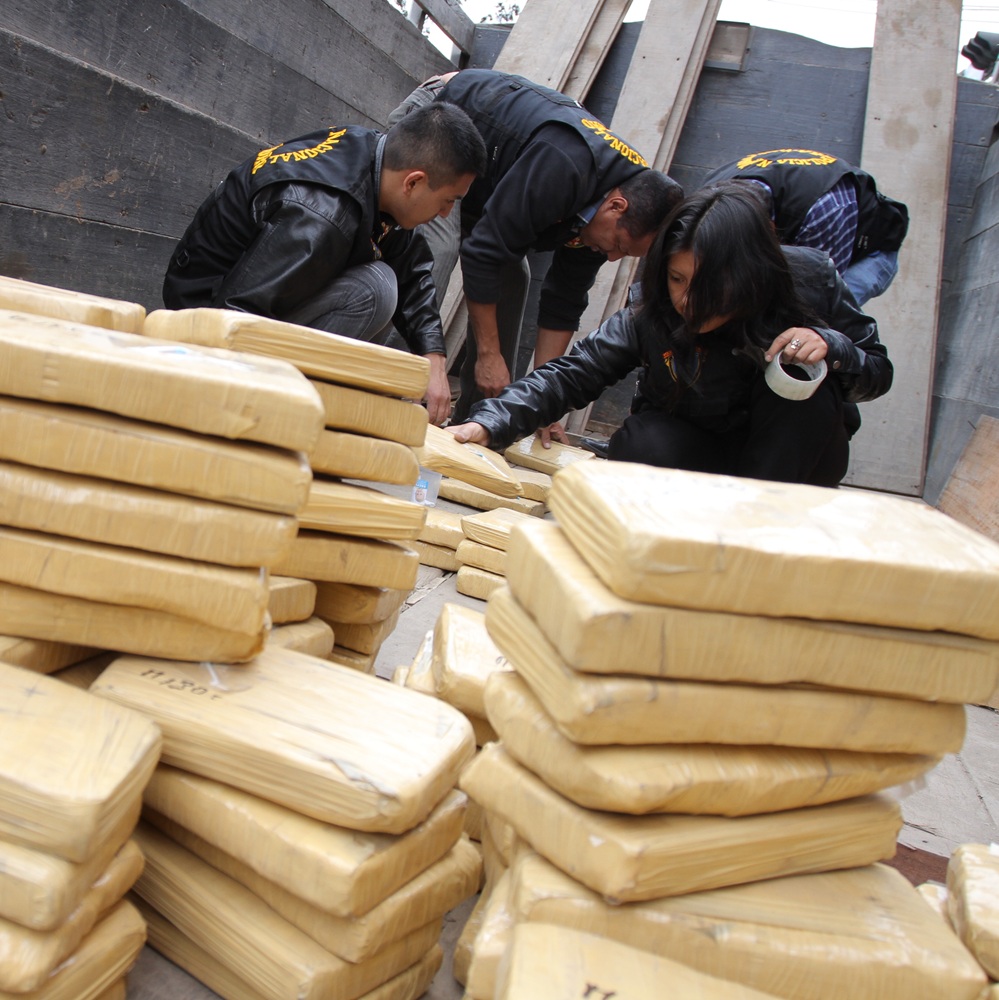
Lima, Peru - August 12, 2012: Seizure of drug or cocaine cargo in a truck with international destination. Packages filled with cocaine and the fight against drug trafficking.

Drug trafficking as a transnational system of power: origins, evolution, and perspectives

by World & New World Journal

Drug trafficking is the illegal trade, in large quantities, of drugs or narcotics (RAE, 2025). However, while this definition is accurate, it is insufficient to describe the complexity of a global phenomenon that transcends borders and involves the production, purchase, and distribution of illicit substances. Drug trafficking has developed hand in hand with global trade and interconnection (Saldaña, 2024). In other words, the evolution of drug trafficking is closely linked to globalization, which has strengthened the logistical, technological, and financial networks that enable its expansion. Therefore, more than isolated crime, drug trafficking must be understood as a transnational system of power that feeds on globalization itself. Drug Trafficking as a Transnational System of Power Drug trafficking is described by some authors as a profoundly complex transnational phenomenon resulting from globalization (Luna Galván, Thanh Luong, & Astolfi, 2021). This phenomenon involves and connects global networks of production, logistics, financing, and consumption, all made possible by economic interdependence, information technologies, and established global logistical routes. These authors analyze drug trafficking from a multidimensional perspective, identifying seven interrelated spheres that sustain this activity: the economic (money laundering and investment diversification), institutional (corruption and institutional capture), organizational (organized criminal networks and advanced logistics), social (presence in territories with state vacuums and community legitimization), technological (use of cryptomarkets, encryption, and innovation), geopolitical (route adaptability and resilience against state policies), and cultural (narratives and subcultures that normalize illicit practices) (Luna Galván, Thanh Luong, & Astolfi, 2021). These dimensions form a web of relationships in which criminal groups not only control the flow of drugs but also influence economic and political structures. As Interpol (n.d.) warns, this global network undermines and erodes the political and economic stability of the countries involved, while also fostering corruption and generating irreversible social and health effects. Furthermore, drug trafficking is intertwined with other crimes — such as money laundering, corruption, human trafficking, and arms smuggling — thus forming a globalized criminal ecosystem, a global issue and a national security concern for nations worldwide. Origins and historical context There are records of the use of entheogenic drugs for ritual or medicinal purposes in Mesoamerican cultures — such as the Olmecs, Zapotecs, Mayas, and Aztecs (Carod Artal, 2011) — as well as in Peru (Bussmann & Douglas, 2006), the Amazon region, and even today among the Wixárika culture in Mexico (Haro Luna, 2023). Likewise, there was widespread and diverse drug use among the ancient Greeks and Romans, including substances such as mandrake, henbane, belladonna, cannabis, and opium, among others (Pérez González, 2024). However, modern drug trafficking can trace its origins to the First Opium War (1839–1842) between the Chinese Empire (Qing Dynasty) and the British Empire, marking the first international conflict directly linked to the drug trade. During the second half of the 19th century and the early 20th century, several drugs —such as heroin, cocaine, cannabis, and amphetamines — made their debut in the pharmaceutical field, being used in medicines and therapeutic remedies (López-Muñoz & Álamo González, 2020). This period is considered the pharmaceutical revolution, characterized by the emergence of researchers, research centers, and major discoveries in the field. During that time, the term “drug” began to be associated with “addiction.” The pharmaceutical revolution had its epicenter in Germany; however, it was the British and Americans who promoted its expansion (Luna-Fabritius, 2015) and contributed to the normalization of psychoactive substance consumption. Military promotion, use and dependence Armed conflicts — from the U.S. Civil War (1861–1865) to the First World War (1914–1918) — played a key role in spreading and promoting the military use of psychoactive substances. For instance, stimulants such as alcohol, cocaine, amphetamines, and methamphetamines were used to combat sleep, reduce fatigue, boost energy, and strengthen courage, while depressants like opium, morphine, and marijuana were used to relieve combat stress and mitigate war trauma (Marco, 2019). The dependence that developed led to a process of expansion among the civilian population, which entered a period of mass experimentation that often resulted in substance abuse and chemical dependency (Courtwright, 2001). In response, the first restrictive laws emerged, particularly in the United States (López-Muñoz & Álamo González, 2020). However, the high demand for certain substances, such as opium, gave rise to the search for markets capable of meeting that demand. Thus, Mexico — influenced by Chinese immigration that introduced the habit of smoking opium in the country — became, by the 1940s, the epicenter of poppy cultivation and opium processing in the region known as the Golden Triangle (Sinaloa, Durango, and Chihuahua). It became the main supplier for drug markets in the United States and other parts of the continent, at times providing up to 90% of the demand during periods of shortage (Sosa, 2025). Even during World War II (1939–1945) — when the traditional supply of heroin and morphine to Europe was disrupted — Mexico strengthened its role in the illicit trade by providing smoking opium and processed morphine or heroin. These developments, alongside the implementation of opiate regulations in Mexico, helped consolidate and structure Mexican drug trafficking, which has persisted for more than sixty years (Sosa, 2025). Social expansion and regulatory restrictions The end of World War II brought stricter restrictions and regulations, but that did not prevent socio-cultural movements such as the hippie movement (in the 1960s) from adopting the use of marijuana, hashish, LSD, and hallucinogenic mushrooms (Kiss, 2025) without facing severe repercussions. That same hippie movement — which promoted pacifism and opposed the Vietnam War (1955–1975) — in one way or another encouraged drug use among young people. Moreover, the demand for substances by returning veterans led to the internationalization of drug markets, fostering, for example, the heroin trade from Southeast Asia (Laos, Myanmar, and Thailand) (Saldaña, 2024). The Nixon administration and the US “War on Drugs” The dependency became so severe that it was considered a public health emergency in the United States. On June 18, 1971, Richard Nixon declared the “War on Drugs” at an international level, labeling drug trafficking as “public enemy number one” (Plant & Singer, 2022). Nixon’s strategy combined international intervention with increased spending on treatment and stricter measures against drug trafficking and consumption (Encyclopedia.com, n.d.), along with the creation of the Drug Enforcement Administration (DEA) in 1973. Although the War on Drugs was officially declared in 1971, it had a precedent in 1969 with the failed Operation Intercept, whose goal was to combat marijuana trafficking across the U.S.–Mexico border (M. Brecher, 1972). As part of his international strategy, Nixon launched several operations such as Operation Condor with Mexico (1975 and 1978), Operation Stopgap in Florida (1977), and Operation Fulminante, carried out by Colombian President Julio César Turbay in 1979. Most of these efforts were aimed at combating marijuana trafficking. The results were mixed, but the consequences were significant, as drug traffickers resisted and adapted — giving rise to a more active and violent generation and marking the consolidation of modern drug trafficking. The Consolidation of Modern Drug Trafficking: Colombia and Reagan Era. During the 1980s and 1990s, drug trafficking evolved into a highly organized industry. Figures such as Félix Gallardo [1], Amado Carrillo Fuentes [2], Pablo Escobar [3], Carlos Lehder [4], Griselda Blanco [5], Rafael Caro Quintero [6], and later Joaquín “El Chapo” Guzmán Loera [7], among others (Wikipedia, 2025), symbolized the growing power of the cartels in Colombia and Mexico. During this period, criminal organizations consolidated their operations, and the profits from drug trafficking fueled violence and corruption. Moreover, the struggle for power — not only in Mexico, Colombia, Peru, or the United States but also in other regions of Latin America — and the competition for markets led to greater sophistication, as well as the construction of infrastructure and distribution networks. Pablo Escobar’s famous phrase, “plata o plomo” (“silver or lead”), reflects the immense power and influence that drug traffickers wield, even over governments and authorities. Colombia, through the Cali and Medellín cartels, dominated the production and export of cocaine via a triangulation network that connected through Mexico or the Caribbean, with the final destination being the United States, where the Reagan administration (1981–1989) intensified the War on Drugs, focusing on criminal repression rather than public health. The Reagan’s War on Drugs was characterized for setting aggressive policies and legislative changes in the 1980s which increased the law enforcement and the punishment, as a consequence the prison penalties for drug crimes skyrocketed from 50,000 in 1980 to more than 400,000 by 1997 (HISTORY.com Editors 2017) Mexican cartels consolidation and Mexico’s transition to a consumer nation Around the same time, on the international arena, following the fragmentation of the Guadalajara Cartel in the 1980s, the emergence of new Mexican cartels — the Sinaloa Cartel, Gulf Cartel, Tijuana Cartel, and Juárez Cartel — combined with the downfall of Colombia’s Cali and Medellín cartels in the mid-1990s, catapulted Mexican cartels into prominence. They seized control of trafficking routes and diversified their operations, thus consolidating their role in the global drug market. Later, the September 11, 2001, attacks altered U.S. security policy, affecting border transit, increasing security measures, and tightening inspections along the southern border with Mexico (Rudolph, 2023) — one of the main drug distribution routes into the United States. Although some studies suggest that U.S. security policies at land ports of entry had only marginal pre- and post-9/11 effects (Ramírez Partida, 2014), in reality, these measures significantly impacted Mexico more than the US. Mexico transitioned from being primarily a producer, distributor, and transit country for drugs to also becoming a consumer nation. In 2002, more than 260,000 people were reported to use cocaine, whereas today the number exceeds 1.7 million addicts, according to data from the federal Secretariat of Public Security (Alzaga, 2010). Likewise, the ENCODAT 2016–2017 survey shows that the percentage of Mexican adolescents who had consumed some type of drug increased from 1.6% in 2001 to 6.4% in 2016 (REDIM, 2025). By disrupting one of the main drug distribution routes to the United States, the situation led to drugs being redistributed and sold within Mexican territory. This, combined with the country’s social and economic conditions, facilitated the recruitment of young people by organized crime groups (Becerra-Acosta, 2010) for the domestic distribution of drugs. Mexico and the Contemporary War on Drug Trafficking The escalation of violence caused by the power struggle among Mexican cartels became so critical that President Felipe Calderón (2006–2012) declared an open war against organized crime on December 10, 2006 (Herrera Beltrán, 2006). His strategy involved deploying the armed forces throughout Mexican territory, as well as obtaining financial aid, training, and intelligence through the Mérida Initiative from the United States to support the fight against drug trafficking and organized crime in Mexico and Central America (Embassy of the United States in Mexico, 2011). His successor, Enrique Peña Nieto (2012–2018), shifted the focus toward prevention and civil protection, although he continued the militarization process and the transformation of police institutions (BBC News, 2012). The strategies of Calderón and Peña Nieto — often grouped together — while questioned and criticized (Morales Oyarvide, 2011), achieved significant arrests, including figures such as “La Barbie,” “La Tuta,” “El Menchito,” “El Chapo,” “El Marro,” and “El Ratón.” They also eliminated key figures like Arturo Beltrán Leyva, Ignacio Coronel Villarreal, Antonio Cárdenas Guillén, Heriberto Lazcano Lazcano, and Nazario Moreno González. Later, during the presidency of Andrés Manuel López Obrador (2018–2024), the strategy shifted once again toward a stance of “hugs, not bullets,” showing clear signs of passivity that allowed cartel expansion (Fernández-Montesino, 2025). His successor, Claudia Sheinbaum (2024–2030), on the other hand, has navigated both internal and external pressures (particularly from the United States), seeking to balance intelligence, coordination, and attention to structural causes (Pardo, 2024), although continued militarization suggests a hybrid strategy remains in place. Fentanyl and synthetic drugs: The future of drug trafficking The president of the International Narcotics Control Board (INCB), Jallal Toufiq, said that “the illicit drug industry represents a major global public health threat with potentially disastrous consequences for humankind.” In addition, the 2024 INCB Annual Report found that illicit synthetic drugs are spreading and consumption is increasing, moreover, these could overtake some plant-based drugs in the future. (International Narcotics Control Board 2025) The press release before mentioned also points out that Africa, Middle East, East and Southeast Asia and the Pacific drug markets are increasing, while production in Central America, Peru, Colombia and the Caribbean keeps on developing. On the other hand, the opioid crisis (fentanyl) remains a serious problem for North America and the cocaine keeps affecting Europe with a spillover Africa. (International Narcotics Control Board 2025). The fentanyl crisis in North America is well documented. Data show an increase of 540% in overdose deaths between 2013 and 2016 (Katz 2017), with 20,100 deaths in the USA, while by 2023, the number increase to 72,776 deaths (USA Facts 2025). On the other hand, Canada has reported 53,821 deaths between January 2016 and March 2025 (Government of Canada 2025), while Mexico reported only 114 deaths from 2013 to 2023 (Observatorio Mexicano de Salud Mental y Adicciones 2024). These figures reveal not only the unequal regional impact of the synthetic opioid crisis but also the ongoing adaptation of organized crime networks that sustain and expand these markets. Evolution and Diversification of Organized Crime The phenomenon of adaptation, evolution, and diversification of new illicit markets is not an isolated issue. Experts such as Farah & Zeballos (2025) describe this in their framework Waves of Transnational Crime (COT). The first wave is represented by Pablo Escobar and the Medellín Cartel, pioneers in moving tons of cocaine to the U.S. market through Caribbean routes. The second wave is represented by the Cali Cartel, which perfected the model and expanded trafficking routes through Central America and Mexico — still focusing on one product (cocaine) for one main market (the United States). The third wave is characterized by the criminalization of criminal structures, the use of armed groups (such as the FARC in Colombia), and the use of illicit production and trafficking as instruments of state policy, with clear effects on public policy functioning. At this stage, there is product diversification, with the main market remaining the U.S., but expansion reaching Europe (Farah & Zeballos, 2025). Finally, the fourth wave — the current stage — is defined by total diversification, a shift toward synthetic drugs, and global expansion, involving extra-regional groups (Italian, Turkish, Albanian, and Japanese mafias), where many operations function “under government protection.” This fourth wave offers clear examples of collusion between criminal and political spheres, which is not new. However, the arrest of Genaro García Luna (Secretary of Public Security under Calderón), the links between high-profile Mexican politicians and money laundering or fuel trafficking (Unidad de Investigación Aplicada de MCCI, 2025), and even Trump’s statements claiming that “Mexico is largely governed by cartels” (DW, 2025) reveal a reality in which drug trafficking and criminal organizations are no longer merely producers and distributors of illicit substances. Today, they possess the power and capacity to establish parallel governance systems, exercise territorial control, infiltrate institutions and local economies, and even replace core state functions (Farah & Zeballos, 2025). Future Perspectives and Challenges Currently, drug trafficking and organized crime represent structural threats. It is well known and widely studied what drug trafficking means for public security and health, but it has now also become a threat to politics, democracy, and the rule of law. With divided opinions, many analysts argue that the war on drugs has failed — in addition to being costly and, in many cases, counterproductive (Thomson, 2016). Punitive strategies have generated more violence without truly addressing the social causes behind the phenomenon (Morales Oyarvide, 2011). In this context, a paradigm shift is necessary: drug trafficking should not be approached solely as a security issue, but also as a public health and social development problem. Drug use has been a historical constant, and its total eradication is unrealistic. The key lies in harm-reduction policies, international cooperation, and inclusive economic development. Moreover, organized crime demonstrates adaptive resilience, making its eradication difficult — especially given that its operational capacities are so diversified, it maintains alliances with groups worldwide, and globalization and new technologies continually help it reinvent itself. Furthermore, even political and economic tensions among the United States, Mexico, Canada, and China are now intertwined with the trade of synthetic drugs — particularly fentanyl —, revealing the geopolitical magnitude of the problem (Pierson, 2024). Conclusion In summary, drug trafficking has ceased to be a marginal activity and has become a transnational structure capable of influencing politics, the economy, and society. Its persistence can be explained not only by the profitability of the business but also by social inequality, institutional corruption, and sustained global demand. History demonstrates that repression has not eradicated the problem but rather transformed it. Today, it is essential to rethink drug policies from a comprehensive approach that integrates security, public health, education, and international cooperation. Only through a multidimensional strategy will it be possible to contain a phenomenon that — more than an illicit economy — constitutes a global form of parallel governance that challenges the very foundations of the modern state. Notes[1] Miguel Ángel Félix Gallardo, also known as “El Jefe de Jefes” (“The Boss of Bosses”), “El Padrino” (“The Godfather”), or “The Drug Czar”, was one of the founders of the Guadalajara Cartel. [2] Amado Carrillo Fuentes, known as “El Señor de los Cielos” (“The Lord of the Skies”), was the former leader of the Juárez Cartel. [3] Pablo Escobar was the founder and former leader of the Medellín Cartel. [4] Carlos Lehder was the co-founder of the Medellín Cartel. [5] Griselda Blanco, known as “The Black Widow,” “The Cocaine Queen,” or “La Patrona” (“The Boss”), was a founder of the Medellín Cartel. [6] Rafael Caro Quintero, known as “El Narco de Narcos” (“The Drug Lord of Drug Lords”), was one of the founders of the Guadalajara Cartel. [7] Joaquín Guzmán Loera, known as “El Chapo,” was the former leader of the Sinaloa Cartel. ReferencesAlzaga, Ignacio. 2010. Creció mercado de droga por blindaje en frontera. 23 de Enero. https://web.archive.org/web/20100328122522/http://impreso.milenio.com/node/8707705.BBC News. 2012. México: el plan de Peña Nieto contra el narcotráfico. 18 de Diciembre. https://www.bbc.com/mundo/noticias/2012/12/121218_mexico_pena_nieto_estrategia_seguridad_narcotrafico_jg.Becerra-Acosta, Juan P. 2010. Los ninis jodidos y el narco tentador…. 16 de Agosto. https://web.archive.org/web/20100819043827/http://impreso.milenio.com/node/8816494.Bussmann, Rainer W., y Sharon Douglas. 2006. «Traditional medicinal plant use in Northern Peru: tracking two thousand years of healing culture.» Journal of Ethnobiology and Ethnomedicine 47. doi:https://doi.org/10.1186/1746-4269-2-47.Carod Artal, Francisco Javier. 2011. «Alucinógenos en las culturas precolombinas mesoamericanas.» Neurología 30 (1): 42-49. doi:https://doi.org/10.1016/j.nrl.2011.07.003.Courtwright, David. 2001. «Forces of Habit. Drugs and the Making of the Modern World.» Editado por Cambridge. (Harvard University Press).DW. 2025. Trump dice que México está "gobernado por los carteles". 19 de Febrero. https://www.dw.com/es/trump-dice-que-m%C3%A9xico-est%C3%A1-gobernado-por-los-carteles/a-71666187.Embajada de los Estados Unidos en México. 2011. Iniciativa Mérida. 22 de Junio. http://spanish.mexico.usembassy.gov/es/temas-bilaterales/mexico-y-eu-de-un-vistazo/iniciativa-merida.html.Encyclopedia.com. s.f. President Nixon Declares "War" on Drugs. https://www.encyclopedia.com/science/medical-magazines/president-nixon-declares-war-drugs?utm_source=chatgpt.com.Farah, Douglas, y Pablo Zeballos. 2025. ¿Por qué el crimen organizado es cada vez más grave en América Latina? 19 de Septiembre. https://latinoamerica21.com/es/por-que-el-crimen-organizado-es-cada-vez-mas-grave-en-america-latina/.Fernández-Montesino, Federico Aznar. 2025. México y la guerra contra el narcotráfico. 20 de Mayo. https://www.defensa.gob.es/documents/2073105/2564257/Mexico_2025_dieeea36.pdf/1d38d679-f529-7d1e-130c-71a71cf0447c?t=1747593702946.Government of Canada. 2025. Opioid- and Stimulant-related Harms in Canada. 23 de September. Último acceso: 5 de November de 2025. https://health-infobase.canada.ca/substance-related-harms/opioids-stimulants/.Haro Luna, Mara Ximena. 2023. Los hongos en la cultura wixárika. https://arqueologiamexicana.mx/mexico-antiguo/los-hongos-en-la-cultura-wixarika.Herrera Beltrán, Claudia. 2006. El gobierno se declara en guerra contra el hampa; inicia acciones en Michoacán. 12 de Diciembre. https://www.jornada.com.mx/2006/12/12/index.php?section=politica&article=014n1pol.HISTORY.com Editors. 2017. Just Say No. 31 de May. Último acceso: 5 de November de 2025. https://www.history.com/articles/just-say-no.International Narcotics Control Board. 2025. Press release: The deadly proliferation of synthetic drugs is a major threat to public health and is reshaping illicit drug markets, says the International Narcotics Control Board. 4 de March. Último acceso: 5 de November de 2025. https://www.incb.org/incb/en/news/press-releases/2025/the-deadly-proliferation-of-synthetic-drugs-is-a-major-threat-to-public-health-and-is-reshaping-illicit-drugs-markets--says-the-international-narcotics-control-board.html#:~:text=In%20its%202024%20Annu.Interpol. s.f. Tráfico de drogas. https://www.interpol.int/es/Delitos/Trafico-de-drogas.Katz, Josh. 2017. The First Count of Fentanyl Deaths in 2016: Up 540% in Three Years. 2 de September. Último acceso: 5 de November de 2025. https://www.nytimes.com/interactive/2017/09/02/upshot/fentanyl-drug-overdose-deaths.html?smid=tw-nytimes&smtyp=cur.Kiss, Teresa. 2025. Movimiento hippie. 18 de Octubre. https://concepto.de/movimiento-hippie/.López-Muñoz, Francisco, y Cecilio Álamo González. 2020. Cómo la heroína, la cocaína y otras drogas comenzaron siendo medicamentos saludables. 25 de June. https://theconversation.com/como-la-heroina-la-cocaina-y-otras-drogas-comenzaron-siendo-medicamentos-saludables-140222.Luna Galván, Mauricio, Hai Thanh Luong, y Elisa Astolfi. 2021. «El narcotráfico como crimen organizado: comprendiendo el fenómeno desde la perspectiva trasnacional y multidimensional.» Revista De Relaciones Internacionales, Estrategia y Seguridad 199-214. doi:https://doi.org/10.18359/ries.5412.Luna-Fabritius, Adriana. 2015. «Modernidad y drogas desde una perspectiva histórica.» Revista mexicana de ciencias políticas y sociales 60 (225). https://www.scielo.org.mx/scielo.php?script=sci_arttext&pid=S0185-19182015000300021.M. Brecher, Edward. 1972. Chapter 59. The 1969 marijuana shortage and "Operation Intercept". https://www.druglibrary.org/Schaffer/library/studies/cu/CU59.html.Marco, Jorge. 2019. Cocaína, opio y morfina: cómo se usaron las drogas en las grandes guerras del siglo XX. 7 de Diciembre. https://www.bbc.com/mundo/noticias-50687669.Morales Oyarvide, César. 2011. El fracaso de una estrategia: una crítica a la guerra contra el narcotráfico en México, sus justificaciones y efectos. Enero-Febrero. https://nuso.org/articulo/el-fracaso-de-una-estrategia-una-critica-a-la-guerra-contra-el-narcotrafico-en-mexico-sus-justificaciones-y-efectos/.Observatorio Mexicano de Salud Mental y Adicciones. 2024. Informe de la demanda y oferta de fentanilo en México: generalidades y situación actual. Abril. Último acceso: 2025 de November de 2025. https://www.gob.mx/cms/uploads/attachment/file/910633/Informe_Fentanilo_abril_2024.pdf.Pardo, Daniel. 2024. Cómo es el plan de seguridad que Claudia Sheinbaum anunció en plena crisis de violencia en México. 8 de Octubre. https://www.bbc.com/mundo/articles/c1wn59xe91wo.Peréz González, Jordi. 2024. Del opio al cannabis. Drogas en Grecia y Roma, una peligrosa adicción de plebeyos y emperadores. 19 de Enero. https://historia.nationalgeographic.com.es/a/drogas-grecia-roma-peligrosa-adiccion-plebeyos-emperadores_14533.Pierson, David. 2024. El fentanilo tiene otro auge, ahora como arma diplomática de Donald Trump contra China. 26 de Noviembre. https://www.nytimes.com/es/2024/11/26/espanol/mundo/fentanilo-china-trump.html.Plant, Michael, y Peter Singer. 2022. Why drugs should be not only decriminalised, but fully legalised. August. https://www.newstatesman.com/ideas/2022/08/drugs-should-be-decriminalised-legalised.Ramírez Partida, Héctor R. 2014. «Post-9/11 U.S. Homeland Security Policy Changes and Challenges: A Policy Impact Assessment of the Mexican Front.» Norteamérica 9 (1). https://www.scielo.org.mx/scielo.php?script=sci_arttext&pid=S1870-35502014000100002.Real Academia Española. 2025. narcotráfico. https://www.rae.es/diccionario-estudiante/narcotr%C3%A1fico.REDIM. 2025. Consumo de alcohol, tabaco y drogas en la infancia y adolescencia en México (2023). 16 de Mayo. https://blog.derechosinfancia.org.mx/2025/05/16/consumo-de-alcohol-tabaco-y-drogas-en-la-infancia-y-adolescencia-en-mexico-2023/.Rudolph, Joseph R. 2023. 9/11 and U.S. immigration policy. https://www.ebsco.com/research-starters/law/911-and-us-immigration-policy.Saldaña, Eduardo. 2024. ¿Qué es el narcotráfico? 2024 de Febrero. https://elordenmundial.com/que-es-narcotrafico/.Sosa, Fabián. 2025. La llegada del opio a México, la historia que dio inicio al narcotráfico en el país. 2 de Agosto. https://www.infobae.com/mexico/2025/08/02/la-llegada-del-opio-a-mexico-la-historia-que-dio-inicio-al-narcotrafico-en-el-pais/#:~:text=Su%20aparici%C3%B3n%20en%20M%C3%A9xico%20se,utilizada%20para%20tratar%20sus%20heridas.Thomson, Stéphanie. 2016. Los expertos opinan: la guerra contra las drogas ha sido un fracaso. ¿Es hora de legalizarlas? 7 de Diciembre. https://es.weforum.org/stories/2016/12/los-expertos-opinan-la-guerra-contra-las-drogas-ha-sido-un-fracaso-es-hora-de-la-legalizacion/.Unidad de Investigación Aplicada de MCCI. 2025. Huachicol Fiscal. https://contralacorrupcion.mx/anuario-de-la-corrupcion-2025-gobierno-de-sheinbaum/huachicol-fiscal-corrupcion-mexico/.USA Facts. 2025. Are fentanyl overdose deaths rising in the US? 25 de October. Último acceso: 5 de November de 2025. https://usafacts.org/articles/are-fentanyl-overdose-deaths-rising-in-the-us/.Wikipedia. 2025.

Defense & Security
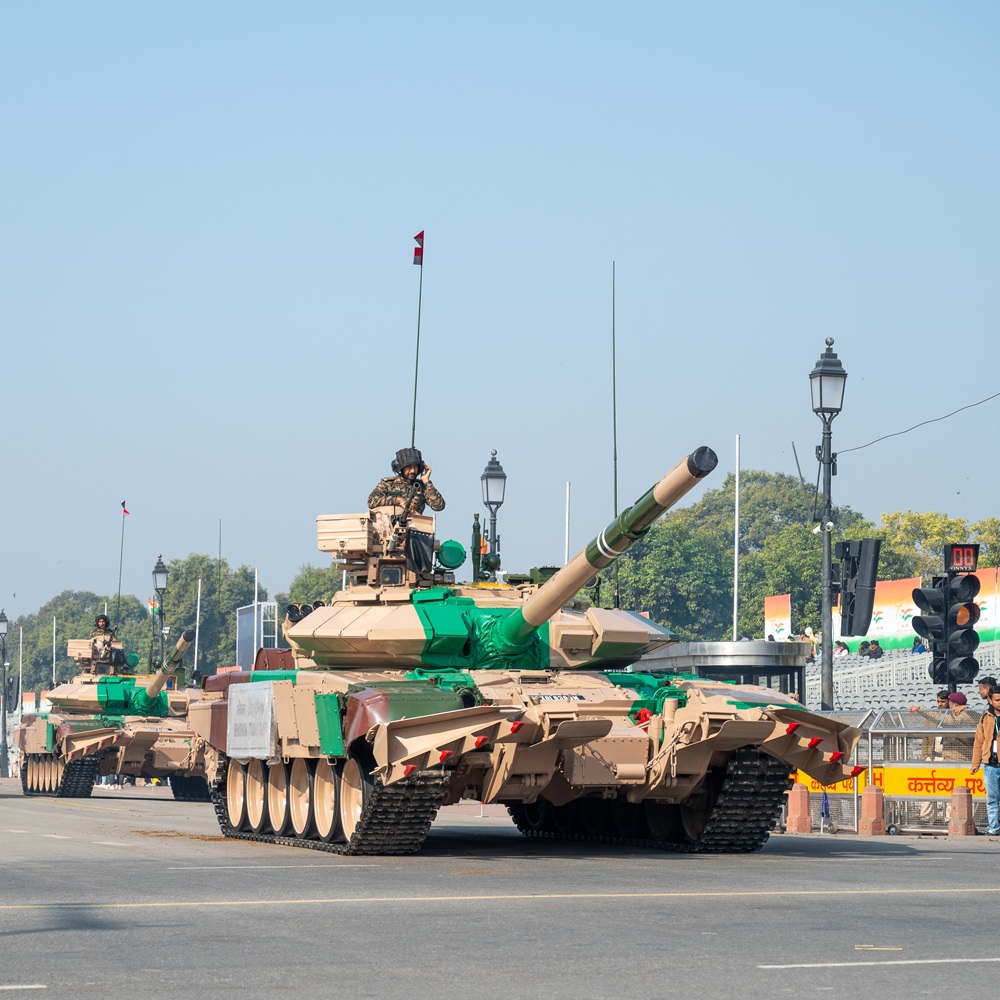
New Delhi, India, Jan 20 2025: Indian Army's T-90 Bhishma is a modern main battle tank (MBT) participating in the rehearsal for the Republic Day Parade 2025 at Kartavya Path,

Reforging The Arsenal: India's Defence Industry Transformation

by Darshit Thakar

India is the fastest-growing major economy in the world, and according to the Global Firepower Index, the Indian Armed Forces are the 4th strongest in the world. But when we look at SIPRI data, we can find that since 2011, India has been the largest defence equipment importer in the world. If we look at India's neighborhood, it's been very hostile since Independence. India fought four major wars with Pakistan — 1948, 65, 71, and 99 — and many skirmishes, Operation Sindoor being the most recent one. With China, it fought a war in 1962 and many skirmishes, the most recent one in Galwan valley in the early 2020s. This kind of environment, and India being a rising global power, demands it to have some self-sufficiency in weapons manufacturing. A Brief History of Defence Policy At Independence, India enjoyed an early advantage over non-western states. India was the crown jewel of the British Empire, and to sustain control over it, Britain established lots of arms factories. But when India got independence, everything changed. Jawaharlal Nehru was sworn in as the first Prime Minister. He was a member of the Fabian Society and strongly believed in socialism, so he got everything centralized and worked in similar way as the Soviet Union. There was private participation, but it was limited to only small-scale industries. Defence was the government arena. There were DRDO (Defence Research and Development Organisation), DPSUs (Defence Public Sector Undertakings), and Ordnance Factories. DRDO was responsible for designing, the DPSUs made complex weapon systems, while Ordnance Factories made ammunition, firearms, artillery shells, etc. However, this highly centralised socialist model, though well-intentioned, restricted the flexibility to build upon the industrial base India had inherited from the British era. In 1991, India initiated LPG (Liberalisation, Privatisation, and Globalisation) reforms to liberalize the economy. Private players were allowed in the defence sector from 2001 onwards, but there wasn't a lot of momentum for the next 15 years. Momentum began to rise only after 2014 when reforms and policy incentives actively encouraged private participation. Current Reforms Since assuming power in 2014, Prime Minister Narendra Modi’s government has made a determined attempt to strengthen the Indian arms industry and transform the country’s image from the world’s largest arms importer to a major exporter of defence equipment. To realize this goal, the government has announced many reform measures under the ‘Make in India’ initiative and ‘Atmanirbhar Bharat Abhiyan’ (self-reliant India mission). These measures cover virtually every facet of the Indian defence economy, spanning structures, acquisition processes, industrial regulations, and budgetary provisions. During the 1999 Kargil War and 2001 Operation Parakram, India found operational constraints, and there was a recommendation to create a Chief of Defence Staff (CDS) who would function as the head of all three services. In 2019, the government created the post of Chief of Defence Staff (CDS), which is touted as the most significant defence reform since Independence. Among all the responsibilities, the CDS is also assigned the task of “promoting the use of indigenous equipment by the Services.” The Department of Military Affairs (DMA), which works under the guidance of the CDS, made a list of 500 pieces of equipment that should be produced indigenously. These lists include several big-ticket items such as missiles, fighter aircraft, helicopters, warships, radars, and a range of munitions. The government also announced the long-overdue corporatisation of the OFs that were earlier functioning as government arsenals. The decision involved converting 41 OFs into seven distinct DPSUs. As corporate entities, the new DPSUs will enjoy greater autonomy in decision-making and be accountable for their performance. However, while corporatisation has begun to improve accountability, the impact of these changes is still uneven, and many DPSUs continue to face legacy inefficiencies. As the government wanted to increase the acquisition of arms made in India, it announced the Defence Procurement Procedure (DPP) in 2016. The DPP-2016 emphasized indigenisation by giving primacy to the domestic industry over foreign contractors. It also made an attempt to decrease procurement timelines and increase the overall effectiveness of the procurement process. To enhance the role of the private sector in defence production, the DPP-2016 also simplified the ‘Make’ procedure and created space for new Strategic Partnership (SP) guidelines, which were separately released in 2017. In 2020, the government announced the Defence Acquisition Procedure (DAP). Building on the DPP-2016, the DAP-2020 focused on higher levels of indigenisation and innovation through the participation of Indian industry, including startups and small and medium enterprises. New outfits like the Innovations for Defence Excellence (iDEX) and the Defence Innovation Organisation (DIO) have been created to encourage start-ups and micro, small and medium enterprises (MSMEs) to promote defence industrialisation. The government has also introduced several measures to improve the ease of doing business in the defence manufacturing sector. It streamlined the industrial licensing process for the private sector. It also focused on liberalising the defence foreign direct investment (FDI) regime by enhancing the earlier foreign equity cap from a maximum of 26 percent under the automatic route, first to 49 percent and subsequently to 74 percent. The government has also brought out a standard operating procedure to formalise the process of defence export authorisation; allowed the private sector to use government-run facilities to test their equipment; launched two defence industrial corridors; and created a dedicated web portal, SRIJAN, so that the DPSUs and the armed forces can upload previously imported items for indigenisation by domestic entities. Impact of the Policy Following several reforms, the defence industry has made certain progress. The most visible indicator of this progress is the near-continuous increase in production turnover.  The value of defence production has surged to a record high of ₹1,27,434 crore (~$15.2 billion), marking an impressive 174% increase from ₹46,429 crore in 2014-15, according to data from all Defence Public Sector Undertakings (DPSUs), other public sector units manufacturing defence items, and private companies. The Ministry of Defence has signed a record 193 contracts in 2024-25, with the total contract value surpassing ₹2,09,050 crore (~$24.8 billion), nearly double the previous highest figure. Of these, 177 contracts, accounting for 92 percent, have been awarded to the domestic industry, amounting to ₹1,68,922 crore (~$20.1 billion), which is 81 percent of the total contract value. Defence exports have surged from ₹686 crore in FY 2013-14 to an all-time high of ₹23,622 crore (~$2.76 billion) in FY 2024-25, marking a 34-fold increase over the past decade. India is now exporting arms, ammunition, and related items to over 85 countries, with 100 Indian firms participating in international sales. Some of the major items exported include “Dornier-228, 155 mm Advanced Towed Artillery Guns, BrahMos Missiles, Akash Missile System, Radars, Simulators, Mine Protected Vehicles, Armoured Vehicles, PINAKA Rockets & Launchers, Ammunitions, Thermal Imagers, Body Armours, besides Systems, Line Replaceable Units and Parts & components of Avionics and Small Arms.” Challenges Even though India has made noticeable progress, challenges still persist. According to SIPRI, in 2011 India was responsible for 14% of global arms imports — making it the largest importer. Fast forward to 2024, it still accounts for 8.3% of global arms imports — the second largest, just behind war-torn Ukraine. While this decline in share indicates progress, the absolute value of imports remains high due to India’s expanding defence budget and modernisation drive. Even though the industry has grown, it hasn't fully absorbed the appetite for equipment required by the armed forces. On the export front, despite registering a noticeable increase in international arms sales, the industry is far from the target set by the government. The biggest challenge in meeting the government’s export target comes from the DPSUs, which have been rising slowly to the expectations. Some recent attempts to export major systems have not met with success. It faces tough competition from countries like Turkey (~$7.2 billion in defence exports for 2024), South Korea (~$20 billion in defence exports for 2024) and Israel(~$14.8 billion in 2024). The Indian defence industry, despite having a large production and R&D base, lacks the technological depth to design/manufacture major systems and critical parts, components, and raw materials, which are eventually imported. Moreover, the reforms announced by the Modi Government haven't been implemented fully. Given India’s bureaucratic system, overcoming the delays in implementation will remain a key challenge in the foreseeable future. Global Parallels in Defence Industrialisation India's transition from a state-dominated, import-reliant defence ecosystem to a more hybrid, self-reliant model invites comparisons with other emerging powers that have successfully navigated similar paths. South Korea offers a stark contrast through its aggressive export-oriented strategy: starting in the 1970s amid threats from North Korea, Seoul invested heavily in R&D (allocating over 4% of GDP annually in recent years) and leveraged chaebol conglomerates like Hyundai and Hanwha to build integrated supply chains, transforming from an importer to a top-10 global exporter with $20 billion in annual sales by 2024, including K9 howitzers and T-50 trainers. Turkey, facing NATO dependencies and regional instabilities, adopted agile policies under its Defence Industry Agency (SSB), mandating high domestic content (up to 70% in major programs) and integrating SMEs via incentives and technology transfers, propelling exports to $7.2 billion in 2024 through platforms like Bayraktar drones. Israel, constrained by size and hostile neighbors, pioneered a niche innovation ecosystem via public-private partnerships, mandatory military service feeding talent into firms like Rafael and IAI, and venture capital-driven R&D, yielding $14.8 billion in exports focused on high-tech systems such as Iron Dome. Unlike India's historically centralized DPSUs and gradual private inclusion, these models emphasize export discipline, rapid policy iteration, and SME/startup ecosystems—lessons India could adapt by accelerating iDEX funding, enforcing stricter local content in DAP procurements, and fostering chaebol-like consortia to bridge technological gaps and compete globally. Conclusion The Narendra Modi government has sought to break the inertia of snail-like defence reforms that were going on since India's Independence. Under the banner of Atmanirbhar Bharat, it has pushed to cut imports and boost local production. Defence exports have begun to grow. More importantly, private companies and start-ups have entered what was once a tightly guarded public sector preserve. A more competitive ecosystem is slowly taking shape. Yet the road to self-reliance remains long. If India can integrate private innovation with public manufacturing and reduce bureaucratic delays, it could transform from being the world’s largest importer to a key global supplier in the multipolar era. Sourceshttps://www.orfonline.org/research/india-s-defence-industry-achievements-and-challengeshttps://www.orfonline.org/research/a-decade-of-defence-reforms-under-modihttps://www.pib.gov.in/PressReleasePage.aspx?PRID=2116612https://indiasworld.in/reforming-defence-production-faster-and-deeper/https://theprint.in/defence/india-second-largest-arms-importer-after-ukraine-reliance-on-russia-declines-says-sipri-report/2541373/https://www.pib.gov.in/PressNoteDetails.aspx?NoteId=154617&ModuleId=3https://www.cnbc.com/2024/12/04/as-global-defense-spending-surges-south-korean-arms-makers-look-like-a-clear-winnerhttps://www.defensenews.com/global/europe/2025/02/04/turkeys-defense-exports-hit-record-high-of-7.1-billion-in-2024/https://www.defensenews.com/global/mideast-africa/2025/06/05/israel-announces-defense-export-record-15-billion-in-2024/https://www.globalfirepower.com/countries-listing.php

Energy & Economics
Mersin, Turkey-09 12 2024: A cold Coca Cola or pepsi  bottle or metal can with water droplets on it. Coca Cola on black background

The geopolitical impact on global brands: Coca-Cola and Pepsi in the Middle East and Muslim markets

by World & New World Journal

Coca-Cola and Pepsi are among the most recognized and consumed soft drinks in the world, with Coca-Cola leading as the global favorite (World Population Review, 2025). However, in recent years, geopolitics has shaped their presence in certain regions, particularly in the Middle East and Muslim-majority countries. The reason behind this is interesting, these brands are often seen or associated with the United States (Hebblethwaite, 2012), a nation whose fame in these regions has always been questioned and been controversial, and whose policies in the region have long sparked controversy and criticism. Overview of Coca-Cola and Pepsi in the US Coca-Cola was born on May 8th, 1886, when Dr. John Pemberton delivered his newly perfected syrup to Jacob’s Pharmacy in downtown Atlanta, USA. After 139 years, what started as medicine evolved into the iconic soft drink that is enjoyed in more than 200 countries and territories every day (The Coca Cola Company, 2025). On the other hand, a few years later, in 1893, Brad’s drink, later rebranded as Pepsi-Cola, was invented in New Bern, North Carolina, USA by Caleb Brandham, as an aid in digestion (History of the Birthplace, 2018). Pepsi’s presence worldwide also covers more than 200 countries and territories and can be said it is Coca-Cola’s closest rival. While these brands have built a reputation, they have a long history, their competition has been fierce to the dominance of their market across the globe. The term “Cola Wars” represents this fierce competition. Cola wars gained global attention and likely reached their peak around the 1970s and 1980s in the US, while nowadays the fight keeps on, those years were key in how their presence around the globe has resulted nowadays. A bit of the context of the Cola Wars; during the beginning of the 20th century Coca-Cola led the market, while Pepsi had a rough time and went bankrupt in 1923. After its restructured, Pepsi maintained but Coca-Cola advertisements, such as those featuring Santa Claus, made it difficult for Pepsi to compete and by the time of WWII, Coca-Cola could be found in 44 countries already. In 1965 Pepsi merged with Frito-Lay-Inc trying to gain better footholds in restaurants and supermarkets. At the time Coca-Cola was expanding its brand into other soft drinks beverages, Pepsi could simply not compete against them. But by the mid-1970s, Pepsi launched its “Pepsi Challenge”, a genius blind test marketing bet in which over 50% of Americans chose Pepsi over Coca-Cola due its sweeter taste, of course Pepsi claimed its first victory over giant Coca-Cola and started its rise. Coca-Cola's response came with celebrity endorsement and the diet coke in the early 80’s. But by the mid 80’s, Pepsi sales skyrocketed due to its collaboration and promotion with Michael Jackson and appearance in several movies like Back to the Future. Coca-Cola had an identity crisis at the time, but after going back to its roots, (Weird History Food, 2022) once again it came back to fight and claimed its important place in the industry. Coca-Cola and Pepsi around the world While the Cola Wars were largely defined within the American market, their global expansion strategies took very different trajectories once they reached international audiences. Coca-Cola made their debut in the international market in the early 20th century, but it was until WWII when it got international recognition. A marketing associated with American optimism and modernity was followed by the company, and during the war, the company produced millions of bottles for US troops abroad, introducing the drink to soldiers and civilians across Europe, Africa and Asia. The strategy transformed Coca-Cola from a domestic beverage into a global cultural symbol. Pepsi, meanwhile, took a more opportunistic route. After financial struggles between the 1920s and 1930s, the brand re-emerged with a more aggressive global approach. Its internationalization came in 1949 with exports to Canada and later expanded to Mexico, Brazil and the Philippines, but it was until the Cold War, when its real global expansion began (FBIF Food & Beverage Innovation, 2014), when it merged with Frito-Lay and diversified its portfolio. By 2024, PepsiCo generated $92 billion net revenue (PepsiCo, 2025) while Coca-Cola grew 3% to stand at $47.1 billion net revenues (The Coca-Cola Company, 2025) that same year and their products and diversifications not only include the classical soft drinks, but also other beverages and foods. Yet despite their shared dominance in over 200 countries, both face different degrees of acceptance depending on local political, cultural and religious attitudes. The role of geopolitics: soft power, sanctions, wars, risks and opportunities As stated already, both brands are known globally, however, it is important to highlight that their presence in different regions of the world has been shaped by other actors more than just commercial advertisements, or even due to their advertisements and commercial strategies. Let me explain in more detail. In the case of Coca-Cola, during WWII and the Cold War, many people outside of the United States associated the product with American culture, Coca-Cola became a symbol of American soft power and globalization, clearly seen in war advertisements featuring soldiers enjoying cokes suggesting the commonly used “bring people and nations together” phrases. (Edelstein, 2013) On the other hand, with a more social-cultural strategy, Pepsi used the American pop-culture as their approach to gain attention worldwide. Michael Jackson, Madonna, Britney Spears, Beyoncé, among others (Kalgutkar, 2024) were iconic in the brand. In addition, Pepsi’s marketing leveraged music, youth, and rebellion, giving a softer and aspirational appeal. However, this cultural and ideological symbolism also made both companies vulnerable to political backlashes and somehow have defined their reputation and presence in some areas of the world. In the 1950’s, France coined the term “coca-colonization” denouncing American influence. During the Cold War, Coca-Cola became a capitalist symbol (in the eyes of outsiders), and it was banned in the Soviet Union, an opportunity Pepsi took advantage of there. Later, when the Berlin Wall fell, Coca-Cola became a representation of freedom. (Hebblethwaite, 2012) However, the most notable geopolitical response came when the Arab League boycotted the brand between 1968-1991 in the 13-nation organization, because it chose to operate in Israel while the Palestinian land was under occupation. Pepsi capitalized on this absence, solidifying its position in the Arab markets. In addition to the Arab League boycott, there are other cases where sanctions imposed by the US to different countries have led to a small or lack of sales of the products, such as Myanmar, North Korea, Cuba or the Soviet Union, back on time. Moreover, occasional protests and bans in countries like Iran, Venezuela or Thailand (Hebblethwaite, 2012) has also affected the brands at certain points of the history and of course have created an image and reputation in the society, with positive, neutral or negative perceptions. Moving towards present day, after the war in Gaza broke out in October 2023, pressure on the brands reappeared on the Middle East; Coca-Cola, who has a factory in the illegal settlement in East Jerusalem in the Atarot Industrial Zone, was accused of complicity and violations of the international law, in addition to being “related” with the Israeli army. These led to the BDS Movement to add it to a boycott list, which led to protests and has also been spread across other Muslim-majority countries. Of course, sales have dropped sharply in different countries in the region like Egypt and Bangladesh. (Boycat Times, 2025) Pepsi, on the other hand, even though it has a major presence in the Middle East market built over the space left by Coca-Cola during the 1968-1991 boycott, has also been affected by the War in Gaza and the boycotts in the region. PepsiCo reported stagnation in beverage growth across Egypt, Lebanon and Pakistan, compared with 8-15% growth a year earlier the war started. (Awasthi, 2024) The boycott of these American brands in the Middle East and some Muslim-majority markets has led to important losses in the share market and the sales itself. For instance, Coca-Cola sales reportedly fell by 23% in Bangladesh and dropped by over 10% in Egypt, overall, there is an estimation of 7% regional revenue loss in the MENA region. The losses of the American brands had become an opportunity to the local brands, like Pakistan’s Cola Next and Pakola (shared market increased from 2.5% up to 12% after the boycott (The Economic Times, 2024)), Qatar’s Kinza or Egypt’s V7, which have up to 40% in market share growth and up to 350% growth in exports, canalizing consumer preferences for local alternatives. (The Economic Times, 2024), (Awasthi, 2024), (CBC, 2024), even in the West Bank, the Palestinian Chat Cola has been positioned in the market, with sales of over 40% in 2023 compared to the previous year. (Associated Press, 2025) Coca-Cola and Pepsi boycotts are not the only ones, other companies like McDonald’s or Starbucks have also been affected in the region, due to similar or same reasons. Even more, in Canada, another great example is the “americano” [coffee] being renamed as “canadiano”, (Barista Magazine, 2025) as response to the economic and political tensions developed earlier this year between Canada and the USA. Despite the boycotts, Coca-Cola and PepsiCo have a base in the region, and they have seek opportunities to continue, through investments (Coca-Cola invested $22 million in upgrading technology in Pakistan) or new strategies (PepsiCo reintroduced Teem soda in Pakistan with a “Made in Pakistan” printed on the label) (Shahid, DiNapoli, & Saafan, 2024). Overall, both companies are trying to maintain, penetrate and expand their products in the market, they have been using and relying on bottling companies as a strong tool for those purposes, creating alliances with local companies as well as innovating and testing different new products in the region. Conclusion The current boycott of Coca-Cola and Pepsi across the Middle East and Muslim-majority countries is not only a reflection of political anger – it is a window into how geopolitics can directly reshape consumer economies. What once symbolizes Western globalization, and cultural appeal has now become a marker of political identity and economic nationalism. In a society driven by consumerism – where success is often measured by how much one owns – people tend to care less about genuine human values such as love, kindness, respect, empathy and consideration (MET, 2022). Ironically, today that statement seems reversed. For many consumers, boycotting Western brands has become not only a moral choice but also an act of solidarity and empowerment. Beyond economics, the boycott also reflects a psychological and cultural response. For many consumers in the Middle East, choosing what to drink has become a symbolic act of identity, resistance and empathy. Avoiding brands such as Coca-Cola and Pepsi offers a sense of agency and unity Palestine, turning everyday consumption into an expression of political consciousness. Although both companies remain resilient and continue to invest heavily in local markets, their challenges go beyond short-term losses. The rise of local brands such as V7. Kinza and Cola Next highlights a deeper regional shift – where consumers are not merely reacting to politics, but redefining loyalty based on ethics, identity and sovereignty. In the long term, this phenomenon could accelerate the regionalization of the markets, as local producers gain confidence and international corporations are compelled to adapt – by respecting cultural sensitivities, building genuine local partnerships, and ensuring transparency across their supply chains. Ultimately, the story of Coca-Cola and Pepsi in the Middle East demonstrates that in today’s interconnected world, soft power is no longer a one-way export. Consumer behavior itself has become a form of diplomacy – capable of rewarding inclusion or punishing complicity.ReferencesAssociated Press. (2025, 03 02). Coca-Cola's appeal to Palestinians fizzles amid war. Retrieved from VOA News: https://www.voanews.com/a/coca-cola-s-appeal-to-palestinians-fizzles-amid-war/7991182.htmlAwasthi, S. (2024, 09 15). Middle East conflict bites Coca-Cola, Pepsi. Retrieved from SBS News: https://www.sbs.com.au/news/podcast-episode/middle-east-conflict-bites-coca-cola-pepsi/z445sv6glBarista Magazine. (2025, 02 25). Move Over, Americano: The ’Canadiano’ Has Arrived. Retrieved from Barista Magazine Online: https://www.baristamagazine.com/move-over-americano-the-canadiano-has-arrived/Boycat Times. (2025, 09 02). Everything You Need to Know: Why We Boycott Coca Cola. Retrieved from Boycat Times: https://blog.boycat.io/posts/boycott-coca-cola-israel-gaza-palestineCBC. (2024, 09 04). Muslim countries' local sodas see boost amid Coke and Pepsi boycott over Gaza. Retrieved from CBC: https://www.cbc.ca/news/business/coke-pepsi-boycott-1.7313370Edelstein, S. (2013, 05 13). A visual remix of the American Dream as pictured in Mid-Century media. On the front lines with Coca Cola pt II. Retrieved from Envisioning the American Dream: https://envisioningtheamericandream.com/2013/05/30/on-the-front-lines-with-coca-cola-pt-ii/FBIF Food & Beverage Innovation. (2014, November 18). PepsiCo's path to global dominance: from beverage brand to food empire. Retrieved from Food Talks: https://www.foodtalks.cn/en/news/54496Hebblethwaite, C. (2012, September 11). Who, What, Why: In which countries is Coca-Cola not sold? Retrieved from BBC News: https://www.bbc.com/news/magazine-19550067History of the Birthplace. (2018, October 18). Retrieved from Wayback machine: https://web.archive.org/web/20181004163206/http://www.pepsistore.com/history.aspKalgutkar, N. (2024, November 28). Pepsi’s Advertising: An Iconic Campaigns and Pop Culture Impact. Retrieved from Treehack: https://treehack.com/pepsis-advertising-an-iconic-campaigns-and-pop-culture-impact/MET. (2022, 07 29). The effects of living in a consumer society. Retrieved from MET: https://group.met.com/en/mind-the-fyouture/mindthefyouture/consumer-society/#:~:text=July%2029%2C%202022,the%20operation%20of%20a%20company.PepsiCo. (2025). Who we are. Retrieved from PepsiCo: https://www.pepsico.com/who-we-are/about-pepsicoShahid, A., DiNapoli, J., & Saafan, F. (2024, 09 05). Coke and Pepsi boycott over Gaza lifts Muslim countries' local sodas. Retrieved from Reuters: https://www.reuters.com/business/retail-consumer/coke-pepsi-boycott-over-gaza-lifts-muslim-countries-local-sodas-2024-09-04/The Coca Cola Company. (2025). Our Company. Retrieved from The Coca Cola Company: https://www.coca-colacompany.com/about-usThe Coca-Cola Company. (2025, February 02). Coca‑Cola Reports Fourth Quarter and Full Year 2024 Results. Retrieved from Thr Coca-Cola Company: https://www.coca-colacompany.com/media-center/coca-cola-reports-fourth-quarter-and-full-year-2024-results#:~:text=For%20the%20full%20year%2C%20net,the%20timing%20of%20concentrate%20shipments.The Economic Times. (2024, 09 04). Coca-Cola and PepsiCo lose popularity to local Cola brands due to boycott over Gaza in Muslim countries. Retrieved from The Economic Times: https://economictimes.indiatimes.com/news/international/business/coca-cola-and-pepsico-lose-popularity-to-local-cola-brands-due-to-boycott-over-gaza-in-muslim-countries/articleshow/113064771.cmsWeird History Food. (2022, 07 24). Do You Remember the Cola Wars: Coca-Cola vs. Pepsi? Retrieved from YouTube: https://www.youtube.com/watch?v=jtwkKrjHlhcWorld Population Review. (2025). World Population Review. Retrieved from Top-Selling Soft Drinks by Country 2025: https://worldpopulationreview.com/country-rankings/top-selling-soft-drinks-by-country

Defense & Security
Two special forces soldiers close-up, military anti-terrorism operations concept

The Utilitarian paradox of the War on Terror: Afghanistan and beyond

by Tabinda Sabah

Abstract The War on Terror (WOT) initiated after the September 11, 2001, attacks has been one of the most consequential and complex military and political campaigns in modern history. Looking back it dignifies the idea that the global war on terrorism was an aggression frustration response of US towards the 9/11 attack of 2001. As it not only created a dense overlapping financial burden on the US but also the cost of the invasion was never in favor with US peace and conflict policies. Many scholars argue about the utility of WOT with other ethics of war and conflict mediating techniques along with using the paradigms of realist and liberal theories. But now when the NATO alliances withdrawal enacted the end of a 20-year constitutive war. As the NATO withdrawal marked end of WOT without a remediate response, it enacts a dispersed or iconic philosophical thought that was the WOT was a success or utter failure? This article will foreshadow the events of WOT, NATOs withdrawal and human rights violation that emerge exploring this issue through primary lens of utilitarian paradox in international political theory. Introduction Afghanistan is a multi-diverse state situated in the central south Asia. Its borders are tied by mountain ranges and trading ports submerge in southern and eastern parts of Asia, Europe & the Middle East. The geography of Afghanistan has been a frontier for colonial reign for centuries. From being occupied by the from the USA – USSR post -cold war struggles till the US invasion in Afghanistan in the WOT. Afghanistan has struggled to maintain a monopoly of economy, governance, infrastructural and parental isolation of Taliban within their own boundaries. The WOT was launched by the United States in the aftermath of September 11, 2001. The attack became one of the most contentious military and foreign policy actions in contemporary history. The war which initially aimed to dismantle terrorist organization such as al-Qaeda eliminate the Taliban regime in Afghanistan and secure global peace has lasted over two decades involving not only the USA but also the NATO forces. The centrality of military intervention and counter terrorism efforts in Afghanistan, Iraq and other regions has been met with both support and intense criticism particularly regarding its humanitarian consequences, effectiveness and long –term strategic outcomes. The complex history between the United States and Afghanistan, particularly form the Soviet- Afghan War 1979-1989 to the 9/11 attacks, offers a case study of how international relations, realpolitik, and the principle of utility (central to utilitarianism) can guide state behavior. By examining the role of foreign of U.S. policy in terms of net benefit or harm to global security and human welfare, especially when applying the principle of utility, which aims to maximize well-being and minimize suffering for the greatest number. This article seeks to explore the WOT through the principle of utility, a central concept in utilitarian philosophy. The principle of utility rooted in the works of philosophers like Jeremy Bentham and John Stuart Mill, posits that actions should be judged based on their ability to produce the greatest happiness for the greatest number of people [1]. By applying this principle, the review critically examines the ethical dimensions of the WOT, NATOs involvement and the humanitarian violations that have occurred throughout the conflict. The article is organized into the following sections: 1. Theoretical foundation of utilitarianism along with US and USSR influence in Afghanistan 2. US foreign policy and military strategies during the WOT. 3. NATOs overall assessment of the WOT under the principle of utility. In each section, the analysis will assess the actions taken by the US, NATO and other actors exploring whether the outcomes align with the utilitarian ideal of maximizing overall well-being. 1. Theoretical foundations: the principle of utility in war Utilitarianism is a consequentialist ethical theory that holds that the right course of action is the one that maximizes overall happiness or wellbeing. It evaluates actions based on their outcomes rather than their intrinsic moral qualities. This framework is particularly useful in the context of WOT. The principle of utility can be applied to assess whether the human, financial and political cost of the War were justified by the benefit of greater security, freedom from terrorism and regional stability. While NATO withdrawal from Afghanistan in 2021 has been framed as strategic realignment, it has also triggered a range of human rights violation, most notably the treatment of civilians, the resurgence of the Taliban and plight of women and minorities. This research will critically examine the interplay between the WOT, NATO withdrawal and human rights violation that emerge exploring this issue through primary lens of utilitarian paradox in international political theory. Utilitarian calculus in war: US relations in Afghanistan (1950-1970) The utilitarian calculus involves comparing the benefits of military intervention (such as the defeat of terrorist organizations the promotion of security and the establishment of stable democratic government) against it cost (including civilian causalities, economics expenditure and long-term social destabilization). As the WOT unfolded, the decision –making process in the US and NATO appeared to prioritize short -term security gains over long term humanitarian outcomes. For instances, the US began engaging with Afghanistan as part of its boarder strategy to contain Soviet expansion during the Cold War. The Helmand Valley Project aimed at modernizing the Afghan agriculture, and US aid under King Zahir Shah and Muhammad Dauod Khan government were early manifestation of US interest in Afghanistan. However, Soviet influence also grew particularly through infrastructure projects like the Salang Tunnel. The competition between the US and Soviet Union for influences in Afghanistan explains the context of utility of benefits in a realist perspective where states act primarily acts to protect and expand their own power for the greater benefit of good for the greater number of people. (Morgenthau, 1948). Also, the key challenges in applying the principle of utility to the WOT is determining who benefits and who suffers. for instance, the US and NATO countries may have gained security by weaking terrorist groups, but the Afghan and Iraqi population have borne significant cost in term of civilian causalities, displacement and economic destabilization of the Middle East and growth of radicalization, complicates any simplistic utilitarian evaluation. Under the presumptive analysis of utility: Any war or WOT occurs where there is an imbalance in the collapse of the monopoly of the inter-state relations among the rivalry. Furthermore, from a utilitarian perspective, the US & USSR interventions aimed to protect national security and detain the expansion of the rival superpower. However, the long-term consequences of such competition particularly the US focus on the military aid and covert actions led to the instability, civil war and the eventual Soviet invasion of Afghanistan in 1979. The overall outcome – while achieving short term strategic gains in containing the Soviet influence ultimately disrupted Afghan society, leading to the widespread maximizing welfare for the Afghan people or for the global peace in the long run, as they contributed to a power struggle that further destabilized Afghanistan. Utilitarian critique of preemptive war Utilitarianism also directly critiques the preemptive war doctrine espoused by the George W. Bush administration. The Invasion of Iraq in 2003, based on the belief that Saddam Hussein possessed weapons of mass destruction (WMDs) illustrated a problematic application of utilitarian reasoning. Critics argue that the invasion was not only morally unjustifiable but also inefficient as it caused massive human suffering without achieving its purported goals. According to the utilitarian philosophy such as Peter Singer’s the catastrophic outcomes of the Iraq War – millions of displaced, the loss of thousands of lives and destabilization of regions – far outweighed by any potential benefits in term of preventing future threats to US security. Also, the US influence deterred the rise of the People Democratic Party of Afghanistan which was aligned with the soviet interest. This led to the soviet invasion of Afghanistan in December 1979 intended to prop up the PDPA government. The US response was to support the Mujahedeen Rebels providing them with military aid (including stinger missiles) & funding through intermediaries like Pakistan and Saudi Arabia. Thus, this covert operation was seen as a part of broader Cold War strategy to undermine Soviet influence in the region. In the long run, the intervention was a justified action and response to Soviet expansionism. According to Hans Morgenthau’s principles of international politics states act based on their national interest which in this case was to counter Soviet influence. The US built alliances with the Islamism groups in Afghanistan which while supporting US geopolitical goals led to the creation of radicalized Islamist network, contributing global terrorism. The creation of this network, with groups like Taliban and Al-Qaeda exemplifies the unintended consequences for foreign intervention that may maximize short term strategic benefits but lead to a long–term instability and suffering. The soviet withdrawal left Afghanistan in a state of chaos. The Mujahedeen factions, funded by the US turned against each other, leading to the rise of the Taliban in 1996. Meanwhile, Osama bin Laden, who had been in Afghanistan during the Soviet conflict, founded Al-Qaeda. Al-Qaeda’s rise the Taliban support for them would set the stage for 9/11 attacks. While on September 11, 2001, Al-Qaeda under the leadership of Osama bin Laden, orchestrated the terrorist attack on the United States. The attacks killed nearly 3,000 people and led to the Taliban regime that harbored it and prevent further attacks. Utilitarianism and long-term consequences From a utilitarian viewpoint the US role in fostering Islamic Militancy in Afghanistan can be seen as contributing to a greater global harm in the form of terrorism. The short-term goal of defeating the Soviet Union led to the rise of extremist group that would go on to inflict severe harm globally, culminating in the 9/11 attacks. The utilitarian perspective here emphasizes that although the US successfully countered Soviet expansion, the long–term consequences – including the development of Al-Qaeda and its attacks on the US and other countries – created a greater global security threat. These consequences starkly illustrate the limits of the principle of utility raises important ethical concerns about the methods used and their long–term impacts where interventions create unforeseen global risks. Also, the immediate benefits of the US invasion were clear: the removal of Taliban and the disruption of Al-Qaeda’s operation in Afghanistan reduced the immediate threat of global security. However, the long-term consequences – including the loss of civilian lives, economic costs, and the rise of new insurgencies – raised questions about whether the intervention truly maximized global well-being. The humanitarian cost of War, including the deaths of thousands of Afghan civilians, the destabilization of the country and the ongoing conflict must be weighed against the benefits of preventing further terrorist attacks Moreover, the prolonged US military presence in Afghanistan until their withdrawal in 2021 led to the significant economic and social costs that have yet to be fully realized in terms of global welfare. 2. US Foreign policy and military strategies during the WOT The US action during the WOT was justified under the assumption that eradicating terrorism and ensuring national security would promote greater good, both domestically and internationally. However, the application of the principle of utility raises important ethical concerns about the methods used and their long-term impacts. The WOT initiated by the United States in the aftermaths of September 11, 2001 attacks, fundamentally reshaped international relations and military strategy, particularly in Afghanistan. These interventions, characterized by the use of military force, under the Authorization for Use of Military Force (AUMF) aimed to eliminate Al-Qaeda and dismantle the Taliban regime that harbored them. The US was soon joined by NATO allies in what was labeled operation enduring freedom and later operation led to significant human, political, and humanitarian costs. The Bush administration’s approach to security The Bush administration response to the 9/11 attacks was fundamentally shaped by realist principles of international relations, which emphasize the pursuit of national interest, power, and security in an anarchic international system. Under a realist paradigm, states must act in their own self-interest, often using force to ensure their survival and dominance. This is especially evident in offensive realism, as articulated by scholars like John Mearsheimer, which suggest that great powers seek to maximize their influence and security, often through coercion and military intervention. Under President George W. Bush the primary rationale for the WOT was the principle of self-defense and the protection of citizens from the threat of terrorism. The US government invoking the Bush Doctrine adopted a policy of preemptive military strikes, aimed to maximize the safety for the greatest number of Americans by neutralizing terrorist organization like Al-Qaeda and dismantling the Taliban support for such groups. However, the application of preemptive military force led to significant civilian casualties in Afghanistan and Iraq. According to Amnesty International the US military use of air strikes drone attacks and ground operation led to thousands of civilian deaths raising questions about whether the benefits of eliminating immediate terrorist threats justified the loss of innocent lives. Noam Chomsky and other scholars had argued in the past that the Iraq War, in particular, was a costly endeavor that not only failed to eliminate terrorism but also contributed to the rise of groups like ISIS exacerbating the global security threat in the long-term. This outcome from a utilitarian standpoint challenges the initial justification for the WOT as the human cost seemed disproportionate to the benefits achieved. According to UN reports and media outlets like Al-Jazeera, the conflict resulted in the loss of over 100,000 lives, including both civilians and military personnel. These humanitarian issues, however, were often sidelined in favor of military objectives and maintaining control over Afghanistan’s strategic importance. The principle of utility in military intervention: benefits and harm The principle of utility, central to utilitarianism, seeks to maximize overall well-being and minimize harm. From a utilitarian perspective the effectiveness of military intervention like the WOT can be evaluated by examining whether the benefits – such as the elimination of terrorist threats outweigh the harm caused to civilians, the humanitarian crises and regional instability. In the immediate aftermath of 9/11 attacks the US & NATO military actions were justified on the grounds of protecting the lives of American citizens and global security by dismantling Al-Qaeda and ousting the Talban, in utilitarian terms these goals seemed to promise a net benefit: by limiting al-Qaeda safe haven the intervention could potentially prevent future terrorist attacks on the US and its allies thereby protecting millions of lives. The humanitarian costs and the questions of net utility However, from a utilitarian viewpoint, the long-term harm caused by the intervention, including civilian deaths, displacement, and the destabilization of Afghanistan, must also be factored into the equations. According to various reports including the United Nations and Human Rights Watch, NATO’s military operations in Afghanistan caused widespread civilians being killed or injured. Additionally, the war exacerbated poverty, displacement, and psychological trauma for millions of Afghans. These humanitarian factors, especially when weighed against the limited gains in terms of security, question the net utility. Furthermore, the war led to prolonged instability in Afghanistan, which has seen a resurgent Taliban and the growth of new extremist groups like ISIS-K. This indicates that the intervention did not lead to long-term stability and may have contributed to further global security. The continued suffering of the Afghan people and the rise of new threats to global security (such as the Taliban’s return to power in 2021) suggests that the long-term consequences of the intervention might outweigh its initial benefits, thus failing the utilitarian criterion of maximizing overall well-being. State-building efforts and the decline of utility The US and NATO also pursued the strategy of state-building in Afghanistan which was intended to create a stable democratic government. The hope was that a New Afghan Government would prevent the country from becoming a heaven of terrorists, however, despite significant investment in democratic institutions human rights and social justice the central goal of security remained elusive. The inability to create a functioning state in Afghanistan, coupled with the increase of violence and corruption, indicated that the state-building efforts were not successful in improving the long-term welfare of Afghan population. While the US & NATO intervention in Afghanistan may have been justified through the lens of realism – to secure national interest and protect against terrorism – the utilitarian evaluation of the intervention reveals that the human and geopolitical cost likely outweighed the benefits, calling into question the true utility of the war and its outcomes. Further interventions must weigh these long-term consequences more carefully and seek to maximize the well–being of both local populations and global security. Obama’s counterterrorism strategy: drone warfare The Obama administrations sought to reduce ground troop deployment and shift to a strategy of targeted killings, particularly through the drone strikes, while distancing itself from the controversial Iraq War. This approach not only aimed to minimize US causalities while addressing threat posed by the groups like Al-Qaeda and Taliban. While drone strikes targeted high valued terrorists, like ISIS, Al-Qaeda and Taliban, they also crated collateral damage along with deaths of civilian in Pakistan, Yemen and Somalia while achieving the primary interest of assonating Osama bin laden. The approach of Obama’s administration emphasized the pursuit of national interest, security and state sovereignty in an anarchical international system. Realism often holds the ideal that a state acts in their self-interest, often through military force to ensure their survival and to maintain power relative to other states. Under Obama the core objective of the US foreign policy remained the same: to eliminate terrorist threat to the US and its allies particularly from Al-Qaeda. Also, the decision to continue the Afghanistan War while pulling back from Iraq was largely framed as a more focused, efficient approach to combat terrorism by selective military actions and intelligence, instead of fugitive prolonged war. This principle prioritized the effectiveness of military power over ideological or humanitarian goals. A key feature of the Obama’s realist approach was the unilateral actions the US took to pursue its objectives, particularly in the case of Operation Neptune Spear – the Navy Seal Operation that killed Osama bin Laden in 2011. The operation, conducted in Abbottabad, Pakistan, was not coordinated with Pakistani authorities which led to significant tension between the US and Pakistan. From a realistic standpoint the unilateral actions can be understood as a pragmatic use of military power to neutralize a direct threat to US security. In a world of anarchy, where no global authority can enforce laws, the state must often take matters into their own hands. By conducting a covert operation without seeking Pakistan’s approval, the US acted out perceived self –interest taking actions to eliminate a high valued target who posed an ongoing threat to American citizens and interests. However, Pakistan's sovereignty was violated in this instance, which raised significant international law concerns. Under Article 2(4) of the UN Charter, the use of force by one state on another is prohibited, except in cases of self-defense. The U.S. justified the operation as a self-defense measure, arguing that Bin Laden’s presence in Pakistan was a direct threat to U.S. security, and that the operation was an act of preemptive self-defense against terrorism. From a realist perspective, this is a reasonable justification for intervention, as the preservation of national security often supersedes concerns about sovereignty. From a utilitarian perspective, Obama’s drone strategy presents a moral paradox. While it may have successfully neutralized terrorist leaders and prevented attacks on US soil it also caused significant harm to local populations, violated international law and arguably contributed to anti-American sentiment in affected regions. In this case the benefits to US security were weighed against the moral and human cost of innocent lives lost raising question about whether the outcomes were truly in the service of the greater good. Utilitarian analysis of the Obama administration’s WOT: maximizing security and minimizing harm. The Obama administration’s approach to WOT can also be observed by its ability to maximize overall security and minimize harm both to the US and to civilians of Pakistan and Afghanistan. The idea is to assess whether the benefit of military actions, such as the elimination of high valued targets, outweighs the costs including civilian casualties, displacement of population and the destabilization of the region. One of the key successes of the Obama’s administration was the target killing of Osama bin Laden. The operation provided a sense of closure to the 9/11 attack, which is benefit from the perspective of US public security and national pride. The death of Bin Laden was framed as a symbolic victory over Al-Qaeda, and this may be seen as a positive outcome because it removed a key figure head of terrorism, which could reduce the perceived threat to global security. However, the humanitarian cost of the broader WOT – which included the use of drone strikes and special force operations – were substantial. While drone strikes allowed precise targeting of terrorist operatives, they also led to numerous civilian causalities in Afghanistan, Pakistan, Yemen and Somalia. Drone warfare has been heavily criticized for the lack of transparency, the risk of collateral damage, and the psychological impact on local populations. In the case of Pakistan, the unilateral nature of the Bin Laden’s operation not only undermined Pakistan’s sovereignty but also caused political fallout that weakened the US-Pakistan relationship. The operation demonstrated that US actions even when taken in interest of self–defense could have serious long-term geopolitical consequences, such as the erosion of trust and cooperation between states. From a utilitarian perspective, the broader costs – including the destabilization of US relations with Pakistan particularly when it comes to larger goal of regional stability – outweigh the perceived benefits of the operation. The ethics of targeted killings The increasing use of targeted killing, especially through drone strikes also raised significant ethical concern from a utilitarian perspective. While these operations may have been effective in neutralizing specific terrorist threats, the long-term consequences, including the moral hazard of using covert killings without oversight, can lead to escalations of violence and increased instability in the regions already plagued by a conflict. The principle of utility requires a careful balance of costs and benefits. In many instances, targeted killings have resulted in collateral damage, including the deaths of innocent civilians, which diminishes the overall moral benefit of these actions. Ultimately while the Obama administration efforts had eliminated specific threats and achieved short term gains, the long-term impact of the regional stability and international relations suggest that the utilitarian cost benefits analysis of the WOT points to a more complex legacy. Further interventions must carefully consider both the military objectives and humanitarian cost, to better align actions with the ultimate goal of global security and human flourishing. Trump’s “America First” approach and the cost of withdrawal Donald Trump’s first administration continued the WOT with a focus on unilateralism and reducing US military involvement aboard. The Doha Agreement (2020) negotiated between the Trump administration and the Taliban was a significant shift in the US policy, aiming for the withdrawal of American troops from Afghanistan. While this decision aligned with Trump “American First” philosophy, which prioritized US interest over global obligation, the execution of the withdrawal was chaotic, leading to the rapid resurgence of the Taliban significant humanitarian crises. From a utilitarian perspective the withdrawal decision can be seen as an effort to end a costly and unproductive military engagement that was producing diminishing returns. However, the aftermath of the Taliban returns to power accompanied by the collapse of Afghan government and widespread humanitarian suffering – raises significant doubts whether this decision ultimately maximized the welfare of the Afghan population or the global community. The decision to abandon NATO allies and the Afghan government, left a power vacuum, creating conditions for renewed conflict and humanitarian suffering thus failing to achieve the greater good in the long run. Paradoxically, Trump sought to reduce US involvement in long standing conflicts like Afghanistan which he viewed as a dent on American resources with minimal return in terms of national security. His decision to withdraw NATO forces from Afghanistan reflects this approach, emphasized the reduction of military expenditures and prioritizing domestic issues over international commitments. Trump’s decision to withdraw NATO forces can be viewed as an attempt to minimize the costs of prolonged military engagement while attempting to safeguard American lives. The moral benefit of withdrawal lies in the relief of American soldiers from the ongoing conflict and allowing the US to refocus its attention on the issues perceived as more pressing like economic revitalization & domestic infrastructure. However, the humanitarian consequences of such a move were severe. The Doha Agreement signed in 2020, aimed to facilitate the US withdrawal in exchange for Taliban assurances failed to deliver on key promises such as the protection of human rights and the creation of legitimate Afghan government. The agreement, while offering the possibility of peace did little to address the internal division in Afghanistan or to ensure the long-term stability of the country. The Taliban’s return to power in August 2021 resulted in a swift collapse of the Afghan movement, marking a humanitarian disaster as the Taliban took over Kabul, triggering widespread violence displacement and violation of human rights, particularly women rights. The decision to withdraw without securing a lasting peace agreement resulted in a net negative outcome for Afghanistan civilian population. While the US may have minimized its military risk the benefits of withdrawal were offset by the harm inflicted on the Afghan people. The Doha Agreement and peace talks. The Doha Agreement (February 2020) reflected Trump’s aims of ending the “forever war” in Afghanistan. The agreement led to US-troop reduction in exchange for Taliban promises not to harbor terrorist organization and a commitment to negotiating with the Afghan government. From a utilitarian perspective, the promise of peace talks was intended to maximize overall stability by ending the cycle of violence. However, the exclusion of the Afghan government from the peace talks and the continued violence by the Taliban during that period – undermined the utility of the agreement. The lack of inclusivity in the talks created a perception that US was abandoning its Afghan allies and supporting a regime that had a long history of human rights violation. The net benefit of the Doha Agreement therefore can be seen as limited, as it failed to bring about the desired peace or long-term stability in Afghanistan, while the Taliban rapidly retook the power once the US troops began their withdrawal. Biden’s commitment to ending the WOT Biden decision to proceed with the US withdrawal was framed as a continuation of a long-standing policy of ending the war. Biden argued that the US mission had evolved from counter terrorism to nation-building and that the Afghan government was not capable of holding power without US military support. In his view, the war had become a strategic quagmire, consuming trillions of dollars and thousands of lives without clear, sustainable outcomes. Biden’s decision to withdraw aimed at minimizing the harm to American soldiers and the financial burden of the war. However, the immediate humanitarian impact of the withdrawal was catastrophic. The rapid fall of Kabul in August 2021, months ahead of the scheduled withdrawal, led to scenes of chaos and desperation. The human cost of the disorganized withdrawal, the Taliban resurgences and the human right abuses that followed outweigh the short-term benefits of US troop withdrawals. From a utilitarian perspective, Biden decision to withdraw aimed at minimizing the harm to American soldiers and the financial burden of the war. However, the immediate humanitarian impact of the withdrawal was catastrophic. The rapid fall of Kabul in August 2021, months ahead of the scheduled withdrawal, led to scenes of chaos and desperation, as thousands of Afghan Civilians – including those who had assisted US troop withdrawals. While Biden justified the pullout as a necessary step for ending the war, the immediate aftermath suggested that the overall utility of the withdrawal was minimal, as the Taliban’s return marked a return to an authoritarian rule, with increased repression of women, journalist and other civil society groups. Biden’s foreign policy and NATO’s role Biden’s administration faced significant criticism for its handling of NATO’s withdrawal from Afghanistan. The collapsing Afghan government left NATO allies in a difficult position, as they were forced to evacuated personnel and citizen alongside US forces. The dis-orderly nature of the withdrawal strained NATO alliances, as many European countries felt sidelined by the US decision–making process. From a utilitarian viewpoint, the US withdrawal had a dual impact on NATO. On one hand, it removed NATO forces from an increasingly unpopular and costly conflict, thereby reducing the risk for Western nations. On the other hand, it undermined the credibility of NATO as a security alliance, casting doubt in US commitment to collective defense under Article 5 of the NATO Treaty and creating a vacuum within the EU and NATO that was quickly filled by the resurgence of the Taliban. 3. NATO’s role and withdrawal from Afghanistan NATO roles in Afghanistan were to assist in stabilizing the country after the initial US invasion and to ensure that Taliban could not regain power. However, NATO efforts through significant in terms of resources and manpower were ultimately undermined by the persistent instability corruption and a lack of clear political resolution in Afghanistan. However, the Biden administration faced significant criticism for its handling of NATO withdrawal from Afghanistan. The collapsing Afghan government left NATO allies in a difficult position as they were forced to evacuate personnel and citizens alongside US forces. The disorderly nature of the withdrawal strained NATO alliances as many European countries felt sidelined by the US decision-making process. From a utilitarian viewpoint the US withdrawal had a dual impact on NATO. As it undermined the credibility of collective defense under article 5 of the NATO Treaty, the EU and NATO allies faced the challenge of reassessing their own defense strategies as they were left to cope with the vacuum created by the US pullout and the resurgence of the Taliban. The Utility of NATO’s Intervention was framed as a collective security mission aimed preventing terrorism and fostering a stable democratic Afghanistan. From a utilitarian perspective NATO goal was to promote peace and security for the Afghan people while supporting the broader international community fight against terrorism. NATO actions contributed to civilian casualties raising ethical concern about the cost-benefit ratio of the intervention. The chaotic withdrawal in 2021 mirrored under President Biden was another critical juncture in the WOT. The sudden collapse of the Afghan government and the Taliban swifts return to power raised questions about the utility of NATO long-term involvement in Afghanistan. The withdrawal did not produce a greater good as the human cost of Taliban resurgence, and the subsequent humanitarian crisis significantly outweighed the benefits of the mission. Regional geopolitics and the Taliban’s return to power The Taliban’s rapid rise to power was followed by international recognition from China, Russia, and Pakistan, all of whom were keen engage diplomatically with the new regime. China’s BRI initiative showed interest in Afghanistan’s strategic location, while Russia and Pakistan sought to maintain their regional influenced. From a utilitarian perspective, this shift in regional power dynamics presents mixed outcomes. On the positive side, the Taliban’s reassertion of control over Afghanistan could potentially reduce terrorist activities within the region if the Taliban adheres to the assurances it made to foreign powers regarding counter-terrorism efforts. However, the humanitarian costs, especially for the Afghan population – remain severe. The Taliban’s treatment of women, freedom of speech and other fundamental rights represent a serious human cost that undermines the utilitarian justification for withdrawal. For neighboring countries like Pakistan, the Taliban rise creates a security dilemma as it may embolden domestic insurgents like the Tehreek-e-Pakistan (TTP). This could lead to spiral of violence that destabilizes the entire region, potentially leading to further refugee flows, terrorist activities, and cross conflict. The US withdrawal from Afghanistan, under both Trump and Biden was driven by the goal of minimizing the costs of prolonged military engagement, which from a realist perspective, could be justified as a necessary step in re-orienting US foreign policy. However, from a utilitarian standpoint the humanitarian consequences of the withdrawal including civilian suffering, regional instability, and the empowerment of the Taliban, have largely outweighed the short-term benefits. 4. Humanitarian consequences and civilian casualties and the use of force One of the most striking aspects of the WOT and particularly the US and NATO actions in Afghanistan and Iraq is the humanitarian violations that have accompanied military operations, the principle of utility demands that the human cost of war be carefully considered and yet civilian casualties during the WOT have been significant. According to estimates, more than 200,000 civilians have been killed in Afghanistan alone with additional fatalities in Iraq and other regions affected by the conflict. The extensive use of drone strikes air raids and ground operation against the Taliban’s Al-Qaeda targets has resulted in numerous instances where civilians were killed in the process. While these actions may be justified as targeting terrorist the humanitarian consequences raise question about whether the WOT strategic objective were worth the cost incurred. Utilitarian philosophers like Rosa Brooks argue that this violation which may have been undertaken in the name of security failed to maximize the well-being of those affected, particularly the victims of torture. The collateral damage in terms of civilian suffering and the loss of moral credibility further diminishes the utilitarian justification of these actions. Bush administration: the use of force without legal protection The Bush administration’s labeling of Al- Qaeda as a terrorist organization allowed for the indefinite detention of suspected terrorists with many denied the rights of prisoners of war (POWs) as outlined in Geneva Convention article 3. The US government’s treatment of captured militants, including the decision to not grant them POW status, was a direct violation of international law. The lack of judicial trial, along with the use of military commission to try detainees, highlighted the absences of fair trial guarantees and violated basic principles of justice. Detention and torture: Guantanamo Bay The detention of suspects at Guantanamo Bay and the torture inflicted on prisoners there, became a significant violation of international human rights law. Detainees held in indefinite detention without trial were often subjected to enhance interrogation techniques, which included waterboarding, stress positions and other forms of psychological and physical abuse. These actions violated international conventions, including the Geneva Conventions and the Convention Against Torture (CAT), both of which prohibit torture and inhumane treatment. From a utilitarian perspective, these actions fail to justify the moral harm they caused. The human suffering of detainees at Guantanamo, along with the damage to the US international reputation, cannot be outweighed by the perceived benefits of gathering intelligence. While some argue that torture may have produced vital information, the overall harm caused to human dignity, individual rights and the rule of law suggest a net negative utility. Drone strikes and civilian casualties Drone strikes, particularly in Pakistan, and Afghanistan have been another controversial aspect of the WOT. These strikes, which were often conducted with minimal oversight and without regard for sovereignty of countries, resulted in the deaths of thousands of civilians. In many cases non-combatants, including women and children were killed in mistaken strikes or when their proximity to a target was deemed insufficient to prevent harm. From a utilitarian standpoint, drone strikes can be seen as a high–risk, high-reward strategy. The argument made by proponents of drone warfare is that it minimizes American causalities and prevents terrorist attacks, therefore maximizing American causalities and prevents terrorist attacks, therefore maximizing national security. However, collateral damage and the disruption of communities in targeted countries can lead to the problem. This creates a vicious cycle, while the US attempts to reduce the immediate threat the long-term harm to global stability and human lives is profound. For instance, the 2010 incident in which 23 civilians were mistakenly killed in a drone strike is a clear example of this negative utility. The mistaken targeting of civilian buses underlines the lack of precision and accountability in the US strategy, which when weighed against the loss of innocent lives, cannot be justified under the utilitarian principle of minimizing harm. Obama administration and violation of IHL Under Obama’s administration, the drone strikes campaign intensified with the goal of targeting high valued terrorist and leadership figures within Al- Qaeda and the Taliban. While the strikes may have helped eliminate specific threats, they were often conducted without proper regard for international humanitarian law, particularly distinction (the principle that combatants and civilians must be distinguished) and proportionality (the requirement that military actions must not cause excessive civilian harm in relation to the anticipated military advantage). For instance, Obama’s Operation Neptune Spear, which targeted Osama bin laden in Pakistan, while celebrates as a success in eliminating a key terrorist figure, raised significant legal questions. The operation violated Pakistan’s sovereignty and was conducted without prior consent, in clear breach of the UN Charters provisions against the use of force on foreign soil without permission. A utilitarian may argue that the elimination of bin Laden may have offered short-term benefits in terms of counterterrorism, the long-term consequences – the violation of international law, the deterioration of US-Pakistan relations and the potential for escalated conflict – suggest that the operation caused more harm than good. 5. The economic and social cost of the WOT The financial cost of the WOT was astronomical. According to the US Department of Defense, the total military expenditure in Afghanistan from 2001 until 2020 was around $ 955 billion with estimates that the total cost of the WOT, including related costs, could reach $2 trillion by 2024. This enormous expenditure, while it supported military and intelligence operations, could arguably have been better utilized from a utilitarian argument, for domestic priorities like health care, education, and infrastructure. Furthermore, the opportunity cost, the benefits that could have been derived from using the resources elsewhere, undermines the utilitarian arguments for continuing the war, particularly given the lack of tangible success in achieving long-term peace and stability in the regions affected by the war. The human cost The human cost of the WOT was profound. Thousands of US soldiers, tens of thousands of Afghan civilians and hundreds of thousands of people in the broader region lost their lives. Many others faced psychological trauma and displacement. The US military emphasizes on counter insurgency and drone strikes, while designed to protect American lives, resulted in widespread civilian casualties and displacement in the countries like Afghanistan and Pakistan, further destabilizing the region. Discussion The WOT initiated after September 11, 2001, attacks have been one of the most consequential and complex military and political campaigns in modern history. Looking back there are several key reconditions and conflict mediation on how it could have been handled differently to achieve better outcome, reduced unintended consequences, and hold international law and human rights Applying the principle of utility to assess the overall effectiveness and morality of the WOT reveals a complex picture. While the US and NATO achieved some military successes, including the eliminations of key terrorist leader and the weakening of organizations like Al-Qaeda, these gains were accompanied by profound humanitarian costs. From a short- term utilitarian perspective the WOT may have been justified in terms of protecting US national security and neutralizing immediate threats forms of terrorism. However, when considered from a long-term perspective the human, financial, and strategic costs - especially the rise of radical groups like ISIS, the displacement of millions, and the destruction of entire societies - raised serious doubts about whether the WOT truly maximized global well-being. The ethical implications of the civilian casualties, torture and human rights violation further complicate the utilitarian evaluation. From a utilitarian perspective the WOT appears to have been a failure , the short term benefits such as eliminating terrorist leaders like Osama bin Laden – do not outweigh the long-term harm caused by the war including: humanitarian violation (torture, extra-judicial killing, drone attacks), financial burden (trillions of dollars spent, with little to show in terms of lasting peace or security), social and psychological costs (widespread of causalities in Afghanistan and Pakistan), and erosion of international norms (the violations of the Geneva Conventions, particularly the treatment of prisoners, contributed to the decline of international humanitarian standards). Conclusion The WOT and NATO involvement in Afghanistan and the humanitarian violations that accounted for the military intervention provided a rich case to evaluate the effectiveness of foreign policy through the lens of utility. While the WOT was initially justified on the grounds of maximizing security and protecting national interest in the long-term, consequences including civilian causalities, regional instability and the erosion of human rights suggest that the ultimate outcome were far more ideal. Although the utilitarian studies enacted some tactical victories in the WOT, the overall utility in terms of human rights, financial cost and global stability was negative. As a result, the strategy failed to create sustainable peace and instead resulted in a cycle of violence that ultimately undermined the very values it aimed to protect. Consequently, NATO may have failed to achieve greater good, causing more harm than benefit to both the people in the regions affected and the broader international community. In retrospect, instead of heavy reliance on military interventions the US and its allies could have focused more on intelligence gathering, law enforcement and international cooperation to disrupt terrorist cells before they could act. In short, focused on intelligence and law enforcement, not just military force Moreover, engaging more deeply with moderate Muslim –majority countries and regional allies to counter extremist ideologies and promote development and political stability in the Middle East and beyond would be a good idea. The WOT often alienated large segments of Muslims worlds furling resentment and contribution to the efforts of groups like Al-Qaeda and ISIS. A focus on diplomacy, addressing underlying grievances, and building local political and economic structures would have been more sustainable. Similarly, avoiding overuse of force in Afghanistan and Iraq would have helped. The US-NATO forces could have employed more targeted operations including special forces counter insurgency tactics and precision air strikes, rather than large-scale military invasions and occupations, because these onset of wars accounted for the increase of causalities, which allotted disruption to the laws of wars amendments Furthermore, to ensure lasting peace, it was essential to promote nation building and reconstruction. Military intervention efforts should have focused more on this aspect. Equally important was better adherence to Human Rights and International Law. The WOT should have adhered more strictly to international laws, including the Geneva Conventions and upheld human rights standards to prevent practices like torture, indefinite detention and extraordinary renditions. Actions and unlawful detentions tarnished rage moral authority of the US and its allies and violated human rights standards. This approach not only harmed individuals but also damaged global support for the WOT, leading to accusations of hypocrisy and fueling anti-Western sentiment. The WOT should have been framed as a global problem involving broad cooperation with international organizations like the United Nations and regional coalitions. Finally, addressing the root causes of terrorism - poverty, education, and political grievances -was crucial. Public diplomacy and soft power should have been used more effectively; the US should have relied more on cultural programs and soft power to counter extremist narratives and build goodwill in Muslim-majority countries. References 1. Amanullah Haidary Azadany. 2016. How Would a Realist Explain the Civil War in Afghanistan? Vol 12. European Scientific Journal file:///C:/U s ers /admin/D ow nloads /7171 -A rticle%20Text - 20870 - 1 -10 -20160330%20(1).pdf 2. Emily Stewart. (2021). the history of US intervention in Afghanistan, from the Cold War to 9/11. https://www.vox.com/world/22634008/us-troops-afghanistan-cold-war-bush- bin-laden 3. Mohammed Ahsan Zia. (2000). An Analysis of Peace-building Approaches in Afghanistan. https://asiasociety.org/analysis-peacebuilding-approaches-afghanistan 4. Trevor Blond in. (2015). Soviet Intervention in Afghanistan, the Saur Revolution, and the Cold War. Volume 2, (2). The Undergraduate Historical Journal at UC Merced. https://escholarship.org/uc/item/5qx01820 5. Julie Lowenstein. (2016). US Foreign Policy and the Soviet-Afghan War: A Revisionist History. https://elischolar.library.yale.edu/cgi/viewcontent.cgi?article=1045&context=applebaum_award 6. Sergey Kyree. (2004). G George Lisa Gee Liska's Realist Alliance Theory s Realist Alliance Theory, and The, And the Transformation of Nato. file:///C:/Users/admin/Desktop/George%20Liskas%20Realist%20Alliance%20Theory%20And%20The%20Transformation%20Of.pdf 7. The U.S. War in Afghanistan. (1991-2021). https://www.cfr.org/timeline/us-war- afghanistan 8. Prabhash K Dutta. (2021). “20 years of 9/11: From Terror to WOT to Return of Terror”. https://www.indiatoday.in/world/story/20-years-of-9-11-from-terror-to-war-on-terror-to-return-of-terror-1851656-2021-09-11 9. Bill Calcutt. (2011). “just war theory and the WOT”. Journal of Policing, Intelligence, and Counter-Terrorism. Research gate publishers. file:///C:/Users/admin/Downloads/Justwartheory-JPICTV6N2-Oct11.pdf 10. Ruairidh Wood. 2020 “Promoting democracy or pursuing hegemony? An analysis of U.S. involvement in the Middle East”. Vol. 6, No. 2. Journal of Global Faultlines’ pp. 166-185. Published by: Pluto Journals. https://www.jstor.org/stable/pdf/10.13169/jglobfaul.6.2.0166.pdf?refreqid=excelsior%3A7b9ad0d28602a07b5febbc678c780c26 11. Md. Mizanur Rahman. (2018). “The US State-building in Afghanistan: An Offshore Balance?” Vol. 23(1). Pp: 81_104.Jadavpur Journal of International Relations. https://journals.sagepub.com/doi/pdf/10.1177/0973598418804292 12. Timothy Hoffman. (2015). “Realism in Action: Obama Foreign Policy in Afghanistan”. Political analysis Vol.16. article 6 https://scholarship.shu.edu/cgi/viewcontent.cgi?article=1019&context=pa 13. Brett Campbell. (2014). “Realist or Liberal? Theoretical Interpretations of the Obama Administration’s Counterterrorism Strategy”. file:///C:/Users/admin/Downloads/B_Campbell%20(2).pdf 14. Luis E. Chiesa & Alexander K.A. Greenawalt. (2012). “Beyond War: Bin Laden, Escobar, and the Justification of Targeted Killing”. https://digitalcommons.law.buffalo.edu/cgi/viewcontent.cgi?article=1343&context=journal_articles 15. Alexander J. (2013)."The Killing of Osama Bin Laden" Law School Student Scholarship. 308. https://scholarship.shu.edu/student_scholarship/308 16. Meghan McGee. (2020).” Europe Needs to Push Back against Trump: Disastrous and erratic policies demand a stronger response. https://foreignpolicy.com/2020/07/10/trump-europe-nato-transatlantic-push-back/ 17. Grant Farr. (2020).” The Afghan Peace Agreement and Its Problems”. Published at International Relations. https://www.e-ir.info/2020/04/06/the-afghan-peace-agreement-and-its-problems/ 18. Aljazeera. (2021). “Inside Story: How will US troop withdrawal affect Afghanistan?” https://www.aljazeera.com/program/inside-story/2021/4/14/how-will-us-troop- withdrawal-affect-afghanistan 19. Furqan Khan. (2021).” The Afghan Conundrum: Taliban’s Takeover and the Way Forward”. https://www.airuniversity.af.edu/JIPA/Display/Article/2759350/the-afghan- conundrum-talibans-takeover-and-the-way-forward/ 20. Vilde Skorpen Wikan. (2015). “How Has the Human Rights Regime Been Affected by 9/11 and the ‘WOT?”. https://www.e-ir.info/2015/08/30/how-has-the-human- rights-regime-been-affected-by-911-and-the-war-on-terror/ 21. Human Rights Watch. (2004). “Enduring Freedom”: bourses by U.S. Forces in Afghanistan”. Vol. 16, No. 3(C). https://www.hrw.org/sites/default/files/reports/afghanistan0304.pdf 22. Jean-Marc Piret. (2008).” The war against terrorism », international law and the growth of unchecked executive power in the U.S.” carin. Info. Vol: 60. https://www.cairn.info/revue-interdisciplinaire-d-etudes-juridiques-2008-1-page-59.html 23. Hilde Eliassen Restad. “The WOT from Bush to Obama: On Power and Path Dependency”. https://www.files.ethz.ch/isn/142735/NUPI-WP-798-Restad.pdf 24. Christopher Paul Kailani Medeiros. (2013). “Neither Legal nor Justiciable: Targeted Killings and De Facto Immunity within the War on Terror”. https://gsj.global.ucsb.edu/sites/secure.lsit.ucsb.edu.gisp.d7_gs-2/files/sitefiles/Medeiros.pdf 25. Afghanistan Independent Human Rights Commission: “Violations of International Humanitarian Law in Afghanistan Practices of Concern and Example Cases”. https://www.refworld.org/pdfid/471f4a500.pdf BBC news. (2021).” Afghanistan: What has the conflict cost the US and its allies? https://www.bbc.com/news/world-47391821

Defense & Security
01/07/2020 Mumbai. India. three warships of the Indian Navy anchored in Mumbai

India-China Rivalry After Galwan: Is the Maritime Front the Next Flashpoint?

by Muhammad Salman , Muhammad Umar Nasir

The Galwan Valley clash (Reuters, 2024) of 15 June 2020 pushed South Asian strategic thinking: competition with Beijing is no longer a single-theatre rivalry. Having pressed advantage on land where it achieved asymmetric leverage, Beijing is increasingly pressing seaward —expanding capability for naval reach and overseas logistics and calibrated “grey-zone” maritime tools —and India must consider the Indian Ocean (Bhatt, 2024) as an equal front of competition if it is to prevent everyday coercion at sea from becoming the region's next crisis. From the Ridge to the Reef: Why the Shift Matters Galwan was a tactical clash whose political and strategic reverberations were felt far beyond Ladakh. New Delhi's post-Galwan posture has not only involved fortified mountain deployments but also renewed emphasis on the Indian Ocean. Beijing's investments in port development, logistics, and longer-range naval capability augment its capacity to influence sea lines of communication that India depends on for trade and energy. Analysts have documented China's growing dual-use presence and stronger commercial ties in littoral states —a geo-economic underpinning to expanding naval reach. China’s Maritime Toolkit: Militia, Coast Guard, and Overseas Access At sea, Beijing prefers calibrated coercion. The People’s Armed Forces Maritime Militia (PAFMM), the China Coast Guard, and the PLAN all operate together to create facts on the water, remaining below the threshold of conventional war. Open-source research shows an increase in militia vessels (CSIS, 2024) linked to Hainan frequent coast guard harassment in contested seas, while overseas logistics and basing (from Djibouti to commercial port arrangements) potential to sustain persistent presence and surge capacity all represent separate components of modern grey-zone strategy. According to the theory of irredentism, China's approach is not unprecedented. In the South China Sea, Beijing has mixed coast guard surveillance, militia swarming, and slow incremental land reclamation to generate facts on the ground and created continued friction with Vietnam (the Paracel and Spratly Islands) and with the Philippines (the 2012 Scarborough Shoal standoff). These examples show how calibrated maritime coercion can cumulatively shift the status quo without descending into outright war. India’s Response: Deterrence, Presence, and Partnership New Delhi has not been idle. The Indian Navy has stepped up its ship and submarine building program, increased patrols of chokepoints, and participated in enhanced joint exercises with partners to signal that it is serious about maintaining a presence in the Indian Ocean (Maqbool & Sharma, 2025). It has also modernized the Coast Guard and MDA networks on the Indian side of the Indian Ocean while developing diplomatic engagement with littoral states to present choices in preference to unilateral submission. Taken together, these actions demonstrate an appreciation that presence matters, as do allied cooperation and indigenous capability. Moreover, India’s maritime capabilities face significant constraints. Its defence budget is far smaller than China’s (India: ~$72 billion vs. China: ~$224 billion in 2023) (Tian, Lopes da Silva, Liang, & Scarazzato, 2024), and its naval share of the defence budget has declined in recent years. India continues to depend heavily on foreign arms imports—Russia alone supplies over 45% of India’s major arms purchases. Additionally, India lacks a network of overseas logistics facilities comparable to China’s “String of Pearls,” (Devonshire-Ellis, 2009) which includes Djibouti, Gwadar, and Hambantota. These vulnerabilities limit India’s ability to sustain prolonged operations far from home ports. Regional Dimensions (ASEAN) While ASEAN as an institution often struggles with consensus on China, its member states—such as Vietnam, Indonesia, and the Philippines—share India’s concerns about grey-zone coercion. Building issue-based coalitions with these countries could complement Quad initiatives, especially in areas like coast guard training, joint patrols, and legal capacity building. How Maritime Competition Can Become Dangerous The ocean's crowded and invisible environment creates acute risk: commercial shipping, fishing boats, coast guards, and naval vessels can operate close together, so what would be an ordinary event raises the stakes into a crisis risk when a coordinated actor exerts calibrated pressure. The ongoing investigations and research writing often discuss militia swarms, Automatic Identification System (AIS) (United States Coast Guard US Department of Homeland Security, s.f.) shutdowns, and coast guard shadows that result in risky close-quarters interactions—where a collision, boarding, or injury can simply become a theatre of escalation to a strategic crisis (VOA, 2023). India is already seeing episodes of this type, and if there is no recognition of what is happening, they risk becoming normalized tactics compared to an episodic problem. Policy decision: Prepare, Partner, Penalize A maritime Galwan—where an ordinary event becomes an escalation to strategic crisis—needs three conditions: improve detection and attribution, broaden regional engagement to build resilience, and deliver credible costs for repeat coercion. Preparation (detection & attribution): India needs to integrate naval, coast-guard and civilian surveillance into a Maritime Domain Awareness (MDA) (IMO, s.f.) architecture that uses spaceborne and underwater sensors, development of standard incident reporting, and speedier protocols for attribution. Preventing or stopping massing of vessels, or identified AIS-indoctrination, is self-deterrent: it removes ambiguity and allows for calibrated, defensible legal responses. This is clear from the RAND’s local security claim —where robust MDA remains the first line of defence in grey-zone contests. Partner (regional resilience): Operationalize partnerships (the Quad, IORA, and bilateral frameworks) to provide coast-guard capacity building, legal assistance, and situational awareness support to vulnerable island and littoral states, and reduce the pool of permissive ports, and strengthen partner enforcement to deny coercive actors easy safe havens, and build diplomatic coalitions so they can be publicly isolated. Penalty (raise costs): India should lead a regional initiative to criminalize deliberate AIS disabling, ship ramming, and state-backed commercial harassment and develop rules with targeted diplomatic and economic penalties for repeat offenders. Purposeful, independently verified documentation of incidents will make penalties credible and raise the political cost of grey-zone campaigns. Operational Measures Specific operational measures include increased coast-guard rapid-response flotillas; more pre-positioned mobile logistics to reduce reliance on distant basing; institutionalizing joint exercises designed to practice non-lethal harassment and gather evidence; and creating a regional maritime incident task force to investigate and publicize coercive acts. These operational measures will raise the expense of coercive campaigns without necessitating an extraordinary expansion of fleets. Conclusion Galwan has imparted a painful lesson to South Asia that rivalry can jump sectors and cause true damage, when states over-reach. In the maritime domain, Beijing can exploit some ambiguity to use coercive measures that are lower cost. India must likewise extend its vigilance and monitoring from the Himalayas to the high seas. However, this is not simply a story of vulnerability: India can use strong Maritime Domain Awareness, increasingly engage with ASEAN and Quad partners, and implement selective measures to raise the costs for coercion to tilt the opportunity to develop norms in the region. The challenge is serious, but the sea does not have to be the next flashpoint or crisis, with alliances and adapting strategy in mind. References Bhatt, P. (2024, 06 16). From the Mountains to the Seas: India-China Competition in the Wake of Galwan. Retrieved from Stimson: https://www.stimson.org/2024/from-the-mountains-to-the-seas-india-china-competition-in-the-wake-of-galwan/ CSIS. (2024, 12 12). Behind the Curtain: An Update on Hainan’s Maritime Militia. Retrieved from Asia Maritime Transparency Initiative: https://amti.csis.org/behind-the-curtain-an-update-on-hainans-maritime-militia/ Devonshire-Ellis, C. (2009, 03 18). China’s String of Pearls Strategy. Retrieved from China Briefing: https://www.china-briefing.com/news/china%E2%80%99s-string-of-pearls-strategy/ IMO. (n.d.). Maritime Domain Awareness. Retrieved from International Maritime Organization: https://www.imo.org/en/ourwork/security/pages/maritime-domain-awareness.aspx Maqbool, R., & Sharma, A. (2025, 01 15). India’s navy launches submarine, warships to guard against China’s presence in Indian Ocean. Retrieved from AP News: https://apnews.com/article/india-navy-submarine-warships-launch-69c138048bb4202a1a409b0b2353a2f4 Reuters. (2024, 10 25). What was the India-China military clash in 2020 about? Retrieved from Reuters: https://www.reuters.com/world/asia-pacific/what-was-india-china-military-clash-2020-about-2024-10-25/ Tian, N., Lopes da Silva, D., Liang, X., & Scarazzato, L. (2024, 04). Trends in world military expenditure, 2023. Retrieved from SIPRI: https://www.sipri.org/sites/default/files/2024-04/2404_fs_milex_2023.pdf United States Coast Guard US Department of Homeland Security. (n.d.). Automatic Identification System (AIS) Overview. Retrieved from Navigation Center: https://www.navcen.uscg.gov/automatic-identification-system-overview VOA. (2023, 05 09). Chinese Militia Boats Cross Indian, ASEAN Warships Exercising in South China Sea. Retrieved from VOA: https://www.voanews.com/a/chinese-militia-boats-cross-indian-asean-warships-exercising-in-south-china-sea-/7085847.html

Defense & Security
Letter tiles, Chinese Yuan bank notes and national flags on a word map. A Belt And Road Initiative concept.

Blocking the Belt and Road: Activation and deactivation of conflicts to contain China

by Alonso Ronald Ortiz García

Introduction Contemporary geopolitical competition has moved away from traditional paradigms of direct military conflict, giving way to more sophisticated forms of strategic rivalry. In this new landscape — where the lines between peace and war are increasingly blurred — the control of critical infrastructure and trade routes has emerged as a fundamental element of national power. The Belt and Road Initiative (BRI) — conceived by Beijing as the most ambitious geoeconomic project since the Marshall Plan — seeks to reshape the Eurasian trade architecture, positioning China as the central node of an integrated connectivity system. However, the events of 2025 reveal that this project does not operate in a strategic vacuum; rather, it faces a coordinated response from rival powers that have developed sophisticated strategies to limit, fragment, or condition its expansion. This article examines the indirect containment strategies directed against the BRI, focusing on one particular dimension: the deliberate activation and deactivation of conflicts as a tool of geoeconomic blockade. Through the analysis of two paradigmatic cases, it illustrates how rival powers can employ geoeconomic methods to block, fragment, or constrain large infrastructure projects by strategically manipulating regional conflicts. Two seemingly disconnected but strategically linked events will be examined — both of which have redefined the struggle for control over Eurasian trade routes. On one hand, the military escalation between India and Pakistan in the southern sector, specifically in the Rajasthan–Sindh–Southern Punjab Corridor; on the other, the peace agreement between Armenia and Azerbaijan, which revived the Zangezur Corridor Project, now under U.S. control. Both events represent concrete manifestations of a new form of great power rivalry centered on the instrumental use of conflicts to systematically obstruct the BRI. Geoeconomics as a Theater of War Geoeconomics, understood as an analytical discipline, examines how geographic, economic, and political factors intertwine to determine the relative power of states within the international system. Within this framework, connectivity infrastructures transcend their technical or commercial nature to become strategic assets capable of altering the regional balance of power. At its core, the BRI represents China’s attempt to create a network of economic dependencies that enables it to project political influence across Eurasia. This network includes both land and maritime corridors connecting East Asia with Europe, Africa, and the Middle East, establishing China as the central node of an integrated commercial system. However, the interconnected nature of this system also generates specific vulnerabilities: the disruption of critical segments can produce cascading effects that compromise the functionality of the entire network. Containment strategies, therefore, do not need to dismantle the BRI entirely to be effective. It is enough to introduce points of friction, uncertainty, or external control in key segments to alter participants’ cost-benefit calculations and reduce the overall attractiveness of the Chinese system. This logic of “selective blockade” allows rival powers to exert disproportionate influence with limited resources. In this context, the strategic activation and deactivation of conflicts emerge as a particularly refined tool. Unlike direct blockades — which require a permanent military presence and entail significant political costs — the manipulation of conflicts enables the introduction of instability indirectly, leveraging preexisting tensions to generate disruptions along critical BRI corridors. Thus, the temporal simultaneity of the India–Pakistan crisis and the resolution of the Caucasus conflict does not constitute a geopolitical coincidence but rather the manifestation of a deliberate geoeconomic containment strategy that employs the selective activation and deactivation of conflicts to block the fundamental pillars of the BRI. Case 1: Activation of the Indo-Pakistani Conflict The China–Pakistan Economic Corridor (CPEC) stands as the flagship project of the BRI in South Asia. With an estimated investment exceeding $60 billion, the CPEC aims to connect China’s Xinjiang region with the Port of Gwadar on the Arabian Sea, providing China with an alternative trade route that bypasses strategic straits controlled by rival maritime powers. The fundamental vulnerability of the CPEC lies in its dependence on Pakistan’s territorial stability—particularly in the southern provinces, where both critical infrastructure and the energy resources that sustain the project are concentrated. This is precisely where the strategy of conflict activation reaches its fullest expression. Following the escalation recorded in May 2025, intelligence analysts suggest that the timing and intensity of the Indo-Pakistani crisis indicate a deliberate activation of preexisting tensions with specific geoeconomic objectives. The impact of a hypothetical Indian incursion into the Rajasthan–Sindh–Southern Punjab belt would not necessarily aim for the permanent occupation of Pakistani territory, but rather for a demonstration of capability to disrupt the territorial continuity of the corridor. This interdiction strategy through conflict activation operates across multiple dimensions simultaneously. On the physical level, temporary control over this belt would effectively sever the connection between southern Pakistan and the routes leading to China, forcing costly detours or temporary suspensions of operations. On the economic level, the mere threat of disruption would significantly increase security and insurance costs for Chinese investments, thereby reducing the projected profitability of the corridor. More importantly, on the psychological level, a successful demonstration of interdiction capability through controlled escalation would create lasting uncertainty about the security of Chinese investments in the region. This uncertainty would not be limited to the CPEC, but would extend to other BRI projects that depend on the stability of strategic partners. The implicit message is clear: China cannot guarantee the security of its trade corridors against the strategic activation of conflicts by rival powers. The temporal dimension of this strategy is particularly sophisticated. The activation of conflicts makes it possible to generate immediate disruptions in the functioning of the corridors, while their eventual deactivation — once the strategic objectives have been achieved — avoids the long-term costs of a prolonged confrontation. This modulation of conflict intensity transforms regional tensions into precise instruments of geoeconomic policy. Access to the hydrocarbon reserves in southeastern Sindh adds an additional layer to this activation strategy. By temporarily controlling these resources during periods of escalation, India would not only obtain direct economic benefits but would also deny Pakistan and China the revenues that could otherwise be used to finance and expand the CPEC. This logic of “resource denial through conflict” is particularly effective in infrastructure projects that rely on sustained revenue flows to justify their initial investments. Case 2: Deactivation of the Armenian–Azerbaijani Conflict The second case illustrates the complementary side of this strategy: the use of conflict deactivation as a mechanism to gain control over critical infrastructure. The Zangezur Corridor, renamed the “Trump Corridor for Peace and International Prosperity” (TRIPP), represents a paradigmatic example of how a major power can insert control points into connectivity networks through the instrumental resolution of conflicts. In August 2025, U.S. mediation in the Armenian–Azerbaijani conflict allowed Washington to obtain exclusive development rights over this corridor for 99 years, effectively transforming what could have been a component of the BRI into an asset under Western control. This maneuver is particularly ingenious because it uses conflict resolution — seemingly a global public good — as a tool for broader geoeconomic objectives. The conflict deactivation strategy operates under a logic that is different but complementary to activation. While activation seeks to generate immediate disruptions in existing corridors, deactivation enables lasting control over critical segments of the connectivity network through the establishment of new contractual and regulatory frameworks that emerge from the peace process. The TRIPP occupies a crucial strategic position within the Eurasian connectivity network. As part of the Trans-Caspian Corridor (the so-called “Middle Corridor”), it provides a direct land route between Central Asia and Europe that bypasses both Russia and Iran. For China, this corridor represented a vital alternative to reduce its dependence on routes controlled by rival powers. However, by securing contractual control over the TRIPP segment through the instrumental deactivation of the conflict, the United States effectively introduced a strategic bottleneck in the middle of this network. The effectiveness of this strategy lies in its ability to condition the use of the corridor without explicitly prohibiting it. Washington can employ a variety of regulatory, tariff, and security instruments to make the transit of Chinese goods more expensive or cumbersome, rendering the route less attractive to traders and investors. This form of “administrative friction” can be as effective as a physical blockade, but with far lower political costs and reduced risks of escalation. Moreover, control over the TRIPP allows the United States to modulate its policy toward the BRI according to its broader strategic needs. During periods of bilateral tension, it can tighten restrictions on the corridor as a form of pressure; during periods of détente, it can ease such measures as a gesture of goodwill. This flexibility transforms the corridor into a permanent bargaining instrument in Sino–American relations. Integrated Logic: Activation and Deactivation of Conflicts as a Containment System The true sophistication of the analyzed cases becomes evident when one understands that the activation and deactivation of conflicts are not isolated tactics, but rather components of an integrated system of geoeconomic containment. The effectiveness of each element is amplified when they operate in coordination, creating a dynamic that maximizes pressure on the BRI while minimizing costs for the implementers. The activation of conflicts generates immediate disruptions and heightens the perception of risk associated with Chinese projects. Simultaneously, the selective deactivation of other conflicts allows rival powers to establish alternative control frameworks that channel trade flows toward systems under their own influence. This combination produces a “push-and-pull” effect: pushing trade away from routes controlled by China through the creation of instability, while pulling it toward alternatives managed by rival powers through the creation of selective stability. The temporal dimension of this integrated strategy is crucial to its effectiveness. Cycles of activation and deactivation can be calibrated to maximize the impact on long-term investment decisions, generating sufficient uncertainty to discourage future commitments — without creating levels of instability that would undermine the broader interests of the implementing powers. Systemic Dynamics The strategies of conflict activation and deactivation go beyond their immediate tactical objectives to generate broader systemic effects on the BRI and on global geopolitical competition. These effects operate across multiple levels and time scales, creating dynamics that can fundamentally alter the strategic calculations of all actors involved. First, these strategies introduce an element of structural uncertainty deeper than that produced by conventional forms of interference. While direct blockades or sanctions are predictable in their application, the manipulation of conflicts introduces elements of volatility that are far more difficult to anticipate and mitigate. International connectivity depends on the predictability and reliability of trade routes, but when those routes become subject to the unpredictable dynamics of strategically activated conflicts, investor and trader confidence in the system as a whole is eroded. Second, the alternation between activation and deactivation creates a pattern of cyclical instability that complicates long-term planning. Investors must consider not only the current state of stability in a region but also the likelihood that latent conflicts may be activated in the future for geoeconomic purposes. This additional consideration translates into demands for higher returns to compensate for perceived risk, thereby increasing the cost of capital for future BRI projects. Third, the strategy of activation and deactivation can generate demonstration effects that shape third countries’ perceptions of the BRI’s viability. When these countries observe that middle powers can effectively disrupt segments of China’s system by manipulating local conflicts, they may feel empowered to adopt more assertive positions in their own negotiations with Beijing. This dynamic can gradually erode China’s position as a preferred partner for infrastructure projects. Finally, these strategies create dangerous precedents for the stability of the international system. If the activation and deactivation of conflicts become normalized as tools of geoeconomic competition, other actors may adopt similar tactics, fostering a more volatile and unpredictable global environment. China’s Counterstrategies The strategies of conflict activation and deactivation do not operate in a strategic vacuum; rather, they generate adaptive responses from China that can alter their long-term effectiveness. Beijing has developed a variety of counterstrategies specifically designed to reduce the vulnerability of the BRI to this kind of indirect interference. One of the most important responses has been the development of mediation and conflict-prevention capabilities. Recognizing that many of the conflicts which can be strategically activated have roots in genuine, unresolved disputes, China has significantly expanded its involvement in international mediation. This approach seeks to address the underlying causes of instability that could otherwise be exploited by rival powers. At the same time, Beijing has intensified efforts to build early warning systems that enable it to anticipate the imminent activation of conflicts in regions critical to the BRI. These systems combine traditional intelligence with big data analysis and predictive modeling to identify patterns suggesting the external manipulation of local tensions. China has also pursued a more systematic geographic diversification of routes and corridors, developing multiple pathways to the same destinations to reduce dependence on any single segment of the network. This strategy of “planned redundancy” increases system costs but also enhances resilience against selective blockades caused by activated conflicts. A third line of response has been the development of specialized financial and insurance instruments for projects in high-risk regions. These tools allow China to maintain the economic viability of BRI projects even in unstable environments, thereby reducing the impact of conflict activation strategies. Future Projections The analysis of conflict activation and deactivation strategies directed against the BRI reveals the growing sophistication of contemporary geopolitical competition. The examined cases demonstrate that rival powers have developed effective methods to condition, fragment, or disrupt large-scale infrastructure projects without resorting to direct military confrontation, instead employing the strategic manipulation of conflicts as a tool of containment. These strategies represent an evolution of traditional forms of containment operating within the geoeconomic domain, using the interdependence of connectivity systems and their vulnerability to regional instability as vectors of strategic influence. Their effectiveness lies not necessarily in their ability to dismantle the BRI entirely, but in their capacity to introduce cyclical frictions and structural uncertainties that diminish the overall attractiveness of the Chinese system. However, the adaptive nature of geopolitical competition suggests that these activation and deactivation strategies will generate countermeasures and counter-countermeasures that continuously reshape the balance of advantages. China’s capacity to develop alternatives and redundancies, combined with its growing mediation and conflict-prevention capabilities, may eventually limit the effectiveness of these containment tactics. In the long term, competition surrounding the BRI will likely evolve into even more sophisticated forms of geoeconomic rivalry, where the ability to create, control, and protect connectivity networks — as well as to manipulate or resolve the conflicts that affect them — will become a fundamental measure of national power. This dynamic will have far-reaching implications not only for the main actors involved but also for the international system, which will need to adapt to an era in which the strategic activation and deactivation of conflicts has emerged as a central tool in great-power competition. The growing sophistication of these strategies suggests that the future of geopolitical competition will be marked by an increasing instrumentalization of regional conflicts for global geoeconomic objectives, creating new challenges for international stability and requiring the development of normative and institutional frameworks adapted to this new reality. References Chatham House. (2025). India-Pakistan ceasefire remains shaky; relations unlikely to return to status quo. https://www.chathamhouse.org/2025/05/india-pakistan-ceasefire-remains-shaky-relations-unlikely-return-status-quo Consejo Previsional Mundial (WPC). (2025). Informe sobre la brecha de infraestructura en Asia y el impacto de la BRI. La división de los BRICS y la guerra que estamos ignorando entre India y Pakistán. (2025, 8 de mayo). Navarra Confidencial. https://www.navarraconfidencial.com/espana/la-division-de-los-brics-y-la-guerra-que-estamos-ignorando-entre-india-y-pakistan/ La iniciativa de la Franja y la Ruta es un proyecto de cooperación internacional presentado por China en 2013, con enfoque en infraestructura, comercio y conectividad. (2025, 1 de septiembre). Lisanews. https://www.lisanews.org/internacional/iniciativa-franja-ruta-que-es-objetivos/ Le Grand Continent. (2025, 10 de agosto). Al firmar un acuerdo de paz entre Armenia y Azerbaiyán, EE.UU. desplaza a Rusia en el Cáucaso Meridional. https://legrandcontinent.eu/es/2025/08/10/al-firmar-un-acuerdo-de-paz-entre-armenia-y-azerbaiyan-ha-desplazado-trump-a-putin-del-caucaso-meridional/ Ministerio de Defensa de España. (2025). La visión estratégica de la República Popular China en la nueva era: Análisis del Libro Blanco sobre Seguridad Nacional. https://www.defensa.gob.es/ceseden/-/ieee/la_vision_estrategica_de_la_republica_popular_china_en_la_nueva_era_analisis_del_libro_blanco_sobre_seguridad_nacional_2025 Nedopil, C. (2025). Países de la Iniciativa del Cinturón y la Ruta (BRI). Green Finance & Development Center. https://greenfdc.org/countries-of-the-belt-and-road-initiative-bri/ Reuters. (2025, 7 de agosto). EE. UU. asegura un corredor de tránsito estratégico en el acuerdo de paz Armenia-Azerbaiyán. https://www.reuters.com/world/us-secures-strategic-transit-corridor-armenia-azerbaijan-peace-deal-2025-08-07/

Diplomacy
Bimstec summit banner or poster concept. 2025 summit held in Bangkok, from April 2-4. Bangladesh, India, Myanmar, Sri Lanka, Thailand, Nepal, Bhutan

SAARC is Dead: BIMSTEC the Way Forward?

by Darshit Thakar

The combined population of South Asia is around 2.09 Billion while the world is around 8.24 Billion. When we compare GDP data, South Asia’s GDP is 5.2 Trillion USD, while the entire world is around 115 Trillion USD. South Asia despite having ¼ of the world population contributes only around 4.5% to the world's GDP. If we dig deeper in the data, India contributes to around 86% of South Asia’s GDP; approx 4.5 Trillion USD.Now let's talk about South Asia’s Eastern Neighbours. If we look at the picture in that region, there is a stark contrast. The population of that region is around 701 million, approximately one quarter of South Asia's population but its entire GDP is about 4 Trillion USD. This GDP is spread across all nations. Why this big turn in this region? It was because of the Association of South East Asian Nations (ASEAN). ASEAN provided a platform for all these countries to work together.Similar efforts were made by South Asian Countries. In 1985, South Asian Association for Regional Cooperation(SAARC) was established. It included member states of South Asia. But this organisation isn't as effective as ASEAN, despite having nearly four times population than ASEAN, the GDP of ASEAN is approximately three-quarters that of SAARC and when we compare global exports; SAARC exports goods and services worth $900 Billion while ASEAN exports $1.9 Trillion.Why was SAARC unable to succeed?The majority of South Asian countries were once part of the British Empire. They obtained their independence from Britain during the late 1940s. But since independence, there has been political instability in almost all countries of South Asia. Besides this there have been conflicts within and among these countries. India & Pakistan, two largest countries of South Asia, fought four wars and many skirmishes since their inception due to the dispute over the region of Kashmir, the dispute has also caused Insurgency in Kashmir. Afghanistan and Pakistan’s entire border is disputed which resulted in minor skirmishes between both nations and Insurgency in the border regions. Nepal has faced political instability, recent incidence of GenZ protest being the best example. Bangladesh has faced dozens of military coups and last year Sheikh Hasina was ousted from power, with elections planned for 2026. Sri Lanka had brutal civil war, after the end of civil war, there was some political stability but due to Government mismanagement there were protest and Rajapaksha was ousted from power in 2022.The problem even continues beyond Conflicts. South Asia suffers from weak physical connectivity, there is poor cross-border rail, road, and energy networks that prevent the flow of goods and people. Tariff and non-tariff barriers remain high, discouraging regional trade. Smaller states also fear Indian dominance, leading to mistrust. And unlike ASEAN, SAARC lacks strong institutional mechanisms to enforce agreements making cooperation more symbolic than concrete. In short, National Politics and Mistrust among nations are the key drivers behind SAARC's inefficiencies. When we compare the workings of ASEAN and SAARC, we find big differences. In ASEAN, there is a system called ASEAN Minus X. It is a decision-making principle used by the Association of Southeast Asian Nations (ASEAN) to enhance flexibility in regional cooperation, particularly in the field of economic integration. It allows a subset of ASEAN member states to proceed with specific agreements or initiatives, without requiring unanimous participation from all 10 members. The member states can join later on, once they're ready. Unlike ASEAN, SAARC lacks a similar mechanism. Their strict consensus rules often lead to paralysis (e.g., SAARC’s stalled summits due to India-Pakistan tensions). ASEAN Minus X’s flexibility is a key reason for ASEAN’s success.Since the early 1990s, ASEAN members created the ASEAN Free Trade Area (AFTA) lowering tariffs across the region. The grouping fostered regional supply chains which has helped in linking production networks between Thailand, Vietnam, and Malaysia. ASEAN has also promoted tourism and easier labor mobility through visa exemptions. By comparison, SAARC’s South Asian Free Trade Agreement (SAFTA) which was signed in 2006 has failed to meaningfully boost trade because of weak implementation.BIMSTEC: A Pragmatic Solution?While SAARC remains mired in political deadlock, a promising alternative has emerged known as the Bay of Bengal Initiative for Multi-Sectoral Technical and Economic Cooperation (BIMSTEC). Launched in 1997 and revitalized by its 2022 Charter, BIMSTEC unites seven nations—Bangladesh, Bhutan, India, Myanmar, Nepal, Sri Lanka and Thailand—spanning 1.73 billion people and a $5.2 trillion GDP. By excluding Pakistan, it dodges SAARC's veto traps and channeling energy into practical sectors like transport connectivity, Regional Trade, Energy, Counter terrorism and so on. This setup positions BIMSTEC as a bridge to ASEAN, with intra-regional trade at ~7% but poised for growth. Recent 2025 momentum, including summits on sustainable development, signals political will to avoid SAARC's pitfalls—focusing on economic development and regional cooperation.Yet challenges persist. BIMSTEC remains under-resourced having a small secretariat and limited funding compared to ASEAN. Its Free Trade Agreement negotiations which were launched in 2004 are still incomplete. Member states often look to India for leadership but this reliance can also breed mistrust because of India's Size & Strength. Without flexible mechanisms like ASEAN Minus X, BIMSTEC risks repeating SAARC’s rigid consensus traps. ConclusionSouth Asia’s demographic weight holds immense economic potential, yet SAARC’s rigid consensus and political disputes, particularly India-Pakistan tensions have stalled integration limiting intra-trade to 5% against ASEAN’s 25%. BIMSTEC, bypassing these hurdles offers a pragmatic path with initiatives like the Master Plan for Transport Connectivity (2022-2028) and interregional ASEAN ties. To succeed, South Asia could revive SAARC with sub-regional frameworks like BBIN (Bangladesh-Bhutan-India-Nepal) or empower BIMSTEC with Minus X-style flexibility for trade and energy grids. Shared challenges like climate change, digital economy could unify efforts, leveraging India’s IT sector ($210B exports) and Bangladesh’s garments ($50B). By 2030, a reformed SAARC or robust BIMSTEC could transform South Asia’s demographic strength into global economic clout, rivaling ASEAN’s success and changing the region’s narrative from potential to power. Sources·         Worldometers - Southern Asia Population (2025) https://www.worldometers.info/world-population/southern-asia-population/·         Worldometers - World Population (2025) https://www.worldometers.info/world-population/·         IMF World Economic Outlook (April 2025) https://www.imf.org/external/datamapper/profile/SAQ; https://www.imf.org/external/datamapper/NGDPD@WEO/OEMDC/ADVEC/WEOWORLD; https://www.imf.org/external/datamapper/NGDPD@WEO/IND/GBR·         World Bank South Asia Development Update (April 2025)·         ClearTax World GDP Ranking (2025)·         Worldometers - South-Eastern Asia Population (2025) https://www.worldometers.info/world-population/south-eastern-asia-population/·         IMF World Economic Outlook (ASEAN GDP, 2025)·         Wikipedia SAARC (Exports)·         ASEAN Key Figures 2024 (Exports)·         Wikipedia BIMSTEC (Population, GDP) https://en.m.wikipedia.org/wiki/BIMSTEC·         BIMSTEC Secretariat - 6th Summit 2025·         World Bank Trade in South Asia (SAARC intra-trade)·         ASEAN Stats Bulletin (ASEAN intra-trade, 2024)·         Reuters Nasscom Report (India IT exports, 2025) https://www.reuters.com/world/india/indian-tech-sector-seen-growing-51-fy25-nasscom-says-2025-02-24/·         Bangla News Garment Statistics (Bangladesh garments, 2025)  https://inews.zoombangla.com/bangladesh-garment-export-statistics-2025-what-the-numbers-say/·         Diversifying Global Supply Chains: Opportunities in Southeast Asia – McKinseyhttps://www.macrotrends.net/global-metrics/countries/sas/south-asia/exportshttps://oec.world/en/profile/international_organization/aseanhttps://bimstec.org/event/190/bimstec-charter-enters-into-forcehttps://bimstec.org/event/247/thailand-hosts-the-6th-bimstec-summit-in-bangkok-on-04-april-2025-https://www.stimson.org/2024/why-bimstecs-maritime-transport-agreement-is-essential-for-india/ https://www.stimson.org/2024/why-bimstecs-maritime-transport-agreement-is-essential-for-india/

Diplomacy
India vs Pakistan conflict concept background with flags and map in the backdrop. Political, war, trade, India pakistan sports

Comparative analysis of India and Pakistan's foreign policy through a postcolonial lens

by Sana Mumtaz

The 1947 partition of British India gave rise to two sovereign states, India and Pakistan, that inherited similar colonial legacies but developed starkly divergent foreign policy paths. These differences were not purely strategic but were rooted in how each state interpreted its postcolonial condition. While India adopted a policy of non-alignment to protect its sovereignty in a bipolar world, Pakistan aligned itself early with Western powers, prioritizing security over autonomy. These choices, driven by internal insecurities, historical trauma, and leadership visions, shaped their global engagements for decades. This paper argues that the postcolonial experiences of both countries profoundly influenced their foreign policies, with India pursuing strategic autonomy and soft power projection, while Pakistan adopted dependency-based alignments driven by survival instincts and regional insecurity. Post-colonialism and Foreign Policy Identity Post colonialism refers to the condition of states that have emerged from the yoke of colonial rule and are navigating their way toward independent identity formation, both domestically and globally. It is a political, cultural, and psychological process that involves reasserting autonomy after years of subjugation (Cvetanovska et al., 2016). For India, postcolonial diplomacy was a tool to construct an independent identity distinct from the former colonizers and the Cold War superpowers. Nehru's advocacy for the Non-Aligned Movement (NAM) in the 1950s was deeply rooted in India’s postcolonial ethos of resisting domination, militarism, and Western dependency (IRJSSH, 2024). Pakistan’s postcolonial trajectory was markedly different. The trauma of partition, including widespread violence and the loss of territory, fostered an intense sense of vulnerability. Lacking economic strength and surrounded by perceived hostilities particularly India Pakistan's leadership quickly sought external patrons, viewing alignment as essential for its survival. In 1954, Pakistan joined the Southeast Asia Treaty Organization (SEATO) and later the Central Treaty Organization (CENTO), receiving substantial U.S. aid in return (Ahmar, 2024). This early dependence on Western powers shaped Pakistan’s foreign policy as one centered on external security guarantees rather than autonomous diplomacy. India’s Evolving Foreign Policy India's foreign policy evolved in three broad phases: 1. Idealist non-alignment (1947–1971)2. Pragmatic balancing (1971–1991)3. Multi-alignment with strategic autonomy (1991–present). In its early years, India sought to play a moral leadership role among decolonized nations, promoting peace, non-intervention, and South-South cooperation. Nehru’s role in establishing the NAM in 1961 underscored India's desire to remain outside Cold War binaries and carve a distinct place for itself on the world stage (Taneja, 2019). However, India’s 1962 border war with China revealed the limitations of idealism. This military defeat prompted a rethinking of foreign policy, leading to closer ties with the Soviet Union. By 1971, India had signed the Indo-Soviet Treaty of Peace, Friendship and Cooperation, signaling a partial alignment to protect regional interests, especially as it supported Bangladesh’s liberation (Ahmar, 2024). India’s economic liberalization in 1991 was a turning point. With its economy opening to global markets, foreign policy began prioritizing trade, investment, and strategic partnerships. India launched the “Look East” policy, now rebranded “Act East,” to deepen ties with ASEAN and East Asian powers. Simultaneously, India cultivated strong relations with the United States, particularly in defense, nuclear cooperation, and technology transfer (IRJSSH, 2024). Under Prime Minister Narendra Modi, India has expanded its global footprint further by participating in multilateral platforms like the QUAD, BRICS, G20, and the SCO. It has also invested in soft power diplomacy, promoting yoga, Bollywood, and higher education as cultural exports. India’s campaign for a permanent seat at the UN Security Council and its 2023 G20 presidency signal its aspiration to emerge as a major global player. Pakistan’s Security-Oriented Diplomacy Unlike India’s autonomy-focused policy, Pakistan’s foreign policy has remained anchored in strategic partnerships, primarily driven by regional security anxieties. Its early Cold War alliances with the U.S. brought military and economic support, including weapons, aid, and development funding. However, these benefits came at the cost of diplomatic flexibility. Pakistan became part of the American containment strategy rather than a voice for postcolonial solidarity (Ahmar, 2024). During the 1970s, Zulfikar Ali Bhutto attempted to diversify foreign ties by engaging China and Islamic states. Yet, Pakistan remained entangled in great-power politics. The Soviet invasion of Afghanistan in 1979 marked another watershed moment: Pakistan became a frontline state in the U.S.-backed resistance, supplying weapons and training to the mujahideen. While this brought short-term geopolitical relevance and aid, it also sowed the seeds of extremist militancy that later destabilized the region (The Guardian, 2025). In the post-9/11 era, Pakistan again aligned with the U.S. as a key ally in the War on Terror, receiving billions in aid. However, mistrust over counterterrorism commitments led to strained relations. More recently, Pakistan has deepened ties with China through the China-Pakistan Economic Corridor (CPEC), a multi-billion-dollar initiative under the Belt and Road Initiative. CPEC has transformed infrastructure and energy access but raised concerns about rising debt and reduced strategic independence (Financial Times, 2025). Simultaneously, Pakistan has relied heavily on Gulf states like Saudi Arabia and the UAE for financial bailouts. However, the country’s emphasis on Islamic solidarity has not always translated into diplomatic support—especially on the Kashmir issue—where economic interests increasingly override religious or ideological ties (Economic Times, 2025). Comparative Analysis Although born from the same colonial womb, India and Pakistan followed radically different paths in foreign relations. India’s strategic approach has evolved from Nehruvian idealism to Modi’s pragmatic multi-alignment, allowing it to maintain relationships with the U.S., Russia, and China simultaneously. It has strengthened its global standing through economic diplomacy and soft power, investing in trade, culture, and multilateralism (IRJSSH, 2024). Pakistan, meanwhile, has remained stuck in a pattern of dependency, cycling through major power patrons to meet its security and economic needs. Its alliances have often been transactional and security-driven, resulting in short-term gains but long-term vulnerabilities. This reliance on external support has constrained Pakistan’s ability to assert an independent foreign policy agenda (Cvetanovska et al., 2016). India’s soft power and diaspora networks have significantly enhanced its global image, while Pakistan’s foreign relations have been more narrowly focused and reactive. Moreover, India’s diversified diplomatic strategy has helped it gain global influence despite regional tensions. Pakistan’s narrower diplomatic focus has limited its ability to pivot globally beyond its traditional allies. Conclusion India and Pakistan’s foreign policies reflect not just their immediate strategic calculations but also how each internalized its postcolonial legacy. India transformed its colonial trauma into a quest for autonomy and leadership among the Global South. Its foreign policy matured from idealism to realism, culminating in strategic flexibility and global engagement. Pakistan’s path, however, was shaped by existential insecurity, leading to a foreign policy centered on alliances for survival. This comparative lens reveals the long-term consequences of early postcolonial choices. India’s foreign policy has grown more self-reliant and global, while Pakistan remains vulnerable to dependency, volatility, and limited diplomatic bandwidth. Understanding these divergent trajectories is crucial for comprehending the subcontinent’s enduring tensions and each state’s future on the global stage. Bibliography Ahmar, M. (2024). Post-Independence Compulsions and Pakistan’s Foreign Policy. Pakistan Horizon.Alden, C., & Aran, A. (2016). Foreign Policy Analysis: New Approaches (2nd ed.). Taylor & Francis.Cvetanovska, D., Nurgaliyeva, L., & Saidov, A. (2016). India–Pakistan Relations from Foreign Policy Perspective. Journal of Political Studies, 23(1), 45–59.Economic Times. (2025). Why countries still support Pakistan despite terrorFinancial Times. (2025). Pakistan’s strongman courts the US while drawing closer to China.IRJSSH. (2024). Comparison of foreign policy of Pakistan and India during 1947 to 2023. International Research Journal of Social Sciences and Humanities, 3(1), 861–871.Taneja, K. (2019). India’s Grand Strategy: From Nonalignment to Multi-Alignment. Oxford University Press.The Guardian. (2025). Thawing of relations between Pakistan and the US.

Diplomacy
NEW YORK, USA - JUNE 21 2013 - United Nations security council hall headquartered in New York City, in a complex designed by architect Niemeyer open to public.

The UN in crisis: Justice without power, power without justice

by Francisco Edinson Bolvaran Dalleto

Abstract The United Nations (UN), eighty years after its creation, faces a structural crisis that reveals the tension between justice and power. This essay examines how the design of the Security Council, with its veto power, perpetuates an unequal order inherited from 1945 and limits the effectiveness of the collective security system. Through theoretical perspectives — Morgenthau, Schmitt, Habermas, Falk, and Strange — it is shown that international law remains subordinated to power interests, that proclaimed universality masks hegemonies, and that global economic dynamics lie beyond institutional reach. Cases such as Kosovo, Libya, Gaza, and Myanmar illustrate the paralysis and delegitimization of the Responsibility to Protect. Considering this scenario, two paths emerge: reforming multilateralism with limits on the veto and greater representativeness or resigning to a fragmented order. The conclusion is clear: without adaptation, the UN will become a symbolic forum, making chronic its inability to respond to current challenges. Dag Hammarskjöld, the second Secretary-General of the UN, warned: “The United Nations was not created to take us to heaven, but to save us from hell.” [1] Eighty years after its founding, that promise seems to falter in the face of multiple wars, such as those in Gaza, Ukraine, Sudan, or Myanmar, among many others, with a sense of ineffectiveness, loss of prestige, and collective impotence being perceived: does the UN no longer fulfill the role it once assumed? At first glance, blame falls solely on the nature of the institution itself. But the root of the problem seems to lie not only in New York, but also in the main capitals of the world. The UN is nothing more than what States allow it to be. Its effectiveness depends on the will of those who comprise it; and the uncomfortable truth is that the great powers prefer to limit its scope rather than cede parcels of sovereignty. As John Rawls pointed out, a just international system requires that peoples accept common principles of justice. [2] Today, by contrast, it is a constant that collective interest systematically gives way to particular interest. The Security Council is the most evident symbol of this contradiction. It remains anchored in post-war logic, with five permanent members clinging to the privilege of the veto. That power, already met with skepticism in San Francisco in 1945, turned into a tool of paralysis. As Canada denounced in 2022, the veto is “as anachronistic as it is undemocratic” and has prevented responses to atrocities. [3] Aristotle said that “justice is equality, but only for equals.” [4] In the UN, the Assembly proclaims sovereign equality, while the Council denies it in practice: some States remain “more equal” than others. The UN Charter articulates its backbone in a few luminous rules: the prohibition of the use of force (Art. 2.4), non-intervention in internal affairs (Art. 2.7), and, as a counterbalance, the collective security system of Chapter VII (Arts. 39–42), which grants the Security Council the authority to determine threats to peace and authorize coercive measures. In parallel, Art. 51 preserves the right of self-defense against an “armed attack.” [5] This normative triangle — prohibition, collective security, defense — is the promise of a world governed by law and not by force, but it must be put into practice. In the 1990s, a dilemma arose: what to do when a State massacres its own population or is unable to prevent it? The political-legal response was the Responsibility to Protect (R2P), affirmed at the 2005 World Summit (paras. 138–139). [6] Its architecture is sequential: (I) each State has the primary responsibility to protect its population against genocide, war crimes, ethnic cleansing, and crimes against humanity; (II) the international community must help States fulfill that responsibility; and (III) if a State manifestly fails, the international community, through the Security Council, may adopt collective measures — preferably peaceful ones; as a last resort, coercive — case by case and in accordance with the Charter. Properly understood, R2P is not a license to intervene; it is a duty to protect framed within International Law. The historical record shows both its necessity and its perverse effects. Kosovo (1999) inaugurated, without authorization from the Council, the narrative of “humanitarian intervention,” based on a supposed “legitimate illegality.” [7] The precedent left a dangerous standard: humanitarian purposes invoked to circumvent the hard core of the Charter. Libya (2011) seemed to be the “ideal case” of R2P: the Council authorized “all necessary measures” to protect civilians. [8] However, the shift toward regime change eroded the trust of Russia and China, which since then have blocked robust resolutions on Syria, hollowing out the effectiveness of R2P. [9] The lesson is bitter: when protection is perceived as a vehicle of hegemony, the norm is delegitimized, and the veto becomes reflexive. Gaza and Myanmar display the other face of paralysis. In Gaza, the Council’s inability to impose sustainable ceasefires — despite patterns of hostilities that massively impact the civilian population — has shifted the debate to the General Assembly and the International Court of Justice through interstate actions and provisional measures. [10] In Myanmar, the genocide of the Rohingya mobilized condemnations, sanctions, and proceedings before the International Court of Justice (hereinafter, ICJ), [11] but did not trigger a coercive response from the Council. R2P exists on paper; its implementation is captive to the veto. Thus, the “right to have rights” that Arendt spoke of still depends on geopolitics. [12] History teaches that international law has always been strained by force. Rousseau warned that the strong seek to transform their power into law. [13] That is what the winners of 1945 did by crystallizing their hegemony in the Charter. And so, what Kant dreamed of as perpetual peace remains chained to an unequal order. [14] The UN, more than a republic of law, still seems a field of power. That fragility has opened space for alternatives. The BRICS, for example, have emerged as a heterogeneous bloc that combines the cohesion of historically homogeneous powers such as China and Russia with the diversity of India, Brazil, and South Africa. Paradoxically, their strength lies in articulating that heterogeneity against a common enemy: the concentration of power in the Security Council. [15] In a multipolar world, heterogeneity ceases to be a weakness and becomes a driver of plurality and resistance. The UN crisis is not only about security; it is also economic and distributive. The universalist promise of the Charter (Arts. 1.3 and 55–56, on cooperation for development) coexists with a global financial architecture whose heart beats outside the UN: the IMF and World Bank, designed in Bretton Woods, project a structural power — in Susan Strange’s terms — that conditions public policies, access to liquidity, and investment capacity. [16] The sovereign equality proclaimed in New York becomes blurred when the asymmetry of weighted voting in financial institutions (and the conditionality of credit) makes some States more “equal” than others. This is not a recent claim. Since the 1960s, the United Nations Conference on Trade and Development and, later, the Declaration on a New International Economic Order (1974), sought to correct structural problems such as the deterioration of terms of trade and the dependence between “center” and “periphery” countries, as Prebisch had pointed out. [17] However, the results were limited: ECOSOC lacks teeth, UNDP mobilizes cooperation but fails to change the rules of the system, and the 2030 Agenda sets important goals but without mandatory enforcement mechanisms. [18] The pandemic and the climate crisis have further worsened these inequalities, highlighting problems such as over-indebtedness, the insufficiency in the reallocation of Special Drawing Rights (SDRs), and climate financing that often arrives late and under unsuitable conditions. In this scenario, the New Development Bank of the BRICS emerges, seeking to open a path toward greater financial autonomy for developing countries. [19] International economic justice is the reverse side of collective security. Without fiscal space or technological transfer, the Global South remains trapped between development promises and adjustment demands. The UN has political legitimacy to outline a Global Economic Council (as proposed by the Stiglitz Commission in 2009) [20] to coordinate debt, international taxation, and global public goods, but it currently lacks normative muscle. The result is fragmentation: fiscal minilateralism, climate clubs, and value chains that distribute risks to the South and rents to the North. The solution does not lie simply in “more aid,” but in prudent rules such as: (I) a multilateral debt restructuring mechanism under UN auspices; [21] (II) effective international taxation on intangibles and the digital economy; [22] (III) binding compliance with the loss and damage fund in climate matters; [23] and (IV) a reform of quotas in IFIs that reflects the real weight of emerging economies. [24] Without constitutionalizing — even gradually — this economic agenda, sovereign equality will remain an empty liturgy and the discontent of the Global South a political fuel that erodes the UN from within. The truth is that the United Nations of 1945 no longer responds to the challenges of 2025. As the president of Brazil recently said: “The UN of 1945 is worth nothing in 2023.” [25] If States do not recover the founding spirit — placing collective interest above particular ones — the organization will remain prisoner of the veto and the will of a few. The question, then, is not whether the UN works, but whether States really want it to work. Taking the above into account, this essay will analyze the UN crisis from three complementary dimensions. First, the theoretical and philosophical framework that allows us to understand the tension between power and law will be addressed, showing how different authors highlight the structural roots of this contradiction. Second, historical episodes and current examples will be reviewed to illustrate the paralysis and democratic deficit of the organization. Finally, possible scenarios for the future will be projected, engaging in the exercise of evaluating the minimum reforms that could revitalize multilateralism in contrast to the alternative of critical global fragmentation. Considering all together, the argument is that the UN finds itself trapped between justice without power and power without justice, and that its survival depends on its ability to adapt to an international order radically different from that of 1945. I. The contradiction between power and law: Hans Morgenthau and political realism To understand the paralysis of the UN, it is useful to turn to Hans Morgenthau, a pioneer of realism in international relations. In his work “Politics Among Nations” (1948), he warned that the international order is always mediated by the balance of power and that legal norms only survive to the extent that they coincide with the interests of powerful States. [26] His idea is provocative: international law is not an autonomous order, but a language that powers use so long as it does not contradict their strategic objectives. Applied to the UN, this analysis is clear: the institution reflects less universal ethical commitment and more correlation of historical forces. The Security Council is not a neutral body, but the mirror of the hegemony of 1945, crystallized in Article 27 of the Charter, which enshrines the right of veto. The supposed universality of the UN is subordinated to a mechanism designed precisely to ensure that no action contrary to the superpowers could be imposed. Contemporary critiques confirm Morgenthau’s intuition. When Russia vetoes resolutions on Ukraine, [27] or the United States does the same regarding Gaza, [28] it becomes evident that international justice is suspended in the name of geopolitics. The legal is subordinated to the political. In this sense, the UN crisis is not an accident, but the logical consequence of its design, and what Morgenthau pointed out seventy years ago remains valid: as long as there is no coincidence between law and power, international norms will remain fragile. Political realism helps explain why the UN fails when it is most needed. States continue to act according to their national interests, even when this contradicts the international norms they themselves have subscribed to. The Security Council has become a space where powers project their strategies of influence, blocking collective actions whenever these affect their geopolitical priorities. The war in Ukraine, the invasion of Iraq in 2003, and the inaction in the face of the Rwandan genocide show that international law is applied selectively, reinforcing the idea that rules are valid only when they do not interfere with the power of the strongest. This pattern evidently erodes the legitimacy of the UN in the eyes of societies, because it generates the perception that the organization is incapable of representing the collective interest and, instead, merely reflects the correlation of forces of each historical moment. II. Carl Schmitt and the Myth of Universal Order Another voice that resonates is that of Carl Schmitt, who in “The Nomos of the Earth” (1950) argued that every international legal order arises from a founding political decision, that is, an act of power. [29] For Schmitt, there is no “universal law” that imposes itself; what is presented as universal is, in reality, the crystallization of a particular domain. The UN perfectly embodies this diagnosis. The founding discourse of San Francisco in 1945 spoke of “we the peoples of the United Nations,” [30] but in reality the Charter was written under the predominance of the winners of the Second World War. What was presented as a universal order of peace and security was, in fact, the codification of the Allied hegemony. Schmitt helps explain why the UN has never escaped that original logic. Although the General Assembly proclaims sovereign equality in Article 2 of the Charter, the structure of the Council reproduces the privilege of a few. [31] The international law of the UN appears, in Schmittian terms, as a “nomos” imposed by the winners, not as a true universal community. The consequence is a legitimate deficit that has persisted until today and explains much of the perception of ineffectiveness. The original structure of the UN perpetuates an unequal design that remains in force. The veto privilege is not only a defensive mechanism for the winners of the Second World War, but it has also functioned as a lock — one without keys — that prevents any real evolution of the system. Over eight decades, demands for reform have clashed with the resistance of those who benefit from keeping the rules intact. The contradiction is evident: developing States, which today represent the majority in the General Assembly, lack effective power in the most important decisions on international security. The gap between the universalist discourse of sovereign equality and the hierarchical practice of the Council undermines the credibility of the multilateral order. As long as this tension persists, the UN will hardly be able to become the space of global governance that the world requires more urgently than ever in the 21st century. III. Habermas and the Need for a Deliberative Community In contrast to this pessimism, Jürgen Habermas offers a different perspective. In “The Inclusion of the Other” (1996) and in later essays, he proposed moving toward a “constitutionalization of international law,” understood as the creation of a global normative space in which decisions are not based on force, but on rational deliberation. [32] From this perspective, the UN would be an imperfect embryo of a community of world citizens. The impact of this idea is enormous: it suggests that, beyond current deadlocks, the UN embodies the possibility of transforming power relations into processes of public deliberation. Article 1 of the Charter, which speaks of “maintaining international peace and security” and of “promoting friendly relations among nations,” can be read not only as a political mandate but also as a normative ideal of cosmopolitan coexistence. [33] Criticism of Habermas is evident: his proposal errs on the side of idealism in a world where national security interests remain paramount. However, his contribution is valuable because it allows us to think of the UN not only as a paralyzed body but also as a field of normative struggle. The problem is not only the strength of the vetoes but also the lack of will to transform that space into a true deliberative forum. [34] Thinking of the UN as a deliberative community requires recognizing that its current procedures do not guarantee authentic dialogue. Debate in the General Assembly is often reduced to formal statements, while crucial decisions, as everyone knows, are taken in restricted circles. The lack of effective mechanisms for the participation of non-state actors, such as regional organizations or civil society, further limits the inclusive character of the institution. Genuine deliberation should open spaces where multiple voices can influence decision-making processes, not only through speeches but by building binding consensus. However, the most powerful States fear losing control over the international agenda, which generates a vicious circle: an elitist governance system is maintained that protects privileges, but at the cost of sacrificing legitimacy and effectiveness. Thus, the promise of a deliberative order is reduced to a normative horizon that has not yet been realized. IV. Richard Falk and the Global Democratic Deficit A more recent contribution comes from Richard Falk, jurist and former UN rapporteur, who has insisted on the “democratic deficit” of the international order. In his view, the UN suffers from a structural contradiction: while the Charter proclaims the sovereignty of peoples, in practice it concentrates power in a small club of States. [35] This not only limits its effectiveness but also erodes its legitimacy in the eyes of the peoples of the world. The case of Palestine is emblematic. The General Assembly has repeatedly recognized the right of the Palestinian people to self-determination, but the veto in the Council blocks any effective measure. [36] Falk interprets this as evidence that the UN operates under a “democracy of States” but not under a “democracy of peoples.” The impact is devastating: millions of people perceive the organization not as a guarantor of rights, but as an accomplice to inequality. This leads us to a brief analysis of the International Criminal Court (ICC), born from the Rome Statute (1998), which promised a civilizational breakthrough: that the most serious crimes (“which affect the international community as a whole”) would not go unpunished. [37] Its design is cautious: complementarity (it acts only if the State is unwilling or unable), restricted jurisdiction (genocide, crimes against humanity, war crimes, and — with limits — aggression), and jurisdiction based on territory, nationality, or referral by the Security Council. The two major milestones of the Council — referrals of Darfur (2005) and Libya (2011) —demonstrated both the potential and the limits. There were procedural advances and arrest warrants, but also contested operative clauses and very little cooperation for arrests. [38] The implicit message to the Global South was ambiguous: justice is universal, but its activation depends on the map of alliances in the Council. At the same time, key powers are not parties to the Statute (United States, China, Russia) and yet influence when the Court acts. The result fuels the argument of “winners’ justice” that several African foreign ministries have raised. The Court has tried to rebalance its map: investigations in Afghanistan, Palestine, and Ukraine, as well as arrest warrants against high-ranking authorities in cases of aggression or serious international crimes, have partly disproved the idea of a one-sided persecution. But the Achilles’ heel persists: without State cooperation, there are no executions of warrants; without the Council, there is no activation in key contexts; with the Council, there is a veto. In addition, Article 16 of the Statute allows the Council to suspend investigations for 12 renewable months, a political valve that subordinates the judicial to the geopolitical. [39] Integrating Falk’s critique into this essay makes it possible to highlight that the UN crisis is not only institutional but also democratic. Article 1.2 of the Charter proclaims respect for the principle of equal rights and the self-determination of peoples, but this ideal becomes empty when the veto power systematically contradicts it. [40] The democratic deficit of the UN is not limited to the Security Council but runs through the entirety of its institutional architecture. Developing countries have little influence on global economic governance, despite being the most affected by decisions on debt, trade, or climate financing. Unequal representation in bodies such as the IMF and the World Bank, together with dependence on international cooperation, reproduces relations of subordination that contradict the principles of equality and self-determination. Moreover, world citizenship lacks a real channel of influence: peoples see their demands diluted in state structures that do not always — or almost never — reflect their needs. This divorce between peoples and States turns the UN into an incomplete democracy, where the most vulnerable collective subjects fail to make their voices heard. Overcoming this limitation is essential to restoring the legitimacy of multilateralism. V. Susan Strange and the Geopolitics of the Economy Finally, Susan Strange adds another dimension: the economic one. In “The Retreat of the State” (1996), she argued that power in the contemporary world does not reside only in States, but also in transnational forces — financial markets, corporations, technologies — that escape institutional control. [41] The UN, designed in 1945 under the logic of sovereign States, lacks instruments to govern this new scenario. The impact is evident. While the Security Council is paralyzed in debates over traditional wars, global crises such as climate change, pandemics, or the regulation of artificial intelligence show that real power has shifted toward non-state actors. [42] Strange warns that if international institutions do not adapt to this reality, they risk becoming irrelevant. In this sense, the UN faces not only a problem of veto or representativeness, but also a historical mismatch: it was designed for a world of States and conventional wars, but today we live in a world of transnational interdependencies. The Charter, in its Article 2.7, continues to emphasize non-interference in the internal affairs of States, but this clause seems insufficient to govern global threats that transcend borders. [43] And it is vitally important to note that the global threats of the 21st century do not fit the traditional paradigm of interstate wars that has been preconceived. Challenges such as climate change, pandemics, and technological revolutions pose risks that no State can face alone. However, the UN lacks effective mechanisms to coordinate global responses in these areas. The fragmentation of climate governance, competition for vaccines during the pandemic, and the absence of clear rules to regulate large digital corporations illustrate the magnitude of the challenge. In this context, state sovereignty proves insufficient, and the principle of non-interference becomes obsolete. If the UN does not develop innovative instruments that integrate transnational actors and strengthen multilateral cooperation, it risks becoming a merely declarative forum, incapable of offering concrete solutions to the problems that most affect contemporary humanity — and it is important that these critiques be heard before it is too late. VI. Current Scenarios All the above opens up a momentous dilemma of our time: either we reform multilateralism so that law contains “force,” or we normalize “exception” forever. [44]Scenario A: A minimal but sufficient cosmopolitan reform. A critical group of States —supported by civil society and epistemic communities — agrees to self-limit the veto in situations of mass atrocities (ACT-type codes of conduct), promotes the expansion of the Council with some permanent presence of the Global South (India, Brazil, Germany, Japan, and one African seat, probably South Africa), and strengthens “Uniting for Peace” mechanisms to circumvent blockages. [45] The ICJ gains centrality with advisory opinions politically bound by prior compliance commitments, the ICC ensures interstate cooperation through regional agreements, and the UN creates a rapid civil deployment capacity for the protection of civilians, minimal cybersecurity, and climate response. [46] In the economic sphere, a Global Economic Council emerges within the orbit of the UN to coordinate debt, climate, and international taxation with common standards. [47] Scenario B: Ordered fragmentation of anarchy. Blockages become chronic. Security shifts to ad hoc coalitions and minilateralisms (NATO Plus, QUAD, expanded BRICS), economic governance is decided in restricted membership forums, and the UN remains a symbolic forum without decision-making capacity. [48] Exception becomes the rule: “preventive interventions,” widespread unilateral sanctions, proliferation of private military companies, opaque cyber-operations, and a data ecology controlled by a few platforms. [49] International law endures as a language, but its social force dissipates; incentives push toward strategic autonomy and legal security by blocs. In other words, the future of the UN will depend on its ability to balance justice and force in an international environment marked by multipolarity. I insist that one possible path is to advance toward gradual reforms that strengthen transparency, broaden the representativeness of the Council, and grant greater autonomy to the General Assembly and judicial bodies. Another, far more radical, is the consolidation of parallel mechanisms that de facto replace the role of the UN through regional alliances, ad hoc coalitions, and alternative economic forums. Both paths involve risks: reform may stagnate in the lowest common denominator, while fragmentation may deepen inequalities and conflicts. However, what seems clear is that maintaining the status quo will only prolong paralysis and further weaken the legitimacy of the multilateral system. The choice between reform or irrelevance will, ultimately, be the decisive dilemma of the 21st century. I believe that three milestones will indicate where we are headed: (1) effective adoption of commitments to abstain from vetoes in the face of mass atrocities; (2) funded and operational implementation of the climate loss and damage mechanism; (3) cooperation with the ICC in politically sensitive cases, without ad hoc exceptions. [50] VII. Conclusion: Between Disillusionment and Hope The UN marks eighty years caught in Pascal’s dilemma: “force without justice is tyranny, justice without force is mockery.” [51] The diagnosis is clear: the Security Council has turned justice into a mockery, while the great powers have exercised force without legitimacy. [52] The result is a weakened organization, incapable of responding to the most urgent tragedies of our time. However, it would be a mistake to fall into absolute cynicism. Despite its evident limitations and alongside all that has been mentioned, the UN remains the only forum where 193 States engage in dialogue, the only space where there exists even a minimal notion of common international law. [53] Its crisis should not lead us to abandon it, but rather to radically rethink it. Perhaps the path lies in what Habermas calls a “constitutionalization of international law,” as previously proposed, or in a profound reform of the Security Council that democratizes the use of force. [54] History teaches that institutions survive if they manage to adapt. [55] If the UN does not, it will be relegated to the status of a giant that humanity needs but that is paralyzed, a symbol of a past that no longer responds to the challenges of the present. [56] But if States recover something of the founding spirit of 1945, perhaps it can still save us from hell, even if it never takes us to heaven. [57] VIII. References [1] Dag Hammarskjöld. Hammarskjöld. Citado en Brian Urquhart. New York: Alfred A. Knopf, 1972.[2] John Rawls. The Law of Peoples. Cambridge, MA: Harvard University Press, 1999.[3] Permanent Mission of Canada to the United Nations. Statement on the Veto. UN General Assembly, 26 April 2022.[4] Aristóteles. Política. Traducido por Antonio Gómez Robledo. México: UNAM, 2000.[5] Naciones Unidas. Carta de las Naciones Unidas. San Francisco: Naciones Unidas, 26 de junio de 1945.[6] Naciones Unidas. World Summit Outcome Document. A/RES/60/1, 24 October 2005.[7] Jean-Jacques Rousseau. The Social Contract. New York: Penguin, 1968.[8] Immanuel Kant. Perpetual Peace: A Philosophical Sketch. 1795; repr., Indianapolis: Hackett, 2003.[9] Oliver Stuenkel. The BRICS and the Future of Global Order. Lanham: Lexington Books, 2015.[10] Susan Strange. States and Markets. London: Pinter, 1988. 11. Hedley Bull. The Anarchical Society: A Study of Order in World Politics. New York: Columbia University Press, 1977.[12] Kenneth Waltz. Theory of International Politics. Reading, MA: Addison-Wesley, 1979.[13] Martha Finnemore. National Interests in International Society. Ithaca: Cornell University Press, 1996.[14] Alexander Wendt. Social Theory of International Politics. Cambridge: Cambridge University Press, 1999.[15] Francis Fukuyama. The End of History and the Last Man. New York: Free Press, 1992.[16] Samuel Huntington. The Clash of Civilizations and the Remaking of World Order. New York: Simon & Schuster, 1996.[17] Joseph Nye. Soft Power: The Means to Success in World Politics. New York: Public Affairs, 2004.[18] Joseph Nye. The Future of Power. New York: Public Affairs, 2011.[19] Robert Keohane y Joseph Nye. Power and Interdependence. Boston: Little, Brown, 1977.[20] Robert Keohane. After Hegemony: Cooperation and Discord in the World Political Economy. Princeton: Princeton University Press, 1984.[21] Stephen Krasner. Structural Conflict: The Third World Against Global Liberalism. Berkeley: University of California Press, 1985.[22] Robert Cox. “Social Forces, States and World Orders: Beyond International Relations Theory.” Millennium: Journal of International Studies 10, no. 2 (1981): 126–55.[23] Robert Cox. Production, Power, and World Order: Social Forces in the Making of History. New York: Columbia University Press, 1987.[24] Charles Kindleberger. The World in Depression, 1929–1939. Berkeley: University of California Press, 1973.[25] John Ikenberry. After Victory: Institutions, Strategic Restraint, and the Rebuilding of Order after Major Wars. Princeton: Princeton University Press, 2001.[26] John Ikenberry. Liberal Leviathan: The Origins, Crisis, and Transformation of the American World Order. Princeton: Princeton University Press, 2011.[27] Paul Kennedy. The Rise and Fall of the Great Powers. New York: Random House, 1987.[28] Michael Doyle. Ways of War and Peace: Realism, Liberalism, and Socialism. New York: W. W. Norton, 1997.[29] Charles Beitz. Political Theory and International Relations. Princeton: Princeton University Press, 1979.[30] Andrew Moravcsik. “Taking Preferences Seriously: A Liberal Theory of International Politics.” International Organization 51, no. 4 (1997): 513–53[31] Peter Katzenstein, ed. The Culture of National Security: Norms and Identity in World Politics. New York: Columbia University Press, 1996.[32] Friedrich Kratochwil. Rules, Norms, and Decisions: On the Conditions of Practical and Legal Reasoning in International Relations and Domestic Affairs. Cambridge: Cambridge University Press, 1989.[33] Nicholas Onuf. World of Our Making: Rules and Rule in Social Theory and International Relations. Columbia: University of South Carolina Press, 1989.[34] Christian Reus-Smit. The Moral Purpose of the State: Culture, Social Identity, and Institutional Rationality in International Relations. Princeton: Princeton University Press, 1999.[35] Martha Finnemore y Kathryn Sikkink. “International Norm Dynamics and Political Change.” International Organization 52, no. 4 (1998): 887–917.[36] Michael Barnett y Martha Finnemore. Rules for the World: International Organizations in Global Politics. Ithaca: Cornell University Press, 2004.[37] Ian Hurd. After Anarchy: Legitimacy and Power in the United Nations Security Council. Princeton: Princeton University Press, 2007.[38] Allen Buchanan y Robert Keohane. “The Legitimacy of Global Governance Institutions.” Ethics & International Affairs 20, no. 4 (2006): 405–37.[39] Thomas Franck. The Power of Legitimacy among Nations. New York: Oxford University Press, 1990.[40] David Held. Democracy and the Global Order: From the Modern State to Cosmopolitan Governance. Stanford: Stanford University Press, 1995.[41] Ian Hurd. After Anarchy: Legitimacy and Power in the United Nations Security Council. Princeton: Princeton University Press, 2007.[42] Permanent Mission of Canada to the United Nations. Statement on the Veto. UN General Assembly, 26 April 2022.[43] Oliver Stuenkel. The BRICS and the Future of Global Order. Lanham: Lexington Books, 2015.[44] Naciones Unidas. World Summit Outcome Document. A/RES/60/1, 24 October 2005.[45] Corte Internacional de Justicia. Advisory Opinions. La Haya: CIJ, varios años.[46] Naciones Unidas. Report of the High-level Panel on Threats, Challenges and Change. A/59/565, 2 December 2004.[47] Samuel Huntington. The Clash of Civilizations and the Remaking of World Order. New York: Simon & Schuster, 1996.[48] Robert Keohane. After Hegemony: Cooperation and Discord in the World Political Economy. Princeton: Princeton University Press, 1984.[49] Thomas Franck. The Power of Legitimacy among Nations. New York: Oxford University Press, 1990.[50] Joseph Nye. The Future of Power. New York: Public Affairs, 2011.[51] Blaise Pascal. Pensées. París: Éditions Garnier, 1976.[52] Brian Urquhart. Hammarskjöld. New York: Alfred A. Knopf, 1972.[53] Naciones Unidas. Charter of the United Nations. San Francisco: Naciones Unidas, 1945.[54] Jürgen Habermas. The Postnational Constellation: Political Essays. Cambridge, MA: MIT Press, 2001.[55] John Ikenberry. Liberal Leviathan: The Origins, Crisis, and Transformation of the American World Order. Princeton: Princeton University Press, 2011.[56] Paul Kennedy. The Rise and Fall of the Great Powers. New York: Random House, 1987.[57] David Held. Democracy and the Global Order: From the Modern State to Cosmopolitan Governance. Stanford: Stanford University Press, 1995.