Subscribe to our weekly newsletters for free

Subscribe to an email

If you want to subscribe to World & New World Newsletter, please enter
your e-mail

Defense & Security
Turkish president Recep Tayyip Erdoğan at G20 meeting Bali, Indonesia 15.11.2022

Türkiye’s regional triumph is evident

by Alexander Svarants

Leer en español In Deutsch lesen Gap اقرأ بالعربية Lire en français Читать на русском The fall of B. Assad’s regime was the result of a number of internal and external contradictions, in which the Turkish factor played a key role. Ankara is celebrating the success of its diplomacy in Syria. The success in Syria is giving R. Erdogan wings In its diplomacy, Türkiye consistently tries to adhere to a pragmatic course of achieving its national interests. At the same time, Ankara’s policy does not represent the short-term ambitions of an adventurist leader, rather reflects a long-term programme in accordance with the doctrines and strategies of neo-Ottomanism and neo-pan-Turanism. Türkiye does not hide its ambitions; it makes public various programme provisions and concepts, which focus on raising the status of Turkish statehood to the rank of a regional superpower. For this reason, when former Turkish Foreign Minister Ahmet Davutoglu explained in Washington the essence of the doctrine of neo-Ottomanism, developed by him in the framework of his ‘Strategic Depth’, he noted Ankara’s attachment to the post-Ottoman space, i.e. to the peoples and countries that were previously part of the Ottoman Empire. Of course, no nation freed from the tyranny of the Ottoman Empire will voluntarily return to the new Türkiye or become its vassal, however Ankara does not set (at least at this point in historical development) the task of reuniting independent entities of the post-Ottoman space with Türkiye. Ankara is trying to spread its influence and realise national interests in relation to geographical neighbours, to use its advantageous economic and geographical position on transit routes, which increases Türkiye’s status at the junction of Europe, Africa and Asia. For these purposes, the Turkish authorities are effectively using economic, political and military means. In North Africa, betting on one of the political forces in the devastated Libya and the local use of military forces – combined with the supply of weapons – provided Ankara with the opportunity to gain access to oil fields. The energy partnership with Russia and the consideration of Moscow’s crisis relations with the West have, in a certain sense, created not only trade and economic interests, but also the relative geopolitical dependence of the Russian Federation on relations with Türkiye. As a result, through partnership diplomacy, the Turks localised military and other threats from Russia to implement the geopolitical strategy of neo-pan-Turansim in the post-Soviet southeast. Ankara is supporting Turkic countries in local conflicts With regard to the newly formed Turkic countries, Türkiye did not rely only on Turkism and pan-Turkism, instead choosing a more flexible tactic: combining ethno-cultural kinship and ideological expansion with a more rational, economic (primarily energy, transport, communication and transit) integration strategy according to the formula ‘One people – two (three, four, five, six) states’. However, Ankara has strongly and consistently supported Turkic countries in local conflicts, providing them with the necessary military, military-technical, intelligence and diplomatic assistance. In this regard, the Turkish-Azeri tandem against Armenia in the Karabakh conflict is a good example. As a result, Türkiye, using its position in NATO and its allied relations with the UK and US, achieved the implementation of new strategic communications bypassing Russia to export oil and gas from the Azeri sector of the Caspian Sea and then to Europe. This ambitious transport and energy programme, as well as the military victory in Karabakh, laid the foundation for strengthening the independence of Turkic countries and supporting common Turkic integration, which allowed Türkiye to create the international Organisation of Turkic States (OTG) and move towards the goal of a single Turan. In the Middle East, Türkiye supports is allied with Qatar and opposed the regime of Bashar al-Assad in Syria, which previously (2009) abandoned the transit project of a Qatari gas pipeline through Syria to Türkiye and Europe. Given the unsolvable intra-confessional (between Sunnis and Shi’as, Alawites) and inter-ethnic (the Kurdish issue) contradictions in Syria, President Erdogan waged a consistent battle to overthrow the undesirable regime, strengthen the pro-Turkish forces of Sunni Islamic radicals and local Turkmen in Syria, as well as to neutralise any forms of independence of the Syrian Kurds. Türkiye was not only aware of the plans of Hay’at Tahrir al-Sham* (HTS) and the Syrian National Army* (SNA) for six months, but it was Türkiye itself that developed the plan for a military operation against the regime of Bashar al-Assad, providing them with the necessary military, technical, intelligence and diplomatic support. Türkiye said that Bashar al-Assad refused the hand that Erdogan extended to him and refused negotiations on Ankara’s terms with the recognition of the reality on the ground (i.e. the de facto Turkish occupation of the ‘security zone’ in the north-west of Syria). In response, Turkish proxy forces taught Assad a lesson by excommunicating him from power and removing him from Syria itself. Erdogan exhibited violent and aggressive rhetoric against Netanyahu because of the conflict in the Gaza Strip and took cosmetic measures within the framework of the trade embargo. In reality, Ankara did not follow Tehran’s example and did not provide military assistance to the Palestinians. Türkiye has not banned the transit of Azeri oil to Israel via its territory. Regarding the military operation against the Assad regime in Syria, Ankara skilfully used Tel Aviv’s signals about the launch of an offensive on Aleppo and Damascus. For some reason, the Turks are not blaming Israel for its numerous airstrikes on Syrian communications and the military arsenal of the former Syrian army, which greatly facilitated the advance of HTS* and SNA* forces in Syria. Ankara did not make harsh statements against Israel about the fact that the IDF entered the buffer zone in the Golan Heights and that Israeli tanks were 20km from Damascus. However, as the Turkish newspaper Yeni Şafak reports, Türkiye is threatening to shoot down the Israeli Air Force with its air defence systems if they support the Kurdish forces in Syria. Erdogan’s triumph Turkish media is enthusiastically celebrating Erdogan’s triumph in Syria and the fall of the Assad regime. At the moment, the Turks have strengthened their positions in Syria. The interim (or transitional) government in Damascus, headed HTS* leader Mohammed al-Jolani, is, in fact, an ally of Ankara. With even greater effort and reliance on the new Syrian authorities, Türkiye will obviously continue its policy of forcibly resolving and neutralising the Kurdish issue in Rojava. The fall of Assad allows Türkiye to repatriate more than 3 million Syrian refugees and strengthen its influence on domestic political life in a weak Syria. Finally, the Turks are counting on the implementation of the Qatari gas pipeline project in the near future, a project which was postponed due to the past position of Bashar al-Assad and his allies. It is no coincidence that on December 13, the heads of the Turkish and Qatari intelligence services met in Damascus, where they held joint talks with the leader of the HTS*, al-Jolani. Ankara and Doha have already announced their plans to open diplomatic missions in Syria. Immediately after the fall of the Assad regime, Türkiye announced on December 9 that it would help Syria rebuild its energy sector, although Ankara did not receive an official request from the new government. In turn, Turkish Minister of Energy and Natural Resources Alparslan Bayraktar did not rule out that the Qatari gas pipeline project will be revived, as Syria has restored its unity and stability. Bayraktar stressed that it is necessary to ensure the safety of the gas pipeline. It seems that the question of ensuring the security of the future gas pipeline was also addressed by the Turkish and Qatari heads of intelligence with HTS* leader al-Jolani. The most openly pretentious statement vis-à-vis Syrian territory was the speech of President R. Erdogan at a party meeting, in which he proposed to review the results of the First World War and return the Syrian provinces of Aleppo, Idlib, Hama, Damascus and Raqqa to Türkiye, as they were previously part of the Ottoman Empire. This is how neo-Ottomanism manifests itself in real life. However, Erdogan apparently forgot that following the results of the First World War, the Ottoman Empire lost and collapsed and the territories of the new Türkiye changed. The author of revised borders within the framework of the Versailles Treaty system was Türkiye’s eternal ally Great Britain. Following that logic, today Russia has the right to demand from Türkiye Kars, Artvin, Ardahan and Surmalu district with Mount Ararat, which the Bolsheviks unreasonably ceded in March, 1921, to Kemal Pasha. Which problems may await Türkiye following the regime change in Syria? Of course, at this stage Türkiye’s success in Syria is obvious, but it is unlikely to be the result of Turkish planning alone. The United States did not officially interfere in the situation surrounding overthrowing the Assad regime, but did not leave Syria either. Washington and Tel Aviv actually dragged Ankara into a joint plan to collapse Iran and Russia in Syria. Given the inaction of the Syrian authorities and the army, Moscow did not get involved in a new conflict. Tehran adheres to approximately the same position. Some experts believe that the newly elected US President D. Trump supposedly promised to redistribute spheres of influence with Russia, where Moscow gets peace in Ukraine in accordance with the reality on the ground, but withdraws from Syria. However, in Syria, the United States and Israel will support the Kurds, who are Türkiye’s main opponents. Ankara continues to insist on eliminating Kurdish structures in Syria, which may be at odds with the approaches of the United States and Israel. Russian expert Stanislav Tarasov believes that the Turkish-Kurdish confrontation in Syria can lead to sad consequences for the Turks and the loss of almost eight Kurdish-populated vilayets in the south-east of Türkiye itself with the involvement of the United States and Israel. At the same time, D. Trump’s focus on confrontation with Iran in Israel’s favour prolongs the risk of war waged by the Western coalition against Iran, in which Türkiye will face a military conflict with Tehran. It is more likely that Russia will abstain from intervening in such a conflict. Türkiye, however, could suffer significantly. Syria can either follow the path of ‘Iraqisation’ and the division of its territories into ‘zones of responsibility’ of external and internal forces or find itself divided between neighbours and new entities (including Israel, Türkiye, Iran and Kurdistan). * currently banned in the Russian Federation

Diplomacy
Dotted world map illustration made of USA flag colors as concept for United States global dominance. Power and leadership symbol. Politics, military and economic influence.

Is the United States Still the Sole Superpower of the World?

by Taut Bataut

Leer en español In Deutsch lesen Gap اقرأ بالعربية Lire en français Читать на русском With the rise of Russia and China, the world is shifting dramatically from a unipolar US-dominated order to a multipolar one. Russia’s strategic alliances, along with China’s Belt and Road Initiative and economic growth, are reshaping global power dynamics. On the other hand, the United States’ military interventions and isolationist moves have raised a critical question: can it adapt to this new global reality, or will it continue to lose influence on these emerging powers? The Decline of U.S. Global Dominance The global order is witnessing a transformative period, from a unipolar order under US dominance to a multipolar one. The latter provides other major powers an extensive opportunity to challenge the US-led global system. China, Russia, and even the middle powers use this waning US influence to expand their global political clout. The rise of these powers is altering the global balance of power. Numerous US policy decisions have weakened its position in the global sphere. The militarization approach of the United States and the successive unpopular government policies have made its fall inevitable. The realist theorists attempt to attribute these changes in global power distribution as a result of the anarchic world system. China’s Belt and Road Initiative (BRI) and its growing economic might present the strongest challenge to the US economic and military hegemony in the world. The BRI has posed it as an indispensable economic partner of the countries across the three continents including Africa, Asia, and Latin America due to the investment of trillions of dollars in infrastructural projects. Moreover, its trade volume reached $6 trillion in 2022 surpassing the US trade volume of $4.9 trillion. This economic might has enabled it to entice states that became weary of the US’s harsh approach towards the developing and underdeveloped world. The Emergence of a Multipolar World Order Furthermore, globalization has also prompted the Third World countries to partake in knowledge and economic competitions with the Western world.   The liberal theorists hold that the leveling effect of globalization enables it to redistribute power. The emergence of this new multipolar world order has made it difficult for the US to establish and maintain its influence over the globe and remain relevant in global governance. The rise of BRICS, with its share of 37.4 percent in the global GDP in 2023, and its decision to introduce its currency for mutual trade have challenged the US financial system, hastening the decline of the US-led economic and political order. Moreover, the US policies under a few former presidents have also contributed to the rapid decline of the country’s hegemony. United States military interventions in Iraq, Afghanistan, and the Middle East, its covert involvement behind sparking the Russia-Ukraine conflict, and its compliance in Israel’s war crimes in Gaza have all damaged Washington’s global standing. Its deadliest invasion of Iraq, under the pretext of unverified reports of WMDs, undermined its credibility and destabilized the whole Middle Eastern region. In addition, the United States failed invasion of Afghanistan also contributed to its malignity around the globe. Russia and China were emboldened by such US failures and challenged it economically, militarily, and ideologically. Leadership crises in the United States have also undermined its international standing. President-elect Donald Trump’s previous government damaged America’s reputation to a great extent. His decision to withdraw from the Paris Accord and his criticism of NATO also inculcated distrust among the country’s allies. The US also holds a reputation for betraying its allies after achieving its ambitions. Pakistan is one of the best examples of this. The United States had always had a transactional relationship with Islamabad. After achieving its regional ambitions, it has always imposed sanctions on the country. Therefore, the US allies have started thinking of it as an unreliable ally. President-elect Donald Trump’s re-election has once again inculcated frustration among the US allies. His stance on Ukraine has already been criticized by its allies. President-elect Donald Trump seeks an immediate and peaceful resolution of the Russia-Ukraine conflict. Recently, he called for an immediate ceasefire in Ukraine after meeting Ukrainian President Volodymyr Zelensky. He advocates a non-interventionist policy. Therefore, it is believed that the Russia-Ukraine conflict would come to an end after his final selection as the US President. Moreover, his presidency might also affect the unity of NATO, as he has always been critical of funding it. His “America First” approach also contributes to decreasing US influence and dominance over the world. President-elect Donald Trump’s crackdown against immigrants has also contributed to the United States’ isolation in the American region and beyond. In addition, Russia and China’s rise and BRICS expansion have also provided the middle powers and third-world countries a novel opportunity to form new alliances. The election of President-elect Donald Trump’s re-election, de-dollarization by BRICS, and the swift rise of Russia and China, along with other middle powers, all are contributing to the rapid decline of the US influence and dominance over the world.

Diplomacy
NATIONAL HARBOR, MD, USA- February 24, 2024: Donald Trump speaks at an event about his plan for defeating current President Joe Biden in November.

The Trump Effect

by Krzysztof Śliwiński

Leer en español In Deutsch lesen Gap اقرأ بالعربية Lire en français Читать на русском Abstract This analysis focuses on possible short and medium-term effects of Trump’s election as the 47th President of the United States. This paper starts with a brief account of Trump’s first presidency and then continues to account for major challenges that Trump’s administration will have to face domestically,The central part of the analysis focuses on the geopolitical consequences of Trump’s election. In particular, the author looks at Europe (the ongoing war in Ukraine): Middle East and Far East – especially China.The paper concludes with the author's conviction that the next few years will bring decisive changes likely to usher in the new world order.Keywords: Trump, US, Europe, Security, Geopolitics Introduction Donald Trump's election as the 45th President of the United States in 2017 had significant and far-reaching effects on world politics, marking a departure from previous administrations' approaches to foreign policy and international relations. Trump's presidency shifted from globalization to isolationism, protectionism, and nationalism (Kawashima, 2017). His "America First" strategy emphasized unilateral action and challenged the liberal international order the United States had led and protected since World War II (Mansbach, 2021). This approach has strained relationships with traditional allies, particularly in Europe, while simultaneously raising authoritarian leaders (Mansbach, 2021). Interestingly, Trump's election immediately negatively impacted trust in the U.S. government in Latin America, as demonstrated by a regression discontinuity design study (Carreras et al., 2021). Additionally, his controversial policies, such as the trade war with China, have had significant impacts on the global economy (Sahide et al., 2024). The Trump administration's foreign policy towards the Islamic World was notably less friendly compared to the Obama era, causing tensions in US-Islamic World relations (Bahari & Sahide, 2022). There seems to be a consensus that Trump's presidency accelerated societal processes, undermined democratic institutions, and encouraged hyperpartisanship within political institutions (James, 2021). While he did not always succeed in implementing major policy changes or fulfilling campaign promises, his leadership style and policy decisions significantly altered the global perception of the United States and its role in world politics, creating what some scholars describe as " a more dangerous world" (Mansbach, 2021).  Admittedly, Trump does not seem to be exceptionally hawkish when it comes to using military tools in the conduct of U.S. foreign policy. Let us remember that Barak Obama (Democratic Party), who was awarded the Nobel Peace Prize, ordered airstrikes in seven different countries (Afghanistan, Pakistan, Libya, Yemen, Somalia, Iraq and Syria) (Liptak, 2014). During first Trump’s presidency, no new campaigns were started, although the intensification of the existing ones allegedly increased. Ultimately, it was Trump who was mainly behind the withdrawal of the U.S. troops from Afghanistan. Trump 2.0 November 2024 Presidential elections brought sweeping changes to the American political kaleidoscope. Donald Trump took a decisive victory over the Democratic candidate, Vice-President Kamala Harris, securing 312 electoral votes (with 270 being a victory threshold). Republicans also won the Senate with 52 seats against 47 and the House with 218 seats against 212. (Election Centre 2024).  This is arguably one of the most important political events in the world in 2024. Already Trump’s declarations regarding the first decisions to be taken once sworn in office on the 20th of January next year, plus his appointments for top offices in the U.S. administration, have caused a furore – a phenomenon referred to by many as the so-called ‘Trump Effect’. As much as political scientists, cognitive anthropologists or psychologists usually use this term to refer to racially inflammatory Elite Communication (Newman et al., 2020), this short analysis will look at the tectonic shifts in international relations, international security system and geopolitics that have already happened or are likely to occur after the 20th of January 2025. U.S. – politics Undoubtedly, the U.S. economy, society, and political system are in deep crisis. Economically, the Americans have been doing worse than ever since the Second World War. Inflation is rampant; economic inequality is very high; unemployment is on the rise; the state of infrastructure is relatively poor, and the level of public services is far from desirable, whereas taxation is reaching new heights amidst a slowing economy and diminishing number of small and medium enterprises (USA FACTS). Societywise, the problems are equally severe. According to Pew Research, the top issues facing the U.S. in this category are in the order of importance from top to bottom: the affordability of healthcare, drug addiction, illegal immigration, gun violence, violent crime, the state of moral values, the quality of public k-12 schools, Climate change, international terrorism, infrastructure condition, domestic terrorism and racism (Pew Research Centre, 2024). One should also add here the rising “wokeness’ of the American educational system, which poses a great challenge to the cohesion of the society and its future in terms of military power.  Politically, the picture is not better. According to the same research institution (Pew), the biggest problems that the U.S. political system faces are: political leaders do not face the consequences if they act unethically, it is difficult to find unbiased information about what is happening in politics, Congress accomplishes less than people give it credit for, the Federal Government does less for ordinary Americans than people give it credit for. Other problems include the role of special interest groups and lobbyists in policymaking, the cost of political campaigns and the animosity between the Republicans and the Democrats, which, in consequence, causes the inability of the political system to solve critical societal problems (Pew Research Centre, 2023). The first and foremost task ahead of Trump is to rectify problems at home. His Agenda47 (Republican Platform) declares 20 core promises: seal the border and stop the migrant invasion, carry out the largest deportation operation in american history, end inflation, and make america affordable again, make america the dominant energy producer in the world, by far, stop outsourcing, and turn the United States into a manufacturing superpower, large tax cuts for workers, and no tax on tips, defend the constitution, the bill of rights, and fundamental freedoms, including freedom of speech, freedom of religion, and the right to keep and bear arms, prevent world war three, restore peace in europe and in the middle east, and build a great iron dome missile defense shield over our entire country -- all made in america, end the weaponization of government against the american people, stop the migrant crime epidemic, demolish the foreign drug cartels, crush gang violence, and lock up violent offenders, rebuild cities, including washington dc, making them safe, clean, and beautiful again, strengthen and modernize the military, making it, without question, the strongest and most powerful in the world, keep the U.S. dollar as the world's reserve currency, fight for and protect social security and medicare with no cuts, including no changes to the retirement age, cancel the electric vehicle mandate and cut costly and burdensome regulations, cut federal funding for any school pushing critical race theory, radical gender ideology, and other inappropriate racial, sexual, or political content on children, keep men out of women's sports, deport pro-hamas radicals and make college campuses safe and patriotic again, secure our elections, including same day voting, voter identification, paper ballots, and proof of citizenship and lastly unite the country by bringing it to new and record levels of success (Agenda 47).  International Politics Internationally, Trump faces many challenges. His presidency will have to address three primary regions defined geographically: Europe, the Middle East and the Far East. - Europe As far as Europe is concerned, the most pressing issue is the war in Ukraine. During his campaign, Trump repeatedly declared that his administration's support for the continuation of the U.S. support for the war effort against Russia would be terminated during the first 24 hours of his presidency (Hansler, 2024). As a consequence, shortly after Trump’s winning the White House race, the outgoing administration under POTUS Joe Biden finally allowed the Ukrainians to attack Russian territory with American long-range ballistic missiles (ATACMS), which allegedly came in as a response to the North Korean decision to send its troops to support Russian soldiers against Ukraine (Entous, Schmitt and Barnes, 2024). Next, in counter-response, President Putin of the Russian Federation signed a new nuclear Doctrine into power. Chillingly, it declares that Russia may use its nuclear weapons against any nuclear state, even in case of a conventional attack (Associated Press, 2024). As of the beginning of December 2024, the media are full of reports of an alleged concentration of Russian troops near the Ukrainian border, fueling speculation about an imminent mass invasion, this time with cities such as Kyiv being targeted in a conventional terrain operation (Bodner, De Luce and Smith, 2024).  One can only speculate what all this means and how far we are from the outbreak of the III World War (Sky News, 2024). Some things are, however, more or less evident. Firstly, the current escalation of war in Ukraine is likely a direct effect of Trump's winning and his declaration to end the war as soon as possible. The more the Russian troops advance in the field, the higher they can bid once the peace talks begin. Similarly, the more complex the situation in the field (Biden’s decision regarding the use of ATACMS), the more challenging it will be for Trump and his administration to achieve peace. Knowing the radically different approach to conflict with Russia of President Trump, the outgoing administration and national security advisors most likely wanted to achieve militarily as much as possible before they were ousted from their jobs. Secondly, Trump declared on numerous occasions that if European members of NATO want to continue their support for Ukraine, they should take the whole responsibility. He singled Germany, France, and Poland out. Poland, for that matter, enthusiastically agreed to carry on the baton and declared that it was ready to bear the heavy burden. In the words of Deputy Foreign Minister Andrzej Szejna, when participating in a radio broadcast, “We [Poland] are ready to take over the large part of the costs of supporting Ukraine” (Nczas Info, 2024). At the same time on the 3rd of December, the new Secretary General of NATO – Mark Rutte, during his meeting with the U.S. Secretary of State Antony Blinken, openly declared: “The immediate priority must be to provide more arms to the country's forces as Russia gains territory along the battlefront in eastern Ukraine.The [Ukrainian] front is not moving eastwards. It is slowly moving westwards. So, we have to make sure that Ukraine gets into a position of strength, and then it should be for the Ukrainian government to decide on the next steps in terms of opening peace talks and how to conduct them." (VoA, 2024). To sum up, it looks like the current escalation, according to theoretical models such as those proposed by Herman Kahn in 1965 – a Cold War physicist - we are at stage 12 of 44 steps on the escalation ladder. As comforting as one might think it is, let us remember that according to Kahn’s theory, a local nuclear war takes place as early as at step 21 (Tinline, 2023). As history has proved many times, it is difficult, if impossible, to wage a systemic war on two fronts at the same time. Given the economic and military challenges perceived by Trump during his first tenure as U.S. President (See: A New National Security Strategy for a New Era, 2017), China is the challenger number one for the position of the United States in the international system and especially in the Indo-Pacific region. Accordingly, China wants to reorder the area in its favour. Would it be too much of a stretch of the imagination to claim that most likely, given the context above, Trump will probably arrange for peaceful talks with Russia over Ukrainian political and military leadership heads’? What will he want? Probably Russia’s neutrality in the face of the coming escalation of the conflict between the U.S. and China. What can he offer? Probably a big part of Ukrainian territory and the amendment to the Ukrainian constitution, according to which the country should forever be neutral militarily and politically. At the same time, the American withdrawal from Europe will most probably create a void that is most likely to be filled by Germans. The vision of the current German cabinet was elaborated on August 24, 2022, by Chancellor Olaf Scholz at Charles University in Prague. It paints a broad picture of the future of the EU at the beginning of the 3rd decade of the 21st century against the backdrop of the Russian invasion of Ukraine. Among the four ‘revolutionary’ ideas mentioned by Scholz, two stand out in particular. Firstly, given the further enlargement of the European Union for up to 36 states, a transition is urged to majority voting in Common Foreign and Security Policy. Secondly, regarding European sovereignty, the German Chancellor asserts that Europeans grow more autonomous in all fields, assume greater responsibility for their security, work more closely together, and stand yet more united to defend their values and interests worldwide. In practical terms, Scholz indicates the need for one command and control structure for European defence efforts (The Federal Government, 2022).  The leadership is not always openly claimed, at least verbally. Instead, the German National Security Strategy of 2023 mentions Germany's ‘special responsibility’ for peace, security, prosperity, and stability and the Federal Government’s ‘special responsibility’ for establishing the EU Rapid Deployment Capacity. (German National Security Strategy, 2023). In the same vein, German leadership posits their country as a leader in European Security, declaring the importance of becoming the ‘best equipped armed force’ in Europe (Euronews, 2022). Let us also remember that Berlin vigorously supported the latest proposal for a European army, which presumably might serve as a vehicle for further European integration towards the federalization of Europe.  At the same time, the prospect of federalization will face two major challenges: firstly, the future of transatlantic relations is less than certain, especially the economic competition between the EU and the U.S. European Commission President Ursula Von Der Leyen signalled the possibility of an economic war with the U.S. as a response to Trump declared protectionism of the American economy (Berg, Meyers, 2024). Secondly, the EU is highly inefficient in energy, so the question of future energy security becomes a priority. The ongoing conflict between Ukraine and Russia and the redirection of Russian gas to China will profoundly affect the future of European economic development amid the so-called ‘Fit-for-55’ -  a set of proposals to revise and update EU legislation to achieve a target of reducing net greenhouse gas emissions by at least 55% by 2030 (Fit for 55, 2024). - Middle East As of the writing of this paper, one sees the escalation of the war in Syria. According to the United Nations Office for the Coordination of Humanitarian Affairs (OCHA), “ongoing hostilities in northern Syria continue to expand to other parts of the country, endangering civilians and humanitarian workers, causing severe damage to critical infrastructure and disrupting humanitarian operations. As of 5 December, at least 178,000 people have been displaced due to the recent escalations in northern Syria, including 128,000 newly displaced and 39,000 displaced at least twice. Figures are still being reconciled, noting that UNHR and NGOs operating in the northeastern part of Syria estimate that between 60,000 and 80,000 people have been newly displaced there, including more than 25,000 currently hosted in collective centers”. (OCHA, 2024). According to international media (CBC News, 2024): ”Syria's long-running civil war came to a head Sunday when opposition forces entered the capital city of Damascus and the government of President Bashar al-Assad collapsed. Russian state media later reported that Assad and his family had fled to Moscow. Crowds gathered in Damascus to celebrate the fall of Assad's government with chants, prayers and occasional gunfire, marking the end of a regime that, between the ousted President and his father, had ruled over Syria for half of a century.” […] "At long last, the Assad regime has fallen," President Biden said Sunday afternoon at the White House after convening his national security team to discuss the developments. He said the fall of Assad presented a "historic moment of opportunity" and pledged support for Syria and its neighbours against any threats” (Ott, 2024). Syria seems to be just another litmus test of the so-called regional security complex in the Middle East. As such, the war in Syria is obviously but a puzzle in a much bigger jigsaw that includes all major powers that operate in the region: the U.S.A, Israel, Russia, Turkey and Iran to name the most obvious ones. All of the above are deeply engaged in Middle East politics for the sake of their national interests and international security strategies. All of the above deserve separate analyses. For the sake of this paper, however, the author will focus only on the U.S. According to Douglas Macgregor and Dave Ramaswamy, “The fear in many nations’ capitals is that President Donald Trump’s return to Washington might make Israel feel more confident in attacking Iran. According to Mike Evans, founder of the Friends of Zion Museum in Jerusalem, “There is no world leader Trump respects more than Netanyahu.”  The evangelical leader also confides that President Trump would support an Israeli attack before his inauguration on the assumption that the destruction of Iran’s oil production facilities would devastate Iran’s economy, inducing Iran to end the war with Israel before President Trump assumes his office. This thinking by no means excludes an Israeli decision to strike Iran’s nuclear development sites as well.” (Macgregor & Ramaswamy, 2024). In their article, they state that “If America joins Israel in its war against Iran, the outcome will be a geopolitical showdown that could dramatically alter the world as we know it. It is the storm of the 21st century and, for the moment, the American ship of state is sailing right into it. “ They consequently pose four fundamental questions:  1. What is the American purpose in waging war against Iran? Is Washington’s purpose to destroy the Iranian state? To destroy its capability to wage war against Israel? To eliminate Iran’s developing nuclear capability? Or to decapitate the Iranian state in the hope that the Iranian people will overthrow their national government? 2. How will U.S. military power achieve the objectives? 3. What is the desired end state? What does the President want Iran and the region that surrounds it to look like when the fighting ends? 4. What is the strategic cost to the American people if Washington declines to participate in a regional war begun by Israel?  They conclude by asking yet another, perhaps the most crucial question: what do Netanyahu’s goals mean for the health of the American economy and the stability of the international system? Can Israel survive without attacking its numerous enemies?  The next couple of months are likely to bring at least some answers to some of these questions. Importantly, expert voices concerning the future of Israel seem to be abounding more and more (Teller, 2024). - China and the Far East Finally, there is a question of China. As mentioned before, Trump sees China as a major challenger to the role and position of the U.S. in the international system. The Republicans and the Democrats may be divided by numerous issues, but there is at least one regarding which they stay united. The true bipartisanship revolves around the Chinese challenge. Both parties, therefore, claim that the possibility of a systemic conflict with China is not a science fiction scenario. On November 20, 2024, a bipartisan group of lawmakers in the U.S. Congress heard that the U.S. had to prepare for a potential conflict with China by raising its defence spending to more than 3 per cent of GDP. (South China Morning Post, 2024). The recommendation came during an interactive exercise for members of the House Select Committee on China, based on a scenario predicted for 2026 and hosted by Washington-based think tank the Centre for Strategic and International Studies (CSIS). The report titled: The First Battle of the Next War Wargaming a Chinese Invasion of Taiwan, authored by Mark F. Cancian, Matthew Cancian and Eric Heginbotham opens with a chilling question: “What would happen if China attempted an amphibious invasion of Taiwan? CSIS developed a wargame for a Chinese amphibious invasion of Taiwan and ran it 24 times. In most scenarios, the United States/Taiwan/Japan defeated a conventional amphibious invasion by China and maintained an autonomous Taiwan. However, this defence came at a high cost. The United States and its allies lost dozens of ships, hundreds of aircraft, and tens of thousands of service members. Taiwan saw its economy devastated. Further, the high losses damaged the U.S. global position for many years. China also lost heavily, and failure to occupy Taiwan might destabilize Chinese Communist Party rule. Victory is, therefore, not enough. The United States needs to strengthen deterrence immediately.” (The First Battle of the Next War, 2023). They go on to claim that: “China’s leaders have become increasingly strident about unifying Taiwan with the People’s Republic of China (PRC).1 Senior U.S. officials and civilian experts alike have expressed concern about Chinese intentions and the possibility of conflict. Although Chinese plans are unclear, a military invasion is not out of the question and would constitute China’s most dangerous solution to its “Taiwan problem”; it has therefore justly become a focus of U.S. national security discourse.” China has grown increasingly assertive over the last decades and sees no reason to continue accepting a dominated world that facilitates the benefits of Western powers, especially the U.S.A. At a recent G20 summit in Rio de Janeiro in Brazil (November 2024), the President of China openly called for a multipolar world (Xinhua, 2024). In his words: “China and Brazil stay committed to peace, development, fairness and justice. We have similar or identical views on many international and regional issues. Both are staunch defenders of the basic norms of international relations and multilateralism, coordinating closely and consistently within the United Nations, G20, BRICS and other international organizations and multilateral mechanisms on crucial issues, including global governance and climate change. Not long ago, China and Brazil jointly issued a six-point common understanding on political settlement of the Ukraine crisis. Our initiative has received a positive response from the international community. China and Brazil, embracing our roles and responsibilities as major countries, have contributed to a multipolar world, conduced to greater democracy in international relations and injected positive energy into global peace and stability.” (Xinhua, 2024 b).  Conclusion Taiwan has long been a global security issue and a point of concern on the geopolitical maps of the national security planners of great powers. It is not the only one, though. The war between the Koreas is formally not over (recently, North Korea allegedly sent soldiers to back Russia in its Special Military Operation in Ukraine); the American military presence in the Far East and South East Asia is likely to remain an issue, especially from the point of view of Beijing. Central Asia, with its geopolitical environment, religious activism and economic challenges, is likely to rise in importance as a chessboard for great powers. As the weight and focus of International Relations is relocating back to Asia (Euroasia rather than the North Atlantic Area), China and Russia are more likely to hold the keys to international peace and security than the United States. On top of that, one needs to look out for North Africa as a source of continuing instability and massive migration, especially to Europe. All in all, Trump’s next presidency will surely bring a lot of interesting developments, which are likely to fuel a new world order.  References - A New National Security Strategy for a New Era, 2017. NSS_BookLayout_FIN_121917.indd - Agenda 47. https://www.donaldjtrump.com/platform - Associated Press, Nov. 8, 2024. “The Kremlin has revised its nuclear policy. Does that make the use of atomic weapons more likely?” https://apnews.com/article/russia-nuclear-doctrine-putin-ukraine-war-b5ee115aa2099fa247f630e16da861d8- Bahari, Diana Mutiara, and Ahmad Sahide. 2022. “The Comparison of The United States Foreign Policy Against The Islamic World Under President Barack Obama and President Donald Trump Administration.” Journal of Islamic World and Politics 6 (2): 270–97. https://doi.org/10.18196/jiwp.v6i2.13060. - Berg, Aslak and Meyers, Zach. Oct. 3, 2024. “Surviving Trump 2.0: What does the US election mean for Europe's economy?” https://www.cer.eu/publications/archive/policy-brief/2024/surviving-trump-20-what-does-us-election-mean-europes-economy - Bodner, Matthew, Luce, Dan De and Smith, Alexander. Dec. 2, 2024. “Russian troops mass on Ukraine's border. West worries this isn't like the last time.” https://www.nbcnews.com/news/world/russian-troops-mass-ukraines-border-west-worries-isnt-last-time-rcna7203 - Carreras, Miguel, Giancarlo Visconti, and Igor Acácio. 2021. “The Trump Election and Attitudes toward the United States in Latin America.” Public Opinion Quarterly 85 (4): 1092–1102. https://doi.org/10.1093/poq/nfab055. - Election Centre 2024, CNN Politics. https://edition.cnn.com/election/2024 - Entous, Adam, Schmitt, Eric and Barnes, Julian E. Nov. 17, 2024. “Biden Allows Ukraine to Strike Russia With Long-Range U.S. Missiles.” https://www.nytimes.com/2024/11/17/us/politics/biden-ukraine-russia-atacms-missiles.html- Fit for 55, European Council. Council of the European Union. European Green Deal. Accessed March 8, 2023. https://www.consilium.europa.eu/en/policies/green-deal/fit-for-55-the-eu-plan-for-a-green-transition/ - Germany must become 'the best equipped armed force in Europe', Scholz says. Euronews, September 16, 2022. Accessed March 8, 2023. https://www.euronews.com/my-europe/2022/09/16/germany-must-become-the-best-equipped-armed-force-in-europe-scholz-says- Hansler, Jennifer. Nov. 6, 2024. “Trump’s victory could mean US withdraws support for Ukraine in war with Russia.” https://edition.cnn.com/2024/11/06/politics/trump-election-ukraine-war-russia-intl/index.html- James, Toby S. 2021. “The Effects of Donald Trump.” Policy Studies 42 (5–6): 755–69. https://doi.org/10.1080/01442872.2021.1980114. - Kawashima, Shin. 2017. "Japan–US-China Relations during the Trump Administration and the Outlook for East Asia." Asia-Pacific Review 24 (1): 23–36. https://doi.org/10.1080/13439006.2017.1328800. - Liptak, James. Sept. 23, 2014. “Countries bombed by the U.S. under the Obama administration.” CNN Politics. https://edition.cnn.com/2014/09/23/politics/countries-obama-bombed/index.html - Macgregor, Douglas & Ramaswamy, Dave, Nov. 19, 2024. “Trump and the Storm of the Century. The U.S. is sleepwalking into disaster in the Middle East.” The American Conservative. https://www.theamericanconservative.com/trump-and-the-storm-of-the-century/ - Mansbach, Richard W. 2021. "America’s Foreign Policy under Donald Trump.” In, 201–34. oxford university. https://doi.org/10.1093/oso/9780197618721.003.0010. - National Security Strategy. Robust. Resilient. Sustainable. Integrated Security for Germany (2023). Federal Foreign Office, Werderscher Markt 1, 10117 Berlin. - Nczas Info. Nov. 12, 2024. “Szokujące słowa wiceszefa MSZ. Oddamy jeszcze więcej Ukrainie? „Jesteśmy gotowi przejąć dużą część kosztów” [VIDEO]”. https://nczas.info/2024/11/12/szokujace-slowa-wiceszefa-msz-oddamy-jeszcze-wiecej-ukrainie-jestesmy-gotowi-przejac-duza-czesc-kosztow-video/ - Newman, Benjamin, Jennifer L. Merolla, Sono Shah, Danielle Casarez Lemi, Loren Collingwood, and S. Karthick Ramakrishnan. “The Trump Effect: An Experimental Investigation of the Emboldening Effect of Racially Inflammatory Elite Communication.” British Journal of Political Science 51, no. 3 (2021): 1138–59. https://doi.org/10.1017/S0007123419000590. - OCHA, Dec. 5, 2024. “The Whole of Syria Flash Update No. 2 - Recent Developments in Syria (As of 5 December 2024)”. https://www.unocha.org/publications/report/syrian-arab-republic/whole-syria-flash-update-no-2-recent-developments-syria-5-december-2024 - Ott, H, Dec. 9, 2024. “What to know after Syrian rebels force Bashar al-Assad from power in a rekindled civil war”. CBC News. https://www.cbsnews.com/news/syria-war-assad-ousted-what-to-know/ - Pew Research Centre, The biggest problems and greatest strengths of the U.S. political system. Sept. 19, 2023. https://www.pewresearch.org/politics/2023/09/19/the-biggest-problems-and-greatest-strengths-of-the-u-s-political-system/ - Pew Research Centre, Top Problems Facing the U.S., May 23, 2024. https://www.pewresearch.org/politics/2024/05/23/top-problems-facing-the-u-s/ - Sahide, Ahmad, Misran Misran, and Ali Maksum. 2024. “Indonesian Media Framing against Trump in the 2020 Presidential Election.” Multidisciplinary Reviews 7 (5): 2024097. https://doi.org/10.31893/multirev.2024097. - Sky News. April 16, 2024. “Are we heading for World War Three? Experts give their verdicts.” https://news.sky.com/story/are-we-heading-for-world-war-three-experts-give-their-verdicts-13116540 - South China Morning Post, Nov. 21, 2024. “China war scenario calls for US boost in defence spending to more than 3% of GDP. China’s projected military industrial base cannot be matched without increased spending, lawmakers hear”. https://www.scmp.com/news/china/diplomacy/article/3287467/china-war-scenario-calls-us-boost-defence-spending-more-3-gdp?module=top_story&pgtype=homepage- Teller, Neville, June 28, 2024. “'The End of Israel': Building a case against Netanyahu – review. The End of Israel is undeniably thought-provoking and, in a world where exchanges of differing views is being increasingly inhibited, to be welcomed.” The Jerusalem Post. https://www.jpost.com/israel-news/article-808080- The Federal Government (2022) Speech By Federal Chancellor Olaf Scholz at The Charles University In Prague On Monday, August 29 2022. Available at: https://www.bundesregierung.de/breg-en/news/scholz-speech-prague-charles-university-2080752 - The First Battle of the Next War, Jan. 2023. A Report of the CSIS International Security Program. Centre for Strategic and International Studies. https://csis-website-prod.s3.amazonaws.com/s3fs-public/publication/230109_Cancian_FirstBattle_NextWar.pdf?WdEUwJYWIySMPIr3ivhFolxC_gZQuSOQ- Tinline, Phil. July 19, 2023. “Imagining Armageddon: the mad and dangerous ideas of Herman Kahn”. https://www.prospectmagazine.co.uk/politics/policy/defence-news/62117/imagining-armageddon-herman-kahn-nuclear-ladder- USA FACTS, How is the U.S. economy doing? https://usafacts.org/state-of-the-union/economy/ - VoA, Dec. 3, 2024. „West pushes for more Ukraine military aid, not NATO membership”. https://www.voanews.com/a/ukraine-support-in-focus-as-nato-foreign-ministers-meet/7885166.html - Xinhua, Nov. 18, 2024 b. “Full Text of Chinese President's signed article in Brazilian media”. https://www.chinadailyhk.com/hk/article/597977#Full-Text-of-Chinese-president's-signed-article-in-Brazilian-media--2024-11-18 - Xinhua, Nov. 19, 2024. “G20 Summit: Xi calls for multipolar world, inclusive globalization”. https://www.chinadailyhk.com/hk/newsletter/top_headlines/article/581033

Energy & Economics
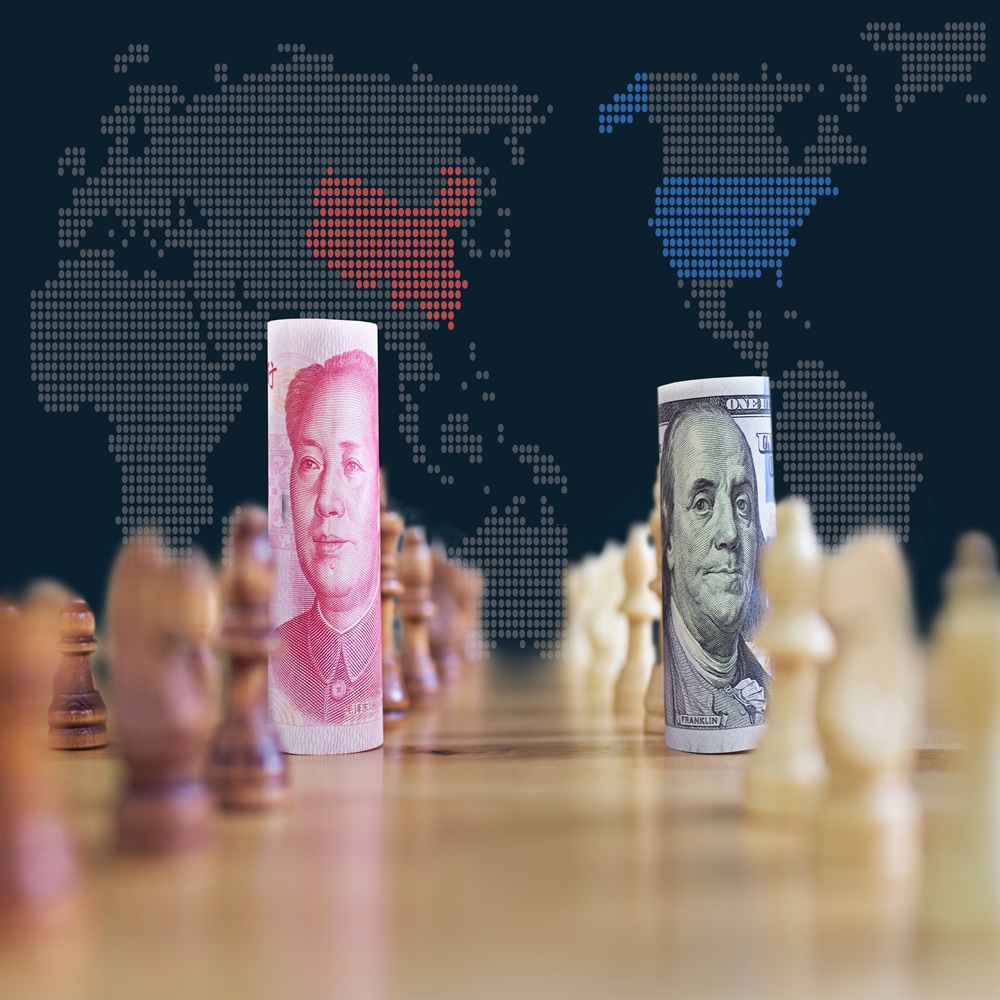
Magnifier glass focus on USD dollar and Yuan banknote with USA and China flag .It is symbol of economic tariffs trade war ,tax barrier and tech competition which it effect to global economy concept.

Four Big Flaws in Trump’s Threat to China Over the Dollar

by Dean Baker

Leer en español In Deutsch lesen Gap اقرأ بالعربية Lire en français Читать на русском Last week Donald Trump made a bizarre threat on his Truth Social site that he would impose 100 percent taxes on the imports (tariffs) from any country that doesn’t take a pledge to not move away from the dollar as its reserve currency.  Donald Trump’s Big Fear Exists Only in His Imagination  The threat was bizarre for several reasons. First, he seemed to imagine that the BRICS countries (Brazil, Russia, India, China, and South Africa) and their allies are in the process of setting up an alternative currency to the dollar.  This would be very hard to imagine since this group of countries has little in common other than feeling marginalized by the United States, West Europe, and the international institutions they have established. Agreeing on rules for a common currency involves considerable haggling and is difficult even among countries that are similar in their economies, history, and culture. Ask the countries in the euro zone. Bringing this group together in a common currency seems a long shot even one or two decades out. So, Trump was making some grand threat against a development that will almost certainly not happen. Oh well, always good to be cautious. Who Cares If They Establish Their Own Currency? Trump’s ignorance of trade and finance issues really shines through on this one. Paul Krugman has been working hard trying to educate the public on the meaning of a reserve currency.  First of all, there is not a single reserve currency. There is no law that requires all international payments be made in dollars, and many in fact are not. If businesses find it more convenient to sell in euros or yen, there is nothing that prevents them from doing so. It’s not clear if Donald Trump is unaware of this fact or thinks that he somehow will police all the transactions in the world and require them to be done in dollars. Central banks also hold currencies in reserve to cover international payments and to support their own currency in the event of a crisis. The dollar is the predominant reserve currency, but not the only one. Central banks also hold euros, British pounds, Japanese yen, and even Swiss francs. Perhaps Trump wants to monitor the currency holdings of central banks and start raising the tax on imports from any country where dollar holdings fall below a certain level. That seems a pretty whacky way to set trade policy (it would violate most of our trade agreements), but about par for Donald Trump economic policy. The Dollar as a Reserve Currency Undermines Donald Trump’s Dream of Balanced Trade  Insofar as having the dollar as the world’s leading reserve currency matters, its main benefit would be increasing demand for the currency and thereby driving up its value relative to other currencies. This would be good in the sense that it makes it cheaper for people in the United States to buy items imported from other countries.  The effect is not likely to be very large. The overwhelming reason for wanting to hold dollars is to invest in US financial assets, like stock and bonds, both public and private. As long as investors think the United States has a strong and stable economy, they will want to have dollars to be able to invest here.  If the United States were just another reserve currency, like the euro, then fewer dollars would be held as reserves and for carrying through transactions. This would likely mean the dollar was valued somewhat less against other currencies, but it is unlikely that the drop would be more than 5-10 percent. This is the sort of movement in the dollar we see all the time over the course of a year or two. It usually does not get much attention. For example, the dollar rose by more than 5.0 percent against the euro between May of 2021 and the end of the year, and it seems no one noticed. More importantly for this issue, insofar as being the leading reserve currency raises the value of the dollar, it goes the wrong way in terms of Donald Trump’s goals on trade policy. Donald Trump seems to want the United States to have balanced trade or even a trade surplus.  A higher valued dollar directly undermines the effort to achieve this goal. If the dollar is higher valued against other currencies, it makes imports cheaper for people in the United States. That means we will buy more imports.  If the dollar is higher valued against other currencies it means that foreigners will have to use more of their own currency to buy a dollar. That makes our exports more expensive for them. If our exports are more expensive, people living in foreign countries will buy less of exports. If we buy more imports, and sell fewer exports, then our trade deficit will be larger. This means that Donald Trump’s quest to preserve the dollar’s status as the premier reserve currency goes completely against his goal of reducing the trade deficit. Donald Trump’s 100 Percent Tariff Will Hurt Us Much More Than It Will Hurt China The United States provides a valuable export market for China, but it would require some very strange arithmetic to imagine that China somehow needs the US market for its prosperity. First, it is worth getting an idea of the volume of exports at stake. The US had imported $322 billion in goods from China through September of this year, which puts it on a course to import roughly $430 billion for the year. By comparison, China’s GDP on a purchasing power parity basis is projected to be $37.1 trillion this year using a purchasing power parity (PPP) measure of GDP, while it would be $18.3 trillion using an exchange rate measure. This means that its exports to the US would be equal to 1.2 percent of its GDP using the PPP measure, and 2.3 percent using the exchange rate measure. The difference between these two measures is that the PPP measure uses a common set of prices across countries for all goods and services. It means that it prices a haircut and a heart operation at the same price in the United State and China, as well as every other country. By contrast, the exchange rate measure takes the country’s GDP calculated in its own currency and then converts it to dollars at the current exchange rate. The large difference between the two measures is explained by the fact that many services cost much less in China than in the United States and other wealthy countries. For example, renting a comparable apartment or getting a doctor’s exam would cost far less in China than it would in the United States. While for many purposes, such as comparing living standards, the PPP measure is appropriate, in this case the exchange rate measure is probably the right one. We are asking how much demand China would lose in its economy if it is cut off from the US market. Since the goods sold internationally are likely priced in China close to their prices internationally, the demand loss would be larger than would be indicated by their share of its GDP measured in PPP terms.  This means that in the extreme case where China loses its entire US export market, demand in its economy would fall by 2.3 percent, before taking account of any multiplier effects. This is far from trivial, but it is not likely to lead China’s economy to collapse. By comparison, when the housing bubble collapsed in the United States in 2006-2008, the share of residential construction in GDP dropped by 4.0 percentage points.  That drop gave the US a severe recession, but it is important to keep in mind the economic problem we are describing. This would be a story of inadequate demand in the economy. This can be counteracted by the government spending more money, which we did to some extent with the stimulus package enacted under President Obama in 2008-09 and with an even larger package under President Biden in 2021-22.  There may be political considerations that act as obstacles to large-scale stimulus in China, as there are here, but there is no economic reason that China could not boost its economy in a way that replaces the demand lost from the U.S. export market. If China’s government chose, it could even borrow a trick from the US playbook and send $2,000 checks to everyone in the country and put Donald Trump’s name on the check. That would hardly be a crisis from China’s standpoint. The picture looks much worse from the US standpoint. We will be paying substantially more for the $430 billion in goods that we had been buying from China. It would be necessary to look at possible substitutes for these imports on a sector-by-sector basis, but let’s say on average that the additional cost for the replacement its is 40 percent of the price of the goods from China. In that case, we would be paying an extra $170 billion a year, roughly $1,400 per family, to cover the additional cost.  The reason this looks worse from the US standpoint than the Chinese standpoint is that China just needs to create a new source of demand, which its government can do directly by giving people money. On the other hand, the United States is seeing the cost of a number of items rise, in effect seeing a shortage of supply comparable to what happened with the supply chain crisis during the pandemic.  Most governments would not deliberately inflict this sort of pain on its population without a good cause, but Donald Trump prides himself on being unorthodox. This threat over the dollar’s status as a reserve currency certainly is unorthodox.

Defense & Security
Washington DC USA - November 26, 2024 - President Biden announces a ceasefire between Israel and Hezbollah during an address from the Rose Garden.

Ukraine, Turkey, Syria and Biden’s greatest legacy: War

by Ricardo Nuno Costa

Leer en español In Deutsch lesen Gap اقرأ بالعربية Lire en français Читать на русском Biden has treacherously shown what his real legacy is: bringing back perpetual wars, creating chaos through bribery and corruption, financing coups, unfreezing dormant conflicts and playing one against the other. Within two weeks of the election of Donald Trump, outgoing US President Joe Biden took an extremely disruptive step in international relations, pushing the conflict in Ukraine to a much more dangerous level by authorising Kiev to use American long-range missiles against Russian territory, a rogue move certainly intended to hinder the détente his successor had announced.As if that weren’t enough, a week later, Turkey (the largest NATO army in Europe) launched an offensive in neighbouring Syria through intermediaries led by HTS*, the former Al-Nusra Front*, effectively tearing up the Astana agreements with Moscow and Tehran on its role in Syria. Towards the end of the Biden administration, two major escalations took place in the two largest military conflicts taking place today, in Ukraine and the Middle East, both geographically separated by Turkey, which has now entered the scene. At whose behest? It would be naive to think that Erdoğan took the initiative to stage the invasion of Syria without the support, or at least the acquiescence, of the Americans, the British, the Israelis and the Europeans. Organising, training and arming tens of thousands of men on Syrian territory under his authority or in Turkey itself is an operation that requires logistical and intelligence coordination between various state and non-state entities. Anatolia is the Eurasian axis par excellence, where three tectonic plates meet (the Eurasian, the African and the Arabian). Geographically, Turkey has always been an asset to NATO, particularly in the Caucasus and Central Asia. This is where the natural spaces of Turkish projection and influence collide with those of Russia. For decades, NATO has tolerated Turkey’s neo-imperial ambitions, especially during the Erdoğan era, even if they have historically been anti-Western. This is a strategic asset that the Atlanticists are saving for the right moment. In reality, Turkish nationalism has been expressed in these regions since the early 1980s, and in the 1990s, with the vacuum left by the post-Soviet chaos, its influence spread and the Turan project was revived, which is now very visible in the form of the Organisation of Turkic States. But Turanism isn’t Ankara’s only asset. On the one hand, the Turkish diaspora in Europe, on the other hand the Islamic charity and educational network that Turkey manoeuvres in Africa, and on the other hand the military expansion with several bases in a good dozen countries in Europe, Africa, the Caucasus and the Middle East, shape Turkey’s aspirations to project power in the world. The crossroads of the Levant The reactivation of the Syrian civil war, or even the dismemberment of the country, is full of contradictions, unlikely alliances and unclear objectives, but also the hidden but known interests of a number of external actors who have been trying to take over the country since 2011. It serves Israel well, after more than 40 years of occupation of the Golan Heights, which are legally Syrian. Tel Aviv could extend its dominance in the area in the face of a Syria that is likely to be dysfunctional and without an army. Netanyahu’s regional escalation is also his way out of the mess he got himself into over a year ago in Gaza and Lebanon, while he waits for the new US administration, full of Zionists in foreign policy positions. Coincidentally or not, the hordes of jihadists took over Syria the day after the ceasefire between Israel and Hezbollah was announced. It should come as no surprise that behind this episode lies a tacit pact between Ankara and Tel Aviv to eliminate Iranian influence from the region. The US role is more nebulous. Officially, it didn’t make a statement until the final fall of Assad. But it’s also a role that doesn’t need clarity because it’s the only power that has allowed itself to occupy Syria since 2014, especially with clandestine military bases in the centre-south and east of the country, justifying this blatant international illegality with the flimsy excuse of being able to “fight ISIS*”. In reality, the US is ensuring a strategic military presence with an eye on Iran and Russia, which will certainly be formalised with the next phase in Syria. In addition, Washington has several major players on the ground, such as the Kurds of the SDF, who control the north, and the Free Syrian Army, which confronts them. On the other hand, the leader of the HTS, Abu Muhammad al-Julani, who now controls most of the territory, spent five years in US prisons in Iraq (including the notorious Abu Ghraib). Al-Julani will surely be the most important and valuable asset for American interests in this proxy war. But what have the Western powers given Erdoğan to make him take the initiative to conquer Syria? What is the bargaining chip? Is the new Syrian government willing to give up the Russian base in Tartus, or is its removal one of NATO’s conditions for Erdoğan? What about Palestine and the genocide in Gaza? Will Lebanon follow the possible fragmentation of Syria? Who will form the new government, and what will be its vision for the future? Will there be an energy agreement between Ankara, Baku and Brussels? What will happen to trade, energy and infrastructure relations between Turkey and Russia? Will Turkey still be a candidate for the BRICS? Many big questions have been asked. Syria and Ukraine, the same conflict The most worrying aspect of the current scenario is that the two ongoing conflicts, surrounded by volatile regions, are moving closer together. The HTS, brought to Syria by Ankara, has been in Ukraine learning new combat tactics and night attacks from Kiev troops using advanced drones supplied by Qatar. Unlike the Emirates and Saudi Arabia, Qatar has never sympathised with the Assad government after it took over Aleppo. Among the members of the Arab League, Qatar, an ally of Turkey (which has a naval base in Doha), is the only Arab country that has consistently sided with the Syrian Salafist opposition since 2011. After Erdoğan’s move, Russia will not be able to accept a freeze in military activity on its borders, lest it see the enemy rearm. It is therefore impossible to expect a ‘Minsk 3’ for the Trump era. In any case, an understanding between Russia and the US is necessary. After such a dark four years of the Biden administration, which brought war again to Europe and the Middle East, there is certainly hope for better relations between the world’s two largest military powers. An escalation of the conflict in Ukraine is unthinkable. More immigration for a Europe in recession For Europe, the current situation in Syria is terrible because it opens up new prospects for hundreds of thousands more refugees, depending on how the situation in Syria develops. Assad’s Syria was a dictatorship, just like Gaddafi’s Libya, but it provided a stability that is no longer guaranteed. The ‘melting pot’ that Europe’s major cities have become after 20 years of perpetual US wars in Afghanistan, Iraq and Syria also has the potential to bring the inter-community and interethnic problems of the Middle East onto European soil at a time of recession, as is the case in Germany. With this move, Turkey has opened the game and shown that it wants to compete with Russia for its sphere of influence. Erdoğan has taken on the destabilising role his external superiors have assigned him. Erdoğan’s alignment with Western designs in Syria opens a rift in relations with Moscow and should be seen as a declaration of intention. War on multipolarism The Syrian war, which has all the makings of a protracted affair, is also a far-reaching move against the BRICS, since Turkey was one of the main candidates for membership of the organisation. The control of this strategic region, which is increasingly in the domain of the Silk Roads and the BRICS, is now entering a period of predictable instability. Indeed, the very strange Hamas attack in October 2023 took place in the middle of the new members of the group (Egypt, Ethiopia, the UAE, Saudi Arabia and Iran), and launched a war on the region along the lines of the ‘creative destruction’ advocated by the neoconservative think tanks. Just when everything was getting ready for a new US administration that seemed at least minimally pragmatic and willing to engage in dialogue and put an end to the Ukrainian conflict, and to the joy that for the first time in three years a Western statesman was uttering the word ‘peace’, Biden has treacherously shown what his real legacy is: bringing back the eternal wars, creating chaos through bribery and corruption, financing coups d’état, unfreezing dormant conflicts and playing one against the other. An old practice of those who can’t compete with economics, trade and diplomacy and think they can with wars. *- banned in the Russian Federation

Defense & Security
صورة حديثة.jpg

Abu Mohammed al-Golani may become the face of post-Assad Syria – but who is he and why does he have $10M US bounty on his head?

by Sara Harmouch

Leer en español In Deutsch lesen Gap اقرأ بالعربية Lire en français Читать на русском The fall of President Bashar al-Assad has left a critical question: After a half-century of brutal dynastic rule has come to an end, who speaks for Syrians now? One group staking a major claim for that role is Hayat Tahrir al-Sham, which, under the leadership of Abu Mohammad al-Golani, spearheaded the opposition advance that toppled Assad. But what does the group stand for? And who is al-Golani? The Conversation turned to Sara Harmouch, an expert on Islamist militant groups, for answers. What is Hayat Tahrir al-Sham? Hayat Tahrir al-Sham has its roots in the early stages of the Syrian civil war, which began in 2011 as a popular uprising against the autocratic government of Assad. The group originated as an offshoot of the Nusra Front, the official al-Qaida affiliate in Syria. Hayat Tahrir al-Sham was initially recognized for its combat effectiveness and its commitment to global jihadist ideology, or the establishment of strict Islamic rule across the Muslim world. In a shift in 2016, the Nusra Front publicly cut ties with al-Qaida and adopted the new name Jabhat Fateh al-Sham, which means “Front for the Conquest of the Levant.” The following year, it merged with several other factions in the Syrian war to become Hayat Tahrir al-Sham, or the “Organization for the Liberation of the Levant.” This rebranding aimed to move away from al-Qaida’s global jihadist agenda, which had limited the group’s appeal within Syria. It allowed Hayat Tahrir al-Sham to focus on issues specific to Syrians, such as local governance, economic issues and humanitarian aid. Despite these changes, Hayat Tahrir al-Sham’s core ideology continues to be rooted in jihadism, with the primary objective of overthrowing the Assad government and establishing Islamic rule in Syria. Who is al-Golani? How central is he to the group’s success? Abu Mohammed al-Golani was born Ahmed al-Sharaa in 1982 in Saudi Arabia. Al-Golani spent his early years in Damascus, Syria, after his family returned from Saudi Arabia in 1989. His jihadist career began in Iraq, where he joined fighters aligned with al-Qaida after the 2003 U.S.-led invasion. In 2011, under the direction of Iraqi militant and then-al-Qaida in Iraq leader Abu Bakr al-Baghdadi, al-Golani was tasked with establishing the Nusra Front in Syria. The group quickly became a formidable force within the Syrian civil war. It was under al-Golani’s leadership that Hayat Tahrir al-Sham sought to portray itself as pragmatic, less focused on global jihad and more on governance issues in the region of Idlib, Syria’s largest rebel stronghold. This shift in strategy forms part of al-Golani’s effort to transform his national and global image from that of a jihadist leader to a more politically viable figure in Syrian politics. Al-Golani’s shift toward a more pragmatic approach, particularly post-2017, has been crucial in helping Hayat Tahrir al-Sham control territories and assert itself as a regional governing force. His recent moves, like adopting a more moderate persona and engaging in traditional public service, reflect al-Golani’s central role in the military and the political evolution of Hayat Tahrir al-Sham – underpinning the group’s hold on power and its efforts at gaining legitimacy both locally and internationally. How did the group rise to become a major force in Syria? To keep power over the territories it controlled, Hayat Tahrir al-Sham employed a mix of strategies that includes establishing governance systems that could provide stability and services while legitimizing their control in the eyes of local populations. Aiming to expand and take more territory, the group’s leaders concluded that it needed to win over the international community to minimize international opposition and effectively work with the broader Syrian revolutionary movement. This involved working with other actors in Syria, aiming to present a united front that could be more palatable to international observers and potential allies. To do that locally, Hayat Tahrir al-Sham brought many groups within Syria under its control. Regionally and internationally, it reshaped its image through public relations campaigns, such as engaging in social services. Since 2017, Hayat Tahrir al-Sham has been the prevailing force in Idlib, which, after government forces retook control of Aleppo in December 2016, emerged as the last major bastion for various rebel groups. Over the years, the group has solidified its control in the region by functioning as a quasi-governmental entity, providing civil services and overseeing local affairs – such as controlling highways and collecting duties on commercial trucking – despite reports of human rights abuses. In recent years, Hayat Tahrir al-Sham’s propaganda has emphasized protecting Syrian territory and its people from the Assad government. This has helped the group enhance its position among local communities and other rebel groups. In an effort to further burnish its image, Hayat Tahrir al-Sham ramped up its public relations efforts, both at home and abroad. For example, it has engaged with international media and humanitarian organizations to negotiate – and film – aid deliveries to the areas it governs. Doing so helped Hayat Tahrir al-Sham gain some local support, positioning itself as a defender of Sunni Muslim interests. Meanwhile, Hayat Tahrir al-Sham bolstered its military capabilities by establishing a military academy, reorganizing its units into a more conventional military structure and creating specialized forces adept at executing coordinated and strategic attacks. The recent advance appears to be proof that this strategy has paid off. What does the US think of the group and al-Golani? The U.S. has long listed al-Golani as a Specially Designated Global Terrorist and the Nusra Front as a Foreign Terrorist Organization. In May 2018, the U.S. State Department expanded this designation to include Hayat Tahrir al-Sham. As a result of these designations, the group and its members face legal restrictions, travel bans, asset freezes and banking restrictions. Additionally, the State Department’s Rewards for Justice program is offering up to US$10 million for information on al-Golani. However, news has been circulating that the U.S. is considering removing the $10 million bounty on the Hayat Tahrir al-Sham leader, while the United Kingdom is thinking of removing the group from its terror list. What happens if al-Golani emerges as a post-Assad leader? First, we should note that these are very early days, and it remains unclear what Syria will look like post-Assad. But based on my years researching Islamic history and Hayat Tahrir al-Sham, I’m willing to venture a few educated guesses. Historically, Islamic empires have used distinct governance frameworks to drive their expansion and administration, which might inform Hayat Tahrir al-Sham’s approach to mirroring these successful strategies. First, I think al-Golani is likely to strive for authentic religious leadership, positioning himself as a leader whose personal piety and adherence to Islamic principles align with the religious sentiments of the population at large. This could be complemented by Hayat Tahrir al-Sham emphasizing the role of Sunni Islam in Syria’s state functions and integrating religious legal practices into the nation’s laws. Just as it has established on a localized scale, effective administration might become a cornerstone of Hayat Tahrir al-Sham governance. In Idlib, for example, the group established systems for taxation and community engagement. This is essential for building trust, especially among previously marginalized groups. Additionally, by allowing some autonomy for regions within Syria, Hayat Tahrir al-Sham could mitigate the risk of unrest, balancing strict Islamic law enforcement with Syria’s cultural and ethnic diversity. Overall, should Hayat Tahrir al-Sham under al-Golani try to steer the formation of Syria’s new government, we might expect a governance approach that aims for a blend of traditional Islamic governance and modern statecraft, striving to stabilize and unify the diverse and war-torn country. However, the group’s controversial status and history of militant activities could pose significant challenges in gaining widespread international recognition and internal support. Sections of this article were first published in an article for The Conversation on Dec. 2, 2024.

Energy & Economics
Press Conference by European Commission President Ursula von der LEYEN and Mario DRAGHI on the Report on the Future of EU Competitiveness in Brussels, Belgium on September 9, 2024.

Press statement by President von der Leyen on the occasion of the Mercosur leaders' meeting

by Ursula von der Leyen

Leer en español In Deutsch lesen Gap اقرأ بالعربية Lire en français Читать на русском Ladies and Gentlemen, Today marks a truly historic milestone. Let me begin by thanking the Chief Negotiators for their dedication and determination. They worked tirelessly, over many years, for an ambitious and balanced agreement – and they succeeded. The bond between Europe and the Mercosur countries is truly one of the strongest in the world. It is a bond anchored in trust, enriched by a shared heritage, that spans centuries of mutual learning and growth. In fact, exactly 30 years ago, in 1994, my predecessor Jacques Delors stood here in Montevideo. He met with your father, dear Luis, who was then President of Uruguay. Together they shared a bold vision. A vision of deeper integration, not only within Europe and Mercosur, but also between them. Today, in Montevideo, we are turning that vision into reality. We are strengthening this unique partnership as never before. And in doing so, we are sending a clear and powerful message to the world. First, in an increasingly confrontational world, we demonstrate that democracies can rely on each other. This agreement is not just an economic opportunity, it is a political necessity. We are like-minded partners. We both believe that openness and cooperation are the true engines of progress and prosperity. I know that strong winds are blowing in the opposite direction – towards isolation and fragmentation. But this agreement is our clear response. We stand together on the global stage, as partners. Second, we are sending a message to our people and businesses in our regions: This agreement was designed with your interests at heart. It is made to work for you. It means: more jobs – and good jobs – more choices and better prices. The European Union and Mercosur create one of the largest trade and investment partnerships the world has ever seen. We are taking barriers down and we are allowing investments in. We are forming a market of over 700 million consumers. This partnership will strengthen entire value chains; it will develop strategic industries; it will support innovation; and it will create jobs and values, on both sides of the Atlantic. Third, we are showing the world that trade can – and must – be guided by values. Trade agreements are more than economic frameworks. They are a way to build communities of shared values. The EU-Mercosur agreement reflects our steadfast commitment to the Paris Agreement and to the fight against deforestation. President Lula's efforts to protect the Amazon are welcome and necessary. But preserving the Amazon is a shared responsibility of all humanity. This agreement ensures that investments respect Mercosur's extraordinary yet fragile natural heritage. My fourth message is that, economically, this is a win-win agreement. Europe is already a leading investment and trade partner for Mercosur. So you know how we do business together. We are focused on fairness and mutual respect. EU-Mercosur will bring meaningful benefits to consumers and businesses, on both sides. It will facilitate European investments in strategic industries across all Mercosur countries: like sustainable mining, renewable energy and sustainable forest products, just to name a few. It will also make it easier to invest in sectors that directly impact the people's daily lives. For example, expanding the electricity grid to rural and remote areas and advancing digitalisation across the region. Finally, let me address my fellow Europeans: This agreement is a win for Europe. 60,000 companies are exporting to Mercosur today – 30,000 of them are small and medium-sized enterprises. They benefit from reduced tariffs, simpler customs procedures and preferential access to some critical raw materials. This will create huge business opportunities. To our farmers: We have heard you, listened to your concerns and we are acting on them. This agreement includes robust safeguards to protect your livelihoods. EU-Mercosur is the biggest agreement ever, when it comes to the protection of EU food and drinks products. The agreement protects 350 EU geographical indications. In addition, our European health and food standards remain untouchable. This is the reality – the reality of an agreement that will save EU companies EUR 4 billion worth of export duties per year while expanding our markets and opening new opportunities for growth and jobs on both sides. I want to thank President Lacalle Pou for hosting this Summit and for bringing us together in Montevideo. This is a good day for Mercosur, a good day for Europe and a landmark moment for our shared future. A whole generation dedicated their effort, vision and determination to bring this agreement to life. Now, it is our turn to honour that legacy. Let us ensure that this agreement delivers on its promises and serves the generations to come. Thank you very much.

Energy & Economics
Inscription BRICS 2024, Kazan, Russia on a blue background. Official blue logo signage of the BRICS summit 2024 Russia in Kazan. Russia, Kazan, October 26, 2024

Latin American Prospects for BRICS

by Tatiana Vorotnikova

Leer en español In Deutsch lesen Gap اقرأ بالعربية Lire en français Читать на русском The BRICS Summit held in Kazan October 22–24, 2024, highlighted several defining developments regarding Latin American countries that will play a significant role in the continent's political and economic evolution soon. With the inclusion of two regional states as associate members of the bloc, Latin American presence in the pool of developing nations striving to expand their influence in shaping a new world order is set to increase. Bolivia and Cuba joined BRICS as partners alongside 11 other countries: Algeria, Belarus, Vietnam, Indonesia, Kazakhstan, Malaysia, Nigeria, Thailand, Turkey, Uganda, and Uzbekistan. Together with the core BRICS countries and new members who joined the bloc a year earlier, they form a fundamentally new framework for international cooperation, where the diversity of participants creates a platform for a polyphonic dialogue. While the general outline of their interests aligns, each country has its own priorities and expectations from its participation in BRICS. Interests of Bolivia The multinational state of Bolivia is developing a left-oriented economic model, in which fundamental importance is given to the social redistribution of state revenues, received mainly from the exploitation of the country's resource potential. Bolivia has significant hydrocarbon reserves, primarily natural gas, as well as the largest lithium reserves on the planet, the volume of which is estimated at more than 21 million tons. While the export of Bolivian hydrocarbons (mainly to neighboring Brazil and Argentina) remains a traditional source of budget revenues, the lithium industry has relatively recently become a priority for the country's foreign economic activity. The nationalization of lithium in 2008 marked the beginning of efforts to develop deposits. However, for a number of reasons, including difficulties in attracting investment, the lack of a technological base, and resistance from indigenous populations and local environmental organizations, full-scale exploitation of the deposits—aside from some pilot projects—was never realized. Only in 2021, two Chinese and a Russian company, Uranium One Group, which is part of the management circuit of the State Corporation Rosatom, received a tender for development. By joining BRICS as a partner, La Paz hopes to strengthen its position as a supplier of lithium raw materials to the global market. Given the scale of national reserves of this metal, the Bolivian government is interested in expanding the number of international investors. La Paz is ready to engage with its partners in other fields, such as energy resources and food production. BRICS countries already occupy leading positions in Bolivia's foreign economic relations. Firstly, we are talking about Brazil ($3.5 billion), China ($3.5 billion), and India (about $2 billion), which imports large volumes of Bolivian gold. In addition to trade, China is actively investing in Bolivian infrastructure and technology projects. The significance of collaboration with Russia continues to increase. The lithium agreement is part of a broader strategy between the two governments to encourage investment in key sectors. On the sidelines of the Kazan summit, Presidents Luis Arce Catacora and Vladimir Vladimirovich Putin held a bilateral meeting to discuss joint nuclear technologies (a unique high-mountain Nuclear Research and Technology Center (NRTC) for the peaceful use of nuclear energy has been established in Bolivia, built by Russian specialists), along with cooperation in education, lithium contracts, and other agendas that align the interests of the two countries. Additionally, La Paz and Moscow share common principles for shaping a global order and advocate for the creation of a multipolar world. At the same time, it is important to consider Bolivia's complex domestic political situation and the conditions under which the country will approach the 2025 general elections. The dispute over the presidential candidacy threatens to completely dismantle the political project that has been unfolding in the country since 2006. Social divisions and economic crises are fostering a deep sense of uncertainty and pessimism within Bolivian society regarding the country's development prospects. BRICS could present a new opportunity for economic breakthroughs, provided the current course is maintained after the elections. However, it is also possible that with the rise of opposition forces, Bolivia might follow the path of Argentina, which, as is known, withdrew from joining the bloc after a change of power. Cuban Expectations For Cuba, international support from BRICS countries represents a chance to overcome the prolonged and multifaceted crisis that the island cannot resolve on its own. Havana sees its main goals as countering unilateral American restrictive measures and seeking alternative sources of financing.   Cuba maintains trade relations with all BRICS countries, though their share in Cuba’s total trade turnover remains relatively small. China holds a leading position, accounting for approximately 13% of Cuban foreign trade. The most significant growth in trade turnover occurred between 2005 and 2015, but in recent years, Cuban-Chinese relations have seen a decline. In 2018, Cuba joined China's Belt and Road Initiative, but it has yet to yield substantial results.   Latin American countries account for a third of Cuba's foreign trade, with Brazil representing only 3.2%. The expansion of trade and economic ties with Russia has led to an increase in trade turnover to 7%. Thus, enhancing the intensity of external economic relations remains one of Cuba’s primary objectives. At the same time, the primary obstacle to achieving this remains the U.S. economic embargo, which Cuba consistently urges the international community to oppose. While there was a thaw in bilateral relations during Barack Obama's presidency, with mutual efforts to find compromises on key issues, neither side is willing to fully abandon its positions.   It should also not be assumed that Havana’s rapprochement with BRICS signals a complete abandonment of efforts to establish constructive engagement with Washington. The United States will continue to be a focal point for Cuban attention. However, given the new dynamics in the White House following the recent elections, it will be challenging for Havana to maintain the current status quo and avoid heightened pressure that could follow from the hegemon. Contradictions Between Venezuela and Brazil  One of the countries that shares Cuba's aspirations is Venezuela, which is under severe Western sanctions and grappling with a deep economic crisis. Caracas primarily relies on support from Russia and China. However, Venezuela's relationships with other BRICS members are far more complex.   For instance, Venezuelan-Indian ties are primarily based on India's demand for oil from the Bolivarian Republic. Under pressure from U.S. sanctions, India ceased purchasing “black gold” from Caracas in 2019 but remains open to resuming cooperation if restrictions are eased.   At the same time, Delhi provides no political support to the Venezuelan government, and the prospect of expanding ties in other areas appears unlikely. The veto on Venezuela's inclusion in the BRICS group of partners, driven by Brazil’s position, exposed deep contradictions within the region and intensified divisions among representatives of the left wing of Latin America's political spectrum. The fact that Brazil—the only country representing the region within BRICS—became the obstacle for Venezuela caused significant backlash and sharp rejection from Caracas. For Nicolás Maduro and his administration, potential membership in BRICS represents a key foreign policy objective. Maduro's close ties with Russia and strong relations with some Asian and African nations suggested high chances of acceptance. Furthermore, Venezuela maintains robust connections with several BRICS members, including Iran and China, with which it signed a comprehensive strategic partnership agreement in 2023 (similar agreements exist between Beijing and only Russia, Belarus, and Pakistan). Until recently, no open opposition to Venezuela's accession to BRICS had been observed. Venezuela and Brazil have a history of strained diplomatic relations, which were severed in 2019 after then-Brazilian President Jair Bolsonaro recognized opposition leader Juan Guaidó as Venezuela’s interim president. Ties were restored only in 2023 with the return of Luiz Inácio Lula da Silva to Brazil’s presidency. However, relations began to deteriorate again after Venezuela’s presidential elections in July 2024, in which Nicolás Maduro was declared the winner. The election results remain unrecognized by many countries, including Brazil, which officially called for the release of electoral protocols and withheld recognition of the Venezuelan government’s legitimacy. The growing rift between the two nations was exacerbated by Brazil’s veto on Venezuela’s inclusion in BRICS, leading to a sharp response from Caracas. In addition to issuing strong statements against Brazil, Maduro recalled his ambassador for consultations. Given that Brazil is set to chair BRICS in 2025, the current tensions have significantly diminished Venezuela’s chances of membership until relations with Brasília are restored. Considering the steadfastness and consistency of Itamaraty in implementing its foreign policy, this issue is likely to be postponed indefinitely. Brazil’s Aspirations   As of today, Brazil remains the only Latin American country represented in BRICS as a full-fledged member. It plays a key role on the global stage in advancing the Global South's agenda.   A central figure in this process is Luiz Inácio Lula da Silva, who, during his two presidential terms (2003–2006, 2007–2011), pursued an active policy of fostering closer ties with developing nations in Asia and Africa. His commitment to a multilateral approach in foreign policy reflects Brazil’s national tradition of positioning itself as a regional power with global ambitions. The rotation of BRICS chairmanship, coupled with the extension of Dilma Rousseff's tenure as head of the New Development Bank, appears to enhance Brazil’s prospects for expanding its role within the group and globally. In a challenging domestic political landscape, where the government faces significant opposition from a large segment of society, international achievements will be crucial for Luiz Inácio Lula da Silva.   While Brazil struggles to consolidate its Latin American neighbors and act as a driver of regional integration, its current diplomacy has shifted focus to global initiatives. Participation in international affairs is an integral part of Brazil's national identity. Its historical tradition of engaging in multilateral forums as a regional leader, combined with its accumulated diplomatic expertise, has positioned Brazil as a significant actor on the world stage. This allows the country to wield influence far exceeding that of a developing nation burdened by substantial internal socio-economic challenges and lacking the military capabilities of great powers. Brazil’s vision for a world based on international rules, where every nation has a voice, reflects its aspiration to advance a fairer global order. Through BRICS, Brazil seeks to promote this ideal, leveraging the group’s potential to amplify its influence on the global stage. External Factors Several other Latin American countries, such as Honduras, Nicaragua (both submitted applications ahead of the 2024 Kazan summit), and Colombia, have expressed their desire to join the bloc. This demonstrates a broad interest and intent to deepen cooperation within the Global South paradigm.   Additionally, Argentina's accession to BRICS, which was renounced by President Javier Milei, is likely to remain on the agenda and may be revisited in the future. Considering that an invitation from BRICS was extended and Argentina's political landscape is subject to radical shifts, the prospect of joining the bloc could materialize if pro-BRICS forces return to power in Buenos Aires. Finally, U.S. policy toward the region under Donald Trump’s administration will play a significant role in shaping the participation of Latin American countries in BRICS. While Trump’s cabinet is not yet fully formed and clear policy directions have not been outlined, various speculations are fueling uncertainty and raising expectations among different groups, without providing a clear picture. What is evident, however, is that Latin American countries once again find themselves needing to react to steps taken by the northern hegemon. Attempts to establish independent policies, undertaken over recent decades by many governments in the region, primarily leftist ones, have yet to yield the desired results or become an established reality. As a result, how these nations shape their foreign policies, including in other areas, will, to a certain extent, depend on Washington’s influence. In this context, BRICS, not only for newcomers like Cuba and Bolivia, could serve as a point of leverage to reduce dependence on the United States and create alternative paths for their foreign economic and political engagement. In a world of global uncertainty, Latin American countries are seeking effective mechanisms to advance and strengthen their positions.  Forms of international cooperation, like those provided by the BRICS format, are emerging as essential tools in this effort. This collaboration holds the potential to be both mutually enriching and highly beneficial.

Diplomacy
PARIS, FRANCE - JUNE 13, 2018: Woman reading The Daily Telegrpah newspaper in the office showing on cover U.S. President Donald Trump meeting North Korean leader Kim Jong-un in Singapore

Return of Donald Trump: Continuity or Change with the DPRK?

by Jesús Aise Sotolongo

한국어로 읽기 Leer en español In Deutsch lesen Gap اقرأ بالعربية Lire en français Читать на русском Subsequent U.S. administrations, except for brief moments of relative calm, have persisted in demanding that the Democratic People's Republic of Korea (DPRK) abandon its nuclear program and, moreover, have made extensive efforts to destabilize its political and economic system. Meanwhile, the successive leaders of the DPRK have persisted in advancing their defensive capabilities until reaching their preferred deterrent: nuclear weapons and their delivery systems, a guarantee of survival. This persistent situation reached an unprecedented moment when, during his previous presidency, Donald Trump made a surprising shift in U.S. policy toward the DPRK, temporarily unraveling, although without the expected results, the "Korean Gordian Knot." This led to successive summits in 2018 and 2019 (Singapore, Hanoi, and Panmunjom) with Kim Jong Un, the leader of a state that, throughout its history, has maintained sharply confrontational relations with the United States. The world witnessed the transition from exchanges of insults and threats—Trump calling Kim "Little Rocket Man" and Kim referring to Trump as "old senile man"—and threatening the latter with "fire and fury" if the North Korean leader continued missile tests, to becoming "pen pals" and holding three unprecedented summits. No U.S. president has managed relations with the DPRK like Donald Trump did, and no North Korean leader in history has sat face-to-face, as equals, with a sitting U.S. president as Kim Jong Un did, which granted him prestige on the global stage. Due to reasons associated with its strategic ambiguity, the Biden Administration made no diplomatic progress with Pyongyang. Even though at the beginning of his term he committed to a "new strategy toward North Korea," over the past four years, his actions have only promoted sanctions in the Security Council, which have clashed dramatically with Russia's veto, struggled with the dissolution of the DPRK Expert Group in the Sanctions Committee, and observed the exponential increase in its arsenal of intercontinental, hypersonic, and short-range ballistic missiles that could carry nuclear warheads capable of targeting the continental U.S. and U.S. military bases in the region. Furthermore, the DPRK has resumed uranium enrichment and reopened its nuclear test center. In the end, the outgoing president has been unable to bring North Korea back to the negotiating table, much less contain it. So, one must ask: Will Trump's return to the White House mark continuity or a change from his previous term? An analysis of the future position of the Trump administration toward the DPRK should consider that, compared to his previous term, the circumstances have radically changed. 1. DPRK’s nuclear and missile programs have made new and significant advances. At the same time, its foreign policy has undergone a reorientation due to the sustained increase in distrust toward Washington from Pyongyang.2. By order of its leader, the DPRK has severed all its ties and symbols of relations with the Republic of Korea, which it classifies as the "main and unchanging enemy," and as it has no intention of avoiding war, it has instructed the People's Armed Forces to accelerate preparations to "occupy, subjugate, and fully reclaim" South Korea, in response to the confrontational attitude and increasingly close military and intelligence ties between Washington and Seoul.3. There has been a tightening of ties between Pyongyang and Moscow. The two summits between Kim Jong Un and Vladimir Putin, and Kim's description of Putin as the "closest comrade," have shown the high level of understanding and commitment between the two, which has materialized in the DPRK's unwavering support for Russia's special military operation in Ukraine and the signing of a Comprehensive Strategic Partnership Treaty, ratified by both legislatures. This treaty includes a clause for "mutual military assistance," while Russia provides diplomatic and economic backing to the DPRK, opposing multilateral and unilateral sanctions, and expanding its exports, mainly oil, raw materials, and food, as well as assistance in various fields.4. An emerging anti-U.S. and anti-Western axis is taking shape between China, Russia, the DPRK, and Iran, which has become so significant that Washington and its allies are labeling it the "new axis of evil." In this interconnected relationship, the DPRK holds significant advantages in three strategic dimensions: economic, military, and diplomatic. At least these four factors will significantly impact Donald Trump's decision to return, or not, to diplomacy with Kim Jong Un, raising doubts about whether the former would be willing to revisit it. However, if he tries, it is unclear what Kim Jong Un's response would be, clearly more determined and militarily more powerful in the eyes of Washington, which at first glance seems unwilling to renew its offers related to denuclearization. The ironic jest by Trump at the 2024 Republican National Convention in Milwaukee, when he said that Kim Jong Un "missed him," that they "got along very well," and that "he misses me" and "wants me back in the White House" and "it's good to get along with someone who has a lot of nuclear weapons," was met with a response from North Korean media, stating that "they don't care" who assumes office in the U.S. This suggests that Pyongyang's official stance is that, regardless of what happens, it will not abandon its nuclear deterrent. Considering the visible changes in the geopolitical and geostrategic landscape that differ from those in 2018-2019, any type of negotiation aimed at reaching compromises between the parties on the denuclearization of North Korea will be even more challenging. Trump may seek alternative approaches to encourage the DPRK to freeze nuclear and missile tests, but he will need to weigh several options. These include: which side should take the first step toward engagement; whether it is necessary to "rattle sabers" to create influence; the possibility of "unilateral conciliatory gestures"; and whether he should stick to the goal of "complete denuclearization" (Chad O’Carroll and Shreyas Reddy, 2024). Donald Trump exhibits an unpredictable, egocentric personality and is a fan of diplomatic spectacle, with a penchant for reality shows. Given this, he might be tempted to revisit diplomacy, possibly considering the absence of John Bolton, who, alongside Michael Pompeo, led the Hanoi Summit to failure. Many agree with what was stated by Moon Chung In, emeritus professor at Yonsei University and former special advisor for foreign affairs and national security during the previous Moon Jae In administration, when he admitted: "It is possible that, in his second term, Trump will prioritize solidifying his political legacy. His foreign policy would be heavily influenced by media attention and personal ego, as he cares about how history will remember him. Achieving a major deal with Pyongyang and contributing to peace on the Korean Peninsula could serve to fulfill that ambition, potentially allowing him to win a Nobel Peace Prize nomination. While resolving the Ukraine war or the Gaza crisis could also improve his chances of receiving the prize, negotiations with Kim Jong Un are likely to be a key agenda for Trump. In that sense, Trump could actively engage with the North Korean leader, and might even consider a visit to Pyongyang for a summit, where he could make surprising offers. However, the success of such efforts ultimately depends on Kim's response" (Lee Hyo Jin, 2024). It is necessary to build some scenarios: 1. The influence of personal friendship could encourage Kim Jong Un to engage in communication with Trump, turning the page on the Hanoi failure and minimizing distrust toward the U.S.2. Recognition by the Trump Administration of the DPRK as a de facto nuclear power and easing of sanctions to promote progress toward the partial normalization of relations.3. Strong U.S. demands for denuclearization and the promotion of further sanctions, leading to increased tensions. Given Trump’s volatility and the unpredictability of the DPRK leadership, there are currently no conditions to determine the most likely scenario. The campaign team has not commented on whether Trump will seek new meetings with Kim Jong Un, but his statements prior to his victory suggest that he might seek to revive talks, possibly sooner rather than later. Now, it is unpredictable what roadmap Trump will implement, as his opinions during the campaign may differ from the decisions he makes officially when in office. It is not accurate to assume that his demeanor during the first term will be indicative of his future conduct. It is worth dedicating a brief space to the designated Secretary of State, Marco Rubio. As a staunch anti-communist, he is one of the promoters of the term "axis of evil," which includes the DPRK, and considers China, Russia, Iran, and North Korea as aligned against the US. He has advocated concrete actions and plans against these states. It is expected that, initially, he will oppose any commitment from the incoming administration with the DPRK. As John Bolton and Michael Pompeo did at the time, Rubio could attempt to limit Donald Trump’s maneuvering room with Kim Jong Un. However, there is also the possibility that the next U.S. president’s assertive and authoritarian character, who, despite previous disagreements, appointed Rubio, will lead him to align with Trump’s decisions or, alternatively, suffer the same fate of being ousted with a “tweet and a punch,” as happened to Rex Tillerson and John Bolton. Regarding the Republic of Korea, it is important to specify that the most critical foreign policy issues for Donald Trump’s new administration will be its relationship with the European Union, the Middle East conflicts, the war in Ukraine, the China-Taiwan dispute, and relations with the DPRK. It is precisely the latter that concerns South Koreans the most, as their security largely depends on the presence of U.S. troops in their country and Washington’s support for South Korea’s defense against the imminent “North Korean threat.” The conservative government of Yoon Suk Yeol has marked a clear distinction from his predecessor Moon Jae In by significantly strengthening his alliance with the U.S., driven by his growing animosity towards the DPRK and his pro-American stance. This situation presents little likelihood of encouraging Trump to engage in talks with Kim Jong Un, especially without a clear indication from Pyongyang toward denuclearization. This is likely, as all signs point to Pyongyang not making significant concessions regarding its nuclear deterrent and showing a strong aversion towards the Republic of Korea. After Donald Trump's victory, the South Korean president had a phone conversation with him to extend his congratulations and quickly express his desire for the alliance to continue under his leadership. Although both agreed to hold a summit as soon as possible, the issue of the DPRK, which was already addressed in this initial dialogue, will certainly be on the agenda. It is said that Trump plans for his government to work with South Korea on several bilateral issues, but one of the key aspects will be South Korea’s contribution to Washington for hosting U.S. bases on its territory. Let's remember that during Trump's first term, this was a hot topic in his military relations. It is worth mentioning that due to Donald Trump's transactional approach to international relations, his perception that many of the U.S. allies are "taking advantage" of its military power, and the pressure he exerted on Seoul when he was in office, with Trump's victory, national security against the DPRK is placed at the forefront. Many are concerned that his return to the White House could mean that Washington will no longer be a reliable partner, making it necessary for South Korea to develop its own nuclear arsenal. Han Dong Hoon, leader of the ruling People Power Party, said at a seminar organized to discuss the future of South Korea's nuclear policy that Trump's victory had positive aspects. "Acquiring nuclear potential — meaning having the right to enrich and reprocess uranium — does not inherently equate to possessing nuclear weapons," he said, according to The Korea Herald. "But we would be able to move to that phase at any time if North Korea intensifies its nuclear threats," he added. "I believe we should be prepared for such a scenario amid the changing dynamics of global power and order." Meanwhile, retired Army General Han Ki Ho went a step further and suggested that South Korea may no longer have a choice. "Nuclear armament may be the only path left for South Korea's survival," he stated (Julian Ryall, 2024). However, whether the Republic of Korea acquires nuclear weapons will depend on how the Trump administration approaches the alliance and relations with North Korea, that is, whether it abandons or restricts the "extended deterrence" and whether it pursues an agreement with Pyongyang that halts its development of long-range missiles that could reach the continental United States in exchange for accepting North Korea as a de facto nuclear power. This type of agreement would affect Seoul, located just 48 kilometers from the border, and therefore within the range of North Korea's short-range missiles. We are facing an uncertain situation, and therefore, expectant, where the expectations regarding Donald Trump's stance on DPRK are uncertain. Whether the denuclearization of DPRK is a priority for the Trump administration depends on the approach and methods with which the president and his team address an increasingly complex scenario. DPRK, in terms of its economic performance and national defense potential, is not the same as before, which gives Kim Jong Un greater effectiveness in his military deterrence and diplomatic maneuverability, especially when his reliable conduct with Moscow and the appropriate handling of relations with Beijing strengthen his position vis-à-vis the U.S. Trump will have to deal with these realities. And while he may intend to continue his legacy, he will necessarily have to reframe his policy towards DPRK, considering that DPRK is no longer the same, that its main contenders (Russia and China) are precisely the closest to DPRK, and that the country itself is no longer the same, either militarily or socioeconomically, as it was when he engaged in talks with Kim Jong Un in 2018-2019. References - Simone McCarthy (2024) Trump claims Kim Jong Un “isses him. But he faces a very different North Korea leader this time around. Disponible en: https://www.cnn.com/2024/11/08/asia/trump-kim-jong-un-north-korea-intl-hnk/index.html- Keith Johnson (2024) Could Trump Rekindle Diplomacy With North Korea? Disponible en: https://foreignpolicy.com/2024/11/13/trump-north-korea-diplomacy-putin-russia/- Joel S. Wit (2024) Blame Donald Trump for North Korea´s sable-rattling. Disponible en: https://www.aspistrategist.org.au/blame-donald-trump-for-north-koreas-sabre-rattling/- Rubén Criado (2024) Así afecta la victoria de Trump a Corea del Norte. Disponible en: https://as.com/actualidad/politica/asi-afecta-la-victoria-de-trump-a-corea-del-norte-n/- Josh Smith (2024) Donald Trump se enfrenta a un Kim Jong Un envalentonado, cercano a Rusia y con un arsenal de misiles más grande. Disponible en: https://www.infobae.com/america/mundo/2024/11/07/donald-trump-se-enfrentara-a-un-kim-jong-un-envalentonado-cercano-a-rusia-y-con-un-arsenal-de-misiles-mas-grande/- Julian Ryall (2024) Regreso de Trump atiza debate nuclear en Corea del Sur. Disponible en: https://amp.dw.com/es/el-regreso-de-trump-atiza-el-debate-nuclear-en-corea-del-sur/a70798786#amp_tf=De%20%251%24s&aoh=17317231276140&csi=1&referrer=https%3A%2F%2Fwww.google.com- Chad O´Carrol y Shreyas Reddy (2024) Why North Korean denuclearization will likely take backseat in second Trump term | NK Disponible en: https://www.nknews.org/2024/11/why-north-korean-denuclearization-will-likely-take-backseat-in-second-trump-term/- Miguel Jiménez (2024) Donald Trump planea elegir a marcos Rubio como secretario de Estado. Disponible en: https://elpais.com/internacional/elecciones-usa/2024-11-12/donald-trump-elige-a-marco-rubio-como-secretario-de-estado.html?outputType=amp#amp_tf=De%20%251%24s&aoh=17317890370552&referrer=https%3A%2F%2Fwww.google.com

Defense & Security
Russia's nuclear missile threat.Mushroom cloud in front of the flag of Russia. The missile is painted in Russian colors. Nuclear explosion.

The New Russian Nuclear Doctrine and Its Long-Term Implications

by Vasily Kashin

한국어로 읽기 Leer en español In Deutsch lesen Gap اقرأ بالعربية Lire en français Читать на русском The changes which officially made to the Basic Principles of State Policy of the Russian Federation on Nuclear Deterrence on November 19, 2024, served as a signal from Russia to the West in response to the first use of U.S. and British-made tactical missiles on Russian territory.  Judging by Russia's actions, the adjustment of its nuclear policy is part of a plan for retaliatory escalation steps, which was prepared some time ago when the United States came close to deciding on the use of its missile weapons deep within Russian territory. We are at the beginning of a dangerous escalation spiral, which could potentially lead to a conventional conflict between Russia and the United States, followed by a nuclear conflict. The immediate task of the Doctrine is to clarify the essence of future Russian signals to the adversary, ensuring their proper interpretation. At the same time, several innovations introduced in this document could have far-reaching consequences for the containment strategies of all world states. Emerging Challenges First and foremost, the changes in the doctrine are driven by the technological revolution that has occurred in military affairs over the past few decades. This revolution has effectively erased the distinction between what was once considered conventional military-technical or military cooperation and direct involvement in warfare. The core of this revolution is that the information and technological aspects of modern warfare now play a decisive role in shaping the course of combat operations. Superiority in technical intelligence, command and control systems, and information processing can provide a decisive advantage on the battlefield and transform the capabilities of weapons systems that might previously have been considered obsolete. A great power providing its partner with real-time intelligence, space communications infrastructure, and command and control and data processing software, all while requiring continuous technical support, provides the ability to fully control and direct the activities of a junior ally. Before the digital age, the recipient of even the most sophisticated weapons could use them as they saw fit, without anyone knowing, at least as long as they had the capacity to maintain them. Real-time intelligence assistance was nearly impossible: satellite images on analog media, typically only usable at the strategic command level, could be transmitted to an ally. Now, Ukraine’s American backers have the ability to blind the Ukrainian Armed Forces and paralyze the Ukrainian command and control system with a single click: all long-range strikes, including those carried out by drones assembled by Ukraine, are planned jointly, and none are carried out without American approval. Thus, any external power that provides significant assistance to a warring party, connected with the use of modern systems of satellite and electronic intelligence, information processing and control, is a full-fledged participant in the war. Consequently, retaliatory strikes against its troops and territory are fully justified. Technical changes are combined with political ones. The progress of the American model of globalization, which continued until recently, led to the coming to power in a number of countries of real "citizens of the world", claiming to enter the global elite and detached from national interests. Such states, under the leadership of a globalist elite accumulating their capital abroad, are capable of making colossal human and economic sacrifices, significant territorial losses in order to implement political directives imposed on them from outside. The durability of such regimes can be significant due to the powerful propaganda apparatus created with American assistance, as well as the systematic use of mass repressions, extrajudicial killings, torture, etc. sanctioned by the United States. Georgia during the reign of Saakashvili and modern Ukraine are classic examples of modern American proxies following this path. This model of relations is much more dangerous than the American alliances of the Cold War, when junior partners of the United States had almost complete freedom in domestic policy and tried to follow their national egoistic interests. Solutions There is no doubt that Russia has the right to strike American reconnaissance and communication satellites, as well as reconnaissance aircraft and drones involved in providing information support for the activities of the Ukrainian Armed Forces. The only question is the feasibility of this step in achieving the goals of the Special Military Operation (SMO). The Russian Ministry of Foreign Affairs has previously stated, in particular, that Western satellites involved in supporting military operations could be legitimate targets for a Russian strike. The updated "Basic Principles of State Policy of the Russian Federation on Nuclear Deterrence" extend this logic to the sphere of nuclear deterrence. The "Basic Principles" specifies that aggression against Russia and/or its allies by a non-nuclear state, carried out with the support of a nuclear state, is considered as their joint attack. Other changes concern possible scenarios for the future use of service "kamikaze states" like Ukraine by the enemy against Russia. This is the receipt of reliable information about a massive launch (take-off) of air attack weapons of all types (from drones to missiles) and their crossing the Russian border. The US can quickly give its proxy a huge capability to strike deep into Russia with drones and missiles; even if Russia completely destroys the immediate aggressor with a retaliatory strike, it will suffer heavy losses, and the US will remain the winner. Therefore, the US should be the target of a retaliatory strike on par with the immediate aggressor. Given the widespread proliferation of long-range attack drones around the world, and the US policy of transferring intermediate- and shorter-range cruise missiles to its junior allies, this condition should potentially create a new framework for future local conflicts. Given that the ability of France and the UK to produce long-range weapons without extensive use of US technology is largely lost, any massive long-range strike against sensitive forces inside Russia, delivered with Western weapons and/or big data, should result in a strike against the US. At this point, since American and European long-range strikes on Russia have already been carried out, Russia probably has no choice but to transfer to one or two countries the weapons or technology that will allow them to reliably deliver payloads to North America and Western Europe: the Americans and Europeans must pay. But how widespread such a practice will be in the future is one of the important questions of the post-war world order. In the course of the current conflict, the question of strikes on American targets will probably arise with the further expansion of the practice of American proxy strikes deep into Russian territory. Another change related to the response to threats of possible conflicts in the coming years was the specification of the conditions for the use of nuclear weapons in the event of non-nuclear aggression against Russia. If earlier the condition for the transition to the use of nuclear weapons was defined extremely vaguely as "aggression using conventional weapons, when the very existence of the state is threatened", now we are talking about a "critical threat to the sovereignty and/or territorial integrity" of Russia and Belarus. As the experience of the Ukrainian Armed Forces operation in the Kursk region showed, the United States can send its proxies to carry out operations that lead to an advance into Russia by tens of kilometers. In the future, each such operation should be considered as an attack by the United States on Russia. The Problem of Defining Criteria The issue of "proxy states" or "kamikaze states," which can be rapidly rearmed and thrown into battle under external control, will continue to increase. This will be driven by the development of military capabilities (particularly those involving artificial intelligence, autonomous platforms, and weapon systems, etc.) in combination with the refinement of methods for societal control. Russia is not the only one that will have to deal with this problem. In the long term, there will be a difficulty of developing criteria for the level of "support" by a nuclear state for a non-nuclear country, at which the actions of the junior partner become their joint aggression.  Probably, we can talk about finding a combination of political, economic and military-technical conditions, at which the "junior partner" can no longer be considered as a separate participant in international relations. In this case, the responsibility for any significant attacks from it on Russian or Belarusian territory should be borne by the patron state. Such criteria must be logical and transparent, and their development and announcement probably need to be done in advance. Perhaps such a practice will gain some currency in the future unstable world as a way to protect the national territories of great powers from attack, narrowing the potential for the use of "service states".