Subscribe to our weekly newsletters for free

Subscribe to an email

If you want to subscribe to World & New World Newsletter, please enter
your e-mail

Energy & Economics
Economic crisis impact of Russian invasion of Ukraine concept. Stacked coins, graph falling down and battle tank on wooden table background copy space. War effect to world economy.

The Economic Effects of the Gaza War on Palestine and Israel

by World & New World Journal Policy Team

I. Introduction Since October 7, 2023, when the Hamas attacked Israel, the Gaza war has entered its third year. Palestinians continue to endure an unprecedented level of violence, trauma, economic hardship, and uncertainty. The war has resulted in a staggering number of casualties and widespread displacement, in addition to massive destruction of physical assets in Gaza, significant reduction of economic output, increased violence in the West Bank, and widespread collapse of basic service provision across the entire Palestinian territories.  As of May 7, 2025, according to Wikipedia and Gaza’s Ministry of Health, 55000 fatalities (53,253 Palestinians and 1,706 Israelis) and more than 110,00 injuries have been reported in Gaza. More than half of the casualties are women, children, and the elderly. An estimated 1.9 million people, approximately 90 percent of Gaza’s population, are currently internally displaced. Seventy percent of Gaza’s Road network, more than 80 per cent of commercial facilities, and close to 90 percent of housing units in Gaza have either severely damaged or have been destroyed.  Since October 7, 2023, the UN has documented over 1,500 clashes between Israeli settlers and Palestinians in the West Bank, resulting in property damage, casualties, and displacement. Over 1,600 Palestinians, half of whom are children, have been displaced due to increased settlers’ violence and access restrictions. Additionally, existing fiscal constraints and growing security concerns have disrupted service provision in the West Bank.  On the macroeconomic front, the Gaza and West Bank face a collapse, which is unmatched in recent memory. The Palestine economy has faced significant contraction, evidenced by a reduced production, sharp decline in gross domestic product (GDP), and soaring unemployment rates. On the other hand, the Gaza war has had significant negative impacts on Israel. The economic and financial costs of war consist of the direct cost of military operations as well as the indirect losses that extend over the medium and long term. One of the most direct costs of the Gaza war was the recall of about 300,000 reservists in the early days, which meant that the Israeli government would bear the cost of conscription, and the Israeli economy would bear loss of output due to their absence from the workforce.Given these situations, this paper analyzes the economic effects of the Gaza war on Palestine and Israel. II. Literature on the Effects of Wars Wars have the potential to alter the parties and “transform the future” of belligerents (Ikle 1991) and they also bring about fundamental changes to the international system (Gilpin 1981).  Scholars in Economics have provided considerable analysis of the macroeconomic effects of a conflict across spatial levels: locally, nationally, regionally, and internationally. Some studies have examined the effects of specific wars such as the Syrian civil war (Kešeljević and Spruk, 2023) or the Iraq war (Bilmes and Stiglitz 2006). For example, an analysis estimated that the Russian invasion of Ukraine had an economic cost of 1% of global GDP in 2022 (Liadze et al. 2023) Others have examined the effects of war in general. For instance, Reuven Glick and Alan Taylor (2010) examine bilateral trade relations from 1870 to 1997 and find large and persistent negative impacts of wars on trade and hence on national and global economic welfare. Similarly, Vally Koubi (2005) investigates the effects of inter- and intrastate wars on a sample of countries and finds that the combined prewar, contemporaneous, and postwar effects on economic growth are negative.  A “war ruin” school emphasized that the destruction caused by wars is accompanied by higher inflation, unproductive resource spending on the military, and war debt (Chan 1985; Russett 1970). By contrast, a “war renewal” school argued that there can be longer-term positive economic effects from war because war can lead to increased efficiency in the economy by reducing the power of rent-seeking special interests, triggering technological innovation, and advancing human capital (Organski and Kugler 1980).  III. Economic Effects of the Gaza War1. Casualties  As Table 1 shows, since the Hamas attacked Israel on October 7, 2023, 55,000 people (as of May 7, 2025, 53,253 Palestinians and 1,706 Israelis) have been killed in the Gaza war according to the Gaza Health Ministry. Scholars have estimated that 80% of Palestinians killed are civilians. A study by OHCHR (The Office of the United Nations High Commissioner for Human Rights) found that 70% of the Palestinians killed in residential buildings or similar housing were children and women.  The majority of casualties have been found in the Gaza Strip. The Gaza Health Ministry’s total casualty count is the number of deaths directly caused by the war.  The 7 October attacks of the Hamas on Israel killed 1,195 people, including 815 civilians. A further 806 Palestinians have been killed in the occupied West Bank (including East Jerusalem).  2. Economic Effects of the Gaza War on Palestine  As Figure 1-1 shows, since October 7, 2023, Palestine’s economy has significantly contracted as a result of continued warfare. As Figure 1-2 shows, economic downturn started from the fourth quarter of 2023. In 2024, Palestine's GDP contracted by 27% compared to the previous year. The decline was driven by a 27% drop in industrial output in the Gaza Strip due to the ongoing Israeli occupation and attack. Especially, economic contractions were recorded in construction (-14.5%), services (-11.0%), financial and insurance activities (-5.3%), information and communication (-3.2%). However, Palestine’s economy began to recover in the fourth quarter of 2024, although it still marked a negative growth.   Figure 1-1: Palestine economic growth rate  Figure 1-2: Palestine economic growth (quarterly) As Figure 2 shows, industrial production in Palestine significantly decreased in 2024 as war has continued between Israel and Hamas. Industrial production in Palestine has been low, averaging -7.62 percent from 2012 until 2025. However, it reached a record low of -29.77 percent in June of 2024. Then industrial production in Palestine increased to 2.1 percent in March of 2025 over the same month in the previous year.   Figure 2: Industrial production in Palestine As Figure 3 shows, inflation rate in Palestine has significantly increased in 2023 and 2024, reaching all time high of 88.93 percent in November of 2024. High inflation resulted from resource shortages as a result of continued warfare and significant production decline. And then inflation rate in Palestine dropped to 1.88 percent in March and -2.51 percent in February of 2025. Inflation rate in Palestine averaged 4.95 percent from 1998 until 2025.   Figure 3: Inflation rate in Palestine As Figure 4-1 shows, unemployment rate in Palestine significantly increased after October 7, 2023, as economy continued to shrink and industrial production fell. Unemployment rate in Palestine increased to 35.20 percent in the first quarter of 2024 from 24.1 percent in the third quarter of 2023. It then dropped to 31.1 percent in the second quarter of 2024 and 28.8 percent in the fourth quarter of 2024. Unemployment Rate in Palestine has been remarkably high, averaging 24.07 percent from 1995 until 2024, reaching an all-time high of 35.60 percent in the third quarter of 2002 and a record low of 8.80 percent in the second quarter of 2000.    Figure 4-1: Unemployment rate in Palestine As Figure 4-2 shows, youth unemployment rate in Palestine increased from 38.40 percent in the first quarter of 2023 to 45.70 percent in the first quarter of 2024 and then slightly dropped to 42.60 percent in the third quarter of 2024 and 38.6 percent in the fourth quarter of 2024. Youth unemployment rate in Palestine has been remarkably high, averaging 41.85 percent from 2009 until 2024, reaching an all-time high of 49.90 percent in the second quarter of 2018 and a record low of 32.90 percent in the first quarter of 2011.   Figure 4-2: Youth unemployment rate in Palestine As Figure 4-3 shows, full-time employment in Palestine plunged to 628000 persons in the first quarter of 2024 from 1143800 persons in the third quarter of 2023. Then it increased to 705700 persons in the fourth quarter of 2024. Full-time employment in Palestine averaged 888133 persons from 2010 until 2024, reaching an all-time high of 1143800 persons in the third quarter of 2023 and a record low of 67900 persons in the first quarter of 2010.   Figure 4-3: Full-time employment in Palestine Despite the continued warfare in Gaza, as Figure 5 shows, exports in Palestine did not significantly decrease. On the contrary, exports in Palestine increased from 148.3 USD Million in August 2023 to 164.20 USD Million in December of 2024. Exports in Palestine averaged 68.15 USD Million from 2001 until 2025, reaching an all-time high of 164.20 USD Million in December of 2024 and a record low of 15.92 USD Million in April of 2002. Exports in Palestine maintained pre-war level in 2025, recording 140.70 USD Million in January of 2025. Top exports of Palestine in 2023 were scrap iron ($68.6M), tropical fruits ($53.8M), pure olive oil ($10.9M), and building stone ($7.56M).  Figure 5: Exports in Palestine Figure 6 shows, imports in Palestine significantly dropped in 2024 as warfare continued in Gaza. Imports in Palestine decreased to 420.30 USD Million in April 2024 from 747.20 USD Million in August 2023. Imports in Palestine averaged 370.00 USD Million from 2001 until 2025, reaching an all-time high of 750.60 USD Million in November of 2022 and a record low of 82.71 USD Million in April of 2002. According to media reports, there are severe food shortages in Gaza, but there is no information about the imports of food after 2023.   Figure 6: Imports in Palestine As Figure 7 shows, since October 7, 2023, government spending in Palestine has significantly declined in 2023 and early 2024, hitting a record low of 461.20 USD million in the first quarter of 2024. And then government spending in Palestine increased to 666.70 USD million in the fourth quarter of 2024 from 616.50 USD million in the third quarter of 2024. Government spending in Palestine averaged 797.95 USD million from 2011 until 2024, reaching an all-time high of 974.90 USD million in the fourth quarter of 2016 and a record low of 461.20 USD million in the first quarter of 2024.   Figure 7: Government spending in Palestine 3. Economic Effects of the Gaza War on Israel  As Figure 8 shows, since October 7, 2023, when the Hamas attacked Israel, government spending in Israel significantly increased as Israel government conducted massive military operations against the Hamas. Government spending in Israel increased from 84100 ILS (Israel new shekel) Million in the third quarter of 2023 to 97973 ILS Million in the fourth quarter of 2023 and 97018 ILS Million in the fourth quarter of 2024. Government Spending in Israel averaged 58676 ILS Million from 1995 until 2024, reaching an all-time high of 97973 ILS Million in the fourth quarter of 2023 and a record low of 39524 ILS Million in the third quarter of 1995.   Figure 8: Government spending in Israel As Figure 9 shows, as Israel government conducted massive military operations against the Hamas, military expenditure in Israel increased to 46505.30 USD Million in 2024 from 27498.50 USD Million in 2023. Military expenditure in Israel averaged 7742.87 USD Million from 1951 until 2024, reaching an all-time high of 46505.30 USD Million in 2024 and a record low of 57.60 USD Million in 1954.   Figure 9: Military expenditure in Israel As Figure 10 shows, Israel recorded a government budget deficit of -33793.00 ILS Million in December of 2023 from 14100 ILS Million in January 2023 because government spending, in particular military expenditure significantly increased. Government budget value in Israel averaged -3405.71 ILS Million from 2005 until 2025, reaching an all-time high of 22839.00 ILS Million in January of 2025 and a record low of -33793.00 ILS Million in December of 2023.   Figure 10: Budget Balance in Israel As Figure 11-1 & 11-2 show, Israel's economic growth plunged to -4.32 percent in the fourth quarter of 2023 from 3.44% in the third quarter of 2023. Israel experienced consecutive negative growth until the third quarter of 2024 as the ongoing conflict with the Hamas had taken a significant toll on economic activity. This marked the weakest growth since 2020, when the covid-19 pandemic severely impacted the economy. However, the Gross Domestic Product (GDP) in Israel expanded 5.46 percent in the fourth quarter of 2024 over the same quarter of the previous year. GDP annual growth rate in Israel averaged 3.73 percent from 1996 until 2024, reaching an all-time high of 16.27 percent in the second quarter of 2021 and a record low of -8.37 percent in the second quarter of 2020.  Figure 11-1: Israel's economic growth rate  Figure 11-2: Israel's GDP growth (quarterly) As Figure 12 shows, industrial production in Israel decreased 7.4 percent in December of 2023 and 9.8 percent in March 2024 and then increased 15.9 percent in December 2024. Industrial production in Israel averaged 5.66 percent from 1960 until 2025, reaching an all-time high of 62.70 percent in June of 1968 and a record low of -29.20 percent in June of 1967.   Figure 12: Industrial production in Israel As Figure 13 shows, unemployment rate in Israel decreased from 4.30 percent in January 2023 to 2.80 percent in November 2023 and 2.60 percent in December 2024. This decline seems to result from the fact that Israeli government called up tens of thousands of reservists to replace conscripts and active-duty soldiers. And then unemployment rate in Israel slightly increased to 2.9% in March 2025. Unemployment rate in Israel averaged 5.89 percent from 1992 until 2025, reaching an all-time high of 11.40 percent in March of 1992 and a record low of 2.60 percent in August & December of 2024.  Figure 13: Unemployment Rate in Israel As Figure 14 shows, the number of unemployed persons in Israel decreased to 119200 in December of 2024 from 184000 in January 2023. Unemployed persons in Israel averaged 192800 from 1991 until 2025, reaching an all-time high of 305400 in September of 2003 and a record low of 119200 in December of 2024.  Figure 14: The number of unemployed persons in Israel As Figure 15 shows, after October 2023, exports in Israel fluctuated between 4470 USD Million in October 2023, 5330 USD Million in March 2024, 4320 USD Million June 2024 and 5250 USD million in December 2024. Exports in Israel averaged 1836.30 USD Million from 1959 until 2025, reaching an all-time high of 6276.70 USD Million in March of 2022 and a record low of 10.80 USD Million in July of 1959.   Figure 15: Exports in Israel As Figure 16 shows, imports in Israel fluctuated between 8090 USD Million in August 2023, 7590 USD Million in December 2023, 7010 USD Million in August 2024, and 8318.70 USD Million in March 2025. Imports in Israel averaged 2500.72 USD Million from 1959 until 2025, reaching an all-time high of 10372.30 USD Million in May of 2022 and a record low of 33.10 USD Million in November of 1959.   Figure 16: Imports in Israel As Figure 17 shows, inflation rate in Israel decreased from 5.40 percent in January 2023 to 3.70 percent in October 2023 and 2.50 percent in February 2024. It then increased to 3.60 percent in August 2024 and 3.80 percent in January 2025. Inflation rate in Israel averaged 26.75 percent from 1952 until 2025, reaching an all-time high of 486.20 percent in November of 1984 and a record low of -2.70 percent in March of 2004.   Figure 17: Inflation rate in Israel As Figure 18 shows, despite on-going warfare in Gaza, gasoline price in Israel did not rise significantly. It increased from 1.82 USD/Liter in September 2023 to 1.98 and 2.14 USD/Liter in January and May 2024, respectively and then dropped to 2.06 and 2.04 USD/Liter in August 2024 and February 2025, respectively. Gasoline prices in Israel averaged 1.78 USD/Liter from 1995 until 2025, reaching an all-time high of 2.30 USD/Liter in June of 2022 and a record low of 0.73 USD/Liter in December of 1995.   Figure 18: Gasoline price in Israel IV. Conclusion The Gaza war has had negative impacts on both Palestine and Israel, but the negative effects were much bigger in Palestine than in Israel. The number of casualties was much higher in Palestine. Especially the war brought down Palestine economy, lowering economic growth, reducing industrial productions, and increasing inflation & unemployment in Palestine. The Israeli economy has also slowed down, and budget deficit increased. However, unemployment went down, and inflation has been stable between 2 and 5 percent. Trade has maintained a pre-war level, although there have been some difficulties. References Bilmes, Linda, and Joseph E. Stiglitz. 2006. The Economic Costs of the Iraq War: An Appraisal Three Years After the Beginning of the Conflict. Cambridge, MA: National Bureau of Economic Research. Chan, Steve. 1985. “The Impact of Defense Spending on Economic Performance: A Survey of Evidence and Problems.” Orbis 29 (2): 403–434.CIA Factbook. 2024. “Ukraine.”Gilpin, Robert. 1981. War and Change in World Politics. New York: Cambridge University Press.  Glick, Rouven and Alan Taylor. 2010. “Collateral Damage: Trade Disruption and the Economic Impact of War.” The Review of Economics and Statistics 92(1): 102-127.Iklé, Fred C. 1991. Every War Must End. New York: Columbia University Press.Kešeljević, Aleksandar, and Rok Spruk. 2023. Estimating the Effects of Syrian Civil War. Empirical Economics.  Koumi, Valley. 2005. “War and Economic Performance.” Journal of Peace Research 42 (1): 67-82. Liadze, Iana, Corrado Macchiarelli, Paul Mortimer-Lee, and Patricia Sanchez Juanino. 2023. “Economic Costs of the Russia-Ukraine War.” The World Economy 46: 874–886.Organski, A. F. K., and Jacek Kugler. 1980. The War Ledger. Chicago: University of Chicago Press. Russett, Bruce. 1970. What Price Vigilance? The Burdens of National Defense. New Haven: Yale University Press.

Energy & Economics
Comparison of Drought and flood metaphor for climate change and extreme weather.

Global Climate Agreements: Successes and Failures

by Clara Fong , Lindsay Maizland

International efforts, such as the Paris Agreement, aim to reduce greenhouse gas emissions. But experts say countries aren’t doing enough to limit dangerous global warming. Summary Countries have debated how to combat climate change since the early 1990s. These negotiations have produced several important accords, including the Kyoto Protocol and the Paris Agreement. Governments generally agree on the science behind climate change but have diverged on who is most responsible, how to track emissions-reduction goals, and whether to compensate harder-hit countries. The findings of the first global stocktake, discussed at the 2023 UN Climate Summit in Dubai, United Arab Emirates (UAE), concluded that governments need to do more to prevent the global average temperature from rising by 1.5°C. Introduction Over the last several decades, governments have collectively pledged to slow global warming. But despite intensified diplomacy, the world is already facing the consequences of climate change, and they are expected to get worse. Through the Kyoto Protocol and Paris Agreement, countries agreed to reduce greenhouse gas emissions, but the amount of carbon dioxide in the atmosphere keeps rising, heating the Earth at an alarming rate. Scientists warn that if this warming continues unabated, it could bring environmental catastrophe to much of the world, including staggering sea-level rise, devastating wildfires, record-breaking droughts and floods, and widespread species loss. Since negotiating the Paris accord in 2015, many of the 195 countries that are party to the agreement have strengthened their climate commitments—to include pledges on curbing emissions and supporting countries in adapting to the effects of extreme weather—during the annual UN climate conferences known as the Conference of the Parties (COP). While experts note that clear progress has been made towards the clean energy transition, cutting current emissions has proven challenging for the world’s top emitters. The United States, for instance, could be poised to ramp up fossil fuel production linked to global warming under the Donald Trump administration, which has previously minimized the effects of climate change and has withdrawn twice from the Paris Agreement. What are the most important international agreements on climate change? Montreal Protocol, 1987. Though not intended to tackle climate change, the Montreal Protocol [PDF] was a historic environmental accord that became a model for future diplomacy on the issue. Every country in the world eventually ratified the treaty, which required them to stop producing substances that damage the ozone layer, such as chlorofluorocarbons (CFCs). The protocol has succeeded in eliminating nearly 99 percent of these ozone-depleting substances. In 2016, parties agreed via the Kigali Amendment to also reduce their production of hydrofluorocarbons (HFCs), powerful greenhouse gases that contribute to climate change. UN Framework Convention on Climate Change (UNFCCC), 1992. Ratified by 197 countries, including the United States, the landmark accord [PDF] was the first global treaty to explicitly address climate change. It established an annual forum, known as the Conference of the Parties, or COP, for international discussions aimed at stabilizing the concentration of greenhouse gases in the atmosphere. These meetings produced the Kyoto Protocol and the Paris Agreement. Kyoto Protocol, 2005. The Kyoto Protocol [PDF], adopted in 1997 and entered into force in 2005, was the first legally binding climate treaty. It required developed countries to reduce emissions by an average of 5 percent below 1990 levels, and established a system to monitor countries’ progress. But the treaty did not compel developing countries, including major carbon emitters China and India, to take action. The United States signed the agreement in 1998 but never ratified it and later withdrew its signature.  Paris Agreement, 2015. The most significant global climate agreement to date, the Paris Agreement requires all countries to set emissions-reduction pledges. Governments set targets, known as nationally determined contributions (NDCs), with the goals of preventing the global average temperature from rising 2°C (3.6°F) above preindustrial levels and pursuing efforts to keep it below 1.5°C (2.7°F). It also aims to reach global net-zero emissions, where the amount of greenhouse gases emitted equals the amount removed from the atmosphere, in the second half of the century. (This is also known as being climate neutral or carbon neutral.) The United States, the world’s second-largest emitter, is the only country to withdraw from the agreement, a move President Donald Trump made during his first administration in 2017. While former President Joe Biden reentered the agreement during his first day in office, Trump again withdrew the United States on the first day of his second administration in 2025. Three other countries have not formally approved the agreement: Iran, Libya, and Yemen. Is there a consensus on the science of climate change? Yes, there is a broad consensus among the scientific community, though some deny that climate change is a problem, including politicians in the United States. When negotiating teams meet for international climate talks, there is “less skepticism about the science and more disagreement about how to set priorities,” says David Victor, an international relations professor at the University of California, San Diego. The basic science is that:• the Earth’s average temperature is rising at an unprecedented rate; • human activities, namely the use of fossil fuels—coal, oil, and natural gas—are the primary drivers of this rapid warming and climate change; and,• continued warming is expected to have harmful effects worldwide. Data taken from ice cores shows that the Earth’s average temperature is rising more now than it has in eight hundred thousand years. Scientists say this is largely a result of human activities over the last 150 years, such as burning fossil fuels and deforestation. These activities have dramatically increased the amount of heat-trapping greenhouse gases, primarily carbon dioxide, in the atmosphere, causing the planet to warm. The Intergovernmental Panel on Climate Change (IPCC), a UN body established in 1988, regularly assesses the latest climate science and produces consensus-based reports for countries. Why are countries aiming to keep global temperature rise below 1.5°C? Scientists have warned for years of catastrophic environmental consequences if global temperature continues to rise at the current pace. The Earth’s average temperature has already increased approximately 1.1°C above preindustrial levels, according to a 2023 assessment by the IPCC. The report, drafted by more than two hundred scientists from over sixty countries, predicts that the world will reach or exceed 1.5°C of warming within the next two decades even if nations drastically cut emissions immediately. (Several estimates report that global warming already surpassed that threshold in 2024.) An earlier, more comprehensive IPCC report summarized the severe effects expected to occur when the global temperature warms by 1.5°C: Heat waves. Many regions will suffer more hot days, with about 14 percent of people worldwide being exposed to periods of severe heat at least once every five years. Droughts and floods. Regions will be more susceptible to droughts and floods, making farming more difficult, lowering crop yields, and causing food shortages.  Rising seas. Tens of millions of people live in coastal regions that will be submerged in the coming decades. Small island nations are particularly vulnerable. Ocean changes. Up to 90 percent of coral reefs will be wiped out, and oceans will become more acidic. The world’s fisheries will become far less productive. Arctic ice thaws. At least once a century, the Arctic will experience a summer with no sea ice, which has not happened in at least two thousand years. Forty percent of the Arctic’s permafrost will thaw by the end of the century.  Species loss. More insects, plants, and vertebrates will be at risk of extinction.  The consequences will be far worse if the 2°C threshold is reached, scientists say. “We’re headed toward disaster if we can’t get our warming in check and we need to do this very quickly,” says Alice C. Hill, CFR senior fellow for energy and the environment. Which countries are responsible for climate change? The answer depends on who you ask and how you measure emissions. Ever since the first climate talks in the 1990s, officials have debated which countries—developed or developing—are more to blame for climate change and should therefore curb their emissions. Developing countries argue that developed countries have emitted more greenhouse gases over time. They say these developed countries should now carry more of the burden because they were able to grow their economies without restraint. Indeed, the United States has emitted the most of all time, followed by the European Union (EU).   However, China and India are now among the world’s top annual emitters, along with the United States. Developed countries have argued that those countries must do more now to address climate change.   In the context of this debate, major climate agreements have evolved in how they pursue emissions reductions. The Kyoto Protocol required only developed countries to reduce emissions, while the Paris Agreement recognized that climate change is a shared problem and called on all countries to set emissions targets. What progress have countries made since the Paris Agreement? Every five years, countries are supposed to assess their progress toward implementing the agreement through a process known as the global stocktake. The first of these reports, released in September 2023, warned governments that “the world is not on track to meet the long-term goals of the Paris Agreement.” That said, countries have made some breakthroughs during the annual UN climate summits, such as the landmark commitment to establish the Loss and Damage Fund at COP27 in Sharm el-Sheikh, Egypt. The fund aims to address the inequality of climate change by providing financial assistance to poorer countries, which are often least responsible for global emissions yet most vulnerable to climate disasters. At COP28, countries decided that the fund will be initially housed at the World Bank, with several wealthy countries, such as the United States, Japan, the United Kingdom, and EU members, initially pledging around $430 million combined. At COP29, developed countries committed to triple their finance commitments to developing countries, totalling $300 billion annually by 2035. Recently, there have been global efforts to cut methane emissions, which account for more than half of human-made warming today because of their higher potency and heat trapping ability within the first few decades of release. The United States and EU introduced a Global Methane Pledge at COP26, which aims to slash 30 percent of methane emissions levels between 2020 and 2030. At COP28, oil companies announced they would cut their methane emissions from wells and drilling by more than 80 percent by the end of the decade. However, pledges to phase out fossil fuels were not renewed the following year at COP29. Are the commitments made under the Paris Agreement enough? Most experts say that countries’ pledges are not ambitious enough and will not be enacted quickly enough to limit global temperature rise to 1.5°C. The policies of Paris signatories as of late 2022 could result in a 2.7°C (4.9°F) rise by 2100, according to the Climate Action Tracker compiled by Germany-based nonprofits Climate Analytics and the NewClimate Institute. “The Paris Agreement is not enough. Even at the time of negotiation, it was recognized as not being enough,” says CFR’s Hill. “It was only a first step, and the expectation was that as time went on, countries would return with greater ambition to cut their emissions.” Since 2015, dozens of countries—including the top emitters—have submitted stronger pledges. For example, President Biden announced in 2021 that the United States will aim to cut emissions by 50 to 52 percent compared to 2005 levels by 2030, doubling former President Barack Obama’s commitment. The following year, the U.S. Congress approved legislation that could get the country close to reaching that goal. Meanwhile, the EU pledged to reduce emissions by at least 55 percent compared to 1990 levels by 2030, and China said it aims to reach peak emissions before 2030. But the world’s average temperature will still rise more than 2°C (3.6°F) by 2100 even if countries fully implement their pledges for 2030 and beyond. If the more than one hundred countries that have set or are considering net-zero targets follow through, warming could be limited to 1.8˚C (3.2°F), according to the Climate Action Tracker.   What are the alternatives to the Paris Agreement? Some experts foresee the most meaningful climate action happening in other forums. Yale University economist William Nordhaus says that purely voluntary international accords like the Paris Agreement promote free-riding and are destined to fail. The best way to cut global emissions, he says, would be to have governments negotiate a universal carbon price rather than focus on country emissions limits. Others propose new agreements [PDF] that apply to specific emissions or sectors to complement the Paris Agreement.  In recent years, climate diplomacy has occurred increasingly through minilateral groupings. The Group of Twenty (G20), representing countries that are responsible for 80 percent of the world’s greenhouse gas pollution, has pledged to stop financing new coal-fired power plants abroad and agreed to triple renewable energy capacity by the end of this decade. However, G20 governments have thus far failed to set a deadline to phase out fossil fuels. In 2022, countries in the International Civil Aviation Organization set a goal of achieving net-zero emissions for commercial aviation by 2050. Meanwhile, cities around the world have made their own pledges. In the United States, more than six hundred local governments [PDF] have detailed climate action plans that include emissions-reduction targets. Industry is also a large source of carbon pollution, and many firms have said they will try to reduce their emissions or become carbon neutral or carbon negative, meaning they would remove more carbon from the atmosphere than they release. The Science Based Targets initiative, a UK-based company considered the “gold standard” in validating corporate net-zero plans, says it has certified the plans of  over three thousand firms, and aims to more than triple this total by 2025. Still, analysts say that many challenges remain, including questions over the accounting methods and a lack of transparency in supply chains. Recommended Resources This timeline tracks UN climate talks since 1992. CFR Education’s latest resources explain everything to know about climate change.  The Climate Action Tracker assesses countries’ updated NDCs under the Paris Agreement. CFR Senior Fellow Varun Sivaram discusses how the 2025 U.S. wildfires demonstrate the need to rethink climate diplomacy and adopt a pragmatic response to falling short of global climate goals. In this series on climate change and instability by the Center for Preventive Action, CFR Senior Fellow Michelle Gavin looks at the consequences for the Horn of Africa and the National Defense University’s Paul J. Angelo for Central America. This backgrounder by Clara Fong unpacks the global push for climate financing.

Diplomacy
President Donald Trump poses for a photo with Amir of Qatar Sheikh Tamin bin Hamad Al Thani in Lusail Palace before an official State Dinner, Wednesday, May 14, 2025, in Doha, Qatar. (Official White House Photo by Daniel Torok)

Trump signed plenty of contracts in the Middle East, but he’s no closer to the two ‘deals’ he really wants

by Shahram Akbarzadeh

한국어로 읽기 Leer en español In Deutsch lesen Gap اقرأ بالعربية Lire en français Читать на русском US President Donald Trump’s visit to Arab states in the Middle East this week generated plenty of multibillion-dollar deals. He said more than US$1 trillion (A$1.5 trillion) worth of deals had been signed with Saudi Arabia alone, though the real total is likely much lower than that. Qatar also placed an order for 210 Boeing aircraft, a deal worth a reported US$96 billion (A$149 billion). Trump will no doubt present these transactions as a major success for US industry. The trip also helped counter concerns about US disengagement from the Middle East. For more than a decade, local elites have viewed Washington’s attention as shifting away from the region. This trip was a reaffirmation of the importance of the Middle East – in particular the Gulf region – to US foreign policy. This is an important signal to send to Middle Eastern leaders who are dealing with competing interests from China and, to a lesser extent, Russia. And from a political standpoint, Trump’s lifting of sanctions on Syria and meeting with the former rebel, now president, Ahmed al-Sharaa was very significant – both symbolically and practically. Until recently, al-Sharaa was listed by the United States as a terrorist with a US$10 million (A$15 million) bounty on his head. However, when his forces removed dictator Bashar al-Assad from power in December, he was cautiously welcomed by many in the international community. The US had invested considerable resources in removing Assad from power, so his fall was cause for celebration, even if it came at the hands of forces the US had deemed terrorists. This rapid turn-around is dizzying. In practice, the removal of sanctions on Syria opens the doors to foreign investment in the reconstruction of the country following a long civil war. It also offers an opportunity for Saudi Arabia and Qatar, as well as Turkey, to expand their influence in Syria at the expense of Iran. For a leader who styles himself a deal-maker, these can all be considered successful outcomes from a three-day trip. However, Trump avoided wading into the far more delicate diplomatic and political negotiations needed to end Israel’s war against Hamas in Gaza and find common ground with Iran on its nuclear program. No solution in sight for the Palestinians Trump skirted the ongoing tragedy in Gaza and offered no plans for a diplomatic solution to the war, which drags on with no end in sight. The president did note his desire to see a normalisation of relations between Arab states and Israel, without acknowledging the key stumbling block. While Saudi Arabia and United Arab Emirates have no love for Hamas, the Gaza war and the misery inflicted on the Palestinians have made it impossible for them to overlook the issue. They cannot simply leapfrog Gaza to normalise relations with Israel. In his first term, Trump hoped the Palestinian issue could be pushed aside to achieve normalisation of relations between Arab states and Israel. This was partially achieved with the Abraham Accords, which saw the UAE and three other Muslim-majority nations normalise relations with Israel. Trump no doubt believed the Israel-Hamas ceasefire agreed to just before his inauguration would stick – he promised as much during the US election campaign. But after Israel unilaterally broke the ceasefire in March, vowing to press on with its indiscriminate bombing of Gaza, he’s learned the hard way the Palestinian question cannot easily be solved or brushed under the carpet. The Palestinian aspiration for statehood needs to be addressed as an indispensable step towards a lasting peace and regional stability. It was telling that Trump did not stop in Israel this week. One former Israeli diplomat says it’s a sign Israeli Prime Minister Benjamin Netanyahu has lost his leverage with Trump. There’s nothing that Netanyahu has that Trump wants, needs or [that he] can give him, as opposed to, say, the Saudis, the Qataris, [or] the Emiratis. More harsh rhetoric for Iran Trump also had no new details or initiatives to announce on the Iran nuclear talks, beyond his desire to “make a deal” and his repeat of past threats. At least four rounds of talks have been held between Iran and the United States since early April. While both sides are positive about the prospects, the US administration seems divided on the intended outcome. The US Middle East special envoy Steve Witkoff and Secretary of State Marco Rubio have called for the complete dismantling of Iran’s capacity to enrich uranium as a sure safeguard against the potential weaponisation of the nuclear program. Trump himself, however, has been less categorical. Though he has called for the “total dismantlement” of Iran’s nuclear program, he has also said he’s undecided if Iran should be allowed to continue a civilian enrichment program. Iran’s capacity to enrich uranium, albeit under international monitoring, is a red line for the authorities in Tehran – they won’t give this up. The gap between Iran and the US appears to have widened this week following Trump’s attack on Iran as the “most destructive force” in the Middle East. The Iranian foreign minister, Abbas Araghchi called Trump’s remarks “pure deception”, and pointed to US support for Israel as the source of instability in the region. None of this has advanced the prospects of a nuclear deal. And though his visit to Saudi Arabia, Qatar and the UAE was marked by pomp and ceremony, he’ll leave no closer to solving two protracted challenges than when he arrived.

Diplomacy
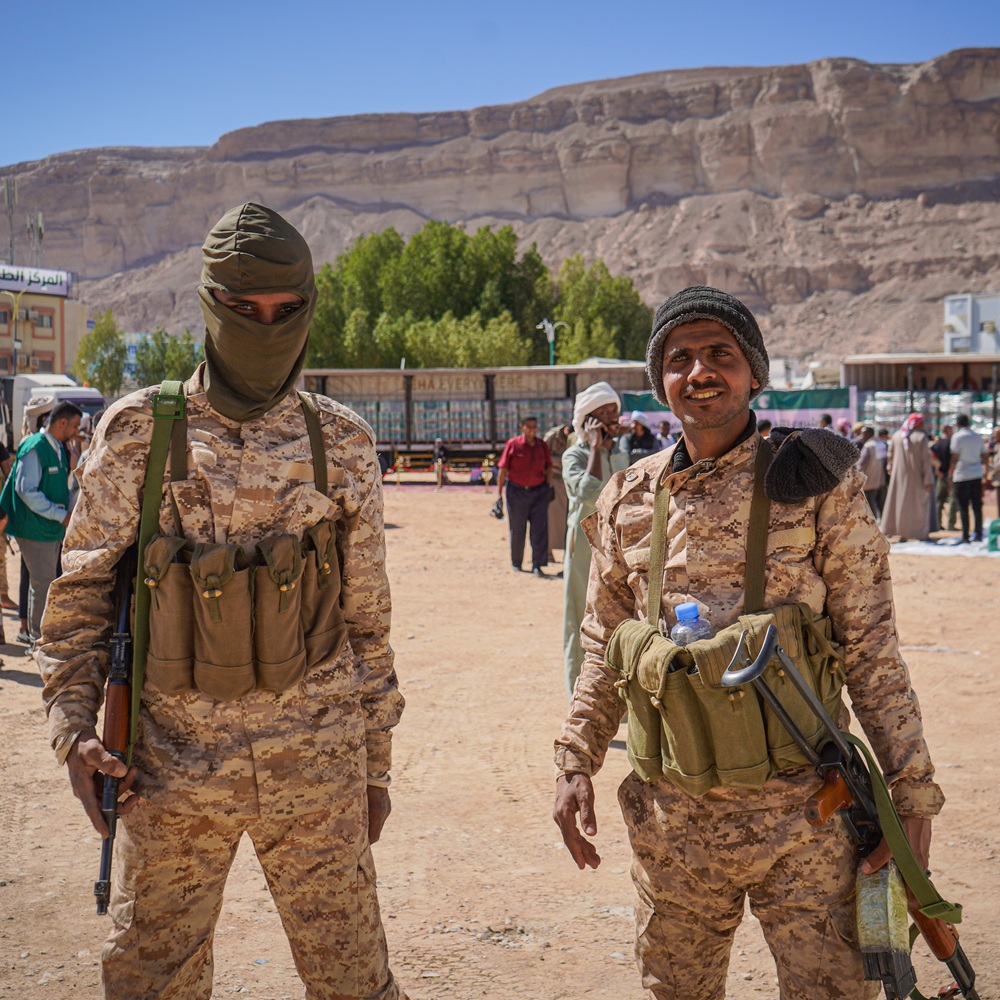
HAJJAH , YEMEN – October 26, 2020:Tribal mobilization to support government forces in northwest Yemen

Yemen’s Ansar Allah reaches ceasefire deal with US that excludes strikes on Israel

by Aseel Saleh

한국어로 읽기 Leer en español In Deutsch lesen Gap اقرأ بالعربية Lire en français Читать на русском While Trump declared the truce agreement a US victory, Ansar Allah said that Washington contacted them in order to “avoid drowning in the mountains of Yemen”. Yemen’s Ansar Allah movement reached a ceasefire deal with the United States on Wednesday, May 7, according to Oman, which mediated the negotiations. The deal stipulates the halt of Ansar Allah’s attacks on US ships in the Red Sea and Bab al-Mandab Strait, and an end to US aggression on Yemen. However, it does not prevent the Yemeni movement from launching attacks on Israel.  “Following recent discussions and contacts conducted by the Sultanate of Oman with the United States and the relevant authorities in Sana’a, in the Republic of Yemen, with the aim of de-escalation, efforts have resulted in a ceasefire agreement between the two sides,” Omani Foreign Minister, Badr Albusaidi, wrote on X. “In the future, neither side will target the other, including American vessels, in the Red Sea and Bab al-Mandab Strait, ensuring freedom of navigation and the smooth flow of international commercial shipping,” the minister added. Peoples Dispatch spoke to a member of the Communist Party of Jordan, Dr. Emad Al-Hatabeh, to discuss the ceasefire, which he described as a “sudden development in the war in the Red Sea.” Dr. Emad Al-Hatabeh indicated that “both the US and Oman didn’t comment on Ansar Allah’s missiles targeting Israel, especially that this agreement was reached shortly after a Yemeni missile reached Ben Gurion airport, near the occupied city of Lydda (also known as Lod).” As per Al-Hatabeh’s analysis, “important questions about this agreement are left without answers. Taking into consideration the Omani role in the American – Iranian negotiations, is the ceasefire in the Red Sea part of the deal? Another question will arise from this assumption, did America give up some of Israel’s interests in order to reach an agreement with Iran? Where does this agreement leave Netanyahu’s government, especially after Ansar Allah’s spokesman told Reuters that the agreement doesn’t include Israel.” Ansar Allah says the US contacted them seeking a truce One day before Oman announced that the deal was sealed, US President Donald Trump alluded that a ceasefire agreement was about to be reached, claiming that Ansar Allah agreed to stop the fight with the US because they “capitulated”.  “They just don’t want to fight, and we will honor that and we will stop the bombings, and they have capitulated,” Trump said from the White House on Tuesday, May 6. “They will not be blowing up ships anymore, and that’s what the purpose of what we were doing. So that’s just news. We just found out about that. So I think that’s very, very positive,” he added. Although Trump bragged about the deal, presenting it as a US victory, analysts suggest that it was Ansar Allah that forced the world’s greatest military superpower to the negotiating table, after paralyzing US naval traffic off the Yemeni coast.  Ansar Allah’s chief negotiator, Mohammed Abdulsalam, confirmed during an interview with Almasirah TV channel, that the movement “did not make any request to the Americans to hold ceasefire talks”. Abdulsalam asserted that, on the contrary, the movement recently received US requests and messages seeking a truce, via the Sultanate of Oman. The Yemeni official pointed out that US endeavors to reach a ceasefire with Ansar Allah were a great disappointment to Israel. “The Israelis have endured great disappointment after the stance of the US, which tried to walk away and avoid drowning in the mountains of Yemen,” he said. However, Abdulsalam clarified that Ansar Allah is still “assessing this US position so that the facts on the ground do not contradict its statements”. He further warned that in the event that the US “would not abide by the agreement in any way”, the movement “will respond”. Abdulsalam considered the deal “a success to be added to Yemen’s credit, as it enhances a situation that would leave the “usurper entity” [Israel] in a situation of loneliness, in confrontation with the great popular and military stance led by Yemen on behalf of the Arab and Islamic nation.” The ceasefire was announced two months after Trump ordered a large-scale aerial campaign against Yemen on the pretext of protecting US shipping, air, and naval assets and to restore “navigation freedom” from Ansar Allah’s attacks. Trump’s order followed Ansar Allah’s decision to resume a ban on Israeli ships due to Israel’s continuous blockade of humanitarian aid to Gaza. Yemen threatens Israel with a devastating and painful response for attacking Sana’a airport  While Ansar Allah agreed to a truce with the US, it vowed to escalate its operations against Israel as long as its blockade on humanitarian aid to Gaza is not lifted.  In response to Israel’s aggression on Sana’a International Airport on Tuesday, that destroyed terminal buildings and caused USD 500 million in damage, Yemen’s Supreme Political Council Chairman, Mahdi al-Mashat, threatened that “Sanaa’s response will be devastating, painful, and beyond what the Israeli enemy can endure.” “From this moment onward, stay in your shelters or leave for your homelands immediately. Your failed government will no longer be able to protect you,” Al-Mashat warned Israeli people.  Moreover, the Yemeni senior official reaffirmed that no aggression will deter Yemen from its “rightful decision” to support the people of Palestine “until the genocide ends and the siege on Gaza is lifted.” The Yemeni Armed Forces’ spokesman, Brigadier General Yahya Saree, also confirmed in a televised statement late Wednesday, that the movement will continue its ban on Israeli ships in the Red Sea and the Arabian Sea, alongside the comprehensive aerial blockade on Israel’s Ben Gurion Airport. Text under Creative Commons Attribution-ShareAlike 4.0 (CC BY-SA) license

Defense & Security
Gaza on map. Israel an Palestine on geopolitical Map. Gaza strip and West Bank. War conflict.

Netanyahu accelerates plans for total occupation of a starving Gaza

by Redacción El Salto

한국어로 읽기 Leer en español In Deutsch lesen Gap اقرأ بالعربية Lire en français Читать на русском The Israeli army seeks to mobilize 30,000 reservists for a new expansion of its offensive on Gaza. UN-affiliated organizations warn of famine and disease in an enclave where clean drinking water is scarce. The Israeli security cabinet has approved a plan to intensify the operation in Gaza, which includes capturing or seizing additional areas across the Palestinian coastal territory and expanding the area controlled by the IDF. Government members, such as Finance Minister Bezalel Smotrich, are already using the term “occupation” to clarify the plans for Gaza. Although Prime Minister Benjamin Netanyahu has not specified which parts of the territory are involved in the new escalation, anonymous military sources have claimed that the goal is to occupy the entire Gaza Strip. The idea put forth by the Zionist regime, in any case, is to seize the territory and not return it in the future. Hamas has rejected this plan and continues to pursue “a comprehensive agreement that guarantees the safety and protection of our people,” according to one of its senior officials. The announcement includes the destruction of “all infrastructure above and underground,” according to Israeli Chief of General Staff Eyal Zamir. The meeting followed IDF orders to mobilize 30,000 reservists last Saturday. Israel is thereby increasing pressure on Gaza during the same month that U.S. President Donald Trump is expected to visit Saudi Arabia, Qatar, and the UAE, where he will present his colonization plans aligned with the wishes of the Tel Aviv regime. The plan also entails a new forced displacement of hundreds of thousands of Palestinians to the south of Gaza, expected to last for months. The government of Netanyahu — who is considered a suspected war criminal by the International Court of Justice (ICJ) — faces internal resistance from the Hostage and Missing Families Forum, which has protested what they see as prioritizing territorial conquest over the return of prisoners captured by Hamas on October 7. Fifty-nine people remain held by the Gaza government after Israel unilaterally broke the ceasefire on March 18. The Forum mentioned before, criticized the Gaza occupation plans, referring to them as the “Smotrich-Netanyahu Plan for the Sacrifice of Hostages,” according to a public statement. The main debate within the security cabinet focused on whether to open routes for humanitarian aid — routes that have been closed since early March, two weeks before the ceasefire collapsed. According to Israeli newspaper Haaretz, Itamar Ben Gvir — also subject to ICJ arrest warrants — argued for keeping all aid routes closed: “I don’t understand why we have to give them anything; they have enough food there. We should bomb Hamas’s food reserves,” the outlet quoted. The Chief of Staff called the idea “dangerous.” According to the same leaks, Ben Gvir also proposed “bombing food warehouses and generators.” The International Criminal Court has reminded that blocking humanitarian aid may constitute a war crime. The Israeli government has leaked to the press that under the new escalation, humanitarian aid would be allowed in only through “international organizations and private security contractors.” On Sunday, May 4, the Country Humanitarian Team (CHT), under the UN Office for the Coordination of Humanitarian Affairs (OCHA), reported that for nine weeks Israeli authorities had blocked all supplies from entering Gaza: “Bakeries and community kitchens have shut down. The warehouses are empty. Children are starving.” Two days earlier, UNICEF Executive Director Catherine Russell expanded on the critical situation in Gaza: “In the past month, more than 75% of households have reported increased difficulty accessing water. Families don’t have enough to drink, cannot wash their hands when needed, and often must choose between showering, cleaning, or cooking,” Russell said in a statement. UNICEF also warned of the prevalence of acute watery diarrhea, especially dangerous for children: “Over 9,000 boys and girls have received treatment for acute malnutrition,” the organization added. At the end of April, during ICJ hearings related to South Africa’s case against Israel, Claire Nicolet, Head of Emergencies at Médecins Sans Frontières (MSF), stated that “Israeli authorities are not only using aid as a bargaining chip but also as a weapon of war.” Since October 7, 2023, 52,567 Palestinians have been killed and 118,610 injured as a result of Israeli attacks, according to the Gaza Health Ministry. Of those fatalities, 2,459 occurred after the March ceasefire was broken. 

Energy & Economics
United Arab Emirates, Kuwait, Qatar, Bahrain, Saudi Arabia, Yemen and Oman. GCC Gulf Country Middle East Flag 3D Icons. 3D illustration of GCC Country Flags arranged in around the GCC Logo

Diversification nations: The Gulf way to engage with Africa

by Corrado Čok , Maddalena Procopio

한국어로 읽기 Leer en español In Deutsch lesen Gap اقرأ بالعربية Lire en français Читать на русском Summary -The UAE, Saudi Arabia and Qatar have longstanding political and security interests in north and east Africa.- But the late 2010s saw a “geoeconomic turn” in their foreign policy. This has led the three Gulf states to make inroads into sub-Saharan Africa.- Energy and infrastructure are at the heart of this new economic involvement. These sectors serve Gulf interests, but they are also where Africa’s needs are greatest.- This is improving the image of Gulf states in Africa. This ties in with a trend among African governments to diversify their own international partners and foster competition among them.- The EU and its member states remain influential in Africa, but their involvement is declining. The Gulf expansion in Africa could exacerbate this—unless Europeans find a way to respond. The geoeconomic turn Africa is big business in today’s geopolitics and geoeconomics. “Great powers” have returned to compete on the continent, with rising powers like Turkey and Gulf monarchies snapping at their heels. African leaders, meanwhile, are capitalising on the fragmentation of the global order to foster competition among all these powers. In this evolving landscape, the United Arab Emirates, Saudi Arabia and to a lesser extent Qatar are looking beyond their traditional African interests. The three Gulf states have long extended their reach into east and north Africa. There, they have worked to secure land and trading routes, extract resources and project influence over their preferred versions of Islam. In so doing they have tried (and spent big) to empower friendly governments and political actors through a combination of diplomatic, economic and security-related assistance. This political-military posturing has often drawn them into competition with one another—for instance through their involvement in the conflicts in Yemen and Libya. The UAE has been by far the most assertive of the three states in this regard, with recent Emirati involvement in Sudan’s civil war prompting regional and international condemnation. Despite these political interests, the late 2010s saw a “geoeconomic turn” in the foreign policy of the Gulf powers. This has led them to make inroads deeper into Africa. The covid-19 pandemic and falling oil prices hit sectors crucial to these states economies: aviation, for instance, as well as tourism and logistics. These oil and gas producers also know that fossil fuels will be out of the picture at some point in the future, thanks to the global energy transition. With its booming markets and rich natural resources, sub-Saharan Africa brings opportunities for Gulf states to diversify their economies. Moreover, African governments offer them backing to pursue a dual approach to the energy transition: no pressure to lose the oil and gas right now (and Africa offers plenty of prospects in that regard) but opportunities also position themselves as leaders in sectors vital to future economies—from renewables to minerals. Such pragmatic engagement should guarantee Gulf states greater returns than costly security politics in their “near abroad”. This could all affect European interests in Africa, not least because the continent is also becoming a crucial partner for Europeans to sustain and diversify their own energy supplies. In our 2024 paper “Beyond competition” we examined the UAE’s involvement in African energy sectors, setting out how Europeans might mitigate the risks that poses and grasp the opportunities. This policy brief expands on that research. First, it breaks down the UAE’s, Saudi Arabia’s and Qatar’s geoeconomic activities in sub-Saharan Africa, zooming in on energy as a central focus of their strategy. Next, it analyses the divergences in the Gulf states’ economic expansion, and how these interact with their traditional African interests. Finally, it explains how Europeans should grapple with this emerging phenomenon. Africa and a fragmenting global order Over the past five years, economic and geopolitical turmoil has changed how big and rising powers compete in Africa—and how African countries relate to the rest of the world. This is the case for both political and economic engagement. Africa The African embrace of diversification reflects a broader movement within the global south that advocates a reimagined global order. Within this, a key demand is for equity, inclusivity and agency in global governance structures—indicating a deliberate pivot away from historical dependencies on Western-led models. This includes traditional frameworks of aid and development. This multipolar moment gained momentum as the tumult of the post-covid years and Russia’s invasion of Ukraine intensified. As Western states focused on economic and geopolitical upheavals closer to home, many African leaders saw neglect and self-centredness. This was exemplified in African criticism of Western vaccine hoarding, and then of the redirection of aid to Ukraine at the expense of African crises. So African leaders have increasingly sought out alternative partners.   But these developments only exacerbated a more longstanding trend. From the early 2000s onwards, Western engagement with Africa has steadily declined. Other powers—such as China, Turkey and Russia—have expanded their influence. Indeed, Russia and China in particular have leveraged African aspirations and grievances against Western-led frameworks. This has helped them legitimise their political, economic and military projection in Africa. It could also open up space for stronger West-free alliances, such as through the BRICS+ grouping (which the UAE joined and to which Saudi Arabia was invited in 2024). Gulf The African embrace of multipolarity resonates with Gulf powers, which underpin their own foreign policy with an aim to cultivate partnerships across the east-west and north-south spectrum. Gulf states do not explicitly adopt anti-Western rhetoric. But, to address their domestic imperatives, they are strategically tapping into African governments’ call for alternative partners. The three states offer their African partners development cooperation and financing that depart from the Western model. They tend to offer a more flexible and rapid deployment of funding. Their state-backed economic models also align political agendas with strategic investments. This allows them to leverage their financial resources to fill the capital and political void left by other international players. Such alignment is timely and could be mutually beneficial as African and Gulf states navigate the shifting dynamics of global power distribution. It also seems to be boosting Gulf states’ political capital with African governments. But the monarchies’ strategic interests may not always line up with Africa’s long-term development goals, which could foster extractive and exploitative relationships. Their expansion in Africa could also reduce the space for Europeans to rebuild their ties with the continent. Europe Europeans maintain a significant presence in Africa. But the fragmenting global order could challenge their status, particularly in the face of the second Trump presidency and its implications for Western unity. European economic engagement in Africa has been declining for some time, just as Western governance, aid and financing models are meeting competition For now the EU remains sub-Saharan Africa’s largest trading partner, with trade flows between the two regions valued at approximately $300bn annually. Yet, the EU’s share of trade with sub-Saharan Africa has dropped significantly since 1990. This reflects competition from countries like China, whose rapid ascent is evident in its large increases of both imports and exports with the region. Indeed, China now rivals the EU in terms of imports to sub-Saharan Africa.   Sub-Saharan Africa’s imports from China have grown especially in the consumer-goods sector, but also increasingly in the energy and other industrial sectors. The EU, meanwhile, continues to dominate in imports of high-value goods such as machinery, chemicals and vehicles. Sub-Saharan Africa exports primarily raw materials, minerals, and oil to Europe, akin to its exports to other regions, such as China and the Gulf countries. Emerging players like the UAE have witnessed a steady growth in their overall share (though percentages do not reach 10% of the total yet). Gulf-Africa (geo)economic relations on the riseInvestment and finance The scale of Gulf financial engagement in Africa underscores the monarchies’ expansion. In 2022 and 2023 the Gulf Cooperation Council states collectively funnelled nearly $113bn of FDI into the continent, exceeding their total investments over the previous decade ($102bn). The UAE, Saudi Arabia and Qatar are investing most in sectors that not only reflect their interests, but in which Africa’s needs are greatest: energy and climate and infrastructure It is the infrastructure (and connectivity) investments that form the backbone of their expansion. Interests among the states overlap, but the UAE invested first and by far the most in ports, logistics networks and special economic zones. Saudi Arabia is the main investor in roads. All three states have stakes in sub-Saharan Africa’s air connectivity, though Saudi Arabia to a lesser extent to date.  These investments open up new opportunities across the continent. They also boost the Gulf states’ geostrategic presence, helping to fill a gap in Africa’s infrastructure that China has only partially filled over the last 20 years—while the EU is only now trying to launch a comeback with the Global Gateway. Moreover, Gulf states are helping to fill the funding gap that Western financiers left as they withdrew. In 2021, for example, the UAE pledged $4.5bn to support energy transition efforts in Africa. This financial commitment is meant to support green energy, infrastructure development and the wider energy transition. In March 2024, four Emirati banks helped the Africa Finance Corporation (AFC) raise $1.15bn in the largest syndicated loan ever pooled together by the AFC. Saudi Arabia, which has long provided development assistance to Africa through the Saudi Development Fund, signed a 2023 memorandum of understanding with the AFC to jointly finance infrastructure across the continent. In late 2024 the Saudi government pledged $41bn through a mix of financing tools to finance start-ups, provide import-export credit and spur private sector growth in Africa over the next 10 years. In 2022 Qatar pledged a $200m donation for climate adaptation projects in African countries vulnerable to the impacts of climate change, including funding for drought and flood mitigation programmes, as well as renewable energy access in off-grid communities. In 2024 it contributed to the creation of Rwanda’s Virunga Africa Fund I, launched with $250m to strengthen social services and private sector growth in innovative domains in Rwanda and the rest of Africa. However, many of the investments and deals are opaque and come with limited accountability. This raises questions about whether Gulf-Africa financial and investment partnerships will truly be mutually beneficial. The balance of power often tilts in favour of the Gulf monarchies due to their financial strength, which may lead to asymmetrical outcomes—including a potential increase of debt burdens in Africa. Despite focusing on critical sectors for Africa’s development, these investments may not shift the underlying dynamics of extractivism that have historically characterised Africa’s relations with external players. As the trade data clearly show, this includes the Gulf states. Trade The UAE’s foreign policy has long been more focused on trade than that of the other two Gulf states. Accordingly, trade (including those goods it re-imports and exports via its economic zones) between the UAE and sub-Saharan Africa has grown robustly over the past decade. Qatar and Saudi Arabia, meanwhile, have seen more limited change. The UAE ventured early into trade, logistics and services to secure sustainable revenues—particularly Dubai, an emirate with very limited oil reserves. Emiratis have undertaken extensive expansion of port and transport infrastructure across Africa (led by logistics giants such as the Dubai-based DP World and, more recently, Abu Dhabi Ports). This has helped turn the UAE into a trade gateway between Africa and the world.   The composition of Gulf-Africa trade reveals deeper dynamics in the economic relationship. In line with their global trading patterns, fuels and hydrocarbon derivatives dominate Emirati, Qatari and Saudi exports to sub-Saharan Africa. This reflects the centrality of fossil fuels in Gulf states’ expansion in the continent. The population of sub-Saharan Africa is rapidly growing; the region is also industrialising and urbanising at pace. The whole of Africa’s energy demand will likely increase by 30% by 2040—including fossil fuels. This creates new markets for Gulf states in sub-Saharan Africa. Sub-Saharan African exports to the Gulf, meanwhile, are largely made up of metals and minerals, including gold, as well as agricultural products. This underscores how the export relationship is largely extractive. Gold trade is particularly notable in the sub-Saharan Africa-UAE relationship, helping consolidate the country as a key global importer and refiner of the precious metal.   These trade patterns highlight mutual dependencies but also expose structural imbalances. Sub-Saharan Africa’s export profile—heavily skewed toward raw commodities—limits its benefits to African states, while Gulf countries capitalise on higher-value imports and exports. Energy diplomacy and the green transition Africa’s vast natural resources mean the continent is central to the global energy transition. Alongside reserves of oil and gas, it boasts plentiful minerals essential for renewable technologies (such as lithium, cobalt and rare earth elements), abundant solar energy potential, and well-preserved forests for carbon offset. This, combined with the region’s large and increasing energy demand, helps centre energy and climate in the Gulf’s African expansion. A rapid transition away from fossil fuels is unrealistic for the Gulf states, given their reliance on them for export revenues and GDP. In Africa, meanwhile, oil and gas still account for 40% of energy consumed by end users (its final energy consumption). As discussed, this creates new markets for Gulf states in which they can help meet Africa’s current and future demand. But Africa also acts as a gateway to new energy value chains. Gulf leaders know the hydrocarbon era is waning. This means they could lose the leverage oil and gas brought them in global energy governance. To maintain their relevance, they aim to lead in green economies too. They therefore work to integrate Africa’s energy markets and resources into their broader strategy for sustainable economic transformation. Hydrocarbons Gulf countries’ economies are betting on African governments’ interest in further exploiting their oil and gas resources to increase revenues and fulfil growing demand. Saudi Arabia and the UAE are mostly eyeing investments in distribution (downstream), and transportation and storage (midstream); while they have traditionally shown limited interest in Africa’s oil and gas exploration and production (upstream). Qatar, by contrast, is more focused on exploring upstream production and increasing its stakes in Africa’s LNG sector. This aligns with Qatar’s unique energy profile as a leader in the global LNG market. It also gels with its long-term strategy to consolidate global dominance in natural gas, especially as the energy transition increases demand for cleaner-burning fuels like gas. The UAE might be eyeing Africa’s LNG sector as well, as it expects natural gas to contribute more significantly to its energy mix by 2050, but currently relies on Qatar for nearly one-third of its supply. Africa may prove helpful in expanding gas investments. Emirati energy giant Abu Dhabi National Oil Company, for example, has a stake in Mozambique’s Rovuma LNG project and a gas deal with BP in Egypt.   African countries find common ground with the Gulf states in resisting the rapid phase out of oil and gas advocated by advanced economies. For African nations, oil and gas remain vital sources of revenue, industrial growth and energy security; Gulf states need these resources as they are integral to their global influence and economic diversification efforts. This challenges the European position on oil and gas, and their reciprocal alignment could cement stronger consensus around a dual approach to the energy transition. Green value chains The UAE’s “We the UAE 2031” vision and Saudi Arabia’s “Vision 2030” are economic reform plans that include commitments to diversify their economies away from hydrocarbons. This underscores their leaders’ recognition that fossil fuels may not be around forever, but mainly that green value chains hold great value. The UAE and Saudi Arabia (but much less so Qatar) are therefore investing in the green energy transitions, both at home and abroad. Their investment also allows them to maintain their influence in global energy decision-making, including the speed and pathways to a net-zero world and economy. With its abundant solar and wind resources, sub-Saharan Africa is an ideal testing ground for Gulf countries to expand their renewable energy expertise. It is also an environment in which they can develop scalable projects and build exportable green technology capacities. All three Gulf states are investing in solar and wind plants across sub-Saharan Africa. They have also shown appetite in other renewable fields, such as batteries, green hydrogen and thermal energy. The UAE leads in this through its companies Masdar and AMEA Power; Saudi Arabia’s ACWA Power is also getting in on the act. Qatar has been eyeing opportunities for investments, though it favours joint or brownfield investments in large foreign companies’ projects to limit risks and costs.   Though several of these commitments are today pledges, their involvement could potentially contribute to expanding access to energy in Africa, helping address the continent’s critical energy deficit. Their dual-track approach to the energy transition allows them to advocate for a pragmatic transition that balances decarbonisation with energy security and economic development, enhancing their reputation among African governments as forward-thinking states on energy. Critical minerals At the same time, the UAE and Saudi Arabia are investing in mineral value chains. This underlines the strategic importance of these resources in their economic diversification and technological ambitions. Gold is the top import product from Africa to the UAE. But other minerals such as copper also rank high in Emirati imports—and in those to Saudi Arabia as well. These minerals are the backbone of the green economy. They are also critical for the digital transformation (including AI and defence, with the UAE eyeing dual-use minerals as it develops its national defence industry), but also infrastructure. In line with its trade-focused foreign policy, the UAE is seemingly more interested in tapping into the trade of these commodities. Saudi Arabia, meanwhile, seems keen to access raw resources for import, necessary to boost its industrial ambitions at home. Under Vision 2030, Saudi Arabia aims to develop domestic manufacturing and high-tech industries, such as electric vehicles and renewable energy technologies. Accessing African minerals aims to support this strategy by providing the necessary input for domestic production, and enabling Saudi Arabia to move up the value chain.   For African countries, the global race for critical minerals is a unique opportunity to move beyond their traditional role as providers of raw commodities. Many African governments recognise the potential of these resources to catalyse industrialisation, create jobs and generate more value domestically. This shift in perspective has led to increasing demands for investments that prioritise local processing and manufacturing rather than merely extracting and exporting raw materials. However, the extent to which Gulf players will align with these aspirations remains uncertain. Where the Gulf states diverge Despite some similar drivers, Emirati, Saudi and Qatari approaches in Africa vary significantly. The nuances stem from the states’ different domestic imperatives and foreign policy strategies. Although the shift to geoeconomics is clear, this underlines how the three states—especially the UAE—could still influence security across the continent as well as in their traditional regions of interest. Country profiles The UAE lacks significant domestic industrial capacity (except for the gold sector). This means it needs bigger and better trade routes to secure its revenues. Here, Africa’s expanding consumer markets and its centrality in green value chains offers an opportunity. Abu Dhabi adopts a risk-prone, largely state-backed, approach—though this is mitigated by a strong orientation towards economic returns. The UAE’s presence is becoming increasingly entrenched across the African continent. Despite focusing outwardly on economics, the UAE’s ability to leverage political influence to safeguard its interests has not gone away, as its involvement in Sudan shows. This politico-security approach is less visible in other parts of Africa, though it remains a tool that could shape Emirati-African relations in the years ahead. As the UAE’s economic interests expand in Africa, its leaders may find they have more to protect—which could increase the risk of them deploying the security approach.  The UAE’s energy diplomacy reinforces the idea that the country’s involvement in Africa will extend beyond economic ventures: the 2024 COP28 climate conference in Dubai, for instance, laid bare Emirati ambitions to position the UAE as a global leader in the energy transition. African alignment with the monarchy on the need for a dual approach makes Africa a key arena for Abu Dhabi to mobilise consensus. Saudi Arabia faces urgent domestic socio-economic imperatives linked to a growing population (largely under the age of 25) and high unemployment rates. This contrasts with the UAE and Qatar, which grapple with a shortage of domestic workforce. Africa is therefore appealing as a contributor to Riyadh’s economic transformation programme, which envisages a strong diversification of the economy. Green value chains rank high amid these efforts. But internal socio-economic constraints and the urgency of domestic reforms have prompted Riyadh to adopt a risk-averse stance. This has resulted in cautious and geographically limited engagement across the African continent. This caution contrasts with Riyadh’s more interventionist posture in the 2010s in the near abroad. Its aggressive policies to gain allies on the African side of the Red Sea strained rivalries with its neighbours. This included, for instance, the monarchy’s war against Houthis in Yemen from 2015, and its interference that contributed to the ousting of Sudan’s president Omar al-Bashir in 2019. Saudi Arabia now relies more on soft power and economic diplomacy, leveraging its traditional leadership of the Muslim world and development aid to advance its influence. This has led it towards a new approach largely oriented towards stabilisation—especially in the Horn of Africa—and multilateral dialogue. Yet, as Riyadh seeks to balance economic imperatives with geopolitical caution, its engagement in Africa remains transactional. Today, it is driven by immediate strategic needs rather than a long-term vision. Qatar, unlike the UAE and Saudi Arabia, is less constrained by energy transition-related pressures. Its reliance on gas provides Doha with greater economic stability (albeit vulnerable to overdependence on gas for revenues) and a competitive edge in the global energy market. Qatar has not to date significantly changed its approach to Africa, which is characterised by a focus on selective, strategically significant investments that hold both political and economic relevance. These targeted initiatives aim to strengthen bilateral ties in key sectors rather than pursuing broad-based engagement. This restraint is a reflection of Doha’s limited institutional knowledge of Africa and an overall risk-averse foreign policy, which often leads to it to engage in brownfield investments rather than expand into new ventures. Qatar, similar to Saudi Arabia, pursues a soft-power approach to political affairs on the continent. This is characterised by a strong emphasis on conflict mediation. It has played key diplomatic roles in past negotiations, such as in the Darfur conflict, the Eritrea-Djibouti border dispute and Somali reconciliation efforts. More recently, in March 2025 it hosted mediations between the Democratic Republic of Congo and Rwanda, managing to bring both sides to the table where other negotiators failed. This approach aims to enhance its global standing as a facilitator of dialogue and peace. Its Africa strategy is a balancing act between economic priorities and broader diplomatic ambitions.   What this means for Europe The EU and its member states will have to work with Gulf states in Africa. If they fail to do so, their political and economic decline on the continent could accelerate. This would also likely open up space for power blocs such as Gulf-China and Gulf-Russia partnerships to deepen their relations with African countries. But a lack of engagement with Gulf states also means Europeans would miss out on opportunities. Crucially, Europeans could benefit from collaboration with Gulf powers to align with African governments in shaping reciprocal green industrial transitions. These risks and opportunities stem from the strengths and weaknesses of Gulf states’ involvement in Africa.   These features also create synergies between Europe and Gulf states in Africa. The EU and its member states can add unique value to sectors vital to Gulf states’ interests, which could help mitigate the risks both sides face. Gulf countries, for example, would benefit from European technological know-how and innovation in sectors such as renewable energy. Moreover, Europeans have extensive experience and interest in human capital development; Saudi Arabia’s and Qatar’s soft-power approach means they have a growing interest in providing education and training. This could combine to help build the skilled and educated workforce that Africa’s rapid development and industrialisation requires. More synergies exist in Europeans’ longstanding political and institutional presence across Africa, as well as their focus on regulatory frameworks and experience dealing with African markets and governance structures. This could all be of use to the less Africa-experienced Gulf countries, helping to minimise their exposure to political and economic uncertainties. Europeans would gain reciprocal benefits through access to Gulf states’ financial resources, their capacity to roll out large scale projects, and their work to expand connectivity. The monarchies are also building greater influence in forums such as the UN and the G20, and more specifically in the energy sector (the COP climate conferences, for example, but also Saudi Arabia’s Future Minerals Forum). Through this, Europeans could leverage their relations with Gulf states in Africa to respond to the demands of the global south for equality in global governance. This would not only bolster Europe’s role in Africa’s sustainable growth but also help Europeans maintain a competitive edge in the evolving global energy and geoeconomic landscape. African governments would also benefit. Cultivating a diverse range of international partners lies at the heart of their newly enhanced bargaining geopolitical and economic power. This means that fostering Europe-Gulf cooperation could be vital for Africans to mitigate the risks of a declining European presence and the expanding (but still nascent) expansion by Gulf states. How Europeans should respond Initially, the EU and its member states should focus on four opportunities for cooperation with Gulf and African states. 1.Energy cooperation and access. The growing presence of Gulf states in Africa’s energy transition means Europeans can help improve access to (clean) energy across the continent. Gulf states are investing in power-generation projects and transport networks. These could enhance Africa’s economic growth, contribute to its market expansion (also through regional integration), and make the continent more attractive for other investors. Europe’s technological expertise in renewable energy complements the Gulf states’ investment capabilities and ambitions in this sector. a.Opportunity: Europeans should consider joint investment with Gulf states in Africa’s renewable energy projects. The UAE’s Masdar and Saudi Arabia’s ACWA Power can roll out large-scale renewable projects. European governments and companies would benefit from collaboration with such companies and with African governments, not only to help boost Africa’s renewable capacity but also to reduce the risks and costs of investment. For example, the government of Mauritania is already collaborating with the UAE’s Infinity Power and the German developer Conjuncta to develop a 10 gigawatt green hydrogen plant in the country. European energy companies should also leverage Qatar’s risk-aversion and interest in reducing risks via partnerships to expand their operations (as hinted at in a 2024 deal between Italy’s Enel Green Power and the Qatar Investment Authority). b.Risk: If Europeans do not take up such opportunities, Gulf countries could end up dominating Africa’s renewables sector. Their involvement in the continent’s energy market expansion may prioritise Gulf-centric policies over European or African climate and energy as well as industrial interests. Without a stronger European presence, Europe risks missing opportunities to contribute shaping Africa’s energy landscape in a way that aligns with both European interests and global climate objectives. 2.Cross-regional infrastructure development. The Gulf states’ investment in infrastructure and regional connectivity mean Europeans could help boost Africa’s economic growth and stimulate investors’ interest. Given the sheer scale and complexity of these projects, trilateral cooperation would help distribute costs, risks and expertise. By proactively collaborating with Gulf states, in particular the UAE and Saudi Arabia, Europeans can secure a role in Africa’s infrastructure transformation. This would help them ensure that major projects also align with European trade interests and long-term strategic priorities. a.Opportunity: The EU and member states should cooperate with Gulf and African states on infrastructure, focusing on the UAE’s maritime and logistics capabilities and Saudi Arabia’s substantial infrastructure investment. This would enable them to accelerate critical projects, from roads to power plants and energy distribution systems. Europeans should also collaborate with Gulf and African states on cross-regional railways. Trilateral cooperation on such initiatives as the “Lobito Corridor” (linking Angola, DRC and Zambia) would contribute to the development of high-impact infrastructure that no single state could easily undertake alone. b.Risk: If Europe does not do this, it risks being sidelined from new trade corridors and supply chains that will shape the continent’s economic and geopolitical landscape. Control over critical infrastructure—ports, railways, logistics hubs and energy networks—is a vital tool of geoeconomic influence, determining who facilitates and benefits from Africa’s economic growth. If Europe remains passive, Gulf and other external actors could shape Africa’s infrastructure in ways that reduce European access, limit European firms’ market participation and weaken Europe’s overall influence on regional economic integration. 3.Capacity building and human capital development. Africa’s rapid development requires an educated and skilled workforce. Saudi Arabia and Qatar have a growing interest in education and vocational training, an area in which Europeans have extensive experience. This is another potential area for trilateral cooperation. a.Opportunity: The EU and member states should collaborate with African and Gulf countries to launch joint capacity-building initiatives. Europeans would bring a unique contribution to these efforts through their experience in advanced training models, institution-building and regulatory frameworks. Moreover, African countries should proactively coordinate new Gulf efforts with European know-how, particularly in vital sectors such as energy and infrastructure. b.Risk: Inaction from European and African governments could mean Gulf-led training programmes shape Africa’s workforce according to the monarchies’ strategic priorities. This risks limiting European influence in Africa’s future development. It could also compromise European access to a skilled African workforce—essential to ensure foreign investors can ensure they meet African demands for local content. 4.Financial instruments and investment mechanisms. Africa’s development requires significant capital inflows, but investors often see the continent as high risk. The Gulf states’ growing role as both a financier and developer of Africa’s energy infrastructure presents opportunities for joint de-risking strategies. This would help both European and Gulf investors to overcome these risks. By pooling resources and expertise, Europe and Gulf countries can expand the capital available to fill Africa’s financing gaps—particularly for large-scale energy and infrastructure projects. a.Opportunity: European financial institutions should work with their African counterparts and Gulf investors and developers to de-risk their investment in Africa. This should include, for example, the European Investment Bank and European Bank for Reconstruction and Development, but also member states’ development banks such as the KfW (Germany) or Cassa Depositi e Prestiti (Italy). Such collaboration would help them de-risk investments and roll out large-scale infrastructure and energy projects, or scale up existing ones. This collaboration would appeal particularly to risk-averse countries such as Saudi Arabia and Qatar. b.Risk: Without this, Gulf investors could increasingly dominate Africa’s investment landscape. This shift could result in financial structures that, while effective for Gulf interests, may not align with European business practices, regulatory standards or long-term sustainability goals. That would likely result in European companies facing a more competitive and opaque investment environment. It could also erode Europe’s ability to promote investments that meet both Africa’s needs and European objectives. These four initial opportunities could act as a testing ground for trilateral cooperation. This, in turn, may create new synergies between all three parties. Europeans would then be well placed to build on this initial engagement to safeguard its geopolitical and geoeconomic interests in Africa; while developing new partnerships with rising powers that may benefit Europeans well beyond the continent.  Acknowledgements We would like to thank the Bill and Melinda Gates Foundation for their generous support that allowed us to organise workshops and conduct extensive research and travel. We are immensely grateful to Kim Butson, our editor, for helping us keep a clear direction, and for her unwavering patience especially in the last editorial phases. And to Nastassia Zenovich for giving such a great visual shape to our ideas. We are also very thankful to the entire ECFR Africa and MENA teams’ colleagues for regular brainstorming and helping us challenge our assumptions. Last but not least, this paper would not have been possible without the many officials, diplomats, experts and thinkers in Europe, Africa and the Gulf, who generously dedicated their time and ideas, contributing significantly to shaping this project.This article was first published by the European Council on Foreign Relations (ECFR) [here].

Diplomacy
US of America and Iran relations. USA and Iranian flags wrecking balls swinging on blue cloudy sky background. 3d illustration

Iran-U.S. Relations: From Escalation to Dialogue?

by Lana Rawandi-Fadai

한국어로 읽기 Leer en español In Deutsch lesen Gap اقرأ بالعربية Lire en français Читать на русском From war threats to negotiations In the early months of 2025, Iran and the United States stood on the brink of open military conflict. The escalation was driven by several factors that coincided in time, heightening the effect of instability. It was one of the most dangerous periods in the history of their relations. Until very recently, Iran lived under a cloud of anxious expectation: would war erupt, or could the situation be contained? The first reason behind the sharp escalation is, without doubt, Donald Trump’s return to office. It is well known that during his first presidency in 2018, he withdrew from the Iran nuclear deal (the Joint Comprehensive Plan of Action, JCPOA), reinstated prior sanctions and introduced new, extremely severe ones against Tehran. Trump took a hardline stance toward the Islamic regime, viewing it as a threat to human rights and regional stability. By early February of this year, he had already issued strict demands to Iran: to drastically scale back—or possibly entirely dismantle—its nuclear program, relinquish nuclear weapons and intercontinental ballistic missiles, and cease support for allied groups in the region (Hamas, Hezbollah, the Houthis and Iraqi Shiite militias). He threatened large-scale bombings if Tehran disagreed, but also left room for negotiations. It is worth recalling that Trump personally authorized the assassination of Qasem Soleimani, the commander of the Quds Force of the Islamic Revolutionary Guard Corps (IRGC), accusing Shiite militias under Soleimani’s leadership of alleged mass killings of civilians in Syria. In contrast, Iranians see Soleimani as a noble warrior and a professional soldier, who saved the peoples of Syria and Iraq from terrorist atrocities, and were outraged by his extrajudicial killing. From an economic perspective, it was during Trump’s first term that Iranian oil exports plummeted nearly tenfold, from over 2.5 million barrels per day in April 2018 to 300,000 barrels per day in June 2019. Although sanctions remained in place under President Joe Biden, their enforcement became more lenient. As a result, by 2024, Iran had begun rapidly rebuilding its oil exports, which rose to 1.9 million barrels per day by the summer of last year. This sparked hopes for a gradual economic recovery. However, Trump’s return to the White House in January 2025 meant a new wave of threats. In his first month back in office, Trump gave Iran a two-month deadline to make concessions or face a firm response. The second reason is Israel’s aggressive and expansionist policy. Ayatollah Khomeini, the founder of the Islamic Republic, long described Israel as a colonial-settler project created by the West, inherently driven to expand by seizing territory from neighboring Muslim countries and committing crimes against their Muslim populations, all with the ultimate goal of forcibly establishing “Greater Israel” from the Nile to the Euphrates. In reality, there have been some differences between Israeli governments: under left-wing leadership, Israel tends to act more peacefully and moderately, while right-wing administrations pursue more aggressive and harsh policies. In recent years, however, Israel’s actions toward its neighbors have become especially aggressive—exactly as Khomeini had described—after the rise to power of the most radical ultra-right forces. The devastation that this government has brought upon the Gaza Strip, razing it to the ground, speaks for itself. After the fall of Bashar Assad’s strong leadership in Syria, Israel immediately seized the opportunity to destroy all of Syria’s heavy weaponry, effectively disarming the country. Israel then moved to capture more Syrian land beyond the annexed Golan Heights and committed new violations there. The Iran policy of the current Israeli government is focused on overthrowing the regime and installing puppet authorities. Israeli Prime Minister Benjamin Netanyahu, known for his uncompromising hostility toward the regime in Iran, has spoken openly of his desire to see its end. There were rumors in Iran’s media space suggesting that Israel might be considering Reza Pahlavi, the Shah’s son, as a symbolic leader for a future “secular Iran.” Within Iran, perceptions of the Pahlavi dynasty are overwhelmingly negative: it is seen as a pro-Western dynasty detached from traditional Islamic roots, which exploited national resources and oppressed Muslims and the Islamic clergy. Nonetheless, a portion of Iranian youth and some opposition commentators in the country hold radical views, harbor hostility toward Islam and Arabs, and support Trump, Netanyahu and the Pahlavi dynasty. This group would likely side with the enemy if hostilities broke out. Furthermore, Iran began to lose its regional influence. Israel carried out a series of successful operations against Iranian allies, primarily targeting Hezbollah in Lebanon and pro-Iranian militias in Syria. Key Hezbollah commanders and several IRGC officers were killed, and arms depots were destroyed. It is remarkable that some Syrian Islamists, who had previously been hostile to Israel, welcomed this development as a form of revenge for Hezbollah’s support of the Assad regime and thus became temporary tactical allies of Israel. Following the December 2024 coup that brought anti-Iranian Islamists to power, Syria—once a strategic ally of Iran—is now increasingly taking a negative stance toward Tehran. By the start of this year, a sense of pessimism had settled over Iran. Feelings of confusion, anxiety and the realization of diminished influence in the Middle East became widespread among many Iranians, especially conservative ones. At the same time, a different sentiment was growing in Tehran among Iranian patriots and supporters of the Islamic regime: if the U.S., Israel or both launched a military attack, Iran’s response would be as harsh as possible. IRGC officials and prominent religious figures have made this clear. A change within: tracing Iran’s path to negotiations After a long period of tough rhetoric, Iran has made a strategic shift in its foreign policy in recent weeks. Iranian Supreme Leader Ayatollah Ali Khamenei, who had firmly banned any negotiations with the U.S. on the nuclear program, suddenly changed course. What drove this decision? It is important to recognize that this shift resulted not only from an external threat but also from a deep internal reassessment, one that was rational, compelled by the circumstances, yet conscious. Until recently, Iran stuck to the principle of “no concessions under pressure.” Khamenei pointed to the collapse of the 2015 nuclear deal, which the U.S. exited during Trump’s presidency in 2018. From Khamenei’s perspective, new talks would be meaningless and dangerous because “the Americans will deceive again.” However, by April 2025, the situation had changed so much that Iran’s political and military elites began convincing the supreme leader of the need for dialogue. Reformist circles—especially the newly elected President Masoud Pezeshkian—played the leading role in this process. He insisted that without negotiations, Iran faced the risk of catastrophe: a major war, domestic unrest and even the fall of the regime. Reports from Tehran suggest he emerged as the main negotiator within the political establishment, persuading Khamenei to invoke the concept of maslahat (expediency)—a religiously sanctioned method for setting aside principles in order to save the Islamic regime. This decision was informed by several factors: - Economic crisis: according to official data, inflation between March 21 and April 20, 2025, reached 39%, while youth unemployment in the last quarter of 2024 stood at 20%. While Iran has seen worse in its recent past, these figures are nonetheless troubling. Furthermore, reserve funds were significantly depleted last year, investments have all but disappeared due to sanctions, and foreign currency reserves have declined. The country has also been hit by an energy crisis.- Erosion of ideology: satellite channels broadcasting from the U.S. and the UK have significantly expanded their reach. Outlets like Manoto, BBC Persian and Iran International have long championed secular, pro-Western views while criticizing the Islamic regime. What has particularly alarmed the authorities is the promotion of the legacy of the Pahlavi dynasty: despite its brutal rule and fight against traditional Iranian and Islamic values—still remembered by the older generation—some youths have begun to see the Pahlavis as a possible “alternative” to the ruling clerical establishment.- Risks in domestic politics: political analysts, military officials and intelligence agencies warned the leadership about the risk of a “nationwide uprising” that could be sparked by an external attack. The concern was not just about protests but the potential for pro-Western groups to cooperate with foreign aggressors. The Iranian Interior Ministry said that these elements had become more active amid the 2022 protests and were receiving support from abroad. All these signals from the army, the clergy, the administration and the intelligence agencies compelled the Iranian leadership to adopt a political survival strategy. Drawing on the experience from the Iran–Iraq War, Khamenei reasoned that “continued confrontation would lead to catastrophe.” This is why he allowed the talks to begin while keeping control over their scope and substance. The nuclear program: compromise is possible, surrender is not One of the key issues in the Iran–U.S. negotiations remains the future of the Iranian nuclear program. Despite years of mutual accusations and broken trust, Tehran appears open to tactical compromises but not to surrender. According to sources within Iranian political circles, Supreme Leader Ali Khamenei has agreed to discussions on all parameters of the nuclear program, including uranium enrichment levels and the terms for international inspectors’ access to nuclear facilities. However, a complete dismantling of the nuclear program is widely seen as out of the question, as it would be perceived as a national humiliation within Iranian political culture. Khamenei and top IRGC officials—guardians of the regime’s ideological foundations—have repeatedly reinforced this position in their public statements. The scenario under consideration in Tehran includes these possible concessions: - a temporary halt to uranium enrichment beyond 60%,- a reduction in the stockpile of highly enriched uranium,- broader IAEA access to selected nuclear sites,- a declaration affirming the peaceful purposes of the nuclear program with legal guarantees. In return, Iran will push for major sanctions relief—not only in the financial sector but also in technology, including the lifting of the ban on investments in the oil and gas industry. These restrictions, in force since the late 1990s, have been particularly damaging: former Iranian official Hossein Selahvarzi put the total economic loss to Iran since 2012 at over USD 1 trillion. Iran’s missile program remains a separate and highly sensitive issue. It is regarded as an untouchable symbol of national pride and strategic autonomy. The supreme leader has made it clear that Iran’s nuclear capabilities “ensure the country’s security” in the face of potential isolation or attack. As a result, Tehran is likely to reject any proposals for reducing its missile potential. All this means that negotiations are possible, but their scope is quite limited. The outcomes of the two latest rounds of indirect talks in Oman and Rome offer some optimism. Flexing muscles: a show of force as a negotiating tool The prospect of talks between Iran and the U.S. does not preclude military tensions. On the contrary, this year both countries carried out a series of shows of force to send a message: “We are approaching negotiations from a position of strength.” Iran, on the one hand, has stepped up military activity along its external borders. In April 2025, Tehran for the first time supplied its allies in Iraq with long-range ballistic missiles and drones, including the Shahed-136 and Mohajer-6. These moves were seen both as acts of support for Shiite militias and as a signal of Iran’s readiness to launch strikes in the event of major conflict. The military exercises in the Strait of Hormuz took on special significance, as Iran’s navy conducted a series of maneuvers with missile boats, mines and underwater drones. Up to 20% of the world’s sea-traded oil, or about 18 million barrels per day, passes through the strait. Its possible blockade was considered a measure of last resort to pressure international markets if another round of sanctions was imposed. In addition, Iran has increased its military footprint in the southern provinces, expanding bases in Bushehr, Bandar Abbas and Hormozgan. This builds operational depth in the event of a U.S. or Israeli attack and reinforces the internal narrative that “Iran will not surrender but stands ready to defend itself.” The U.S., in turn, responded by deploying six B-2 Spirit strategic bombers to the Diego Garcia base in the Indian Ocean, within striking range of key targets in Iran. These warplanes can carry both nuclear and precision-guided conventional weapons. The U.S. also sent a carrier strike group to the Persian Gulf and reinforced air defense systems at its bases in Kuwait, Qatar and Iraq. Thus, the military buildup in the region is not just preparation for a possible conflict but part of the diplomatic game. Tehran is demonstrating that it can deliver a firm response and that any concessions it makes are not a sign of surrender but a pragmatic step toward stability. Meanwhile, Washington is signaling its readiness for a military scenario in order to gain leverage in the talks. Russia as a mediator: interest in stability and strategic partnership Amid rising tensions between Iran and the U.S., Russia is emerging more clearly as a potential mediator and stabilizing force. Its role is shaped not only by current political dynamics but also by the deep structural ties built between Moscow and Tehran over the past years. In April, an Iranian delegation led by Foreign Minister Abbas Araghchi visited Moscow to discuss preliminary outcomes of consultations on a new nuclear deal with Russian Foreign Minister Sergey Lavrov. Beyond nuclear diplomacy, the parties addressed a broad range of regional issues, including Syria, the South Caucasus and Central Asia. This meeting was more than a diplomatic gesture; it reflects the genuine interests of both countries. Moscow is interested in the continuity of Iran’s current regime as a source of stability and a partner in the emerging multipolar world. Tehran, for its part, refrains from anti-Russian rhetoric, does not endorse resolutions against Russia at international platforms and shows respect for Moscow’s interests in the region. Russian–Iranian ties are strengthening not only politically but also infrastructurally. In 2023, both countries made significant progress in advancing the International North–South Transport Corridor, a project designed to link St. Petersburg with the Indian port of Mumbai via Iran. This initiative, backed by both Russia and Iran, offers an alternative to Western-centric logistics routes, and its success depends on the stability of the Iranian regime. Furthermore, Moscow has already shown itself to be an effective broker in regional conflicts. In 2023, Russian diplomats helped revive dialogue between Iran and Azerbaijan after a long period of hostility fueled by disputes over borders, religious matters and relations with Israel. This experience could be leveraged in the context of Iran–U.S. negotiations, especially given the deep mistrust and the lack of direct dialogue between Tehran and Washington. Russia’s position is clear: Moscow is opposed to any destabilization of Iran, as it threatens to undermine regional balance, strengthen Western influence and jeopardize the partnership with Iran. As Sergey Lavrov has emphasized, Russia will support any steps aimed at de-escalation and the lifting of sanctions from Iran, as long as sovereignty and international law are respected. Thus, Russia is more than just an ally of Iran; it is one of the few actors that maintains channels of trust-based communication with both Tehran and several Western nations. This makes Moscow a potentially successful mediator, especially at a time when the U.S. has limited options for direct dialogue with Iran, and European brokers have lost much of their former influence. Possible scenarios and a window of opportunity The situation around Iran has reached a critical juncture. Amid a deep internal crisis, sanctions pressure and rising external tensions, Tehran must choose between a limited deal with the West that preserves its strategic assets or a drawn-out standoff that risks plunging the region into broader instability. First scenario: moderate de-escalation If the U.S. and Iran reached a compromise on the nuclear dossier, even in a limited format, it would create a short-term opportunity for stabilization. Iran would benefit from partial sanctions relief, increased oil export capacity and attract investment in critical sectors. In return, Tehran would commit to transparency, lower uranium enrichment levels and IAEA oversight. This scenario could also partially ease tensions around Israel, reducing the risk of direct conflict. However, even this scenario does not remove several fault lines: - The ideological hostility between Iran and Israel,- Tehran’s unwavering position on the missile program,- U.S. military presence in Iraq and the Persian Gulf.This “frozen détente” could last for one to three years, assuming both sides show political will and avoid provocations. Second scenario: a new wave of escalation If the negotiations reach a deadlock—whether due to Washington’s excessive demands, Iran’s refusal to compromise on sensitive issues or outside interference—the situation could quickly spin out of control. In that case, possible outcomes include: - Direct strikes on Iran’s nuclear facilities (by Israel or the U.S.),- Retaliatory attacks on U.S. bases in Iraq and Qatar,- Blockade of the Strait of Hormuz,- More active operations by Shiite militias in the region. Inside Iran, this could trigger another major wave of protests, especially if the economy takes another hit from stricter sanctions. There is also a risk that some radical opposition groups could try to take advantage of the unrest to start an uprising with high casualties—something Iran’s counterintelligence has already warned about.

Diplomacy
Zipper separates or connects US and Iranian flags with radiation symbol

Does the Muscat Round Pave the Way for a Potential Deal Between Washington and Tehran?

by Sherif Haridy

한국어로 읽기 Leer en español In Deutsch lesen Gap اقرأ بالعربية Lire en français Читать на русском Does the Muscat Round Pave the Way for a Potential Deal Between Washington and Tehran? The US-Iranian talks held in Muscat concluded on Saturday, April 12, 2025, successfully addressing contentious issues between the two nations, particularly the Iranian nuclear program crisis. Foreign Minister Abbas Araqchi led the Iranian delegation, while Middle East envoy Steve Witkoff headed the US team, with Oman serving as mediator throughout the proceedings. Both delegations expressed satisfaction with the prevailing atmosphere during the discussions. President Donald Trump characterized the talks as "progressing very well," while Witkoff described the Oman negotiations as "very positive and constructive." According to Araqchi, all parties demonstrated their commitment to advancing discussions until reaching a mutually beneficial agreement. Upon conclusion of these productive negotiations, the Iranian Foreign Ministry announced a second round of indirect talks would be held on Saturday, April 19, again in Muscat with Omani mediation. Round One The US-Iran talks in Muscat hold significant importance as they represent the first diplomatic engagement since negotiations ceased between April 2021 and September 2022, which had occurred in a 4+1 format with indirect US participation. Notably, these Muscat discussions mark the first diplomatic exchange under both Iranian President Masoud Pezeshkian and US President Donald Trump. Several key implications emerge from these talks: 1- A face-saving negotiation format for both sides: Following the announcement of planned discussions, Washington consistently pressed for direct talks to expedite the process and quickly reach an agreement. Tehran, conversely, insisted on indirect engagement, at least initially, to build confidence in American sincerity. According to published reports, the American and Iranian delegations occupied separate rooms in Omani Foreign Minister Badr al-Busaidi's residence, exchanging written messages through Omani mediators—satisfying Iran's requirement for indirect negotiations. Reports also indicate that after the approximately two-and-a-half-hour session concluded, Araghchi met briefly with Uytkov, conversing for several minutes in the Omani Foreign Minister's presence before departing—thereby fulfilling Washington's desire for direct engagement. Beyond these procedural arrangements for the initial round, such compromises demonstrate both sides' willingness to overcome obstacles impeding an agreement, potentially foreshadowing solutions to other challenges expected during future negotiation rounds. 2- Disagreement over the framework for negotiations: A disagreement over the scope of negotiations has persisted between the two sides since the initial round of talks. Iran adamantly maintains that discussions should focus exclusively on nuclear matters, leaving out both the missile program and regional role concerns. Supporting this position, Iranian Foreign Ministry spokesman Esmail Baghaei stated on April 13 that an agreement had been reached to limit negotiations to the nuclear issue and sanctions relief, confirming these topics would constitute the agenda for upcoming talks. Meanwhile, Washington remains adamant about including additional issues in negotiations with Tehran, particularly arms programs, with the missile program at the forefront. Witkoff stated that any diplomatic agreement with Iran would depend on verification of its uranium enrichment programs and, ultimately, confirmation of the missile arsenal Iran has developed over the years. Tehran has repeatedly declared openness to measures verifying it does not possess nuclear weapons, often citing Supreme Leader Ali Khamenei's fatwa prohibiting such weapons. Such declarations may indicate willingness to reduce its nuclear program and potentially return to the 3.67% enrichment levels stipulated in the 2015 agreement—significantly lower than current levels exceeding 60%. However, Iran has firmly rejected completely dismantling its nuclear program (like the "Libyan model") or transferring highly enriched uranium to third countries, citing distrust of Washington and concerns about another withdrawal from agreements as occurred during Trump's presidency in 2018. Regarding the missile program, Revolutionary Guards spokesman Ali Mohammad Naeini responded to Witkoff's statement about including the missile arsenal in negotiations by declaring that Iran's military capabilities, including its missile program, represent a "red line" that remains non-negotiable under any circumstances. 3- Potential Iranian economic incentives: Some sources indicate that, in response to Trump's letter, Iran offered "economic benefits" that could advantage American companies if an agreement was reached between the two sides. These sources estimated potential benefits at $1 trillion or more. The proposal aligns with President Pezeshkian's April 9 statement that Supreme Leader Khamenei would not object to American investments entering Iran, "but without conspiring against Iran." Araghchi confirmed this position in his Washington Post article published that same day, calling on the United States to prefer diplomatic options when dealing with Iran and describing the Iranian economy as a "trillion-dollar opportunity" for American companies and businessmen. Tehran's attempts reveal a desire to motivate the Trump administration, which prioritizes trade and investment as key determinants of political engagement. One reason Trump withdrew from the 2015 nuclear agreement was Washington's lack of benefit from investment deals allowed by the opening to Iran, while Europeans gained advantages, particularly in oil and petrochemical sectors. Consequently, Tehran is strategically focusing on economic opportunities, potentially driving Iran toward diplomatic approaches with Washington and an agreement that would lift the burden of sanctions imposed on the country. 4- European exclusion: No European party participated in the Muscat negotiations, and Washington likely held no consultations with the "European Troika" (Britain, France, and Germany) that participated with Iran in the 2015 agreement. Sources indicate that the meeting between US Secretary of State Marco Rubio and the foreign ministers of the three European countries, on the sidelines of the NATO foreign ministers' meeting in Brussels on April 3, failed to produce any joint plan addressing contentious issues with Iran. The exclusion reflects tense relations between Washington and its European allies, stemming from numerous disagreements—most notably the current US administration's position on the Russian-Ukrainian war and the tariffs imposed on most countries, including European ones. Moreover, it highlights Trump's desire to engage with Iran unbound by other parties' interests. Europeans prefer a diplomatic approach to dealing with Tehran, an approach Trump does not see as entirely reliable. Instead, he considers the military option a viable alternative should negotiations fail or not yield an agreement with Tehran. Nevertheless, the "European Troika" maintains significant leverage over Tehran through the so-called "trigger mechanism." The mechanism enables automatic reinstatement of UN sanctions imposed on Iran prior to the 2015 agreement if any of these countries complains to the Security Council about Iran's violation of the agreement. Such leverage perhaps explains why the Iranian delegation in Muscat requested its American counterpart ensure Washington assumes responsibility for preventing activation of the "trigger mechanism" against Tehran. Consequently, the "European Troika" countries will remain parties to negotiations between the United States and Iran, regardless of their format. Potential Effects Following the initial US-Iran discussions in Muscat, several potential repercussions can be anticipated: 1- Postponing the military option: The positive atmosphere during the Muscat talks, coupled with the announcement of future rounds of discussions, suggests Washington may delay military action regarding the Iranian nuclear issue. Initially, the Trump administration advocated for military intervention as a pressure tactic to compel Tehran back to negotiations and secure a swift agreement on its nuclear program. Nevertheless, with ongoing dialogue between both parties, any military options might remain on hold until the results of these diplomatic exchanges become clearer. The escalating costs of military conflict may compel both sides to favor diplomatic negotiations and concessions. Tehran recognizes that American strikes on its nuclear facilities—whether conducted unilaterally or with Israeli cooperation—would present an overwhelming challenge to counter and manage. Similarly, Washington acknowledges that bombing Iran's nuclear installations could expose American forces and bases throughout the region to retaliatory attacks from Tehran or its armed proxies, while potentially disrupting vital maritime traffic. Given these high-stakes calculations, both nations may increasingly prioritize diplomatic solutions to resolve their differences, with Washington maintaining military action only as a final option should negotiations fail. 2- Supporting the chances of signing an agreement: Unlike previous negotiations during the Hassan Rouhani and Ebrahim Raisi administrations, realistic data suggests Tehran faces severe time constraints. Trump has imposed a temporary deadline for Iran to resolve its nuclear program, with military action serving as the alternative. The military option has gained momentum as Tehran lost substantial capabilities among its regional proxies, which would have increased the cost of any attack against it. Moreover, according to Israeli and American accounts, the Israeli strike on October 26, 2024, successfully destroyed critical defense systems within Iranian territory. The approaching October 18 expiration date of the 2015 nuclear agreement intensifies pressure on Iran. Urgency mounts as the nation seeks a solution before the European Troika countries activate the "trigger mechanism" prior to that deadline. Unlike negotiations during the Rouhani and Raisi administrations, current talks will likely proceed more rapidly. Trump's April 13 statement that he expects "a decision on Iran will be made very quickly" further suggests the possibility of an expedited agreement with Iran. 3- Internal Iranian opposition: The move to hold negotiations with Washington may face opposition from some hardline fundamentalist groups. Despite Tehran's negotiations with Washington receiving approval from Khamenei and influential institutions rather than originating from Pezeshkian's government, resistance to these discussions remains possible. Statements from hardline Islamic Consultative Assembly (parliament) member Hamid Rasaei suggest underlying opposition when he claimed "the current negotiations were conducted with the Supreme Leader's approval to prove their failure, and for some optimistic officials to discover once again that the Americans are not committed and that it is irrational to rely on them." Additionally, any potential deal allowing American investments into the Iranian market might trigger objections based on constitutional restrictions. Articles 81 and 153 specifically prohibit granting concessions to foreign companies and foreign control of resources. From this perspective, such diplomatic moves could encounter resistance from institutions controlling key economic sectors, including the Revolutionary Guard and the bazaar. Some hardliners may interpret these developments as "Westernization of the economy," viewing them as concerning repetitions of historical scenarios embedded in Iranian collective memory. 4- Strengthening the role of the Iranian Foreign Ministry: The information that preceded the Muscat round of talks claimed three figures had been appointed to represent the Iranian delegation: Ali Larijani, advisor to the Supreme Leader; Mohammad Foruzandeh, a member of the Expediency Discernment Council; and Mohammad Javad Zarif, former assistant to the Iranian president for strategic affairs. However, the actual Iranian delegation to Oman was headed by Foreign Minister Araghchi, and included his aides for political affairs, Takht-e Ravanchi; Kazem Gharibabadi, for legal and international affairs; and Ismail Baghaei, the Foreign Ministry spokesman, along with other negotiators and technical experts. The composition aligned with Araghchi's earlier assertion that responsibility for the negotiations would fall to the Ministry of Foreign Affairs. Such prioritization indicates the regime's desire to send diplomatic messages, similar to events following former Iranian President Rouhani's election in 2013, which ultimately led to the signing of the 2015 nuclear agreement. The diplomatic approach contrasted with periods when Tehran leaned toward hardline positions, during which broad powers were granted to the National Security Council to manage the nuclear issue, as seen during the terms of former presidents Mahmoud Ahmadinejad and Raisi. The regime's strategy appears inseparable from other domestic preparations made in anticipation of signing an agreement with the West. Notable examples include moving toward approval of conditions necessary for joining the Financial Action Task Force on Terrorism and Money Laundering (FATF), which would help Iranian banks access services provided by the SWIFT international financial transfer system. Some analysts attribute additional internal measures to this effort, including revisions to the strict provisions of the "chastity and hijab" law, the release of individuals under house arrest such as prominent reformist figure Mehdi Karroubi, and the easing of certain restrictions on internet use. 5- Russian and Chinese discontent: Negotiations between the United States and Iran may provoke discontent from Russia and China, fellow parties to the 2015 nuclear agreement. Both nations fear Tehran might forge an agreement with Washington that would undermine the coordination among Russia, China, and Iran. These concerns intensify amid severely strained Washington-Beijing relations following the announcement of historically high mutual tariffs between the two countries. Adding to the tension is Trump's apparent indifference resulting from Russian President Putin's delay regarding the US peace plan for Ukraine. Accordingly, Iranian Foreign Minister Araqchi's visit to Moscow was announced ahead of the second round of talks scheduled for April 19 to brief the Russian side on the progress of the talks with Washington. Additionally, Iranian Deputy Foreign Minister Kazem Gharibabadi met with his Russian counterpart, Sergey Vasilievich Vershinin, during a meeting of supporters of the UN Charter in Moscow. The diplomatic efforts represent an attempt to allay Russian concerns and send a message to Washington that Tehran has other international alternatives if the current negotiations fail. In conclusion, the Muscat negotiations served as an exploratory round for both American and Iranian delegations, allowing each side to clarify intentions and demonstrate commitment before proceeding to subsequent steps. Complex and difficult differences persist between the parties, yet both clearly favor diplomatic solutions, at least temporarily, with success hinging upon American demands and potential Iranian concessions. Future rounds will likely experience heightened tension, leaving all possibilities open regarding the ultimate outcome of these diplomatic efforts.

Defense & Security
Main img

ISIS After Assad: Reshaping Its Presence in Syria’s Power Vacuums and the Challenges of Regional Deterrence

by Mohamed Nabil El-Bendary

한국어로 읽기 Leer en español In Deutsch lesen Gap اقرأ بالعربية Lire en français Читать на русском Introduction Amid the rapidly shifting dynamics in Syria and Iraq, international and regional warnings about the resurgence of ISIS have resurfaced, driven by mounting evidence of the group’s reorganization and its exploitation of the security vacuum left by military collapses and political instability. Since late 2024, multiple reports have pointed to a noticeable uptick in ISIS activity, an increase in the frequency of its attacks, and a growing ability to maneuver and recruit—fueled by weak regional coordination and diverging priorities among key international actors. Far from being ideologically defeated, ISIS appears to be reshaping itself within a volatile landscape, threatening to usher in a new phase of instability. Against this backdrop, the following analysis explores the main features of the group’s resurgence, the dynamics of its territorial re-expansion, and the regional and international efforts to contain it—seeking to unpack the nature of this renewed threat and assess its potential implications. International Warnings Over the Growing Threat of ISIS A series of international and regional statements and warnings issued since late 2024 reflect mounting concerns over the reemergence of the terrorist group ISIS on the regional scene, amid fragile security conditions and a diminished capacity to contain unconventional threats. In December 2024, Iraqi Foreign Minister Fuad Hussein, in a phone call with the UK Minister of State for the Middle East and North Africa, Hamish Falconer, revealed alarming signs of ISIS regrouping. He noted that the organization had managed to seize large stockpiles of weapons following the collapse of Syrian army units that abandoned their arsenals—enabling ISIS to expand its territorial presence in parts of Syria. This alarming development has not only been flagged by Iraq but has also featured prominently in international reports. On February 10, 2025, the UN Under-Secretary-General for Counter-Terrorism, during a briefing before the Security Council, confirmed that ISIS continues to demonstrate a striking ability to adapt and evolve its tactics, despite ongoing security and military pressure from member states and international and regional partners. The 20th report of the UN Secretary-General on the threat posed by ISIS to international peace and security emphasized that the group has not been ideologically defeated; rather, it is restructuring itself within the security and political voids present in Syria, Iraq, and other areas. In the same context, Russian Deputy Foreign Minister Sergey Ryabkov warned in March 2025 of a "real danger" posed by ISIS’s resurgence in Syria, pointing to the lack of political settlements and the breakdown of certain internal security structures as conditions conducive to the group's return. His warning echoed the concluding statement of the meeting of foreign ministers from Syria’s neighboring countries, held in Amman, Jordan, on March 9, 2025. The ministers expressed deep concern over the escalating ISIS threat and underscored the need to strengthen regional cooperation mechanisms—particularly in intelligence sharing and coordinating security operations along Syria’s borders with Jordan, Iraq, and Lebanon. In a joint press conference following the meeting, Iraqi Foreign Minister Fuad Hussein stressed that "combating ISIS is no longer a local issue, but a collective responsibility that demands effective regional readiness and robust international support." He highlighted that the group’s threat has grown not only in terms of manpower but also in terms of military capabilities, and that its reach is now expanding beyond border areas into the Syrian heartland itself. These developments indicate that, despite the significant blows dealt to it in recent years, ISIS continues to benefit from the fluid geopolitical landscape in Syria—one that creates security gaps the group can exploit to reposition and reorganize itself. Furthermore, the conflicting priorities among international and regional actors in the Syrian file are hindering the formation of a unified front to confront this renewed threat. This fragmentation makes the challenge far more complex and reinforces the notion that the battle against ISIS remains far from over—both on the ground and within the broader framework of collective security. Signs of Escalation ISIS continues to consolidate its presence in Syria through its deployment across two geographically separate yet strategically interconnected regions—demonstrating the group’s persistent ability to exploit security gaps and divergences among local and international actors. The first area lies in Syria’s northeastern region, known as al-Jazira, which is nominally under the control of the U.S.-backed Syrian Democratic Forces (SDF). Despite this control, ISIS has maintained a notable presence in the southern desert of al-Hasakah province, geographically linked to the northeastern outskirts of the city of Al-Bukamal, particularly around the town of Al-Baghuz—the group’s last urban stronghold before its official collapse. This geographic footprint extends beyond Syria’s borders into Iraq, specifically into the Hadar desert in Nineveh province. Although concrete barriers now separate the two countries, ISIS has retained a clear ability to move across the border, as confirmed by testimonies from residents in the rural areas of al-Hasakah—rekindling memories of the "parallel state" dynamic the group sought to establish during its peak between 2014 and 2017. The year 2024 saw a marked increase in ISIS activity within Syria. According to the Syrian Observatory for Human Rights, the group carried out 491 operations throughout the year. In its report released on December 30, 2024, the Observatory noted that ISIS has successfully exploited political and military turmoil to reorganize and launch targeted attacks. In line with this, the Soufan Center reported on December 18 that ISIS attacks had tripled in frequency compared to 2023. Meanwhile, U.S. Central Command (CENTCOM) confirmed on July 17 that the group claimed responsibility for 153 attacks in Iraq and Syria during just the first half of 2024—clearly reflecting a strategy aimed at “escalating operational activity to compensate for structural decline.”  This upward trend reinforces the growing assumption that ISIS is leveraging fragile security conditions not only to expand its territorial influence but also to challenge other extremist groups—most notably Hay’at Tahrir al-Sham (HTS) in northern Syria. HTS has faced internal challenges linked to the novelty of its governance experiment and has been weakened by surprise attacks that undermine its structure and heighten insecurity in its areas of control. ISIS, in turn, appears intent on diffusing HTS’s efforts, exacerbating divisions among factions, and exploiting public discontent with local elites. These developments have also triggered serious concerns over potential spillover effects in Iraq, especially given the deeply interwoven geographic linkages between the Syrian and Iraqi theaters of operation. The cross-border mobility of ISIS operatives could reactivate dormant cells in Iraq’s western and northern provinces—particularly given the thousands of radicalized individuals currently held in Iraqi prisons, making these facilities potential targets for jailbreaks or attempts to reassert control, as seen in the earlier Ghweran prison attack in al-Hasakah. In light of this complex battlefield landscape, the fight against ISIS is far from over. The group—demonstrating notable tactical agility—is reconstituting itself within existing voids, capitalizing on fragmentation, and continually seeking new pathways for resurgence through the shifting terrain of regional geopolitics. The inability of certain local and regional powers to formulate a sustainable, collective counterterrorism strategy only further emboldens the group’s ambitions. Contours of a New Phase in the War Against ISIS The final months of 2024 and early 2025 witnessed a series of high-profile operations targeting senior ISIS leaders, signaling a tactical shift in the counterterrorism strategies adopted by international and regional powers. This shift marks the beginning of a new phase in the fight against ISIS—one that moves beyond random strikes to a focused campaign against the group’s leadership infrastructure. On December 20, 2024, U.S. Central Command (CENTCOM) announced a precision airstrike in Syria’s Deir ez-Zor province, initially claiming it had killed ISIS’s leader, known as “Abu Yusuf.” However, CENTCOM later revised its statement, clarifying that the target was not the overall leader but a senior commander named Mahmoud “Abu Yusuf,” along with two of his aides. This correction reflects the complex intelligence challenges involved in identifying high-ranking ISIS figures, especially in an environment riddled with infiltration and security deception. In a related development, Iraqi Prime Minister Mohammed Shia’ Al-Sudani announced in March 2025, via a post on the platform X, the killing of one of the group’s most dangerous operatives: Abdullah Maki Masleh Al-Rifai, known as “Abu Khadijah,” who held the title of “Wali of Iraq and Syria” within ISIS's organizational structure. His elimination, the result of coordinated efforts between Iraqi intelligence and the Joint Operations Command—supported by the international coalition—demonstrates the effectiveness of multi-layered coordination in tracking down the group’s hidden leadership. On the European front, France returned to active operations against ISIS in Syria for the first time in over two years. In December 2024, French Armed Forces Minister Sébastien Lecornu announced that French warplanes had conducted precision strikes on ISIS positions inside Syrian territory. He emphasized that the operation, carried out the previous Sunday, underscored France’s continued commitment to counterterrorism efforts in the Levant. This marked France’s first such strike since September 2022—indicating a potential reactivation of its counterterrorism role and a broader effort to reassert European engagement in Syria, a file that has largely been dominated by the U.S., Russia, and Turkey. These three operations—American, Iraqi, and French—reflect what appears to be a renewed “leadership decapitation campaign” targeting ISIS commanders amid rising concerns over the group’s resurgence in Syria and Iraq. Yet, while such strikes carry strategic importance, they cannot substitute for broader efforts to dismantle the ideological, organizational, and financial foundations that allow ISIS to regenerate. Killing leaders may temporarily weaken the group’s capabilities, but it does not ensure its eradication unless accompanied by comprehensive political and security solutions that address the roots of extremism and the institutional fragility on which the group thrives. In a notable development suggesting a qualitative shift in how regional states are approaching the terrorism file, Turkey, Jordan, Iraq, and Syria announced in February 2025 the establishment of a joint cooperation mechanism to confront ISIS. The agreement emphasizes close coordination between foreign and defense ministries and intelligence agencies, covering areas such as border security, intelligence sharing, and joint military operations. This move reflects a shared recognition that the terrorist threat transcends borders and demands coordinated frameworks that go beyond bilateral interests toward a collective regional security logic. This agreement laid the foundation for a broader process that culminated in a high-level five-party summit on March 8, 2025. The meeting brought together foreign and defense ministers, senior military commanders, and intelligence chiefs from the four founding countries, with Lebanon later joining the process. From the Turkish side, the meeting was attended by Foreign Minister Hakan Fidan, Defense Minister Yaşar Güler, and intelligence chief İbrahim Kalın—highlighting Turkey’s strategic investment in this forum as a platform for reshaping the security landscape in northern Syria and Iraq. More broadly, this nascent regional alliance reflects a growing inclination to reduce dependence on Western powers in managing regional security issues. Instead, it seeks to establish a “new security architecture” led by Middle Eastern nations themselves—reviving the role of Arab and regional capitals in controlling border zones and reclaiming areas that ISIS may seek to exploit as fallback havens for regrouping and redeployment. Conclusion The available data indicates that ISIS is entering a new phase of reactivation and repositioning in the Syrian theater, capitalizing on the security and political collapse following the fall of central authority, and on the conflicting agendas of regional and international actors. Despite targeted strikes against some of its leaders, the group continues to demonstrate its operational adaptability and its ability to evolve amid shifting field dynamics. The resurgence of ISIS attacks and its expansion into ungoverned spaces signal a complex phase of confrontation—one that demands more than just military maneuvers. The success of the war against ISIS in Syria depends not only on precision strikes but also on the establishment of effective regional security partnerships and the activation of political and developmental pathways that address the root causes of extremism. As the group seeks to exploit divisions, its complete disappearance will hinge on the creation of a comprehensive deterrence architecture—one that goes beyond temporary fixes and moves toward sustainable strategies that tackle the structural foundations of militancy, not just its symptoms.

Defense & Security
world map of ethiopia and bordering countries sudan kenya somalia and eritrea

Ethiopia-Somalia Tensions: Power Dynamics and Extra-Regional Actors in the Red Sea Region

by Federico Donelli

한국어로 읽기 Leer en español In Deutsch lesen Gap اقرأ بالعربية Lire en français Читать на русском Signed in 2024, the Ethiopia-Somaliland Memorandum of Understanding (MoU) has reshaped regional dynamics, potentially granting Ethiopia sea access via Berbera in exchange for Somaliland’s recognition. This move challenged Somalia’s territorial integrity and prompted Mogadishu to align itself with Egypt, Eritrea, and Djibouti against Ethiopia. While the crisis reflects Ethiopia’s strategic push for a maritime presence, it also captures Somaliland’s long-standing quest for independence. In the wider Red Sea region, regional tensions are exacerbated by extra-regional actors which include the UAE, Turkey, France, and Saudi Arabia, all of which have their own interests therein. Although, external actors do not directly cause conflict, their involvement emboldens local actors and escalates rivalries. Hence, the Red Sea region has a growing importance in contemporary global geopolitics. Ethiopia-Somaliland MoU: Geopolitical Ambitions and the Quest for Recognition The year 2024 began with the signing of a Memorandum of Understanding between Ethiopia and Somaliland. The latter, formerly British Somaliland, was part of Somalia, from which it unilaterally seceded after Siad Barre’s regime collapsed in 1991. Since then, Somaliland has been self-ruled and is considered a de facto state. However, the Hargheisa authority does not enjoy any international legal recognition. If implemented, the agreement with Addis Ababa would give Somaliland its first significant de jure recognition. In return, the Hargheisa authorities would grant Ethiopia access to the sea through the port of Berbera and the concession of a coastal area for military use. The situation revolves around three key regional players: Ethiopia, Somalia, and Somaliland. Each of these actors has engaged in activities driven by its own objectives and strategic priorities. Ethiopia’s decision is influenced by several practical economic and strategic factors. Following the Eritrean War in the early 1990s, Ethiopia lost its Red Sea ports and became the world’s most populous landlocked country. Since 1998, Djibouti’s ports have handled 95 per cent of trade to and from Addis Ababa. Sea access through Djibouti costs Ethiopia between $1.5 and $2 billion annually which Ethiopia’s rulers, since 2019, begun to express more strongly that they consider this spending excessive and unsustainable in the medium to long term. To reduce Addis Ababa’s dependence on Djiboutian ports, the government of Prime Minister Abiy Ahmed believes it is necessary to find a viable alternative. Before the MoU, Ethiopia had considered several alternatives to Djibouti, including Eritrea, Somalia, and Kenya. The idea of developing an economic and trade corridor between Addis Ababa and the port of Berbera on the Gulf of Aden began to take shape in the final months of 2023. Somaliland’s main port has been operated by the Emirati company – DP World since 2015, which has developed its infrastructure and increased its cargo transit capacity. Ethiopia estimates that it can divert between 12 and 15 per cent of the total volume passing through Djibouti’s ports to Berbera and, in the long term, connect its industrial zones to several trade corridors. From a strategic point of view, Ethiopian assessments are influenced by Addis Ababa’s national role conception. Ethiopia sees itself as the leading regional power because of its history and traditional economic and political weight in the region. Consequently, Ethiopian elites perceive the Red Sea and the Gulf of Aden as their natural strategic spheres. For this reason, the Ethiopian Institute of Foreign Affairs recently announced the ‘Grand Strategy of the Two Waters.’ The new agenda aims to expand the sphere of national interest and action eastwards towards the sea, unlike in the past when the focus of Ethiopia’s strategic projection was mainly on the Nile Basin. Indeed, Ethiopia’s ambitions as a regional power are challenged by its lack of a maritime gateway. For Addis Ababa, having a presence in the Red Sea would provide two strategic benefits: first, it would strengthen its standing in the region; second, it would bolster Ethiopia’s international role by enhancing cooperation in multilateral anti-piracy efforts. In short, the Ethiopian government sees maritime projection as a strategic resource and a gateway to the geopolitics of the coming decades, which will focus on Asia and the Indo-Pacific in particular. Therefore, one of the key clauses of the MoU allows Ethiopia to establish a military outpost in Lughaya, a town overlooking the Gulf of Aden, for at least fifty years. According to Ethiopian plans, the naval base will become the headquarters of the nascent Ethiopian navy. For Somaliland, the MoU represents a further step on the difficult path to independence. In the past year, the issue of Somaliland’s independence has gained renewed attention and relevance. This pursuit of self-determination is deeply rooted in a historical context that stretches back to the 19th century, predating the regime of Siad Barre. The Somalilanders’ path began during a pivotal time when the British Empire established agreements with various Somali clans, particularly the Gadabuursi, Issa, and Habr Awal. In 1884, the region was officially designated as British Somaliland, a protectorate that enjoyed a measure of autonomy and governance, distinguishing it from the colonial dominance exerted by Italian authorities in southern Somalia. Following the unification of Somaliland with the Trust Territory of Somalia in 1960, the social, economic, and political conditions of the people of Somaliland began to deteriorate, leading to widespread discontent and a strong desire for independence. Over time, the Siad Barre regime cast a long shadow over Somaliland, leading to widespread discrimination and marginalisation. The political and economic machinations of the central government often neglected the aspirations of the Somaliland people, fuelling a growing sense of injustice. In this context, collective memory became a powerful cornerstone of identity, highlighting the stark contrasts between Somaliland’s struggles and Somalia’s divergent trajectories in the turbulent post-Siad Barre era. Hargheisa’s quest for independence is rooted in historical grievances and reflects the unique identities and trajectories of its people. The Somaliland narrative often draws comparisons with the current situation in the rest of Somalia. Over the past three decades, this de facto state has made significant progress towards sustainable institutional and administrative development albeit on a very limited budget. The democratisation process is also crucial to further the development of Somaliland’s independence. The recent national elections held last November demonstrated the political maturity of all parties involved. The peaceful transfer of power from the defeated government to the electoral process is a remarkable event in the region and stands out as one of the few such instances in the continent. The achievements of the institution-building process in Somaliland are even more striking when compared to the path taken by Somalia. Somalia’s Diplomatic Counterbalance and the Emergence of an Anti-Ethiopian Block  The signing of the MoU by Ethiopia and Somaliland raised concerns among regional actors, particularly Somalia. As Somaliland is formally and legally recognised as an integral part of Somalia, there were fears that Hargeisa’s claims to independence were gaining momentum. Mogadishu was particularly concerned that Ethiopia’s official recognition of Somaliland’s claims could trigger a domino effect, leading other regional and extra-regional actors to follow suit. Therefore, Somalia saw Ethiopia’s actions as a deliberate act of intimidation that threatened its territorial integrity at a sensitive time for its political future. Somalia faces several challenges, including the struggle to establish an effective institutional framework, particularly with regard to the relationship between the central government and the federal states, and also the fight against the terrorist group – al-Shabaab. In response to the MoU, the Somali executive, led by President Hassan Sheikh Mahmoud, launched an intense diplomatic campaign to prevent its implementation and recognition by the international community. Somalia has sought support from regional organisations such as the Intergovernmental Authority on Development (IGAD), the East African Community (EAC), and the African Union (AU). In doing so, Somalia has consolidated alliances with both regional and extra-regional actors. As a result, the dynamics between these three actors – Somalia, Ethiopia, and Somaliland have become increasingly intertwined. Mogadishu’s natural anti-Ethiopian partners are two of Addis Ababa’s historical rivals: Eritrea and Egypt. Compared to 2018, the year of normalisation between Ethiopia and Eritrea, the situation today is very different. The positions of Eritrean President Isaias Afwerki and Prime Minister Abiy Ahmed quickly diverged following the signing of the Pretoria Agreement (2022), which ended the two-year conflict in Tigray. Eritrea, which had supported the Ethiopian military campaign, refused to negotiate with the Tigrayan authorities, represented by the Tigrayan People’s Liberation Front (TPLF). The distance between the two leaders has widened as Ethiopia’s claims to the sea have grown. Indeed, Asmara fears that Ethiopia is eyeing its ports, a fear fuelled by the rhetoric of Abiy and other Ethiopian leaders. Conversely, Isaias has used his leadership and many regional relationships to foster a kind of ‘anti-Ethiopian coalition’. One significant change has been Egypt’s increasing involvement in the region. Mogadishu’s rapprochement with Cairo was formalised in August 2024 with the signing of a defence agreement. This agreement centres on Egypt’s intention to support Somalia’s request for the withdrawal of all Ethiopian troops currently stationed in Somalia as part of the African Union peacekeeping mission (formerly known as Atmis, replaced by the Aussom mission on 1 January 2025). The strengthening of Somali-Egyptian relations, supported by Asmara and involving Djibouti through a security cooperation agreement, has consolidated an anti-Ethiopian bloc. This alignment represents a significant shift in the regional balance and illustrates Egypt’s changing Africa policy. Since 2020, Egypt has reaffirmed the importance of its southern relations. President Abdel Fattah al-Sisi has gradually reassessed Egypt’s African relations and promoted a geopolitical strategy that emphasises a north-south axis, rather than the east-west axis that dominated in previous decades. The Red Sea region, including the Nile Basin, is now a key part of this new strategic framework, which is shaped by Egypt’s historical rivalry with Ethiopia. Between the two states, the balance on the Nile has changed. The construction of the Grand Ethiopian Renaissance Dam (GERD) has given Ethiopia a strategic advantage over Egypt. Egypt therefore had to adapt its approach to the ongoing dynamics by deciding to expand the areas of contention toward the sea. Tensions between Ethiopia and Somalia therefore provided an opportunity to increase Egypt’s footprint in the region. Regional Tensions and Extra-regional Actors in the Red Sea The MoU signed by Ethiopia and Somaliland has opened a new phase in tensions. The focus of regional tensions is shifting to the coastal areas, particularly the Red Sea and the Gulf of Aden, which are marked by a number of security and defence agreements. Common strategic interests underpin the alignment of the anti-Ethiopian bloc, which includes Somalia, Djibouti, Eritrea, and Egypt. Somalia views any legal recognition of Somaliland’s independence as an existential threat. For Djibouti, the economic damage from increased trade through Berbera is marginal but potentially devastating to its fragile internal balance of power. Eritrea perceives Ethiopia as an ongoing threat, and the current Ethiopian government is seen by Asmara as highly unreliable, raising concerns about a potential escalation of violence along their shared borders. Finally, for Egypt, the assessment of its regional position is of particular importance. Traditionally, Cairo has regarded the waters between Suez and Aden as its ‘lake’. As a result, like Addis Ababa, it regards the entire region as part of its sphere of influence. The United Arab Emirates (UAE) and Turkey are among the most active players in the region. The UAE has supported the MoU to capitalise on investments in Berbera and Addis Ababa. Turkey, on the other hand, has taken a more balanced approach, thanks to its strong political and commercial ties with Ethiopia and Somalia. For Ankara, however, Somalia’s integrity must not be questioned. Following their rapprochement in 2021, the UAE and Turkey have maintained good relations. Despite their different strategies and some disagreements, both nations share a common interest in maintaining a central role in regional affairs. Other extra-regional players, such as France and Saudi Arabia, are also active in the background. France supports the MoU as part of its ongoing efforts to increase its presence in East Africa, which began at the same time as its withdrawal from the Sahel region. Its base in Djibouti is destined to become more central to French policy as French military presence in West Africa is being reduced. French officials see this increased influence in regional affairs as essential to France’s future interests in the Indo-Pacific region. Meanwhile, Saudi Arabia, whose geopolitical focus is shifting from the Gulf to the Red Sea, opposes the implementation of the agreement between Ethiopia and Somaliland. It seeks to counter regional projects promoted by the UAE. This might be as a result of the long-standing political rift between the two Gulf monarchies. Extra-regional actors do not directly cause an increase in regional conflicts. Rather, it is local actors who, feeling empowered by their connections with these extra-regional partners, perceive their environment as more permissive and gain the confidence to take assertive actions that they may not have considered before. Understanding these dynamics sheds light on why Ethiopia and Somaliland decided to sign the MoU at this historic moment. This perspective also helps to explain other regional crises, such as the civil war in Sudan and the conflict in Tigray. The different transformations in the international system have created a context in which local actors can seek multiple forms of external support. Increased alignment and overlap between local and regional rivalries has increased the willingness of actors to take assertive action, leading to a general increase in inter- and intra-state tensions. However, the flexible nature of alliances can also mitigate the risk of the trickle-down effect that often accompanies such alliances. This work is licensed under the Creative Commons Attribution-Non Commercial 4.0 International License (CC BY-NC 4.0): https://creativecommons.org/licenses/by-nc/4.0/