Subscribe to our weekly newsletters for free

Subscribe to an email

If you want to subscribe to World & New World Newsletter, please enter
your e-mail

Defense & Security
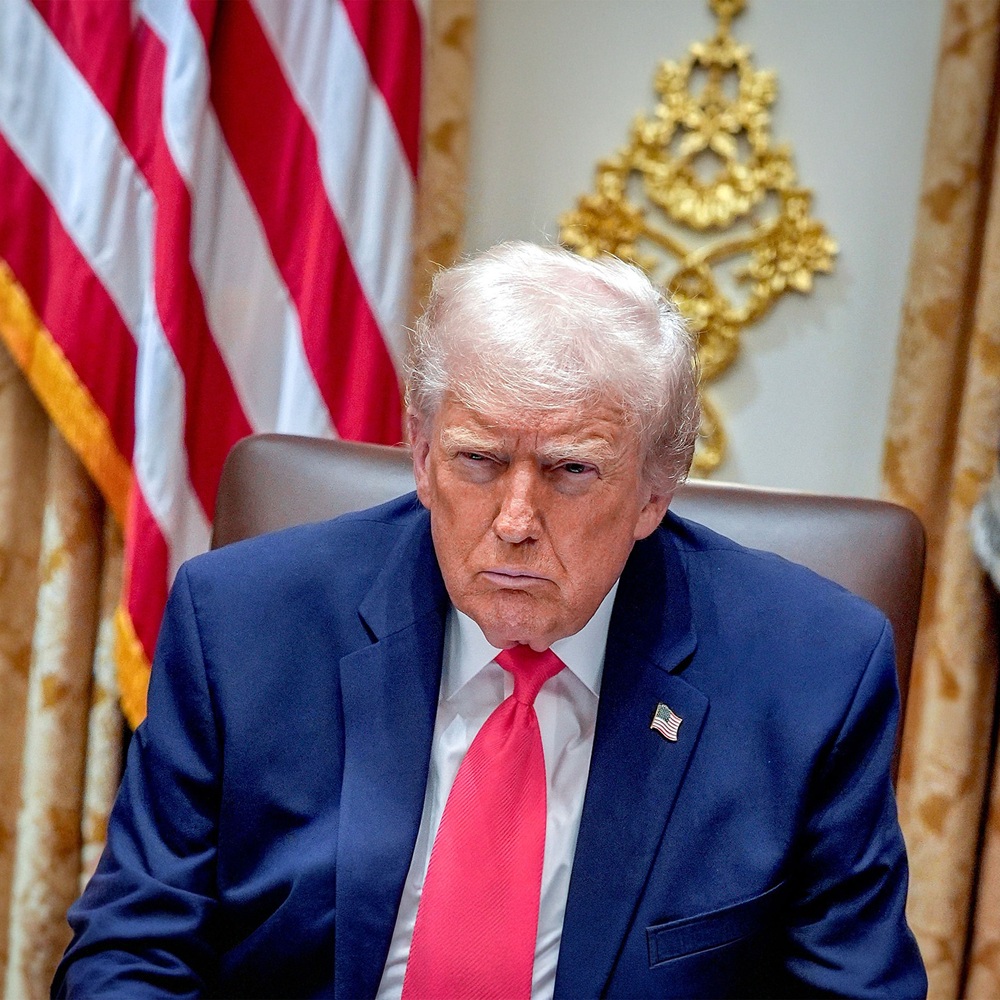
President Donald Trump Speaks During Cabinet Meeting in the Cabinet Room of the White House, Washington, DC on December 2, 2025

Opinion – The Mearsheimer Logic Underlying Trump’s National Security Strategy

by Mark N. Katz

The recently released Trump Administration’s National Security Strategy (NSS) has upended what had been the decades-long consensus about American foreign policy. Most notable in it is the Trump Administration’s prioritization of the Western Hemisphere as an American security concern, its deemphasis on defending America’s traditional European allies, its identification of China as far more of a threat than Russia, and its determination not to be drawn into conflicts in the Middle East and Africa. But while the 2025 Trump Administration National Security Strategy breaks with much of previous American foreign policy, the logic behind it is not something completely new. Even though the document makes no mention of him, the policy outlined in the NSS comports with what John Mearsheimer described in his influential book, “The Tragedy of Great Power Politics”, which was first published in 2001 and updated in 2014. In his book Mearsheimer declared that no nation has ever achieved global hegemony. According to Mearsheimer, America is the only country that has achieved predominant influence in its own region (the Western Hemisphere) and has also been able to prevent any other great power from dominating any other region. Mearsheimer wrote, “States that achieve regional hegemony seek to prevent great powers in other regions from duplicating their feat. Regional hegemons, in other words, do not want peers” (2014 edition, p. 41). Trump’s 2025 National Security Strategy has, whether knowingly or not, adopted these aims as well. It discusses the various regions of the world in the order of their priority for the Trump Administration: the Western Hemisphere first, followed by Asia (or Indo-Pacific), Europe, the Middle East, and lastly Africa. With regard to the Western Hemisphere, the NSS unambiguously calls for the restoration of “American preeminence in the Western Hemisphere,” and states, “We will deny non-Hemispheric competitors the ability to position forces or other threatening capabilities, or to own or control strategically vital assets, in our Hemisphere.” This is very much in keeping with what Mearsheimer described as America being a regional hegemon in the Western Hemisphere. As for the other four regions of the world, though, the Trump Administration seeks either to prevent any other great power from becoming predominant — or it doesn’t see this as a possibility that needs to be worried about. According to the NSS, the Middle East was a priority in the past because it was the world’s most important energy supplier and was a prime theater of superpower conflict. Now, however, there are other energy suppliers (including the U.S.) and superpower competition has been replaced by “great power jockeying” in which the U.S. retains “the most enviable position.” In other words: the Trump Administration does not see any other great power as able to become predominant in this region which is now less strategically important than it used to be anyway. Similarly, the NSS does not see any other great power as even seeking to become predominant in Africa. The NSS thus sees America’s main interests there as mainly commercial. By contrast, China is seen as a threat in the Indo-Pacific region. The NSS, though, discusses Chinese threats in the economic and technological spheres before turning to the military one. A continued U.S. military presence in the region is seen as important for preventing Chinese predominance. But Japan, South Korea, Taiwan, and Australia are all enjoined by the NSS to increase their defense spending in order to counter this threat. The NSS also identifies “the potential for any competitor to control the South China Sea” as a common threat that not only requires investment in U.S. military capabilities, “but also strong cooperation with every nation that stands to suffer, from India to Japan and beyond.” Unlike the Middle East and Africa, then, the NSS does identify a rival great power as striving for predominance in the Indo-Pacific region. Countering it, though, is not seen as just being America’s responsibility, but also that of other powerful states in the region. The strangest section in the 2025 NSS is the one on Europe. While acknowledging that “many Europeans regard Russia as an existential threat,” the NSS envisions America’s role as “managing European relations with Russia” both to “reestablish conditions of strategic stability” and “to mitigate the risk of conflict between Russia and European states.” This is very different from the decades-long U.S. policy of seeing America’s role as defending democratic Europe against an expansionist Soviet Union in the past and Putin’s Russia more recently. Indeed, the NSS’s claim that the European Union undermines “political liberty and sovereignty” and its welcoming “the growing influence of patriotic European parties” (in other words, anti-EU right wing nationalist ones) suggests that it is not Russia which the Trump Administration sees as a rival, but the European Union. The 2025 NSS does call for a “strong Europe…to work in concert with us to prevent any adversary from dominating Europe.” The NSS, though, seems to envision the European Union as either greater than or equal to Russia in threatening to dominate European nations. In his book, Mearsheimer did not envision the European Union as a potential great power rival to the U.S. Indeed, there isn’t even an entry for it in the book’s index. The way that the NSS envisions the world, though, comports with how Mearsheimer described America’s great power position: predominant in the Western Hemisphere and able to prevent any other great power from becoming predominant in any other region of the world. Mearsheimer, though, is a scholar who described the position in the world that he saw the U.S. as having achieved and which would seek to maintain. The 2025 NSS, by contrast, is a policy document laying out how the Trump Administration believes it can best maintain this position. And there is reason to doubt that it has done so realistically. Keeping non-Hemispheric great powers out of the Western Hemisphere will not be easy when there are governments there that want to cooperate with them. Further, devoting American resources to being predominant in Latin America when this will be resented and resisted could not only take away from America’s ability to prevent rival great powers from becoming predominant in other regions, but could counterproductively lead Latin American nations than have already done so to increase their cooperation with external great powers which the Trump Administration wants to avoid. Further, the Trump Administration’s efforts to reduce the influence of the European Union runs two risks: the first is that such an effort will succeed, but that the rise of anti-EU nationalist governments throughout the old continent results in a Europe less able to resist Russian manipulation and incursion. The second is that Trump Administration efforts to weaken the European Union backfire and result not only in a Europe united against American interference but unnecessarily emerging as a rival to the U.S. It would be ironic indeed if pursuing the NSS’s plan for upholding what Mearsheimer described as America’s ability to predominate over the Western Hemisphere combined with an ability to prevent any rival from predominating over any other region ended up undermining America’s ability to do either.

Diplomacy
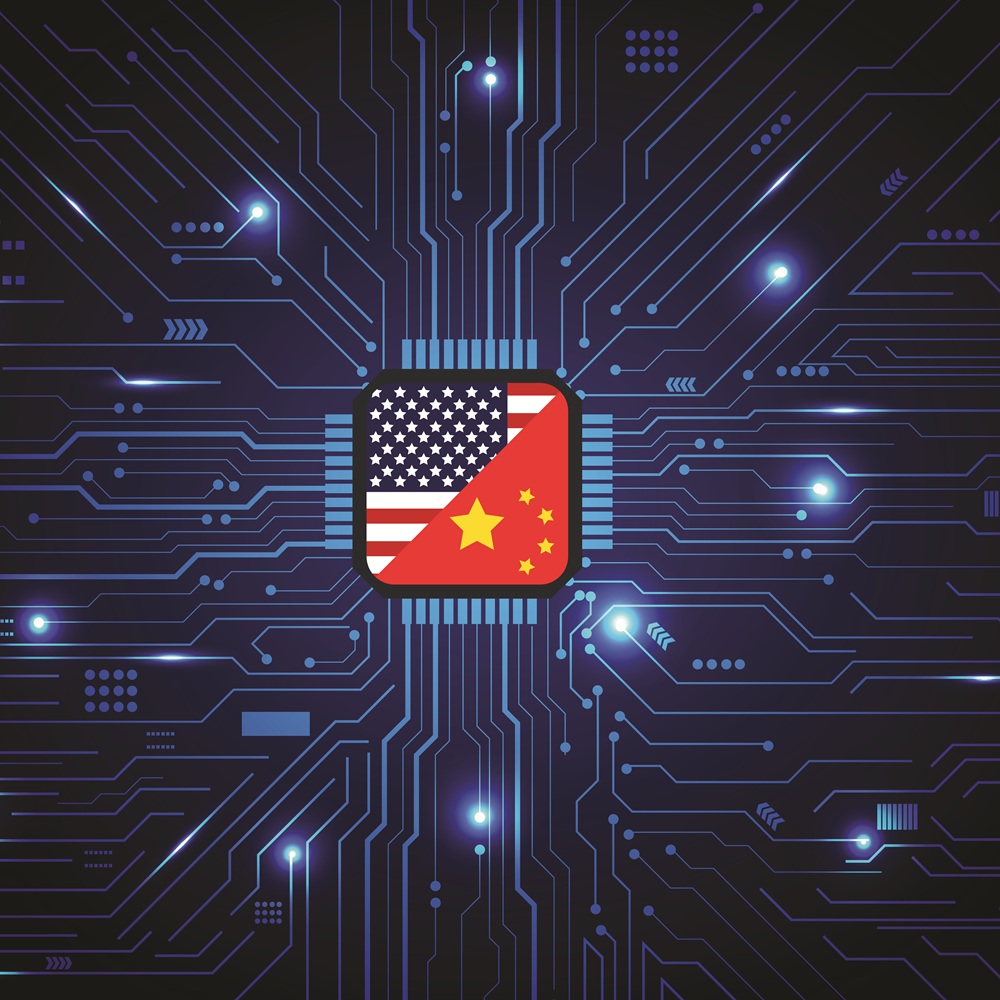
Flag USA and China on Computer Chip . Global chip shortage crisis and China-United States trade war concept.

Leading States in the Race for Artificial Intelligence in the Current International System

by Danna Fernanda Mena Navarro

1. Introduction: AI as a Reconfiguration of the Global Order Artificial intelligence (AI) has become one of the most influential factors shaping the contemporary international system. Major powers are competing to lead the new technological revolution that impacts the economy, security, foreign policy, defense, communications, and scientific innovation. The development of AI depends on three strategic inputs: 1. Human talent (research, data engineering, mathematics, computer science). 2. Computational capacity and access to large volumes of data. 3. Robust innovation ecosystems, with companies, universities, and aligned industrial policies. Global spending on artificial intelligence is expected to exceed USD 52 billion over the next three years, consolidating AI as the central axis of the Fourth Industrial Revolution (IDC, 2023; Stanford AI Index Report, 2024). 2. Talent as a Global Strategic Resource More than 60% of top AI researchers work in the United States, and about half of them are immigrants, primarily from China, India, Europe, and Iran (Stanford AI Index Report, 2024). The so-called brain drain is not merely an academic issue, but a geopolitical one: • States compete to attract talent through visas, high salaries, and access to frontier laboratories. • Innovation in AI depends on who concentrates the largest amount of specialized human capital. The United States dominates due to its ability to attract international researchers, while China compensates through massive investment and domestic talent production. 3. The United States Leads the AI Race for Three Main Structural Reasons 1. Innovation, talent, and industry: The United States leads in high-impact research publications and AI startups (more than 50% worldwide). Private investment exceeded USD 350 billion in 2023 alone. Key companies include Google, Meta, Microsoft, OpenAI, NVIDIA, Tesla, and IBM, among others. 2. Computational infrastructure and chips: The country concentrates the most advanced computational infrastructure and controls cutting-edge chips (such as the NVIDIA H100), a resource that China cannot yet produce at the same level. 3. AI and national security: The United States allocates more than 16 federal agencies and billions of dollars annually to AI development for defense, cybersecurity, and intelligence (White House AI Budget, 2024). 4. China: The Emerging Superpower on the AI Path China ranks second globally in the AI race but follows a more aggressive, centralized, and ambitious strategy. • Massive investment as state policy: China has pledged to invest more than USD 150 billion by 2030 in AI under its Next Generation Artificial Intelligence Development Plan (AIDP) (Government of China, 2017). • Domestic talent production: China trains more AI engineers than any other country. Annual graduates in science and engineering reach 4.7 million, compared to 600,000 in the United States (UNESCO, 2023). However, a significant portion migrates to the U.S. due to better research conditions. • China’s role in the global AI industry: China leads in AI-based facial recognition, with generative AI startups such as Baidu, SenseTime, Alibaba Cloud, and Tencent AI Lab. It produces massive numbers of publications, although with lower scientific impact than those from the United States. AI is widely implemented in governance, security, and smart cities. • The chip dilemma: China depends on advanced semiconductors produced only by Taiwan (TSMC), South Korea (Samsung), and the United States/Netherlands (ASML). • Export controls: Export restrictions imposed on China since 2022 limit its ability to train frontier models, although the country is making radical investments to achieve chip sovereignty. 5. Europe, India, Israel, Canada, and Other Relevant Actors • Europe: The United Kingdom, Germany, France, and the Netherlands generate a solid ecosystem in algorithmic ethics, digital regulation (AI Act), and applied research. • India: The world’s main hub of engineering talent and a global provider of technological services. • Israel: A powerhouse in cybersecurity and military AI, with per-capita innovation comparable to Silicon Valley. • Canada: The birthplace of deep learning (Geoffrey Hinton, Yoshua Bengio) and a strong center for basic research. 6. Africa on the AI Chessboard: Intentions, Challenges, and Opportunities Although Africa does not lead the AI race, its geopolitical role is growing rapidly for four strategic reasons. Africa is a major producer of critical minerals. AI depends on lithium, cobalt, graphite, and rare earth elements, and Africa holds 70% of the world’s cobalt reserves (in the DRC), as well as other strategic minerals in Zambia, Namibia, South Africa, and Mozambique. This places the continent in a key position within the supply chains for batteries, computers, and data centers. There is also a rapid expansion of digital infrastructure. China, through Huawei and ZTE, has built around 70% of Africa’s 4G network, as well as Ethiopia’s first smart data center and technology innovation hubs in Egypt, Kenya, and South Africa. Africa is entering the AI space through fintech, digital health, smart agriculture, and biometric systems. In terms of AI policy, African countries with formal AI strategies include Egypt, Rwanda, Kenya, and South Africa. • Threats and challenges: limited computational infrastructure, a deep digital divide, the risk of dependence on external technological solutions, the use of AI for political surveillance (as seen in Ethiopia and Uganda), and a shortage of specialized talent. 7. China and Africa: The Intersection of AI, Data, and Geopolitics China combines its role in AI with its influence in Africa through investments in digital infrastructure, the sale of surveillance systems, the construction of data centers, and technical training programs. This creates interdependence but also raises concerns: Africa could become dependent on Chinese systems that are difficult to replace. Data may become centralized on foreign platforms, and the risk of a technological debt trap adds to existing financial dependence. 8. AI, Regulation, and Global Governance The rapid expansion of AI calls for international treaties on data use, security standards, limits on military automation, and ethical regulations to protect civil society. Governance will be decisive in determining not only who leads, but also how this technology will be used in the coming decades. In this context, global AI governance has become a new field of geopolitical competition. While the European Union promotes a regulatory approach based on human rights and risk prevention, the United States favors market self-regulation and innovation, and China advances a model of state control and technological sovereignty. Multilateral organizations such as the UN, the OECD, and the G20 have begun discussing common principles, but there is still no binding international regime. The absence of clear rules increases the risks of an algorithmic arms race, the use of AI for mass surveillance, and the deepening of global inequalities in access to and control over technology. 9. Conclusions The United States leads due to innovation, global talent attraction, and computational capacity. China follows closely with a comprehensive state-led strategy and dominance in global digital infrastructure. Europe, India, Israel, and Canada contribute key elements to the global ecosystem. Africa, while not a leader, occupies an increasingly strategic role due to its resources, data, markets, and alliances. The race for AI will define not only the global economy, but also the balance of power in the international system of the 21st century. References -Stanford University.(2024). AI Index Report 2024. Stanford Institute for Human-Centered Artificial Intelligence. https://hai.stanford.edu/ai-index/2024-ai-index-report?utm_source=chatgpt.com -International Data Corporation. (2023). Worldwide Artificial Intelligence Spending Guide. IDC. https://www.idc.com/data-analytics/spending-guide/ -State Council of the People’s Republic of China (2017). Next Generation Artificial Intelligence Development Plan. Government of China https://fi.china-embassy.gov -UNESCO. (2023). Global Education Monitoring Report: science, technology, engineering and mathematics. United Nations Educational, Scientific and Cultural Organization. https://www.unesco.org/en -The White House. (2024). Federal AI Budget and National AI Strategy. Executive Office of the President of the United States. https://www.whitehouse.gov/presidential-actions/2025/12/eliminating-state-law-obstruction-of-national-artificial-intelligence-policy/ -European Commission.(2023).Artificial Intelligence Act. Publications Office of the European Union. https://digital-strategy.ec.europa.eu/en/policies/regulatory-framework-ai -Organisation for Economic Co-operation and Development. (2023). OECD. Artificial Intelligence Policy Observatory. https://www.oecd.org/en/topics/artificial-intelligence.html

Defense & Security
Soldier UAV operator launches army drone with bomb to drop into enemy fortifications and trenches. Concept using military robots in modern warfare.

Unmanned aerial vehicle: geopolitical influence, industrial potential and future perspectives

by World & New World Journal

Introduction An unmanned aerial vehicle (UAV) or unmanned aircraft system (UAS), commonly known as drone, is an aircraft without a human pilot, crew or passenger on board, but rather controlled remotely or autonomously. Drones can be seen as cutting-edge technologies with tremendous ramifications across various fields, including military, security, economics, and logistics – ranging from lightweight consumer drones to advanced autonomous combat platforms – that have transformed global security economics and technological developments. Their proliferation marks a shift in the conduct of warfare, industrial processes, and urban infrastructure design. In this context, this article aims to analyze these dynamics across three domains: geopolitical and security implications, economics and industrial processes, and future technological transformation. I. Geopolitical and Security Perspective: "Game Changers" The Dawn of the Unmanned Warfare Era The past decade — and especially during the conflicts in Ukraine, Gaza, and the Caucasus —has showcased an irreversible shift toward unmanned warfare. Low-cost drones have enabled nations and non-state actors to conduct reconnaissance, precision strikes, and electronic warfare at a fraction of traditional military costs. The democratization of drone warfare erodes conventional military hierarchies by giving smaller nations and even non-state groups asymmetric capabilities (Kania, 2020), (Vision of Humanity, 2024). Figure 1: Use of drones by type. A major consequence of this shift is the emergence of continuous aerial presence, which fundamentally alters operational rhythm and tempo. Previously, only major powers could afford persistent surveillance through manned aircraft or satellites. Today, even insurgent groups can deploy swarms of commercial drones to maintain near-constant observation of enemy movements. This constant presence of drones on the battlefield forces militaries to make decisions much faster and operate as if they are always being watched. As drone technology becomes cheaper and more widely available, it also becomes easier for states or groups to launch low-risk, hard-to-trace attacks without putting their own people in danger. This reduces the barrier to starting or escalating conflicts and makes the overall situation far more unpredictable. On the other hand, despite automation, drone warfare remains heavily dependent on human adaptation, moreover, in practice, drones’ use is constrained by weather, terrain, and limited night capability (Newton, 2025). Nonetheless, and as seen in the Ukraine War, the adaptation, development and improvement of the designs and systems have skyrocketed and shortened from months to weeks. A Paradigm Shift in Modern Warfare Traditional doctrines built around armored vehicles, manned aircraft, and centralized command structures are giving way to distributed, networked, and automated operations. Drones allow for constant ISR (intelligence, surveillance, reconnaissance), rapid kill chains, and battlefield transparency that reduces the effectiveness of concealment and mass maneuver (Biddle & Oelrich, 2016). Swarm technology further accelerates this shift by overwhelming air defenses through algorithmic coordination. On a broader strategic level, unmanned systems are transforming operational art, forcing militaries to rethink how they structure campaigns. Instead of relying on a small number of high-value manned platforms, modern forces must integrate thousands of expendable, semi-autonomous assets into a coherent command-and-control ecosystem. This shift elevates the importance of data fusion, algorithms, and electronic warfare, as success increasingly depends on which side can process information more effectively rather than which side has heavier armor or more firepower. Furthermore, the psychological effects of drone warfare — constant monitoring, unpredictable strikes, and the invisibility of operators — alter the morale and behavior of both soldiers and civilians. In this sense, unmanned warfare not only changes tactics but reshapes the human dimension of conflict. Evolution of Defense Strategies States now are prioritizing anti-drone systems (C-UAS), electronic warfare, and resilient supply chains. Defense strategies emphasize dispersion, decoys, deception, and multi-layered air defense, recognizing that the cost ratio favors attackers using cheap drones against expensive assets. Militaries increasingly incorporate AI-enabled targeting, autonomous perimeter defense, and drone-versus-drone combat (Mehta, 2022). The rapid evolution of offensive drone capabilities has forced governments to pursue a new generation of integrated counter-unmanned systems, blending kinetic interceptors, directed-energy weapons, radio-frequency jamming, and cyber tools. However, the challenge is not merely technological — it is organizational. Modern militaries must revise procurement cycles, adopt flexible doctrine, and restructure units to counter the fast-changing drone threat. For example, some nations are creating dedicated “drone defense battalions” or embedding electronic warfare teams at lower echelons of command. Once more the Ukraine War is a good example: Ukraine’s early-warning systems (so called, “drone walls”) use layered reconnaissance UAVs to identify threats and enhance battlefield visibility, unfortunately, these are highly vulnerable to electronic warfare and radar destruction. More examples include the fiber-optic FPV drones as countermeasure of jamming, or decoy drones to lure air defenses and absorb munitions. (Newton, 2025) The rise of drone warfare also places huge demand on secure communications and resilient digital infrastructure; adversaries increasingly target supply chains, software vulnerabilities, and satellite links that control unmanned systems. Thus, the evolution of defense strategies represents a multi-domain effort that spans hardware, software, organizational culture, and national-level industrial capacity. Major Countries' Competition in Drone Weapon Development The United States, China, Israel, Turkey, and Iran dominate the global drone arms race, while Russia and Ukraine deserve a special mention too. • USA: it focuses on high-tech autonomous systems, for example the MQ-25, Collaborative Combat Aircraft. In addition, according to the Federal Aviation Administration they have an estimated 822,039 drones registered as of July 2025. (FAA, 2025)• China: leads in export volume, offering cost-competitive platforms like the Wing Loong series (Fischer, 2020).• Turkey: gained strategic influence through the Bayraktar TB2, proven in multiple regional conflicts like the Nagorno-Karabakh in 2020 or its use for strategic communications for Ukraine during the ongoing conflict. (Péria-Peigné, 2023)• Israel: its research, development and production of innovative drone technology and exports roughly $500 million worth of UAV-related products per year, have positioned Israel as a world leader in the area. Israel is well known for its indigenous and competitive manufacturing UAVs like the Hermes 450, the Searcher Mk II and the Heron. (Sadot, s.f.)• Iran: their Shahed-136 drone is a low-cost drone that has gained attention internationally as it has shown affordability, precision, long-range, and cheapness during the Ukraine War – deployed by Russia. (Kesteloo, 2025)• Ukraine: has emerged as a leader in tactical warfare, including mass quantities of low-cost First-Person View (FPV) drones for frontline and deep-strike operations. But also, it has implemented “Spider’s Web” operations, which strike deep inside Russia, while using low-cost assets but with strategic and punctual strikes. Ukraine has also expanded into the maritime domain with unmanned surface vessels (USVs) using them with a kamikaze-style operation targeting ships and critical offshore infrastructure in the Black Sea. (Newton, 2025)• Russia: the war has institutionalized an UAV doctrine with mass deployment of FPV drones (Newton, 2025) and the creation – similar to Ukraine – of an Unmanned System Force (USF) aiming to encompass aerial, land and surface drones. (Altman, 2025) II. Economic & Industrial Perspective: “Flying Industrial Revolution” Future Logistics and Delivery Systems Beyond the battlefield, drones are reshaping global economies and enabling new industrial ecosystems. For instance, drones are rapidly transforming last-mile delivery by reducing transportation time, bypassing road congestion, and enabling access to remote or disaster-affected areas. Companies like Amazon, Wing, and Zipline have already demonstrated how unmanned aircraft can deliver medical supplies, parcels, and consumer goods more efficiently than traditional vehicles. As autonomous navigation, battery technology, and payload capacity continue to improve, drones are expected to become critical components of global supply chains, especially in regions where infrastructure is limited or demand for ultra-fast delivery is increasing. Global drone delivery is expected to reach multi-billion-dollar scale by 2030 (PwC, 2023). In the longer term, logistics networks are expected to evolve into hybrid ground–air systems, where drones work alongside autonomous ground vehicles and smart warehouses. These systems could drastically reduce operational costs by automating pickup, sorting, and delivery processes. Integrating drones with AI-driven inventory management and predictive delivery algorithms will allow companies to anticipate demand and route products dynamically. As eVTOL cargo aircraft mature, the concept of “airborne logistics hubs” may also emerge, enabling rapid long-distance transport between distribution centers without the need for airports. Together, these developments point toward a future where aerial logistics are not just an add-on, but a central pillar of modern supply chains. Improving Industrial Efficiency Across agriculture, energy, construction, and mining drones significantly improve efficiency by automating tasks that previously required expensive equipment or manual labor. By replacing manned inspection systems, drones can reduce labor costs, increase safety, and provide data of unprecedented detail (McKinsey, 2022). For example, farmers use drones for precision spraying and crop monitoring, reducing fertilizer and water usage. Energy companies deploy unmanned systems for pipeline inspections and powerline surveys, minimizing downtime and enhancing worker safety. Construction and mining firms rely on drones for site mapping, progress tracking, and 3D modeling, improving project accuracy while lowering operational costs. Beyond task automation, drones are becoming essential to data-driven industrial optimization. Equipped with thermal sensors, LiDAR, and multispectral cameras, unmanned systems can capture high-resolution data that feeds directly into AI analytics platforms. This allows companies to detect inefficiencies, predict equipment failure, and optimize resource allocation in real time. As industries move toward digital twins — virtual models of physical assets — drones will play a key role in continuously updating these systems with accurate spatial and environmental data. The result is a more responsive, efficient, and resilient industrial ecosystem that leverages aerial automation for competitive advantage. Regulatory Environment and Market Growth Regulation remains the single most influential factor shaping the global drone market. Governments are gradually introducing frameworks to enable Beyond Visual Line of Sight (BVLOS) operations, Remote ID tracking, and certification standards for commercial drones. Regions like the European Union have adopted unified risk-based rules through EASA, while the United States continues to refine its Part 107 and UTM integration policies through the FAA. These regulatory milestones are essential for scaling commercial drone usage, as they provide clarity to manufacturers, operators, and investors. As regulatory frameworks mature, they are also becoming a competitive advantage for regions that adopt them early. Countries that implement drone-friendly ecosystems — such as Singapore, the UAE, and Rwanda — are rapidly emerging as hubs for drone research, testing, and deployment. This regulatory momentum encourages multinational companies to establish operations in these markets, accelerating local innovation and talent development. Furthermore, harmonized international standards will make it easier for drone manufacturers to reduce production complexity and expand globally. Ultimately, the pace of market growth will depend not just on technological advancement but on how effectively governments balance innovation with safety, privacy, and public acceptance. Investment Trends Investment in drone-related technologies has surged, driven by the convergence of autonomy, artificial intelligence, and advanced manufacturing. Venture capital firms increasingly fund companies developing autonomous navigation systems, UTM software, battery technology, and specialized industrial drones. Defense investors continue to expand their portfolios into dual-use drone companies, reflecting growing geopolitical interest and national security incentives. Meanwhile, major tech firms and automotive companies are exploring opportunities in cargo drones, eVTOL aircraft, and autonomous mobility ecosystems. Beyond private investment, government funding and public–private partnerships are accelerating drone adoption globally. Many nations are launching test corridors, innovation hubs, and subsidies to attract drone startups and support local manufacturing. This trend is particularly strong in Asia and the Middle East, where governments see drones as strategic tools for digital transformation and economic diversification. As markets mature, investment is shifting from hardware-heavy startups toward software, analytics, and integrated airspace management solutions — reflecting a broader transition from drone manufacturing to drone ecosystems. This shift signals a long-term, sustainable evolution of the drone industry from early experimental phases to full-scale commercial and civil integration. III. Future Technologies The Need for Unmanned Traffic Management (UTM) As drones and future eVTOL air taxis multiply, low-altitude airspace will become increasingly crowded. To prevent collisions and maintain order, UTM frameworks — already being developed by NASA, the FAA, EASA, and ICAO — aim to coordinate autonomous flights using real-time tracking, automated route planning, and digital air corridors (Kopardekar, 2016). These systems will act as the “air-traffic control of the future,” but designed for far larger numbers of smaller, faster-moving vehicles. In addition, as demand grows, it is likely that UTM will evolve into a fully automated, AI-driven airspace ecosystem capable of managing thousands of simultaneous flights with minimal human oversight. Future systems could incorporate weather prediction, dynamic rerouting, and AI-powered detect-and-avoid features, which more than a technical upgrade, would transform the air mobility in the cities worldwide. Global Standardization Competition The need for standard UTM, drone certifications, communication systems, and detect-and-avoid technology is critical, but it also represents a geopolitical contest. The U.S., the European Union, and China are each developing distinct technological ecosystems, hoping their standards will dominate global markets. Whichever region’s standards become the international norm will shape supply chains, aircraft design, and regulatory practices for decades. This competition mirrors earlier battles over telecommunications and 5G. Nations that establish widely adopted drone standards will gain strategic advantages, including influence over global manufacturing, software ecosystems, and aviation governance. As a result, UTM and drone certification are no longer just technical debates — they have become instruments of national power, economic leverage and somehow geopolitical importance. Urban Safety and Privacy Issues In addition, another major concern for cities is the widespread adoption of drones itself, which translates into surveillance risks, noise pollution from frequent flights, and vulnerability to cyberattacks that could compromise flight controls. Therefore, urban areas need strict rules governing data collection, flight paths, and liability in case of accidents to maintain public trust and safety. In the future, cities will also require integrated emergency response protocols, stronger cybersecurity defenses, and digital identity systems for all unmanned aircraft. Public engagement and transparent oversight will play a major role in ensuring that drones enhance urban life without creating new forms of intrusion or risk. Managing these challenges will be essential for the successful adoption of unmanned urban mobility. Integration with Future Urban Infrastructure In line with the previous section, smart cities could incorporate drones into their core infrastructure. For example, vertiports, rooftop landing pads, sensor-equipped air corridors, and digital twins could enable efficient navigation and real-time monitoring. In addition, drones will become essential for urban mobility and public services – from medical or any goods deliveries to emergency response like fire unit responses. As cities evolve, this integration will create a hybrid transportation ecosystem, where ground vehicles, aerial drones, and automated control systems would operate in sync. Urban planning will increasingly consider airspace as a valuable layer of infrastructure, much like roads or power grids. Therefore, collaboration between governments, industry, and technology providers to design cities capable of supporting high-density autonomous air mobility is required. Conclusion Unmanned systems are redefining the global balance of power, transforming industrial processes, and reshaping urban futures. The convergence of autonomy, AI, and networked airspace introduces both unprecedented opportunity and profound risk. Geopolitically, drones dilute traditional military dominance; economically, they catalyze a new airborne industrial revolution; technologically, they push societies toward complex management of shared automated airspace. Future policy, regulation, and innovation will determine whether unmanned systems become drivers of prosperity or vectors of instability. References Altman, H. (2025, November 13). Russia Creates New Military Branch Dedicated to Drone Warfare. The War Zone (TWZ). https://www.twz.com/news-features/russia-creates-new-military-branch-dedicated-to-drone-warfare Amazon. (2023). Prime Air: The Future of Drone Delivery. Amazon Corporate Publications. Biddle, S., & Oelrich, I. (2016). Future Warfare in the Age of Drones. Council on Foreign Relations. Deloitte. (2022). Drones in Industrial Operations: Transforming Asset Inspection and Performance. Deloitte Insights. FAA (Federal Aviation Administration). (2023). Integration of Unmanned Aircraft Systems into the National Airspace System. U.S. Department of Transportation. FAA (Federal Aviation Administration). (2025). Drones. https://www.faa.gov/uas Fischer, S. (2020). China’s Military–Civil Fusion Strategy: A View from Washington. U.S.–China Economic and Security Review Commission. Kania, E. B. (2020). Learning Warfare from the Laboratory: China’s Progress in Military Innovation. Center for a New American Security (CNAS). Kesteloo, H. (2025, September 29). Global Military Drone Race Intensifies as Nations Rush to Copy Iran’s Shahed Design. Medium. https://medium.com/@hayekesteloo/global-military-drone-race-intensifies-as-nations-rush-to-copy-irans-shahed-design-404badf482fb Kopardekar, P. (2016). Unmanned Aircraft System (UAS) Traffic Management (UTM) Concept of Operations. NASA Ames Research Center. McKinsey & Company. (2022). The Commercial Drone Market Outlook: Insights on Market Growth, Industrial Adoption, and Regulation. McKinsey Robotics & Automation Practice. Mehta, A. (2022). Counter-Drone Systems and the Future of Air Defense. Defense News. Newton, M. (2025, November 3). How Are Drones Changing War? The Future of the Battlefield. Center for European Policy Analysis (CEPA). https://cepa.org/article/how-are-drones-changing-war-the-future-of-the-battlefield/ Péria-Peigné, L. (2023, April 17). TB2 Bayraktar: Big Strategy for a Little Drone. IFRI. https://www.ifri.org/en/memos/tb2-bayraktar-big-strategy-little-drone PwC. (2023). Clarity from Above: Global Drone Market Analysis. PwC Global. Roland Berger. (2022). Urban Air Mobility: The Rise of the Drone Economy. Roland Berger Strategy Consultants. Rwanda Civil Aviation Authority. (2021). Regulatory Framework for Drone Delivery and BVLOS Operations. Government of Rwanda. Sadot, U. (n.d.). Proliferated Drones: A Perspective on Israel. Center for a New American Security (CNAS). https://drones.cnas.org/reports/a-perspective-on-israel/ Schmidt, E., Work, R., & Clyburn, M. (2021). Final Report: National Security Commission on Artificial Intelligence. U.S. Government Printing Office. Singer, P. W. (2009). Wired for War: The Robotics Revolution and Conflict in the 21st Century. Penguin Books. Statista. (2023). Global Drone Market Value and Investment Trends. Statista Market Outlook. Vision of Humanity. (2024, June 13). How Drones Have Shaped the Nature of Conflict. https://www.visionofhumanity.org/how-drones-have-shaped-the-nature-of-conflict/ Wing (Alphabet). (2023). Autonomous Delivery Networks and Future Logistics. Wing Technical Publications. Zipline. (2022). Operational Impact of Automated Medical Delivery by Drone. Zipline International Case Studies.

Energy & Economics
Mersin, Turkey-09 12 2024: A cold Coca Cola or pepsi  bottle or metal can with water droplets on it. Coca Cola on black background

The geopolitical impact on global brands: Coca-Cola and Pepsi in the Middle East and Muslim markets

by World & New World Journal

Coca-Cola and Pepsi are among the most recognized and consumed soft drinks in the world, with Coca-Cola leading as the global favorite (World Population Review, 2025). However, in recent years, geopolitics has shaped their presence in certain regions, particularly in the Middle East and Muslim-majority countries. The reason behind this is interesting, these brands are often seen or associated with the United States (Hebblethwaite, 2012), a nation whose fame in these regions has always been questioned and been controversial, and whose policies in the region have long sparked controversy and criticism. Overview of Coca-Cola and Pepsi in the US Coca-Cola was born on May 8th, 1886, when Dr. John Pemberton delivered his newly perfected syrup to Jacob’s Pharmacy in downtown Atlanta, USA. After 139 years, what started as medicine evolved into the iconic soft drink that is enjoyed in more than 200 countries and territories every day (The Coca Cola Company, 2025). On the other hand, a few years later, in 1893, Brad’s drink, later rebranded as Pepsi-Cola, was invented in New Bern, North Carolina, USA by Caleb Brandham, as an aid in digestion (History of the Birthplace, 2018). Pepsi’s presence worldwide also covers more than 200 countries and territories and can be said it is Coca-Cola’s closest rival. While these brands have built a reputation, they have a long history, their competition has been fierce to the dominance of their market across the globe. The term “Cola Wars” represents this fierce competition. Cola wars gained global attention and likely reached their peak around the 1970s and 1980s in the US, while nowadays the fight keeps on, those years were key in how their presence around the globe has resulted nowadays. A bit of the context of the Cola Wars; during the beginning of the 20th century Coca-Cola led the market, while Pepsi had a rough time and went bankrupt in 1923. After its restructured, Pepsi maintained but Coca-Cola advertisements, such as those featuring Santa Claus, made it difficult for Pepsi to compete and by the time of WWII, Coca-Cola could be found in 44 countries already. In 1965 Pepsi merged with Frito-Lay-Inc trying to gain better footholds in restaurants and supermarkets. At the time Coca-Cola was expanding its brand into other soft drinks beverages, Pepsi could simply not compete against them. But by the mid-1970s, Pepsi launched its “Pepsi Challenge”, a genius blind test marketing bet in which over 50% of Americans chose Pepsi over Coca-Cola due its sweeter taste, of course Pepsi claimed its first victory over giant Coca-Cola and started its rise. Coca-Cola's response came with celebrity endorsement and the diet coke in the early 80’s. But by the mid 80’s, Pepsi sales skyrocketed due to its collaboration and promotion with Michael Jackson and appearance in several movies like Back to the Future. Coca-Cola had an identity crisis at the time, but after going back to its roots, (Weird History Food, 2022) once again it came back to fight and claimed its important place in the industry. Coca-Cola and Pepsi around the world While the Cola Wars were largely defined within the American market, their global expansion strategies took very different trajectories once they reached international audiences. Coca-Cola made their debut in the international market in the early 20th century, but it was until WWII when it got international recognition. A marketing associated with American optimism and modernity was followed by the company, and during the war, the company produced millions of bottles for US troops abroad, introducing the drink to soldiers and civilians across Europe, Africa and Asia. The strategy transformed Coca-Cola from a domestic beverage into a global cultural symbol. Pepsi, meanwhile, took a more opportunistic route. After financial struggles between the 1920s and 1930s, the brand re-emerged with a more aggressive global approach. Its internationalization came in 1949 with exports to Canada and later expanded to Mexico, Brazil and the Philippines, but it was until the Cold War, when its real global expansion began (FBIF Food & Beverage Innovation, 2014), when it merged with Frito-Lay and diversified its portfolio. By 2024, PepsiCo generated $92 billion net revenue (PepsiCo, 2025) while Coca-Cola grew 3% to stand at $47.1 billion net revenues (The Coca-Cola Company, 2025) that same year and their products and diversifications not only include the classical soft drinks, but also other beverages and foods. Yet despite their shared dominance in over 200 countries, both face different degrees of acceptance depending on local political, cultural and religious attitudes. The role of geopolitics: soft power, sanctions, wars, risks and opportunities As stated already, both brands are known globally, however, it is important to highlight that their presence in different regions of the world has been shaped by other actors more than just commercial advertisements, or even due to their advertisements and commercial strategies. Let me explain in more detail. In the case of Coca-Cola, during WWII and the Cold War, many people outside of the United States associated the product with American culture, Coca-Cola became a symbol of American soft power and globalization, clearly seen in war advertisements featuring soldiers enjoying cokes suggesting the commonly used “bring people and nations together” phrases. (Edelstein, 2013) On the other hand, with a more social-cultural strategy, Pepsi used the American pop-culture as their approach to gain attention worldwide. Michael Jackson, Madonna, Britney Spears, Beyoncé, among others (Kalgutkar, 2024) were iconic in the brand. In addition, Pepsi’s marketing leveraged music, youth, and rebellion, giving a softer and aspirational appeal. However, this cultural and ideological symbolism also made both companies vulnerable to political backlashes and somehow have defined their reputation and presence in some areas of the world. In the 1950’s, France coined the term “coca-colonization” denouncing American influence. During the Cold War, Coca-Cola became a capitalist symbol (in the eyes of outsiders), and it was banned in the Soviet Union, an opportunity Pepsi took advantage of there. Later, when the Berlin Wall fell, Coca-Cola became a representation of freedom. (Hebblethwaite, 2012) However, the most notable geopolitical response came when the Arab League boycotted the brand between 1968-1991 in the 13-nation organization, because it chose to operate in Israel while the Palestinian land was under occupation. Pepsi capitalized on this absence, solidifying its position in the Arab markets. In addition to the Arab League boycott, there are other cases where sanctions imposed by the US to different countries have led to a small or lack of sales of the products, such as Myanmar, North Korea, Cuba or the Soviet Union, back on time. Moreover, occasional protests and bans in countries like Iran, Venezuela or Thailand (Hebblethwaite, 2012) has also affected the brands at certain points of the history and of course have created an image and reputation in the society, with positive, neutral or negative perceptions. Moving towards present day, after the war in Gaza broke out in October 2023, pressure on the brands reappeared on the Middle East; Coca-Cola, who has a factory in the illegal settlement in East Jerusalem in the Atarot Industrial Zone, was accused of complicity and violations of the international law, in addition to being “related” with the Israeli army. These led to the BDS Movement to add it to a boycott list, which led to protests and has also been spread across other Muslim-majority countries. Of course, sales have dropped sharply in different countries in the region like Egypt and Bangladesh. (Boycat Times, 2025) Pepsi, on the other hand, even though it has a major presence in the Middle East market built over the space left by Coca-Cola during the 1968-1991 boycott, has also been affected by the War in Gaza and the boycotts in the region. PepsiCo reported stagnation in beverage growth across Egypt, Lebanon and Pakistan, compared with 8-15% growth a year earlier the war started. (Awasthi, 2024) The boycott of these American brands in the Middle East and some Muslim-majority markets has led to important losses in the share market and the sales itself. For instance, Coca-Cola sales reportedly fell by 23% in Bangladesh and dropped by over 10% in Egypt, overall, there is an estimation of 7% regional revenue loss in the MENA region. The losses of the American brands had become an opportunity to the local brands, like Pakistan’s Cola Next and Pakola (shared market increased from 2.5% up to 12% after the boycott (The Economic Times, 2024)), Qatar’s Kinza or Egypt’s V7, which have up to 40% in market share growth and up to 350% growth in exports, canalizing consumer preferences for local alternatives. (The Economic Times, 2024), (Awasthi, 2024), (CBC, 2024), even in the West Bank, the Palestinian Chat Cola has been positioned in the market, with sales of over 40% in 2023 compared to the previous year. (Associated Press, 2025) Coca-Cola and Pepsi boycotts are not the only ones, other companies like McDonald’s or Starbucks have also been affected in the region, due to similar or same reasons. Even more, in Canada, another great example is the “americano” [coffee] being renamed as “canadiano”, (Barista Magazine, 2025) as response to the economic and political tensions developed earlier this year between Canada and the USA. Despite the boycotts, Coca-Cola and PepsiCo have a base in the region, and they have seek opportunities to continue, through investments (Coca-Cola invested $22 million in upgrading technology in Pakistan) or new strategies (PepsiCo reintroduced Teem soda in Pakistan with a “Made in Pakistan” printed on the label) (Shahid, DiNapoli, & Saafan, 2024). Overall, both companies are trying to maintain, penetrate and expand their products in the market, they have been using and relying on bottling companies as a strong tool for those purposes, creating alliances with local companies as well as innovating and testing different new products in the region. Conclusion The current boycott of Coca-Cola and Pepsi across the Middle East and Muslim-majority countries is not only a reflection of political anger – it is a window into how geopolitics can directly reshape consumer economies. What once symbolizes Western globalization, and cultural appeal has now become a marker of political identity and economic nationalism. In a society driven by consumerism – where success is often measured by how much one owns – people tend to care less about genuine human values such as love, kindness, respect, empathy and consideration (MET, 2022). Ironically, today that statement seems reversed. For many consumers, boycotting Western brands has become not only a moral choice but also an act of solidarity and empowerment. Beyond economics, the boycott also reflects a psychological and cultural response. For many consumers in the Middle East, choosing what to drink has become a symbolic act of identity, resistance and empathy. Avoiding brands such as Coca-Cola and Pepsi offers a sense of agency and unity Palestine, turning everyday consumption into an expression of political consciousness. Although both companies remain resilient and continue to invest heavily in local markets, their challenges go beyond short-term losses. The rise of local brands such as V7. Kinza and Cola Next highlights a deeper regional shift – where consumers are not merely reacting to politics, but redefining loyalty based on ethics, identity and sovereignty. In the long term, this phenomenon could accelerate the regionalization of the markets, as local producers gain confidence and international corporations are compelled to adapt – by respecting cultural sensitivities, building genuine local partnerships, and ensuring transparency across their supply chains. Ultimately, the story of Coca-Cola and Pepsi in the Middle East demonstrates that in today’s interconnected world, soft power is no longer a one-way export. Consumer behavior itself has become a form of diplomacy – capable of rewarding inclusion or punishing complicity.ReferencesAssociated Press. (2025, 03 02). Coca-Cola's appeal to Palestinians fizzles amid war. Retrieved from VOA News: https://www.voanews.com/a/coca-cola-s-appeal-to-palestinians-fizzles-amid-war/7991182.htmlAwasthi, S. (2024, 09 15). Middle East conflict bites Coca-Cola, Pepsi. Retrieved from SBS News: https://www.sbs.com.au/news/podcast-episode/middle-east-conflict-bites-coca-cola-pepsi/z445sv6glBarista Magazine. (2025, 02 25). Move Over, Americano: The ’Canadiano’ Has Arrived. Retrieved from Barista Magazine Online: https://www.baristamagazine.com/move-over-americano-the-canadiano-has-arrived/Boycat Times. (2025, 09 02). Everything You Need to Know: Why We Boycott Coca Cola. Retrieved from Boycat Times: https://blog.boycat.io/posts/boycott-coca-cola-israel-gaza-palestineCBC. (2024, 09 04). Muslim countries' local sodas see boost amid Coke and Pepsi boycott over Gaza. Retrieved from CBC: https://www.cbc.ca/news/business/coke-pepsi-boycott-1.7313370Edelstein, S. (2013, 05 13). A visual remix of the American Dream as pictured in Mid-Century media. On the front lines with Coca Cola pt II. Retrieved from Envisioning the American Dream: https://envisioningtheamericandream.com/2013/05/30/on-the-front-lines-with-coca-cola-pt-ii/FBIF Food & Beverage Innovation. (2014, November 18). PepsiCo's path to global dominance: from beverage brand to food empire. Retrieved from Food Talks: https://www.foodtalks.cn/en/news/54496Hebblethwaite, C. (2012, September 11). Who, What, Why: In which countries is Coca-Cola not sold? Retrieved from BBC News: https://www.bbc.com/news/magazine-19550067History of the Birthplace. (2018, October 18). Retrieved from Wayback machine: https://web.archive.org/web/20181004163206/http://www.pepsistore.com/history.aspKalgutkar, N. (2024, November 28). Pepsi’s Advertising: An Iconic Campaigns and Pop Culture Impact. Retrieved from Treehack: https://treehack.com/pepsis-advertising-an-iconic-campaigns-and-pop-culture-impact/MET. (2022, 07 29). The effects of living in a consumer society. Retrieved from MET: https://group.met.com/en/mind-the-fyouture/mindthefyouture/consumer-society/#:~:text=July%2029%2C%202022,the%20operation%20of%20a%20company.PepsiCo. (2025). Who we are. Retrieved from PepsiCo: https://www.pepsico.com/who-we-are/about-pepsicoShahid, A., DiNapoli, J., & Saafan, F. (2024, 09 05). Coke and Pepsi boycott over Gaza lifts Muslim countries' local sodas. Retrieved from Reuters: https://www.reuters.com/business/retail-consumer/coke-pepsi-boycott-over-gaza-lifts-muslim-countries-local-sodas-2024-09-04/The Coca Cola Company. (2025). Our Company. Retrieved from The Coca Cola Company: https://www.coca-colacompany.com/about-usThe Coca-Cola Company. (2025, February 02). Coca‑Cola Reports Fourth Quarter and Full Year 2024 Results. Retrieved from Thr Coca-Cola Company: https://www.coca-colacompany.com/media-center/coca-cola-reports-fourth-quarter-and-full-year-2024-results#:~:text=For%20the%20full%20year%2C%20net,the%20timing%20of%20concentrate%20shipments.The Economic Times. (2024, 09 04). Coca-Cola and PepsiCo lose popularity to local Cola brands due to boycott over Gaza in Muslim countries. Retrieved from The Economic Times: https://economictimes.indiatimes.com/news/international/business/coca-cola-and-pepsico-lose-popularity-to-local-cola-brands-due-to-boycott-over-gaza-in-muslim-countries/articleshow/113064771.cmsWeird History Food. (2022, 07 24). Do You Remember the Cola Wars: Coca-Cola vs. Pepsi? Retrieved from YouTube: https://www.youtube.com/watch?v=jtwkKrjHlhcWorld Population Review. (2025). World Population Review. Retrieved from Top-Selling Soft Drinks by Country 2025: https://worldpopulationreview.com/country-rankings/top-selling-soft-drinks-by-country

Diplomacy
Sharm El Sheikh Summit for Peace: Agreement to End the War in Gaza, 13 October 2025. Photo by Roman Ismayilov. President.az, CC BY 4.0 <https://creativecommons.org/licenses/by/4.0>, via Wikimedia Commons

Gaza Peace Plan: End of war, or A beginning of occupation?

by Muhammad Abdullah

On 29 September 2025, President Trump held a press conference along with his counterpart, Prime Minister of Israel, Benjamin Netanyahu, and issued 20 Points detailed peace plan for the war-torn Gaza, though he claims that the plan was backed by prominent Muslim states, including Saudi Arabia, Turkey, Qatar, Pakistan and some other’s. By and large these Muslim states also welcomed the Plan, most importantly Palestinian political body which is Palestinian Liberation Organization also called the plan an opportunity to end the war on Gaza. Some significant points of the peace plan. Gaza will be a deradicalized terror-free zone that does not pose a threat to its neighbors. Gaza will be redeveloped for the benefit of the people of Gaza, who have suffered more than enough. If both sides agree to this proposal, the war will immediately end. Israeli forces will withdraw to the agreed upon line to prepare for a hostage release. During this time, all military operations, including aerial and artillery bombardment, will be suspended, and battle lines will remain frozen until conditions are met for the complete staged withdrawal. Within 72 hours of Israel publicly accepting this agreement, all hostages, alive and deceased, will be returned. (Gjevori, 2025)Role of ArabsSince the start of Trump’s tenure  and the new American administration Arabs were making efforts to stop the long running Gaza War, they propose alternatives to Trump’s Gaza Rivera plan and so on. (Jazeera, 2025) Now, when eventually Gaza Peace Plan announced by Trump, they (Arabs ) not only endorsed the Plan but also Nations like Qatar, Egypt and Türkiye take part in negotiations with Hamas and Israel, along with envoy to Middle East Steve Witkoff, and finally brought some relief for Gazans like (ceasefire and immediate supplies of aid) which is very crucial for the starving people Gaza. (Irish, 2025)Proposed Governance ModelGaza would be governed by technocrats, apolitical Palestinian committee responsible for day-to-day public services and municipal functions in Palestine. The committee would be composed of qualified Palestinian and International experts. They will be overseen by a body called the Board of Peace. There would be a temporary International Stabilization Force (ISF). To oversee security in Gaza during transition. (Walsh, 2025)Parties response to the plan.Hamas, which is the military body of Gaza has also issued a response to Trump’s Plan, in which they accepted the demands like hostage release, and to hand over the administration of Gaza to independent Technocrats, but they clearly stated that they want to negotiate over some points through mediators.PLO which is Political body of Palestine, welcomed the ceasefire but they are opposed to hand over Gaza’s governance to foreign actors, as Nasser al- Qudwa, a prominent Palestinian and Nephew of Yasser Arafat, has warned against foreign governance of Gaza post-Hamas, (Newspaper, 2025) stressing that leadership must be rooted locally rather than imposed from abroad. The statement highlights the potential opposition and undermines the credibility of the plan.The Israeli Prime Minister called the plan as their victory and fulfillment of their objectives, as they want to decommission Hamas, they will achieve this once the plan is implemented. The tunnels which were in Gaza and which caused Israel unbearable damage, especially in early days of war. (Bronner l., 2025) They are also going to get rid of them by Hamas exclusion and their deradicalization and development of infrastructure by independent actors. The most favorable point for Israel is Trump's statement that “if Hamas does not accept the plan then you [Netanyahu] are allowed to finish the job in Gaza and destroy Hamas completely”. (Griner, 2025) Which I think is a very provocative statement and can cause more bloodshed of innocent civilians. which may end up in complete occupation of the Strip.  Since the day Trump’s plan for Gaza was announced, the Israeli military did not slow down their advancement in the strip, instead they continued with their actions against civilians which reflect their intentions clearly.But for the implementation of the so-called peace plan and to further discuss over its terms both parties take part in negotiations in Egypt. With the mediation of Qatar and Egypt, these negotiations continued for days and then concluded with the statement made by Donald Trump that Israel and Hamas have agreed to his peace plan for Gaza. The Israeli military says that a ceasefire in Palestinian territory took effect on Friday 10th. And that it has begun to withdraw from parts of the Strip as per plan. The first phase of Trump's plan is expected to see the release of all 20 living Israeli hostages in exchange for around 250 Palestinian prisoners and 1,700 detainees from Gaza. Increased amounts of aid will also enter the Strip. (BBC, 2025). On October 13th, Hamas released the 20 living hostages and Israel began to release the Palestinian prisoners. (BBC, 2025) The same day, in Sharm El Shaikh, Egypt, an international peace summit was held, attended by representatives from various nations, - including Canada, France, Germany, Indonesia, Italy, Jordan, Oman, Pakistan, Palestine, Qatar, Saudi Arabia, Turkey, UAE, UK, among others – but notably excluding Hamas and Israel representatives. The summit focused on humanitarian access to Gaza and mechanisms to monitor the proposed ceasefire, aiming to end the two-year war. The outcome was the signing of a joint declaration by Egypt, US, Qatar and Türkiye. Despite these recent developments, the Plan gave the UN only a minimal role, limited to the supply of aid. Although the UN was created to maintain world peace and to resolve conflicts peacefully, when we see the plan, Trump did not assign any role to the peace keeping body, instead he appointed Tony Blair [former British PM, who invaded Iraq in 2003] as head of the Board of peace, which is an international Transitional body whose responsibility is to supervise the apolitical Palestinian committee (responsible for day to day running activities in Gaza). AnalysesThe future of the 20 Points Plan is quite uncertain because it neither has a security guarantee for Palestinian nor any durable provisions about the existence of Palestinian state. The plan calls for an ISF (International stabilization Force) which will be deployed in Gaza immediately for ensuring peace, but the fact is the world does not have a pool of experienced peacekeeping force for this purpose that can handle the situation.  Furthermore, the Israeli PM made it clear that there is no meaningful withdrawal of the IDF from Gaza anytime soon.Moreover, the Plan prohibits Israeli annexation of Gaza, but it does not address the issue of the West Bank. Annexation there is opposed by present and potential Abraham Accord States. But I think soft annexation there would be continued through expansion and establishment of settlement. (weller, 2025)ConclusionWhile the world is admiring Trump’s 20 Points Peace Plan, how can we think of peace anywhere, without an army, and most importantly without recognizing the place as a sovereign State with demarcated borders? Although the Plan has some appealing aspects like immediate ceasefire, entry of aid, development of infrastructure in Gaza and exchange of prisoners, it lacks in terms of security from future Israeli aggression, and it also has no provision about the Palestinian state with borders of before 1967 with East Jerusalem as its Capital. Furthermore, if the plan is implemented Palestinians will be governed by the people of other countries, who will govern them as per the policy devised by the committee, (whose members probably belong to West and other States) not according to the needs and opinion of Palestinians. Which may add more to their misery. So, for a short span of time the Plan may seem like the end of war, but in the long run if more reforms like the recognition of Palestinian statehood and its existence will not be made, then this is just a start of a new occupation. References BBC. (2025, october 9).  BBC: https://www.bbc.com/news/articles/cvgqx7ygq41o.ampBBC. (2025, october 14). BBC: https://www.bbc.com/news/articles/c740jx07vz0oBronner, L. (2025, september 30). Le Monde.  https://www.lemonde.fr/en/international/article/2025/09/30/netanyahu-accepts-trump-s-gaza-peace-plan-under-pressure-but-sets-conditions_6745930_4.html?utmGjevori, E. (2025, sep 29). al jazeera. https://www.aljazeera.com/amp/news/2025/9/29/heres-the-full-text-of-trumps-20-point-plan-to-end-israels-war-on-gazaGriner, A. (2025, oct 3). AL Jazeera. from https://www.aljazeera.com/news/2025/10/3/trump-issues-sunday-deadline-for-hamas-to-accept-gaza-peace-proposal?utm_sourceIrish, J. (2025, october 8). Reuters. from https://www.reuters.com/world/middle-east/europeans-arabs-meet-flesh-out-next-phase-trump-gaza-plan-2025-10-09/?utm_sourceJazeera, A. (2025, feb 21). Al Jazeera. Arab leaders hold a meeting and discuss alternatives to GazaNewspaper, T. T. (2025, october). the times.  https://www.thetimes.com/world/middle-east/article/nasser-al-qudwa-gaza-hamas-palestine-israel-news-vl7xmgct9?utm_sourceWeller, M. (2025, oct 2). Cathom house. https://www.chathamhouse.org/2025/10/can-trump-peace-plan-gaza-succeed?utm

Defense & Security
Mersin Turkey - 23.06.2021: Yavuz Drillship on the mediterranean sea. Drillships of Turkey which is search and drill for natural gas and oils.

Mavi Vatan: The turkish strategy for Resources in the Eastern Mediterranean Sea

by Jessica Martínez Pluma

In February 2019, the Turkish Naval Force carried out a large-scale military exercise in the Aegean Sea, the Black Sea, and the Eastern Mediterranean Sea to test the operation of the new weapons and naval systems acquired by the country over the last decade. At first, this event did not generate adverse reactions from the international community, but six months later alarm bells rang when, during a speech by President Recep Tayyip Erdoğan at Turkey’s National Defense University, a map was publicly displayed showing what the Republic of Turkey considered to be its sovereign maritime domains. This later became associated with a concept known as Mavi Vatan. Proposed by Admiral Cihat Yaycı and developed by Admiral Cem Gürdeniz, Mavi Vatan or the Blue Homeland Doctrine is a project and geostrategic representation of Turkey with the intention of claiming the state’s supposed jurisdiction over parts of the Eastern Mediterranean and the Aegean Sea. It demonstrates Turkey’s dissatisfaction with the limits established by international law—the United Nations Convention on the Law of the Sea (1982)—and upholds its right to the legitimate defense of sovereignty over what it asserts are its maritime domains: 462,000 km² comprising its territorial waters, its Exclusive Economic Zone (EEZ), and its continental shelf (Denizeau, A., 2021).  Figure 1: Map of ‘Mavi Vatan’ or the Blue Homeland Doctrine publicly displayed during President Erdoğan’s speech at Turkey’s National Defense University (August 2019). Source: Wikimedia Commons ‘Mavi Vatan’ not only represents a historical claim regarding the events of 2004, when the Republic of Cyprus became an official member of the European Union and established its own maritime borders as a state, which, under the framework of international law, pushed the Republic of Turkey into a narrow strip of sea in which to operate. At the same time, Mavi Vatan emerged as a solution to the growing security challenges that have arisen in the last decade of the 21st century, challenges that have threatened not only the integrity of the state itself but also all those elements that guarantee its survival in the international arena; in this case, Turkey’s access to energy resources. With projections that the Republic of Turkey will reach 90 million inhabitants by 2030 (Martín, L; n.d.), the Turkish state is aware of the increasing energy demands needed to adequately meet the needs of a rapidly growing population. To satisfy that demand, it is compelled to seek optimal sources of income to achieve this purpose. In response—and knowing of the large hydrocarbon reserves discovered in the Eastern Mediterranean Sea in recent years (Zeballos Rivero, M., 2024)—Turkey has turned to Mavi Vatan as a solution. If successfully implemented, it would allow Turkey to establish an area for the exploration and exploitation of resources lying beneath these waters to cover its urgent energy needs. The problem? Turkey is not the only interested party. Countries such as Israel, Lebanon, and Egypt, sharing coastlines with the Eastern Mediterranean Sea, are also engaged in heated disputes over legitimate access to these energy resources. However, the most pressing rivalry remains between Turkey and Cyprus, who, having relatively greater capacities to extract energy resources, have been at the forefront of an active dispute to claim sovereignty over these hydrocarbons.  Figure 2: Map of the EEZs of the Eastern Mediterranean countries and also of Mavi Vatan. Source: Emmanouilidis, C. (2020, August 31). Tensions in the Eastern Mediterranean. European Data Journalist Network. https://www.europeandatajournalism.eu/es/cp_data_news/tensiones-en-el-mediterraneo-oriental/ On the one hand, there is the Cyprus–Egypt–European Union alliance, which has agreed upon and mutually recognized the maritime boundaries corresponding to each of them in the Eastern Mediterranean Sea, while clearly omitting the possible sovereignty claims of other countries in the disputed area (s.autor, 2024). On the other hand, there are Turkey’s individual efforts, which, in its quest to gain access to hydrocarbon resources in the sea in question, signed a Memorandum of Understanding in November 2019 with Libya’s Government of National Accord (GNA) to establish an EEZ stretching from Turkey’s southern coast to the northwestern area of the North African country. This agreement granted the Turks rights to hydrocarbon exploration and exploitation in the zone (s.autor, 2024). Although the agreement was suspended in 2021, Turkey has continued to promote ongoing exploration expeditions in the region, which have even extended to Somali waters, with whom it already has agreements in this field. The firm actions taken by states in the region demonstrate that, beyond being an ambition for access to energy resources in the Eastern Mediterranean, the dispute actually represents an active risk to stability and security in the region. Firstly, from the energy dimension: given the importance of energy resources for human development, the continuation of hostilities among the involved states prevents the establishment of cooperative mechanisms that would allow all parties to benefit from the issue. Instead, it risks generating a zero-sum game in which only the strongest state would emerge victorious while the others remain vulnerable to an imminent energy crisis, thereby putting thousands of human lives at risk. Secondly, from the military dimension, there is the latent possibility that an armed conflict could erupt at any moment in the Eastern Mediterranean over immediate access to the contested resources. Without underestimating the military capabilities of the other countries involved, it is important to highlight the case of Turkey, which in recent years has significantly expanded its military capacities as part of the reformulation of its Foreign Policy. This has allowed Turkey to position itself as the ninth-strongest military power in the world (Global Fire Power, 2025) and the second-largest army within the North Atlantic Treaty Organization (NATO). On the opposite side lies Cyprus, which, although it does not possess the same military capabilities as the Republic of Turkey, does benefit from the direct support of the European Union, which, if necessary, could easily respond to potential acts of aggression in a military conflict in the region. Both sides of the dispute—Turkey and the European Union along with Cyprus—truly have sufficient resources to escalate the conflict if they so desire, but they have not done so for reasons that remain unclear. For now, the situation remains uncertain. Beyond warnings or complaints from some states and/or international organizations, there has been no decisive action to put an immediate end to the conflict, since, in reality, no large-scale crisis has yet warranted such a response. However, it is important not to underestimate the phenomenon: the fact that it has not yet generated a major impact does not mean it could not do so one day, especially considering the great capacities the involved states have both to act and to respond to possible aggression. Historically, disputes over energy resources have generated unprecedented wars that have cost thousands of lives—for example, the Gulf War in 1991. It is therefore necessary to continue monitoring such situations to prevent them from escalating into conflicts as violent as those of the past. Thus, diplomatic channels between all parties to the conflict must be pursued, with the aim of generating cooperative solutions that foster peace and prosperity among nations, rather than new problems. ReferencesDenizeau, A. (abril, 2021) “Mavi Vatan, the ‘Blue Homeland’: The Origins, Influences and Limits of an Ambitious Doctrine for Turkey”, Études de l’Ifri, Ifri.E. (2019, 30 diciembre) La lucha por los recursos en el Mediterráneo Oriental. Anadolu Ajansi. https://www.aa.com.tr/es/mundo/la-lucha-por-los-recursos-en-el-mediterr%C3%A1neo-oriental-/1685950Global Fire Power (2025). 2025 Military Strength Ranking. https://www.globalfirepower.com/countries-listing.phpJager, J.; Norris, A. (2021, 27 septiembre). The Mavi Vatan Doctrine and Blue Homeland Anthem: A Look At Turkey’s Maritime Worldview. Center for International Maritime Security. https://cimsec.org/the-mavi-vatan-doctrine-and-blue-homeland-anthem-a-look-at-turkeys-maritime-worldview/Kaya Ulger, I. (2020, 14 octubre) Turquía continúa defendiendo su “patria azul”. Anadolu Ajansi. https://www.aa.com.tr/es/mundo/turqu%C3%ADa-contin%C3%BAa-defendiendo-su-patria-azul-/2005458Mason, S. (2020, 20 septiembre). Blue Homeland: The Heated Politics Behind Turkey’s New Maritime Strategy - War on the Rocks. War On The Rocks. https://warontherocks.com/2020/06/blue-homeland-the-heated-politics-behind-turkeys-new-maritime-strategy/Martín, L. (s. f.).   ‘Mavi Vatam’: la doctrina turca de la ‘patria azul‘. Global Affairs and Strategic Studies. https://www.unav.edu/web/global-affairs/detalle/-/blogs/-mavi-vatam-la-doctrina-turca-de-la-patria-azul-3Menjón, D. M. (2021, 7 octubre). Dossier Geopolítico Especial: Teoría de la “Patria Azul”. Turquía se proyecta sobre el mar (de la energía). Hermes Kalamos. https://www.hermes-kalamos.eu/dossier-geopolitico-especial-teoria-de-la-patria-azul-turquia-se-proyecta-sobre-el-mar-de-la-energia/S. a. (2024, 10 abril) Cihat Yayci: Libia es un socio estratégico y un aliado para proteger y promover la seguridad de Turquía. OtraLecturA https://otralectura.com/2024/03/15/cihat-yayci-libia-es-un-socio-estrategico-y-un-aliado-para-proteger-y-promover-la-seguridad-de-turquia/S.a. (s. f.). Mavi Vatan-2019 Tatbikatının Ardından Enerji-Politik Ağırlıklı Bir Değerlendirme. Euronewsport İş dünyasından haberler. https://euronewsport.com/mavi-vatan-2019-tatbikatinin-ardindan-enerji-politik-agirlikli-bir-degerlendirme/Zeballos Rivero, M. (2023, 22 marzo). Creciente tensión entre Turquía y Grecia por reservas de gas en el Mediterráneo. Global Affairs And Strategic Studies. https://www.unav.edu/web/global-affairs/creciente-tension-entre-turquia-y-grecia-por-reservas-de-gas-en-el-mediterraneo 

Defense & Security
Bricked wall with stop terrorism sign

Causes of women involement in terrorism

by Eraj Farooqui

AbstractThis paper explores the complex factors that contribute to women's participation in terrorism, a subject that has attracted more scholarly interest, particularly in the wake of 9/11. The discipline is nonetheless politicised and divided despite a great deal of study, which is frequently made worse by a lack of primary data. Women, who are typically thought of as quiet and non-violent, have taken on important roles in terrorist groups, especially during the 1990s, where they have participated in high-profile attacks and leadership roles. The study identifies the main factors: political, religious, personal, and gender equality—that motivate women's participation. Examples show how different organisations differ in that some encourage women to participate actively, while others limit their positions. The study also examines how terrorism has changed over time, with a particular emphasis on its gendered aspects, and assesses how contemporary organisations such as the Islamic State have reshaped the roles of women in terrorist networks. Finally, by illuminating the ideological, cultural, and societal factors that lead to women's radicalisation and involvement, this research offers an in-depth examination of the relationship between gender and terrorism.Keywords:  Terrorism , Women , Political , Religion , Personal , Gender-equality Introduction The reasons behind female terrorism have been extensively studied and debated by numerous academics. Even though there is a wealth of study, a substantial portion of it is contradictory or incomplete. Frequently, the highly politicised word of terrorism has led to contradictory claims in the research. To understand why individuals resort to women terrorism, scholars highlight political, religious, social, and personal causes. In our culture, women were seen as housewives and peaceful members of society, and terrorist groups were controlled by men. Research on women and terrorism can be done on a variety of subjects; however, this paper will mostly focus on the causes of why women participate in terrorism. After 9/11 the academic research on scholarly papers on terrorism have increased by 300% since 9/11.[1] The connection between terrorism and gender is often overlooked due to governments' reluctance to reveal the primary causes and the reluctance to provide reliable data. Researchers often avoid original sources for security reasons. A 2009 review by Karen Jacques and Paul J. Taylor found a reluctance to describe events, excessive narrative analysis, and reliance on secondary sources. [2] The word "terror" comes from the Latin verb "terrere" which means to frighten. It was originally used by the Romans in 105 B.C. to characterise the terror that engulfed Rome during the attack by the Cibri tribe. During the French Revolution’s Reign of Terror, Maximilien Robespierre incited fear among the people.[3]The word "terrorist" was used by Edmund Burkey in the Regicide Peace letter. With the end of Reign of Terror, the word ‘terrorism’ gained popularity.[4] Terrorism, a deliberate use of force or intimidation, is a significant issue in the 21st century, often driven by ideological, religious, or political factors. However, the term "terrorism" has no widely recognised definition. There are four distinct stages of modern terrorism. The first wave of terrorism began in Russia and spread to Western Europe and the United States, using revolutionary and anarchist beliefs.[5]  The final wave is founded on religious beliefs that the world is currently dealing with. This wave started in 1979 when Iran underwent an Islamic revolution. Because of gender norms, terrorists are frequently perceived as masculine attackers. Women are perceived as powerless, passive, and victims during times of conflict, but it is important to remember that if they participate in terrorism, they may pose a greater threat than men.[6]And since 1990, women have gained prominence in terrorist organisations, assuming leadership positions and taking part in more brutal assaults. More media attention is given to female attackers, and people are more curious about the motivations behind their actions. Additionally, terrorist organisations are recruiting more women as a result of this. Although they have historically been involved in terrorist organisations, women's numbers have been small. As an example, the number of female suicide attackers has surged from eight in the 1980s to well over 100 since 2000, indicating a growth in the involvement of women in terrorist actions.[7]  On the other hand as per Bloom’s report over 257 suicide attacks were carried out by female bombers between 1985 and 2010, accounting for 25% of all terrorist incidents. Since 2002, the proportion of female bombers in several nations has surpassed 50%.[8]The first known incidence of female political violence happened in 1878, when Zasulich shot Fedor Trepov, the governor of Saint Petersburg. David Rapoport identified this as one of the four waves of modern terrorism.[9] Weinberg and Eubank claim that women have primarily assumed leadership positions in left-wing revolutionary bands while being assigned to inferior positions in right-wing organisations. They mostly perform supporting and auxiliary functions for numerous religious institutions. [10]Gender, Palestinian Women, and Terrorism: Women's Liberation or Oppression? was written by Anat Berko and Edna Erez. stated that during his questioning, he discovered that many Palestinian men did not approve of women participating in suicide bombings because they saw them as inferior to men.[11] After doing study with a local terrorist organisation, Jacques and Taylor chose 30 male and female suicide bombers. He finished by studying the fact that males prefer to join terrorist organisations for religious and nationalistic reasons, but female suicide terrorists are motivated by personal ones. Mia Bloom’s book the Bombshell: Women and Terrorism examines the motivations of women who participate in terrorism,[12] with an emphasis on relationships, respect, revenge, and redemption. According to Vetter and Perlstein, one of the reasons why women join terrorist organisations is because of gender equality. However, Jacques and Taylor disagree with this notion.[13]The main reason women join the LTTE is to fight for gender equality; they participate in every aspect of the group and do so to avoid being discriminated against and repressed by the male-dominated society.  The following studies will provide an academic perspective on the causes of women's involvement in terrorism. The main focus will be on four causes: political, religious, personal, and gender equality, as well as a list of important terror occurrences conducted by female terrorists as a result of some key ideological beliefs. Religious Cause: Religious convictions have been the foundation of many terrorist organisations throughout history. The Crusaders can be categorised as a terrorist group. Although the Crusaders' main objective was to propagate Christianity, they also committed heinous acts of terrorism. The Iranian Revolution of 1979 was the fourth wave of contemporary terrorism, and David Rapport claims that it was the first instance of religious terrorism in the modern era. Religious terrorism's core principle is the promotion of violence in the name of furthering religious beliefs. For example, Al-Qaeda and ISIS promote an Islamic caliphate globally.[14] However, attempting to do so by using cruel and aggressive methods. Islam and terrorism have become more associated since 9/11, as terrorist organisations have posed a serious threat to Western ideologies and societal influences.[15] Gonzalez-Perez notes that suicide bombers frequently use the idea of martyrdom and benefits in the afterlife to lure people into justifying their acts.[16] Women are also part of religious terrorist organisations but there are two argument over women involvement in jihadi group. As explaind by Muhammad Khayr Haykal in his book Al-Jihad wa al-qital fi al-siyasah al-shar'iyyah. 1. Women were seen as having a responsibility in raising money for Jihadis, caring for children, and providing medical treatment.[17] 2.    The Islamic state should set up training facilities for women to learn how to wield weapons and combat techniques, according to Islamic legal expert Muhammad Khayr Haykal. According to him, all Muslims should be held accountable for jihad if it turns into fard ‘ayn, and women must be prepared for this possibility in order to perform their duty. This strategy permits the practice of female jihadism in martyrdom missions and on the battlefield.[18] Role of women in Al-Qaeda According to Robet Pape in his book Dying to Win: The Strategic Logic of Suicide Terrorism.[19]Highlights that male terrorists affiliated with Al-Qaeda oppose women's participation in terrorism. However the Tamil Tigers used twenty-three female attackers, the Palestinians used six, the Lebanese used six, the Chechens used fourteen, and the PKK used ten. Consequently, he concluded that Islamic fundamentalists oppose female fighters.[20] However, after the rise of the Islamic state, which encourages women to join their organisation and accept arms, the Pape argument is no longer regarded as legitimate. For example, some 200 women joined the Islamic State in Syria in 2014 after migrating from Western nations. Additionally, they more than doubled their numbers in 2015, reaching over 550 women.[21] This suggests that the Islamic State may assign women a direct role, such as suicide bombing, in a way that is different from that of many other jihadist organisations, such as the Taliban and Al Qaeda.  In Al-Qaeda the women played a secondary role for.e.g: Al Qaeda also benefited strategically from the assistance that women provided. For instance, the female terrorists of Al Qaeda were strongly using the internet to try to convince men to join the worldwide Jihad. Some males are inclined to join these groups because they feel ashamed of their masculinity as a result of these communication strategies.[22]Women's roles in jihadist organisations are valued in that they bear children and raise them to be potential recruits for terrorist organisations. Usama Bin Laden thanked women by saying: "You have inspired and encouraged [men] to join jihad, and you have raised all the men who fought in Palestine, Lebanon, Afghanistan, and Chechnya, and you are the ones who produced the squadron of heroic men who carried out the raids in New York and Washington."[23] On the other hand Ayman al-Zawahiri's wife, Umayma al-Zawahiri, also urged her "Muslim sisters" to raise their kids on the love of jihad in God's way and "to induce their brothers, husbands, and sons to protect Muslims' lands and properties. To support (male) jihadists with prayers and financial support. [24] Al Khansa'a was one of the authors of the online magazine that inspired Muslim sisters with her articles; while she did not advocate for women to fight in combat, she did counsel them to stay in shape and exercise so they would be prepared for jihad.[25] Al-Qaeda Iraq's founder and Al-Qaeda member Abu Musab al Zarqawi urged Iraqi women to join the military. In Talafa, Iraq, a US military recruiting centre was the target of the first female suicide bomber. According to the announcement made by al Qaeda in Iraq on its website, "A blessed sister carried out a brave strike defending her beliefs. May God include our sister among the group of martyrs.’’[26]According to Mia Bloom the attack was carried out under the alias "ghost group" because it was still forbidden for Al Qaeda Central to collaborate with women on suicide bombings.[27] The identities of male suicide bombers are mentioned by AQI members, but the names of female suicide bombers are never mentioned. As a result, it is challenging to determine the purpose or driving force for their membership in terrorist organisations. Despite the lack of data regarding female suicide bombers, certain enquiries and interviews provide us with comparable reasons why they chose to join AQI as female terrorists. After losing a loved one, women join terrorist organisations in order to kill the offender and get revenge for the deaths of their husbands and brothers. Furthermore, AQI members urged young females to die as martyrs, claiming that they would immediately enter heaven and be the prophet Muhammad's neighbours.[28] Al-Qaeda is therefore mostly a male organisation that discourages women from engaging in violent activities. Women's roles are limited to becoming teachers, fund-raisers, social media advocates, and moms of potential jihadists. Role of women in Islamic State(IS) Islamic State was founded in 1999. The Islamic State had the greatest number of foreign terrorist fighters in history, making it a unique terrorist organisation. About 41,490 foreign nationals from 8 nations joined the Islamic State with the goal of restoring the caliphate. Of the foreign terrorist fighters, about 4761 (13%) were female. Following Eastern Europe (44%), Western Europe (42%), the Americas, Australia, and New Zealand (36%), and other regions, Eastern Asia had the greatest percentage (70%) of women connected with the Islamic State.[29] The biggest motivation for joining an Islamic terrorist organisation is religion. Women typically played a supporting role in Islamic terrorist organisations prior to the rise of the Islamic State. However, the role of women in these organisations has grown stronger after the fall of Al-Qaeda and the rise of Islamic State in the Middle East. Muriel Dagauque, a Muslim woman who converted to Islam and was married to a Muslim man, was one of the Islamic State suicide bombers. She moved to Iraq with her spouse from Europe in order to become a martyr, and on November 9, 2005, she bombed herself.[30] Many jihadist suicide bombers are comforted by the assurance that they will be sitting next to God (Allah), experiencing only joy and no agony, before the first drop of their blood ever hits the earth.[31]Women joined the Islamic State mostly for religious reasons. Umm Layth, also known as Aqsa Mahmood, was a 21 year old Scottish university student who travelled to Syria to take part in Islamic State terrorist activities. Mahmood expressed her opinions on jihad with the following sentences.: "If not you, then your grandkids or their grandchildren. But do not worry, our cubs will eventually shed your blood. This Islamic dominion will become well-known and dreaded all over the world. Choose a side; this is a fight against Islam. You may either support them or support us.''[32] Role of women Chechnya Terrorism: Islam is the predominant religion in Chechnya, and Wahhabist terror ideology is linked to Chechen terrorism, particularly suicide terrorism.[33]The Wahhabi sect appears to have spread to the Chechen territories through other terror cells in the Middle East, such as al Qaeda.[34] This ideology which glorifies martyrdom and promotes jihad in order to establish a worldwide Muslim caliphate is a rationale for carrying out acts of retaliation and acting on behalf of a national separatist movement.[35] Chechen women, due to their Islamic influence, often wear black and traditional Muslim clothing, such as a head scarf or jilbab, which allows them to conceal weapons and bombs, as seen in the Dulbrov theatre incident.[36] Religion is one factor that contributes to women joining terrorist organisations, but it is not the only one; other factors also play a role. Political Cause According to Gus Martin, terrorism can occur under a variety of circumstances when there is political repression. First, the group is resentful of the injustices they perceive in society. The group also believes that their social dissent is insignificant. Last but not least, the group believes that there are problems with the system that can be fixed, which leads them to confront the conflict.[37] Despite the widespread belief that women do not participate in political violence, women have been planning attacks and taking part in political violence since 1800.[38] Violence is a tactic used by women who are dissatisfied with the government, have their opinions ignored, and are under-represented in organisational structures With anarchist and revolutionary beliefs, anarchism was the beginning point of the first wave of contemporary terrorism, which swept from Western Europe to America. Nonetheless, women's political motive persisted until the second wave of terrorism, when nationalism emerged as the primary driver of women's participation in terrorism.[39] However, they were only allowed to serve as scouts and messengers during the second wave of terrorism. David Rapoport claims that because women once again assumed leadership roles, there are some similarities between the first and second waves.[40] Vera Zasulich shot the governor of St. Petersburg; she said that she had a political purpose for doing so because the governor was well-known for his Polish insurrection and had ordered to execute political prisoner Arkhip Bogolyubov. This infuriated the revolutionary forces, and six people made the decision to kill the governor, but Zasulich was the first to take the initiative. This was the beginning of the first wave of terrorism. Despite the fact that women participated in political violence, her case is notable as the first instance of female political violence in the modern era or the first to be acknowledged. [41] Russian university students founded the group, which specifically targeted political figures. Vera Figner and Gesia Gelfman, Sofia Perovskaya, and three ladies from Narodnaya Volya had a key role in the March 13, 1881, assassination of Russian Emperor Alexander II in St. Petersburg.[42] The reason behind this act was that Tsar Alexander II released his renowned Emancipation Manifesto in 1861 after the Russian intellectuals struggled to achieve their demands. This was intended to end the peasantry's enslavement and, if feasible, bring about a new, more liberal era. Perovskaya and other disappointed reformers decided to accelerate change as it became evident that this new age was a false dawn. As a result, hundreds of revolutionaries left St Petersburg in 1874 to tour the Russian countryside and read pamphlets to the peasants about socialism, nihilism, and anarchism in an attempt to educate them for the day when they would destroy the Tsar.[43] In 1954 the Algerian muslim formed a group called National Liberation Front. Their major goal was to achieve independence from the colonial power France. FLN rose to prominence thanks to its female members, Zohra Drif, Dajmila Bouhard, and Samia Lakhdar. They were able to cross the French checkpoint and leave bombs in various locations, and as a result, three people died in an explosion on September 3, 1956, and several others were injured.[44]This movement occurred at the time of second wave of contemporary terrorism which was based on the idea of nationalism and anticolonialism. As per reports between 1970 and 1984, 451 Italian women joined terrorist organisations and then engaged in political violence. The bulk of these women had degrees and performed identical duties to those of male terrorists, they found, with 35% of them being students, 23% being clerks, secretaries, nurses, technicians, and 20% being instructors. A paramilitary group called Red Brigade was established in 1970 and was engaged in terrorist activities around the nation. Because it supported Italy's withdrawal from NATO and dominated the Marixist-Leninist worldview. Known for its kidnapping and murderous activities, Red Brigades also killed former Italian Prime Minister Aldo Moro and abducted James L. Dozier, a senior US officer at NATO. Barbara Balzerian had murdered him. Many female members of the Red Brigades participated in the group's violent assaults, and Margherita Cagol (Mara), one of the Red Brigade's co-founders and one of the first victim in an armed conflict with the police, became a symbol of the left-wing movement.[45]The most violent communist organisation throughout the 1970s and 1980s was the Red Army Faction which engaged in ideologically motivated terrorism in West Germany. Ulrike Meinhof and Gudrun Ensslin, co-founders, protested consumerism by burning a department store in Frankfurt in 1968.[46] A major problem is the Chechen people's desire for independence from Russia, which is driven by their nationalist and separatist beliefs. In the lengthy history of the Chechen Republic, Russians, have been the target of several violent attacks. Since June 7, 2000, Khava Barayeva and Luisa Magomadova stormed the temporary headquarters of an elite OMON (Russian Special Forces) squad in Alkhan Yurt, Chechnya, sparking the start of Chechnya's "Black Widows" movement. With two fatalities and five injuries, the incident brought attention to the group's notorious actions.[47]According to the report, women were responsible for 47% of all terrorist incidents and 81% of suicide attacks in the Chechen region between 2000 and 2005.[48] For more than 30 years, the Liberation Tigers of Tamil Eelam (LTTE) battled the Sri Lankan central government, mostly because of the Tamil minority's ethnic oppression. Their goal was to establish their own nation in Sri Lanka's north and east.[49] The use of female suicide bombers and the LTTE's high proportion of female members were well-known. The proportion of female LTTE members varied between 20 and 30 percent, with some estimates reaching as high as 50 percent in certain years.[50]According to LTTE theorist Anton Balasingham's wife, Adele Ann, a Tamil woman's decision to join the group was a sign to society that she was dissatisfied with the status quo and had the ability to rebel against authority.[51]To sum up, female revolutionaries have contested the idea that they are less capable of committing acts of terrorism or have less political clout, and. Additionally, nationalism and revolution are the main goals of the majority of terrorist organisations that are focused on women. Personal reason Personal causes, such as revenge, family instability, rape, personal tragedy, and revenge, are important motivations for the individual to join terrorism. Women are more likely to cite these as their original motivation in joining terrorist organizations than men. Mia Bloom, Jaques and Taylor, and Robert Pape have all proposed that the reasons behind female terrorists are different from those of male terrorists. According to them, the emotions of female terrorists such as family problems, discontent, and the desire to commit suicide are what motivate them. These motivations are further divided by Bloom into four categories: respect, relationship, revenge, and redemption. [52] 1. Women who experience sexual assault, including rape, may retaliate violently; some may even choose suicide bombing as a last resort. After women were raped in Iraq, Samira Ahmad Jassim, dubbed the "mother" of suicide bombers, was accused of encouraging rape victims to commit honour suicide and conducting 28 suicide attacks, according to the Die Welt article..[53] 2. During the Chechen War, Russian soldiers sexually assaulted many Chechen women. According to estimates from Doctors Without Borders, 85 percent of Chechen women experienced sexual assault at the hands of law enforcement and military during the Chechen War. Journalist Svetlana Makunina claims that after being drugged and raped, Chechen women were left with no choice but to commit suicide bombing.On the evening of May 21, 1991, LTTE suicide bomber Dhanu killed former Indian Prime Minister Rajiv Gandhi at an election rally in Sriperumbudur, Tamil Nadu. She clarified that she took this action after being gang-raped by Indian peacekeeping troops. 3. Another crucial element that encourages women to join terrorist groups is relationships. Family members and relatives, who are important in the recruitment process, could function as a conduit between the terror group and women. Sidney Jones claims that while some women freely choose to wed male terrorists, others are coerced by their relatives.[54] Many women join ISIS for a variety of reasons, including a desire to contribute to the caliphate, a desire for friendship with like-minded individuals, or direct pressure by family members and acquaintances.[55] For e.g., Shamima Begum was influenced by her friend Sharmena to join IS. Barbara Victor, Army of Roses: Inside the World of Palestinian Women Suicide Bombers stated that instead of acting on their own initiative, female Palestinian suicide bombers are “at the mercy of, or in love with, their handlers.”[56] (women join terrorist organisations because they are forced by male) 4. Guillermo Galdos, and “Eliana Gonzales,” points out that male influence is not an essential prerequisite for recruiting women into violent organizations. In order to join revolutionary movements, women have reported willingly leaving their boyfriends, husbands, and kids. The oldest woman in Columbia's Fuerzas Armadas Revolucionarias de Colombia (FARC), Eliana Gonzales Acosta, for instance, abandoned her husband, sister, and daughter to join the group.[57] 5. Many people who have been directly impacted by the acts of another group resort to terrorism. The revenge theory is the name given to this. An individual is more inclined to engage in terrorism if they have lost a friend or loved one to a terrorist organisation or the military.[58] Additionally, according to Jacques and Taylor, revenge influences people's decision to join terrorist groups.[59] In literature and art, the stereotype that women are more revengeful than males is mirrored. According to William Cosgrove's The Mourning Bride, "Heaven is furious, like love turned to hate, and Hell is furious, like a woman scorned.”[60]Russian negotiator suggests the difference between men and women is that “[Chechen women] are ‘zombified’ by their own sorrow and grief.[61] The Russian and international press called Chechen women bombers "Black Widows" as it was revealed that many were acting in retribution for the deaths of their husbands, kids, and brothers.[62]Since the takeover of the Dubrovka Theatre in October 2002, nineteen female bombers have appeared in black mourning garments with bombs attached to their bodies. They held 850 people hostage for two and a half days. Until Russian forces imposed persecution on the people and executed the terrorist. While these motivations were not limited to revenge or family difficulties, they were also gender specific. There are more men killed in these battles, resulting in an imbalance of women battling for retribution. Furthermore, women constitute the majority of rape victims in these communities, which motivates them to join. Gender Equality: According to Vetter and Perlstein, one of the reasons why women join terrorist organisations is because of gender equality. However, Jacques and Taylor disagree with this notion.[63]FARC, or Revolutionary Armed Forces of Colombia, was established to combat societal inequality and provide women with opportunities for advancement. Despite being predominantly dominated by women, the organization offers women's rights, sexual freedom, and opportunities for advancement in a patriarchal society.[64] FARC recruits in rural areas, where women often have fewer opportunities, highlighting the organization's societal focus on women's rights.[65]A woman who had spent many years of her life in the FARC (Fuerzas Armadas Revolucionarias de Colombia—Ejército del Pueblo, or Revolutionary Armed Forces of Colombia—People's Army) was interviewed by Anne Phillips in 2012.[66]For the numerous reasons mentioned above, this woman, code-named "Athena," joined the FARC before turning thirteen. She explains why she joined this group  as it provides gender equality. She had economic reasons because she was from a rural area and lacked access to economic and educational opportunities. Women in Colombia's rural communities face a lack of opportunities, which leads to prostitution. Many women turn to the FARC as a viable alternative to prostitution. The FARC gives women a stable income. Women turn to the FARC because they are guaranteed food and other requirements. They are given the same opportunities as males and are able to support themselves. Also, by women joining terrorist organizations they are challenging gender stereotypes in their societies. O’Rourke says that women dislike these gender norms and rise out against them in opposition of the stereotyped female in their culture.[67]The LTTE gives women the same incentive to advance gender equality. According to LTTE women, they felt liberated and empowered within the organisation. By establishing sexual limitations and providing equal training chances, the LTTE established an environment that was equal for men and women. Women held leadership roles inside the LTTE and believed they were on par with the men themselves. Often, women join these groups to either learn about or escape gender inequality. CONCLUSION: The primary goal of this article was to examine the primary motivator for women to join terrorist organisations. For more than a century, women have been participating in terrorist activities, but only in recent decades have studies of terrorism examined female terrorists. Political, religious, personal, and gender equality are some of the motivations for women to join terrorist groups and participate in liberation movements. Since the 19th century, women have joined a variety of terrorist organisations; some conduct these horrible deeds to defend their beliefs or territory. Religion is another reason these women wish to sacrifice themselves in the name of Islam. They act in this way because they believe that, despite their crimes, they will be admitted to heaven if they commit murder for Islam. Women's terrorist operations might occasionally be motivated by personal issues. Although forced marriage, family issues, rape, the death of a loved one, and defiance of the patriarchal society are some of the main causes, other traumas could also influence their choices. However, each of the four factors has a major impact on women's decision to participate in terrorism. Al-Qaeda and Islamic State, for example, are heavily influenced by religion. The Tamil Tigers and FARC, on the other hand, are primarily driven by personal motives and gender equality. Furthermore, the political cause of Red Brigade and the National Liberation Front has been their main source of motivation. "Personal, political, and religious motivations are the main cause behind women's involvement in terrorism," claim Cunningham and Bloom. In order to curb terrorists' actions in the modern world, it is critical to comprehend their objectives and the reason behind their organisation. Furthermore, since many highly educated women have joined terrorist organisations, we cannot claim that education may have a major influence. There is extremely little research on gender and terrorism, particularly on women's participation in terrorist actions. To determine the primary reason women, participate in terrorism, we must conduct additional research in this field. Due to the fact that the information offered is highly generalised. What steps should the government take to prevent women from joining terrorist organisations? What other variables might encourage women to join terrorist organisations? Researchers from all social science fields should conduct some research on these pressing concerns as political scientists alone are unable to provide these answers. Bibliography[1] Jessica Shepherd, “The Rise and Rise of Terrorism Studies,” last modified July 3, 2007, accessed December 10, 2024, https://www.theguardian.com/education/2007/jul/03/highereducation.research.[2] Jessica Shepherd, “The Rise and Rise of Terrorism Studies,” last modified July 3, 2007, accessed December 10, 2024, https://www.theguardian.com/education/2007/jul/03/highereducation.research.[3] Ariel Merari, Driven to Death: Psychological and Social Aspects of Suicide Terrorism, 1st ed. (NewYork: Oxford University Press, 2010).[4]Zeynep Bayar, “The Role of Women in Terrorism,” City University of New York (CUNY) , accessed December 15, 2024, https://academicworks.cuny.edu/cgi/viewcontent.cgi?article=4346&context=gc_etds.[5] David Rapoport, The Four Waves of Modern Terrorism (Washington DC: Georgetown University Press, 2004), 46–73.[6] “Women and Terrorist Radicalization Final Report,” Organization for Security and Co-Operation in Europe (Organization for Security and Co-operation in Europe, January 1, 2013), last modified January 1, 2013, accessed December 13, 2024, https://www.osce.org/files/f/documents/4/a/99919.pdf.[7] LindseyA O’Rourke, “What’s Special about Female Suicide Terrorism?,” Security Studies 18, no. 4 (December 2, 2009): 682.[8] Mia Bloom, “What’s Special about Female Suicide Terrorism,” Gender Studies 28, no. 1–2 (June 1, 2011): 682.[9] David Rapopart, The Four Waves of Modern Terrorism (Washington DC: Georgetown University, 2004).[10] Leonard Weinberg and William L Eubank, “Women’s Involvement in Terrorism,” Gender Studies 28, no. 2 (June 2011): 22–49.[11] Anat Berko, “Gender Palestinian Women, and Terrorism: Women’s Liberation or Oppression?,” ed. Edna Erez, Studies in Conflict and Terrorism 30, no. 6 (April 27, 2007): 493–519.[12] Mia Bloom, Bombshell: Women and Terrorism (Philadelphia: University of Pennsylvania Press, 2011).[13] Karen Jacques and Paul J. Taylor, “Male and Female Suicide Bombers: Different Sexes, Different Reasons?,” Studies in Conflict and Terrorism 31, no. 4 (April 10, 2008).[14] Rosemarie Skaine , Female Suicide Bombers (United Kingdom: McFarland, 2006).[15] Graham Bird, Brock Blomberg, and Gregory Hess, “International Terrorism: Causes, Consequences and Cures,” World Economy 31 (2008): 259.[16] Rosemarie Skaine , Female Suicide Bombers (United Kingdom: McFarland, 2006), 12.[17] Ibn al Bukhari, Sahih Al- Bukhari. Trans Muhammad Muhsin Khan (United States: Islamic University, 1979).[18] Muhammad Khayr Haykal, Jihad and Fighting according to the Shar‘ia Policy (Beirut: Dar al-Barayiq, 1993).[19] Robert A. Pape, Dying to Win: The Strategic Logic of Suicide Terror (NewYork: Random House Books, 2005).[20] Rosemarie Skaine , Female Suicide Bombers (United Kingdom: McFarland, 2006).[21] Erin Marie Saltman and Melanie Smith, Till Martyrdom Do Us Part’: Gender and the ISIS Phenomenon (Institute for Strategic Dialogue, May 22, 2015).[22] Zeynep Bayar, “The Role of Women in Terrorism,” City University of New York (CUNY) , accessed December 15, 2024, https://academicworks.cuny.edu/cgi/viewcontent.cgi?article=4346&context=gc_etds.[23] Nelly Lahoud, “The Neglected Sex: The Jihadis’ Exclusion of Women from Jihad,” Terrorism and Political Violence 26, no. 5 (February 20, 2014).[24] Nelly Lahoud, “Umayma Al-Zawahiri on Women’s Role in Jihad,” Jihadica, last modified February 26, 2010, https://commons.lib.jmu.edu/cgi/viewcontent.cgi?article=1422&context=honors201019.[25] Mia Bloom, “What’s Special about Female Suicide Terrorism,” Gender Studies 28, no. 1–2 (June 1, 2011).[26] “Woman Suicide Bomber Strikes Iraq,” BB, last modified September 28, 2005, http://news.bbc.co.uk/2/hi/middle_east/4289168.stm. [27]Ibid[28] Aqeel Hussein and Damien McElroy, “Mother of All Suicide Bombers’ Warns of Rise in Attacks,” The Telegraph, last modified November 15, 2008, https://www.telegraph.co.uk/news/worldnews/middleeast/iraq/3464411/Mother-of-all-suicide-bombers-warns-of-rise-in-attacks.html.[29] Joana Cook and Gina Vale, From Daesh to “Diaspora”: Tracing the Women and Minors of Islamic State (International Centre for the Study of Radicalisation, 2018).[30] Zeynep Bayar, “The Role of Women in Terrorism,” City University of New York (CUNY) , accessed December 15, 2024, https://academicworks.cuny.edu/cgi/viewcontent.cgi?article=4346&context=gc_etds.[31] Mia Bloom, Bombshell: Women and Terrorism (Philadelphia: University of Pennsylvania Press, 2011).[32] Susan Swarbrick, “Scots ‘Jihadi Bride’ Talks of ‘Revenge’ in Hate-Filled Blog,” The Herald, last modified July 6, 2015, https://www.heraldscotland.com/news/13415875.scots-jihadi-bride-talks-of-revenge-in-hate-filled-blog/.[33] W. Andy Knight and Tanya Narozhna, “Social Contagion and the Female Face of Terror: New Trends in the Culture of Political Violence,” Canadian Foreign Policy Journal 12, no. 1 (March 14, 2011).[34] Ibid.,33[35] Ibid.,33[36] LindseyA O’Rourke, “What’s Special about Female Suicide Terrorism?,” Security Studies 18, no. 4 (December 2, 2009): 690.[37] Gus Martin , Understanding Terrorism: Challenges, Perspectives, and Issues , 8th ed. (SAGE Publications, Inc, 2024), 60.[38] Maha Butt, “Feminist IR Theory and Terrorism,” International Affairs Forum, accessed December 16, 2024, https://www.ia-forum.org/Content/ViewInternal_Document.cfm?contenttype_id=0&ContentID=9152#:~:text=Analyzing%20terrorism%20from%20a%20feminist's,female%20terrorists%20as%20'women%20terrorists..[39] David Rapoport, The Four Waves of Modern Terrorism (Washington DC: Georgetown University Press, 2004), 46–73.[40] Elena Gapova, “Gender Equality vs. Difference and What Post-Socialism Can Teach Us,” Womens Studies International Forum 59 (November 1, 2016).[41] “Vera Zasulich,” Wikipedia, https://en.wikipedia.org/wiki/Vera_Zasulich#cite_note-5.[42]Elena Gapova, “Gender Equality vs. Difference and What Post-Socialism Can Teach Us,” Womens Studies International Forum 59 (November 1, 2016).[43] James Crossland, “The Women Who Ended an Emperor,” History Workshop, last modified April 21, 2021, https://www.mybib.com/#/projects/39m8D0/citations/new/webpage.[44] Zeynep Bayar, “The Role of Women in Terrorism,” City University of New York (CUNY) , accessed December 15, 2024, https://academicworks.cuny.edu/cgi/viewcontent.cgi?article=4346&context=gc_etds.[45] Ruth Glynn , Approaching Women, Terror, and Trauma in Cultural Perspective, 2013.[46] “Andreas Baader and Ulrike Meinhof,” Encyclopedia.com, accessed January 2, 2025, https://www.encyclopedia.com/history/encyclopedias-almanacs-transcripts-and-maps/andreas-baader-and-ulrike-meinhof.[47] Anne Speckhard and Khapta Akhmedova, “Black Widows: The Chechen Female Suicide Terrorists,” The Institute for National Security Studies, last modified August 2006, https://www.inss.org.il/wp-content/uploads/2017/08/Female-Suicide-Bombers-63-80.pdf.[48] Anne Speckhard and Khapta Ahkmedova, “The Making of a Martyr: Chechen Suicide Terrorism,” Studies in Conflict & Terrorism 29, no. 5 (September 22, 2006).[49]Peng Wang, “Women in the LTTE: Birds of Freedom or Cogs in the Wheel?,” Journal of Politics and Law 4, no. 1 (2011).[50] Karla J. Cunningham, “Cross-Regional Trends in Female Terrorism,” Studies in Conflict and Terrorism 26, no. 3 (May 2003).[51]“Liberation Tigers of Tamil Eelam (LTTE),” South Asia Terrorism Portal, https://www.satp.org/satporgtp/countries/srilanka/terroristoutfits/ltte.htm.[52] Karen Jacques and Paul J. Taylor, “Male and Female Suicide Bombers: Different Sexes, Different Reasons?,” Studies in Conflict & Terrorism 31, no. 4 (2008).[53]Mia Bloom, “What’s Special about Female Suicide Terrorism,” Gender Studies 28, no. 1–2 (June 1, 2011).[54] Sidney Jones, “Inherited Jihadism: Like Father, like Son,” International Crisis Group, last modified July 4, 2007, https://www.crisisgroup.org/asia/south-east-asia/indonesia/inherited-jihadism-father-son.[55] Daniel Milton and Brian Dodwell, “Jihadi Brides? Examining a Female Guesthouse Registry from the Islamic State’s Caliphate,” Combating Terrorism Center 11, no. 5 (May 2018).[56]Edward E. Azar, “Protracted International Conflicts: Ten Propositions,” International Interaction 12, no. 1 (January 9, 2008).[57]“GENDER and TERRORISM: MOTIVATIONS of FEMALE TERRORISTS ,” DNI.gov, https://www.dni.gov/files/documents/FOIA/DF-2023-00139-Gender_and_Terrorism_Thesis.pdf.[58]LindseyA O’Rourke, “What’s Special about Female Suicide Terrorism?,” Security Studies 18, no. 4 (December 2, 2009): 710.[59]Karen Jacques and Paul J. Taylor, “Male and Female Suicide Bombers: Different Sexes, Different Reasons?,” Studies in Conflict & Terrorism 31, no. 4 (2008): 322[60] “GENDER and TERRORISM: MOTIVATIONS of FEMALE TERRORISTS ,” DNI.gov, https://www.dni.gov/files/documents/FOIA/DF-2023-00139-Gender_and_Terrorism_Thesis.pdf.[61]Ibid.,63[62] Anne Speckhard and Khapta Ahkmedova, “The Making of a Martyr: Chechen Suicide Terrorism,” Studies in Conflict & Terrorism 29, no. 5 (September 22, 2006).[63]Karen Jacques and Paul J. Taylor, “Male and Female Suicide Bombers: Different Sexes, Different Reasons?,” Studies in Conflict & Terrorism 31, no. 4 (2008).[64]Natalia Herrera and Douglas Porch, “‘Like Going to a Fiesta’ – the Role of Female Fighters in Colombia’s FARC-EP,” Small Wars & Insurgencies 19, no. 4 (January 26, 2009).[65]Mia Kazman, “Women of the FARC,” William J.Perry Center, accessed December 23, 2024, https://wjpcenter.org/wp-content/uploads/2023/09/Women-of-the-FARC.pdf[66]Christine Balling, “Why Women Turn to the FARC -- and How the FARC Turns on Them,” Foreign Affairs, last modified June 1, 2012, accessed December 23, 2024, https://www.foreignaffairs.com/articles/colombia/2012-06-01/fighting-mad.[67]LindseyA O’Rourke, “What’s Special about Female Suicide Terrorism?,” Security Studies 18, no. 4 (December 2, 2009): 702

Diplomacy
canada between Israel and Palestine.  Israel canada Palestine

Israel/Palestine and Canada’s Empty Support for International law

by Alex Neve

Abstract Canada has long maintained that international law must be central to resolution of the Israeli/Palestinian conflict. But has there been appropriate follow-through when international law has been violated? This policy brief examines Canada's positions and, importantly, actions, in the face of violations of international law by the Israeli government during its military offensive on Gaza following the 7 October 2023 attacks in southern Israel by Hamas and other armed Palestinian groups. The analysis makes it clear that Canada has rarely condemned those violations, let alone imposed sanctions or other consequences for them.Keywordshuman rights, Israel, Palestine, Gaza, Canada, Canadian foreign policy, international law, International Court of Justice, International Criminal Court, international humanitarian law Professed respect for international law “Israel has a right under international law to take the necessary measures, in accordance with human rights and international humanitarian law, to protect the security of its citizens from attacks by terrorist groups.” In many respects, this statement—taken from the section detailing “Support for Israel and its Security” in Global Affairs Canada's overview of “Canadian policy on key issues in the Israeli-Palestinian conflict”1—captures what is right in principle, but so terribly wrong in practice, when it comes to Canada's foreign policy regarding Israel and Palestine. As it should be, international law is lifted up and given a spotlight. Canada's position is grounded in an expectation that international human rights and international humanitarian law will be respected. But what the statement does not convey is that there is rarely an appropriate response by the Canadian government when it becomes clear that actions taken by Israel—particularly the Israel Defense Forces—to protect the security of its citizens consistently amount to grave, widespread, and systematic violations of both international human rights and international humanitarian law. International law and human rights also feature prominently in other key elements of Canada's policy regarding the conflict. Canada recognizes the “Palestinian right to self-determination.” The rights of Palestinian refugees are to be respected, “in accordance with international law.” Canada notes that the “Fourth Geneva Convention applies in the occupied territories” and consequently that Israeli settlements are in violation of that convention, as is the Israeli government's construction of the barrier inside the West Bank and East Jerusalem. Failure to uphold international law This is all good, in principle. But how does Canada react to the fact that the Palestinian right to self-determination and the rights of Palestinian refugees have undeniably been abrogated for decades? And what is Canada's response to the defiant expansion of the Geneva Convention–violating settlements throughout the West Bank and East Jerusalem? Rather than mount a robust defence (or any defence, for that matter) of the international legal principles at stake, Canada's policy more or less goes quiet at this point. There is no condemnation of the breaches of international law, and consideration of the possible implications under Canadian law is reluctant at best, with a bare minimum of legal, trade, or other consequences for these blatantly unlawful actions. The disconnect between rhetorical flourishes of support for the professed importance of international law but the failure and unwillingness to champion it when it is breached has, unfortunately but perhaps not surprisingly, dominated the key aspects of Canada's response to Israel's unrelenting assault on Gaza following the brutal attacks launched by Hamas and other armed Palestinian groups in southern Israel on 7 October 2023. It was evident from the outset. October 7th, Gaza, and Canada's empty resort to international law Reacting to the horror of the October 7th attack, Canada, like the United States, Australia, New Zealand, and many of its allies in Western Europe, almost immediately referenced the fact that Israel had a right to defend itself. Prime Minister Justin Trudeau's first statement, on October 8th, noted that Canada “reaffirm[ed] its support for Israel's right to defend itself.”2 But what, as a matter of international law, did that actually mean? The question as to whether Israel as a nation has the right to defend itself from attack is dictated by Article 51 of the United Nations (UN) Charter, International Court of Justice (ICJ) jurisprudence, and other public international law sources. As Marko Milanovic, professor of public international law at the University of Reading School of Law notes, “[M]any who think there is a single, clearly correct answer to the question whether Israel has a right to self-defence do so simply because the answer fits their prior narratives and worldviews.” Milanovic lays out the complexity and uncertainty in considerable detail and concludes that “the jus ad bellum is indeterminate on the question of whether non-state actors, whose conduct is not attributable to a state, can commit armed attacks in the sense of Article 51 of the Charter.”3 With the threshold question of whether an attack carried out by an armed group such as Hamas constitutes an armed attack of the nature that would trigger application of Article 51 being at best indeterminate, so too is the question as to whether a right of self-defence arises. As such, the Canadian government's simple assertion, without any further expansion or discussion, is clearly not without debate. Offering no qualification or explanation alongside that assertion, on a matter that is unsettled and complex within international law, is problematic. Article 51 states: “Nothing in the present Charter shall impair the inherent right of individual or collective self-defence if an armed attack occurs against a Member of the United Nations[.]”4 What emerges from a review of applicable international law, however, are differing views as to whether, and to what extent, a nation's right under Article 51 to resort to armed force in response to an attack—in other words, to go to war as a means of self-defence—arises when the attack is carried out by another state, not when the perpetrator is a non-state actor or armed group such as Hamas or the other Palestinian armed groups responsible for the October 7th attacks, operating within territory that is controlled by the state concerned. That is reflected in the conclusion of the ICJ in its 2004 Advisory Opinion, Legal Consequences of the Construction of a Wall in the Occupied Palestinian Territory: Article 51 of the Charter thus recognizes the existence of an inherent right of self-defence in the case of armed attack by one State against another State. However, Israel does not claim that the attacks against it are imputable to a foreign State. The Court also notes that Israel exercises control in the Occupied Palestinian Territory and that, as Israel itself states, the threat which it regards as justifying the construction of the wall originates within, and not outside, that territory. The situation is thus different from that contemplated by Security Council resolutions 1368 (2001) and 1373 (200 l), and therefore Israel could not in any event invoke those resolutions in support of its claim to be exercising a right of self-defence. Consequently, the Court concludes that Article 51 of the Charter has no relevance in this case.5 Having determined that Article 51 was not relevant, the Court also went on to consider whether Israel could more broadly rely on the customary international legal principle of a “state of necessity” to justify construction of the wall. The Court agreed that Israel had “the right, and indeed the duty, to respond in order to protect the life of its citizens” but noted that “measures taken are bound nonetheless to remain in conformity with applicable international law.”6 This is essentially where Canada's stated policy lands as well. For example, the now former prime minister's October 8th statement, referenced above, goes on to qualify that Israel's right to defend itself must be exercised “in accordance with international law.” This, in turn, echoes the numerous references to the need to respect international law noted above, which are scattered throughout Canada's overall Israel/Palestine policy—established long before October 7th. The phrase “in accordance with international law” has been repeated consistently in written statements, social media posts, and press comments by the prime minister,7 the minister of foreign affairs,8 and other ministers9 at various stages of the current conflict. But we do not find any further explanation as to what that entails-for instance, that regardless of whether or not a right of self-defence to an armed attack exists in these circumstances and legally justifies Israel launching a war against Hamas, fundamental principles from international humanitarian law, such as the requirements of necessity and proportionality, nevertheless always apply. That failure to have clearly acknowledged the applicable international humanitarian law framework is particularly problematic, because the evidence that those legal obligations have been systematically and gravely violated, to the extent of undeniably constituting war crimes, has become incontrovertible. Yet as Israel's full-scale assault on Gaza was launched and expanded—and as reports from the UN,10 humanitarian agencies,11 international12 and national13 human rights organizations, local human rights monitors,14and journalists15 made it clear that massive human rights violations and breaches of international humanitarian law were occurring—nothing more was said. Canada did not move from stating that international law must be respected to stating the obvious—that it was well-established that this was not happening. The Canadian government refused to criticize Israel for breaches of international law, let alone press for accountability and consequences for the violations. Canada and the ICJ's Genocide Convention case Nowhere has this been more apparent, or more consequential, than in Canada's response to announcements and rulings from the two international courts that have a key role in upholding international law in situations such as the Israeli-Palestinian conflict: the International Court of Justice and the International Criminal Court (ICC). Canada is often regarded as one of the world's most reliable champions of international courts. As such, its failure to show the expected support at this time has been widely noted with concern. The ICJ is actively engaged with the conflict through two separate cases. On 29 December 2023 South Africa launched proceedings16 against Israel, alleging violations of the Convention on the Prevention and Punishment of the Crime of Genocide (Genocide Convention) with respect to Israel's actions in Gaza. Given the gravity and urgency of the situation on the ground in Gaza, South Africa has applied to the Court on four separate occasions,17 seeking orders for interim provisional measures while the case proceeds. The Court consequently indicated a range of provisional measures in various orders18 issued between January and May 2024. The Court's provisional measures have been grounded in a finding that “at least some of the rights claimed by South Africa under the Genocide Convention and for which it was seeking protection were plausible, namely the right of the Palestinians in Gaza to be protected from acts of genocide and related prohibited acts mentioned in Article III, and the right of South Africa to seek Israel's compliance with the latter's obligations under that Convention.”19 The legal semantics of that ruling are nuanced, but nonetheless significant and with very real consequences. The Court has not reached any conclusion as to whether genocide has occurred in Gaza—or even whether it has possibly or potentially occurred—nor would it be expected to at this early stage of the case. But it is a clear statement that the Court considers the rights protected under the Genocide Convention to be plausibly pertinent to Israel's military operations in Gaza. Drawing on the Court's conclusion, many commentators,20 including legal experts and human rights organizations, now regularly reference plausible, potential, or prima facie genocide in Gaza. The Court's final ruling on whether Israel has in fact breached its obligations under the Genocide Convention is still some way off—likely late 2025, at the earliest. Among the provisional measures indicated by the Court to date are orders that Israel prevent the commission of all acts of genocide, prevent and punish incitement to genocide, enact immediate and effective measures to enable the provision of urgently needed basic services and humanitarian assistance in Gaza, and immediately halt its military offensive and any other action in Rafah that may inflict on Palestinians in Gaza conditions of life that could bring about their physical destruction as a group, in whole or in part. Canada's response to the ICJ rulings has been, at worst, tepid and incoherent, and at best, only supportive when consistent with Canada's already established positions. Following the first provisional measures indicated by the Court in January, Canada's foreign affairs minister, Mélanie Joly, issued a statement expressing support for the ICJ's “critical role … in upholding the international rules-based order,” but stressed that this support did “not mean that [Canada accepted] the premise of the case brought by South Africa.”21 There was not a word from the Canadian government calling on Israel to comply with the Court's order, which is what would have been expected from a self-declared champion of the Court. The response four months later to the Court's provisional measures concerning Rafah was stronger. Prime Minister Trudeau reiterated what was by then Canada's established position, calling for “no more military operations in Rafah by Israel, and certainly no escalation of military operations in Rafah.” The prime minister also underscored that the “ICJ's proposals are binding and we expect everyone to follow them as a matter of international law.”22 However, as is well established, Israel did not comply with the Court's ruling with respect to Rafah, and Canada has issued no express condemnation, let alone imposed any consequences, for that disregard of international law. Canada and the ICJ's advisory opinion The second ICJ case dealing with Israel-Palestine is an advisory opinion requested in January 2023,23 following a December 2022 UN General Assembly resolution seeking the Court's views on the legal consequences of Israeli practices in the Occupied Palestinian Territory (OPT), including East Jerusalem. The Court's Advisory Opinion24 was issued on 19 July 2024. The Court was unequivocal in concluding that “the sustained abuse by Israel of its position as an occupying Power, through annexation and an assertion of permanent control over the Occupied Palestinian Territory and continued frustration of the right of the Palestinian people to self-determination, violates fundamental principles of international law and renders Israel's presence in the Occupied Palestinian Territory unlawful.”25 Notably, the ICJ specifically addresses the question of the legal consequences of Israel's unlawful presence in the OPT for third states, which would obviously include Canada, and concludes that “all States are under an obligation not to recognize as legal the situation arising from the unlawful presence of Israel in the Occupied Palestinian Territory. They are also under an obligation not to render aid or assistance in maintaining the situation created by Israel's illegal presence in the Occupied Palestinian Territory.”26 This leads to a consideration of Canada's stance before and after the ICJ Advisory Opinion. Canada filed a written submission27 seven months in advance of the hearing, arguing that the Court should use its discretion and decline the General Assembly's request to issue an advisory opinion. Canada also initially requested an opportunity to make oral submissions during the hearing, and was one of fifty-four states and multilateral organizations slated to do so.28 However, as the hearing got underway on 19 February 2024, Canada withdrew its request to make an oral presentation29 and chose to rely solely on the earlier written submission—namely, that the Court should decline to issue an advisory opinion. The explanation offered for withdrawing from the oral hearing was that the government's position had not changed from the time of making its written submission. Apparently, that position was unchanged even though external circumstances had changed dramatically. After all, Canada's position had been formulated seven months earlier—before the October 7th attack in Israel, the subsequent Israeli offensive in Gaza, and the 26 January 2024 ICJ ruling on provisional measures in the case brought by South Africa under the Genocide Convention. Canada's response after the Advisory Opinion was issued was certainly lacking. The immediate reaction was limited to a statement that the government had “taken note” of the Advisory Opinion, stressing that it was “nonbinding.”30 Two weeks later, a passing reference to the Advisory Opinion appeared in a joint statement from Prime Minister Trudeau and the prime ministers of Australia and New Zealand reiterating their call for a ceasefire and expressing concern about the mounting hostilities between Israel and Hezbollah. The statement generically called on Israel “to respond substantively to the ICJ's advisory opinion,”31 but offered no examples as to what that substantive response should entail. Canada's response to the advisory opinion A resolution came before the UN General Assembly on 18 September 2024, following up on the ICJ Advisory Opinion, which had, after all. initially been sought by the General Assembly. Among other provisions, the resolution “[w]elcomes the Advisory opinion … [and] [d]emands that Israel comply without delay with all its legal obligations under international law, including as stipulated by the International Court of Justice.”32 The resolution passed with 124 votes in favour, 14 against, and 43 abstentions.33 Canada was one of the countries to abstain. Many of Canada's close allies, such as France, Ireland, Norway, and New Zealand, supported the resolution, while many others, including Australia, Germany, the Netherlands, and the United Kingdom, joined Canada in abstaining. Israel and the United States were among the fourteen states that opposed the resolution. In a statement, the government explained its decision to abstain rather than support the resolution, citing that it did not reference the “need to end terrorism, for which Israel has serious and legitimate security concerns” and that it contained “language that aligns with Boycott Divestment Sanctions, which Canada firmly opposes.”34 To a certain extent, the decision to abstain rather than oppose (which has tended to be Canada's voting record with UN General Assembly resolutions related to Israel/Palestine)35 the resolution may be seen as a small step forward. It was, however, sharply criticized by Canadian groups supportive of Israel.36 There has yet to be any acknowledgement of the steps that Canada is obliged to take—and therefore that it intends to take—in response to the ICJ's identification of a responsibility incumbent on third states not to “render aid or assistance in maintaining the situation created by Israel's illegal presence in the Occupied Palestinian Territory.” What implications might there be, for instance, for Canadian trade policy, the charitable status of Canadian organizations, the involvement of Canadians in real estate deals in the OPT, or the possibility that the actions of some Canadians with respect to settlements in the OPT might even be tantamount to criminal liability for war crimes? Canada designated Hamas a “terrorist entity” under Canadian law in 2002.37 Numerous other Palestinian armed groups, such as Palestinian Islamic Jihad and the Al-Aqsa Martyrs Brigades, have similarly been designated. Since the October 7th attack, there have been four rounds of sanctions, targeting thirty-nine individuals, including Hamas leadership.38 Canada has been slower to take action against individuals and groups responsible for violence and human rights abuses against Palestinians. After considerable pressure, in May, June, and September of 2024, the government imposed three rounds of sanctions against a total of fifteen individuals and seven groups deemed responsible for “extremist settler violence against Palestinian civilians in the West Bank.”39 These are the first ever sanctions of that nature. However, no sanctions have been imposed against Israeli political leaders who have been widely condemned for supporting, facilitating, and inciting that extremist settler violence—notably Finance Minister Bezalel Smotrich and Minister of Security Itamar Ben-Gvir.40 There have been repeated calls for Canada to impose a comprehensive arms embargo on any weapons, including parts and components, transferred either directly to Israel or indirectly through third countries, most notably the United States. While the government announced in January that no new export permits would be authorized, and later cancelled thirty existing permits, the ban is still far from comprehensive.41 For instance, Canadian-made parts are sold to companies in the United States, where they are used in the assembly of F-35 fighter jets destined for Israel. The Canadian Commercial Corporation, a Canadian Crown Corporation acting on behalf of General Dynamics Ordnance and Tactical Systems—Canada, also remains under contract to provide the US Department of Defense with artillery propellants that will be supplied to Israel.42 Reports indicate that C$95 million worth of military goods could be exported from Canada to Israel through to the end of 2025.43 It is also worth noting that the Canada–Israel Free Trade Agreement, which came into force in 1997 and was updated in 2019, extends its coverage to the “territory where [Israel's] customs laws are applied.”44 This means the trade deal includes Israeli settlements in the West Bank and East Jerusalem, which Canada considers to be unlawful. There was a concerted push by legal experts and human rights groups to exclude those unlawful settlements45—which, after all, constitute war crimes under international law—from the gamut of the trade deal when it was updated, but the government refused to make that change. Canada and the International Criminal Court Meanwhile, an announcement from Karim Khan, the chief prosecutor of the ICC, on 29 May 2024, raised further concerns about Canadian double standards regarding international law and institutions when it comes to Israel. Khan indicated that, as part of an ongoing investigation launched over three years ago, he was seeking arrest warrants for five key Israeli and Hamas leaders, including Israel's prime minister, Benjamin Netanyahu, and its then minister of defence, Yoav Gallant, on war crimes and crimes against humanity charges in connection with the October 7th attacks in southern Israel and the aftermath in Gaza.46 Canada, famously, was an ardent champion of the establishment of the ICC in 1998.47 Canada's foreign affairs minister at the time, Lloyd Axworthy, played a key leadership role, and a Canadian, Philippe Kirsch, served as the first ICC president. However, rather than express support and offer a commitment to cooperate with Khan and the Court as the case proceeds, Prime Minister Trudeau, Deputy Prime Minister Chrystia Freeland, and Foreign Affairs Minister Joly all pilloried the prosecutor for having sought the arrest warrants against Netanyahu and Gallant, decrying what they called an unhelpful “equivalence” between Hamas and the Israeli government.48 The government's position was criticized in an open letter to the prime minister from over 375 Canadian law professors, lawyers, legal scholars, academics, civil society, faith and labour movement leaders, and former diplomats and parliamentarians, including Axworthy and two former ambassadors to the United Nations, Allan Rock and Rosemary McCarney. The letter notes: The principles of equal treatment and access to justice in the field of international criminal justice do not, by any measure, amount to an equivalence of the nature you have decried. No country, no armed group, no corporation and no individual can be allowed to stand above or apart from the law. Nothing undermines justice more—at a national or international level—than double standards and exceptionalism. This commitment must be at the core of Canada's ICC position and foreign policy.49 Canada was among ninety-three states to subsequently endorse a joint statement on 14 June 2024 reaffirming that ICC officials and staff must be able to carry out their work “without intimidation.”50 While the statement does not explicitly mention the Israel/Palestine case, it is widely understood to be a response to threats that had been levelled at the Court by supporters of Israel, including the US House of Representatives.51 Beyond that, Canada's position regarding the application for the arrest warrants remained the same. On 21 November 2024, the ICC issued arrest warrants for Netanyahu, Gallant, and Mohammed Diab Ibrahim Al-Masri, more commonly known as Deif, commander-in-chief of the military wing of the Islamic Resistance Movement Hamas (known as the Al-Qassam Brigades). Warrants had initially been sought as well for Yahya Sinwar, then head of Hamas in the Gaza Strip, and Ismail Haniyeh, former head of the Hamas political bureau, but those applications were later withdrawn following evidence confirming their deaths.52 The arrest warrant issued for Deif was cancelled on 26 February 2025 after his death was also confirmed.53 In reaction to the news of the warrants against Netanyahu and Gallant being issued, Prime Minister Trudeau stated that Canada “will abide by all the regulations and rulings of the international courts.”54 Minister Joly, while declining to answer the “speculative” question about executing the Netanyahu and Gallant warrants if circumstances arose, confirmed that Canada must “abide by its treaty obligations.”55 While there is no explicit commitment to execute the warrants, the generic affirmations that Canada will abide by all rulings of the international courts, and by its treaty obligations, point in that direction. It is not as clear a statement of support as was made by many other governments, but at least it moves away from criticizing the prosecutor. Disregarding international law in Israel/Palestine weakens it everywhere And in the current volatile global context, with the United States, Russia, and China now regularly and flagrantly violating international law and disregarding—often contemptuously—international courts and human rights bodies, the need to vigorously and scrupulously reinforce international law has become imperative. The bottom line is that it is not enough, and is, in fact, dangerous hypocrisy, for the Canadian government to laud the important role of international law and international legal institutions in resolving the Israeli-Palestinian conflict if those legal standards and bodies are ignored, abandoned, or, at best, given lukewarm support by Canada when breached or disrespected. It is appropriate and necessary for international law to be at the heart of Canada's foreign policy with respect to the conflict. But that requires demonstrating, with decisive words and concrete measures, both internationally and nationally, that Canada means what it says in standing up for the rules-based international order that it has helped to shape since the 1940s. To do otherwise weakens the international legal framework at a time when it needs to be stronger than ever. Those consequences reverberate far beyond Israel and Palestine alone. Declaration of conflicting interestsThe author declared no potential conflicts of interest with respect to the research, authorship, and/or publication of this article.FundingThe author received no financial support for the research, authorship, and/or publication of this article.Notes1. Global Affairs Canada (GAC), “Canadian policy on key issues in the Israeli-Palestinian conflict,” https://www.international.gc.ca/world-monde/international_relations-relations_internationales/mena-moan/israeli-palestinian_policy-politique_israelo-palestinien.aspx?lang=eng (accessed 10 April 2025).2. Prime Minister of Canada, “Statement by the Prime Minister on attacks against Israel,” 8 October 2023, https://www.pm.gc.ca/en/news/statements/2023/10/08/statement-prime-minister-trudeau-attacks-against-israel (accessed 10 April 2025).3. Marko Milanovic, “Does Israel have the right to defend itself?,” EJIL: Talk!, 14 November 2023, https://www.ejiltalk.org/does-israel-have-the-right-to-defend-itself/ (accessed 22 April 2025).4. United Nations (UN), Charter of the United Nations, 26 June 1945, Article 51, https://www.un.org/en/about-us/un-charter/full-text (accessed 10 April 2025).5. International Court of Justice (ICJ), Legal Consequences of the Construction of a Wall in the Occupied Palestinian Territory, Advisory Opinion, ICJ Reports 2004, paragraph 139, https://www.icj-cij.org/sites/default/files/case-related/131/131-20040709-ADV-01-00-EN.pdf (accessed 20 April 2025).6. Ibid., paragraph 141.7. Prime Minister of Canada, “Prime Minister Justin Trudeau speaks with Israel War Cabinet member Minister Benny Gantz, 16 November 2023,” https://www.pm.gc.ca/en/news/readouts/2023/11/16/prime-minister-justin-trudeau-speaks-israel-war-cabinet-member-minister (accessed 10 April 2025).8. GAC, “Statement by Minister Joly on the International Court of Justice's decision on South Africa's request for provisional measures in its case against Israel,” 26 January 2024, https://www.canada.ca/en/global-affairs/news/2024/01/statement-by-minister-joly-on-the-international-court-of-justices-decision-on-south-africas-request-for-provisional-measures-in-its-case-against-is.html (accessed 10 April 2025).9. Bill Blair (@BillBlair), “Canada continues to support Israel's right to defend itself in accordance with international law, following the brutal terror attack by Hamas on October 7. Hamas must immediately release those being held hostage,” X, 4 November 2023, https://x.com/BillBlair/status/1720983221398069565 (accessed 10 April 2025).10. UN Human Rights Council, The Independent International Commission of Inquiry on the Occupied Palestinian Territory, including East Jerusalem, and Israel, https://www.ohchr.org/en/hr-bodies/hrc/co-israel/index (accessed 10 April 2025).11. International Committee of the Red Cross (ICRC), “ICRC president tells Gaza forum: civilians must be protected, hostages must be released unharmed,” 9 November 2023, https://www.icrc.org/en/document/icrc-president-tells-paris-conference-gaza-immediate-imperative-is-to-save-lives (accessed 10 April 2025).12. Amnesty International, “Damning evidence of war crimes as Israeli attacks wipe out entire families in Gaza,” 20 October 2023, https://www.amnesty.org/en/latest/news/2023/10/damning-evidence-of-war-crimes-as-israeli-attacks-wipe-out-entire-families-in-gaza/ (accessed 10 April 2025).13. B’Tselem—The Israeli Information Center for Human Rights in the Occupied Territories, “Manufacturing famine: Israel is committing the war crime of starvation in the Gaza Strip,” April 2024, https://www.btselem.org/publications/202404_manufacturing_famine (accessed 10 April 2025).14. Euro-Med Human Rights Monitor, “About 10 percent of the Gaza Strip's population killed, injured, or missing due to the Israeli genocide,” 25 July 2024, https://euromedmonitor.org/en/article/6420/About-10-percent-of-the-Gaza-Strip%E2%80%99s-population-killed,-injured,-or-missing-due-to-the-Israeli-genocide (accessed 10 April 2025).15. Bethan McKernan et al., “Palestinian prisoners describe systemic abuse in Israel's jails,” The Guardian, 5 August 2024, https://www.theguardian.com/world/article/2024/aug/05/palestinian-prisoners-describe-widespread-abuse-in-israels-jails (accessed 10 April 2025).16. ICJ, Application Instituting Proceedings Containing a Request for the Indication of Provisional Measures, Application of the Convention on the Prevention and Punishment of the Crime of Genocide in the Gaza Strip (South Africa v. Israel), 29 December 2023, https://www.icj-cij.org/sites/default/files/case-related/192/192-20231228-app-01-00-en.pdf (accessed 10 April 2025).17. ICJ, Application of the Convention on the Prevention and Punishment of the Crime of Genocide in the Gaza Strip (South Africa v. Israel) – Provisional Measures, https://www.icj-cij.org/case/192/provisional-measures (accessed 10 April 2025).18. ICJ, Application of the Convention on the Prevention and Punishment of the Crime of Genocide in the Gaza Strip (South Africa v. Israel) – Orders, https://www.icj-cij.org/case/192/orders (accessed 10 April 2025).19. ICJ, Application of the Convention on the Prevention and Punishment of the Crime of Genocide in the Gaza Strip (South Africa v. Israel) – Order, 24 May 2024, paragraph 32, https://www.icj-cij.org/sites/default/files/case-related/192/192-20240524-ord-01-00-en.pdf (accessed 10 April 2025).20. Alexandre Skander Galand and Wim Muller, “The ICJ's findings on plausible genocide in Gaza and its implications for the International Criminal Court, Opinio Juris,” 5 April 2024, https://opiniojuris.org/2024/04/05/the-icjs-findings-on-plausible-genocide-in-gaza-and-its-implications-for-the-international-criminal-court/ (accessed 10 April 2025).21. GAC, “Statement by Minister Joly,” 26 January 2024.22. Darren Major, “Trudeau says Israel needs to follow ICJ ruling and halt operations in Rafah,” CBC News, 24 May 2024, https://www.cbc.ca/news/politics/trudeau-icj-decision-rafah-1.7214231 (accessed 10 April 2025).23. ICJ, Request for Advisory Opinion pursuant to General Assembly Resolution 77/247 of 30 December 2022: Legal Consequences Arising from the Policies and Practices of Israel in the Occupied Palestinian Territory, including East Jerusalem, 17 January 2023, https://www.icj-cij.org/sites/default/files/case-related/186/186-20230117-REQ-01-00-EN.pdf (accessed 10 April 2025).24. ICJ, Advisory Opinion, Legal Consequences Arising from the Policies and Practices of Israel in the Occupied Palestinian Territory, including East Jerusalem, 19 July 2024, https://www.icj-cij.org/sites/default/files/case-related/186/186-20240719-adv-01-00-en.pdf (accessed 10 April 2025).25. Ibid., paragraph 261.26. Ibid., paragraph 279.27. ICJ, Request by the United Nations General Assembly for an Advisory Opinion on the Question of the “Legal Consequences Arising from the Policies and Practices of Israel in the Occupied Palestinian Territory, including East Jerusalem,” Written Statement of the Government of Canada, 14 July 2023, https://www.icj-cij.org/sites/default/files/case-related/186/186-20230724-wri-01-00-en.pdf (accessed 10 April 2025).28. ICJ, Legal Consequences arising from the Policies and Practices of Israel in the Occupied Palestinian Territory, including East Jerusalem (Request for Advisory Opinion), Public hearings to be held from Monday 19 to Monday 26 February 2024, Press Release, 9 February 2024, https://www.icj-cij.org/sites/default/files/case-related/186/186-20240209-pre-01-00-en.pdf (accessed 10 April 2025).29. Justice for All Canada, “Canada's absence from ICJ hearings is a blow to Palestinian justice,” 20 February 2024, https://www.justiceforallcanada.org/icj-canada-withdrawal-feb20-2024.html (accessed 10 April 2025).30. The Canadian Press, “Ottawa says it has ‘taken note’ of UN court call for end to Israeli settlements,” The Globe and Mail, 19 July 2024, https://www.theglobeandmail.com/canada/article-ottawa-says-it-has-taken-note-of-un-court-call-for-end-to-israeli/ (accessed 10 April 2025).31. Prime Minister of Canada, “Joint statement by the prime ministers of Australia, Canada and New Zealand,” 26 July 2024, https://www.pm.gc.ca/en/news/statements/2024/07/26/joint-statement-prime-ministers-australia-canada-and-new (accessed 10 April 2025).32. UN General Assembly, Resolution ES-10/24: Advisory opinion of the International Court of Justice on the legal consequences arising from Israel's policies and practices in the Occupied Palestinian Territory, including East Jerusalem, and from the illegality of Israel's continued presence in the Occupied Palestinian Territory, UN Document A/RES/ES-10/24, 9 September 2024, paragraphs 1 and 3, https://documents.un.org/doc/undoc/gen/n24/272/75/pdf/n2427275.pdf (accessed 10 April 2025).33. UN, “UN General Assembly demands Israel end ‘unlawful presence’ in Occupied Palestinian Territory,” 18 September 2024, https://news.un.org/en/story/2024/09/1154496 (accessed 10 April 2025).34. GAC, “Canada abstains from United Nations General Assembly resolution on the Advisory opinion of the International Court of Justice on the legal consequences arising from Israel's policies and practices in the Occupied Palestinian Territory,” 18 September 2024, https://www.canada.ca/en/global-affairs/news/2024/09/canada-abstains-from-united-nations-general-assembly-resolution-on-the-advisory-opinion-of-the-international-court-of-justice-on-the-legal-conseque.html (accessed 10 April 2025).35. Jeremy Wildeman, “Assessing Canada's foreign policy approach to the Palestinians and Israeli-Palestinian peacebuilding, 1979–2019,” Canadian Foreign Policy Journal 27 no. 1 (2021): 62–80.36. Centre for Israel and Jewish Affairs, “Canadian government breaks UN promise,” 18 September 2024, https://www.cija.ca/canadian_government_breaks_un_promise (accessed 10 April 2025).37. Public Safety Canada, “Currently listed entities,” https://www.publicsafety.gc.ca/cnt/ntnl-scrt/cntr-trrrsm/lstd-ntts/crrnt-lstd-ntts-en.aspx#25 (accessed 10 April 2025).38. GAC, “Canadian sanctions related to terrorist entities,” https://www.international.gc.ca/world-monde/international_relations-relations_internationales/sanctions/terrorists-terroristes.aspx?lang=eng (accessed 10 April 2025).39. GAC, “Canada imposes third round of sanctions on perpetrators of extremist settler violence against Palestinian civilians in West Bank,” 18 September 2024, https://www.canada.ca/en/global-affairs/news/2024/09/canada-imposes-third-round-of-sanctions-on-perpetrators-of-extremist-settler-violence-against-palestinian-civilians-in-west-bank.html (accessed 10 April 2025).40. Canadians for Justice and Peace in the Middle East, “Canada's sanctions on illegal settlers in the OPT,” August 2024, https://www.cjpme.org/fs_248 (accessed 10 April 2025).41. Steven Chase, “Mélanie Joly says Canada will block U.S.-bound ammunition sale destined for Israel,” The Globe and Mail, 10 September 2024, https://www.theglobeandmail.com/canada/article-canada-suspends-arm-sales-israel-through-united-states/ (accessed 10 April 2025).42. Kelsey Gallagher, “Canada under contract to supply the IDF with artillery propellant,” Project Ploughshares, 26 March 2025, https://www.ploughshares.ca/publications/canada-under-contract-to-supply-the-idf-with-artillery-propellant (accessed 22 April 2025).43. Emma Paling, “$95 million in new Canadian military goods could flow To Israel By 2025,” The Maple, 1 August 2024, https://www.readthemaple.com/95-million-in-new-canadian-military-goods-could-flow-to-israel-by-2025/ (accessed 10 April 2025).44. GAC, Canada-Israel Free Trade Agreement, 13 September 2019, article 1.7, https://www.international.gc.ca/trade-commerce/trade-agreements-accords-commerciaux/agr-acc/israel/fta-ale/text-texte/toc-tdm.aspx?lang=eng (accessed 10 April 2025).45. Canadians for Justice and Peace in the Middle East, “Annexing Palestine through trade: The Canada-Israel Free Trade Agreement and the Occupied Palestinian Territories,” September 2023, https://assets.nationbuilder.com/cjpme/pages/7341/attachments/original/1695662785/EN_-_Annexing_Palestine_Through_Trade_-_2023-010_-_FINAL.pdf?1695662785 (accessed 10 April 2025).46. International Criminal Court (ICC), “Statement of ICC prosecutor Karim A.A. Khan KC: Applications for arrest warrants in the situation in the State of Palestine,” 20 May 2024, https://www.icc-cpi.int/news/statement-icc-prosecutor-karim-aa-khan-kc-applications-arrest-warrants-situation-state (accessed 10 April 2025).47. Valerie Oosterveld, Canada and the Development of International Criminal Law: What Role for the Future?, Centre for International Governance Innovation (CIGI), Paper no. 16, March 2018, https://www.cigionline.org/static/documents/documents/Reflections%20Series%20Paper%20no.16web.pdf (accessed 10 April 2025).48. Marie Woolf, “Ottawa weighs in on ICC's warrant requests for Israeli, Hamas leaders,” The Globe and Mail, 21 May 2024, https://www.theglobeandmail.com/politics/article-ottawa-says-canada-respects-independence-of-icc-but-rejects-comparing/ (accessed 10 April 2025).49. Open Letter, “A call for Canadian support for the ICC's work with respect to Palestine/Israel,” 29 May 2024, https://static1.squarespace.com/static/5fc01c8f405d5340f3254abf/t/6657cdbfeebac657b722e956/1717030335790/Open+Letter+to+PM+Trudeau%2C+29.05.24+EN.pdf (accessed 10 April 2025).50. GAC, “Joint Statement in support of the International Criminal Court,” 14 June 2024, https://www.canada.ca/en/global-affairs/news/2024/06/joint-statement-in-support-of-the-international-criminal-court.html (accessed 10 April 2025).51. Harry Davies, “ICC must be allowed to carry out work ‘without intimidation,’ say 93 member states,” The Guardian, 15 June 2024, https://www.theguardian.com/law/article/2024/jun/15/icc-must-be-allowed-to-carry-out-work-without-intimidation-say-93-member-states (accessed 10 April 2025); Caitlin Yilek, “House votes to sanction International Criminal Court over potential warrants for Israeli officials,” CBS News, 4 June 2024, https://www.cbsnews.com/colorado/news/house-vote-international-criminal-court-sanctions-netanyahu/?intcid=CNM-00-10abd1h (accessed 10 April 2025).52. ICC, “Statement of ICC prosecutor Karim A.A. Khan KC on the issuance of arrest warrants in the situation in the State of Palestine,” 21 November 2024, https://www.icc-cpi.int/news/statement-icc-prosecutor-karim-aa-khan-kc-issuance-arrest-warrants-situation-state-palestine (accessed 10 April 2025).53. ICC, Decision terminating proceedings against Mr Mohammed Diab Ibrahim Al Masri (Deif), 25 February 2025, https://www.icc-cpi.int/court-record/icc-01/18-417 (accessed 10 April 2025).54. Robert Fife, “Trudeau says Canada would abide by ICC arrest warrants for Netanyahu, former defence minister,” The Globe and Mail, 21 November 2024, https://www.theglobeandmail.com/politics/article-trudeau-says-canada-would-abide-by-icc-arrest-warrants-for-netanyahu/ (accessed 10 April 2025).55. CBC News, “Canada needs to follow ICC obligations, Joly says,” 21 November 2024, https://www.cbc.ca/player/play/video/9.6571268 (accessed 10 April 2025).

Diplomacy
egypt between Israel and Palestine.  Israel egypt Palestine

Egypt's war in Gaza: a delicate balancing act

by Baudouin Long

For several years, Egypt – which recently announced that Hamas had accepted a ceasefire proposal negotiated in Cairo – has been playing a mediating role in the conflict in Gaza. As the only Arab country sharing a border with the Palestinian enclave, Egypt pursues strategic objectives that combine security concerns and domestic constraints – goals that are under pressure from Israel's expansionist policy. In the absence of a diplomatic solution, the situation in Gaza could have unpredictable consequences for the regime of Abdel Fattah Al-Sisi, whose options, in the face of public opinion, remain limited to avoid the accusation of indifference and to mask its impotence against Tel Aviv. On August 18th, the announcement of a ceasefire accepted by Hamas, negotiated in Cairo based on a U.S. plan, highlighted the mediating role played by the Egyptian authorities in the war waged by Israel in Gaza. This role remains essential, even though Qatar's actions have often received more media attention due to the emirate's proximity to Hamas. A key and historical role as a mediator  Without going back to the creation of the Palestine Liberation Organization (PLO) or the Egyptian-Israeli peace agreements of 1979, Cairo has long been an essential player in the Israeli-Palestinian conflict due to its negotiation capacity between Israel and the Palestinians. Hosni Mubarak's Egypt (1981-2011) played a major role in most agreements concluded between the PLO and Israel after Oslo (1993) and was active in maintaining a channel of discussion with Israel during the Second Intifada (2000-2005). After Hamas's victory in the Palestinian legislative elections of 2006 and its takeover of Gaza in 2007, Egypt intervened in bilateral negotiations both between Hamas and Fatah and between Hamas and Israel during the conflicts of 2008-2009, 2012, 2014, and 2021, in which the victims were mostly civilians. The rise to power of Abdel Fattah Al-Sisi in 2014, following the overthrow of President Mohamed Morsi (2013), who was from the Muslim Brotherhood, created tensions with Hamas, which is close to the Islamist movement. Adjustments were necessary, but Egyptian intelligence maintained a discreet connection with Hamas and continued to carry out mediation missions with Israel or with Mahmoud Abbas's Palestinian Authority. Since October 7, 2023, alongside Qatar and the United States (the only actor able to pressure Israel), Egypt is once again at the heart of negotiations, whether they take place in Doha or Cairo. A first agreement under the sponsorship of the three states was reached in January 2025. Previously, in December 2024, Egypt had negotiated an agreement between Fatah and Hamas to establish an autonomous administration at the end of the war. A red line against Israeli expansionism?  In recent days, in light of Israel's expansionist policy, Egypt has made numerous statements regarding the situation in Gaza. The authorities in Cairo have expressed support for the establishment of an international peacekeeping force mandated by the UN, while denying rumors that they had proposed a transfer of Hamas's weapons to Egypt. In Rafah (Egypt), in an interview with CNN, Foreign Minister Badr Abdelatty reaffirmed the rejection of a massive relocation of Palestinians, which he described as a 'red line.'  Earlier, President Al-Sisi had crossed a rhetorical threshold by denouncing a 'war of famine and genocide' and reiterated his refusal of any relocation plan. Egypt is also supporting the South African complaint to the International Court of Justice for violation of the Genocide Convention, without joining the stakeholders. These statements come in a dual context of a blockage of negotiations and an acceleration of Israeli operations, with Israeli territorial ambitions that could signify the end of any possibility for a two-state solution and a massive displacement of people outside of Palestine, particularly towards Egypt. The ceasefire negotiated in Cairo by Egyptian and Qatari mediators largely echoed the plan of Donald Trump's special envoy, Steve Witkoff, and thus represents a real advancement compared to the situation in early June, when the United States, along with Israel, had rejected the proposal made by Hamas to implement a truce. An advancement that, however, has not resulted in a breakthrough: a week later, Israel has still not responded to the negotiators' proposal. The announcement of the ceasefire accepted by Hamas comes as the Israeli security cabinet approved, on August 8, a plan to take control of Gaza and as the UN, after several warnings, declared a state of famine in the Gaza Strip. Various Egyptian statements also resonate with the vision of a 'Greater Israel' recently put forward by Benjamin Netanyahu, referring to the biblical borders of Israel that include territories currently belonging to Jordan, Lebanon, and Syria, as well as part of the Sinai Peninsula. The idea of relocating the Palestinian population outside of Gaza is not new, although it has been rather marginal until now. Recently, Netanyahu has publicly considered relocating Gazans to Arab countries or Africa (negotiations in this regard have been mentioned several times). The Sinai, a key security issue for Egypt  Egypt, which shares a 14-kilometer border with the Palestinian enclave, the "Philadelphian corridor," is also a security player because it plays a key role, almost literally, in the blockade imposed by Israel on the Gaza Strip (both in terms of its maintenance and/or its easing).  In this regard, Abdel Fattah Al-Sisi's Egypt is not spared from criticism that denounces its inaction while, on the other side of the border, the war waged by Israel increasingly resembles ethnic cleansing, if not genocide.  The grievances are numerous and particularly concern the blocking of supplies at the Rafah crossing into Palestinian territory, the security treatment reserved for Gaza refugees – about 100,000 Palestinians have sought refuge in Egypt since the beginning of the war, paying high fees to the Hala company, which specializes in the 'coordination' of the Rafah crossing – as well as the security management of pro-Gaza protests, both in Cairo and in Sinai. It should be noted that Egypt administered Gaza from 1948 to 1967, before the strip came under Israeli control. Since then, Cairo's stance towards Gaza has always been deeply influenced by the situation in Sinai, a large desert area where the border between Egypt and Gaza is located. Occupied by Israel in 1967 following the Six-Day War (at the same time as the Gaza Strip), Sinai was recovered by Egypt in 1982. Underdeveloped territory with inadequate infrastructure, Sinai has been, for decades, a trafficking zone between Egypt, Israel, and Gaza.   As can be seen on this map, it is in the extreme northeast of the Sinai Peninsula that the border between Egypt and the Gaza Strip is located. Peter Hermes Furian/Shutterstock After 2011, a local jihadist movement, which joined the Islamic State in 2014, thrived there before being gradually contained by the Egyptian army after a "dirty war" that resulted in several thousand casualties (more than 3,200 deaths among security forces, while the number of civilian casualties is unknown). Sisi proclaimed victory in 2023, with operations ending between 2019 and 2020. For Cairo, the management of Gaza is primarily a security issue. It involves containing trafficking, preventing the infiltration of armed groups more radical than Hamas, the most active of which is the Islamic Jihad, and avoiding an influx of Palestinian refugees, due to its logistical inability to organize such reception. Beyond the logistical question, Egyptian leaders fear a situation that could turn into a de facto state. They have in mind the Lebanese and Jordanian precedents, where the settlement of Palestinian refugees led to the events of Black September in the Hashemite Kingdom and to the civil war in the Land of the Cedar. This position is longstanding. As early as 2008, the forced entry of thousands of Palestinians into Sinai was perceived as a transgression of national sovereignty, a repetition of which must be avoided "at all costs."  Nevertheless, Egypt denies participating in the blockade or being inactive in the face of the tragedy experienced by the Palestinians. President Sisi himself responded to these accusations, reminding that it is Israel that has bombed the Rafah crossing multiple times and controls the Palestinian side of Rafah. Israel, which withdrew from Gaza in 2005, regained control of the Philadelphia corridor in May 2024. Egyptian media, echoing the government's talking points, emphasize the humanitarian convoys sent from Egypt: over 45,000 trucks, accounting for 70% of humanitarian aid, have reportedly supplied Gaza since October 2023 (noting that the crossings can only occur with Israel's agreement and under its security conditions). Between external constraints and internal pressures On the Palestinian issue, Egypt advocates for the establishment of a Palestinian state within the framework of a two-state solution. This is a historical positioning, defined by Anwar El-Sadat in his speech to the Knesset in November 1978. It translates into diplomatic actions, but since 2008, each Israeli war in Gaza highlights the limited scope of Egyptian engagement. However, for Sisi, this engagement comes with domestic constraints. The desperate situation of Gazans resonates widely in Egypt as well as throughout the region and provokes a strong sense of solidarity. Here too, the Egyptian government is caught in its contradictions. For many Egyptians, Hamas is not so much a terrorist movement as a resistance movement against Israel: indeed, even Cairo has not classified it as a terrorist organization, unlike the Egyptian Muslim Brotherhood. On one hand, the Egyptian authorities repress any demonstration that they do not organize themselves and that could challenge the regime. There is a mistrust of the street that refers to the importance of mobilizations supporting Palestinians in the militant trajectory that led to the 2011 revolution. On the other hand, the president and the government must take into account public opinion’s sensitivity and show that they are not powerless. In this regard, accepting the relocation of Palestinians in Sinai would make them accomplices in the eyes of Egyptians. In any case, Egypt's role seems hardly able to go beyond humanitarian aid and diplomatic negotiations. Peace with Israel remains a pillar of Egyptian foreign policy. Cairo will not jeopardize its bilateral relationship with Israel to the point of threatening to enter into armed conflict with it. Not only for economic reasons, or because part of Egypt's gas supplies depend on Israel – even if these can represent a leverage. In many aspects, the alliance with Israel is crucial for Sisi: beyond the support that Netanyahu was able to provide him by pleading his case in Washington after the coup against Morsi (2013), the Hebrew state is an economic partner, but also a security partner in the fight against jihadist groups still present in the Sinai. While red lines are stated, no real threat has been made.  However, rumors from government sources had circulated in February 2024: they spoke of the threat of a suspension of the peace treaty in the event of an Israeli invasion of Rafah. Alas, Israeli troops have occupied the border area since May 2024 without Egypt reacting in any way other than verbally. It seems particularly unlikely that the Egyptian army could be mobilized to intervene outside of a UN framework and without Israel’s consent. Diplomacy so as not to appear either indifferent or powerless?  It will be understood, therefore, that Egypt's recent statements are part of a long-term policy and do not indicate a change in direction. Israel's expansionist policy puts Egypt's strategic objectives under tension: the establishment of a Palestinian state as part of a two-state solution, the preservation of Egypt's sovereignty in Sinai and its security, and finally, the support of Egyptian public opinion.  While Israel responded to Cairo's announcement by mobilizing 60,000 reservists to carry out its plan to occupy Gaza, the question of the sustainability of this balancing act arises and exposes Cairo to reality. Alone, Sisi's regime can do nothing against Israel. While it is unlikely that the Egyptian president will take the risk of opposing militarily, he seems destined to appear indifferent or powerless. A humiliation on the Gaza issue could be costly for the autocrat internally and have dramatic consequences for the region. Therefore, Egypt is left with only the diplomatic path to get out of the rut. First, negotiate a ceasefire and then find an alternative solution to the Israeli occupation of Gaza. The latter could require Egypt's return to the Gaza Strip. But is Egypt really ready to play its part in a solution for Gaza beyond diplomatic negotiations?

Diplomacy
People gather to receive meals from the Rafah charitable kitchen (Tekka) as Palestinians face famine, in Khan Yunis, in the southern Gaza Strip, on January 2, 2025.

The genocide in Gaza divides the leaders of the 'Arab street'

by Ricard González

As the two-year mark of Israel’s invasion of Gaza approaches, many wonder why Arab countries are not pressuring Israel. The answer is often simple: they are prioritizing their strategic and economic interests. Since the beginning of Israel’s ruthless offensive in Gaza on October 7, 2023, images have repeatedly shown Palestinian civilians crying out desperately to the cameras for help: “Where are the Arabs? Why isn’t anyone stopping this?” Almost two years later, despite the fact that fewer voices doubt that what began as a war has turned into a genocide that has taken the lives of more than 60,000 Palestinians, Arab states have not shifted even an inch from their initial stance: harmless statements of condemnation, without any action to pressure Israel. “Where are the Arabs? Taking a nap… By Arabs, I mean their rulers, with their heads buried in the sand,” declared Fawaz Gerges, professor at the London School of Economics, in a recent interview with the U.S. network NBC. In fact, it has often been non-Arab countries, thousands of kilometers away from Gaza, that have tried to stand up. Such is the case of South Africa, the country that denounced the existence of genocide in the enclave before the International Court of Justice in The Hague. “In general, Arab regimes have not taken concrete measures in response to the ongoing genocide in Gaza. The main reason is the prioritization of their strategic and economic interests over popular sentiments of support for Palestinians in the face of the horror they are experiencing. This is not surprising given that most [of the regimes] rule based on growing authoritarianism,” asserts Yara Hawari, co-director of the Palestinian think tank Al Shabaka. The gap between the street and the palace This gap between the opinion of the so-called “Arab street” and its rulers is evident in every new survey. In one of the most comprehensive, conducted by the Doha Institute with the participation of around 8,000 people from 16 different Arab countries, 92% of respondents believe that the Palestinian cause concerns all Arabs and not only Palestinians. A similar percentage, 89%, opposes normalizing relations with Israel. For an overwhelming majority, 84%, the genocide in Gaza represents a source of “great psychological stress,” and for another 13% it also constitutes a source of stress, though to a lesser degree. “Although they are not democratic, Arab regimes cannot entirely ignore their respective public opinions, which are horrified by what is happening in Gaza. That is why they must strike a delicate balance. They fear that discontent over their positions on Gaza could converge with other grievances — of which there are many — and potentially trigger social unrest,” explains Haizam Amirah Fernández, executive director of the Center for Contemporary Arab Studies (CEARC). So far, this has translated into statements condemning the massacres of civilians perpetrated by Israel, others in support of creating a Palestinian state, and the delivery of humanitarian aid to Gazans when approved by Tel Aviv. Of the 22 states that make up the Arab League, a total of six have signed an agreement to establish diplomatic relations with Israel. The first to do so was Egypt (1979), followed by Jordan (1994), and then Morocco, the United Arab Emirates, Bahrain, and Sudan joined under the so-called Abraham Accords sponsored by Trump in 2020 — although Sudan, currently in civil war, has not implemented it. In addition, other states maintain varying degrees of economic relations or security cooperation with Israel, such as Saudi Arabia. Among all these countries, none has broken diplomatic relations with the Israeli state over Gaza, and only Jordan has withdrawn its ambassador. On the other side, among Arab countries with a more hostile stance toward Israel, are Algeria, Tunisia, and Houthi-controlled Yemen, the only one that has applied military pressure on Israel by launching missiles and harassing maritime traffic in the Suez Canal. Lebanon and Iraq represent particular cases, as both are highly fragmented politically and home to pro-Iranian militias that consider Israel an enemy, such as Hezbollah — an opinion not shared by the entire political class. The reasons behind the indifference of so many Arab states toward Gaza are varied. First, some leaders — especially those of the Gulf petro-monarchies — perceive Iran or the Muslim Brotherhood, an organization linked to Hamas, as a greater threat than Israel. Faced with this sense of insecurity, also shared by President el-Sisi in Cairo, many look toward the West. “The permanence in power of these leaders does not depend on the choice of their citizens or subjects, but on external support from the United States, and this shapes their position on Palestine,” asserts Amirah Fernández, who lists several actions these countries could have taken to pressure Israel: from breaking or suspending bilateral agreements, such as the Camp David Accords between Israel and Egypt, to applying serious pressure to break Israel’s blockade of Gaza and thus allow humanitarian aid to reach the enclave, whether by land or by sea. Egypt, for example, has dedicated itself to repressing activists who attempted to carry out such actions near the Gaza border. The “realpolitik” of the new generation of leaders Beyond their deference to the West, the positions of Arab states in some cases respond to a stark calculation of “realpolitik”: the benefits they can gain from their relationship with Israel — a technological and military power — outweigh what an occupied people like the Palestinians can offer. [...]  In an interview with El Salto, journalist Antony Loewenstein, author of the book “The Palestine Laboratory”, explained how the sale of weapons and cyber-espionage tools has become a kind of insurance policy for Israel against possible retaliatory actions. “Almost a quarter of Israel’s [arms] exports went to Arab dictatorships, such as the United Arab Emirates […]. No Arab state has cut ties with Israel, and they won’t,” Loewenstein said. Against this backdrop, for decades the only common denominator among Arab states regarding the Palestinian issue has been the mere signing of joint declarations in support of the “two-state solution” to resolve the conflict with Israel. At the end of July, within the framework of a United Nations-sponsored summit to promote that solution, the “Arab consensus” unexpectedly expanded with all Arab League countries signing a declaration urging Hamas to disarm and hand over control of Gaza to the Palestinian Authority. Thus, the only bold — and unprecedented — action taken during nearly two years of genocide in Gaza has been to pressure Hamas and not Israel. A very bleak record for pan-Arab solidarity.