Subscribe to our weekly newsletters for free

Subscribe to an email

If you want to subscribe to World & New World Newsletter, please enter
your e-mail

Diplomacy
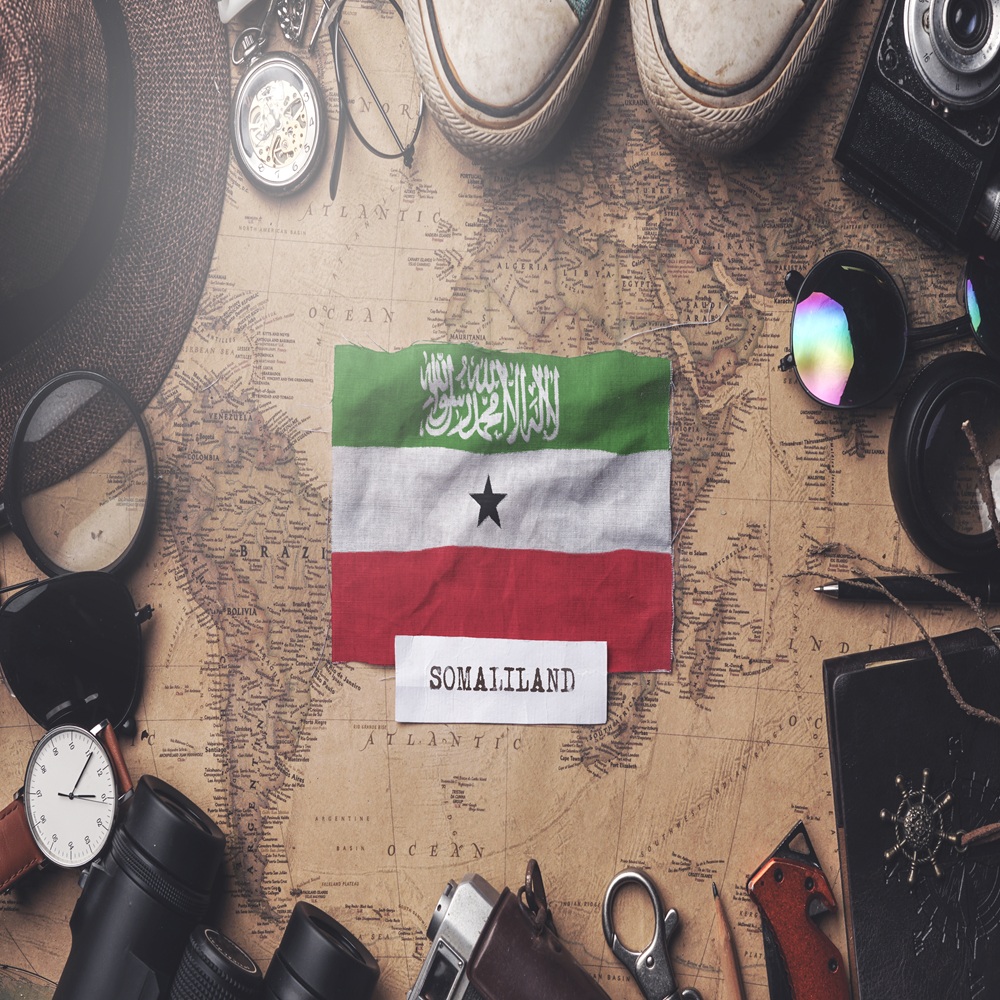
Somaliland Flag Between Traveler's Accessories on Old Vintage Map. Overhead Shot

Opinion – Israel’s Recognition of Somaliland

by Jamal Abdi

Upon gaining independence from British colonial rule on 26 June 1960, Somaliland received full recognition from 35 states, including all permanent members of the UN Security Council. On 1 July 1960, it merged with Italian Somalia. After a decade-long armed struggle, Somaliland withdrew from the union and unilaterally restored its sovereignty. Following the dissolution of Somalia’s central state in early 1991, all communities in Somaliland voluntarily entered negotiations, ceased hostilities, and ultimately forged an inclusive democratic state. Between 1991 and 1997, seven major peace conferences were held across Somaliland. All key decisions, except for the selection of the president, were reached by consensus. Somaliland’s peace and state-building trajectory was entirely locally driven, with no external involvement in the political process. By contrast, Somalia became an UN-led experiment in Post-Cold War peace and state-building. Despite – or perhaps because of – the extensive external intervention that shaped Somalia’s externally driven process, repeated efforts to construct a viable and legitimate state have failed. The first municipal elections since the 1960s were held in Mogadishu earlier this year. Even these were highly contested, confined to the capital, and boycotted by the opposition. In contrast, since 2001 Somaliland has conducted four free and fair multiparty general elections, characterized by peaceful transfers of power. In early 2024, a memorandum of understanding between Somaliland and Ethiopia was announced, granting the latter access to the Red Sea in return for formal recognition of the former. Reigniting hopes for recognition, prominent Republicans have expressed support for Somaliland. Notably, on 14 August, U.S. Sen. Ted Cruz released a press brief urging President Trump to recognize Somaliland. For Cruz, recognizing Somaliland – a close ally of Taiwan – is vital to counter China’s influence. On 26 December 2025, Israel became the first state to formally recognize Somaliland, with Israeli Prime Minister Benjamin Netanyahu announcing that Somaliland would join the Abraham Accords. While the specific details of the deal between Israel and Somaliland remain unclear, it is unlikely that Israel’s actions are driven by a desire to reward Somaliland’s democratic record. More plausibly, Israel is motivated by concrete geostrategic interests, such as securing a foothold in Somaliland from which it could counter the threat posed by the Iran-aligned Houthi rebels in Yemen. Israel’s move also fits a broader trend in which global and regional powers prioritize security competition and project influence beyond their borders. Somaliland sits in the Horn of Africa, boasts an 800-kilometer coastline, and possesses proven oil reserves and deposits of rare minerals. Although Somalia has condemned Israel’s move as a violation of sovereignty and international law, it has itself entered an oil and gas exploration agreement with Turkey and hosts a major Turkish base. According to sources in Somaliland, additional countries are expected to follow Israel in formally recognizing Somaliland. Although the United States has yet to issue a definitive statement, U.S. military and diplomatic delegations are currently in Somaliland, and Washington has long shown interest in establishing a base in the port city of Berbera. Some commentators argue that recognizing Somaliland could destabilize the Horn of Africa, undermine counterterrorism efforts, and encourage separatist movements across the continent, rather than positively contributing to Somaliland’s development and stability. These claims, however, do not withstand scrutiny. Numerous Muslim and Arab countries, including Saudi Arabia, Egypt, and Jordan, have developed strong economic and diplomatic ties with Israel without experiencing a surge in extremism. The absence of terrorist groups such as Al-Shabab and ISIS in Somaliland is principally due to the presence of a functioning state. Al-Shabab continues to control large portions of southern Somalia, making it imprudent for Mogadishu to sever ties with the United States in retaliation for recognizing Somaliland or for supporting Israel’s move. In reality, there is little Mogadishu can do beyond issuing condemnations. The claim that recognizing Somaliland would embolden secessionist movements across Africa overlooks the fact that Somaliland enjoyed de jure recognition of sovereignty prior to merging with Somalia. Recognizing Somaliland is therefore a restoration of the borders established during colonial rule, making Somaliland a unique legal case. Commentators have asserted that China has previously sought to destabilize Somaliland due to its pro-Western and pro-Taiwan strategic orientation. Meanwhile, Egypt, Turkey, and Djibouti have voiced strong support for Somalia, condemning Israel’s move. Djibouti, which controls a near monopoly on the import and export trade for over a hundred million landlocked Ethiopians through its ports, faces a strategic challenge from a recognized Somaliland. Additionally, Djibouti wields considerable influence in Somaliland’s far western region, home to the Issa sub-group, which also dominates the political landscape in Djibouti. In sum, Israel’s move to spearhead the re-recognition of Somaliland is a watershed moment that marks a potential point of no return in Somaliland’s quest for de jure sovereignty. However, Somaliland faces both immediate and long-term challenges that will be critical to how its recognition efforts unfold. In the short term, it must carefully balance the pursuit of diplomatic recognition with deterring hostile external meddling. In the long term, it will face the consequences of having alienated China and the potential Security Council and recognition roadblocks this may signal.

Diplomacy
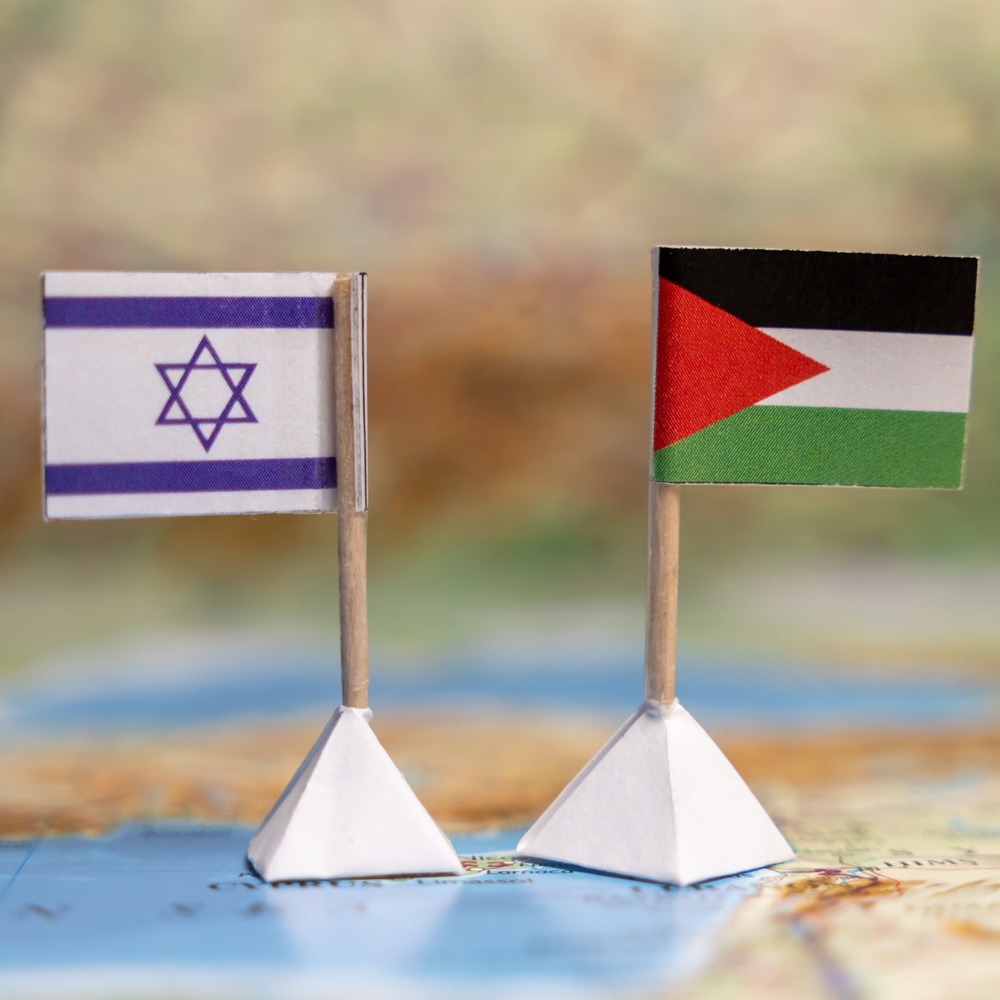
Flag of Israel and Palestine on the map. Events in Palestine and Israel. israel flag

Advancing Peace Between Israel and Palestine

by Saliba Sarsar

The Israel-Hamas War has calmed down. The events that preceded it – including the October 7, 2023 Hamas attack against Israel and the taking of Israeli and other hostages – and that resulted from it will be remembered for decades to come, especially the dead and wounded, the trauma and pain, the destruction of dreams and property. If there is any lesson to be learnt, it is that better ways must be found to resolve conflict. There is deep concern now that the West Bank is increasingly reaching a critical point. The weak governing structure of the Palestinian Authority, the contraction of the Palestinian economy, settler violence, and much more are causing serious distress and instability. What is preventing conditions from spiraling out of control are Israel’s strict security measures and Palestinian fear that the West Bank will turn into Gaza, even though both regions are different. Years of diplomatic inertia have been counterproductive. The status quo is untenable. Much is at stake and indecision is costly for all concerned. Why continued conflict? Israelis and Palestinians have become victims of their own exclusive national narratives and are speaking past each other. Many on each side are unable to go beyond their zero-sum mentality. They selectively highlight the rightness of their own cause, accuse the other side of bad intentions or misconduct, and fail to realize how their own rhetoric and acts cause aggravating conditions. While the obstacles in the way of progress to peace are numerous and real – power imbalance between Israel and the Palestinians, one state reality with Israel dominant over the Palestinians, hardening of attitudes in Israel and Palestine, relative weakness of the Israeli and Palestinian peace camps, Israeli settler radicalization, Palestinian anti-normalization stance, terrorism – these must not delay or prevent the search for opportunities and positive outcomes. In this regard, simple facts present themselves. First, Israelis and Palestinians are neighbors forever. Their present and future are intertwined whether they choose this reality or not. Second, the longer Israelis and Palestinians wait to negotiate, the more complicated the issues become and the less room there will be for an agreeable peaceful solution. Third, the core issues that separate Israelis and Palestinians – borders, the separation wall, security, Israeli settlements, Palestinian refugees, Jerusalem, water – are well-known, thoroughly debated, and resolvable. The challenge is to initiate negotiations and negotiate in good faith. Fourth, Israelis and Palestinians have proved to be both incapable and unwilling to restart negotiations on their own. The United States thus must go beyond managing the Israeli-Palestinian conflict to taking the lead to resolve it. It is indispensable for the promotion and sustenance of peace negotiations, as was recently shown in the diplomatic intervention to stop the Israel-Hamas War. Fifth, the inclusion of regional and international actors becomes key as peace requires assurances, follow-up, and support to take root and grow. As Gershon Baskin argues, “Protracted conflicts in which there is little or no trust and confidence require external mechanisms to verify implementation of the agreements, to ensure compliance, and to offer external dispute resolution” (Baskin, 2025). The prerequisites for peacemaking (e.g., context and timing, leadership and political will, societal strength and resilience, process, and content and creativity) are known (Kurtzer, 2020). US diplomacy must be credible, intentional, sustained, and transformative. This comprises not only making peace a priority, but also acting accordingly. The situation on the ground must change. A realistic plan and process of peacemaking must be prioritized. Israelis and Palestinians must be held accountable for their actions and inactions. The vital policies of Arab countries that have signed the Abraham Accords (especially United Arab Emirates, Bahrain, and Morocco) and others that mediated (that is, United States, Egypt, Qatar, and Turkey) or attended the Gaza “peace conference” in October 2025 should impel them to motivate Palestinians to make hard decisions to end conflict and reach a peaceful settlement. Israel needs to reciprocate. Circumventing the Palestinian issue or wishing it away will not advance Israel’s strategic goals, especially in the long run. Initiating unilateral moves and thinking of the Palestinian issue as a security matter only without addressing its political and territorial dimensions will not enhance Israel’s defense. If anything, they will continue to rile the Palestinians, particularly the youth among them. The two-state solution, the official United States policy since 2002, has become increasingly less viable. This is at a time when 157 out of 193 Member States of the United Nations have already recognized the State of Palestine. On July 28-30, 2025, a High-level International Conference for the Peaceful Settlement of the Question of Palestine and the Implementation of the Two-State Solution was held at the United Nations. The conference, co-chaired by France and Saudi Arabia, committed “not only to reaffirm international consensus on the peaceful settlement of the question of Palestine but [also] to catalyze concrete, timebound and coordinated international action toward the implementation of the two-state solution” (United Nations, 2025a). Follow-up work took place on September 22, and the commitment was made to continue the implementation of the conference’s outcomes. The US’s plan (Trump, 2025) to demilitarize the Gaza Strip and to reconstruct it for the benefit of its inhabitants is a good start, and the plan’s “Phase 2” was even endorsed by United Nations Security Council Resolution 2803 on November 17, 2025 (United Nations, 2025b). However, resolving all aspects of the Gaza issue will take years. Meantime, it is essential for the US to take a leading role in endorsing again the two-state solution, as it is in the best national interest of Israel, Palestine, and the US. Moreover, the US can facilitate the solution by urging Israel and the Palestinians to seriously consider the idea of confederation, which adjusts or introduces important modifications to the two-state solution. While there have been more than a dozen confederation models over the years – with some specific only to Israel and Palestine and others that encompass Jordan as well – a main goal of confederation, according to the proponents of the Holy Land Confederation (me included), is not to totally separate the Palestinians from the Israelis living in the Holy Land, i.e., “divorce,” but to empower them to “cohabitate” in the two respective sovereign states (Holy Land Confederation, 2025). This cohabitation would allow for greater cooperation and movement between them. “If properly implemented, confederation would enable Palestinians to advance their search for freedom, independence, and statehood without being anti-Israel, and it would enable Israelis to have their security and wellbeing without being anti-Palestinian” (Beilin and Sarsar, 2022). The Gaza crisis must be solved. However, the deadlock in Israeli-Palestinian relations must be broken as well. If past negotiations are any indication, there is middle ground between the positions of Israel and Palestine. The US possesses the vital capabilities to move both parties to take the necessary political risks by compromising and engaging in unavoidable tradeoffs on the path to peace. References - Baskin, Gershon. (2025) “Monitoring agreements and verifying implementation.” October 18, https://gershonbaskin.substack.com/p/monitoring-agreements-and-verifying. - Beilin, Yossi and Sarsar, Saliba. (2022) “Israeli-Palestinian confederation is a way forward for peace.” The Jerusalem Post, February 17, https://www.jpost.com/opinion/article-696830. - Holy Land Confederation. (2025) “The Holy Land Confederation as a Facilitator for the Two-State Solution.” Institute for Cultural Diplomacy, https://www.culturaldiplomacy.org/index.php?en_hlc. - Kurtzer, Daniel C. (2020) “The Ingredients of Palestinian-Israeli Peacemaking.” Journal of South Asian and Middle Eastern Studies, Vol. 43, No. 3 (Spring): 5-16. - Trump, Donald J. [@RapidResponse47]. (2025, September 29). “President Donald J. Trump’s Comprehensive Plan to End the Gaza Conflict.” X. https://x.com/RapidResponse47/status/1972726021196562494. - United Nations. (2025a) “High-level International Conference for the Peaceful Settlement of the Question of Palestine and the Implementation of the Two-State Solution,” July 28-30, https://www.un.org/unispal/high-level-conference-two-state-solution-july2025/. - United Nations. (2025b) United Nations Security Council, November 17, https://docs.un.org/en/s/res/2803(2025).

Diplomacy
Flag USA and China on Computer Chip . Global chip shortage crisis and China-United States trade war concept.

Leading States in the Race for Artificial Intelligence in the Current International System

by Danna Fernanda Mena Navarro

1. Introduction: AI as a Reconfiguration of the Global Order Artificial intelligence (AI) has become one of the most influential factors shaping the contemporary international system. Major powers are competing to lead the new technological revolution that impacts the economy, security, foreign policy, defense, communications, and scientific innovation. The development of AI depends on three strategic inputs: 1. Human talent (research, data engineering, mathematics, computer science). 2. Computational capacity and access to large volumes of data. 3. Robust innovation ecosystems, with companies, universities, and aligned industrial policies. Global spending on artificial intelligence is expected to exceed USD 52 billion over the next three years, consolidating AI as the central axis of the Fourth Industrial Revolution (IDC, 2023; Stanford AI Index Report, 2024). 2. Talent as a Global Strategic Resource More than 60% of top AI researchers work in the United States, and about half of them are immigrants, primarily from China, India, Europe, and Iran (Stanford AI Index Report, 2024). The so-called brain drain is not merely an academic issue, but a geopolitical one: • States compete to attract talent through visas, high salaries, and access to frontier laboratories. • Innovation in AI depends on who concentrates the largest amount of specialized human capital. The United States dominates due to its ability to attract international researchers, while China compensates through massive investment and domestic talent production. 3. The United States Leads the AI Race for Three Main Structural Reasons 1. Innovation, talent, and industry: The United States leads in high-impact research publications and AI startups (more than 50% worldwide). Private investment exceeded USD 350 billion in 2023 alone. Key companies include Google, Meta, Microsoft, OpenAI, NVIDIA, Tesla, and IBM, among others. 2. Computational infrastructure and chips: The country concentrates the most advanced computational infrastructure and controls cutting-edge chips (such as the NVIDIA H100), a resource that China cannot yet produce at the same level. 3. AI and national security: The United States allocates more than 16 federal agencies and billions of dollars annually to AI development for defense, cybersecurity, and intelligence (White House AI Budget, 2024). 4. China: The Emerging Superpower on the AI Path China ranks second globally in the AI race but follows a more aggressive, centralized, and ambitious strategy. • Massive investment as state policy: China has pledged to invest more than USD 150 billion by 2030 in AI under its Next Generation Artificial Intelligence Development Plan (AIDP) (Government of China, 2017). • Domestic talent production: China trains more AI engineers than any other country. Annual graduates in science and engineering reach 4.7 million, compared to 600,000 in the United States (UNESCO, 2023). However, a significant portion migrates to the U.S. due to better research conditions. • China’s role in the global AI industry: China leads in AI-based facial recognition, with generative AI startups such as Baidu, SenseTime, Alibaba Cloud, and Tencent AI Lab. It produces massive numbers of publications, although with lower scientific impact than those from the United States. AI is widely implemented in governance, security, and smart cities. • The chip dilemma: China depends on advanced semiconductors produced only by Taiwan (TSMC), South Korea (Samsung), and the United States/Netherlands (ASML). • Export controls: Export restrictions imposed on China since 2022 limit its ability to train frontier models, although the country is making radical investments to achieve chip sovereignty. 5. Europe, India, Israel, Canada, and Other Relevant Actors • Europe: The United Kingdom, Germany, France, and the Netherlands generate a solid ecosystem in algorithmic ethics, digital regulation (AI Act), and applied research. • India: The world’s main hub of engineering talent and a global provider of technological services. • Israel: A powerhouse in cybersecurity and military AI, with per-capita innovation comparable to Silicon Valley. • Canada: The birthplace of deep learning (Geoffrey Hinton, Yoshua Bengio) and a strong center for basic research. 6. Africa on the AI Chessboard: Intentions, Challenges, and Opportunities Although Africa does not lead the AI race, its geopolitical role is growing rapidly for four strategic reasons. Africa is a major producer of critical minerals. AI depends on lithium, cobalt, graphite, and rare earth elements, and Africa holds 70% of the world’s cobalt reserves (in the DRC), as well as other strategic minerals in Zambia, Namibia, South Africa, and Mozambique. This places the continent in a key position within the supply chains for batteries, computers, and data centers. There is also a rapid expansion of digital infrastructure. China, through Huawei and ZTE, has built around 70% of Africa’s 4G network, as well as Ethiopia’s first smart data center and technology innovation hubs in Egypt, Kenya, and South Africa. Africa is entering the AI space through fintech, digital health, smart agriculture, and biometric systems. In terms of AI policy, African countries with formal AI strategies include Egypt, Rwanda, Kenya, and South Africa. • Threats and challenges: limited computational infrastructure, a deep digital divide, the risk of dependence on external technological solutions, the use of AI for political surveillance (as seen in Ethiopia and Uganda), and a shortage of specialized talent. 7. China and Africa: The Intersection of AI, Data, and Geopolitics China combines its role in AI with its influence in Africa through investments in digital infrastructure, the sale of surveillance systems, the construction of data centers, and technical training programs. This creates interdependence but also raises concerns: Africa could become dependent on Chinese systems that are difficult to replace. Data may become centralized on foreign platforms, and the risk of a technological debt trap adds to existing financial dependence. 8. AI, Regulation, and Global Governance The rapid expansion of AI calls for international treaties on data use, security standards, limits on military automation, and ethical regulations to protect civil society. Governance will be decisive in determining not only who leads, but also how this technology will be used in the coming decades. In this context, global AI governance has become a new field of geopolitical competition. While the European Union promotes a regulatory approach based on human rights and risk prevention, the United States favors market self-regulation and innovation, and China advances a model of state control and technological sovereignty. Multilateral organizations such as the UN, the OECD, and the G20 have begun discussing common principles, but there is still no binding international regime. The absence of clear rules increases the risks of an algorithmic arms race, the use of AI for mass surveillance, and the deepening of global inequalities in access to and control over technology. 9. Conclusions The United States leads due to innovation, global talent attraction, and computational capacity. China follows closely with a comprehensive state-led strategy and dominance in global digital infrastructure. Europe, India, Israel, and Canada contribute key elements to the global ecosystem. Africa, while not a leader, occupies an increasingly strategic role due to its resources, data, markets, and alliances. The race for AI will define not only the global economy, but also the balance of power in the international system of the 21st century. References -Stanford University.(2024). AI Index Report 2024. Stanford Institute for Human-Centered Artificial Intelligence. https://hai.stanford.edu/ai-index/2024-ai-index-report?utm_source=chatgpt.com -International Data Corporation. (2023). Worldwide Artificial Intelligence Spending Guide. IDC. https://www.idc.com/data-analytics/spending-guide/ -State Council of the People’s Republic of China (2017). Next Generation Artificial Intelligence Development Plan. Government of China https://fi.china-embassy.gov -UNESCO. (2023). Global Education Monitoring Report: science, technology, engineering and mathematics. United Nations Educational, Scientific and Cultural Organization. https://www.unesco.org/en -The White House. (2024). Federal AI Budget and National AI Strategy. Executive Office of the President of the United States. https://www.whitehouse.gov/presidential-actions/2025/12/eliminating-state-law-obstruction-of-national-artificial-intelligence-policy/ -European Commission.(2023).Artificial Intelligence Act. Publications Office of the European Union. https://digital-strategy.ec.europa.eu/en/policies/regulatory-framework-ai -Organisation for Economic Co-operation and Development. (2023). OECD. Artificial Intelligence Policy Observatory. https://www.oecd.org/en/topics/artificial-intelligence.html

Diplomacy
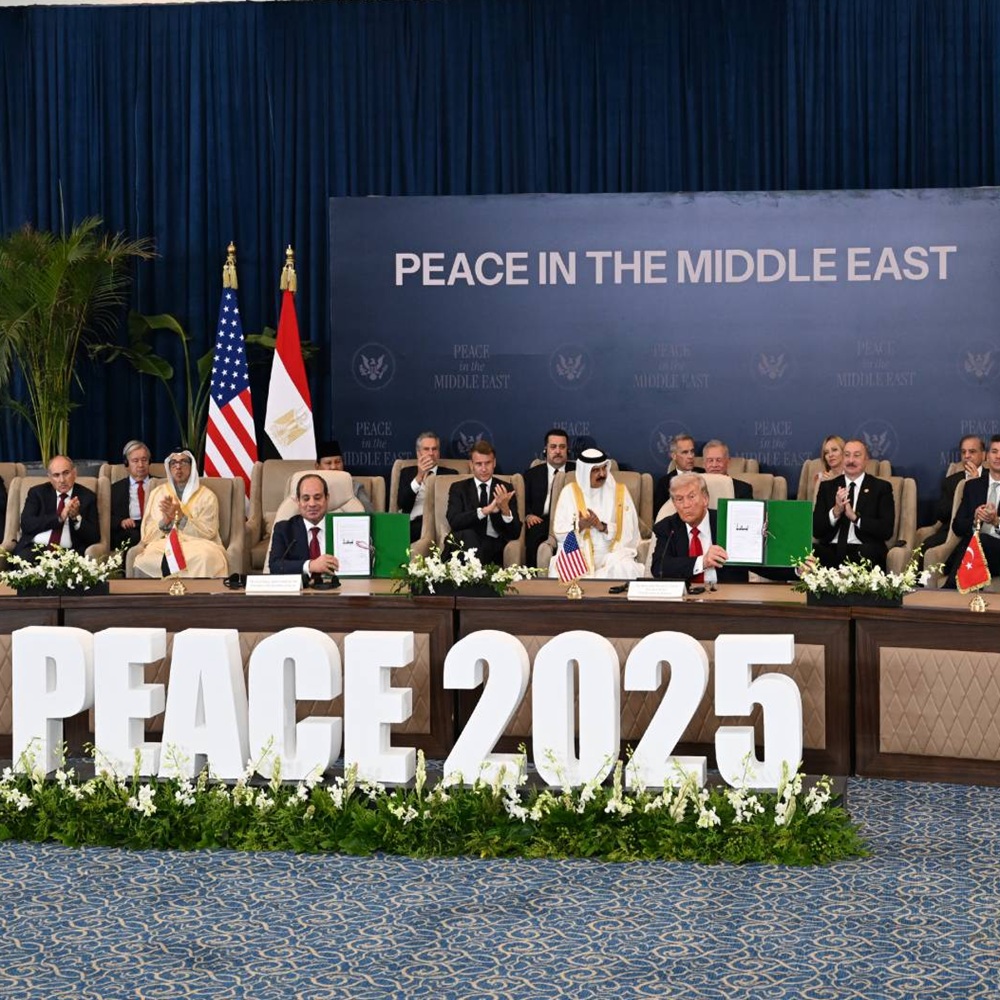
Sharm El Sheikh Summit for Peace: Agreement to End the War in Gaza, 13 October 2025. Photo by Roman Ismayilov. President.az, CC BY 4.0 <https://creativecommons.org/licenses/by/4.0>, via Wikimedia Commons

Gaza Peace Plan: End of war, or A beginning of occupation?

by Muhammad Abdullah

On 29 September 2025, President Trump held a press conference along with his counterpart, Prime Minister of Israel, Benjamin Netanyahu, and issued 20 Points detailed peace plan for the war-torn Gaza, though he claims that the plan was backed by prominent Muslim states, including Saudi Arabia, Turkey, Qatar, Pakistan and some other’s. By and large these Muslim states also welcomed the Plan, most importantly Palestinian political body which is Palestinian Liberation Organization also called the plan an opportunity to end the war on Gaza. Some significant points of the peace plan. Gaza will be a deradicalized terror-free zone that does not pose a threat to its neighbors. Gaza will be redeveloped for the benefit of the people of Gaza, who have suffered more than enough. If both sides agree to this proposal, the war will immediately end. Israeli forces will withdraw to the agreed upon line to prepare for a hostage release. During this time, all military operations, including aerial and artillery bombardment, will be suspended, and battle lines will remain frozen until conditions are met for the complete staged withdrawal. Within 72 hours of Israel publicly accepting this agreement, all hostages, alive and deceased, will be returned. (Gjevori, 2025)Role of ArabsSince the start of Trump’s tenure  and the new American administration Arabs were making efforts to stop the long running Gaza War, they propose alternatives to Trump’s Gaza Rivera plan and so on. (Jazeera, 2025) Now, when eventually Gaza Peace Plan announced by Trump, they (Arabs ) not only endorsed the Plan but also Nations like Qatar, Egypt and Türkiye take part in negotiations with Hamas and Israel, along with envoy to Middle East Steve Witkoff, and finally brought some relief for Gazans like (ceasefire and immediate supplies of aid) which is very crucial for the starving people Gaza. (Irish, 2025)Proposed Governance ModelGaza would be governed by technocrats, apolitical Palestinian committee responsible for day-to-day public services and municipal functions in Palestine. The committee would be composed of qualified Palestinian and International experts. They will be overseen by a body called the Board of Peace. There would be a temporary International Stabilization Force (ISF). To oversee security in Gaza during transition. (Walsh, 2025)Parties response to the plan.Hamas, which is the military body of Gaza has also issued a response to Trump’s Plan, in which they accepted the demands like hostage release, and to hand over the administration of Gaza to independent Technocrats, but they clearly stated that they want to negotiate over some points through mediators.PLO which is Political body of Palestine, welcomed the ceasefire but they are opposed to hand over Gaza’s governance to foreign actors, as Nasser al- Qudwa, a prominent Palestinian and Nephew of Yasser Arafat, has warned against foreign governance of Gaza post-Hamas, (Newspaper, 2025) stressing that leadership must be rooted locally rather than imposed from abroad. The statement highlights the potential opposition and undermines the credibility of the plan.The Israeli Prime Minister called the plan as their victory and fulfillment of their objectives, as they want to decommission Hamas, they will achieve this once the plan is implemented. The tunnels which were in Gaza and which caused Israel unbearable damage, especially in early days of war. (Bronner l., 2025) They are also going to get rid of them by Hamas exclusion and their deradicalization and development of infrastructure by independent actors. The most favorable point for Israel is Trump's statement that “if Hamas does not accept the plan then you [Netanyahu] are allowed to finish the job in Gaza and destroy Hamas completely”. (Griner, 2025) Which I think is a very provocative statement and can cause more bloodshed of innocent civilians. which may end up in complete occupation of the Strip.  Since the day Trump’s plan for Gaza was announced, the Israeli military did not slow down their advancement in the strip, instead they continued with their actions against civilians which reflect their intentions clearly.But for the implementation of the so-called peace plan and to further discuss over its terms both parties take part in negotiations in Egypt. With the mediation of Qatar and Egypt, these negotiations continued for days and then concluded with the statement made by Donald Trump that Israel and Hamas have agreed to his peace plan for Gaza. The Israeli military says that a ceasefire in Palestinian territory took effect on Friday 10th. And that it has begun to withdraw from parts of the Strip as per plan. The first phase of Trump's plan is expected to see the release of all 20 living Israeli hostages in exchange for around 250 Palestinian prisoners and 1,700 detainees from Gaza. Increased amounts of aid will also enter the Strip. (BBC, 2025). On October 13th, Hamas released the 20 living hostages and Israel began to release the Palestinian prisoners. (BBC, 2025) The same day, in Sharm El Shaikh, Egypt, an international peace summit was held, attended by representatives from various nations, - including Canada, France, Germany, Indonesia, Italy, Jordan, Oman, Pakistan, Palestine, Qatar, Saudi Arabia, Turkey, UAE, UK, among others – but notably excluding Hamas and Israel representatives. The summit focused on humanitarian access to Gaza and mechanisms to monitor the proposed ceasefire, aiming to end the two-year war. The outcome was the signing of a joint declaration by Egypt, US, Qatar and Türkiye. Despite these recent developments, the Plan gave the UN only a minimal role, limited to the supply of aid. Although the UN was created to maintain world peace and to resolve conflicts peacefully, when we see the plan, Trump did not assign any role to the peace keeping body, instead he appointed Tony Blair [former British PM, who invaded Iraq in 2003] as head of the Board of peace, which is an international Transitional body whose responsibility is to supervise the apolitical Palestinian committee (responsible for day to day running activities in Gaza). AnalysesThe future of the 20 Points Plan is quite uncertain because it neither has a security guarantee for Palestinian nor any durable provisions about the existence of Palestinian state. The plan calls for an ISF (International stabilization Force) which will be deployed in Gaza immediately for ensuring peace, but the fact is the world does not have a pool of experienced peacekeeping force for this purpose that can handle the situation.  Furthermore, the Israeli PM made it clear that there is no meaningful withdrawal of the IDF from Gaza anytime soon.Moreover, the Plan prohibits Israeli annexation of Gaza, but it does not address the issue of the West Bank. Annexation there is opposed by present and potential Abraham Accord States. But I think soft annexation there would be continued through expansion and establishment of settlement. (weller, 2025)ConclusionWhile the world is admiring Trump’s 20 Points Peace Plan, how can we think of peace anywhere, without an army, and most importantly without recognizing the place as a sovereign State with demarcated borders? Although the Plan has some appealing aspects like immediate ceasefire, entry of aid, development of infrastructure in Gaza and exchange of prisoners, it lacks in terms of security from future Israeli aggression, and it also has no provision about the Palestinian state with borders of before 1967 with East Jerusalem as its Capital. Furthermore, if the plan is implemented Palestinians will be governed by the people of other countries, who will govern them as per the policy devised by the committee, (whose members probably belong to West and other States) not according to the needs and opinion of Palestinians. Which may add more to their misery. So, for a short span of time the Plan may seem like the end of war, but in the long run if more reforms like the recognition of Palestinian statehood and its existence will not be made, then this is just a start of a new occupation. References BBC. (2025, october 9).  BBC: https://www.bbc.com/news/articles/cvgqx7ygq41o.ampBBC. (2025, october 14). BBC: https://www.bbc.com/news/articles/c740jx07vz0oBronner, L. (2025, september 30). Le Monde.  https://www.lemonde.fr/en/international/article/2025/09/30/netanyahu-accepts-trump-s-gaza-peace-plan-under-pressure-but-sets-conditions_6745930_4.html?utmGjevori, E. (2025, sep 29). al jazeera. https://www.aljazeera.com/amp/news/2025/9/29/heres-the-full-text-of-trumps-20-point-plan-to-end-israels-war-on-gazaGriner, A. (2025, oct 3). AL Jazeera. from https://www.aljazeera.com/news/2025/10/3/trump-issues-sunday-deadline-for-hamas-to-accept-gaza-peace-proposal?utm_sourceIrish, J. (2025, october 8). Reuters. from https://www.reuters.com/world/middle-east/europeans-arabs-meet-flesh-out-next-phase-trump-gaza-plan-2025-10-09/?utm_sourceJazeera, A. (2025, feb 21). Al Jazeera. Arab leaders hold a meeting and discuss alternatives to GazaNewspaper, T. T. (2025, october). the times.  https://www.thetimes.com/world/middle-east/article/nasser-al-qudwa-gaza-hamas-palestine-israel-news-vl7xmgct9?utm_sourceWeller, M. (2025, oct 2). Cathom house. https://www.chathamhouse.org/2025/10/can-trump-peace-plan-gaza-succeed?utm

Diplomacy
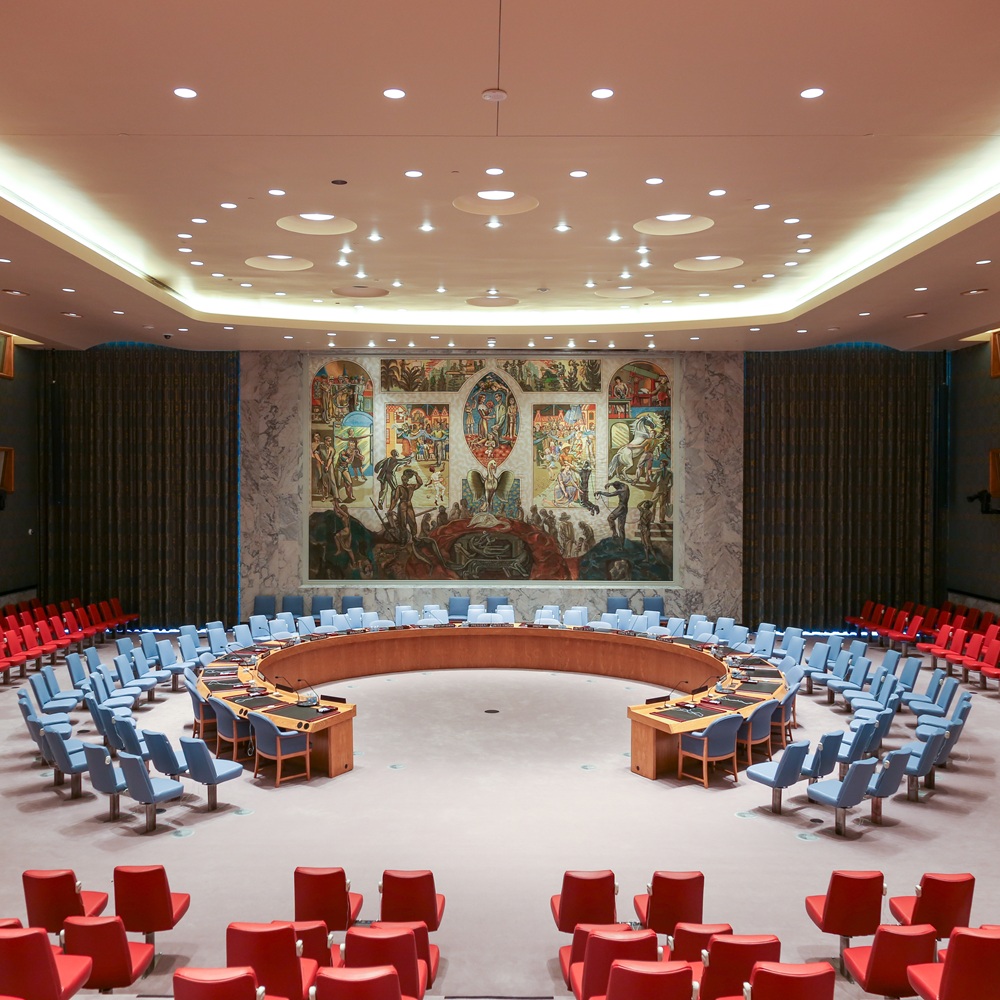
NEW YORK, USA - JUNE 21 2013 - United Nations security council hall headquartered in New York City, in a complex designed by architect Niemeyer open to public.

The UN in crisis: Justice without power, power without justice

by Francisco Edinson Bolvaran Dalleto

Abstract The United Nations (UN), eighty years after its creation, faces a structural crisis that reveals the tension between justice and power. This essay examines how the design of the Security Council, with its veto power, perpetuates an unequal order inherited from 1945 and limits the effectiveness of the collective security system. Through theoretical perspectives — Morgenthau, Schmitt, Habermas, Falk, and Strange — it is shown that international law remains subordinated to power interests, that proclaimed universality masks hegemonies, and that global economic dynamics lie beyond institutional reach. Cases such as Kosovo, Libya, Gaza, and Myanmar illustrate the paralysis and delegitimization of the Responsibility to Protect. Considering this scenario, two paths emerge: reforming multilateralism with limits on the veto and greater representativeness or resigning to a fragmented order. The conclusion is clear: without adaptation, the UN will become a symbolic forum, making chronic its inability to respond to current challenges. Dag Hammarskjöld, the second Secretary-General of the UN, warned: “The United Nations was not created to take us to heaven, but to save us from hell.” [1] Eighty years after its founding, that promise seems to falter in the face of multiple wars, such as those in Gaza, Ukraine, Sudan, or Myanmar, among many others, with a sense of ineffectiveness, loss of prestige, and collective impotence being perceived: does the UN no longer fulfill the role it once assumed? At first glance, blame falls solely on the nature of the institution itself. But the root of the problem seems to lie not only in New York, but also in the main capitals of the world. The UN is nothing more than what States allow it to be. Its effectiveness depends on the will of those who comprise it; and the uncomfortable truth is that the great powers prefer to limit its scope rather than cede parcels of sovereignty. As John Rawls pointed out, a just international system requires that peoples accept common principles of justice. [2] Today, by contrast, it is a constant that collective interest systematically gives way to particular interest. The Security Council is the most evident symbol of this contradiction. It remains anchored in post-war logic, with five permanent members clinging to the privilege of the veto. That power, already met with skepticism in San Francisco in 1945, turned into a tool of paralysis. As Canada denounced in 2022, the veto is “as anachronistic as it is undemocratic” and has prevented responses to atrocities. [3] Aristotle said that “justice is equality, but only for equals.” [4] In the UN, the Assembly proclaims sovereign equality, while the Council denies it in practice: some States remain “more equal” than others. The UN Charter articulates its backbone in a few luminous rules: the prohibition of the use of force (Art. 2.4), non-intervention in internal affairs (Art. 2.7), and, as a counterbalance, the collective security system of Chapter VII (Arts. 39–42), which grants the Security Council the authority to determine threats to peace and authorize coercive measures. In parallel, Art. 51 preserves the right of self-defense against an “armed attack.” [5] This normative triangle — prohibition, collective security, defense — is the promise of a world governed by law and not by force, but it must be put into practice. In the 1990s, a dilemma arose: what to do when a State massacres its own population or is unable to prevent it? The political-legal response was the Responsibility to Protect (R2P), affirmed at the 2005 World Summit (paras. 138–139). [6] Its architecture is sequential: (I) each State has the primary responsibility to protect its population against genocide, war crimes, ethnic cleansing, and crimes against humanity; (II) the international community must help States fulfill that responsibility; and (III) if a State manifestly fails, the international community, through the Security Council, may adopt collective measures — preferably peaceful ones; as a last resort, coercive — case by case and in accordance with the Charter. Properly understood, R2P is not a license to intervene; it is a duty to protect framed within International Law. The historical record shows both its necessity and its perverse effects. Kosovo (1999) inaugurated, without authorization from the Council, the narrative of “humanitarian intervention,” based on a supposed “legitimate illegality.” [7] The precedent left a dangerous standard: humanitarian purposes invoked to circumvent the hard core of the Charter. Libya (2011) seemed to be the “ideal case” of R2P: the Council authorized “all necessary measures” to protect civilians. [8] However, the shift toward regime change eroded the trust of Russia and China, which since then have blocked robust resolutions on Syria, hollowing out the effectiveness of R2P. [9] The lesson is bitter: when protection is perceived as a vehicle of hegemony, the norm is delegitimized, and the veto becomes reflexive. Gaza and Myanmar display the other face of paralysis. In Gaza, the Council’s inability to impose sustainable ceasefires — despite patterns of hostilities that massively impact the civilian population — has shifted the debate to the General Assembly and the International Court of Justice through interstate actions and provisional measures. [10] In Myanmar, the genocide of the Rohingya mobilized condemnations, sanctions, and proceedings before the International Court of Justice (hereinafter, ICJ), [11] but did not trigger a coercive response from the Council. R2P exists on paper; its implementation is captive to the veto. Thus, the “right to have rights” that Arendt spoke of still depends on geopolitics. [12] History teaches that international law has always been strained by force. Rousseau warned that the strong seek to transform their power into law. [13] That is what the winners of 1945 did by crystallizing their hegemony in the Charter. And so, what Kant dreamed of as perpetual peace remains chained to an unequal order. [14] The UN, more than a republic of law, still seems a field of power. That fragility has opened space for alternatives. The BRICS, for example, have emerged as a heterogeneous bloc that combines the cohesion of historically homogeneous powers such as China and Russia with the diversity of India, Brazil, and South Africa. Paradoxically, their strength lies in articulating that heterogeneity against a common enemy: the concentration of power in the Security Council. [15] In a multipolar world, heterogeneity ceases to be a weakness and becomes a driver of plurality and resistance. The UN crisis is not only about security; it is also economic and distributive. The universalist promise of the Charter (Arts. 1.3 and 55–56, on cooperation for development) coexists with a global financial architecture whose heart beats outside the UN: the IMF and World Bank, designed in Bretton Woods, project a structural power — in Susan Strange’s terms — that conditions public policies, access to liquidity, and investment capacity. [16] The sovereign equality proclaimed in New York becomes blurred when the asymmetry of weighted voting in financial institutions (and the conditionality of credit) makes some States more “equal” than others. This is not a recent claim. Since the 1960s, the United Nations Conference on Trade and Development and, later, the Declaration on a New International Economic Order (1974), sought to correct structural problems such as the deterioration of terms of trade and the dependence between “center” and “periphery” countries, as Prebisch had pointed out. [17] However, the results were limited: ECOSOC lacks teeth, UNDP mobilizes cooperation but fails to change the rules of the system, and the 2030 Agenda sets important goals but without mandatory enforcement mechanisms. [18] The pandemic and the climate crisis have further worsened these inequalities, highlighting problems such as over-indebtedness, the insufficiency in the reallocation of Special Drawing Rights (SDRs), and climate financing that often arrives late and under unsuitable conditions. In this scenario, the New Development Bank of the BRICS emerges, seeking to open a path toward greater financial autonomy for developing countries. [19] International economic justice is the reverse side of collective security. Without fiscal space or technological transfer, the Global South remains trapped between development promises and adjustment demands. The UN has political legitimacy to outline a Global Economic Council (as proposed by the Stiglitz Commission in 2009) [20] to coordinate debt, international taxation, and global public goods, but it currently lacks normative muscle. The result is fragmentation: fiscal minilateralism, climate clubs, and value chains that distribute risks to the South and rents to the North. The solution does not lie simply in “more aid,” but in prudent rules such as: (I) a multilateral debt restructuring mechanism under UN auspices; [21] (II) effective international taxation on intangibles and the digital economy; [22] (III) binding compliance with the loss and damage fund in climate matters; [23] and (IV) a reform of quotas in IFIs that reflects the real weight of emerging economies. [24] Without constitutionalizing — even gradually — this economic agenda, sovereign equality will remain an empty liturgy and the discontent of the Global South a political fuel that erodes the UN from within. The truth is that the United Nations of 1945 no longer responds to the challenges of 2025. As the president of Brazil recently said: “The UN of 1945 is worth nothing in 2023.” [25] If States do not recover the founding spirit — placing collective interest above particular ones — the organization will remain prisoner of the veto and the will of a few. The question, then, is not whether the UN works, but whether States really want it to work. Taking the above into account, this essay will analyze the UN crisis from three complementary dimensions. First, the theoretical and philosophical framework that allows us to understand the tension between power and law will be addressed, showing how different authors highlight the structural roots of this contradiction. Second, historical episodes and current examples will be reviewed to illustrate the paralysis and democratic deficit of the organization. Finally, possible scenarios for the future will be projected, engaging in the exercise of evaluating the minimum reforms that could revitalize multilateralism in contrast to the alternative of critical global fragmentation. Considering all together, the argument is that the UN finds itself trapped between justice without power and power without justice, and that its survival depends on its ability to adapt to an international order radically different from that of 1945. I. The contradiction between power and law: Hans Morgenthau and political realism To understand the paralysis of the UN, it is useful to turn to Hans Morgenthau, a pioneer of realism in international relations. In his work “Politics Among Nations” (1948), he warned that the international order is always mediated by the balance of power and that legal norms only survive to the extent that they coincide with the interests of powerful States. [26] His idea is provocative: international law is not an autonomous order, but a language that powers use so long as it does not contradict their strategic objectives. Applied to the UN, this analysis is clear: the institution reflects less universal ethical commitment and more correlation of historical forces. The Security Council is not a neutral body, but the mirror of the hegemony of 1945, crystallized in Article 27 of the Charter, which enshrines the right of veto. The supposed universality of the UN is subordinated to a mechanism designed precisely to ensure that no action contrary to the superpowers could be imposed. Contemporary critiques confirm Morgenthau’s intuition. When Russia vetoes resolutions on Ukraine, [27] or the United States does the same regarding Gaza, [28] it becomes evident that international justice is suspended in the name of geopolitics. The legal is subordinated to the political. In this sense, the UN crisis is not an accident, but the logical consequence of its design, and what Morgenthau pointed out seventy years ago remains valid: as long as there is no coincidence between law and power, international norms will remain fragile. Political realism helps explain why the UN fails when it is most needed. States continue to act according to their national interests, even when this contradicts the international norms they themselves have subscribed to. The Security Council has become a space where powers project their strategies of influence, blocking collective actions whenever these affect their geopolitical priorities. The war in Ukraine, the invasion of Iraq in 2003, and the inaction in the face of the Rwandan genocide show that international law is applied selectively, reinforcing the idea that rules are valid only when they do not interfere with the power of the strongest. This pattern evidently erodes the legitimacy of the UN in the eyes of societies, because it generates the perception that the organization is incapable of representing the collective interest and, instead, merely reflects the correlation of forces of each historical moment. II. Carl Schmitt and the Myth of Universal Order Another voice that resonates is that of Carl Schmitt, who in “The Nomos of the Earth” (1950) argued that every international legal order arises from a founding political decision, that is, an act of power. [29] For Schmitt, there is no “universal law” that imposes itself; what is presented as universal is, in reality, the crystallization of a particular domain. The UN perfectly embodies this diagnosis. The founding discourse of San Francisco in 1945 spoke of “we the peoples of the United Nations,” [30] but in reality the Charter was written under the predominance of the winners of the Second World War. What was presented as a universal order of peace and security was, in fact, the codification of the Allied hegemony. Schmitt helps explain why the UN has never escaped that original logic. Although the General Assembly proclaims sovereign equality in Article 2 of the Charter, the structure of the Council reproduces the privilege of a few. [31] The international law of the UN appears, in Schmittian terms, as a “nomos” imposed by the winners, not as a true universal community. The consequence is a legitimate deficit that has persisted until today and explains much of the perception of ineffectiveness. The original structure of the UN perpetuates an unequal design that remains in force. The veto privilege is not only a defensive mechanism for the winners of the Second World War, but it has also functioned as a lock — one without keys — that prevents any real evolution of the system. Over eight decades, demands for reform have clashed with the resistance of those who benefit from keeping the rules intact. The contradiction is evident: developing States, which today represent the majority in the General Assembly, lack effective power in the most important decisions on international security. The gap between the universalist discourse of sovereign equality and the hierarchical practice of the Council undermines the credibility of the multilateral order. As long as this tension persists, the UN will hardly be able to become the space of global governance that the world requires more urgently than ever in the 21st century. III. Habermas and the Need for a Deliberative Community In contrast to this pessimism, Jürgen Habermas offers a different perspective. In “The Inclusion of the Other” (1996) and in later essays, he proposed moving toward a “constitutionalization of international law,” understood as the creation of a global normative space in which decisions are not based on force, but on rational deliberation. [32] From this perspective, the UN would be an imperfect embryo of a community of world citizens. The impact of this idea is enormous: it suggests that, beyond current deadlocks, the UN embodies the possibility of transforming power relations into processes of public deliberation. Article 1 of the Charter, which speaks of “maintaining international peace and security” and of “promoting friendly relations among nations,” can be read not only as a political mandate but also as a normative ideal of cosmopolitan coexistence. [33] Criticism of Habermas is evident: his proposal errs on the side of idealism in a world where national security interests remain paramount. However, his contribution is valuable because it allows us to think of the UN not only as a paralyzed body but also as a field of normative struggle. The problem is not only the strength of the vetoes but also the lack of will to transform that space into a true deliberative forum. [34] Thinking of the UN as a deliberative community requires recognizing that its current procedures do not guarantee authentic dialogue. Debate in the General Assembly is often reduced to formal statements, while crucial decisions, as everyone knows, are taken in restricted circles. The lack of effective mechanisms for the participation of non-state actors, such as regional organizations or civil society, further limits the inclusive character of the institution. Genuine deliberation should open spaces where multiple voices can influence decision-making processes, not only through speeches but by building binding consensus. However, the most powerful States fear losing control over the international agenda, which generates a vicious circle: an elitist governance system is maintained that protects privileges, but at the cost of sacrificing legitimacy and effectiveness. Thus, the promise of a deliberative order is reduced to a normative horizon that has not yet been realized. IV. Richard Falk and the Global Democratic Deficit A more recent contribution comes from Richard Falk, jurist and former UN rapporteur, who has insisted on the “democratic deficit” of the international order. In his view, the UN suffers from a structural contradiction: while the Charter proclaims the sovereignty of peoples, in practice it concentrates power in a small club of States. [35] This not only limits its effectiveness but also erodes its legitimacy in the eyes of the peoples of the world. The case of Palestine is emblematic. The General Assembly has repeatedly recognized the right of the Palestinian people to self-determination, but the veto in the Council blocks any effective measure. [36] Falk interprets this as evidence that the UN operates under a “democracy of States” but not under a “democracy of peoples.” The impact is devastating: millions of people perceive the organization not as a guarantor of rights, but as an accomplice to inequality. This leads us to a brief analysis of the International Criminal Court (ICC), born from the Rome Statute (1998), which promised a civilizational breakthrough: that the most serious crimes (“which affect the international community as a whole”) would not go unpunished. [37] Its design is cautious: complementarity (it acts only if the State is unwilling or unable), restricted jurisdiction (genocide, crimes against humanity, war crimes, and — with limits — aggression), and jurisdiction based on territory, nationality, or referral by the Security Council. The two major milestones of the Council — referrals of Darfur (2005) and Libya (2011) —demonstrated both the potential and the limits. There were procedural advances and arrest warrants, but also contested operative clauses and very little cooperation for arrests. [38] The implicit message to the Global South was ambiguous: justice is universal, but its activation depends on the map of alliances in the Council. At the same time, key powers are not parties to the Statute (United States, China, Russia) and yet influence when the Court acts. The result fuels the argument of “winners’ justice” that several African foreign ministries have raised. The Court has tried to rebalance its map: investigations in Afghanistan, Palestine, and Ukraine, as well as arrest warrants against high-ranking authorities in cases of aggression or serious international crimes, have partly disproved the idea of a one-sided persecution. But the Achilles’ heel persists: without State cooperation, there are no executions of warrants; without the Council, there is no activation in key contexts; with the Council, there is a veto. In addition, Article 16 of the Statute allows the Council to suspend investigations for 12 renewable months, a political valve that subordinates the judicial to the geopolitical. [39] Integrating Falk’s critique into this essay makes it possible to highlight that the UN crisis is not only institutional but also democratic. Article 1.2 of the Charter proclaims respect for the principle of equal rights and the self-determination of peoples, but this ideal becomes empty when the veto power systematically contradicts it. [40] The democratic deficit of the UN is not limited to the Security Council but runs through the entirety of its institutional architecture. Developing countries have little influence on global economic governance, despite being the most affected by decisions on debt, trade, or climate financing. Unequal representation in bodies such as the IMF and the World Bank, together with dependence on international cooperation, reproduces relations of subordination that contradict the principles of equality and self-determination. Moreover, world citizenship lacks a real channel of influence: peoples see their demands diluted in state structures that do not always — or almost never — reflect their needs. This divorce between peoples and States turns the UN into an incomplete democracy, where the most vulnerable collective subjects fail to make their voices heard. Overcoming this limitation is essential to restoring the legitimacy of multilateralism. V. Susan Strange and the Geopolitics of the Economy Finally, Susan Strange adds another dimension: the economic one. In “The Retreat of the State” (1996), she argued that power in the contemporary world does not reside only in States, but also in transnational forces — financial markets, corporations, technologies — that escape institutional control. [41] The UN, designed in 1945 under the logic of sovereign States, lacks instruments to govern this new scenario. The impact is evident. While the Security Council is paralyzed in debates over traditional wars, global crises such as climate change, pandemics, or the regulation of artificial intelligence show that real power has shifted toward non-state actors. [42] Strange warns that if international institutions do not adapt to this reality, they risk becoming irrelevant. In this sense, the UN faces not only a problem of veto or representativeness, but also a historical mismatch: it was designed for a world of States and conventional wars, but today we live in a world of transnational interdependencies. The Charter, in its Article 2.7, continues to emphasize non-interference in the internal affairs of States, but this clause seems insufficient to govern global threats that transcend borders. [43] And it is vitally important to note that the global threats of the 21st century do not fit the traditional paradigm of interstate wars that has been preconceived. Challenges such as climate change, pandemics, and technological revolutions pose risks that no State can face alone. However, the UN lacks effective mechanisms to coordinate global responses in these areas. The fragmentation of climate governance, competition for vaccines during the pandemic, and the absence of clear rules to regulate large digital corporations illustrate the magnitude of the challenge. In this context, state sovereignty proves insufficient, and the principle of non-interference becomes obsolete. If the UN does not develop innovative instruments that integrate transnational actors and strengthen multilateral cooperation, it risks becoming a merely declarative forum, incapable of offering concrete solutions to the problems that most affect contemporary humanity — and it is important that these critiques be heard before it is too late. VI. Current Scenarios All the above opens up a momentous dilemma of our time: either we reform multilateralism so that law contains “force,” or we normalize “exception” forever. [44]Scenario A: A minimal but sufficient cosmopolitan reform. A critical group of States —supported by civil society and epistemic communities — agrees to self-limit the veto in situations of mass atrocities (ACT-type codes of conduct), promotes the expansion of the Council with some permanent presence of the Global South (India, Brazil, Germany, Japan, and one African seat, probably South Africa), and strengthens “Uniting for Peace” mechanisms to circumvent blockages. [45] The ICJ gains centrality with advisory opinions politically bound by prior compliance commitments, the ICC ensures interstate cooperation through regional agreements, and the UN creates a rapid civil deployment capacity for the protection of civilians, minimal cybersecurity, and climate response. [46] In the economic sphere, a Global Economic Council emerges within the orbit of the UN to coordinate debt, climate, and international taxation with common standards. [47] Scenario B: Ordered fragmentation of anarchy. Blockages become chronic. Security shifts to ad hoc coalitions and minilateralisms (NATO Plus, QUAD, expanded BRICS), economic governance is decided in restricted membership forums, and the UN remains a symbolic forum without decision-making capacity. [48] Exception becomes the rule: “preventive interventions,” widespread unilateral sanctions, proliferation of private military companies, opaque cyber-operations, and a data ecology controlled by a few platforms. [49] International law endures as a language, but its social force dissipates; incentives push toward strategic autonomy and legal security by blocs. In other words, the future of the UN will depend on its ability to balance justice and force in an international environment marked by multipolarity. I insist that one possible path is to advance toward gradual reforms that strengthen transparency, broaden the representativeness of the Council, and grant greater autonomy to the General Assembly and judicial bodies. Another, far more radical, is the consolidation of parallel mechanisms that de facto replace the role of the UN through regional alliances, ad hoc coalitions, and alternative economic forums. Both paths involve risks: reform may stagnate in the lowest common denominator, while fragmentation may deepen inequalities and conflicts. However, what seems clear is that maintaining the status quo will only prolong paralysis and further weaken the legitimacy of the multilateral system. The choice between reform or irrelevance will, ultimately, be the decisive dilemma of the 21st century. I believe that three milestones will indicate where we are headed: (1) effective adoption of commitments to abstain from vetoes in the face of mass atrocities; (2) funded and operational implementation of the climate loss and damage mechanism; (3) cooperation with the ICC in politically sensitive cases, without ad hoc exceptions. [50] VII. Conclusion: Between Disillusionment and Hope The UN marks eighty years caught in Pascal’s dilemma: “force without justice is tyranny, justice without force is mockery.” [51] The diagnosis is clear: the Security Council has turned justice into a mockery, while the great powers have exercised force without legitimacy. [52] The result is a weakened organization, incapable of responding to the most urgent tragedies of our time. However, it would be a mistake to fall into absolute cynicism. Despite its evident limitations and alongside all that has been mentioned, the UN remains the only forum where 193 States engage in dialogue, the only space where there exists even a minimal notion of common international law. [53] Its crisis should not lead us to abandon it, but rather to radically rethink it. Perhaps the path lies in what Habermas calls a “constitutionalization of international law,” as previously proposed, or in a profound reform of the Security Council that democratizes the use of force. [54] History teaches that institutions survive if they manage to adapt. [55] If the UN does not, it will be relegated to the status of a giant that humanity needs but that is paralyzed, a symbol of a past that no longer responds to the challenges of the present. [56] But if States recover something of the founding spirit of 1945, perhaps it can still save us from hell, even if it never takes us to heaven. [57] VIII. References [1] Dag Hammarskjöld. Hammarskjöld. Citado en Brian Urquhart. New York: Alfred A. Knopf, 1972.[2] John Rawls. The Law of Peoples. Cambridge, MA: Harvard University Press, 1999.[3] Permanent Mission of Canada to the United Nations. Statement on the Veto. UN General Assembly, 26 April 2022.[4] Aristóteles. Política. Traducido por Antonio Gómez Robledo. México: UNAM, 2000.[5] Naciones Unidas. Carta de las Naciones Unidas. San Francisco: Naciones Unidas, 26 de junio de 1945.[6] Naciones Unidas. World Summit Outcome Document. A/RES/60/1, 24 October 2005.[7] Jean-Jacques Rousseau. The Social Contract. New York: Penguin, 1968.[8] Immanuel Kant. Perpetual Peace: A Philosophical Sketch. 1795; repr., Indianapolis: Hackett, 2003.[9] Oliver Stuenkel. The BRICS and the Future of Global Order. Lanham: Lexington Books, 2015.[10] Susan Strange. States and Markets. London: Pinter, 1988. 11. Hedley Bull. The Anarchical Society: A Study of Order in World Politics. New York: Columbia University Press, 1977.[12] Kenneth Waltz. Theory of International Politics. Reading, MA: Addison-Wesley, 1979.[13] Martha Finnemore. National Interests in International Society. Ithaca: Cornell University Press, 1996.[14] Alexander Wendt. Social Theory of International Politics. Cambridge: Cambridge University Press, 1999.[15] Francis Fukuyama. The End of History and the Last Man. New York: Free Press, 1992.[16] Samuel Huntington. The Clash of Civilizations and the Remaking of World Order. New York: Simon & Schuster, 1996.[17] Joseph Nye. Soft Power: The Means to Success in World Politics. New York: Public Affairs, 2004.[18] Joseph Nye. The Future of Power. New York: Public Affairs, 2011.[19] Robert Keohane y Joseph Nye. Power and Interdependence. Boston: Little, Brown, 1977.[20] Robert Keohane. After Hegemony: Cooperation and Discord in the World Political Economy. Princeton: Princeton University Press, 1984.[21] Stephen Krasner. Structural Conflict: The Third World Against Global Liberalism. Berkeley: University of California Press, 1985.[22] Robert Cox. “Social Forces, States and World Orders: Beyond International Relations Theory.” Millennium: Journal of International Studies 10, no. 2 (1981): 126–55.[23] Robert Cox. Production, Power, and World Order: Social Forces in the Making of History. New York: Columbia University Press, 1987.[24] Charles Kindleberger. The World in Depression, 1929–1939. Berkeley: University of California Press, 1973.[25] John Ikenberry. After Victory: Institutions, Strategic Restraint, and the Rebuilding of Order after Major Wars. Princeton: Princeton University Press, 2001.[26] John Ikenberry. Liberal Leviathan: The Origins, Crisis, and Transformation of the American World Order. Princeton: Princeton University Press, 2011.[27] Paul Kennedy. The Rise and Fall of the Great Powers. New York: Random House, 1987.[28] Michael Doyle. Ways of War and Peace: Realism, Liberalism, and Socialism. New York: W. W. Norton, 1997.[29] Charles Beitz. Political Theory and International Relations. Princeton: Princeton University Press, 1979.[30] Andrew Moravcsik. “Taking Preferences Seriously: A Liberal Theory of International Politics.” International Organization 51, no. 4 (1997): 513–53[31] Peter Katzenstein, ed. The Culture of National Security: Norms and Identity in World Politics. New York: Columbia University Press, 1996.[32] Friedrich Kratochwil. Rules, Norms, and Decisions: On the Conditions of Practical and Legal Reasoning in International Relations and Domestic Affairs. Cambridge: Cambridge University Press, 1989.[33] Nicholas Onuf. World of Our Making: Rules and Rule in Social Theory and International Relations. Columbia: University of South Carolina Press, 1989.[34] Christian Reus-Smit. The Moral Purpose of the State: Culture, Social Identity, and Institutional Rationality in International Relations. Princeton: Princeton University Press, 1999.[35] Martha Finnemore y Kathryn Sikkink. “International Norm Dynamics and Political Change.” International Organization 52, no. 4 (1998): 887–917.[36] Michael Barnett y Martha Finnemore. Rules for the World: International Organizations in Global Politics. Ithaca: Cornell University Press, 2004.[37] Ian Hurd. After Anarchy: Legitimacy and Power in the United Nations Security Council. Princeton: Princeton University Press, 2007.[38] Allen Buchanan y Robert Keohane. “The Legitimacy of Global Governance Institutions.” Ethics & International Affairs 20, no. 4 (2006): 405–37.[39] Thomas Franck. The Power of Legitimacy among Nations. New York: Oxford University Press, 1990.[40] David Held. Democracy and the Global Order: From the Modern State to Cosmopolitan Governance. Stanford: Stanford University Press, 1995.[41] Ian Hurd. After Anarchy: Legitimacy and Power in the United Nations Security Council. Princeton: Princeton University Press, 2007.[42] Permanent Mission of Canada to the United Nations. Statement on the Veto. UN General Assembly, 26 April 2022.[43] Oliver Stuenkel. The BRICS and the Future of Global Order. Lanham: Lexington Books, 2015.[44] Naciones Unidas. World Summit Outcome Document. A/RES/60/1, 24 October 2005.[45] Corte Internacional de Justicia. Advisory Opinions. La Haya: CIJ, varios años.[46] Naciones Unidas. Report of the High-level Panel on Threats, Challenges and Change. A/59/565, 2 December 2004.[47] Samuel Huntington. The Clash of Civilizations and the Remaking of World Order. New York: Simon & Schuster, 1996.[48] Robert Keohane. After Hegemony: Cooperation and Discord in the World Political Economy. Princeton: Princeton University Press, 1984.[49] Thomas Franck. The Power of Legitimacy among Nations. New York: Oxford University Press, 1990.[50] Joseph Nye. The Future of Power. New York: Public Affairs, 2011.[51] Blaise Pascal. Pensées. París: Éditions Garnier, 1976.[52] Brian Urquhart. Hammarskjöld. New York: Alfred A. Knopf, 1972.[53] Naciones Unidas. Charter of the United Nations. San Francisco: Naciones Unidas, 1945.[54] Jürgen Habermas. The Postnational Constellation: Political Essays. Cambridge, MA: MIT Press, 2001.[55] John Ikenberry. Liberal Leviathan: The Origins, Crisis, and Transformation of the American World Order. Princeton: Princeton University Press, 2011.[56] Paul Kennedy. The Rise and Fall of the Great Powers. New York: Random House, 1987.[57] David Held. Democracy and the Global Order: From the Modern State to Cosmopolitan Governance. Stanford: Stanford University Press, 1995.

Diplomacy
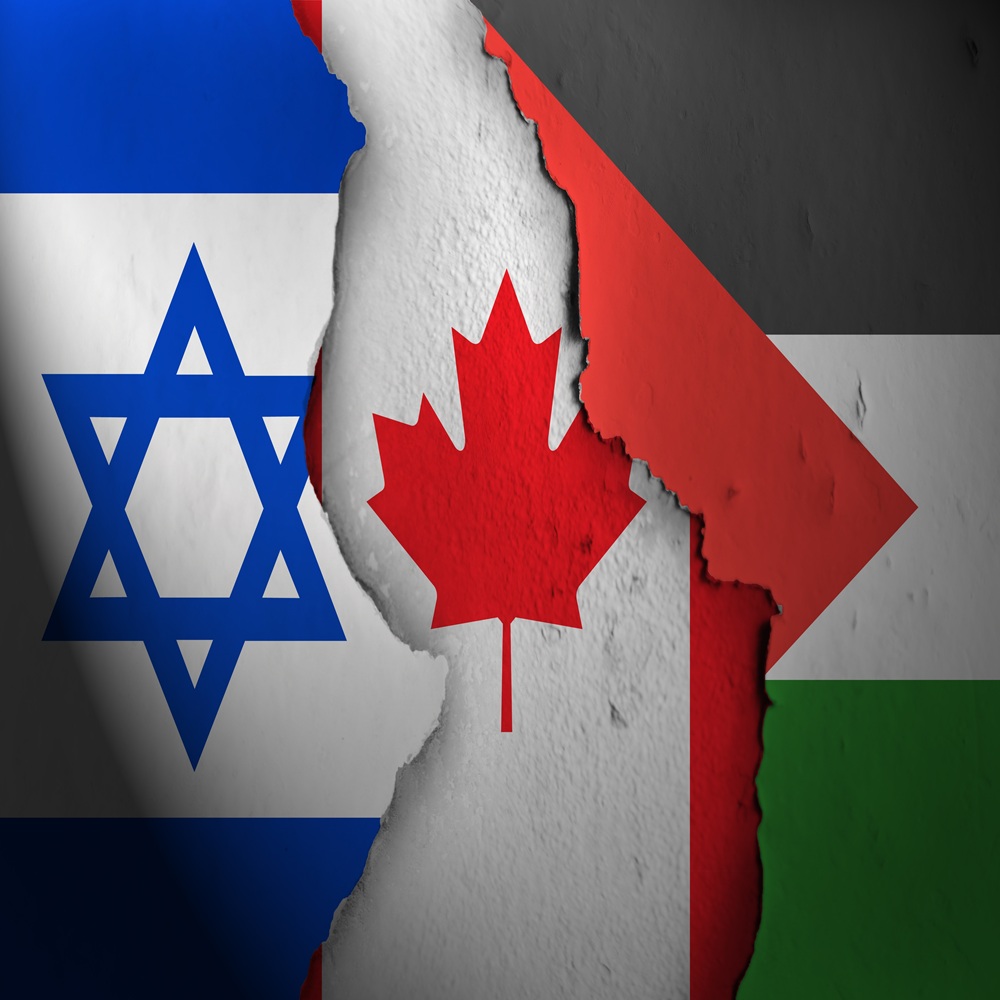
canada between Israel and Palestine.  Israel canada Palestine

Israel/Palestine and Canada’s Empty Support for International law

by Alex Neve

Abstract Canada has long maintained that international law must be central to resolution of the Israeli/Palestinian conflict. But has there been appropriate follow-through when international law has been violated? This policy brief examines Canada's positions and, importantly, actions, in the face of violations of international law by the Israeli government during its military offensive on Gaza following the 7 October 2023 attacks in southern Israel by Hamas and other armed Palestinian groups. The analysis makes it clear that Canada has rarely condemned those violations, let alone imposed sanctions or other consequences for them.Keywordshuman rights, Israel, Palestine, Gaza, Canada, Canadian foreign policy, international law, International Court of Justice, International Criminal Court, international humanitarian law Professed respect for international law “Israel has a right under international law to take the necessary measures, in accordance with human rights and international humanitarian law, to protect the security of its citizens from attacks by terrorist groups.” In many respects, this statement—taken from the section detailing “Support for Israel and its Security” in Global Affairs Canada's overview of “Canadian policy on key issues in the Israeli-Palestinian conflict”1—captures what is right in principle, but so terribly wrong in practice, when it comes to Canada's foreign policy regarding Israel and Palestine. As it should be, international law is lifted up and given a spotlight. Canada's position is grounded in an expectation that international human rights and international humanitarian law will be respected. But what the statement does not convey is that there is rarely an appropriate response by the Canadian government when it becomes clear that actions taken by Israel—particularly the Israel Defense Forces—to protect the security of its citizens consistently amount to grave, widespread, and systematic violations of both international human rights and international humanitarian law. International law and human rights also feature prominently in other key elements of Canada's policy regarding the conflict. Canada recognizes the “Palestinian right to self-determination.” The rights of Palestinian refugees are to be respected, “in accordance with international law.” Canada notes that the “Fourth Geneva Convention applies in the occupied territories” and consequently that Israeli settlements are in violation of that convention, as is the Israeli government's construction of the barrier inside the West Bank and East Jerusalem. Failure to uphold international law This is all good, in principle. But how does Canada react to the fact that the Palestinian right to self-determination and the rights of Palestinian refugees have undeniably been abrogated for decades? And what is Canada's response to the defiant expansion of the Geneva Convention–violating settlements throughout the West Bank and East Jerusalem? Rather than mount a robust defence (or any defence, for that matter) of the international legal principles at stake, Canada's policy more or less goes quiet at this point. There is no condemnation of the breaches of international law, and consideration of the possible implications under Canadian law is reluctant at best, with a bare minimum of legal, trade, or other consequences for these blatantly unlawful actions. The disconnect between rhetorical flourishes of support for the professed importance of international law but the failure and unwillingness to champion it when it is breached has, unfortunately but perhaps not surprisingly, dominated the key aspects of Canada's response to Israel's unrelenting assault on Gaza following the brutal attacks launched by Hamas and other armed Palestinian groups in southern Israel on 7 October 2023. It was evident from the outset. October 7th, Gaza, and Canada's empty resort to international law Reacting to the horror of the October 7th attack, Canada, like the United States, Australia, New Zealand, and many of its allies in Western Europe, almost immediately referenced the fact that Israel had a right to defend itself. Prime Minister Justin Trudeau's first statement, on October 8th, noted that Canada “reaffirm[ed] its support for Israel's right to defend itself.”2 But what, as a matter of international law, did that actually mean? The question as to whether Israel as a nation has the right to defend itself from attack is dictated by Article 51 of the United Nations (UN) Charter, International Court of Justice (ICJ) jurisprudence, and other public international law sources. As Marko Milanovic, professor of public international law at the University of Reading School of Law notes, “[M]any who think there is a single, clearly correct answer to the question whether Israel has a right to self-defence do so simply because the answer fits their prior narratives and worldviews.” Milanovic lays out the complexity and uncertainty in considerable detail and concludes that “the jus ad bellum is indeterminate on the question of whether non-state actors, whose conduct is not attributable to a state, can commit armed attacks in the sense of Article 51 of the Charter.”3 With the threshold question of whether an attack carried out by an armed group such as Hamas constitutes an armed attack of the nature that would trigger application of Article 51 being at best indeterminate, so too is the question as to whether a right of self-defence arises. As such, the Canadian government's simple assertion, without any further expansion or discussion, is clearly not without debate. Offering no qualification or explanation alongside that assertion, on a matter that is unsettled and complex within international law, is problematic. Article 51 states: “Nothing in the present Charter shall impair the inherent right of individual or collective self-defence if an armed attack occurs against a Member of the United Nations[.]”4 What emerges from a review of applicable international law, however, are differing views as to whether, and to what extent, a nation's right under Article 51 to resort to armed force in response to an attack—in other words, to go to war as a means of self-defence—arises when the attack is carried out by another state, not when the perpetrator is a non-state actor or armed group such as Hamas or the other Palestinian armed groups responsible for the October 7th attacks, operating within territory that is controlled by the state concerned. That is reflected in the conclusion of the ICJ in its 2004 Advisory Opinion, Legal Consequences of the Construction of a Wall in the Occupied Palestinian Territory: Article 51 of the Charter thus recognizes the existence of an inherent right of self-defence in the case of armed attack by one State against another State. However, Israel does not claim that the attacks against it are imputable to a foreign State. The Court also notes that Israel exercises control in the Occupied Palestinian Territory and that, as Israel itself states, the threat which it regards as justifying the construction of the wall originates within, and not outside, that territory. The situation is thus different from that contemplated by Security Council resolutions 1368 (2001) and 1373 (200 l), and therefore Israel could not in any event invoke those resolutions in support of its claim to be exercising a right of self-defence. Consequently, the Court concludes that Article 51 of the Charter has no relevance in this case.5 Having determined that Article 51 was not relevant, the Court also went on to consider whether Israel could more broadly rely on the customary international legal principle of a “state of necessity” to justify construction of the wall. The Court agreed that Israel had “the right, and indeed the duty, to respond in order to protect the life of its citizens” but noted that “measures taken are bound nonetheless to remain in conformity with applicable international law.”6 This is essentially where Canada's stated policy lands as well. For example, the now former prime minister's October 8th statement, referenced above, goes on to qualify that Israel's right to defend itself must be exercised “in accordance with international law.” This, in turn, echoes the numerous references to the need to respect international law noted above, which are scattered throughout Canada's overall Israel/Palestine policy—established long before October 7th. The phrase “in accordance with international law” has been repeated consistently in written statements, social media posts, and press comments by the prime minister,7 the minister of foreign affairs,8 and other ministers9 at various stages of the current conflict. But we do not find any further explanation as to what that entails-for instance, that regardless of whether or not a right of self-defence to an armed attack exists in these circumstances and legally justifies Israel launching a war against Hamas, fundamental principles from international humanitarian law, such as the requirements of necessity and proportionality, nevertheless always apply. That failure to have clearly acknowledged the applicable international humanitarian law framework is particularly problematic, because the evidence that those legal obligations have been systematically and gravely violated, to the extent of undeniably constituting war crimes, has become incontrovertible. Yet as Israel's full-scale assault on Gaza was launched and expanded—and as reports from the UN,10 humanitarian agencies,11 international12 and national13 human rights organizations, local human rights monitors,14and journalists15 made it clear that massive human rights violations and breaches of international humanitarian law were occurring—nothing more was said. Canada did not move from stating that international law must be respected to stating the obvious—that it was well-established that this was not happening. The Canadian government refused to criticize Israel for breaches of international law, let alone press for accountability and consequences for the violations. Canada and the ICJ's Genocide Convention case Nowhere has this been more apparent, or more consequential, than in Canada's response to announcements and rulings from the two international courts that have a key role in upholding international law in situations such as the Israeli-Palestinian conflict: the International Court of Justice and the International Criminal Court (ICC). Canada is often regarded as one of the world's most reliable champions of international courts. As such, its failure to show the expected support at this time has been widely noted with concern. The ICJ is actively engaged with the conflict through two separate cases. On 29 December 2023 South Africa launched proceedings16 against Israel, alleging violations of the Convention on the Prevention and Punishment of the Crime of Genocide (Genocide Convention) with respect to Israel's actions in Gaza. Given the gravity and urgency of the situation on the ground in Gaza, South Africa has applied to the Court on four separate occasions,17 seeking orders for interim provisional measures while the case proceeds. The Court consequently indicated a range of provisional measures in various orders18 issued between January and May 2024. The Court's provisional measures have been grounded in a finding that “at least some of the rights claimed by South Africa under the Genocide Convention and for which it was seeking protection were plausible, namely the right of the Palestinians in Gaza to be protected from acts of genocide and related prohibited acts mentioned in Article III, and the right of South Africa to seek Israel's compliance with the latter's obligations under that Convention.”19 The legal semantics of that ruling are nuanced, but nonetheless significant and with very real consequences. The Court has not reached any conclusion as to whether genocide has occurred in Gaza—or even whether it has possibly or potentially occurred—nor would it be expected to at this early stage of the case. But it is a clear statement that the Court considers the rights protected under the Genocide Convention to be plausibly pertinent to Israel's military operations in Gaza. Drawing on the Court's conclusion, many commentators,20 including legal experts and human rights organizations, now regularly reference plausible, potential, or prima facie genocide in Gaza. The Court's final ruling on whether Israel has in fact breached its obligations under the Genocide Convention is still some way off—likely late 2025, at the earliest. Among the provisional measures indicated by the Court to date are orders that Israel prevent the commission of all acts of genocide, prevent and punish incitement to genocide, enact immediate and effective measures to enable the provision of urgently needed basic services and humanitarian assistance in Gaza, and immediately halt its military offensive and any other action in Rafah that may inflict on Palestinians in Gaza conditions of life that could bring about their physical destruction as a group, in whole or in part. Canada's response to the ICJ rulings has been, at worst, tepid and incoherent, and at best, only supportive when consistent with Canada's already established positions. Following the first provisional measures indicated by the Court in January, Canada's foreign affairs minister, Mélanie Joly, issued a statement expressing support for the ICJ's “critical role … in upholding the international rules-based order,” but stressed that this support did “not mean that [Canada accepted] the premise of the case brought by South Africa.”21 There was not a word from the Canadian government calling on Israel to comply with the Court's order, which is what would have been expected from a self-declared champion of the Court. The response four months later to the Court's provisional measures concerning Rafah was stronger. Prime Minister Trudeau reiterated what was by then Canada's established position, calling for “no more military operations in Rafah by Israel, and certainly no escalation of military operations in Rafah.” The prime minister also underscored that the “ICJ's proposals are binding and we expect everyone to follow them as a matter of international law.”22 However, as is well established, Israel did not comply with the Court's ruling with respect to Rafah, and Canada has issued no express condemnation, let alone imposed any consequences, for that disregard of international law. Canada and the ICJ's advisory opinion The second ICJ case dealing with Israel-Palestine is an advisory opinion requested in January 2023,23 following a December 2022 UN General Assembly resolution seeking the Court's views on the legal consequences of Israeli practices in the Occupied Palestinian Territory (OPT), including East Jerusalem. The Court's Advisory Opinion24 was issued on 19 July 2024. The Court was unequivocal in concluding that “the sustained abuse by Israel of its position as an occupying Power, through annexation and an assertion of permanent control over the Occupied Palestinian Territory and continued frustration of the right of the Palestinian people to self-determination, violates fundamental principles of international law and renders Israel's presence in the Occupied Palestinian Territory unlawful.”25 Notably, the ICJ specifically addresses the question of the legal consequences of Israel's unlawful presence in the OPT for third states, which would obviously include Canada, and concludes that “all States are under an obligation not to recognize as legal the situation arising from the unlawful presence of Israel in the Occupied Palestinian Territory. They are also under an obligation not to render aid or assistance in maintaining the situation created by Israel's illegal presence in the Occupied Palestinian Territory.”26 This leads to a consideration of Canada's stance before and after the ICJ Advisory Opinion. Canada filed a written submission27 seven months in advance of the hearing, arguing that the Court should use its discretion and decline the General Assembly's request to issue an advisory opinion. Canada also initially requested an opportunity to make oral submissions during the hearing, and was one of fifty-four states and multilateral organizations slated to do so.28 However, as the hearing got underway on 19 February 2024, Canada withdrew its request to make an oral presentation29 and chose to rely solely on the earlier written submission—namely, that the Court should decline to issue an advisory opinion. The explanation offered for withdrawing from the oral hearing was that the government's position had not changed from the time of making its written submission. Apparently, that position was unchanged even though external circumstances had changed dramatically. After all, Canada's position had been formulated seven months earlier—before the October 7th attack in Israel, the subsequent Israeli offensive in Gaza, and the 26 January 2024 ICJ ruling on provisional measures in the case brought by South Africa under the Genocide Convention. Canada's response after the Advisory Opinion was issued was certainly lacking. The immediate reaction was limited to a statement that the government had “taken note” of the Advisory Opinion, stressing that it was “nonbinding.”30 Two weeks later, a passing reference to the Advisory Opinion appeared in a joint statement from Prime Minister Trudeau and the prime ministers of Australia and New Zealand reiterating their call for a ceasefire and expressing concern about the mounting hostilities between Israel and Hezbollah. The statement generically called on Israel “to respond substantively to the ICJ's advisory opinion,”31 but offered no examples as to what that substantive response should entail. Canada's response to the advisory opinion A resolution came before the UN General Assembly on 18 September 2024, following up on the ICJ Advisory Opinion, which had, after all. initially been sought by the General Assembly. Among other provisions, the resolution “[w]elcomes the Advisory opinion … [and] [d]emands that Israel comply without delay with all its legal obligations under international law, including as stipulated by the International Court of Justice.”32 The resolution passed with 124 votes in favour, 14 against, and 43 abstentions.33 Canada was one of the countries to abstain. Many of Canada's close allies, such as France, Ireland, Norway, and New Zealand, supported the resolution, while many others, including Australia, Germany, the Netherlands, and the United Kingdom, joined Canada in abstaining. Israel and the United States were among the fourteen states that opposed the resolution. In a statement, the government explained its decision to abstain rather than support the resolution, citing that it did not reference the “need to end terrorism, for which Israel has serious and legitimate security concerns” and that it contained “language that aligns with Boycott Divestment Sanctions, which Canada firmly opposes.”34 To a certain extent, the decision to abstain rather than oppose (which has tended to be Canada's voting record with UN General Assembly resolutions related to Israel/Palestine)35 the resolution may be seen as a small step forward. It was, however, sharply criticized by Canadian groups supportive of Israel.36 There has yet to be any acknowledgement of the steps that Canada is obliged to take—and therefore that it intends to take—in response to the ICJ's identification of a responsibility incumbent on third states not to “render aid or assistance in maintaining the situation created by Israel's illegal presence in the Occupied Palestinian Territory.” What implications might there be, for instance, for Canadian trade policy, the charitable status of Canadian organizations, the involvement of Canadians in real estate deals in the OPT, or the possibility that the actions of some Canadians with respect to settlements in the OPT might even be tantamount to criminal liability for war crimes? Canada designated Hamas a “terrorist entity” under Canadian law in 2002.37 Numerous other Palestinian armed groups, such as Palestinian Islamic Jihad and the Al-Aqsa Martyrs Brigades, have similarly been designated. Since the October 7th attack, there have been four rounds of sanctions, targeting thirty-nine individuals, including Hamas leadership.38 Canada has been slower to take action against individuals and groups responsible for violence and human rights abuses against Palestinians. After considerable pressure, in May, June, and September of 2024, the government imposed three rounds of sanctions against a total of fifteen individuals and seven groups deemed responsible for “extremist settler violence against Palestinian civilians in the West Bank.”39 These are the first ever sanctions of that nature. However, no sanctions have been imposed against Israeli political leaders who have been widely condemned for supporting, facilitating, and inciting that extremist settler violence—notably Finance Minister Bezalel Smotrich and Minister of Security Itamar Ben-Gvir.40 There have been repeated calls for Canada to impose a comprehensive arms embargo on any weapons, including parts and components, transferred either directly to Israel or indirectly through third countries, most notably the United States. While the government announced in January that no new export permits would be authorized, and later cancelled thirty existing permits, the ban is still far from comprehensive.41 For instance, Canadian-made parts are sold to companies in the United States, where they are used in the assembly of F-35 fighter jets destined for Israel. The Canadian Commercial Corporation, a Canadian Crown Corporation acting on behalf of General Dynamics Ordnance and Tactical Systems—Canada, also remains under contract to provide the US Department of Defense with artillery propellants that will be supplied to Israel.42 Reports indicate that C$95 million worth of military goods could be exported from Canada to Israel through to the end of 2025.43 It is also worth noting that the Canada–Israel Free Trade Agreement, which came into force in 1997 and was updated in 2019, extends its coverage to the “territory where [Israel's] customs laws are applied.”44 This means the trade deal includes Israeli settlements in the West Bank and East Jerusalem, which Canada considers to be unlawful. There was a concerted push by legal experts and human rights groups to exclude those unlawful settlements45—which, after all, constitute war crimes under international law—from the gamut of the trade deal when it was updated, but the government refused to make that change. Canada and the International Criminal Court Meanwhile, an announcement from Karim Khan, the chief prosecutor of the ICC, on 29 May 2024, raised further concerns about Canadian double standards regarding international law and institutions when it comes to Israel. Khan indicated that, as part of an ongoing investigation launched over three years ago, he was seeking arrest warrants for five key Israeli and Hamas leaders, including Israel's prime minister, Benjamin Netanyahu, and its then minister of defence, Yoav Gallant, on war crimes and crimes against humanity charges in connection with the October 7th attacks in southern Israel and the aftermath in Gaza.46 Canada, famously, was an ardent champion of the establishment of the ICC in 1998.47 Canada's foreign affairs minister at the time, Lloyd Axworthy, played a key leadership role, and a Canadian, Philippe Kirsch, served as the first ICC president. However, rather than express support and offer a commitment to cooperate with Khan and the Court as the case proceeds, Prime Minister Trudeau, Deputy Prime Minister Chrystia Freeland, and Foreign Affairs Minister Joly all pilloried the prosecutor for having sought the arrest warrants against Netanyahu and Gallant, decrying what they called an unhelpful “equivalence” between Hamas and the Israeli government.48 The government's position was criticized in an open letter to the prime minister from over 375 Canadian law professors, lawyers, legal scholars, academics, civil society, faith and labour movement leaders, and former diplomats and parliamentarians, including Axworthy and two former ambassadors to the United Nations, Allan Rock and Rosemary McCarney. The letter notes: The principles of equal treatment and access to justice in the field of international criminal justice do not, by any measure, amount to an equivalence of the nature you have decried. No country, no armed group, no corporation and no individual can be allowed to stand above or apart from the law. Nothing undermines justice more—at a national or international level—than double standards and exceptionalism. This commitment must be at the core of Canada's ICC position and foreign policy.49 Canada was among ninety-three states to subsequently endorse a joint statement on 14 June 2024 reaffirming that ICC officials and staff must be able to carry out their work “without intimidation.”50 While the statement does not explicitly mention the Israel/Palestine case, it is widely understood to be a response to threats that had been levelled at the Court by supporters of Israel, including the US House of Representatives.51 Beyond that, Canada's position regarding the application for the arrest warrants remained the same. On 21 November 2024, the ICC issued arrest warrants for Netanyahu, Gallant, and Mohammed Diab Ibrahim Al-Masri, more commonly known as Deif, commander-in-chief of the military wing of the Islamic Resistance Movement Hamas (known as the Al-Qassam Brigades). Warrants had initially been sought as well for Yahya Sinwar, then head of Hamas in the Gaza Strip, and Ismail Haniyeh, former head of the Hamas political bureau, but those applications were later withdrawn following evidence confirming their deaths.52 The arrest warrant issued for Deif was cancelled on 26 February 2025 after his death was also confirmed.53 In reaction to the news of the warrants against Netanyahu and Gallant being issued, Prime Minister Trudeau stated that Canada “will abide by all the regulations and rulings of the international courts.”54 Minister Joly, while declining to answer the “speculative” question about executing the Netanyahu and Gallant warrants if circumstances arose, confirmed that Canada must “abide by its treaty obligations.”55 While there is no explicit commitment to execute the warrants, the generic affirmations that Canada will abide by all rulings of the international courts, and by its treaty obligations, point in that direction. It is not as clear a statement of support as was made by many other governments, but at least it moves away from criticizing the prosecutor. Disregarding international law in Israel/Palestine weakens it everywhere And in the current volatile global context, with the United States, Russia, and China now regularly and flagrantly violating international law and disregarding—often contemptuously—international courts and human rights bodies, the need to vigorously and scrupulously reinforce international law has become imperative. The bottom line is that it is not enough, and is, in fact, dangerous hypocrisy, for the Canadian government to laud the important role of international law and international legal institutions in resolving the Israeli-Palestinian conflict if those legal standards and bodies are ignored, abandoned, or, at best, given lukewarm support by Canada when breached or disrespected. It is appropriate and necessary for international law to be at the heart of Canada's foreign policy with respect to the conflict. But that requires demonstrating, with decisive words and concrete measures, both internationally and nationally, that Canada means what it says in standing up for the rules-based international order that it has helped to shape since the 1940s. To do otherwise weakens the international legal framework at a time when it needs to be stronger than ever. Those consequences reverberate far beyond Israel and Palestine alone. Declaration of conflicting interestsThe author declared no potential conflicts of interest with respect to the research, authorship, and/or publication of this article.FundingThe author received no financial support for the research, authorship, and/or publication of this article.Notes1. Global Affairs Canada (GAC), “Canadian policy on key issues in the Israeli-Palestinian conflict,” https://www.international.gc.ca/world-monde/international_relations-relations_internationales/mena-moan/israeli-palestinian_policy-politique_israelo-palestinien.aspx?lang=eng (accessed 10 April 2025).2. Prime Minister of Canada, “Statement by the Prime Minister on attacks against Israel,” 8 October 2023, https://www.pm.gc.ca/en/news/statements/2023/10/08/statement-prime-minister-trudeau-attacks-against-israel (accessed 10 April 2025).3. Marko Milanovic, “Does Israel have the right to defend itself?,” EJIL: Talk!, 14 November 2023, https://www.ejiltalk.org/does-israel-have-the-right-to-defend-itself/ (accessed 22 April 2025).4. United Nations (UN), Charter of the United Nations, 26 June 1945, Article 51, https://www.un.org/en/about-us/un-charter/full-text (accessed 10 April 2025).5. International Court of Justice (ICJ), Legal Consequences of the Construction of a Wall in the Occupied Palestinian Territory, Advisory Opinion, ICJ Reports 2004, paragraph 139, https://www.icj-cij.org/sites/default/files/case-related/131/131-20040709-ADV-01-00-EN.pdf (accessed 20 April 2025).6. Ibid., paragraph 141.7. Prime Minister of Canada, “Prime Minister Justin Trudeau speaks with Israel War Cabinet member Minister Benny Gantz, 16 November 2023,” https://www.pm.gc.ca/en/news/readouts/2023/11/16/prime-minister-justin-trudeau-speaks-israel-war-cabinet-member-minister (accessed 10 April 2025).8. GAC, “Statement by Minister Joly on the International Court of Justice's decision on South Africa's request for provisional measures in its case against Israel,” 26 January 2024, https://www.canada.ca/en/global-affairs/news/2024/01/statement-by-minister-joly-on-the-international-court-of-justices-decision-on-south-africas-request-for-provisional-measures-in-its-case-against-is.html (accessed 10 April 2025).9. Bill Blair (@BillBlair), “Canada continues to support Israel's right to defend itself in accordance with international law, following the brutal terror attack by Hamas on October 7. Hamas must immediately release those being held hostage,” X, 4 November 2023, https://x.com/BillBlair/status/1720983221398069565 (accessed 10 April 2025).10. UN Human Rights Council, The Independent International Commission of Inquiry on the Occupied Palestinian Territory, including East Jerusalem, and Israel, https://www.ohchr.org/en/hr-bodies/hrc/co-israel/index (accessed 10 April 2025).11. International Committee of the Red Cross (ICRC), “ICRC president tells Gaza forum: civilians must be protected, hostages must be released unharmed,” 9 November 2023, https://www.icrc.org/en/document/icrc-president-tells-paris-conference-gaza-immediate-imperative-is-to-save-lives (accessed 10 April 2025).12. Amnesty International, “Damning evidence of war crimes as Israeli attacks wipe out entire families in Gaza,” 20 October 2023, https://www.amnesty.org/en/latest/news/2023/10/damning-evidence-of-war-crimes-as-israeli-attacks-wipe-out-entire-families-in-gaza/ (accessed 10 April 2025).13. B’Tselem—The Israeli Information Center for Human Rights in the Occupied Territories, “Manufacturing famine: Israel is committing the war crime of starvation in the Gaza Strip,” April 2024, https://www.btselem.org/publications/202404_manufacturing_famine (accessed 10 April 2025).14. Euro-Med Human Rights Monitor, “About 10 percent of the Gaza Strip's population killed, injured, or missing due to the Israeli genocide,” 25 July 2024, https://euromedmonitor.org/en/article/6420/About-10-percent-of-the-Gaza-Strip%E2%80%99s-population-killed,-injured,-or-missing-due-to-the-Israeli-genocide (accessed 10 April 2025).15. Bethan McKernan et al., “Palestinian prisoners describe systemic abuse in Israel's jails,” The Guardian, 5 August 2024, https://www.theguardian.com/world/article/2024/aug/05/palestinian-prisoners-describe-widespread-abuse-in-israels-jails (accessed 10 April 2025).16. ICJ, Application Instituting Proceedings Containing a Request for the Indication of Provisional Measures, Application of the Convention on the Prevention and Punishment of the Crime of Genocide in the Gaza Strip (South Africa v. Israel), 29 December 2023, https://www.icj-cij.org/sites/default/files/case-related/192/192-20231228-app-01-00-en.pdf (accessed 10 April 2025).17. ICJ, Application of the Convention on the Prevention and Punishment of the Crime of Genocide in the Gaza Strip (South Africa v. Israel) – Provisional Measures, https://www.icj-cij.org/case/192/provisional-measures (accessed 10 April 2025).18. ICJ, Application of the Convention on the Prevention and Punishment of the Crime of Genocide in the Gaza Strip (South Africa v. Israel) – Orders, https://www.icj-cij.org/case/192/orders (accessed 10 April 2025).19. ICJ, Application of the Convention on the Prevention and Punishment of the Crime of Genocide in the Gaza Strip (South Africa v. Israel) – Order, 24 May 2024, paragraph 32, https://www.icj-cij.org/sites/default/files/case-related/192/192-20240524-ord-01-00-en.pdf (accessed 10 April 2025).20. Alexandre Skander Galand and Wim Muller, “The ICJ's findings on plausible genocide in Gaza and its implications for the International Criminal Court, Opinio Juris,” 5 April 2024, https://opiniojuris.org/2024/04/05/the-icjs-findings-on-plausible-genocide-in-gaza-and-its-implications-for-the-international-criminal-court/ (accessed 10 April 2025).21. GAC, “Statement by Minister Joly,” 26 January 2024.22. Darren Major, “Trudeau says Israel needs to follow ICJ ruling and halt operations in Rafah,” CBC News, 24 May 2024, https://www.cbc.ca/news/politics/trudeau-icj-decision-rafah-1.7214231 (accessed 10 April 2025).23. ICJ, Request for Advisory Opinion pursuant to General Assembly Resolution 77/247 of 30 December 2022: Legal Consequences Arising from the Policies and Practices of Israel in the Occupied Palestinian Territory, including East Jerusalem, 17 January 2023, https://www.icj-cij.org/sites/default/files/case-related/186/186-20230117-REQ-01-00-EN.pdf (accessed 10 April 2025).24. ICJ, Advisory Opinion, Legal Consequences Arising from the Policies and Practices of Israel in the Occupied Palestinian Territory, including East Jerusalem, 19 July 2024, https://www.icj-cij.org/sites/default/files/case-related/186/186-20240719-adv-01-00-en.pdf (accessed 10 April 2025).25. Ibid., paragraph 261.26. Ibid., paragraph 279.27. ICJ, Request by the United Nations General Assembly for an Advisory Opinion on the Question of the “Legal Consequences Arising from the Policies and Practices of Israel in the Occupied Palestinian Territory, including East Jerusalem,” Written Statement of the Government of Canada, 14 July 2023, https://www.icj-cij.org/sites/default/files/case-related/186/186-20230724-wri-01-00-en.pdf (accessed 10 April 2025).28. ICJ, Legal Consequences arising from the Policies and Practices of Israel in the Occupied Palestinian Territory, including East Jerusalem (Request for Advisory Opinion), Public hearings to be held from Monday 19 to Monday 26 February 2024, Press Release, 9 February 2024, https://www.icj-cij.org/sites/default/files/case-related/186/186-20240209-pre-01-00-en.pdf (accessed 10 April 2025).29. Justice for All Canada, “Canada's absence from ICJ hearings is a blow to Palestinian justice,” 20 February 2024, https://www.justiceforallcanada.org/icj-canada-withdrawal-feb20-2024.html (accessed 10 April 2025).30. The Canadian Press, “Ottawa says it has ‘taken note’ of UN court call for end to Israeli settlements,” The Globe and Mail, 19 July 2024, https://www.theglobeandmail.com/canada/article-ottawa-says-it-has-taken-note-of-un-court-call-for-end-to-israeli/ (accessed 10 April 2025).31. Prime Minister of Canada, “Joint statement by the prime ministers of Australia, Canada and New Zealand,” 26 July 2024, https://www.pm.gc.ca/en/news/statements/2024/07/26/joint-statement-prime-ministers-australia-canada-and-new (accessed 10 April 2025).32. UN General Assembly, Resolution ES-10/24: Advisory opinion of the International Court of Justice on the legal consequences arising from Israel's policies and practices in the Occupied Palestinian Territory, including East Jerusalem, and from the illegality of Israel's continued presence in the Occupied Palestinian Territory, UN Document A/RES/ES-10/24, 9 September 2024, paragraphs 1 and 3, https://documents.un.org/doc/undoc/gen/n24/272/75/pdf/n2427275.pdf (accessed 10 April 2025).33. UN, “UN General Assembly demands Israel end ‘unlawful presence’ in Occupied Palestinian Territory,” 18 September 2024, https://news.un.org/en/story/2024/09/1154496 (accessed 10 April 2025).34. GAC, “Canada abstains from United Nations General Assembly resolution on the Advisory opinion of the International Court of Justice on the legal consequences arising from Israel's policies and practices in the Occupied Palestinian Territory,” 18 September 2024, https://www.canada.ca/en/global-affairs/news/2024/09/canada-abstains-from-united-nations-general-assembly-resolution-on-the-advisory-opinion-of-the-international-court-of-justice-on-the-legal-conseque.html (accessed 10 April 2025).35. Jeremy Wildeman, “Assessing Canada's foreign policy approach to the Palestinians and Israeli-Palestinian peacebuilding, 1979–2019,” Canadian Foreign Policy Journal 27 no. 1 (2021): 62–80.36. Centre for Israel and Jewish Affairs, “Canadian government breaks UN promise,” 18 September 2024, https://www.cija.ca/canadian_government_breaks_un_promise (accessed 10 April 2025).37. Public Safety Canada, “Currently listed entities,” https://www.publicsafety.gc.ca/cnt/ntnl-scrt/cntr-trrrsm/lstd-ntts/crrnt-lstd-ntts-en.aspx#25 (accessed 10 April 2025).38. GAC, “Canadian sanctions related to terrorist entities,” https://www.international.gc.ca/world-monde/international_relations-relations_internationales/sanctions/terrorists-terroristes.aspx?lang=eng (accessed 10 April 2025).39. GAC, “Canada imposes third round of sanctions on perpetrators of extremist settler violence against Palestinian civilians in West Bank,” 18 September 2024, https://www.canada.ca/en/global-affairs/news/2024/09/canada-imposes-third-round-of-sanctions-on-perpetrators-of-extremist-settler-violence-against-palestinian-civilians-in-west-bank.html (accessed 10 April 2025).40. Canadians for Justice and Peace in the Middle East, “Canada's sanctions on illegal settlers in the OPT,” August 2024, https://www.cjpme.org/fs_248 (accessed 10 April 2025).41. Steven Chase, “Mélanie Joly says Canada will block U.S.-bound ammunition sale destined for Israel,” The Globe and Mail, 10 September 2024, https://www.theglobeandmail.com/canada/article-canada-suspends-arm-sales-israel-through-united-states/ (accessed 10 April 2025).42. Kelsey Gallagher, “Canada under contract to supply the IDF with artillery propellant,” Project Ploughshares, 26 March 2025, https://www.ploughshares.ca/publications/canada-under-contract-to-supply-the-idf-with-artillery-propellant (accessed 22 April 2025).43. Emma Paling, “$95 million in new Canadian military goods could flow To Israel By 2025,” The Maple, 1 August 2024, https://www.readthemaple.com/95-million-in-new-canadian-military-goods-could-flow-to-israel-by-2025/ (accessed 10 April 2025).44. GAC, Canada-Israel Free Trade Agreement, 13 September 2019, article 1.7, https://www.international.gc.ca/trade-commerce/trade-agreements-accords-commerciaux/agr-acc/israel/fta-ale/text-texte/toc-tdm.aspx?lang=eng (accessed 10 April 2025).45. Canadians for Justice and Peace in the Middle East, “Annexing Palestine through trade: The Canada-Israel Free Trade Agreement and the Occupied Palestinian Territories,” September 2023, https://assets.nationbuilder.com/cjpme/pages/7341/attachments/original/1695662785/EN_-_Annexing_Palestine_Through_Trade_-_2023-010_-_FINAL.pdf?1695662785 (accessed 10 April 2025).46. International Criminal Court (ICC), “Statement of ICC prosecutor Karim A.A. Khan KC: Applications for arrest warrants in the situation in the State of Palestine,” 20 May 2024, https://www.icc-cpi.int/news/statement-icc-prosecutor-karim-aa-khan-kc-applications-arrest-warrants-situation-state (accessed 10 April 2025).47. Valerie Oosterveld, Canada and the Development of International Criminal Law: What Role for the Future?, Centre for International Governance Innovation (CIGI), Paper no. 16, March 2018, https://www.cigionline.org/static/documents/documents/Reflections%20Series%20Paper%20no.16web.pdf (accessed 10 April 2025).48. Marie Woolf, “Ottawa weighs in on ICC's warrant requests for Israeli, Hamas leaders,” The Globe and Mail, 21 May 2024, https://www.theglobeandmail.com/politics/article-ottawa-says-canada-respects-independence-of-icc-but-rejects-comparing/ (accessed 10 April 2025).49. Open Letter, “A call for Canadian support for the ICC's work with respect to Palestine/Israel,” 29 May 2024, https://static1.squarespace.com/static/5fc01c8f405d5340f3254abf/t/6657cdbfeebac657b722e956/1717030335790/Open+Letter+to+PM+Trudeau%2C+29.05.24+EN.pdf (accessed 10 April 2025).50. GAC, “Joint Statement in support of the International Criminal Court,” 14 June 2024, https://www.canada.ca/en/global-affairs/news/2024/06/joint-statement-in-support-of-the-international-criminal-court.html (accessed 10 April 2025).51. Harry Davies, “ICC must be allowed to carry out work ‘without intimidation,’ say 93 member states,” The Guardian, 15 June 2024, https://www.theguardian.com/law/article/2024/jun/15/icc-must-be-allowed-to-carry-out-work-without-intimidation-say-93-member-states (accessed 10 April 2025); Caitlin Yilek, “House votes to sanction International Criminal Court over potential warrants for Israeli officials,” CBS News, 4 June 2024, https://www.cbsnews.com/colorado/news/house-vote-international-criminal-court-sanctions-netanyahu/?intcid=CNM-00-10abd1h (accessed 10 April 2025).52. ICC, “Statement of ICC prosecutor Karim A.A. Khan KC on the issuance of arrest warrants in the situation in the State of Palestine,” 21 November 2024, https://www.icc-cpi.int/news/statement-icc-prosecutor-karim-aa-khan-kc-issuance-arrest-warrants-situation-state-palestine (accessed 10 April 2025).53. ICC, Decision terminating proceedings against Mr Mohammed Diab Ibrahim Al Masri (Deif), 25 February 2025, https://www.icc-cpi.int/court-record/icc-01/18-417 (accessed 10 April 2025).54. Robert Fife, “Trudeau says Canada would abide by ICC arrest warrants for Netanyahu, former defence minister,” The Globe and Mail, 21 November 2024, https://www.theglobeandmail.com/politics/article-trudeau-says-canada-would-abide-by-icc-arrest-warrants-for-netanyahu/ (accessed 10 April 2025).55. CBC News, “Canada needs to follow ICC obligations, Joly says,” 21 November 2024, https://www.cbc.ca/player/play/video/9.6571268 (accessed 10 April 2025).

Diplomacy
egypt between Israel and Palestine.  Israel egypt Palestine

Egypt's war in Gaza: a delicate balancing act

by Baudouin Long

For several years, Egypt – which recently announced that Hamas had accepted a ceasefire proposal negotiated in Cairo – has been playing a mediating role in the conflict in Gaza. As the only Arab country sharing a border with the Palestinian enclave, Egypt pursues strategic objectives that combine security concerns and domestic constraints – goals that are under pressure from Israel's expansionist policy. In the absence of a diplomatic solution, the situation in Gaza could have unpredictable consequences for the regime of Abdel Fattah Al-Sisi, whose options, in the face of public opinion, remain limited to avoid the accusation of indifference and to mask its impotence against Tel Aviv. On August 18th, the announcement of a ceasefire accepted by Hamas, negotiated in Cairo based on a U.S. plan, highlighted the mediating role played by the Egyptian authorities in the war waged by Israel in Gaza. This role remains essential, even though Qatar's actions have often received more media attention due to the emirate's proximity to Hamas. A key and historical role as a mediator  Without going back to the creation of the Palestine Liberation Organization (PLO) or the Egyptian-Israeli peace agreements of 1979, Cairo has long been an essential player in the Israeli-Palestinian conflict due to its negotiation capacity between Israel and the Palestinians. Hosni Mubarak's Egypt (1981-2011) played a major role in most agreements concluded between the PLO and Israel after Oslo (1993) and was active in maintaining a channel of discussion with Israel during the Second Intifada (2000-2005). After Hamas's victory in the Palestinian legislative elections of 2006 and its takeover of Gaza in 2007, Egypt intervened in bilateral negotiations both between Hamas and Fatah and between Hamas and Israel during the conflicts of 2008-2009, 2012, 2014, and 2021, in which the victims were mostly civilians. The rise to power of Abdel Fattah Al-Sisi in 2014, following the overthrow of President Mohamed Morsi (2013), who was from the Muslim Brotherhood, created tensions with Hamas, which is close to the Islamist movement. Adjustments were necessary, but Egyptian intelligence maintained a discreet connection with Hamas and continued to carry out mediation missions with Israel or with Mahmoud Abbas's Palestinian Authority. Since October 7, 2023, alongside Qatar and the United States (the only actor able to pressure Israel), Egypt is once again at the heart of negotiations, whether they take place in Doha or Cairo. A first agreement under the sponsorship of the three states was reached in January 2025. Previously, in December 2024, Egypt had negotiated an agreement between Fatah and Hamas to establish an autonomous administration at the end of the war. A red line against Israeli expansionism?  In recent days, in light of Israel's expansionist policy, Egypt has made numerous statements regarding the situation in Gaza. The authorities in Cairo have expressed support for the establishment of an international peacekeeping force mandated by the UN, while denying rumors that they had proposed a transfer of Hamas's weapons to Egypt. In Rafah (Egypt), in an interview with CNN, Foreign Minister Badr Abdelatty reaffirmed the rejection of a massive relocation of Palestinians, which he described as a 'red line.'  Earlier, President Al-Sisi had crossed a rhetorical threshold by denouncing a 'war of famine and genocide' and reiterated his refusal of any relocation plan. Egypt is also supporting the South African complaint to the International Court of Justice for violation of the Genocide Convention, without joining the stakeholders. These statements come in a dual context of a blockage of negotiations and an acceleration of Israeli operations, with Israeli territorial ambitions that could signify the end of any possibility for a two-state solution and a massive displacement of people outside of Palestine, particularly towards Egypt. The ceasefire negotiated in Cairo by Egyptian and Qatari mediators largely echoed the plan of Donald Trump's special envoy, Steve Witkoff, and thus represents a real advancement compared to the situation in early June, when the United States, along with Israel, had rejected the proposal made by Hamas to implement a truce. An advancement that, however, has not resulted in a breakthrough: a week later, Israel has still not responded to the negotiators' proposal. The announcement of the ceasefire accepted by Hamas comes as the Israeli security cabinet approved, on August 8, a plan to take control of Gaza and as the UN, after several warnings, declared a state of famine in the Gaza Strip. Various Egyptian statements also resonate with the vision of a 'Greater Israel' recently put forward by Benjamin Netanyahu, referring to the biblical borders of Israel that include territories currently belonging to Jordan, Lebanon, and Syria, as well as part of the Sinai Peninsula. The idea of relocating the Palestinian population outside of Gaza is not new, although it has been rather marginal until now. Recently, Netanyahu has publicly considered relocating Gazans to Arab countries or Africa (negotiations in this regard have been mentioned several times). The Sinai, a key security issue for Egypt  Egypt, which shares a 14-kilometer border with the Palestinian enclave, the "Philadelphian corridor," is also a security player because it plays a key role, almost literally, in the blockade imposed by Israel on the Gaza Strip (both in terms of its maintenance and/or its easing).  In this regard, Abdel Fattah Al-Sisi's Egypt is not spared from criticism that denounces its inaction while, on the other side of the border, the war waged by Israel increasingly resembles ethnic cleansing, if not genocide.  The grievances are numerous and particularly concern the blocking of supplies at the Rafah crossing into Palestinian territory, the security treatment reserved for Gaza refugees – about 100,000 Palestinians have sought refuge in Egypt since the beginning of the war, paying high fees to the Hala company, which specializes in the 'coordination' of the Rafah crossing – as well as the security management of pro-Gaza protests, both in Cairo and in Sinai. It should be noted that Egypt administered Gaza from 1948 to 1967, before the strip came under Israeli control. Since then, Cairo's stance towards Gaza has always been deeply influenced by the situation in Sinai, a large desert area where the border between Egypt and Gaza is located. Occupied by Israel in 1967 following the Six-Day War (at the same time as the Gaza Strip), Sinai was recovered by Egypt in 1982. Underdeveloped territory with inadequate infrastructure, Sinai has been, for decades, a trafficking zone between Egypt, Israel, and Gaza.   As can be seen on this map, it is in the extreme northeast of the Sinai Peninsula that the border between Egypt and the Gaza Strip is located. Peter Hermes Furian/Shutterstock After 2011, a local jihadist movement, which joined the Islamic State in 2014, thrived there before being gradually contained by the Egyptian army after a "dirty war" that resulted in several thousand casualties (more than 3,200 deaths among security forces, while the number of civilian casualties is unknown). Sisi proclaimed victory in 2023, with operations ending between 2019 and 2020. For Cairo, the management of Gaza is primarily a security issue. It involves containing trafficking, preventing the infiltration of armed groups more radical than Hamas, the most active of which is the Islamic Jihad, and avoiding an influx of Palestinian refugees, due to its logistical inability to organize such reception. Beyond the logistical question, Egyptian leaders fear a situation that could turn into a de facto state. They have in mind the Lebanese and Jordanian precedents, where the settlement of Palestinian refugees led to the events of Black September in the Hashemite Kingdom and to the civil war in the Land of the Cedar. This position is longstanding. As early as 2008, the forced entry of thousands of Palestinians into Sinai was perceived as a transgression of national sovereignty, a repetition of which must be avoided "at all costs."  Nevertheless, Egypt denies participating in the blockade or being inactive in the face of the tragedy experienced by the Palestinians. President Sisi himself responded to these accusations, reminding that it is Israel that has bombed the Rafah crossing multiple times and controls the Palestinian side of Rafah. Israel, which withdrew from Gaza in 2005, regained control of the Philadelphia corridor in May 2024. Egyptian media, echoing the government's talking points, emphasize the humanitarian convoys sent from Egypt: over 45,000 trucks, accounting for 70% of humanitarian aid, have reportedly supplied Gaza since October 2023 (noting that the crossings can only occur with Israel's agreement and under its security conditions). Between external constraints and internal pressures On the Palestinian issue, Egypt advocates for the establishment of a Palestinian state within the framework of a two-state solution. This is a historical positioning, defined by Anwar El-Sadat in his speech to the Knesset in November 1978. It translates into diplomatic actions, but since 2008, each Israeli war in Gaza highlights the limited scope of Egyptian engagement. However, for Sisi, this engagement comes with domestic constraints. The desperate situation of Gazans resonates widely in Egypt as well as throughout the region and provokes a strong sense of solidarity. Here too, the Egyptian government is caught in its contradictions. For many Egyptians, Hamas is not so much a terrorist movement as a resistance movement against Israel: indeed, even Cairo has not classified it as a terrorist organization, unlike the Egyptian Muslim Brotherhood. On one hand, the Egyptian authorities repress any demonstration that they do not organize themselves and that could challenge the regime. There is a mistrust of the street that refers to the importance of mobilizations supporting Palestinians in the militant trajectory that led to the 2011 revolution. On the other hand, the president and the government must take into account public opinion’s sensitivity and show that they are not powerless. In this regard, accepting the relocation of Palestinians in Sinai would make them accomplices in the eyes of Egyptians. In any case, Egypt's role seems hardly able to go beyond humanitarian aid and diplomatic negotiations. Peace with Israel remains a pillar of Egyptian foreign policy. Cairo will not jeopardize its bilateral relationship with Israel to the point of threatening to enter into armed conflict with it. Not only for economic reasons, or because part of Egypt's gas supplies depend on Israel – even if these can represent a leverage. In many aspects, the alliance with Israel is crucial for Sisi: beyond the support that Netanyahu was able to provide him by pleading his case in Washington after the coup against Morsi (2013), the Hebrew state is an economic partner, but also a security partner in the fight against jihadist groups still present in the Sinai. While red lines are stated, no real threat has been made.  However, rumors from government sources had circulated in February 2024: they spoke of the threat of a suspension of the peace treaty in the event of an Israeli invasion of Rafah. Alas, Israeli troops have occupied the border area since May 2024 without Egypt reacting in any way other than verbally. It seems particularly unlikely that the Egyptian army could be mobilized to intervene outside of a UN framework and without Israel’s consent. Diplomacy so as not to appear either indifferent or powerless?  It will be understood, therefore, that Egypt's recent statements are part of a long-term policy and do not indicate a change in direction. Israel's expansionist policy puts Egypt's strategic objectives under tension: the establishment of a Palestinian state as part of a two-state solution, the preservation of Egypt's sovereignty in Sinai and its security, and finally, the support of Egyptian public opinion.  While Israel responded to Cairo's announcement by mobilizing 60,000 reservists to carry out its plan to occupy Gaza, the question of the sustainability of this balancing act arises and exposes Cairo to reality. Alone, Sisi's regime can do nothing against Israel. While it is unlikely that the Egyptian president will take the risk of opposing militarily, he seems destined to appear indifferent or powerless. A humiliation on the Gaza issue could be costly for the autocrat internally and have dramatic consequences for the region. Therefore, Egypt is left with only the diplomatic path to get out of the rut. First, negotiate a ceasefire and then find an alternative solution to the Israeli occupation of Gaza. The latter could require Egypt's return to the Gaza Strip. But is Egypt really ready to play its part in a solution for Gaza beyond diplomatic negotiations?

Diplomacy
People gather to receive meals from the Rafah charitable kitchen (Tekka) as Palestinians face famine, in Khan Yunis, in the southern Gaza Strip, on January 2, 2025.

The genocide in Gaza divides the leaders of the 'Arab street'

by Ricard González

As the two-year mark of Israel’s invasion of Gaza approaches, many wonder why Arab countries are not pressuring Israel. The answer is often simple: they are prioritizing their strategic and economic interests. Since the beginning of Israel’s ruthless offensive in Gaza on October 7, 2023, images have repeatedly shown Palestinian civilians crying out desperately to the cameras for help: “Where are the Arabs? Why isn’t anyone stopping this?” Almost two years later, despite the fact that fewer voices doubt that what began as a war has turned into a genocide that has taken the lives of more than 60,000 Palestinians, Arab states have not shifted even an inch from their initial stance: harmless statements of condemnation, without any action to pressure Israel. “Where are the Arabs? Taking a nap… By Arabs, I mean their rulers, with their heads buried in the sand,” declared Fawaz Gerges, professor at the London School of Economics, in a recent interview with the U.S. network NBC. In fact, it has often been non-Arab countries, thousands of kilometers away from Gaza, that have tried to stand up. Such is the case of South Africa, the country that denounced the existence of genocide in the enclave before the International Court of Justice in The Hague. “In general, Arab regimes have not taken concrete measures in response to the ongoing genocide in Gaza. The main reason is the prioritization of their strategic and economic interests over popular sentiments of support for Palestinians in the face of the horror they are experiencing. This is not surprising given that most [of the regimes] rule based on growing authoritarianism,” asserts Yara Hawari, co-director of the Palestinian think tank Al Shabaka. The gap between the street and the palace This gap between the opinion of the so-called “Arab street” and its rulers is evident in every new survey. In one of the most comprehensive, conducted by the Doha Institute with the participation of around 8,000 people from 16 different Arab countries, 92% of respondents believe that the Palestinian cause concerns all Arabs and not only Palestinians. A similar percentage, 89%, opposes normalizing relations with Israel. For an overwhelming majority, 84%, the genocide in Gaza represents a source of “great psychological stress,” and for another 13% it also constitutes a source of stress, though to a lesser degree. “Although they are not democratic, Arab regimes cannot entirely ignore their respective public opinions, which are horrified by what is happening in Gaza. That is why they must strike a delicate balance. They fear that discontent over their positions on Gaza could converge with other grievances — of which there are many — and potentially trigger social unrest,” explains Haizam Amirah Fernández, executive director of the Center for Contemporary Arab Studies (CEARC). So far, this has translated into statements condemning the massacres of civilians perpetrated by Israel, others in support of creating a Palestinian state, and the delivery of humanitarian aid to Gazans when approved by Tel Aviv. Of the 22 states that make up the Arab League, a total of six have signed an agreement to establish diplomatic relations with Israel. The first to do so was Egypt (1979), followed by Jordan (1994), and then Morocco, the United Arab Emirates, Bahrain, and Sudan joined under the so-called Abraham Accords sponsored by Trump in 2020 — although Sudan, currently in civil war, has not implemented it. In addition, other states maintain varying degrees of economic relations or security cooperation with Israel, such as Saudi Arabia. Among all these countries, none has broken diplomatic relations with the Israeli state over Gaza, and only Jordan has withdrawn its ambassador. On the other side, among Arab countries with a more hostile stance toward Israel, are Algeria, Tunisia, and Houthi-controlled Yemen, the only one that has applied military pressure on Israel by launching missiles and harassing maritime traffic in the Suez Canal. Lebanon and Iraq represent particular cases, as both are highly fragmented politically and home to pro-Iranian militias that consider Israel an enemy, such as Hezbollah — an opinion not shared by the entire political class. The reasons behind the indifference of so many Arab states toward Gaza are varied. First, some leaders — especially those of the Gulf petro-monarchies — perceive Iran or the Muslim Brotherhood, an organization linked to Hamas, as a greater threat than Israel. Faced with this sense of insecurity, also shared by President el-Sisi in Cairo, many look toward the West. “The permanence in power of these leaders does not depend on the choice of their citizens or subjects, but on external support from the United States, and this shapes their position on Palestine,” asserts Amirah Fernández, who lists several actions these countries could have taken to pressure Israel: from breaking or suspending bilateral agreements, such as the Camp David Accords between Israel and Egypt, to applying serious pressure to break Israel’s blockade of Gaza and thus allow humanitarian aid to reach the enclave, whether by land or by sea. Egypt, for example, has dedicated itself to repressing activists who attempted to carry out such actions near the Gaza border. The “realpolitik” of the new generation of leaders Beyond their deference to the West, the positions of Arab states in some cases respond to a stark calculation of “realpolitik”: the benefits they can gain from their relationship with Israel — a technological and military power — outweigh what an occupied people like the Palestinians can offer. [...]  In an interview with El Salto, journalist Antony Loewenstein, author of the book “The Palestine Laboratory”, explained how the sale of weapons and cyber-espionage tools has become a kind of insurance policy for Israel against possible retaliatory actions. “Almost a quarter of Israel’s [arms] exports went to Arab dictatorships, such as the United Arab Emirates […]. No Arab state has cut ties with Israel, and they won’t,” Loewenstein said. Against this backdrop, for decades the only common denominator among Arab states regarding the Palestinian issue has been the mere signing of joint declarations in support of the “two-state solution” to resolve the conflict with Israel. At the end of July, within the framework of a United Nations-sponsored summit to promote that solution, the “Arab consensus” unexpectedly expanded with all Arab League countries signing a declaration urging Hamas to disarm and hand over control of Gaza to the Palestinian Authority. Thus, the only bold — and unprecedented — action taken during nearly two years of genocide in Gaza has been to pressure Hamas and not Israel. A very bleak record for pan-Arab solidarity. 

Diplomacy
President Donald Trump poses for a photo with President Ilham Aliyev of Azerbaijan and Prime Minister Nikol Pashinyan of Armenia, Friday, August 8, 2025, in the Oval Office. (Official White House Photo by Daniel Torok)

Historic Breakthrough for Peace in the South Caucasus?

by Jakob Wöllenstein

Pashinyan and Aliyev sign groundbreaking agreements with Trump on peace and infrastructure projects between Armenia and Azerbaijan On August 8, Armenian Prime Minister Nikol Pashinyan and Azerbaijani President Ilham Aliyev met with U.S. President Donald Trump at the White House for a “historic peace summit.” Both countries declared a permanent renunciation of war, endorsed 17 negotiated provisions of a future peace treaty, and formally withdrew from the OSCE Minsk Group. At the heart of the agreement lies the “Trump Route for International Peace and Prosperity” (TRIPP), an infrastructure initiative in Armenia’s Syunik region encompassing railways, pipelines, and fiber-optic networks. In exchange, the United States receives exclusive development rights for 99 years, while Armenia retains formal sovereignty over the territory. The deal diminishes Russia’s regional influence, strengthens Turkey’s strategic position, and provokes discontent in Iran. For Armenia, the agreement opens up new trade opportunities but also entails risks due to the rupture with traditional partners and domestic political criticism. Azerbaijan gains a direct land corridor to Turkey, access to new markets, and enhanced international prestige. For the United States, the deal offers economic and security benefits as well as a boost in global political standing. The European Union sees potential for regional stabilization and new trade routes but must acknowledge its diminished role as a mediator compared to Washington. If successfully implemented, the agreements could mark a historic turning point for the South Caucasus. Three-Way Summit at the White House While the world was watching the American tariff ultimatum to Putin, wondering whether a ceasefire in Ukraine might be imminent, an unexpected high-level meeting took place at the White House on August 8—one that could also make history and is at least indirectly linked to the larger conflict in Eastern Europe. Donald Trump personally received Armenian Prime Minister Nikol Pashinyan and Azerbaijani President Ilham Aliyev for what he—never shy of grand words—had announced as a “historic peace summit.” Against the backdrop of the nearly four-decade-long, geopolitically charged conflict between the two countries and the resulting blockade in the South Caucasus, this represented a breakthrough in efforts toward a peace treaty between Yerevan and Baku. Several agreements and contracts were signed. In addition to separate bilateral economic and investment deals with the U.S., and the official withdrawal of both capitals from the OSCE Minsk Group (a format established in 1992 to resolve the Nagorno-Karabakh conflict), two documents stand out in particular. Letter of Intent: Peace Treaty The first is a letter of intent in which both governments—under the symbolic mediation and patronage of the U.S.—reaffirm their commitment to finalize the ongoing peace treaty. The 17 points already negotiated are set as binding. Both parties declare their intention to end all wars permanently and renounce any acts of revenge. The core issue remains the Nagorno-Karabakh conflict, which since the late 1980s has claimed up to 50,000 lives and caused the displacement of hundreds of thousands. After more than thirty years of fruitless international mediation, Azerbaijan had created facts on the ground through its (re)conquest of Nagorno-Karabakh in two offensives in 2020 and 2023. Since then, Pashinyan’s government has sought a peace treaty, aiming to open borders not only with Azerbaijan but also with its close ally, Turkey. This effort entails effectively relinquishing claims to the Nagorno-Karabakh region, historically inhabited by Armenians for centuries. However, Baku had repeatedly made additional demands, such as amending the Armenian constitution or granting a corridor to its exclave of Nakhchivan through Armenian territory in the strategically sensitive Syunik/Zangezur region.[1] This long, narrow strip of land in southern Armenia—only about 30 km wide at its narrowest—separates Azerbaijan’s mainland from its western province and also forms Armenia’s direct border with Iran, a crucial lifeline for the historically beleaguered landlocked state. Granting the Azeris a “corridor” here had long been a red line for Yerevan. Mutual distrust remains high after decades of hostile propaganda, and Armenian society is deeply traumatized by the recent war’s displacement, cultural destruction, and fears of a potential annexation of the province by Baku. It is at this juncture that the U.S. steps in as a kind of “neutral” guarantor power for the so-called corridor. Trump Route for Peace and Prosperity In the second, and arguably most important, Washington agreement, the U.S. is granted 99-year exclusive special rights to develop infrastructure in the Syunik/Zangezur region. Through an Armenian-American joint venture, led by a consortium of private companies (including potential third-country partners), the so-called “Trump Route for International Peace and Prosperity” (TRIPP) is to be built. In addition to restoring a disused railway line for passenger and freight traffic, plans include new oil and gas pipelines and fiber-optic cables. Unlike some earlier proposals, the territory itself is not being leased to the U.S.—this is a commercial project in which Armenia retains full sovereign control. However, the use of private American security firms to protect the infrastructure is possible. After the meeting, all three leaders hailed the results as “historic,” and the European Union also voiced strong approval. But while the immediate participants stand to benefit significantly from implementing the deals, the likely losers are in Moscow and Tehran. Yerevan Distances Itself from Moscow Opening borders with long-hostile neighbors offers significant economic potential. Access to the Turkish market in particular could stimulate new growth. Geopolitically, it opens previously closed avenues for diversification; notably, the already ongoing strengthening of ties with the EU and the West could reach a new level. Since autumn 2023, Yerevan has been promoting its “Crossroads of Peace” project, a plan to expand cross-border infrastructure in the South Caucasus, in which the Syunik region is a crucial puzzle piece. The Washington deals also come with American investment commitments—not only in energy and infrastructure but also in fields such as semiconductor production and AI. Germany and the EU have also long pledged investments in Armenia’s transport links and regional connectivity. At the same time, bringing a U.S. presence into such a geostrategically vital chokepoint is a clear affront to both Russia and Iran, historically important partners for Armenia. Until recently, Moscow was considered Armenia’s indispensable security guarantor and still maintains a military presence in the country. Yet since 2023, Yerevan has been openly turning away from Russia. Until early 2025, Russian FSB forces still controlled Armenia’s border crossings to Turkey and Iran—a Soviet-era legacy—but Armenians have since taken over. In July, Pashinyan’s government even claimed to have foiled a Russian-backed coup attempt. At the end of August, Armenia will host joint military exercises with the U.S. for the third time under the name “Eagle Partner.” This is also unwelcome news for Tehran. Despite stark cultural and political differences, the Islamic Republic and Armenia share an interest in keeping trade routes open to Europe and Russia in light of their rivalry with Azerbaijan and Turkey. A U.S. presence right on its doorstep in Syunik would be a security nightmare for Iran and could disrupt this export route. For Yerevan, given Trump’s unpredictability in foreign policy, it is not without risk to damage relations with a friendly neighbor and openly break with Russia. Domestically, Pashinyan faces fierce criticism over the agreement. The opposition accuses him of having completely abandoned the Nagorno-Karabakh issue, failing to secure any prospect of return for the 100,000 displaced Armenians, and not holding Baku accountable for alleged war crimes. Voices from the Syunik region itself fear a sell-out of their land, new political tensions, and economic harm from a collapse in trade and tourism with Iran. Nevertheless, the Armenian Prime Minister hopes to benefit politically from the agreement. In the 2026 parliamentary elections, he aims for re-election, but his approval ratings recently stood at just over ten percent. A breakthrough in the peace process—which he has long declared the top priority of his foreign policy—could give him a vital boost, as the overwhelming majority of Armenians want peace. Baku’s Interests Critics had accused Baku of using a “salami tactic” of making ever-new demands to extract maximum concessions from Pashinyan’s government without genuine interest in a peace treaty—especially if it would bring economic growth and stability to its long-time enemy, and democratic, systemic rival, Armenia. But Azerbaijan’s own economic prospects are also a strong driving force. A direct land link from Azerbaijan’s heartland through Nakhchivan to Turkey offers major potential for trade and energy exports to Europe. At the same time, Aliyev wants to position his country for the post-fossil era as a hub for transit and trade. This requires open borders and international trust. With Pashinyan’s government seen as Baku’s “best chance” to secure a deal quickly and on favorable terms, Aliyev also has an interest in finalizing the agreement soon. For a government that has recently tightened the screws on what remains of a free press and democratic civil society, positioning itself on the world stage as part of a major peace initiative is a welcome image boost. Events like COP-29 (2024) and the Global Media Forum (2025) have already been used by Aliyev to polish his image and sideline human rights issues. Partners like Beijing have little concern for such matters, and Azerbaijan’s location on the “Middle Corridor” is already paying off: trade with China rose 25 percent in the first quarter of 2025. Relations with Moscow, however, have sunk to a new low since the downing of an Azerbaijani passenger plane in December 2024 and further escalations. By signing the Washington deal—paired with the lifting of U.S. arms export restrictions—Baku makes clear that it has finally emancipated itself from its former colonial power, Russia. U.S. Interests For the U.S. President, the “historic peace deals” are partly about business. Businessman Trump sees the opportunity and named as the goal of the route bearing his name “to fully unlock the potential of the South Caucasus region.” An American presence in such a geostrategically important area, right on Iran’s doorstep, is also a significant security move. Even if no state “boots on the ground” are planned to secure the project, joint military exercises are already taking place, and private security companies would still count as a U.S. presence. The new rapprochement between Washington and Baku also fits neatly into broader Middle East dynamics. While Baku’s relations with Tehran fluctuate between occasional cooperation and open rivalry, Azerbaijan is considered Israel’s most important partner among Muslim countries—particularly in security and intelligence cooperation. With Washington now lifting arms export restrictions for Baku, some observers see a possible new trilateral alliance between Washington, Tel Aviv, and Baku against Iran. Not least, the very name “TRIPP” suggests prestige plays a role for the U.S. President. With the “one day” in which Donald Trump said he would end the Russian war in Ukraine now in its eighth month, it suits the self-proclaimed Nobel Peace Prize candidate to claim that his genius has solved a nearly forty-year conflict through infrastructure projects (paid for by others) where the world’s major powers—and most recently Joe Biden—had failed. The White House promptly tweeted a photo after the summit captioned: “THE Peace President.” Europe’s Interests EU representatives and leading member states explicitly welcomed the Washington agreements. Not only German President Steinmeier and EU foreign policy chief Kallas had advocated for a peace treaty during visits to the region earlier this year, but Macron also expressed his support during a summer meeting with Pashinyan. The fact that the Europeans failed to take Washington’s place as guarantors of a peace deal—even though a similar offer involving a Swiss company was reportedly on the table—is as sobering as it is unsurprising. However, given that a qualitatively new U.S. presence could help stabilize this vital region in the EU’s neighborhood, weaken Putin’s war-waging Russia, diversify energy sources, and ultimately channel many of the new trade routes into the European heartland, the EU stands to gain much from the agreement. If the Armenians now get a boost to pursue their European ambitions, this offers an opportunity for greater engagement from Brussels and member states—especially through economic investments that expand the European footprint in the region and reduce Armenia’s painful dependence on Russia in trade and energy. Already Historic? Although Trump’s self-congratulatory statements after the meeting might have led some to believe the peace treaty was already a done deal, there are still hurdles to the final signing. Aliyev emphasized that Pashinyan’s government must first “do its homework,” referring primarily to the politically contentious constitutional amendment in Armenia. The planned “Trump Route” currently exists only on paper. Russia and Iran see their interests in the region directly threatened by the project, and although Russia’s weakness is largely self-inflicted—starting (at the latest) with its 2022 invasion of Ukraine, which has since tied up most of its resources—both countries can be expected to take steps to disrupt or even block TRIPP’s construction. Tehran has already declared it will “turn the project into a grave.” Turkey, by contrast, stands to benefit if it can use the new economic links to expand its role as a regional power in the Caucasus. It will also be interesting to see how the deal might indirectly affect Georgia, an EU candidate country that is rapidly drifting away from the West. The expansion of alternative transport routes could undermine Georgia’s current monopoly on direct overland links between the EU, Azerbaijan, and Central Asia—the overhaul of the key Baku–Tbilisi–Kars railway is nearly complete. The “businessman”-controlled Georgian Dream government might thus become more “receptive” to economic pressure aimed at steering it back toward a democratic, pro-European course. If both agreements—a peace settlement, an open border, and the comprehensive development of planned infrastructure projects in the Syunik region under U.S. patronage—are implemented, the label “historic” would be entirely appropriate, with significance far beyond the region. Economically, it would make an important contribution to boosting connectivity between Europe and Central and East Asia via the “Middle Corridor” and the Caspian Sea. [1] The official name of the Armenian province is Syunik. The term Zangezur, on the other hand, is mainly used by Azerbaijan and Turkey and refers to a historical region that extends beyond the present-day province of Syunik.

Diplomacy
24.01.2023 - Foto oficial da VII Cúpula da CELAC (52647149569)

Confederation of Latin American and Caribbean Nations as a strategy for integration with Asia and Africa

by Isaac Elías González Matute

Abstract This article analyzes the challenges and threats to global peace and stability, derived from the unipolar geopolitical vision of the United States and the application of the so-called “Donroe Doctrine”, promoted during the Trump administration and characterized by the “Maximum Pressure” strategy promoted by the America First Policy Institute. Through a methodology of documentary review of primary and secondary sources, together with a prospective analysis of risk trends, the strategic and leading role of CELAC in the defense of the interests of Latin America and the Caribbean is dimensioned, highlighting how this organization opens opportunities to strengthen trade relations with Asia and Africa, contributing to the construction of a multipolar world order by promoting initiatives such as China's Belt and Road as an alternative mechanism to the global economic war of the United States and its “US-CUM” project, framed in its foreign policy based on national security interests. Introduction 21st-century geopolitics has undoubtedly been characterized by strong pragmatism in the exercise of states’ foreign policy, balancing between two visions — specifically between the Unipolar Geopolitical Vision and the Multipolar Geopolitical Vision — which have categorized the praxis of international relations of the so-called Global North and Global South, respectively; a context that clearly shows a fervent struggle for political control of resources and for hegemony, where the United States competes for global supremacy with emerging poles of power such as Russia and China. Given the current international scenario, it becomes increasingly imperative to identify and understand both the needs and the challenges for the planet’s sustainable development, from a global perspective in all areas (economic, political, social, geographic, cultural, environmental, and military). In this regard, the present research prospectively analyzes the administration of President Donald Trump as part of the multidimensional threats that the U.S. represents not only for Latin America and the Caribbean but also for Africa and Asia, considering the impact of current U.S. foreign policy both on the American continent and for Africa and Asia. All of this is with a view to highlighting, through debate, the importance of rethinking CELAC as an international organization that systematically advances in a transition process from “Community” to “Confederation,” as an intergovernmental entity with the capacity to confront the threats of a unipolar geopolitical vision foreign policy, and in line with the goals established as development projects under the so-called “CELAC 360 Vision” [1], aligned with the Sustainable Development Goals (SDGs) of the 2030 Agenda, adopted by the United Nations (UN). Regarding the referred geopolitical transition, it is worth noting, as Guendel (2024) states: “The rising multipolarity will provoke, starting from this first decade of the 21st century, the emergence of historical events that mark the reaction to the expansion of Western geopolitical power to those old regions that were under another geopolitical influence. Among the most notable events, we must consider the processes of de-dollarization of the world economy, the war in Ukraine, the tension in the Taiwan Strait, and, of course, the war in Palestine. Under this reference, it is possible to characterize the current international geopolitical scenario as a moment of transition between the previous form of unipolar power and the new multipolar relations (123) [2]. Building on the above, the current geopolitical transition is a systemic process sustained by the multipolarity of international relations, driven by the struggle for power and the quest for economic dominance in both domestic and international markets. This has given rise to a growing trend in states’ foreign policy toward the construction of a multipolar world, where territorial governance over strategic resources forms part of the necessary geopolitical counterweight in regional dialogue, cooperation, and integration to face the challenges of the present century. The changes in the world order require Latin America and the Caribbean, Africa, and Asia to promote an idea of continental unity, framed within an anti-imperialist mindset, allowing progress toward Latin American, African, and Asian continentalism, compatible with the multipolar geopolitical vision, under the sustainable development approach put forward through the BRICS. Regarding this last international actor, Guendel (2024) notes: “In the development of a new phase of the globalization process after the end of the Cold War — what was geopolitically a new scenario for consolidating unipolar power relations — new lateral actors emerged, the so-called BRICS, which, by proposing alternative ways of thinking and economic relations favorable to Third World countries, would foster the emergence of a new global geopolitical scenario of multipolar relations (123). According to this scenario, the trend toward multipolarity in international relations —strengthened by globalization and technological advancements — will allow for the consolidation of a multipolar world, though not without first becoming a causal factor of various conflicts and challenges on a global scale, specifically in all spheres of power (economic, political, social, geographic, cultural, environmental, and military). Hence the importance of formulating a strategy for regional integration of Latin America, Asia, and Africa that aligns with global sustainable development plans — such as China’s Belt and Road Initiative — which, combined with the BRICS, constitute two fundamental pillars in strengthening the multipolar world. However, this will also accentuate the differences in geopolitical interests between the strategic agenda of the Global North (led by the U.S. through the G7) and that of the Global South (BRICS countries) regarding the projected economic growth of each. Having this in mind, the present research aims to analyze the challenges and threats to global peace and stability as a consequence of the U.S. unipolar geopolitical vision and the application of the so-called “Donroe Doctrine,” promoted by President Donald Trump and the policies advanced by his main think tank, the America First Policy Institute (AFPI), characterized by the “Maximum Pressure.” Development U.S.: Foreign policy oriented toward a new global fundamentalism The new White House administration, under the presidency of Donald Trump, challenges the so-called conservative Establishment [3] in the U.S., and according to Myriam Corte (2018), in her article on “Analysis of the U.S. ‘Establishment’” [4], the following statement is mentioned: “The residence of the current president is the site that houses political power, but at the same time reflects migratory power, since it is a construction built in the 18th century by African slaves, based on Irish architecture. As for the cabinet, it is made up of wealthy white men, who are responsible for administering power, but in the current administration some members have been accused of domestic abuse and misogynistic practices; therefore, it is important to identify whether Trump represents that old, conservative, and rigid establishment, or if there is any change” (1). According to what has been stated, there is undoubtedly a perception of a different stance associated with the “Deep State” Establishment in the U.S., with relevant structural changes that have a strong impact on both domestic and foreign policy. An example of this, according to Myriam Corte (2018), is represented in the very fact that: “Another variant is the Bible study group that was formed in the White House, as well as the group of fellows made up of 147 young people between the ages of 21 and 29, with a characteristic profile: all are wealthy individuals, among them the son of the president of the World Bank, who represent the new generation that will inherit power…” (1). In this context, the U.S.’s status as a major power revolves around a scenario of geopolitical conflict, even prioritizing its national interests over those of its main strategic allies, as a consequence of the systemic deterioration of its hegemony vis-à-vis Russia and China. This has generated hostile political actions as strategies to justify its territorial ambitions, in an attempt to counter the exponential growth of the BRIC and the crisis this represents for the global dollar system. A clear example of some hostile political actions is reflected in what happened with its European (NATO) partners recently, as well as with Canada, Mexico, and Greenland, becoming part of the geopolitical pragmatism promoted by the Donald Trump administration. Now, in direct relation to the unipolar geopolitical vision that characterizes U.S. foreign policy, it oscillates between defending the interests of the conservative Establishment and the postulates and ideals promoted by the AFPI [5], which maintain a clear influence in the conduct of U.S. foreign policy, acting as a think tank. Regarding this matter related to the influence of AFPI in the Donald Trump administration, it is worth mentioning some aspects associated with the practice of U.S. foreign policy for a better understanding of its current dynamics, which revolve around a new global fundamentalism with a marked unipolar geopolitical vision. Among them, we have the following: New global fundamentalism against the conservative national security establishment The AFPI serves as the main think tank for the Trump administration, according to Seibt (2024), who in his article “The America First Policy Institute, a discreet ‘combat’ machine for Donald Trump” [6], states the following: “America First” is often associated solely with Donald Trump’s isolationism. But behind the scenes, it is also linked to an ultra-conservative think tank with growing influence, the America First Policy Institute (AFPI)” (1); a fact that justifies the appointments made before and after Donald Trump’s swearing-in as President of the U.S., as he has been using an increasingly influential group in high-level decisions, subtly and systematically modifying changes in strategic agendas from the so-called “Deep State,” starting from what Seibt (2024) also refers to: “…the election of Brooke Rollins marks the consecration of AFPI’s influence, of which she is president, and which has been described by the New York Times as ‘a group as influential as it is little known’ in the orbit of Trumpism… Brooke Rollins is not the only person from AFPI that Donald Trump has chosen for his future government. Linda McMahon, chosen to be Secretary of Education, is the director of this think tank. And let us not forget Pam Bondi, who has been called to replace the too-controversial Matt Gaetz as Attorney General, and who oversees all the legal matters of the America First Policy Institute” (para. 5). In this context, there is clear evidence of AFPI’s influence within the Trump administration; therefore, to understand where the unipolar geopolitical vision recently adopted by the U.S. is headed — together with its prospective analysis — it is necessary to understand, from the very foundations of AFPI, how this organization envisions the path of what it calls, from a supremacist perspective, “America First.” To this end, it is enough to review the main AFPI website [7], where both its vision and analysis of what the U.S. should be, as well as how it should approach the exercise of foreign policy, are broken down and organized — with a curious detail that sets it apart: placing the interests of the American people above the interests of the conservative National Security establishment, stimulating the need to create a nation different from what they consider a “theoretical United States.” As AFPI (2025) states and describes: The Center for American Security at the America First Policy Institute defends Americans rather than a “theoretical United States” imagined by Washington’s national security establishment. The exercise of American power requires a clear justification, and an “America First” approach ensures that such power is used for the benefit of Americans. To promote this objective, the Center seeks to ensure the rigorous advancement of policies that constitute an authentically American alternative to the increasingly obsolete orthodoxy of Washington’s foreign and defense policy… (para. 2). As outlined, AFPI both promotes and warns about the exercise of power, prioritizing U.S. interests, as long as these remain distant from what it considers the “obsolete orthodoxy of foreign policy” that has characterized the U.S. for decades and centuries. In this sense, the likelihood increases of perceiving the presence or formation of a different establishment in the U.S., one that rivals the Anglo-Saxon conservatism rooted since the nation’s very founding. Domestically, the perception of a new global fundamentalism in U.S. foreign policy grows — one with an even more marked unipolar geopolitical vision of an imperialist nature — based on what AFPI (2025) doctrinally dictates in terms of foreign policy: The phrase “America First” refers to an approach rooted in the awareness of the United States’ unique role in the world and its unparalleled ability to do the most for others when its people are strong, secure, and prosperous. It means that any commitment of American lives or dollars abroad must bring concrete benefits to the American people. Every investment of U.S. resources must generate a substantial security benefit (para. 3). From this, it is possible to infer the direction of the U.S. strategic agenda under the current administration and doctrinally supported by AFPI as its main think tank. However, the deep changes that are occurring — both inside and outside the U.S. — and how the global economic and financial situation fluctuates because of these changes, in a certain way, compel major economies to reconsider new mechanisms for economic and financial coordination and cooperation. This includes strengthening regional integration frameworks that allow them to navigate the ongoing process of reconfiguring the current world order, laying the groundwork for the construction of a multipolar world. Proxy Control of Global Territorial Governance, Backed by the “Donroe Doctrine” The exercise of current U.S. foreign policy, characterized by a unipolar geopolitical vision under the new Trump administration, is the result of the application of a doctrine carefully designed and reformulated from its dogmas, supported by a strong religious fundamentalism and associated with racial supremacism; wherein the U.S. seeks to perpetuate its global hegemony by returning to its original imperialist character. All of this turns the exercise of U.S. power toward National Security, but with a practical approach different from the so-called “obsolete orthodoxy of conservative foreign policy.” As AFPI (2021) has emphasized since its founding: Religious freedom is a fundamental human right guaranteed not only in the Constitution of the United States but also in Article 18 of the United Nations Universal Declaration of Human Rights. It is a natural right inherent to all of humanity (para. 3). With the above, at first glance, AFPI appears to delineate its religious fundamentalism, oriented toward the promotion of a new global fundamentalism through the exercise of foreign policy that justifies its actions in favor of U.S. supremacist interests, in line with what AFPI (2021) reiterates as its mission on its platform: AFPI exists to promote policies that prioritize the American people. Our guiding principles are freedom, free enterprise, national greatness, U.S. military superiority, foreign policy engagement in the interest of the United States, and the primacy of American workers, families, and communities in all we do (para. 1). To this, we must add the disposition — regarding national security — of driving U.S. supremacism through the application of Hard Power [8], economic warfare, and the increased implementation of Unilateral Coercive Measures (UCMs) against any country that contravenes U.S. interests, by perpetuating interventionist policy in all spheres of power (economic, political, social, geographic, cultural, environmental, and military). An example of the above is referred to by AFPI (2025) on its website [9], as follows: The American victories in World War II and the Cold War established our country as “the last best hope for man on Earth.” The cause of freedom everywhere in the world depends on a strong United States. With our country secure, we can, with greater confidence, promote American security abroad. U.S. security is exemplified by a strong military, fair trade agreements, alliances that are equitable, aggressors who are isolated, and those who harm us, destroyed. The AFPI views American security abroad as a prerequisite for peace at home: always putting American interests first. This includes moving away from endless and unnecessary wars to rebuild the homeland, while also understanding our indispensable role in maintaining a peaceful world… (para. 4). With a brief reading of the above, it is possible to see at first glance the practical description of current U.S. foreign policy, starting from the fact of recent attempts to end the Ukrainian conflict; however, skepticism when addressing both the geopolitical feasibility and the reliability of the proposals made by the Trump administration reveals a hidden objective, particularly associated with proxy control of global territorial governance through hostile policies and the use of the government itself as a weapon. An example of this is the stimulation of a trade war by the U.S. against Canada, Mexico, and the European Union (NATO allies), all with the aim of establishing as a rule the use of Hard Power for political persuasion over strategic resources — an example of this being the recent (and forcibly) signed rare earths agreement by Ukraine — in favor of the United States. U.S.-CUM, a New Nation-State and Persuasive Technology: Utopia or Global Geopolitical Threat? Geopolitical changes in the 21st century are advancing in parallel with technology, the economy, and global energy interdependence. For this reason, the use of Persuasive Technologies [10], through various media and information channels, plays a fundamental role in creating opinion frameworks and the mass manipulation of perceptions on a global scale. In other words, in the Era of Disinformation, technology is the primary tool, stemming from the communication needs of modern society. In this regard, Tusa et al. (2019) state the following: “…fake news has always existed. What is happening now is a greater emergence on open and free access platforms, which causes this type of information to grow exponentially in a matter of seconds. Therefore, fake news creates a wave of disinformation, a fact that motivates academia and civil society to counter it, to achieve the return of good journalism and truthful information” (20). [11] In this context, current disinformation processes respond to pre-established objectives by power poles linked to fluctuating geoeconomic interests in the world order, in which the Global North with a unipolar geopolitical vision and the Global South with a multipolar geopolitical vision are in open confrontation. In relation to this, Valton (2022) points out: “…economic globalization, finance, and the development of new technologies have opened spaces for the new geoeconomy. Thus, geoeconomy as part of the process of change plays an essential role that affects international relations, with an impact on international trade, global markets, and conflicts in the quest for capital accumulation. Geopolitical interests are closely linked to the economic gains of major capitalist powers and transnational corporations in their eagerness to increase their revenues, maintain and expand their area of influence in other regions, at the expense of the indiscriminate exploitation of the natural resources of underdeveloped countries, with high poverty rates and environmental damage” (2). [12] Now, considering the unipolar geopolitical vision of U.S. foreign policy and the doctrinal influence of the AFPI in the new Trump administration, there is a curious growing communication campaign on different digital platforms, specifically associated with persuasive technologies, that fosters the perception of the creation of a new State called U.S.-CUM. While this corresponds to a very subtle disinformation campaign and somewhat utopian in nature, it is nonetheless surprising that, in the facts and actions of the new White House administration, they have not stopped flirting with certain ideas related to the mentioned State in question.   To be more specific, the U.S.-CUM is a utopian idea of a territorial expansion of the current United States, adding the territorial spaces of Canada and Mexico with the goal of increasing the economic, political, financial, and military capacities of the U.S., to counter emerging powers and prevent the consolidation of a multipolar world. An example of this can be found in some posts made on the Reddit platform, a social network popular among the U.S. population, similar to Instagram, X, TikTok, and Facebook, among others. The U.S.-CUM utopia has now moved from a mere concept to a possible threat to global geopolitics, the moment the foreign policy of the Trump administration suggests the possibility of territorially adding Canada, turning it into the 51st state of the United States. Colvin (2025), in his AP article titled “Trump says he is serious about making Canada the 51st U.S. state,” refers to the following: President Donald Trump said he was serious about wanting Canada to become the 51st state of the United States in an interview aired Sunday during the Super Bowl pregame show… The United States is not subsidizing Canada. Americans purchase products from the resource-rich nation, including raw materials such as oil. Although the goods trade deficit has grown in recent years to $72 billion in 2023, it largely reflects U.S. imports of Canadian energy… (paras. 1-4). [13] In relation to the same policy undertaken with Canada, the Trump administration began a very dangerous strategy against its territorial neighbors, with the following actions: declaring Mexican drug cartels as terrorist groups (knowing how the U.S. has manipulated the concept of terrorism to justify military interventions), implementing migrant deportation policies, waging a fight against fentanyl, and additionally launching a tariff war with both Mexico and Canada. It has also reiterated its intention to annex Greenland, accompanied by threats of tariffs and a trade war against Denmark and other EU countries, including undermining the existence of NATO. All the above is carried out under the close advice and influence of the AFPI, clearly reflected in its supremacist doctrinal positions and aspirations to create a large imperialist nation. An example of these ambitions has been openly published by various international media outlets, including the news channel FRANCE24. In this outlet, Blandón (2025) refers to the following: During a meeting with NATO Secretary General Mark Rutte, U.S. President Donald Trump reiterated that control of Greenland is necessary to improve international security, while once again confirming his interest in annexing this territory… Outgoing Greenland Prime Minister Mute Egede responded on the social network Facebook: “The U.S. president has once again raised the idea of annexing us. Enough is enough!”, and added that he will call on the leaders of all parties to convince them to prevent it… (paras. 1, 2).   In other words, it is appropriate to infer that the direction and intentionality of the foreign policy of the new Trump administration is aimed at territorial expansionism and the promotion of proxy control of global territorial governance, supported by the “Donroe Doctrine” and enhanced through the use and development of Persuasive Technology, aligned with a global strategic agenda (influenced by the AFPI), which seeks to counter the strengthening of a multipolar world and perpetuate U.S. imperialist hegemony under a global supremacy fundamentalism. CELAC as a Geopolitical Counterweight to the Real Threat of the U.S. and Its New Imperialist Format for Hegemonic Survival The Community of Latin American and Caribbean States (CELAC), as an intergovernmental organization, currently acquires strategic value for the entire continent and its sustainable development, within the framework of creating new mechanisms for coordination, cooperation, and regional integration with Africa and Asia — especially China — through the Belt and Road Initiative, considering the entire current geopolitical context where markets play a predominant role in defining internal policies and in directly influencing the strategic agendas of each nation's foreign policy, according to constantly changing global challenges, heightened by the stance adopted by the Global North, led by the U.S., against the Global South, led by BRICS countries. Once the real threat posed by the U.S. has been identified — based on the unipolar geopolitical vision that has characterized the exercise of its foreign policy — this is compounded by the supremacist trend in implementing Unilateral Coercive Measures (UCMs) [14] against free and independent nations that, upholding the principle of self-determination, do not submit to or share the interests of the Anglo-Saxon establishment, promoted by the new U.S. administration. Now then, conducting a prospective analysis of how and on what grounds the U.S. sustains and describes its current hegemonic behavior, it is possible to predict, with certain elements and data, what its courses of action will be — courses that Latin America and the Caribbean, as well as Africa and Asia (especially China), should consider. Among these, the following stand out: Territorial Expansion of the U.S. Trade War The current trade war declared between the U.S., Canada, and Mexico — initially through the reciprocal imposition of tariffs — considering the influence of the AFPI as a U.S. Think Tank, is clearly perceived as territorial expansion, in search of proxy control over territorial governance previously mentioned, of all strategic resources in Latin America and the Caribbean. This comes because of the fiscal, economic, and financial weakening the U.S. is experiencing through the increase of public debt, which is practically unsustainable. In this sense, the actions taken by the Trump administration in appointing certain cabinet positions can be understood to some extent. However, it is curious and at the same time causal that many appointments obey and are related — directly and indirectly — to the training of officials associated with and linked to the AFPI, as part of its strategic objective. An example of this are the words of Colonel Robert Wilkie, co-chair of the Center for American Security, member of the AFPI, quoted by King (2025) in his press article titled “AFPI Welcomes President Trump’s Renewal of the American Dream”, where the following was stated, making direct reference to peace through strength: President Trump proclaimed that America is back, which means our Armed Forces are back: the greatest force for peace in the history of the world. He has restored the highest combat standards so that our soldiers fight, win, and return home to their loved ones as soon as possible. President Trump has restored the place of honor our warriors hold in the hearts and minds of the American people. He has restored America’s deterrent power and told the world that the most powerful words in the language are: “I am an American citizen.” Our borders are stronger, our seas safer, and every wrongdoer knows that the eagle is watching them. (para. 6) The above statement does not set aside its imperialist and supremacist character, denoting the philosophical and doctrinal thinking deeply rooted in the officials who hold government functions at all decision-making levels, promoting pro-U.S. policies that disrespect international law and encourage the establishment of a rules-based world order, with full disregard for the international rule of law. This is, in fact, a very complex and dangerous geopolitical situation, which threatens not only the self-determination of peoples, but also the ability to advance in areas of coordination, cooperation, and integration to achieve the Sustainable Development Goals (SDGs) adopted in the United Nations 2030 Agenda, to which CELAC countries adhere through the implementation of development plans seeking mutual benefit. Now then, the world order is in permanent change, with a tendency toward the consolidation of a multipolar world because of the crisis of capitalism and the Anglo-Saxon economic model represented in the Bretton Woods System. This situation favors the opening of new mechanisms supported by the multipolarity of international relations, depending on the behavior of the world economy, as a result of the policies of both the U.S. and emerging powers—especially the BRICS countries. However, it is precisely the economic pulse that will redefine the hostile actions of the U.S. in defense of its global hegemonic power, equally and in parallel influenced by the energy capacities of the world powers in conflict — an element that is preponderant in geopolitical influence. An example in this chapter is Russia’s advantage in gas and oil during the Ukrainian conflict. The exponential economic growth of the BRICS compared to the G7 is the clearest expression of the multilateral influence trend of member countries, in line with the multipolarity of international relations, where the geopolitical positioning of both the Global North (G7) and the Global South (BRICS) can be clearly observed. This economic and financial disparity accelerates the weakening of the Bretton Woods System and, consequently, the collapse of the dollar system within the Anglo-Saxon economic model, leading to the loss of hegemonic influence of the Global North countries — especially the U.S. as its main exponent. Other data are relevant when conducting a prospective analysis, with the aim of identifying growth and sustainable development opportunities, as well as understanding the challenges to achieving strategic objectives for comprehensive development by nations. Among the data to consider in the prospective analysis, we have the following chart, associated with excessive global consumption in the 21st century compared to the 20th century:   According to the chart on excessive global consumption, in only six years of progress into the 21st century, modern society has exceeded more than half of what it consumed in the 20th century, with a 75% increase above the average recorded over the last 100 years — a truly alarming percentage with a tendency to increase, as a consequence of economic activity, technological advancement, and the increase of armed conflicts worldwide. Within this context, the U.S. will increasingly seek to influence countries that significantly represent an economic interest in terms of territory, population density, manufacturing and industrial capacity, and geographic position. Through proxy control of territorial governance, it will aim to increase its hegemonic capacity in the economic and financial spheres against its main geopolitical rivals in the struggle for global supremacy — namely Russia and China — whose multipolar geopolitical vision entirely rivals the unipolar geopolitical vision of U.S. foreign policy. Given this scenario, CELAC presents a fundamental characteristic that allows it to move forward as a geopolitical counterweight to the U.S., broken down as follows:Territorial extension: all member countries together cover an enormous territorial space rich in strategic resources, with common areas of influence and mutual interest for sustainable development. Shared future, based on history, language, customs, and other cultural expressions that strengthen Latin American and Caribbean identity, which can be leveraged in the processes of regional consultation, cooperation, and integration with Africa and Asia. The increase in the hostile trend of U.S. foreign policy worldwide will require greater effort from CELAC to advance in consolidating full regional integration. However, the current progress of the intergovernmental organization has been limited to certain and specific areas, namely the economic, cultural, social, and political spheres of its members. Transition toward the Confederation of Latin American and Caribbean States as a strategy for geopolitical counterbalance and sustainable development For CELAC to consolidate itself as a geopolitical counterweight to U.S. hegemonic ambitions in the region, it must be grounded in the exercise of a foreign policy with a multipolar geopolitical vision, compatible with the mutual sustainable development interests of the Global South. In this regard, Palacio de Oteyza (2004), in his essay "The Imperial Image of the New International Order: Is This Political Realism?" states the following: “The second realistic image of the international order, partially compatible with the geoeconomic image, consists of a return to a traditional multipolar system of balance of power, but with a decisive weight given to the military factor. The multipolar system is characterized by the absence of a hegemon and a flexibility of alliances among the great powers, aimed at restraining any potential challenger” [13]. In this context, the geopolitical counterweight that CELAC needs to confront the U.S.’s hegemonic ambitions in the region — and even globally — is regional integration in other areas not currently contemplated by the Community of Nations due to its nature. That is, increasing integration in the military, geographic, and social spheres through the transition toward a confederation of nations would enhance international relations capabilities, contributing to the adoption of deterrent measures for the prevention of armed conflicts and even facilitating its integration into other centers of power with a multipolar geopolitical vision, such as the Association of Southeast Asian Nations (ASEAN), to further strengthen relations with both Russia and China and their respective sustainable development plans. Economic opening and new formulas for regional integration with Africa and Asia An economic opening is the result of the globalization process, the advancement of new technologies, and the effects of the exercise of states’ foreign policies in accordance with their interests and the geopolitical vision they adopt, for geopolitical analysis that enables the identification of risks, threats, and opportunities in the international arena. That said, within the framework of regional integration, CELAC must also prioritize investment sectors for the establishment of common development interests among CELAC, Africa, and Asia. One of the most notable current realities is the fact that the Global South’s economy began systematically, setting challenges and then experiencing growth in less time compared to the growth of the G20, led by the U.S., with China taking the lead according to the percentage value recorded in 2024. In this scenario, CELAC, by reconsidering its transition toward a Confederation of Latin American and Caribbean States, would allow for greater autonomy in its integration into the global architecture implied by the strengthening and consolidation of the BRICS at the global level as an alternative system to the Bretton Woods System. In doing so, advances toward strengthening regional integration — embedded within a new multipolar world, with the combined capabilities of the Global South — can become, more than a reality, a necessity to confront the real threats posed by the U.S., serving as a geopolitical counterweight and a tool for insertion into the multipolar world through continental alliances between Latin America and the Caribbean, with Africa and Asia. Conclusions It was possible to assess the leading role of CELAC and its strategic nature in defending the regional interests of Latin America and the Caribbean, opening a world of opportunities in trade relations with Asia and Africa for the construction of a multipolar world through the promotion of China’s Belt and Road Initiative as an alternative mechanism to confront the U.S. economic war on a global scale and its project to create the so-called “U.S.-CUM”, as part of its foreign policy based on its national security interests. In this regard, in an environment of geopolitical changes and international crisis, as part of the transition process toward the consolidation of a multipolar world, CELAC can promote or drive significant advances aimed at the creation of a Confederation of Latin American and Caribbean Nations (CONLAC) as part of a strategy for integration with Asia and Africa, considering the multipolar geopolitical vision shared by the Global South, where the concept of shared development represents a key point for international dialogue and cooperation — specifically in the economic, social, political, geographic, cultural, environmental, and military spheres. All of this would serve to act as a geopolitical counterweight to the threats and global challenges promoted by the U.S., in the exercise of its unipolar geopolitical vision in foreign policy, of an imperialist, hegemonic, and supremacist nature. Notes [1] Fuente: https://celacinternational.org/projects/[2] Revista Comunicación. Año 45, vol. 33, núm. 1, enero-junio 2024 (pp. 120-133). Fuente: https:// www.scielo.sa.cr/scielo.php?script=sci_arttext&pid=S1659-38202024000100120[3] Conjunto de personas, instituciones y entidades influyentes en la sociedad o en un campo determinado, que procuran mantener y controlar el orden establecido. Fuente: https://dpej.rae. es/lema/establishment[4] https://gaceta.politicas.unam.mx/index.php/poder-estadounidense/[5] https://americafirstpolicy.com/issues/security/national-security-defense[6] https://www.france24.com/es/ee-uu-y-canad%C3%A1/20241126-el-america-first-policy-institute-una-discreta-m%C3%A1quina-de-combate-de-donald-trump[7] https://americafirstpolicy.com/centers/center-for-american-security[8] El poder duro se da cuando un país utiliza medios militares y económicos para influir en el comportamiento o los intereses de otras entidades políticas. Es una forma de poder político a menudo agresiva, es decir, que utiliza la coerción. Su eficacia es máxima cuando una entidad política la impone a otra de menor poder militar o económico. Fuente: https://www. jagranjosh.com/general-knowledge/what-isthe-difference-between-hard-power-and-softpower-1608095574-1[9] https://americafirstpolicy.com/centers/center-for-american-security[10] La tecnología persuasiva está concebida para permitir que los usuarios voluntariamente cambien sus actitudes o comportamientos por medio de la persuasión y la influencia social. Al igual que la tecnología de control, utiliza actuadores y un algoritmo de influencia para ofrecerle información eficaz al usuario. Fuente: https://osha.europa.eu/es/tools-and-resources/eu-osha-thesaurus/term/70213i#:~:text=Context:,ofrecerle%20informaci%C3%B3n%20eficaz%20al%20usuario[11] https://revistas.usfq.edu.ec/index.php/perdebate/article/view/1550/2661[12] Fuente: https://www.cipi.cu/wp-content/uploads/2022/09/1-elaynevalton.pdf[13] https://apnews.com/article/trump-canadagolfo-america-super-bowl-bret-baier-musk-cc8848639493d44770e60e4d125e5a62[14] Medidas Coercitivas Unilaterales.[15] Revista CIDOB d’Afers Internacionals, núm. 64, p. 7-28 References Colvin, J. (2025, 9 de febrero). Trump dice que habla en serio al afirmar que Canadá sea el estado 51 de EEUU. AP News. https://apnews.com/article/trump-canada-golfo-america-super-bowl-bret-baier-musk-cc8848639493d44770e60e4d125e5a62Corte, M. (2018, 7 de mayo). Análisis del ‘establishment’ estadounidense. Gaceta UNAM. https://gaceta.politicas.unam.mx/index.php/poder-estadounidense/Guendel Angulo, H. (2024). Escenarios de transición: De la geopolítica mundial unipolar a la multipolar. Revista Comunicación On-line. https://www.scielo.sa.cr/scielo.php?script=sci_arttext&pid=S1659-38202024000100120Palacio de Oteyza, V. (2003). La imagen imperial del nuevo orden internacional: ¿es esto realismo político? Revista CIDOB d’Afers Internacionals, (64), 7-28. https://www.cidob.org/publicaciones/la-imagen-imperial-del-nuevo-orden-internacional-es-esto-realismo-politicoSeibt, S. (2024, 26 de noviembre). El America First Policy Institute, una discreta máquina de "combate" de Donald Trump. France24. https://www.france24.com/es/ee-uu-y-canad%C3%A1/20241126-el-america-first-policy-institute-una-discreta-m%C3%A1quina-de-combate-de-donald-trumpTusa, F., & Durán, M. B. (2019). La era de la desinformación y de las noticias falsas en el ambiente político ecuatoriano de transición. Perdebate. https://revistas.usfq.edu.ec/index.php/perdebate/article/view/1550/2661Valton Legrá, E. (2022). La geopolítica de la tecnología: una visión sistémica. CIPI. https://www.cipi.cu/wp-content/uploads/2022/09/1-elaynevalton.pdfZelada Castedo, A. (2005). Perspectiva histórica del proceso de integración latinoamericana. Revista Ciencia y Cultura, (17), 113-120. Universidad Católica Boliviana San Pablo, La Paz, Bolivia.