Subscribe to our weekly newsletters for free

Subscribe to an email

If you want to subscribe to World & New World Newsletter, please enter
your e-mail

Diplomacy
Alberto Fernández, Former President of Argentina

Remarks by the President of Argentina, Alberto Fernández, at the transfer of the pro tempore presidency of the regional bloc to Brazil, at the LXLL Mercosur Summit, in Misiones

by Alberto Ángel Fernández

Very well, in these last words, I would like to thank all those who have participated in this meeting, those who have reflected with us, and those who have raised their concerns, worries, and proposals with a view to the future. I would just like to make one comment, which I do not want to overlook, because we have not been unaware of the issue, which is the issue of Venezuela. I would like to recall that Argentina - since I assumed the presidency - left the Lima Group because we understood that there was a clear policy of interference in Venezuela, which was not going to solve the problems that Venezuelans had. The number of exiles that Venezuela has today is mainly the result of the economic sanctions that Venezuela has suffered. Therefore, from the very first moment, we tried to be part of the Contact Group and to sit with the Venezuelan parties to dialogue so that they could find a way out towards a better democracy and a better institutional framework for Venezuela. When the United Nations - through a report by Michelle Bachelet - questioned the treatment of human rights in Venezuela, we put together that report by Michelle Bachelet and then we worked so that the High Commissioner for Human Rights could establish an office in Caracas and work towards guaranteeing full respect for human rights in Venezuela. That was done. We resumed the dialogue through a meeting we had with President Macron and President Gustavo Petro in Paris, and from there, we sat the parties down again to continue the dialogue. Afterwards, there was an extended meeting, in the city of Bogota, if I am not mistaken, where this dialogue continued advancing. What has happened now with María Corina Machado is something that we take into account and that we are raising at the dialogue table, which is where we believe it should be raised. Because the problem in Venezuela should be solved by Venezuelans through dialogue among themselves, without other countries meddling in their internal affairs. If we guarantee, as President Abdo has rightly said, that it will be respecting institutionality and human rights, we are convinced that the best way to do it, dear President and friend, is by recovering the dialogue among Venezuelans. Today, Venezuelans are suffering a very difficult situation as a result of these sanctions, which we believe only hurt the Venezuelan people. That is why, when someone reproached the idea that President Lula had put forward a few days ago about the need to have a broader and more complete view of the Venezuelan conflict, I vindicated it because I believe that what I am telling is the true story. I particularly lived and saw how the problems were being overcome, and problems like this one appear - I am not going to deny that - but it seems to me that the place to raise it is at the dialogue table. It would be very auspicious if all those who disappeared from the dialogue table joined the Venezuelan dialogue table: Mexico, Colombia, Brazil, and us. If we genuinely want to help the Venezuelans, let us sit at that table so that they may return to dialogue and once again have the necessary guarantees to recover the fullness of their rights and the fullness of their institutional quality. I say this because I did these things as President of Argentina, not as President Pro Tempore of MERCOSUR. These are things that we should do as Presidents of our respective countries: to guarantee the independence and autonomy of each country and to call for dialogue when democracy or dialogue breaks down in those countries. For me, it is not an issue that went unnoticed; at that table, I raised the problem, dear Marito. At this point, for Argentina and for me personally, it is an immense honor to hand over the Pro Tempore Presidency of MERCOSUR to the sister Federative Republic of Brazil. On this occasion, I would like to emphasize that I am handing over the MERCOSUR Hammer symbol to a great President, to a dear friend, a friend dear to all Argentine men and women, Luis Ignacio Lula Da Silva. I understand, my dear friend, that in your hands lies the responsibility of leading this period of MERCOSUR with the conviction and political lucidity that I have always recognized and that has always characterized you. I want you to know, dear friend, that your challenges are our challenges, your decisions are our decisions, and I will support you with courage in the leadership of MERCOSUR during this next semester of 2023. This is your hammer.

Diplomacy
Former President Donald Trump with former PM Boris Johnson

Berlusconi, Trump and Johnson: three populist fates

by Juan Antonio Sacaluga Luengo

Silvio Berlusconi, Donald Trump, and Boris Johnson have recently been in the spotlight. Berlusconi's passing has drawn attention due to his long and controversial personal and political life. Trump is facing a new and potentially perilous legal prosecution. Johnson, on the other hand, has been excluded from a return to the forefront of politics by a committee within his own party, at least in the near future.  All three will be remembered as prominent figures of political populism, a conservative current that primarily but not exclusively offered an alternative to the weakened traditional conservative right. They also presented a challenge, to a lesser extent, to centrist liberalism and social democracy, both of which were undergoing an identity crisis. While there are differences among them, all three were "mass seducers," capable of attracting millions of voters without necessitating trust in their words or actions, regardless of the credibility of their policy proposals. Berlusconi and Trump had scandal-ridden private lives characterized by exaggerated, even exhibitionist, philandering and machismo. Johnson has been somewhat more discreet, but he can hardly be considered a champion of the decency demanded by his conservative base. His actions, even during the pandemic, have led to his current ostracism. Johnson has been the most articulate, educated, and socially privileged among the three, coming from an elite background and rising within the ranks of the Conservative Party. In contrast, Trump and Berlusconi emerged from a state of political obscurity. Trump later colonized the Republican Party, transforming it and, some argue, leading it towards destruction. Berlusconi, on the other hand, disregarded the established post-war party, Christian Democracy, which he deemed corrupt, ineffective, and obsolete. He built something new with highly populist traits, exemplified by the rallying cry of Forza Italia!, appealing to football fanatics. While it maintained its brand for 30 years, its decline appears to have reached its lowest point, as it is now the weakest force within the right-wing coalition, trailing behind Fratelli and Lega with barely 20% of the MPs among the three factions. Each of them has been a product of their respective times, like any political leader. However, all three have also been game-changers, agents of change during their era. Trump upended the political system in the United States, altering the balance within the two-party system, reshaping the dynamics of the conservative electorate, and simultaneously exposing the flaws within American democracy. Berlusconi dismantled the system of the First Republic, which revolved around a binary dynamic between the dominant Christian Democracy (DC) in government and the Italian Communist Party (PCI) as the permanent opposition. A minor game consisted of various companion parties (socialists, social democrats, liberals, and republicans) aligning with the dominant party. Il Cavaliere disrupted the delicate balance of this pentaparty system of the Center-Right with a new political culture or rather, the absence of any political culture at all. He applied show business principles to public administration, treating his party as a personal company, driven by the goal of success. Trump did not go as far as Berlusconi. He lacked the talent, patience, and management team that the Milanese businessman possessed. Both individuals had opaque, suspicious, and potentially fraudulent businesses, but to varying degrees and extents. Additionally, they operated within different legal and political environments, albeit under the umbrella of capitalism. They shared the ability, with the help of pseudo-informational media (owned by Berlusconi in the Italian case and manipulated in Trump's New Yorker case), to obstruct, influence, delay, neutralize, or render judicial investigations ineffective in the medium and long term. Both were or have been elusive figures in the political circus they orchestrated around themselves. Johnson, on the other hand, reshaped the political landscape but relied on an existing base. His intention was not so much to transform the rules as it was to exploit them to his advantage. Even Brexit, which many consider his significant achievement, was not originally his project. He appropriated it, infused it with his personal touch, and made it a pivotal factor in the UK's most consequential strategic shift in 50 years. Berlusconi has now become a part of history, or is on the path to doing so. His state funeral has been deemed inappropriate, and the obituaries, as is often the case, tend to either overly praise or justify his fraudulent political career. He was never a statesman but rather a swindler who knew how to exploit the weariness, fatigue, disbelief, and cynicism of an electorate that was at its wit's end. Few believe that Forza Italia will survive the death of its founder. Johnson finds himself once again in a state of uncertainty (not for the first time), facing reprimand from his own party members and being disregarded by the Prime Minister, to whom he once granted the influential position of Chancellor of the Exchequer, overseeing the Kingdom's finances. Such rough-and-tumble politics is not uncommon within the Tory world. Even someone of greater stature, like Margaret Thatcher, fell victim to similar episodes of apparent betrayal, disloyalty, and abandonment. Trump is inching closer to a return to the forefront, despite facing intense legal scrutiny in various cases related to fraud, tax evasion, mishandling of sensitive public documents, obstruction of justice, political conspiracy, and more. The outcomes of these ongoing court cases are likely to turn into a spectacle with evident electoral implications, provided he can maintain control over them, which is no small feat. The numerous rivals who have emerged in recent weeks to challenge him for the Republican nomination do not seem to possess sufficient substance. Trump's greatest adversary is himself. However, his greatest advantage is also himself, as he possesses the ability to connect with a sizable segment of the population that remains unmoved by the hollow discourse of the political elite on democracy and values. These three great tenors of populism have served as inspiration for lesser local figures, with different backgrounds and similar political styles. It is worth clarifying that not all those who deserve to be labelled populist in the media are similar or assimilable. Confusion is frequent. Within the right-wing political landscape in Europe, several key themes prevail among these figures: - national primacy. - a rather outdated form of patriotism. - almost absolute rejection of immigration. - a very traditional conception of the family - demagogic interventions in the liberal economy. However, they are divided by a fundamental dispute: relations with Russia. Two clear groups emerge:  1. The Identitarians, who have maintained a cooperative and non-confrontational relationship with Putin. This group within the European Parliament includes figures such as Marine Le Pen in France, Lega Salvini in Italy, AfD in Germany, Flemish Vlaams Belang in Belgium, and xenophobic factions in Finland and Denmark, among others. Trump could also be placed within this group, although his ideological formulations are not well-defined.  2. Conservative nationalists, staunchly anti-Russian. This is particularly true for the ultra-nationalists in former communist countries, with Poland's Law and Justice (PiS) party at the forefront (excluding Hungary's Orbán, who maintains a cordial relationship with Putin). This group includes NVA in Belgium, the far-right VOX in Spain, Greek ultra-rightists, Swedish xenophobic factions, and more recently, the far-right nationalists under Giorgia Meloni. Johnson's coexistence with this group was not necessarily his own choice, as the Tories were already integrated into the European Parliament group that brings these parties together, known as the European Conservatives and Reformists, before he became the party leader. Berlusconi, being as flexible on the international stage as he is in business, managed to avoid affiliating Forza Italia with either of the two nationalist currents. Instead, he secured membership in the European People's Party (EPP), which made no secret of its position. The EPP did not make any concessions to Victor Orbán's FIDESZ until it had no choice but to initiate an expulsion procedure against him, which ultimately had no effect as Orbán decided to leave the group voluntarily. If Berlusconi had not been admitted to the EPP, he would have likely aligned with the identitarian faction, which maintains a friendlier stance toward Russia. To provide an idea of the strength of nationalism in Europe, the ultra-conservative branch comprises 66 MEPs, while the identitarian branch consists of 62 MEPs, totaling 125 seats. In comparison, the People's Party has 177 seats, and the Socialists have 143 seats. However, when combining the votes obtained by both nationalist factions in the most recent national elections held in each EU member state, it becomes evident that the two nationalist factions have garnered the largest number of votes, surpassing 48.7 million votes. This total is nearly 700,000 votes more than the conservative liberal or Christian Democrat parties within the European People's Party. The Social Democrats trail behind with over 42.2 million votes. 

Diplomacy
Flags of Kazakhsatn, China, and European Union pictured in one frame

Kazakhstan, the imperative to cooperate

by Olivier Arifon

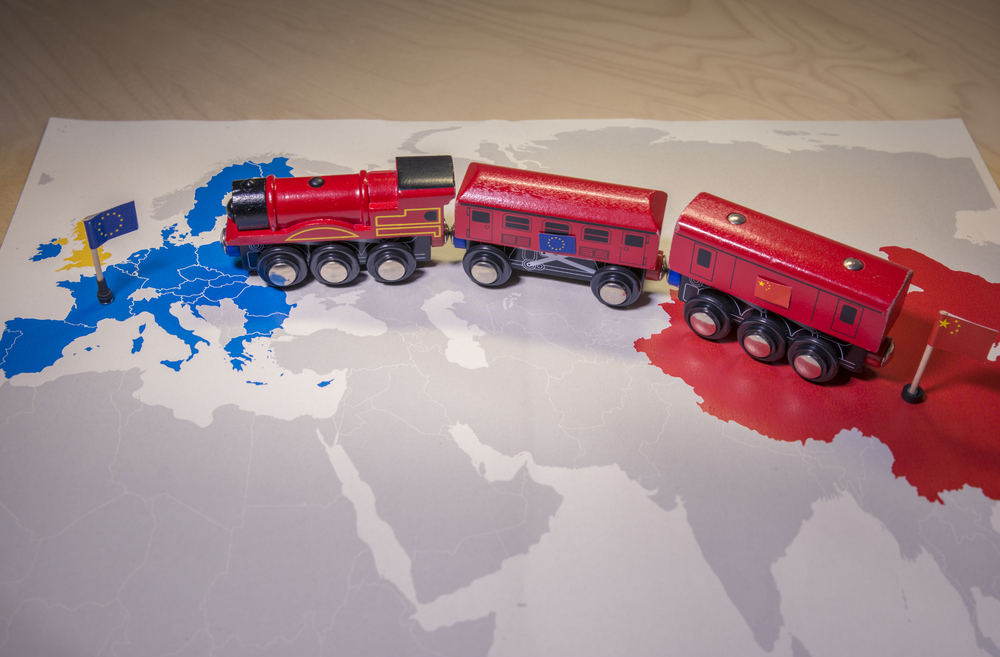
Landlocked in the heart of Central Asia, Kazakhstan is involved in regional partnerships and, pragmatic, claims to be a facilitator with balanced relations, even if the pressure to take a stand between Russia, China and the European Union is strong. This cocktail is the challenge of so-called middle power (or bridge) countries, developing multi-factor diplomacy, here constrained by geography and made possible by the country’s resources. Moreover, the development and identity of the five Central Asian countries are built around the imperative of cooperation, given the geographical position and the small number of citizens (75 million for the five countries).  The 2023 edition of the Astana Forum, formerly economic and renamed Astana International Forum, was structured around four themes: foreign policy and international security, international development and sustainability, energy and climate change and economy and finance. This forum supports the development of international action: dialogue of international themes, with the desire to propose answers, desires to become a reference on the world scene without forgetting a public relations dimension. This has resulted in Kazakhstan’s diplomacy being described as ‘niche diplomacy’ (for uranium exchanges) or multi-vector diplomacy[1]. Since February 2022, the Belt and Road Initiative, China’s connectivity project, no longer pass through Russia. Kazakhstan is at the centre of the EU-funded Asia-Europe Transport Road (or Trans International Transport Road). This is one example where the economy, originally considered by Joseph Nye as a resource of hard power, becomes a factor of attractiveness and image for a country. In terms of analysis, considering a continuum – not a strict dichotomy – between hard power and soft power allows for more flexibility between projects and resources. This multilateral institutional program connects the rail freight container transport networks of China and the EU. The multimodal transport structure connects the Caspian and Black Sea ferry terminals with the rail systems of Asian and European countries. The route starts from Southeast Asia and China, crosses Kazakhstan, the Caspian Sea, Azerbaijan, Georgia, and Turkey. The so-called middle corridor is present in the speeches and in the initiatives and funding of the European Union and China. This land logistics link between the China and EU trading zones goes beyond transport to digitation of data and complying with European Union and UN standards. Therefore, several models are facing together depending on the view of China or the Union. Beyond this situation, what are the challenges for this middle power and in the broader context of countries that voluntarily and reasoned choose an identical approach and positioning? A successful solution for a middle power means choosing specific negotiating topics in the international space, being agile and flexible, and knowing how to build coalitions to defend them. In the context of multilateralism, it is necessary to structure actions for a convergence between its interests and those of the partners rather than on an ideology. This is one of the conditions for becoming credible, for developing its discourse and, ultimately, to be perceived by the international community as a country with positive contributions. And beyond this community, by the public, which comes down to finding its place on the world map in the long term, when the country becomes known and better identified. Diplomacy becomes public, because it consists of informing, or even dialogue with public opinion. Thus, the Astana Forum presents a middle power capable of building a regional dialogue with experts, politicians, and international actors, which contributes to the construction of legitimacy and the ability to influence through contacts, cooperation and media coverage. Being a middle power also means being courted in alliance competitions whose number and formats become exponential, which generates as many acronyms as possible, here China + C5 and EU + C5. Two recent summits, beyond content and photos, tell the stakes. The China-five Central Asian summit took place in May 2023 in Xi’an, China with the signing of 54 multilateral agreements. The meeting of the European Union and the five Central Asian countries took place at the beginning of June in Cholpon Ata, Kyrgyzstan. These are the five countries being courted no doubt with strong pressure to choose one or the other alliance, hence the tensions and questions of cooperation already mentioned. Moreover, contradictions exist between the possibilities and wills of the middle powers and the driving force of international institutions, structures with more rigid rules, including, for example, the Security Council. A new paradigm is emerging: the role of coalitions. Finally, middle-power countries must balance their national interests, common international challenges such as climate change, and building alliances and coalitions. Claims of middle powers, alliances and coalitions and connectivity programs may be shaping the geopolitics of tomorrow.

Diplomacy
Dark blue sky with cumulus clouds and yellow rhombic road sign with text New World Order

The World is Changing: Who Will Set the Rules?

by Filippo Fasulo

Pivot to Asia - The Global South is on the march in their attempt to reshape the international system. How will this new order impact the old world? An increasing number of countries from the Global South, especially in Asia, are pushing to redefine the current global order. Three key trends to watch in this attempt to reshape the international system are the (potential) creation of a new economic order, the expansion of the BRICS grouping, and the transformation of China-Russia relationship after the invasion of Ukraine. In this changing international balance, Europe is losing its influence in the Global South, including in Asia. After centuries of global predominance, Europe’s strongest legacy is its role as a major normative power in global affairs. However, this reputation as a rule-setting power is set to change.   Why it matters 1. A (new) economic order. The debate over a “new Washington Consensus” has gained momentum after US national security advisor Jake Sullivan delivered a speech at the Brookings Institution on April 27th. The final communiqué by the G7 countries which met in Hirosahima on May 19-20 is the result of a similar strategic shift within the group, one that implies a move from economic interdependence to economic security. This shift is coupled with a major change in how the G7 intends to deal with emerging economies, such as their rival China and other partners in Asia that might soon become economic competitors in critical technologies. The G7’s sentiment has moved from promoting globalization and open markets to building industrial capacity in critical sectors, while securing existing and creating new strategic supply chains. Europe’s efforts in this context might not be enough: the investments envisaged so far are too little to reverse Europe’s dependency (often on China) in critical sectors. The EU must focus increasingly on diversifying its supply chains through securing access to rising economies in the Indo-Pacific. Here, joining the Comprehensive and Progressive Agreement for Trans-Pacific Partnership (CPTPP) could represent an opportunity.  2. BRICS+? The BRICS foreign ministers’ summit in June was yet another steppingstone toward enlargement. The countries that expressed a significant interest in joining the grouping are Iran, Saudi Arabia, the United Arab Emirates, Cuba, Democratic Republic of Congo, Comoros, Gabon, and Kazakhstan: all these countries sent their representatives to Cape Town. Egypt, Argentina, Bangladesh, Guinea-Bissau and Indonesia participated virtually. While the membership process might be a long one, the group’s upcoming expansion highlights the Global South’s political will to rise its voice, with a plethora of actors eager and able to leverage the new competition between powers which is shaping up after the Ukraine war. In this framework, Asian countries such as China and India are competing with one another to lead the BRICS.   3. China and the Stans. On May 19, Xi Jinping met in Xi’an with the (leaders of) the five Central Asian “Stan”-countries (Kazakhstan, Uzbekistan, Kyrgyzstan, Tajikistan, and Turkmenistan). Russia, the region’s traditional kingmaker, was noticeably absent. The meeting kickstarted – for the first time offline – a summit named C+5 and highlighted Beijing’s belief that it can now make deals within the region without Moscow’s supervision. China’s newfound independence in Central Asia and Moscow’s growing dependence on Beijing after the war in Ukraine provides new insights the on China-Russia relationship: although the two countries are united by their common desire to contest the US-led world order, the Sino-Russian relation seems increasingly tilted in China’s favor. This instable relationship could result in a stronger Chinese presence in Central Asia.  4. Loss of strategic centrality. Europe does not only risk becoming increasingly peripheral in world affairs, but also losing its bargaining power with the emerging Indo-Pacific economies. On the one hand, the EU needs to diversify its supply chains away from China and likely towards the ASEAN; on the other, the Global South – and by default its Asian members – is more aware of the current strategic window of opportunity to redesign the global balance of power.   Our take We are witnessing rapid changes in the international arena. In the coming months there will be increasing requests to review global norms. Therefore, the leading event will be the upcoming BRICS Summit in August: the meeting will probably certify the process to accept new members. Among the countries that are voicing their desire to reset the rules, some are considered by the West (mainly) as rivals, such as China, and as partners, like India. Therefore, Washington and Brussels cannot simply accept or dismiss their requests. Asia is claiming its century: the integration of this claim for a renewed global order into the current world order has just started. Its most important implications will be on the economic side, namely the redistribution of industrial capacity and trade relation in the context of de-risking from China.  Spotlight: G7  The G7 Hiroshima Summit has sent some clear messages to the rest of the world. The decision to invite President Zelensky to the gathering was a move meant to reinforce the unity of the members regarding the Ukraine invasion in the face of Russia — and China, too. The West has criticized China’s 12-point position paper on the Ukraine war, since it does not call for Russia to abandon occupied territories. The G7 countries have also announced a strengthening of the sanctions, seeking to curb products that could be used by the Russian military. The other important takeaway of the G7 is the joint statement directed at China, which includes a strong criticism of Beijing’s “economic coercion” and invites the PRC to play according to international rules. The G7 have also reiterated their position on divisive topics such as security in the Indo-Pacific and Taiwan, retreating their commitment to preserve peace and stability in the region. Despite the joint statement and the declarations by the leaders on the challenges posed by China, the G7’s stance on Beijing is still a balancing act. While concerned about being overly vulnerable with China, G7 economies and their industrial base remain strongly interconnected with the Asian country and despite calls for “de-risking”, such as cutting China out from some sectors like raw materials, it is impossible at the time.  Experts’ viewsThe implications of China’s activism among the BRICS countries  The next BRICS Summit will take place at a critical juncture for the Global South. Russia is still at war, Brazil has a new administration eager to flex its muscles globally, and China has reached unprecedented influence across the developing world. Since they are all connected by the same desire of multipolarity away from US and Western hegemony, it is likely that the BRICS will try to offer a roadmap towards a new international order. This roadmap, however, is far from consensual: will Russia embrace the peace dialogues offered by Brazil or African nations – and what role will China play in brokering any such proposal? Will China and the other BRICS be able to cooperate economically to promote development worldwide? Are the BRICS ready for its first enlargement, and who is most likely to join in the coming years? This arrangement will require some mutual concessions and the outcome will help shape the future world order.  Guilherme Casarões, Fundação Getulio Vargas  The push to strengthen and even expand the BRICS, especially by China, should be viewed more broadly through the lens of a pragmatic Chinese foreign policy. It has not only sought to strengthen ties within BRICS but with other regions and countries who are instrumental for its trade and infrastructure connectivity imperatives.  This happens against the backdrop of a shift towards a multipolar world order with China as a rising power and rising geo-political tensions. Given that this bloc advocates for issues that are relevant to the Global South (global governance reform, support for a rules-based international order and multilateralism in times when countries retreat to unilateral measures), it is no surprise that other countries in the South wish to join. Regarding this summit, I see no major implications for the bloc, the core business of the BRICS will continue with South Africa advancing its five priority areas. However, we can anticipate a discussion on its formal expansion. Trading with local currency seems to have found new impetus following the sanctions placed on Russia. All this notwithstanding, it is important to note that the ‘de-dollarisation’ in trade debate is not a new concept for BRICS and its less about challenging the dollar but strengthening other currencies against external economic shocks. The real test is for the host country depending on whether President Putin attends the heads of state summit in August, given Pretoria’s obligations under the Rome Statute and domestic law.  Luanda Mpungose, South African Institute of International Affairs (SAIIA)  China’s push for a stronger BRICS on the global stage is advancing along a number of trajectories. Firstly, there is the BRICS expansion as well as the BRICS+ format that are likely to bring the majority of the Global South into BRICS-related platforms of economic cooperation. The implementation of the BRICS+ format may serve as a precursor for liberalizing trade across the Global South and exploiting the potential for boosting South-South trade and investment ties. The expansion in the membership of the Shanghai-based New Development Bank as well as the creation of its regional centers will increase the scope for connectivity projects across the developing world. There is also the greater use of national currencies (most notably the yuan) via de-dollarization as well as the R5 BRICS common currency project that if launched would mark a key transformation of the global financial system.  Yaroslav Lissovolik, BRICS+ Analytics   What and Where Thailand is ready to Move Forward   The May elections in Thailand resulted in a clear victory for the opposition parties. Led by Pita Limjaroenrat, Move Forward has won 152 seats, becoming the most voted party in the elections. This party is the heir to Future Forward, which was dissolved by the military government in February 2020, and was born out of the 2020-2021 protests against the army and the monarchy. The second party in the country is the historic Thai opposition party led by the Shinawatra family, the Pheu Thai. However, while the population has expressed its preference, there is no guarantee yet that Move Forward, and the opposition, will govern. Indeed, to be elected Prime Minister, and form a government, Pita will need to win the majority in the bicameral parliament made up of the elected 500 seats in House of Representatives and the 250 seats of the Senate – whose members are handpicked by the military. The Move Forward coalition with Pheu Thai and the other opposition parties so far can count on little more than 310 votes, a long shot from the majority needed to govern. The opposition must garner support among the senators – which generally have little interest in going against the military that put them in power – or among the parties that have yet to declare their allegiance.  Cambodia: Hun Sen is getting rid of the competition ahead of July elections  On the 14 of May, Cambodia’s opposition party – the Candlelight Party – has been disqualified from running in the upcoming July elections by the country’s election commission. The party has allegedly failed to submit the necessary documentation to participate in the electoral race. With the exclusion of the Candlelight Party from the coming elections, the only possible competitor to the ruling Cambodian People’s party (CPP) of PM Hun Sen – who has been in power for 38 years – has been eliminated. This is not the first time that the main opposition party has been cut out of the electoral race. For instance, in the 2017 the Cambodian court, which is heavily colluded with the CPP, dissolved the Cambodian National Rescue Party (CNRP) before the 2018 general elections – a party that was given new life when its members created the Candlelight Party. However, the members of the opposition continue to be persecuted by Hun Sen’s forces with many political exponents arrested on charges of treason, assaulted, or forced to leave the country. With the opposition forces largely depleted and the main party banned from running for elections, Hun Sen is likely guaranteed another term.   The United States seeks to expand influence in the Indo-Pacific  Washington took advantage of two key international events to strengthen its strategic position in the region. During the Quad Leaders’ Summit, which took place on the sidelines of the G7 in Hiroshima, President Biden, Australia’s PM Albanese, PM Kishida of Japan and PM Modi of India stressed their unity and stated their plans to invest in digital infrastructure in the region. Throughout the meeting they did not mention China directly in their statements, but their references to the country were clear. The Quad expressed concern over the militarization of the region and the use of both economic and military coercion to alter the status quo – a clear reference to Chinese activity in the South China Sea. Another important step for the US to consolidate its position in the region is the announcement of the Supply Chain Agreement under the framework of the Indo-Pacific Economic Framework for Prosperity (IPEF). The agreement includes the 14 IPEF partner countries, namely Australia, Brunei, Fiji, India, Indonesia, Japan, Malaysia, New Zealand, the Philippines, Singapore, South Korea, Thailand, the US, and Vietnam. A year following the launch of the IPEF, this agreement is the first practical measure undertaken by the group. The group did not announce any official trade commitments, there is expectation among partners for increased cooperation and monitoring of supply chains fragility. The concrete development is still unclear, but the agreement signals the need for Indo-Pacific countries to avoid supply chain disruption and to minimize their dependence on the region’s main economic player, China.  Semiconductors: China fires back   China has gone on the offensive in competition over the semiconductor sector. The Cyberspace Administration of China (CAC) has stated that products by Micron, the US largest memory chip maker, are a “security risk for the information infrastructure supply chain” barring infrastructure operators from buying them. While additional information has yet to be revealed, some negative impacts are expected for Micron even if China and Hong Kong accounted for only 16% of the revenue of the company in 2022. The measure is a retaliation to America’s effort to cut China out from the semiconductor sector and slow the development of its industrial base. Since October 2022, the Biden Administration has imposed strict controls over chips export, followed by the Netherlands and Japan, preventing China from accessing and producing more advanced semiconductors. China’s declaration comes also after the leaders of the G7 grouping released a statement criticizing the country’s economic coercion tactic. After the move from Beijing, Micron fears that their products will be replaced by South Korean competitors, Samsung and SK Hynix, on the Chinese market. In the rising technological row between the US and China, there is also fear that Beijing might choose to put some export controls over other sensitive technologies, such as solar panels – where China dominates the whole supply chain.    TREND: Despite rate hikes, Asian unemployment is faring well (but not for everyone)  In the current context of high inflation and high rates, unemployment has turned out to be one of the main socio-political issues of Asia. With skyrocketing prices hurting businesses and consumers, many central banks in the West have adopted more hawkish monetary policies during the last year. Yet, the soaring cost of money has forced many businesses into a tight spot with concerning consequences on the employment level. Some countries though – like Japan, China, and Indonesia – have made the unorthodox choice to not significantly raise rates during the last year, while others – like South Korea and India – have adopted similar policies to those of the FED and the ECB. However, the results vary. In Japan the unemployment rate has been quite steady at around 2.6% for some time now, but in China the range (5.2-5.7%) was wider, especially due to the uneven nature of the post-Covid economic recovery. Yet, as the economy is slowly returning to normal, Beijing’s unemployment rate is gradually decreasing. Meanwhile Korea has consolidated a positive trend, with the last available figure at 2.5%, but the reforms of the labor market proposed by President Yoon Suk-yeol may cause some issues. The critical indicator though will be youth unemployment. Employment in aging societies, like those of East Asia, will increasingly become a core issue to maintain the viability of existing social welfare programs. So far China has a staggering 20.8% unemployment rate in the 16-24 years old age group which is particularly concerning, as it is the 7.2% recorded in South Korea. Japan is faring quite well but unemployment in the 25-34 years old age bracket has risen since the beginning of the year from 3% to 4%.

Diplomacy
Joe Biden with Prime Minister of India Narendra Modi

Modi in Washington: A Symbolic Visit for a Substantive Partnership

by Husain Haqqani , Aparna Pande

Officials from the United States and India occasionally have some difficult private conversations about Ukraine and India’s domestic politics. But the official state visit this week by Indian Prime Minister Narendra Modi to the U.S. will mainly be about showcasing the strength of the two countries’ burgeoning partnership.   Modi and President Joe Biden both need the optics of a visit rich in symbolism to demonstrate the substantive achievements of a relationship based on shared concerns about China and multi-billion dollar deals in technology and defense. Modi wants to highlight his standing as a world leader ahead of the 2024 Indian election. Biden wants to underline that, contrary to the criticism of some, he does have a plan to deal with China’s rise and the U.S. has lined up partners and allies to execute that plan. Indian prime ministers have been regular visitors to Washington D.C. since India’s independence in 1947. But Modi’s visit is only the third time an Indian prime minister will be given official state visit protocol, including a state banquet at the White House on June 22.  The fifth Indian prime minister to address a joint session of Congress, Modi will be the only Indian leader to do so for a second time. Indians will be thrilled by the attention given to their prime minister, and the speeches about shared values and similar strategic vision of the world’s oldest and largest democracies will play well in the Indian media.  But the visit will not be about just pomp and show. Trade in goods and services between India and the U.S. reached $190 billion last year and the U.S. is now India’s largest trading partner. Companies from the two countries have made significant investments across borders and Indian and American enjoy close people-to-people ties. Moreover, the U.S. is keen to “friendshore” with India to deal with the threat America sees in China’s rise, and to ensure supply-chain resilience. This involves shifting the manufacturing of certain critical components from China to friendly countries, especially India. The U.S. is funding Indian technology startups and infrastructure projects from its $200 billion Partnership for Global Infrastructure and Investment (PGII) Fund.  India, as the world’s most populous country, represents a large potential market for U.S. companies currently reducing their Chinese presence. When Air India, India’s largest airline, decided to purchase 220 Boeing aircraft in a $34 billion deal, Biden celebrated, saying it “will support over 1 million American jobs across 44 states, and many will not require a four-year college degree.” U.S. aerospace and military industries have wanted a greater share of the Indian market for years.  This January, India and the U.S. announced the launch of the U.S.-India Initiative on Critical and Emerging Technologies (iCET) to the pave the way for “technology value-chain partnerships that would lead to co-development and co-production of high technology products and services in both countries,” in the words of National Security Adviser Jake Sullivan.  During a recent visit to Delhi by Secretary of Defense Lloyd Austin, a defense industrial roadmap was unveiled, reflecting an American willingness to share state-of-the-art technology with India. But India wants to build an indigenous defense industry and is keen on American technology and investment, while the U.S. wants India to stop purchasing military equipment from Russia and buy more from the United States. Historically, that divergence has resulted in announcements that have not always resulted in implementation.  For the Modi visit, the two sides have planned two key defense related deliverables: the purchase by India of 30 General Atomics-manufactured Predator or MQ9B Sea Guardian drones for $3 billion, and an agreement between General Electric and Hindustan Aeronautics Limited to coproduce GE-F414 turbofan engines for India’s indigenous Tejas Mark-2 fighter jet. India and the U.S. have a long way to go before reaching the $500 billion mark in bilateral trade, which experts see as the future potential of the trade relationship. Americans blame India’s default preference for protectionism, reluctance to offer a level playing field to domestic and foreign players, strict digital privacy rules, and historical skepticism towards free and open trade. Indians complain that America is used to allies who are junior partners, not a country that is not an ally and wants to be treated as an equal. India is not alone in that view in an era when several powers want recognition and are showing a preference for economic and technology partnerships, rather than military alliances.  India is not a treaty ally of the United States, but a partner that prides itself on its strategic autonomy and one that has reservations about how it was treated by U.S. officials in the past. The closest equivalent of that in U.S. experience from the Cold War era would be France under the Gaullists. But just as the U.S. overcame its reservations about real or perceived French prickliness in the interest of preserving the Atlantic Alliance, Americans realize the importance of India in their plans for maintaining a rules-based international order.

Diplomacy
President of Colombia Gustavo Petro shaking hands with Nicolás Maduro, President of Venezuela

Re-launching Colombia's Neighbourhood Policy

by Stefan Reith , María Paula León,

President Petro seeks rapprochement with Venezuela Colombia and Venezuela were once part of the same state, have shared a history since their creation, have the same colours on their flags and share a 2,219 km border. What happens on one side of the border affects the other. However, relations between the two sister nations have not always been friendly and have experienced some very critical moments. The inauguration of Gustavo Petro as Colombian president in August 2022 marked a turning point for the prospects of bilateral relations, especially politically, but also economically and socially.The story of a complicated relationshipDespite the traditionally close political, social and economic ties, bilateral relations have been fraught with tension in recent decades. For example, the armed conflict in Colombia led to considerable emigration of Colombians to Venezuela for many years from the second half of the 20th century. The inauguration of Hugo Chávez as President of Venezuela in the late 1990s marked another turning point in relations between the two countries. For more than a decade, bilateral relations were marked by profound differences between Chavez's leftist government and Colombia's conservative government. The panorama deteriorated further when Nicolás Maduro took office in 2013, following the death of Hugo Chávez. Relations between the two countries suffered from the complex humanitarian emergency in Venezuela and the start of mass migration to Colombia triggered by the "Operation to Liberate the People". This operation forced about 22,000 people, mostly Colombians, to leave Venezuela in 2015. According to unofficial data, this number could be as high as 32,000. Ten years later, according to the R4V Coordination Platform for Migration from Venezuela, more than 7 million people have left Venezuela, of which about 2.5 million have resettled in Colombia. While relations were already going through a phase of erosion after the last presidential summit between Juan Manuel Santos and Nicolás Maduro in 2016 and the border closures pushed by Maduro, the discourse against the Venezuelan regime intensified when Iván Duque took office as Colombian president. Bilateral relations were de facto severed in 2019 after Colombia recognised Juan Guaidó as Venezuela's interim president and attempted to force the Maduro regime to allow humanitarian aid into the country with a concert at the border. In February 2019, Maduro decided to sever diplomatic and consular relations with Colombia and gave all Colombian diplomatic personnel 24 hours to leave Venezuela. The common border has been closed three times in the last seven years. The longest period, during the Duque government, was from March 2020 to October 2021 (570 days). This was the longest border closure in the history of both countries. While foreign policy towards Venezuela was at an impasse due to broken relations as well as the recognition of oppositionist Juan Guaidóas a legitimate president, former President Duque focused on measures to protect and integrate Venezuelan migrants at home. The most important of these is the "Temporary Protection Statute for Venezuelan Migrants" (ETPV), a complementary procedure to the international protection system for refugees that allows Venezuelan migrants to move from temporary protection status to normal migration status within a period of 10 years. Today, around 1.5 million migrants already have the Temporary Protection Permit (PPT) and thus a secure, 10-year legal residence status. The Duque government's innovative and generous migration policy has been recognised worldwide. Restarting relations under President PetroSince the Petro government took office on 7 August 2022, circumstances have changed. For the first time in many years, the presidents of both countries are supposedly on the same side of the political spectrum. Already during the election campaign, Gustavo Petro had announced the resumption and normalisation of relations with Venezuela in case of his election victory. In the meantime, Petro has already paid several visits to Venezuela, as have the First Lady, Verónica Alcocer, the Foreign Minister, Álvaro Leyva, and the Minister of Trade, Industry and Tourism, Germán Umaña. In his seven months in office, Petro has already travelled to Venezuela four times to meet with President Maduro. Critics, however, criticise the lack of institutionalisation and intransparency of these meetings. So far, no bilateral thematic agenda has been revealed to flesh out the political declarations of intent to normalise relations. There is a lack of transparency and information and there are no joint statements on the content of the meetings. In recent months, ambassadors Armando Benedetti (Colombia) and Félix Plasencia, who was later replaced by Carlos Martínez (Venezuela), were appointed. On 26 September 2022, the border reopened at the Simón Bolívar Bridge. Subsequently, the Atanasio Girardot Bridge was inaugurated and the "Agreement on the Promotion and Mutual Protection of Investments" and the "Recast of the Partial Scope Agreement No. 28", which had governed trade relations between the two countries since 2011, were signed. President Petro places the expansion of trade relations at the centre of his Venezuela policy. German Umaña, current trade minister and former director of the Colombian-Venezuelan Chamber of Commerce, is considered an expert on Venezuela. According to the Táchira Chamber of Commerce, trade with Colombia reached USD 600 million in 2022, twice as much as in the previous year, but much less than expected by the authorities.  Trade relations are (still) a long way from earlier times, when Venezuela was Colombia's second-largest trading partner. Another important issue in the normalisation of relations is the restoration of consular relations. So far, however, progress on this issue has been slow. The opening of the first Venezuelan consulate in the Colombian border town of Cúcuta was announced only a few days ago. Moreover, the facilities are not yet fully functional. Expectations for the normalisation of relations are high, especially in the border region. In addition to a functioning consular operation in both countries, the regulation of public transport and the re-establishment of air connections as well as a stronger reactivation of trade are needed. It remains to be seen how long it will take for trust to be restored with Venezuelan partners and for economic and social relations to return to the level of earlier times. Parallel to the rebuilding of bilateral relations, a change in the discourse on the migration of Venezuelans to Colombia can be observed in the Colombian government. This important issue does not seem to be on the bilateral agenda - notwithstanding projections that the numbers of migrants to Colombia will continue to increase, reaching almost three million people by 2023, according to R4V projections. At the national level, President Petro seems to want to shift the focus on the migration issue, seeking to extend the legalisation of immigrants under the ETPV to other nationalities and dismantling part of the institutional framework. The most drastic decision in this regard was the abolition of the Office for the Care and Socioeconomic Integration of Venezuelan Migrants. The office, created in 2018, was previously considered a key instrument for effective implementation of migration and integration policies, as well as for coordination between local and regional governments and the national government. When President Petro took office, the migration issue was transferred to the Ministry of Foreign Affairs; however, many processes and responsibilities remain unclear, as experts criticise. Critics suspect that the Maduro regime may be pushing to exclude the uncomfortable migration issue from the political and public discussion in order to make progress on other issues in return. Despite the symbolically important resumption of relations and progress in some aspects, major challenges remain in political, economic, migration and security terms. Representatives of civil society and the private sector are calling for a concrete bilateral working agenda as well as more transparency and participation beyond the symbolic politics visible so far.Energy transition and "complete peace"Gustavo Petro came to government with the promise of profound change. The revival of relations with Venezuela is part of this domestic and foreign policy paradigm shift because it is central to the planned energy transition and the "complete peace" propagated by Petro. Thus, gas imports from Venezuela are to support Colombia's exit from coal and oil production. And in the negotiations with the ELN guerrillas, the regime of Nicolás Maduro sits at the table as a guarantor state. The proposal to rely on gas imports from Venezuela in the future has met with criticism from the opposition and experts, as it would put Colombia's currently self-sufficient energy supply at risk and place it in a relationship of dependency with Venezuela.  Although Colombia has proven gas reserves for eight years and sufficient capacity not to depend on other countries for its desired energy transition, the government is considering the possibility of not signing any more contracts for the exploration and exploitation of oil and gas. Instead, gas imports from Venezuela are to fill the expected energy gap. The debate is taking place in the context of Russia's war of aggression against Ukraine, which is not only driving up international energy prices, but also highlights the risks of making one's sovereignty dependent on other countries for energy supplies. According to the Colombian Natural Gas Association (Naturgas), importing gas would increase the price for Colombian households by about five times. President Petro, on the other hand, publicly stated that Colombia was already importing gas from other countries. While gas prices were rising, private actors were enriching themselves, the president said. Experts question whether Venezuela will really be able to supply gas in the quantities needed, given the state of its current infrastructure.  Whether the early phase-out of fossil energy production and the massive expansion of renewable energies propagated by President Petro in the election campaign will really be supported by gas imports from Venezuela is currently still an open question. Beyond the government's political rhetoric, there are increasing signs that state revenues from oil and gas production will be necessary in the medium term to finance a sustainable energy transition. Besides the energy transition, Venezuela is also an important actor for the Colombian peace process. The Petro government's decision to make Venezuela the guarantor of the negotiation process with the National Liberation Army (ELN) was therefore not unexpected. As a binational guerrilla active on both sides of the border, negotiations with the ELN are hardly realistic without Venezuela's participation. According to information from InSight Crime, the ELN has a permanent presence in eight states of the neighbouring country; at least five members of the central command have their permanent residence in Venezuela. Nevertheless, critics accused the president of unnecessarily legitimising Nicolás Maduro's regime internationally through this mediating role. Security experts consider it paradoxical to appoint Nicolás Maduro as guarantor of the process, as there is evidence of cooperation between Venezuelan security forces and the ELN. It is therefore uncertain which interests the Maduro regime represents in accompanying the negotiations.President Petro in the mediating roleWhereas under its predecessor governments, Colombia was recognised internationally as an actor that clearly criticised the dictatorship of Nicolás Maduro, the humanitarian crisis of the Venezuelan people and the resulting refugee migration flows to other countries, the discourse has now changed. Petro sees himself more in the role of mediator to alleviate Venezuela's isolation and to support dialogue on democratic elections in the neighbouring country. The issue of Venezuela played an important role during his state visit to the US. In talks with the US government, he advocated an easing of sanctions against Venezuela if Maduro was willing to make concessions in return. In his speech to the Permanent Council of the Organisation of American States (OAS), he proposed rewriting the democratic charter to put Venezuela and even Cuba back on the path to democracy. Another example of Colombia's new mediating role was the International Conference on Venezuela in Bogotá on 25 April, to which the Petro government invited representatives from more than 20 countries. The initiative was endorsed by the Maduro regime, the United States and part of the Venezuelan opposition. According to Colombian Foreign Minister Álvaro Leyva, the aim of the conference was to unblock negotiations between Maduro and the Venezuelan opposition in Mexico in order to hold democratic elections in Venezuela and, in turn, to persuade the international community to end economic sanctions. Attention was drawn to the expulsion of Juan Guaidó, who entered the country illegally and was immediately put on a scheduled flight to Miami by the Petro government. The conference did not lead to concrete results; even a joint final declaration was missing. Afterwards, participants described the conclusions of the Colombian government as one-sided. Whether the Petro government's continued rapprochement with Venezuela can also convince the international community to ease sanctions will largely depend on the progress of negotiations on democratic elections between Maduro and the opposition.ConclusionDespite some important steps such as the opening of the border and the resumption of diplomatic relations, it is still too early to make a conclusive assessment of the prospects for Colombian-Venezuelan relations. Political rhetoric and symbolic politics are contrasted by a bilateral thematic agenda that is still barely discernible. The ultimately unsuccessful political approach of the previous Duque government, which was characterised by non-recognition and the goal of replacing Maduro's regime, has given way under President Petro to an open attitude that is willing to engage in dialogue. Critics accuse President Petro of not taking sufficient account of the authoritarian character of the Venezuelan government in the course of the rapprochement and of strengthening the Maduro regime in its self-chosen role as international mediator and advocate for the easing of sanctions. While the tone and interpersonal relationship between political leaders on both sides of the borders has visibly eased, structural challenges and clashes of interests - migration to Colombia, the role of the ELN, economic interests, security and drug trafficking - remain and require complex and institutional approaches. While the Maduro regime can play for time in negotiations with the opposition to secure its own hold on power, President Petro has only one term in office to implement his ambitious domestic and foreign policy agenda. Venezuela is an important player and possible partner in this, especially with regard to the peace process and the desired energy transition. President Petro still has more than three years left in his term to prove that his détente course towards Venezuela is the better policy approach to strengthen democracy, security and development in the region.

Diplomacy
Annie Raja General Secretary of National Federation of Indian Women protesting against the Taliban takeover of Afghanistan

India-Taliban relations: A careful balancing act, driven by pragmatism

by Vinay Kaura

An ongoing power struggle for the position of ambassador at the Afghan embassy in New Delhi underlines India’s diplomatic quandary about the nature of its engagement with the Taliban regime in Afghanistan. India’s Ministry of External Affairs (MEA) has not issued any public statement regarding the dispute between representatives of the previous Islamic Republic of Afghanistan and the Taliban’s Islamic Emirate of Afghanistan over who should occupy the post, but reports suggest India has conveyed to both sides that they need to settle their internal issue on their own. However, the fact that the visa of Qadir Shah, the person appointed by the Afghan Taliban as chargé d’affaires in New Delhi, has reportedly expired further complicates the power struggle. If the Indian government decides to extend Shah’s visa, it would interpreted as India’s willingness to accept a Taliban-appointed diplomat in the Afghan embassy in New Delhi. Following its seizure of power in August 2021 after overthrowing the U.S.-backed Ashraf Ghani government, the Taliban regime has been seeking international diplomatic recognition along with Afghanistan’s seat at the United Nations. The Taliban regime has so far taken control of more than a dozen missions abroad, but India is yet to have a Taliban-appointed ambassador. In March, the Taliban regime’s spokesman, Zabihullah Mujahid, revealed that “efforts are underway to take charge of other diplomatic missions abroad. [...] Diplomats of the former government are continuing their activities in coordination with the [Taliban] Foreign Ministry.” Afghan embassies in Pakistan, China, Russia, Iran, Turkey, Kazakhstan, and some other Arab and African countries are now working under Taliban-appointed diplomats. India’s involvement in Afghanistan The security, economic, and humanitarian vacuum left by the withdrawal of American troops has significant implications for India’s interests in Afghanistan. India has always required and worked for a relatively stable Afghanistan free from threats by terrorist groups. Without formally recognizing the Taliban regime, in its many recent official statements India has made clear that it recognizes the reality on the ground. While India has also underscored the need for the Taliban regime to reform its governance in terms of gender and ethnic inclusivity, such normative considerations are unlikely to influence the substance of the India-Taliban relationship insofar as they do not essentially affect regional stability. India has no history of military intervention or political interference in Afghanistan and New Delhi has focused on forging people-to-people connections and projecting soft power. That is why, despite setbacks due to the hasty exit of U.S. forces, India continues to maintain goodwill among ordinary Afghans and perhaps even a section of the Taliban leadership (such as Abbas Stanikzai, the Taliban’s deputy foreign minister, who is believed to have a soft spot for India). Next to the U.S., India was Afghanistan’s principal regional source of development assistance since the Taliban’s ouster in 2001. In fact, India’s engagement with Afghanistan offers a compelling example of the use of soft power. Beyond its geostrategic motives, New Delhi was determined to bolster Kabul to ensure that a radical Islamist regime beholden to Pakistan’s security establishment did not gain a foothold in the region. That India and the Taliban-led Afghanistan have gradually drawn together to the extent that they have is an example of pragmatism in foreign policy making at its best. For India, it makes sense to try to give some reason, in the form of diplomatic exchanges and developmental assistance, for the Taliban not to permit the export of terrorism from Afghan soil. For the Taliban, notwithstanding their ideological rigidity domestically, the dire need for development assistance means maintaining silence on India’s policies on the Kashmir Valley, which is predominantly Muslim.  The Taliban have sought India’s assistance in rebuilding their country. For a regime that has been diplomatically and financially isolated, its normal relationship with India also holds much pragmatic appeal, given New Delhi’s growing geopolitical influence and longstanding interest in accessing Central Asian markets via Afghanistan. New Delhi expands its presence and engagement In June last year, New Delhi decided to deploy a “technical team” at the Indian embassy in Kabul to re-establish its diplomatic presence in Afghanistan for the first time since the Taliban takeover. And soon after, when India delivered a consignment of medical supplies to Afghanistan as part of its humanitarian assistance, India’s external affairs minister, S. Jaishankar, characterized India as “a true first responder” in Afghanistan. India’s move to expand its diplomatic presence is also driven by a desire to coordinate humanitarian relief efforts. In order to avert a humanitarian crisis in Afghanistan, India supplied 40,000 metric tons (MT) of wheat overland via Pakistan in February 2022 and an additional 20,000 MT via Iran’s Chabahar port in March 2023 to be distributed through the U.N. World Food Programme (WFP), along with 45 tons of medical assistance in October 2022, including essential life-saving medicines, anti-TB medicines, 500,000 doses of COVID-19 vaccines, winter clothing, and tons of disaster relief material, among other supplies. In addition, India’s union budget for 2023-24 also made a special provision for a $25 million development aid package for Afghanistan, which has been welcomed by the Taliban. The Taliban have reportedly requested that India finish about 20 incomplete infrastructure development projects across the country. In April, during the signing of a memorandum of understanding with India for the dispatch of an additional 10,000 MT of wheat, the WFP assured India that it has the necessary infrastructure on the ground to quickly deliver the wheat to the most needy sections of the Afghan population. Recently, the MEA, under the aegis of the India Technical and Economic Cooperation Programme (ITEC), invited Afghan government officials to attend a four-day virtual course on Indian legislation and business climate. In principle, India’s outreach to the Taliban is also conducive to achieving its counterterrorism objectives. However, there is a risk of over-expectation on the part of New Delhi that the Taliban would crack down on anti-India terrorists, as well as indications that the Taliban regime continues to maintain its deep links with Pakistan’s security establishment. It has been suggested by National Defense University Professor Hassan Abbas in his recently published book, The Return of the Taliban, that the Taliban regime consulted the Pakistani military before allowing India to reestablish its diplomatic presence in Kabul in June 2022. The Taliban’s ideological constraints India-Taliban relations could be hampered by the Taliban’s internal ideological positions, which the group has clung to rigidly even at the expense of its efforts to secure international recognition. The Taliban regime banned girls from educational institutions and prevented women from working in most fields of employment, including at non-governmental organizations. Women have also been ordered to cover themselves in public and are barred from many entertainment and sports venues. External pressure, including the imposition of sanctions, has not done much to convince the rigid hardliners within the Taliban regime to change their direction on human rights, gender equality, or ethnic representation in governance. This suggests that there are limits to what India can achieve through its interactions with the Taliban. The risks for India are heightened because some Pakistan-based terrorist groups would likely criticize the Taliban regime for seeking closer ties with India. Moreover, were Kabul’s cooperation with New Delhi to pose a threat to the Taliban’s own internal ideological legitimacy, this would also serve as a check on efforts to normalize relations. Regional dynamics and prospects for cooperation The Taliban regime is enthusiastically courting other regional powers as well, such as China, Russia, and Iran, each of which has its own regional interests. For instance, in contrast to India’s passive role and limited footprint in Afghanistan, China has been expanding its diplomatic and economic presence in the country. Recently, China discussed with the Taliban regime how to bring Afghanistan into the Belt and Road Initiative (BRI) to boost investment in the crisis-hit country, while also pressing Kabul to deliver on its regional and international commitments to counter terror. In January of this year, Beijing signed a 25-year contract to extract oil from the Afghan Amu Darya Basin and is also negotiating other lucrative commercial deals with the Taliban regime. Central Asia has often been seen as a test case for Indian leadership. It is in Afghanistan that India has taken a notably more proactive approach to driving regional cooperation through connectivity initiatives. India has also used the Shanghai Cooperation Organization (SCO) platform for this purpose. With inclusion of Iran this year, membership in the Eurasian political, economic, and security organization now includes all of Afghanistan’s immediate neighbors with the exception of Turkmenistan. Early this month in Goa, India, the foreign ministers of SCO countries called for the establishment of a representative government in Afghanistan as well as the protection of women’s rights. Indian External Affairs Minister Jaishankar remarked, “Our immediate priorities include providing humanitarian assistance, ensuring a truly inclusive and representative government, combating terrorism and drug trafficking, and preserving the rights of women, children, and minorities.” While the SCO might appear a viable platform for regional cooperation, there are certain limits to its effectiveness in dealing with Afghanistan due to the divergent political and security interests of some SCO members, particularly India and Pakistan. Moreover, given Russia’s reduced international stature and Beijing’s growing leverage over Moscow due to its brutal war against Ukraine, the SCO is now a China-led organization. China is a key participant in many important regional forums where Afghanistan remains a core security concern. Since India has a very uneasy relationship with China and supports U.S.-led geopolitical initiatives, primarily the Quadrilateral Security Initiative or Quad (comprising India, the U.S., Japan, and Australia), to counter China, there are practical constraints to what India can achieve through the SCO.   While the Taliban have not yet shown the traits required for recognition as a legitimate political organization responsible for governing Afghanistan, the non-recognition of their regime should not worsen the suffering of the Afghan people. India has a clear interest in a stable and well-governed Afghanistan, not least to prevent spillover into Kashmir. For now, India’s policy toward Afghanistan remains focused on building pragmatic, if not cooperative, relations with the Taliban. India is engaging the regime on its own terms and continues to highlight its commitment to Afghanistan’s ethnic minorities and women. India is equally careful that its interactions should not be viewed as a diplomatic embrace of the Taliban or its acceptance of their repugnant governance model.

Diplomacy
President of China Xi Jinping

The Dawn of Xivilization: Israel and China’s New Global Initiatives

by Tuvia Gering

In the last two years, China's leader, Xi Jinping, has announced three global initiatives: the Global Development Initiative (GDI), the Global Security Initiative (GSI), and the Global Civilization Initiative (GCI). What exactly are they, how do they differ from the Belt and Road Initiative (BRI), and what do they imply for the State of Israel?  In the last two years, Chinese leader Xi Jinping has announced three global initiatives: the Global Development Initiative (GDI), the Global Security Initiative (GSI), and the Global Civilization Initiative (GCI). These new initiatives are a means of bolstering the legitimacy of the Chinese Communist Party, with Xi at its head. More importantly, they reflect how China’s foreign policy has evolved and the lessons learned from its global engagement in the ten years since

Diplomacy
President of Russian Federation Vladimir Putin

Putin’s Tactic of Inaction Could Backfire at Home

by Tatiana Stanovaya

Putin’s plan is to wait out what he sees as inevitable changes in the West and Ukraine. These days, however, Russia’s elites are liable to see defeatism in inaction.Nothing is happening in Russia. At least, that’s the impression given by Vladimir Putin over the past six months. On some level, the president has been extremely active, secretly micromanaging the war effort and publicly pretending to be dealing with routine matters from meetings on the economy to the launch of a tram line in the occupied Ukrainian city of Mariupol. Yet there are no presidential initiatives in the works for adapting the country to the new wartime reality and all that it involves.  Putin has stubbornly remained disengaged in this sense, despite drone strikes on the Kremlin, mercenary boss Yevgeny Prigozhin’s crusade against the Defense Ministry, and even Ukraine’s looming counteroffensive. He prefers to give lectures on history and offer optimistic assessments of Russia’s economic prospects—and pessimistic ones of the West’s. This doesn’t mean, of course, that there really is nothing happening in Russia: quite the contrary. But what is happening has far less to do with the president’s plans or strategic interests than it does with the corporate interests of individual departments and figures. What is happening is largely a response to the worsening conditions facing Russia. Take the digitization of Russia’s system for issuing conscription notices, a move forced by the difficulties surrounding conscription during a war that is not going according to plan. Or how repression has deepened, in an attempt at self-preservation by the system amid fast-growing geopolitical risks and fears of defeat. Repressive inertia and self-aggrandizement by major institutions such as the FSB and the defense and finance ministries have driven many recent decisions, including the return of ideology. Justice Minister Konstantin Chuichenko has spoken openly about the possibility of introducing a new official ideology that would extend to education, cinema, theater, and poetry. This process has long since ceased to be under Putin’s direct control and is now developing independently of him, albeit with his passive consent. Here and in other important debates, Putin’s voice is absent. Should Russia’s borders be closed? Should those who have already left have their rights restricted? Who is to be exempted from mobilization? How are those designated as “foreign agents” by the state to be punished? What should be done about Prigozhin? How should the country respond to incidents like drone strikes and attempts to assassinate “ultra-patriots”?   The stances of parliamentarians, party leaders, cabinet ministers, military bloggers, and the security services on these and other matters are all well known. Yet Putin says nothing, intervening only to take steps such as retreating from the key Ukrainian city of Kherson, suspending Russia’s participation in the New START nuclear agreement, or pulling out of the Treaty on Conventional Armed Forces in Europe. Even in his long-awaited address to the Federal Assembly, he merely listed measures already taken by the government. Today, Putin is just about the only person in Russia who is not increasingly engaged in politics, from former president Dmitry Medvedev, State Duma speaker Vyacheslav Volodin, and Security Council head Nikolai Patrushev to Prigozhin, the war bloggers, and television hosts. It is as though the president has recused himself, devoting himself to secret military and geopolitical matters, the details of which are known to few. This is not a sign of fear or weakness. Rather, it reflects Putin’s growing messiah complex. At present, literally all his political hopes and plans hinge on external changes that are out of his control. Putin has no instruments or resources with which to change the situation in his favor. Yet he believes that the world will change all the same and deliver him Kyiv’s capitulation.  Putin’s plan is to wait out what he sees as the inevitable transformation of the West and Ukraine. Any fear of a Ukrainian counteroffensive has given way to the conviction that little will change on the battlefield, beyond minor setbacks that he is prepared to tolerate. The calculation in the Kremlin is that absent a military breakthrough, Ukraine’s elite will fracture, leading to the emergence of a “party of peace” (i.e., capitulation), while in the West, internal divisions will force cuts to military and political support for Kyiv. Putin’s hopes cannot be dismissed as completely baseless, but his problem is that this approach is anathema to Russia’s restless political class. For all its loyalty and pliability, it has evolved dramatically during the war. These days, Russia’s elites are liable to see defeatism in inaction. All of this creates the conditions for the political ambitions of parastatal actors to soar. Despite their reputation for being instruments of the Kremlin, they are gradually building political capital and may one day run out of patience with the regime and challenge it. Already, Putin is struggling to explain what exactly he is waiting for.    In the first months of the war, many took notice of how the once-marginal pro-war “ultra-patriots” had matured politically and come to dominate the information space. Today, the officious hawks, such as Medvedev, Volodin, and Patrushev, are losing their place in Russian politics to the angry patriots, including Prigozhin, former Donbas commander Igor Strelkov, and the war bloggers. Compared to each other, the former seem like opportunists and armchair generals, while the latter, having emerged in combat conditions, look much more like the real thing.  The regime is not under threat so long as Putin’s ratings remain stable, and besides, the mechanism of power is still completely under his control. Yet his public paralysis and refusal to assume responsibility for the resolution of the most pressing problems facing Russia cannot but render him and his courtiers politically irrelevant and create a vacuum to be filled by the ultra-patriots. The day may come when Putin finds himself dependent on a once harmless bunch made dangerous by his opacity and inaction.

Diplomacy
President Xi Jinping with Indian Prime Minister Narendra Modi

Here be dragons: India-China relations and their consequences for Europe

by Manisha Reuter , Dr. Frédéric Grare

The border standoff between China and India illustrates the growing rivalry between the two countries – and the part that other major powers play in it On 27 April, the defence minister of India, Rajnat Singh, met his Chinese counterpart, Li Shangfu, on the margins of the Shanghai Cooperation Organisation (SCO) Defence Ministers Meeting in Delhi. The meeting was yet another attempt to find a way out of the three-year-long standoff between thousands of soldiers along the disputed border, which began in May 2020 when Indian and Chinese forces clashed in the Galwan Valley, killing 20 Indian soldiers and an undisclosed number of Chinese ones. Since then, officials from both countries have met for 18 rounds of talks to try to agree on a disengagement of troops from the area with no success. India has blamed China for unilaterally trying to move the border by sending troops beyond the Line of Actual Control (LAC) between the countries. While it is in both China’s and India’s interest to settle the dispute, Beijing seems unwilling to engage in actual negotiations about the LAC, instead expressing hope that the two sides could move on from the issue and strengthen their mutual trust.   India’s and China’s dispute along the border is illustrative of the growing rivalry between the two countries, which is shaping the security landscape and strategic environment of South Asia. China is gaining power and influence in the Indo-Pacific – where India has long been the dominant power – and using it as yet another arena for its strategic rivalry with the United States. Given Europe’s trade with the region and the complex interplay of relations between China, the US, India, Russia, and the European Union, this dynamic will have severe consequences not just for the region, but for Europe as well. Beijing has tightened its grip over the entire Indian Ocean region in the past two decades. It has created a network of military and commercial facilities – the so-called string of pearls – and strengthened its economic relations with countries of the region. In 2022, Sri Lankan debt obligations to China rose to $7 billion, while the Maldives owes some 40 per cent of its GDP to China. These economic dependencies have eroded India’s influence in its immediate neighbourhood. New Delhi had built up strong diplomatic ties with other countries in the region through its “island diplomacy” and initiatives such as the Security and Growth for all in the Region maritime cooperation. China’s investment in the region has now pushed New Delhi into an economic competition which it may ultimately have difficulties sustaining. New Delhi still exerts a dominant role in South Asia and, specifically, the Indian Ocean, but as China consolidates its position in the region, its attitude towards India has become more assertive. India remains resolute about preventing Chinese hegemony in Asia, repeatedly stressing that a multipolar world starts with a multipolar Asia, and seeking partnerships with a variety of countries, including the US and the EU. Beijing is concerned about India’s growing military ties with the US and tends to consider India’s intentions through the lens of its own rivalry with the US. India’s inability to push back China at the border also further diminishes New Delhi’s influence over the smaller regional states, namely Bangladesh, Nepal, Bhutan, and even the Maldives, by absorbing the financial, military, and administrative resources that could be spent on expanding India’s footprint in the region. It also poses questions about India’s relative power and its ability to protect smaller neighbouring countries from Chinese coercion. This leaves New Delhi even more isolated in the region that includes its arch-rival Pakistan. Both India and China insist that they want to rebuild trust but they cannot agree on the process. Because it currently has the upper hand, China would like trust building to remain a strictly bilateral matter and does not want organisations such as the G20 and the SCO, the other three BRICS states – Brazil, Russia, and South Africa – or even the ASEAN-led institutions to play any role in the so far hypothetical normalisation process. In doing so, China challenges India’s multilateral aspirations and de facto reduces New Delhi’s capacity to manage collectively the consequences of China’s rise for itself and the region. The war in Ukraine makes this even easier as Russia, traditionally on India’s side in multilateral regional arrangements, seems distracted and neutralised by its new, albeit uneasy, proximity to China. The escalating tensions and aggression since 2013 are therefore no coincidence. Beijing’s coercion on the border and naval build-up in the Indian Ocean force India into a costly arms race and warn it against what Beijing considers excessive proximity to the US. In the ongoing great power competition between China and the US, every issue becomes a zero-sum game. This makes it harder for India to solve its border conflict with China and at the same time manage China’s rise and growing assertiveness in the Indo-Pacific region in a peaceful manner. Strengthening India’s position in South Asia and the Indian Ocean region is in line with Europe’s own interests in free trade and supply chain resilience, as well as sustaining a multipolar world order – one in which countries’ political decision-making is not restricted by their economic dependency on China. In this regard, India should play a crucial role in the EU’s diversification and de-risking strategy. The Indo-Pacific region accounts for 40 per cent of the bloc’s extra-EU imports and 27 per cent of its total exports, most of which are sea-borne. As such, the Indian Ocean is Europe’s primary gateway to the Indo-Pacific region. China and India may be slowly but effectively moving towards a new phase of antagonistic rivalry. While the prospect of open confrontation remains only a distant possibility, further polarisation of India-China relations in the Indian Ocean is a problem not only for India, but also for Europe. The EU declared India a priority partner in its 2021 Indo-Pacific strategy, but its relationship with New Delhi has long been characterised as not living up to its full potential. Europe’s growing disillusionment with China over the past two years has shown the need and prepared the ground to further strengthen relations with India. The EU should prioritise the establishment and implementation of  the EU strategy for cooperation in the Indo-Pacific, the EU-India free trade agreement, the Trade and Technology Council, and the Connectivity Partnership to demonstrate its commitment and effectively move beyond symbolic cooperation with India.