Subscribe to our weekly newsletters for free

Subscribe to an email

If you want to subscribe to World & New World Newsletter, please enter
your e-mail

Defense & Security
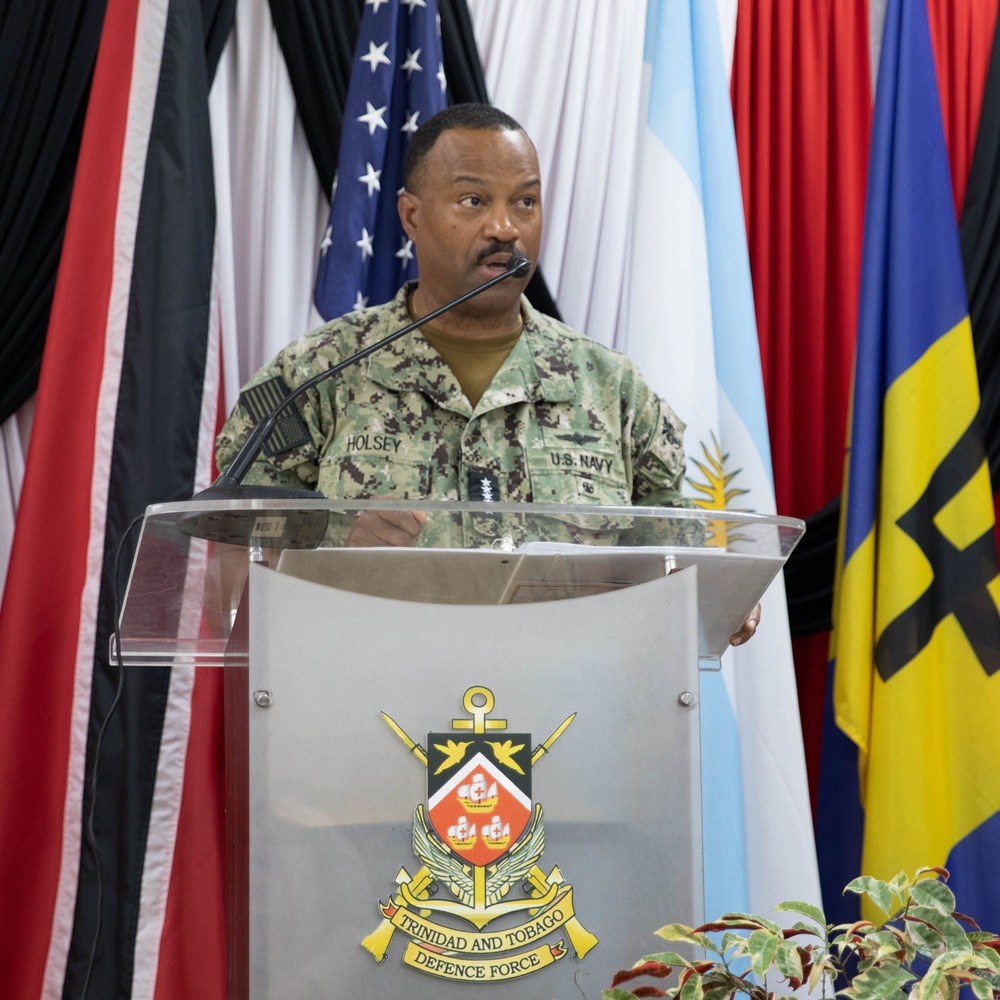
U.S. Navy Adm. Alvin Holsey, commander of U.S. Southern Command (USSOUTHCOM), provides remarks at the TRADEWINDS 25 (TW25) closing ceremony at Teteron Barracks in Teteron Bay, Trinidad and Tobago, May 8, 2025. U.S. Army National Guard photo by Spc. Astia

Imperialism by Invitation: Murder, Mafioso Politics and Caribbean-Venezuelan Futurity

by Zophia Edwards , Corey Gilkes , Tamanisha John

Amidst US bombs and lies about Venezuelan drug trafficking as a pretext for regime change, the subordinated position of Caribbean states’ economies plays a role in U.S. aggression. It is no exaggeration to say that for over half a millennium, the Caribbean has been a stage for imperial incursions. In the past two months, the US has increased its military presence in the Caribbean Sea, including carrying out an airstrike campaign, while claiming that these operations are necessary to protect US citizens from illicit drug trafficking allegedly occurring off the coast of Venezuela. As of November 15th, the US military has launched eleven deadly air strikes on small boats in Caribbean waters and eleven on South America’s Pacific Coast, killing over eighty people. In these operations, the US Navy also raided a tuna fishing boat, detaining the fisherfolk on board for several hours before releasing them.[1] To date, the US government has not provided any proof of its claims that the people it publicly executed are trafficking drugs. These extrajudicial killings have struck fear into the hearts of millions of ordinary people across the region, especially the fisherfolk who depend upon traversing the sea for their livelihoods. Meanwhile, Caribbean countries have either blatantly come out in support of the imperial violence at their doorsteps or been hesitant to respond. When these attacks began, Trinidad and Tobago (T&T) as well as Guyana expressed enthusiastic support for US militaristic incursions and extrajudicial murders.[2] As tensions escalated, the Guyanese government attempted to backpedal from its original position. However, the T&T Prime Minister, Kamla Persad Bissessar, has maintained a pro-US stance. PM Persad Bissessar is on record saying, “I have no sympathy for traffickers, the US military should kill them all violently.”[3] This position by the T&T government was reiterated even after the US murdered two of its citizens, Chad Joseph and Rishi Samaroo, in these airstrike campaigns. T&T allowed the US warship, USS Gravely, a guided-missile destroyer, to dock in the country’s capital between October 26-30 and for US military agents to “address shared threats like transnational crime and build resilience through training, humanitarian missions, and security efforts” on T&T soil.[4] The Caribbean Community (CARICOM) - the intergovernmental regional organization - has dragged its feet to take a position, waiting a whole month on October 18, to release a presser wherein it reaffirmed the region as a “zone of peace,” with Trinidad and Tobago excepting itself from this stance. The foot dragging is sinister when it is known for a fact that the US propaganda of conducting “anti-narcotics” operations is/are a ruse. These hostile US military aggressions in the Caribbean Sea and on South America’s Pacific Coast are part of a broader US imperial geopolitical strategy aimed at toppling the government of Venezuelan President, Nicolás Maduro. The aim, as Trump has publicly intimated,[5] is to get the Venezuelan government to grant the US more beneficial access to Venezuela’s resources. One might ask: Why are governments, like Trinidad and Tobago, enabling US imperial terror in the region? And why have CARICOM governments not taken an unequivocal anti-imperialist position? The answer lies in the subordinated position of these states’ economies within the global economy. Caribbean states are historically structured to be neoliberal, pro-imperial, and anti-democratic – while political elites are beholden to enacting external interests. Moreover, internal political dynamics – in terms of racial and class struggles – are also a factor, influencing the timing and intensity of these Caribbean governments’ responses to present US imperial terror. Debunking the Myth of the Venezuela Narco State The first order of business is dispelling the myth that Venezuela is a ‘narco-state.’ US officials have framed the current operations — boat strikes, deployments of destroyers and aircraft — as counter-narcotics efforts designed to stem the flow of illicit drugs from Venezuela to the US. However, the Caribbean route is not among the primary conduits for major volumes of cocaine and methamphetamines into the US. Most trafficking flows of narcotics to the US are overland, through Central America and via Pacific routes.[6] It is no surprise therefore that the US government has not provided any proof of its claims that the people it has extrajudicially murdered in the Caribbean Sea or on South America’s coast are engaged in drug trafficking. Additionally, the scale and nature of force being used are far beyond what traditional interdiction operations require – with the Trump administration claiming that interdiction has not worked, hence deadly air strikes are necessary. In addition to the lack of evidence of a Venezuelan route being key to drug trafficking into the US, there is also no credible proof linking the Maduro government to organized drug trafficking, despite the Trump regime’s claims, which are parroted uncritically by many Caribbean media and politicians. Within the US’s own intelligence establishment, one report explicitly states: “the Maduro regime probably does not have a policy of cooperating with TDA [Tren de Agua] and is not directing TDA movement to and operations in the United States.”[7] The report goes on to say: “Venezuelan intelligence, military, and police services view TDA as a security threat and operate against it in ways that make it highly unlikely the two sides would cooperate in a strategic or consistent way.” These facts stand out, especially given the evidentiary long and sordid history of the US’s leading role in drug trafficking in the Americas, and the US as the #1 supplier of weapons to those involved in the global drug trade in the region. The US government’s real motive is to destabilize and topple the Maduro government in Venezuela, in favor of a regime that undermines Venezuela’s sovereignty. Frantz Fanon, Walter Rodney and many others remind us that capitalist imperialism depends upon neocolonial puppet governments occupied by a predatory elite who facilitate accumulation by extractivism, dispossession, and exploitation. Positioned to usurp Maduro in Venezuela by imposition and not elections, is 2025 Nobel “Peace” Prize winner, María Corina Machado. Machado is a key US ally, Trump admirer, supporter of Israel and its bombing of Gaza, and an overall admirer of repressive regimes in Latin America – including El Salvador’s Nayib Bukele and Brazil’s former president, Jair Bolsonaro. Machado has been begging for foreign military intervention in Venezuela to remove the Maduro government while professing that her administration, if granted power through non-electoral means, intends to open up Venezuela’s doors to foreign exploiters. If the current iteration of US imperial antagonism in the region leads to regime change in Venezuela, the US is poised to have control over the resources in the southern Caribbean – namely Guyana and T&T – as well as on the South American Coast: again, namely Guyana and then Venezuela. This will give the US direct control over shipping routes in the region, as it prepares for a wider economic confrontation with China. Hence, these alleged “anti-narcotics” operations which have taken the lives of over eighty Caribbean and South American people, are just a smokescreen for deeper US geopolitical interests. Dependency and the Character of the State Caribbean states are disregarding the lives of the Venezuelan, Latin American, and their own Caribbean populations using external security narratives, largely because there is a true dictatorship of foreign capital in the region. As US Vice-President JD Vance let slip, places like the Caribbean countries were always intended to remain extractive workstations, not autonomous, functioning nations.…at all.[8] T&T, for example, has long been dependent on oil and gas extraction for the bulk of its national income. However, the country has been experiencing a decline in natural gas and crude oil production over the past decade and the country’s liquefaction complex and petrochemical plants producing ammonia, methanol, and other key exports – which depend upon gas input – have been suffering.[9] Combined with the collapse in energy prices in 2014, this situation has produced a decline in foreign exchange inflows and government revenues.[10] With the demand for US dollars far outstripping the supply, T&T is facing one of the most severe foreign exchange crises in the Caribbean, causing uproar across the working, middle, and upper classes of society alike.[11] As such, the T&T government is desperate for the resuscitation of its flailing oil and gas sector. The T&T government spent decades developing a “Dragon” gas deal, where Shell would lead operations that funnel gas located in Venezuelan waters to T&T, where it can be exported as LNG. This deal, considered by the T&T state to be the lifeline that would save the local economy from collapse, has become a weapon in Washington, DC’s arsenal against Venezuela. In the midst of the extra-judicial killings in the region, the US has revoked licenses approving the deal and re-approved them under new terms meant to ensure the involvement and profits of US companies. The continued structural dependency of T&T on foreign capital and imperial markets renders its misleaders susceptible to these coercive measures to ensure that Caribbean states align with US capitalist imperialist policies. Economic coercion is an important part of the context for Kamla Persad Bissessar’s support for imperialism, but her position cannot be traced to this alone. Persad Bissessar and the educated elite and comprador class she represents come out of some of the “best” primary, secondary, and tertiary educational institutions locally and internationally. Are these elites supposed to provide independent, critical thinkers who would decolonize “post” colonial societies? Are they only unwitting agents of imperialism or are they willing participants? From the time of many states' flag independence, foreign interventions have secured for the local Caribbean elites’ (or comprador classes) party longevity and/or political dominance, and/or visas and dual citizenships, and/or the ability to accumulate wealth for themselves by exploiting the people and land within their countries. As Frantz Fanon’s “Wretched of the Earth” and Walter Rodney’s “How Europe Underdeveloped Africa” detailed, these elites lack the sort of creativity and vitality to independently develop into an industrial bourgeoisie. They therefore turn to propping up foreign entities and dependent economic relations. Consequently, Caribbean state-making and the establishment of territorial statuses in the context of US and European imperialist capitalism has reproduced institutions that are unresponsive to Caribbean people. Whether through hopes of securing or acquiring foreign investment, or due to rank economic blackmail that threatens foreign investments elites through sanctions and other restrictions – many Caribbean states choose to serve US and Western imperialism as an almost “practical” strategy of economic “stability”. However, such imperial service only guarantees continued underdevelopment and economic beggary. Herein, T&T’s misleadership is positioning the country as a beggar to the US and reinforcing US sanctions on Venezuela, which makes it hard for Venezuela to sell its own oil and gas to states that need it, including T&T. Worse still, the US does not want China to remedy this situation between Venezuela and Trinidad. So not only are some Caribbean leaders and party supporters encouraging naked US imperialism cloaked in the deceptive language and rhetoric of “anti-drug trafficking” and “protecting the region,” they are also upholding a condition of dependency of the region on the US, advancing US attempts to subvert Chinese influence in the region, and in the process supporting direct attacks on states in the region’s right to self-determination and sovereignty. Moreover, local internal racial and class dynamics are also shaping the timing and intensity of Caribbean governments responses to US aggression in the region. In the post-WWII construction of party politics in T&T, middle-class parties carried forward the colonial divisions between the predominantly African and Indian segments of the population that multiracial worker movements had fought so hard to overcome. Kamla Persad Bissessar, as leader of the party popularly known as the one representing “Indian interests,” is advancing and exploiting this racial wedge to garner support for her pro-imperial policies. This party has actively engaged in criminalizing poor African communities as well as Venezuelan migrants, while downplaying the fact that the many poor and marginalized Indians are similarly caught in the net of US imperialism. Persad Bissessar and her party affiliates’ own ideas of “purity” mixed with class notions of entitlement merge with the supremacist foundations of US local and foreign politics. It’s bad enough that a Prime Minister — a lawyer — supports extra-judicial murders in violation of International Law, but how does one align with a political ideology that produced people like Senator James Reed, who, circa 1919, openly dismissed dealing with “a nigger from Liberia, a nigger from Honduras, a nigger from India…each (having) votes equal to that of the great United States.” Before one argues that this was long ago, consider what right-wing political commentator Ann Coulter told Vivek Ramaswamy why she’d never vote for him regardless of how his views match hers. We acknowledge that political leaders, seeking re-election, opt for the path of least resistance which in this case means not offending the mighty United States. But this cannot just be naïveté. It is in this context that Kamla Persad Bissessar has broken with even the basic understanding of what CARICOM is, and is astonishingly peddling the idea that each island seeking its own interest is somehow more progressive than banding together as one bloc! In other words, she and those who support her stance have embraced regional colonial divide-and-conquer tactics. The US has always stood in opposition to a unified body in the region. As then US diplomat Charles Whittaker put it: “A strongly federated West Indies might be detrimental to American interests.” As such, they undermined the West Indian Federation in the 1950s and sabotaged the New International Economic Order throughout the 1970s. The Caribbean misleaders proclaiming disunity as strength subscribe to political ideologies that interlock with a particular brand of politics in the West that has been openly Euro-nationalist and imperialist. Hence, at a time when many resource-rich countries are forming partnerships and alternative trading and security blocs, the political misleaders in the Caribbean calling for further fragmentation should warrant deeper investigation. Media, Political Misleadership, and How the State Weaponizes “Security” It is important to clarify that crime does exist in the Caribbean region, just as it exists elsewhere throughout the world. The size of Caribbean countries are also important to note, because though it is true that the amount of drugs flowing through the Caribbean are low relative to the global drug trade, the little that does pass through is indeed wreaking havoc, given the geographical and population sizes of these countries. The increase in guns and violent crime associated with the global drug trade in places like T&T has become a critical factor affecting everyday life for ordinary people there. This context has enabled the T&T government to justify and legitimate US military aggression in the name of “fighting” the drug trade in the region. Thus, most people cheering on the US military are simply desperate for a sense of safety. However, it is precisely this need for safety that is being weaponized — to increase unsafe conditions as new US-produced military weaponry and technologies become even more commonplace in the region. There is a direct and indirect connection between (geo)political and economic decisions made by successive generations of ruling elites in the Caribbean, and North American narratives of crime, which have – going back to the 19th century in some countries – allowed (and made space for) imperial aggression in the region. Over a number of decades, the United States has taken advantage of crises caused by rising violent crime to pursue its own security interests – even though rises in violent crime in the region is directly linked to US imported and manufactured weapons, and US consumer demands for items that the US state deems “illegal.” To establish and maintain US dominance — and the accompanying cheap labor[12] from the surplus populations which exist in a region notorious for high levels of unemployment and underemployment — the US has deployed constant applications of violence, packaged as maintaining “law and order” in the drive to “progress” and “catch up” with the West. It’s no coincidence that modern policing began in the Caribbean as militarized slave patrols in St Lucia.[13] Then, like now, the purpose is the same: protect wealth from the workers who created it. However, the real effectiveness lay in conditioning the exploited to adopt the values of the elites. To date, Western elite definitions of progress and development for the wider working people in the Caribbean region dominate, even as the dependent status of Caribbean economies make this impossible for the majority of the people in the region. Thus, US reliance on expanding its military apparatus for economic growth is justified through the construction of permanent threats that the US supposedly has to “defend” itself against. Another such narrative, like the need to “promote democracy” in Venezuela, is also within this vein of western imperialist propaganda. The US and western imperialists maintain that Venezuela is not a democracy, despite the presence of robust, active citizen’s assemblies and communes, as well as elections that occur under the presence of election observers – including from the US. Nonetheless, the western imperialist narrative maintains that Venezuela is not democratic and thus their people can be bombed for some purported “greater good.” Meanwhile, these same imperialist narratives call genocidal Israel a democracy deserving of “protection” and “defense,” as it exterminates Palestinians and decimates Palestinian land. This propaganda – not analysis based on any facts – readily frames western imperialism as “defensive,” “pro-security,” and “pro-safety” and those not in line with it as “aggressive” and “undemocratic.”[14] In lockstep with imperialists, local political figures too have long used or encouraged the use of dehumanizing language when discussing criminalized people and communities. When the T&T Prime Minister, Police Commissioner, and other influential authority figures refer to human beings as “carcasses,”[15] “pests,” “fleas” or “cockroaches,” the message sent is that these are not citizens or members of society and therefore, not worthy of certain basic courtesies and legal obligations, including the right to life. When this sort of thinking is widespread, issues of social justice fall by the wayside. Instead, heavy, often murderous attacks on real or alleged drug runners who come from poor, precarious, vulnerable communities become justified while the power brokers, bankers and their institutions[16] that launder money do not get so much as a paper weight dropped on them. Likewise, the local and international media is playing a significant role in the unfolding crisis. Save for a few columnists, the local media has been disgraceful, little more than sycophantic stenographers for egregious narratives coming from Washington. Initially, the local media conducted little to no critical research into the many available sources discrediting[17] false allegations connecting the Maduro administration to drug cartels. They parroted language that criminalized the victims of the attacks without presenting any evidence proving that they were guilty of violating any laws. They were silent on the voluminous literature connecting the CIA and the US military to colonial land and resource grabs that violate international and local laws.[18] They also proliferated the myth that Nicolas Maduro “lost” or “rigged” elections in Venezuela, contrary to information provided by election observers. The lack of critical and independent journalism is a clear dereliction of duty, supporting imperialist narratives and providing cover for extrajudicial murder. Conclusion The neoliberal era shortly after many states’ independence extended the life of bourgeois colonial thought in the Caribbean, interpreting the human “firstly, [as] a figure that is homo economics, and, secondly, a figure that can only operate within the field of white supremacy and capitalism.”[19] In this environment, Caribbean resistance weakened, having to establish itself alongside the intensification of neoliberal processes – foremost amongst them being state repression and militarist aggression supported by the US hegemon – so that Caribbean peoples could be definitively integrated into a Western capitalist system as “bottom labor-exporting economies,” whose labor commodification was masked by discourses on ‘growth’ and ‘development.'[20] It is in analyzing the characteristics of Caribbean states and governance within them – including how they interpret “development” – that helps us to answer why so many states elect to do imperial service: Caribbean neocolonial (puppet) states are fundamentally anti-democratic with no real regard for Caribbean life within them. The T&T government’s deliberate facilitation of US imperial aggression in the region mirrors the position of several African states. The post-genocide Tutsi-dominated regime of Paul Kagame in Rwanda, leveraging its image as a victim of colonialism and genocide, justifies domestic repression of Hutus and expansionist military ventures in neighboring states, notably the Democratic Republic of Congo in close alliance with the United States, France, and Israel. In exchange for U.S. and western military, financial, and political backing, Rwanda facilitates imperial access to Congo’s mineral wealth — coltan, gold, and tin — channeling profits both to Western capital and Rwandan elites. Thus, Rwanda functions as a pro-U.S. imperial proxy, advancing the global system of resource extraction and accumulation on behalf of Western powers. In addition, Rwanda along with a growing list of African states, including Ghana, Eswatini, and South Sudan have accepted the terms of bilateral agreements with the US government to receive people who have been criminalized and deported under the Trump regime’s attack on communities racialized as non-white in the US.[21] By enlisting themselves to be locations for the outsourcing of US racist incarceration policies, they are enabling the geographical expansion of the US military industrial prison complex to more and more corners of the world. These Caribbean and African misleaders will go down in history as active enablers and facilitators of the very imperial greed, oppression, and exploitation that the masses have been resisting since the days of direct colonial domination. Only invigorated mass resistance that takes power away from Caribbean neocolonial (puppet) elites engaged in imperial service can rectify these conditions. Global Africans in the Caribbean and around the world must claim power and reclaim movement histories that fought back against capitalist imperialism. Originally published in Pambazuka News and republished in Black Agenda Report References [1] https://www.pbs.org/newshour/world/venezuela-says-u-s-warship-raided-a-… [2] https://www.caribbeanlife.com/trinidad-guyana-us-moves-venezuela/ [3] https://newsday.co.tt/2025/09/03/kamla-says-kill-all-traffickers-as-tru… [4] https://www.cnn.com/2025/10/26/world/us-warship-docks-trinidad-venezeul… [5] https://www.theguardian.com/world/2025/oct/17/trump-maduro-venezuela [6] https://www.unodc.org/unodc/data-and-analysis/world-drug-report-2025.ht… [7] https://static01.nyt.com/newsgraphics/documenttools/32f71f10c36cc482/d9… [8] https://www.youtube.com/watch?v=U1bd-D1PIZg&pp=ygUZIGogZCB2YW5jZSBnbG9i… [9] https://www.finance.gov.tt/2020/03/16/effect-of-the-oil-price-collapse-… [10] https://www.imf.org/external/pubs/ft/scr/2014/cr14271.pdf; https://www.imf.org/en/Publications/CR/Issues/2024/06/04/Trinidad-and-T…. [11] Chamber of Industry and Commerce 2025; University of the West Indies Campus News 2024. [12] https://www.youtube.com/watch?v=BAJgGFtF44A [13] https://www.youtube.com/watch?v=kavkiH9YHag&pp=ygUaanVsaWFuIGdvIHBvbGlj… [14] See, for example, the Trilateral Commission’s “The Crisis of Democracy” in which influential thinkers who shaped US policy complained that decolonising countries were exercising too much democracy, which needed to be contained, leading to the proliferation of NGOs all over the peripheralized world. [15] https://trinidadexpress.com/news/local/kamla-state-resources-won-t-be-wasted/article_5d0c61fd-d633-4dd3-8e3e-6995a454c774.html [16] https://www.youtube.com/watch?v=kcpZPGOksp0 [17] https://www.dea.gov/sites/default/files/2025-07/2025NationalDrugThreatA…; https://static01.nyt.com/newsgraphics/documenttools/32f71f10c36cc482/d9… [18] https://www.goodreads.com/book/show/455652.Dark_Alliance; https://www.versobooks.com/en-gb/products/1628-whiteout?srsltid=AfmBOor…; https://www.betterworldbooks.com/product/detail/the-politics-of-heroin-…; https://www.youtube.com/watch?v=zxbW0CCuT7E [19] Bogues, Anthony. 2023. “Sylvia Wynter: Constructing Radical Caribbean Thought.” BIM: Arts for the 21st Century 11(1): 33–41, p.37. [20] Henry, Paget. 2000. “Caribbean Marxism: After the Neoliberal and Linguistic Turns.” In Caliban’s Reason: Introducing Afro-Caribbean Philosophy, Africana Thought, New York: Routledge, 221-46, p.228. [21] https://www.pbs.org/newshour/world/more-african-nations-are-receiving-t…
Diplomacy
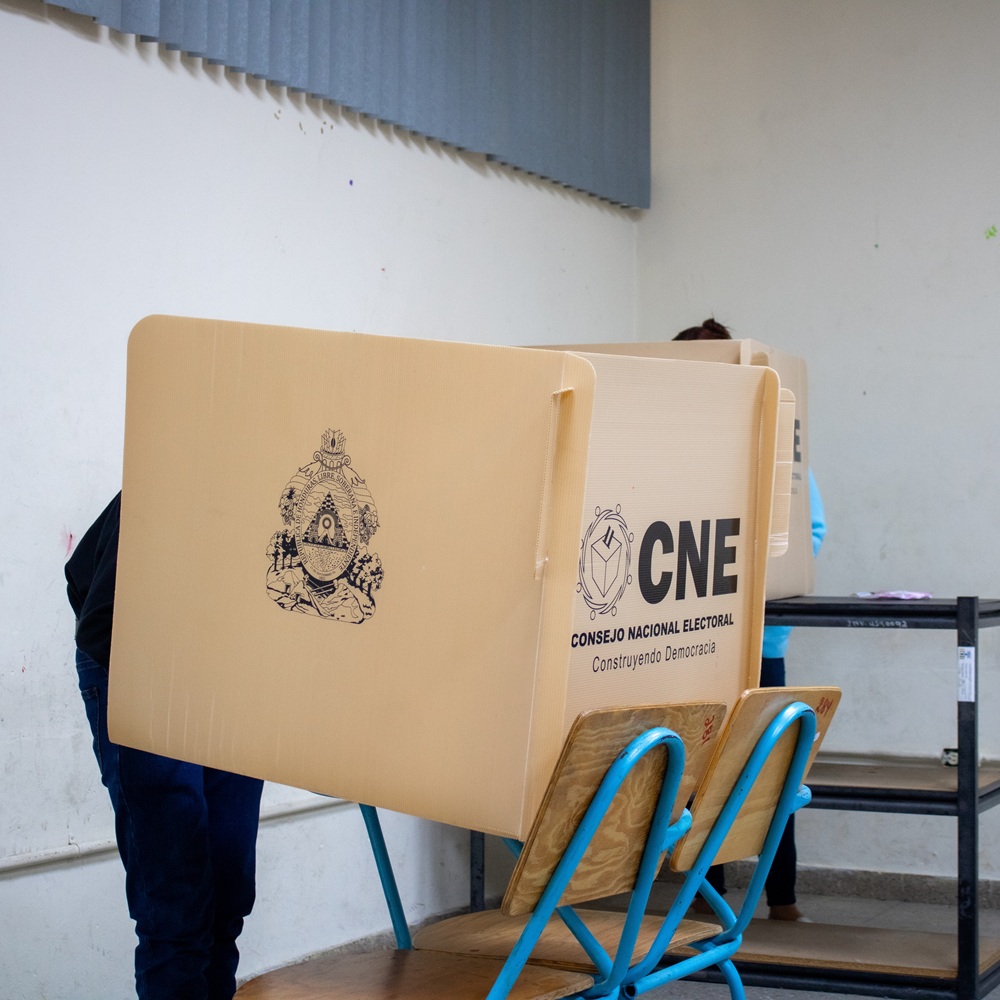
Tegucigalpa, Honduras - November 30, 2025: Election Day, People attend to vote for their candidates at the voting centers provided by the Consejo Nacional Electoral, CNE.

Latin America 2025: protest voting amid fragmentation and democratic erosion

by Flavia Freidenberg

In a 2025 marked by punitive polls, fragmented systems, and democracies under pressure, Latin America confirmed that voting remains an instrument of change, but no longer a guarantee of stability or democratic strengthening. The year ends with a powerful image: a president, a president-elect, and a defeated candidate — with radically different ideas and political visions — showing respect for electoral results, the electoral authority, and one another in Chile. An act that should be ordinary in any democracy became something almost revolutionary. It may seem like a mere formality, but it is not. In a Latin America divided by hate speech and polarized politics, these gestures of institutional courtesy and democratic normality make a difference. An intense electoral cycle shaped 2025. Ecuador, Bolivia, Chile, and Honduras held presidential elections that, in one way or another, redefined the regional political landscape. These were accompanied by numerous legislative elections, local contests, and referendums. Mexico, meanwhile, experimented with the unprecedented popular election of judges and magistrates, a reform meant to democratize the justice system but which, in practice, represented setbacks in electoral governance conditions that once seemed resolved. Holding elections that meet integrity standards is no minor matter at a time when the region is undergoing processes of democratic erosion. The quality of these elections determines whether alternation in power is possible, whether democracy can persist, resist, and remain resilient when facing multiple challenges such as political-criminal violence, citizen fatigue, institutional co-optation, affective polarization, and ideological radicalization. The ballot speaks: five regional patterns An assessment of the 2025 elections reveals five patterns that transcend national borders and illustrate key features of today’s regional political dynamics. First: protest voting has consolidated. From the overwhelming victory of the far right over the left in Chile on December 14 — when José Antonio Kast won 58% of the vote — to President Daniel Noboa’s failed referendum in Ecuador, the dramatic collapse of the Movement Toward Socialism (MAS) in Bolivia, and the governing Libre party’s third-place finish in Honduras, the message has been consistent: voters punish those in power, regardless of ideology. In Bolivia, MAS suffered a dramatic defeat after nearly two decades of dominance. The party of Evo Morales and Luis Arce, which won 75 of 130 seats in 2020, was reduced to just two in the August elections. For the first time, Bolivia held a presidential runoff on October 19, where Rodrigo Paz of the Christian Democratic Party (PDC) won with 54.5% of the vote. In Honduras, the ruling party’s candidate, Rixi Moncada, placed third, while conservative candidate Nasry “Tito” Asfura of the National Party became president-elect following a highly contentious race marked by external intervention, numerous episodes of political violence, and 24 days of uncertainty before results were finalized. Noboa suffered a devastating defeat in the November 16 referendum: “No” prevailed on all four questions, including rejecting the authorization of foreign military bases (60% voted NO) and rejecting the call for a Constituent Assembly (61% NO). This outcome surprised many, as it came just seven months after Noboa won the presidency with 55.6% of the vote. Interpretations are still developing, but it suggests that citizens are unwilling to grant “blank checks” to their leaders. Second: pragmatism is replacing ideology. Paz’s centrist message of “capitalism for all” in Bolivia, Noboa’s security-focused campaign in Ecuador, and the rejection of ruling parties across the region show that many Latin American voters in 2025 are moving beyond ideological alignment. Voters seem less interested in long-term transformative projects and more in immediate responses to pressing problems: insecurity, economic crises, and corruption. This trend has benefited conservative forces. In Chile, a far-right candidate — openly nostalgic for Pinochet — won for the first time, promising drastic public spending cuts, tough “law and order” policies, opposition to abortion and marriage equality, and aggressive measures against crime and irregular migration. Kast’s victory adds to right-wing governments like Javier Milei in Argentina, Nayib Bukele in El Salvador, Santiago Peña in Paraguay, and Luis Abinader in the Dominican Republic. This new “blue wave” shapes the current political map, though with different tones and levels of radicalization. Third: party fragmentation, divided governments, and minority presidencies. Except in Ecuador, where polarization between correísmo and anticorreísmo shaped both the April presidential election and the November referendum, other countries experienced deep fragmentation. In Bolivia, seven competitive presidential candidacies contended in the first round. In Honduras, three candidates fiercely competed in one of the country’s most tightly contested elections. High fragmentation often produces minority presidents and divided governments. This year, Bolivia and Ecuador joined Argentina, Brazil, Colombia, Guatemala, and Peru, where presidents govern with weak congressional support. By contrast, two countries have extremely powerful presidents with unified governments: Mexico and El Salvador, where ruling parties hold supermajorities capable of passing constitutional reforms without negotiating with the opposition. Fourth: the hollowing of the political center and the crisis of moderate parties and leaderships. As previously argued with María Esperanza Casullo, “center-and-something” parties (center-left and center-right) have long struggled to attract votes from the middle. Moderate politics seems to lack electoral appeal in Latin America. This declining representative capacity of the political center has created a vacuum often filled by outsiders or new parties claiming to embody fresh demands and alternatives from the margins. This vacuum feeds polarization strategies. Fifth: institutional credibility crisis. With the exception of Chile — where results were announced two hours after polls closed and immediately accepted — electoral processes in Honduras and Ecuador faced serious challenges from political actors who refused to recognize the results. In Ecuador, after the April runoff, Luisa González of the Citizens’ Revolution questioned transparency. In Bolivia, accusations of irregularities persisted throughout the August elections. In Honduras, more than two weeks after the November 30 vote, the presidential result remained undefined. Trust in electoral institutions — the cornerstone of democracy — shows troubling cracks that deepened throughout 2025. Many countries now face governance crises alongside fragmented systems, hate speech, interpersonal and institutional distrust, and extreme polarization. Three lessons for the future This electoral year leaves lessons that will shape regional politics in coming years. First: political-criminal violence conditions democracy. Several elections took place amid criminal violence. Honduras recorded six politically motivated homicides during the campaign, four targeting candidates from the ruling Libre party. The NGO Cristosal documented 67 political violence incidents between September 2024 and November 2025, including assassinations, attacks, threats, and harassment. Ecuador held its referendum under a State of Emergency due to “internal armed conflict,” declared in response to escalating drug-related violence and loss of state control over prisons. Mexico continues to hold elections in violent contexts, particularly at the local level. The “Voting Between Bullets” project by Data Cívica and México Evalúa has documented rising political-criminal violence since 2018, with 2024 being the most violent year yet, especially locally. Second: external influence is redefining electoral sovereignty. U.S. involvement in the Honduran presidential election, as well as in Argentina’s legislative elections weeks earlier, raised alarms about political autonomy in the region. In Ecuador, Noboa actively sought to establish U.S. military bases, a proposal rejected by 60% of voters. This level of foreign intervention — openly supporting candidates, conditioning economic aid, pressuring electoral decisions, or warning of retaliation — sets a dangerous precedent that reshapes the regional political game. External actors become potential “balancers” of competition, creating tilted playing fields. Third: polarization can demobilize voters. Ecuador showed that even amid extreme polarization, voter mobilization is not guaranteed. The moderate vote, which could have tipped the balance in the referendum, simply vanished or dissolved between the two radical positions. This suggests polarization may demobilize sectors that feel unrepresented by either extreme, paradoxically weakening democratic participation. Democracies at risk Despite difficulties, elections are still being held with reasonable levels of integrity. Power alternation occurred in several countries. Most losing candidates — even reluctantly — accepted results. This shows that electoral institutions still retain some strength. However, democratic erosion comes not from the absence of elections, but from those elected through them. It arises from leaders who challenge democracy’s pluralistic foundations. Today’s central dispute is over what “true democracy” means: a system prioritizing rights and institutional checks, or one concentrating power in the name of the “popular will.” This debate cuts across countries as different as Venezuela, Ecuador, El Salvador, and Mexico. In 2025, Latin American democracies faced multiple threats: low institutional trust, persistent violence, co-opted electoral authorities, vulnerability to external actors, and illiberal governments fostering polarization. Protest voting was one of the year’s most visible patterns, but part of something broader: extreme electoral volatility, where citizens reject governments of any ideology in search of immediate solutions. The challenge for 2026 — when countries like Costa Rica, Peru, Colombia, and Brazil (municipal elections) head to the polls — will be to safeguard electoral autonomy and professionalism, strengthen pluralism, depolarize public life, limit external interference, and continue reinforcing democratic institutions without yielding to narratives that promise order at the expense of hard-won rights.

Defense & Security
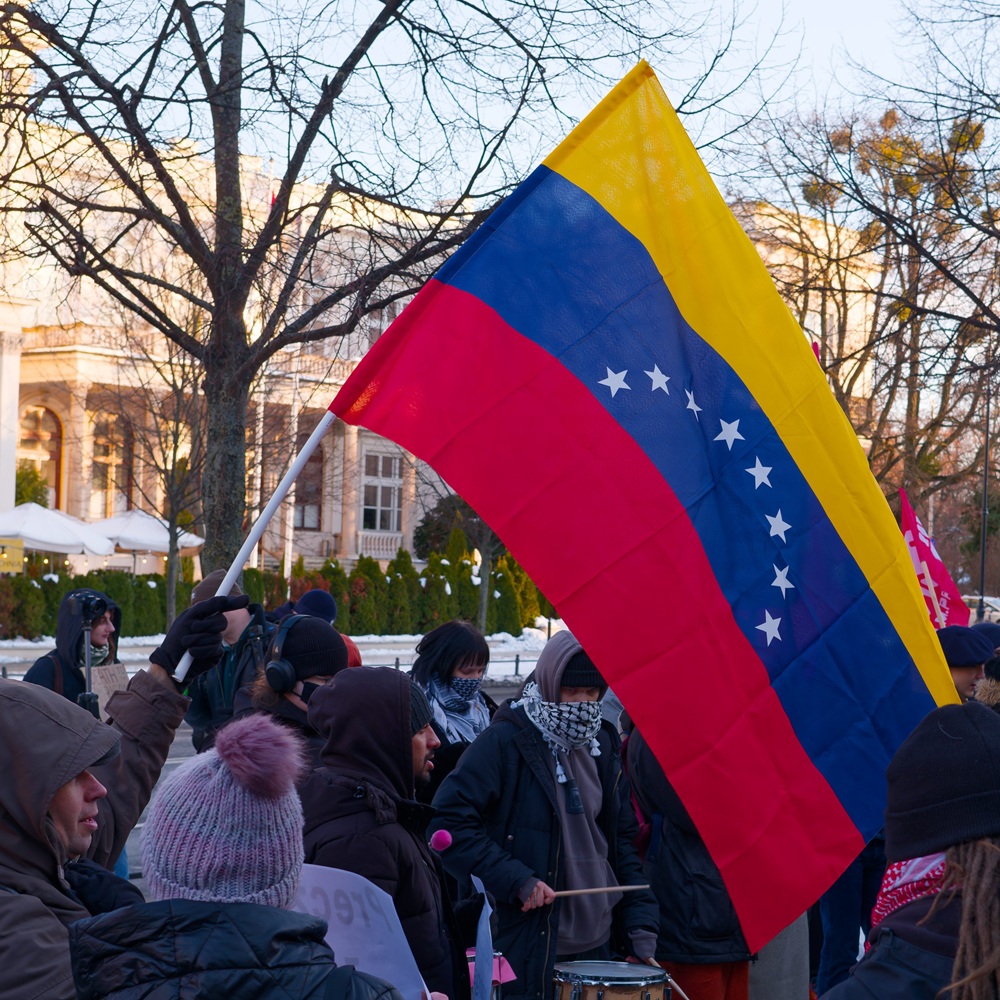
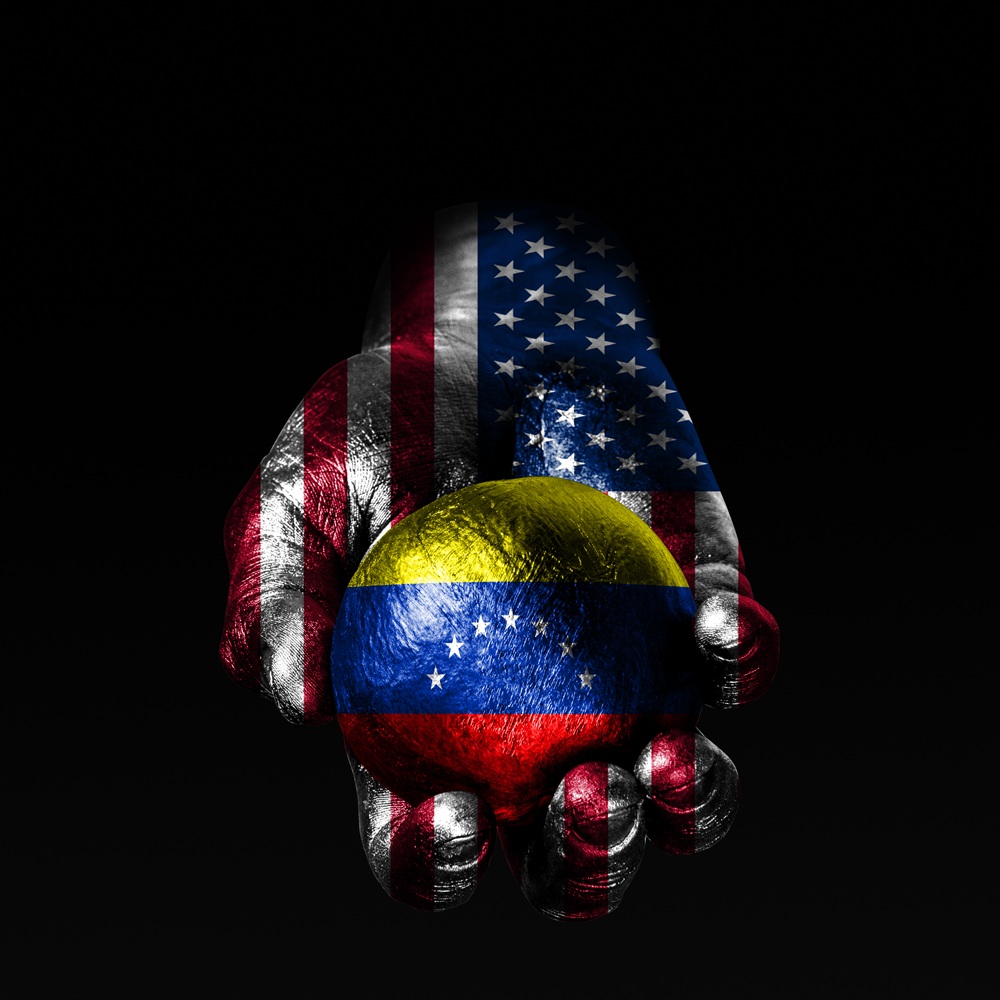
A hand with a drawn USA flag holds a ball with a drawn Venezuela flag, a sign of influence, pressure or conservation and protection. Horizontal frame

Venezuela at a critical juncture (Part I): tensions between the US and Venezuela and the shadow of war

by World & New World Journal

Background (Venezuelan Presidential Crisis [2019–2023] and the 2024 Presidential Elections) Between 2019 and 2023, Venezuela experienced a political crisis centered on the legitimacy of the country’s presidency, stemming from “irregular” elections that declared Nicolás Maduro the winner. As a result, the Fourth Legislature of the Venezuelan National Assembly — controlled by the opposition — declared Maduro a usurper of the presidency and appointed Juan Guaidó as interim president under Article 233 of the Venezuelan Constitution (León, 2019). Subsequently, the Supreme Tribunal of Justice declared the National Assembly unconstitutional (BBC News Mundo, 2019), as well as Guaidó’s appointment, thereby triggering a political crisis that would persist until 2023. During this period, Maduro and Guaidó governed in parallel. Guaidó’s government was recognized by the United States, Australia, Brazil, Argentina, Colombia, and several European countries and international organizations, while Maduro’s government was recognized by Cuba, Nicaragua, Bolivia, Vietnam, Turkey, Iran, Russia, China, and South Africa, among others. Countries such as Mexico, New Zealand, India, and Indonesia remained neutral. Figure 1: Countries recognizing Guaidó’s presidential legitimacy as of February 8, 2019, during the peak year of international recognition for Guaidó. Black: Venezuela; Grey: Neutral; White: No official position; Dark green: Recognizes Guaidó; Bright green: Supports the opposition National Assembly; Red: Recognizes Maduro. By Jose001aef23 – Own work, Public Domain, https://commons.wikimedia.org/w/index.php?curid=76054258 Figure 2: Recognition of Venezuela’s president in 2023. Black: Venezuela; Red: Recognition of Maduro; Dark blue: Recognition of Guaidó; Light blue: Support for the Fourth National Assembly; Grey: Explicitly neutral. By ZiaLater – Own work, Public Domain, https://commons.wikimedia.org/w/index.php?curid=75890028 The crisis lasted for nearly four years and was marked by economic sanctions, social unrest, widespread public dissatisfaction, the COVID-19 pandemic, and a dialogue between opposition parties and the Maduro government that ultimately culminated in the signing of the Barbados Agreement. In the end, Guaidó’s interim government — despite enjoying broader international backing — failed to achieve its initially stated objectives, and the National Assembly formally dissolved it in January 2023. The Barbados Agreement (International Crisis Group, 2023) — signed in 2023 between the Venezuelan government and the opposition with the aim of guaranteeing electoral safeguards and political rights, as well as protecting national interests — paved the way for presidential elections held on July 28, 2024. However, both the outcome of the elections and the way they were conducted gave rise to allegations of irregularities and electoral fraud (Infobae, 2024; Singer, 2024; Gómez Forero, 2024; Diario Las Américas, 2024). According to the National Electoral Council (CNE), Maduro won the election with 51.95%, while Edmundo González received 43.18%. By contrast, the opposition platform Comando Con Venezuela (CCV) released results claiming González won with 67.05%, compared to 30.49% for Maduro. It is important to note that González ran as the opposition candidate after María Corina Machado, an opposition leader and 2025 Nobel Peace Prize laureate, was barred from participating in the election. Figure 3: Comparison of the 2024 presidential election results according to the CNE and the CCV. Source: https://es.wikipedia.org/wiki/Elecciones_presidenciales_de_Venezuela_de_2024#cite_note-:19-27 As of now, Maduro remains in power in Venezuela. González, meanwhile, is exiled in Spain and has been recognized as the winner or president-elect by Argentina, Costa Rica, Italy, Ecuador, the United States, Canada, the United Kingdom, Japan, Germany, France, Israel, among others. Relations with the United States (Suspension of Relations and Current Situation) Diplomatic relations between the United States and Venezuela have steadily deteriorated since Hugo Chávez — who governed Venezuela with an anti-imperialist and socialist discourse — was president. From Chávez’s tenure through the 2019 presidential crisis, the United States imposed economic sanctions on Venezuela, and bilateral relations experienced periodic fluctuations. However, beginning in 2019, relations worsened significantly, culminating in a formal rupture initiated by Venezuela. President Nicolás Maduro severed diplomatic ties with the United States after Donald Trump, during his first term, recognized Juan Guaidó as interim president (CNBC, 2019). Although the National Assembly later dissolved the interim government, the United States did not recognize Maduro. At present, relations between the two countries are critical. With Trump’s return to the White House, the already minimal level of interaction has shifted toward threats, warnings, and displays of power, including a military deployment described by Trump as “the largest armada ever assembled in the history of South America” (Maher & Liptak, 2025). This escalation has been justified — or framed — by the Trump administration as part of an effort to protect U.S. citizens from drug flows originating in countries such as Mexico, Colombia, and Venezuela. As part of its broader campaign against drug trafficking, Trump has also designated certain organized crime groups as terrorist organizations (The White House, 2025). Among these newly designated groups — relevant to this analysis—are the Tren de Aragua gang (Knickmeyer, 2025) and the Cartel of the Suns (Cártel de los Soles) (Wells & Blasey, 2025; InSight Crime, 2025). Senior U.S. officials, including Secretary of State Marco Rubio, have accused Nicolás Maduro of being the leader of the Cartel of the Suns (Savage, 2025). The U.S. Department of State has even offered a reward of up to $50 million for information leading to Maduro’s arrest (U.S. Department of State, 2025). Maduro, for his part, has denied all such accusations and alleged ties. Tensions in the Caribbean The threats and actions carried out in recent months between the United States and Venezuela have culminated in an unprecedented U.S. military deployment in the Caribbean Sea. The United States has mobilized up to 15,000 troops in the region, in addition to reinforcements and personnel stationed in Puerto Rico. The arrival of the aircraft carrier USS Gerald R. Ford alongside the USS Iwo Jima, as well as warships, destroyers, submarines, fighter jets, bombers, helicopters, drones, and other military assets, has further reinforced the U.S. military presence in the Caribbean Sea (Ellis, U.S. Army War College, & The Conversation Digital Storytelling Team, 2025). Alongside this military buildup, the United States launched Operation Southern Spear, aimed at deterring Venezuela and targeting alleged drug-trafficking speedboats in international waters. From the start of these attacks in early September through December 16, 2025, 25 attacks had been recorded, resulting in at least 95 deaths (Muñoz Morillo, 2025). The U.S. military deployment in the Caribbean has been supported by Trinidad and Tobago. The United States and Trinidad and Tobago have conducted joint training exercises and military drills in the region over recent months (Infobae, 2025), and Trinidad and Tobago has also agreed to allow U.S. military aircraft to transit through its airports (Rios, 2025). Venezuela responded by suspending a joint gas agreement and declaring Trinidad and Tobago’s Prime Minister, Kamla Persad-Bissessar, persona non grata (DW News, 2025). For its part, Venezuela has mobilized approximately 200,000 military personnel, civilians, and militia members in large-scale exercises and has deployed 5,000 Igla missiles (Sliwinski, 2025). The Venezuelan government has also urged preparations for guerrilla warfare, sabotage, and social destabilization to render the country ungovernable (Reuters, 2025) — a strategy that may be viewed as the most effective response given the asymmetry between the two sides. Maduro further warned that Venezuela would not become the “Gaza of South America”, while proclaiming a message of “peace, life, and love — no to hatred, no to war” (Swissinfo.ch, 2025). Maduro has likewise turned to international organizations such as the United Nations, as well as regional bodies including CELAC and ALBA, to denounce the escalation of tensions in the region. He has even called for Colombian military support in light of the critical situation in the Caribbean (El Colombiano, 2025). However, recent polarization in Latin America has been reflected in the responses. Lula (Brazil) and Petro (Colombia) have applied the strongest pressure regarding regional destabilization, while Mexico, maintaining an ambiguous neutrality, has taken a more cautious stance, emphasizing sovereignty and self-determination. On the opposite end of the spectrum, Argentina, Ecuador, Paraguay, El Salvador, Costa Rica, and Trinidad and Tobago have aligned with the U.S. position (Rivas Molina, Galarraga Gortázar, Marcial Pérez, & Esteban Lewin, 2025). Finally, outside the region, Russia (OIR-MPPCI Cojedes, 2025) — one of the main suppliers of arms and military equipment to the Bolivarian National Armed Forces — along with Iran (Sputnik, 2025) and China (Revista Economía, 2025), all allies of Venezuela, have expressed various forms of support for the South American country, though their rhetoric has focused primarily on concerns over what the U.S. military deployment and harassment could trigger in the region. War Speculation and the Trump Corollary to the Monroe Doctrine All of the above brings together the necessary elements to consider the possibility of an invasion or a declaration of war by the United States against Venezuela, and such possibilities clearly exist. However, there are key factors that, for now, would prevent the outbreak of a new war. Regardless of the logistical difficulties involved in a large-scale invasion, the United States lacks a clear casus belli to declare war. Moreover, U.S. domestic politics — particularly the opposition — are not fully convinced that an invasion would be the best course of action. Nonetheless, Trump has shaped and carried out a series of political maneuvers, including economic sanctions, diplomatic pressure, and more recently a total oil blockade (BBC News, 2025), aimed at paving the way for a potential invasion or declaration of war, though so far without success. It is important to note that most of these actions — whether justified or not — such as the designation of cartels as terrorist groups, extrajudicial attacks in international waters against alleged drug-trafficking vessels, the military deployment in the Caribbean, and the seizure of a sanctioned oil tanker (BBC News, 2025), primarily generate heightened expectations of an impending war. In addition, on December 2, 2025, the U.S. government published its National Security Strategy (The White House, 2025). Without delving into details and for the purposes of this article, the strategy seeks to maintain the United States as a global power — while acknowledging the rise of China — and to consolidate U.S. dominance over the “Western Hemisphere” by controlling the American continent, establishing a supremacy-based relationship with aligned European countries, and ensuring that neither the European Union nor any other bloc emerges as an alternative center of power (González Posso, 2025). Rare Earths, Oil, and a Possible Regime Change in Venezuela? At this point, the reasons behind the escalation of tensions between Venezuela and the United States may not appear entirely clear, although they are hardly surprising and can be understood considering the divergent worldviews held by both countries. This sequence of events — fraudulent elections, military deployments, sanctions, and economic blockades — has gradually breathed new life into a pre-existing rupture that had previously remained stagnant. However, as is often the case, there is always a broader underlying context that tends to be overlooked. Venezuela holds the largest proven oil reserves in the world, estimated at around 300 billion barrels, representing approximately 18% of global reserves. It also possesses substantial natural gas reserves and deposits of more than 40 types of minerals and precious stones, including iron, bauxite (aluminum), coal, gold, coltan, diamonds, nickel, zinc, and rare earth elements, among others (Blanco, Rey S., Romero, Rosendo, & Berroterán). No less significant, Venezuela ranks seventh among the world’s 17 megadiverse countries, hosting roughly 9% of global flora and fauna (Álvarez Bernard, 2022). In addition, Venezuela holds the tenth-largest freshwater reserves globally — approximately 1,233 km³ — and contains an extensive network of rivers and lakes, which are essential for agricultural and livestock activities, supported by fertile soils, as well as for electricity generation and hydroelectric power (Montoya, n.d.). Given Venezuela’s natural resource potential, it is unsurprising that the United States has sought to “recover all the oil, land, and other assets that they previously stole from us,” as Trump wrote on his social media platform, Truth Social (Trump, 2025). Trump’s remark refers to the nationalization of oil projects carried out by Hugo Chávez in 2007, which affected major U.S. oil companies ConocoPhillips and Exxon Mobil (Al Jazeera Staff, 2025). As for a possible regime change in Venezuela, all remains speculative. Maduro continues to hold onto power, or at least presents an image of firmness before the cameras. At the same time, speculation about a potential war or invasion places him in a precarious position, fueling rumors and theories about resignation or exile. What is clear, however, is that U.S. pressure on the Venezuelan government is real. Although Maduro and Trump held a phone call in late November in search of a diplomatic off-ramp, the demands of both sides prevented any agreement. Prior to that call, in September, Maduro sent a letter to Trump seeking to “preserve peace through dialogue” (TRT Español, 2025). One month later, according to The New York Times, Maduro reportedly offered the United States significant participation in Venezuela’s oil fields, while remaining in power — a proposal that displeased U.S. officials and led to the suspension of talks at that time (Haberman & Kurmanaev, 2025). Discussion The situation between Venezuela and the United States is highly significant from a geopolitical perspective. On one hand, the United States appears to be poised and waiting for the green light to launch a potential large-scale invasion. On the other, Maduro, through his characteristic anti-imperialist discourse, is attempting to navigate and prolong the survival of his regime. This is no minor issue. Maduro’s continued hold on power has been widely criticized for its lack of transparency, its numerous irregularities, and even electoral fraud. Nevertheless, the recent escalation of tensions with the United States has worked to his advantage, reinforcing his anti-imperialist rhetoric and strengthening his Bolivarian nationalist narrative. Unfortunately, these recent developments are more likely to further suffocate the Venezuelan population than to consolidate Maduro’s position. Regardless of the underlying causes, Venezuelans have endured years of hardship, and toying with the prospect of war is far from sensible — a reality Maduro himself has implicitly acknowledged by attempting to de-escalate tensions by any available means. However, whether driven by ambition, ideology, or sheer will to power, the simplest exit — stepping down from office — does not appear to be, nor is it likely to become, part of his plans. Thus, while Maduro projects strength domestically and repeatedly calls for peace and rejects war at public rallies, he is experiencing a level of strain whose sustainability remains uncertain. The external pressure exerted by the United States — both diplomatic and in the form of a total economic blockade — is likely, sooner or later, to yield results for Washington. It is important to recall that Venezuela has survived in recent years largely due to oil revenues. With a total blockade focused on that asset, Venezuela’s economic situation would deteriorate further, with potentially severe social and political consequences. In short, the near-term outlook is far from optimistic. As for the United States, it appears ironic and contradictory that Trump — a figure who has boasted of having “ended” seven wars and portrayed himself as a staunch advocate of peace — is now demonstrating the opposite in the Caribbean by deploying the largest naval force seen in the region in years. One could argue that a war has not yet begun and may never materialize, but the very nature of these actions and their consequences cast doubt on his credibility, not to mention the attacks on alleged drug-trafficking vessels in international waters. It is understandable that the deployment of the U.S. naval forces in the region may be intended as an “extreme” form of diplomatic pressure. However, this does not justify — in terms of international relations, even if it might within the framework of U.S. foreign policy — the interference in and violation of Venezuelan sovereignty. Even more concerning is that the very rhetoric so often condemned by Maduro has long been one of the primary tools used by the United States to maintain its influence and intervention in the region since the last century. Nevertheless, the erosion of this approach in the medium and long term could prove costly for the United States. At this stage, as can be observed, drug trafficking and the economic and social crisis have been relegated to the background; they function merely as pretexts. What is truly at stake are national — or personal — interests, influence, and power in a world where the more one possesses, the better. This dynamic is clearly illustrated by the recent support Venezuela has received from Russia and China, which has been largely rhetorical rather than material (Paredes, 2025), in contrast to earlier instances when their backing was direct and tangible. The current situation, although complex, could have been avoided, as its underlying causes have been developing for several years. However, it would be irresponsible to take sides. One cannot defend an “illegitimate government,” nor align with a state that has consistently undermined the sovereignty of others in pursuit of its national interests — an approach that is even explicitly embedded in its national security strategy. International condemnation should be directed at both parties, and while diplomacy should prevail, this case is ironically contradictory, as both actors have operated outside international norms. Against this backdrop, multiple questions arise: What will ultimately happen? Will Maduro step down and negotiate a “democratic” transition? Will the United States invade Venezuela and succeed in overthrowing the Maduro regime? How long will the economic blockade and attacks on alleged drug-trafficking vessels continue? What role will Venezuelan society play, and will the opposition be able to capitalize on this moment? What role will other countries in the region truly assume? Many questions remain unanswered, and the coming weeks are likely to bring significant developments. References Al Jazeera Staff. (17 de December de 2025). Trump aide Stephen Miller suggests Venezuelan oil belongs to US. Obtenido de Al Jazeera: https://www.aljazeera.com/news/2025/12/17/trump-aide-stephen-miller-suggests-venezuelan-oil-belongs-to-us Álvarez Bernard, D. (21 de Enero de 2022). Recursos naturales de Venezuela. Obtenido de Ecología Verde: https://ecologiaverde.elperiodico.com/recursos-naturales-de-venezuela-3609.html BBC News. (10 de Diciembre de 2025). Fuerzas de EE.UU. interceptan y confiscan un buque petrolero sancionado frente a las costas de Venezuela. Obtenido de BBC News: https://www.bbc.com/mundo/articles/c14vp73mk16o BBC News. (17 de Diciembre de 2025). Trump ordena el bloqueo "total y completo" de todos los petroleros sancionados que entren y salgan de Venezuela. Obtenido de BBC News: https://www.bbc.com/mundo/articles/cx2p45d0g2xo BBC News Mundo. (21 de Enero de 2019). El Tribunal Supremo de Justicia de Venezuela declara "inconstitucional" a la Asamblea Nacional y anula el nombramiento de Juan Guaidó como su presidente. Obtenido de BBC News Mundo: https://www.bbc.com/mundo/noticias-america-latina-46952641 Blanco, Á., Rey S., S., Romero, D. E., Rosendo, M., & Berroterán, Z. (s.f.). Influencia de la distribución de los recursos naturales en el desarrollo regional de Venezuela. Universidad Central de Venezuela. Facultad de Humanidades y Educación. Escuela de Geografía., 118. CNBC. (24 de January de 2019). Maduro says Venezuela is breaking relations with US, gives American diplomats 72 hours to leave country. Obtenido de CNBC: https://www.cnbc.com/2019/01/23/venezuela-president-maduro-breaks-relations-with-us-gives-american-diplomats-72-hours-to-leave-country.html Diario Las Américas. (10 de Agosto de 2024). ONG señala que el CNE omitió tres auditorías post electorales en Venezuela. Obtenido de Diario Las Américas: https://www.diariolasamericas.com/america-latina/ong-senala-que-el-cne-omitio-tres-auditorias-post-electorales-venezuela-n5361569 El Colombiano. (18 de Diciembre de 2025). Régimen de Maduro lanza llamado desesperado a Colombia en busca de apoyo militar ante tensión con EE. UU. Obtenido de El Colombiano: https://www.elcolombiano.com/internacional/maduro-pide-ayuda-militar-colombia-tension-ee-uu-EN31879278 Ellis, E., US Army War College, & The Conversation Digital Storytelling Team. (26 de November de 2025). We've tracked the US military build-up in the Caribbean. Here's what it could do. Obtenido de The Conversation: https://stories.theconversation.com/tracking-the-us-military-in-the-caribbean/ Gómez Forero, C. (30 de Julio de 2024). ¿Por qué ver estos decimales ayudaría a hablar de un fraude en Venezuela? Obtenido de El Espectador: https://www.elespectador.com/mundo/elecciones-venezuela-2024/por-que-ver-estos-decimales-nos-ayudaria-a-hablar-de-un-fraude-en-venezuela/?outputType=amp González Posso, C. (7 de Diciembre de 2025). Corolario Trump a la doctrina Monroe: I take west – O la paz por la fuerza –. Obtenido de Indepaz: https://indepaz.org.co/corolario-trump-a-la-doctrina-monroe-i-take-west-o-la-paz-por-la-fuerza/ Haberman, M., & Kurmanaev, A. (2025 de Noviembre de 2025). Trump y Maduro hablaron por teléfono la semana pasada. Obtenido de The New York Times: https://www.nytimes.com/es/2025/11/28/espanol/estados-unidos/trump-maduro-llamada-venezuela.html Infobae. (30 de Julio de 2024). El burdo cálculo matemático en la información oficial que aumenta las sospechas sobre la manipulación de la elección en Venezuela. Obtenido de Infobae: https://www.infobae.com/venezuela/2024/07/30/el-burdo-calculo-matematico-en-la-informacion-oficial-que-aumenta-las-sospechas-sobre-la-manipulacion-de-la-eleccion-en-venezuela/ Infobae. (15 de Diciembre de 2025). Trinidad y Tobago aprobó el uso de sus aeropuertos por aviones militares de Estados Unidos para combatir el narcotráfico. Obtenido de Infobae: https://www.infobae.com/america/america-latina/2025/12/15/trinidad-y-tobago-aprobo-el-uso-de-sus-aeropuertos-por-aviones-militares-de-estados-unidos-para-combatir-el-narcotrafico/ InSight Crime. (22 de September de 2025). Cartel of the Suns. Obtenido de InSight Crime: https://insightcrime.org/venezuela-organized-crime-news/cartel-de-los-soles-profile/ International Crisis Group. (20 de Octubre de 2023). Pacto en Barbados: la ruta sinuosa de Venezuela hacia comicios competitivos. Obtenido de International Crisis Group: https://www.crisisgroup.org/es/latin-america-caribbean/andes/venezuela/barbados-deal-sets-venezuela-rocky-path-competitive-polls Knickmeyer, E. (19 de February de 2025). PBS News. Obtenido de Trump administration designates 8 Latin American cartels as ‘foreign terrorist organizations’: https://www.pbs.org/newshour/politics/trump-administration-designates-8-latin-american-cartels-as-foreign-terrorist-organizations León, I. (11 de Enero de 2019). Efecto Cocuyo. Obtenido de Prensa de la AN rectifica comunicado que proclama a Juan Guaidó Presidente de la República: https://web.archive.org/web/20190702155934/http://efectococuyo.com/principales/prensa-de-la-an-rectifica-comunicado-que-proclama-a-juan-guaido-presidente-de-la-republica/ Maher, K., & Liptak, K. (17 de December de 2025). Trump orders ‘total and complete blockade’ of sanctioned oil tankers coming to and leaving Venezuela. Obtenido de CNN: https://edition.cnn.com/2025/12/16/politics/blockade-venezuela-sanctioned-oil-tankers#:~:text=%E2%80%9CVenezuela%20is%20completely%20surrounded%20by,%2C%E2%80%9D%20Trump%20said%20Tuesday%20night. Montoya, J. D. (s.f.). Recursos naturales de Venezuela. Obtenido de Desarrollo Sustentable: https://www.desarrollosustentable.co/recursos-naturales-de-venezuela/#:~:text=Biodiversidad:%20recursos%20animales%20y%20plantas%20de%20Venezuela,-Aves%20de%20Venezuela&text=Venezuela%20es%20un%20pa%C3%ADs%20con,el%20ave%20nacional%20del%20pa%C3%ADs. Muñoz Morillo, M. (16 de Diciembre de 2025). Un nuevo ataque de EE.UU. contra 3 narcolanchas deja 8 muertos en el Pacífico. Obtenido de Euro News: https://es.euronews.com/2025/12/16/un-nuevo-ataque-de-eeuu-contra-3-narcolanchas-deja-8-muertos-en-el-pacifico Noticias DW. (25 de Noviembre de 2025). Trinidad y Tobago anuncia ejercicios militares con EE. UU. Obtenido de DW: https://www.dw.com/es/trinidad-y-tobago-anuncia-nuevos-ejercicios-militares-con-estados-unidos/a-74755359 OIR-MPPCI COJEDES. (10 de Diciembre de 2025). Rusia considera “especialmente preocupante” tensión en el Caribe. Obtenido de Ciudad Cojedes: https://ciudadcojedes.com/rusia-considera-especialmente-preocupante-tension-en-el-caribe/ Paredes, N. (9 de Diciembre de 2025). Por qué China y Rusia parecen haber abandonado a Nicolás Maduro en plena escalada con EE.UU. Obtenido de BBC News: https://www.bbc.com/mundo/articles/cj97rxlw8zro República Bolivariana de Venezuela. (30 de Diciembre de 1999). Constitución de la República Bolivariana de Venezuela. Obtenido de https://www.oas.org/dil/esp/constitucion_venezuela.pdf Reuters. (12 de November de 2025). Venezuelan military preparing guerrilla response in case of US attack. Obtenido de Reuters: https://www.reuters.com/world/americas/venezuelan-military-preparing-guerrilla-response-case-us-attack-2025-11-11/ Revista Economía. (5 de Noviembre de 2025). China defiende su alianza con Venezuela y critica la presión militar de EE.UU. en el Caribe. Obtenido de Revista Economía: https://www.revistaeconomia.com/china-defiende-su-alianza-con-venezuela-y-critica-la-presion-militar-de-ee-uu-en-el-caribe/ Rios, M. (15 de Diciembrre de 2025). Trinidad y Tobago permitirá el tránsito de aviones militares de EE.UU. por sus aeropuertos; Venezuela toma medidas. Obtenido de CNN Latinoamérica: https://cnnespanol.cnn.com/2025/12/15/latinoamerica/trinidad-y-tobago-transito-de-aviones-militares-eeuu-trax Rivas Molina, F., Galarraga Gortázar, N., Marcial Pérez, D., & Estaban Lewin, J. (18 de Diciembre de 2025). América Latina toma partido ante la amenaza de Estados Unidos a Venezuela. Obtenido de El País: https://elpais.com/america/2025-11-30/america-latina-toma-partido-ante-la-amenaza-de-estados-unidos-a-venezuela.html Savage, C. (18 de Noviembre de 2025). Trump y compañía dicen que Maduro lidera un ‘cártel’. Esto es lo que significa. Obtenido de The New York Times: https://www.nytimes.com/es/2025/11/18/espanol/estados-unidos/trump-cartel-soles-maduro.html Singer, F. (14 de Agosto de 2024). La ONU concluye que las elecciones en Venezuela no cumplieron las medidas “de integridad y transparencia”. Obtenido de El País: https://elpais.com/america/2024-08-14/la-onu-concluye-que-las-elecciones-en-venezuela-no-cumplieron-las-medidas-de-integridad-y-transparencia.html Sliwinski, K. (15 de Diciembre de 2025). El aumento de tensiones en el Caribe: EE.UU. y Venezuela en medio de un complejo regional de seguridad. Obtenido de World & New World Journal: https://worldandnewworld.com/es/eeuu-venezuela-crisis-caribe/ Sputnik. (9 de Diciembre de 2025). Irán expresa su apoyo a Venezuela ante las "provocaciones hostiles" de EEUU. Obtenido de Sputnik: https://noticiaslatam.lat/20251217/mapa-como-avanza-la-operacion-especial-de-rusia-en-ucrania-1126329635.html Swissinfo.ch. (15 de Noviembre de 2025). Maduro dice que Venezuela no será la Gaza de Suramérica en plena tensión con EE.UU. Obtenido de Swissinfo.ch: https://www.swissinfo.ch/spa/maduro-dice-que-venezuela-no-ser%C3%A1-la-gaza-de-suram%C3%A9rica-en-plena-tensi%C3%B3n-con-ee.uu./90337213 The White House. (20 de January de 2025). Designating Cartels And Other Organizations As Foreign Terrorist Organizations And Specially Designated Global Terrorists. Obtenido de The White House: https://www.whitehouse.gov/presidential-actions/2025/01/designating-cartels-and-other-organizations-as-foreign-terrorist-organizations-and-specially-designated-global-terrorists/ The White House. (November de 2025). National Security Strategy of the United States of America. Obtenido de The White House: https://www.whitehouse.gov/wp-content/uploads/2025/12/2025-National-Security-Strategy.pdf TRT Español. (22 de Septiembre de 2025). Carta de Maduro a Trump invita a "preservar paz con diálogo" y rechaza "fake news" de narcotráfico. Obtenido de TRT Español: https://www.trtespanol.com/article/cdae6966f705 Trump, D. (17 de December de 2025). @realDonaldTrump. Obtenido de Truth Social: https://truthsocial.com/@realDonaldTrump/posts/115731908387416458 US Department of State. (7 de August de 2025). Nicolás Maduro Moros. Narcotics Rewards Program: Wanted. Obtenido de US Department of State: https://www.state.gov/nicolas-maduro-moros Wells, I., & Blasey, L. (17 de November de 2025). US to designate Venezuela's Cartel de los Soles as terrorists. Obtenido de BBC: https://www.bbc.com/news/articles/cdxr3w2464eo

Defense & Security
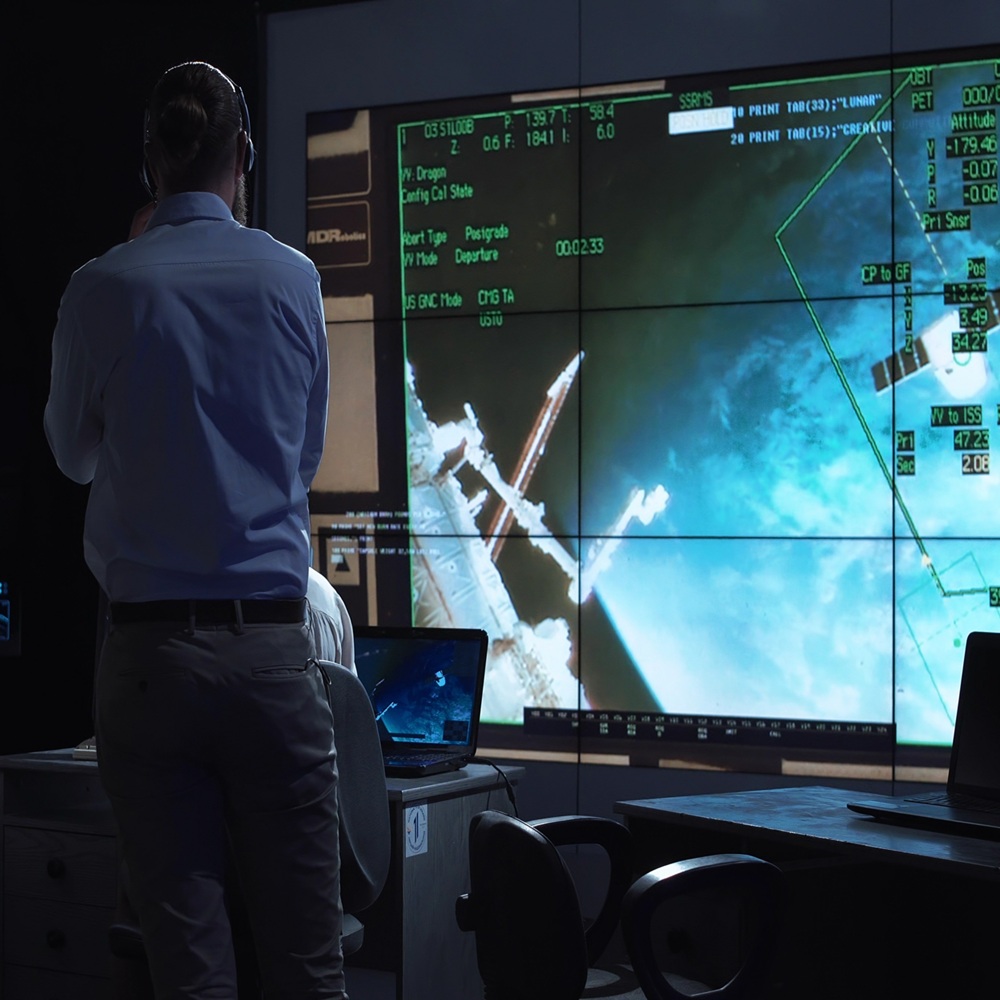
A group of people are controlling the orbiting international space station ISS. Elements of this image furnished by NASA.

Assessing the Implications of Interstellar Objects for Planetary Security and Defense

by Sebastián Calderón Céspedes

As international order evolves in the 21st century, strategic competition is increasingly shaped by technological frontiers and emerging domains of power. Unlike the unipolar moment following the Cold War, the contemporary landscape is defined by multipolarity, where major powers vie for influence across space, cyberspace, and biotechnology. Outer space has emerged not only as a frontier for exploration but also as a potential arena for resource acquisition and military projection, raising novel challenges for international law, security policy and cooperative governance. Examining interstellar phenomena in this context underscores the importance of preparedness, coordination, and risk management, even without assuming the presence of extraterrestrial intelligence, yet acknowledging the unprecedented nature of events that are pushing the boundaries of human observation. Humanity is gradually entering an era in which technological progress is reshaping our conception of cosmic exploration. As advancements in rocket propulsion, materials science, and observational astronomy accelerate, the prospect of humanity departing Earth towards other worlds becomes less a distant dream and more an inevitable chapter in our long-term evolution. The future of our species increasingly appears to be tied to the potential terraforming of new planets and celestial bodies, alongside the development of aerospace technologies capable of carrying us deeper into the cosmos. Within this transformative horizon, the Fermi paradox or the Dark Forest theory gains renewed relevance, challenging humanity to consider the existential filters that civilizations must surpass to survive, expand and potentially encounter other life forms. Yet, while such milestone may unfold centuries from now, the foundations of that future are being laid in the present. In the 21st century, specifically by the year 2026, humanity will become more capable of observing its immediate cosmic neighborhood. Modern telescopes and space-based observatories allow us to detect objects that for centuries have likely passed through our solar system unnoticed. Only within the brief span of our scientific maturation have we acquired the tools to identify interstellar objects, bodies originating beyond the solar system whose physical properties and trajectories challenge our existing frameworks. These objects, often catalogued as cometary in nature, possess characteristics that warrant careful study. Their unusual shapes, compositions, and velocities offer insights into environments beyond our interstellar cradle and, in some cases, raise questions about their natural origin or even the possibility of artificial extraterrestrial technology. As our detection capabilities improve, the arrival of each interstellar visitor represents not only a scientific opportunity but also a critical data point for understanding planetary security and defense. Consequently, their study urges nations to evolve towards a more serious and coordinated international framework capable of addressing the strategic, scientific, and existential implications of interstellar encounters. The emergence and Relevance of Interstellar Objects The scientific understanding of interstellar objects (ISOs) has evolved rapidly in recent years, propelled by technological advances and the unexpected discovery of bodies crossing the solar system on hyperbolic trajectories. Before 2017, the existence of such objects was largely theoretical, supported by models of planetary formation and stellar dynamics that predicted the ejection of debris during the early stages of planetary system evolution. These models implied that the Milky Way should contain vast populations of wandering fragments- comets, asteroids, and potentially more complex bodies such as extraterrestrial debris moving freely through interstellar space. Yet observational confirmation remained unattainable due to instrumental limitations. This changed with the detection of the first confirmed interstellar object, 1/Oumuamua, whose physical properties departed radically from known solar system bodies. Its non-gravitational acceleration, lack of a visible coma, and elongated shape challenged established models of cometary activity and asteroidal composition (Meech et al, 2017). The subsequent discovery of 2I/Borisov, a more conventionally cometary object, confirmed that the solar system is indeed exposed to material originating from other stellar environments (Jewitt & Luu, 2019). The contrast between both objects highlighted a key insight: ISOs are highly diverse, and their properties may reveal mechanisms and materials absent from our own planetary system. Advances in wide-field surveys, high-resolution instrumentation, and automated sky- monitoring systems have significantly expanded humanity´s capacity to detect and track ISOs. The increasing sensitivity of these tools marks a transition toward a new observational era in which interstellar detections may become more frequent. As a result, we are now able to observe the behavior of bodies entirely foreign to the solar system-objects whose trajectories, compositions, and signatures often defy established expectations and expose gaps in existing theoretical frameworks. This expanding observational capability not only advances scientific knowledge but also underscores the urgency of early warning detection. Because ISOs are typically identified within narrow observational windows, delayed characterization can lead to the loss of critical scientific and strategic information. Consequently, the growing presence of ISOs calls for enhanced global coordination, standardized protocols, and a more serious international approach to monitoring and interpreting near-Earth interstellar encounters. The Impact and Arrival of 3I/ATLAS The discovery of 3I/ATLAS, the third confirmed interstellar object entering our solar system, marks a significant milestone in modern astronomy. Unlike 1/Oumuamua and 2I/Borisov, whose observational windows were limited and partially constrained, 3I/ATLAS has provided a comparatively longer period for systematic study. Its hyperbolic trajectory, unusual photometric behavior, and non-standard luminosity variations have made it an object of exceptional scientific interest. While early observations suggest that while 3I/ATLAS shares key characteristics with known cometary bodies, its behavior reinforces broader findings that interstellar objects often display physical and dynamical properties that do not fit neatly within exiting taxonomies of solar system objects (Jewitt, 2023). The media response to 3I/ATLAS has been unprecedented. As with Oumuamua, the object rapidly became the subject of public fascination, sensational claims, and speculative narratives. News outlets, online forums, and social media ecosystems proliferated interpretations ranging from exotic physics to extraterrestrial probes. While much of this discourse lacks grounding in empirical evidence, its widespread circulation reflects a broader sociological trend: interstellar phenomena increasingly operate not only as a scientific event but also as catalysts for public, imagination, cultural anxiety, and geopolitical attention. As Kaku (2020) notes, humanity approaches a technological threshold where cosmic discovery intersects directly with public consciousness, provoking both curiosity and apprehension. From a scientific standpoint, researchers such as Loeb (2021) have emphasized that anomalous behavior in interstellar visitors should not be dismissed lightly. Although 3I/ATLAS currently appears consistent with a natural origin, its unique features-and the difficulty in categorizing ISOs-underscore the need for serious, methodical investigation. Loeb argues that humanity must abandon its complacency regarding the unknown nature of interstellar technologies or civilizations and instead adopt a posture of preparedness, open inquiry, and systematic risk assessment. In his view, phenomena like 3I/ATLAS are reminders that humanity is not isolated, and that contact-whether intentional or incidental—with non-human intelligence represents a real possibility with profound implications. The arrival of 3I/ATLAS has also highlighted the potential consequences of extraterrestrial technological encounters. Even in the absence of direct evidence of artificial origin, the mere ambiguity of such objects can trigger global destabilization through speculation, misinformation, or geopolitical competition. Historical examples such as the economic collapses of 1929 and 2008, the disruptive effects of the COVID-19 pandemic, and the global tensions surrounding major wars demonstrate how uncertainty-especially when amplified by media-can generate widespread instability. In this context, an interstellar object exhibiting unexplained characteristics could easily become a flashpoint for international tension, economic turbulence, or strategic miscalculation. Thus, beyond its scientific significance, 3I/ATLAS has brought renewed attention to the vulnerabilities and responsibilities of a species becoming increasingly aware of its cosmic environment. The object serves as a practical reminder that humanity must develop not only more advanced observational systems but also coordinated international frameworks for managing unexpected astronomical events. As we confront the possibility of encountering technologies or life beyond Earth, the world must adopt a more mature, structured approach to detection, interpretation, and global communication. This moment sets the stage for next critical dimension of the discussion, the implications of interstellar objects for planetary security and defense, and the urgent need to assess humanity’s readiness for cosmic contingencies. Toward a Multiplanetary Security Architecture Planetary security has grown increasingly complex as scientific capabilities expand toward detecting and characterizing interstellar objects whose origins and physical attributes lie beyond conventional astrophysical categories. Within the United Nations framework, existing mechanisms-such as COPUOS, the International Asteroid Warning Network (IAWN), and the Space Mission Planning Advisory Group (SMPAG) provide the foundational structure for global coordination on natural impact hazards (UN COPUOS, 2014). However, these institutions were established under assumptions limited to solar system derived natural threats, leaving them poorly equipped to address unknown interstellar phenomena. The Outer Space Treaty and subsequent conventions introduced broad principles on cooperation and peaceful use, but no anticipated scenarios involving technologically anomalous interstellar objects or potential artificial extraterrestrial artifacts, resulting in a significant global governance vacuum. These mechanisms are designed primarily for probabilistic, natural impact scenarios, not for interstellar objects exhibiting anomalous trajectories, non-gravitational accelerations or uncertain technological signatures. Recognizing this gap, recent scientific proposals-most notably those advanced by Loeb (2023)-have called for the development of a dedicated international coordination mechanism under the United Nations system for the study and assessment of interstellar objects. Rather than proposing a fixed institutional blueprint, these contributions emphasize the need for a structured platform capable of integrating scientific analysis, risk assessment, and transparent diplomatic communication in cases involving anomalous interstellar phenomena. Such proposals should be understood not as a definitive institutional prescription, but as forward as a definitive institutional prescription, but as forward-looking reference points for the type of governance architecture of international community must begin to contemplate. As humanity´s observational reach extends beyond the boundaries of the solar system; this governance gap becomes increasingly consequential. Interstellar objects introduce forms of uncertainty that existing planetary defense regimes-designed around predictable, solar system-derived threats were never Intended to manage, underscoring the need for flexible and adaptive legal frameworks capable of integrating scientific uncertainty into decision making processes. Within this emerging landscape, conceptual assessment tools have gained relevance as mechanisms to structure uncertainty rather than eliminate it. One illustrative example is the Interstellar Threat Assessment Scale (ITAS) proposed by Loeb (2024), which offers a simplified framework for evaluating interstellar detections based on observable characteristics rather than speculative intent. As its lower levels, the scale categorizes objects that behave consistently with natural interstellar debris, such as comet-like bodies exhibiting predictable physical and dynamic properties. Higher levels correspond to increasing degrees of anomaly-such as unexplained non-gravitational acceleration, unconventional trajectories, or geometries inconsistent with known natural formation processes. While the scale is not explicitly designed to identify extraterrestrial technology, it intentionally encompasses characteristics that fall outside established natural baselines. This design allows it to function across multiple scenarios, from rare or poorly understood natural phenomena to detections that may warrant closer scrutiny due to their atypical behavior. In this sense, the framework remains agnostic regarding origin, yet adaptable enough to support both conventional astrophysical analysis and precautionary assessments under conditions of elevated uncertainty. Importantly, it does not assert hostile intent or artificial origin, rather it operates as a risk-management tool that helps differentiate levels of scientific uncertainty and potential planetary relevance. Approached in this manner, such frameworks contribute to the evolution of international space governance by providing a shared analytical language for policymakers, scientific institutions, security agencies and statecraft-oriented decision-makers. By standardizing how uncertainty is assessed and communicated, they reduce fragmented national interpretations, limit reactive or militarized responses, and promote cooperative, evidence-based decisions. Decision-making under conditions of incomplete information. This process reflects a broader need for international space law to evolve dynamically. However, the governance of interstellar risk cannot rely solely on conceptual models or isolated scientific initiatives. It requires a genuinely planetary response that integrates the full spectrum of contemporary technological, institutional, and political capacities. International legislation governing outer space must be adaptive and evolutionary, capable of responding to emerging scientific realities. Artificial intelligence, real-time global surveillance networks, and autonomous detection algorithms must be incorporated into a unified planetary architecture capable of identifying and characterizing interstellar objects far earlier than current capabilities allow. Equally important is the sustained collaboration among major space agencies-including NASA, ESA, CNSA, ISRO, Roscosmos, and JAXA- alongside private actors such as SpaceX, Blue Origin, and emerging aerospace enterprises, whose technological capabilities and rapid innovation cycles are increasingly central to space governance. Equally critical is great-power cooperation. From a realist perspective, the international system remains defined by competition, power asymmetries, and strategic mistrust. Yet planetary defense represents a rare domain in which shared existential vulnerability can partially override zero-sum logic. The detection of an anomalous interstellar object must never become a catalyst for geopolitical rivalry or strategic miscalculation, but rather an opportunity for transparent scientific collaborations and coordinated global response. In an international order strained by power competition, planetary security stands as one of the few areas where shared survival interests necessitate shared responsibility. Ultimately, interstellar objects compel humanity to transcend political fragmentation and adopt a forward- look global strategy. Building a resilient planetary security architecture requires the integration of scientific expertise, adaptive international governance, technological innovation, and coordinated commitment of state and private actor alike. Whether future interstellar encounters prove benign or reveal unprecedented anomalies, preparedness is not speculation, it is an essential step in the evolution of humanity´s role within the cosmos. References - Jewitt, D., & Seligman, D. Z. (2023). The interstellar interlopers. Annual Review of Astronomy and Astrophysics, 61, 197–236. https://doi.org/10.1146/annurev-astro-071221-054221 - Jewitt, D., & Luu, J. (2019). Initial characterization of interstellar comet 2I/2019 Q4 (Borisov). The Astrophysical Journal Letters, 886(2), L29. https://doi.org/10.3847/2041-8213/ab530b - Kaku, M. (2018). The Future of Humanity: Terra­forming Mars, Interstellar Travel, Immortality, and Our Destiny Beyond Earth. Doubleday. https://www.penguinrandomhouse.com/books/555722/the-future-of-humanity-by-michio-kaku/ - Loeb, A. (2021). Extraterrestrial: The first sign of intelligent life beyond Earth. Houghton Mifflin Harcourt. https://openlibrary.org/books/OL31850155M/Extraterrestrial?utm_source=chatgpt.com - Loeb, A. (2024). The interstellar threat assessment scale. Medium. https://avi-loeb.medium.com/ - Meech, K. J., et al. (2017). A brief visit from a red and extremely elongated interstellar asteroid. Nature, 552, 378–381. https://doi.org/10.1038/nature25020 - United Nations Committee on the Peaceful Uses of Outer Space (UN COPUOS). (2014). Report of the Scientific and Technical Subcommittee on its fifty-first session. United Nations Office for Outer Space Affairs. https://www.unoosa.org/oosa/en/ourwork/copuos/stsc/2014/index.html

Diplomacy
Warsaw, Poland - January 04 2026: Venezuelan flag waved during protest against U.S. intervention in Venezuela.

Venezuela at a Critical Juncture (Part II): The Capture of Maduro and the Debate over Sovereignty, Intervention, and Power

by World & New World Journal

In Part I of this article, a brief historical overview was presented, spanning from the Venezuelan presidential crisis of 2019 to the tensions in the Caribbean — between the United States and Venezuela — and the total economic blockade imposed on Venezuela. The article also left several questions open, which, considering recent events, have now been resolved, although at the same time new ones have emerged. U.S. Operation in Venezuela and the Capture of Maduro The situation between the United States and Venezuela ended in 2025 with a total U.S. economic blockade and the “seizure” of a Venezuelan oil tanker. However, the situation changed dramatically when, on January 3, 2026, Nicolás Maduro was captured in Caracas by U.S. forces. Preceded by threats and sustained military and economic pressure on Venezuela, the President of the United States, Donald Trump, carried out an operation to capture and remove Maduro and his wife from Venezuela. The operation was surgical — lasting approximately two hours — and although successful, it also resulted in human losses (80 fatalities according to The New York Times — an unofficial figure — including 32 Cuban combatants confirmed by Havana) and damage to military infrastructure in Caracas, as well as in Miranda, Aragua, and La Guaira. As was already known, the U.S. government had classified Maduro as a member or leader of the Cartel of the Suns. In addition, a reward of $50,000 had been offered for his capture, and since 2020 the U.S. Attorney’s Office for the Southern District of New York had charged Maduro with drug trafficking and conspiracy to import cocaine into the United States. In this context, Maduro’s capture was followed by his transfer to New York, where he will face trial. Venezuela: an uncertain present? Following Maduro’s detention, Venezuela’s Supreme Tribunal of Justice ordered Vice President Delcy Rodríguez to assume the role of head of state due to Maduro’s “temporary” absence. After the U.S. attacks, Rodríguez spoke out strongly against what she called “foreign aggression,” describing Maduro’s capture as an “illegal and illegitimate kidnapping.” However, after being sworn in, she softened the tone of her statements and even invited the Trump administration to “work jointly on an agenda of cooperation, aimed at shared development, within the framework of international legality and to strengthen a lasting community coexistence.” Rodríguez likewise emphasized the principles of sovereignty and non-interference. All of this stems from the imperialist rhetoric of Trump and Rubio. Trump made it very clear that he will “govern” Venezuela “until we can achieve a safe, appropriate, and prudent transition.” Everything indicates that, although under the threat of “doing the right thing,” Trump plans to give Rodríguez an opportunity; if it does not work or if she fails to meet Trump’s expectations, the United States will intervene again. On the other hand, both Edmundo González — who on January 4 released a video declaring himself the “president of Venezuela” and calling for a “peaceful and clear” transition — and María Corina Machado have been practically sidelined by the U.S. government, citing a lack of internal support, referring to the fact that those who support them are “outside” Venezuela. On the social front, reactions have been mixed, ranging from celebrations over Maduro’s capture to demonstrations against U.S. interventionism. The current situation is very delicate: with Rodríguez’s appointment and no clear short-term roadmap — plus the threat of U.S. intervention and interference — and the snubbing of the opposition, Venezuela’s social reality appears not to have changed, nor is it likely to change much in the near future. However, Rodríguez’s stance — her invitation to the United States to work together, albeit under threat, practically placing oil and resources on a silver platter — could become the social fuel capable of generating real change in Venezuela in the near future. International reactions The events in Venezuela took many by surprise, and international reactions were quick to follow. South Africa issued a press release stating that the actions of the United States constituted “a violation of the United Nations Charter,” and called on the UN Security Council to urgently address the situation. Indonesia also underscored the importance of “respect for international law and the principles of the United Nations Charter.” Similar statements were issued by Japan, India, South Korea, Malaysia, Pakistan, Thailand, Vietnam, New Zealand, and Australia. China’s Ministry of Foreign Affairs likewise emphasized the violation of “Venezuelan sovereignty and the threat posed to peace and security in Latin America and the Caribbean.” It also called for the release of Maduro and his wife. With a stronger tone, Iran condemned the U.S. attacks and likewise appealed to the United Nations. In a very similar vein, North Korea’s Ministry of Foreign Affairs also condemned the U.S. attack, denouncing acts of U.S. hegemony and calling on the international community to recognize the “catastrophic” situation in Venezuela and to denounce the United States’ “habitual acts of violating the sovereignty of other countries.” On the other hand, Israel’s Minister of Foreign Affairs, Gideon Sa’ar, posted on X: “Israel praises the United States operation, led by President Trump. […] Israel stands with the freedom-loving Venezuelan people, who have suffered under Maduro’s illegal tyranny. Israel celebrates the removal of the dictator […].” Prime Minister Benjamin Netanyahu stated that Israel supported the actions of the United States in Venezuela. In Europe, most countries supported the decision behind the actions of the United States, underscoring the illegitimacy of Maduro’s government and the importance of de-escalation and dialogue, always within the framework of international law. When asked about Maduro, Ukrainian President Volodymyr Zelensky responded that the United States “knows what to do now,” referring to dictators. Other countries such as Norway, Serbia, Slovenia, and Spain also expanded their criticism of the U.S. military operation, arguing that it was not in accordance with international law. On the opposite end of the spectrum, Belarus and Russia, in varying tones, condemned the U.S. attacks, describing them as “direct threats” to international peace and security. For his part, Slovak Prime Minister Robert Fico strongly criticized U.S. actions and the UN, emphasizing that “international law is not applied, military force is used without the consent of the UN Security Council, and whoever is big and powerful will do whatever serves their interests…” In the Americas, Mexico condemned and rejected the U.S. military intervention and urged the United States to adhere to international law. Honduras did the same, describing the capture of Maduro as an act of kidnapping. Cuba condemned the “criminal act,” calling it “state terrorism against the brave Venezuelan people and against our America.” Nicaragua also condemned the U.S. intervention and expressed its support for Delcy Rodríguez. Argentine President Javier Milei posted, “Freedom advances, long live freedom, damn it!” celebrating the capture of Maduro and his wife. In Bolivia, Rodrigo Paz also referred to freedom, stating that “the only way out for Venezuela is respect for the vote.” Ecuadorian President Daniel Noboa stated that “for all narco-Chavista criminals, their time has come. Their structure on the continent will completely collapse.” Paraguay and Peru also celebrated Maduro’s removal. In contrast, Brazilian President Luiz Inácio Lula da Silva condemned the attacks and Maduro’s capture, describing them as “very serious […] and extremely dangerous as precedents for the international community.” Chilean President Gabriel Boric also criticized the attacks and called for a peaceful resolution under international law, while President-elect Antonio Kast said that Maduro’s capture “is good news for the region.” Colombian President Gustavo Petro also rejected the “aggression against the sovereignty of Venezuela and Latin America,” while calling for a meeting at the UN and the OAS. Finally, Uruguay’s Ministry of Foreign Affairs also condemned the U.S. intervention in Venezuela and called for respect for the UN Charter. The UN, the OAS, and the EU also issued statements, using more cautious rhetoric and emphasizing respect for international law. The Don-roe Doctrine and the future of Venezuela In Part I of the article, Venezuela’s significance in terms of oil, biodiversity, water resources, rare earths, and more was presented. Based on this, and as mentioned earlier, the attack on alleged drug boats and the fight against drug trafficking became a pretext to promote the new Donald Trump–Monroe Doctrine, the “Don-roe Doctrine / Monroe Doctrine 2.0.” In December 2025, the United States published its new National Security Strategy, which emphasizes and promotes the United States as the sole actor or hegemon in the Americas, making any foreign presence outside of the United States unwelcome. The results of the application of this doctrine were immediate — and there is more. It is not only Venezuela: the Trump administration — particularly Secretary of State Marco Rubio — has already set its sights on Cuba, in addition to repeatedly raising the possibility of carrying out military activities against drug trafficking in Mexico and Colombia, and more recently, engaging in a dispute with Denmark over strategically important Greenland. Discussion The implications for Venezuela stemming from these events are profound. First, there is a crisis of legitimacy: although Delcy Rodríguez has assumed the presidency, Edmundo González has also raised his voice, leading to both internal and external questioning. Likewise, there are institutional challenges. In the end, only the head of the regime was removed; Maduro’s inner circle remains in power. Therefore, regardless of the change at the top, a transition toward a more democratic or stable system appears distant given the current conditions. This is independent of the existing social discontent — once again, the regime retains control, making a drastic change unlikely in the near term. Regarding the U.S. side, the Trump administration has been clear — and consistent with its foreign policy — in always prioritizing its national interests over those of any other country. The example is clear: by acting unilaterally and without adherence to international law, the United States has once again undermined the sovereignty of a state. The U.S. government could justify its actions in legal terms — Maduro is accused in the United States of drug trafficking and conspiracy — on health and security grounds — the Venezuelan regime facilitates drug trafficking into the United States — or even on geopolitical grounds — weakening an administration perceived as allied with rival powers and holding interests contrary to those of the United States. However, the validity of these arguments must be examined. Moreover, as Robert Fico pointed out, there was an absence of authorization from the UN Security Council or even from the U.S. Congress itself, which, for experts in the field, renders the operation legally unlawful. Ultimately, the debate remains open. Countries’ positions are divided, and, more importantly, this could become a dangerous precedent for national sovereignty and for the conduct of great powers toward independent states. There are also the potential consequences for the region: the act alters the balance of power in Latin America and redefines the narrative surrounding U.S. influence in the region. On the other hand, there is oil and what its control represents as a long-term strategic factor. Finally, there is the global tension over control and influence in regions — one in which Russia and China are far from pleased. Finally, Fico’s statements and the following quote from Mexican lawyer José Mario de la Garza are worth analyzing in order to understand the importance of international law and why we must live in a rules-based world — even if several reforms may be needed to improve it: “Overthrowing a dictator sounds morally right. No one mourns a tyrant. But international law was not built to protect the good, but to restrain the powerful. That is why it prohibits the use of force almost without exception: not because it ignores justice, but because it knows that if every country decides whom to ‘liberate’ at gunpoint, the world returns to the law of the strongest.” References @josemariodelagarza. (04 de January de 2026). @josemariodelagarza. Obtenido de Instagram: https://www.instagram.com/p/DTDmcSNgPmK/?hl=en&img_index=1 Caro, I. (05 de January de 2026). "Vengo con dolor, pero también con honor": Delcy Rodríguez juramenta como presidenta encargada de Venezuela tras la captura de Maduro. Obtenido de BBC News: https://www.bbc.com/mundo/articles/cd9exjjkvw8o Holcman, T. (05 de January de 2026). Maduro's rival in Venezuelan elections demands presidency, 'freedom to all political prisoners'. Obtenido de The Jerusalem Post: https://www.jpost.com/international/article-882323 Lozano, D. (05 de January de 2026). Delcy Rodríguez jura como presidenta de Venezuela "por Maduro y por Chávez". Obtenido de El Mundo: https://www.elmundo.es/internacional/2026/01/05/695be102fc6c8323518b45a0.html Muggah, R. (03 de January de 2026). 5 scenarios for a post-Maduro Venezuela — and what they could signal to the wider region. Obtenido de The Conversation: https://theconversation.com/5-scenarios-for-a-post-maduro-venezuela-and-what-they-could-signal-to-the-wider-region-272675 Página 12. (06 de Enero de 2026). Aseguran que son más de 80 los muertos tras el ataque de Estados Unidos a Venezuela. Obtenido de Página 12: https://www.pagina12.com.ar/2026/01/05/aseguran-que-son-mas-de-80-los-muertos-tras-el-ataque-de-estados-unidos-a-venezuela/ Reuters. (04 de January de 2026). Trump says U.S. will run Venezuela after U.S. captures Maduro. Obtenido de Reuters: https://www.reuters.com/world/americas/loud-noises-heard-venezuela-capital-southern-area-without-electricity-2026-01-03/ Urrejola, J. (06 de January de 2026). Venezuela tras Maduro: por qué el chavismo sigue en el poder. Obtenido de DW: https://www.dw.com/es/venezuela-tras-maduro-por-qu%C3%A9-el-chavismo-sigue-en-el-poder/a-75400562 Walia, G. (03 de January de 2026). Venezuela's President Nicholas Maduro captured by US forces: Where has he been taken? What we know so far. Obtenido de The Economic Times: https://economictimes.indiatimes.com/news/international/us/venezuelas-president-nicholas-maduro-captured-by-us-forces-where-has-he-been-taken-what-we-know-so-far-caracas/articleshow/126321249.cms?from=mdr "South Africa urges UN Security Council Session following unilateral military action in Venezuela" (Press release). Pretoria, South Africa: Department of International Relations and Cooperation. 3 January 2026. Archived from the original on 4 January 2026. Retrieved 4 January 2026. "Dirco slams US efforts to 'run' Venezuela". TimesLIVE. 3 January 2026. Retrieved 4 January 2026 "Foreign Ministry Spokesperson's Remarks on the U.S. Military Strikes on Venezuela" (Press release). Chinese Ministry of Foreign Affairs. 3 January 2026. Archived from the original on 4 January 2026. Retrieved 4 January 2026. "World reacts to US strikes on Venezuela". Reuters. 3 January 2026. Archived from the original on 3 January 2026. Retrieved 4 January 2026. 'Matter of deep concern': MEA reacts to US strikes on Venezuela; urges restraint, calls for dialogue". The Times of India. 4 January 2026. Retrieved 4 January 2026. "Iran strongly condemns US attack on Venezuela". Iran International. 3 January 2026. Archived from the original on 4 January 2026. Retrieved 4 January 2026. "Iran Condemns U.S. Attack on Venezuela". Foreign Policy. West Asia News Agency. 3 January 2026. Archived from the original on 3 January 2026. Retrieved 4 January 2026. Halpern, Sam (3 January 2026). "Israel commends US operation that led to capture of Venezuela's Maduro". The Jerusalem Post. Sa'ar, Gideon [@gidonsaar] (4 January 2026). "Israel commends the United States' operation, led by President Trump, which acted as the leader of the free world. At this historic moment, Israel stands alongside the freedom-loving Venezuelan people, who have suffered under Maduro's illegal tyranny. Israel welcomes the removal of the dictator who led a network of drugs and terror and hopes for the return of democracy to the country and for friendly relations between the states. The people of Venezuela deserve to exercise their democratic rights. South America deserves a future free from the axis of terror and drugs" (Tweet). Retrieved 4 January 2026 – via Twitter. "Netanyahu says Israel supports 'strong' US action in Venezuela". Al Arabiya English. 4 January 2026. Retrieved 4 January 2026. Sokolin, Anton (4 January 2026). "North Korea condemns the U.S.' military intervention in Venezuela". NK News. Retrieved 4 January 2026. "North Korea sends tough message to US after Venezuela attack, fires multiple ballistic missiles". Wion. Retrieved 4 January 2026. "Malaysia stands firm on UN principles, opposes foreign intervention in Venezuela". Malay Mail. 4 January 2026. Retrieved 4 January 2026. "Pakistan urges restraint, peaceful resolution in Venezuela". The Express Tribune. 4 January 2026. Retrieved 4 January 2026. "Thailand urges US to settle conflict with Venezuela peacefully". Bangkok Post. 4 January 2026. Retrieved 4 January 2026 "Vietnam deeply concerned about reports on situation in Venezuela: spokesperson". Vietnamlawmagazine.vn. 4 January 2026. Retrieved 5 January 2026. "Venezuela latest: Trump says US is going to 'run' Venezuela after capturing President Maduro". BBC News. 3 January 2026. "World reactions to US operation in Venezuela". Le Monde. 3 January 2026 "Sviluppi sulla situazione in Venezuela, nota di Palazzo Chigi". www.governo.it (in Italian). 3 January 2026. Retrieved 3 January 2026. "Statement from Minister Eide on the Situation in Venezuela". Ministry of Foreign Affairs (Norway). 3 January 2026. Retrieved 3 January 2026. "Russia Condemns U.S. Military Strikes Against Venezuela". The Moscow Times. 3 January 2025. Retrieved 3 January 2025. Vlasova, Svitlana; Stockwell, Billy (3 January 2026). "Russia reaffirms solidarity with Venezuela after "act of armed aggression" by US, calls for dialogue". CNN. Retrieved 4 January 2026. "Вучић: После акције у Венецуели јасно је да међународни правни поредак не функционише; сачуваћемо мир али својом снагом". Radio-Television of Serbia. 4 January 2025. Retrieved 4 January 2025. "Slovakian Prime Minister Fico condemns US attack". Yahoo News. 3 January 2026. Retrieved 4 January 2026. Fico, Robert (3 January 2026). "STATEMENT BY THE PRIME MINISTER OF THE SLOVAK REPUBLIC". Facebook (in Slovak). Archived from the original on 4 January 2026. Retrieved 4 January 2026. "Spain will not recognize US intervention in Venezuela, PM says". Reuters. 3 January 2026. Retrieved 3 January 2026. "Zelenskyy reacts to US operation in Venezuela and hints at Putin". RBC-Ukraine. 4 January 2025. "Starmer won't be drawn on whether US strikes on Venezuela broke international law". BBC News. 3 January 2026. "Cuba's president denounces strikes on Venezuela as a "criminal attack by the U.S."". CBS News. 3 January 2026. Retrieved 3 January 2026. Alvarez, Carolina (3 January 2026). "Honduran President condemns US "military aggression" and "kidnapping" of Nicolás Maduro". De Último Minuto. Retrieved 4 January 2026. "Mexico Says Venezuela Strikes Breach U.N. Charter, International Law". The Wall Street Journal. 3 January 2026. Retrieved 3 January 2026. "Gobierno de Nicaragua exige liberación de Nicolás Maduro y defiende soberanía de Venezuela". SwissInfo. 1 March 2026. Retrieved 4 January 2026. Godsell, Oscar (3 January 2026). "Prime Minister Anthony Albanese responds to US President Donald Trump's attack on Venezuela". Sky News. Retrieved 3 January 2026. "Venezuela attack: New Zealand 'concerned', expects everyone to follow international law – Winston Peters". RNZ. 4 January 2026. Archived from the original on 4 January 2026. Retrieved 4 January 2026. Romero, Juan (3 January 2026). "Intervención militar en Venezuela: así reaccionaron en América Latina a la operación militar de EE.UU. para extraer a Maduro y su mujer". Fobes (in Spanish). Retrieved 3 January 2026. "Rodrigo Paz dice que «salida para Venezuela es respetar el voto», tras captura de Maduro". SwissInfo. 5 January 2026. Retrieved 1 March 2026. Durães, Marina (3 January 2026). "Lula diz que ataques à Venezuela e prisão de Maduro são 'inaceitáveis'". UOL. Retrieved 3 January 2026 "World reacts to US bombing of Venezuela, 'capture' of Maduro". Al Jazeera. 3 January 2026. Retrieved 3 January 2026 "Kast califica la detención de Maduro como "una gran noticia para la región"". Diario y Radio Universidad Chile (in Spanish). 3 January 2026. Retrieved 3 January 2026. Taylor, Harry; Rogero, Tiago (3 January 2026). "Global outcry after US launches strikes on Venezuela and captures president". The Guardian. ISSN 0261-3077. Retrieved 3 January 2026. Pannell, Alfie; Glade, Jim. "Colombia braces with alarm after Maduro's removal in Venezuela by US". Al Jazeera. Retrieved 3 January 2026 Quilca Catacora, Mariana (3 January 2026). "José Jerí se pronuncia tras captura de Maduro y situación de venezolanos en Perú: "Daremos las facilidades para su regreso"". infobae (in European Spanish). Retrieved 3 January 2026. "Uruguay rechazó la intervención militar en Venezuela y llamo a buscar una "solución positiva"" [Uruguay rejected military intervention in Venezuela and called for a "positive solution".]. Ámbito Financiero (in Spanish). 3 January 2026. Retrieved 3 January 2026. "Statement attributable to the Spokesperson for the Secretary-General – on Venezuela | Secretary-General | United Nations". United Nations. 3 January 2026. Retrieved 3 January 2026. "US actions in Venezuela 'constitute a dangerous precedent': Guterres". Peace and Security. United Nations News. 3 January 2026. Archived from the original on 4 January 2026. Retrieved 4 January 2026 "Statement by OAS Secretary General Albert R. Ramdin on recent developments in Venezuela". Press Release E-001/26. Organization of American States. 3 January 2026. Hayden, Jones (3 January 2026). "EU urges respect for international law after US capture of Maduro". POLITICO. Retrieved 3 January 2026.